Catégories
The Editors Cut

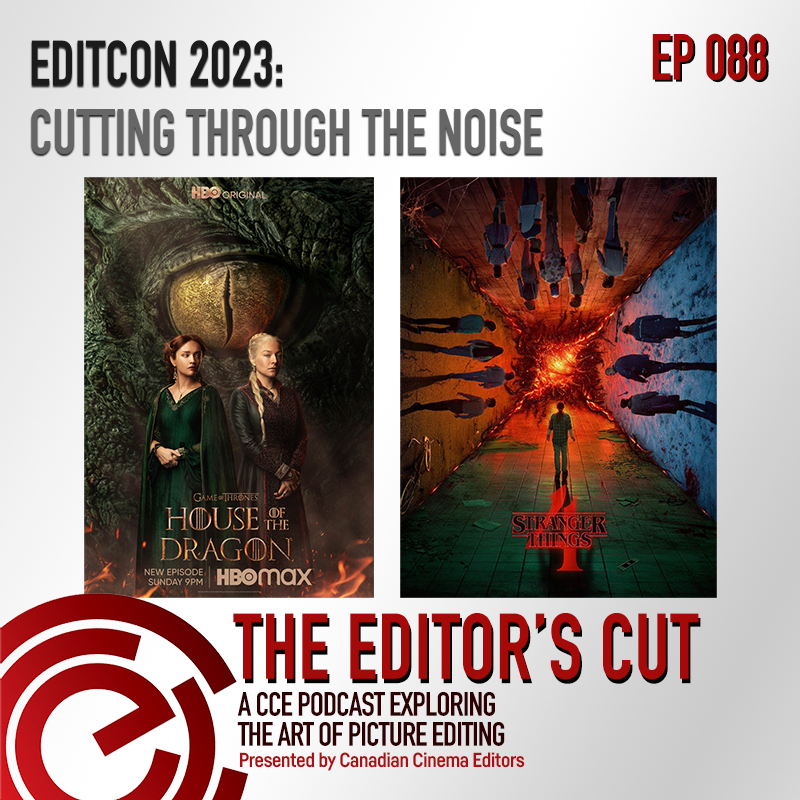
Episode 088 – EditCon 2023: Cutting Through the Noise

Episode 88: EditCon 2023: Cutting Through the Noise

Episode 088 - EditCon 2023: Cutting Through the Noise

Series Sponsor:
Episode Sponsor:
AnnexPro_2024_SPON

Today’s episode is the 'Cutting Through the Noise' panel from EditCon 2023 that took place virtually in February 2023.

The arrangement of moving pictures is referred to as cinematic language. But it is the skillful combination of picture and sound that transports the audience into a story. Strong visual and audio storytelling immerses the viewer into a world where dragons fly through the sky in HOUSE OF THE DRAGON. It makes our worst nightmares come true in the dreadful depths of the Upside Down in STRANGER THINGS. Paula Fairfield, Craig Henighan, Katie Halliday and Siân Fever share their process working on these phenomenal shows.

À écouter ici !

The Editor’s Cut – Episode 030 – “What is Anti-Oppression? With Tenniel Brown”

Sarah Taylor [00:00:01]

Hello and welcome to The Editor’s Cut. I’m your host Sarah Taylor. At the CCE, we began our journey of self education with Anti-Oppression training in 2019. It was invaluable for us as it provided us with tools to assess how we as an organization could set a course of action to root our unconscious and systematic bias in our operations. This training is now a permanent part of our budget so future board members and volunteers can continue this work, and equity can be part of the fabric of our organization. We are offering a Lunch and Learn Introduction To Anti Oppressive Communication with Tenniel Brown on July 27. Today I’m lucky to be able to sit down with Tenniel Brown and discuss what Anti-Oppressive training is and what we can expect from this webinar. Tenniel Brown is a passionate anti-racist anti oppression and mental health speaker dedicated to improving the experiences of marginalized people in all institutional settings. She is the founder of the Centre For Anti-Oppressive Communication which specializes in providing anti oppressive, trauma-informed counseling, clinical supervision and organizational consulting, as well as customized workshops training and team retreats. I’m joined with Tenniel Brown, she is the founder of the Centre For Anti-Oppressive Communication based in Toronto. And we just want to have a little conversation about why anti oppression work is important in this and all days but specifically right now. So can you just tell us a little bit about your background and why you started the Center For Anti-Oppressive Communication.

Tenniel Brown [00:01:41]

My background is as a psychotherapist. So I spent I’ve spent many many years working with individuals and couples and families and groups helping them to access more of their well-being by addressing different mental health issues specifically trauma. One of the things that I specialize in addressing is racialized trauma. But also trauma that comes from folks that have experienced different types of oppression. And I think for most people that are called to this type of work it’s quite personal for me right. So often when you don’t see the work that you know needs to happen in the community taking place you create it. And so that was me. You know I think I saw that there was a need for organizations to have somebody come in and not just talk about diversity inclusion but talk about what happens when certain identities have power and that unbalance of power and how to actually address that in our communication. I knew that out in the community there were therapists and social workers that were wanting to do better work. You know work in the best practice way with clients that are black, racialized, queer, and trans, and had nowhere to go to get supervision and support. And finally I knew personally that there were so many folks that when they were ready to do therapy work they needed to see someone sitting across the office that looked like them or had a very similar lived experience and they just were not going to come unless that was the case. So all these things I knew was happening and nobody was doing it. And I said someone’s got to do something and that was me. I think what needs to come out of what’s happened in June is for folks to see black professionals and black community in in the in sort of like the the brilliance of what we do and it’s not uncommon that in many cases where we don’t see ourselves we create it. So yeah that was the spirit of and I think that when I started the organization I knew that it was important for there to be a place where folks from those different backgrounds could come and get that support and information. So it’s a real passion of mine. It is my baby and it’s so beautiful to see folks wanting this information during this time.

Sarah Taylor [00:04:01]

Yeah so important. Can you tell us what Anti-Oppression means and what someone can expect by taking an anti oppressive workshop?

Tenniel Brown [00:04:10]

Sure absolutely. So when you sort of break down the word anti oppression anti oppressive practice we take a look at that anti part and essentially that that just means opposition to oppression and then the practice part. So AOP… the practice part pertains to the context in which you are practicing opposition to oppression. So you can apply an anti oppressive lens to just about anything. And I’ve had the opportunity to work with organizations like Pride Toronto and work with your curators to apply an anti-oppressive lens to the way they do event organizing. I have applied an anti oppressive lens to the way I do therapy and clinical supervision with other therapists. You can apply an anti oppressive lens to teaching. You can apply it to student advising, you can apply it to just about anything. I’ve been working with fitness professionals looking at applying an anti oppressive lens to the way that they support folks that are on their fitness journey. So so it’s about looking at whatever practice whatever context you are working in and using that platform to be able to oppose oppression and all of its forms. So that’s essentially what it is.

Sarah Taylor [00:05:29]

And so when someone takes courses like anti oppressive communication course or participates in your courses what can they expect to be talking about or learning?

Tenniel Brown [00:05:37]

Absolutely so I think one of the most important things is to sort of pull back a little bit of you know the cover on this because I think anti oppressive language is its own language. It’s like Spanish. And you see so many people getting themselves into some rather serious trouble these days because they actually don’t know the language they don’t understand… in some ways the harm of some of the things that they’re doing and saying the deep harm of that. You get a lot of people who don’t really know how to talk about these issues. And so you go into a shame spiral and you just don’t talk. You just get very quiet and I always argue that you know the silence piece is a part of how we got ourselves into this trouble as a human society in the first place. So what I offer is something for everybody. I think over the years what folks have said to me is is even somebody who’s maybe got a social work background and knows about anti oppressive practice when they come to one of my trainings they find that they are moved further along in their application of that perspective around “OK, well what does this mean when I’m interacting with somebody right here in a one on one context.” Other people that are completely brand new have never had the chance to learn any of this language or understand any of these concepts have said over the years that they felt like they left with a really good sense of what this topic is. But not just that practical skills. I’m all about practical skills. I want to offer things that folks can use tomorrow today and the next day and my mission is also for folks to leave his training and talk about it. Tell a friend, tell a colleague, tell a family member, and feel equipped to be able to engage in these conversations. So when someone is saying or doing something problematic, you have this confidence in the skills to be able to interpret what’s going on there and to be able to talk to them and to be able to address it. The other thing that I do is I couch everything that I do in my trainings in a self care and team care perspective. And I think this is very important. We have to look after our emotions. We have to look after ourselves and we have to look after each other. I always say you could be as anti oppressive as you want but if you haven’t had any lunch… if you haven’t eaten anything… you’re not good.

Sarah Taylor [00:07:57]

You’ve got the hangries!

Tenniel Brown [00:07:59]

Trust me, Anti-Oppressive work requires patience. It requires empathy. It requires compassion and self compassion. You will fall down a lot and I find you know and I talk a lot about cancel culture and don’t get me wrong really that could be its own podcast.

Sarah Taylor [00:08:19]

Totally. Especially in this industry.

Tenniel Brown [00:08:22]

Look we need to talk about this and I get why certain people are being canceled for sure. And yet as someone who does this work I recognize that I’m so thankful I wasn’t canceled because over the years I’ve done and said things before I knew before I took a course like this before I had an opportunity to learn what was problematic about my lens. I’m so thankful that I was able to make those mistakes in a safe environment and actually benefit from that and grow. So people get a safe environment to learn language and understand what is going on, what is oppression, if oppression is so bad why don’t we just stop this. Well I unpack that for folks. Why is this so complicated and why doesn’t this just stop. And then I provide practical skills for folks to be able to apply this to their lives and their communication. I think the other thing that I think folks get is not just sort of a general whatever, you’ll find that I’m really interested in applying it to film editors and what it is that you do on a regular basis and looking at how you can use your platform to be able to actually oppose oppression.

Sarah Taylor [00:09:31]

Yeah well it’s like it’s huge I know for myself we did anti oppression workshop as a board for the CCE. I’m in an interracial marriage and so I thought “Oh I know a lot.” Like I’ve been unpacking this stuff for a while and understanding in my own way. But also like kind of like how do I say it to my white uncle who is racist like how do I approach that. And by taking that one course, like you said I got so much more understanding of where people might come from and the language and I could approach it not by just being angry because anytime I’d hear anything I was like “You’re talking about my husband, you’re talking about my child! This is not OK!” And so it made a huge impact on me and I felt like I kind of knew some stuff but I realized that there was so much more to learn. And I think I’m still learning and it’s opened up even conversations I’ve had with my husband and my in-laws… and so I think people who are in my situation are like “no I’m cool I got I’m married to so-and-so or I have my best friend or whatever.” You grew up in your lens and there’s way more to learn and unpack.

Tenniel Brown [00:10:41]

Absolutely. Absolutely it’s so true. And I always say that absolutely positively nobody gets a pass on this.

Sarah Taylor [00:10:48]

100 percent.

Tenniel Brown [00:10:49]

At all. You know myself as someone who identifies as a black fem queer woman, you know folks would be like well you know you of course you couldn’t oppress. And it’s like yes we are all susceptible to experiencing oppression and we are all oppressors. So I have aspects of my identity that allow me to have privilege. And the thing about this is that if you’re not aware of those things that’s how you harm people that’s how you engage in micro aggressions. You know what I mean? That’s how you you know get striking up a conversation with someone about your latest renovation in your house when this person is still renting and doesn’t even have access. These are the types of things that you’re never protected from. Right. Like you’re not protected from that in a certain way. So it’s really important to remember that.

Sarah Taylor [00:11:40]

Where should someone start if they’re like feeling overwhelmed they’re like wow I know that I need to make this change. I’ve seen all this information now on social media and I’m saying all the wrong things and like you said I’m just going to be quiet which is not the right thing to do. So where do they go and what should they focus on first to just like get into this mindset of making these changes?

Tenniel Brown [00:12:02]

That’s a great question. And what I would say is education. Not a coincidence right? So of course you know joining with you know your organization to offer this to the community because I think that’s step number one. I think we do need to have good information about… you need to educate yourself. I would say that it’s a really important first step to really listen, and I find even when you have more information and you have more training it even improves the way that you can listen because what you find is when you don’t have that knowledge there’s certain things that are sort of prevent you from even being open. So I find the training and the skills and the confidence that you get from doing the course like this allows you to even listen deeper right and understand more and I think that that’s step number one. I think that once… but don’t stay there! Because I think a lot of people oh I’m listening but really it’s just their guilt and shame. So yeah they’re still not doing anything but once you’ve had the chance to listen you now can start thinking more about your platform and I think that’s one of the most important thing for your listeners to know that if it’s like well I’m not a social worker I’m not a therapist what’s this got to do with me it’s like it has everything to do with you. You have a platform as a film editor and it’s important for you to acknowledge that there are big ways and small ways that you can make a difference. And we all have a responsibility. What’s happened in this world since COVID what’s happened in this world since June is we can no longer close our eyes to this. We have to look at this and all the years that we have stayed silent on this has been what’s caused the problem. So the reality is is that we all are called to use our platform to be able to address this to look around the room and be like who isn’t here? To look around your history of the films that you and different projects you’ve been involved in and being like how many of these people, how many of these stories featured stories that were outside of what we usually see? Right. And looking at the ways that you can use your platform and your influence to be able to make a change, so we’re all called to do that I don’t care if you’re a child care worker or a housekeeper do some working at a gas station, it literally doesn’t matter we’re all a part of this human society. We all have some sort of platform and so we all have a responsibility to do something. You know Sarah one of my favorite slogans that’s come out of the protest is “Silence is Violence.” I love that one because I know what happens when people don’t have education and knowledge. They go into a shame cycle they go into a guilt cycle and they go into fear and you know what happens there? Shh. And you know what, that doesn’t help anybody at all. So I recognize that these are difficult things for us to unpack but we all have a responsibility to use whatever platform we have to make a difference. So starting by educating yourself, listening a lot, and then that’s going to help you to be more open to what you can do. And then looking at your platform whether that be personal or professional to make a change.

Sarah Taylor [00:15:20]

That was perfect. Yeah. That’s huge. And even since I took my training and even just since I’ve done my own inner work I noticed like I wouldn’t pick certain shots anymore or there’ll be things in my edit where I’m like “that’s a stereotype” or “No that’s not going to work. We can’t do that we can’t have that.” And so I think if everybody’s doing that then what we’re seeing on screen can start changing.

Tenniel Brown [00:15:45]

Absolutely. Absolutely and there’s these you know there’s there’s big ways and then there’s little ways like you describe. So it’s it is about really curating your lens, right and making sure that you’re seeing more and I think training like this just helps you to really open up your lens. So you’re not just seeing directly what’s in front of you work to the side of you but it’s more of like a panoramic view which you folks really need in the work that you do.

Sarah Taylor [00:16:09]

100 percent. Yeah. Well I hope that our membership joins us. I know we’ve already been getting people RSVPing which is very exciting. On July 27 2020 to learn and to unpack and to take part and just hopefully we can continue to do stuff with you and just keep educating and making the changes we can make.

Tenniel Brown [00:16:28]

Yeah. Join us. Join us. Don’t hesitate folks. Be a part of this. I’m really looking forward to working with everybody. And you know what we’re gonna have fun. I know these topics are really heavy but we’re gonna have some fun and we’re really going to connect with each other as a community so I look forward to meeting everybody at this training.

Sarah Taylor [00:16:46]

Thank you so much for taking the time to chat with me today and I look forward to seeing you on the 27th and continuing my journey. So thank you for doing this for us and thank you for sharing your knowledge and your experience with the world. So thank you so much.

Tenniel Brown [00:16:59]

You’re so welcome. Thanks for having me.

Sarah Taylor [00:17:03]

Thank you so much for joining us today. And a big thank you goes to Tenniel Brown and a special thanks to Maureen Grant and Jane MacRae. If you’d like to connect with Tenniel, you can find her on Instagram @TennielBrown. If you’d like to bring Tenniel into your organization to learn more about anti oppressive work, you can check out her website at brownconsulting.com. I look forward to learning more from Tenniel on July 27 2020 at the CCE Lunch and Learn I hope to see you there. The CCE has been supporting BIPOC TV and FILM. BIPOC TV and FILM is a grassroots organization and collective of black, indigenous, and people of colour in Canada’s TV and film industry. From writers, directors, producers, and actors, to editors, crew members, and executives. Their members are a mix of emerging, mid-level, and established industry professionals. BIPOC TV and FILM is dedicated to increasing the representation of BIPOC both in front and behind the camera. If you would like to donate to BIPOC TV and FILM please head to their website at bipoctvandfilm.com. The CCE is taking steps to build a more equitable ecosystem within our industry and we encourage our members to participate in any way they can. 

The main title sound design was created by Jane Tattersall. Additional ADR recording by Andrea Rusch. Original music provided by Chad Blain. This episode was mixed and mastered by Tony Bao. If you’ve enjoyed this podcast, please rate and review us on Apple Podcasts and tell your friends to tune in. Til next time I’m your host Sarah Taylor.

Outtro

The CCE is a non-profit organization with the goal of bettering the art and science of picture editing. If you wish to become a CCE member please visit our website www.cceditors.ca. Join our great community of Canadian editors for more related info.

Abonnez-vous là où vous écoutez vos balados

Que voulez-vous entendre sur L'art du montage?

Veuillez nous envoyer un courriel en mentionnant les sujets que vous aimeriez que nous abordions, ou les monteurs.euses dont vous aimeriez entendre parler, à :

Crédits

Un grand Merci à

Kimberlee McTaggart, CCE

Alison Dowler

Hosted and Produced by

Sarah Taylor

Design sonore du générique d'ouverture

Jane Tattersall

ADR Recording by

Andrea Rusch

Mixé et masterisé par

Tony Bao

Musique originale par

Chad Blain

Sponsor Narration by

Paul Winestock

Commandité par
DGC Alberta

Annex Pro

Catégories
The Editors Cut

Episode 087- A Small Light & Pachinko with Susan E. Kim

Episode 087: A Small Light & Pachinko with Susan E. Kim

Episode 087 - A Small Light & Pachinko with Susan E. Kim

Series Sponsor:

This episode is the keynote with Jay Prychidny, CCE, that took place at EditCon 2023.

Award-winning producer and editor Jay Prychidny, CCE vast experience ranges from editing some of the most-watched reality television in this country, including AMAZING RACE CANADA. He has led the post-production on ORPHAN BLACK and recently edited the new WEDNESDAY series and SCREAM 6. Jay shares his insight about his editing process and lessons from his dynamic career in post-production.

This master class was moderated by editor Cheryl Potter. 

À écouter ici !

The Editor’s Cut – Episode 030 – “What is Anti-Oppression? With Tenniel Brown”

Sarah Taylor [00:00:01]

Hello and welcome to The Editor’s Cut. I’m your host Sarah Taylor. At the CCE, we began our journey of self education with Anti-Oppression training in 2019. It was invaluable for us as it provided us with tools to assess how we as an organization could set a course of action to root our unconscious and systematic bias in our operations. This training is now a permanent part of our budget so future board members and volunteers can continue this work, and equity can be part of the fabric of our organization. We are offering a Lunch and Learn Introduction To Anti Oppressive Communication with Tenniel Brown on July 27. Today I’m lucky to be able to sit down with Tenniel Brown and discuss what Anti-Oppressive training is and what we can expect from this webinar. Tenniel Brown is a passionate anti-racist anti oppression and mental health speaker dedicated to improving the experiences of marginalized people in all institutional settings. She is the founder of the Centre For Anti-Oppressive Communication which specializes in providing anti oppressive, trauma-informed counseling, clinical supervision and organizational consulting, as well as customized workshops training and team retreats. I’m joined with Tenniel Brown, she is the founder of the Centre For Anti-Oppressive Communication based in Toronto. And we just want to have a little conversation about why anti oppression work is important in this and all days but specifically right now. So can you just tell us a little bit about your background and why you started the Center For Anti-Oppressive Communication.

Tenniel Brown [00:01:41]

My background is as a psychotherapist. So I spent I’ve spent many many years working with individuals and couples and families and groups helping them to access more of their well-being by addressing different mental health issues specifically trauma. One of the things that I specialize in addressing is racialized trauma. But also trauma that comes from folks that have experienced different types of oppression. And I think for most people that are called to this type of work it’s quite personal for me right. So often when you don’t see the work that you know needs to happen in the community taking place you create it. And so that was me. You know I think I saw that there was a need for organizations to have somebody come in and not just talk about diversity inclusion but talk about what happens when certain identities have power and that unbalance of power and how to actually address that in our communication. I knew that out in the community there were therapists and social workers that were wanting to do better work. You know work in the best practice way with clients that are black, racialized, queer, and trans, and had nowhere to go to get supervision and support. And finally I knew personally that there were so many folks that when they were ready to do therapy work they needed to see someone sitting across the office that looked like them or had a very similar lived experience and they just were not going to come unless that was the case. So all these things I knew was happening and nobody was doing it. And I said someone’s got to do something and that was me. I think what needs to come out of what’s happened in June is for folks to see black professionals and black community in in the in sort of like the the brilliance of what we do and it’s not uncommon that in many cases where we don’t see ourselves we create it. So yeah that was the spirit of and I think that when I started the organization I knew that it was important for there to be a place where folks from those different backgrounds could come and get that support and information. So it’s a real passion of mine. It is my baby and it’s so beautiful to see folks wanting this information during this time.

Sarah Taylor [00:04:01]

Yeah so important. Can you tell us what Anti-Oppression means and what someone can expect by taking an anti oppressive workshop?

Tenniel Brown [00:04:10]

Sure absolutely. So when you sort of break down the word anti oppression anti oppressive practice we take a look at that anti part and essentially that that just means opposition to oppression and then the practice part. So AOP… the practice part pertains to the context in which you are practicing opposition to oppression. So you can apply an anti oppressive lens to just about anything. And I’ve had the opportunity to work with organizations like Pride Toronto and work with your curators to apply an anti-oppressive lens to the way they do event organizing. I have applied an anti oppressive lens to the way I do therapy and clinical supervision with other therapists. You can apply an anti oppressive lens to teaching. You can apply it to student advising, you can apply it to just about anything. I’ve been working with fitness professionals looking at applying an anti oppressive lens to the way that they support folks that are on their fitness journey. So so it’s about looking at whatever practice whatever context you are working in and using that platform to be able to oppose oppression and all of its forms. So that’s essentially what it is.

Sarah Taylor [00:05:29]

And so when someone takes courses like anti oppressive communication course or participates in your courses what can they expect to be talking about or learning?

Tenniel Brown [00:05:37]

Absolutely so I think one of the most important things is to sort of pull back a little bit of you know the cover on this because I think anti oppressive language is its own language. It’s like Spanish. And you see so many people getting themselves into some rather serious trouble these days because they actually don’t know the language they don’t understand… in some ways the harm of some of the things that they’re doing and saying the deep harm of that. You get a lot of people who don’t really know how to talk about these issues. And so you go into a shame spiral and you just don’t talk. You just get very quiet and I always argue that you know the silence piece is a part of how we got ourselves into this trouble as a human society in the first place. So what I offer is something for everybody. I think over the years what folks have said to me is is even somebody who’s maybe got a social work background and knows about anti oppressive practice when they come to one of my trainings they find that they are moved further along in their application of that perspective around “OK, well what does this mean when I’m interacting with somebody right here in a one on one context.” Other people that are completely brand new have never had the chance to learn any of this language or understand any of these concepts have said over the years that they felt like they left with a really good sense of what this topic is. But not just that practical skills. I’m all about practical skills. I want to offer things that folks can use tomorrow today and the next day and my mission is also for folks to leave his training and talk about it. Tell a friend, tell a colleague, tell a family member, and feel equipped to be able to engage in these conversations. So when someone is saying or doing something problematic, you have this confidence in the skills to be able to interpret what’s going on there and to be able to talk to them and to be able to address it. The other thing that I do is I couch everything that I do in my trainings in a self care and team care perspective. And I think this is very important. We have to look after our emotions. We have to look after ourselves and we have to look after each other. I always say you could be as anti oppressive as you want but if you haven’t had any lunch… if you haven’t eaten anything… you’re not good.

Sarah Taylor [00:07:57]

You’ve got the hangries!

Tenniel Brown [00:07:59]

Trust me, Anti-Oppressive work requires patience. It requires empathy. It requires compassion and self compassion. You will fall down a lot and I find you know and I talk a lot about cancel culture and don’t get me wrong really that could be its own podcast.

Sarah Taylor [00:08:19]

Totally. Especially in this industry.

Tenniel Brown [00:08:22]

Look we need to talk about this and I get why certain people are being canceled for sure. And yet as someone who does this work I recognize that I’m so thankful I wasn’t canceled because over the years I’ve done and said things before I knew before I took a course like this before I had an opportunity to learn what was problematic about my lens. I’m so thankful that I was able to make those mistakes in a safe environment and actually benefit from that and grow. So people get a safe environment to learn language and understand what is going on, what is oppression, if oppression is so bad why don’t we just stop this. Well I unpack that for folks. Why is this so complicated and why doesn’t this just stop. And then I provide practical skills for folks to be able to apply this to their lives and their communication. I think the other thing that I think folks get is not just sort of a general whatever, you’ll find that I’m really interested in applying it to film editors and what it is that you do on a regular basis and looking at how you can use your platform to be able to actually oppose oppression.

Sarah Taylor [00:09:31]

Yeah well it’s like it’s huge I know for myself we did anti oppression workshop as a board for the CCE. I’m in an interracial marriage and so I thought “Oh I know a lot.” Like I’ve been unpacking this stuff for a while and understanding in my own way. But also like kind of like how do I say it to my white uncle who is racist like how do I approach that. And by taking that one course, like you said I got so much more understanding of where people might come from and the language and I could approach it not by just being angry because anytime I’d hear anything I was like “You’re talking about my husband, you’re talking about my child! This is not OK!” And so it made a huge impact on me and I felt like I kind of knew some stuff but I realized that there was so much more to learn. And I think I’m still learning and it’s opened up even conversations I’ve had with my husband and my in-laws… and so I think people who are in my situation are like “no I’m cool I got I’m married to so-and-so or I have my best friend or whatever.” You grew up in your lens and there’s way more to learn and unpack.

Tenniel Brown [00:10:41]

Absolutely. Absolutely it’s so true. And I always say that absolutely positively nobody gets a pass on this.

Sarah Taylor [00:10:48]

100 percent.

Tenniel Brown [00:10:49]

At all. You know myself as someone who identifies as a black fem queer woman, you know folks would be like well you know you of course you couldn’t oppress. And it’s like yes we are all susceptible to experiencing oppression and we are all oppressors. So I have aspects of my identity that allow me to have privilege. And the thing about this is that if you’re not aware of those things that’s how you harm people that’s how you engage in micro aggressions. You know what I mean? That’s how you you know get striking up a conversation with someone about your latest renovation in your house when this person is still renting and doesn’t even have access. These are the types of things that you’re never protected from. Right. Like you’re not protected from that in a certain way. So it’s really important to remember that.

Sarah Taylor [00:11:40]

Where should someone start if they’re like feeling overwhelmed they’re like wow I know that I need to make this change. I’ve seen all this information now on social media and I’m saying all the wrong things and like you said I’m just going to be quiet which is not the right thing to do. So where do they go and what should they focus on first to just like get into this mindset of making these changes?

Tenniel Brown [00:12:02]

That’s a great question. And what I would say is education. Not a coincidence right? So of course you know joining with you know your organization to offer this to the community because I think that’s step number one. I think we do need to have good information about… you need to educate yourself. I would say that it’s a really important first step to really listen, and I find even when you have more information and you have more training it even improves the way that you can listen because what you find is when you don’t have that knowledge there’s certain things that are sort of prevent you from even being open. So I find the training and the skills and the confidence that you get from doing the course like this allows you to even listen deeper right and understand more and I think that that’s step number one. I think that once… but don’t stay there! Because I think a lot of people oh I’m listening but really it’s just their guilt and shame. So yeah they’re still not doing anything but once you’ve had the chance to listen you now can start thinking more about your platform and I think that’s one of the most important thing for your listeners to know that if it’s like well I’m not a social worker I’m not a therapist what’s this got to do with me it’s like it has everything to do with you. You have a platform as a film editor and it’s important for you to acknowledge that there are big ways and small ways that you can make a difference. And we all have a responsibility. What’s happened in this world since COVID what’s happened in this world since June is we can no longer close our eyes to this. We have to look at this and all the years that we have stayed silent on this has been what’s caused the problem. So the reality is is that we all are called to use our platform to be able to address this to look around the room and be like who isn’t here? To look around your history of the films that you and different projects you’ve been involved in and being like how many of these people, how many of these stories featured stories that were outside of what we usually see? Right. And looking at the ways that you can use your platform and your influence to be able to make a change, so we’re all called to do that I don’t care if you’re a child care worker or a housekeeper do some working at a gas station, it literally doesn’t matter we’re all a part of this human society. We all have some sort of platform and so we all have a responsibility to do something. You know Sarah one of my favorite slogans that’s come out of the protest is “Silence is Violence.” I love that one because I know what happens when people don’t have education and knowledge. They go into a shame cycle they go into a guilt cycle and they go into fear and you know what happens there? Shh. And you know what, that doesn’t help anybody at all. So I recognize that these are difficult things for us to unpack but we all have a responsibility to use whatever platform we have to make a difference. So starting by educating yourself, listening a lot, and then that’s going to help you to be more open to what you can do. And then looking at your platform whether that be personal or professional to make a change.

Sarah Taylor [00:15:20]

That was perfect. Yeah. That’s huge. And even since I took my training and even just since I’ve done my own inner work I noticed like I wouldn’t pick certain shots anymore or there’ll be things in my edit where I’m like “that’s a stereotype” or “No that’s not going to work. We can’t do that we can’t have that.” And so I think if everybody’s doing that then what we’re seeing on screen can start changing.

Tenniel Brown [00:15:45]

Absolutely. Absolutely and there’s these you know there’s there’s big ways and then there’s little ways like you describe. So it’s it is about really curating your lens, right and making sure that you’re seeing more and I think training like this just helps you to really open up your lens. So you’re not just seeing directly what’s in front of you work to the side of you but it’s more of like a panoramic view which you folks really need in the work that you do.

Sarah Taylor [00:16:09]

100 percent. Yeah. Well I hope that our membership joins us. I know we’ve already been getting people RSVPing which is very exciting. On July 27 2020 to learn and to unpack and to take part and just hopefully we can continue to do stuff with you and just keep educating and making the changes we can make.

Tenniel Brown [00:16:28]

Yeah. Join us. Join us. Don’t hesitate folks. Be a part of this. I’m really looking forward to working with everybody. And you know what we’re gonna have fun. I know these topics are really heavy but we’re gonna have some fun and we’re really going to connect with each other as a community so I look forward to meeting everybody at this training.

Sarah Taylor [00:16:46]

Thank you so much for taking the time to chat with me today and I look forward to seeing you on the 27th and continuing my journey. So thank you for doing this for us and thank you for sharing your knowledge and your experience with the world. So thank you so much.

Tenniel Brown [00:16:59]

You’re so welcome. Thanks for having me.

Sarah Taylor [00:17:03]

Thank you so much for joining us today. And a big thank you goes to Tenniel Brown and a special thanks to Maureen Grant and Jane MacRae. If you’d like to connect with Tenniel, you can find her on Instagram @TennielBrown. If you’d like to bring Tenniel into your organization to learn more about anti oppressive work, you can check out her website at brownconsulting.com. I look forward to learning more from Tenniel on July 27 2020 at the CCE Lunch and Learn I hope to see you there. The CCE has been supporting BIPOC TV and FILM. BIPOC TV and FILM is a grassroots organization and collective of black, indigenous, and people of colour in Canada’s TV and film industry. From writers, directors, producers, and actors, to editors, crew members, and executives. Their members are a mix of emerging, mid-level, and established industry professionals. BIPOC TV and FILM is dedicated to increasing the representation of BIPOC both in front and behind the camera. If you would like to donate to BIPOC TV and FILM please head to their website at bipoctvandfilm.com. The CCE is taking steps to build a more equitable ecosystem within our industry and we encourage our members to participate in any way they can. 

The main title sound design was created by Jane Tattersall. Additional ADR recording by Andrea Rusch. Original music provided by Chad Blain. This episode was mixed and mastered by Tony Bao. If you’ve enjoyed this podcast, please rate and review us on Apple Podcasts and tell your friends to tune in. Til next time I’m your host Sarah Taylor.

Outtro

The CCE is a non-profit organization with the goal of bettering the art and science of picture editing. If you wish to become a CCE member please visit our website www.cceditors.ca. Join our great community of Canadian editors for more related info.

Abonnez-vous là où vous écoutez vos balados

Que voulez-vous entendre sur L'art du montage?

Veuillez nous envoyer un courriel en mentionnant les sujets que vous aimeriez que nous abordions, ou les monteurs.euses dont vous aimeriez entendre parler, à :

Sarah Taylor, CCE sits down with Susan E Kim, editor behind A SMALL LIGHT and PACHINKO.

Susan has worked across a range of content, including unscripted work, commercials and music concerts. She has been an Assistant Editor on projects that include the Emmy-winning HBO series EUPHORIA and the Duplass Brothers HBO anthology series, ROOM 104.

Susan discusses the importance of collaboration in the editing process and how it’s important for editors to bring their unique perspective and voice to their projects.

À écouter ici !

The Editor’s Cut – Episode 030 – “What is Anti-Oppression? With Tenniel Brown”

Sarah Taylor [00:00:01]

Hello and welcome to The Editor’s Cut. I’m your host Sarah Taylor. At the CCE, we began our journey of self education with Anti-Oppression training in 2019. It was invaluable for us as it provided us with tools to assess how we as an organization could set a course of action to root our unconscious and systematic bias in our operations. This training is now a permanent part of our budget so future board members and volunteers can continue this work, and equity can be part of the fabric of our organization. We are offering a Lunch and Learn Introduction To Anti Oppressive Communication with Tenniel Brown on July 27. Today I’m lucky to be able to sit down with Tenniel Brown and discuss what Anti-Oppressive training is and what we can expect from this webinar. Tenniel Brown is a passionate anti-racist anti oppression and mental health speaker dedicated to improving the experiences of marginalized people in all institutional settings. She is the founder of the Centre For Anti-Oppressive Communication which specializes in providing anti oppressive, trauma-informed counseling, clinical supervision and organizational consulting, as well as customized workshops training and team retreats. I’m joined with Tenniel Brown, she is the founder of the Centre For Anti-Oppressive Communication based in Toronto. And we just want to have a little conversation about why anti oppression work is important in this and all days but specifically right now. So can you just tell us a little bit about your background and why you started the Center For Anti-Oppressive Communication.

Tenniel Brown [00:01:41]

My background is as a psychotherapist. So I spent I’ve spent many many years working with individuals and couples and families and groups helping them to access more of their well-being by addressing different mental health issues specifically trauma. One of the things that I specialize in addressing is racialized trauma. But also trauma that comes from folks that have experienced different types of oppression. And I think for most people that are called to this type of work it’s quite personal for me right. So often when you don’t see the work that you know needs to happen in the community taking place you create it. And so that was me. You know I think I saw that there was a need for organizations to have somebody come in and not just talk about diversity inclusion but talk about what happens when certain identities have power and that unbalance of power and how to actually address that in our communication. I knew that out in the community there were therapists and social workers that were wanting to do better work. You know work in the best practice way with clients that are black, racialized, queer, and trans, and had nowhere to go to get supervision and support. And finally I knew personally that there were so many folks that when they were ready to do therapy work they needed to see someone sitting across the office that looked like them or had a very similar lived experience and they just were not going to come unless that was the case. So all these things I knew was happening and nobody was doing it. And I said someone’s got to do something and that was me. I think what needs to come out of what’s happened in June is for folks to see black professionals and black community in in the in sort of like the the brilliance of what we do and it’s not uncommon that in many cases where we don’t see ourselves we create it. So yeah that was the spirit of and I think that when I started the organization I knew that it was important for there to be a place where folks from those different backgrounds could come and get that support and information. So it’s a real passion of mine. It is my baby and it’s so beautiful to see folks wanting this information during this time.

Sarah Taylor [00:04:01]

Yeah so important. Can you tell us what Anti-Oppression means and what someone can expect by taking an anti oppressive workshop?

Tenniel Brown [00:04:10]

Sure absolutely. So when you sort of break down the word anti oppression anti oppressive practice we take a look at that anti part and essentially that that just means opposition to oppression and then the practice part. So AOP… the practice part pertains to the context in which you are practicing opposition to oppression. So you can apply an anti oppressive lens to just about anything. And I’ve had the opportunity to work with organizations like Pride Toronto and work with your curators to apply an anti-oppressive lens to the way they do event organizing. I have applied an anti oppressive lens to the way I do therapy and clinical supervision with other therapists. You can apply an anti oppressive lens to teaching. You can apply it to student advising, you can apply it to just about anything. I’ve been working with fitness professionals looking at applying an anti oppressive lens to the way that they support folks that are on their fitness journey. So so it’s about looking at whatever practice whatever context you are working in and using that platform to be able to oppose oppression and all of its forms. So that’s essentially what it is.

Sarah Taylor [00:05:29]

And so when someone takes courses like anti oppressive communication course or participates in your courses what can they expect to be talking about or learning?

Tenniel Brown [00:05:37]

Absolutely so I think one of the most important things is to sort of pull back a little bit of you know the cover on this because I think anti oppressive language is its own language. It’s like Spanish. And you see so many people getting themselves into some rather serious trouble these days because they actually don’t know the language they don’t understand… in some ways the harm of some of the things that they’re doing and saying the deep harm of that. You get a lot of people who don’t really know how to talk about these issues. And so you go into a shame spiral and you just don’t talk. You just get very quiet and I always argue that you know the silence piece is a part of how we got ourselves into this trouble as a human society in the first place. So what I offer is something for everybody. I think over the years what folks have said to me is is even somebody who’s maybe got a social work background and knows about anti oppressive practice when they come to one of my trainings they find that they are moved further along in their application of that perspective around “OK, well what does this mean when I’m interacting with somebody right here in a one on one context.” Other people that are completely brand new have never had the chance to learn any of this language or understand any of these concepts have said over the years that they felt like they left with a really good sense of what this topic is. But not just that practical skills. I’m all about practical skills. I want to offer things that folks can use tomorrow today and the next day and my mission is also for folks to leave his training and talk about it. Tell a friend, tell a colleague, tell a family member, and feel equipped to be able to engage in these conversations. So when someone is saying or doing something problematic, you have this confidence in the skills to be able to interpret what’s going on there and to be able to talk to them and to be able to address it. The other thing that I do is I couch everything that I do in my trainings in a self care and team care perspective. And I think this is very important. We have to look after our emotions. We have to look after ourselves and we have to look after each other. I always say you could be as anti oppressive as you want but if you haven’t had any lunch… if you haven’t eaten anything… you’re not good.

Sarah Taylor [00:07:57]

You’ve got the hangries!

Tenniel Brown [00:07:59]

Trust me, Anti-Oppressive work requires patience. It requires empathy. It requires compassion and self compassion. You will fall down a lot and I find you know and I talk a lot about cancel culture and don’t get me wrong really that could be its own podcast.

Sarah Taylor [00:08:19]

Totally. Especially in this industry.

Tenniel Brown [00:08:22]

Look we need to talk about this and I get why certain people are being canceled for sure. And yet as someone who does this work I recognize that I’m so thankful I wasn’t canceled because over the years I’ve done and said things before I knew before I took a course like this before I had an opportunity to learn what was problematic about my lens. I’m so thankful that I was able to make those mistakes in a safe environment and actually benefit from that and grow. So people get a safe environment to learn language and understand what is going on, what is oppression, if oppression is so bad why don’t we just stop this. Well I unpack that for folks. Why is this so complicated and why doesn’t this just stop. And then I provide practical skills for folks to be able to apply this to their lives and their communication. I think the other thing that I think folks get is not just sort of a general whatever, you’ll find that I’m really interested in applying it to film editors and what it is that you do on a regular basis and looking at how you can use your platform to be able to actually oppose oppression.

Sarah Taylor [00:09:31]

Yeah well it’s like it’s huge I know for myself we did anti oppression workshop as a board for the CCE. I’m in an interracial marriage and so I thought “Oh I know a lot.” Like I’ve been unpacking this stuff for a while and understanding in my own way. But also like kind of like how do I say it to my white uncle who is racist like how do I approach that. And by taking that one course, like you said I got so much more understanding of where people might come from and the language and I could approach it not by just being angry because anytime I’d hear anything I was like “You’re talking about my husband, you’re talking about my child! This is not OK!” And so it made a huge impact on me and I felt like I kind of knew some stuff but I realized that there was so much more to learn. And I think I’m still learning and it’s opened up even conversations I’ve had with my husband and my in-laws… and so I think people who are in my situation are like “no I’m cool I got I’m married to so-and-so or I have my best friend or whatever.” You grew up in your lens and there’s way more to learn and unpack.

Tenniel Brown [00:10:41]

Absolutely. Absolutely it’s so true. And I always say that absolutely positively nobody gets a pass on this.

Sarah Taylor [00:10:48]

100 percent.

Tenniel Brown [00:10:49]

At all. You know myself as someone who identifies as a black fem queer woman, you know folks would be like well you know you of course you couldn’t oppress. And it’s like yes we are all susceptible to experiencing oppression and we are all oppressors. So I have aspects of my identity that allow me to have privilege. And the thing about this is that if you’re not aware of those things that’s how you harm people that’s how you engage in micro aggressions. You know what I mean? That’s how you you know get striking up a conversation with someone about your latest renovation in your house when this person is still renting and doesn’t even have access. These are the types of things that you’re never protected from. Right. Like you’re not protected from that in a certain way. So it’s really important to remember that.

Sarah Taylor [00:11:40]

Where should someone start if they’re like feeling overwhelmed they’re like wow I know that I need to make this change. I’ve seen all this information now on social media and I’m saying all the wrong things and like you said I’m just going to be quiet which is not the right thing to do. So where do they go and what should they focus on first to just like get into this mindset of making these changes?

Tenniel Brown [00:12:02]

That’s a great question. And what I would say is education. Not a coincidence right? So of course you know joining with you know your organization to offer this to the community because I think that’s step number one. I think we do need to have good information about… you need to educate yourself. I would say that it’s a really important first step to really listen, and I find even when you have more information and you have more training it even improves the way that you can listen because what you find is when you don’t have that knowledge there’s certain things that are sort of prevent you from even being open. So I find the training and the skills and the confidence that you get from doing the course like this allows you to even listen deeper right and understand more and I think that that’s step number one. I think that once… but don’t stay there! Because I think a lot of people oh I’m listening but really it’s just their guilt and shame. So yeah they’re still not doing anything but once you’ve had the chance to listen you now can start thinking more about your platform and I think that’s one of the most important thing for your listeners to know that if it’s like well I’m not a social worker I’m not a therapist what’s this got to do with me it’s like it has everything to do with you. You have a platform as a film editor and it’s important for you to acknowledge that there are big ways and small ways that you can make a difference. And we all have a responsibility. What’s happened in this world since COVID what’s happened in this world since June is we can no longer close our eyes to this. We have to look at this and all the years that we have stayed silent on this has been what’s caused the problem. So the reality is is that we all are called to use our platform to be able to address this to look around the room and be like who isn’t here? To look around your history of the films that you and different projects you’ve been involved in and being like how many of these people, how many of these stories featured stories that were outside of what we usually see? Right. And looking at the ways that you can use your platform and your influence to be able to make a change, so we’re all called to do that I don’t care if you’re a child care worker or a housekeeper do some working at a gas station, it literally doesn’t matter we’re all a part of this human society. We all have some sort of platform and so we all have a responsibility to do something. You know Sarah one of my favorite slogans that’s come out of the protest is “Silence is Violence.” I love that one because I know what happens when people don’t have education and knowledge. They go into a shame cycle they go into a guilt cycle and they go into fear and you know what happens there? Shh. And you know what, that doesn’t help anybody at all. So I recognize that these are difficult things for us to unpack but we all have a responsibility to use whatever platform we have to make a difference. So starting by educating yourself, listening a lot, and then that’s going to help you to be more open to what you can do. And then looking at your platform whether that be personal or professional to make a change.

Sarah Taylor [00:15:20]

That was perfect. Yeah. That’s huge. And even since I took my training and even just since I’ve done my own inner work I noticed like I wouldn’t pick certain shots anymore or there’ll be things in my edit where I’m like “that’s a stereotype” or “No that’s not going to work. We can’t do that we can’t have that.” And so I think if everybody’s doing that then what we’re seeing on screen can start changing.

Tenniel Brown [00:15:45]

Absolutely. Absolutely and there’s these you know there’s there’s big ways and then there’s little ways like you describe. So it’s it is about really curating your lens, right and making sure that you’re seeing more and I think training like this just helps you to really open up your lens. So you’re not just seeing directly what’s in front of you work to the side of you but it’s more of like a panoramic view which you folks really need in the work that you do.

Sarah Taylor [00:16:09]

100 percent. Yeah. Well I hope that our membership joins us. I know we’ve already been getting people RSVPing which is very exciting. On July 27 2020 to learn and to unpack and to take part and just hopefully we can continue to do stuff with you and just keep educating and making the changes we can make.

Tenniel Brown [00:16:28]

Yeah. Join us. Join us. Don’t hesitate folks. Be a part of this. I’m really looking forward to working with everybody. And you know what we’re gonna have fun. I know these topics are really heavy but we’re gonna have some fun and we’re really going to connect with each other as a community so I look forward to meeting everybody at this training.

Sarah Taylor [00:16:46]

Thank you so much for taking the time to chat with me today and I look forward to seeing you on the 27th and continuing my journey. So thank you for doing this for us and thank you for sharing your knowledge and your experience with the world. So thank you so much.

Tenniel Brown [00:16:59]

You’re so welcome. Thanks for having me.

Sarah Taylor [00:17:03]

Thank you so much for joining us today. And a big thank you goes to Tenniel Brown and a special thanks to Maureen Grant and Jane MacRae. If you’d like to connect with Tenniel, you can find her on Instagram @TennielBrown. If you’d like to bring Tenniel into your organization to learn more about anti oppressive work, you can check out her website at brownconsulting.com. I look forward to learning more from Tenniel on July 27 2020 at the CCE Lunch and Learn I hope to see you there. The CCE has been supporting BIPOC TV and FILM. BIPOC TV and FILM is a grassroots organization and collective of black, indigenous, and people of colour in Canada’s TV and film industry. From writers, directors, producers, and actors, to editors, crew members, and executives. Their members are a mix of emerging, mid-level, and established industry professionals. BIPOC TV and FILM is dedicated to increasing the representation of BIPOC both in front and behind the camera. If you would like to donate to BIPOC TV and FILM please head to their website at bipoctvandfilm.com. The CCE is taking steps to build a more equitable ecosystem within our industry and we encourage our members to participate in any way they can. 

The main title sound design was created by Jane Tattersall. Additional ADR recording by Andrea Rusch. Original music provided by Chad Blain. This episode was mixed and mastered by Tony Bao. If you’ve enjoyed this podcast, please rate and review us on Apple Podcasts and tell your friends to tune in. Til next time I’m your host Sarah Taylor.

Outtro

The CCE is a non-profit organization with the goal of bettering the art and science of picture editing. If you wish to become a CCE member please visit our website www.cceditors.ca. Join our great community of Canadian editors for more related info.

Abonnez-vous là où vous écoutez vos balados

Que voulez-vous entendre sur L'art du montage?

Veuillez nous envoyer un courriel en mentionnant les sujets que vous aimeriez que nous abordions, ou les monteurs.euses dont vous aimeriez entendre parler, à :

Crédits

Un grand Merci à

Kimberlee McTaggart, CCE

Alison Dowler

Hosted and Produced by

Sarah Taylor

Design sonore du générique d'ouverture

Jane Tattersall

ADR Recording by

Andrea Rusch

Mixé et masterisé par

Tony Bao

Musique originale par

Chad Blain

Sponsor Narration by

Paul Winestock

Commandité par

DGC Alberta

Catégories
The Editors Cut

Episode 086 – EditCon 2023: Behind the Cut with Jay Prychidny, CCE

Episode 86: EditCon 2023: Behind the Cut with Jay Prychidny, CCE

Episode 086 - EditCon 2023: Behind the Cut with Jay Prychidny, CCE

Series Sponsor:
Episode Sponsor:

This episode is the keynote with Jay Prychidny, CCE, that took place at EditCon 2023.

Award-winning producer and editor Jay Prychidny, CCE vast experience ranges from editing some of the most-watched reality television in this country, including AMAZING RACE CANADA. He has led the post-production on ORPHAN BLACK and recently edited the new WEDNESDAY series and SCREAM 6. Jay shares his insight about his editing process and lessons from his dynamic career in post-production.

This master class was moderated by editor Cheryl Potter. 

À écouter ici !

The Editor’s Cut – Episode 030 – “What is Anti-Oppression? With Tenniel Brown”

Sarah Taylor [00:00:01]

Hello and welcome to The Editor’s Cut. I’m your host Sarah Taylor. At the CCE, we began our journey of self education with Anti-Oppression training in 2019. It was invaluable for us as it provided us with tools to assess how we as an organization could set a course of action to root our unconscious and systematic bias in our operations. This training is now a permanent part of our budget so future board members and volunteers can continue this work, and equity can be part of the fabric of our organization. We are offering a Lunch and Learn Introduction To Anti Oppressive Communication with Tenniel Brown on July 27. Today I’m lucky to be able to sit down with Tenniel Brown and discuss what Anti-Oppressive training is and what we can expect from this webinar. Tenniel Brown is a passionate anti-racist anti oppression and mental health speaker dedicated to improving the experiences of marginalized people in all institutional settings. She is the founder of the Centre For Anti-Oppressive Communication which specializes in providing anti oppressive, trauma-informed counseling, clinical supervision and organizational consulting, as well as customized workshops training and team retreats. I’m joined with Tenniel Brown, she is the founder of the Centre For Anti-Oppressive Communication based in Toronto. And we just want to have a little conversation about why anti oppression work is important in this and all days but specifically right now. So can you just tell us a little bit about your background and why you started the Center For Anti-Oppressive Communication.

Tenniel Brown [00:01:41]

My background is as a psychotherapist. So I spent I’ve spent many many years working with individuals and couples and families and groups helping them to access more of their well-being by addressing different mental health issues specifically trauma. One of the things that I specialize in addressing is racialized trauma. But also trauma that comes from folks that have experienced different types of oppression. And I think for most people that are called to this type of work it’s quite personal for me right. So often when you don’t see the work that you know needs to happen in the community taking place you create it. And so that was me. You know I think I saw that there was a need for organizations to have somebody come in and not just talk about diversity inclusion but talk about what happens when certain identities have power and that unbalance of power and how to actually address that in our communication. I knew that out in the community there were therapists and social workers that were wanting to do better work. You know work in the best practice way with clients that are black, racialized, queer, and trans, and had nowhere to go to get supervision and support. And finally I knew personally that there were so many folks that when they were ready to do therapy work they needed to see someone sitting across the office that looked like them or had a very similar lived experience and they just were not going to come unless that was the case. So all these things I knew was happening and nobody was doing it. And I said someone’s got to do something and that was me. I think what needs to come out of what’s happened in June is for folks to see black professionals and black community in in the in sort of like the the brilliance of what we do and it’s not uncommon that in many cases where we don’t see ourselves we create it. So yeah that was the spirit of and I think that when I started the organization I knew that it was important for there to be a place where folks from those different backgrounds could come and get that support and information. So it’s a real passion of mine. It is my baby and it’s so beautiful to see folks wanting this information during this time.

Sarah Taylor [00:04:01]

Yeah so important. Can you tell us what Anti-Oppression means and what someone can expect by taking an anti oppressive workshop?

Tenniel Brown [00:04:10]

Sure absolutely. So when you sort of break down the word anti oppression anti oppressive practice we take a look at that anti part and essentially that that just means opposition to oppression and then the practice part. So AOP… the practice part pertains to the context in which you are practicing opposition to oppression. So you can apply an anti oppressive lens to just about anything. And I’ve had the opportunity to work with organizations like Pride Toronto and work with your curators to apply an anti-oppressive lens to the way they do event organizing. I have applied an anti oppressive lens to the way I do therapy and clinical supervision with other therapists. You can apply an anti oppressive lens to teaching. You can apply it to student advising, you can apply it to just about anything. I’ve been working with fitness professionals looking at applying an anti oppressive lens to the way that they support folks that are on their fitness journey. So so it’s about looking at whatever practice whatever context you are working in and using that platform to be able to oppose oppression and all of its forms. So that’s essentially what it is.

Sarah Taylor [00:05:29]

And so when someone takes courses like anti oppressive communication course or participates in your courses what can they expect to be talking about or learning?

Tenniel Brown [00:05:37]

Absolutely so I think one of the most important things is to sort of pull back a little bit of you know the cover on this because I think anti oppressive language is its own language. It’s like Spanish. And you see so many people getting themselves into some rather serious trouble these days because they actually don’t know the language they don’t understand… in some ways the harm of some of the things that they’re doing and saying the deep harm of that. You get a lot of people who don’t really know how to talk about these issues. And so you go into a shame spiral and you just don’t talk. You just get very quiet and I always argue that you know the silence piece is a part of how we got ourselves into this trouble as a human society in the first place. So what I offer is something for everybody. I think over the years what folks have said to me is is even somebody who’s maybe got a social work background and knows about anti oppressive practice when they come to one of my trainings they find that they are moved further along in their application of that perspective around “OK, well what does this mean when I’m interacting with somebody right here in a one on one context.” Other people that are completely brand new have never had the chance to learn any of this language or understand any of these concepts have said over the years that they felt like they left with a really good sense of what this topic is. But not just that practical skills. I’m all about practical skills. I want to offer things that folks can use tomorrow today and the next day and my mission is also for folks to leave his training and talk about it. Tell a friend, tell a colleague, tell a family member, and feel equipped to be able to engage in these conversations. So when someone is saying or doing something problematic, you have this confidence in the skills to be able to interpret what’s going on there and to be able to talk to them and to be able to address it. The other thing that I do is I couch everything that I do in my trainings in a self care and team care perspective. And I think this is very important. We have to look after our emotions. We have to look after ourselves and we have to look after each other. I always say you could be as anti oppressive as you want but if you haven’t had any lunch… if you haven’t eaten anything… you’re not good.

Sarah Taylor [00:07:57]

You’ve got the hangries!

Tenniel Brown [00:07:59]

Trust me, Anti-Oppressive work requires patience. It requires empathy. It requires compassion and self compassion. You will fall down a lot and I find you know and I talk a lot about cancel culture and don’t get me wrong really that could be its own podcast.

Sarah Taylor [00:08:19]

Totally. Especially in this industry.

Tenniel Brown [00:08:22]

Look we need to talk about this and I get why certain people are being canceled for sure. And yet as someone who does this work I recognize that I’m so thankful I wasn’t canceled because over the years I’ve done and said things before I knew before I took a course like this before I had an opportunity to learn what was problematic about my lens. I’m so thankful that I was able to make those mistakes in a safe environment and actually benefit from that and grow. So people get a safe environment to learn language and understand what is going on, what is oppression, if oppression is so bad why don’t we just stop this. Well I unpack that for folks. Why is this so complicated and why doesn’t this just stop. And then I provide practical skills for folks to be able to apply this to their lives and their communication. I think the other thing that I think folks get is not just sort of a general whatever, you’ll find that I’m really interested in applying it to film editors and what it is that you do on a regular basis and looking at how you can use your platform to be able to actually oppose oppression.

Sarah Taylor [00:09:31]

Yeah well it’s like it’s huge I know for myself we did anti oppression workshop as a board for the CCE. I’m in an interracial marriage and so I thought “Oh I know a lot.” Like I’ve been unpacking this stuff for a while and understanding in my own way. But also like kind of like how do I say it to my white uncle who is racist like how do I approach that. And by taking that one course, like you said I got so much more understanding of where people might come from and the language and I could approach it not by just being angry because anytime I’d hear anything I was like “You’re talking about my husband, you’re talking about my child! This is not OK!” And so it made a huge impact on me and I felt like I kind of knew some stuff but I realized that there was so much more to learn. And I think I’m still learning and it’s opened up even conversations I’ve had with my husband and my in-laws… and so I think people who are in my situation are like “no I’m cool I got I’m married to so-and-so or I have my best friend or whatever.” You grew up in your lens and there’s way more to learn and unpack.

Tenniel Brown [00:10:41]

Absolutely. Absolutely it’s so true. And I always say that absolutely positively nobody gets a pass on this.

Sarah Taylor [00:10:48]

100 percent.

Tenniel Brown [00:10:49]

At all. You know myself as someone who identifies as a black fem queer woman, you know folks would be like well you know you of course you couldn’t oppress. And it’s like yes we are all susceptible to experiencing oppression and we are all oppressors. So I have aspects of my identity that allow me to have privilege. And the thing about this is that if you’re not aware of those things that’s how you harm people that’s how you engage in micro aggressions. You know what I mean? That’s how you you know get striking up a conversation with someone about your latest renovation in your house when this person is still renting and doesn’t even have access. These are the types of things that you’re never protected from. Right. Like you’re not protected from that in a certain way. So it’s really important to remember that.

Sarah Taylor [00:11:40]

Where should someone start if they’re like feeling overwhelmed they’re like wow I know that I need to make this change. I’ve seen all this information now on social media and I’m saying all the wrong things and like you said I’m just going to be quiet which is not the right thing to do. So where do they go and what should they focus on first to just like get into this mindset of making these changes?

Tenniel Brown [00:12:02]

That’s a great question. And what I would say is education. Not a coincidence right? So of course you know joining with you know your organization to offer this to the community because I think that’s step number one. I think we do need to have good information about… you need to educate yourself. I would say that it’s a really important first step to really listen, and I find even when you have more information and you have more training it even improves the way that you can listen because what you find is when you don’t have that knowledge there’s certain things that are sort of prevent you from even being open. So I find the training and the skills and the confidence that you get from doing the course like this allows you to even listen deeper right and understand more and I think that that’s step number one. I think that once… but don’t stay there! Because I think a lot of people oh I’m listening but really it’s just their guilt and shame. So yeah they’re still not doing anything but once you’ve had the chance to listen you now can start thinking more about your platform and I think that’s one of the most important thing for your listeners to know that if it’s like well I’m not a social worker I’m not a therapist what’s this got to do with me it’s like it has everything to do with you. You have a platform as a film editor and it’s important for you to acknowledge that there are big ways and small ways that you can make a difference. And we all have a responsibility. What’s happened in this world since COVID what’s happened in this world since June is we can no longer close our eyes to this. We have to look at this and all the years that we have stayed silent on this has been what’s caused the problem. So the reality is is that we all are called to use our platform to be able to address this to look around the room and be like who isn’t here? To look around your history of the films that you and different projects you’ve been involved in and being like how many of these people, how many of these stories featured stories that were outside of what we usually see? Right. And looking at the ways that you can use your platform and your influence to be able to make a change, so we’re all called to do that I don’t care if you’re a child care worker or a housekeeper do some working at a gas station, it literally doesn’t matter we’re all a part of this human society. We all have some sort of platform and so we all have a responsibility to do something. You know Sarah one of my favorite slogans that’s come out of the protest is “Silence is Violence.” I love that one because I know what happens when people don’t have education and knowledge. They go into a shame cycle they go into a guilt cycle and they go into fear and you know what happens there? Shh. And you know what, that doesn’t help anybody at all. So I recognize that these are difficult things for us to unpack but we all have a responsibility to use whatever platform we have to make a difference. So starting by educating yourself, listening a lot, and then that’s going to help you to be more open to what you can do. And then looking at your platform whether that be personal or professional to make a change.

Sarah Taylor [00:15:20]

That was perfect. Yeah. That’s huge. And even since I took my training and even just since I’ve done my own inner work I noticed like I wouldn’t pick certain shots anymore or there’ll be things in my edit where I’m like “that’s a stereotype” or “No that’s not going to work. We can’t do that we can’t have that.” And so I think if everybody’s doing that then what we’re seeing on screen can start changing.

Tenniel Brown [00:15:45]

Absolutely. Absolutely and there’s these you know there’s there’s big ways and then there’s little ways like you describe. So it’s it is about really curating your lens, right and making sure that you’re seeing more and I think training like this just helps you to really open up your lens. So you’re not just seeing directly what’s in front of you work to the side of you but it’s more of like a panoramic view which you folks really need in the work that you do.

Sarah Taylor [00:16:09]

100 percent. Yeah. Well I hope that our membership joins us. I know we’ve already been getting people RSVPing which is very exciting. On July 27 2020 to learn and to unpack and to take part and just hopefully we can continue to do stuff with you and just keep educating and making the changes we can make.

Tenniel Brown [00:16:28]

Yeah. Join us. Join us. Don’t hesitate folks. Be a part of this. I’m really looking forward to working with everybody. And you know what we’re gonna have fun. I know these topics are really heavy but we’re gonna have some fun and we’re really going to connect with each other as a community so I look forward to meeting everybody at this training.

Sarah Taylor [00:16:46]

Thank you so much for taking the time to chat with me today and I look forward to seeing you on the 27th and continuing my journey. So thank you for doing this for us and thank you for sharing your knowledge and your experience with the world. So thank you so much.

Tenniel Brown [00:16:59]

You’re so welcome. Thanks for having me.

Sarah Taylor [00:17:03]

Thank you so much for joining us today. And a big thank you goes to Tenniel Brown and a special thanks to Maureen Grant and Jane MacRae. If you’d like to connect with Tenniel, you can find her on Instagram @TennielBrown. If you’d like to bring Tenniel into your organization to learn more about anti oppressive work, you can check out her website at brownconsulting.com. I look forward to learning more from Tenniel on July 27 2020 at the CCE Lunch and Learn I hope to see you there. The CCE has been supporting BIPOC TV and FILM. BIPOC TV and FILM is a grassroots organization and collective of black, indigenous, and people of colour in Canada’s TV and film industry. From writers, directors, producers, and actors, to editors, crew members, and executives. Their members are a mix of emerging, mid-level, and established industry professionals. BIPOC TV and FILM is dedicated to increasing the representation of BIPOC both in front and behind the camera. If you would like to donate to BIPOC TV and FILM please head to their website at bipoctvandfilm.com. The CCE is taking steps to build a more equitable ecosystem within our industry and we encourage our members to participate in any way they can. 

The main title sound design was created by Jane Tattersall. Additional ADR recording by Andrea Rusch. Original music provided by Chad Blain. This episode was mixed and mastered by Tony Bao. If you’ve enjoyed this podcast, please rate and review us on Apple Podcasts and tell your friends to tune in. Til next time I’m your host Sarah Taylor.

Outtro

The CCE is a non-profit organization with the goal of bettering the art and science of picture editing. If you wish to become a CCE member please visit our website www.cceditors.ca. Join our great community of Canadian editors for more related info.

Abonnez-vous là où vous écoutez vos balados

Que voulez-vous entendre sur L'art du montage?

Veuillez nous envoyer un courriel en mentionnant les sujets que vous aimeriez que nous abordions, ou les monteurs.euses dont vous aimeriez entendre parler, à :

Crédits

Un grand Merci à

Kimberlee McTaggart, CCE

Alison Dowler

Hosted and Produced by

Sarah Taylor

Design sonore du générique d'ouverture

Jane Tattersall

ADR Recording by

Andrea Rusch

Mixé et masterisé par

Tony Bao

Musique originale par

Chad Blain

Sponsor Narration by

Paul Winestock

Commandité par
DGC Alberta

DGC Ontario

Catégories
The Editors Cut

Episode 085 – Barbie with Nick Houy, ACE

Episode 85: Barbie with Nick Houy, ACE

Episode 085 - Barbie with Nick Houy, ACE

This episode is an EditCon 2024 exclusive episode of The Editor's Cut with Nick Houy, ACE the editor behind the blockbuster hit BARBIE.

Nick Houy, ACE, is a film editor based in New York. Before editing BARBIE, Houy edited both of Greta Gerwig’s previous Oscar-nominated films, LITTLE WOMEN, and LADY BIRD for which he was nominated for the ACE award in 2017. Houy also won the Emmy Award in 2017 for editing the miniseries, THE NIGHT OF. He was nominated for the Independent Spirit Award for editing MID90S in 2018, and in 2022 Houy edited the critically acclaimed Netflix documentary, STUTZ.

Podcast Sponsor

À écouter ici !

The Editor’s Cut – Episode 030 – “What is Anti-Oppression? With Tenniel Brown”

Sarah Taylor [00:00:01]

Hello and welcome to The Editor’s Cut. I’m your host Sarah Taylor. At the CCE, we began our journey of self education with Anti-Oppression training in 2019. It was invaluable for us as it provided us with tools to assess how we as an organization could set a course of action to root our unconscious and systematic bias in our operations. This training is now a permanent part of our budget so future board members and volunteers can continue this work, and equity can be part of the fabric of our organization. We are offering a Lunch and Learn Introduction To Anti Oppressive Communication with Tenniel Brown on July 27. Today I’m lucky to be able to sit down with Tenniel Brown and discuss what Anti-Oppressive training is and what we can expect from this webinar. Tenniel Brown is a passionate anti-racist anti oppression and mental health speaker dedicated to improving the experiences of marginalized people in all institutional settings. She is the founder of the Centre For Anti-Oppressive Communication which specializes in providing anti oppressive, trauma-informed counseling, clinical supervision and organizational consulting, as well as customized workshops training and team retreats. I’m joined with Tenniel Brown, she is the founder of the Centre For Anti-Oppressive Communication based in Toronto. And we just want to have a little conversation about why anti oppression work is important in this and all days but specifically right now. So can you just tell us a little bit about your background and why you started the Center For Anti-Oppressive Communication.

Tenniel Brown [00:01:41]

My background is as a psychotherapist. So I spent I’ve spent many many years working with individuals and couples and families and groups helping them to access more of their well-being by addressing different mental health issues specifically trauma. One of the things that I specialize in addressing is racialized trauma. But also trauma that comes from folks that have experienced different types of oppression. And I think for most people that are called to this type of work it’s quite personal for me right. So often when you don’t see the work that you know needs to happen in the community taking place you create it. And so that was me. You know I think I saw that there was a need for organizations to have somebody come in and not just talk about diversity inclusion but talk about what happens when certain identities have power and that unbalance of power and how to actually address that in our communication. I knew that out in the community there were therapists and social workers that were wanting to do better work. You know work in the best practice way with clients that are black, racialized, queer, and trans, and had nowhere to go to get supervision and support. And finally I knew personally that there were so many folks that when they were ready to do therapy work they needed to see someone sitting across the office that looked like them or had a very similar lived experience and they just were not going to come unless that was the case. So all these things I knew was happening and nobody was doing it. And I said someone’s got to do something and that was me. I think what needs to come out of what’s happened in June is for folks to see black professionals and black community in in the in sort of like the the brilliance of what we do and it’s not uncommon that in many cases where we don’t see ourselves we create it. So yeah that was the spirit of and I think that when I started the organization I knew that it was important for there to be a place where folks from those different backgrounds could come and get that support and information. So it’s a real passion of mine. It is my baby and it’s so beautiful to see folks wanting this information during this time.

Sarah Taylor [00:04:01]

Yeah so important. Can you tell us what Anti-Oppression means and what someone can expect by taking an anti oppressive workshop?

Tenniel Brown [00:04:10]

Sure absolutely. So when you sort of break down the word anti oppression anti oppressive practice we take a look at that anti part and essentially that that just means opposition to oppression and then the practice part. So AOP… the practice part pertains to the context in which you are practicing opposition to oppression. So you can apply an anti oppressive lens to just about anything. And I’ve had the opportunity to work with organizations like Pride Toronto and work with your curators to apply an anti-oppressive lens to the way they do event organizing. I have applied an anti oppressive lens to the way I do therapy and clinical supervision with other therapists. You can apply an anti oppressive lens to teaching. You can apply it to student advising, you can apply it to just about anything. I’ve been working with fitness professionals looking at applying an anti oppressive lens to the way that they support folks that are on their fitness journey. So so it’s about looking at whatever practice whatever context you are working in and using that platform to be able to oppose oppression and all of its forms. So that’s essentially what it is.

Sarah Taylor [00:05:29]

And so when someone takes courses like anti oppressive communication course or participates in your courses what can they expect to be talking about or learning?

Tenniel Brown [00:05:37]

Absolutely so I think one of the most important things is to sort of pull back a little bit of you know the cover on this because I think anti oppressive language is its own language. It’s like Spanish. And you see so many people getting themselves into some rather serious trouble these days because they actually don’t know the language they don’t understand… in some ways the harm of some of the things that they’re doing and saying the deep harm of that. You get a lot of people who don’t really know how to talk about these issues. And so you go into a shame spiral and you just don’t talk. You just get very quiet and I always argue that you know the silence piece is a part of how we got ourselves into this trouble as a human society in the first place. So what I offer is something for everybody. I think over the years what folks have said to me is is even somebody who’s maybe got a social work background and knows about anti oppressive practice when they come to one of my trainings they find that they are moved further along in their application of that perspective around “OK, well what does this mean when I’m interacting with somebody right here in a one on one context.” Other people that are completely brand new have never had the chance to learn any of this language or understand any of these concepts have said over the years that they felt like they left with a really good sense of what this topic is. But not just that practical skills. I’m all about practical skills. I want to offer things that folks can use tomorrow today and the next day and my mission is also for folks to leave his training and talk about it. Tell a friend, tell a colleague, tell a family member, and feel equipped to be able to engage in these conversations. So when someone is saying or doing something problematic, you have this confidence in the skills to be able to interpret what’s going on there and to be able to talk to them and to be able to address it. The other thing that I do is I couch everything that I do in my trainings in a self care and team care perspective. And I think this is very important. We have to look after our emotions. We have to look after ourselves and we have to look after each other. I always say you could be as anti oppressive as you want but if you haven’t had any lunch… if you haven’t eaten anything… you’re not good.

Sarah Taylor [00:07:57]

You’ve got the hangries!

Tenniel Brown [00:07:59]

Trust me, Anti-Oppressive work requires patience. It requires empathy. It requires compassion and self compassion. You will fall down a lot and I find you know and I talk a lot about cancel culture and don’t get me wrong really that could be its own podcast.

Sarah Taylor [00:08:19]

Totally. Especially in this industry.

Tenniel Brown [00:08:22]

Look we need to talk about this and I get why certain people are being canceled for sure. And yet as someone who does this work I recognize that I’m so thankful I wasn’t canceled because over the years I’ve done and said things before I knew before I took a course like this before I had an opportunity to learn what was problematic about my lens. I’m so thankful that I was able to make those mistakes in a safe environment and actually benefit from that and grow. So people get a safe environment to learn language and understand what is going on, what is oppression, if oppression is so bad why don’t we just stop this. Well I unpack that for folks. Why is this so complicated and why doesn’t this just stop. And then I provide practical skills for folks to be able to apply this to their lives and their communication. I think the other thing that I think folks get is not just sort of a general whatever, you’ll find that I’m really interested in applying it to film editors and what it is that you do on a regular basis and looking at how you can use your platform to be able to actually oppose oppression.

Sarah Taylor [00:09:31]

Yeah well it’s like it’s huge I know for myself we did anti oppression workshop as a board for the CCE. I’m in an interracial marriage and so I thought “Oh I know a lot.” Like I’ve been unpacking this stuff for a while and understanding in my own way. But also like kind of like how do I say it to my white uncle who is racist like how do I approach that. And by taking that one course, like you said I got so much more understanding of where people might come from and the language and I could approach it not by just being angry because anytime I’d hear anything I was like “You’re talking about my husband, you’re talking about my child! This is not OK!” And so it made a huge impact on me and I felt like I kind of knew some stuff but I realized that there was so much more to learn. And I think I’m still learning and it’s opened up even conversations I’ve had with my husband and my in-laws… and so I think people who are in my situation are like “no I’m cool I got I’m married to so-and-so or I have my best friend or whatever.” You grew up in your lens and there’s way more to learn and unpack.

Tenniel Brown [00:10:41]

Absolutely. Absolutely it’s so true. And I always say that absolutely positively nobody gets a pass on this.

Sarah Taylor [00:10:48]

100 percent.

Tenniel Brown [00:10:49]

At all. You know myself as someone who identifies as a black fem queer woman, you know folks would be like well you know you of course you couldn’t oppress. And it’s like yes we are all susceptible to experiencing oppression and we are all oppressors. So I have aspects of my identity that allow me to have privilege. And the thing about this is that if you’re not aware of those things that’s how you harm people that’s how you engage in micro aggressions. You know what I mean? That’s how you you know get striking up a conversation with someone about your latest renovation in your house when this person is still renting and doesn’t even have access. These are the types of things that you’re never protected from. Right. Like you’re not protected from that in a certain way. So it’s really important to remember that.

Sarah Taylor [00:11:40]

Where should someone start if they’re like feeling overwhelmed they’re like wow I know that I need to make this change. I’ve seen all this information now on social media and I’m saying all the wrong things and like you said I’m just going to be quiet which is not the right thing to do. So where do they go and what should they focus on first to just like get into this mindset of making these changes?

Tenniel Brown [00:12:02]

That’s a great question. And what I would say is education. Not a coincidence right? So of course you know joining with you know your organization to offer this to the community because I think that’s step number one. I think we do need to have good information about… you need to educate yourself. I would say that it’s a really important first step to really listen, and I find even when you have more information and you have more training it even improves the way that you can listen because what you find is when you don’t have that knowledge there’s certain things that are sort of prevent you from even being open. So I find the training and the skills and the confidence that you get from doing the course like this allows you to even listen deeper right and understand more and I think that that’s step number one. I think that once… but don’t stay there! Because I think a lot of people oh I’m listening but really it’s just their guilt and shame. So yeah they’re still not doing anything but once you’ve had the chance to listen you now can start thinking more about your platform and I think that’s one of the most important thing for your listeners to know that if it’s like well I’m not a social worker I’m not a therapist what’s this got to do with me it’s like it has everything to do with you. You have a platform as a film editor and it’s important for you to acknowledge that there are big ways and small ways that you can make a difference. And we all have a responsibility. What’s happened in this world since COVID what’s happened in this world since June is we can no longer close our eyes to this. We have to look at this and all the years that we have stayed silent on this has been what’s caused the problem. So the reality is is that we all are called to use our platform to be able to address this to look around the room and be like who isn’t here? To look around your history of the films that you and different projects you’ve been involved in and being like how many of these people, how many of these stories featured stories that were outside of what we usually see? Right. And looking at the ways that you can use your platform and your influence to be able to make a change, so we’re all called to do that I don’t care if you’re a child care worker or a housekeeper do some working at a gas station, it literally doesn’t matter we’re all a part of this human society. We all have some sort of platform and so we all have a responsibility to do something. You know Sarah one of my favorite slogans that’s come out of the protest is “Silence is Violence.” I love that one because I know what happens when people don’t have education and knowledge. They go into a shame cycle they go into a guilt cycle and they go into fear and you know what happens there? Shh. And you know what, that doesn’t help anybody at all. So I recognize that these are difficult things for us to unpack but we all have a responsibility to use whatever platform we have to make a difference. So starting by educating yourself, listening a lot, and then that’s going to help you to be more open to what you can do. And then looking at your platform whether that be personal or professional to make a change.

Sarah Taylor [00:15:20]

That was perfect. Yeah. That’s huge. And even since I took my training and even just since I’ve done my own inner work I noticed like I wouldn’t pick certain shots anymore or there’ll be things in my edit where I’m like “that’s a stereotype” or “No that’s not going to work. We can’t do that we can’t have that.” And so I think if everybody’s doing that then what we’re seeing on screen can start changing.

Tenniel Brown [00:15:45]

Absolutely. Absolutely and there’s these you know there’s there’s big ways and then there’s little ways like you describe. So it’s it is about really curating your lens, right and making sure that you’re seeing more and I think training like this just helps you to really open up your lens. So you’re not just seeing directly what’s in front of you work to the side of you but it’s more of like a panoramic view which you folks really need in the work that you do.

Sarah Taylor [00:16:09]

100 percent. Yeah. Well I hope that our membership joins us. I know we’ve already been getting people RSVPing which is very exciting. On July 27 2020 to learn and to unpack and to take part and just hopefully we can continue to do stuff with you and just keep educating and making the changes we can make.

Tenniel Brown [00:16:28]

Yeah. Join us. Join us. Don’t hesitate folks. Be a part of this. I’m really looking forward to working with everybody. And you know what we’re gonna have fun. I know these topics are really heavy but we’re gonna have some fun and we’re really going to connect with each other as a community so I look forward to meeting everybody at this training.

Sarah Taylor [00:16:46]

Thank you so much for taking the time to chat with me today and I look forward to seeing you on the 27th and continuing my journey. So thank you for doing this for us and thank you for sharing your knowledge and your experience with the world. So thank you so much.

Tenniel Brown [00:16:59]

You’re so welcome. Thanks for having me.

Sarah Taylor [00:17:03]

Thank you so much for joining us today. And a big thank you goes to Tenniel Brown and a special thanks to Maureen Grant and Jane MacRae. If you’d like to connect with Tenniel, you can find her on Instagram @TennielBrown. If you’d like to bring Tenniel into your organization to learn more about anti oppressive work, you can check out her website at brownconsulting.com. I look forward to learning more from Tenniel on July 27 2020 at the CCE Lunch and Learn I hope to see you there. The CCE has been supporting BIPOC TV and FILM. BIPOC TV and FILM is a grassroots organization and collective of black, indigenous, and people of colour in Canada’s TV and film industry. From writers, directors, producers, and actors, to editors, crew members, and executives. Their members are a mix of emerging, mid-level, and established industry professionals. BIPOC TV and FILM is dedicated to increasing the representation of BIPOC both in front and behind the camera. If you would like to donate to BIPOC TV and FILM please head to their website at bipoctvandfilm.com. The CCE is taking steps to build a more equitable ecosystem within our industry and we encourage our members to participate in any way they can. 

The main title sound design was created by Jane Tattersall. Additional ADR recording by Andrea Rusch. Original music provided by Chad Blain. This episode was mixed and mastered by Tony Bao. If you’ve enjoyed this podcast, please rate and review us on Apple Podcasts and tell your friends to tune in. Til next time I’m your host Sarah Taylor.

Outtro

The CCE is a non-profit organization with the goal of bettering the art and science of picture editing. If you wish to become a CCE member please visit our website www.cceditors.ca. Join our great community of Canadian editors for more related info.

Abonnez-vous là où vous écoutez vos balados

Que voulez-vous entendre sur L'art du montage?

Veuillez nous envoyer un courriel en mentionnant les sujets que vous aimeriez que nous abordions, ou les monteurs.euses dont vous aimeriez entendre parler, à :

Crédits

Un grand Merci à

Kimberlee McTaggart, CCE

Alison Dowler

Hosted and Produced by

Sarah Taylor

Design sonore du générique d'ouverture

Jane Tattersall

ADR Recording by

Andrea Rusch

Mixé et masterisé par

Tony Bao

Musique originale par

Chad Blain

Sponsor Narration by

Paul Winestock

Catégories
The Editors Cut

Episode 84 – Only Murders in the Building with Peggy Tachdjian, ACE

The Editor's Cut: Episode 084

Episode 084 - Only Murders in the Building with Peggy Tachdjian, ACE

In this conversation, editor Peggy Tachdjian, ACE discusses her career journey and her work on the show 'Only Murders in the Building.'

She shares her experience transitioning from documentaries and reality TV to scripted television, as well as the challenges and joys of working on different types of shows. Peggy also talks about the collaborative process with other editors on ‘Only Murders in the Building’ and the importance of creating emotional connections with the characters.

PEGGY TACHDJIAN, ACE

PEGGY TACHDJIAN, ACE, is an Emmy award winning film and television editor who was most recently nominated for an Emmy for her work on the Hulu comedy series Only Murders in the Building. Peggy was born in Lebanon and came to America to flee the war when she was 8. She is now based in Los Angeles and has over 20 years of experience editing across multiple formats and genres. She began her career in documentary and unscripted before transitioning to scripted television and film. Some of her recent credits include Shrinking on Apple+, FX’s acclaimed American Horror Story, the Netflix hit Ratched, and the musical feature The Prom starring Meryl Streep. She’s also worked on many much loved reality shows like Project Runway, RuPauls Drag Race, The Kardashians and Born This Way, for which she earned 4 Primetime Emmy nominations for Editing.

À écouter ici !

The Editor’s Cut – Episode 030 – “What is Anti-Oppression? With Tenniel Brown”

Sarah Taylor [00:00:01]

Hello and welcome to The Editor’s Cut. I’m your host Sarah Taylor. At the CCE, we began our journey of self education with Anti-Oppression training in 2019. It was invaluable for us as it provided us with tools to assess how we as an organization could set a course of action to root our unconscious and systematic bias in our operations. This training is now a permanent part of our budget so future board members and volunteers can continue this work, and equity can be part of the fabric of our organization. We are offering a Lunch and Learn Introduction To Anti Oppressive Communication with Tenniel Brown on July 27. Today I’m lucky to be able to sit down with Tenniel Brown and discuss what Anti-Oppressive training is and what we can expect from this webinar. Tenniel Brown is a passionate anti-racist anti oppression and mental health speaker dedicated to improving the experiences of marginalized people in all institutional settings. She is the founder of the Centre For Anti-Oppressive Communication which specializes in providing anti oppressive, trauma-informed counseling, clinical supervision and organizational consulting, as well as customized workshops training and team retreats. I’m joined with Tenniel Brown, she is the founder of the Centre For Anti-Oppressive Communication based in Toronto. And we just want to have a little conversation about why anti oppression work is important in this and all days but specifically right now. So can you just tell us a little bit about your background and why you started the Center For Anti-Oppressive Communication.

Tenniel Brown [00:01:41]

My background is as a psychotherapist. So I spent I’ve spent many many years working with individuals and couples and families and groups helping them to access more of their well-being by addressing different mental health issues specifically trauma. One of the things that I specialize in addressing is racialized trauma. But also trauma that comes from folks that have experienced different types of oppression. And I think for most people that are called to this type of work it’s quite personal for me right. So often when you don’t see the work that you know needs to happen in the community taking place you create it. And so that was me. You know I think I saw that there was a need for organizations to have somebody come in and not just talk about diversity inclusion but talk about what happens when certain identities have power and that unbalance of power and how to actually address that in our communication. I knew that out in the community there were therapists and social workers that were wanting to do better work. You know work in the best practice way with clients that are black, racialized, queer, and trans, and had nowhere to go to get supervision and support. And finally I knew personally that there were so many folks that when they were ready to do therapy work they needed to see someone sitting across the office that looked like them or had a very similar lived experience and they just were not going to come unless that was the case. So all these things I knew was happening and nobody was doing it. And I said someone’s got to do something and that was me. I think what needs to come out of what’s happened in June is for folks to see black professionals and black community in in the in sort of like the the brilliance of what we do and it’s not uncommon that in many cases where we don’t see ourselves we create it. So yeah that was the spirit of and I think that when I started the organization I knew that it was important for there to be a place where folks from those different backgrounds could come and get that support and information. So it’s a real passion of mine. It is my baby and it’s so beautiful to see folks wanting this information during this time.

Sarah Taylor [00:04:01]

Yeah so important. Can you tell us what Anti-Oppression means and what someone can expect by taking an anti oppressive workshop?

Tenniel Brown [00:04:10]

Sure absolutely. So when you sort of break down the word anti oppression anti oppressive practice we take a look at that anti part and essentially that that just means opposition to oppression and then the practice part. So AOP… the practice part pertains to the context in which you are practicing opposition to oppression. So you can apply an anti oppressive lens to just about anything. And I’ve had the opportunity to work with organizations like Pride Toronto and work with your curators to apply an anti-oppressive lens to the way they do event organizing. I have applied an anti oppressive lens to the way I do therapy and clinical supervision with other therapists. You can apply an anti oppressive lens to teaching. You can apply it to student advising, you can apply it to just about anything. I’ve been working with fitness professionals looking at applying an anti oppressive lens to the way that they support folks that are on their fitness journey. So so it’s about looking at whatever practice whatever context you are working in and using that platform to be able to oppose oppression and all of its forms. So that’s essentially what it is.

Sarah Taylor [00:05:29]

And so when someone takes courses like anti oppressive communication course or participates in your courses what can they expect to be talking about or learning?

Tenniel Brown [00:05:37]

Absolutely so I think one of the most important things is to sort of pull back a little bit of you know the cover on this because I think anti oppressive language is its own language. It’s like Spanish. And you see so many people getting themselves into some rather serious trouble these days because they actually don’t know the language they don’t understand… in some ways the harm of some of the things that they’re doing and saying the deep harm of that. You get a lot of people who don’t really know how to talk about these issues. And so you go into a shame spiral and you just don’t talk. You just get very quiet and I always argue that you know the silence piece is a part of how we got ourselves into this trouble as a human society in the first place. So what I offer is something for everybody. I think over the years what folks have said to me is is even somebody who’s maybe got a social work background and knows about anti oppressive practice when they come to one of my trainings they find that they are moved further along in their application of that perspective around “OK, well what does this mean when I’m interacting with somebody right here in a one on one context.” Other people that are completely brand new have never had the chance to learn any of this language or understand any of these concepts have said over the years that they felt like they left with a really good sense of what this topic is. But not just that practical skills. I’m all about practical skills. I want to offer things that folks can use tomorrow today and the next day and my mission is also for folks to leave his training and talk about it. Tell a friend, tell a colleague, tell a family member, and feel equipped to be able to engage in these conversations. So when someone is saying or doing something problematic, you have this confidence in the skills to be able to interpret what’s going on there and to be able to talk to them and to be able to address it. The other thing that I do is I couch everything that I do in my trainings in a self care and team care perspective. And I think this is very important. We have to look after our emotions. We have to look after ourselves and we have to look after each other. I always say you could be as anti oppressive as you want but if you haven’t had any lunch… if you haven’t eaten anything… you’re not good.

Sarah Taylor [00:07:57]

You’ve got the hangries!

Tenniel Brown [00:07:59]

Trust me, Anti-Oppressive work requires patience. It requires empathy. It requires compassion and self compassion. You will fall down a lot and I find you know and I talk a lot about cancel culture and don’t get me wrong really that could be its own podcast.

Sarah Taylor [00:08:19]

Totally. Especially in this industry.

Tenniel Brown [00:08:22]

Look we need to talk about this and I get why certain people are being canceled for sure. And yet as someone who does this work I recognize that I’m so thankful I wasn’t canceled because over the years I’ve done and said things before I knew before I took a course like this before I had an opportunity to learn what was problematic about my lens. I’m so thankful that I was able to make those mistakes in a safe environment and actually benefit from that and grow. So people get a safe environment to learn language and understand what is going on, what is oppression, if oppression is so bad why don’t we just stop this. Well I unpack that for folks. Why is this so complicated and why doesn’t this just stop. And then I provide practical skills for folks to be able to apply this to their lives and their communication. I think the other thing that I think folks get is not just sort of a general whatever, you’ll find that I’m really interested in applying it to film editors and what it is that you do on a regular basis and looking at how you can use your platform to be able to actually oppose oppression.

Sarah Taylor [00:09:31]

Yeah well it’s like it’s huge I know for myself we did anti oppression workshop as a board for the CCE. I’m in an interracial marriage and so I thought “Oh I know a lot.” Like I’ve been unpacking this stuff for a while and understanding in my own way. But also like kind of like how do I say it to my white uncle who is racist like how do I approach that. And by taking that one course, like you said I got so much more understanding of where people might come from and the language and I could approach it not by just being angry because anytime I’d hear anything I was like “You’re talking about my husband, you’re talking about my child! This is not OK!” And so it made a huge impact on me and I felt like I kind of knew some stuff but I realized that there was so much more to learn. And I think I’m still learning and it’s opened up even conversations I’ve had with my husband and my in-laws… and so I think people who are in my situation are like “no I’m cool I got I’m married to so-and-so or I have my best friend or whatever.” You grew up in your lens and there’s way more to learn and unpack.

Tenniel Brown [00:10:41]

Absolutely. Absolutely it’s so true. And I always say that absolutely positively nobody gets a pass on this.

Sarah Taylor [00:10:48]

100 percent.

Tenniel Brown [00:10:49]

At all. You know myself as someone who identifies as a black fem queer woman, you know folks would be like well you know you of course you couldn’t oppress. And it’s like yes we are all susceptible to experiencing oppression and we are all oppressors. So I have aspects of my identity that allow me to have privilege. And the thing about this is that if you’re not aware of those things that’s how you harm people that’s how you engage in micro aggressions. You know what I mean? That’s how you you know get striking up a conversation with someone about your latest renovation in your house when this person is still renting and doesn’t even have access. These are the types of things that you’re never protected from. Right. Like you’re not protected from that in a certain way. So it’s really important to remember that.

Sarah Taylor [00:11:40]

Where should someone start if they’re like feeling overwhelmed they’re like wow I know that I need to make this change. I’ve seen all this information now on social media and I’m saying all the wrong things and like you said I’m just going to be quiet which is not the right thing to do. So where do they go and what should they focus on first to just like get into this mindset of making these changes?

Tenniel Brown [00:12:02]

That’s a great question. And what I would say is education. Not a coincidence right? So of course you know joining with you know your organization to offer this to the community because I think that’s step number one. I think we do need to have good information about… you need to educate yourself. I would say that it’s a really important first step to really listen, and I find even when you have more information and you have more training it even improves the way that you can listen because what you find is when you don’t have that knowledge there’s certain things that are sort of prevent you from even being open. So I find the training and the skills and the confidence that you get from doing the course like this allows you to even listen deeper right and understand more and I think that that’s step number one. I think that once… but don’t stay there! Because I think a lot of people oh I’m listening but really it’s just their guilt and shame. So yeah they’re still not doing anything but once you’ve had the chance to listen you now can start thinking more about your platform and I think that’s one of the most important thing for your listeners to know that if it’s like well I’m not a social worker I’m not a therapist what’s this got to do with me it’s like it has everything to do with you. You have a platform as a film editor and it’s important for you to acknowledge that there are big ways and small ways that you can make a difference. And we all have a responsibility. What’s happened in this world since COVID what’s happened in this world since June is we can no longer close our eyes to this. We have to look at this and all the years that we have stayed silent on this has been what’s caused the problem. So the reality is is that we all are called to use our platform to be able to address this to look around the room and be like who isn’t here? To look around your history of the films that you and different projects you’ve been involved in and being like how many of these people, how many of these stories featured stories that were outside of what we usually see? Right. And looking at the ways that you can use your platform and your influence to be able to make a change, so we’re all called to do that I don’t care if you’re a child care worker or a housekeeper do some working at a gas station, it literally doesn’t matter we’re all a part of this human society. We all have some sort of platform and so we all have a responsibility to do something. You know Sarah one of my favorite slogans that’s come out of the protest is “Silence is Violence.” I love that one because I know what happens when people don’t have education and knowledge. They go into a shame cycle they go into a guilt cycle and they go into fear and you know what happens there? Shh. And you know what, that doesn’t help anybody at all. So I recognize that these are difficult things for us to unpack but we all have a responsibility to use whatever platform we have to make a difference. So starting by educating yourself, listening a lot, and then that’s going to help you to be more open to what you can do. And then looking at your platform whether that be personal or professional to make a change.

Sarah Taylor [00:15:20]

That was perfect. Yeah. That’s huge. And even since I took my training and even just since I’ve done my own inner work I noticed like I wouldn’t pick certain shots anymore or there’ll be things in my edit where I’m like “that’s a stereotype” or “No that’s not going to work. We can’t do that we can’t have that.” And so I think if everybody’s doing that then what we’re seeing on screen can start changing.

Tenniel Brown [00:15:45]

Absolutely. Absolutely and there’s these you know there’s there’s big ways and then there’s little ways like you describe. So it’s it is about really curating your lens, right and making sure that you’re seeing more and I think training like this just helps you to really open up your lens. So you’re not just seeing directly what’s in front of you work to the side of you but it’s more of like a panoramic view which you folks really need in the work that you do.

Sarah Taylor [00:16:09]

100 percent. Yeah. Well I hope that our membership joins us. I know we’ve already been getting people RSVPing which is very exciting. On July 27 2020 to learn and to unpack and to take part and just hopefully we can continue to do stuff with you and just keep educating and making the changes we can make.

Tenniel Brown [00:16:28]

Yeah. Join us. Join us. Don’t hesitate folks. Be a part of this. I’m really looking forward to working with everybody. And you know what we’re gonna have fun. I know these topics are really heavy but we’re gonna have some fun and we’re really going to connect with each other as a community so I look forward to meeting everybody at this training.

Sarah Taylor [00:16:46]

Thank you so much for taking the time to chat with me today and I look forward to seeing you on the 27th and continuing my journey. So thank you for doing this for us and thank you for sharing your knowledge and your experience with the world. So thank you so much.

Tenniel Brown [00:16:59]

You’re so welcome. Thanks for having me.

Sarah Taylor [00:17:03]

Thank you so much for joining us today. And a big thank you goes to Tenniel Brown and a special thanks to Maureen Grant and Jane MacRae. If you’d like to connect with Tenniel, you can find her on Instagram @TennielBrown. If you’d like to bring Tenniel into your organization to learn more about anti oppressive work, you can check out her website at brownconsulting.com. I look forward to learning more from Tenniel on July 27 2020 at the CCE Lunch and Learn I hope to see you there. The CCE has been supporting BIPOC TV and FILM. BIPOC TV and FILM is a grassroots organization and collective of black, indigenous, and people of colour in Canada’s TV and film industry. From writers, directors, producers, and actors, to editors, crew members, and executives. Their members are a mix of emerging, mid-level, and established industry professionals. BIPOC TV and FILM is dedicated to increasing the representation of BIPOC both in front and behind the camera. If you would like to donate to BIPOC TV and FILM please head to their website at bipoctvandfilm.com. The CCE is taking steps to build a more equitable ecosystem within our industry and we encourage our members to participate in any way they can. 

The main title sound design was created by Jane Tattersall. Additional ADR recording by Andrea Rusch. Original music provided by Chad Blain. This episode was mixed and mastered by Tony Bao. If you’ve enjoyed this podcast, please rate and review us on Apple Podcasts and tell your friends to tune in. Til next time I’m your host Sarah Taylor.

Outtro

The CCE is a non-profit organization with the goal of bettering the art and science of picture editing. If you wish to become a CCE member please visit our website www.cceditors.ca. Join our great community of Canadian editors for more related info.

Abonnez-vous là où vous écoutez vos balados

Que voulez-vous entendre sur L'art du montage?

Veuillez nous envoyer un courriel en mentionnant les sujets que vous aimeriez que nous abordions, ou les monteurs.euses dont vous aimeriez entendre parler, à :

Crédits

Un grand Merci à

Kimberlee McTaggart, CCE

Alison Dowler

Hosted and Produced by

Sarah Taylor

Design sonore du générique d'ouverture

Jane Tattersall

ADR Recording by

Andrea Rusch

Mixé et masterisé par

Tony Bao

Musique originale par

Chad Blain

Sponsor Narration by

Paul Winestock

Commandité par
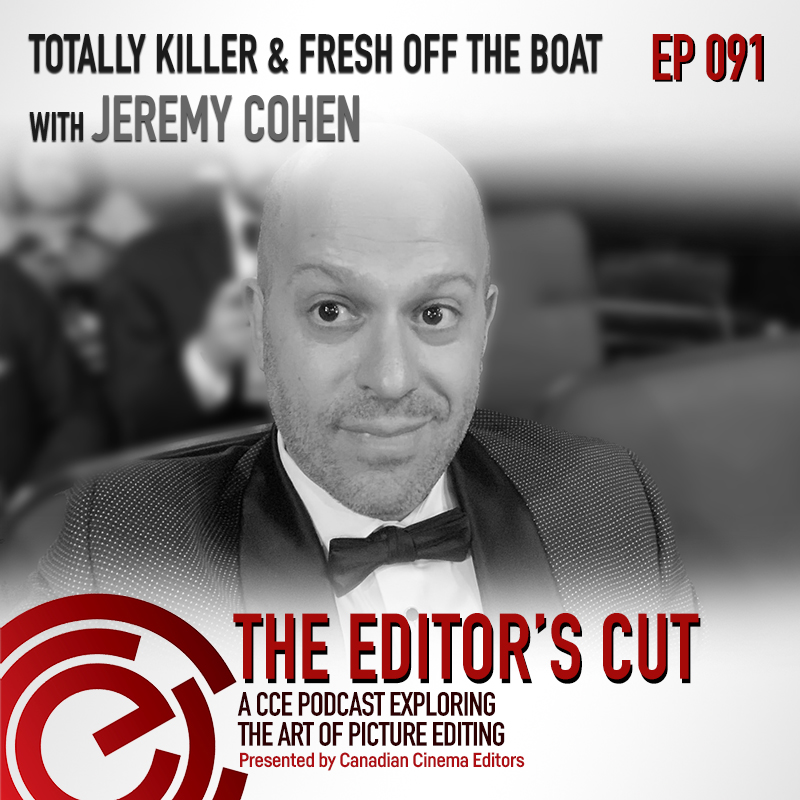
Vancouver Short Film Festival

Catégories
The Editors Cut

Episode 083 – Wu-Tang: An American Saga with Marc Wiltshire

Episode 083 - Wu-Tang: An American Saga with Marc Wiltshire

In this episode Sarah Taylor, CCE sits down with editor Marc Wiltshire to discuss his editing career.

Marc Wiltshire is a TV and Film editor, passionate about storytelling. Most recently, he’s edited several episodes on season 3 of Hulu’s Wu-Tang: An American Saga, including the first-ever episode written and directed by co-creator The RZA, and season 2 of Peacock’s Bel-Air, including the season premiere and finale. As an editor, he is committed to making bold choices, protecting the story, and bringing the best version of the director’s vision to life.


Throughout his career, Marc has worked on an impressive list of acclaimed productions, including Emmy and Eddie award-winning Hacks, NAACP-nominated Our Kind of People, Lee Daniels’ Star, the First Run Film Festival award-winner Oakland in Blue, and Fantasia Film Festival winner Bullshit.

Marc discovered his passion for editing while working on his first short film on a 16mm Steenbeck editing machine. While Marc pursued his MFA degree in Film & TV Production at NYU’s Tisch School of the Arts, he wrote and directed several short films, including award-winner My Avatar, which premiered at the Fantasia Film Festival. Originally from Montreal, Canada, Marc has lived in Italy, Scotland, Singapore, Vietnam and Japan. He currently resides in Los Angeles with his wife and daughter.

À écouter ici !

The Editor’s Cut – Episode 030 – “What is Anti-Oppression? With Tenniel Brown”

Sarah Taylor [00:00:01]

Hello and welcome to The Editor’s Cut. I’m your host Sarah Taylor. At the CCE, we began our journey of self education with Anti-Oppression training in 2019. It was invaluable for us as it provided us with tools to assess how we as an organization could set a course of action to root our unconscious and systematic bias in our operations. This training is now a permanent part of our budget so future board members and volunteers can continue this work, and equity can be part of the fabric of our organization. We are offering a Lunch and Learn Introduction To Anti Oppressive Communication with Tenniel Brown on July 27. Today I’m lucky to be able to sit down with Tenniel Brown and discuss what Anti-Oppressive training is and what we can expect from this webinar. Tenniel Brown is a passionate anti-racist anti oppression and mental health speaker dedicated to improving the experiences of marginalized people in all institutional settings. She is the founder of the Centre For Anti-Oppressive Communication which specializes in providing anti oppressive, trauma-informed counseling, clinical supervision and organizational consulting, as well as customized workshops training and team retreats. I’m joined with Tenniel Brown, she is the founder of the Centre For Anti-Oppressive Communication based in Toronto. And we just want to have a little conversation about why anti oppression work is important in this and all days but specifically right now. So can you just tell us a little bit about your background and why you started the Center For Anti-Oppressive Communication.

Tenniel Brown [00:01:41]

My background is as a psychotherapist. So I spent I’ve spent many many years working with individuals and couples and families and groups helping them to access more of their well-being by addressing different mental health issues specifically trauma. One of the things that I specialize in addressing is racialized trauma. But also trauma that comes from folks that have experienced different types of oppression. And I think for most people that are called to this type of work it’s quite personal for me right. So often when you don’t see the work that you know needs to happen in the community taking place you create it. And so that was me. You know I think I saw that there was a need for organizations to have somebody come in and not just talk about diversity inclusion but talk about what happens when certain identities have power and that unbalance of power and how to actually address that in our communication. I knew that out in the community there were therapists and social workers that were wanting to do better work. You know work in the best practice way with clients that are black, racialized, queer, and trans, and had nowhere to go to get supervision and support. And finally I knew personally that there were so many folks that when they were ready to do therapy work they needed to see someone sitting across the office that looked like them or had a very similar lived experience and they just were not going to come unless that was the case. So all these things I knew was happening and nobody was doing it. And I said someone’s got to do something and that was me. I think what needs to come out of what’s happened in June is for folks to see black professionals and black community in in the in sort of like the the brilliance of what we do and it’s not uncommon that in many cases where we don’t see ourselves we create it. So yeah that was the spirit of and I think that when I started the organization I knew that it was important for there to be a place where folks from those different backgrounds could come and get that support and information. So it’s a real passion of mine. It is my baby and it’s so beautiful to see folks wanting this information during this time.

Sarah Taylor [00:04:01]

Yeah so important. Can you tell us what Anti-Oppression means and what someone can expect by taking an anti oppressive workshop?

Tenniel Brown [00:04:10]

Sure absolutely. So when you sort of break down the word anti oppression anti oppressive practice we take a look at that anti part and essentially that that just means opposition to oppression and then the practice part. So AOP… the practice part pertains to the context in which you are practicing opposition to oppression. So you can apply an anti oppressive lens to just about anything. And I’ve had the opportunity to work with organizations like Pride Toronto and work with your curators to apply an anti-oppressive lens to the way they do event organizing. I have applied an anti oppressive lens to the way I do therapy and clinical supervision with other therapists. You can apply an anti oppressive lens to teaching. You can apply it to student advising, you can apply it to just about anything. I’ve been working with fitness professionals looking at applying an anti oppressive lens to the way that they support folks that are on their fitness journey. So so it’s about looking at whatever practice whatever context you are working in and using that platform to be able to oppose oppression and all of its forms. So that’s essentially what it is.

Sarah Taylor [00:05:29]

And so when someone takes courses like anti oppressive communication course or participates in your courses what can they expect to be talking about or learning?

Tenniel Brown [00:05:37]

Absolutely so I think one of the most important things is to sort of pull back a little bit of you know the cover on this because I think anti oppressive language is its own language. It’s like Spanish. And you see so many people getting themselves into some rather serious trouble these days because they actually don’t know the language they don’t understand… in some ways the harm of some of the things that they’re doing and saying the deep harm of that. You get a lot of people who don’t really know how to talk about these issues. And so you go into a shame spiral and you just don’t talk. You just get very quiet and I always argue that you know the silence piece is a part of how we got ourselves into this trouble as a human society in the first place. So what I offer is something for everybody. I think over the years what folks have said to me is is even somebody who’s maybe got a social work background and knows about anti oppressive practice when they come to one of my trainings they find that they are moved further along in their application of that perspective around “OK, well what does this mean when I’m interacting with somebody right here in a one on one context.” Other people that are completely brand new have never had the chance to learn any of this language or understand any of these concepts have said over the years that they felt like they left with a really good sense of what this topic is. But not just that practical skills. I’m all about practical skills. I want to offer things that folks can use tomorrow today and the next day and my mission is also for folks to leave his training and talk about it. Tell a friend, tell a colleague, tell a family member, and feel equipped to be able to engage in these conversations. So when someone is saying or doing something problematic, you have this confidence in the skills to be able to interpret what’s going on there and to be able to talk to them and to be able to address it. The other thing that I do is I couch everything that I do in my trainings in a self care and team care perspective. And I think this is very important. We have to look after our emotions. We have to look after ourselves and we have to look after each other. I always say you could be as anti oppressive as you want but if you haven’t had any lunch… if you haven’t eaten anything… you’re not good.

Sarah Taylor [00:07:57]

You’ve got the hangries!

Tenniel Brown [00:07:59]

Trust me, Anti-Oppressive work requires patience. It requires empathy. It requires compassion and self compassion. You will fall down a lot and I find you know and I talk a lot about cancel culture and don’t get me wrong really that could be its own podcast.

Sarah Taylor [00:08:19]

Totally. Especially in this industry.

Tenniel Brown [00:08:22]

Look we need to talk about this and I get why certain people are being canceled for sure. And yet as someone who does this work I recognize that I’m so thankful I wasn’t canceled because over the years I’ve done and said things before I knew before I took a course like this before I had an opportunity to learn what was problematic about my lens. I’m so thankful that I was able to make those mistakes in a safe environment and actually benefit from that and grow. So people get a safe environment to learn language and understand what is going on, what is oppression, if oppression is so bad why don’t we just stop this. Well I unpack that for folks. Why is this so complicated and why doesn’t this just stop. And then I provide practical skills for folks to be able to apply this to their lives and their communication. I think the other thing that I think folks get is not just sort of a general whatever, you’ll find that I’m really interested in applying it to film editors and what it is that you do on a regular basis and looking at how you can use your platform to be able to actually oppose oppression.

Sarah Taylor [00:09:31]

Yeah well it’s like it’s huge I know for myself we did anti oppression workshop as a board for the CCE. I’m in an interracial marriage and so I thought “Oh I know a lot.” Like I’ve been unpacking this stuff for a while and understanding in my own way. But also like kind of like how do I say it to my white uncle who is racist like how do I approach that. And by taking that one course, like you said I got so much more understanding of where people might come from and the language and I could approach it not by just being angry because anytime I’d hear anything I was like “You’re talking about my husband, you’re talking about my child! This is not OK!” And so it made a huge impact on me and I felt like I kind of knew some stuff but I realized that there was so much more to learn. And I think I’m still learning and it’s opened up even conversations I’ve had with my husband and my in-laws… and so I think people who are in my situation are like “no I’m cool I got I’m married to so-and-so or I have my best friend or whatever.” You grew up in your lens and there’s way more to learn and unpack.

Tenniel Brown [00:10:41]

Absolutely. Absolutely it’s so true. And I always say that absolutely positively nobody gets a pass on this.

Sarah Taylor [00:10:48]

100 percent.

Tenniel Brown [00:10:49]

At all. You know myself as someone who identifies as a black fem queer woman, you know folks would be like well you know you of course you couldn’t oppress. And it’s like yes we are all susceptible to experiencing oppression and we are all oppressors. So I have aspects of my identity that allow me to have privilege. And the thing about this is that if you’re not aware of those things that’s how you harm people that’s how you engage in micro aggressions. You know what I mean? That’s how you you know get striking up a conversation with someone about your latest renovation in your house when this person is still renting and doesn’t even have access. These are the types of things that you’re never protected from. Right. Like you’re not protected from that in a certain way. So it’s really important to remember that.

Sarah Taylor [00:11:40]

Where should someone start if they’re like feeling overwhelmed they’re like wow I know that I need to make this change. I’ve seen all this information now on social media and I’m saying all the wrong things and like you said I’m just going to be quiet which is not the right thing to do. So where do they go and what should they focus on first to just like get into this mindset of making these changes?

Tenniel Brown [00:12:02]

That’s a great question. And what I would say is education. Not a coincidence right? So of course you know joining with you know your organization to offer this to the community because I think that’s step number one. I think we do need to have good information about… you need to educate yourself. I would say that it’s a really important first step to really listen, and I find even when you have more information and you have more training it even improves the way that you can listen because what you find is when you don’t have that knowledge there’s certain things that are sort of prevent you from even being open. So I find the training and the skills and the confidence that you get from doing the course like this allows you to even listen deeper right and understand more and I think that that’s step number one. I think that once… but don’t stay there! Because I think a lot of people oh I’m listening but really it’s just their guilt and shame. So yeah they’re still not doing anything but once you’ve had the chance to listen you now can start thinking more about your platform and I think that’s one of the most important thing for your listeners to know that if it’s like well I’m not a social worker I’m not a therapist what’s this got to do with me it’s like it has everything to do with you. You have a platform as a film editor and it’s important for you to acknowledge that there are big ways and small ways that you can make a difference. And we all have a responsibility. What’s happened in this world since COVID what’s happened in this world since June is we can no longer close our eyes to this. We have to look at this and all the years that we have stayed silent on this has been what’s caused the problem. So the reality is is that we all are called to use our platform to be able to address this to look around the room and be like who isn’t here? To look around your history of the films that you and different projects you’ve been involved in and being like how many of these people, how many of these stories featured stories that were outside of what we usually see? Right. And looking at the ways that you can use your platform and your influence to be able to make a change, so we’re all called to do that I don’t care if you’re a child care worker or a housekeeper do some working at a gas station, it literally doesn’t matter we’re all a part of this human society. We all have some sort of platform and so we all have a responsibility to do something. You know Sarah one of my favorite slogans that’s come out of the protest is “Silence is Violence.” I love that one because I know what happens when people don’t have education and knowledge. They go into a shame cycle they go into a guilt cycle and they go into fear and you know what happens there? Shh. And you know what, that doesn’t help anybody at all. So I recognize that these are difficult things for us to unpack but we all have a responsibility to use whatever platform we have to make a difference. So starting by educating yourself, listening a lot, and then that’s going to help you to be more open to what you can do. And then looking at your platform whether that be personal or professional to make a change.

Sarah Taylor [00:15:20]

That was perfect. Yeah. That’s huge. And even since I took my training and even just since I’ve done my own inner work I noticed like I wouldn’t pick certain shots anymore or there’ll be things in my edit where I’m like “that’s a stereotype” or “No that’s not going to work. We can’t do that we can’t have that.” And so I think if everybody’s doing that then what we’re seeing on screen can start changing.

Tenniel Brown [00:15:45]

Absolutely. Absolutely and there’s these you know there’s there’s big ways and then there’s little ways like you describe. So it’s it is about really curating your lens, right and making sure that you’re seeing more and I think training like this just helps you to really open up your lens. So you’re not just seeing directly what’s in front of you work to the side of you but it’s more of like a panoramic view which you folks really need in the work that you do.

Sarah Taylor [00:16:09]

100 percent. Yeah. Well I hope that our membership joins us. I know we’ve already been getting people RSVPing which is very exciting. On July 27 2020 to learn and to unpack and to take part and just hopefully we can continue to do stuff with you and just keep educating and making the changes we can make.

Tenniel Brown [00:16:28]

Yeah. Join us. Join us. Don’t hesitate folks. Be a part of this. I’m really looking forward to working with everybody. And you know what we’re gonna have fun. I know these topics are really heavy but we’re gonna have some fun and we’re really going to connect with each other as a community so I look forward to meeting everybody at this training.

Sarah Taylor [00:16:46]

Thank you so much for taking the time to chat with me today and I look forward to seeing you on the 27th and continuing my journey. So thank you for doing this for us and thank you for sharing your knowledge and your experience with the world. So thank you so much.

Tenniel Brown [00:16:59]

You’re so welcome. Thanks for having me.

Sarah Taylor [00:17:03]

Thank you so much for joining us today. And a big thank you goes to Tenniel Brown and a special thanks to Maureen Grant and Jane MacRae. If you’d like to connect with Tenniel, you can find her on Instagram @TennielBrown. If you’d like to bring Tenniel into your organization to learn more about anti oppressive work, you can check out her website at brownconsulting.com. I look forward to learning more from Tenniel on July 27 2020 at the CCE Lunch and Learn I hope to see you there. The CCE has been supporting BIPOC TV and FILM. BIPOC TV and FILM is a grassroots organization and collective of black, indigenous, and people of colour in Canada’s TV and film industry. From writers, directors, producers, and actors, to editors, crew members, and executives. Their members are a mix of emerging, mid-level, and established industry professionals. BIPOC TV and FILM is dedicated to increasing the representation of BIPOC both in front and behind the camera. If you would like to donate to BIPOC TV and FILM please head to their website at bipoctvandfilm.com. The CCE is taking steps to build a more equitable ecosystem within our industry and we encourage our members to participate in any way they can. 

The main title sound design was created by Jane Tattersall. Additional ADR recording by Andrea Rusch. Original music provided by Chad Blain. This episode was mixed and mastered by Tony Bao. If you’ve enjoyed this podcast, please rate and review us on Apple Podcasts and tell your friends to tune in. Til next time I’m your host Sarah Taylor.

Outtro

The CCE is a non-profit organization with the goal of bettering the art and science of picture editing. If you wish to become a CCE member please visit our website www.cceditors.ca. Join our great community of Canadian editors for more related info.

Abonnez-vous là où vous écoutez vos balados

Que voulez-vous entendre sur L'art du montage?

Veuillez nous envoyer un courriel en mentionnant les sujets que vous aimeriez que nous abordions, ou les monteurs.euses dont vous aimeriez entendre parler, à :

Crédits

Un grand Merci à

Kimberlee McTaggart, CCE

Alison Dowler

Hosted and Produced by

Sarah Taylor

Design sonore du générique d'ouverture

Jane Tattersall

ADR Recording by

Andrea Rusch

Mixé et masterisé par

Tony Bao

Musique originale par

Chad Blain

Sponsor Narration by

Paul Winestock

Commandité par
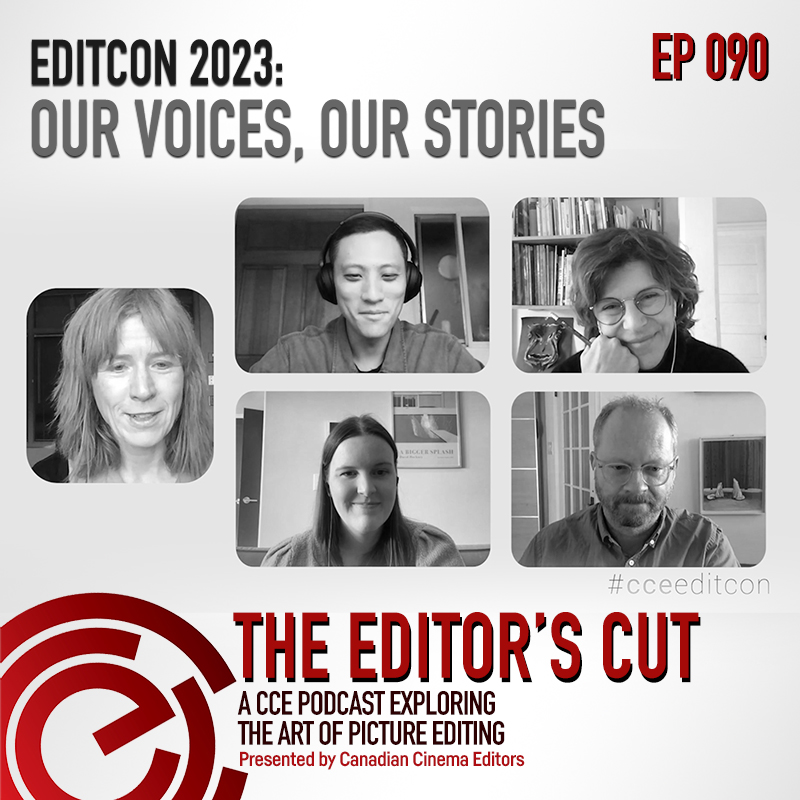
Vancouver Short Film Festival

Catégories
The Editors Cut

Episode 082 – In Conversation with Avrïl Jacobson, CCE and Annie Jean, CCE

Episode 82: In Conversation with Avrïl Jacobson, CCE and Annie Jean, CCE

Episode 82 - In Conversation with Avrïl Jacobson, CCE and Annie Jean, CCE

Today’s episode is the panel that took place March 8th, 2023.

It is an in depth conversation with editor Avrïl Jacobson, CCE and Annie Jean, CCE as they discuss their work on crafting powerful documentary films celebrating two bold and visionary indigenous women in Ever Deadly and Mary Two-Axe Early. 

The panel was moderated by Sophie Farkas-Bolla.

À écouter ici !

The Editor’s Cut – Episode 030 – “What is Anti-Oppression? With Tenniel Brown”

Sarah Taylor [00:00:01]

Hello and welcome to The Editor’s Cut. I’m your host Sarah Taylor. At the CCE, we began our journey of self education with Anti-Oppression training in 2019. It was invaluable for us as it provided us with tools to assess how we as an organization could set a course of action to root our unconscious and systematic bias in our operations. This training is now a permanent part of our budget so future board members and volunteers can continue this work, and equity can be part of the fabric of our organization. We are offering a Lunch and Learn Introduction To Anti Oppressive Communication with Tenniel Brown on July 27. Today I’m lucky to be able to sit down with Tenniel Brown and discuss what Anti-Oppressive training is and what we can expect from this webinar. Tenniel Brown is a passionate anti-racist anti oppression and mental health speaker dedicated to improving the experiences of marginalized people in all institutional settings. She is the founder of the Centre For Anti-Oppressive Communication which specializes in providing anti oppressive, trauma-informed counseling, clinical supervision and organizational consulting, as well as customized workshops training and team retreats. I’m joined with Tenniel Brown, she is the founder of the Centre For Anti-Oppressive Communication based in Toronto. And we just want to have a little conversation about why anti oppression work is important in this and all days but specifically right now. So can you just tell us a little bit about your background and why you started the Center For Anti-Oppressive Communication.

Tenniel Brown [00:01:41]

My background is as a psychotherapist. So I spent I’ve spent many many years working with individuals and couples and families and groups helping them to access more of their well-being by addressing different mental health issues specifically trauma. One of the things that I specialize in addressing is racialized trauma. But also trauma that comes from folks that have experienced different types of oppression. And I think for most people that are called to this type of work it’s quite personal for me right. So often when you don’t see the work that you know needs to happen in the community taking place you create it. And so that was me. You know I think I saw that there was a need for organizations to have somebody come in and not just talk about diversity inclusion but talk about what happens when certain identities have power and that unbalance of power and how to actually address that in our communication. I knew that out in the community there were therapists and social workers that were wanting to do better work. You know work in the best practice way with clients that are black, racialized, queer, and trans, and had nowhere to go to get supervision and support. And finally I knew personally that there were so many folks that when they were ready to do therapy work they needed to see someone sitting across the office that looked like them or had a very similar lived experience and they just were not going to come unless that was the case. So all these things I knew was happening and nobody was doing it. And I said someone’s got to do something and that was me. I think what needs to come out of what’s happened in June is for folks to see black professionals and black community in in the in sort of like the the brilliance of what we do and it’s not uncommon that in many cases where we don’t see ourselves we create it. So yeah that was the spirit of and I think that when I started the organization I knew that it was important for there to be a place where folks from those different backgrounds could come and get that support and information. So it’s a real passion of mine. It is my baby and it’s so beautiful to see folks wanting this information during this time.

Sarah Taylor [00:04:01]

Yeah so important. Can you tell us what Anti-Oppression means and what someone can expect by taking an anti oppressive workshop?

Tenniel Brown [00:04:10]

Sure absolutely. So when you sort of break down the word anti oppression anti oppressive practice we take a look at that anti part and essentially that that just means opposition to oppression and then the practice part. So AOP… the practice part pertains to the context in which you are practicing opposition to oppression. So you can apply an anti oppressive lens to just about anything. And I’ve had the opportunity to work with organizations like Pride Toronto and work with your curators to apply an anti-oppressive lens to the way they do event organizing. I have applied an anti oppressive lens to the way I do therapy and clinical supervision with other therapists. You can apply an anti oppressive lens to teaching. You can apply it to student advising, you can apply it to just about anything. I’ve been working with fitness professionals looking at applying an anti oppressive lens to the way that they support folks that are on their fitness journey. So so it’s about looking at whatever practice whatever context you are working in and using that platform to be able to oppose oppression and all of its forms. So that’s essentially what it is.

Sarah Taylor [00:05:29]

And so when someone takes courses like anti oppressive communication course or participates in your courses what can they expect to be talking about or learning?

Tenniel Brown [00:05:37]

Absolutely so I think one of the most important things is to sort of pull back a little bit of you know the cover on this because I think anti oppressive language is its own language. It’s like Spanish. And you see so many people getting themselves into some rather serious trouble these days because they actually don’t know the language they don’t understand… in some ways the harm of some of the things that they’re doing and saying the deep harm of that. You get a lot of people who don’t really know how to talk about these issues. And so you go into a shame spiral and you just don’t talk. You just get very quiet and I always argue that you know the silence piece is a part of how we got ourselves into this trouble as a human society in the first place. So what I offer is something for everybody. I think over the years what folks have said to me is is even somebody who’s maybe got a social work background and knows about anti oppressive practice when they come to one of my trainings they find that they are moved further along in their application of that perspective around “OK, well what does this mean when I’m interacting with somebody right here in a one on one context.” Other people that are completely brand new have never had the chance to learn any of this language or understand any of these concepts have said over the years that they felt like they left with a really good sense of what this topic is. But not just that practical skills. I’m all about practical skills. I want to offer things that folks can use tomorrow today and the next day and my mission is also for folks to leave his training and talk about it. Tell a friend, tell a colleague, tell a family member, and feel equipped to be able to engage in these conversations. So when someone is saying or doing something problematic, you have this confidence in the skills to be able to interpret what’s going on there and to be able to talk to them and to be able to address it. The other thing that I do is I couch everything that I do in my trainings in a self care and team care perspective. And I think this is very important. We have to look after our emotions. We have to look after ourselves and we have to look after each other. I always say you could be as anti oppressive as you want but if you haven’t had any lunch… if you haven’t eaten anything… you’re not good.

Sarah Taylor [00:07:57]

You’ve got the hangries!

Tenniel Brown [00:07:59]

Trust me, Anti-Oppressive work requires patience. It requires empathy. It requires compassion and self compassion. You will fall down a lot and I find you know and I talk a lot about cancel culture and don’t get me wrong really that could be its own podcast.

Sarah Taylor [00:08:19]

Totally. Especially in this industry.

Tenniel Brown [00:08:22]

Look we need to talk about this and I get why certain people are being canceled for sure. And yet as someone who does this work I recognize that I’m so thankful I wasn’t canceled because over the years I’ve done and said things before I knew before I took a course like this before I had an opportunity to learn what was problematic about my lens. I’m so thankful that I was able to make those mistakes in a safe environment and actually benefit from that and grow. So people get a safe environment to learn language and understand what is going on, what is oppression, if oppression is so bad why don’t we just stop this. Well I unpack that for folks. Why is this so complicated and why doesn’t this just stop. And then I provide practical skills for folks to be able to apply this to their lives and their communication. I think the other thing that I think folks get is not just sort of a general whatever, you’ll find that I’m really interested in applying it to film editors and what it is that you do on a regular basis and looking at how you can use your platform to be able to actually oppose oppression.

Sarah Taylor [00:09:31]

Yeah well it’s like it’s huge I know for myself we did anti oppression workshop as a board for the CCE. I’m in an interracial marriage and so I thought “Oh I know a lot.” Like I’ve been unpacking this stuff for a while and understanding in my own way. But also like kind of like how do I say it to my white uncle who is racist like how do I approach that. And by taking that one course, like you said I got so much more understanding of where people might come from and the language and I could approach it not by just being angry because anytime I’d hear anything I was like “You’re talking about my husband, you’re talking about my child! This is not OK!” And so it made a huge impact on me and I felt like I kind of knew some stuff but I realized that there was so much more to learn. And I think I’m still learning and it’s opened up even conversations I’ve had with my husband and my in-laws… and so I think people who are in my situation are like “no I’m cool I got I’m married to so-and-so or I have my best friend or whatever.” You grew up in your lens and there’s way more to learn and unpack.

Tenniel Brown [00:10:41]

Absolutely. Absolutely it’s so true. And I always say that absolutely positively nobody gets a pass on this.

Sarah Taylor [00:10:48]

100 percent.

Tenniel Brown [00:10:49]

At all. You know myself as someone who identifies as a black fem queer woman, you know folks would be like well you know you of course you couldn’t oppress. And it’s like yes we are all susceptible to experiencing oppression and we are all oppressors. So I have aspects of my identity that allow me to have privilege. And the thing about this is that if you’re not aware of those things that’s how you harm people that’s how you engage in micro aggressions. You know what I mean? That’s how you you know get striking up a conversation with someone about your latest renovation in your house when this person is still renting and doesn’t even have access. These are the types of things that you’re never protected from. Right. Like you’re not protected from that in a certain way. So it’s really important to remember that.

Sarah Taylor [00:11:40]

Where should someone start if they’re like feeling overwhelmed they’re like wow I know that I need to make this change. I’ve seen all this information now on social media and I’m saying all the wrong things and like you said I’m just going to be quiet which is not the right thing to do. So where do they go and what should they focus on first to just like get into this mindset of making these changes?

Tenniel Brown [00:12:02]

That’s a great question. And what I would say is education. Not a coincidence right? So of course you know joining with you know your organization to offer this to the community because I think that’s step number one. I think we do need to have good information about… you need to educate yourself. I would say that it’s a really important first step to really listen, and I find even when you have more information and you have more training it even improves the way that you can listen because what you find is when you don’t have that knowledge there’s certain things that are sort of prevent you from even being open. So I find the training and the skills and the confidence that you get from doing the course like this allows you to even listen deeper right and understand more and I think that that’s step number one. I think that once… but don’t stay there! Because I think a lot of people oh I’m listening but really it’s just their guilt and shame. So yeah they’re still not doing anything but once you’ve had the chance to listen you now can start thinking more about your platform and I think that’s one of the most important thing for your listeners to know that if it’s like well I’m not a social worker I’m not a therapist what’s this got to do with me it’s like it has everything to do with you. You have a platform as a film editor and it’s important for you to acknowledge that there are big ways and small ways that you can make a difference. And we all have a responsibility. What’s happened in this world since COVID what’s happened in this world since June is we can no longer close our eyes to this. We have to look at this and all the years that we have stayed silent on this has been what’s caused the problem. So the reality is is that we all are called to use our platform to be able to address this to look around the room and be like who isn’t here? To look around your history of the films that you and different projects you’ve been involved in and being like how many of these people, how many of these stories featured stories that were outside of what we usually see? Right. And looking at the ways that you can use your platform and your influence to be able to make a change, so we’re all called to do that I don’t care if you’re a child care worker or a housekeeper do some working at a gas station, it literally doesn’t matter we’re all a part of this human society. We all have some sort of platform and so we all have a responsibility to do something. You know Sarah one of my favorite slogans that’s come out of the protest is “Silence is Violence.” I love that one because I know what happens when people don’t have education and knowledge. They go into a shame cycle they go into a guilt cycle and they go into fear and you know what happens there? Shh. And you know what, that doesn’t help anybody at all. So I recognize that these are difficult things for us to unpack but we all have a responsibility to use whatever platform we have to make a difference. So starting by educating yourself, listening a lot, and then that’s going to help you to be more open to what you can do. And then looking at your platform whether that be personal or professional to make a change.

Sarah Taylor [00:15:20]

That was perfect. Yeah. That’s huge. And even since I took my training and even just since I’ve done my own inner work I noticed like I wouldn’t pick certain shots anymore or there’ll be things in my edit where I’m like “that’s a stereotype” or “No that’s not going to work. We can’t do that we can’t have that.” And so I think if everybody’s doing that then what we’re seeing on screen can start changing.

Tenniel Brown [00:15:45]

Absolutely. Absolutely and there’s these you know there’s there’s big ways and then there’s little ways like you describe. So it’s it is about really curating your lens, right and making sure that you’re seeing more and I think training like this just helps you to really open up your lens. So you’re not just seeing directly what’s in front of you work to the side of you but it’s more of like a panoramic view which you folks really need in the work that you do.

Sarah Taylor [00:16:09]

100 percent. Yeah. Well I hope that our membership joins us. I know we’ve already been getting people RSVPing which is very exciting. On July 27 2020 to learn and to unpack and to take part and just hopefully we can continue to do stuff with you and just keep educating and making the changes we can make.

Tenniel Brown [00:16:28]

Yeah. Join us. Join us. Don’t hesitate folks. Be a part of this. I’m really looking forward to working with everybody. And you know what we’re gonna have fun. I know these topics are really heavy but we’re gonna have some fun and we’re really going to connect with each other as a community so I look forward to meeting everybody at this training.

Sarah Taylor [00:16:46]

Thank you so much for taking the time to chat with me today and I look forward to seeing you on the 27th and continuing my journey. So thank you for doing this for us and thank you for sharing your knowledge and your experience with the world. So thank you so much.

Tenniel Brown [00:16:59]

You’re so welcome. Thanks for having me.

Sarah Taylor [00:17:03]

Thank you so much for joining us today. And a big thank you goes to Tenniel Brown and a special thanks to Maureen Grant and Jane MacRae. If you’d like to connect with Tenniel, you can find her on Instagram @TennielBrown. If you’d like to bring Tenniel into your organization to learn more about anti oppressive work, you can check out her website at brownconsulting.com. I look forward to learning more from Tenniel on July 27 2020 at the CCE Lunch and Learn I hope to see you there. The CCE has been supporting BIPOC TV and FILM. BIPOC TV and FILM is a grassroots organization and collective of black, indigenous, and people of colour in Canada’s TV and film industry. From writers, directors, producers, and actors, to editors, crew members, and executives. Their members are a mix of emerging, mid-level, and established industry professionals. BIPOC TV and FILM is dedicated to increasing the representation of BIPOC both in front and behind the camera. If you would like to donate to BIPOC TV and FILM please head to their website at bipoctvandfilm.com. The CCE is taking steps to build a more equitable ecosystem within our industry and we encourage our members to participate in any way they can. 

The main title sound design was created by Jane Tattersall. Additional ADR recording by Andrea Rusch. Original music provided by Chad Blain. This episode was mixed and mastered by Tony Bao. If you’ve enjoyed this podcast, please rate and review us on Apple Podcasts and tell your friends to tune in. Til next time I’m your host Sarah Taylor.

Outtro

The CCE is a non-profit organization with the goal of bettering the art and science of picture editing. If you wish to become a CCE member please visit our website www.cceditors.ca. Join our great community of Canadian editors for more related info.

Abonnez-vous là où vous écoutez vos balados

Que voulez-vous entendre sur L'art du montage?

Veuillez nous envoyer un courriel en mentionnant les sujets que vous aimeriez que nous abordions, ou les monteurs.euses dont vous aimeriez entendre parler, à :

Crédits

Un grand Merci à

Kimberlee McTaggart, CCE

Alison Dowler

Hosted and Produced by

Sarah Taylor

Design sonore du générique d'ouverture

Jane Tattersall

ADR Recording by

Andrea Rusch

Mixé et masterisé par

Tony Bao

Musique originale par

Chad Blain

Sponsor Narration by

Paul Winestock

Catégories
The Editors Cut

Episode 081 – Joy Ride with Nena Erb, ACE

Episode 081 - Joy Ride with Nena Erb, ACE

In today’s episode Nena Erb, ACE joins Sarah Taylor to chat about her editing work on the hilarious film JOY RIDE.

From first-time director Adele Lim (screenwriter of Raya and the Last Dragon, Crazy Rich Asians), JOY RIDE follows four Asian-American friends on a trip across Asia in search of one of their birth mothers, who end up on the journey of a lifetime.

You can check out the trailer here.

The film stars Oscar nominee Stephanie Hsu, Critics Choice Award nominee Ashley Park, Sherry Cola, and Sabrina Wu. The film premiered at SXSW in 2023 to critical acclaim, now boasting a perfect score of 100% on Rotten Tomatoes.

NenaErbACE2021

Nena Erb, ACE, is a picture editor based in Los Angeles. Raised in an Asian immigrant family, Nena’s father wanted her to be a doctor and her mother wanted her to be a pianist with the LA Philharmonic. Nena wanted to be Andy Warhol.

Armed with an art degree, a friend brought her into the industry and she started working in various capacities in production. It was her stint as an associate producer that opened her eyes to the impact of editing. It combined her love of photography and storytelling into one and she was hooked. Since then, Nena has edited projects for Warner Brothers, Apple, HBO, and others.

In 2016, she received an Emmy award on HBO’s documentary series PROJECT GREENLIGHT. In addition, she has received three ACE Eddie nominations; two for her work on HBO’s comedy-drama series INSECURE and the third for CW’s acclaimed series CRAZY EX-GIRLFRIEND. Nena received her second Emmy award in 2020 for her work on season 4 of INSECURE and a third Emmy nomination in 2022 for the final season. She recently finished JOY RIDE directed by Adele Lim for Lionsgate. Her parents no longer ask if she’d reconsider medical school.

À écouter ici !

The Editor’s Cut – Episode 081 – Joy Ride with Nena Erb, ACE​

Nena Erb, ACE:

It is important to see yourself represented and to see women that are so like braved, they’re not afraid to be themselves. It was a good project for me. It kind of like gave me permission to speak my mind more. I have a tendency to like think something, and then, I count to 10. And by then, it’s like, who cares? So I don’t even say it, but now, I’m like, “No, I’m not gonna count to 10. I’m just going to say it.”

Sarah Taylor, CCE:

Oh, I love that. Yeah, we should all just say what we need to say. This is great. Hello and welcome to The Editor’s Cut. I’m your host, Sarah Taylor. We would like to point out that the lands on which we have created this podcast and that many of you may be listening to us from are part of ancestral territory. It is important for all of us to deeply acknowledge that we are on ancestral territory, that has long served as a place where Indigenous peoples have lived, met, and interacted. We honor, respect, and recognize these nations that have never relinquished their rights or sovereign authority over the lands and waters on which we stand today. We encourage you to reflect on the history of the land, the rich culture, the many contributions, and the concerns that impact Indigenous individuals and communities. Land acknowledgements are the start to a deeper action.

Today, I bring to you an interview with past guest, Nena Erb, ACE. We sit down and chat all things Joy Ride. If you haven’t had a chance to watch this film, please do check it out. It is hilarious and also very heartwarming. For those who don’t know Nena, in 2016, she received an Emmy Award for HBO’s documentary series, Project Greenlight. In addition, she has received three ACE Eddie nominations, two for her work on the HBO Comedy Series, Insecure, and the third for the CWS acclaim series, Crazy Ex-Girlfriend. Nena received her second Emmy award in 2021 for her work on season four of Insecure and a third Emmy nomination in 2022 for the final season. Nena’s parents no longer ask her if she should reconsider medical school. Without further ado, here is Nena.

Speaker 3:

And action.

Sarah Taylor, CCE:

This is The Editor’s Cut.

Speaker 4:

A CCE podcast.

Speaker 5:

Exploring.

Speaker 6:

Exploring.

Speaker 7:

Exploring the art.

Speaker 4:

Of picture editing.

Sarah Taylor, CCE:

Welcome back to The Editor’s Cut, Nena.

Nena Erb, ACE:

So good to be here. Thank you for having me again.

Sarah Taylor, CCE:

I’m so glad to chat more about what you’ve been up to over the last, I think we decided, three years like, Oh, it’s very exciting.

Nena Erb, ACE:

Yeah. Yeah, it’s been a while.

Sarah Taylor, CCE:

So just to catch the listeners up, for the people that maybe haven’t listened to your previous episode, can you just give us a bit of a Cole’s Notes on how you made your way to Hollywood?

Nena Erb, ACE:

I have an art degree. I did not go to film school. And afterwards, of course, what do you do with that, right? So my friend’s like, “Hey, come work with me in the art department.” And that’s kind of how I got into the business. You know… And I jumped around a lot, did a lot of different positions, until I finally found editing. And once I discovered what editing was, it just completely, the whole world just opened up. And I… yeah, was like I felt like I had come home in a way.

Sarah Taylor, CCE:

I feel that. So how long has it been now since you’ve started editing?

Nena Erb, ACE:

Oh my gosh. I was thinking about that. 20.

Sarah Taylor, CCE:

I’m with you. I’m 20 as well, so yeah. That’s awesome.

Nena Erb, ACE:

Yeah, I’m like, wow, time flew.

Sarah Taylor, CCE:

It really does, doesn’t it? When you’re doing something that you love, it just flies by. Yeah.

Nena Erb, ACE:

Yes.

Sarah Taylor, CCE:

So today, I wanted to talk to you about the wonderful film, Joy Ride, which it got me in stitches, and I cried. And there’s oh, it was so wonderful. You did a wonderful job. I want to know, how did you get involved with Joy Ride? And what were your first impressions when you were given the script?

Nena Erb, ACE:

I was on my last season of Insecure, and you know, as always, when you’re coming to an end of a project, you’re like, “Okay, let’s see what else is out there.” And my agents brought me several different projects, and I kind of was looking at all of them. And I said no to many, and Joy Ride was one that I said no to, not knowing anything about the script or anything about the filmmakers. It was just like, “Eh, no, it’s comedy. Move on.” Because I wanted to do drama, right? That was my goal. “Let’s do a drama. It’s been several years, so I need to do a drama.” And so, um and so the whole, you know, I just said no to a bunch of stuff. And after a while, they came back, and they’re like, “You know, I think the producers really want you to just read the script. No pressure. Just read it.” I was like, “All right. I am reading other scripts, so I’ll read this one too.”

And yeah, I remember I was on the Sony lot. I was reading the script and taking a little break and waiting for, I think I was waiting to go back for notes or something. And I’m reading it and I’m laughing, and of course, if you’re walking by, and you don’t know what’s happening, you must think, you know, I’m losing my mind. I’m just laughing, um, like loudly. And then, it came to the end, and I was sobbing and crying uncontrollably. And I’m sure, again, people were probably like, “Oh, that’s an overreaction from someone messing up your coffee or something.” But, yeah, it grabbed me. It just resonated so deeply with me for so many reasons.

And I ran back into my edit bay, and I was like, “All right, let’s take a… I need a meeting. I need to meet these people.” Because it was the dirtiest but funniest script I’ve ever read. And then, just the way it hits you at the end, I was not expecting that. And plus, I’m also very good at compartmentalizing, when I’m watching dailies, to really be objective. So I did not expect for that to grab me the way it did and to make me that emotional, so.

Sarah Taylor, CCE:

Amazing. From reading the script initially to the final film, were there any major changes that happened in the script?

Nena Erb, ACE:

Yeah. Yeah, there were. You know, my first cut was two and a half hours long. Because there’s ,you know, a lot of improv, and a lot of jokes, and jokes that led into other jokes. And so, I just wanted to put everything in there, so we can have a version where the words are on their feet, right? And so, that’s what I had. And then, after working with the director and the producers, you know, we very dramatically started cutting things out. And, and as expected, because no comedy would be two and a half hours long. So yeah, some of the change scenes that we lost were a scene between Lolo and Kat, scene between Lolo and Baron, you know, where he’s kind of letting her know that she’s, she has to be the calm one.

Like she’s usually the one that’s like very chaotic, and so, she needs to kind of find her inner peace and do something that makes her happy versus, you know, makes Audrey happy. And the other scene with Kat was when they’re both sharing their saki or soju and kind of realizing through their conversations that they’re more similar than not, right? And so, it was kind of like their bonding scene, the way that Deadeye and Audrey had their bonding scene were poker. So those were some of the scenes that we lost. But I had say the biggest difference is the slapping game, at the gay bar.

Sarah Taylor, CCE:

Yes.

Nena Erb, ACE:

It was much, much longer. It was like we had seen the two guys that started, they go through their game, and then, you know, Kat and Lolo come up and they’re eyeing each other. And the first time they do their toss out their numbers, I don’t even know what you call that, but yeah, so it was a tie. And so, they both had to slap each other. So they did that, and then they do it again, it was another tie, so they had to slap each other again, and then, again. And then, finally, Kat wins, and then, she just you know, kind of socks it to her, one really, really good punch.

And that was a version that was in the script. You know, we had tried that. We have that definitely. And then, we tried it with much more of their improv, because they, they really went at it. They went off the improv script. They did the improv jokes that the writers wrote, and then, they just kept going. And they were goading each other on. It was hilarious, but too long. And so you know, we’re trying to find what’s funniest and what feels the best pacing wise. And so, we’ve gone through a lot of different iterations of that scene. And um, finally, towards the end, I remember just thinking, “What if they just beat the crap out of each other? What if there’s no dialogue, no tie, they just get in there and then, they start hitting each other?” And they’re like, “Well, if you can make that happen.” And of course, after I say it, I’m like, “Oh, can I make that happen? Do I have what it takes? Haha in the material, in the dailies, to make this happen?”

Um and it was a challenge. I was kind of kicking myself, I’ll be honest, after you know, after I was trying it, because they never shot it where it was a ton of different hits to each other. So I had the ones that I had, and you know, there weren’t that many takes. It was a very complicated scene at the club. So yeah, I had a lack of options. I didn’t have a lot of options to work with, in terms of variations of them slapping each other. So a lot of it was cheated by either removing frames or adding frames and sound design to make it seem like it escalated to the final like punch. You know so yeah, so that was definitely very different, and I’m relieved that I was able to carry it off. And next time, I will think twice before offering a suggestion. Hahaha…

Sarah Taylor, CCE:

That’s a good tip for editors out there listening. But sometimes, we challenge ourselves in the best way, because it makes like a really great scene. And that scene was fantastic. It made me laugh so hard. You mentioned improv a few times in your last statement, so you got to work with so many hilarious actresses and actors. I could tell that there was gonna be, you dealt with a lot of improv. So how did you like you did your first cut, you put everything in, but how did you maybe decide, in the end, what jokes could stay? How did you, you know, maybe try to end a joke of their improv before? Cause you know they always just keep going, keep going. I’ve dealt with that too. So how did you handle the improv?

Nena Erb, ACE:

Oh, yeah. There were definitely a lot of improvs that just kept rolling. You know they build off the improv, off the improv, and then, they keep building. Um and you know, most of the time, I just go with my gut. It sounds simply oversimplified, but it’s really how… Yeah, it’s what I trust. I trust my gut. If it’s making me laugh, great. If I feel like it’s going on too long, I’ll just find a good place to cut. Point gray are geniuses. I mean they’re so, like well-versed in comedy. And the way that they shot this improv, I honestly you know, I’ve worked on a lot of comedies, they shoot improv all kinds of different ways, but they had it so planned out that all the improv was in their singles. And it was just genius. It was so smart, because you can make it work easily, you know, rather than if it’s on a two shot or slide and you know.

And every once in a while, there’s a you know over the shoulder, and that’s fine. I figured out ways to get around that for continuity. But… yeah, so they did it that way. They cross shot, so it’s not like, “Okay, we’re on one side. You do your improv line. Then we turn around for the reaction.” The reactions are in the moment, and it was just so, so great um. So they made it very easy to try different jokes. At the end of the day, I rank my jokes. If it made me laugh really hard, then it’s a five or a six. If it didn’t make me laugh that hard, it’s like a one or two. And then, sometimes, if it was like, didn’t even make the chart, I just put okay, hahaha, in the locator notes.

Sarah Taylor, CCE:

I love it. That’s great. Yeah.

Nena Erb, ACE:

So yeah, I had a way of tracking it. I had a way of making up a lot of different versions. So for each scene that had improvs, there was probably like, 10 more versions, each version with different improvs and different combinations of improvs.

Sarah Taylor, CCE:

So would you like then you’d cut the scene that was scripted, and then, you would do, say, 10 different versions of that same scene, so you could drop it into the cut if you needed to see? Is that kind of how you…

Nena Erb, ACE:

Kind of, kind of. Yeah, I would have the version that I like best, and then, I would kind of subclip you know the joke out, but a little padding on either side. And basically, what I would do then is like, okay, I would swap out another joke, and sometimes, you have to you know, change the going in and the entrance, and the exit to make it work, because people are suddenly in different positions, whatnot. Um so yeah, I had a lot of different versions of that. I realized, in the beginning, I was cutting and thinking like, “Oh my gosh, I’m moving so slow. I can’t believe I’m like, only getting through like X number of scenes.” Then I realized, “Wait a minute, I’ve actually cut like 45 minutes of content, because of all the different improvs, so I’m not actually moving that slow.”

Sarah Taylor, CCE:

Yeah that’s, that’s the most, I feel like that’s the most challenging part with comedy when you have actors that are hope that are good at improv. Um and yeah, I did a I did a feature recently, and our first cut was two and a half hours as well. And it was just like, “What jokes do we cut?” But on that note, I know that there’s a few jokes in this film I recently cut was called Hey, Victor and um, that still make me laugh today. So are there ones that just still hit you like they did when you first heard them?

Nena Erb, ACE:

Oh my gosh, there are so many different ones. I may have to think about this.

Sarah Taylor, CCE:

I sprung it on you.

Nena Erb, ACE:

Yeah. Oh my gosh. Yeah, we’ll have to come back.

Sarah Taylor, CCE:

Who was the team that worked with you with end post? Did you have some assistance? And what was your day-to-day process like?

Nena Erb, ACE:

Yeah. Yeah. I was fortunate and I had a whole team, first assistant, second assistant, and a PA. And I got really lucky. I found some really great people that really knew what they were doing, and it was a good team. It was a good team, and it was all female, which is great. And then, of course, if I needed like a male ADR, I would make sure they went around the building to see who was available and willing to do our temp ADR. And fortunately, we were at Pivotal Post and EPS, and there were other people around, so it was never a problem. But yeah, they were great. A lot of them were new to me, because I think the last time we talked, I was on Insecure, and my assistant, who received the Emmy along with me, she’s now editing. So I’m very, very excited for her, and so you know.

And so, obviously, I was like, “You go do your editing, I’ll find a different team.” and um so yeah so this was a whole new team to me. And learning everyone’s preferences and how they work was very fascinating. In the beginning, I would talk to them and see, “Okay, what are you really into?” And I found out that Tori, my first, was really into sound design.

Sarah Taylor, CCE:

Hmm great perfect

Nena Erb, ACE:

So I know, okay, the hard sound design, give it to her. I actually gave her all the sound design, and then, I found out that our second, Melissa Khan, was great at After Effects and TempVFX. So she got all that, and then, we had a little hiatus. I don’t know if you heard about that, but we had a hiatus and then came back for additional photography. And at that point, Melissa had already been got a job on another movie, so she couldn’t come back. So I had to find a new second. And we hired Joya Caruso. Fortunately, she was also good at VFX, so it was like, somehow, I came up with the perfect team.

Because editors care about sound design tremendously, but we don’t have the time to really dig into it. And I also try my best to have good TempVFX, but again, I can’t do a lot of it in the Avid. So it’s nice when I have an assistant that knows how to use After Effects or Photoshop or whatever other tools they have to make these temps happen. So yeah, so it was a good team. I got really lucky.

Sarah Taylor, CCE:

Sounds like a dream team. I love it. That’s great. You mentioned you took a break, and so, and so how much of like, were you I’m assuming you were cutting as they were filming, you took a break and came back and started cutting as they were filming again?

Nena Erb, ACE:

Yes.

Sarah Taylor, CCE:

How long after photography did you have to get to your like editor’s cut and stuff like that?

Nena Erb, ACE:

We started September 21st in 2021, and then, we took our hiatus like April 8th, I think it was that week. We had gotten the film to the second preview, and then, realized, “Okay, we need X, Y and Z to kind of you know to take the film into the direction that we want it to go in.” And so, the original idea was like, “Oh, I wish to do like a short six week break.” But then, of course, as you know, Ashley and Stephanie, Sherry, they’re all very, very busy. They’re busy actors. And Sabrina was touring, doing her standup.

So we had to, for schedule-wise, push it back a little bit, and then, we reconvened in November of 2022. And then, locked picture, I want to say like mid-January, mid-January, yeah. Yeah. Because we had another a third preview. And so, it was a lot, but additional photography, it was only for like, a handful of scenes. It wasn’t a lot. So I only got one day, after last day of dailies to get my editor’s cut together, because a lot of bulk of the film was not changed. So just the new material. So we had to get it together very quickly. And then, it was watching it down from the beginning to make sure that, “With the reshoots, are we repeating ourselves in the beginning? Or is something else not making sense now?” So it was a fascinating process.

Sarah Taylor, CCE:

So you did three previews. So from those previews, what kind of stuff did you take into consideration in the edit?

Nena Erb, ACE:

Most of it was always for clarity. I think a lot of the issues that we deal with, it doesn’t matter what movie, usually, what we learn from previews is that, you know, the filmmakers, myself included, might’ve been a little too close to material. And so, there are things that we may have lost, that need to go back in, you know, to kinda really flesh out the setup or for clarity purposes. And, and sometimes, you know, you notice, I’m sure you’ve experienced this as an editor yourself, you see like, the smallest little nuance in the performance, and you know the difference, but is that coming across as clearly to the audience, right?

Sarah Taylor, CCE:

Yeah.

Nena Erb, ACE:

Yeah, so that’s always a question that we end up answering a lot.

Sarah Taylor, CCE:

What would you say was the most challenging scene to cut?

Nena Erb, ACE:

All the set pieces, all of them. No, the one on the train with the drugs.

Sarah Taylor, CCE:

That was so good.

Nena Erb, ACE:

And the one with all the…our main four with the basketball players at the hotel, that big long, yeah, I don’t even know what you call that, the orgy? But that’s not really an orgy for everybody. So yeah, it’s not really the right word for it.

Sarah Taylor, CCE:

Yeah, they’re all individual moments, sexual moments. I don’t know what you’d call it.

Nena Erb, ACE:

So yeah, so those two were probably the hardest and not for any reason other than you have to make them funny. And for the drug scene, what I realized was, you know, my first cut, just following the script, not even adding any extras, it was too long. It was like two minutes, um and we had to cut down. And that was down to a minute, and it still just didn’t feel quite right. And then, finally, we’re like, “Why don’t we speed it up?” I was like, “Oh, that sounds kind of cheesy, but why don’t we all try.” So yeah, I added some speed ramps to the images, and that kind of made it funnier, in a very you know, childish kind of way, which I’m all for.

And and that was really helpful too, because as I’m cutting down, I’m realizing I’m making the shots shorter and shorter, and so, sometimes so short that you don’t really get the full action of what they’re doing. And so, that tends to kind of like make it a little more murky and unclear what’s happening. So using the speed ramps, you can see the full motion of you know, someone snorting coke or putting coke up someone else’s behind.  So there were definitely funnier shots too that we had to lose, because it didn’t help tell the story. They were just funny little asides.

Once we had a decent cut, the challenge was finding music. We went through so many different songs. It got to a point where I think… Toko Nagata is our music supervisor. I was like, “Toko, you have to be patient with me. We’re going to go through a hundred songs with just this one thing, so so you know just bear with me.” And she was great about… She’s such a good sport, just always finding stuff. We tried classical, like Blue Danube, and then, we’ve tried instrumental, we try we had the composer, Nathan Michael David, compose some stuff to one of the earlier cuts. And it was like, “Well, that’s not quite the right vibe, because we’re looking for something super frantic, but funny.” And then, ideally, it’s not just a driving beat, it has to have accents for certain moments, when Sabrina’s putting something up Kat’s butt.

So … yeah, it was a lot of experimentation. And finally, Toko said, “Try this one. It’s a little quirky and a little off kilter, but maybe it’ll work.” It’s Burnt Rice by Shawn Wasabi. And it was perfect. It was completely off kilter, not what you expect to go with that scene. And yet, somehow it worked, and it had these great accents and stops and starts, that just like really helped elevate that piece for me.

Sarah Taylor, CCE:

Yeah, so when you finally found the song that fit, did you then go in and cut to those moments in the song? Or did you manipulate the song to work with what you had already cut?

Nena Erb, ACE:

I made the song to work with whatever we cut, yeah and that was always fun.

Sarah Taylor, CCE:

You’re like, “And I’ll move this here and I’ll move that here.” Yeah, that’s awesome.

Nena Erb, ACE:

Yeah, exactly. Yeah. And what was great was that we had a music editor too. We have two music editors, Jeff and Emily Kwong, and they were great. They’re such good sports. I would kick them stuff all the time and say, “Can you turn this around like ASAP?” And they would do it.

Sarah Taylor, CCE:

I’ve never worked with a music editor, so I’m curious, and maybe other people would want to know too, so would you do your like rough cut of the track to fit what you needed? So if maybe it would needed to be 30 seconds, and this one thing had to happen at the 15 second work, you do your rough cut of it and then, ship it to them, and then, they would make it musically sound amazing?

Nena Erb, ACE:

Yes and no. For my editor’s cut, they hadn’t come on yet, so I did all my temp. And then, once we started doing notes and if we wanted to switch out songs, you know because once you’re in notes, you don’t have time to stop down for music editing, because it’s very time consuming trying to make certain things fit where you want it to fit versus where musically it wants to be. So that’s usually when I would send them that scene and say, “Hey, we want to try these five different songs. Can you just make it work?”

And so, they would kind of like listen to the songs and pick the right parts, and that was what I loved about them. And I think a lot of music editors are the same way. They don’t think that music is just laying down a track. I think they all listen to the whole thing and pick the right parts of the lyrics, pick the right parts of you know the chorus, the verse, and kind of put it together in their own little recipe, very similar to the way an editor would. So I just really appreciated how they work, because that’s what they did. 

Sarah Taylor, CCE:

Yeah, that sounds amazing. I might have to get myself a music editor on my next show. Anyway, what was the most enjoyable scene to cut?

Nena Erb, ACE:

Honestly, I enjoy the entire thing, but I think there’s one scene that was super, super special to me. And it’s a very simple scene, just um Audrey getting dressed the next morning, Lolo’s putting on her you know makeup and earrings and whatnot. They’re getting ready to go to the adoption agency. So it’s just a conversation, simple, innocuous conversation between the two of them, where Audrey kind of like bears her soul and talks about what it was like to be adopted. And she kind of wonders if her life would’ve been different had she not been.

And…and it really resonated with me, because my mom was adopted. And so, I remember having a lot of different conversations with her about like you know you know, “Do you know why you were given up?” And she was always wondering herself, too. And what that means, what being adopted means. You’re the outsider kind of in your family, that basically chose you. So it’s a whole, it’s a lot to unpack, right? Yeah. So the whole thing, belonging, identity, all of that, that was stuff that I talked to my mom about quite extensively. So when I saw that scene, I was like, “Oh, I’m going to really enjoy cutting this.” And I did.

Sarah Taylor, CCE:

And I think that’s why Joy Ride also resonates with a lot of people out there. There’s not a lot of stories representing this … this idea of growing up in America and then going to “where you’re from,” and that whole thing. And then, yeah, discovering this whole other side of you that… And we don’t get to see people unpack that on screen, and I think that’s… it’s so important. Yeah, I think Joy Ride did a good job at that.

Nena Erb, ACE:

Oh, thank you. Thank you. Yeah. At South by Southwest, I expected people to laugh, and kind of sniffle at the emotional parts. What I didn’t expect was, during the Q&A, many adoptees came up and they just were very emotional about the whole thing, seeing their story unfold the way that it did. And and it was so touching you know. One of the adoptees, what she was talking about was so heartfelt that she came up to the stage, and Ashley part gave her a hug. And they had exchanged some words. No one knows what was said, but it was just such a sweet moment. I think everybody was crying.

Sarah Taylor, CCE:

This is, and those are the moments where you’re like, “This is why we make 10 versions of a scene. This is why we do what we do, right?”

Nena Erb, ACE:

Exactly.

Sarah Taylor, CCE:

Oh, that’s really great to hear that you got to see that feedback in real like in action and oh, that’s beautiful. Love it. I love it.

Nena Erb, ACE:

Made it all worth it. 

Sarah Taylor, CCE:

Totally. Yeah. You have done a lot of TV, from what I have seen and what we talked about before. So was this one of your first major films? Or had you done like feature film work before?

Nena Erb, ACE:

Yeah, but they’re mostly um smaller independents. This was probably my first studio feature. So there are different things to learn about the studio system versus independence, where you’re just kind of making it up as you go along in the studio to give notes.

Sarah Taylor, CCE:

Yes. So what was the biggest change in your workflow that you had to do, maybe coming from the TV world to the feature world?

Nena Erb, ACE:

It’s very interesting. it’s um you know I think, from the outside looking in, you would think that features have all the time in the world, right. I think, um in television, if you’re doing a half hour, you have two days after last day of dailies. If you’re doing a one hour, you have four days, ideally three to four days after last day of dailies, to get your editor’s cut together. Um well, as you know, my first cut was two and a half hours, and I only had four days after last day of dailies to get that together, to really polish the entire everything and score the entire thing. So yeah, in that sense, I had less time than I would if I was on a TV show um, but in the grand scheme of things, you have more time after that to experiment, because you have 10 weeks with a director. On TV, you have two to four days, if you’re lucky, you know um, and then, you have maybe two weeks with a producer who’s a showrunner on TV shows.

And um this time, it was like, I think the producers came in around week six. Or no, they came in pretty early. They came in at week five of director’s cut, because our director just felt like she was ready to show it. And so, yeah, they came in, and so, they had quite a bit of time um, normally, I’m not really sure if there’s a standard, in terms of like how many weeks producers get, but yeah, they came in at week five during a director’s cut. And then, just kind of, from there to the end, they were very, very involved and a part of the collaborative process, so they had a lot of time versus TV.

Sarah Taylor, CCE:

Totally. So you still have to go quick at the beginning, and then, you get to have time to really massage your notes and go do all that stuff after the fact.

Nena Erb, ACE:

Yeah, and you get a lot of time to experiment like, “What would happen if we just take out this complete storyline? you know Yeah, what would happen if we lost this entire scene?” you know And then, previews would be the biggest difference between the two. Films, you preview. In TV, you don’t really do that.

Sarah Taylor, CCE:

No, no. You mentioned that you came to Canada to do the sound mix, and so, how has that experience like? Often in TV, do you have the time in TV to go and actually do a sound mix? Is that usually afforded?

Nena Erb, ACE:

Yes.

Sarah Taylor, CCE:

Okay. So what was the difference coming to Canada to be part of… Well, not that it matters that it’s Canada, but I like that it’s Canada. What was your time like?

Nena Erb, ACE:

Oh, I love that it was in Vancouver. It’s the first time I’ve ever been there, and um you know the city is great. There’s so much good food. And then, the weather was pretty, it was cold, but it wasn’t wasn’t like blizzard cold. We only had a snowstorm for a few days that I was there. It was very easy to get around. People were so nice. It was bizarre. It was like, coming from LA, you’re just used to people honking and driving crazy on the road. And over there, I think I was there with Tori, my first, and after the first few days, I looked at her, we’re at dinner, I’m like, “Am I imagining this or no one honks here? Have you heard of anyone honk?” And she’s like, “No, I haven’t.” I was like, “Okay, okay, so no one’s honking.” So I think, at the last week we were there, I heard one person honk.

I was very excited. But that’s just my observation of Vancouver. But the sound mix itself, I usually try to make time for it on TV shows, but oftentimes, you’re doing dailies, so then, that just means your days are longer, if you want to go do your sound mix. For Joy Ride, it was such a luxury to have three weeks to work on your mix. you know and you’re there for ADR, you’re there for a large amount of time, and it’s nice. It’s nice to be able to have that time and not feel rushed like, and feel like you may miss something afterwards. Because if you did, that’s okay. We’ll be back next week to do it again.

Sarah Taylor, CCE:

Wow, that’s such a novel experience for me. I don’t know if it’s just a Canada thing or an Alberta thing, but I’ve been to only one sound mix in my whole career. And it was amazing. And I was like, “This is great.” And I was like, “I should do this all of the time,” but it’s just never afforded in the schedule. And so, unless I decide to just go on my own, which I could, but then, I’m always on something else. But yeah, for the people that haven’t experienced that, what is it like? You like sit there and you suggest sound effects, kind of, if you don’t mind, just a little process of what it’s like to be on the sound stage.

Nena Erb, ACE:

Um you know Some editors wanna be there, when they’re building it all together, but I like to just give them time to do their thing. And I’ll come back and give notes, ideally, before the director and before the producers. For TV, I definitely get in there for at least a day before the producers are there for playback, just because I’m looking for things that they may not be concerned about you know. And same thing for the movies. You go there, you watch. For features, because they work in reels, they’ll say, “Okay, we’re going to work on reel one today, day one, reel one.” So they’ll play it. You watch it, you kind of make notes and either time code or like film and feet, you know frames and feet and stuff, um and yeah, you just kind of listen for things. Is the entire line of dialogue clear? Is the sound effect right? Is it too loud? Is it not loud enough? You know how does music sound in combination with all of it you know?

Yeah, it’s a lot of that. And sometimes, you’ll have a great sound effect, but then like, in certain places, it sounds like a production mistake right. And so, you’ll catch those moments. It’s like, “Okay, so at this frame here, can you just lift out that little whatever it might be? Because it sounds like someone dropped a hammer versus what it’s supposed to sound like.” So yeah, it is really, really interesting how things like that come across. And so, I love the process. 

Sarah Taylor, CCE:

Now, I’m going to have to see what project I can sneak in on, because yeah, I think there’s times where I’ll listen to the audio after and be like, “Oh, man.” I remember going to a screening of one show I did. It was a big launch, episode one played, and I was like, “Ah, the music’s too loud.” So yeah, maybe I should be allowed to do it. Yeah, I’m gonna, I’m gonna to advocate for myself to go to the sound mix. That’s what’s going to happen.

Nena Erb, ACE:

Yes, yes. No, I highly recommend it, because yeah, there’s nothing worse yeah, than watching something that’s already done and you’re just cringing, because the music is too loud or not loud enough. you know Yeah, or the ADR sounds like ADR, right?

Sarah Taylor, CCE:

Yeah. Yeah, exactly. Yeah.

Nena Erb, ACE:

That’s one thing I look for a lot in the mix. It’s like, “Hey, can we make sure that blends a little bit better? Can we dirty that up, so it’s all sounds the same?” Because ADR has a tendency to sound very clean.

Sarah Taylor, CCE :

Yes, for sure. Yeah. Okay. Well, I’m going to take those tips into my next thing. Was there anything from this film that you learned that you’re taking  onto your next projects?

Nena Erb, ACE:

Yes. I have definitely learned a better way to organize myself when I have a lot of different options and all you know of a scene, because naturally, I do like different versions to myself, even without improvisation. But I think I hadn’t figured out a really efficient way to manage that until now. And honestly, I’m sure it’ll probably progress and evolve and change as things go on. But having to do that on a feature is, is like it’s it’s a lot, you know cause every scene, there’s something. And so, you have like 120 scenes, and it within that, are all these different versions. So so yeah, so I had to be really organized and quick about it, because when you’re working with them, they’re in the room. You wanna quickly be able to access that version and then, make changes and still keep it all organized.

Sarah Taylor, CCE:

A hundred percent. Yeah. like okay. Take it from this bin and adding it to this. Yeah. Oh, I can see how that could get very complicated and wrong sequences could be dropped in. So yeah, organization is such a huge thing in the editing world and how like I find it’s constantly evolving for me as well. And having an assistant who’s really good at organizing is like so, so lovely. I love them when they’re organized. Yes. So anyway, shout out to my assistant, Blair, who does the best organization ever. Yay, Blair. So what what’s coming up next for you? Or what are you working on now? And what can people go watch?

Nena Erb, ACE:

Um I’m on a Marvel project right now. Um yeah, unfortunately, I can’t say too much about it.

Sarah Taylor, CCE:

That’s okay.

Nena Erb, ACE:

Or like the Navy SEALs’ gonna crash through my ceiling and take me away.

Sarah Taylor, CCE:

Yeah like something really very dramatic will happen.

Nena Erb, ACE:

Right. But hopefully, you know it’ll be ready to come out sometime in 2024, provided that hopefully the strike ends soon, we can all go back to work.

Sarah Taylor, CCE:

Yeah. So what’s been happening for you right now with the strike?

Nena Erb, ACE:

I’m not working right now. I’m just enjoying a little time off. Yeah. I was very fortunate to be working up until the end of July. So yeah, time off for me is a welcome thing right now, so but I know that it’s been really hard for a lot of people in this industry. So as terrible as it is, I mean we all know that it’s difficult, but it’s the right thing to do to strike.

Sarah Taylor, CCE:

Hopefully it doesn’t last too much longer, and we can get back to creating really funny, hilarious movies like Joy Ride that also impact people and have themselves being seen on screen, which is so important. So um yes. So thank you for all of the amazing work you’ve done on Joy Ride. Anybody out there, please go watch this film. You can rent it now online. I’m sure there’s other places you can stream it from, but oh my gosh, it’s so funny. So go check it out. Is there any last nuggets that you want to share with us today, Nena? Oh, we got to circle back to your funniest joke. Circle back to the joke.

Nena Erb, ACE:

Funniest joke? I think it’s the, “You’re thinking about a penis.”

Sarah Taylor, CCE:

Hahaha, yes.

Nena Erb, ACE:

Or the chubby bunny thing.

Sarah Taylor, CCE:

Yes. Oh, okay. Very good.

Nena Erb, ACE:

Yes, yeah. And the most obscure jokes are, there’s so many that are very culturally specific. But yeah but yeah, the chubby bunny one is definitely one that gets me every time still.

Sarah Taylor, CCE:

Oh, I love it. Can I ask you, what was it like for you, as an Asian American, getting to work on this film that was pretty much a full cast of Asian people?

Nena Erb, ACE:

It was weird, I’ll be very honest with you. I don’t think I’ve done many projects for like where I see Asians everywhere. It’s all over my dailies. It’s like, “What?” Usually, it’s like you have one or two. You know um, And so, it was refreshing. It was… It was great. It was really, really great. Um and I hope that happens more, because you know I think, for not just Asians, but for everybody, cause it’s important to see yourself represented and to see women that are so like braved to do whatever you know to say things, they’re not afraid to be themselves and it was just a really, it was a good project for me. It kind of like gave me permission to speak my mind more. Um I have a tendency to like think something, and then, I count to 10. And by then, it’s like, who cares? So I don’t even say it, but now, I’m like, “No, I’m not gonna count to 10. I’m just going to say it.”

Sarah Taylor, CCE:

Oh, I love that. That’s amazing. Yeah. We should all just say what we need to say. This is great. Oh, that’s wonderful. Well, thank you for sharing your journey on Joy Ride. It was quite fun. And I hope that we can maybe connect and talk about your next project when it’s all out and ready to go.

Nena Erb, ACE:

Oh, absolutely. Yeah. I love talking to you. You’re amazing.

Sarah Taylor, CCE:

Great. Thank you so much. Okay. Have a good one.

Nena Erb, ACE:

Thanks.

Sarah Taylor, CCE:

Thanks. Bye. Thanks so much for joining us today. And a big thanks goes to Nena, for taking the time to sit with me. Special thanks goes to Alison Dower and Kim McTaggart at CCE. The main title sound design was created by Jane Tattersall, additional ADR recording by Andrea Rush. Original music created by Chad Blain and Soundstripe. This episode was mixed and mastered by Tony Bao. 


The CCE is proud to support CREATIVES EMPOWERED. CREATIVES EMPOWERED is a nonprofit collective of artists and creatives. They are Black, Indigenous, and people of color empowering each other as an allied community. They are film and TV, media and arts professionals from emerging to established based in Western Canada. They’re the first and only organization of its kind in Alberta. CREATIVES EMPOWERED is inspired by and embodies what is truly possible when racialized talent are empowered to thrive.

Speaker 8: 

The CCE is a nonprofit organization with the goal of bettering the art and science of picture editing. If you wish to become a CCE member, please visit our website, www.cceditors.ca. Join our great community of Canadian editors for more related info.

Abonnez-vous là où vous écoutez vos balados

Que voulez-vous entendre sur L'art du montage?

Veuillez nous envoyer un courriel en mentionnant les sujets que vous aimeriez que nous abordions, ou les monteurs.euses dont vous aimeriez entendre parler, à :

Crédits

Un grand Merci à

Kimberlee McTaggart, CCE

Alison Dowler

Xin Gu

Hosted and Produced by

Sarah Taylor

Design sonore du générique d'ouverture

Jane Tattersall

ADR Recording by

Andrea Rusch

Mixé et masterisé par

Tony Bao

Musique originale par

Chad Blain

Sponsor Narration by

Paul Winestock

Catégories
The Editors Cut

Episode 080 – Framing Agnes with Cecilio Guillermo A.S. Escobar & Brooke Stern Sebold

The Editor's Cut - Episode 80

Episode 080 - Framing Agnes with Cecilio Guillermo A.S. Escobar & Brooke Stern Sebold

This episode is a conversation with Brooke Stern Sebold and Cecilio Escobar, the editors behind the genre-blending and award-winning FRAMING AGNES.

This episode was recorded virtually on June 21, 2022.

FRAMING AGNES won the 2022 Sundance NEXT Audience Award and the NEXT Innovator Award, and recently screened at Hot Docs. This empowering and stylish documentary explores the legacy and impact that one trans woman left from the 1960s and onwards. 

With moderator Maureen Grant, this episode will dive into the intricate layers and structure of this innovative hybrid documentary.

This episode was generously sponsored by Integral Artists, IATSE 891, AQTIS 514.

Integral Artists Logo CCE Sponsor
IATSE 2018 Sponsor Event logo
AQTIS 514 IATSE sponsor logo

Cecilio Guillermo Escobar is a video artist, editor, and technician who works and lives in Toronto. He is an original member of the Toronto Queer Film Festival and works as their Technical Media Director. His recent work as Editor on Chase Joynt’s documentary FRAMING AGNES premiered at Sundance 2022. The film won the NEXT Innovator Award and the Audience Award: NEXT at the festival. His work focuses on QTBIPOC stories that push the boundaries of documentary.

Brooke Stern Sebold Headshot

Brooke Stern Sebold (they/she) is a nonbinary filmmaker whose work investigates gender and identity in both doc and narrative spaces. Brooke co-produced and edited the feature documentary FRAMING AGNES, which premiered at Sundance in 2022, winning both the NEXT Audience Award and Innovator Award. Brooke also cut and co-produced FRAMING AGNES the short, which premiered at Tribeca and won the Experimental Award at Outfest. In 2007, Brooke co-directed their first feature doc, RED WITHOUT BLUE, which won the Audience Award at Slamdance and the Jury Award at Frameline and screened at 150+ festivals worldwide. Brooke’s narrative shorts have won awards at Palm Springs ShortsFest and the Florida Film Festival, and Brooke was the recipient of the Cine Golden Eagle Award for Excellence in Directing. When Brooke isn’t writing and pitching shows, they’re editing the Emmy nominated series, BRIEF BUT SPECTACULAR, which airs weekly on PBS NewsHour. Brooke received their BA from Brown University and their MFA from Columbia University. Brooke grew up in the Sonoran desert and loves crystals, doggies, tiramisu and she or they pronouns.

Maureen Grant Headshot

​​Maureen Grant brings a background in visual art, film production, and an MA in Media Studies to her work as an editor for film and television. She is a five-time nominee of the Canadian Cinema Editors Awards, and is an alumnus of the Berlinale Talents 2019 and the 2013 Canadian Film Centre Editors Lab. She has worked with many notable directors on projects that have received international acclaim. PERCY was the top film in Canada on Apple TV iTunes. PYEWACKET premiered at TIFF 2017 and ranked amongst the year’s top horror films internationally. Recent work includes the Canadian Screen Award (CSA) nominated web series QUERENCIA, the CSA winning sketch comedy series TALLBOYZ, the Peacock / Family musical comedy series TAKE NOTE, and the Lifetime movie STOLEN BY THEIR FATHER. Forthcoming work includes Director V.T. Nayani’s feature film THIS PLACE, starring Kawennáhere Devery Jacobs and Priya Guns.

À écouter ici !

The Editor’s Cut – Episode 030 – “What is Anti-Oppression? With Tenniel Brown”

Sarah Taylor [00:00:01]

Hello and welcome to The Editor’s Cut. I’m your host Sarah Taylor. At the CCE, we began our journey of self education with Anti-Oppression training in 2019. It was invaluable for us as it provided us with tools to assess how we as an organization could set a course of action to root our unconscious and systematic bias in our operations. This training is now a permanent part of our budget so future board members and volunteers can continue this work, and equity can be part of the fabric of our organization. We are offering a Lunch and Learn Introduction To Anti Oppressive Communication with Tenniel Brown on July 27. Today I’m lucky to be able to sit down with Tenniel Brown and discuss what Anti-Oppressive training is and what we can expect from this webinar. Tenniel Brown is a passionate anti-racist anti oppression and mental health speaker dedicated to improving the experiences of marginalized people in all institutional settings. She is the founder of the Centre For Anti-Oppressive Communication which specializes in providing anti oppressive, trauma-informed counseling, clinical supervision and organizational consulting, as well as customized workshops training and team retreats. I’m joined with Tenniel Brown, she is the founder of the Centre For Anti-Oppressive Communication based in Toronto. And we just want to have a little conversation about why anti oppression work is important in this and all days but specifically right now. So can you just tell us a little bit about your background and why you started the Center For Anti-Oppressive Communication.

Tenniel Brown [00:01:41]

My background is as a psychotherapist. So I spent I’ve spent many many years working with individuals and couples and families and groups helping them to access more of their well-being by addressing different mental health issues specifically trauma. One of the things that I specialize in addressing is racialized trauma. But also trauma that comes from folks that have experienced different types of oppression. And I think for most people that are called to this type of work it’s quite personal for me right. So often when you don’t see the work that you know needs to happen in the community taking place you create it. And so that was me. You know I think I saw that there was a need for organizations to have somebody come in and not just talk about diversity inclusion but talk about what happens when certain identities have power and that unbalance of power and how to actually address that in our communication. I knew that out in the community there were therapists and social workers that were wanting to do better work. You know work in the best practice way with clients that are black, racialized, queer, and trans, and had nowhere to go to get supervision and support. And finally I knew personally that there were so many folks that when they were ready to do therapy work they needed to see someone sitting across the office that looked like them or had a very similar lived experience and they just were not going to come unless that was the case. So all these things I knew was happening and nobody was doing it. And I said someone’s got to do something and that was me. I think what needs to come out of what’s happened in June is for folks to see black professionals and black community in in the in sort of like the the brilliance of what we do and it’s not uncommon that in many cases where we don’t see ourselves we create it. So yeah that was the spirit of and I think that when I started the organization I knew that it was important for there to be a place where folks from those different backgrounds could come and get that support and information. So it’s a real passion of mine. It is my baby and it’s so beautiful to see folks wanting this information during this time.

Sarah Taylor [00:04:01]

Yeah so important. Can you tell us what Anti-Oppression means and what someone can expect by taking an anti oppressive workshop?

Tenniel Brown [00:04:10]

Sure absolutely. So when you sort of break down the word anti oppression anti oppressive practice we take a look at that anti part and essentially that that just means opposition to oppression and then the practice part. So AOP… the practice part pertains to the context in which you are practicing opposition to oppression. So you can apply an anti oppressive lens to just about anything. And I’ve had the opportunity to work with organizations like Pride Toronto and work with your curators to apply an anti-oppressive lens to the way they do event organizing. I have applied an anti oppressive lens to the way I do therapy and clinical supervision with other therapists. You can apply an anti oppressive lens to teaching. You can apply it to student advising, you can apply it to just about anything. I’ve been working with fitness professionals looking at applying an anti oppressive lens to the way that they support folks that are on their fitness journey. So so it’s about looking at whatever practice whatever context you are working in and using that platform to be able to oppose oppression and all of its forms. So that’s essentially what it is.

Sarah Taylor [00:05:29]

And so when someone takes courses like anti oppressive communication course or participates in your courses what can they expect to be talking about or learning?

Tenniel Brown [00:05:37]

Absolutely so I think one of the most important things is to sort of pull back a little bit of you know the cover on this because I think anti oppressive language is its own language. It’s like Spanish. And you see so many people getting themselves into some rather serious trouble these days because they actually don’t know the language they don’t understand… in some ways the harm of some of the things that they’re doing and saying the deep harm of that. You get a lot of people who don’t really know how to talk about these issues. And so you go into a shame spiral and you just don’t talk. You just get very quiet and I always argue that you know the silence piece is a part of how we got ourselves into this trouble as a human society in the first place. So what I offer is something for everybody. I think over the years what folks have said to me is is even somebody who’s maybe got a social work background and knows about anti oppressive practice when they come to one of my trainings they find that they are moved further along in their application of that perspective around “OK, well what does this mean when I’m interacting with somebody right here in a one on one context.” Other people that are completely brand new have never had the chance to learn any of this language or understand any of these concepts have said over the years that they felt like they left with a really good sense of what this topic is. But not just that practical skills. I’m all about practical skills. I want to offer things that folks can use tomorrow today and the next day and my mission is also for folks to leave his training and talk about it. Tell a friend, tell a colleague, tell a family member, and feel equipped to be able to engage in these conversations. So when someone is saying or doing something problematic, you have this confidence in the skills to be able to interpret what’s going on there and to be able to talk to them and to be able to address it. The other thing that I do is I couch everything that I do in my trainings in a self care and team care perspective. And I think this is very important. We have to look after our emotions. We have to look after ourselves and we have to look after each other. I always say you could be as anti oppressive as you want but if you haven’t had any lunch… if you haven’t eaten anything… you’re not good.

Sarah Taylor [00:07:57]

You’ve got the hangries!

Tenniel Brown [00:07:59]

Trust me, Anti-Oppressive work requires patience. It requires empathy. It requires compassion and self compassion. You will fall down a lot and I find you know and I talk a lot about cancel culture and don’t get me wrong really that could be its own podcast.

Sarah Taylor [00:08:19]

Totally. Especially in this industry.

Tenniel Brown [00:08:22]

Look we need to talk about this and I get why certain people are being canceled for sure. And yet as someone who does this work I recognize that I’m so thankful I wasn’t canceled because over the years I’ve done and said things before I knew before I took a course like this before I had an opportunity to learn what was problematic about my lens. I’m so thankful that I was able to make those mistakes in a safe environment and actually benefit from that and grow. So people get a safe environment to learn language and understand what is going on, what is oppression, if oppression is so bad why don’t we just stop this. Well I unpack that for folks. Why is this so complicated and why doesn’t this just stop. And then I provide practical skills for folks to be able to apply this to their lives and their communication. I think the other thing that I think folks get is not just sort of a general whatever, you’ll find that I’m really interested in applying it to film editors and what it is that you do on a regular basis and looking at how you can use your platform to be able to actually oppose oppression.

Sarah Taylor [00:09:31]

Yeah well it’s like it’s huge I know for myself we did anti oppression workshop as a board for the CCE. I’m in an interracial marriage and so I thought “Oh I know a lot.” Like I’ve been unpacking this stuff for a while and understanding in my own way. But also like kind of like how do I say it to my white uncle who is racist like how do I approach that. And by taking that one course, like you said I got so much more understanding of where people might come from and the language and I could approach it not by just being angry because anytime I’d hear anything I was like “You’re talking about my husband, you’re talking about my child! This is not OK!” And so it made a huge impact on me and I felt like I kind of knew some stuff but I realized that there was so much more to learn. And I think I’m still learning and it’s opened up even conversations I’ve had with my husband and my in-laws… and so I think people who are in my situation are like “no I’m cool I got I’m married to so-and-so or I have my best friend or whatever.” You grew up in your lens and there’s way more to learn and unpack.

Tenniel Brown [00:10:41]

Absolutely. Absolutely it’s so true. And I always say that absolutely positively nobody gets a pass on this.

Sarah Taylor [00:10:48]

100 percent.

Tenniel Brown [00:10:49]

At all. You know myself as someone who identifies as a black fem queer woman, you know folks would be like well you know you of course you couldn’t oppress. And it’s like yes we are all susceptible to experiencing oppression and we are all oppressors. So I have aspects of my identity that allow me to have privilege. And the thing about this is that if you’re not aware of those things that’s how you harm people that’s how you engage in micro aggressions. You know what I mean? That’s how you you know get striking up a conversation with someone about your latest renovation in your house when this person is still renting and doesn’t even have access. These are the types of things that you’re never protected from. Right. Like you’re not protected from that in a certain way. So it’s really important to remember that.

Sarah Taylor [00:11:40]

Where should someone start if they’re like feeling overwhelmed they’re like wow I know that I need to make this change. I’ve seen all this information now on social media and I’m saying all the wrong things and like you said I’m just going to be quiet which is not the right thing to do. So where do they go and what should they focus on first to just like get into this mindset of making these changes?

Tenniel Brown [00:12:02]

That’s a great question. And what I would say is education. Not a coincidence right? So of course you know joining with you know your organization to offer this to the community because I think that’s step number one. I think we do need to have good information about… you need to educate yourself. I would say that it’s a really important first step to really listen, and I find even when you have more information and you have more training it even improves the way that you can listen because what you find is when you don’t have that knowledge there’s certain things that are sort of prevent you from even being open. So I find the training and the skills and the confidence that you get from doing the course like this allows you to even listen deeper right and understand more and I think that that’s step number one. I think that once… but don’t stay there! Because I think a lot of people oh I’m listening but really it’s just their guilt and shame. So yeah they’re still not doing anything but once you’ve had the chance to listen you now can start thinking more about your platform and I think that’s one of the most important thing for your listeners to know that if it’s like well I’m not a social worker I’m not a therapist what’s this got to do with me it’s like it has everything to do with you. You have a platform as a film editor and it’s important for you to acknowledge that there are big ways and small ways that you can make a difference. And we all have a responsibility. What’s happened in this world since COVID what’s happened in this world since June is we can no longer close our eyes to this. We have to look at this and all the years that we have stayed silent on this has been what’s caused the problem. So the reality is is that we all are called to use our platform to be able to address this to look around the room and be like who isn’t here? To look around your history of the films that you and different projects you’ve been involved in and being like how many of these people, how many of these stories featured stories that were outside of what we usually see? Right. And looking at the ways that you can use your platform and your influence to be able to make a change, so we’re all called to do that I don’t care if you’re a child care worker or a housekeeper do some working at a gas station, it literally doesn’t matter we’re all a part of this human society. We all have some sort of platform and so we all have a responsibility to do something. You know Sarah one of my favorite slogans that’s come out of the protest is “Silence is Violence.” I love that one because I know what happens when people don’t have education and knowledge. They go into a shame cycle they go into a guilt cycle and they go into fear and you know what happens there? Shh. And you know what, that doesn’t help anybody at all. So I recognize that these are difficult things for us to unpack but we all have a responsibility to use whatever platform we have to make a difference. So starting by educating yourself, listening a lot, and then that’s going to help you to be more open to what you can do. And then looking at your platform whether that be personal or professional to make a change.

Sarah Taylor [00:15:20]

That was perfect. Yeah. That’s huge. And even since I took my training and even just since I’ve done my own inner work I noticed like I wouldn’t pick certain shots anymore or there’ll be things in my edit where I’m like “that’s a stereotype” or “No that’s not going to work. We can’t do that we can’t have that.” And so I think if everybody’s doing that then what we’re seeing on screen can start changing.

Tenniel Brown [00:15:45]

Absolutely. Absolutely and there’s these you know there’s there’s big ways and then there’s little ways like you describe. So it’s it is about really curating your lens, right and making sure that you’re seeing more and I think training like this just helps you to really open up your lens. So you’re not just seeing directly what’s in front of you work to the side of you but it’s more of like a panoramic view which you folks really need in the work that you do.

Sarah Taylor [00:16:09]

100 percent. Yeah. Well I hope that our membership joins us. I know we’ve already been getting people RSVPing which is very exciting. On July 27 2020 to learn and to unpack and to take part and just hopefully we can continue to do stuff with you and just keep educating and making the changes we can make.

Tenniel Brown [00:16:28]

Yeah. Join us. Join us. Don’t hesitate folks. Be a part of this. I’m really looking forward to working with everybody. And you know what we’re gonna have fun. I know these topics are really heavy but we’re gonna have some fun and we’re really going to connect with each other as a community so I look forward to meeting everybody at this training.

Sarah Taylor [00:16:46]

Thank you so much for taking the time to chat with me today and I look forward to seeing you on the 27th and continuing my journey. So thank you for doing this for us and thank you for sharing your knowledge and your experience with the world. So thank you so much.

Tenniel Brown [00:16:59]

You’re so welcome. Thanks for having me.

Sarah Taylor [00:17:03]

Thank you so much for joining us today. And a big thank you goes to Tenniel Brown and a special thanks to Maureen Grant and Jane MacRae. If you’d like to connect with Tenniel, you can find her on Instagram @TennielBrown. If you’d like to bring Tenniel into your organization to learn more about anti oppressive work, you can check out her website at brownconsulting.com. I look forward to learning more from Tenniel on July 27 2020 at the CCE Lunch and Learn I hope to see you there. The CCE has been supporting BIPOC TV and FILM. BIPOC TV and FILM is a grassroots organization and collective of black, indigenous, and people of colour in Canada’s TV and film industry. From writers, directors, producers, and actors, to editors, crew members, and executives. Their members are a mix of emerging, mid-level, and established industry professionals. BIPOC TV and FILM is dedicated to increasing the representation of BIPOC both in front and behind the camera. If you would like to donate to BIPOC TV and FILM please head to their website at bipoctvandfilm.com. The CCE is taking steps to build a more equitable ecosystem within our industry and we encourage our members to participate in any way they can. 

The main title sound design was created by Jane Tattersall. Additional ADR recording by Andrea Rusch. Original music provided by Chad Blain. This episode was mixed and mastered by Tony Bao. If you’ve enjoyed this podcast, please rate and review us on Apple Podcasts and tell your friends to tune in. Til next time I’m your host Sarah Taylor.

Outtro

The CCE is a non-profit organization with the goal of bettering the art and science of picture editing. If you wish to become a CCE member please visit our website www.cceditors.ca. Join our great community of Canadian editors for more related info.

Abonnez-vous là où vous écoutez vos balados

Que voulez-vous entendre sur L'art du montage?

Veuillez nous envoyer un courriel en mentionnant les sujets que vous aimeriez que nous abordions, ou les monteurs.euses dont vous aimeriez entendre parler, à :

Crédits

Un grand Merci à

Kimberlee McTaggart, CCE

Alison Dowler

Hosted and Produced by

Sarah Taylor

Design sonore du générique d'ouverture

Jane Tattersall

ADR Recording by

Andrea Rusch

Mixé et masterisé par

Tony Bao

Musique originale par

Chad Blain

Sponsor Narration by

Paul Winestock

Catégories
The Editors Cut

Episode 079 – The Last of Us with Timothy Good, ACE and Emily Mendez

TEC EP079: The Last of Us with Timothy Good, ACE and Emily Mendez

Episode 079 - The Last of Us with Timothy Good, ACE and Emily Mendez

In this episode Sarah Taylor sits down with the editor’s of one of the most successful series this year - THE LAST OF US!

Timothy Good, ACE and Emily Mendez share their favourite episodes, how they co-edited together and what it felt like to work on such a popular series!

TEC EP079: The Last of Us with Timothy Good, ACE and Emily Mendez

Film editor Timothy Good, ACE recently finished editing the hit series THE LAST OF US, cutting episodes including the first season finale and the acclaimed third episode, featuring the characters Bill and Frank. He has edited a wide variety of TV series and miniseries, including WHEN WE RISE, THE UMBRELLA ACADEMY and FRINGE. He also worked on classic series such as the original GOSSIP GIRL and THE O.C.

TEC EP079: The Last of Us with Timothy Good, ACE and Emily Mendez

Emily Mendez grew up near Fort Worth, Texas, where she spent most of her childhood creating family videos with her siblings. After graduating as a film major from TCU, she made her way to Los Angeles where she received her masters degree in film editing at the American Film Institute. It was at AFI that she was lucky enough to study under many talented editors, including DONN CAMBERN, ACE, and FARREL LEVY, ACE, who encouraged her interest in visual storytelling to bloom. This mentorship led to Emily’s eventual entrance into television, where she has worked on the editorial teams for THE UMBRELLA ACADEMY, THE RESIDENT, LIGHT AS A FEATHER, ROSEWOOD, and most recently THE LAST OF US. During THE LAST OF US, Emily was given the opportunity to rise from assistant editor to co-editor alongside TIMOTHY GOOD, ACE, for four episodes. Her partnership with Tim has allowed Emily’s understanding of editorial architecture and design to flourish.

This episode is sponsored by DGC Alberta and Annex Pro.

À écouter ici !

The Editor’s Cut – Episode 079 – The Last of Us with Timothy Good, ACE and Emily Mendez

Sarah Taylor:

This episode was generously sponsored by the Director’s Guild of Canada, Alberta District Council and Annex Pro. If you reside in the province of Alberta like I do and are interested in editing, connect with the DGC Alberta to learn more. Come edit with me at the DGC Alberta District Council. 

Did you both anticipate the show to be as big as it was?

Timothy Good, ACE:

Okay. So, no, but it was funny because Craig’s like, “You guys, it’s good. And I know.” And we go, okay. The moment where I knew it would be a little bit bigger than I thought it would be was at the premiere when we were all together in this ridiculously huge tent. At midnight, the review embargo ended and all of the reviews could be released and we were still there. I remember being right next to Craig and Bella Ramsey and all the reviews started piling in and they were looking at them and they’re reading them and they were like, oh my God.

Sarah Taylor:

Also fan art started coming out more every week. That to me has just been awesome.

Hello and welcome to The Editor’s Cut. I’m your host Sarah Taylor. We would like to point out that the lands on which we have created this podcast and that many of you may be listening to us from, are part of ancestral territory. It is important for all of us to deeply acknowledge that we are on ancestral territory that has long served as a place where indigenous peoples have lived, met, and interacted. We honour, respect and recognize these nations that have never relinquished their rights or sovereign authority over the lands and waters on which we stand today.

We encourage you to reflect on the history of the land, the rich culture, the many contributions and the concerns that impact indigenous individuals and communities. Land acknowledgements are the start to a deeper action. 

Today I bring to you an interview with the editors of the series that broke record after record and the service I used to stream it here in Canada – The Last of Us. Timothy Good, ACE and Emily Mendez share their favorite episodes, how they co-edited together and what it felt like to work on such a popular series.


And action. Action. This is the Editor’s Cut.

Speaker 3:

A CCE podcast.

Sarah Taylor:

Exploring, exploring, exploring the art-

Speaker 5:

Of picture editing.

Sarah Taylor:

Tim and Emily, thank you so much for joining us on The Editor’s Cut. I am very excited and I think so are our listeners to talk all things The Last of Us, but also learn a little bit about the both of you and how you got into the world of post-production. So I think just to start things off, I’m curious about how you each became part of this epic record-breaking series, The Last of Us.

Timothy Good, ACE:

Well, thank you again, Sarah, so much for inviting us to be a part of this. We’re so excited to talk to everyone. We came as a package deal because originally Emily came as my assistant editor, and during the process of season one, she was elevated to co-editor alongside me, which was a tremendous experience for both me and I know for her. So we came together through a very strange happenstance way, which is I happen to be married to a screenwriter, and he is very good friends with Craig Maison, Craig Maison being the showrunner of The Last of Us. So I actually hung out with Craig in social situations where he and his wife and other writers would come over to our house and have little dinner parties and game nights. So at the time I was just sort of like the guy serving drinks and the husband in the corner who’s just making things happen for them.

Then one time Craig showed everyone the trailer for Chernobyl, his previous series, and I was floored. So I said to him, “I know I may just be the guy who’s helping being cool here, but I’m also a really great editor who I think I would love to work with you if the chance ever happened again.” And he says, “Oh yeah, I’ve seen your work. I’ve watched The Umbrella Academy. My kids are fans. Maybe that can happen.” I said, “Okay, well I’ll keep in touch then.” And over the next three years or so, while that all happened, I kept in touch and things weren’t going to work out at the time. There was some scheduling issues, blah da da da as usual. But then one of the directors from The Umbrella Academy, which we were just previously working on, said, “Hey, I just got hired on The Last of Us and I would love it if you guys could come and be a part of the team that works on my episodes.”

I said, “Well, I’ve been trying to get on this as well, so maybe there’s an opening here.” He went to them and they said, “Oh, unfortunately we’ve already hired everyone.” And we’re like, oh, no, disaster! So we said, all right, well that is what it is. But then as luck would have it, one of the editors had a scheduling issue themself and they had to drop out and then suddenly there was a spot available. I get this call saying, “If you can be in Calgary in four weeks, we think you can get you in here.”

Of course, I had to meet with everyone. I had to have the interviews. Then they said, ‘Well, who’s the assistant editor you want to bring?” I said, “Well, Emily is the assistant editor I’ve been working with and she’s been co-editing with me. She’s really fantastic. You will not regret this choice.” They said, “Okay.” And so we got the job and then next thing we knew, I was in Calgary working alongside the production. Emily was working remotely in Los Angeles as the assistant editor, and the first episode they gave us was episode three.

Sarah Taylor:

That’s an amazing first episode to work on. Holy moly.

Timothy Good, ACE:

Yes. No pressure.

Sarah Taylor:

No pressure whatsoever. Again, breaking records. So Emily, what was your journey? You’re assisting with Tim, you’re hearing about this Last of Us show. What were your thought processes when all of this was going on?

Emily:

When I first heard from Tim that he was in the talks of potentially going onto the show called The Last of Us, I was super excited because I played the games, I loved the games, and so I was like, “Tim, we have to do this.” So for me it was really just excitement and just feeling lucky that Tim wanted to take me on to the show with him. We’d been working for several years together at this point, so we’re kind of like a duo. So it just made sense for us to go together onto the show, and I’m really glad that he took me with him.

Sarah Taylor:

That’s wonderful. Tim, were you a fan of the game?

Timothy Good, ACE:

I have never played the game, nor have I since played the game. It was an odd – it wasn’t an odd decision. It was what turned out to be a really good decision. Because we were so sort of late to the hiring process, I didn’t really have time and I didn’t know anything much about the video game. Whereas Emily was like, “Tim, come on. We got to do this thing.” She’s like, “You don’t understand.” And I’m like, “I don’t understand.” But that’s kind of what made it interesting. When we were about to do it, I said, “Well, what if I decide not to play it?” Then everything that’s coming into the room, I will approach from the perspective of someone who knows nothing. Then along the way, what organically happened is that Emily would point things out to me that really helped me in terms of her knowledge of the game and what was important from the game’s perspective.

So suddenly there were, even when I was using certain techniques, she said, “That’s like the game.” Then I remember as I’m going through dailies and I see this red shirt that’s being lifted up out of a suitcase, I’m like, ahhh. And she goes, “No, no, no, no, no. That shirt is really important and you have to use it because it’s going to be a wonderful tease because it’s the most iconic shirt from the game of what Ellie wears. And if you show it a little bit earlier, I think it’s going to make the game folk go crazy. Meanwhile it still tells the story of what you’re doing at the moment, which is them packing up the truck.”

So having that kind of dynamic between the two of us was just a wonderful way to approach it because we were kind of satisfying both sides of the audience, the audience that knows nothing about it, and then the audience that is very much looking forward to seeing how the game is adapted. Emily, do you have anything else to add to that?

Emily:

Yeah, these are details that Craig and Neil would’ve eventually gotten into the cuts if we’d missed them, but I think it was very helpful because Tim and I were able to get those details in at an early stage for the cuts, so they were just ready to go. So there were things, even in that episode three where Ellie and Joel are in a gas station, she runs up to an arcade game and she’s like, “Oh, I used to have a friend that knew everything about this game.” I said to Tim, I was like, “You know who she’s talking about, right? This is an important character that, you know, she’s talking about Riley.” So we would have discussions like that just to get those details in early on, and I think that really helped our process a lot.

Sarah Taylor:

Yeah. Well, I feel like that was the big commentary that I heard is that there were so many great moments in the series that were from the game that people just were so excited about. So –


Timothy Good, ACE:

Yep.


Sarah Taylor:

Good job, both of you.

Timothy Good, ACE:

Thank you.

Sarah Taylor:

What were the episodes that you cut? You cut episode three.

Timothy Good, ACE:

I did the pilot and then episode three, episode four. Then Emily and I started teaming up on five, six, seven and nine.

Sarah Taylor:

Wow, so you basically did almost all of them.

Timothy Good, ACE:

Yeah. What was crazy is I did episode three and episode three was a beautiful script, the most beautiful script. They had hired Peter Hoar, who’s an amazing director from the UK who did this series It’s a Sin. He also did The Umbrella Academy pilot. So I kind of knew him sort of tangentially through that. So we did this episode and Craig was like, “This – You guys have unlocked what I’m trying to do, and I didn’t even really give you a roadmap, and I really am trying to figure out what the series is, and if it’s okay with you, I really kind of want to put you guys in front of as many episodes as possible. I think you guys get it.” That was a blessing, and it was also terrifying because then it’s like, oh gosh. So now we have to do all of these things, as many as we could.

And of course, we had some fantastic editors who would pinch hit and do an episode here or there to help us out. But in general, Craig wanted me to be doing as many as I could. Ultimately what I said to him is, at a certain point when I was juggling three episodes at once, and then we were about to start a fourth, I said, “There’s really no way to do this without losing the quality of what we’ve been putting into all of the episodes. So here’s an episode we’re about to start filming, and it’s the Riley episode.” So it’s something that Emily is so fond of, and she’s already proven to Craig through her sound design sort of amazing work. Also, I’ve been giving her scenes to edit along the way because that’s what I’ve always been doing with every assistant I work with, but specifically with Emily, because she has such a talent, such an eye, and such a fantastic sense of editing that I’ve been mentoring her along the way.

So Craig was aware of her talent. So I said to him, “Wouldn’t it be great if Emily can do this with me? Because number one, it’s another gay love story.” I did the gay love story between Bill and Frank, and that was between two men. It’s something I understand very intimately. And Emily is lesbian and understands very clearly what it would be like between two girls at a certain age. I said, “That’s going to really help the storytelling here. As much as I can do a good job with it, I bet you that she’s going to find things that other people will not.” And specifically me, I didn’t think I could find the details as much as she could. Craig said, “You know what? That’s a really good idea.” So he’s very open to giving chances to young artists, and I was just so excited about that, that I believe Emily, didn’t I call you, was it Christmas?

Emily:

It was around Christmas, yeah.

Sarah Taylor:

Little present for you.

Emily:

Yeah, it was the best present ever. So yeah, it was Christmas and then we went back after the break, and then we basically got started on Left Behind very soon after that.

Sarah Taylor:

So how did it feel for you, Emily, going through this process working – how long did you and Tim work together as assistant editor?

Emily:

We had been working together for a few years, right, Tim?

Timothy Good, ACE:

Yeah, like three years.

Emily:

Yeah, like around three years.

Timothy Good, ACE:

We co-edited before as well. That was the thing. It was really easy. I had known her through, she used to be the assistant to another editor, so I knew her even more than that. I actually knew her probably five years.

Emily:

Yeah.

Timothy Good, ACE:

And therefore I was very aware of her talent.

Sarah Taylor:

What did you feel like when you found out, okay, this is my episode now and I’m taking the reins? Was there pressure? Were you excited?

Emily:

It was really surreal. The good thing is I had been with Tim for three years at that point working with him, and Tim is so great as a mentor. He’ll let his assistants come in and just sit and he’ll talk through everything he’s doing. So up to this point, I had really taken advantage of that. So whenever I’d finish my work for the day, I would almost always go to Tim and be like, “Can I sit with you for a bit?” And stay in his room and just watch him edit, learn from him. I’ve been lucky enough to adapt a lot of the things Tim does in his work, because I think a lot of his approaches are really fantastic. So luckily for me, what Tim was doing for The Last of Us was really working for Craig.

So a lot of how I edit is very similar to him. So I felt that if I stayed that course, things were going to go well. There was a little bit of pressure, but ultimately I was co-editing with Tim, and so I had him to work with, and I just decided, I was like, well, this is it. I always kind of tell myself, you can sink or swim and this is my time to swim. So that was kinda how I approached it, and it really worked out, and it was so exciting. Honestly, I was mostly just excited.

Sarah Taylor:

Yeah, and what a great episode too to work on. One of the things that I reflected when I was thinking about chatting with both of you was how all these episodes we meet these characters that you fall in love with. I fell in love with Riley, I fell in love with Bill and his partner. We have not even an hour, maybe some of them are a little longer, but how are you creating these amazing characters that your audience is devastated, but already knowing that they’re probably going to die because it’s a zombie show.

Emily:

Yeah.

Sarah Taylor:

So you’re editing, and I’m sure the writing and everything else too, it all comes together. But what was your process going into these episodes knowing that these characters needed to be impactful, but also that it was just kind of like one episode they’re done?

Timothy Good, ACE:

So number one, it’s Craig and the scripts that he writes are really detailed, and the things that he values are very much about building characters. The other thing that I think that we did very well as editors is we didn’t just rush through the openings. The openings were critical in terms of the audience sort of attaching themselves to these characters. A lot of what I believe as an editor is that if people are talking while they’re being introduced, it’s hard to really get a sense of them because you’re not really getting a chance to study them without also simultaneously digesting what they’re saying. So a lot of the stuff that we would do is we would start things in a more silent fashion, either because they were scripted like that, or because it helped us like that, or I would find ways to slow scenes down when they became about character development so that you could actually focus on the faces of the characters without any dialogue.

So there’s an uninterrupted portion of time where you as the audience really get to think about who they are and wonder about their intentions and see their transitions. So it was about building the idea of the story from these characters’ point of views. I can give you a good example. In the very first episode, the pilot, Sarah is the daughter, and you have to love her. The plan, the strategy that we employed here was I wanted to tell every scene from her point of view and always focus on her transitions, her perspectives more than anyone else’s. Even when Joel was in the scene, even when Tommy was in the scene, it was all about how she experienced things. So she got a majority of the closeups, usually way more than the other characters, because at the time, I was hoping the audience would say, this is who …

And again, not the gamers, because the gamers know what’s going to happen with her, but the audience that doesn’t know the game is going to think that this is the person they’re going to follow this story with. When she dies at the 35 minute mark or so, it’s hopefully horrifying. You realize at that point, the point of view is about to shift to Joel, and you have now had an entirely formed character of Joel based on how he interacted with Sarah. So a lot of it was about building the character through sort of surreptitious means. Specifically with Bill, you don’t meet Frank until Bill has a whole life that he performs. You show what satisfies him, what makes him happy. What makes him happy is a nice steak and a booby trap that works and that’s incredibly satisfying. Then you go, okay, this is what this guy is. He’s okay being alone, but is that a life?

That was the question and that’s the conflict that Frank brings into it. With the two brothers, Henry and Sam, it was about finding sort of silent moments with them. It was much easier because of course they’re using ASL to communicate to begin with that you had this sort of cinematic language between the two of them. I’m just really aware that allowing people to have moments where they can study the characters allows them to be more connected, and to see the transitions that they’re making really gives you a sense of why they’re doing what they’re doing. So by the time you get to the point where the plot kicks in at the very end, and if they die or whatnot, you feel like that’s not fair to you because you’ve really grown to love these characters. I think that’s one of the ways that we do it. Anything I’m forgetting, Emily?

Emily:

I also just think it’s a testament to how great our cast is. We have incredible actors playing these roles. So Tim and I, were always just supporting them in the way that we watch through everything. So we’re watching through footage, we’re throwing down markers, we’re like, oh, I like this look that Ellie’s giving at this moment, or I like this look that Riley’s giving. So we’re marking down things that we think feel real for the characters from what we’ve gotten from the script, and then when we’re watching the dailies and how that’s feeling. So it’s great when you have these actors that are just incredible. So you have lots of options for those things.

So really, I also think that’s a reason why these characters are sticking with people. We have great people that we’re working with. We have a great script we’re working off of, and then it’s just Tim and I are going through and just finding all those moments and putting them together. One thing Tim always talks about is it’s like preparing your ingredients for a recipe. It’s like you’re going through and you’re taking all this time at the beginning to find everything that is correct and right for the characters. So I think that really helps us too.

Sarah Taylor:

Yeah, that’s a good analogy. I like that idea. You kind of started talking about workflow, so I’m curious how you typically both work. You’re watching all the dailies, you’re putting markers down. What is it exactly that you’re looking for? Anything that strikes your fancy, any look? What are you looking for when you’re watching dailies?

Timothy Good, ACE:

What are we looking for? What I love about being an editor is that you just get to be an armchair psychologist.

Sarah Taylor:

Yes.

Timothy Good, ACE:

It’s fantastic to be … and also as someone who I really, truly believe in the architecture of building scenes and sequences, I love to create sort of moments of, oh, this can be used for a moment where someone is feeling vulnerable. This can be used for a moment when they’re feeling strength. So all these little building blocks are accumulating. As I’m watching things, as Emily’s watching things, we go, this can be used to create this, this can be used to do this. All of these things are possibilities. So we just sort of have this wonderful amount of possibilities. And more than anything, when we watch something is I just try and react in the moment instinctually to what I feel is emotionally real and tells a really good story.

Any time I watch an actor in that character doing multiple things, I always go, this is a really great moment because this is A) really hard, I know for anyone to do. And for an actor and being in a character, I’m thinking specifically of when Ellie is being taught how to use the gun. She goes from crying in one moment to fascinated because she’s about to get the gun, to smiling about the gun, to then being like, I’m so cool with the gun.

Sarah Taylor:

Wow.

Timothy Good, ACE:

So she goes from four different emotions in one shot. I said, well, isn’t this how you connect to a character? You see how they can shift from one thing to the next. So those are the kind of things I am looking out for. It’s about finding those little tiny nuances. Sometimes the actors don’t even know they’re doing them, and the director doesn’t even see them because they’re running… everything is a take and then the next take. As editors, we have the luxury of watching again and again and again.

Emily:

I think all the little details that we can incorporate, each one that works towards making the character feel more real is helpful. So the example that I’m thinking of is, I was lucky enough to cut Riley and Ellie’s dance and kiss in episode seven. There was a little piece, and there was a take and a wide shot after they kiss. Bella was holding onto the werewolf mask the entire time and then dropped it at the very end. I thought to myself, how cute is this that she was so nervous that she doesn’t want to drop this … She doesn’t drop the mask, she doesn’t even think about it, because that’s not what she’s thinking about. Then she drops it at the end after they’ve kissed, and it’s kind of like this release of this tension and this fear and first love and all this stuff.

I just thought to myself when I was watching the dailies, I felt something when I watched that. I was like, that just felt so real to me, like a teenager. So I kept that little … I marked that piece, and I made sure to get it in my cut. It’s still in there now in the scene. It’s actually one of my favorite little moments in that whole scene. I think it’s incorporating those little things that make us feel, we hope that the audience will also feel the same. So that’s where I think that kind of helps in that way.

Sarah Taylor:

Oh, even you describing that makes me all misty.

Timothy Good, ACE:

Good.

Sarah Taylor:

So good. Yeah. I’m curious on the technical side of things, how many cameras were shooting for most of your scene? Was it 4K? Were you having to reframe anything? What were you getting on it?

Timothy Good, ACE:

Generally, we didn’t reframe much. I have to say the cinematographers were pretty incredible with their framing, as were the directors. I don’t remember if it was 4K or not.

Emily:

We’re working in Avid, we don’t get the 4K stuff because it’s-

Timothy Good, ACE:

Yeah, for sure not.

Emily:

Yeah, I’m not sure about that either. But it was generally around three cameras sometimes, sometimes less. I’d say on average though, three cameras, right? Sometimes two.

Timothy Good, ACE:

It was mostly, I would say more early on, it was more like two. Then later on it was a little more like three. When we did the battle sequences, it was four, at least four, and sometimes they would have what we would call in the past IMO cameras, small little stunt cameras here and there for little pieces. But yeah, they were very smart in terms of getting really sharp, really good A cameras work. So that’s a majority of, they had a really great operator, Neil Bryant, who is just a really good artist when it comes to working with the camera.

The approach of The Last of Us was always this grounded approach where you’re with these characters from their level, and more than not, you’re experiencing the world from their perspective as opposed to very rarely would we go outside of their perspectives and show the world. Obviously we would once in a while because sometimes it’s just too claustrophobic to be that close with them. But more often than not, that was the strategy to bring you into that world. So a lot of times that A camera had this sort of lyrical movement that was more often than not the thing that we would go for.

Sarah Taylor:

Well, it’s great to hear that you didn’t have to battle any sort of technical issues.

Timothy Good, ACE:

Didn’t seem to be, no.

Sarah Taylor:

That’s great.

Timothy Good, ACE:

We always think about the creative aspect of it anyway. It’s like, what does this shot even mean from a psychological and emotional perspective? Do we need it? There may be three cameras, but the other two, even they’ll say, we had to get these other two because they were sitting around and we had to cover ourselves, but we don’t necessarily need them unless we need them.

Sarah Taylor:

Yeah. Well, that’s so great. Okay, I want to dive into episode three and then episode seven since you two both worked on those.

Timothy Good, ACE:

Sure, yeah. Of course.

Sarah Taylor:

So when you read the script for episode three, Tim, were you instantly taken into that world of them as a … how did you feel when you read that script knowing that this was your episode?

Timothy Good, ACE:

This was the only opportunity I had as the editor to experience this episode. It was insanely moving to me, A, because I felt like I understood these characters. I truly am a Frank, and I am married to a Bill, which is really kind of weird.

Sarah Taylor:

Perfect.

Timothy Good, ACE:

We do have a little place on the East Coast, which I’m at right now actually, and it does have a fence. Craig’s writing was so just incredibly vivid in terms of the relationship he was building about a couple over time. I think that as someone who’s been together with my husband for 20 years now, I understood those scenes, those relationships. But I also very much remember the experience of when you first meet people and how you’re trying to … and especially 20 some years ago when it was a little bit harder and you weren’t sure if you would be safe by talking to people and trying to connect with them, you just weren’t sure. A lot of those scenes, to me felt so real and so just beautiful that I was like, I know I can make a difference in this episode. I feel these feelings myself. So when we started doing it, I just was determined to make sure that the episode reached its full potential.

Sarah Taylor:

Well, I think you were successful on that.

Timothy Good, ACE:

Thank you. It was a pure – just a wonderful opportunity to add nuance to what I felt was just a beautifully drawn script to begin with.

Sarah Taylor:

And something that we don’t always see on screen. I think that was pretty remarkable. Did you read the feedback coming out after it came out?

Timothy Good, ACE:

Yes.

Sarah Taylor:

How did you feel about all that? That must have felt pretty good.

Timothy Good, ACE:

I loved it. And here’s the thing, this is what I love. I loved the positive and I loved the negatives. The positive was amazing to me because A) I didn’t understand the extent to which this would be felt by so many. I knew it was good. I knew that it would have an impact. I didn’t know the extent of it. For me, the best thing was to have people call me or write me and say, I talked to my mom the day after and she wanted to talk to me about this. I was connecting with my family more. My dad called me and said, oh, I kind of understand, and that those guys were great, and this is okay. I’m like, well, this is good. Because ultimately that was my goal personally, was to show not necessarily like, look, we’re equal people, blah, blah, blah.

These are – love is the same no matter who’s in it. A lot of people said, I recognize myself in these characters, which is again, what I was going for as an editor and what I think they were going for as on a story base as well. So for me, it was wonderful. Then the negative response was awesome because it meant to me that it worked and it meant that it was wildly successful and they recognized it was wildly successful. So they did their very best to try and say, this isn’t good, this isn’t good. So they tried to review bomb it, they tried to say, no, this is wrong, blah, blah, blah. I’m like, great, because this means that the loudest people are the ones that are losing. And therefore, I feel, I felt really good about it because I knew that they knew that it was showing a universal human condition.

Earlier today, I just spoke to students in Denmark because they were obsessed with how the episode made them feel. These are people far, far away, half way across the world. So I just love the fact that it has done that for so many, and it’s always going to have some people who hate you, and that’s okay.

Sarah Taylor:

Yep. I think I remember too, the numbers went up the next … the numbers progressively got higher and higher after that episode. So it’s like, success.

Timothy Good, ACE:

Yes. It’s like, sorry guys, we can’t do that.

Sarah Taylor:

You’re wrong.

Timothy Good, ACE:

Yeah.

Sarah Taylor:

Emily, what was it like cutting episode seven? Your description of just that one dropping of the mask was, what a beautiful thing to capture. Also I know that feeling as a teenager, or even just anybody kissing somebody for the first time, right?

Timothy Good, ACE:

Yeah.

Sarah Taylor:

So tell me what it was like for you to cut this.

Emily:

It was so meaningful getting to cut it. I have experienced that same thing of falling in love with your best friend as a teenager. Does she like me? Does she not? So I just felt like I just understood what those feelings were. So to be able to visually get those up on screen, it’s really great. I think that the Left Behind episode is so interesting because it’s a very unique episode and it just felt so different from everything else. So to get to work on that just alone I think was awesome. But the character of Riley is very special to me. The Left Behind portion of the game was always my favorite.

So getting to work on scenes with them, it was really kind of a dream come true for me. The mall is so cool. Just the fact that they’re in a mall, I just think that’s cool. That’s just a detail that I just personally love. I’ve always loved things set in malls. I don’t know why, but for me, I loved it.

Sarah Taylor:

Did you grow up in the mall? Because I spent a lot of my youth at the mall.

Emily:

Yeah.

Sarah Taylor:

It’s nostalgic, right?

Emily:

Nostalgic, really cool. Then you have the arcades. So we have all these really cool scenes in that episode that are just fun to work on. I’m just watching the dailies, and I’m just like, this is just fun to watch. So that episode for me was just a blast. I had the best time.

Sarah Taylor:

So my daughter, who’s seven, I don’t know if it’s appropriate for her to be watching the show or not, but she did. She watched with us and I was like, “Hey, I’m going to talk to the editors today. Do you have anything you want to say or any questions?” She said, “In season two, if there’s another mall thing, tell them not to include too much American Girl dolls because they’re really scary.” The clip you put in was really scary. She was more scared of American Girl dolls than the zombies.

Emily:

Oh my gosh, that’s so funny.

Sarah Taylor:

Good detail.

Emily:

I agree. They are pretty creepy. I love it.

Sarah Taylor:

Anyway, I think episode seven and episode three were probably, I’m going to guess your favorite episodes. I could be wrong, but what was the favorite scene that you got to edit and why?

Emily:

My favorite scene has to be the dance and the kiss for Ellie and Riley. That scene to me, just ‘cause since that was first episode that I was co-editing. When I got to that scene and I was able to cut that scene, and then I showed it to Tim and I got to hear his reaction. We were still remote when we were working on that scene, but he called me on the phone and he was freaking out, so excited. I was like, I got this. That was the scene where I kind of was like, okay, I can do this kind of in a way since I had been moving up and all this pressure. I think that that scene means so much to me on so many different levels of my life, and I am very, very proud of it.

Timothy Good, ACE:

Oh, yeah, she destroyed it. Then for me, it could be one or the other. One of my favorite sequences is the Bill and Frank meet cute in the dining room, which I just love because it has so many instances where timing was so critical that editorially, I had to make sure that when he bumps… he runs through the door of the kitchen, Frank has to be suitably like, oh, I was caught. But then Bill’s like, was I caught though looking too excited? Then there’s this sort of dance between the two of them throughout that dinner sequence where they’re trying to figure out … Frank’s like, “I think you might be…” and Bill’s like, “I hope he doesn’t think that he knows who I am.” So those two dynamics butting up against each other made for a really fascinating dynamic at first. And then when it goes into the piano sequence, Frank makes this really beautiful transition.

At first, he’s sort of playing with Bill and going, “I know who you are.” He’s like, “Oh, I think you are the kind of person who knows exactly what wine to put with these things.” And he’s like, ah, what is all this piano stuff? But then by the end of it, Bill shows who he is in this, using the piano song, a Linda Ronstadt song, and Frank has this beautiful transition where he realizes, oh, I was just playing with him and now he’s opened up and I recognize him as someone so beautiful and so worthy, and I never intended to feel this way.

So that sequence ends on Frank and it didn’t have to. It could have ended when Bill left and we could have cut right upstairs. But I said, no, no, no, no. It has to end with Frank because he’s now recognizing that I just came in for a couple of lunches, but I don’t think I’m leaving because I think I’m falling in love with this person that I did not anticipate.

For me to be able to take a scene from that beginning to that end from one character’s perspective, I don’t know. As a gay man, being able to show the meeting of these two people together and able to show how that feels when you first meet, to be able to bring my own experiences into it, that’s going to have to be the most important one for me, just to think about what Emily just said, from a pure emotional standpoint from my own life. My other one is when Joel teaches her how to use a gun, but that’s because that was a really cool scene too. But emotionally speaking, it’s got to be the dining table.


Sarah Taylor:

For sure.

Emily:

Yeah. My second one, I have a second one too, by the way, Tim. It’s Ellie’s birth. That’s my second.

Sarah Taylor:

Oh, that was so good.

Emily:

So I was able to cut that whole sequence of Anna running through the woods and into the house. Then she has Ellie. That is a close second for me. That was a very fun sequence to work on.

Timothy Good, ACE:

Yeah, once again, because I knew that she was such a big Ashley fan from the game. So I’m like, “Emily, I think you’re doing the opening.” And she was like, “Yes.”

Sarah Taylor:

Yes, I am.

Emily:

It was so much fun. That opening has … you’re scared because she’s running. There’s a horror element, and then she’s giving birth, and then you’ve got the whole thing once she gets in the house and gets upstairs. You have the infected breaking in, and so you hear the infected. So we got to play with sound a lot. Everything about that sequence was so much fun to work on.

Sarah Taylor:

This is awesome. Were you referring to them as the infected and not zombies?

Timothy Good, ACE:

Yeah, we were pretty good about that.

Emily:

We pretty much did. Yeah, yeah.

Timothy Good, ACE:

It was kind of like, once we understood from an early point, because in episode three, we had the sequence where Ellie has to kill an infected underneath the Cumberland Farms. Craig’s directive was, “I don’t want him to be scary. I want him to be sad. This used to be a person that is no longer there, and I want it to not be this thing that’s trying to get you. I want it to be this thing to be mourned.” So when I understood that, it was easier to think of them as infected, as opposed to zombies, because the way Craig was thinking about them himself was as these sort of … yes, they’re obstacles, but they’re obstacles because they’re behaving in a way that nature has made them. So they’re not necessarily zombie enemies. They are just obstacles and they once were human.

Sarah Taylor:

Well, that’s special. I like that.

Timothy Good, ACE:

Yeah.

Sarah Taylor:

What would you say was the most challenging aspect of working on this show?

Timothy Good, ACE:

Ooh, challenging. That’s a really good question. I would want to say that it was time, but it wasn’t because I felt like once we had this rhythm going, Emily and I just were in a flow this whole time. And yes, there were times when we had to move a little faster than others, but not much. I think that overall, the biggest sort of challenge was making sure that we were consistent across episodes because there’s different directors who will come in and they’ll have different cinematographers who come in. So our biggest challenge was to make sure that everything was still feeling like it was connected to the same authorship. Craig had a really strong feeling of how everything was going to come together. So for us, it was making sure that everything, despite having multiple different creative people at different times, felt of the same cloth.

Emily:

I totally agree. Time is the first thing that came to my mind too, which is interesting because you’re right, we sometimes had a lot of time, but also sometimes didn’t. So time was one of those things that… it was a back and forth. But what is interesting is when we were co-editing, we were putting our scenes together and they were fitting together very well. Tim always says, you cannot tell which scenes are his or mine, which is I think always a nice compliment. But that would be something that you would think would’ve been a challenge. Although I’d say that it ended up working out really well.

Timothy Good, ACE:

A lot of that is because we would talk back and forth with each other’s scenes. So I will give Emily all the credit in the world for pushing me to make sure I’m finding character beats that I might have been missing. Then I would say, “Hey, what about if you did it like this?” So by feeding back with each other, we were heading towards the same goals.

Emily:

Always pushing each other and in a good way. Also, we have similar approaches, so we’re always focusing on story and character. I think when you’re doing that from the beginning, then all those things start to work together anyways. So yeah, I think that that process was really fun. It was just always so much fun.

Timothy Good, ACE:

Yeah, it really was. Craig Maison creates a whole feeling of a family. He’s really good to his crews. We would have Dungeons and Dragons nights that he would host, and he’s like, “If you’d like to stay and play some Dungeons and Dragons with me, feel free. If not, please go home and have a night off.”

Emily:

And 13 people would show up for Dungeons and Dragons on a Tuesday at six. We would all stop working and go and play in the kitchen, and it was the best thing ever. So much fun.

Timothy Good, ACE:

Yeah. So we were all very, very connected together. And he wanted that. He wanted everyone as close to each other as possible. We became very close with the visual effects team who are all Canadian. It was awesome. They were so fantastic, and we were very close to the sound team. We would go to the sound mixes and make sure that they understood all of the things that we knew from the picture editing side. So he just wanted to make the sort of creative interconnections between all these characters, all of us together. It worked out really well because there was never any sort of miscommunication per se, because we were right next to each other and we would always say, oh, no, no, not that, this. As opposed to, oh my gosh, you did three hours of work, and that’s not what we asked for at all. No, it was always 10 seconds later, we’d be on the right direction.

Sarah Taylor:

That’s amazing. I think that’s a huge thing that I’ve noticed in my career too. When you’re working with a team that you truly feel like you can collaborate with, it just takes the projects to the next level. It’s always going to end up getting better if you can just be on the same page and feel that comradery that you’re describing.

Timothy Good, ACE:

Hundred percent.

Emily:

Definitely. Then Craig loves puzzles, and Tim and I love puzzles, and so sometimes it’s just us sitting there trying to figure out puzzles. Editing is kind of a puzzle.

Sarah Taylor:

Yeah, totally.

Emily:

That’s always changing, always evolving. So it’s the ultimate puzzle. So I feel like all of us kind of geek out and love it, so that also kind of connects us.

Timothy Good, ACE:

Yeah, for sure.

Sarah Taylor:

There’s been other editors who’ve mentioned that that’s something that they do as well. They’ll have a puzzle going on at the same time as editing.

Timothy Good, ACE:

Oh, wow.

Sarah Taylor:

So they could go and sit back at the table and work on the puzzle if they’re stuck in an edit. I was like-

Timothy Good, ACE:

Ooh, I love that.

Sarah Taylor:

Another person mentioned something about Lego, having a Lego set to build. So anyway.

Timothy Good, ACE:

I can see that. Totally.

Sarah Taylor:

Okay. So you mentioned that, Tim, you came to Alberta, which I’m from Alberta, so of course I want to talk a little bit about the landscape and where you got to shoot, but you also got to be here to cut. So tell me about your experience.

Timothy Good, ACE:

Well, it was so spectacular because they graciously set us up in the production offices just outside Calgary. So I had an editing room there, but then I also had, because we were still in the COVID era, I had an editing room in the apartment that we were in the BeltLine area.

Sarah Taylor:

Nice.

Timothy Good, ACE:

Oh, it was beautiful. I loved the BeltLine. I loved all of Calgary, actually. The first day I was there, I just went to the Beau River and I’m like, oh my God, this is absolutely beautiful. I just loved how easy it was to get around, how friendly everyone was. It was just a uniquely wonderful place to work and be. And having the Canadian Rockies just in your backyard is stunning. So on weekends, I would just go, I’m going to go up there. So I would go to Lake Louise and Banff, all those fantastic places. And of course the locals would say, “Oh, you have really go out further if you want to see the real deal.” And I go, well I’m not going to risk that one.

Sarah Taylor:

You’re like, I do have to work still.

Timothy Good, ACE:

I want to come back. So you guys can probably do that. But it was really great. All of us were there as a team, and the visual effects team was there. Like I said, they were all either from Vancouver or Calgary. So they really took me under their wing and showed me around and showed me all about what’s the best kind of poutine, the very best of this. Oh, don’t have that. Have this. If you’re going to go here, go there. So I really had a wonderful experience there. They were filming all over Alberta. They would go as far as Olds up north and Fort McLeod in the south, and then up to, oh gosh, in the mountains before Banff. It’s called Canmore.

Sarah Taylor:

Canmore, yeah.

Timothy Good, ACE:

Yeah. Canmore was where they filmed the fort in episode six where Tommy is with Maria. So all of that was absolutely stunning. Then, oh gosh, the eighth episode was filmed in this really cold area. It’s a national park. I forget what it’s called, but I remember the very first shot. I’m like, “That is a visual effects shot, right?” They’re like, “Nope, that’s real. That’s a real shot. That’s a really cold, cold, cold place.”

Sarah Taylor:

That’s a winter.

Timothy Good, ACE:

I think they had to add something in visual effects just to make sure people knew it was real, which was ironic, is that they literally were like, this looks too much like a visual effect. How can we make it look more real? Oh my gosh. I’m like, but it is real. So that was a strange thing. But I absolutely loved being in Canada. It was a uniquely wonderful experience to be around. The crew was all Canadian, Calgary based, wonderful individuals.

I remember walking down a street in the BeltLine and the art department’s having a party in one of the bar houses. I forget what it’s called. It’s a really cool little house bar. They said, “Hey, we’re having a party. Come in. We saw you outside.” I’m like, oh my gosh. So next thing you know, we’re all hanging out together. Again, this whole idea of your crew is all together and everyone is in the same place so that you can collaborate in the most efficient and creative way possible. So from that perspective, I was so excited about being in Calgary, and I look forward to season two when unfortunately we’re going to Vancouver, but I will always want to come back to Calgary. I know it so intimately at this point, and I really want to return as often as I can.

Sarah Taylor:

Well, we will welcome you with open arms.

Timothy Good, ACE:

Thank you.

Sarah Taylor:

What is something that you will take away from this experience that you’ll take to your projects going forward? Any techniques you learned or a way of being?

Emily:

One thing that Tim and I started using on … this is more technical Avid thing, but one thing that we started using was real time de verb in our tracks, which we had never really used before, but helps with things for transitions and music that you want to end. You just have this track that anything you throw down, you get a long de verb tail. And so that was one thing that we were using a lot and I think we’ll probably continue to use that.


Timothy Good, ACE:

Oh, we’ll continue to use that. That was a great, wonderful thing because a lot of times, and especially with the way Gustavo … I’m going to screw up the name, Santoaya. It’ll be close enough. How he scores is he doesn’t score necessarily to the pictures. He just creates themes and thematics and relies on you as the editors of the piece or the music editors to create the structure of the cues. So when we were trying to find endings for things, we would say, well, this will be the last note of the piece. Then if we just throw that note on the bottom track, it can ring out and then they can fix that on the mixing stage. So that’s why we use that quite a bit. It was easier to create score that way. That was a lot of fun.

From my perspective, what I’ve learned a lot, and a lot of it was from what I call … not what I call, what is the brilliance of Craig Maison in my opinion, is that he just understands how not to push too hard on an emotion. He says it’s going to be better if you allow the audience to experience the emotion versus telling them how to feel in this moment. So what I learned from him was restraint and the ability to not try to force things. I always tell Emily, I don’t stop learning. I’ve been doing this for 20 years, but I’m never going to stop learning. Because every time you work with someone else, you get their entire lifetime of knowledge, their entire creative life, and they’re going to start exposing what they have learned. Then that can be osmasized into your own processes. I find that that’s always the case. In this specific instance, that was the thing I really, really, truly felt like I learned so much from Craig was how to just really allow the audience to do a lot of the work.

Emily:

And not only just restraint in picture, but also I was learning a lot of restraint in sound design too. That was something that I think we used with Craig a lot. I think that was also a really awesome tool, was to make things feel a little more real, sometimes it is about holding back and not doing it too much or too loud. Sometimes it’s leaning into the silence. That was something we also worked on a lot with Craig that I definitely will use in the future.

Sarah Taylor:

Did you both anticipate the show to be as big as it was?

Timothy Good, ACE:

Okay. No, but it was funny because Craig’s like, “You guys, it’s good. And I know.” We go, okay. I said, “Well, we hope it’s good.” He goes, “Yeah, me too. Obviously we all hope it’s good.” I think the moment where I knew it would be a little bit bigger than I thought it would be was at the premiere when we were all together in this ridiculously huge tent. It was pouring rain outside in Los Angeles, which makes no sense, but that’s what it was. At midnight, the review embargo ended and all of the reviews could be released. We were still there at that moment.

I remember being right next to Craig and Bella Ramsey and all the reviews started piling in and they were looking at them and they’re reading them, and they were like, “Oh my God.” They were just going, “This is really good.” Bella Ramsey is a revelation. And they’re like, “Wow, you guys, this is going to be something.” And I was like, okay, maybe this will work. That’s when I knew it would be something. But when it really came out of the gate like that, and then when I saw that every week it was gaining viewers, that just doesn’t happen.

Sarah Taylor:

No.

Timothy Good, ACE:

That’s why I was like, wow, okay, this is really something.

Emily:

Yeah. Then like, also fan art started coming out more every week. We would be playing Dungeons and Dragons, and then everyone would be sharing the fan art from the week that they’d been seeing posted. We’d all be looking at it and be like, oh my God, that’s so cool. So it’s like, as the episodes were coming out, we were still working. That was really fun to see the fan … some of the fan art is just incredible.

Timothy Good, ACE:

Oh yeah.

Emily:

The scenes, how they touched people and what it means to them, like a specific scene. That to me has just been awesome.

Sarah Taylor:

Wow. Did it shift how you were working after all of the hype was happening, you were still finishing things. Did it shift any feelings when you were working?

Timothy Good, ACE:

No, we were really close to the end. We were mostly doing sound mixes at that point. What was great, and I don’t think we would ever change how we worked, I hope. But it was a very detailed process the whole time to the sound mixes are, Craig processes things through sound. He loves sound so much. So all of our sound mixes were big detail fests and again, best about – do we need this sound or should we remove this sound? So it was always, everything was picked over to the point where he was really happy with it. So near the end, we were just finishing those sound mixes and it was great to know that the last episode, as we were putting the last little touches on it, we’re like, I think it’s going to work. I think people are going to like it.

Sarah Taylor:

And they did.

Timothy Good, ACE:

Yeah.

Sarah Taylor:

My last question, what’s the next thing for both of you, other than season two, but is there anything coming in between that we should keep our eyes open for?

Timothy Good, ACE:

Oh my goodness, I have nothing. It’s the weirdest thing because I was working kind of straight through for three years once COVID hit. So I was doing multiple things with overlaps, and I told myself this year, you need to take for yourself and to return to the wild, as I like to call it, and become a human being again, and re-experiencing life. Not only that, but because of the enormous success of the show, we’ve been so lucky and grateful that we’ve been able to sort of go to places and talk about the work we’ve done. We were just in Las Vegas altogether for NAB. We were on a panel there. And tomorrow I will be flying to Norway to be part of a panel in Bergen about Nordic Media Days, where again, they have invited me as the editor of episode three because they really want to discuss the processes of how editing helped make it a wonderful episode.

I’m so excited about doing that. So I’m trying to keep myself open to these opportunities because one never knows when these things are ever going to happen again in their lives. So I might as well just enjoy it while I have it, and luckily I can do that right now and so I can be ready for a season two when it comes.

Sarah Taylor:

Oh, love it. What about you, Emily? Anything on the horizon?

Emily:

I’m in the same boat as Tim. I am also taking a break. I was also working all that time that he was working, and so I’m mostly just spending time with family, like my wife, my dogs, working on some house projects, getting caught up on all those things that I wasn’t able to do when we were working before.

Timothy Good, ACE:

And not only that, but she was working harder than I was because she was sometimes doing two jobs on those times.

Emily:

Yes, right.

Timothy Good, ACE:

Yeah, she gets all the benefits.

Sarah Taylor:

I think that it’s really great to hear this, that you’re choosing to take a break. I think often we forget that we are human and we’re allowed to stop.

Timothy Good, ACE:

Yeah, and also how can we have any kind of insight into experiences without experiencing things ourselves.

Sarah Taylor:

Yeah, and I think your conversation about episode three and episode seven is a reminder that who we have behind screen, who we have in our crew in the writer’s room really makes a difference to the quality of the messaging, the story, everything. So I think that’s something to remember, that we need to fill all of the spaces with diverse individuals who have different lived experience than the dominant culture. So I’m really glad to hear that was the case.

Timothy Good, ACE:

Wonderful. Thank you.

Sarah Taylor:

Well, thank you for taking time to sit with us and chat with us and answer all of our questions. The season was a joy to watch, and I’m excited to follow both of your careers going forward, and I can’t wait for season two.

Emily:

Oh, thank you so much.

Timothy Good, ACE:

Thank you so much, Sarah. Thank you.

Sarah Taylor:

Thank you so much for joining us today, and a big thanks goes to Tim and Emily for taking the time to sit with me. This episode wraps up our fifth season of The Editor’s Cut. If there are any editors that you would love to hear from, please let us know. You can reach us at podcast@cceditors.ca. In the meantime, have a listen to some of our past episodes or our French podcast, LA Art de Montage. We have lots of gems. We’ll be back in September. I hope you all can take some time, like Tim and Emily are to live life and bring new experiences to your edit suites.

A special thanks goes to Kim McTaggert CCE, Alison Dowler and Catie Disabato. The main title sound design was created by Jane Tattersall, additional ADR recording by Andrea Rush. Original music created by Chad Blaine and sound straight. This episode was mixed and mastered by Tony Bao. The CCE is proud to support HireBIPOC. HireBIPOC is the definitive and ubiquitous industry-wide roster of Canadian bipoc creatives and crew working in screen-based industries. Check out hirebipoc.ca to hire your next crew or create a profile and get hired.

Speaker 5:

The CCE is a nonprofit organization with the goal of bettering the art and science of picture editing. If you wish to become a CCE member, please visit our website, www.cceditors.ca. Join our great community of Canadian editors for more related info.


Abonnez-vous là où vous écoutez vos balados

Que voulez-vous entendre sur L'art du montage?

Veuillez nous envoyer un courriel en mentionnant les sujets que vous aimeriez que nous abordions, ou les monteurs.euses dont vous aimeriez entendre parler, à :

Crédits

Un grand Merci à

Kim McTaggart, CCE

Alison Dowler

Hayley Reid-Ginis

Hosted and Produced by

Sarah Taylor

Design sonore du générique d'ouverture

Jane Tattersall

ADR Recording by

Andrea Rusch

Mixé et masterisé par

Tony Bao

Musique originale par

Chad Blain

Sponsor Narration by

Paul Winestock

Commandité par

DGC Alberta

Annex Pro

fr_CAFR

stay connected

Subscribe to our mailing list to
receive updates, news and offers

Aller au contenu