Catégories
Articles

Le CCE émet une déclaration de solidarité avec la WGC

Le CCE émet une déclaration de solidarité avec la WGC

WGC 2024 Banner

Le CCE tient à exprimer son soutien envers la Writers Guild of Canada, dont les membres ont voté en faveur du déclenchement d’une grève dans le cadre de leurs négociations avec la CMPA.

Extrait du communiqué de la WGC diffusé le 25 avril

“The WGC has been fighting for an agreement that will protect the livelihoods of its members and preserve a future for screenwriters in Canada. To date, the parties have not been able to negotiate meaningful protections for both live action and animation writers against AI, reasonable compensation for animation writers, or secure minimum participation of screenwriters during production of television series.”

Nous sommes solidaires des membres de la WGC.

Catégories
Articles

Lauréat pour les prix Hollywood North Film 2024

Lauréat pour les prix Hollywood North Film 2024

Hollywood North 2024 Banner

Félicitations à notre lauréat du prix Hollywood North Film!

Best Editing: Canadian Short Film
  • Jonathan Eagan – [INSERT SHORT FILM TITLE]

Catégories
The Editors Cut

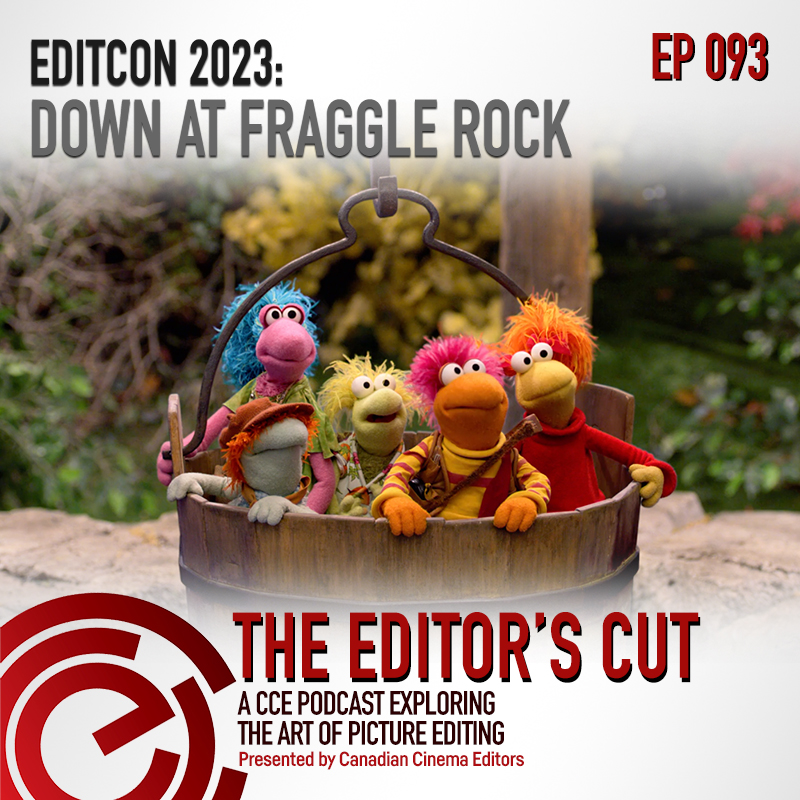
Episode 093 –  EditCon 2023: Down at Fraggle Rock

Episode 93: EditCon 2023: Down at Fraggle Rock

Episode 093 - EditCon 2023: Down at Fraggle Rock

Series Sponsor:
Episode Sponsor:
RollingPictures_2024_SPON

An international hit in the 80s and beloved for many viewers to this day, FRAGGLE ROCK comes back more colorful, high-energy and furrier than before.

In this episode Paul Winestock, CCE, Duncan Christie, CCE and Marianna Khoury with Paul Ackerley discuss their experiences and work process in the edit suite on this reboot for both the young and young at heart.

À écouter ici !

The Editor’s Cut – Episode 030 – “What is Anti-Oppression? With Tenniel Brown”

Sarah Taylor [00:00:01]

Hello and welcome to The Editor’s Cut. I’m your host Sarah Taylor. At the CCE, we began our journey of self education with Anti-Oppression training in 2019. It was invaluable for us as it provided us with tools to assess how we as an organization could set a course of action to root our unconscious and systematic bias in our operations. This training is now a permanent part of our budget so future board members and volunteers can continue this work, and equity can be part of the fabric of our organization. We are offering a Lunch and Learn Introduction To Anti Oppressive Communication with Tenniel Brown on July 27. Today I’m lucky to be able to sit down with Tenniel Brown and discuss what Anti-Oppressive training is and what we can expect from this webinar. Tenniel Brown is a passionate anti-racist anti oppression and mental health speaker dedicated to improving the experiences of marginalized people in all institutional settings. She is the founder of the Centre For Anti-Oppressive Communication which specializes in providing anti oppressive, trauma-informed counseling, clinical supervision and organizational consulting, as well as customized workshops training and team retreats. I’m joined with Tenniel Brown, she is the founder of the Centre For Anti-Oppressive Communication based in Toronto. And we just want to have a little conversation about why anti oppression work is important in this and all days but specifically right now. So can you just tell us a little bit about your background and why you started the Center For Anti-Oppressive Communication.

Tenniel Brown [00:01:41]

My background is as a psychotherapist. So I spent I’ve spent many many years working with individuals and couples and families and groups helping them to access more of their well-being by addressing different mental health issues specifically trauma. One of the things that I specialize in addressing is racialized trauma. But also trauma that comes from folks that have experienced different types of oppression. And I think for most people that are called to this type of work it’s quite personal for me right. So often when you don’t see the work that you know needs to happen in the community taking place you create it. And so that was me. You know I think I saw that there was a need for organizations to have somebody come in and not just talk about diversity inclusion but talk about what happens when certain identities have power and that unbalance of power and how to actually address that in our communication. I knew that out in the community there were therapists and social workers that were wanting to do better work. You know work in the best practice way with clients that are black, racialized, queer, and trans, and had nowhere to go to get supervision and support. And finally I knew personally that there were so many folks that when they were ready to do therapy work they needed to see someone sitting across the office that looked like them or had a very similar lived experience and they just were not going to come unless that was the case. So all these things I knew was happening and nobody was doing it. And I said someone’s got to do something and that was me. I think what needs to come out of what’s happened in June is for folks to see black professionals and black community in in the in sort of like the the brilliance of what we do and it’s not uncommon that in many cases where we don’t see ourselves we create it. So yeah that was the spirit of and I think that when I started the organization I knew that it was important for there to be a place where folks from those different backgrounds could come and get that support and information. So it’s a real passion of mine. It is my baby and it’s so beautiful to see folks wanting this information during this time.

Sarah Taylor [00:04:01]

Yeah so important. Can you tell us what Anti-Oppression means and what someone can expect by taking an anti oppressive workshop?

Tenniel Brown [00:04:10]

Sure absolutely. So when you sort of break down the word anti oppression anti oppressive practice we take a look at that anti part and essentially that that just means opposition to oppression and then the practice part. So AOP… the practice part pertains to the context in which you are practicing opposition to oppression. So you can apply an anti oppressive lens to just about anything. And I’ve had the opportunity to work with organizations like Pride Toronto and work with your curators to apply an anti-oppressive lens to the way they do event organizing. I have applied an anti oppressive lens to the way I do therapy and clinical supervision with other therapists. You can apply an anti oppressive lens to teaching. You can apply it to student advising, you can apply it to just about anything. I’ve been working with fitness professionals looking at applying an anti oppressive lens to the way that they support folks that are on their fitness journey. So so it’s about looking at whatever practice whatever context you are working in and using that platform to be able to oppose oppression and all of its forms. So that’s essentially what it is.

Sarah Taylor [00:05:29]

And so when someone takes courses like anti oppressive communication course or participates in your courses what can they expect to be talking about or learning?

Tenniel Brown [00:05:37]

Absolutely so I think one of the most important things is to sort of pull back a little bit of you know the cover on this because I think anti oppressive language is its own language. It’s like Spanish. And you see so many people getting themselves into some rather serious trouble these days because they actually don’t know the language they don’t understand… in some ways the harm of some of the things that they’re doing and saying the deep harm of that. You get a lot of people who don’t really know how to talk about these issues. And so you go into a shame spiral and you just don’t talk. You just get very quiet and I always argue that you know the silence piece is a part of how we got ourselves into this trouble as a human society in the first place. So what I offer is something for everybody. I think over the years what folks have said to me is is even somebody who’s maybe got a social work background and knows about anti oppressive practice when they come to one of my trainings they find that they are moved further along in their application of that perspective around “OK, well what does this mean when I’m interacting with somebody right here in a one on one context.” Other people that are completely brand new have never had the chance to learn any of this language or understand any of these concepts have said over the years that they felt like they left with a really good sense of what this topic is. But not just that practical skills. I’m all about practical skills. I want to offer things that folks can use tomorrow today and the next day and my mission is also for folks to leave his training and talk about it. Tell a friend, tell a colleague, tell a family member, and feel equipped to be able to engage in these conversations. So when someone is saying or doing something problematic, you have this confidence in the skills to be able to interpret what’s going on there and to be able to talk to them and to be able to address it. The other thing that I do is I couch everything that I do in my trainings in a self care and team care perspective. And I think this is very important. We have to look after our emotions. We have to look after ourselves and we have to look after each other. I always say you could be as anti oppressive as you want but if you haven’t had any lunch… if you haven’t eaten anything… you’re not good.

Sarah Taylor [00:07:57]

You’ve got the hangries!

Tenniel Brown [00:07:59]

Trust me, Anti-Oppressive work requires patience. It requires empathy. It requires compassion and self compassion. You will fall down a lot and I find you know and I talk a lot about cancel culture and don’t get me wrong really that could be its own podcast.

Sarah Taylor [00:08:19]

Totally. Especially in this industry.

Tenniel Brown [00:08:22]

Look we need to talk about this and I get why certain people are being canceled for sure. And yet as someone who does this work I recognize that I’m so thankful I wasn’t canceled because over the years I’ve done and said things before I knew before I took a course like this before I had an opportunity to learn what was problematic about my lens. I’m so thankful that I was able to make those mistakes in a safe environment and actually benefit from that and grow. So people get a safe environment to learn language and understand what is going on, what is oppression, if oppression is so bad why don’t we just stop this. Well I unpack that for folks. Why is this so complicated and why doesn’t this just stop. And then I provide practical skills for folks to be able to apply this to their lives and their communication. I think the other thing that I think folks get is not just sort of a general whatever, you’ll find that I’m really interested in applying it to film editors and what it is that you do on a regular basis and looking at how you can use your platform to be able to actually oppose oppression.

Sarah Taylor [00:09:31]

Yeah well it’s like it’s huge I know for myself we did anti oppression workshop as a board for the CCE. I’m in an interracial marriage and so I thought “Oh I know a lot.” Like I’ve been unpacking this stuff for a while and understanding in my own way. But also like kind of like how do I say it to my white uncle who is racist like how do I approach that. And by taking that one course, like you said I got so much more understanding of where people might come from and the language and I could approach it not by just being angry because anytime I’d hear anything I was like “You’re talking about my husband, you’re talking about my child! This is not OK!” And so it made a huge impact on me and I felt like I kind of knew some stuff but I realized that there was so much more to learn. And I think I’m still learning and it’s opened up even conversations I’ve had with my husband and my in-laws… and so I think people who are in my situation are like “no I’m cool I got I’m married to so-and-so or I have my best friend or whatever.” You grew up in your lens and there’s way more to learn and unpack.

Tenniel Brown [00:10:41]

Absolutely. Absolutely it’s so true. And I always say that absolutely positively nobody gets a pass on this.

Sarah Taylor [00:10:48]

100 percent.

Tenniel Brown [00:10:49]

At all. You know myself as someone who identifies as a black fem queer woman, you know folks would be like well you know you of course you couldn’t oppress. And it’s like yes we are all susceptible to experiencing oppression and we are all oppressors. So I have aspects of my identity that allow me to have privilege. And the thing about this is that if you’re not aware of those things that’s how you harm people that’s how you engage in micro aggressions. You know what I mean? That’s how you you know get striking up a conversation with someone about your latest renovation in your house when this person is still renting and doesn’t even have access. These are the types of things that you’re never protected from. Right. Like you’re not protected from that in a certain way. So it’s really important to remember that.

Sarah Taylor [00:11:40]

Where should someone start if they’re like feeling overwhelmed they’re like wow I know that I need to make this change. I’ve seen all this information now on social media and I’m saying all the wrong things and like you said I’m just going to be quiet which is not the right thing to do. So where do they go and what should they focus on first to just like get into this mindset of making these changes?

Tenniel Brown [00:12:02]

That’s a great question. And what I would say is education. Not a coincidence right? So of course you know joining with you know your organization to offer this to the community because I think that’s step number one. I think we do need to have good information about… you need to educate yourself. I would say that it’s a really important first step to really listen, and I find even when you have more information and you have more training it even improves the way that you can listen because what you find is when you don’t have that knowledge there’s certain things that are sort of prevent you from even being open. So I find the training and the skills and the confidence that you get from doing the course like this allows you to even listen deeper right and understand more and I think that that’s step number one. I think that once… but don’t stay there! Because I think a lot of people oh I’m listening but really it’s just their guilt and shame. So yeah they’re still not doing anything but once you’ve had the chance to listen you now can start thinking more about your platform and I think that’s one of the most important thing for your listeners to know that if it’s like well I’m not a social worker I’m not a therapist what’s this got to do with me it’s like it has everything to do with you. You have a platform as a film editor and it’s important for you to acknowledge that there are big ways and small ways that you can make a difference. And we all have a responsibility. What’s happened in this world since COVID what’s happened in this world since June is we can no longer close our eyes to this. We have to look at this and all the years that we have stayed silent on this has been what’s caused the problem. So the reality is is that we all are called to use our platform to be able to address this to look around the room and be like who isn’t here? To look around your history of the films that you and different projects you’ve been involved in and being like how many of these people, how many of these stories featured stories that were outside of what we usually see? Right. And looking at the ways that you can use your platform and your influence to be able to make a change, so we’re all called to do that I don’t care if you’re a child care worker or a housekeeper do some working at a gas station, it literally doesn’t matter we’re all a part of this human society. We all have some sort of platform and so we all have a responsibility to do something. You know Sarah one of my favorite slogans that’s come out of the protest is “Silence is Violence.” I love that one because I know what happens when people don’t have education and knowledge. They go into a shame cycle they go into a guilt cycle and they go into fear and you know what happens there? Shh. And you know what, that doesn’t help anybody at all. So I recognize that these are difficult things for us to unpack but we all have a responsibility to use whatever platform we have to make a difference. So starting by educating yourself, listening a lot, and then that’s going to help you to be more open to what you can do. And then looking at your platform whether that be personal or professional to make a change.

Sarah Taylor [00:15:20]

That was perfect. Yeah. That’s huge. And even since I took my training and even just since I’ve done my own inner work I noticed like I wouldn’t pick certain shots anymore or there’ll be things in my edit where I’m like “that’s a stereotype” or “No that’s not going to work. We can’t do that we can’t have that.” And so I think if everybody’s doing that then what we’re seeing on screen can start changing.

Tenniel Brown [00:15:45]

Absolutely. Absolutely and there’s these you know there’s there’s big ways and then there’s little ways like you describe. So it’s it is about really curating your lens, right and making sure that you’re seeing more and I think training like this just helps you to really open up your lens. So you’re not just seeing directly what’s in front of you work to the side of you but it’s more of like a panoramic view which you folks really need in the work that you do.

Sarah Taylor [00:16:09]

100 percent. Yeah. Well I hope that our membership joins us. I know we’ve already been getting people RSVPing which is very exciting. On July 27 2020 to learn and to unpack and to take part and just hopefully we can continue to do stuff with you and just keep educating and making the changes we can make.

Tenniel Brown [00:16:28]

Yeah. Join us. Join us. Don’t hesitate folks. Be a part of this. I’m really looking forward to working with everybody. And you know what we’re gonna have fun. I know these topics are really heavy but we’re gonna have some fun and we’re really going to connect with each other as a community so I look forward to meeting everybody at this training.

Sarah Taylor [00:16:46]

Thank you so much for taking the time to chat with me today and I look forward to seeing you on the 27th and continuing my journey. So thank you for doing this for us and thank you for sharing your knowledge and your experience with the world. So thank you so much.

Tenniel Brown [00:16:59]

You’re so welcome. Thanks for having me.

Sarah Taylor [00:17:03]

Thank you so much for joining us today. And a big thank you goes to Tenniel Brown and a special thanks to Maureen Grant and Jane MacRae. If you’d like to connect with Tenniel, you can find her on Instagram @TennielBrown. If you’d like to bring Tenniel into your organization to learn more about anti oppressive work, you can check out her website at brownconsulting.com. I look forward to learning more from Tenniel on July 27 2020 at the CCE Lunch and Learn I hope to see you there. The CCE has been supporting BIPOC TV and FILM. BIPOC TV and FILM is a grassroots organization and collective of black, indigenous, and people of colour in Canada’s TV and film industry. From writers, directors, producers, and actors, to editors, crew members, and executives. Their members are a mix of emerging, mid-level, and established industry professionals. BIPOC TV and FILM is dedicated to increasing the representation of BIPOC both in front and behind the camera. If you would like to donate to BIPOC TV and FILM please head to their website at bipoctvandfilm.com. The CCE is taking steps to build a more equitable ecosystem within our industry and we encourage our members to participate in any way they can. 

The main title sound design was created by Jane Tattersall. Additional ADR recording by Andrea Rusch. Original music provided by Chad Blain. This episode was mixed and mastered by Tony Bao. If you’ve enjoyed this podcast, please rate and review us on Apple Podcasts and tell your friends to tune in. Til next time I’m your host Sarah Taylor.

Outtro

The CCE is a non-profit organization with the goal of bettering the art and science of picture editing. If you wish to become a CCE member please visit our website www.cceditors.ca. Join our great community of Canadian editors for more related info.

Abonnez-vous là où vous écoutez vos balados

Que voulez-vous entendre sur L'art du montage?

Veuillez nous envoyer un courriel en mentionnant les sujets que vous aimeriez que nous abordions, ou les monteurs.euses dont vous aimeriez entendre parler, à :

Crédits

Un grand Merci à

Alison Dowler

Kimberlee McTaggart, CCE

Hosted and Produced by

Sarah Taylor

Design sonore du générique d'ouverture

Jane Tattersall

ADR Recording by

Andrea Rusch

Mixé et masterisé par

Tony Bao

Musique originale par

Chad Blain

Sponsor Narration by

Paul Winestock

Commandité par

DGC Alberta

Rolling Pictures

Catégories
Communiqué de presse

Nominations pour les prix CCE 2024

Nominations pour les prix CCE 2024

Les Monteurs et monteuses de cinéma canadien sont heureux⋅euses d’annoncer les nominations pour les prix CCE 2024. Rejoignez-nous le vendredi 14 juin 2024 pour une soirée de célébration de l’excellence en montage à l’hôtel Delta de Toronto avec Elvira Kurt.

Les billets seront en vente à partir de ce vendredi! Félicitations à toutes les personnes en nomination!

Meilleur montage d’une série d’animation préscolaire
Commandité par : Les Monteurs et Monteuses de cinéma canadien

Gavin Ebedes & Ryan Mohammed – RUBBLE & CREW: Ep 120 – THE CREW & CHASE ARE ON THE CASE
Paul Hunter, CCE & Katie Tomchishen – NATURE CAT: Ep 508 – A LITTLE KELP FROM MY FRIENDS & MISSION TO MARS
Paul Hunter, CCE, Katie Tomchishen & Jason Pichonsky – SUPERBUNS: Ep 116 – C’MON CATERPILLAR
Rachel Guergis, Bec Cranswick, Sophia Loffreda & Dean Hannas – SPIDEY AND HIS AMAZING FRIENDS: Ep 224 – STOLEN WEB-QUARTERS/SPIDEYS IN SPACE!

Meilleur montage d’un film d’animation
Commandité par : Annex Pro

Greg Canning, Max Szentveri, Nicholas Shepard, Ryan Jobling & Leland Miller – THE SNOOPY SHOW: CHARLIE BROWN HITS A HOME RUN
Orion McCaw, Margaret Reid, Rob Smith, Matthew Innanen & Maddison Varas – SONIC PRIME: Ep 201 – AVOID THE VOID
Orion McCaw, Rob Smith & Matthew Innanen – STRAWBERRY SHORTCAKE’S PERFECT HOLIDAY
Ryan L. Smith – LAKE ERIE
Yvann Thibaudeau, CCE – MIRACULOUS LADYBUG

Meilleur montage d’un long métrage documentaire
Commandité par : Purple Dog Post Production Services

Annie Leclair – GREYLAND
Eugene Weis – REVIVAL69: THE CONCERT THAT ROCKED THE WORLD
Greg Ng, CCE & Katie Chipperfield – I’M JUST HERE FOR THE RIOT
Ricardo Acosta, CCE & Mike Magidson – CHILDRENS OF LAS BRISAS
Xi Feng & Maxime Faure – CAITI BLUES

Meilleur montage d’un court métrage documentaire
Commandité par: City of Toronto

Colin Waugh – ARTHUR ERICKSON’S DYDE HOUSE
Duncan Buchanan – THE LONG ROAD HOME
Jane MacRae – LOUD AND HERE
Kyle Gregory Sanderson – NINE EASY DANCES
Marie-Pier Dupuis – APRÈS-COUPS

Meilleur montage d’une série documentaire, d’un docudrame ou d’un divertissement factuel
Commandité par : Rolling Pictures

Andres Landau – THE NATURE OF THINGS: Ep 6210 – WAR FOR THE WOODS
Eamonn O’Connor, CCE – BLACK LIFE: UNTOLD STORIES: Ep 102 – REVOLUTION REMIX
Hart Snider – GRIZZLY REWILD: Ep 6208
Steven Budd – DARK SIDE OF COMEDY: Ep 201 – ROBIN WILLIAMS
Swapna Mella, CCE – STUFF THE BRITISH STOLE: Ep 101 – THE JEWEL OF DENIAL

Meilleur montage d’une télésérie ou d’un téléfilm familial
Commandité par : IATSE 891

Courtney Goldman & Nathan Martinak – JANE: Ep 101 – URSUS MARITIMUS
Fabiola Caraza – THE POPULARITY PAPERS: Ep 108 – GHOST MORTEM
Gordon Rempel, CCE – MONSTER HIGH 2
Thomas Lieu – THE HARDY BOYS: Ep 302 – A VANISHING ACT
Vesna Svilanovic, CCE – RUBY AND THE WELL: Ep 302 – I WISH I COULD STOP THIS MONSTER

Meilleur montage d’un long métrage
Commandité par : Coma Edits

Jorge Weisz, CCE – SWEETLAND
Justin Oakey – THE KING TIDE
Marie-Pier Dupuis, Dominique Fortin & Maxim Rheault – SOLO
Orlee Buium – NORTH OF NORMAL
Yvann Thibaudeau CCE – DIS MOI POURQUOI CES CHOSES SONT SI BELLES

Meilleur montage d’un téléfilm ou d’une minisérie
Commandité par : DGC National

Christopher Donaldson, CCE – FELLOW TRAVELERS: Ep101 – YOU’RE WONDERFUL
Louis-Philippe Rathé – DÉSOBÉIR – LE CHOIX DE CHANTALE DAIGLE: Ep 106 – LA SEULE PERSONNE À POUVOIR CHOISIR, C’EST MOI
Maxime Lahaie – LITTLE BIRD: Ep 104 – BURNING DOWN THE HOUSE
Myriam Coulombe – DÉSOBÉIR – LE CHOIX DE CHANTALE DAIGLE: Ep 104 TU SAIS BEN QUE ÇA SERA JAMAIS FINI
Myriam Coulombe – MÉGANTIC: Ep 104 BRYAN

Meilleur montage d’une émission style de vie / compétition / téléréalité
Commandité par : RTR Media

Guillaume Marin – DRAGS, REINES DE LA POP
Jeff Perry, Ryan Monteith, Curtis Rogers & Keisha Rose – BEST IN MINIATURE: Ep 208 – THE FINALE
Jonathan Dowler, CCE – CANADA’S DRAG RACE: Ep 405 – SNATCH GAME
Lindsay Ragone – CANADA’S DRAG RACE: Ep 407 – FROM DRAGS TO RICHES: THE RUSICAL
Samantha Shields – HOME TOWN: Ep 703 – NEW-STALGIC RESTORATION

Meilleur montage d’un court métrage
Commandité par : Meridian Artists

Amélie Labrèche – CHAT MORT
Anna Catley -THRIVING: A DISSOCIATED REVERIE
Christopher Malanchen – BORDERS
Graham Fortin – DEFINING HUMAN
Myriam Magassouba – FAIRE UN ENFANT

Meilleur montage d’une série humoristique
Commandité par : Vanguarde Management Artists

Charles Boisseau & David Bourbonnais – CLUB SOLY: Ep 301 – ART CONTEMPORAIN, CHAR ÉLECTRIQUE ET PUBS DE CHIPS
Drew MacLeod – LETTERKENNY: Ep 1206 – OVER AND OUT
Drew MacLeod – SHORESY: Ep 206 – ACCOUNTABILITY
Justin Li – LUCKY HANK: Ep 105 – THE CLOCK
Maureen Grant, CCE – SORT OF: Ep 306 – SORT OF HOSPITAL AGAI

Meilleur montage d’une série dramatique
Commandité par : Take 5 Productions

David Di Francesco – VIRAGE: DOUBLE FAUTE: Ep 102 – PRÊT À TOUT
Jonathan Eagan – THE CHANGELING: Ep 107 – STORMY WEATHER
Geoff Ashenhurst, CCE & Hye Mee Na – THE CHANGELING: Ep 101 – FIRST COMES LOVE
Greg Ng, CCE, Roderick Deogrades, CCE & Maxime Lahaie – BONES OF CROWS: THE SERIES: Ep 102 – TO BE SEPERATED
Lisa Robison, CCE – FIREFLY LANE: Ep 213 – CAN’T FIGHT THAT FEELING

Meilleur montage d’une websérie ou d’un contenu numérique
Commandité par : Les Monteurs et Monteuses de cinéma canadien

Ben Allan – LESS THAN KOSHER: Ep 101 – THE SYNAGOGUE VIV HASN’T BEEN TO IN 15 YEARS
David Valiquette – VIVRE AVEC LA POLLUTION DE LA FONDERIE HORNE
Jake Lee – STREAMS FLOW FROM A RIVER: Ep 4 – BENNY AND THE JETS
Jean-Philippe Gagnon – NICO SE PRIVE DE SOMMEIL PENDANT 7 NUITS
Milena Salazar – GOVERNOR GENERAL’S AWARDS IN VISUAL AND MEDIA ARTS: PORTRAIT OF SHANNON WALSH

Prix d’excellence soulignant l’œuvre d’une vie Mary Stephen, CCE & Gordon McClellan, CCE
Commandité par : Les Monteurs et Monteuses de cinéma canadien

Prix pour une carrière exceptionnelle : Don Thompson
Commandité par : Les Monteurs et Monteuses de cinéma canadien

Prix du mérite étudiant
Commandité par : Insight Productions
À venir début mai

Prix d’excellence pour un·e assistant·e-monteur·euse
Commandité par : Matrx
À venir début mai

Cocktail
Commandité par : DGC Ontario

Merci à nos commanditaires

Catégories
Événements passés

Atelier pour monteur·euses et assistant·es-monteur·euses

Atelier pour monteur·euses et assistant·es-monteur·euses
le 13 avril 2024

Cet événement a eu lieu le 13 avril 2024.

Presented in English / Atelier en anglais

Cet atelier est offert conjointement par le CCE et la GCR Alberta.

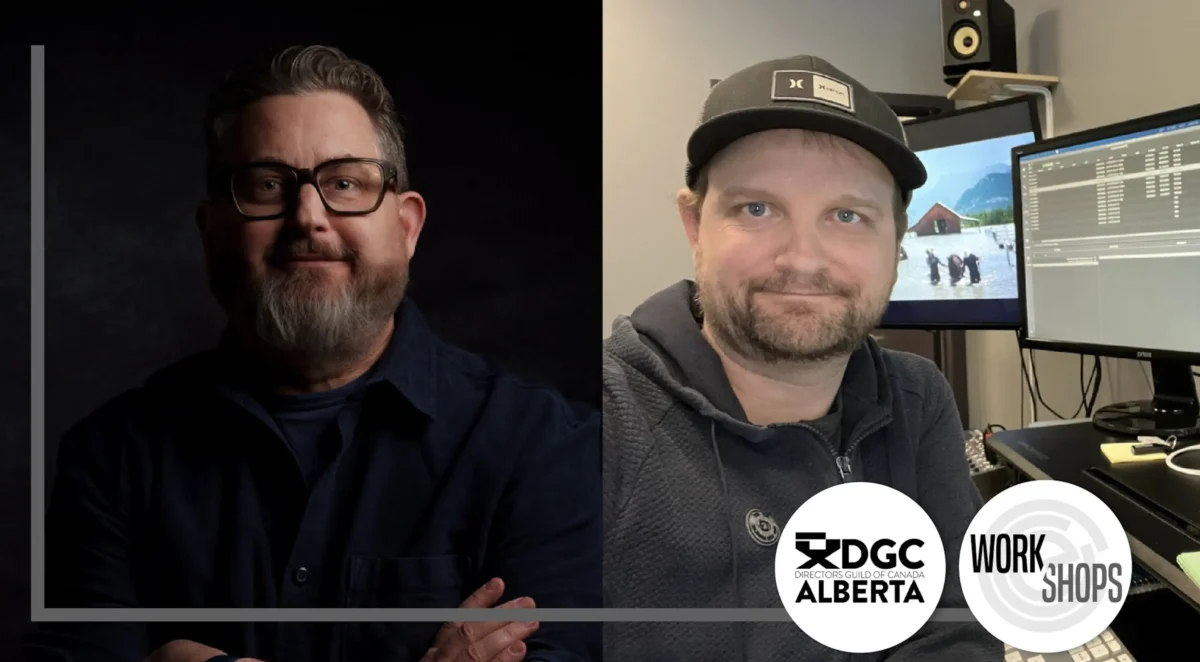
Cet événement d’une journée, en personne et en ligne, sera porté par Ken Filewych, CCE et Jerry Skibinsky qui parleront de leur histoire en tant que monteur et assistant-monteur, et aujourd’hui co-monteurs. Ils exploreront les différences et les similarités dans leur travail avec des assistant·es et partageront leurs méthodes d’organisation de projets. Ils vont aussi parler des compétences qu’ils privilégient chez leurs assistant·es et de ce qu’ils attendent d’elles et eux dans un environnement de télévision ou de cinéma. Ils aborderont également les relations entre les assistant·es et les producteurs ainsi que les diffuseurs, de même que ce qui est à privilégier dans ces rapports. Les questions seront les bienvenues de la part des participant·es (en ligne et en personne) qui pourront aborder des sujets plus spécifiques.

Les biographies suivantes sont uniquements rédigées dans la langue de présentation :

Ken FilewychKen Filewych, CCE has over 25 years of experience editing dramatic films, television series, documentaries, music video, commercials, lifestyle programs, news features and sports events.

Besides editing, Ken directs dramatic television and commercials. He is best known for his work on the TV series HEARTLAND, Joni Mitchell’s THE FIDDLE AND THE DRUM, the documentary the smalls, FOREVER IS A LONG TIME and the feature HOW WE ENDED US.

Jerry SkibinskyJerry Skibinsky is a film editor based in Calgary, Alberta. Since graduating with a B.A Degree in Motion Picture Arts and majoring in film editing, Jerry started his film career in 2007 working on-set on multiple film and television productions in the Locations and Assistant Directing departments. He began his post production career in 2015 as an Assistant Editor.

A member of the Directors Guild of Canada and an associate member of the CCE (Canadian Cinema Editors), Jerry is now known for his work editing Canada’s longest running family drama, CBC’s “HEARTLAND and ATPN’s cop drama series TRIBAL.

À propos de l'événement

avril 2024

10h HNR

Calgary

Catégories
Communiqué de presse

The Canadian Cinema Editors announces the recipients of the 2024 Lifetime Achievement Award and Career Achievement Award 

Prix d’excellence soulignant l’œuvre d’une vie et Prix pour une carrière exceptionnelle - Communiqué de presse 2024

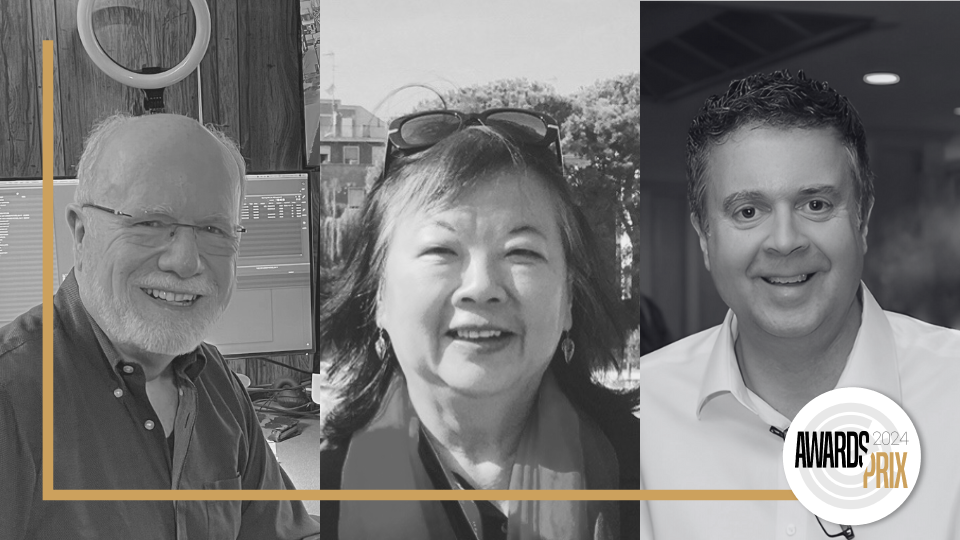
Toronto, 8 avril 2024 – The Canadian Cinema Editors (CCE) is pleased to announce that Mary Stephen, CCE and Gordon McClellan, CCE are the recipients of the 2024 Lifetime Achievement Award. Don Thompson is the recipient for the Career Achievement Award. The CCE will present these awards at the 14th Annual CCE Awards on June 14th, 2024 at the Delta Hotel in Toronto.

La liste complète des nominations aux prix CCE sera dévoilée le 15 avril! Rendez-vous sur Rendez-vous sur notre site internet pour plus d’informations.

Prix d’excellence soulignant l’œuvre d’une vie

Mary Stephen, CCE

Mary Stephen, CCE

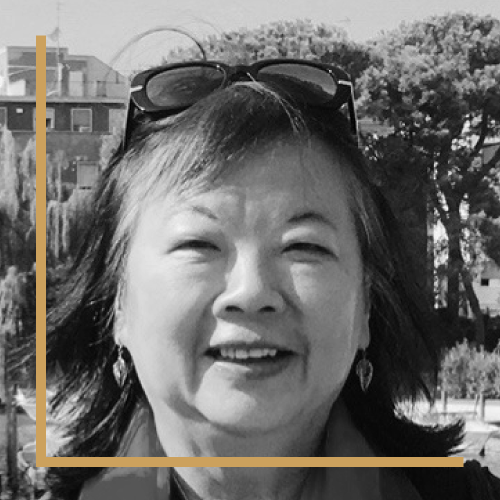
Born in Hong Kong, Mary’s family immigrated to Montreal in the 1970s where she graduated from Concordia University. Mary has been living in Paris since the 1980s but navigates between her home in France and work commitments in Canada, Asia, Australia and Africa.

Mary was French New Wave master Eric Rohmer’s chief editor for more than 30 years, starting as assistant to his then-chief-editor Cécile Décugis. When Cécile retired, Mary edited Rohmer’s WINTER’S TALE up to his last feature THE ROMANCE OF ASTREA AND CELADON, and many shorts in-between, collaborating occasionally on the films’ music.

In the last 2 decades, Mary has also been editing, associate-producing and consulting with fiction and documentary filmmakers all over the world. Some of the directors she worked with include Tiffany Hsiung, Michka Säal and Lixin Fan in Canada, Seren Yüce and Hüseyin Karabey in Turkey, Nicole Shafer in South Africa, Du Haibin, Lina Yang in mainland China, and Adam Wong, Jessie Tsang, Amos Wong and Ann Hui in Hong Kong. Mary’s own directorial works include VISION FROM THE EDGE : BREYTEN BREYTENBACK PAINTING THE LINES and THE MEMORY OF WATER. She is currently at work on her new film PALIMPSEST : TRACES OF A NAME, a co-production between 4 countries.

Mary est très engagée dans le mentorat et le soutien des jeunes cinéastes dans différents labs et forums. Elle participe souvent à des jurys de festivals et elle a été en nomination pour plusieurs prix pour meilleur montage. Elle est membre de l’Academy of Motion Picture Arts and Sciences et elle a été nommée Chevalier de l’Ordre des Arts et des Lettres par le ministère français de la Culture en 2018. L’an dernier, Mary a été la deuxième à remporter le prix Fire Horse au festival de films Reel Asian 2023.

Prix d’excellence soulignant l’œuvre d’une vie

Gordon Mcclellan, cce

Gordon McClellan, CCE

Gord McClellan, CCE, est un monteur de fiction et de documentaire depuis plus de 50 ans. Parmi les films qu’il a montés, plusieurs ont gagné des prix dont un Oscar, un Emmy, un Cable ACE (le prix Cable TV a plus tard été fusionné avec les Emmy), un Gemini et d’autres encore. Son travail a été vu sur ABC, A&E, BBC, CBC, CBS, CTV, Discovery, Disney, Disney XD, Global, Great American Family, Hallmark, HBO, Netflix, NBC, Nickelodeon, Paramount, Showcase, Showtime, Sony, Superchannel, TVO, W et Warner Brother.

Pendant deux décennies, Gord a monté des films et des vidéos, classant minutieusement et patiemment chaque photogramme des plans coupés, ou gérant les multiples générations d'images vidéo qui se dégradaient. Quand l’occasion s’est présentée, il a été heureux de pouvoir travailler avec les systèmes non-linéaires comme Lightworks et AVID au moment de leur arrivée en scène.

Parmi les hauts faits de sa carrière, on note les cinq premières saisons de THE FIFTH ESTATE, plusieurs collaborations avec le documentariste John Zaritsky, dont le film oscarisé JUST ANOTHER MISSING KID et le documentaire musical TEARS ARE NOT ENOUGH, mettant en vedette, entre autres, le producteur David Foster, Neil Young, Joni Mitchell, Bryan Adams, Geddy Lee et Gordon Lightfoot. Il a travaillé sur six saisons des CONTES D’AVONLEA, cinq longs métrages, deux miniséries et 31 téléfilms. Ces dernières années, son travail se concentre surtout sur des comédies romantiques, un genre qu’il affectionne beaucoup.

Prix pour une carrière exceptionnelle

Don Thompson

Don Thompson est un leader d’expérience dans l’industrie des médias et du divertissement, reconnu pour savoir mettre sa créativité et ses compétences techniques au service de la résolution de problèmes, du développement de talents, du réseautage et de la collaboration afin d’accélérer le développement.

With an entrepreneurial influence, he has helped found or inspire growth and change across a broad range of companies in Vancouver, Toronto and LA including Finale Post (now Picture Shop Vancouver), The Foundation Post (LA), Image Engine VFX (Vancouver), The Eyes Productions and Shooters Production Services (Vancouver & TO). His production experience includes work as an Editor, Post Supervisor, Producer/Director, and Videographer. Don’s creative credits include a wide range of feature, television, commercial, live sports and music, and cutting-edge documentary productions. 

He is actively involved in the production community in Vancouver as Chair of the Vancouver Post Alliance (VPA) and board member of both the Motion Picture Production Industry Association of BC (MPPIA) and the Leo Awards, and frequently travels to LA for industry relations and marketing and sales initiatives with the major studios, networks and production companies. Don is passionate about seeing Canada’s production and post production community reach its full potential, and looks forward to continuing to contribute to the success of its talent, crews, production companies and facilities in the years ahead.

À propos du Prix d’excellence soulignant l’œuvre d’une vie
Cet honneur est remis à un·e monteur·euse·s qui a su élever l’art du montage, qui a apporté une solide contribution à la communauté du montage et fait preuve d’une réelle passion pour son métier.

À propos du Prix CCE pour une carrière exceptionnelle
Cette reconnaissance est présentée à une personne membre de la communauté élargie du cinéma qui a été d’un grand soutien aux monteur.euse.s canadien.ne.s et à cette profession en général tout au long de sa carrière.

À propos des Monteurs et Monteuses de cinéma canadien (CCE)
Le CCE est un organisme sans but lucratif bilingue animé par la passion de ses membres de la communauté de la postproduction de partout au Canada. Le CCE est voué à combler les besoins de ses membres toujours plus nombreux·ses en créant un environnement d’apprentissage, de communauté et d’inclusivité. Le CCE a aussi été créé pour donner une vitrine à nos talents de classe mondiale, qui sont à l’avant-plan de l’industrie cinématographique canadienne et internationale. Suivez-nous sur X (Twitter), Facebook, LinkedIn et Instagram. www.cceditors.ca

Contact médias :
Alison Dowler : Responsable des opérations
Canadian Cinema Editors – info@cceditors.ca

Merci à nos commanditaires :

Catégories
Événements passés

Atelier sur les taxes et impôts pour les travailleur.euse.s autonomes et les créatif.ve.s

Tax Workshop for Freelancers & Creatives with Sunny Widerman
le 6 avril 2024

Cet événement a eu lieu le 6 avril 2024.

Presented in English / Atelier en anglais

Presented by Sunny Widerman of Personal Tax Advisors, this session is an entertaining and information-packed presentation about the financial and tax aspects of running your own business. Yes, we said entertaining! Hundreds of participants in dozens of workshops over the years can attest that you won’t be intimidated, and you definitely won’t be bored!

In this workshop, you’ll learn about deductible expenses, how to use RRSPs to protect your income and why doing what you love is great business. Take the opportunity to ask all your lingering tax questions during the Q&A from an expert who has been working in taxes since 2002. No judgement, just great advice and information with a sense of humour on the side.

À propos de l'événement

avril 2024

12 h HNE

virtuel

Catégories
Articles

Finalistes pour les prix Hollywood North Film 2024

Finalistes pour les prix Hollywood North Film 2024

Hollywood North 2024 Banner

Félicitations à nos membres CCE en nomination pour un prix Hollywood North Film.

Best Editing: Canadian Feature Film
  • Sydney Cowper – SWAY

Best Editing: Canadian Short Documentary
  • Nathan Shields – BADASSERY

Best Editing: Canadian Short Film
  • Jonathan Eagan – [INSERT SHORT FILM TITLE]

Catégories
The Editors Cut

Episode 92 –  EditCon 2023: Shaping Memories

Episode 92: EditCon 2023: Shaping Memories

Episode 092 - EditCon 2023: Shaping Memories

Series Sponsor:
Episode Sponsor:
BorisFx_2024_Spon

Documentary has the power and versatility in exploring urgent social subject matters, yet it can also embrace an intimate first-person narrative, or even become an experimentation of cinematic craftsmanship.

In this episode we invited the editors from three critically acclaimed Canadian documentaries. Whether it’s the sensory and cinematic collaboration between a filmmaker and a naturalist on Sable Island (GEOGRAPHIES OF SOLITUDE), the eye-opening testimony from the Coloured Hockey League about the untold history of racism in ice hockey (BLACK ICE) or the heart-wrenching revisit of her older brother’s death in BACK HOME, each of these films was made with powerful bravery and is sublime in its own way.

Podcast Sponsor

À écouter ici !

The Editor’s Cut – Episode 030 – “What is Anti-Oppression? With Tenniel Brown”

Sarah Taylor [00:00:01]

Hello and welcome to The Editor’s Cut. I’m your host Sarah Taylor. At the CCE, we began our journey of self education with Anti-Oppression training in 2019. It was invaluable for us as it provided us with tools to assess how we as an organization could set a course of action to root our unconscious and systematic bias in our operations. This training is now a permanent part of our budget so future board members and volunteers can continue this work, and equity can be part of the fabric of our organization. We are offering a Lunch and Learn Introduction To Anti Oppressive Communication with Tenniel Brown on July 27. Today I’m lucky to be able to sit down with Tenniel Brown and discuss what Anti-Oppressive training is and what we can expect from this webinar. Tenniel Brown is a passionate anti-racist anti oppression and mental health speaker dedicated to improving the experiences of marginalized people in all institutional settings. She is the founder of the Centre For Anti-Oppressive Communication which specializes in providing anti oppressive, trauma-informed counseling, clinical supervision and organizational consulting, as well as customized workshops training and team retreats. I’m joined with Tenniel Brown, she is the founder of the Centre For Anti-Oppressive Communication based in Toronto. And we just want to have a little conversation about why anti oppression work is important in this and all days but specifically right now. So can you just tell us a little bit about your background and why you started the Center For Anti-Oppressive Communication.

Tenniel Brown [00:01:41]

My background is as a psychotherapist. So I spent I’ve spent many many years working with individuals and couples and families and groups helping them to access more of their well-being by addressing different mental health issues specifically trauma. One of the things that I specialize in addressing is racialized trauma. But also trauma that comes from folks that have experienced different types of oppression. And I think for most people that are called to this type of work it’s quite personal for me right. So often when you don’t see the work that you know needs to happen in the community taking place you create it. And so that was me. You know I think I saw that there was a need for organizations to have somebody come in and not just talk about diversity inclusion but talk about what happens when certain identities have power and that unbalance of power and how to actually address that in our communication. I knew that out in the community there were therapists and social workers that were wanting to do better work. You know work in the best practice way with clients that are black, racialized, queer, and trans, and had nowhere to go to get supervision and support. And finally I knew personally that there were so many folks that when they were ready to do therapy work they needed to see someone sitting across the office that looked like them or had a very similar lived experience and they just were not going to come unless that was the case. So all these things I knew was happening and nobody was doing it. And I said someone’s got to do something and that was me. I think what needs to come out of what’s happened in June is for folks to see black professionals and black community in in the in sort of like the the brilliance of what we do and it’s not uncommon that in many cases where we don’t see ourselves we create it. So yeah that was the spirit of and I think that when I started the organization I knew that it was important for there to be a place where folks from those different backgrounds could come and get that support and information. So it’s a real passion of mine. It is my baby and it’s so beautiful to see folks wanting this information during this time.

Sarah Taylor [00:04:01]

Yeah so important. Can you tell us what Anti-Oppression means and what someone can expect by taking an anti oppressive workshop?

Tenniel Brown [00:04:10]

Sure absolutely. So when you sort of break down the word anti oppression anti oppressive practice we take a look at that anti part and essentially that that just means opposition to oppression and then the practice part. So AOP… the practice part pertains to the context in which you are practicing opposition to oppression. So you can apply an anti oppressive lens to just about anything. And I’ve had the opportunity to work with organizations like Pride Toronto and work with your curators to apply an anti-oppressive lens to the way they do event organizing. I have applied an anti oppressive lens to the way I do therapy and clinical supervision with other therapists. You can apply an anti oppressive lens to teaching. You can apply it to student advising, you can apply it to just about anything. I’ve been working with fitness professionals looking at applying an anti oppressive lens to the way that they support folks that are on their fitness journey. So so it’s about looking at whatever practice whatever context you are working in and using that platform to be able to oppose oppression and all of its forms. So that’s essentially what it is.

Sarah Taylor [00:05:29]

And so when someone takes courses like anti oppressive communication course or participates in your courses what can they expect to be talking about or learning?

Tenniel Brown [00:05:37]

Absolutely so I think one of the most important things is to sort of pull back a little bit of you know the cover on this because I think anti oppressive language is its own language. It’s like Spanish. And you see so many people getting themselves into some rather serious trouble these days because they actually don’t know the language they don’t understand… in some ways the harm of some of the things that they’re doing and saying the deep harm of that. You get a lot of people who don’t really know how to talk about these issues. And so you go into a shame spiral and you just don’t talk. You just get very quiet and I always argue that you know the silence piece is a part of how we got ourselves into this trouble as a human society in the first place. So what I offer is something for everybody. I think over the years what folks have said to me is is even somebody who’s maybe got a social work background and knows about anti oppressive practice when they come to one of my trainings they find that they are moved further along in their application of that perspective around “OK, well what does this mean when I’m interacting with somebody right here in a one on one context.” Other people that are completely brand new have never had the chance to learn any of this language or understand any of these concepts have said over the years that they felt like they left with a really good sense of what this topic is. But not just that practical skills. I’m all about practical skills. I want to offer things that folks can use tomorrow today and the next day and my mission is also for folks to leave his training and talk about it. Tell a friend, tell a colleague, tell a family member, and feel equipped to be able to engage in these conversations. So when someone is saying or doing something problematic, you have this confidence in the skills to be able to interpret what’s going on there and to be able to talk to them and to be able to address it. The other thing that I do is I couch everything that I do in my trainings in a self care and team care perspective. And I think this is very important. We have to look after our emotions. We have to look after ourselves and we have to look after each other. I always say you could be as anti oppressive as you want but if you haven’t had any lunch… if you haven’t eaten anything… you’re not good.

Sarah Taylor [00:07:57]

You’ve got the hangries!

Tenniel Brown [00:07:59]

Trust me, Anti-Oppressive work requires patience. It requires empathy. It requires compassion and self compassion. You will fall down a lot and I find you know and I talk a lot about cancel culture and don’t get me wrong really that could be its own podcast.

Sarah Taylor [00:08:19]

Totally. Especially in this industry.

Tenniel Brown [00:08:22]

Look we need to talk about this and I get why certain people are being canceled for sure. And yet as someone who does this work I recognize that I’m so thankful I wasn’t canceled because over the years I’ve done and said things before I knew before I took a course like this before I had an opportunity to learn what was problematic about my lens. I’m so thankful that I was able to make those mistakes in a safe environment and actually benefit from that and grow. So people get a safe environment to learn language and understand what is going on, what is oppression, if oppression is so bad why don’t we just stop this. Well I unpack that for folks. Why is this so complicated and why doesn’t this just stop. And then I provide practical skills for folks to be able to apply this to their lives and their communication. I think the other thing that I think folks get is not just sort of a general whatever, you’ll find that I’m really interested in applying it to film editors and what it is that you do on a regular basis and looking at how you can use your platform to be able to actually oppose oppression.

Sarah Taylor [00:09:31]

Yeah well it’s like it’s huge I know for myself we did anti oppression workshop as a board for the CCE. I’m in an interracial marriage and so I thought “Oh I know a lot.” Like I’ve been unpacking this stuff for a while and understanding in my own way. But also like kind of like how do I say it to my white uncle who is racist like how do I approach that. And by taking that one course, like you said I got so much more understanding of where people might come from and the language and I could approach it not by just being angry because anytime I’d hear anything I was like “You’re talking about my husband, you’re talking about my child! This is not OK!” And so it made a huge impact on me and I felt like I kind of knew some stuff but I realized that there was so much more to learn. And I think I’m still learning and it’s opened up even conversations I’ve had with my husband and my in-laws… and so I think people who are in my situation are like “no I’m cool I got I’m married to so-and-so or I have my best friend or whatever.” You grew up in your lens and there’s way more to learn and unpack.

Tenniel Brown [00:10:41]

Absolutely. Absolutely it’s so true. And I always say that absolutely positively nobody gets a pass on this.

Sarah Taylor [00:10:48]

100 percent.

Tenniel Brown [00:10:49]

At all. You know myself as someone who identifies as a black fem queer woman, you know folks would be like well you know you of course you couldn’t oppress. And it’s like yes we are all susceptible to experiencing oppression and we are all oppressors. So I have aspects of my identity that allow me to have privilege. And the thing about this is that if you’re not aware of those things that’s how you harm people that’s how you engage in micro aggressions. You know what I mean? That’s how you you know get striking up a conversation with someone about your latest renovation in your house when this person is still renting and doesn’t even have access. These are the types of things that you’re never protected from. Right. Like you’re not protected from that in a certain way. So it’s really important to remember that.

Sarah Taylor [00:11:40]

Where should someone start if they’re like feeling overwhelmed they’re like wow I know that I need to make this change. I’ve seen all this information now on social media and I’m saying all the wrong things and like you said I’m just going to be quiet which is not the right thing to do. So where do they go and what should they focus on first to just like get into this mindset of making these changes?

Tenniel Brown [00:12:02]

That’s a great question. And what I would say is education. Not a coincidence right? So of course you know joining with you know your organization to offer this to the community because I think that’s step number one. I think we do need to have good information about… you need to educate yourself. I would say that it’s a really important first step to really listen, and I find even when you have more information and you have more training it even improves the way that you can listen because what you find is when you don’t have that knowledge there’s certain things that are sort of prevent you from even being open. So I find the training and the skills and the confidence that you get from doing the course like this allows you to even listen deeper right and understand more and I think that that’s step number one. I think that once… but don’t stay there! Because I think a lot of people oh I’m listening but really it’s just their guilt and shame. So yeah they’re still not doing anything but once you’ve had the chance to listen you now can start thinking more about your platform and I think that’s one of the most important thing for your listeners to know that if it’s like well I’m not a social worker I’m not a therapist what’s this got to do with me it’s like it has everything to do with you. You have a platform as a film editor and it’s important for you to acknowledge that there are big ways and small ways that you can make a difference. And we all have a responsibility. What’s happened in this world since COVID what’s happened in this world since June is we can no longer close our eyes to this. We have to look at this and all the years that we have stayed silent on this has been what’s caused the problem. So the reality is is that we all are called to use our platform to be able to address this to look around the room and be like who isn’t here? To look around your history of the films that you and different projects you’ve been involved in and being like how many of these people, how many of these stories featured stories that were outside of what we usually see? Right. And looking at the ways that you can use your platform and your influence to be able to make a change, so we’re all called to do that I don’t care if you’re a child care worker or a housekeeper do some working at a gas station, it literally doesn’t matter we’re all a part of this human society. We all have some sort of platform and so we all have a responsibility to do something. You know Sarah one of my favorite slogans that’s come out of the protest is “Silence is Violence.” I love that one because I know what happens when people don’t have education and knowledge. They go into a shame cycle they go into a guilt cycle and they go into fear and you know what happens there? Shh. And you know what, that doesn’t help anybody at all. So I recognize that these are difficult things for us to unpack but we all have a responsibility to use whatever platform we have to make a difference. So starting by educating yourself, listening a lot, and then that’s going to help you to be more open to what you can do. And then looking at your platform whether that be personal or professional to make a change.

Sarah Taylor [00:15:20]

That was perfect. Yeah. That’s huge. And even since I took my training and even just since I’ve done my own inner work I noticed like I wouldn’t pick certain shots anymore or there’ll be things in my edit where I’m like “that’s a stereotype” or “No that’s not going to work. We can’t do that we can’t have that.” And so I think if everybody’s doing that then what we’re seeing on screen can start changing.

Tenniel Brown [00:15:45]

Absolutely. Absolutely and there’s these you know there’s there’s big ways and then there’s little ways like you describe. So it’s it is about really curating your lens, right and making sure that you’re seeing more and I think training like this just helps you to really open up your lens. So you’re not just seeing directly what’s in front of you work to the side of you but it’s more of like a panoramic view which you folks really need in the work that you do.

Sarah Taylor [00:16:09]

100 percent. Yeah. Well I hope that our membership joins us. I know we’ve already been getting people RSVPing which is very exciting. On July 27 2020 to learn and to unpack and to take part and just hopefully we can continue to do stuff with you and just keep educating and making the changes we can make.

Tenniel Brown [00:16:28]

Yeah. Join us. Join us. Don’t hesitate folks. Be a part of this. I’m really looking forward to working with everybody. And you know what we’re gonna have fun. I know these topics are really heavy but we’re gonna have some fun and we’re really going to connect with each other as a community so I look forward to meeting everybody at this training.

Sarah Taylor [00:16:46]

Thank you so much for taking the time to chat with me today and I look forward to seeing you on the 27th and continuing my journey. So thank you for doing this for us and thank you for sharing your knowledge and your experience with the world. So thank you so much.

Tenniel Brown [00:16:59]

You’re so welcome. Thanks for having me.

Sarah Taylor [00:17:03]

Thank you so much for joining us today. And a big thank you goes to Tenniel Brown and a special thanks to Maureen Grant and Jane MacRae. If you’d like to connect with Tenniel, you can find her on Instagram @TennielBrown. If you’d like to bring Tenniel into your organization to learn more about anti oppressive work, you can check out her website at brownconsulting.com. I look forward to learning more from Tenniel on July 27 2020 at the CCE Lunch and Learn I hope to see you there. The CCE has been supporting BIPOC TV and FILM. BIPOC TV and FILM is a grassroots organization and collective of black, indigenous, and people of colour in Canada’s TV and film industry. From writers, directors, producers, and actors, to editors, crew members, and executives. Their members are a mix of emerging, mid-level, and established industry professionals. BIPOC TV and FILM is dedicated to increasing the representation of BIPOC both in front and behind the camera. If you would like to donate to BIPOC TV and FILM please head to their website at bipoctvandfilm.com. The CCE is taking steps to build a more equitable ecosystem within our industry and we encourage our members to participate in any way they can. 

The main title sound design was created by Jane Tattersall. Additional ADR recording by Andrea Rusch. Original music provided by Chad Blain. This episode was mixed and mastered by Tony Bao. If you’ve enjoyed this podcast, please rate and review us on Apple Podcasts and tell your friends to tune in. Til next time I’m your host Sarah Taylor.

Outtro

The CCE is a non-profit organization with the goal of bettering the art and science of picture editing. If you wish to become a CCE member please visit our website www.cceditors.ca. Join our great community of Canadian editors for more related info.

Abonnez-vous là où vous écoutez vos balados

Que voulez-vous entendre sur L'art du montage?

Veuillez nous envoyer un courriel en mentionnant les sujets que vous aimeriez que nous abordions, ou les monteurs.euses dont vous aimeriez entendre parler, à :

Crédits

Un grand Merci à

Alison Dowler

Kimberlee McTaggart, CCE

Hosted and Produced by

Sarah Taylor

Design sonore du générique d'ouverture

Jane Tattersall

ADR Recording by

Andrea Rusch

Mixé et masterisé par

Tony Bao

Musique originale par

Chad Blain

Sponsor Narration by

Paul Winestock

Commandité par

DGC Alberta

Boris FX

Catégories
Articles

GEM Fest 2024

GEMFest 2024

432998249_1005386458012877_5052767387026910463_n

Le CCE est un fier commanditaire du GEMFest (Gender Equity in Media Society).  

Burcu Melekoglu a monté BLUE ID et remporté le prix CCE pour meilleur montage d’un long métrage.

fr_CAFR

stay connected

Subscribe to our mailing list to
receive updates, news and offers

Aller au contenu