Catégories
The Editors Cut

Episode 058 – Editing Seduced: Inside the NXIVM Cult with Inbal B. Lessner, ACE and Gillian McCarthy

Episode 058: Editing Seduced: Inside the NXIVM Cult with Inbal B. Lessner, ACE and Gillian McCarthy

Today’s episode is the master series that took place on January 12th, 2021, Editing Seduced: Inside the NXIVM Cult with Inbal B. Lessner, ACE and Gillian McCarthy.

Seduced: Inside the NXIVM Cult is about women by women. It had women in all key positions, and they took great care in creating an environment for the cult survivors who shared their stories, in which they felt supported before, during and after filming. We discussed the ins and outs of shaping such a complex and sensitive story and the challenges that Inbal and Gillian came across in the edit suite.
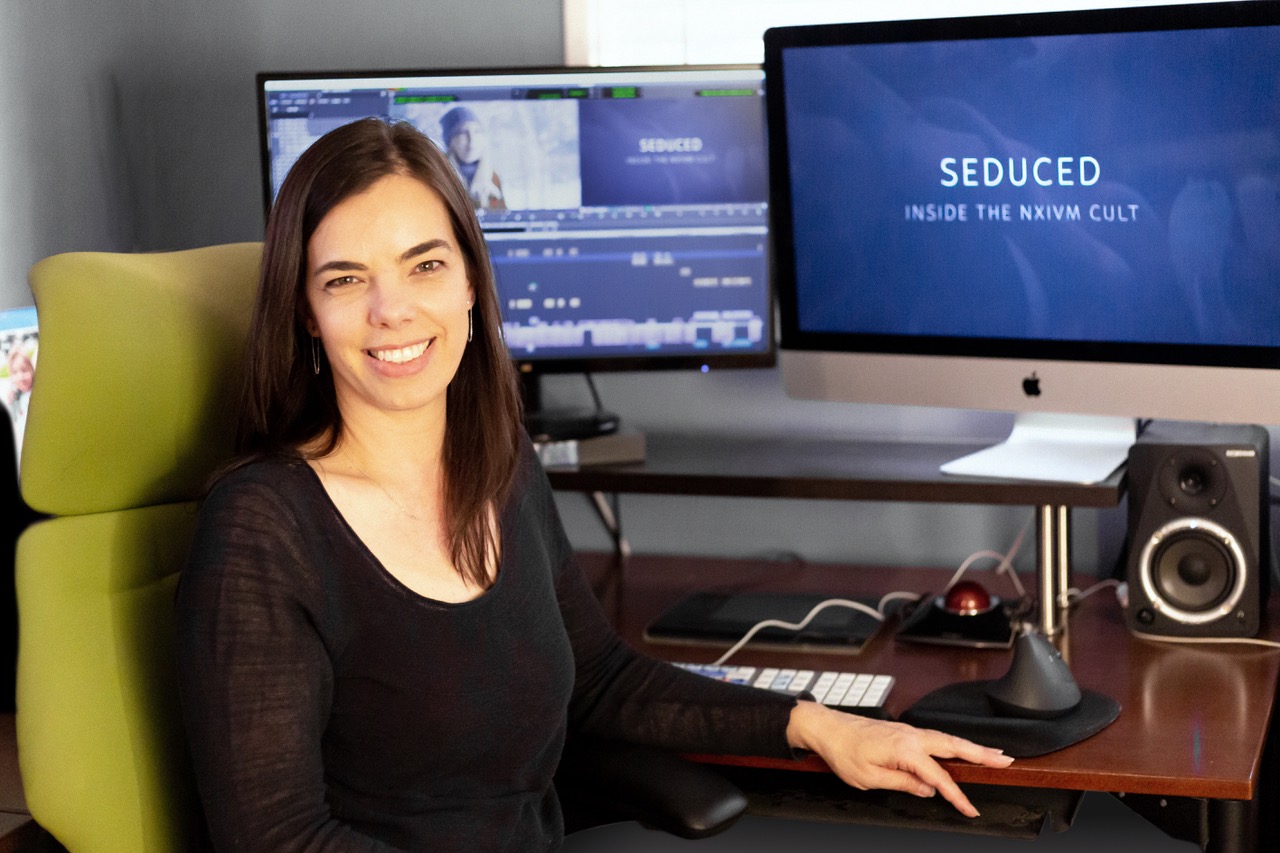
Inbal B. Lessner, ACE is an Emmy® and Eddie-nominated editor and producer. On her latest project, “SEDUCED: Inside the NXIVM Cult,”  which she co-created with her filmmaking partner, Director Cecilia Peck, she takes on the roles of Lead Editor, Writer and Executive Producer. This four-part documentary series, premiering on STARZ, follows one young woman’s perilous journey through the dark and criminal world of NXIVM, the notorious self-help-group-turned-sex-slave-cult. 

Inbal and Cecilia Peck’s last collaboration was the Emmy-nominated feature documentary Brave Miss World, which debuted on Netflix in 2014. It is the story of an Israeli beauty queen, who was raped seven weeks prior to her winning the Miss World pageant, and her crusade to reach out to fellow survivors while trying to keep her own rapist behind bars. 

In 2019, Inbal edited and co-produced “The Movies: The Golden Age,” executive produced by Tom Hanks, Gary Goetzman and Mark Herzog. This was the latest in her 4-year-long collaboration with the team that produced CNN’s Emmy-nominated “Decades” series. Inbal has edited seven episodes in the series and was nominated for an ACE Editing Award for “The Nineties: Can We All Get Along.”

Inbal’s editing credits include ReMastered: The Two Killings of Sam Cooke (Netflix Original, Dir. Kelly Duane), nominated for an Outstanding Documentary NAACP Image Award, and Autism: The Sequel, (HBO, Dir. Tricia Regan), a follow-up to the Emmy-winning Autism: The Musical (2007). She edited and co-produced the internationally acclaimed, award-winning, I Have Never Forgotten You, about Nazi hunter Simon Wiesenthal.  Inbal also directed the docudrama Night Bites and was second-unit producer on the HBO/ARTE documentary Watermarks.

Over the course of her career, Inbal has worked in the cutting rooms of directors such as Davis Guggenheim (Teach), R.J. Cutler (“American Candidate”), Kief Davidson and Daniel Junge (A Lego Brickumentary), Jeremy Simmons (“Transgeneration”), Tracy Droz Tragos (Be Good, Smile Pretty) as well as Natalie Portman’s feature directorial debut (A Tale of Love and Darkness). 

Inbal began making films when she was in high school and later produced training films for the Israeli Defense Forces.  At NYU, she was the recipient of the prestigious, merit-based, WTC Johnson Fellowship, awarded to one student filmmaker a year.  Since moving to Los Angeles, Inbal has edited hundreds of hours of non-scripted network and cable television shows. She was also a Visiting Professor at UNCSA Film School, and a mentor in the Karen Schmeer Diversity in the Edit Room Program.
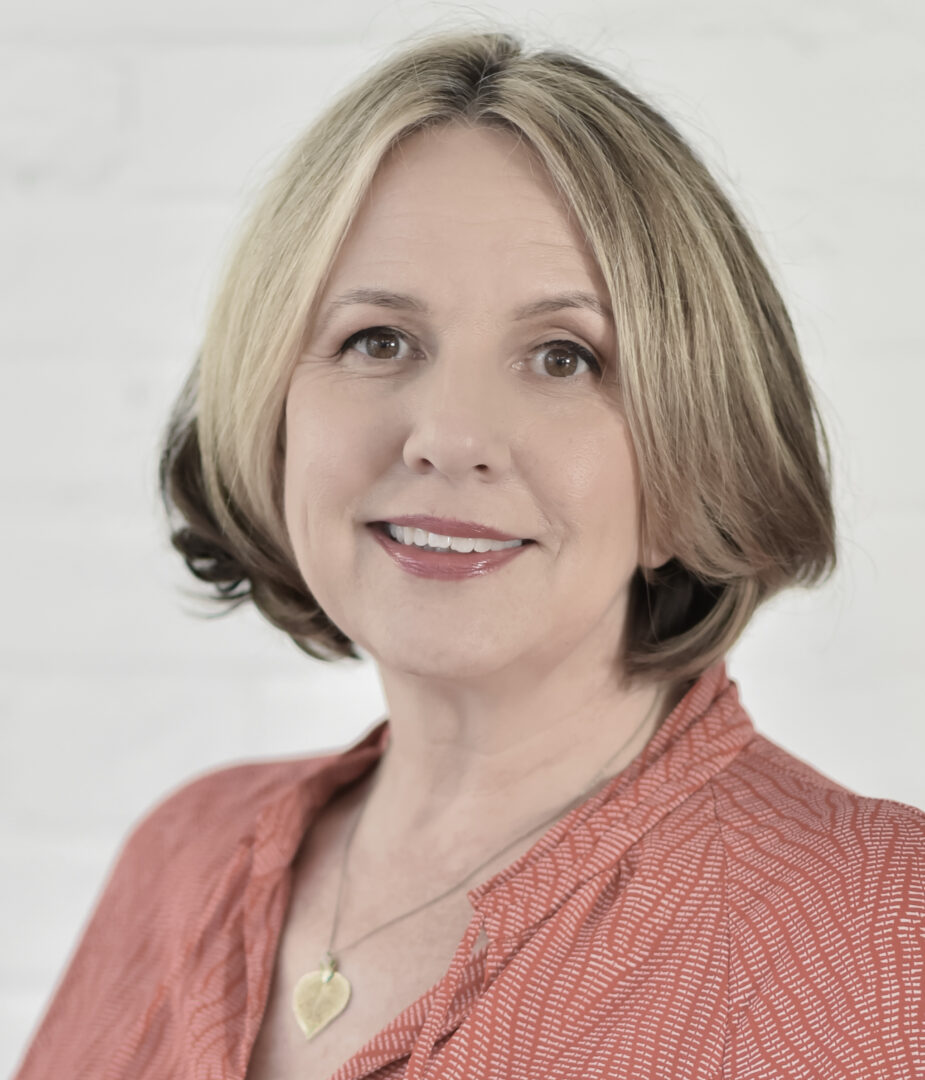
Gillian McCarthy is an accomplished editor whose creative style combines compelling storytelling with a cinematic sensibility.  Her feature documentary credits include the Oscar-nominated Operation Homecoming: Writing the Wartime Experience, Girl Rising, and Above and Beyond: 60 Years of NASA. Her television credits include work for ABC, PBS, Showtime, STARZ, Discovery and OWN.  She learned her craft working in the most precise form of visual storytelling, the television commercial, editing countless national campaigns in New York and Toronto.  A dual American and Canadian citizen, she lives in Los Angeles.

À écouter ici !

The Editor’s Cut – Episode 058 – Editing SEDUCED: INSIDE THE NXIVM CULT with Inbal B. Lessner, ACE and Gillian McCarthy

Sarah Taylor:

This episode was generously sponsored by IATSE Local 891, Integral Arts, and the Vancouver Post Alliance.

Inbal B. Lessner, ACE:

We were contracted to do a four hour series, and that was a really big creative challenge of how to distill this very complex world. How much you explain, what you don’t need to explain, what you need to stay the hell away from because it’s- we would take two hours to explain.

Sarah Taylor:

Hello and welcome to The Editor’s Cut. I’m your host, Sarah Taylor. We would like to point out that the lands on which we have created this podcast, and that many of you may be listening to us from, are part of ancestral territory. It is important for all of us to deeply acknowledge that we are on ancestral territory, that is long served as a place where indigenous peoples have lived, met and interacted. We honor, respect and recognize these nations that have never relinquished their rights or solve an authority over the lands and waters on which we stand today. We encourage you to reflect on the history of the land, the rich culture, the many contributions and the concerns that packed indigenous individuals and communities. Land acknowledgements are the start to a deeper action.

Today’s episode is the master series that took place on January 12th, 2021. Editing Seduced: Inside the NXIVM Cult with Inbal B. Lessner ACE and Gillian McCarthy. Seduced: Inside the NXIVM Cult is a series about women by women. It had women in all key positions and they took great care in creating an environment for the cult survivors who shared their stories in which they felt supported before and after filming. We discussed the ins and outs of shaping such a complex and sensitive story, and the challenges that Inbal and Gillian came across in the edit suite. Seduced: Inside the NXIVM Cult is available on Crave in Canada and on the Starz app almost everywhere else. I hope you enjoy.


[Show Open]

Sarah Taylor:

Welcome, welcome, welcome, thank you both for joining me today, us today, I’m very excited to talk all things Seduced. I kind of got hooked, by kind of, I really got hooked and I’m very excited to discuss this show and the making of this show. So I want to start off a little bit by just finding out a little bit of about you and where you come from and how you got into the world of editing. So whoever wants to start first dive, right-in!

Inbal B. Lessner, ACE:

I’m Israeli. Started studying filmmaking and especially falling in love with editing in high school. And then in my military service in Israeli army and then went to film school in New York. And that’s kind of like how my American journey started. My most influential teacher in high school was a documentary editor, probably one of the leading documentary editors in Israel, and it just always fascinates me, fascinated me how to mold random footage into a story. And so while I’ve done, you know,  any kind of genre and anything from wedding videos to narratives and instructional films about explosive in the army to you name it, documentaries have been my focus of my career.

Sarah Taylor:

Awesome. And Gillian?

Gillian McCarthy:

I’m Canadian, I grew up in London, Ontario, and I also went to a high school that had a broadcasting television program and did editing in high school. And then I went to Fanshawe College in London, taking television broadcasting, and I worked at the local television station in the news department while I was there. Then after college, I moved to Toronto to assist an editor in a small commercial editing company that did, for television commercials. That was kind of my post-graduate, experience with the budgets and 35 mil filmmaking and technology that commercials did. I assisted for a while, and then I was lucky enough to help a creative team for an advertising agency, do a pitch, which turned out to be the original Molson Canadian “I am Canadian” beer campaign.


Sarah Taylor:

Awesome!


Gillian McCarthy:

Then I was 25 sitting doing that and did the sort of beer, cars and communications commercial work. Then I was recruited to a company in New York, and that started my American experience. I did commercials in New York and then just as I was about to get married and move to Los Angeles, I was lucky enough to be introduced to Richard Robbins, who was a producer and writer working mostly through ABC news. We happened, I happened to be moving to his neighborhood in Los Angeles, so we became friends and he hired me to work on a television doc about Bill Bratton’s first year as the LAPD chief of police. We did a few more docs over the years. Then we did Operation Homecoming, which got nominated for an academy award. Ever since then, I’ve been doing nonfiction television and documentary features.

Sarah Taylor:

Fantastic, that’s exciting! I love that both of your stories began with a high school teacher who really had an influence in the editing world. That’s really exciting to hear. Nowadays I think kids are learning younger and younger because the technology is just, we have the capabilities, so that’s really exciting to hear. Now, let’s get onto Seduced. What led you both to this project? I know Inbal you’re the executive producer. Your story probably started much earlier than Gillian’s, but tell us how you, how this project started and how you got involved.

Inbal B. Lessner, ACE:

My producing partner, Cecilia Peck, we’ve done a feature doc together called Brave Miss World, released in 2014 and was nominated for an Emmy. We were looking for another project to work together. In the meantime, I just work as an editor, and she called and said, she has a few ideas and a few things she was working on. One of them was NXIVM. She was actually an intern who worked on Brave Miss World, attempted to recruit her.

She sent her a lot of emails about this woman’s group, and Alison Mack, all these amazing women she must meet and come to an intro and come, there’s mentorship, and networking and women empowerment. Cecilia wasn’t interested at the time and finally said, I’m happy this is working for you, but please stop emailing me. It’s getting too much. About a year later after the emails stopped, she called her up and said, I’m sorry, I just realized I was in a cult and I was under pressure to recruit. They met and she told her her story. Then Cecilia brought that to me and said, I think we have an in. She had already, she had just shot a little reel with this former member.

This one intern introduced her to through three or four other former members. She shot a little footage for a couple hours just to get them on camera. She asked me actually to join her and cut a sizzle reel, like a little presentation. And so we- I downloaded a few things I found online. I had no idea what NXIVM was. I was not following the story in the news. It really took me I have must say months to wrap my brain around what it was and what was wrong with it. I downloaded what I could. Cut that with the footage that Cecilia shot. We were able to go into Starz and pitch it together. I helped with the pitch and in of command there, and eventually got greenlit to do a series. That’s how, kind of, how I got started.

Sarah Taylor:

What was the timeframe from the, you doing the sizzler stuff to getting to greenlit to actually start the series?

Inbal B. Lessner, ACE:

So I think we, trying to remember, we started working on the pitch and had the first few meetings end of 2018.

Sarah Taylor:

Okay.

Inbal B. Lessner, ACE:

Then we got greenlit. We started developing, got greenlit officially April of 2019. The trial I believe started in May that year, the Keith Raniere trial, and then Starz thought and pushed us to make this plan that we would film and edit and be completely done and delivered in about six months. That was not, [crosstalk 00:09:02] a reasonable expectation. We ended up working almost two years and we locked the show in this, this past summer.

Sarah Taylor:

Then did you, you did have to open the lock when you find out the results of what his conviction and stuff, right? You were kind of waiting for, were you waiting for that?

Inbal B. Lessner, ACE:

Well, we were just putting the last finishing touches on episode four.

Sarah Taylor:

Yeah.

Inbal B. Lessner, ACE:

It was locked, but we put it in to the end credit.

Sarah Taylor:

Yeah.

Inbal B. Lessner, ACE:

We added that information. With couple of the cards, I think we updated them after the most up to date information.

Sarah Taylor:

We’ll get Gillian to tell us your story of being approached to do the show and what your thoughts were when you got to get into the edit suite.

Gillian McCarthy:

I had talked on, to, Cecilia Peck on the phone a bit around the time that they were doing Brave Miss World. I think you might have been making it from a feature to a series or something, but it didn’t really work out. Then she contacted me to come in to talk about this series. And so I came in and met with Inbal and Cecilia in at little edit room. They said, do you know anything about cults? I had just, I worked on the Bikram film earlier that year. I knew a bit about cults and they showed me the reel. I don’t know if reel is the same one they pitched to Starz, but they showed me the sizzle, which, and then I was wow, that’s a crazy story. Then I started in October of 2019 originally scheduled to work through the end of January 2020, but ended up going through April or May? Of 2020.

Sarah Taylor:

I noticed that you had a big importance of the team of the series is to be female led. Why was that important from the creative standpoint, and to keep this series female led. I kind of want to know the thought process behind that and how it worked out for you.

Inbal B. Lessner, ACE:

We had experience from Brave Miss World, which is a film about rape and sexual assault. Of interviewing and working with working to tell the stories of sexual assault victims. We learned what needs to be done to create a safe environment on set, and then to tell the stories in the most respectful way honoring the trauma and not exploiting it, or sexualizing it. Cecilia, and I are both women. It happened that both our network executives were women and, definitely on set, we felt that a female, either a complete female crew or a female heavy leaning crew, was going to help these women and former members open up and feel safe to share. What we didn’t expect is that, and that’s a little anecdote, that a lot, our crew members, it was their first time working on an exclusively female crew.

It was like an unusual experience for them too. They started sharing things and they were like the vibe was just so different for them. Nobody was mansplaining. Nobody was kind of taking over. The egos were all a check. I think it was just very special environment that we created on set. Even on days that we had male crew members, we, they were carefully chosen. Everybody, male and female were carefully chosen and trained for sensitivity. We had a protocol of how to approach our subjects. What to tell them when they finish telling their story, not just like, okay, next setup, but, thank you for sharing. This is really meaningful. There’s just a way that we established to interact with these people, so they don’t shut down or they don’t, just to feel supported and comfortable. Then with, as we were hiring the production end post and post team, we certainly made sure people were, had in their heart, a place for this story. Whether they were male or female, they understood it, understood what we were trying to do with it and had the proper sensitivity to tell it.

Sarah Taylor:

You can see that in the final outcome, I feel anyway. Gillian, did you have any sort of take on seeing the footage in the end, edit suite and how that, did that come into a play, that there was a female? Could you, tell, could you feel a difference? What was your take on it?

Gillian McCarthy:

Especially in the interview dailies, you can tell it’s so hard. I can only imagine to be telling those stories in front of a bunch of people. There was, you can tell in the interviews where there’s breaks and there’s, we come back and a reset and think that it was a very respectful and gentle perspective in that way.

Sarah Taylor:

I feel like it would easily reflect into your edit when you see that care being taken in the footage and with the people that’s gonna happen in the edit as well. Now with the actual series, it’s such a complicated story with so many layers, so many things going on, and you had footage from the insider footage from NXIVM itself, you had their promotional videos, you had news clips, you were sourcing from everywhere. How could, how did you wrap your mind around how you’re going to tell this story? It’s going to be led with India’s, her story. You still need to explain what NXIVM is. You have your experts, which I love that you had experts in there explaining what cults were and what, how they were manipulating people and all that information. How did you go about, setting out to make it so concise? So we could all understand, wow, this is how it happens and how it can happen to anybody and understanding all of the ins and outs of a cult.

Inbal B. Lessner, ACE:

Well, I kept saying this story could be, if they gave me 10 hours or 20 hours, or 30 hours, I could fill those, no problem. We were, we were contracted to do a four hour series. That was a really big creative challenge of how to distill this very, as you said, complex world, very intricate web of different companies, and sub companies, and courses, and seminars and the lingo, the vocabulary and how much you explain, what you don’t need to explain, what you need to stay the hell away from. Because it’s, it would take two hours to explain. There were a lot of difficult choices in constructing it. The basic structure was there from the pitch, from the beginning, even before we had India involved. So India joined actually pretty far. India is through the process of being in a high control group like this.

Episode one was always about seduction, and getting hooked and what it feels like to join a group like this. Episode two was about, as it turned out to be about indoctrination. What happens with thought reform and what does your brain go through when you’re fed up this information over and over again? And how does it really changes your thinking? The later episode were always about, the heart of darkness kind of like, what does it mean to be in the center, of gravity of this organization? What are the worst kind of crimes and start unpeeling what the worst crimes and experiences of abuse that happen in the inner circle of the cult. Then we initially imagined it as a five episode with the last one being about recovery and healing.And so that was a lot of back and forth, but eventually when Starz insisted on keeping it down to four, which is a really brave choice and also means a lot more people actually going to commit to watching the whole thing, possibly binge it in one night or two.

Sarah Taylor:

Guilty.

Inbal B. Lessner, ACE:

That really constricted us in telling the story a lot more economically and make more choices, but we did come to a compromise with them and had episode four, as some of you’ve seen, as a supersized episode with the kind of healing and-and what these women go through to overcome what happened to them and find their voice again, as the kind of last chapter of this saga.

Sarah Taylor:

That is a lot to put into four hours of content. There’s just a couple questions that I’ll get you to, from the audience. For Inbal. What was your experience writing and editing at the same time?

Inbal B. Lessner, ACE:

Well, if you’re a doc editor, you’re a writer always.

Sarah Taylor:

Yes.

Inbal B. Lessner, ACE:

Whether or not you’re credited for it, I’m sure Gillian, anybody will tell you, they always write. I think every single editor we had on the team, as well as any film, any documentary film I ever cut, I probably should have gotten an edit, a writer credit and part of an organization who that advocates for editors to get writer credits. Ultimately there was a lot of writing done in order to really help the audience go through the experience and understand what they needed to understand, but also not think about the thousands of questions they might have. That they shouldn’t be thinking about when they’re watching. There was a lot of choices and careful writing throughout, and I’m glad that Starz agreed to give that credit to myself and Cecilia, but it’s really, I mean, as a doc editor, you’re always writing. You’re just writing from existing warrants. Opposed to making stuff up on a clean piece of paper.

Sarah Taylor:

Totally.

Inbal B. Lessner, ACE:

But what was, what was your experience, Gillian, writing?

Gillian McCarthy:

I think that you might be forgetting how hard you worked. You would spend the day producing, executive producing, directly, setting up doing all that. Then, you would spend the all night editing. It was 24/7 for you [crosstalk 00:19:49]. You did a lot in that way, but I think also for me the, helping the structure, was the story editors. This is the first thing- time I’d ever worked with story editors, because I’d only done single feature docs. Where you’re the writer with the director and some series that were more discreet episodes, so they didn’t have somebody who needed to have that overall awareness of the story arc over multiple episodes. I found that Sarah and Tara were really helpful in structuring that keeping the awareness because you don’t- you dont know where you are sometimes, and everything was cut so wide. The first version of Genessee was probably 15 minutes in itself with everybody’s story. Then you’d start to distill it down. I think if for you, my perspective of Inbal’s work was that she had two jobs and worked twice as much.

Sarah Taylor:

Wow, you were two people. A question that also came for Gillian was there a piece of footage that you really loved, or part of the footage that you really loved that you had to let go? Which you mentioned the Genessee was 15 minutes long, so you did obviously have to pair back a lot of stuff to get to what we have now. Was there something that you were really upset or kind of sad that had to leave?

Gillian McCarthy:

The one thing that I was sad that had to leave was when they took India back to Silver Bay and they shot her in the winter, and she went into the auditorium and did a lot of talking when she was on the stage and talking about her experience in her promotion ceremony. We’d done some inter cutting with what we had of clips of the promotions. It didn’t really survive, but I thought that stuff was really good and she was really good in it.

Sarah Taylor:

Got to let them go. Should we look at some clips?

Inbal B. Lessner, ACE:

Cause I don’t know how many people watch the entire series, but it’s towards the end of the first episode you see in India take, the annual retreat, the annual summer camp of NXIVM and it’s in upstate New York. She really makes a decision to confront what happened to her emotionally and physically, and actually go to that place. You’ll see the beginning kind of part of it.

Sarah Taylor:

Just a warning for all of the clips, just a content warning, we are talking about assault and there’s, it’s sensitive subject, so just be warned


[Clip Plays]

Sarah Taylor:

Where do we start? I love how you really worked with the mood in that sequence and how it went from, “Yeah, I want to go to V week. Totally. I want to do that.” And then you’re like, “Woomph, nope.” You did a really great job of taking us on the journey, the emotional journey. So would you like to share your thoughts on that clip and why you chose it?

Inbal B. Lessner, ACE:

It’s definitely my favorite in episode one and one of the favorite overall. I mean, this magic that happens when we start intercutting from her in present day to fragments of archival footage, inside a footage that was shot in that same space, and how that’s such an emotional manifestation of what’s happening inside her head. And it’s one of the first sequences we cut in episode one. And once you saw it, you just knew there was something there that was so special. I think the decision we made behind the scenes, in production, to go there and the fact that we couldn’t get there, that it was the dead of winter and we got a call that it was going to be snowing when we got there. And we’re like, oh, all the curse words you can think of. But then I was like, “No, this will be great.”

Sarah Taylor:

Yeah, it was perfect.

Inbal B. Lessner, ACE:

Initially we were like, “Oh, it has to look the same.” But the fact that the difference between the beautiful summer images of V week in August versus what’s happening as she’s going back and it’s cold and snowy, and snow is on the ground. And it was freezing to shoot it, but it was really great that we were able to capture this dissonance that’s happening inside her brain and also visually. And then, later in the clip she goes into that auditorium where all the events and promotions and performances and speeches used to happen, and you really feel like she’s sitting there remembering what was going on on-stage while she’s in the audience. And so that was obviously, well thought out, but then it just became even better than what we could imagine in the edit.

Sarah Taylor:

Yeah. It was very powerful. And you could really feel her emotion that you… Yeah, some of the people are saying like they felt every minute of it. It is so powerful. Gillian, did you have anything with this clip?

Gillian McCarthy:

No. I did not work on episode one at all. I was originally, came in to work on episode two only and then ended up working on two, three and four.

Sarah Taylor:

Oh, excellent. Okay.

Gillian McCarthy:

And never got to one, although there’s maybe a little bit of Jness that when they rebalance the episodes that got pulled on up from two to one. And I kind of feel good about not having to work on one because openings are the hardest thing, like you could just cut forever, forever on getting that, the first 10 minutes in the first episode. There was a lot of heavy lifting in that episode to set up everything, so people could understand it, get to know all the people, not just India, all the other amazing women, understand the cults and the cult experts and that, so.

Sarah Taylor:

Yeah. Yeah. There’s a lot. And effective, how it all came together. But yeah, so much that, Inbal, you mentioned earlier like even the terminology and the lingo. And here you hear one of the women saying like, “Oh, they called them objectives.” So, I liked how you incorporated in your interviews that they were explaining what it was and it just was so organic that you just kind of got it, you just understood, which is really great. So, kudos to you. Good job.

Inbal B. Lessner, ACE:

Thank you. I just wanted to quickly say, again, plans and reality collapse, but originally I was planned to cut episode one myself and have three editors hired to help with two, three and four, but it was budgeted and scheduled that I would cut episode one myself. Well, that did not happen. I was needed on set a lot. When we were supposed to be full time in editing, we had just started filming with India. It was quickly apparent that that was not going to be the case. And we hired the marvelous Caitlin Dixon to work on episode one. And then Matthew Moul. When Caitlin had to leave, Matthew Moul joined us later and really helped shape this episode.

But yes, so much to accomplish in setting up India’s story, the other women, the whole spine of this mother-daughter story, that’s in the heart of the series, and how Catherine took India to the first seminar, and how the guilt that she feels about India going deeper in. This story that wasn’t told even in Catherine’s book, that she actually went on much farther, and then that India ever planned to, and even hosted events in her home and then India followed somewhat reluctantly and then ended up really getting chosen, selected, hooked, but hooked meaning-

Sarah Taylor:

They picked her, right?

Inbal B. Lessner, ACE:

Yeah, exactly. She was targeted.

Sarah Taylor:

She was targeted, yeah.

Inbal B. Lessner, ACE:

Yeah. She was targeted to go further in. And Sarah Edmondson actually asked her if she wanted to be a coach, she thought she would be a really good coach. So, once India goes on this coaching path is when things really start getting dangerous. And we needed to do all that and then get India out there as she starts exploring in real time, in veritae scenes, take us on this journey of unpacking and understanding what happened to her.

And Gillian and I talked earlier today and we were saying, the India we met, who we started filming with around October of 2019 is not the same India you see today in press or even the same India that was four months later. She was really going through a real time process while we were filming of understanding, as she said, the difference between what really happened and what she was made to believe happened. And that tension drives the entire narrative. And that took us a while to understand, that the whole series is about the difference between how- what the members experienced and what is really at play, the coercion tactics. And that’s why all these experts are really critical to give you that outside perspective, as the members are trying to explain you their firsthand experience.

Sarah Taylor:

Because I feel like often we’ll just, people will jump to like, oh, well they must be- something must be wrong with that person to get hooked into that. So, to hear the experts explaining it and clearly explaining like, no, no, no, this is how it works, this is how manipulation works. Because there’s other shows that have been things, other things that have been done about NXIVM, but we didn’t get that key, the expert element, to understand what’s happening in people’s minds and how they’re using the language and manipulating the people that are in the cult. Somebody asks or mentions, since India did join the project later, how did she become involved? And then, how did you make it safe for her, so she felt empowered that she could be vulnerable and do this journey on camera of healing and working through all this incredible- incredibly hard stuff?

Inbal B. Lessner, ACE:

We always wanted to get to a story obviously as producers, investigative journalists, we wanted to get at least one member that was at the core of this cult within a cult really, of DOS. And it became apparent that nobody was going to talk to us before the trial is over. So, our goal was to get women that were in, that would feel empowered enough to, after all that power was taken from them, would feel empowered enough to share their story.

And in the meantime, we were just really working hard at getting other aspects of the story. And we realized that Catherine Oxenberg played a major role in that story. And we had planned to interview her. We did interview her just to get her perspective and kind of her perspective as a former member, as somebody who had a daughter that went really far into it. And what did she do publicly to expose and bring the cult NXIVM to an end, really. And I think once we talked to her, she saw what our team was about, what was our perspective, and she appreciated our point of view.

And India at the time was still working on her own healing and deprogramming. And I think, she was just getting ready to share her story and she wasn’t sure whether that’s going to be a book, which she also did, or a TV show or a documentary, or. I think because of our relationship, the relationship we built with her mother, she felt comfortable meeting with us. And then once she saw what we had put together up until then, she really decided to join us. She felt we would do justice for her story and treat it the way she wanted it to be told, tell it the way she wanted to be told. So, we worked with her, but we let her take it as far as she could at any given moment, meaning, the first time we flew to Belgrade and filmed with her, I personally didn’t even know that she was sexually abused, nor did I ask. So, that had to come from her and she initiated how much she wanted to share.

And then she’s the one who said to Cecilia like, “I want to show that healing and deprogramming.” And therapy is complicated. And talk therapy for example, talk therapy was very triggering for her because NXIVM was a lot about the DCMs and talk therapy. So, she invited Cecilia to film that buddy therapy session that you see in episode four. So, it was really letting her lead the way and take us on this real journey of what she was willing to share and show. But she was an open book. And she started remembering more things. I know Gillian has a story about can we learn more things from her as we were going through it.

Gillian McCarthy:

Where I was just recalling that, I think episode two or three had gone into the network, maybe, at least once and Inbal, you stopped by the edit room and said, “Well, India just told us about the situation where Keith would make her pull over and take more vulnerable picture, more vulnerable picture. And we didn’t know this and you’re not going to ask like, “Oh, how bad did he get?” She just offered that up. And it was like, okay, so we’re going to go. I mean, obviously they did multiple interviews with her to talk about things and that just opened up other paths and other memories and talking about more stuff. So I think, the first day I started involving, Cecilia weren’t even there because they were on a plane to Belgrade to go shoot with India, and that was the first time they had done that interview. And then-

Inbal B. Lessner, ACE:

That trip was confirmed the night before. It all happened very fast.

Sarah Taylor:

Wow. And so how much editing did you do before you made that shift where you had to change the structure of the series to really be driven by India’s story?

Inbal B. Lessner, ACE:

I started working and laying out some sequences for episode one and actually laid down sequences for the entire series, sort of things that we didn’t know where they would go yet. And you know, we had amazing scenes that we shot during the trial. We initially thought that the trial was going to be the spine, the narrative spine of the series, and that you would learn more and more about what happened inside NXIVM as the trial unfolded. And we had these other really brave former members who sat inside the courtroom and then had interesting reactions outside about what they experienced inside the courtroom, where we were obviously not allowed to film or record anything. So, we had started cutting all these scenes and started imagining what it would be like animating some of what happened inside the courtroom in order to kind of utilize it.

And then when we got India, we just thought, oh, it’s just another voice added to this chorus and we’ll just figure out how to weave her hand in. But it quickly became apparent that she had to be the narrative spine that would get you from beginning, middle and end, from the moment she joined till the time it all went down, that she was one of the last people standing, she stayed there really until the bitter end. Maybe not as far as dancing outside his bell-

Sarah Taylor:

That scene. Oh, my word. Like, what are you doing?

Inbal B. Lessner, ACE:

Not that far, but almost, very close to that. So, once we realized she had to be this spine, we had to completely take down the board, take down the storyboard, put new cards and reimagine it around her story. But there was a lot of stuff already in place and done that we just kind of started weaving around.

Gillian McCarthy:

You feel like the other women like Naomi and Tabby and Ashley, although their stories are part of it and we had that to work with too and a lot of that stayed in. But their experiences really, I think, help and support India’s. Like, how do you get into that? One of the most affecting things for me is when Naomi is talking about how if you are in a room and everybody’s saying something and you don’t feel the same way, how do you stand up to that? And are they wrong? Are you right? And that filled it out too, a lot.

Sarah Taylor:

One question here, did you have any concerns or worry about knowing other documentaries were being made about NXIVM while you were crafting this one? Did you think about that or did you just do what you needed to do?

Gillian McCarthy:

I think it was six or eight weeks after I’d started that somebody was like, “Oh, HBO’s doing a 10 part doc.” I was like, “Well, what are you going to do?” It’s a different perspective too.

Inbal B. Lessner, ACE:

I mean the most fascinating thing, we locked the show before they started airing. So, at that point we were done with the hard work and just sat down and enjoyed the show. But it’s fascinating how the approaches and the end result is so different. I mean, I was worried that it would be the same or redundant, but. We didn’t know anything, obviously with documentary, but most film productions, you sign all these you confidentiality agreements, and you’re supposed to be really tightlipped about what you’re doing. So, we didn’t share anything about what we’re doing, neither did they. So, until they dropped their trailer, we found out about their air date like everybody else. We didn’t know that they were not even going to go into the trial in season one. We really had to stick to our own lane and do our thing.

We had- we respect them as filmmakers. We were working side by side, outside the courthouse. We had an understanding that we would share some experts. Like if somebody’s an expert on a call, it’s fair game that both projects would interview them. But with former members and main characters, we try to stay away and not approach the same people that we knew were already working with them, if that makes sense. So yeah, I think, at the end of the day, there were something like 17,000 members that went through NXIVM. So, that’s 17,000 stories. And there was coercion and trauma, I think, on almost every level, even those who were involved for a short time. And I just think there’s a lot of stories to tell, and the more are told the better it is, because it just helps people understand coercion, coercive control and unpack this unbelievable story.

Sarah Taylor:

Totally, yeah. Wow. Another question here, which I think will take us into maybe the next clip. Did you have to go through all the modules to understand how NXIVM worked? Did you take the time to watch all their videos to really understand how it worked?

Gillian McCarthy:

I don’t think it would be possible.

Sarah Taylor:

There’s a lot, right?

Gillian McCarthy:

I mean, we only had what we had and we didn’t have much material. I guess people got stuff in their classes, like papers and stuff. Like Keith says in one of those interviews, he’s like,”We have thousands of modules.” But to me, the gist of it was what it was actually teaching didn’t really matter. I mean, to me it was like, it was an MLM. So it wasnt-, you weren’t ever designed to get fixed or win or develop. You might feel like you were, but they were always going to be moving the bar, so. Other than the idea that your life issue,  that you were inherently broken, that they would instill into you. What they would do to fix it, didn’t really matter to telling the story.

Inbal B. Lessner, ACE:

I remember we did take a lot of time talking to the former members. I personally, I made Tabby perform [miniem 00:45:03]. Not personally on me, but on our co-producer Morgan Poferl. And I filmed it with my phone. I was trying to figure out how that would play. I wanted to understand the hook, the draw. Because you see so many people that went so far and so you were like, wait, but what did they say? What’s the secret? What was so positive? What was the one thing that got you hooked? So yeah, there wasn’t a lot available in terms of material. NXIVM team was very protective of their copyrighted, patent pending materials. Everything was locked up. It wasn’t like people took copies of the curriculum home. Even the coaches, you were not allowed to take it out of the center, it was always locked. It’s not like there’s a ton of material available online. And frankly, we didn’t have videos of all the modules. We have very little and we did the best with the most of it.

But Cecilia and I did have, and Morgan had long conversation with the former members to understand the teachings and what the structure of the classes were and what exactly they learned or remembered, or. It’s like a word salad. It’s just that an attack and that’s part of the tactic. You get numb because all these words are just, it’s an over saturation to your brain. But I think our job as editors and that’s what Gillian is brilliant at, is to find the one line, the one moment where you’re like, okay, in that ocean of words, that’s the one thing where they hook you or where the implant is starred into your head, that will later pay off or later build into self-hatred, or this misogyny. It wasn’t as clear as it is in Seduced, right? It was veiled in a lot of other bullshit. So that was our job, to find those moments, that in five seconds you could understand what was really happening as opposed to what they thought was happening.

Gillian McCarthy:

It was also, I think, where the people involved because such a slow build. They didn’t start out saying you’re going to go to this SOP thing and have to wear a jockstrap on your head. That build. You started with the introductory courses and then they could see who would accept, how far you could go. You’d fill out the form and they’d be able to see who they could push. And just working on it for five or six months, you’re not getting that slow build, so you look at something and go, this is nuts, because you’re coming in with a perspective. And then their point is to have you have no perspective. Anything outside is not valid. It’s only what we’re telling you in here is the valid thing.

Sarah Taylor:

They get you to trust the process and trust the people. And then, yeah, totally.

Gillian McCarthy:

That said, the production did say there was people available for us to talk to if we felt like we were getting… There’s a lot of traumatic stories and to listen to that all day is difficult.

Sarah Taylor:

Yeah, that was one of the questions is like, did you have to take a step back? And I know Inbal mentioned when we talked before this, that you had put together supports for your team for that case. If you’re feeling triggered or you need to talk something out, here’s something to help you. So, why did you feel like that was important? I think a lot of series and documentaries probably need to have that in place.

Inbal B. Lessner, ACE:

I do think it’s an important conversation that needs to be had. And I’ll just mention quickly that I’m on a brand new mental health committee that we started at the Alliance of Documentary Editors, the ADE, which is an organization for doc editors. And we realized early on that we needed to provide a professional support for the people on camera. I mean, that was a no brainer. I can’t… I can be nice and supportive and as kind as I can be, but I’m not a mental health professional. And when somebody’s triggered or having really scary, suicidal thoughts, or really severe PTSD because of what they’re decided to share on camera, I need to make sure they have a professional standing by to help them before, during and after filming. So, that was a no brainer. The network didn’t completely understand it. So, we actually had to raise the funds ourselves to make that happen.

And then when we started editing, I just remember this one day, Roxy who used to be my film student and then was a post BA and eventually was promoted to assistant editor, but she did a lot of logging. And I remember walking the hallway and behind the closed door, I hear her yelling at her screen, like “What the hell!” And…

PART 2 OF 4 ENDS [00:50:04]

Inbal B. Lessner, ACE:

Screamed, like what hell? And I was like, “Roxy, what happened?” She’s like, “Why are they staying? How they’re not getting up and leaving, like what is happening?” And so in our weekly post meetings, we would try to discuss those things.

And then Cecilia and I decided to make the same services that were … mental health services that were available for the subjects, also to the crew. So if somebody felt like … Tracy Layman, who also helped with watching some of this stuff, and she said, “Sometimes I feel like I need to take a walk, because my brain is scrambled. I’m starting to not know what’s real or not.” And I was like, “Okay, we need to provide that same help to people on the editing team who are getting … ” I don’t want them to be brainwashed by Keith from watching this footage.

Sarah Taylor:

Yeah. No kidding. And so Gillian, did you take breaks and did you think about that? Were you mindful of that you had that option to seek assistance if you needed it or?

Gillian McCarthy:

Well, they told me. I mean, I didn’t take advantage of it, but you can’t just drive a highway all day. So you’ve got to do something else. It’s like, maybe I’m just going to take a look at somebody else’s interview you or go look at the news archive for a bit or go read the trial transcript. There’s not really a break, but it’s … Or just go to the lunchroom and get a donut.

Sarah Taylor:

Sugar always helps.

Gillian McCarthy:

Always. You can’t go wrong with a donut.

Sarah Taylor:

You also mentioned at one point an organization FACT, I think you said?

Inbal B. Lessner, ACE:

Families Against Cult Teachings. That’s the organization, the 501c3 organization we partnered with that would accept the donations. And they managed the fund of therapy for the NXIVM survivors. And Starz made a very generous donation to it, to keep supporting them through the release. Because the release became another trigger. Now they didn’t just share with our a crew, but also shared with the world.

And sometimes you have to bend the rules for when you do these difficult projects. And I remember we invited … And Gillian met them several times. We invited some of the former members and then the others to the edit room. And we would share sequences with them. We want them to feel like we really embrace them. We care about how they feel about sharing their story. We care about making sure that their perspective is represented truthfully.

It was very complicated. I think I underestimated how much of my work was caring for our subjects. Interacting with them, caring for them, considering them. All those things was quite consuming.

Sarah Taylor:

Yeah. It’s so important. I think sometimes we lose sight of that in the doc world, that these people are sharing them. And we need to be very, very delicate with that. And so I hope more and more productions do things like this. And for the post crew for everybody. Because it’s heavy. Even watching it like, oh, take a break. I’m going to drink some water or whatever. Right? So I think, yeah, thank you for doing that.

Gillian McCarthy:

There was not a lot of potential to be … I mean, not exploitative, but as you could see, it really was a TMZ moment. Especially when Catherine did her- went public with it. And India had been through the ringer with that. And it was sensationalized and it needed to be looked at. Because this happened to a lot of people. Was there 150 people in DOS?

Inbal B. Lessner, ACE:

Yeah.

Gillian McCarthy:

All smart.

Sarah Taylor:

Mm-hmm (affirmative).

Gillian McCarthy:

All of those people were super smart and driven and focused. And that’s why they were chosen.

Sarah Taylor:

Yeah.

Gillian McCarthy:

And deceived.

Sarah Taylor:

Mm-hmm (affirmative). Well, shall we watch another clip? We have a clip from episode two, the JNESS tracks.

Inbal B. Lessner, ACE:

This is really the heart of the indoctrination. There was a lot of stuff in NXIVM teachings that looked legit. And when we really dug into it, we decided, Cecilia and I, that the gender-based programs were really the core cause for what ended up happening in DOS. And how they changed people, perception about gender and really made the women hate themselves. This is just a little snippet of how we had to distill that down to a little tiny clip.


[Clip Plays]

Sarah Taylor:

In a distilled three and a half minutes, hearing them say like, “Oh, yeah, monogamy is not … ” Just all those lines that you’ve picked to explain. Yeah. Like somebody just put, it makes your blood boil. It does. And like, ugh, there’s so many elements to it that you’re like, how is this- how is this happening? Especially right now, how did this happen? Give us some insight on what you chose and how you chose to shape this.

Inbal B. Lessner, ACE:

So we needed India by the end of episode two, to accept a membership in a slave master sorority. Now we have 90 minutes from beginning to that point. In about an episode and a half to get her there. And so we had to distill five years of her in NXIVM with all the indoctrination and many programs that we don’t even mention. With her being on the coaching path and trying to advance on the coaching path. And maybe figure out how to make it a sustainable career.

And what she’s hearing along the way. We really realized that, as I said before, the gender-based programs were the most harmful in terms of how it changed her thinking. And JNESS was in existence for years. And Naomi took JNESS classes here in LA. So they had- The curriculum was coming down from Keith and then distributed confidentially. Or like with secret kind of … Like never just emailed. But then read on conference calls or in different forums around the country. And in some places in other countries, as well.

What came from him and eventually at the end of the clip, you see where he gets to. Is like, okay, rape is not really a rape. And the victim is really the abuser. And you want to make sure that by the time you hear that, you can understand how somebody can be susceptible to accepting it.

And it’s still like, as somebody commented on the thread here, makes your blood boil. And it’s like, there’s no way. But hopefully we gave you enough clues where you could see there might be a way. Because anything that makes you jolt or want to run away, they told them that’s exactly how you need to feel. If you have the urge to bolt out of your seat, you’re doing the work. You’re doing the hard work. You are opening your mind. You’re not accepting anything as a given. You’re really fighting what they call indoctrination, which is the way you were raised, the way you were indoctrinated as a child. You challenging your perception of the world to accept this other things.

And so they kind of used their instincts against them. And that eroding of instinct is what eventually leads India to accept this membership in DOS. And so that was really important to lay it out gradually. But also very concisely.

Gillian McCarthy:

It makes you wonder if there was a huge game plan from the beginning that they … I don’t know that they were all that clever. But to start with JNESS and roll it into the tracks. Which they were called intensives for a reason. That they would take people, make you go to Albany, usually. I think most of them were in Albany. And spend 12, 15 hours a day in these rooms, listening to this stuff with minimal food.

And I know from some of those testimonials we had, in the B roll, people were talking like it’s 11:30 at night, it’s midnight. After they spent this day, they were required to go and record their thoughts on it. And be coached into what to say, as well.So It’s a physical breakdown, as well as a mental breakdown. But JNESS was a gateway, for sure.

And the last clip of Keith is government evidence, right? That was in- came from the FBI. That one I watched. And that’s hard to take from top to bottom. Nancy Salzman is there hitting record and setting it up. And they’re all sort of … The first line DOS women are, can’t really tell, are sitting around the table, nodding and agreeing.

If they did even say, like, I don’t understand, it would just be dismissed. And Kelly said that about JNESS, the tracks that she took. Where she was like, if you had anything to say, they’d be like, “No, you’re wrong.” You were supposed to discuss the curriculum, but there was no real discussion. You were told what to think.

Sarah Taylor:

Was there any challenges in putting this together, the edit of making this concise? Giving us that information on how- what they’re telling the people to believe to get to that point where we hear Keith say the victim’s the abuser? Did you find that clip and think, “Okay, this is how I’m going to … ” And this is like … How did you get to that stage of piecing it together?

Inbal B. Lessner, ACE:

I think the biggest challenge was letting go of anything that wasn’t directly informing India’s through line. There was a lot more things and stuff. And seeing a lot of the other key players kind of in moments where they’re overwhelmed or kind of this gazed look on their faces as they’re like totally brainwashed, as Gillian said. They would make them sit at the end of a really long day and be a PR machine for spelling out, again, everything they learned that day. And which I think is a really dangerous part of this, how they make all these members be PR machines for the organizations.

So I think we just had to be really thoughtful about what India’s experience was and only use the pieces that informed her story and her experience and just kind of bravely let go of everything else.

Gillian McCarthy:

It was, I think originally the concept of the JNESS groups, which as Inbal said, were held. You had your friendships where you had your group of women that you would hang out with once a month, rolled straight into the tracks. And that was a longer sequence. There was this process of splitting that up and moving part of it to episode one and seeing what made sense with episode two. It went through a lot of iterations.

And then I think we watched it once and then we rolled straight into the SOP, which was the men’s group like JNESS. But at a certain point, it all just … you just become numb to it. Because it’s hard to differentiate on just if you’re just going to watch it once.

Sarah Taylor:

Well, another component that you used a lot in the series was animation of the reenactments of moments in India’s story. The next clip that we have is from episode three, and it’s the branding sequence. Which again, I’m going to give a content warning, because it is intense.

Inbal B. Lessner, ACE:

Obviously, there was no footage that we could use. It was such a tentpole- important part of the story. And to really understand how they willingly and knowingly went into that room to be branded. We wanted to make sure people understood the context, how they made that choice under coercion, but still a choice. And what actually transpired in that room.


[Clip Plays]

Sarah Taylor:

How was that to put together?

Gillian McCarthy:

I think that the tone and the texture that Elyse and the people at the animation brought to it, transformed it. I’d like to just recognize that.

Inbal B. Lessner, ACE:

There’s a good story behind it. When India joined as an executive producer, she was really … her first film. And she kind of fell in love with the process and started watching and binging a lot of documentaries. And so she would say, “Oh, watch this. And what do you think about that?” And so Cecilia and India and I would start binging on the same docs over the weekends.

And she watched … One weekend, I got a text. She watched Miss Americana, the Taylor Swift documentary. And so then Cecilia watched it. So I had to watch it. And so I watched it. And it’s a beautiful doc. And there’s a little sequence in it about a court case that Taylor was involved in when she was suing for a dollar somebody who sexually harassed or assaulted her. In any case, they couldn’t shoot in that. They didn’t have footage from that court case of that courtroom. And they just used this amazing, beautiful, very subjective illustrations that looked like nothing I’ve really seen before.

And so I contacted the producer of Miss Americana, whom I worked with before. And I said, “You have to give me the contact. We need to illustrate all these court room moments.”

Sarah Taylor:

Mm-hmm (affirmative).

Inbal B. Lessner, ACE:

That’s back when we thought that was going to be the through line. And she connected me with Elyse Kelly. She’s a DC-based animator. She’s just a wonderful, beautiful person and an artist. And it just became better than what we could have imagined ourselves. Every frame was very well thought out. Again, from the texture to the choice of colors, to the composition. There were key moments in the story that we didn’t have any footage or photos. Well we’re not going to do re-creations. We were really stuck with trying to figure out how to visualize that and still tell this important story.

And it wasn’t something we had budgeted for or really planned going into this project. And animation is expensive. Luckily, Starz supported once they saw what Elyse can do and they understood our vision for it and understood the necessity for it. We really had to fight almost like scene by scene. Like, we really need this illustration and this animation. They’re like, “Okay.”

The branding was number one on the list. We knew that we had to tell that story and we knew we are going to have to come up with the money to do that. But I think that the challenge was how do you show these moments that are so revealing, traumatic and not make it look like porn? Tell it really from the perspective, from the point of view of the victims and their trauma.

And the goal was we worked with Elyse to make it like a visual manifestation of India’s memories.

Sarah Taylor:

Mm-hmm (affirmative).

Inbal B. Lessner, ACE:

And kind of like you saw in V Week, as she’s going through the reception area and seeing those people still there. That should have give you the same feeling like she’s remembering these shreds of images and voices.

And we had one visual reference of what that whole branding could have looked like. But we mostly flying blind. We had to just come up with this world, but from the details that India gave us. So place, it was important to place the phones recording it. Because you see later that Keith said you have to videotape it from different angles to create more collateral. We wanted to make sure that was clear. That they knew they were being filmed with multiple devices. And some of the pod mates had to hold the phones and tape and record them. And then get on the table themselves and let their friends tape them.

It’s really so wild to think somebody would willingly go through that. I don’t know. It’s kind of hard to put into words, but when it all-

PART 3 OF 4 ENDS [01:15:04]

Inbal B. Lessner, ACE:

I know it’s hard to put into words, but when it all came together and as I’m sure people on this seminar know, you don’t get this final animation day one, right? You get a sketch and so to see the process evolving to finally both, the amazing sound design work, that was done by Snap sound, the team from Sweat Snap sound and the animation work with India’s voice on camera. So with really all the elements kind of pulling together.

The reaction on her face as she’s watching that YouTube video that they showed them, it really builds a certain feeling that we wanted to make sure you get the horror of it and relate to her and the other victim who’s anonymous. Who’s telling you, “well, they told us one thing, but then it was something else.”

So this is the whole tension between what they thought it was going to be and what it actually turned out to be, which is so horrific and I think for me personally, the fright experiment that appears in episode two, we didn’t show you that clip, but they set women in front of a screen and showed them both clips from movies and real videos of cartel beheading women, and recorded their brain reaction and, put a video camera in front of their faces to record their facial expressions as they’re watching it.

It’s like a crazy Clock Orange moment, and for me, that is the most horrible thing for various reason that I ever seen and I saw the clip of the beheading and we used it in a way, but, it took the branding to move the justice system. So that’s why this is so important. Without the branding, there could have still been NXIVM today. So that’s the line he had crossed. I feel like he crossed it a million times before, but in terms of law enforcement, that had to happen for people to pay attention. For it, to be, a front page photo on the New York Times and for people to finally take them down. The branding wasn’t a prosecutable crime, but it took that to bring down NXIVM.

Gillian McCarthy:

I mean Danielle Roberts still has her medical license, right?


Sarah Taylor:

What?

Inbal B. Lessner, ACE:

There’s hearings now that have been delayed because of COVID, but she’s about to lose it. It’s under hearing now.

Gillian McCarthy:

But the branding in itself wouldn’t have brought NXIVM down if it didn’t turn out to be his initials. And at that point when they were getting branded, and from the series India, 100% believed it was even when she was told straight to her face, what it was. She simply did not believe it until she heard it from his own mouth and I think from the interviews from other people, they had no idea.

Inbal B. Lessner, ACE:

When we did research into other sex trafficking organizations, that’s not like an unusual thing to do marking your slaves, marking the women with tattoos, with brands. That’s actually something other sexual offenders and sex trafficking organizations or men sex traffic women, they do that. They mark their women in some way and it’s incredibly shocking when it happens.

Sarah Taylor:

Wow. Somebody was asking about security. Did you have to do any special security about potential, dangerous things happening by telling the story of NXIVM? Because they are- they had been so powerful over the course of the time they were on.

Inbal B. Lessner, ACE:

Yes, it’s hard to think about it now because now Keith is in prison for a life sentence-  more than a life sentence and Clare Bronfman is finally in prison, but that was not the case when we started filming. And most people we talked to actually decided to not go on camera cause they were so afraid of retaliation. Not just what their families would say, but could they be sued by Clare Bronfman? What was going to happen?

They were in an organization that vilified anybody who tried to speak against it. So they knew firsthand or secondhand what happens to those who speak against it. So, it was complicated to get people to tell the story. And once we did, I think the security is probably typical studio security because you get that on other shows where they’re really concerned about their footage for any sitcom too, leaking out. But it was especially important on our project where, nothing was coming out and so when COVID hit in March and we had to move to editing from home, we really had to figure out how we going to translate the tight security and the editing office to everybody taking those drives home. So, it was tricky, it was complicated.

Sarah Taylor:

Another question came up of, how did you get permission to use audio from the jump drives that were taken from Allison’s house and some of the other insider footage, even any of that stuff. How did you get permission to use that?

Gillian McCarthy:

I think a lot of it was exhibits in the trial. It was released by the DEA.

Sarah Taylor:

So if it’s in the trial then that says- I don’t know the rules.

Gillian McCarthy:

Then it’s public.

Sarah Taylor:

That makes sense then, yeah.

Inbal B. Lessner, ACE:

Anything that the prosecution releases as exhibit becomes public information cause the U.S. courthouses are like the court of the people.

Sarah Taylor:

Yeah, yeah.

Inbal B. Lessner, ACE:

So those were in the public domain in a way and then other material was carefully reviewed by a team of lawyers to make sure we have the right to use it and that we’re not violating anybody’s rights, but still with commitment to telling the best story we can. So not everything passed legal review, but a lot of it that I didn’t think would, did. So I felt very, I mean, I remember my first ugly cry was the day that the fair use lawyer called us and told us that he thought everything we used in episode one or one and two was like clear. And I just couldn’t I was like, mind blown could not believe it.

Sarah Taylor:

That’s amazing, yeah.

Inbal B. Lessner, ACE:

Was actually crying.

Sarah Taylor:

Yeah.

Gillian McCarthy:

I think that also informed who was obscured in the footage and who was left clear. I mean, definitely if they have the trial exhibit with the sort of circle of Keith in the middle with all the people. So if they were in there, that’s, they’re in the public, identified already. So we’re not going to secure them.

Sarah Taylor:

One more quick question here, and then we’ll show one more clip before we run out of time. Did you, either of you do any research on understanding like cult practices and learning how the coursing works and stuff like that, did you investigate, or did you just go with what the footage was or your expert said?

Gillian McCarthy:

The Canadians will know Ticket to Heaven, which is a fantastic film that you should watch and then talks a lot about how cults work. And again, I’ve done a bit of work on the Bikram, so I need about it from that. But, I think the interviews with the experts really did illuminate specifically with this cult where you could say this intake sheet means this, when they say this, if you question, it just shows how much more work you have to do. So-

Inbal B. Lessner, ACE:

Normally I like to not educate myself or read things outside. It sounds like stupid and lazy, but I like to learn from what’s on the screen. So, I don’t want to assume things that are not actually there just because I knew them on other documentaries I’ve worked on, I usually avoid reading things and just try to learn from the material.

And so if something doesn’t make sense, I’ll maybe like go specifically to one area or look for a book or expert, or pick up the phone and ask India or an expert. But for the most part, I try to let the footage inform me as much as possible. So I don’t bring assumptions into it and I try to maintain sort of virgin clean slate perspective. So I’m as close as I can be to my audience, as opposed to like patronizing them, telling them how much I know.

I think it was really important with this series to make it feel accessible, to as many people as possible. The Def stars definitely drove us to make something that felt commercially accessible, viable, palatable to a large audience. And sometimes our instinct were not… Our storytelling style was different. We wanted to reveal things more elegantly or more slowly.

I remember the first cut we screened of episode one at the end of it. Somebody from Deborah told us, “I felt like I could join.” And I said,”yes, mission accomplished. This is exactly what we wanted you to do.” But they said, “no! We want to know that it is evil from moment one. We want to make sure we know who’s the protagonist and antagonist and set that up really clear clearly and tell you along the way.” And so that was really tough to like change our perspective and understand the value in that way of revealing it and really letting the tension between what you learn from the experts as you go along and what you don’t learn yet, to the moment they going to say that’s makes the job of the interview is the subject a lot harder.

You put a lot of responsibility on their shoulders to explain to you their perspective, despite like I’m telling you, there’s all these red flags I’m telling you that this is evil, and I still need to believe this woman that she didn’t see any of that. That She thought it was good and so that I think was super challenging.

Sarah Taylor:

Yeah. That’s a really hard balance because you don’t want your subjects to look like a fool where if the audience is smarter, but I could see how you could watch a cut and be like, yeah, I want to be a better human. I want to do that too. Yeah, yeah, yeah. Such a fine balance.

Inbal B. Lessner, ACE:

Yes, it was.

Sarah Taylor:

That’s tough.

Inbal B. Lessner, ACE:

Should we quickly watch the other-

Sarah Taylor:

Yeah, so we have the… this is a really great sequence that Gillian is famous for I’d say. Is going to be extra famous for.


[Clip Plays]

Sarah Taylor:

The music. How did you decide that piano playing was going to be like, that is just, yeah.

Gillian McCarthy:

We had this footage of him playing and they recovered it and he stopped and started again. So I kind had it twice, which made it convenient. And I came across it and knew that it existed. And then when I ended up on 104 and we had this had been structured because of Tara, one of the story editors had, and they had structured it with the people gushing about him on stage with the arrests. But it… the gushing on stage had already been seen in episode one. So it was reiteration of that, and I remember talking to Inbal, cause I had this idea because I felt like the presence of Keith within that section, wasn’t there because it was the news footage and the archive clips. We hadn’t really seen him for a while too, because by this time he had been put in jail.

So I remember proposing this to Inball because it took some doing and it’s not something that I could just go and spend a couple days and doing and then be like, “no one likes it or it wasn’t a good idea.” So we talked about it. Should we use it in that sequence or somewhere else? So, and then it did take some doing because I wanted to get the reveal, that it was him playing. So I had to like back time and maybe do a little bit of music editing to get that reveal up from the piano that it wasn’t score, that it was him playing that and then to- we even and out in the right points because the person was just shooting and there was only like so many really good shots of him to use. So it took a bit and I did it and you know, it was the typical, everyone was like, “I love it.” Here are notes. That’s not okay. Its great but-

Inbal B. Lessner, ACE:

But we knew it was genius from the first moment. I mean, people watched a very early version of this episode after Gillian had put this together and said, “this is like the godfather, this is like, just so amazingly put together.” And I felt also like for me, how magic can happen working in a team like a store, the senior store producer had this idea of like Gillian said, inter-cutting, the professing their love as they are led to court. And then Gillian had the idea to add Keith playing the piano.

It had to take that time and all these people involved in that particular team to come at that final result. And then it had to have that, extra sound design to really make it sing and it’s most people who comment like on Twitter or friends, family, people we heard from it’s their favorite sequence of the entire series and it’s just so really beautiful, beautifully, beautifully kind.

It was one of the things they told him that he was a genius. He had the highest IQ ever and he was a Judo Champion and the concert pianist. I know piano, I’m married to a concert pianist who’s also the composer of the series like, Moonlight Sonata is something you learn in your first year of piano, but somehow like that is still impressive enough that he could like fumble through that and still impress everybody. Yeah. It’s not even a great performance of the Moonlight Sonata, but I guess it was enough for them to think it all that.


Sarah Taylor:

Yes.

Gillian McCarthy:

I love the fumble at end. He just doesn’t care about these people.

Sarah Taylor:

Biggest challenge that you faced working on this project?

Inbal B. Lessner, ACE:

For me personally, was my first time as an executive producer showrunner so to balance being used to being the editor and touching everything, to trusting the amazing team we assembled to do their thing and still get the show done under very, a lot of pressure from budget, schedules, network. We had to have every single shoot pre-approved and then record it too, we had to have every week kind of accounted for. There was a lot of show running, heavy lifting that had to be done on a daily basis. And so at the very end, after COVID hit, we all disassembled and became harder to really do the kind of one-on-one interfacing communicating, and I ended up locking the show by myself.

So like, and Gillian helped me towards the end. We brought her back, after she was already wrapped to kind of help us a little, but it was a lot, it was like a lot of as Gillian said producing and managing and helping, watching cuts and giving notes and then at night I would be cutting all night. So it was… I don’t think I want to do that again. Like if I’m a showrunner, then I’m just a showrunner and like, I’m not going to commit to being an editor, full-time editor as well. Like that’s just too much to chew.

Sarah Taylor:

Yeah. Rightly so.

Gillian McCarthy:

The challenge of wrangling this huge story over the multi episode arc, that’s always challenging. It’s much easier to do like discreet, where things stop and start. COVID was a big challenge too and I just felt like… and it happened at a time where we were getting into the point where you would be working in the room with Cecilia and Inbal in a more direct, because there was a lot of… as they were shooting, we were just cutting and not so that I missed that part of it, that we were separate. I wanted to say this though, for everybody that they interviewed, no matter what happened, So many people said, ultimately that they got something out of NXIVM and that to me was the challenge of… I found that striking. Pretty well all of them said, “it ended like in a mess and it was terrible what happened, but there was something in that that helps them, and they might do it again.”

Sarah Taylor:

Interesting. Was there anything from working on this series that you’ll take to other shows that you do? I guess we know Inbal will not do editing and executive producing at the same time, but what’s something that you’ll take with you from doing this project.

Inbal B. Lessner, ACE:

I mean, we’ve certainly learned a lot in developing this relationship with our subjects and what, what are ethical guidelines that we will continue to follow and develop further? You know what we talked about caring for editors as they’re handling tough subject matter, kind of a long, secondhand exposure to trauma through the footage, I think is really something that we should look at very seriously across the industry. I think the response to this series has just been so positive and amazing. I was addicted to Twitter for the first few weeks to just like, see how people respond and that they really got it all and they were drawing parallels to their own lives and they understand that coercion doesn’t just happen in a crazy sex cult.

It happens everywhere. And they were able to see parallels to their romantic relationships or workplace abusive bosses or our political situation. I mean, there are people this week- last week that were tweeting about, oh, you want to understand people in Mega, you know, mega people watch seduced. I mean, people were tweeting that, making something that’s, that’s palatable to a large audience and make it educational and impactful at the same time. I think that was the biggest challenge and I really feel that we scored pretty high on that front. So I think that will continue to learn in that direction.

Sarah Taylor:

Yeah. Thank you for taking the time to let us ask questions and explain the process and thank you both so much for taking the time today. It sounds like everybody in the chat is saying, thank you and they’ve enjoyed it and so, yes, thank you again for sharing with us and we’ll look forward to seeing more of you in the future.

Inbal B. Lessner, ACE:

Thank you, Sarah. Thank you so much everybody.

Sarah Taylor:

Thank you so much for joining us today and a big, thank you  Goes out to Inbal and Gillian for taking time to sit with us. A special, thanks goes to Jane MacRae and Alison Dowler. The main title sound design was created by Jane Tattersall, additional ADR recording by Andrea Rusch. Original music created by Chad Blain and Soundstream this episode was mixed and mastered by Tony Bao. The CCE has been supporting Indspire, an organization that provides funding and scholarships for Indigenous post-secondary students.

We have a permanent portal on our website @cceditors.ca, or you can donate directly to indspire.ca, I-N-D-S-P-I-R-E.ca. The CCE is taking steps to build a more equitable ecosystem within our industry and we encourage our members to participate in any way they can. If you’ve enjoyed this podcast, please rate and review us on Apple Podcasts and tell your friends to tune in. Till next time, I’m your host, Sarah Taylor,

Speaker 41:

The CCE is a nonprofit organization with the goal of bettering the art and science of picture editing. If you wish to become a CCE member, please visit our website www.cceditors.ca. Join our great community of Canadian editors for more related info.

Abonnez-vous là où vous écoutez vos balados

Que voulez-vous entendre sur L'art du montage?

Veuillez nous envoyer un courriel en mentionnant les sujets que vous aimeriez que nous abordions, ou les monteurs.euses dont vous aimeriez entendre parler, à :

Crédits

Un grand Merci à

Jane MacRae

Alison Dowler

Ryan Watson

Hosted and Produced by

Sarah Taylor

Monté par

Sarah Taylor

Design sonore du générique d'ouverture

Jane Tattersall

ADR Recording by

Andrea Rusch

Mixé et masterisé par

Tony Bao

Musique originale par

Chad Blaine

Soundstripe

Sponsor Narration by

Paul Winestock

Commandité par
IATSE 891, Integral Artists, VPA

Catégories
The Editors Cut

Episode 057: The Business of Freelance with Accountant Brian James Taylor

Episode 057: The Business of Freelance with Accountant Brian James Taylor

In today’s episode Sarah Taylor chats with Brian James Taylor. Brian is a retired chartered accountant and also happens to be Sarah’s Dad. Sarah and Brian talk about all things tax. He shares the same wisdom that helped Sarah succeed in her freelance career with all of you!

Brian's future tax clients

À écouter ici !

The Editor’s Cut – Episode 057 – “The Business of Freelance with Accountant Brian James Taylor”

Brian Taylor:

Ultimately, you’re going to have to pay some income taxes. In the first year you start out, your taxes are all going to be due the following April 30th. And if you don’t remember that, then you’re going to come to April 30th you’re going to have spent all your money on capital equipment or just life. So, I suggested to you, I believe that you should sort of set aside 25% – 30%. You’re just a single freelancer. That probably would be sufficient to set aside enough money for taxes and you’d probably find you won’t need it all. And that will allow you to buy the new computer, the new edit suite. Obviously, you may need that stuff anyways, but if you can try and set aside those kinds of funds that should probably do you in good stead.

Sarah Taylor:

Hello and welcome to the Editors Cut. I’m your host, Sarah Taylor. We would like to point out that the lands on which we have created this podcast and that many of you may be listening to us from are part of ancestral territory. It is important for all of us to deeply acknowledge that we are on ancestral territory that has long served as a place where indigenous peoples have lived, met, and interacted. We honor, respect, and recognize these nations that have never relinquished their rights or solvent authority over the lands and waters on which we stand today. We encourage you to reflect on the history of the land, the rich culture, the many contributions, and the concerns that impact indigenous individuals and communities. Land acknowledgements are the start to a deeper action.

Sarah Taylor:

I sat down and interviewed Brian James Taylor, a retired chartered accountant, who also happens to be my Dad. When I first started freelancing, my Dad was the go-to for anything tax related or finance related, and it made a huge difference in my business. So, I thought it would be great to share that wisdom that he shared with me with all of you. I hope you enjoy.

Speaker 3:

And action. This is the Editors Cut.

Speaker 4:

A CCE podcast.

Speaker 5:

Exploring-

Speaker 3:

Exploring-

Speaker 6:

Exploring-

Speaker 3:

The art-

Speaker 4:

Of picture editing.

Sarah Taylor:

Welcome to the Editors Cut, Brian Taylor, also known as my Dad. Thank you for joining us today.

Brian Taylor:

Not a problem. Before we get started on the questions, Sarah, I just want to mention that nothing that we discussed today should be considered to be tax advice that you can rely on. Everybody’s situation is different and unique. And if you’ve got specific questions or issues, you should be sitting down and discussing those with your tax advisor.

Sarah Taylor:

When I started freelancing, I had so many questions. And my Dad was like, so important in that process of figuring out, well, what am I supposed to do? And so I was asking him stuff all the time. So I thought that maybe I would ask Dad these questions now, because there’s probably lots of other people out there that are in similar situations that I am. One of the first questions I have is I remember you telling me at every paycheck I got, that was a freelance check, because when I first started freelancing I was like working on the side, still had a full-time job. And you had told me that there’s a certain percentage that we should always save or be mindful of, for when we are receiving this freelance money. So, what should we think about when we’re first preparing with our first amounts of money that we’re getting as a freelancer?

Brian Taylor:

Well, what I was telling you and telling anybody just starting out in business is that ultimately you’re going to have to pay some income taxes. In the first year you start out, your taxes are all going to be due the following April 30th. And if you don’t remember that, then you’re going to come to April 30th, you’re going to have spent all your money on capital additions, capital equipment or just life. And so, I suggested to you, I believe, that you should sort of set aside 25% – 30%. And I think that’s probably going to be high initially until you really become full-time and have more staff, et cetera. But you’re just a single freelancer. That probably would be sufficient to set aside enough money for taxes. And you’d probably find you won’t need it all. And that will allow you to buy the new computer, the new edit suite. Obviously, you may need that stuff anyways, but if you can try and set aside those kinds of funds that should probably do you in good stead.

Sarah Taylor:

This might be a really basic question, but can you explain what it means to write something off? What does that actually mean?

Brian Taylor:

You have your income that you earn. You had to pay for things. You had to spend money to earn that money. So, maybe you had to do some advertising so, people knew that you were out and about and available for work. Maybe you paid somebody to design a webpage for you. So, if you have spent money in an attempt to earn income those generally you can deduct as an expense. So, when I say right off the cost of the advertising really you’re deducting it. And there are a lot of different expenses you should look at. I always say that if you think it might relate to trying to earn your business income, then keep the receipt or hopefully you’ve got a system where you’re able to record your expenses as you go along and your income so you’re not… Like one client I had many, many years ago brought all his receipts, he was a farmer in a Kellogg’s Corn Flakes box.

Sarah Taylor:

It’s a system of some sort.

Brian Taylor:

Well, there was no system at all because… Anyways, it was awful. But fortunately, I didn’t have to do it.

Sarah Taylor:

Yeah, no kidding.

Brian Taylor:

But let me run through some of the expenses that maybe you wouldn’t think about. Meals and entertainment. The lunch you have today, not a deductible expense. But if you take a producer out to lunch to convince him or her that you’re the editor that should be working on the particular job and you pay for it, then you can call that a legitimate business expense. In this case, meals and entertainment are only 50% deductible. 


But you could do the same thing by taking a producer, or a potential client to some kind of a show, or you pay for them to go to a conference. But if you’re paying, then you can get that as a deduction. You might have to buy some insurance for liability issues, or errors and emissions. That would be deductible. Interest on business loans. So, if you have to go to the bank because you’re just starting and you have to buy your edit suite, you might have to borrow, that interest would be deductible. I assume you pay fees to belong to the Alberta and the Canadian editor associations?

Sarah Taylor:

Yeah.

Brian Taylor:

Deductible. Office supplies, legal and accounting fees. If you don’t work in the office, rent, tenant insurance, utilities. Do you have to get your equipment repaired? That would be a deductible expense, or something you could write off. If you get big enough, then you have employees, obviously salaries and benefits. Do you outsource some of the work that you do? Do you get somebody to help you out? The contract payments you make to that person would be deductible.


I know you at one time traveled. You traveled to Calgary to do some work. Your expenses to go there, your travel costs to get there, plane, train, taxi, car, hotel costs, your meals while you’re away from home would be deductible. Conferences, out town conferences you’ve gotten. I know you’ve had to go to conferences. You’ve gone to the awards ceremonies when you won your awards as Canada’s Best Ever Editor, or maybe no, maybe not quite that. Okay, it was Alberta.

Sarah Taylor:

Thanks Dad.

Brian Taylor:

When you finish a product, and you can’t drive it over yourself do you get a courier company to send it over? That cost would be deductible. Postage. Cell phone. Use your cell phone for work, maybe there’s a percentage of the cell phone that’s work related and you can claim 30% or 40 or 50, depending on how much you use the phone for.

Sarah Taylor:

Yeah. Well, some producers it’s all the time because they text you, and they email you, and they call you [crosstalk 00:08:01].

Brian Taylor:

Well, so there you go. I mean, that’s a business cost because you are using it, you know from… during the business hours, you’re using the cell phone primarily for work. And I may have missed some things, but what I’m saying is, think…whenever you spend some money, think about; Is this related to my business? And then if it’s a possibility it might then keep the receipt and make note of it and talk to your accountant if you’re using somebody to finish off your books, your accounting file and your tax return at year end and see what he, or she says. You can’t claim it if you didn’t keep it.

Sarah Taylor:

Exactly. So you need to have those receipts. That’s the key.

Brian Taylor:

Yeah. You need the receipts for at least two reasons. One, because you need to know the amount you paid and what it’s for. And secondly, if Canada Revenue Agency does decide they want to do an audit, and they do audit periodically, then you need to be able to support what your expenses are.

Sarah Taylor:

Right. Yeah. So, you can’t make up an arbitrary number, being like; “Oh, I went for lunch four times this year,” or whatever. “And it kind of cost this much money.”

Brian Taylor:

It’s not a good idea.

Sarah Taylor:

Yeah. It’s not ideal. Okay. Now what about gas and mileage? If you’re driving to somebody else’s office to do work, that sort of thing would also be something I could write off?

Brian Taylor:

Yes. So you’re driving over instead of sending the courier company over or a taxi, what the government likes you to do is keep track of all of your car expenses. And so, that’s your car insurance, your license plates, your oil and filter changes, any repairs, gas, and also keep track of your kilometers. And so, you keep track of your business trips. And so you then, so you say, “Okay, I did 10,000 kilometers this year and a thousand of it was on business trips. And so, I claim 10% of all my expenses.” Now that’s what you’re supposed to do. If you don’t use the car that often, and these days it’s probably even less and less because-

Sarah Taylor:

Never.

Brian Taylor:

… of COVID, what you could do is, if you’re taking some trips, like let’s say you went down to Calgary for a one day conference or something, you could just keep track of the gas that you spent on that trip and claim that because that was a business trip. 

Sarah Taylor:

Yeah. 

Brian Taylor:

So that’s not as good and you may not be getting as much of expenses. The other thing I forgot is you might have borrowed to buy the car. And so you’ve got interest expense you could deduct as well, and depreciation. So, but it’s a lot of work.

Sarah Taylor:

Yes.

Brian Taylor:

Well, it’s just you have to get into a system. And so, if you take an odometer reading on January 1 if you’re at December year end and you take it on December 31st, that gives the total. And then what I would suggest you do is you just write down the business trip only. If you don’t have a lot of business trips then you’d write down, “On April the 19th, I went 30 kilometers to and 30 kilometers back from my producer’s place of business,” named the producer, maybe even name the show you worked on and do it that way. But it is more work. So, it just depends on how much you’re using the vehicle, as to whether it’s worth your while.

Sarah Taylor:

Yeah, I know in the past I’ve used in the past, different apps to keep track and I’ve also heard of apps that can… they know when your car’s moving and they just keep track of it on its own. But it is something you have to remember, and I’ve been notoriously bad for remembering. But to know that, yeah, if you’ve bought a car or you have a car loan it could really add up quick I’m guessing.

Brian Taylor:

Oh, definitely.

Sarah Taylor:

If you are driving all the time for work and even if you’re not, but just that little extra, I’m sure, every little extra helps.

Brian Taylor:

Yeah. Now the one thing I should say is if you are working out of an office, and so you’ve rented an office somewhere, driving from home to that office is considered to be personal because that’s where your work is. Just bear that in mind.

Sarah Taylor:

Yeah. But then I guess for most freelancers they work from home and then they will go to somebody’s studio if they get contracted. So, that would still be considered business if they’re going to somebody else’s studio. Okay. Well, that’s good.

Brian Taylor:

Yeah. Your place of work, your main place of work is your residential address. So anything related to work when you leave the home that would be considered business use.

Sarah Taylor:

So, now coming to home offices, how do we write off the expenses of our house that are like for work?

Brian Taylor:

Okay. So, you have an office in your house that is exclusive for your work. And so, I believe what you’ve done is you’ve determined the square footage of your office and the square footage of your house. And so, let’s say that number is 8%. You can then deduct for your office, if you like, 8% of the heating costs, your home insurance, electricity, cleaning materials, which I don’t imagine is much, property taxes, mortgage interest, and the government will let you claim depreciation, or tax lingo it’s capital cost allowance. But I don’t normally recommend that because if you’re claiming capital cost allowance on a portion of your house, when you sell it then you’ll have to pay tax on a portion of the house.

Sarah Taylor:

That could get complicated.

Brian Taylor:

Normally, principal residents, you don’t have to pay tax when you sell it. You have to report it on your tax return but you don’t have to pay tax on it normally.

Sarah Taylor:

That’s good to know. When should somebody register for GST and PST as a freelancer sole proprietor person?

Brian Taylor:

The rule for GST is that when your income in the first year exceeds $30,000, you have to register. If you’re going to be full-time as a freelancer, you’re probably going to be over 30,000 anyways. So, what you probably should do is register when you start your business. That means that you will have to charge GST on your invoices, but you’ll also then be able to claim any GST you’ve paid on your expenses. You will be able to recover that GST. So, if you have a $1000 invoice that you charge 5% GST on, and so that’s $50, if you spent $10 on supplies that month, the GST was $10, then when you file your GST return, you would say; I collected $50, or I will be collecting when my producer pays me. I paid $10. So, I only have to send $40 to the government. Now it won’t be, necessarily monthly. You might even be filing annually. I’m not sure whether… or quarter quarterly depending on your revenue source. PST, provincial sales tax, I’m sure you’ve registered for PST in Alberta since you don’t have any.

Sarah Taylor:

Nope.

Brian Taylor:

So, other provinces do have provincial sales tax. So, you’d have to take a look at their rules and regulations to see if the work you’re doing is something that you have to charge PST on. Provincial sales tax was not an area I dealt with or dealt in. So, I can’t tell you which provinces require you to register for PST. But just be careful because you don’t want to get caught not complying with the laws. So, if your work is something that is taxable for the province that you live in, then you should be registering and paying the provincial sales tax as required, and charging your clients.

Sarah Taylor:

Yeah. So what happens if you don’t do that?

Brian Taylor:

Well, if you get caught, if there’s an audit done and you haven’t been collecting and charging and collecting GST then they can fine you. They can charge you interest, and penalties for the shortfall, and they can make you pay the GST that you should have paid.

Sarah Taylor:

Oh, wow. Yeah.

Brian Taylor:

So, generally not a good idea to not get involved in paying the tax, whether it’s provincial, federal, GST. You should always file your tax returns. Now I would suggest you file them on time because if you don’t there can be a late filing penalty. And why would you want to give more money to anybody because you just didn’t get around to pulling together your accounting information and getting somebody to file a tax return for you?

Sarah Taylor:

Yeah. Yeah. And then if you do owe, then you’ll pay interest on top of that as well I’m guessing, right?

Brian Taylor:

Yes. Yeah. And that actually leads to another issue. I don’t know if that was a question you’re going to ask, but your income tax. As I said before, your first year taxes are all due April 30th, because the government doesn’t know that you’re working as a freelancer. But once you’ve filed your first tax turn and if there is taxes payable, then the government’s going to want you to pay installments. If you’re an employee, your tax is taken off from your paycheck every period, every pay period. So they’re very happy. They get their tax every month or every two weeks. But as a self-employed individual, there’s nobody to take the tax off. So, they ask you to pay installments on March 15th, June 15th, September 15th, and December 15th. And if there’s any more taxes owing they want you to pay it the following April 30th.


They will send you a notice. So, if you don’t get a notice because you didn’t have to pay installments they won’t send it to you. But once you get the notice, for example, you get one in probably August for September and December. They’ll send you a notice. They’ll send you some slip you can take over to the bank if you don’t pay it online, and you should, unless you know your income is going to be way lower in the current year maybe because COVID didn’t let you work, unless you’re in that situation, if your income is consistent or maybe growing every year, you should always pay what the government tells you. And if you do, they won’t charge you interest for being late. But if you’re late and you should have paid the taxes and your tax bill is higher next April then they will probably charge you installment interest too. And that right now is… I believe it’s 5%.

Sarah Taylor:

Whew.

Brian Taylor:

So, it’s more than what you probably would pay on overdraft in your bank or loan you could get. So, way better off to try and pay the installments as required.

Sarah Taylor:

Yeah. It’s always something that I think I message you every year. I’m like, “Dad, do I have to pay this?” You’re like, “Yes. Pay the installments.”

Brian Taylor:

Yeah. Like I said, the issue is in a year when your income is expected to be down. It’s a little tougher because as a freelancer you still don’t know for sure what you’re going to earn in September and November.


Sarah Taylor:

Exactly. Yeah.

Brian Taylor:

So, you’re guessing. But you are allowed to estimate what your taxes will be in the current year and reduce your installments. But if you’re wrong then there’ll be some tax to pay… or some interest to pay.

Sarah Taylor:

And then if you pay the amount and you make less than you could get money back in the end, right?

Brian Taylor:

Well, if you’ve paid “too much”, yes. You’ll get your refund back when you file your tax return, usually in April.

Sarah Taylor:

Now I think the March 15th date is really tricky because I know for myself, I think I forget about that sometimes because I’m in the process of prepping all of my tax information that I forget to pay the March 15th tax installment. And then I think what also is kind of sometimes confusing is… So, maybe you can walk us through this again. So, I’m going to… I have to pay tax installments, March 15th, August 15th-

Brian Taylor:

March, June, September, and December. I have diarized in my calendar and diarized forever that I have installments to pay and I put it on March 13th or 14th just so I’m a day early. But I’ve got them all diarized. I don’t know the amount that I’ll pay next year, but I know that I have to pay it. So, if I don’t have that installment notice from CRA in my hands, in my case, because it’s sent to me electronically, my calendar reminds me.

Sarah Taylor:

Yeah. Okay. So, it’s good to keep on track of that stuff.

Brian Taylor:

Yeah.

Sarah Taylor:

I know there’s lots of places that we can donate our money to different charities and organizations. We can claim that in our taxes. But what if we’re donating our time for projects, for nonprofits? Is there a way of getting any sort of recuperation in our taxes from that set kind of work?

Brian Taylor:

The short answer is no. And I’ll tell you why. If you are donating your services, and let’s say it’s worth $1000. What you would normally do is you would invoice the charity a $1000 and then you’d say, “Oh, but I’m going to give that. I’m going to wipe out that invoice because I want your good cause and I want to donate my time.” Well, in the accounting world or the tax world, what you should be doing is showing income of $1000, and then a write off of $1000, or a deduction of $1000, which nets to zero. So that’s why the short answer is no. When a business person is donating his or her time that they charge people for it, it should be included income and as a deduction. So, basically it’s a wash.

Sarah Taylor:

Right, because there’s no money transferring.

Brian Taylor:

Correct.

Sarah Taylor:

Another big question that comes up often is when should somebody who’s self-employed, or a sole proprietor decide to incorporate or should that even be something we think about? What are your stance on that from the accounting side of things?

Brian Taylor:

I told my clients, and I think I told you the same thing, and this first part’s the legal part, but if you’re in a business that is really risky legal wise, that there could be somebody that could be hurt on your premises, a construction company, for example, I guess if there’s something you could do and if you really made a big mistake, it’s going to cost somebody millions of dollars and they’re going to sue you for the mistake you made, and you can’t get enough insurance to cover that error and omission, the errors and omissions insurance, or liability insurance for somebody hurting themselves on your site, then you might want to consider incorporating. But talk to your lawyer about that or insurance broker. If you are going to make more money than you will possibly need in a normal year then you might want to incorporate. And I’ll explain why in a minute.


And the other reason is if you have a lot of debt related to the business. So, you had to borrow like thousands and thousands of dollars, or tens of thousands of dollars, then you might want to incorporate. And the reason for that in Alberta, a small business, the first $500,000 is taxed at 11%.

Sarah Taylor:

Oh, that’s a lot less.

Brian Taylor:

Whereas a person who makes 100 to 150 thousand dollars would be paying 38%. So, if you earn $10,000 and you pay 38% tax you’ve got $6,200 left to pay off your bank loan. If you have $10,000 and pay 11%, you’ve got $8,900 to pay off your bank loan. So, you can pay it off quicker if you like. And if you only need $100,000 or $50,000 of your income, net income, then if you can leave the other $100,000 in the company you pay 11% versus paying say 38%. So, in that case, it’s a deferral because when you take the money out you’ll have to take it out as a dividend and then you will pay tax.


Sarah Taylor:

Right. Yeah. Okay. That makes sense.

Brian Taylor:

So, if you have a company, you pay corporate tax and then you pay dividend tax when you take it out. If you earn it personally, you just pay your one level of tax.

Sarah Taylor:

But then you also pay yourself a salary if you’re incorporated. So, then if I was incorporated and then I’d still have to do personal taxes and my corporate taxes. Correct?

Brian Taylor:

Yes, yes, yes. And you’re right. If you’re making $150,000 in your company and you only want $50,000, you could take a wage of 50,000, send in the tax and CPP, and leave the rest in to be taxed in the company. Now you’re going to have to incorporate a company. That’s probably going to cost you $1000 or so. You’re going to pay an annual… I’ll call it a registration fee to the government every year that could… and maybe $30-$400 bucks. You’re going to pay an accountant to do the corporate accounting, and the corporate tax return. And then you’ll pay probably that same accountant if you’re doing that to prepare your personal tax return. So, there might be an additional cost of $1,500 to $2,000 dollars depending on how complicated things are and how much you do versus how much you have the accountant do. So, you want to make sure it’s worthwhile.


Another thing you have to do is you have to remember this is now a separate entity. And so, you’ll need a separate bank account. And you can’t just take the money whenever you want without having to either declare a dividend, or pay a salary. Now you should probably have a separate bank account anyways. I always recommend that you keep your business separate from your personal bank. For one reason, it’s easier to remember all your expenses because you look at the bank statement say, “Oh, look, I spent that $500 and I forgot about that in my accounting record.” So, when you try and reconcile your bank, you’ll see that you’ve missed an expense. That’s a recommendation anyways.

Sarah Taylor:

The incorporation thing sounds like… For me personally, it sounds like a lot of work that I wouldn’t really need to do. So, I’m glad that I’ve chosen not to.

Brian Taylor:

But if you had developed your business where you had three or four editors working for you. You were just out and about generating new business. And you might be making enough money off the other employees that you don’t need it all.

Sarah Taylor:

That’s true. Yeah. Yeah.

Brian Taylor:

So, everybody’s situation is different.

Sarah Taylor:

For sure. Yeah.

Brian Taylor:

For a single freelance editor probably it may not be worthwhile.

Sarah Taylor:

Would you recommend that you do, like go to an actual accountant to do your taxes, or are these online tax software sites good?

Brian Taylor:

Well, it depends on how comfortable you are in doing financial work, how comfortable are you in keeping track of all your expenses and doing your own accounting. Once you’ve got the accounting done the tax return isn’t all that complicated. It just shows up as net business income. But do you know what depreciation rate to claim on a computer, on… Yeah. No. So you may need… yes, you could do some research and you could look it up. It’s easy to find things online these days. But what’s your comfort level and frustration, anxiety? You may be able to find it eventually. It might take you 10 or 20 hours to do something that might take me an hour.

Sarah Taylor:

Exactly. Yeah.

Brian Taylor:

Or where would you rather spend your time? So, is it, can you make more money by spending that extra five hours or so working, or the anxiety and the extra hours to work on the accounting side?

Sarah Taylor:

For sure.

Brian Taylor:

So, a lot of people, that if it’s not there bailiwick then they get somebody else to do that. That’s why we have plumbers, because I don’t know how to deal with plumbing.

Sarah Taylor:

I hear you. What do you think are the best practices that we should do throughout the year to ensure that the process is smooth when it comes to the tax time?


Brian Taylor:

Biggest thing, a couple things I guess, is keep track of your expenses. I mean, you can keep track of expenses yourself. You can do an Excel spreadsheet. There’s probably software out there you can keep track of it as well. But if you are not so inclined, then set up a system with your accountant as to how that information gets to him or her and might be better to do it monthly, quarterly than waiting until you year end because then you’ve got that Kelloggs box of Kellogg’s cereal box of receipts. We don’t want to do that. Or a shoebox we used to call it.


The other thing is try and make sure you invoice on a regular basis. Well, first of all, you need the cash. So, that’s one reason why you want to invoice as often as possible. But set up a system with your clients and whether it’s monthly, bimonthly, maybe if it’s a small enough job it’s just when job’s finished, but you need the cash. So ,you’ve got to pay expenses. So, try and keep that done on a regular basis too.

Sarah Taylor:

I know with my accountant I was able to… They did bookkeeping and accounting in one. I don’t make my dad do my taxes anymore. He used to do them when I was young, but I’ve grown up and I have my own accountant. I’m sure he still would though if I asked him. But yes, so there are systems out there where you can find accountants that can offer that, and mine’s just all online. And I’m sure there’s other online programs that people use. So, it’s definitely something that can be… not easy but for sure.

Brian Taylor:

Correct.

Sarah Taylor:

But still it’s something you have to keep up on. And I still have trouble with that. One of my other questions is should we consider getting EI, or contributing to EI? So, that if anything goes wrong, we have some sort of help, I guess?

Brian Taylor:

Well, that is now an option. It wasn’t always an option. Generally, self-employed individuals do not have to pay EI. But that means they don’t get any of the EI benefits. So you don’t get maternity leave and you don’t get any kind of benefit if all of a sudden your income is gone. I think each person has to look at it separately and say what are the benefits? If you are a 45 year old, just starting in business and you are not going to have any more children, that means you haven’t got a chance to get the maternity benefit. Then look ahead and say, “What are the chances that I might need to qualify to get some support if I work real well for four or five years and all of a sudden everything dries up?”


It’s a call you have to make. I mean, the cost is right now, it’s 1.58% on $54,200 maximum. So, the maximum this year is $856. So, that’s your cost. So, look at what the benefit might be. And I don’t have that information handy, but I don’t know what the… For maternity leave it’s a year, I believe.


Sarah Taylor:

Yeah. It’s a year’s money, cash wise, but you can spread it out to 18 months. But yeah, it’s a-

Brian Taylor:

Yeah, but it’s only a year of money.

Sarah Taylor:

Only a year. Yeah.

Brian Taylor:

Yeah. So, if you’re younger and you might have two or three kids, you might look at it. But remember, once you’ve signed the form, or signed on to be part of EI, my understanding is you have to be pay EI for the rest of your business career. So, if you’re 25 years old and you’re going to work for another 30 years, that’s 30 years times $850. And it changes. So, that’s $24,00 or $25,000 so, over time. The benefit, if you need it, it might be worthwhile because when you need it that means things are tough.

Sarah Taylor:

Exactly. Yeah. This year shows us, right? It was a tough year. So, yeah. These are the moments when we’re like, “Ooh.” Yeah. So, it’s good to think about that stuff. Now RSPs are something that I always invest in. So, that’s a way to save us money on our taxes.

Brian Taylor:

Correct.

Sarah Taylor:

So, tell us a little bit about RSPs, why that’s something that we should consider doing for our taxes. And then maybe after that, tell us if there’s any other things that we should be considering investing in that maybe we don’t know about.

Brian Taylor:

Well, the RSP was sort of first introduced to help people who wouldn’t otherwise have a pension. So, if you’re self-employed and you are your pension plan, this was a way to put money into an investment vehicle called an RRSP, a registered retirement savings plan. And while the money is sitting in that RRSP, it grows tax free. So, it grows quicker. When you take it out, then you pay tax. So, the concept was, let people do this every year, those they can set aside. Current rules are 18% of your earned income to a maximum… Sorry, I forgot to look that up. It’s around 20… 25, $28,000, something like that. So, you can put that money into RRSP. You can do it through your bank. You can do it through a stock broker. You can do it through an online investment account. And as long as you invest in qualified investments, then that money just grows, and grows, and grows hopefully.


So, you get to deduct it at your marginal tax rate. So if you’re at a 38% tax rate, then you save 38% of whatever you put in. So, if you put in $10,000, you save $3,800. When you take the money out when you retire, then you pay tax at whatever your marginal rate is. So, the ideal situation is you contribute when you’re at a high tax bracket. And then when you retire, you have less income and you also have less financial needs. You don’t need to spend as much money. Surprisingly, that does happen. Then maybe you’re in a lower tax bracket. So, you’ve saved at 38 and maybe you only pay at 26. And also, you’re not paying until 30 years from now. So, you’re deferring the tax as well. So, it’s generally a good idea.


The other option is a tax free savings account. And that is limited at the moment to $1600 dollars that you can put in annually, and it grows tax free as well, but you don’t pay tax when you take it out. So, it’s really tax free. But there are obviously lower limits as to what you can put in. So, if you’re in a low to mid tax bracket and you have to look at which one do I do, probably suggest a tax free savings account, because you never have to pay tax on it. And the other reason is if you buy an RRSP possibility is, you might end up in a higher tax bracket when you cash in, and now you’ve deducted low and you’ve paid tax high. So, that’s not as good an idea.


Now that’s a general concept. Talk to your financial advisor about that. Nice thing about a tax free savings account, if you have an emergency and you need some money and let’s say you’ve got $10,000 sitting in your tax free savings account, you can take that out. Don’t pay any tax. Next year you can put it back in. So even though the limit for next year might be $1600 dollars, you can put in the $10,000 you took out in 2021. You can’t do that with an RSP.

Sarah Taylor:

With an RSP you can take some money out if you buy your first house, but then you have to pay that back. Right?

Brian Taylor:

Correct.

Sarah Taylor:

But with a tax free savings account, you can just take it out. And if you don’t end up putting that money back in you’re not going to get penalized.

Brian Taylor:

No. Yeah. You don’t ever have to put it back in. But if you’ve got investments or you have enough income that you can have investments, you are better to put it back in.

Sarah Taylor:

Yeah, for sure.

Brian Taylor:

The other thing for people who have younger children is a registered education savings plan. Those funds grow tax free and the government helps… they kick in cash as well. So, there’s limits. You can put in up to $2,500 in a year and the government will match 20%. So, they’ll top it up with $500. You can put $3000 in, but they’ll only match the first $2,500. That money grows tax free. And when it comes out, as long as it’s being used for education for your child, or children then the principal you put in, is returned tax free. But the earnings that come out are taxed in your child’s hands. Traditionally they don’t have much other income. So, they generally don’t pay tax, but they do have to report it. And the financial institution that you dealt with for the registered education savings plan will give you a tax slip to show how much is taxable.

Sarah Taylor:

Are there any other tips that you would have that we haven’t covered for making things easier on the minds of a freelancer?

Brian Taylor:

It can seem to be like a daunting experience, but if you ever in doubt ask somebody. Well, first I guess these days go online and see if you can find something on a government website or whatever that is a little more authoritarian than perhaps somebody, Joe’s website, not picking on Joe. But yeah. I mean, most accounting tax financial advisors, they’re willing to sit down and talk to you and might even sit down for 10, 15 minutes if it’s a real quick thing and say; “no charge”. We’re all in business to make money. So, don’t expect it to be no charge, but sometimes I was willing to help people out because it didn’t take much of my time, and I could see that it was important to them.

Sarah Taylor:

Yeah, yeah. Well, and you have that knowledge. It’s just in your brain. So, if you have a dad that’s an accountant, that’s really helpful. He doesn’t charge you.

Brian Taylor:

True.

Sarah Taylor:

Or does he? Anyway, thank you, Dad. This has been really helpful. And by the way, this is Brian James Taylor. He’s a retired C.A. He’s also my Dad, and it’s been really great that he always shares his knowledge with me and that he was willing to share his knowledge with all of you. And I hope that it’s been helpful.

Brian Taylor:

Thanks, Sarah.

Sarah Taylor:

Thank you so much for joining us.

Brian Taylor:

Bye.

Sarah Taylor:

Thank you so much for joining us today and a big thank you goes to my Dad, Brian James Taylor, for taking the time to chat with me and for being so supportive over my career. And a special thanks goes to Jane McCrae and Alison Dowler.. The main title sound design was created by Jane Tattersall. Additional ADR recording by Andrea Rush. Original music created by Chad Blain and Soundstray. This episode was mixed and mastered by Tony Bao.

Sarah Taylor:

The CCE has been supporting Indspire, an organization that provides funding and scholarships for indigenous post-secondary students. We have a permanent portal on our website at cceditors.ca, or you can donate directly to indspire.ca, I-N-D-S-P-I-R-E.ca. The CCE is taking steps to build a more equitable ecosystem within our industry. And we encourage our members to participate in any way they can. If you’ve enjoyed this podcast, please rate and review us on Apple podcasts and tell your friends to tune in. Till next time I’m your host, Sarah Taylor,

Speaker 4:

The CCE is a nonprofit organization with the goal of bettering the art and science of picture editing. If you wish to become a CCE member, please visit our website, www.cceditors.ca. Join our great community of Canadian editors for more related info.

Abonnez-vous là où vous écoutez vos balados

Que voulez-vous entendre sur L'art du montage?

Veuillez nous envoyer un courriel en mentionnant les sujets que vous aimeriez que nous abordions, ou les monteurs.euses dont vous aimeriez entendre parler, à :

Crédits

Un grand Merci à

Jane MacRae

Brian Taylor

Jana Spinola

Hosted and Produced by

Sarah Taylor

Design sonore du générique d'ouverture

Jane Tattersall

ADR Recording by

Andrea Rusch

Mixé et masterisé par

Tony Bao

Musique originale par

Chad Blain
Soundstripe

Sponsor Narration by

Paul Winestock

Catégories
Articles Membres Communiqué de presse

Les Monteurs et Monteuses de cinéma canadien présentent leur 5e conférence annuelle, l’EditCon 2022

Les Monteurs et Monteuses de cinéma canadien présentent leur 5e conférence annuelle, l’EditCon 2022

Les Monteurs et monteuses de cinéma canadien (CCE) sont heureux et heureuses de présenter l' EDITCON 2022, la cinquième conférence annuelle sur l’art du montage, un événement virtuel de deux jours qui se tiendra les samedi et dimanche 5-6 mars 2022

Le Meilleur des mondes, c’est la thématique que nous avons choisie pour l’EditCon 2022.

As the pandemic wanes we face an uncertain future. With an unprecedented amount of content being produced for a new array of platforms, storytelling is quickly evolving to suit a changing society’s needs. EditCon 2022 will create a unique space for Canadian and international editors to discuss the challenges they face as new cultural conversations emerge, and how new tools and workflows help us meet this unprecedented demand for stories.  

The event will feature a distinctive and interactive conference experience online. In addition to fascinating panels featuring both Canadian and international guests, there will be a series of breakout rooms, which are limited-capacity panels where a smaller audience allows for more intimate conversation and questions. Moving beyond zooms, we’re leveraging new technologies to create unique social networking experiences. We’ll have games, raffles, and more to make this event more than just another webinar. 

Parmi les invité·e·s, nous recevrons :

  • Ricardo Acosta, CCE, BETRAYAL
  • Orlee Buium, ALL MY PUNY SORROWS
  • Jim Flynn, ACE, BRIDGERTON
  • Michèle Hozer, CCE, A CURE FOR A COMMON CLASSROOM
  • Jordan Kawai, BETRAYAL
  • Omar Majeed, SORT OF
  • Melissa McCoy, ACE, TED LASSO
  • Nathan Orloff, GHOSTBUSTERS: AFTERLIFE
  • Brina Romanek, A CURE FOR A COMMON CLASSROOM
  • Elísabet Ronaldsdóttir, ACE, SHANG-CHI AND THE LEGEND OF THE TEN RINGS
  • Nat Sanders, ACE, SHANG-CHI AND THE LEGEND OF THE TEN RINGS
  • Michelle Szemberg, CCE, ALL MY PUNY SORROWS
  • Arthur Tarnowski, ACE, DRUNKEN BIRDS
  • Sam Thomson, SORT OF
  • Dylan Tichenor, ACE, ETERNALS
  • Harry Yoon, ACE, SHANG-CHI AND THE LEGEND OF THE TEN RINGS
  • Jorge Weisz, CCE, NIGHT RAIDERS
  • Rich Williamson, SCARBOROUGH

Les billets seront en vente à partir du 4 janvier 2022. 

Catégories
Articles

Guides pour les échéanciers de montage en documentaire

Guides pour les échéanciers de montage en documentaire

The Alliance of Documentary Editors (ADE) recently released a “Guide for Documentary Edit Schedules,” which outlines considerations for producers when engaging documentary editors and assistant editors. The guidelines are intended to help producers, directors, and distributors plan a realistic documentary schedule, and are endorsed by the Sundance Institute, the Documentary Producers Alliance, the International Documentary Association and other organizations.

Catégories
Événements passés

CCE Health Talk – Physical Health in the Edit Suite

CCE Health Talk – Physical Health in the Edit Suite
20 novembre 2021

Cet événement a eu lieu le 20 novembre 2021

Presented in English / Conférence en anglais

Join us on November 20th as Stéphane Pépin and Salia Qiao from Clinique Aurora in Brossard, Quebec talk to us about physical self-care (especially since we can be stuck in the edit suite!).

Dans cet atelier qui allie l’Orient et l’Occident, la médecine chinoise, l’acupuncture, le relâchement des tensions, le massage facial Gua Sha et les équipements ergonomiques, nous aurons l’occasion de poser nos questions vers la fin (en anglais et en français). Une documentation sera fournie détaillant les trucs et les exercices qui seront enseignés lors de l’événement.

Salia, fondatrice de Aurora Chinese Medicine, massothérapeute agréée, praticienne en médecine chinoise. Elle est spécialisée dans les soins holistiques de la peau et le massage pédiatrique Tuina.

Born and raised in China, Salia has firsthand experiences of the rich wellness culture of Chinese Medicine, and see how it is applied in people’s daily life. Living in Montreal since 2006, Salia holds a BA in Communication Studies, and worked in the media and fashion industries for several years, she then developed a keen interest in holistic urban living.

After becoming a mother, her own health issues and those of her family increased her interest in holistic health. While searching for ways to integrate holistic health care into everyday living, she took a bold decision to embrace her love for Chinese medicine and, teaming up with acupuncturists, she then created Aurora Chinese Medicine. Salia is passionate about modernizing traditional Chinese medicine to meet today’s needs, and dedicates her efforts to bring the best of this ancient wisdom to as many people as possible.

Stéphane’s interest in health care began in his teens with lifeguarding and first aid services with the Canadian Red Cross Society. He competed in lifeguard competitions across Quebec and was involved with the Canadian Red Cross Society in disaster relief locally and internationally, as well as in first aid training.
Acupuncturist since 2002, Stéphane first practiced in Whitehorse, Yukon before going to perfect his knowledge and techniques in China for a little over a year. He then moved to Sherbrooke, where he practiced for 5 years, before coming to Montreal in 2011.

Stéphane is serious about providing the best possible care to his clients and he constantly seeks to improve and expand his knowledge. The focus of his practice on the treatment of sports injuries and optimization of athletic performance, as well as the support of cancer patients. He completed a mentorship program with Whitfield Reaves, a leading figure in the field of sports acupuncture, and he regularly travels to China, where he undergoes a rigorous apprenticeship in Chinese hospitals.

Stéphane is also a teacher of acupuncture in the acupuncture department of College Rosemont and he teaches medical and pediatric tuina to therapists as well as the general public.

Il est heureux de mettre son expérience et ses connaissances acquises à votre service.

À propos de l'événement

20 novembre 2021

en ligne

Catégories
The Editors Cut

Episode 055: Ghostbusters: Afterlife with Dana Glauberman, ACE & Nathan Orloff

Episode 055 - Ghostbusters: Afterlife with Dana Glauberman, ACE & Nathan Orloff

Episode 055 - Ghostbusters: Afterlife with Dana Glauberman, ACE & Nathan Orloff

Today’s episode is the masterclass that took place at the Calgary International Film Festival on September 26th, 2021 with the editors from GHOSTBUSTERS: AFTERLIFE - Dana Glauberman, ACE and Nathan Orloff.

Dana Glauberman, ACE

Dana E. Glauberman, ACE is an award-winning film editor known for her work on critically-acclaimed projects including JUNO, UP IN THE AIR, and THE MANDALORIAN. She has garnered recognition for her craft, receiving five ACE Eddie Award nominations, a BAFTA Award nomination, a Primetime Emmy Award nomination, and three “Editor of the Year” accolades. GHOSTBUSTERS: AFTERLIFE will be Glauberman’s seventh feature film partnership with director Jason Reitman. She is currently working on Disney+’s THE BOOK OF BOBA FETT.


Nathan Orloff

Nathan Orloff is an editor who has worked in various positions in post production before cutting for Jason Reitman on TULLY. He’s been to a galaxy far, far away… and where no one has gone before. With his latest feature, he’s busted ghosts one frame at a time with GHOSTBUSTERS: AFTERLIFE. Nathan recently finished PLAN B, a critically-acclaimed comedy for Hulu that championed diverse stories and voices, both on and off the screen.

À écouter ici !

The Editor’s Cut – Episode 055 – “Ghostbusters: Afterlife with Dana Glauberman, ACE & Nathan Orloff”

Dana Glauberman:
I was told long ago, “Put a comma after a scene, not a period.” So you want to just keep the movie flowing, and anything that stops the movie… Stops the story from being told, not necessarily take it out, but reevaluate it and see if it’s actually needed.


Sarah Taylor:
Hello and welcome to The Editor’s Cut. I’m your host, Sarah Taylor. We would like to point out that the lands on which we have created this podcast, and that many of you may be listening to us from, are part of ancestral territory. It is important for all of us to deeply acknowledge that we are on ancestral territory that has long served as a place where Indigenous peoples have lived, met and interacted. We honor, respect and recognize these nations that have never relinquished their rights or sovereign authority over the lands and waters on which we stand today. We encourage you to reflect on the history of the land, the rich culture, the many contributions and the concerns that impact Indigenous individuals and communities. Land acknowledgements are the start to a deeper action.


Today’s episode is the masterclass that took place at the Calgary International Film Festival on September 26th, 2021 with the editors from “Ghostbusters: Afterlife”, Dana Glauberman, ACE and Nathan Orloff. Dana Glauberman, ACE is an award-winning film editor known for her work on critically acclaimed projects, including “Juno”, “Up in the Air” and “The Mandalorian”. She has garnered recognition for her craft, receiving five ACE Emmy Award nominations, a BAFTA Award nomination, a Primetime Emmy Award nomination, and three Editor of the Year accolades. “Ghostbusters: Afterlife” will be Glauberman’s seventh feature film partnership with director, Jason Reitman. She’s currently working on Disney+ “The Book of Boba Fett”.


Nathan Orloff is an editor who has worked in various positions in post-production, before cutting with Jason Reitman on “Tully”. He’s been to a galaxy far, far away and where no one has gone before. With his latest feature, he’s busted ghosts one frame at a time with “Ghostbusters: Afterlife”. Nathan recently finished “Plan B,” a critically acclaimed comedy for Hulu, that champion diverse stories and voices, both on and off the screen.

Speaker 3:
And action. This is The Editors cut.

Speaker 4:
A CCE podcast.

Speaker 5:
Exploring

Speaker 6:
Exploring

Speaker 7:
Exploring the art

Speaker 4:
of picture editing

Sarah Taylor:
Hello, everyone. Welcome to the CCE master class with the editors from Ghostbusters: Afterlife: Dana Glauberman, ACE and Nate Orloff. Welcome to the Calgary International Film Festival.

Dana Glauberman:
Thank you so much for having us.

Sarah Taylor:
Nate is joining us from Berlin, which I think is amazing, so thank you. I don’t know the time difference, but I’m guessing that either is really late or really early. So my first question to both of you is: Tell us how you became part of working this team for Ghostbusters: Afterlife and what your relationship with the Ghostbusters franchise was prior to working on the film. We’ll start with Dana.

Dana Glauberman:
I got involved with Ghostbusters because of my longstanding relationship with not just Jason, but also Ivan. This is my seventh feature film collaboration with Jason, starting a long time ago with “Thank You For Smoking”, but prior to that, I was an assistant editor for Ivan on several of the movies that he directed and or produced, and I also edited a movie for Ivan, so that kind of brings me into the world of ghost busting just by default, I guess.

Sarah Taylor:
Do you have any memories or feelings about Ghostbusters prior to being part of the film?

Dana Glauberman:
Oh my God, so the original Ghostbusters was so long ago, I’m aging myself, but I was in high school when the original Ghostbusters came out. And I just remember going to the movies with my friends and you know, coming out of it. The Ghostbusters song was so catchy, singing the Ghostbusters song and the Halloween costumes and.. quotes and.. all of that kind of stuff. But it actually, is kind of interesting because you can still turn on the original Ghostbusters from that long ago and it still holds up today. I could turn it on any day of the week and still enjoy it, so it’s fun to see.

Sarah Taylor:
I think I watch it once year usually. And Nate, how about you?

Nathan Orloff:
So my first time working with Jason was on Tully, I actually started on that film first assistant, and so I ended up being an additional editor on that movie, working with Jason on montage. Then he brought me on to the front runner as an additional and so then Ghostbusters was a sort of big opportunity and I felt very, very, very grateful to Jason and grateful for the opportunity to work with Dana on something that is.. You know, so deeply meaningful to not just to a lot of people, but to me. Ghostbusters felt like it was just one of those films that was on the shelf, growing up, that VHS that I would just pop in. It was between Return of the Jedi, Last Crusade, Ghostbusters, I would just pop it in and that was some of my favorite movies to watch.

Sarah Taylor:
Well, speaking of working together, I’m curious, how did you two work as a team of editors on this film? Did you each tackle your own scenes? Did you, you know, do a scene and then pass it onto the next? Kind of tell me what your collaboration was like?

Dana Glauberman:
I think Nate and I worked really, really well together. The original plan was that Nate was going to tackle a lot of the visual effects scenes while I was going to sort of focus on more of the dialogue and character building scene, but part of a strong collaboration is to give the other person or the other people on your team, to look at their work and to give them input. And, you know,  I would call Nate in after I cut a scene and he would have some great ideas that I didn’t even think of and same thing going the other way around. Nate would cut a lot of these visual effects scenes and I would come in and take a look at a first pass of it or even a fifth pass of it and you know,   just constantly collaborating with each other.
But then as more scenes started to come in and as production was going on, and as we started building the project, or the movie from individual scenes to building scenes around it, just second nature, it’s just a natural progression to hand something off to Nate to do a couple of things to something that I worked on or him handing something off to me, and that’s part of the beauty of the collaboration that we had on Ghostbusters.

Sarah Taylor:
Yeah.. Nate, do you have anything to add to that?

Nathan Orloff:
Yeah, no, but Dana said it really well, because I’ve seen it done many ways, and there’s no wrong way. There are certain times where you can have a big wall and you’re like, “These are my scenes. These are your scenes.” And then it turns into “These are your reels and these are my reels.” Dana and I from early on, I would work on a scene all day and it’s 7:30 and I walk in her room like, “Ah, my God, I don’t know what to do,” and then I’d show it to her and then she’d be like, “Well what about like this and this?” And I’ll go yeah, yeah, yeah! And so we quickly bonded on being each like someone to lean on, and I think that’s a really important thing that we did early on in the relationship while Jason was in Calgary and we were in LA.
And… yeah. And totally. And as this goes on, you know, it all meshes together, and so it was really the three of us. It was Jason, Dana and I always in the room looking at, either I have his notes or notes from it. And any person he wanted to show the movie to, talking about it, brainstorming, experimenting. You know, It was a very collaborative and very genuinely open process.

Sarah Taylor:
Oh, that’s so great to hear. That leads to my next question, what was one thing that you learned from one another?

Dana Glauberman:
I’m constantly learning things on every single project, but Nate is so technical. My process is to not include sound effects and music in my first assemblies and Nate does, and you know, so he kind of encouraged me to add more stuff to build on. Even to this day, I’m trying to add more things in. He’s so smart with his storytelling and you know,  I can’t put my finger on one particular thing because he’s so good.

Nathan Orloff:
Similarly, it’s hard to put one thing, but it is funny sometimes that, oh, I don’t know why this cut’s not working. And it just feels like Dana has such great experience, like, through everything that she’s done. She’d be like, “Add three frames to this shot.” I’d go, “Oh, it worked.”

Dana Glauberman:
I love it.

Nathan Orloff:
I was thinking it was a blink or it’s one of those… Oh, you could sometimes start a cut on someone’s half eye opening and you don’t catch that they were blinking and you get an extra frame or something. It’s the tiniest trick that she’s picked up to… Like, because to me, editing, what’s so important is to not just… Like, the hardest part to me about is.. at least is “Look, I built a puzzle.” And then someone walks along and says, “Great, but it’s too big. You need to make this a smaller puzzle.” You’re like, “But it’s a puzzle. I put it together.” And you have to tear it apart again. And so you have to really force the scenes to do the things you want it to do. And she has all these tools to do that.

Dana Glauberman:
I learned the three frame thing, a lot of it came from Ivan because when I was an assistant editor for Ivan  he would be spot on with his framing. And just over the course of time, you sort of learn that pacing and what’s right. Or what feels right. Like you say, there’s no right or wrong, but it’s just an instinct on what feels right.

Sarah Taylor:
Yeah.

Dana Glauberman:
And so it always amazed me that it was like, take two frames off, add five frames here or whatever. Along the lines of the eye blink, sometimes there would be a cut that, you know, the eyes are literally just starting to blink, half-open, but just starting to blink. And that’s what throws you. So if you take off that one frame or complete the blink, it makes the cut a lot smoother.

Sarah Taylor:
Oh, that’s awesome. I love it. Before we became live on this panel, you guys both mentioned, I didn’t know, that you came to Calgary during production of “Ghostbusters: Afterlife”. And my question was originally just “What did you feel about the landscape of Alberta? And how did that affect the film?” Cause I think the landscape in Alberta is beautiful, but… And then also what were your thoughts about coming to Calgary and being here with our crews and being able to be on production for this film?

Nathan Orloff:
I loved Calgary. I loved it. And I grew up in the Pacific Northwest. I grew up in Seattle, so I love mountains. I love trees. So it was nice to be among nature and the close proximity of like, oh, I’m in downtown. Oh, I’m in the middle of nowhere. To be able do that really quickly was really cool. There’s this bigger concept in “Ghostbusters: Afterlife” that the original… Both films, actually all the previous films, were all about high rises and vertical expansion and density. And Jason intentionally wanted to pivot and do something completely differently and take all the things you love about Ghostbusters, but put it in a totally new setting and Calgary was the perfect place. They wanted to go wide. They wanted to go expansive with beautiful landscapes. And there was, I think it was in the commercials that you guys were showing, that’s something that Jason repeats. He’s like, “Calgary has some of the most awards… density for cinematography because of the landscapes.”
And it’s totally warranted. It’s not an anomaly. It’s beautiful. And it’s diverse in its beauty, which I think is important for at least filmmaking aspects. And regarding actually filming there, I was there I think about five weeks, six weeks towards the end I finished the production there because it was all pickups on the stage. And the crew really impressed me, the general attitude, the general vibe, the general… Like that kind of thing. Everyone wanted to make films. It was a passion. It wasn’t just a job.

Sarah Taylor:
There’s a love here for film that’s for sure.


Dana Glauberman:
It’s nice to see. 


Sarah Taylor:
Were there any scenes that you found really challenging and if so, how did you get through those challenges?

Dana Glauberman:
That’s a really good question, without giving anything away.

Sarah Taylor:
I know, right?

Dana Glauberman:
Because nobody’s really seen the movie. You know, film editing in itself is pretty challenging in general, crafting performances… Where like sort of… the bottleneck of where everything comes in. So we have to take the best of everything and put it together to tell a story and creating, you know, a consistency, consistent arc for characters is challenging, particularly when you shoot completely out of order. And so I think that in general, is just a challenging aspect of any kind of project that you.. You take and work on. But some of the visual effects scenes, I would say were… You know, with the ghosts and the build of all of that I think was pretty challenging.

Nathan Orloff:
Crazy on the ghosts stuff, for certain. Very challenging. And it was more challenging, I think, than anyone anticipated. Because I think it’s one of those, like, you know, you see it on so many movies, like `oh, CG characters and this and that`, and you know. it’s not going to be that challenging. Or it’s not like  going to be like climbing Mount Everest that no one’s ever done. But with… for instance, like the scene in the trailer, the one that is in the trailer you showed where they’re going through the town. This is not a spoiler because it is out there. That ghost is called Muncher. And so that’s the Muncher chase. They’re driving through and they’re trying to get Muncher. That scene was like… shot, they had the location, the back of the car and everything, they even had some… she was out there on the chair, it’s real.
And then a few months later we shot all the stuff on a stage of closeups inside. And getting all that stuff to… Sort of… Like, that’s one of the reasons I came up to Calgary, because I was on my laptop, on this laptop that I’m using right now, I was up there in the middle of the sound stages, in a shot in between two things that were shot with the other units, months prior being like, “Oh, does this work and does this fit? And what do we need?” And that was sort of the biggest wrap-your-head-around kind of puzzle, especially when it’s an invisible character. Like It’s just like…

Dana Glauberman:
Hey, you’re going to have to imagine where this ghost is and what he’s doing.

Sarah Taylor:
Yeah.

Nathan Orloff:
We have these storyboards from prior so that we just put it in the scene and cut it out, before a VFX editor could use a 3D model that was at least a rudimentary 3D model. So for a while it would look like a Mario ghost. It was very 2D.

Sarah Taylor:
I love it. So scary.

Nathan Orloff:
I was just like, “No, no, the ghost is going to be here and then it’s and we’re doing this.” And you have to take it dead serious, like “Oh, okay. Okay.” It’s just this very silly… But it’s cool to see that stuff evolve over time.

Sarah Taylor:
Well, my next question was about visual effects. So you had the 2D image that you put in. What other things did you get from visual effects that you got to work with in the edit to maybe help visualize what’s happening?

Dana Glauberman:
Well, we had an amazing visual effects editor on our crew from the very beginning. His name is Tom Cabella and we would literally give him scenes and he would, Nate in particular, would sort of sit with him and tell him where he wants things to go. And he would comp them in early on, so much so that you couldn’t even tell that it was just a temp visual effect. And so the process, for anyone who doesn’t know, the process is, we get dailies, we cut them, pass them on to the visual effects department, we talk about what we want and then they take it to their artists and they start working on it. So that’s the general, like A-B-C version of the process. But I don’t know, Nate, you probably add on a little bit more to that.

Nathan Orloff:
Yeah, no, just the D-E and the F part of the process looks a lot like A-B-C because once the stuff comes back, you’re like, “Oh no, we’re going to re-cut it.

Dana Glauberman:
Yeah.

Nathan Orloff:
And then it changes. And then you’re doing all this over again, over again. It’s very interesting because the nature of the cut drastically changes things and just like Dana said, you learn so much on every project. One of the bigger things I learned generally, was just how much it’s so hard to anticipate timing of invisible things. I’d put it in there and it’s like, “Oh, well my cut’s completely wrong. Look at this.”

Dana Glauberman:
Yeah.

Nathan Orloff:
It’s one of those that’s a little embarrassing, but it’s just not there. It’s hard to time that out. Initially, my cuts were always like … I made it longer instead of shorter. Because I thought that might be better to get more time or something. I don’t know. We have videos of Jason acting out like what Muncher would be doing. He’d be like, “No, no, no. Then he’s going to do this. And then he’s like…” And then we sent it to Vancouver.

Sarah Taylor:
I love it.

Nathan Orloff:
We did not have any pre-vis. Jason ended up not liking to do pre-vis. For his process, he loved doing storyboards. Early on, I was putting together storyboards and that’s some of the reasons we had music and sound effects early on. We didn’t have dailies and then music and sound effects were all I had to support storyboards and it was like an animated movie at one frame per second. And it was very interesting and I have not gone for the kind of big movies now. They all usually use pre-vis to the point where the pre-vis artist has chosen, “oh, this is a 50 millimeter lens.” And then that goes through the pipe. I mean they can change it on set, but certain times where it’s like, “no, no, this shot’s going to be this lens.” Obviously his storyboards are very much more free and open, which is how Jason liked it.

Sarah Taylor:
Well we got a lot of audience questions piling up here. So I think we might just start with these now. What made you want to get into editing and how did you first hear about film editing?

Dana Glauberman:
My… I went to UC Santa Barbara for undergrad. I did not go to grad school for film school. I was a film studies major and I didn’t know what I wanted to do. I was just kind of exploring things. The one film production class, UC Santa Barbara had a very small production department, but we had to take one film production class and we had to do everything from write, direct, produce, shoot, cast, edit. We had to edit our own little short film. And the only thing that I really clicked with was going into a dark room with my plastic butt splicer with my super eight millimeter film and cutting the film together.
And the reason why it resonated with me was because as a kid, I absolutely loved doing jigsaw puzzles. Still to this day, I do jigsaw puzzles. It kind of got me through the first half of the pandemic. On weekends. I would work during the week, and then on the weekends I would go and work on my puzzles. The only difference between a jigsaw puzzle and film editing and filmmaking is, there’s only two pieces that fit together in a jigsaw puzzle. But there’s thousands of ways to edit a movie, to tell a story. The outcome is the same. You’re still telling a story, whether it’s in a picture through a jigsaw puzzle or on a film or TV show, but that’s what really connected with me. And that’s how I followed that path.

Sarah Taylor:
Oh, that’s great.

Nathan Orloff:
So when I was in middle school, I was a big Star Wars fan. I made a Star Wars fan film, and then I was in iMovie playing around with and I was like, “Oh this is cool…” So I was hooked ever since. I went to film school, I went to Chatham University and I think that, like 90% of people that walk into film school, I was like, “I’m going to be a director.” And by the end of the year, I was like, “I like editing the best.” And so that’s when I ended up focusing on.

Sarah Taylor:
The questions just keep coming in. So… how would someone find experience editing outside of the independent projects? Any tips?

Nathan Orloff:
Be an assistant if you ask me.

Dana Glauberman:
I think starting at the bottom and working your way up, I think, is really, really helpful. Prove to people that you work with that this is what you want to do. Volunteer your time. And then, just on a side note I think, find if there’s editors that you admire their work, find out how to get in touch with them. Write them a fan letter and say that you’re interested in this and you would love to observe. Sometimes you won’t be able to because of confidentiality reasons, but sometimes editor you do hear back from a lot of editors, believe it or not. And that goes for any area that you want to do. It doesn’t necessarily have to be editing. Fan mail is always fun to get.

Nathan Orloff:
For nice people, we respond.

Dana Glauberman:
Yeah. It’s true.

Nathan Orloff:
It`s just..I’ve met for coffee a few people that are just out of film school who want to get edit. Who really wants to get in. But I am very thankful that I spent a lot of time being an assistant and observing and being the fly on the wall and learning the discipline of it. It’s one of those, every year you get older, you know that you don`t know less than you did previously. And that’s very, very, very true in terms of, it’s very important to understand these relationships. Editing, to me, is more about the relationship you have with the director and your crew. It`s not.. You don’t get hired off LinkedIn. Like… Even with an agent, you know, the person that you might be cold-calling or having a meeting with is going to talk to all the other people you have relationships with. And so, if you don’t have any of that… You need to build those relationships and the best way in this industry is to start a career from the bottom and seeing how it’s done. It`s like the same way. But I don’t think it’s even right to just walk in and just do it.

Sarah Taylor:
Totally. That’s great advice. I agree. How early in the process do you come on board of the film and what do you do in those, or, sorry, what are those early conversations with the director like?

Dana Glauberman:
I think every project is unique in that. A lot of directors will bring their editors on really early on during pre-prep and pre-production. For me, I’m always reading a script early and giving notes, but in terms of physically starting on the project, usually it’s day one of production is my first official day on the show. But there are times when the director will want you in on early conversations about how to do things or you know just being involved in the project and story. Being involved in the story and you know, getting ideas of everybody, you know with everybody involved.

Nathan Orloff:
I think Ghostbusters was very much an exception that proves the rule because Dana’s completely right. Most of the time, principally before you start, besides script conversations and all that. For Ghostbusters, I think it was fortunate because that we had storyboards that Jason asked me to work on. And I was grateful for that because it`s like normally you start a project and you get pre-vis, that’s been cut by a pre-vis house. And the director’s like, “Oh, this is not the final edit.” Of course is not the final edit, every time… but we can obviously do whatever. And its intense. And so you’re handed something a little bit. So this was nice to get involved early on these sequences, which I think personally is what I’d rather have happen on these big visual effects movies.

Sarah Taylor:
How far into the edit did it take before you felt like you found the rhythm and tone of the film?

Dana Glauberman:
That’s a good question.

Sarah Taylor:
Yeah.

Nathan Orloff:
A great question.

Dana Glauberman:
Kind of hard to answer. You know, we had a really, really good film when… COVID shut us down, and everything was pushed. But the tone of the film, I think Jason had a really good… Good sense of what he wanted the tone to be. And that came across in the dailies that we were getting. So.. You know, if a director like Jason Reitman knows what he wants and is so good with his actors, the tone comes across in what he’s providing us to cut together. But… You know,  like I said, we had a really good film early on and just toning in on a lot of different aspects of the film you know, just continues to get better and better and better. We started production, what, July of 2019?

Nathan Orloff:
Yeah.

Dana Glauberman:
COVID shut us down in March of 2021.

Nathan Orloff:
I think our director’s cut started end of October?

Dana Glauberman:
Yeah, I think so.

Nathan Orloff:
I think we screened the first week of November.

Dana Glauberman:
Yeah.

Nathan Orloff:
Yeah. So I think by February we had a movie that we were like, “Hey.”

Dana Glauberman:
This is really darn good. I mean, we knew we had something special pretty early on, but seeing the whole movie together, taking out things that don’t project the story at all, taking out scenes don’t really belong in the movie, even though it was scripted. There… You know, it’s just… It just slows the movie down. You want to keep that… I was told long ago, put a comma after a scene, not a period. Right? So you want to just keep the movie flowing. And you know, anything that stops the movie, stops the story from being told… You know, not necessarily take it out, but reevaluate it. And see if it’s actually needed.

Sarah Taylor:
You touched on how COVID stopped you at one point during the film, during working. So how did you find, what did you do? Did you work remotely after that? How did it get back going once you had to stop?

Dana Glauberman:
It was hard to sort of… figure out. It was hard to go from being in an office space with all 10 of our crew members, in addition to all the visual effects and being able to walk down the hall and say, “Hey, Nate, come in here and take a look at this.” Or.. You know.. Just…  Just have all that bond of.. Having lunch together or whatever the situation is.. To going go and working from home. It was really hard for me in particular because we already work in a somewhat isolating part of the business, that working from home is even more isolating, but we, you know, our assistants were fantastic. Mike Fay, Nick Ellsberg, Allie Andrus and all of the rest of the crew. Got us all up and running and figured out a system so we could all work on the same project and be working from home, which was a very hard task.
But we were able to take a little bit of a step back and reevaluate some things and the studio and Jason and Ivan all believed in not releasing the movie on any streaming device or streaming platform I should say. And I’m kind of going all over the place, but really believed in a theatrical release and thankfully was that’s the case because this movie does belong in a theater for everybody to see. So November 18th. Well, I kind of went all over the place with that answer.

Nathan Orloff:
No, that makes sense. I completely agree because it gave us more time, which is like just one of the biggest gifts you can get in post, is more time.

Dana Glauberman:
Yeah. If I could, sorry to interrupt Nate. If I could do every movie like this, not with a shutdown and working from home. But take a month break to… and then come back in and take a fresh eye look at a movie, I think it would be an incredible process for filmmaking.

Nathan Orloff:
Totally agree.

Sarah Taylor:
Did anything spooky happen while you were cutting the movie or on set? Did anything scary happen?

Nathan Orloff:
So the farmhouse in the movie… They built two. They built one on a sound stage. And so when I was in Calgary, I was in the sound station and I ended up working out of what was Trevor’s room. It was my office. And so there was a bunch of times where I’m just watching what they were doing on set and then whatever. And then there’s one time, I totally lost track of time, I’m in my headphones and I suddenly look around and everyone’s gone..

Dana Glauberman:
[giggles]

Nathan Orloff:
And my power gets unplugged and no one notified me. And I was like, “oh shit.” And so it was just very scary that all of that was in this haunted house, for the movie, having to, in the dark, navigate my way out, and it was great.

Sarah Taylor:
Oh, I love it.

Nathan Orloff:
That’s it. That’s it.

Dana Glauberman:
I forgot about that. That’s a good one.

Sarah Taylor:
Do you have a piece of advice that you wish you could go back and give yourself when you first started being an editor?

Dana Glauberman:
I got to think about that for a second…. 

Nathan Orloff:
Oh God…

Dana Glauberman:
I think one of the most important things is to take care of yourself and a work life balance is extremely important. You know, I… Nate and I both really were supportive of our crew, who had to take time off for personal reasons. You know, their job was always going to be there, but there were times when, or there have been times in my past where I’ve had to cancel plans… Because of work. And they were important plans, whether it’s going to a friend’s wedding or having to work until all hours of the night and not being able to go to a play with my family that had been planned for so long for Father’s Day. You know… There`s.. We’re constantly working towards deadlines and I think it’s really important to keep that.. Keep it in perspective. Life is really, really… Your personal life is really, really, really important. And I think that’s probably one of the most important things that, I wish, I had balanced better in my early days of being in the business.

Sarah Taylor:
Yeah…

Nathan Orloff:
I think I’d say… That it’s okay to hate the scene you cut. Tomorrow, next week or next month. It’s to not be precious about your work and that it’s okay to get to a certain place. But to always push it to be better and always push to destroy the thing that you spend that kind of time on. It’s a natural part of the process that does not come naturally.

Sarah Taylor:
Yeah, yeah.

Dana Glauberman:
You follow your instincts.


Sarah Taylor:
Yes. 


Dana Glauberman:
Nate can attest to this. And as far as cutting goes, I tend to second guess myself. I tend to overthink things. And Jason would always say to me… And Nate would come in and look at a scene and be like, “This scene’s great. What is wrong? What are you talking about?” Then I would show Jason and I would just be insecure about it. And Jason would be like, “Stop overthinking things. This scene’s great. Don’t even worry about it.” So follow your instincts.

Sarah Taylor:
That’s a great tip. I think we need to end, but I have one quick question. What is something that you need to have in your edit suite to be the best editor that you can be? It could be like the coffee that you like to drink, the special mouse. What’s one thing that is your…

Dana Glauberman:
All of the above.

Sarah Taylor:
Yeah.

Dana Glauberman:
I mean… Lunch. Don’t forget to eat. A strong crew that you trust and enjoy being with, I think, is really a good thing to have. Our crew was unbelievable. Nate and I spent a lot of time sort of matchmaking our crew in a sense.. You know, because we are in a room for 12 hours a day, five days a week, minimum, and you have to be able to like the people that you’re working with and you have to be able to trust the people that you’re working with. And… I think… You know their input as.. Is as important as the director’s input, and.. You know, it is particularly in the early stages of actually cutting things. So you know,  there were times when, at the end of our work week on a Friday night, we would all be done, and you know sometimes I like to have jigsaw puzzles on my coffee table in my cutting room, and we would all sit around the coffee table because we liked each other so much. We would sit around the coffee table, drinking scotch and doing jigsaw puzzles and just hanging out for an hour. And that’s hard to come by with your crew. Most people want to go home. You know… I think, a strong crew is really important.

Sarah Taylor:
Well, that’s really special.

Nathan Orloff:
Scotch and a very click-y keyboard.

Sarah Taylor:
Excellent.

Nathan Orloff:
Because both of those come after a great group.

Sarah Taylor:
Well, I think that’s the end of our time. It’s been so great to chat with you. Thank you for joining us. Thank you for having us, Calgary International Film Festival. And we can’t wait to see the film. So everybody go watch Ghostbusters: Afterlife. Thank you.

Dana Glauberman:
Thank you so much for having us. This was delightful.

Nathan Orloff:
Thank you very much.

Sarah Taylor:
Thank you so much for joining us today. And a big thanks goes out to Dana and Nathan for taking the time to chat with us. A special thanks goes out to the team at the Calgary International Film Festival, Andy Willam and Jane MacRae. The main title sound design was created by Jane Tattersall. Additional ADR recording by Andrea Rush. Original music created by Chad Blaine and Soundstream. This episode was mixed and mastered by Tony Bao. The CCE has been supporting Indspire, an organization that provides funding and scholarships for Indigenous post-secondary students. We have a permanent portal on our website at cceditors.ca, or you can donate directly to indspire.ca I-N-D-S-P-I-R-E dot C-A. The CCE is taking steps to build a more equitable ecosystem within our industry. And we encourage our members to participate in any way they can. If you’ve enjoyed this podcast, please rate and review us on Apple Podcasts and tell your friends to tune in. Until next time, I’m your host, Sarah Taylor.


Speaker 8:
The CCE is a nonprofit organization with the goal of bettering the art and science of picture editing. If you wish to become a CCE member, please visit our website: www.cceditors.ca. Join our great community of Canadian editors for more related info.

Abonnez-vous là où vous écoutez vos balados

Que voulez-vous entendre sur L'art du montage?

Veuillez nous envoyer un courriel en mentionnant les sujets que vous aimeriez que nous abordions, ou les monteurs.euses dont vous aimeriez entendre parler, à :

Crédits

Un grand Merci à

Calgary International Film Festival

Andy Wilhelm

Jane MacRae

Jana Spinola

Animé, produit et monté par

Sarah Taylor

Mixé et masterisé par

Tony Bao

Musique originale par

Chad Blain

Catégories
Événements passés

Atelier : Le métier d’assistant.e-monteur.se, avec Paul Whitehead

Atelier : Le métier d’assistant.e-monteur.se, avec Paul Whitehead
23-24 octobre 2021

Cet événement a eu lieu les 23 et 24 octobre 2021

Presented in English / Conférence en anglais

Ce cours d’une durée de deux jours abordera non seulement les aspects procéduraux et logistiques de la fonction de l’assistant.e-monteur.euse, mais inclura également un survol global des enjeux politiques et psychologiques du montage et la façon dont ils affectent tout le monde impliqué dans le processus. Avec vingt ans d’expérience en tant qu’assistant-monteur, Paul Whitehead saura vous livrer généreusement ses conseils et ses anecdotes pour illustrer des leçons apprises à la dure. Les personnes débutantes comme les plus expérimentées pourront tirer profit de ce cours. 

La biographie suivante est uniquement rédigée dans la langue de présentation.

Paul WhiteheadPaul Whitehead has been a fixture in the Toronto Post Production community for over 30 years. He has worked as First Assistant Editor on over 50 film and television productions, and now edits episodic television and feature films. His career began at the dawn of non-linear editing technology, which allowed him to witness and contribute to its development over the years. Paul has taught others the art of assisting throughout his career both one on one and at the college level, and believes strongly that experience must be passed on to maintain the high standards that Canadian crews are known for.  

À propos de l'événement

23-24 octobre 2021

en ligne

Catégories
Événements passés

Événements « Offline » partout au Canada

Événements « Offline » partout au Canada
19 septembre 2021

Cet événement a eu lieu le 19 septembre 2021

The CCE relaunched its outdoor wellness group – Offline! On September 19th, members and non members gathered at locations all across Canada as we took a break from our screens, got outside and walked in support of the Terry Fox Foundation! 

Les participants d'Edmonton se sont rassemblés au parc Hawrelak.

Les participants d'Halifax se sont rassemblés à Point Pleasant Drive.

Les participants de Montréal se sont rassemblés au parc du Mont-Royal.

Les participants de Toronto se sont rassemblés au Beaches Boardwalk.

À propos de l'événement

19 septembre 2021

Toronto, Edmonton, Vancouver, Halifax, Montréal

Catégories
Membres

Obtenir votre accès à Perkopolis

This content is for members only.
Devenez membre
Already a member? Nom d’utilisateur
Catégories
Articles

Félicitations : nominations prix BFE Cut Above 2021

Félicitations : nominations prix BFE Cut Above 2021

Félicitations à nos membres CCE qui ont été nommés pour les prix BFE Cut Above.


Best Edited Series or Miniseries: Documentary/Non-Fiction

Steve Taylor, Alvin Campana,  Peter Denes, Geoff Matheson & Eamonn O’Connor – Ted Bundy: Falling For a Killer

fr_CAFR

stay connected

Subscribe to our mailing list to
receive updates, news and offers

Aller au contenu