Catégories
Événements passés

CCE Health Talk –  Mental Health in the Edit Suite

CCE Health Talk – Mental Health in the Edit Suite
17 mai et 7 juin 2023

Cet événement a eu lieu le 17 mai et 7 juin 2023.

Presented in English / Atelier en anglais

Joignez-vous à vos collègues monteur·euses et à Malikkah Rollins de DocuMentality , un organisme de promotion de la santé mentale, pour discuter de questions qui touchent beaucoup d’entre nous mais qui demeurent souvent dans l’ombre. Lors de ces deux séances en ligne, nous allons aborder:

Wednesday May 17 – 7PM EDT

  • Les résultats d’une recherche qualitative menée par DocuMentality au sujet de la santé mentale et du bien-être d’un groupe de cinéastes documentaires;
  • Le traumatisme secondaire (comment le définir et le reconnaître) que peuvent éprouver certain·es monteur·euses;
  • L’isolement que vivent certaines personnes dans notre profession.

Wednesday June 7 – 7PM EDT

  • Des façons de protéger et défendre notre santé mentale, tant individuellement qu’en groupe (à travers plein de questions comme les horaires surchargés).
  • Comment gérer ses émotions face à un·e collègue facilement stressé·e ou démesurément critique.

La biographie suivante est uniquement rédigée dans la langue de présentation.

Malikkah RollinMalikkah is a co-founder of  DocuMentality, an initiative designed to elevate the conversation around mental health in the global documentary industry. She is a trained psychotherapist which she served as for 10 years, specializing in supporting young adults experiencing mental health challenges. In her full-time life, she is the Director of Industry and Education at DOC NYC, the largest doc film festival in the United States. She’s been invited to speak or mentor with various film organizations such as TIFF, EFM, Documentary Campus, Sundance and Gotham Labs. She is a member of Brown Girl Doc Mafia, on the board of Women in Film and Video-DC and was an independent doc producer for 6 years. When she’s not busy watching films, Malikkah likes to plot her next international travel adventure.

Master Series 2023 Sponsor Banner

À propos de l'événement

mai / juin 2023

19 h HAE

virtuel

Catégories
The Editors Cut

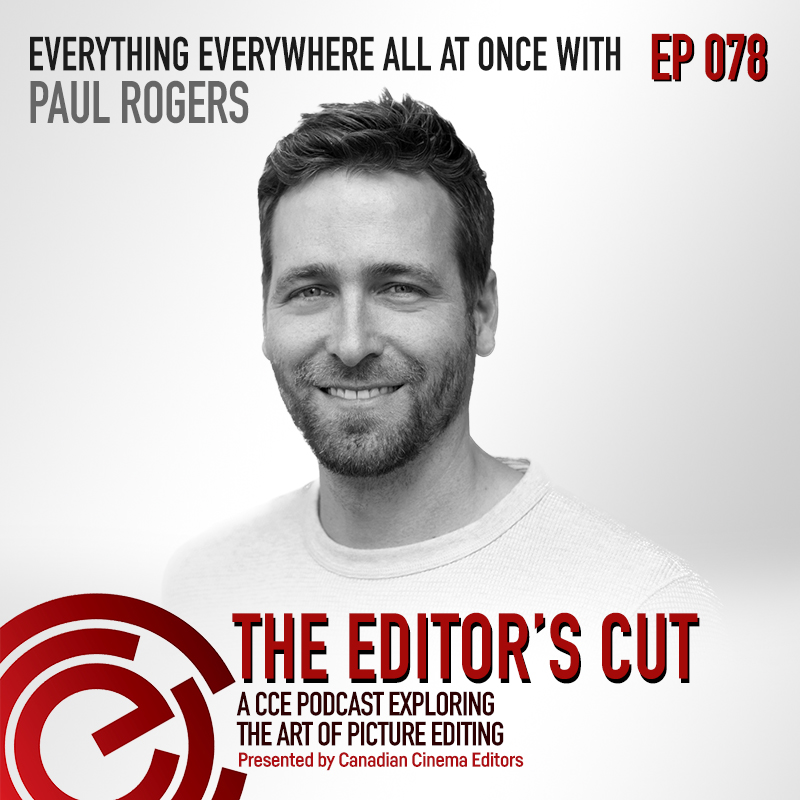
Episode 078 – Everything Everywhere All at Once with Paul Rogers

The Editor's Cut - Episode 078: Everything Everywhere All at Once with Paul Rogers

Episode 078 - Everything Everywhere All at Once with Paul Rogers

In this episode Sarah Taylor sits down with Paul Rogers.

This episode is sponsored by DGC Alberta.

Paul Rogers - TEC 078
The Editor's Cut - Episode 078: Everything Everywhere All at Once with Paul Rogers

Paul Rogers began his professional career in 2007 editing documentary films for public television in Alabama, winning 4 Emmy Awards. He made the jump to Los Angeles in 2013 and kicked off a career in music videos with the DANIELS’ directed ‘Turn Down For What’ and further collaborated with DANIELS on the short films ‘Interesting Ball’ and ‘Boat Dad’ as well as one half of the duo, Daniel Scheinert, on the A24 feature film ‘The Death of Dick Long,’ which premiered at Sundance in 2018. He dipped back into documentaries in 2020 with ‘You Cannot Kill David Arquette,’ an official SXSW selection and winner of the Adobe Editing Award. His next film is Isaiah Saxon’s debut feature ‘The Legend of Ochi.’ Along with feature films, he has edited for the Eric Andre Show, Kendrick Lamar, Flying Lotus, Haim, and Thundercat among others. Paul has also collaborated extensively with director Kahlil Joseph on projects such as ‘Lemonade’ for Beyonce, ‘Process’ for Sampha, and Joseph’s most recent work ‘BLK NWS.’ Paul is a partner in the editorial company PARALLAX located in Los Angeles.

Sarah and Paul discuss his career journey and how he approached the editing behind Everything Everywhere All At Once.

The Editor's Cut - Episode 078: Everything Everywhere All at Once with Paul Rogers

Everything Everywhere All At Once Trailer:


This episode was generously sponsored by DGC Alberta
 

The short film that inspired Paul to go to LA!

À écouter ici !

The Editor’s Cut – Episode 078 – Everything Everywhere All at Once with Paul Rogers

 Sarah Taylor: 

This episode was generously sponsored by the Directors Guild of Canada, Alberta District Council. If you reside in the province of Alberta and are interested in editing, contact the DGC Alberta to learn more.

Paul Rogers:

We wanted to stay in the wides as much as we could, and we wanted to not be cutting around when we didn’t know what was happening. And a big way of leveling that playing field between us, indie action film and big blockbuster film, was time-remapping and splitting the screen and combining takes; and making a punch that may not have been thrown quite with the force it needed, speed ramping it, and making it feel better. And when someone flies back, slowing them down in midair so that there’s more of a weight, and then speeding it up right as they hit the ground so that you feel that impact. These are all just little reasons why Premiere worked out really well.

Sarah Taylor:

Hello and welcome to The Editor’s Cut. I’m your host, Sarah Taylor. We would like to point out that the lands on which we have created this podcast and that many of you may be listening to us from, are part of ancestral territory. It is important for all of us to deeply acknowledge that we are on ancestral territory that has long served as a place where Indigenous peoples have lived, met and interacted. We honor, respect and recognize these nations that have never relinquished their rights or sovereign authority over the lands and waters on which we stand today. We encourage you to reflect on the history of the land, the rich culture, the many contributions and the concerns that impact Indigenous individuals and communities. Land acknowledgements are the start to a deeper action.

Today, I bring to you an interview with Paul Rogers, the Academy Award-winning editor for Everything Everywhere All At Once. We discuss Paul’s journey from Alabama to Hollywood, what it was like working with the Daniels on Everything Everywhere All At Once, and Paul’s philosophies in and outside the edit suite. Without further ado, I bring you Paul Rogers.

Speaker 3:

And action.

Sarah Taylor:

This is The Editor’s Cut.

Speaker 4:

A CCE podcast.

Speaker 3:

Exploring, exploring, exploring the art-

Speaker 4:

Of picture editing.

Sarah Taylor:

Paul, thank you so much for joining us on The Editor’s Cut today. I’m very excited to chat with you all things editing.

Paul Rogers:

Yeah. Thanks for having me. It’s always fun.

Sarah Taylor:

Excellent. Yeah, I know. Editors talking with editors is like-

Paul Rogers:

I know.

Sarah Taylor:

I can just do it for days.

Paul Rogers:

I know. It’s funny. I was just talking to somebody the other day about this about the American Cinema Editors, which I guess is the American version of y’all, we… 

Sarah Taylor:

Yeah.

Paul Rogers:

-when we get together. I’m not a member, but I was invited to do some stuff this year, it’s almost more awkward because you’re like, “Oh, my God.” These people not only speak the same language as me, but like… but they understand the work in a way that’s different and they can see the both the good parts and the cracks and the flaws in what I do you know more than most people, who are just like, “Wow, that was… that was  cool. That was crazy. I’m very impressed.” They’re like, “Yeah, well, but that one like.. . one  part was a little funky.”

Sarah Taylor:

Like, “What were you doing there?” No, well, I don’t have anything critical to say about the work you’ve done on Everything Everywhere All At Once. But before we start talking about that specific film, because I think you’ve probably talked about it a lot as of recent, I’m sure; but I want to know, how did you get to where you are today? What was the thing that drew you to editing? And a… just a little bit of your backstory. What’s your origin story?

Paul Rogers:

I started in high school. I grew up in Birmingham, Alabama, and I went to Homewood High School. And there was a guy in my high school who I had kinda observed. He had what I guess I would call a bit of a racket, in that he would… we would all get assigned these essays on you know… the Spanish War of whatever, and he would be like, “I’m going to make a video. I’m going to make a movie about it.” And then he would go and make a kung fu movie-

Sarah Taylor:

Oh, my gosh.

Paul Rogers:

… and submit it. But it would be so… He put so much time and effort into it that the teacher would be like, “Eh, well,  you know… you tried hard, so here’s a B…B-plus.” And I was like, “That seems cool.” So he… we had like a similar social studies project and he umm.. you know.. was making, obviously, a mafia movie about whatever. And uhh.. so I just joined up and we you know… spent all night at my dad’s office just running around and having you know pretend fights and shooting pretend guns. And then uhh… I was like, “This is some of the most fun I’ve ever had.” And so we just started making a lot of films together. His name was Peter Hastings. And… and eventually, I got to a point, this is all in high school, where I was like, “I wonder if I could do this for a living.” I started looking into film schools and talked to my parents. And to my surprise, they were supportive. And I went… ended up going to College of Santa Fe, which is a small little undergrad school in New Mexico, and uhh… loved it. It was beautiful. Uhh… and they had a start… first year or two of the school, we had to shoot and edit everything on 16.

Sarah Taylor:

Mmm.. Nice.

Paul Rogers:

And so I was on a steam beck you know.. umm… cutting film and.. and…liked it; but it was you know… it’s intimidating and it’s hard. It’s hard work. And then by the time they let us start using Final Cut and Avid, you know I had… It’s its… nice because coming to Final Cut or Avid from a year or two of editing on film is like a revelation-


Sarah Taylor:

Mmhmm…

Paul Rogers:

…and it’s incredible and you realize just how amazing they are. Whereas I… you know.. I grew up with computers. I was making… This stuff we were working on in high school, I was using Windows Movie Maker or whatever-

Sarah Taylor:

Wow..


Paul Rogers:

…so it just kinda seemed natural. Of course, this is how it works. So you know… learning on film really gave me an appreciation for what non-linear editing is, you know… for what it… what it can do for you, and .. and how amazing it is. And I found myself in school, in college, directing and writing and shooting and acting and just every time I would do one of those, I would kinda just be waiting to get to the edit so I could play, so I could really have the fun that I wanted to have. And it took me a while to realize that I could do that for other people. So I remember the first guy, his name is Zeeshan McCaughney. He asked me to cut his film that he had shot. And I was like, “You can do that? You can do other people’s stuff?” And so I did it. It was amazing and it was really fun. He was really happy. And I just started doing that in school and cutting stuff for other people and realized that it was… that  was where I was happiest. And so  got really lucky; got out of college and got a job at public television, cutting documentaries in Alabama, and did that for you know… even years and kinda thought I was settling in you know.. I… I like…I was 24, got married, got a dog, got a house,like.. you know… had a good job with a retirement plan, and was like, “All right. Now we’ll just do this forever and then I’ll get old and die.” And I was at work doing what you do at a job sometimes, which is kinda like screwing around on the internet and watching other stuff and not working. And I watched a film called Until The Quiet Comes by a director named Kahlil Joseph. Just watched it again and again and then was just floored by it. And I went home and told my wife, Becky, “I think I have to quit my job and I have to find these people and I have to move to LA and… and-

Sarah Taylor:

Wow.

Paul Rogers:

… uproot our lives.” And she was like, “Uhh.. Okay. No, thank you.” Uhhh.. But she you know… was like, “Look, you go out there and and… give it a shot and I’m gonna stay here and keep my job and keep our house, and I… you know… keep the the.. bank account, checking account with a little bit of money in it.” Because I went out there at age 29 and became an unpaid intern and was just working for free.

Sarah Taylor:

Wow.

Paul Rogers:

So you know.. I foun… found Khalil’s editor, Luke Lynch, who cut that with him, and took him out for drinks and you know… got some advice. And when I came out here, I never asked for a job and I never asked for work or never asked for anything except for advice. And so he just gave me advice and he invited me to uhmm.. Absolutely Productions, which is where Tim and Eric, you know… the comedy duo, it’s their company. And he was cutting The Eric Andre Show, season one… Season two, maybe. And he just gave me the code for the door of the production company.

Sarah Taylor:

Wow.

Paul Rogers:

So I just started showing up every morning, just dialing in the code. And I would you know sweep the floors or organize the cereal boxes or whatever, just make myself useful. And one day, one of the producers there was like, “You’re an intern, right?” And I was like, “Yeah, sure.” He was like, “Did you fill your paperwork out?” I was like, “Nope.” He was like, “Okay, here’s your internship paperwork.” So that’s how I became an intern.

Sarah Taylor:

Oh, my goodness.

Paul Rogers:

I just slid in.

Sarah Taylor:

You got the code and you organized that cereal.

Paul Rogers:

I just showed up. I think in general, I had had interns at my old job. I knew what a good intern was; just someone who doesn’t walk around asking people for things to do. They just do stuff that needs to be done. And it doesn’t matter if it’s like, you know…  “Do you want me to organize this footage?” or this was back when tapes were still a thing, too. I’ll organize your tapes, I’ll label your hard drives. I will go to the grocery store and I’ll go pick up lunch you know… and then I got lucky enough to intern on season two, assist on season three, and then I was cutting on season four of The Eric Andre Show. And in between there, I was you know… meeting people. I met Dan and Daniel, roller skating in Glendale and cut the music video with them.

Sarah Taylor:

Were you good at roller skating and then that was like, “Oh, this guy’s cool”?

Paul Rogers:

Yeah. I can do it.

Sarah Taylor:

I can do it.

Paul Rogers:

I stayed upright-

Sarah Taylor:

Perfect.

Paul Rogers:

… for the most part. But yeah, so that… it wasn’t super linear, like I interned and then I assisted and then I edited and then that was it. That was my big break. Because I was doing stuff on the side and so was Luke. And and… Luke and I ended up becoming partners with Kahlil and with Graham Zeller in a company that was called Parallax. and yeah, I met Dan and Daniel roller skating. We hung out. It was great. I was like, “These are good people.” I volunteered at a kids’ camp that they had going on where they teach kids how to make music videos.

Sarah Taylor:

Oh, that’s cool.

Paul Rogers:

And they saw you know… some of my editing that I did on the kids’ music videos and were like you know…, “Hey, we have this silly music video called Turn Down For What, if you want to… We’ve never worked with an editor, so maybe you could give it a shot.” And so I did and it worked out well and we just kept working together. We did Interesting Ball, a short film, and a couple other things. And so you know… I just kinda like… tried to follow my interests and and… surround myself with good people who were also doing good work and try to stay away from the bad people who were doing good work or… you know… I definitely you know… I prefer good people who do bad work, to bad people who do good work.

Sarah Taylor:

I would have to agree with that. 

Paul Rogers:

Yeah.

Sarah Taylor:

How did you determine, like decipher that when you first got to L.A.? Like who was right? Who was good for you?

Paul Rogers:

It was really just gut feeling. Like  I met with Luke at a bar the first night or maybe the second night I flew into L.A., because I flew out really just to take Luke out for drinks. I flew out here, I took him out for drinks, I flew home. And then I…  I was like, “It seems like he’s a nice guy. I can make this work.” About six months later, I got my stuff in order and I drove out-

Sarah Taylor:

Wow.

Paul Rogers:

… in my CRV. and uhmm.. but yeah, it was really just Luke was a good guy. He was nice and he was straightforward and honest and it didn’t feel like he was bullshitting me and he wasn’t trying to get free work out of me. He would pay me when he could and you know… but a lot of that stuff, like I said, was… you know.. A music video, you get paid like 200 bucks.

Sarah Taylor:

Yeah.


Paul Rogers:

It was nothing. And most of it, that was back in the day when legally you could be an unpaid intern. So I worked for free for a long time and my wife was just paying my bills.

Sarah Taylor:

Thanks, Becky.

Paul Rogers:

Yeah, totally. And then even when she moved out, she got to keep her job and go remote, which back then was not really a thing. So yeah and then Dan and Daniel were just… I mean… You can see it when you see them in interviews. They’re just really solid, great, wonderful people. So it wasnt any kinda… I didn’t have any kind of checklist. It was just like… if I vibed, if I got a good feeling, then great. If I got a weird feeling, then no, thank you.

Sarah Taylor:

I think that’s a hard thing for people you know…  younger in their career to listen to that intuition and that gut. I know a lot of that plays into all you do in the edit suite as well, but you need to have that trust with the people you’re working with.

Paul Rogers:

I think so. And I think it’s also like if you find yourself trying to convince yourself to do something, to take a project, or trying to convince yourself to work with somebody, well, you know… coming up with reasons, probably not a good idea. Something in your gut is telling you not to and then your brain’s trying to convince your gut to do it you know.

Sarah Taylor:

Yeah, I’ve had many experiences like that and I’m always like-

Paul Rogers:

Me, too.

Sarah Taylor:

… “Remember that time when this happened before?”

Paul Rogers:

yeah I still do it. I’m still like, “Well, it’s a good opportunity and I don’t know, it could be nice.”

Sarah Taylor:

Yeah, but then it’s always a challenge.

Paul Rogers:

I never… I have never proven my gut wrong. Every single time I’ve done that, I’ve been like, “I fu… I knew it. I knew this was going to end.” But I just I… convinced myself it was going to be fine and it’s never worked out.

Sarah Taylor:

Yeah. So how long was it from the time that you you know… took out Luke for drinks to then having… now you have a company, you’ve worked together, you’re doing Oscar winning films? How long have you yeah I guess how long have you been in L.A.?

Paul Rogers:

I’ve been in L.A… Well, 2013, July, 2013, so it’s coming up on 10 years. But like I said, I had you know… seven years of editing experience professionally in Alabama. Although, I think it paid off. It didn’t pay off in terms of real… Nobody cared what I did in Alabama. Its In L.A., it’s very much, “What have you done with people that I know?”

Sarah Taylor:

Yes.

Paul Rogers:

And what have you done that I’ve seen? And I hadn’t done any of that. It was all stuff that’s just airing you know… locally. So… I had the work ethic, I think, and the ability to work with people. And I was beginning to develop a kind of… I don’t know if you would say a style, but just a sensibility, I guess. 


Sarah Taylor:

Mmhmm…


Paul Rogers:

And so I think that helped me kinda accelerate here a little bit faster than if I’d come out here when I was 23 you know…. Yeah. And it was 10 years and then all of a sudden, to be honest.

I did a film in, what was that, 2016, called The Death of Dick Long. It was my first feature. It was really fun. It was with Daniel Scheiner. That wasn’t like the big break. Then all of a sudden, I was doing features and just meeting with all kinds of directors. It was a great experience and it was you know… one of the most fun edits I’ve ever done. But its not you know…. it was really like Everything Everywhere that all of a sudden it just hit so hard and and worldwide. I think all of us who worked on it were just kinda blown away. And our lives changed overnight, professionally, at least.

Sarah Taylor:

Wow. Well, I’d like to talk about Everything Everywhere All At Once. You know… you  mentioned that you met the Daniels rollerskating, which I think is awesome. Led you to music videos, short films. What was that initial conversation when they said, “Hey, we have this film”? How did did that go?

Paul Rogers:

They had made a film called Swiss Army Man with an editor named Matt Hannam.

Sarah Taylor:

Oh, yeah. He’s Canadian.

Paul Rogers:

He’s Canadian, right?

Sarah Taylor:

Yeah.

Paul Rogers:

He’s become a great friend. He’s got just an incredible like CV. He’s got so many great films and worked with so many great filmmakers. So they told me that they were working on Everything Everywhere and they invited me to Dan Kwan’s back kinda his back office, which basically is his converted garage. And they just said they wanted to walk through the script, that they had been doing this with people. They had been talking through the script with people because it helps them in the writing process to talk it out and then to ask questions afterwards.

And so I sat back there with John Wong, the producer, and they just acted it out. They weren’t jumping around and wearing outfits or anything, but they were like they would just talk it through. “Okay, this happens, this happens. And then he comes up and the dad says this.” And then they would say it. And it took two hours or something. It was a long time just sitting and listening. But it was really, really fun and really beautiful. And and I.. you know.. I cried four times. I remember being like, “That was amazing.” I’ve never cried, someone just telling me a story.

And back then, it was a story of a father-daughter, and it was Jackie Chan, was the idea. And Evelyn was more of a… not a side character, but she wasn’t the main character. And then they did that and I was like, “This is amazing. I cannot wait to see it. I hope you make it. I hope you get all the money you need. And I hope you cast… I hope you get Jackie Chan,” because that was who they were going out for. And then a while later theysaid they let me know that they had changed the script up. They had switched it to be about a mother-daughter, and Evelyn was now the main character and they had Michelle Yeoh in mind.

And I was so excited because I love… Crouching Tiger Hidden Dragon was a pretty important film for me growing up because, this is sad, but it’s one of the first foreign films that I’d seen, really, in theaters. My dad would always rent foreign films and bring them home and we’d watch them, but that was my first theatrical experience with that. And it really opened me up and got me excited and I really started exploring just just foreign films, in general. And anything outside of the mainstream started to be exciting for me and it even got me into indie filmmaking. And I loved Michelle in that and so I was really excited.

And then they asked me if I wanted to cut it, and I was like… immediately terrified. Because I had sat through that thing and I was like, “This is going to be an insane film and it’s going to be really hard to cut and shoot and act.”

Sarah Taylor:

Yeah.


Paul Rogers:

Like All of it was a challenge. Everything they were laying out seemed impossible. So I said, “Yeah.” And then I immediately called Matt Hannam and I was like, “Can you… can I take you out for drinks or dinner? And I just I think I need your help. I need to know that I could do this. I need your moral support.”

And he was super gracious and you know.. we went out. It was like the week before lockdown too. We were like, “Should we be out? And he just walked me through his process and the experience of working with them and… and just his experience working on so many films with so many directors. And a lot of it was just kinda like talking about personality and keeping the energy up and keeping everyone happy and excited. And that stuff’s the stuff that I really… like.. I know that through the process of editing, the iterative just work through it process, we’ll figure it out editorially.

I just wanted to also make sure that it was a positive experience and that we all could stay friends; because I was good friends with Dan and Daniel, and this was a big movie, and I knew it was going to be stressful and knew it was going to be hard, and I didn’t want to jeopardize or what we had going personally. So that was a really, really big help. And then yeah they sent me the script. I read the new script. I was scared all over again. And then we just got to it. I just kinda had to not think about it as a filmmaker at first and think about it as just I was excited to help my friends make this crazy thing you know.

Sarah Taylor:

From that.. the rewrite of the script that you read after you signed on as editor, how much has that has that changed to what we see in the final film?

Paul Rogers:

The rewrite’s you know… pretty much there. There’s some stuff that got cut, but they had worked on that script for maybe, I think, three years you know.

Sarah Taylor:

Oh, wow. Yeah.

Paul Rogers:

And they had a lot of help from other people just reading it and giving notes and smart filmmakers and writers. I think people would be surprised at how dialed in it was and how much the edit reflects that script. We cut a couple of universes. There was one called the Spaghetti Baby Noodle Boy Universe.

Sarah Taylor:

Oh, my gosh.

Paul Rogers:

Yeah, that one’s on the cutting room floor. It’s on the deleted scenes, though. But it was Evelyn was a spaghetti noodle in a pot of spaghetti noodles, and then Jenny Slate played her little boy who was a macaroni noodle, who was like, you know…”I’m the only one that’s not shaped like the other noodles. I have a hole. No noodles have holes. I don’t belong.” And anyways, it was a… it’s very funny. You should check it out.

Sarah Taylor:

Yeah, I’m going to totally check that out. That’s amazing.

Paul Rogers:

It was one of my favorite parts of the script, but it just didnt it  never worked in the film. And we really tried. It was in there until some of the later, later, later cuts. And every screening people would be like, “Yeah, I dont…I dont.. I didn’t really vibe with that part of the film.” We were like, “Just wait. We’ll just well change the treatment, we’ll change the genre, we’ll mess with the music, change the voiceover.” And then we’re just like, “No, nothing’s working.”

Sarah Taylor:

You really wanted to save the spaghetti.

Paul Rogers:

We really did.

Sarah Taylor:

Wanted it to be saved. I’d like to talk about like the team that worked in post. Did you have assistant editors? I know you were working during COVID, so that changed how it would work and everybody had to change how they worked. 

Paul Rogers:

Yeah.

Sarah Taylor:

So..What was the team?

Paul Rogers:

It started off with me and Zekun Mao, who’s incredible. And she was from AFI and yeah she had to pivot immediately the first week of… We had one week where we were working in the office off of our network, off our server. And then we all got an alert on our phones. It was like, “Go home and stay home.” And so I…I  remember just grabbing an iMac off the desk and a hard drive and running home. And we all did that. And you know.. I had never worked remotely. I had taken a music video home and done that, but not like this and not with a team. And the way that me and Dan and Daniel work is they cut with me. you know… They have the premier project and we’re trading ideas constantly. And so it was a challenge, to say the least.

And she just figured it out. We got on Resilio Sync, we synced up all our hard drives. We got Evercast going. We tried everything you know… We tried Zoom, we tried Google Meet. Just, “How can we si… how can all  sit in a room together and work?” She figured it out. It was amazing. And I didn’t really have to worry about it. And also, Adobe was really helpful because this was before productions came out. And for those that don’t know, productions is basically It… functions the way Avid has, as far as sharing bins and having multiple editors in a project. It was still in beta. And we just reached out and said, “We’re doing this crazy thing. Do you have any help for us?” And they said, “Well, we have this secret thing we’re working on and maybe we can get you on the beta and you can try it out.” And that was a lifesaver.

Sarah Taylor:

Oh, my goodness. No kidding.

Paul Rogers:

Yeah, and it worked out great for remote work, and they also just gave us access to their engineers so we could be like, “How does this work?” And they would jump on a Zoom and just walk us through it or you knwo…

Sarah Taylor:

Oh, wow.

Paul Rogers:

Or occasionally, we…we.. because it was in beta, we found a bug and they would just push an update for us you  know… So that was a dream come true. We had a lot of great smart people figuring out how to work remotely. And then Zekun had to leave about halfway through to cut her first feature. And she introduced us to Aashish DeMello who took over and he took us through to the end. And it was like you know.. a dream team. Everyone was great, everyone was on it. I had very little to.. to… worry about. The one thing that I wish I had done more of is just relied on them creatively more, because I think I was so wrapped up in just my own like anxieties about the film. And because of the remote workflow where they weren’t in the office, I had dreamed of including them a lot more. of like “Do a pass on the scene and and you know.. come sit with me for a while.” And it just didn’t work out that way. And I think a lot of it was just kinda me yah me getting caught up in my own anxieties about the film. But the couple of times when I remembered to do it, it was great.  you know It was a good cut. Did some assemblies of scenes that were really, really fun. And she was great because she spoke Mandarin and Cantonese. I don’t speak Mandarin and Cantonese. Dan Kwan speaks a little bit, but he’s not fluent. And so she was subtitling for us and she would even say, like you know… “That’s a pretty good take, but they you know they flubbed the line there or they said the word a little funky. It just sounds weird.” And so she would help us even with our selects and stuff.

Sarah Taylor:

That’s amazing.

Paul Rogers:

Yeah.

Sarah Taylor:

That’s a great asset. Yeah. You mentioned your anxieties of doing this massive film that had many themes, many genres, or styles you could say, of different inspiration from different films. How did you handle all that? Were there films that you watched to be like, “Oh, this is a good reference for this universe,” or like yeah… how did you tackle all the worlds?

Paul Rogers:

I mean I think it’s pretty obvious that the Matrix was a huge influence and reference. And I think you can’t really make a sci-fi action film in our generation of filmmakers without even accidentally referencing and pulling from the Matrix. It was so influential. I just bought tickets to watch it on 35, actually, last night.

Sarah Taylor:

Nice.

Paul Rogers:

It’s at a local theater. I haven’t seen it in theaters since it came out. You know… I watched it when I was 15 or whatever.

Sarah Taylor:

Oh, my goodness.

Paul Rogers:

Anyways, so that was a big one. And the temp score, half the temp score at the very beginning was the Matrix score because it just fits, and it also has kinda shorthand. They did a really good job of establishing… I guess it’s the its kinda the water harp. I don’t know exactly what it’s called, but this sound that they use that just lets you know something funky is going on in the Matrix right now. Just pay attention. That kind of stuff was really useful. And Son Lux, our composer, ended up, I think, taking some inspiration from that and trying to figure out their own version of that. What was that version of the Multiverses, is something’s happening you know… or something’s coming. The Matrix Dan and Daniel had us watch Holy Motors, which is incredible; but it’s less of a stylistic reference or storytelling reference and more of a reference of, “Hey, you can ignore the rules of filmmaking and storytelling and still have a really powerful emotional experience.” you know… And uhhh.  we watched Paprika, which is a great film from Japan, and Mind Game. And really for Mind Game, there was …there’s a section at the end of that film, it’s animated, where they’re trying to escape out of the belly of a whale. And it’s like 30 minutes and I don’t think there’s any dialogue and it’s just pure insanity. And so Dan Kwan always talked about that as a reference for the end of our film, kinda going up the staircase, that section. There’s just so many like incredible films that would come up. Obviously, In The Mood For Love. they… I don’t even know if we even mentioned it by name while we were cutting because it was just so obvious. This is in the In The Mood For Love universe you know; what we would call, I guess, the movie star universe. I call it a sexy wayman universe.

Sarah Taylor:

Yeah, that’s true.

Paul Rogers:

The nice thing about audiences today is we’re all… Because of streaming and because we grew up with just film as an… such a more accessible, even just because we had Blockbusters where we could rent movies and re-watch them; versus my parents’ generation we’re like, “If you didn’t catch it in theaters, you didn’t see it.” Because of that, we have a really kinda ingrained knowledge of genre and an understanding of the tropes of each genre. Even if we don’t have that kinda vocabulary, we’re just general film goers, we know what it means, what it sounds like and feels like, to be in an action film or romance or rom-com or you know comedy. And so we could lean on those editorially as we’re jumping back and forth between universes to just center people and ground people in what they’re what theyre in. Because its its… we’re asking a lot of the audience. We talked a lot about this; the whiplash the whiplash the film is by design creating as you fly back and forth between genres. And it’s nice to just give people a clue, like, “Okay, you are in the  this is the Lifetime family drama genre.” you know..  And the aspect ratio plays into that, the music, the color correction, you know… even their performances. They kinda dialed in to that you know… And the pacing of it, we would just try to emulate those things. Comedy genre or multiverse, the action universe, the horror film universe, or just you know… those moments. That was really fun to get to play in all those different genres and be like, “Okay, what are the things we can do to help the audience know where they where they are and what’s going on and and how they can.. how they should be reading this andand and and ingesting this?”

Sarah Taylor:

You came up with a technique and I’m curious where it came from, to signal the audience that were you know…. there’s going to be a shift, we’re going to go into the multiverse. And there was the glass cracking, the sounds. Was that some of stuff that was established within like the initial edits or was that after the fact?

Paul Rogers:

Yeah, it was  editorially, we figured it out. And the glass cracking, I remember early on Dan and Daniel, they were just they were trying a bunch of stuff with Zak Stoltz, the VFX supervisor, and the glass cracking was just one of them you know..  They had a bunch of different ideas. And then I was playing around a lot with sound design you know. What would it sound like? That reverse bell ring that ended up being… It was just one of many options we had. And you know… the nice thing about the glass thing, too, was the sound of it is so visceral and gives you that feeling because it’s not a pleasant sound and it sounds like something’s going wrong. And that’s how it should feel you know.. when she’s split between these universes and trying to center herself.

So pretty early on, we we.. I think Dan and Daniel and Zak decided that that was the move. And then it was just a matter, for me, of kinda sound design and how can I play within that space and how can we all just experiment so that no no like no multiverse shift is ever exactly the same. And can we can we tailor them each to what’s going on in that moment, and can we have fun and play and subvert expectations now that… Once we establish a language, can we play within that you know…

Sarah Taylor:

Break those rules.

Paul Rogers:

Yeah.

Sarah Taylor:

Yeah. I like it. Was there a scene that was the most challenging?

Paul Rogers:

God, I mean the whole thing was challenging. I think we for different reasons, different scenes. The first 15 minutes in the laundromat were challenging, only because we found out pretty early that if we didn’t nail the characters and who they are and their motivations and and also just make the audience care about them within the first 15, that the rest of the film just never worked. And especially that end scene, the parking lot between Evelyn and Joy. The first couple cuts, like people got it, but they didn’t feel it. People weren’t crying as they watched that you know. And it was because we weren’t doing what we needed to be doing in the first 15 minutes.

Sarah Taylor:

Right… yeah.

Paul Rogers:

And we ended up really dialing in the performances. and… Not that they weren’t there, but we just weren’t using them the way that we needed to be. And then they added a.. a pickup shot of Joy driving away crying; because the way that her character was handling all this drama with her mom in the in the script and the way that it was shot was she was putting up a brave face and just giving it back as much as she was giving it to her mom, for the most part. We were trying to figure out ways within what they shot to just like, “Okay, can we hold on Joy as she’s upset with her mom for calling Becky her friend.” And we were pushing that as much as we could. And then finally, Dan and Daniel were like, “I think we just need to do a pickup.” And so they shot that moment of her weakness and her vulnerability and it really just carries through for the rest of the film.

Sarah Taylor:

Yeah, I think that… Yeah, what a good… what a good  decision.

Paul Rogers:

Yeah.

Sarah Taylor:

Yeah. Knowing that you have a background in music videos, did you find that was really helpful for a lot.. lot of the action scenes and the speed ramping, those skills…  technical skills that you would’ve taken from the music video world?

Paul Rogers:

Yeah, I think the more expansive the type of work you can do, the better. I mean… you know I wish I had done more weird stuff and it all would’ve been helpful. Music videos are fun because there’s a general like lower stakes quality to them that allows you to really just get weird and experiment. And whatever makes it fun and enjoyable to watch, works. So you don’t have to follow many rules. The only rule is try to make the song better, somehow you know. I feel like Turned Down For What, because of the treatment of the way that they made that music video like, it makes me like the song more and I picture that. And.. you know… same with Until The Quiet Comes by Kahlil is like. That song means a lot to me when I hear it because I see those images in my head.

Sarah Taylor:

Mmm. Yeah.

Paul Rogers:

It’s one of the sources of anxiety, sometimes, in working on a music video for a really good song, is is like…if you don’t elevate it, then you might run the risk of the opposite, of making it be like, “Yeah, when I… now when I hear that song, I see that terrible music video in my head.”

Sarah Taylor:

They ruined it.

Paul Rogers:

Yeah. And that’s scary. That’s a real responsibility that editors have, I think, in everything we do is like I felt that on this film. “Man, if I screw this up, it’s going to make Michelle look bad, it’s going to make Ke look bad, Stephanie Hsu, it’s going to make Dan and Daniel look bad, the production designer, Jason you know… These are all my friends that work on this stuff. And so it passes through my hands at the very end; and in my mind, that means if it’s not good, it’s my fault and I’m letting all these people down. I think it’s important to hold that responsibility every day.

Sarah Taylor:

I’m curious about your choice to use Premiere. I’m primarily a prem…Premiere editor myself and so…

Paul Rogers:

Mmhmm..


Sarah Taylor:

And what were the advantages… Obviously, productions was…very handy for you, but what were some of the other advantages you found using that system?

Paul Rogers:

I learned Avid in school and liked it. And I also learned Final Cut in school. It was probably 4, Final Cut 5, or I don’t know 3 I dont know what it was.

Sarah Taylor:

3 was their big one that came out. We were like, “Whoa.”

Paul Rogers:

That was probably it. Yeah.

Sarah Taylor:

Yeah.

Paul Rogers:

Final Cut 3. And then I… when I got out of school, my job at public television, they were on Final Cut Pro, so I just got used to that. And then when they decided to go to X…Final Cut X, me and Luke, I remember, were working and we were like, “Should we do Avid? Should we go to Avid or should we go to Premiere?” And we were both like, “We don’t really want to go to Premiere,” because we don’t know it and it it… didn’t have a good reputation and so…. Because we were dismissing it, we were like, “Well, we should try it then because that’s dumb to not try it and just dismiss it.” you know And so we gave ourselves a week and it was a pretty slow week and we had maybe a music video or something. And we cut it and you know.. Premiere was smart and you could choose Final Cut 7 keyboard shortcuts, which I’ve still… My shortcuts are super modified, but they’re kinda based on that.

And we liked it and there was a lot of like freedom in the Premiere workflow. It’s a little more kinda improv jazz. It’s a little less tied to the film workflow. Avid is very much like emulating the film workflow, which is great for people who came from film, who cut in film for years and years and years. Because Final Cut was less of a film workflow, as well, I think I was just separated from that workflow so much that Premiere made more sense and felt more free to me. And and honestly, it just like… I feel like it’s like arguing over what brand of drill you like its like.

Sarah Taylor:

Hundred percent.

Paul Rogers:

They both fucking drill holes like…. you know.

Sarah Taylor:

Nobody knows the difference between those two holes, what drill happened. Yeah.

Paul Rogers:

Yeah, that’s what I’m saying so like…. As long as the work gets done, it doesn’t matter. It’s just a personal preference of what frustrates me less; and Premiere personally frustrates me less. And I like i like Avid. I’m working on Avid on a project right now. It’s just because certain projects are started, then it’s a pain to convert them. I like, also, the fact that Dan and Daniel… And I think 95% of the VFX in this film were done in After Effects. And they would just you know.. shoot it off to After Effects and bring it back and it was so easy and so fast.

And I love… I temp in a ton of VFX in my projects and I do a ton of audio effect work. And so it’s heavily sound design and heavily affected. And being able to like…  do a really fast mat over someone and split screen to combine two takes, like it takes me four seconds to do a really pretty solid key. you know… And there’s this good amount of green screen in this. And then once…  I’d never really used time-remapping keyframes on the timeline; and once I figured that out in Premiere for this film especially, it became huge.

Sarah Taylor:

Yeah, it’s a game changer once you can wrap your head around how to make it work.

Paul Rogers:

Man it was like… we.. they shot a lot.. Because of the music video background, they shot a lot of their stuff at high frame rates so that we had the option to slow down. Even if we didn’t, I could play so much with just like… Not so much performances, but like… what’s going on in the background while someone’s doing something in the foreground you know.. in a non-action scene. But in the action scenes especially, we would really like… Because we wanted to not… A lot of the reason that indie action movies get so cutty in their in their… action scenes is because they have to. Because they just don’t have the time for rehearsal, they don’t have the time and money for a four-day shoot on a one scene fight. And that was how this was. like… The fanny pack fight they shot in a day, I think, which is crazy. They spend a week on that stuff in Hong Kong.

Sarah Taylor:

Wow.

Paul Rogers:

And we wanted to stay in the wides as much as we could and we wanted to not be cutting around where you didn’t know what was happening. And a big way of leveling that playing field between us, indie action film and big blockbuster film, was time-remapping and splitting the screen and combining takes; and you know… making a punch that may not have been thrown quite with the force it needed, like… speed ramping it, and making it feel better. And when someone flies back, slowing them down in mid-air so there’s more of a weight, and then speeding it up right as they hit the ground so that you feel that impact. and so that was…

Sarah Taylor:

Yeah.

Paul Rogers:

…that was…These are all just little reasons why Premiere worked out really well.

Sarah Taylor:

Very effective. Okay, so let’s jump to the Oscars. like… What a ride for your whole team.

Paul Rogers:

Yeah.

Sarah Taylor:

It came out, I think, when it needed to come out.

Paul Rogers:

Mmhmm.

Sarah Taylor:

It Landed in the right spot, I think, when it needed to land. What was that journey like for you?

Paul Rogers:

It was overwhelming. It was a lot. I think no… no one was expecting it. i mean.. There’s a joke in.. you know..  when… when..  Jobu is cycling through the weapons in her hand and like… One of the VFX guys threw an Oscar in there as a joke because it was such a silly idea….


Sarah Taylor:

Yeah

Paul Rogers:

And now, you know… if we had known it was actually going to happen, we would not have put that in there because you know…  then it’s like… not cool.

Sarah Taylor:

Oh, it’s totally cool.

Paul Rogers:

And we… Yeah, it is kind of funny, but we you know… we just never, ever… And you know..  people would say like, “You know.. you think you’ll get awards?” And I’m like, “This is not that kind of movie. I’m just going to tell you, it’s just not.” There’s a lot of butt plugs and there’s a whole fight where just stuff shoved up at people’s asses. People were eating their boogers in the movie like you know…. It’s just weird. The first thing was that we were just really excited that people were watching it. And it grew pretty slow. It wasn’t like it hit and had like a huge opening weekend. It just kept expanding and growing organically. But I remember the first week it came out, Dan Kwan was in a coffee shop down the street from my office and he was like..  texted us. He was like, “I heard somebody talking about our movie. They’d just seen it. Isn’t that crazy?” The fact that someone in a coffee shop had seen the movie was a big deal for us. 

Sarah Taylor:

Yeah

Paul Rogers:

And then obviously, it just kept getting bigger and bigger and bigger and bigger and bigger. And then we were like, “Oh, my God.” And you know… I remember… I don’t have a Twitter, but you can search on Twitter, and I would go and search the title of the movie and just see is anyone talking about it. And there would be six tweets in a day and I’d be like, “Oh, my God, it’s amazing. Six people are talking about the movie.” I remember Ke Quan at one of… not the friends and family, the crew screening, basically, where everyone got…  finally got to see the film. Ke, we were talking and he said, “you know… I think this could really be big. I think it could… could win some Oscars.” And I was like… I kinda gave that same dismissive like, “No, that’s so thats not going to happen, Ke.” And he was right. And now… and now.. now I’m just like, “God. Man, we just need to all learn the lesson to just not doubt Ke, because is.. you know like.. he is …he just knows what’s up.” And he is uhhh… you know… it’s the same thing. That’s why he ended up having to leave Hollywood, was people just kept doubting him and he’s like he’s a fucking amazing actor you know….

Sarah Taylor:

Yeah, totally.

Paul Rogers:

So I was like, “God, now I’m in that line of like… assholes that just…doubted.”

Sarah Taylor:

Shut him down.

Paul Rogers:

you know… Yeah.

Sarah Taylor:

Oh, man.

Paul Rogers:

But he was right and he won an Oscar… like.. That’s crazy. He came back. First film like… after, what, 20, 30 years and came back and won an Oscar.

Sarah Taylor:

It’s amazing. Yeah.

Paul Rogers:

It’s amazing. And I was just really, really excited for the most part for Michelle and Ke and Stephanie and Jamie you know…. Jamie’s a legend, but it was crazy that her first Oscar nomination… oscars… was mine; like… that our first Oscar was together was really strange. It was overwhelming because I don’t… I mean… Editors are not we are not… designed or built for that kind of attention and for that kind of like… interest. And I also realized that we… aren’t built to talk about what we do. We’re just built to do it. And so a lot of my early interviews, they talk about my process and I would just make it up. I’d be like, “This is what I do and da da da.” And then later I’d be like, “That’s not what I do.” I mean… I did that once. 

Sarah Taylor:

Yeah

Paul Rogers:

I did that on a… for a day; but like…  I was just trying to make it interesting and then I So.. The more I would do them, the more I realized like  I’ve just got to be honest and be like, “Every day it’s different.” you know… Because I get bored if I get… have one process. If I only do dailies and selects one way, I’m going to get bored. And my timeline’s messy. My bins are messy like… you know…  That’s why there’s this timeline floating around from the film. I was like… doing a presentation and I had Zuken and Aashish clean up the timeline for me. And I was like, “I want it to look good.” And they did and they sent it over; and then I was looking at it and I was like, “That is’nt… It is unrecognizable to me.” It’s not me, it’s not the way I work. And I don’t want like…  people out there just getting started to be like, “Oh, I can never be a real editor unless I spend a lot of time being organized.”

Sarah Taylor:

Yeah

Paul Rogers:

Because thats like…  being creative is messy and weird And you know…  I can look at a crazy timeline with literally 40 layers of video and a bunch of disabled clips and I’ll be like, “Oh, I know. That this was an idea I had…

Sarah Taylor:

Yeah

Paul Rogers:

-here and that might come back, so maybe I’ll keep that on a timeline and just disable it.

Sarah Taylor:

Yeah

Paul Rogers:

“So I was like, “Just put out the messy one.” And even that messy one is like… half cleaned up because they would clean as I went you know… 

Sarah Taylor:

Yeah

Paul Rogers:     

Like if y’a ll saw the real one, I don’t know if I would ever work again. That shit is crazy.

Sarah Taylor:

Well, other editors would appreciate it, because I am definitely one of the messy ones.

Paul Rogers:

Yeah. I should dig up like some of my early… you know.. The act one, the first timeline of that is just insanity.

Sarah Taylor:

What I found really interesting with the whole Oscar thing and you winning… which is Congratulations.

Paul Rogers:

Thank you.

Sarah Taylor:

I’d never seen an editor be shared memes and your speeches from people who are not in the film industry. like.. You became a famous editor. And I was like, “What is happening? This is amazing.” I don’t know if you felt that. I’m sure you have.

Paul Rogers:

A little bit. I mean… I’m not on social media, so it was nice that I could just turn my phone off and-

Sarah Taylor:

You could do it from afar.

Paul Rogers:

I love the stuff about work-life balance, and all the other stuff was not fun and kinda anxiety inducing.

Sarah Taylor:

You taking that opportunity when you were in the limelight to make that statement like, “Well, this kind of thing happens to guys that look like me all the time,” thank you. That was a moment where I feel like you did service to our industry. What made you feel like this was the time to make that.. to say that? Is this something that you are trying to change how our industry is not as diverse as it could be behind the scenes?

Paul Rogers:

Yeah, I think..  it felt very obvious to me because it’s something that, we… in our company at Parallax, we talk about it all the time. And its.. it’s also just obvious when you look around the room at the Oscars or wherever I was you know… At all the other award shows that I got invited to, it was like it was really obvious that it was mostly white men. And I didn’t feel like I was like… breaking news. And it’s something we think about a lot with how how..  we hire and the interns that we bring on and who we’re mentoring and really, a lot of it is just like what kind of projects and stories are we giving our pretty considerable time and energy to …

Sarah Taylor:

Yeah

Paul Rogers:

-telling?

Sarah Taylor:

Yeah

Paul Rogers:

-right? Because that’s really where we have the most power, is like…  we are storytellers. What stories are we going to tell, are we going to help people tell? And its also like…. I recognize that when I came out here, I went to college, I had no college debt you know…. I got some grants and then my parents paid for my college. And I had a wife who paid all my bills and I could also just walk into a production house and no one would be like, “What are you doing here?”

Sarah Taylor:

Yeah, you could use that code and you wouldn’t get kicked out.

Paul Rogers:

Yeah. I just… you know…I look like I belong coz like…  all the other interns were young white guys…

Sarah Taylor:

Yeah

Paul Rogers:

-and so I kinda like… just fit into the… you know…  And that’s just not the way it works for everybody. And so.. I can’t be like, “Just do it the way I did it. Just show up to where you want to be and pretend you work there.” 

Sarah Taylor:

Yeah

Paul Rogers:

You know.. That just doesn’t work. I mean… You know how it is with editors… like.. We don’t go out and go to these big functions a lot. And so I ended up meeting a lot of other editors or former editors. And you know… I was talking to a woman, she was like, “Yeah, I was a picture editor. Loved it. It was my life. I had kids. It became harder. And then I got a divorce and became a single parent and it became impossible and I quit and I became a music editor.” And its like…  that’s also a problem with the fact that we work 12, 14-hour days. 

Sarah Taylor:

Yeah

Paul Rogers:

Not even just 12 to 14-hour days. The fact that we work 10-hour days is too much. And I know… like… I… I for a long time had the feeling people would be like, “Man, this is… you know… 50 hours a week is a lot.” And I’d be like, huhhh.. you know..  “Come on.”

Sarah Taylor:

Yeah

Paul Rogers:

I work 12 hours a… a day…

Sarah Taylor:

Yeah

Paul Rogers:

you know… for… 14 hours a day…. like…Just buck up and deal with it.

Sarah Taylor:

Yeah

Paul Rogers:

It’s a bigger issue like…. It’s really like… if you want… And it’s not just for parents and people with families like… But for me personally, if I go to work, if I start at 9:00, 10- hour day is 9:00 to 7:00, that doesn’t include a lunch break. So let’s throw 30 minutes in for lunch. Drop my kids off at daycare. I go to… get to the office at 9:00. I work til.. 7:30. I drive home. By the time I get home, it’s 8:00. Both my kids are in bed. I’m just going to accept that I just don’t see my kids until the weekends. And then the weekends are recovery. 

Sarah Taylor:

Yeah

Paul Rogers:

Weekends shouldn’t be recovery. Weekends should be like… we fly into the weekends with a bunch of energy and we do all the stuff that we want to do. But because of the way that we work, we spend a full day recovering and then on Sunday we just do all the shit that we need to do really fast and clean up our house and do-

Sarah Taylor:

Exactly. Yeah.

Paul Rogers:

It’s not a sustainable way of working. And so I want to figure out a way where we can work eight, nine-hour days and still get the work done. Because also, what happens is when you work a 12-hour day, you pace yourself. You’re not working as fast and it’s hard because you’re like, “I’m going to be fucking here all day like….” I’m going to take a ton of breaks. We can do the work in in…-

Sarah Taylor:

Here. Yeah, exactly.

Paul Rogers:

… a reasonable amount of time and we need to figure out a way to got to-

Sarah Taylor:

Got to get another coffee.

Paul Rogers:

… adapt so that the work… its…  our workdays are set up differently for people with different needs. People with different mental health needs, people who are single parents, people who just can’t swing the crazy schedule that we have all just become accustomed to. And not even accustomed. We’re like… thankful for an 11-hour day. We’re thankful for a 10-hour day and that’s not good. I’m excited that people are talking about that. I don’t know what all the answers are. I’m trying to figure it out and my company’s trying. We’re now… we’re… we’re doin… doing our best to try to figure it out. We still have the needs of these clients that have these expectations that are set from decades of overworking us. And so it’s it’s…  a battle sometimes, but it’s worthwhile. And as we’ve all matured and the pandemic helped a lot of just letting us know like, man, you can really have a great life and you can do great work. I did this whole movie during the pandemic. I saw my family all the time. And there would be days where I was like, “Look, Dan, Daniel, I’m tired. I really need to go to the park with my kid. He’s…. he’s 3 years old.” And they’d be like, “Sweet. can we… We’re going to go grab some beers and you know… we’ll throw you a beer from six feet away.” And we hang out in the park. like… that sounds great. It was such a great way to work.

Sarah Taylor:

If we grind all day long, all the time we’re telling stories about life, but we’re not living life. We need to be able to go out there and live life. Right?

Paul Rogers:

I totally agree. Yeah. And the more… the more the life you live, the better the stories you can tell, is exactly what you’re saying. But I also think that like… it’s a diversity issue in the sense of the more interesting and diverse and… and… varied the people you surround yourself with, the more interesting and real the stories that you tell, and the… the ways that you can tell stories are going to be much better. And so… it’s like if you make a gumbo with one ingredient, it’s going to taste like that one thing. I don’t know if that metaphor makes any sense.

Sarah Taylor:

We need to have more flavor.

Paul Rogers:

We need to have more flavor. Right.

Sarah Taylor:

How can we as individuals in the sys… in the system that we’re in right now help make a shift, especially people who have more privilege? What are we able to do to help?

Paul Rogers:

I don’t know if it’s possible to just shed your privilege, but it’s definitely possible to re-weaponize it for a different… And.. and retool it and use it. It’s definitely something that we think about and talk about a lot. And its.. you know…  it seems… it just seems so obvious.

Sarah Taylor:

I agree.

Paul Rogers:

you know.. its like… It’s crazy that people were like, “Wow, he said that.” I’m like, “Y’all aren’t saying this every day?” I think just… it’s so minimal. Just be deliberate and think about what you’re doing.

Sarah Taylor:

Yeah, totally.

Paul Rogers:

I think that’s kinda… the genesis of it. Just think about what you’re doing. Can we do that?

Sarah Taylor:

One last question is, what’s coming up next? Is there anything that we can watch out for?

Paul Rogers:

I just finished a film called The Legend of Ochi, directed by Isaiah Saxon. He’s another first-time director. And uhmm… it stars Willem Dafoe and Wolfhard and Emily Watson and and Helena Zengel. and it’s this kinda cool… It’s a little bit of a throwback and that… it’s about a girl who learns to speak to animals, but it’s like… all animatronics and people in… in… puppetry and-

Sarah Taylor:

Cool.

Paul Rogers:

so…its… you know… It’s got that little old… old school vibe to it, which I love. And then I’m working on a film with Kahlil Joseph, who’s my partner at Parallax, his first feature called Black News, which is based on an art installation, an urban project that he has had ongoing for the last couple of years. And that’s a big fun one because it’s a its…a  ton of editors and it’s years of edited material that we’re also pulling in from all kinds of editors with varying levels of ex… experience. And so thats… we’re still working on that one. so.. and then you know… maybe a little break. We’ll see.

Sarah Taylor:

Well, I hope you can take that break and I look forward to all this great stuff coming out. And yeah, thanks again so much.

Paul Rogers:

Thank you for having me. It was great.

Sarah Taylor:

Thank you so much for joining us today. And a big thanks goes out to Paul for taking the time to sit with me. Special thanks goes to Allison Dowler and Kim Taggart, CCE. The main title sound design was created by Jane Tattersall; additional ADR recording by Andrea Rush. Original music created by Chad Blain and Soundstripe. This episode was mixed and mastered by Tony Bao. The CCE is proud to support HireBIPOC. HireBIPOC is the definitive and ubiquitous industry-wide roster of Canadian BIPOC creatives and crew working in screen-based industries. Check out hirebipoc.ca to hire your next group or create a profile and get hired.

Speaker 4:

The CCE is a non-profit organization, with the goal of bettering the art and science of picture editing. If you wish to become a CCE member, please visit our website, www.cceditors.ca. Join our great community of Canadian editors for more related info

Abonnez-vous là où vous écoutez vos balados

Que voulez-vous entendre sur L'art du montage?

Veuillez nous envoyer un courriel en mentionnant les sujets que vous aimeriez que nous abordions, ou les monteurs.euses dont vous aimeriez entendre parler, à :

Crédits

Un grand Merci à

Kim McTaggart, CCE

Alison Dowler

Catie Disabato

Akash Nandakumar

Hosted and Produced by

Sarah Taylor

Design sonore du générique d'ouverture

Jane Tattersall

ADR Recording by

Andrea Rusch

Mixé et masterisé par

Tony Bao

Musique originale par

Chad Blain

Sponsor Narration by

Paul Winestock

Commandité par

DGC Alberta

Catégories
Articles

Lauréate du prix Fire Horse de 2023

Lauréate du prix Fire Horse de 2023

Félicitations à Mary Stephen, CCE, lauréate du prix Fire Horse 2023.

Ce prix sera remis lors d’une cérémonie qui se tiendra le 31 mai, au festival international de films Reel Asian.

Mary a participé à un événement Maîtres en série en 2020, vous pouvez l’écouter dans un épisode de balado.

Catégories
The Editors Cut

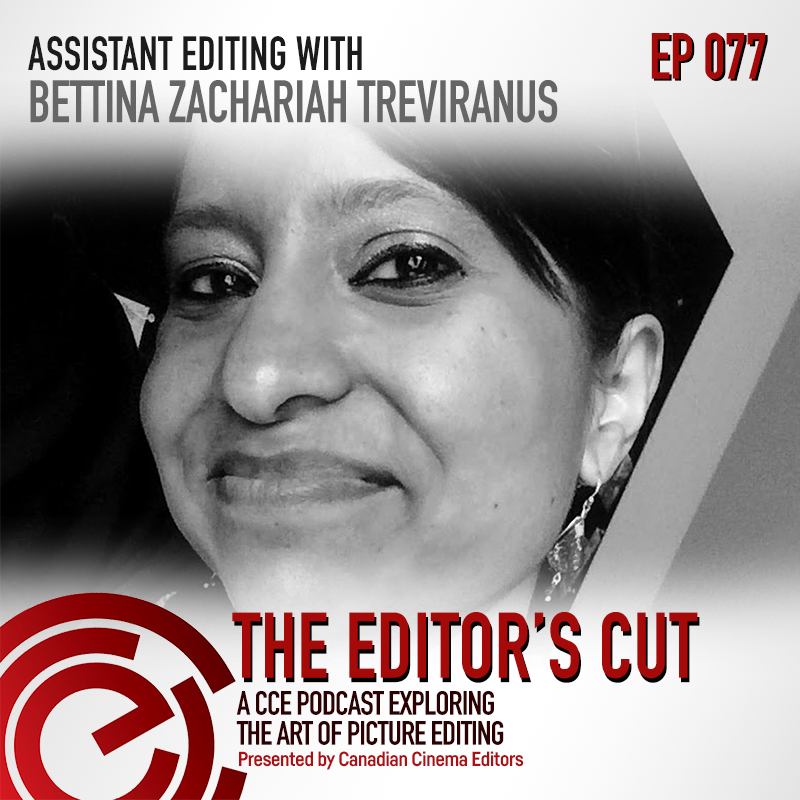
Episode 077 – Assistant Editing with Bettina Zachariah Treviranus

The Editor's Cut: Episode 77: Assistant Editing with Bettina Zachariah Treviranus

Episode 77: Assistant Editing with Bettina Zachariah Treviranus

In this episode Sarah Taylor sits down with Bettina Zachariah Treviranus.

TEC 077: Bettina Zachariah Treviranus

Bettina is obsessed with and has a deep love of stories that began when she learned how to read. By trade, she’s a television editor and producer of such shows like Work In Progress, Dominion, and Grimm. By night, she’s a devoted daughter, wife, mother, and friend. Bettina believes that stories are what humanize us, teaches us, strengthens us, and connects us. She’s deeply honored to be here and share her experiences.

Sarah and Bettina discuss her career journey and how she landed her current position as assistant editor on Class of ’09.

À écouter ici !

The Editor’s Cut – Episode 77: Assistant Editing with Bettina Zachariah Treviranus

Bettina Zachariah Treviranus:

What I could have done differently is that I could have put myself out there, stayed after hours, ask for help, ask to shadow, and it’s not that those opportunities weren’t available to me, I just had a lot of inhibitions. When I think it took me seven years to become assistant editor, it’s like, “Oh my gosh.” It’s one of the reasons I do so much mentoring now is to demystify the process.

Sarah Taylor:

Hello and welcome to the Editor’s Cut. I’m your host Sarah Taylor. We would like to point out that the lands on which we have created this podcast and that many of you may be listening to us from, are part of ancestral territory. It is important for all of us to deeply acknowledge that we are on ancestral territory, that has long served as a place where indigenous peoples have lived, met, and interacted. We honor, respect, and recognize these nations that have never relinquished their rights or sovereign authority over the lands and waters on which we stand today. We encourage you to reflect on the history of the land, the rich culture, the many contributions, and the concerns that impact indigenous individuals and communities. Land acknowledgements are the start to a deeper action.

Today, I bring to you an interview with Bettina Zachariah Treviranus. She’s obsessed with and has a deep love of stories that began when she learned how to read. By trade, she’s a television editor and producer of such shows like Work in Progress, Dominion, and Grimm. By name, she’s a devoted daughter, wife, mother, and friend. Bettina believes that stories are what humanize us, teach us, strengthen us, and connect us. We discuss her career journey and how she landed her current position as assistant editor.

Speaker 3:

And action.

Speaker 4:

This is the editor’s cut.

Speaker 5:

A CCE podcast.

Speaker 4:

Exploring the art …

Speaker 5:

Of picture editing.

Sarah Taylor:

Bettina, thank you so much for joining us on the Editor’s Cut.

Bettina Zachariah Treviranus:

Thank you. Thank you for having me.

Sarah Taylor:

So I am going to steal a little bit from the playbook of Post in Black. They always like to start their episodes with an icebreaker.

Bettina Zachariah Treviranus:

Great. Okay.

Sarah Taylor:

So I’m going to do it with you.

Bettina Zachariah Treviranus:

Awesome.

Sarah Taylor:

What is the last show that you binge-watched?

Bettina Zachariah Treviranus:

My gosh. I binge-watched so many things. I’m trying to think because I basically do chores all the time, so I’m constantly watching … I think I just rewatched Modern Family because I needed comfort foods, I’d already seen it, but it was like I’m stressed and so I just need something that is comfy and I know it, and it has a lot of episodes, so I don’t have to leave my warm blanket for a while.

Sarah Taylor:

I totally get that. Sometimes I’ll catch myself rewatching Gilmore Girls just because I’m like, it’s comfortable.

Bettina Zachariah Treviranus:

Yeah, they’ve done psychological research about why people like to rewatch things and it’s because what’s going to happen. So if you’re kind of in a period in your life where there’s a lot of unknowns or uncertainty, that’s a very comfort … it used to be West Wing for me, until Netflix took it off. I would actually fall asleep to the West Wing because I knew seasons one through four so well, that it was a way of getting my brain to stop thinking about all my problems and just listen to the audio and fall asleep.

Sarah Taylor:

I love it. I bet you, there’s probably studies that have been done during the pandemic where … to see which shows were the ones that people chose to watch.

Bettina Zachariah Treviranus:

Yeah.

Sarah Taylor:

I think that’d be really interesting to investigate.

Bettina Zachariah Treviranus:

Yeah.

Sarah Taylor:

Sure, mine, I just finished watching The Watcher. I watched it two nights in a row.

Bettina Zachariah Treviranus:

Okay.

Sarah Taylor:

It’s like we’re recording around Halloween, so I felt it was a really … it was kind of spooky, so it was fun. Yeah.

Bettina Zachariah Treviranus:

Yeah. Yeah. Very neat.

Sarah Taylor:

Not comforting at all, but fun. Okay, well tell us a little bit about your yourself and what led you to a career in post-production?

Bettina Zachariah Treviranus:

I am from Chicago and I as a kid, would read a lot and for me, when I read a book, it plays like a movie. I’m Indian American. My family upbringing was very strict, so we were not allowed to watch TV Monday through Thursday. So Friday, Saturday, Sunday were the only days, so what was available to me in terms of entertainment were books. So I would just lose myself in books. They would play movies in my head to the point where if I was reading a book and I got a phone call, I would take the phone call and be like, “Oh, I missed the rest of that movie.” I go, “No, no, it’s a book. I can go back to reading.” So I would think a lot about, “Oh, I would want to make this book into a movie,” but growing up, that felt very distant and far away and things that other people did.

So I went to college, didn’t know what I wanted, resisted declaring a major forever and then, finally I majored in English and secondary education and was like, “Okay, I guess I’ll be a high school teacher.” And that felt very right for my family like, “Oh, she’d be a great teacher.” And so everybody encouraged me to do that. I didn’t really want to, but I didn’t have in my head other options. Then, I actually did student teaching. I absolutely hated it. Then, I took on a long-term substitute teacher job where a teacher was going to go have a baby, so I finished out her year for her. That was my like, well maybe it wasn’t so bad and I remembered it badly and then, I tried it and was like, “Oh, I still hate this. Well now what do I do?” And I always incorporated a lot of movies in my lesson planning.

So I was like, “Well, I guess I’ll go to film school.” So at this point, I was out of college for a year and I didn’t think anybody would accept me into film school. So I went and I did an internship in Washington DC for a year to strengthen my grad school application. That program put me with a documentary producer and I was basically free work in her basement. I would answer phone calls, digitize photos, and that was the first time I saw an editor working and I was like, “Oh, this is so cool,” what they were doing. What I realized is I was in musicals and when I would watch rehearsals, I would think, “Oh, if it were me, I would put the camera here so we can see this person.” It’s effectively editing. In my head, I just didn’t know at the time, that’s what it was.

So I went to Chapman University in Orange, California and you had to … they have a conservatory model and you had to declare what your emphasis was and like everybody else, I put director first and then, my second was editing because that was what I was exposed to. I didn’t even know what cinematography was. I knew I was not going to be a good production designer and I did not feel at the time I would be a good writer or a producer. So I didn’t get into the directing program, but I did get into the editing program and that is kind of what set me up down the line. It was basically those set of experiences, kind of nudging me towards post.

I got an internship my third year of school … no, I’m sorry, my second year of school with Battlestar Galactica, and my third year of school I was hired as a post-production assistant on Battlestar.

Sarah Taylor:

Amazing.

Bettina Zachariah Treviranus:

So my third year I was working, I was going to school and I was getting married. So I lost a lot of hair that year.

Sarah Taylor:

Yeah, that’s like all of the major fun stressors.

Bettina Zachariah Treviranus:

It was like … yes and for me it was like “Well, I want to finish school and I don’t want to say no to this job and I really want to get married, so I’m going to do it all.” And in retrospect it’s like, “Girl, you could have taken some time. You didn’t have to do it all, but you’re young and you think everything has to be right now.”

Sarah Taylor:

Yes. Yes.

Bettina Zachariah Treviranus:

And I tend not to take time. I tend to cram it all in, if I can.

Sarah Taylor:

We sound very similar. So where are you now? What are you doing now?

Bettina Zachariah Treviranus:

So a few years ago for family reasons, my husband and I moved back to Chicago. So now, a very unintended positive consequence of the pandemic has been that remote work has become a very real option. So before when I moved to Chicago, that was in 2017, I would reach out and be like, “In post, why can’t we do this remotely? There is really no reason we all have to be in an office.” The responses I got was, “Oh, the infrastructure isn’t there and oh, security.” And I was like, “This intuitively doesn’t feel right, but I don’t know how to vocalize why this feels silly and wrong.” Then, the pandemic hit and nobody could go into an office and suddenly, all those problems went away.

Sarah Taylor:

Real quick.

Bettina Zachariah Treviranus:

So I did a couple of things in between. I took one job for seven months where I flew back and forth to LA from Chicago every week for seven months to keep up my resume. And then, I ended up getting hired on a show in Chicago. So that kept up my resume, but then as soon as I realized there was work from home options, I started setting up my resume just to raise my hand because not being in LA sort of … it’s easier for people to forget you as an option. A former editor I worked with needed some … his assistant was being bumped up, so he convinced the head of Post to bring me on as a cover assistant editor. It was funny when the tech department was setting me up and they were like, “Oh yeah, this is the software we used to control rovers on Mars.” And I was like, “If we can control things on Mars, of course we should be able to remote into half a country away,” is what I’m saying.

Sarah Taylor:

We’re in space, God dammit.

Bettina Zachariah Treviranus:

This is the type of thing that like, it doesn’t feel right but I can’t figure out why these answers don’t feel right, and really what it boils down to is that the industry wasn’t ready for it. It had to be forced into it.

Sarah Taylor:

Yeah, totally.

Bettina Zachariah Treviranus:

That’s what I do now at the moment is if there isn’t a job for me in Chicago, I will look for remote work into LA and I keep LA hours and it’s just been a … for now, and we’ll see how long it lasts because the pandemic is still going on. We’ll see if people will keep wanting to work remotely. I think there is some real positives for people in terms of work-life balance and just not having to sit in LA traffic and not having to sit around and wait for an output. There is some real positives to having some more control. Now, some people hate it, some people want to be in the office, they want that face time, they want to be out of their house. Property is very expensive in LA. So I have the luxury of having a guest room, and so my Avid is there and it’s very easy to separate myself from my family and work. That’s not the easiest thing to achieve in LA. So there are people who just need that space.

So I get both sides of it. My idea would be a hybrid situation. I love working from home, but I do miss the camaraderie and sitting around and laughing at outtakes and having lunch with everybody and becoming a little family over the course of a show. That stuff I do miss.

Sarah Taylor:

Yeah, I’m with you on that. I’m with you on that. Well, since you’ve mentioned, you work from home, you have a guest room, what does your typical day look like as an assistant editor at this current stage, working remotely?

Bettina Zachariah Treviranus:

So because I work in … I remote into LA, I’m two hours ahead of LA so my day starts at 11, which means … I also have two kids, so the mornings are basically my time to spend time with them, get them ready for school, get them going and run all the errands. And what’s really been nice is I can do appointments, doctor’s appointments, dentist’s appointments, whereas that’s harder after hours to get anything specialized done and now, I’m trying to jam it into my workday. So that part has been awesome. Then, basically, my days as an assistant editor is basically what my editor needs. So when we’re in dailies, I prep dailies to the editor, how they like it. Some editors want script syncing, some editors want it in frame view where they can see what all the angles are. So, it’s really however they want it and then, depending on where we are in the show, what needs to be done for all the other departments.

So right now, my current show, we are well out of dailies, and I have a to-do list. So for example, we onlined a show a couple of days ago, I got the van back last night. Tonight I’m going to … when we get off the phone here, I’m going to check the van and make sure that it’s correct to what I turned over. So I have a little to-do list of checking in with different departments, checking in with my bosses, and then getting whatever work, if there’s sound work or outputs or turnovers to do. Just structuring my day so I can take care of all of that, in a timely fashion so that I’m not … I like to be the rock in the department where I am trying to make it as easy as possible and to minimize chaos because I feel like every TV show gets to the point where it’s crazy and chaotic and what can I do personally to lower that?

Because I love making television, it is literally my favorite thing to do in the world. So, if there’s something I can bring to the table that makes it a cool, fun experience, then I want to do that because … yeah, I read something like, “Only 2% of the people in the world love their jobs.” It’s like, “Ugh, really? That’s it.”

Sarah Taylor:

That sounds awful.

Bettina Zachariah Treviranus:

I know we should all love our jobs.

Sarah Taylor:

Yeah.

Bettina Zachariah Treviranus:

We’ve spent so much time there. I don’t know if that’s a real statistic, but I read that in some kind of headline.

Sarah Taylor:

Yeah. Yeah.

Bettina Zachariah Treviranus:

It’s like, “Oh, I must be really lucky.”

Sarah Taylor:

Yeah, I feel it with you. So is there any sort of ways of organizing as an assistant that you always use or is it always changing for the editor you’re working with?

Bettina Zachariah Treviranus:

I consider my specialty is like I tailor myself to my department. This is the most embarrassing part of my story. It took me seven years to become an assistant editor. I actually went up to post producing chain at first, I went from post-production assistant to post-production coordinator to post supervisor to associate producer, mainly because I got that first internship at Battlestar, and that was the easiest way to go up the chain because it was very hard for me to get into the union because the union, you had to do 100 days non-scripted union work. And I had a lot of, in retrospect, very silly tech fear. In my opinion, there’s no great way to train to become an assistant editor. There are things like master the workflow now, but at the time, people would tell me, just take the job and fake it until you make it, which even now that I actually know the job, it’s like, “Are you crazy?” This is-

Sarah Taylor:

You need to know.

Bettina Zachariah Treviranus:

There’s a lot of things that’s like I would not have been able to figure out. What actually ended up happening was I got onto a job, a friend advocated for me and it turned out that that show was block shot. So two episodes were shot at the same time. So another acquaintance that I knew who later on became a very good friend, he was an assistant editor. He and I started at the same time, and he trained me, and that was just the perfect confluence of events. Then, all the experiences I had of being the post producer, associate producer, it actually complimented me being the assistant editor because I know as the assistant editor what to do, but I also can think through what’s the best way I can do my work to set the post producing department up for success.

Also, I can … because a lot of post producers are not super technical, I can act as a translator for both sets of people, for the tech people, like the assistant editors and editors and the post producers who need to finish the show. Sometimes there’s like, we’re not speaking the same language because one group has never touched an Avid. They may know the terms, but they may not understand the work that … for example, how much work a turnover can be.

Sarah Taylor:

Yes.

Bettina Zachariah Treviranus:

So I can work as a translator to both. So when I interview for a job, I am very careful to observe what the editor needs. If the editor is super high maintenance, I am right there, I will cater to your every need. If the editor is very low-key, awesome. My job is so much easier, and I don’t have to worry as much, right?

Sarah Taylor:

Yeah.

Bettina Zachariah Treviranus:

Or if I know that there’s an editor who’s not super attention-to-detailly then I have a running list of things to make sure I double check because I know that editor is not going to check that. And it’s just a thing that I learn, and like I said, I tailor myself to my department. So maybe the editor is really high maintenance, and the post producers are very low maintenance and so that they’re on top of what they need from me or maybe the post producers are not super on top of their things, so I will be checking with them like, “Hey, when do I need to do this turnover? When do I need to do that turnover?” So it’s sort of a balancing act of what needs are there that need to be filled, that I can do that service, what value can I provide?

Sarah Taylor:

I think I need you in my life too. How do you navigate all of the, kind of understanding what the editors like remotely? Is it just by having Zoom calls and getting the vibe?

Bettina Zachariah Treviranus:

Right, so one of my first jobs was with an editor I worked with previously and it was a lot of footage and I organized it and it was a lot of very sped footage. So I had to do a lot of speeding up and syncing. So I sent her the bin the way I had done it for her previously because it was in my head like, “Oh, I know how she likes her footage.” And then she was like, “Oh my gosh, I can’t work like this anymore,” because what had happened was she had gone on to another show. On that show, she worked with two other editors who liked their bins organized differently, so she adapted to that and sometimes things are better than your previous way of doing it. So what happened was like she hadn’t realized, I think at that point she was watching the same footage, both slow motion and sped up.

So then, I was like, “Oh, okay, that’s not working for you. How do you want me to do it?” So she sent me a screen grab, “This is what I want the bin to look like.” Great. So I then reorganized the bin, on my current show, my editor and I, we weren’t on the same page about paperwork because paperwork is usually in person. I just would do both binders and remotely … on the previous shows I’d done remotely, the editors just took care of their own paperwork to the point where I didn’t even think to ask the current editor, “How do you want your paperwork done?” And then by day two or three, he was like, “So let’s talk about the continuity.” And I was like, what? Because he’s Canadian. He was calling all of the script supervisor paperwork continuities, and that’s not what I call it from LA, so we had to first get on the same page language-wise.

And then, we talked about, I was like, “Oh.” And so then, we talked about how he wanted his paperwork and then, I made sure every morning to do it that way. It was just a thing that … so it’s just basically lots of communication, lots of checking in. I mean, most people are fairly easygoing, fairly capable. So it’s just, they know what they want, and it’s something, if I get hired, then that’s like one of the first questions like, “How do like your dailies? How do you your paperwork?” And things like me forgetting the paperwork, I have a Google Drive of notes for various things. In my Google Drive, I was like, “Oh, make sure next time for your next job, you ask about the paperwork.” Because it wasn’t intentional. It was just like two jobs. I didn’t have to worry about it and then-

Sarah Taylor:

Yeah, totally.

Bettina Zachariah Treviranus:

It just fell out of my head because it wasn’t staring me in the face.

Sarah Taylor:

Yeah, that totally makes sense.

Bettina Zachariah Treviranus:

Yeah.

Sarah Taylor:

I think that’s really … every job we learn something I feel like for myself.

Bettina Zachariah Treviranus:

Yeah.

Sarah Taylor:

Whether it’d be technical or a new way of telling a story or whatever it might be. That idea or that, I guess practice or ritual of making notes at the end of a project, is that something that you do where you’re like … or when you come across something like, “Oh, this is something I should always be doing, or this is something I should check on.” Do you have your own master the workflow set up? Is your … what you’ve done like your-

Bettina Zachariah Treviranus:

Yeah, so I have a Google Drive of all kinds of notes, screen grabs, processes, write-ups on how to do things because there are so many things that you’re asked to do as an assistant editor, that it’s hard to remember from project to project. For example, this is the first time on this show that I’ve been asked to do a drop frame output for captioning. So the other assistant editor figured it out. I did the write-ups for a future show because usually … and this is also from my producing background, that’s a line item that you give to the finishing house, and they create those outputs. On this show, I think they wanted to save some money, so they’re having assistant editors do it. As it’s something that I’d never had to do before that is … it’s valuable to me to take the time to sit down and write it out.

Sarah Taylor:

Yeah.

Bettina Zachariah Treviranus:

And I do screen grabs of menus and I’ll notate on the menu where the thing is.

Sarah Taylor:

That’s amazing.

Bettina Zachariah Treviranus:

Yeah, and then, what’s also helpful is when I’m on a project and somebody else doesn’t know how to do something, I was like, “Oh, I have a writeup for that,” and I’ll just shoot off the email. It’s not exactly the same process. Maybe the Avid has changed a little bit because they always upgrade.

Sarah Taylor:

Yeah.

Bettina Zachariah Treviranus:

It may be a starting point to train that person or maybe it’s a starting point for us to figure out in this new version of Avid, how would you do it? So it is … and anything I see on forms and everything, I’ll take screen grabs and save it. Just anything that I think is useful that I think … because I don’t have a brain that I can remember all of this stuff. So I will forget … after I do dailies the next show and have to do dailies, “How do I speed up and sync a clip again?”

Sarah Taylor:

What was I doing? Yeah.

Bettina Zachariah Treviranus:

Yeah, I don’t like reinventing the wheel. To me, that drives me nuts. For every show, I create what’s called the assistant editor checklist, and that is literally everything from dailies to wrap that’s in a checklist because I feel like most shows get very busy and crazy and I’m sleep-deprived. So if I have to do three turnovers of like music turnover, sound turnover, picture turnover, I don’t want to read four different spec pages every single time I do a turnover. So every time I do a turnover, I wait for feedback like, “Oh, you missed this, or I want you to do this differently.” Once the turnover has been done and accepted and I haven’t heard anything, I add it to my assistant editor checklist like, “Here is all the things you …” every single step and it’s literally a checklist so that I don’t ever have to think about how to create that particular turnover again.

It served me, on my current show, I got a call at 11:00, you needed to do the sound turnover for an episode that wasn’t mine. I was like, “Oh my gosh,” that’s stressful when you don’t know the episode because you don’t know the pitfalls or whatever is particular to that episode, but it was also a time when it was stressful, because my aunt had passed away earlier in the week. I was not thinking super clearly all week because of that. It was 11:00 at night after a really long day. I think I also was coming down with the cold. So the checklist was really nice, and that like all the thinking that had to be done to do this turnover was already done. I just had to follow the steps. It’s also a way of not missing an element like not, “Oh, I didn’t forget to do the way files. I didn’t forget to do the QuickTime reference.” It’s all idiot-proofed.

Sarah Taylor:

You are blowing my mind. I feel like I need to-

Bettina Zachariah Treviranus:

Because I made a lot of mistakes.

Sarah Taylor:

Yeah, I think that’s great.

Bettina Zachariah Treviranus:

Yeah, and this is all from the dumb mistakes I’ve made over-

Sarah Taylor:

Yeah.

Bettina Zachariah Treviranus:

It’s like, “Okay, I don’t want to do that again.”

Sarah Taylor:

That’s really smart, and saving yourself from extra stress, because I find for myself too, I’m in a smaller market, so I often … I’ve just recently in the last few years, been able to bring assistants on, like just bring on my own person to be like, “Okay, you’re going to be my assistant. I’m hiring you for this.”

Bettina Zachariah Treviranus:

Sure.

Sarah Taylor:

Then trying to teach the person what I want, I’m like, “I don’t know. I change every time I do a show,” or it’s always different. To have access to, “Here’s everything that I do. Here’s the step-by-step. That’s amazing. That’s such a brilliant thing to think about.”

Bettina Zachariah Treviranus:

Well, and also then when I start a new show … because again, I forget what happens from series to series, I can look at the old checklist.

Sarah Taylor:

Yeah.

Bettina Zachariah Treviranus:

How did I do it there? And it may not be the same process again, but at least, it’s like, “Oh, I remember I had to do this.” I should maybe do it on this show. At least check, do I need to do it here? For example, I do a lot of mentoring, so I had a friend who was in non-scripted work and we were trying forever to get them scripted and he called me, he’s like, “I’m getting ready for an interview. Can you just talk me through it?” I was like, “Yes,” and we talked about everything and then, I sent him my checklist. I was like, “This is from dailies to wrap, everything. Even if you don’t know what it is, it’s a paper form of what one process is. So you might have done some of this as a reality assistant, but it’s like a jumping off point and you can always call me and we can work through … we have this guide that’s not nothing.”

So it’s just something that I started doing for myself and then, I’ve just found it’s very useful to … and the assistant editor checklist, I make it and I share it with everybody on my team, all the assistant editors. I’m always like … obviously, I’ll make mistakes on it because of typos, or it’ll be organized in a way that maybe in my fugue state made sense, but later on when I’m doing a turnover, it’s like, “Why is this line item here? This doesn’t make any sense.” So I encourage them to change it or whatever. It’s also, if there’s three teams, three editors, three assistants, I think it’s nice for the finishing departments to get the same elements from every team so that you’re not … if we can all use the same presets.

Sarah Taylor:

Yes.

Bettina Zachariah Treviranus:

If we can all use all the same things coming from the same teams to the same departments, I think would be really nice. So it’s not like I demand that people to use the checklist. It’s just like, “Hey, if we can all get on the same page, same presets, that would be really nice.” One of the things that I’ve done on this show for the first time is when I did the turnovers, the other assistant editor taught me how to save all my individual presets for every output and every element creation. So we all saved it to one particular Avid profile. Then, we were able to drag the presets the other person created to ours. So when he figured out that drop frame thing, I was grabbing all of his presets. I figured out all the, I don’t know, the sound EDLs presets, so he grabbed all of mine. So it was just really nice to not have to reinvent the wheel over and over again and just make it easier. It’s a little thing, but it makes it easier.

Sarah Taylor:

I really enjoy your approach of the … like you’re being collaborative with it.

Bettina Zachariah Treviranus:

Yeah.

Sarah Taylor:

Because sometimes I find there’ll be a tech issue and you’re like … at least I did this when I was younger, kind of ashamed to ask, “How do I do this?” So I love how you’re doing it where you’re like, “Well, he figured it out so then we did it.” It’s like your team, which you are, and we should be, we should all be a team.

Bettina Zachariah Treviranus:

It’s a very competitive industry. Early on, my first show was a very heavy visual effects show, and the assistant editor at the time that trained me, showed me a very quick way of labeling the show with a subcap creator that somebody else developed online. It was like … because it was my first visual effects show, it was just standard, “Oh, this is a really quick way to label the show.” On my next show, I taught the assistant editors how to do it, how to do that. I was a producer at that point in that show, and one of the assistant editors was like, “I love this.” And I was like, isn’t it amazing? Don’t you want to teach everyone? He’s like, “No, I want to be the only one who knows it. So I look like the fastest assistant editor.”

I don’t like that mentality. I am very much a rising tide that lifts all boats. I don’t really feel the need to compete because I think there’s just so much work and even if there was a lack of work, that I don’t like the cutthroat element to what our industry can have. To me, I would rather build the relationships and make it a pleasant experience, and in general, I think that’s why I’ve been able to keep up my career after having left LA is because based on the strengths of the bonds that I’ve created, I think people enjoy working with me. I think that people can count on me and depend on me. I mentor people and I help people find work so that I am present in their minds when opportunities come up like, “Oh yeah, Bettina is still around.”

So I think in general, if maybe I were more cutthroat, maybe I would be further along in my career, but I am comfortable. Maybe not having gone as far, but I’m comfortable with who I am and the relationships I’ve built and the experiences I’ve had rather than just having that, “I want to be the best.” I mean, I would love to be the best. I love to win an Oscar and Emmy or whatever, but I would rather be able to just overall, have a pleasant and happy experience than somehow falsely portray myself as the fastest assistant editor, I think that’s just silly.

Sarah Taylor:

Yeah, I’m with you 100%. That’s great. Good advice too for people that are up and coming in industry. I feel like it’s those connections we make and the relationships we have. It’s all … I find it’s mostly word of mouth in this industry. Even from what I’ve heard in LA it’s a lot of word of mouth.

Bettina Zachariah Treviranus:

Well, and the hilarious thing about that particular assistant editor is it is such a small industry, that particular show … so I went from producer on that show to assistant editor because there was a family emergency. So I had to leave in the middle of the show and I had to leave LA for four months, and when I came back, they needed affiliate assistant editor just to wrap the show.

Sarah Taylor:

Yeah.

Bettina Zachariah Treviranus:

So I came back as an assistant editor and this guy was still on. I ended up recutting the season finale, which ended up being the series finale. It was like this big deal, the studio ponied up $30,000 to reopen the show and this and that, and it was like this possibility that maybe would be … there’s a better chance of it getting picked up for season three and it didn’t happen. That recut earned me, had there been a season three, an editor’s chair on that show. And later on I got onto another show and again, when people look at your resume, they kind of know who you’ve worked with. I had heard that he had told everybody that had it gone to season three, he was going to be an editor on that season. It was like absolutely not true.

Sarah Taylor:

No.

Bettina Zachariah Treviranus:

It’s just one of those things where there is also a pragmatic way of looking at this, and that your reputation will follow you.

Sarah Taylor:

Yeah.

Bettina Zachariah Treviranus:

It’s too small. It’s way too small of an industry. So, when I came back to that particular show, he was the only original assistant editor left, and he was basically cashing a paycheck, and the other two assistant editors who were fill-ins were struggling the entire time because he was not helping them. There’s value in being on a show long-term because you know all of the skeletons in the closet and everything and he had another job, so he had the deal that he struck with the producer, was that he would come in the evenings and help out with this other thing, but he just did not make himself available to anyone. It was very clear he was cashing a paycheck and buying dinner and walking out the door.

And I saw this because I had been there at the beginning, and I’m seeing this at the end, and it just made me crazy, because it’s like, “Oh my God, you could be helping these women and you’re not, and you’re just cashing a paycheck, because the producers were all out doing the onlines and mixes.” Nobody is seeing what is going on. I was very vocal. I’m like, “This guy is just passing and cashing a paycheck. You’re not getting your value. He’s not helping.” So he lost his standing with that team, and it was also, the team that was talking to me about all the things he was bragging about. He wasn’t very positive in their eyes either. So now you have two sets of people that are not particularly impressed with you.

It’s just a thing where that stuff follows you around, incrementally, and then there’s a watershed moment where nobody wants to work with you anymore.

Sarah Taylor:

100%. Yeah, I’ve seen that happen a lot.

Bettina Zachariah Treviranus:

Yeah.

Sarah Taylor:

Yeah.

Bettina Zachariah Treviranus:

I don’t know, we make television. We make entertainment. It shouldn’t be-

Sarah Taylor:

It should be fun, right? It shouldn’t be secrets that we can’t … like there’s a bajillion YouTube videos out there now. Now, you can really research stuff. So let’s share, let’s not keep everything too closed.

Bettina Zachariah Treviranus:

Well, and also, we’re competing with everything for people’s attention. It’s getting harder and harder to get people to pay attention to TV because there’s so many other things that are out there. So I don’t know, it’s going to be harder and harder to be on shows that go long term and things like that. So it should be a pleasant experience because we’re always going to have to bounce around from project to project. It’s going to be rare to find a modern family that goes for 11 seasons.

Sarah Taylor:

Nothing is a guarantee.

Bettina Zachariah Treviranus:

No. So it should be nice. Not like, “Ugh, here’s my new next crappy team to work with.”

Sarah Taylor:

I like it. I like your attitude. So your Google Drive is a must have, I feel like in your edit suite.

Bettina Zachariah Treviranus:

Yeah.

Sarah Taylor:

What are other things that you need to have in your edit suite?

Bettina Zachariah Treviranus:

I have a very specific planner that I have that I get from Staples every year. I’m going to show you, I know it’s an audio podcast, but like you can see it has like a year.

Sarah Taylor:

Yeah.

Bettina Zachariah Treviranus:

And what I like about it is that it has two things, it has a page dedicated to every day. So I can write down every single thing, but it also has the month view.

Sarah Taylor:

I love it.

Bettina Zachariah Treviranus:

The reason this helps me is that I have a to-do list for every specific day because I have in my head, two bosses, I have the head of post-production who’s going to ask me to be doing things and I have my editor who’s going to be asking me to do things. It’s useful for me when somebody’s like, “Hey, when did you do that turnover? I don’t know. It’s dawned and saw it in my head.” If I look at my planner, I can tell you what date it is.

Sarah Taylor:

Yeah. Yeah.

Bettina Zachariah Treviranus:

And then the month view, when I get my schedule from the head of post, when is the online? When is the music? whatever it is, if I fill it in, then I can sort of backtrack and figure out what I need to do when. So for me, I have the wide angle lens of the project as a whole on what needs to happen, usually for the head of post and then, my day to day, what needs to happen. That’s usually for the editor. Then, I have all kinds of writing things. My black pen is for writing the to-do list, but I have three different highlighters. Orange is for all the stuff that still needs to be done from previous days that I haven’t gotten done. Blue is for stupid little techie things that I learned on this show. For example, the notes that I took to create that drop frame, that’s in blue so that I can go back later and write up the thing.

Yellow is all the … my to-do list will also encompass, “Oh shoot, I got to make the dental appointments for the kids.” So when I go through the planner, it’s like when I have time to do the home stuff, all I have to do is check the yellows. Yeah, so it’s a way of balancing, because I don’t want to have to do 47 to-do lists. It’s all in one place but it’s also a record of things. So there’s accountability.

Sarah Taylor:

Very cool. I just bought a very similar notebook yesterday.

Bettina Zachariah Treviranus:

Cool.

Sarah Taylor:

For 2023. So a bit smaller, but yes. I love the month view and then, yeah, I have a DV so that’s … yeah, the color coding, I think that’s really clever. Now, what has been something that you found challenging in your career that you’ve overcome, and how did that go?

Bettina Zachariah Treviranus:

I think the two things were basically, I felt very overwhelmed at the prospect of being an assistant editor because I felt like there was just this magnitude of things I didn’t know, like the tech stuff … I think now kids are more tech-savvy. They’re on their apps and they’re editing for TikTok and things like that. The first time I took an editing class, it was like, “You can separate video from audio?” That was having to retrain my brain. Even though I was studying editing and I had done the online workflows and everything in school, I did not feel like I was prepared to take on an actual job, and it was very true. It wasn’t until I got that job with the assistant editor where we started at the same time because of the block shooting, that I got the education that I needed.

So what I could have done differently is that I could have put myself out there, stayed after hours, asked for help, asked to shadow, and it’s not that those opportunities weren’t available to me. I just had a lot of inhibitions. I was so inhibited just that … well, like what you said when you were younger, you didn’t want to ask anybody when you didn’t know how to do something. That was me to a tee. It was like to the point where it was just … when I think it took me seven years to become an assistant editor, it’s like, “Oh my gosh.” It’s one of the reasons I do so much mentoring now is to demystify the process.

Sarah Taylor:

Yes. Yeah.

Bettina Zachariah Treviranus:

So a friend of mine who I think felt very similarly, I had her shadow me on a show. The very first thing I did is I’m going to show you this visual effect that the editor asked me to do, and I had no idea how to do it. Here is all the things that I did to try to get to that visual effect. So I had already gone through the process, but I knew she was coming in. So I saved that example because even the idea of, “Oh my gosh, what if an editor wants me to score a scene? Oh, there’s so much music in the world and I don’t know all these scores, and how would I do it?” I tend to overthink things and it was so overwhelming.

On one of my shows when it came to music, the editor was like, “Well, I look at the titles of the pieces,” which was like … it was a great piece where he was like … we were on this show where the composer for Vikings gave us … was our composer. He gave us the whole library for the cues for Vikings. So, he was like, “The rape of Golgotha isn’t going to work for this marriage scene.” That’s true. Then, he showed me how to sort the bin by duration. He goes, “If the scene is 45 seconds, the first thing I’m going to do is I’m going to look at all the 45-second cues and just see if … do any of those have the correct feeling?” It was getting over my own inhibitions to go, this may seem overwhelming.

If you open yourself up and ask the questions, somebody has already invented the wheel. You just have to figure out who has done it. Can they teach you? Are they willing to teach you and just be able to put yourself out there. So that was a big, just self-imposed stupid insecurity that I had done, like I had done to myself. Then, the other thing was, when I moved to Chicago, it was just a very logistical thing, how do I keep working? I’m not particularly interested in doing independent films. I’m not particularly interested in doing commercials. How do I actually stay relevant? How do I connect with the people out here who are making television?

So I really worked my contacts. I really tried to bring values to the shows that I got on and just be that person that somebody wants to work with again and not be shy about asking for … in the show that I worked on here, I ended up becoming an editor, but I asked for that.

Sarah Taylor:

Yeah, I think that’s huge.

Bettina Zachariah Treviranus:

Nobody discovered me, but I saw that there was an opening and I asked for it, which Bettina from 10 years ago would’ve been like, “I hope they remember that I work here,” and now, I’ve gotten the job because it’s not that people are not interested in helping, it’s that once again, there’s so much that are demanding people’s attention that there is value in raising your hand.

Sarah Taylor:

100%.

Bettina Zachariah Treviranus:

And that can feel … if you’re a person that’s not used to doing that. That can feel out of your comfort zone, or maybe you’re being too pushy or too ambitious. Ambitious for women seems to be like a negative thing. So those are things that I’ve had to make myself comfortable with and go, “This is not a bad thing to ask.” And the worst thing that can happen is that they say no, and if they say no, they say no.

Sarah Taylor:

At least they know that you are wanting it, right.

Bettina Zachariah Treviranus:

Yeah.

Sarah Taylor:

That’s the biggest thing. We don’t put ourselves out there. The opportunities could disappear, and I think that’s a really good piece of advice. What has been one highlight from your career so far?

Bettina Zachariah Treviranus:

It’s been cutting on my show. It’s a show called Work in Progress, it went for two seasons. Lilly Wachowski of Matrix fame was one of the exec producers, and I would never have imagined that my first editing job would be for her like that-

Sarah Taylor:

Amazing.

Bettina Zachariah Treviranus:

Yeah, and I just learned so much, and it was an opportunity for me to work on a show I really believe in. There’s a really strong, powerful and healthy message about mental health and getting therapy, and these are all things I believe in. So I think it’s this amazing thing that not only did I get to be an editor, after moving to Chicago, which I never expected. I got to work for Lilly, which I saw The Matrix in high school. Again, I never would’ve expected.

Sarah Taylor:

Yeah, yeah.

Bettina Zachariah Treviranus:

I got to work on a good show. So many things that I’ve done is like, it’s fine, but it’s not something that I feel strongly about with my heart and soul and the things I was able to be very proud of the show. So just those, for one show to check all those boxes. Do I want other amazing experiences? Do I want the statues? Yes, but just to have those things, I feel very fortunate and very like, “Oh my gosh, what an amazing outcome for a decision I made that I wasn’t sure about, to move back to Chicago.” It also taught me that there are possibilities out there. When I was telling people in LA that I was going to move to Chicago and try to work for the Wachowskis, it was very much a, “That’s nice.” and I understand that better, that reaction better now.

I also have given myself some more credit. I see possibility where other people don’t, and that doesn’t mean I’m stupid. That means there is patterns and things that maybe other people dismiss where I go, “No, there might be an opportunity there and there’s no reason not to try.” Even I didn’t think about, “Oh, maybe I’ll cut for them.” It taught me there are more possibilities than most people imagine and there are more possibilities than maybe you even imagine, and to just keep yourself open to those things, and like you said, raise your hand, put yourself out there, because why not? You never know, the first person who actually ended up helping me become an assistant editor, I had this list of all the people who could help me.

He wasn’t even on my list. It just happened that he was the one. So you just never know where opportunities may come from. Just be open to it.

Sarah Taylor:

Yeah. That’s amazing. I had one short film that made it into Sundance, and I was like, it didn’t even ever cross my mind, that that would be an option.

Bettina Zachariah Treviranus:

Yeah.

Sarah Taylor:

Yeah, there’s moments where you’re like, really, possibilities are endless. We could really be doing all sorts of fun, awesome stuff. I think you saying being proud of the work you’re doing, that’s huge for me too. I might be working on smaller documentaries, but the messages and the stories that we’re telling, if I feel like I’m impacting somebody’s life and it’s impacting my life and making me a better human, then I’m winning triple, right?

Bettina Zachariah Treviranus:

Yeah.

Sarah Taylor:

Doing the job I love, meeting great people and sharing stories that are so important.

Bettina Zachariah Treviranus:

Totally.

Sarah Taylor:

Yeah. I think we’re really lucky in our world.

Bettina Zachariah Treviranus:

Yeah. That 2% that likes their job.

Sarah Taylor:

Yeah. Yes. You’ve talked in the past about being a parent in post-production and it’s something that we don’t always talk about or it’s only asked of the women, “Oh, what’s it like being … how do you balance?” I do want to have a conversation about what is it like … how has your life changed as a parent in post versus what it was like before? What’s different for you?

Bettina Zachariah Treviranus:

It was a huge journey, and in grad school specifically … they had this thing where you could meet with an editor over a lunch, like a group of us could meet and you could talk about her, and this female editor, and during lunch, I raised my hand and I was like, “I’d love to know your perspective on being a parent.” She laughed and was like, “Huh, good luck and then, turned.” It was the most infuriating experience to this day of my life, because this is a thing I love to talk about. I 100% believe if you want … you can make it work to be both in post and be a parent, but there are so many things I would’ve done differently, had I understood how difficult it would be. Post-production is very demanding in terms of … especially if it’s a harder project, you could be there for hours.

So one of the things that I wish I had done differently is one, I wish it didn’t take me seven years but two, I wish I had built wealth, not because I want the fancy cars or anything like that, but it would have set me up to be in a better school district. To be able to hire help. To be able to hire services, like laundry services, because the first few years when my kids were young, I was doing it all and it was insane. It’s not because I didn’t have the money. I mean, I didn’t have as much as I wanted, but it was this mentality of I didn’t grow up with nannies or babysitters. I didn’t grow up with cleaning services and things. So these are very real things that can help and contribute to not only your home life, but your mental health as well.

Because if you want to be a creative and a parent, then ideally there are some things that you can farm out. In this moment in time, since I’m working from home, I have to do less of that because not having a commute, I could be doing an export and I can start a load of laundry. That is very doable and plus, with the pandemic, there was some hesitation of bringing other people into the home. So it is a huge balancing act and the things … if there’s anything you can do to set yourself up so that you can compartmentalize the things you don’t have to take care of, so that you can be more present for your kids so that you can give yourself time and space to recharge, so you can be the creative.

One of my favorite shows, I would be thinking about during my long commutes back and forth, because I would think about story points and how is this better? How can we better talk about this second? And that’s because I had that one hour commute. Whereas, I don’t think about story like that right now in my work from home job, because every moment that I’m not working on the show, I could be doing a chore.

Sarah Taylor:

Yes.

Bettina Zachariah Treviranus:

For me, becoming a parent has been about all of this time I had outside of the show now goes towards … because the women usually do all the mental load work as well. Doctor’s appointments and Tracy’s birthday is coming. I got to go pick up her gift. So okay, if you are responsible for the mental load, if you are responsible for the kids, if you’re responsible for the cleaning and the cooking, how does that get restructured in your home? What things are going to help you get that? So if I could talk to Bettina from 2008 who had just graduated, I would’ve been like, “You want to be a parent? So now you have to think smartly because you’re not going to be one for years. So now is the time where you can put into making all that money to set aside to buy that house in that code school district to hire the help.”

And that was just … if that editor had talked to me like that, that would’ve been very helpful, because I’m learning that by stumbling into it, and it was like after the fact. It’s just something I … this is why I do so much mentoring. I would love to talk to young women about that because I don’t … it’s not that I think you can have it all. That I think is a harder mentality. I think there should be grace in what you dream of what you want, but if you don’t achieve that, or if you feel like you have to change your goals, it’s not that you’re any kind of failure or anything, but I also think if we can mentor each other and talk to each other and sort of teach each other our lessons, we’re just setting up the next generation and the next group a little bit better.

Sarah Taylor:

Yeah.

Bettina Zachariah Treviranus:

If on some level the message, is you got to do it all. On some level, that’s kind of baked in and so, how do we empower instead of, I don’t know, setting ourselves up for … trying to be super women beyond what’s reasonable.

Sarah Taylor:

Yeah, exhaustion. You know what, it’s okay to have a career and be passionate about your career and also love your kids and be a passionate about your family.

Bettina Zachariah Treviranus:

Yeah.

Sarah Taylor:

It’s okay to have both of those things. Sometimes work is going to get busy and your kid is going to spend time with the babysitter, or your kid is going to spend time with grandma, and it’s great for them to have relationships with other humans too.

Bettina Zachariah Treviranus:

100%

Sarah Taylor:

It’s great for a kid to see their parents doing work they love, because we’re the only 2% percent.

Bettina Zachariah Treviranus:

Yes. No, it’s absolutely true.

Sarah Taylor:

It’s huge.

Bettina Zachariah Treviranus:

Yeah, it is just … I have friends who have a hard time giving their kids to other caretakers and things, and I get that. I felt that.

Sarah Taylor:

Yeah.

Bettina Zachariah Treviranus:

You’re saying them building other relationships, it’s absolutely true, my kids love their babysitters. My kids love their grandma, my mom. So, it’s also letting yourself build a village in a society that doesn’t really inherently have villages. So again, there is some baked in resistance that we can break down and go, “No, these are the positives of you having this passionate thing.” Also, just being happy. I’m a better mom if I’m happy. I would say the worst time was when I couldn’t figure out how to make everything work from Chicago, and I didn’t have that creative outlet, and I was not a great mom. I was just miserable, and just having the work has made me a much better mom because I’m more fulfilled, right?

Sarah Taylor:

100%.

Bettina Zachariah Treviranus:

So I can be a much better mom if I’m happy.

Sarah Taylor:

Yeah. Yeah, and I think that’s another thing … or this could be a whole other conversation, but how we as humans often and maybe as moms or maybe even just parents, we identify as I’m the mom or I’m the editor, or I’m the whatever, instead of just being a whole human who has a job that you love who has a kid, and you can be all those things, but you’re not identified as the thing. I think that’s where it can be hard, where you’re like, “But I’m the mom and I need to do X, Y, Z,” and whatever.

Bettina Zachariah Treviranus:

I’m laughing because when I got married at my wedding, people were like, “Oh, you look so beautiful.” And I was like, I’m so much more than a pretty face. I work at a TV show. I just got my master’s,” like it was this, like …

Sarah Taylor:

We do need to say out loud. No, I do this cool job, and I also am educated, and I am-

Bettina Zachariah Treviranus:

Yeah.

Sarah Taylor:

Because we are all those things. We’re not just the one thing or just the job or just the mom. Anyway, you have to go to work.

Bettina Zachariah Treviranus:

Yes, I’m about to, I’m getting dinged on Slack.

Sarah Taylor:

Yes. Okay. So one last question. What can we watch or what’s coming up next for you that we can all tune into and just celebrate you and your awesomeness?

Bettina Zachariah Treviranus:

Currently, I’m on a show called Class of 09. It’s supposed to come out sometime next year on FX. It’s on Hulu for FX.

Sarah Taylor:

Okay.

Bettina Zachariah Treviranus:

It stars, Kate Mara, and it’s an FBI thriller. So that’s currently one of the project that I’m on.

Sarah Taylor:

Very fun. Awesome. Well, thank you so much for spending time with us today. I loved everything you said. You had so much great advice in there. So for all those young assistants out there, this is a repeat, I think, episode to listen to and I feel like Bettina, I think you have a second career of being maybe an educator of some sort because, well, you have an education background, but you need to share that Google Drive.

Bettina Zachariah Treviranus:

Yeah.

Sarah Taylor:

You can make some money off of it.

Bettina Zachariah Treviranus:

It’s hysterical.

Sarah Taylor:

Anyway, thank you so much. Enjoy your workday and we will hopefully talk soon.

Bettina Zachariah Treviranus:

Thank you.

Sarah Taylor:

Take care.

Bettina Zachariah Treviranus:

Bye.

Sarah Taylor:

Thank you so much for joining us today, and a big thanks goes to Bettina for taking the time to sit with me. Special thanks goes to Alison Dowler and Kim McTaggart CCE. The main title sound design was created by Jane Tattersall. Additional ADR Recording by Andrea Rusch. Original music created by Chad Blain and Sound Strip. This episode was mixed and mastered by Tony Bao. The CCE is proud to support HireBIPOC. HireBIPOC is the definitive and ubiquitous industry-wide roster of Canadian BIPOC creatives and crew working in screen-based industries. Check out hirebipoc.ca to hire your next group or create a profile and get hired.

Speaker 5:

The CCE is a nonprofit organization with the goal of bettering the art and science of picture editing. If you wish to become a CCE member, please visit our website, www.cceditors.ca. Join our great community of Canadian editors for more related info.

Abonnez-vous là où vous écoutez vos balados

Que voulez-vous entendre sur L'art du montage?

Veuillez nous envoyer un courriel en mentionnant les sujets que vous aimeriez que nous abordions, ou les monteurs.euses dont vous aimeriez entendre parler, à :

Crédits

Un grand Merci à

Kim McTaggart, CCE

Alison Dowler

Johnny Wu

Hosted and Produced by

Sarah Taylor

Design sonore du générique d'ouverture

Jane Tattersall

ADR Recording by

Andrea Rusch

Mixé et masterisé par

Tony Bao

Musique originale par

Chad Blain

Sponsor Narration by

Paul Winestock

Catégories
Événements passés

Événements « Offline » partout au Canada: Halifax

Événements « Offline » partout au Canada: Halifax
28 avril 2023

Cet événement a eu lieu le 28 avril 2023.

Rejoignez-nous à Halifax le 28 avril pour notre activité Offline. Nous allons jouer au bowling!

À propos de l'événement

avril 2023

19 h HAA

Halifax

Catégories
Événements passés

Événements « Offline » partout au Canada: Vancouver

Événements « Offline » partout au Canada: Vancouver
22 avril 2023

Cet événement a eu lieu le 22 avril 2023.

Rejoignez-nous à Vancouver le 22 avril pour notre activité Offline. Nous allons jouer au bowling!

À propos de l'événement

avril 2022

15h HAP

Vancouver

Catégories
Événements passés

Événements « Offline » partout au Canada: Toronto

Événements « Offline » partout au Canada: Toronto
22 avril 2023

Cet événement a eu lieu le 22 avril 2023.

Join us in Toronto on April 22nd for our Offline Activity.  We will be playing Ping Pong!

À propos de l'événement

avril 2023

19h HAE

SPIN Toronto

Catégories
Événements passés

Événements « Offline » partout au Canada: Montréal

Événements « Offline » partout au Canada: Montréal
20 avril 2023

Cet événement a eu lieu le 20 avril 2023.

Rejoignez-nous à Montréal le 20 avril pour notre activité Offline. Nous allons jouer au bowling!

À propos de l'événement

avril 2023

18h HAE

Montréal

Catégories
The Editors Cut

Episode 076 – EditCon 2022: Cutting for the Big Screen

TEC 076: EditCon 2022: Cutting for the Big Screen

Episode 076 - EditCon 2022: Cutting for the Big Screen

Today’s episode is part 4 of our 4-part series covering EditCon 2022 Brave New World.

Like it or not, the landscape of cinema is changing quickly. With more films at our fingertips than ever before, it’s becoming harder and harder to draw audiences to the theatres. But people still flock to the tentpole films that we all know and love.

Join us behind the scenes as we chat with the editors of: SHANG-CHI AND THE LEGEND OF THE TEN RINGS, ETERNALS and GHOSTBUSTERS: AFTERLIFE as they take a deep dive into their workflows, share their tips on managing large teams and visual effects, and get into the nitty gritty of cutting for the big screen.

This episode is sponsored by IATSE 891.

IATSE 2018 Sponsor Event logo

À écouter ici !

The Editor’s Cut – Episode 076 – “EditCon 2022: Cutting for the Big Screen”

Sarah Taylor:

This episode was generously sponsored by IATSE Local 891.

Nathan Orloff:

Scripts are like a car manual for a movie. Great if they captivate you. That’s wonderful. That means they’re very successful. But you’re not looking into a human’s eyes. You’re not learning something about them silently.

Elísabet Ronaldsdóttir, ACE:

And for me, it’s a different language. A script is one language, but you have to take all of this and translate it into a movie. It’s where a monologue can become a look.

Nathan Orloff:

Totally. And that monologue might have informed the actor to do the performance that you needed in order to get rid of the monologue.

Sarah Taylor:

Yeah, yeah.

Elísabet Ronaldsdóttir, ACE:

Exactly. So it’s not the script that’s bad, it’s just you have to translate it into a movie.

Sarah Taylor:

Oh, I like that.

Nathan Orloff:

This might be why I’m a little bitter that there’s so little behind the scenes on editing. It’s a hard thing to tell people, “No, the script wasn’t bad. The assembly cut wasn’t… It’s not like these are problems. It’s that this is the process.”

Sarah Taylor:

Hello and welcome to The Editor’s Cut. I’m your host, Sarah Taylor. We would like to point out that the lands on which we have created this podcast and that many of you may be listening to us from, are part of ancestral territory. It is important for all of us to deeply acknowledge that we are on ancestral territory that has long served as a place where Indigenous peoples have lived, met, and interacted. We honor, respect and recognize these nations that have never relinquished their rights or sovereign authority over the lands and waters on which we stand today. We encourage you to reflect on the history of the land, the rich culture, the many contributions and the concerns that impact Indigenous individuals and communities. Land acknowledgements are the start to a deeper action.

Today’s episode is part four of our four-part series covering EditCon 2022: Brave New World. Today’s panel is cutting for the big screen. Like it or not, the landscape of cinema is changing quickly. With more films at our fingertips than ever before, it’s becoming harder and harder to draw audiences to the theaters, but people still flock to the tent-pole films that we all know and love. Join us behind the scenes as we chat with the editors of Shang-Chi and the Legend of the Ten Rings, Eternals, and Ghostbusters: Afterlife as they take a deep dive into their workflows, share their tips on managing large teams and visual effects, and get into the nitty-gritty of cutting for the big screen.

Speaker 4:

And action! Action. This is the Editor’s Cut. A CCE podcast. Exploring, exploring, exploring the art of picture editing.

Sarah Taylor:

Today we’re talking to the editors from Shang-Chi and the Legend of the Ten Rings, Eternals, and Ghostbusters: Afterlife. I want to give a big welcome to all of the editors here today. We’ll start with the Shang-Chi and the Legend of the Ten Rings: Elísabet Ronaldsdóttir, ACE; Harry Yoon, ACE; and Nat Sanders, ACE. Welcome. Also a big shout-out and welcome to Dylan Tichenor, ACE, from Eternals. And Nathan Orloff from Ghostbusters: Afterlife. Welcome to Editcon.

Nat Sanders, ACE:

Hello. Thank you.

Sarah Taylor:

My first question is, how did you become involved with the film and at what stage did you join? Dylan, take it away.

Dylan Tichenor, ACE:

All right. I came on well before shooting. I was called by Marvel and said, “Hey, we want to talk to you about this movie, and would you talk to our director, Chloé Zhao?” I had a great talk with Chloé and she gave me a great pitch for the idea and I was super excited to do it.

Harry Yoon, ACE:

I came on a little bit after. Well, a lot after Elísabet and Nat came on. They started with the movie and Elísabet’s schedule, because they had had to push due to COVID, it came up against another film that she was going to be starting, which was very fortunate for me because it gave me the opportunity to come on as she was leaving. I was so happy that there was a little bit of overlap so I could get a chance to work with both ER and Nat.

But it was just after their director’s cut and they had done a pretty significant restructuring, and so it was actually good for the show, I think, to also have some fresh eyes to say, “After this restructuring what’s making sense, what’s not making sense, how can we enhance it?” And so I was able to help take them to the finish line, but also to provide those fresh eyes, which was really, really fun.

Elísabet Ronaldsdóttir, ACE:

I came on, I got a call from Victoria who asked me to come and meet with Destin Daniel, the director, and we clicked. I also met with Nat and I just knew it would be a great team to work with. So yeah, that’s how I came on, and Nat, take it away.

Nat Sanders, ACE:

This was my fourth time working with Destin, the director. When we were finishing the edit on our previous film, this came up. He was working with me until 7:00, 8:00 PM on our edit, and then he was staying until midnight, 1:00 AM, 2:00 AM working on his pitch for Shang-Chi. He did his pitch for it and didn’t hear anything for a couple of weeks. He thought it hadn’t worked out and we kept editing. And then he got the call and it happened. I was very thankful that he asked me to come be a part of it. He was telling me all these crazy things that they were working up for the script. That was probably in April 2019. And then I probably didn’t actually read the script until about a week before shooting started.

Sarah Taylor:

But you were there at the beginning when the thoughts were just bubbling. That’s great.

Nat Sanders, ACE:

Yeah.

Sarah Taylor:

Yeah. That’s awesome. And Nathan?

Nathan Orloff:

Ghostbusters was my third film with Jason. On Front Runner, I had no idea that he was actually secretly working on this script. I did a independent film and then I got a call from Jason saying, “Hey, can you come to the Sony lot?” I was like, “Sure.” I went. They said which building it was, but I didn’t realize it was the Ghostbusters building on the Sony lot. I was like, “That’s weird.” And then he sat me down and he’s like, “Hey, I want you to read something.” I sat down and read something and within the second page I’m like, “Oh boy, this is insane. What are you talking about?” And that was his official ask. It was very exciting. I came on six months before production started, ended up doing a lot of storyboard work. It was really cool to be in that early to figure out these sequences with Jason and the storyboard artist.

Sarah Taylor:

I love that it almost was a little mini-proposal, take you to this special location and show you. That’s great.

Nathan Orloff:

It was because my mentor, Stefan Grube, who is a phenomenal editor I adore, he was the one who introduced me to Jason and worked with me on Tully and Front Runner. He was on the speakerphone when I walked in and sat down. Because it was a giant practical joke for the two of them.

Sarah Taylor:

That’s great. I love it. I think we should be hired like that everywhere we go. Since all of these films were part of beloved franchises, how did you prepare working on the film? For the Marvel films, did you rewatch the films? What was your process of preparing?

Dylan Tichenor, ACE:

Yeah, I was a Marvel fan, so I had seen all the movies. I did rewatch them all, to be fair. And I watched them in MCU chronology order, which I thought would be a good thing to do, especially for the film I was doing, Eternals, we have some stuff from the earliest bits of the MCU history. Technically, our movie nestles in around after the middle Spider-Man Far From Home. I think we come after that technically, but then stuff that happens before Captain America. I watched that. I did read the Jack Kirby Eternals comics, read a bunch of those. It’s funny to see the difference between the tones. The Kirby comics, they’re ’70s, but with a lot of fifties holdover vibe in it. It’s like Eternal cocktail hour in those comics sometimes. I was a big fan of Marvel from before and more and more as they went.

Sarah Taylor:

That’s a big chunk of time that you got to spend.

Dylan Tichenor, ACE:

It is. It was a good two weeks. It was good.

Sarah Taylor:

Wow.

Harry Yoon, ACE:

Yeah. Thank God we had Disney Plus at the time, because it just made the homework so much easier. It’s so funny, Dylan. I did exactly the same thing because I had seen them all, but then rewatching them in chronological order was really fun actually.

Dylan Tichenor, ACE:

It is fun.

Harry Yoon, ACE:

Yeah. Because it was hard to know with all the little crossover appearances, not having read the script or anything, what was going to happen. Trying to be prepared to see where the character tracks were. When Shang-Chi is placed in the timeline, that felt important. Also just trying to get a sense of what are the rhythms? How are they solving certain kinds of problems, particularly ones dealing with exposition, for example? That was really fun to revisit.

Also reading the original comic books for Shang-Chi was not ultimately that helpful. It was so funny because I remember reading them before my interview with Destin and thinking, how is this going to work? Because it just felt so updated in some ways because of the Fumanchu character and things like that from the original. I think it was my being politely incredulous in a way that opened the door to say, no, no, no, no. There’s this whole reimagining that Destin has done and one that is ultimately trying to update the story so it actually lives well within a time in which there is more of a sensitivity and also a respect for Asian, Asian American culture that’s happening. It was wonderful from the interview on just get a sense of what Destin’s vision was and how excited Marvel was to embrace that vision.

Sarah Taylor:

Yeah. That’s wonderful. Now, since you came on after director’s cut, did you watch previous edits that they had worked on? Or did you just watch the director’s cut?

Harry Yoon, ACE:

Ultimately, yes. From, I think, the first editor’s cut that ER and Nat had done, as well as the latest director’s cut that they were leaving Australia with and coming to LA with. That gave me insight into what is some of the material that they started with and how they restructured it. And gave me an insight into the incredible work that the two of them had done with Destin already. I had the most nerve-wracking session of writing notes and suggestions ever, because here’s filmmakers that I respected so much, and also knowing that ultimately the Marvel trio was going to read these things. I was just like, okay, how do I write it in a way where I don’t get fired on the first day, either from a respect standpoint or from a stupid idea standpoint? But thankfully, it landed okay and I didn’t get fired. That was my first task, which was very nerve wracking.

Sarah Taylor:

Oh my goodness. I can’t imagine. Elísabet, how did you prepare?

Elísabet Ronaldsdóttir, ACE:

I have four children with 20 years apart so I’ve seen every single Marvel movie. But no, I think it was very obvious from the beginning. I mean, it is an origin story. It’s the right from Marvel. They want you to experiment and do different things. They don’t want you to copy the next movie, which I think is great. They’re not copying movies. They want to evolve and try different things and they’re very good to do it.

But no, my prep was mainly meeting Nat. We sat down and talked. What people sometimes don’t understand, editing is 80% talking, just talking about the ideas. How can we do this? And then you take a day and get it all together. But it’s a lot of talking. That’s what I feel I enacted really. I think we worked really well in Australia, which was a weird period for us because we weren’t supposed to be so long. We spent a year in Australia, that was never the plan. It allowed us to dive into the movie in a different way than if COVID wouldn’t have happened. It gave us space, which we actually used very well. I think it’s benefited the movie.

Sarah Taylor:

Yeah. For sure. Yeah, that’s the silver lining of all of this is that we got time away from some stuff. More time’s always better. Well, maybe not always, but it’s often better.

Elísabet Ronaldsdóttir, ACE:

Sometimes.

Sarah Taylor:

Yeah.

Elísabet Ronaldsdóttir, ACE:

But we didn’t get away. We were lucky. We were very well taken care of and we felt very safe in Sydney. We worked every day.

Nat Sanders, ACE:

To what Harry and ER said, the comics really didn’t apply too much here. They were very outdated and full of stereotypes that the movie did not want to deal in. It is an origin story and a bit of a standalone film for them so a lot of the previous material didn’t really apply, which was great and gave us a lot of freedom. For me, I did have to dive into the Marvel world in a way that I hadn’t previously. I went in for a pretty early talk with Jonathan, our producer, Chris Russell Marvel. I don’t think Victoria was in that one. I remember getting asked about the Marvel movies. I had seen Black Panther, so I could talk about that one. I think we’ve done that pretty heavily. And then afterwards, okay, I’ve got to go watch all these.

Sarah Taylor:

You had to do your homework. Oh, this is a little pressure. Nathan, how about you?

Nathan Orloff:

Yeah, no, I watched all the three other Ghostbusters movies and took notes on structure and timing, but mainly watched the first one, I think, twice. Jason intentionally wanted this to be a love letter to the first movie and to figure out what was the magic of that and what worked and why? It was interesting because, just like ER said, that COVID was this weird… In a silver lining, like you said, having more time was a huge, huge, huge benefit in terms of us sitting back, looking at the movie, thinking about it and really experimenting, trying some things. And sitting back with fresh eyes because we had a full month off when we went into lockdown. Didn’t have any media at home, had nothing, and then go back in. It felt like you were watching a movie, like you’re saying to reference, it’s all of a sudden you have this little bit of separation. Now you can look at it in a completely different way.

Sarah Taylor:

It’s almost like when you’re in a cut and you take it and watch it on your TV or whatever, but you couldn’t even go in and do anything because you had no media. It’s just a whole other level. Right?

Nathan Orloff:

Yep.

Sarah Taylor:

Yeah. That’s awesome.

Dylan Tichenor, ACE:

It forced objectivity.

Sarah Taylor:

Yes. Yeah.

Nathan Orloff:

Yeah.

Sarah Taylor:

What was it like being on location while cutting?

Dylan Tichenor, ACE:

Yeah. Went to London for the shoot. I love London. I was happy to be there. We were shooting and based in Pinewood. Great for me. I had just a great team, cut this with Craig Wood. We had a fabulous team. We were ensconced in the Carrie Fisher building, which is a nice building. You get old parts of Pinewood, new parts of Pinewood. And then for me, a great 40 minute commute every day that I rode a bike and a motorcycle. I don’t know. I had a great time.

Sarah Taylor:

Going to another country and being on set, is it a way where you can just… Everything else disappears and you can just be in that world of working on that film?

Dylan Tichenor, ACE:

That is what happens. It’s like a traveling troupe of players, of actors, of performers. And then some of us behind the scenes. In this case it’s 500 people. It’s a great time. It’s like being with the circus.

Sarah Taylor:

That’s awesome. Well, Harry, I know that you were in LA so you missed the Australia trip.

Harry Yoon, ACE:

I did.

Sarah Taylor:

You didn’t get trapped.

Harry Yoon, ACE:

Yeah. Yeah. ER and Nat have some good stories to tell about Australia. Yeah.

Sarah Taylor:

Well, let’s dive in. Tell us about being on location.

Elísabet Ronaldsdóttir, ACE:

Can I tell them, Nat?

Nat Sanders, ACE:

Sure.

Dylan Tichenor, ACE:

Oh my God, yes.

Sarah Taylor:

Tell us. Tell us.

Elísabet Ronaldsdóttir, ACE:

You had a child.

Dylan Tichenor, ACE:

Oh yeah.

Elísabet Ronaldsdóttir, ACE:

It was not in the charts when we arrived in Australia, but he took one with him, and his wife.

Nat Sanders, ACE:

Yeah, my wife and I, we think, oh, this would be such a great four month life experience to go to Sydney. And we got there, not trying to get pregnant yet, and then we ended up coming home with a two month old baby.

Sarah Taylor:

Oh my goodness. That’s amazing.

Elísabet Ronaldsdóttir, ACE:

And what did you name her?

Nat Sanders, ACE:

Georgie. Yeah.

Elísabet Ronaldsdóttir, ACE:

Georgie.

Nat Sanders, ACE:

Yeah.

Sarah Taylor:

That’s amazing.

Nat Sanders, ACE:

Thank you. Yeah.

Elísabet Ronaldsdóttir, ACE:

Georgie has a special place in our hearts.

Sarah Taylor:

Yeah.

Nat Sanders, ACE:

We did have a very unique bond from all of us going through all this together. We had shot about a third of the film before COVID happened so we had enough to where… We did a little bit of lobbying ourselves because we wanted to say all of production was being sent back to where LA or wherever their homes were. But we felt like we had enough to keep working. It would be a waste to not use this time to be able to really refine what we had and see if that would lead to other things. Our third act was probably the least developed aspect of the script so they were using that time to also really go forward with the previs for that. ER and I also were very involved in trying to cut that down as much as we could and helping work with them.

It just kept extending. But it was in small chunks where it was a little stressful where we got extended by I think maybe six weeks at first, but there was still more to do. And just another month and another month. We kept getting some messages where there’s only one plane leaving and it’s in three days and there’s four seats left on it and you’ve got to be packed and ready to potentially get on that plane. That happened a couple times and that was stressful.

Sarah Taylor:

And the added stress of having a baby on the way, I can’t even imagine. Oh my goodness.

Nat Sanders, ACE:

That got more complicated as we went along because yeah.

Sarah Taylor:

Can’t travel. Yeah.

Nat Sanders, ACE:

Yeah.We didn’t know until about the 33rd week of pregnancy of whether we were going to give birth in the US or Australia.

Sarah Taylor:

Well, what a great story for little Georgie. That’s awesome.

Nat Sanders, ACE:

Yeah.

Sarah Taylor:

I love it. Nathan, you were up in Alberta. Tell us about your experience.

Nathan Orloff:

Yeah. I wasn’t there the whole time. The way that we initially split everything up, Dana, my co editor and I, and this is based on my previous experience on other films, was that I was tackling more of the effects, horror and any action sequences. And Dana was doing some more of the comedy and drama stuff that she had also traditionally worked with on Jason’s previous films, like Chino and Up in the Air. When it came to shooting all the stage stuff… Because the way they scheduled it is when the winter came and started snowing they went inside to the stages in Calgary. That’s when I flew up and I basically set up shop because they built two farmhouses, one on location and one on sound stage and they were identical. I set up shop in one of the rooms upstairs in the farmhouse. I just would go up to it. I’ll be like, grab my coffee, say hello to people, walk upstairs and it was a really great experience. I loved being in Calgary.

Sarah Taylor:

Do you have any good stories of being on set?

Nathan Orloff:

One time they did turn off all the lights. Well, I got distracted and didn’t know that everyone was going home and all of a sudden I’m in this house and it’s pitch black. I’m like, well, I got to figure out how to get out of here. As an editor, I’m always incredibly grateful and a little bit probably awestruck in terms of the camaraderie of production when they’re all a little grumpy and whatever and I’m like, “This is great. We can be a team.” And they’re like, “Okay. Whatever, guy. Go on your computer.” I really, really enjoy it. It’s one of my favorite things. Assembling on location and being on the mix stage are my two favorite times in post.

Sarah Taylor:

Yeah, yeah. There is something special about being on set. I’ve only gotten to do it once in my career . yeah, I was like that. I was like, oh my gosh, there’s sandwiches. Go to the craft services. It was the best thing ever.

Nathan Orloff:

And there’s a little bit of less pressure to me because I just got back from location a month ago on my new film. To me when you’re assembling you’re like, this is my first step. Let’s just make sure we have everything. Make sure I’m not throwing up any red flags. There’s not the pressure of is it perfect yet? It’s just my initial take and I have to include every single line. It’s not as to me as high pressure as everyone on set that they’re having to do their absolute best because this is their one shot to do it. It’s the complete opposite on our end.

Sarah Taylor:

So who was in your editorial team, like assistants and of course editors? How did you divide up the work?

Dylan Tichenor, ACE:

Yeah, I cut this with Craig Wood. He has done a few Marvel movies. We divided it pretty half and halfie where we got the same amount of action and dialogue. We wanted to do it that way. We both feel comfortable with it. We sorted it out ahead of time. I’m interested in this. Oh, I’m interested in that. And then divided it up as we’re shooting in such a way that we stuck to our original plan, but made sure that no one was without footage and no one had too much footage. That worked quite well. And then he and I would just bounce ideas back and forth about the other person’s sequence or whatever. But that’s how we did that. We each had our first, so two firsts, three seconds and two VFX editors and two PAs, that was basically our production crew. And then in post a crew a little bit more.

Elísabet Ronaldsdóttir, ACE:

I brought my very loyal, amazing first, Matt. I’m trying to remember his last name.

Dylan Tichenor, ACE:

Apsure.

Elísabet Ronaldsdóttir, ACE:

Apsure. Thank you. Sorry, Matt. I’d rather not make a movie without him. He’s amazing. And then we had a very big Australian crew, an amazing visual effect editor. The visual effects were a huge apartment and we had to work very closely with the visual effects. Because I’ve done big visual effects movies before, but one of the things with Marvel is you better keep it right on your timeline because you can turn around and suddenly they’ve just made the shot. You’re like, oh.

Sarah Taylor:

Whoopsy.

Elísabet Ronaldsdóttir, ACE:

You have to be very much on it, that timing, and not something you’re going to think about later. Just do it.

Sarah Taylor:

Yeah.

Elísabet Ronaldsdóttir, ACE:

Do it right on your timeline. That was the biggest lesson, because they were fast. We were talking animated creatures and all kinds of stuff.

Sarah Taylor:

Wow. Yeah.

Elísabet Ronaldsdóttir, ACE:

Even though it was a previous or a stunt fish that came in, but you just had to make it right.

Nat Sanders, ACE:

Yeah. I would say for me, the biggest lesson was in delegating sound work to our assistance team. For me, I haven’t worked on something of this scale where the sound work was just on this massive of a scope. I love working with sound and had always done it myself in the past in temping, but it became clear very early that that was just not going to be a remote possibility on this. We found ER’s assistant, Matt, did a ton. Luca, my assistant in Australia, did a ton. They did an amazing job. I have to say that their work carried through the entire process. The mix was fast on this. I would say a lot of what Matt and Luca did really was the template for what ended up in the final film sound wise.

Harry Yoon, ACE:

When the team left Australia, we left behind a couple of their amazing Australian assistants. And then we added two firsts. My first, Irene Chun, and then Leslie Webb took over as Nat’s assistant. And then we added two seconds, another VFX editor. At a certain point when our crew was largest, it was probably 11 people. And then that on top of that, there’s this whole army of VFX coordinators. It’s so funny because they are such the continuity between Marvel projects. They have all the best swag, they have great jackets and shirts and stuff like that. They’re on all the Zoom meetings. One of the things that we had to get used to, or I had to get used to, because I hadn’t worked on visual effects movies as an editor, at this scale was how long those reviews were.But it was so funny watching the VFX coordinators that they were so unruffled no matter how crazy the changes we were suggesting were that it was almost like, okay, well if they’re not freaking out then we don’t have to freak out necessarily because they’ve been here five or six times before.

But yeah, the crews are huge. What’s nice is that Marvel takes care of… Especially on their larger teams, they take such good care of their people that you have that continuity. You can sometimes get the inside track to say, how does this compare? Or how does this moment in our post process compare to what you guys have gone through before? If you’re new to that family, then I think you can get some good level setting and some good advice as far as how much should we worry about this at this point and things like that. That was fun.

Elísabet Ronaldsdóttir, ACE:

And we worked really closely with the visual effects, which was a grateful thing. All the design of the visual effects, Chris Townsend, was the mastermind behind visual effects. There was a really close-knitted cooperation, getting the visual effects right and the edit and the story and the characters. A lot of meetings. This is one of the things that has changed during the pandemic, because you used to have maybe one a week where you would meet with visual effects and stuff. Now it’s every day because everyone can just hop on whatever software you’re using. Was it Evercast we used?

Nat Sanders, ACE:

Clearview, I think, right?

Elísabet Ronaldsdóttir, ACE:

Clearview, yeah. Yeah. It’s becoming a lot of meetings.

Nat Sanders, ACE:

But rather than doing those VFX reviews in the theater next to our edit suites the way I guess it normally would’ve been done, we were doing them all over Clearview. To Harry’s point, towards the end of the process when it was Harry and I, we were already staying until 11:00 PM every night, at least as it was. During those VFX reviews, which were happening every day towards the end at least three hours, you just had to work on your own things. If they were in Harry’s scenes that he was working on, I had to be just putting the VFX review off to the side and just loosely keeping an eye on it, but working on your own things. So I can’t even imagine if we’d gone to the theater every day and you didn’t have that luxury of being able to work on the side. You’d be there until 1:00 AM every single… yeah.

Sarah Taylor:

So another silver lining. Nathan, I know that you worked with Dana Gloverman, ACE.

Nathan Orloff:

Yes.

Sarah Taylor:

Tell us how it worked.

Nathan Orloff:

It’s similar to what Dylan mentioned. Once we got to shooting, neither of us were ever without something to cut, so there’s plenty of drama scenes that I worked on. We would talk about everything. We became very, very close very, very fast. I think of her as a sister now. We would show each other everything, talk about everything. There’s not one cut in this movie that we haven’t talked about together. I learned so much from her, especially on some of these things that you pick up over because she says a lot more experience than I am, especially on specific rhythms, on comedy beats and dramatic beats and dialogue. It’s two, three frames, and one frame here. Just all that stuff. Really just kept my eyes open and the ears open. I learned a lot from her. It was a really good process. I have to say, compared to what Harry described about Marvel in terms of they’re not phased about changes. I’m like, that sounds great. Can I get a number for some of those? It’s not always like that.

There was one time very late in the process on the monster which is the thing that is closest to the boards of any of our sequences, but it was very late in the process and I was just wracking my brain. What’s bothering me about the ending? Because we had that time away on COVID and we had the time to come back. I was like, well, we need a wide shot. We need a wide shot right at the end, really establish the stakes, establish the geography. Right before the climax we need to see the ghosts and the trap and the car and then Phoebe with the gun. We need to see it all in one thing. I was like, that’s expensive. I first talked to Dana. I was like, “What do you think?” And she’s like, “Oh, you’re right.” And then we talked to Jason. Jason’s like, “All right. Let me talk to the VFX team.” It a whole big thing and it’s in the movie. It worked out well.

Sarah Taylor:

That’s awesome. You’re like, oh, that’s expensive. I love it. Well, we talked a lot about visual effects already, and I want to ask, specifically, what did your dailies look like? Were you getting just the green screen stuff or were you getting some previs already put in that your assistants put in for you? What were you actually working with when you first started assembling the film?

Dylan Tichenor, ACE:

Yeah, we had previs to start. I came early to cut previs and help with that, trying to concentrate on the bigger sequences where we needed to narrow it down and get the scope of it sorted out. I had been through the previs. When we start getting dailies, I think Chloe Chow, the director writer on this one, probably shot a little more locationing naturalistically than a typical Marvel movie. That said, every shot has effects in it so it’s just about how much green really is on the set because stuff’s going in the shot whether there’s green or not. I think we probably had less green screen from dailies because she just didn’t want to have that. It all gets wrote out anyway essentially. It’s becoming less and less of a thing.

We had viz early on and then stunt-viz when they started working on the sequences. Some of the more choreographed fights were stunted out. I would just slot stuff in as I would get it. So start with viz and then put the stunt-viz in. And then when we had a test shoot or the beginnings of second unit or whatever, start slotting plates in and you just build on the latest material you have. We have a lot of characters in this movie, so there were frankly a lot of people talking and doing stuff in the frame. We also had a lot of creatures, so there are lots of empty frames, or guys in gray suits. You just work with whatever you have and beat it out and start building.

Elísabet Ronaldsdóttir, ACE:

We did have a lot of previs. We also had how many visual? 1,750 I think visual effect shots.

Nat Sanders, ACE:

Yeah, I can’t remember now, but it’s way up in there, like 1,000.

Elísabet Ronaldsdóttir, ACE:

We had a lot of previs. We do have also imagination, so I think it worked out. But yeah, it can be weird, especially if you have to show it to someone else. I’ve been on movies where you had to test them before there are any visual effects done, but they didn’t want to have blue screens or green screens in anything we screened so it all had to be filled out.

Nat Sanders, ACE:

I think it was even the director’s, wasn’t it? The director’s cut for [inaudible 00:33:21]-

Elísabet Ronaldsdóttir, ACE:

Yeah, we had to fill it all out.

Nat Sanders, ACE:

No blue, so we had to do a whole pass. Either we would get the first early visual effects on shots, or our team would have to even gray things out just to remove all the blue. The first half of our film is very grounded in the real world and it’s not so much with blue screens and things. And then the back half, especially towards the end, it got more and more and that was the end of the shoot. We kind had built up to that. It just required a lot of communication with the VFX team of what’s happening here? We would work together on figuring out how to nail down the timing of it.

Harry Yoon, ACE:

One of the interesting things that I noticed was that you’re almost never out of dailies on this type of film, just because I think there’s so much experimentation that goes on through the post process. I think that’s one of the hallmarks that I noticed in the Marvel process, especially the trio that I mentioned, who’s Kevin Fiege, Louis D’Esposito and Victoria Alonso, they are never afraid to try things. They’re never afraid to improve or enhance a particular character arc or the understanding of a key point of exposition. We were constantly returning to previs for certain sequences to simplify things, to clarify things. You’re recutting previs again into normal dailies.

One of the benefits of shooting a lot of the action against blue, for example, is that you might be able to steal a move to shorten things, to connect things. You’re experimenting going back to those things and maybe reusing them for a different purpose. There’s always this constant inflow of trying new stuff and going back to raw material. It was fascinating to keep up with that churn, the slowly receding waves of previs and blue screen and things like that. That made it really fun.

Sarah Taylor:

I watched the Disney Plus behind the scenes of Shang-Chi. Even watching some of that, I was like, I didn’t realize how much green screen and blue screen was there. It made this question more interesting because there’s so much more that you’re like, oh yeah, I guess that’s what they do. I guess that’s how it works.

Harry Yoon, ACE:

It’s a real testament to the quality of the visual effects. As ER said, Chris and his team, what they were able to put together to make it feel so grounded and so real. Yeah.

Elísabet Ronaldsdóttir, ACE:

Also I agree. Also, as Nat pointed out, the whole first part is really grounded. Backgrounds don’t really change the story necessarily. The first part was easier that way. And then you go into dragons and weird creatures and magical animals and you have nothing.

Sarah Taylor:

Yeah.

Nat Sanders, ACE:

Our early action scenes, to her point, say the scaffolding scene that ER cut, all the action is there and it ends so it’s really just the backgrounds that are getting filled in. Yeah, like she said, that’s not really affecting your pacing or anything else.

Elísabet Ronaldsdóttir, ACE:

But then again, you still have to know certain things because it can absolutely affect the edit. Dialogue, more and more dialogue. Talk to the visual effect team. Talk to your director. Talk to everyone.

Sarah Taylor:

Like you said earlier, it’s all about talking.

Nathan Orloff:

Our dailies, it was pretty complicated sometimes in terms of here’s just an empty plate and there’s nothing there. Initially, I just took the ghost from the storyboard and I just took it in Photoshop and cut out the ghost. I was cutting with a Mario ghost where it was those… You do key framing in avid, here is a fly on this and you have to take it.

Sarah Taylor:

Spooky

Nathan Orloff:

… very seriously. And it was very funny. This actually transitions a little bit to a question I missed previously, is that very early on our brilliant VFX editor was able to use 3D models provided by VFX to at least get… He had a turntable so he could get the right angles. It was all of a sudden now in color, which was new. We had one VFX editor, eventually we had a VFX assistant. Dana and I shared a first, we had a second and then an apprentice. Everyone was just completely top-notch and wanted to make everything the best they could and stayed with us the entire process, and through COVID, too. We were a family. We really were.

Sarah Taylor:

You all touched on this a bit about having a blank plate and how long do I leave it on for? How do you determine pacing when you have these big visual elements that are missing? You have all these fight scenes and these beautiful scenery. How do you make sure that you develop your character still?

Dylan Tichenor, ACE:

Some sequences start from nothing. It’s never been boarded. Maybe it’s a new idea. This happens certainly at Marvel quite a bit where you go, well, what if there’s a beat where this happens? Or what if we add to the head of this scene and these things happen? You do cards, medium shot, she comes out of the door, and then close up monster jumps, things like that so that you beat it out to show people this is the basic idea. Then previs can go in and do shots for you. And then that’s the next level of that.

I think it depends on what you’re starting with. If you have stunt people, stunt players in gray suits, you have those movements and choreography to work with. If you don’t, you’re often doing the acting yourself. As Elísabet noted earlier, when you have 3D from scratch creatures that it’s not a human mocap or a performance capture or anything like that, it’s from scratch a creature, you’re acting it out in your head when you’re designing the shot, you’re going, okay, rawr. And let’s cut. You do all of that.And then you build the sound effects in to support your idea of the pacing. And certainly the music can help you. But usually you’re tailoring the music to what you want the sequence to do, but that also helps the flow through. It’s sculpting. You use huge chunky lumps of clay in the beginning, like rah, rah, rah. And then it gets more and more refined. You’re just constantly upgrading the quality and detail and granularity of the performance and the idea. I think that. And then what was the second part of the question?

Sarah Taylor:

Well, developing your character still when you have all these giant elements that are breathtaking that we all want to see but-

Dylan Tichenor, ACE:

Honestly, it’s a big balance in all these movies. A big challenge in Eternals was how much information do we need to keep people in the boat wanting this story, but no more and no less? And the fine tuning of that, turning that dial was a big part of the process because Chloe is an intellectual filmmaker and the script had a lot of talking in it, to be fair, the balance of that. Craig and I were always going back and forth to each other, “Do we need this line? What about that? Do you still have this beat in your scene because maybe I don’t need that same thing in my scene.” Because it was just a real focus of the storytelling.

I think that’s always a thing in movies, whether you have 2000 VFX shots or four. The balance of how much information you need to give the audience so they are emotionally tracking with you is one of the biggest jobs that we do. I think it just becomes a little bit more pointed with a VFX thing because you know there’s 25 minutes of act three that’s given over to boom, boom, bang, bang. When you do it right there’s story in the action and there’s momentum in the dialogue. You need that cross and scenes have to do multiple things. That is often down to the writing. When we would rewrite and rework things, you go, can’t we do both these things in this sequence rather than do one and then the other and the next sequence? It’s just this ongoing focus on efficient and captivating storytelling.

Sarah Taylor:

Yeah. Well, that was really good.

Elísabet Ronaldsdóttir, ACE:

I think that was very well said.

Sarah Taylor:

Yes.

Elísabet Ronaldsdóttir, ACE:

Let’s face it, you just described editing. It doesn’t matter what you are doing, if it’s a Marvel movie or something else, it’s all about story and characters. With a big movie, with a big budget, you might have a lot of visual effects, but your focus should still be story and characters.

Dylan Tichenor, ACE:

And it’s like music where you can put music on too early or too much of it, and that solves problems, like wallpaper. Papers over, bad transitions or unmotivated actions and stuff. You just go, no, no, the music will take care of that. Effects can do that, too, where you just distract people and go, well, this is fine. But whether they know it intellectually in their forebrain or not, they feel it in their stomach. Wait, I don’t understand the actions of this character, therefore I’m not behind them. And then you’ve lost.

Sarah Taylor:

So important. 

Elísabet Ronaldsdóttir, ACE:

Right.

Harry Yoon, ACE:

Yeah, I think that tension that Dylan talked about where you need to know enough to not be distracted by the logic of what you don’t know and you need to know enough to invest in these characters. That’s one of the hallmarks that I found of the process that we went through was that there’s so much testing that Marvel does with its audiences that they test the film much more often than other larger features that I’ve worked on. So much of what they’re listening for with their audiences is, when are you invested in these characters? What is it that’s distracting you? Because you don’t know either a piece of exposition or how the world works? Because there’s so much world creation going on. You’re often entering a world for the first time and saying, okay, what does this tribe do? What powers do they have? How does that impact the story? And how much of that do you need to know to not throw up your hands and just tune out for a while because you don’t understand what’s happening?

If you set us an action sequence in New York, you know the gravitational properties. The hotdog vendor doesn’t necessarily can’t shoot laser beams out of his eyes or something. You don’t have to explain those things in order for somebody to be invested in the stakes. Whereas I think in this film you’re constantly living in the tension of just enough. How much do they need to know in order to invest in what’s going on? And how do we keep economizing on that and experimenting with that so that they’re engaged but not overly explained so that they’re bored?

Nat Sanders, ACE:

And to what Dylan and Harry have pointed out, in our case, we had this long prologue at the beginning of the film that on page was great and it really worked and it was basically the parents’ backstory. Everything that happened with the parents and young Shang-Chi all was in this first 20 pages of the script. And then we land on adult Shang-Chi in San Francisco and then we’re off from there and everything was linear. ER from the very beginning during all those talks she talked about would come in my office in the middle of the day and be like, “We got to do something about this effing prologue. It’s not going to work.”

Harry Yoon, ACE:

[inaudible 00:45:24]. This effing prologue.

Nat Sanders, ACE:

We were talking about it. We obviously tried to make it work linearly the way it was up. If it had been 10 or 12 minutes and maybe 15 minutes at the absolute most, then maybe there was a way to make it work. It was never going to get down to that length. You were finding out things that you just didn’t really as an audience member want to find out yet. ER really led the charge on it and it led to discussions between me and her and then eventually with Destin about how do we tell this story in the most satisfying way?

When we first showed our assembly cut to Destin, I think it was still mostly linear. Maybe with the prologue maybe you had messed around some, but it was for the most part still plain linear. And there were great elements all throughout the watch, but there was something not unsatisfying about the watch and something wasn’t right. Pretty much the next day the three of us got together and said, “What about if we restructure and just use this prologue as flashbacks throughout the film and you find out those things when you emotionally want to find out about them?” We would create a lot more mystery than we had had when it was all playing in linear fashion. There was no doubt about it. As soon as the idea got broached, all three of us were on board. We just started-

Elísabet Ronaldsdóttir, ACE:

And we did our first pass on the wall, because what’s so good when you have to do such a huge reconstructions, what’s good is just print out your sim cards. And then we were just moving them around on the wall. What if this is there? Then we’re talking again, talking our way through it. What if this happens here? I feel that’s a really good tool to have, sim cards and a good wall.

Nathan Orloff:

I agree with everything you guys have said. It’s fascinating. It’s hard to convey on a page is that if you trust your characters, if you trust the performance, you don’t need this line. You don’t need that beat even though it was written. If you lean in, if you make the audience lean in, if you make them care, that’s more important than anything else. You can explain stuff later on, you can explain the backstory. Maybe in the weird way it was good that it was written linearly as a prologue so you could chop it up and do whatever you want with it in post. But if it was written that way, you’d be trapped into certain versions.

It’s fascinating to me, because to me scripts are like a car manual for a movie. Great if they captivate you, that’s wonderful. That means they’re very successful, but you’re not looking into a human’s eyes, you’re not learning something about them silently. Ghostbusters went through more reconstructions in the third act figuring out what people need to know when and that was fascinating. But yeah, in terms of when to lean on characters and how to cut around empty plates, music is very, very useful. I ended up memorizing the Ghostbusters soundtrack and the music stems from the original because it’s different than the soundtrack in terms of, all right, what kind of beat here? What kind of rise do I want? I would make a silent beat where reverb a sound out and then do a slow old martino rise. I’m like, all right. That’s how I’m finding my taste with these empty slots. But as Dylan said, all these cuts need to work without music. You can lean on music, you can lean on sound too much, but I find it very useful, especially with empty plates, how to time them out.

My issue initially, especially since this is my first time in the editor’s chair on this level of visual effects film, was I left everything very long initially because a lot of this stuff was title cards and you needed time to read them. This to me would be the benefit to having actual previs of actual 3D models doing a turn, doing a thing, was that you’d be able to time the movements, but in order to understand everything at all my plates were all initially long and everything just got faster. But that’s a normal movie anyway. The mother character, Callie, in our movie, we ended up losing a lot of exposition, a lot of exposition, especially with the relationship with her father because we ended up, if you care, you don’t need to know. More ambiguity. Ambiguity in that regard was better. There was a great saying that both Dana and I learned on this movie and it was, it’s better to have your audience confused for 10 minutes than bored for 10 seconds.

Dylan Tichenor, ACE:

Oh my, yeah.

Elísabet Ronaldsdóttir, ACE:

Can I add to this? Because I love this, Nathan. I absolutely love the whole discussion about script versus film. For me it’s a different language. A script is one language. Well, you have a costume designer translating it into costumes and et cetera, et cetera, but you have to take all of this and translate it into a movie and it’s not the same language. It’s where a monologue can become a look. I find it so fascinating. It’s a different language. The script isn’t bad. Even if you have to reconstruct the whole movie, it’s not because the script is bad, it’s because it’s a different language. It just takes different letters to make it work.

Nathan Orloff:

Totally. And that monologue might have informed the actor to do the performance that you needed so in order to get rid of the monologue,

Elísabet Ronaldsdóttir, ACE:

Exactly. It’s not the script that’s bad, it’s just you have to translate it into a movie.

Sarah Taylor:

Yeah.

Nathan Orloff:

This might be why I’m a little bitter that there’s so little behind the scenes on editing. It’s a hard thing to tell people, “No, the script wasn’t bad. The assembly cut wasn’t… It’s not like these are problems. It’s that this is the process.”

Sarah Taylor:

I wanted to quickly touch on sound because you’ve all talked about it in different moments. Are there any specific sound effects that travel the Marvel universe that you used in your edits? And then same with Ghostbusters, did you get to get sounds that were from the original movies that you threw in? I’m just curious how that comes within the edit suite before it gets sent off to the magic sound world.

Dylan Tichenor, ACE:

If you’re working on an Avengers movie, yeah, there’s going to be sound effects that were established and sounds of things, Thor stuff and all of that. For Eternals, all new characters, all new people, related, but really no crossover characters in there. We did use as temp a lot of stuff. Ego ship, I used backgrounds for that. Thor’s hammer and swords and Valkyrie’s this and that. Yeah, used a bunch from the Marvel toolbox. Craig brought his stuff, I brought my stuff. We just used whatever we had to hand to build the idea out. And then as we went forward, we got a specific toolbox from Skywalker. Addison was our sound supervisor. As we started to talk about sound and we did a bunch of meetings where he would present some stuff, then we would give him notes with Chloe and just talk about the sound design of the movie in general, the creatures, the powers. Mainly how to differentiate those because we had so many of each and trying to keep things helping with the storytelling through sound.

I think we used what we had until we could replace it with our movie specific stuff as Addison got farther and farther along. Craig and I both love sound a lot and we did a lot of work and built it pretty full tracks as we were building the sequences. A lot of that informed the discussion and became the template for what ended up being. But it’s a very iterative process where you go back and forth and go, do we use Thena’s new sword sound for this? Or is this more like the version C? That kind of thing where it’s just so granular.

Sarah Taylor:

Amazing.

Dylan Tichenor, ACE:

Yeah.

Elísabet Ronaldsdóttir, ACE:

We had no sound library because we didn’t know, right? We didn’t know how his rings would sound or all those magical animals. We didn’t have a roadmap. Katie Woods helped us. She did some pre-designing while we were still in Australia.

Harry Yoon, ACE:

That library did start to grow as we continued to work with the team at Skywalker. We had the benefit that they’d worked on a lot of shows before. A huge benefit that there was continuity in terms of our mixers that had continued to work before. Both the sound design team. Since they have those libraries available, they could start winnowing those sounds into our cut. I just have a funny story where early on, spoiler alert, when there were some Dr. Strange sounds entering into our cut, for some reason we didn’t have the sound of the portal opening and staying open for a very long time so we literally had to rip it from a Dr. Strange movie. Anytime we did a trim, we would roll the trim and then you’d start hearing Dr. Strange dialogue underneath our cut. I’d be like, who’s talking during this time?

Sarah Taylor:

I love it.

Harry Yoon, ACE:

So there’s a little bit of challenges in terms of temping from existing Marvel movies. But yeah.

Sarah Taylor:

That’s great.

Nat Sanders, ACE:

Another interesting aspect of it too is when we would do our previews, often when you go do a preview you’ll stop at a certain point before the preview and you go into a temp mix for a couple days with the sound mixers. Marvel is just so much about story and about the edit that I think, maybe I’m guessing, but I don’t think they want to give up that time to continue working the cut. We were always using our Avid mixes during those previews, which just put an extra, not pressure, but I guess responsibility to make sure that you were representing all of your creatures well. Everything had to be on point because we were screening these for audiences and they had to play real.

Dylan Tichenor, ACE:

And that mixes with Marvel.

Nathan Orloff:

That’s great to know because I’m a huge fan of not doing temp mixes and just doing it on the Avid. We did that on Star Trek Into Darkness when Avid first introduced 5.1 audio. And then we were like, what if we just didn’t do a temp mix? It was grand experiment, but I’m glad that’s… We did 10 mixes on Ghostbusters and they were very intense and stressful.

Dylan Tichenor, ACE:

I mean, it’s great for the mixers to be able to go through it.

Elísabet Ronaldsdóttir, ACE:

I want temp mixes.

Sarah Taylor:

You want them?

Nathan Orloff:

I’d rather save the days for later. Take the same amount of money, just put it for final.

Elísabet Ronaldsdóttir, ACE:

Well, I don’t think that’s a money problem with Marvel.

Nathan Orloff:

That’s true. That’s true.

Elísabet Ronaldsdóttir, ACE:

Or anyone. I just feel, especially dialogue, is so important and dialogue is sometimes recorded under very difficult circumstances, whereas pre-sound mix really can save your ass for clarity so people understand what’s being said. That’s why I feel very strongly about getting a temp mix. Also, because I am not a sound person. I do appreciate sound and it’s extremely important to my edit, but I’m not going to do it. I could just as well go and do a heart surgery or something. It’s not my talent.

Sarah Taylor:

I love it.

Elísabet Ronaldsdóttir, ACE:

I edit movies. I don’t do sound. I feel it’s important that people have their expertise. The same way I wouldn’t do graphics. I’m not doing it. Hire a person, a graphic designer.

Sarah Taylor:

For sure.

Nathan Orloff:

That’s how Dana worked as well. I don’t know. Sound and music for me is a place I’ll go to if I’m stuck on an edit and I need to refresh. I like doing sound. And then like I mentioned for the storyboards, we’re very lucky, especially Jason has such a specific vision for this movie to be a lot like the original [inaudible 00:57:34] movies. Having the stems from the original was a huge, huge help. And having what he described as almost steampunk. Yes, someone just created this device, but they made it with duct tape and glue. It barely works. It’s not like a Star Trek shiny thing. It’s supposed to rattle when it turns on. There’s a specific vibe that was very useful to get. Having all the stems, especially for the boards sold you on the world and the tone.

Dylan Tichenor, ACE:

Totally.

Nathan Orloff:

And that stayed on. The most difficult sound, like the story of the Dr. Strange, the trap sounds specifically, when the trap opens, there was no archive of what their original one was. So Will Files, one of the sound supervisors, he had to take the stem and subtract Slimer from the frequency spectrum in order to… It was like sound archeology-

Sarah Taylor:

That’s amazing.

Nathan Orloff:

… in order to get that trap sound.

Dylan Tichenor, ACE:

That’s just the Slimer notch. It’s in the [inaudible 00:58:37].

Nathan Orloff:

Yeah, exactly.

Elísabet Ronaldsdóttir, ACE:

There is a funny Marvel music story from Shang-Chi. Someone pulled a number on me and Nat because we were both first timers. We were doing the third act and we needed to temp it with music. It was more or less all postvis. Someone said, “Oh, they want you to take from the other Marvel movies.” I remember we went through the whole music library and temp them to pieces. And then they hated it. We can’t concentrate on this, getting music from another movie.

Dylan Tichenor, ACE:

Kevin saw it and said, “All I can think of is Spider-Man.

Elísabet Ronaldsdóttir, ACE:

So we had to clear it all out and get something else in, but it was funny.

Sarah Taylor:

Oh my goodness.

Dylan Tichenor, ACE:

Oh, lots of stories.

Elísabet Ronaldsdóttir, ACE:

Someone wanted us to sweat.

Sarah Taylor:

Yeah, I’ll get you to sweat. My next question is, how did you all approach representation in your edit? Because in Shang-Chi we have an almost entirely Asian cast. Ghostbusters, we have a neurodivergent main character. In Eternals were introduced to one of the first South Asian superheroes and a deaf superhero. What were your thoughts and approaches to making sure this was tackled in the best way possible?

Dylan Tichenor, ACE:

It’s certainly something that Marvel has been concentrating on more and more. I really applaud and appreciate their efforts and the earnestness and genuineness with which they have approached inclusivity and representation in their movies because it has typically been a English speaking white guy kind of thing. I think they’ve done fantastic work. Eternals from the get-go, from its conception, was meant to be representative of other less-represented peoples. Chloe cast a, not American, but Asian English person as the lead. We have a gay black character and we have a deaf character, all of that.

I got to say, Craig and I both and Chloe came at this from the point of view of, we’re very proud and are behind all the representation, but that is not the point of the movie. We never wanted to bang that drum or put a spotlight on it. These are just the characters. Marvel went to great lengths to check things with people to show Lauren Ridloff, our deaf performer, the cuts and the ideas. Does this work? Is it okay if we change this one word to make it seem better? Because we don’t want anyone to feel like they’ve been duped or anything like that. Brian Tyre Henry, who plays Phastos, he had an onscreen gay kiss that was a big deal.

Craig cut that sequence, the Phastos house. I said, “I think the kiss in the dailies is fantastic, just as long as we don’t highlight it and push in on it and do music on it as if, look at this, guys.” And he said, “Oh no, we’re not going to do that.” I think we all had the same opinion. This is who the characters are. We support them and we are proud of it, but it’s not what the story’s about. So it gets its place. I think we’re proud of how we did it. In fact, when we would do the early screenings and we would ask, “What do you like about the movie?” And the audience would go. “Love the representation.” We’d all just look at each other and go, great, whatever. Yeah, we love it, too. What about the story? What about the characters? So yeah, I’m proud of how we did that. I’m proud of Marvel in general. I’m pleased to have been part of it. It’ll be great when humanity has passed this bump.

Harry Yoon, ACE:

Yeah, I think that was really well put, Dylan. I’m very proud that Marvel makes this a priority. I think it’s in having all the filmmakers involved care about the details and to know what questions to ask so that those details feel correct. Because it’s all about nuances. I think people who are watching for this kind of thing know when it’s surface versus authentic or feels grounded. Everything from what kind of TV program is Katie’s family watching in the background as they’re eating breakfast? How do you pronounce in their dialect the rice porridge that they’re eating in the morning?

Or just being concerned about, there’s been this whole history of a lack of Asian males as desirable characters, as romantic leads in the history of Hollywood. How do we take that into consideration when thinking, should Shang-Chi have a love interest? What is his relationship with Katie like? How do we maintain what their chemistry is like, but still acknowledge that he is potentially a desirable person? There was all of this talk, to ER’s point, a lot of this discussion and it informed the small choices that we made. But those small changes, those small details, I think are the things that audiences really loved and appreciated. When they saw Shang-Chi taking off his shoes before he went into the apartment, there were these little explosions of meaningful details that allowed people to feel seen, that allowed people to say, “Oh, this feels very real. It doesn’t feel like just a surface nod to something. It feels like somebody that I know.”

Nat Sanders, ACE:

I have to say, with that scene the Harry’s alluding to with Katie’s family, that was one from the very beginning that there was always a discussion, is this scene going to stay or not? Because we’d had a scene with their friends at the bar, and then we have another expositional scene with Katie’s family. We come back at the end of the film to the friends at the bar, but we don’t see Katie’s family again. There was always a discussion, is this going to stay? I have to say, Harry really advocated for it. We did a couple previews with it in and we still were on the fence. I think for the third preview, we were going to try it. I think we were leaning towards trying it without it. I think Harry, to his point, I said, “If we take it out, it’s probably not coming back in because it doesn’t move the plot forward. We’re not going to probably in that way we won’t miss it.”

I think at those first couple previews we’d requested that they try to recruit a certain percentage at least of Asian American audience members and I think it hadn’t quite happened. This third one, we were going to have a little bit more of an Asian American audience so we tried it one more time and it was just exactly what Harry said in the talk back afterwards. We just kept hearing, “I felt seen in that scene in Katie’s family,” and pointing out all the details. It was just so obvious how Harry had been to advocate for it. Yeah.

Elísabet Ronaldsdóttir, ACE:

I think it’s to a big credit, both to Marvel but also Destin, who was extremely keen on bringing forth a contemporary feel of the Asian community and not just the magical one.

Nat Sanders, ACE:

On a more smaller scale, too. Both ER and myself and then Harry when we were back in LA, we always made it a priority that bare minimum have one Mandarin speaker on our edit team. We would always have, I guess, it ended up being a second in each case. It was Lisa in Australia and Ujang back in LA. Especially towards the end with Ujang, she was incredibly informative about the details of phrasing, especially we were rewriting a lot of voiceover that was in Mandarin and she was a really integral part of a lot of creative decisions.

Harry Yoon, ACE:

Just real quickly. There was a joke towards the end that played so well with English speaking audiences. The thing that Tony Lang’s character was saying was so funny when it was in subtitle, but one of the things that Ujang and Novar, our other onset Mandarin speaker, said was that, “It’s funny, but it’s totally absurd. It’s too childish a thing for him to say, and therefore it doesn’t fit his character.” But those were the determiners for Destin. He would make the decision, even though it might play for the vast majority of people who don’t speak Chinese, for the people that speak Mandarin it will feel fake. It will feel untrue, and therefore we’re going to take it out even though it’s a huge laugh. I think it’s that adherence to making sure we get those kinds of nuances right that I think really came through and it’s because Destin had that dedication to it.

Sarah Taylor:

Yeah That’s wonderful.

Elísabet Ronaldsdóttir, ACE:

At the same time, I agree with what you are saying, especially regarding strong Asian lead male, but let’s not forget we had extremely strong Asian women support. I think they’re all so amazing.

Harry Yoon, ACE:

Yeah.

Elísabet Ronaldsdóttir, ACE:

I just think it’s just as much of a showcase of Asian females as the male because there are some really strong women in there.

Sarah Taylor:

Mm-hmm.

Nathan Orloff:

I don’t have a ton to add to what you guys said. All incredible. I completely agree. To echo also with what Dylan said is that, once you get into the edit and it’s there, our approach was a little bit just neutral. Just everything else, just like a VFX shot, you have to earn it. You can’t just wallow and highlight it. You just have to just let it breathe and have to let the character exist authentically. There’s cultural biases that I want to make sure I’m self aware of, that I’m not bulldozing a beat because of my prejudices unknowingly or something like that. But that’s mainly the only thing that I changed about my approach, just making sure every character has what they care about and their stakes and what they want clear. It’s just as important in making these people pop off the screen as real people so that people can identify with them and make them not caricatures of cinema past.

The only interesting example is that, in the storyboard sequence there’s the cut to of Callie and Grooberson in the Chinese restaurant. In the storyboard and the script, a Chinese restaurant. So what did I do? The first thing I did when I did the storyboard, I downloaded Chinese restaurant music and I cut it in. Great. It’s a gag. Wonderful. Blah, blah, blah. You get into the edit and there’s a whole scene before that of Callie on a date with Paul Rudd’s character. I kept trying to put Chinese music in and it’s just like, this is weird, so off. This just feels like-

Dylan Tichenor, ACE:

How vaguely racist.

Nathan Orloff:

Exactly. We were like, what are we doing?

Dylan Tichenor, ACE:

How did I get there?

Nathan Orloff:

[inaudible 01:09:48]. It was just make sure we check that we’re not doing something that’s super stereotypical and not realistic because this is a restaurant that’s in the middle of Oklahoma they’d listen to.

Dylan Tichenor, ACE:

Some modern country.

Sarah Taylor:

There’s a lot of comedy in these films. I just want to know, what’s one joke or one bit that kept you through, that was something that you took away from the film? I have a few of my own, but I want to know yours.

Dylan Tichenor, ACE:

Oh, goodness. Well, I can say we tried hard to keep all the comedy in Eternals, because it’s actually for a Marvel movie pretty heavy drama. Chloe’s bent is, she’s dramatic. She likes funny, but she’s more dramatic. Craig and I are both into funny, so we tried a lot. It’s got to be something with Kumail because he does the lion share of the comedy lifting and he’s really great in the movie. I don’t know. The spit takes of the beer that Gilgamesh ferments in his mouth from corn always got to laugh.

Sarah Taylor:

That was good.

Dylan Tichenor, ACE:

That’s probably one.

Sarah Taylor:

I love it. Harry, do you have a favorite?

Harry Yoon, ACE:

I think Unfailingly was the story that Ben Kingsley tells before entering the bamboo forest about Planet of the Apes and how the apes are the thing… Convinced him that acting was important. I have a funny story to tell. One of our test screenings during the talk back, there was a huge Marvel fan that was like, “That was the best joke ever told in the Marvel universe.” You’re able to relate that to our writers and [inaudible 01:11:30].

Sarah Taylor:

Oh my gosh.

Dylan Tichenor, ACE:

It really landed.

Harry Yoon, ACE:

Yeah.

Elísabet Ronaldsdóttir, ACE:

Aquafina, every single scene. She’s my girl.

Sarah Taylor:

Hotel California, that was my favorite.

Elísabet Ronaldsdóttir, ACE:

So good.

Dylan Tichenor, ACE:

This is an example of a perfect joke for me, which was, if I remember correctly, once Aquafina finds out the truth about Shang, she goes, “Wait, so you’ve been hiding and you changed your name to Sean?” I think that’s a trailer moment, too. The reason it’s so good is because it’s exactly what the audience is thinking. It’s going, wait, I hardly hear a difference. And then our character says exactly that, and you go, okay, perfect.

Elísabet Ronaldsdóttir, ACE:

Yeah. When I cut that scene I just laughed so much every single time he said that to me.

Sarah Taylor:

It was such a good scene.

Elísabet Ronaldsdóttir, ACE:

It was so hilarious.

Nat Sanders, ACE:

That one was fun. That was mostly improvised, probably the most improvised in the movie.

Elísabet Ronaldsdóttir, ACE:

Yeah.

Nat Sanders, ACE:

It just happens. I came up working with directors like Len Shelton and the Duplass Brothers who would shoot mostly improvised movies really based on an outline, so that was my background. That scene was really fun to backpack in for that.

Sarah Taylor:

Yeah. I love it.

Elísabet Ronaldsdóttir, ACE:

But I mean, let’s face it, she says magina in the Marvel movie.

Sarah Taylor:

Winning.

Dylan Tichenor, ACE:

Milestone.

Elísabet Ronaldsdóttir, ACE:

Winning.

Nathan Orloff:

I really love when Podcast… After the serious discovery of what Egon has been doing out there and says he sacrificed everything, et cetera, et cetera, and there’s his long beat and then podcast just goes, “Bummer.” That was my favorite. It kills me every time.

Sarah Taylor:

What was something that you learned from this film you’re going to take with you to other films?

Dylan Tichenor, ACE:

This is my first time working at Marvel and I really fell in love with the way the trio works, Kevin, Lou, Victoria. The review process, I really just got into that. Elísabet said it before, there’s a lot of talking. I love talking and exchanging ideas. When you do it with Marvel, there are three really smart people who love movies. I’ve made a million, not a million, a lot of movies where the execs are not as involved at all, A. Also, when they are, they don’t have much really substantive to contribute. I don’t know if this is a lesson, but it’s a feeling that I’m taking forward from working with them that I just appreciate. Kevin is all about plusing. How can we make this better? No stone is left unturned. You keep working to the last minute. It’s tiring, but it makes the best movie. Great ideas can come from anywhere, which is something that I know and that I’ve practiced forever, but it was just a really great experience. I take that forward. I guess what I’m saying is, I’ll try to push to integrate that style into other places I work.

Sarah Taylor:

Amazing. I love it.

Harry Yoon, ACE:

Yeah, I totally concur with what Dylan’s saying. That’s really something that really stood out, was having the attitude that always be 5% better, like a character arc or identification or clarity or something like that. Not giving up just because of whatever stage in the process that you’re at. Marvel really had that attitude. It was wonderful to see all of those resources being put to bear for story. Story, story, story. And making it make slightly better. On a more technical note, I loved digging into ER’s action edits and seeing the importance of micro speed changes. So really seeing how even a 12% speed up could really make the difference.

Dylan Tichenor, ACE:

Don’t need that frame. Don’t need that frame.

Harry Yoon, ACE:

Yeah. And just these tiny little frame differences and stuff like that. Just worrying everything. Because I guess that’s part of the it can be 5% better. In that case, a kick can be 12% better if you speed it up by 12%. So yeah, those micro speed changes were something that I’ll definitely be playing with.

Sarah Taylor:

Those are the little tricks we want to hear about.

Harry Yoon, ACE:

Yeah.

Sarah Taylor:

Yeah.

Elísabet Ronaldsdóttir, ACE:

Yeah. I think we learned a lot. I also learned one thing that I feel is very important, especially when you start working with people you don’t know very well. The importance of going it together. You can’t just go off in one direction. You all have to go together the same direction. There was something beautiful about that and very rewarding I find to have gone that with this group of people. It was actually quite amazing because everything else was happening. I mean, we were being in a country we didn’t know. So yeah, you got a family way from the people that were stuck there with you.

Sarah Taylor:

Yeah, no kidding.

Elísabet Ronaldsdóttir, ACE:

But I’m not talking about that. I’m also just talking about the process of making the movie. Bill Pope shot it, amazing cinema photographer. The thing is, we can’t edit what we don’t get, except if it’s previs and you can have them changed, but you know what I mean. You are governed by what they shoot and what they give you. I just think it was an amazing team.

Nat Sanders, ACE:

I probably learned more on this movie than I had in the previous five movies before. To what Dylan said, you always learn something on every project, but this one for me personally, was just at different levels. I’d never done fight scenes before, hadn’t worked with VFX on this scale and all those things. Actually I really early on leaned on ER and really just tried to soak in everything I could. To what Harry said, yeah, I would go in and look, especially really early in the process, would go and look at her fight scenes, look at her timelines and be like, okay, she sped this up in this moment. And then how did she do the ramp? And then I would just go and analyze all that.

It reminded me of when I was coming up as an assistant editor 15 years ago. When I would stay late at night and work on scenes on myself, I would look at what the editors had done and break down the timelines and analyze how they cut music, analyze how they did this, how they did that, and learn to cut that way. I hadn’t done that in a while, but on this I was doing some things that I had never done before. I really leaned on ER’s experience with all that, asked her questions, was soaking all that in. it was hugely helpful.

Elísabet Ronaldsdóttir, ACE:

He doesn’t know, I don’t know anything. Every project, you’re just amicably going in because that’s the beauty of it. Every project is different. It has different challenges and different…

Nat Sanders, ACE:

Yeah, so much that we learned. By the end, I guess you become a Marvel… Especially in this case, it was 18 months for me from start to end. You know the lay of the land by the end, but early on you are getting thrown into the deep end.

Nathan Orloff:

Always feels a little unfair because you’re the best editor to cut the project when you’re done with it. On this one, the scale of things, something the third act, was something that… Like I said, it scaled up a lesson and it’s sometimes hard to learn is that just because you put a puzzle together doesn’t mean it’s the right picture. I got it from Calgary, the third act, I think it was 20 minutes long, and I was just exhausted and I’m just so happy that it existed, that it worked, that it tracked, that you followed it. And Dana, to her credit, she’s like, “Eventually this will be like 12 minutes, 15 minutes.” And I was like, “What? No way.” I just couldn’t conceive of it. What I’ve been trying, especially recently since I got back from location a month ago, was that I’ve been like, all right, the editor that was on location that cut the assembly did a great job. Great.

Dylan Tichenor, ACE:

Whoever that was.

Nathan Orloff:

Different person.

Sarah Taylor:

Yeah.

Nathan Orloff:

This much is totally fine and let’s just rip it apart. Let’s figure it out. Let’s find a better picture to make with these puzzle pieces and figure out what we don’t need. And to really let go, which is an easy thing to say, but it’s really more about opening your heart and letting go of your ego and really just trying to focus on telling the best story possible. I’m also glad I had Dana as a partner on this. We were really in it together. I learned also a lot of little tricks from here, like I mentioned earlier. You can cut to a shot when someone’s opening their eye halfway if you need that extra frame. You won’t notice that they were blinking. Stuff like that.

Sarah Taylor:

Love it.

Dylan Tichenor, ACE:

It makes them seem like they’re really paying attention.

Nathan Orloff:

Exactly.

Dylan Tichenor, ACE:

I mean, it’s one of the great things about having multiple editors is that level of objectivity that your editing partner can give to you, to your sequences, back and forth. You can be brutal and have a screening and come out of it, as you were saying, and they go, “Yeah, that’s still four minutes too long.” And your stomach clenches up. What? But you feel the same way about their work. And it’s because you’re in the trenches dealing with all the minutiae and someone standing 20 feet behind you is going, “I’m done with that shot. Actually, I don’t need that beat because I already guessed that was going to happen.” You’ve been just trying to solve the problem so your perspective is totally different. It’s really helpful. Likewise, that’s what directors can be for, but I think having multiple editors, it can be a great collaboration. I had a great time with Craig.

Nathan Orloff:

And Ivan on Arm Project was a huge help on pushing for pace. Jason was in the same boat. He is never done a movie of this scale, but by the end he was totally singing what Ivan was going for and on just really… Just because it’s fast doesn’t make it… Just sing with the script. It’s not like you screwed up. It’s not like something’s bad, you need to speed through it. It just makes it more exciting. It just makes it more engaging if it’s appropriate.

Sarah Taylor:

What’s coming up next? Is there any shows or films that you want to share with us that you’re proud of or excited about?

Dylan Tichenor, ACE:

I’m doing a movie with Scott Cooper now starring Christian Bale.

Sarah Taylor:

Oh.

Dylan Tichenor, ACE:

We’re filming.

Sarah Taylor:

Excellent.

Harry Yoon, ACE:

I’m doing a dark comedy series for Netflix called Beef starring Stephen Young and Allie Wong, which is going to be a lot of fun.

Sarah Taylor:

That’ll be fun.

Elísabet Ronaldsdóttir, ACE:

I’m locking edit on Bullet Train for Sony.

Nat Sanders, ACE:

I’ve come on to help on a project. It’s a comedy that Taika Waititi shot before the pandemic, and then he’s in with Thor as well called Next Goal Wins. It’s going to be coming out later this year. I have to say, working on the comedy in Shang-Chi reminded me how much I love working with comedy and I hadn’t had a chance to do it in a while so I was seeking that out a little bit for what I…

Nathan Orloff:

I’m cutting John Wick 4 right now.

Sarah Taylor:

Oh.

Nathan Orloff:

I was on location before, so we got back and I’ll be on this until about August. It’s a very exciting project. I am looking forward to hopefully doing a comedy next because the last time I did Plan B was a comedy, and I don’t think I’ve ever been professionally just laughing all day long in my Avid. It’s a very pleasurable experience to cut comedy.

Sarah Taylor:

I’m cutting a comedy right now. Yeah, my cheeks always hurt at the end of my edit, which is great.

Elísabet Ronaldsdóttir, ACE:

I just want to let you know, Bullet Train is comedy. Just wanted to let you know.

Sarah Taylor:

Okay. Good.

Dylan Tichenor, ACE:

My movie has no comedy whatsoever. Cat Cooper, not super comedic cat.

Sarah Taylor:

Awesome. Well, thank you all for joining us today. This was a great conversation. I’m so glad to hear the inner workings of how these giant films get made. Thank you for spending the time with us today.

Dylan Tichenor, ACE:

Thank you, Sarah.

Nathan Orloff:

Thanks for having us. Yeah.

Elísabet Ronaldsdóttir, ACE:

So nice meeting you all.

Sarah Taylor:

Thanks so much for joining us today, and a big thanks goes out to our panelists. A special thanks goes to the 2022 EditCon planning committee, Alison Dowler and Kim McTaggart, CCE. The main title sound design was created by Jane Tattersall. Additional ADR recording by Andrea Rush. Original music created by Chad Blain and Soundstripe. This episode was mixed and mastered by Tony Bao. The CCE is proud to support Hire BIPOC. Hire BIPOC is the definitive and ubiquitous industry-wide roster of Canadian BIPOC creatives and crew working in screen-based industries. Check out hirebipoc.ca to hire your next group or create a profile and get hired.

Speaker 8:

The CCE is a nonprofit organization with the goal of bettering the art and science of picture editing. If you wish to become a CCE member, please visit our website, www.cceditors.ca. Join our great community of Canadian editors for more related info.


Abonnez-vous là où vous écoutez vos balados

Que voulez-vous entendre sur L'art du montage?

Veuillez nous envoyer un courriel en mentionnant les sujets que vous aimeriez que nous abordions, ou les monteurs.euses dont vous aimeriez entendre parler, à :

Crédits

Un grand Merci à

Kim McTaggart, CCE

Alison Dowler

Shyra Joauin

Hosted and Produced by

Sarah Taylor

Design sonore du générique d'ouverture

Jane Tattersall

ADR Recording by

Andrea Rusch

Mixé et masterisé par

Tony Bao

Musique originale par

Chad Blain

Sponsor Narration by

Paul Winestock

Commandité par

IATSE 891

Catégories
Mentorship Événements passés

Mentorship: One-on-Ones with Documentary & Unscripted Editors

Mentorship: One-on-Ones with Documentary & Unscripted Editors
15 avril 2023

Cet événement a eu lieu le 15 avril 2023.

Presented in English / Atelier en anglais

Join the CCE for a unique mentorship event centered around one-on-one conversations with documentary & unscripted picture editors from across the country. From feature documentaries to reality television and unscripted series, you’ll get twelve uninterrupted minutes to chat with each of our participating mentors – any and all editing topics are on the table. This is your time to gain the specific insights you’ve been looking for. Stick around after the allotted time for virtual networking with all in attendance.

Mentor·e·s participant·e·s :

Peter Denes is a Toronto-based Picture Editor with twenty years of experience cutting both documentary and scripted projects. His work has premiered at SXSW and Hot Docs, streamed on Amazon, Hulu, and Showtime, and aired on PBS, Vice, A&E, BBC, Nat Geo, History, Bravo and more. When not editing, he can be spotted on his bike, snacking on French pastries, and consuming all things Larry David and Daniel Johnston.

Jonathan has been in the industry since 2001, both in Australia and Canada. He has cut everything from documentaries, animation, sports news, but his extensive experience has been in cutting reality TV. He has worked on many of the large format shows such as BIG BROTHER, DRAG RACE CANADA, MASTERCHEF, THE AMAZING RACE CANADA and LOVE ISLAND He is a 17 time CSA and 16 time CCE nominated editor and has won five consecutive CSA’s and four CCE Awards.
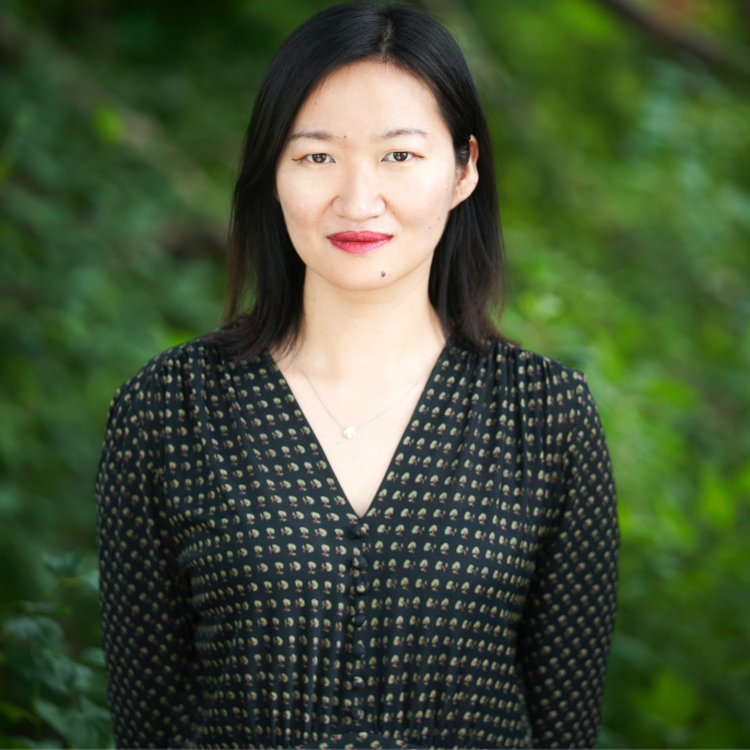
Xi Feng is a Chinese-Canadian film editor based in Montreal. Having lived in China, Canada and France, she has cultivated a unique blend of cultural and artistic sensitivity. Feng has worked as an assistant editor and editor on several award winning documentaries, including CHINA HEAVYWEIGHT, which premiered at the 2012 Sundance Film Festival; and the CRYSTAL BEAR winning short film CLEBS, premiered at the 2020 Berlinale Generation 14 plus section. She’s also an editor alumna of CFC 2019 and Berlinale Talents 2020.
Through hard work and determination, Editor Jenypher Fisher has developed a unique style, rivalled only by a keen sense of story and humour. Born and raised in Vancouver, British Columbia, for the past 20 years Jenypher has been responsible for crafting a wide assortment of Canada’s unscripted series. Projects include PAMELA’S GARDEN OF EDEN, THE NATURE OF THINGS, RUST VALLEY RESTORERS, ICE PILOTS, THE BACHELOR CANADA, ER: LIFE & DEATH AT VGH, PARAMEDICS: LIFE ON THE LINE, JADE FEVER, WILD BEAR RESCUE, THIS IS HIGH SCHOOL, QUEEN OF THE OIL PATCH, YUKON GOLD & EXPECTING!

Carole Larsen is an award-winning documentary editor based in Toronto. Her work has a focus on our relationship with animals and the environment, from intimate portraits to broad-ranging discussions of our impact on the planet. Carole’s film and television work has been featured across Canada and around the world.
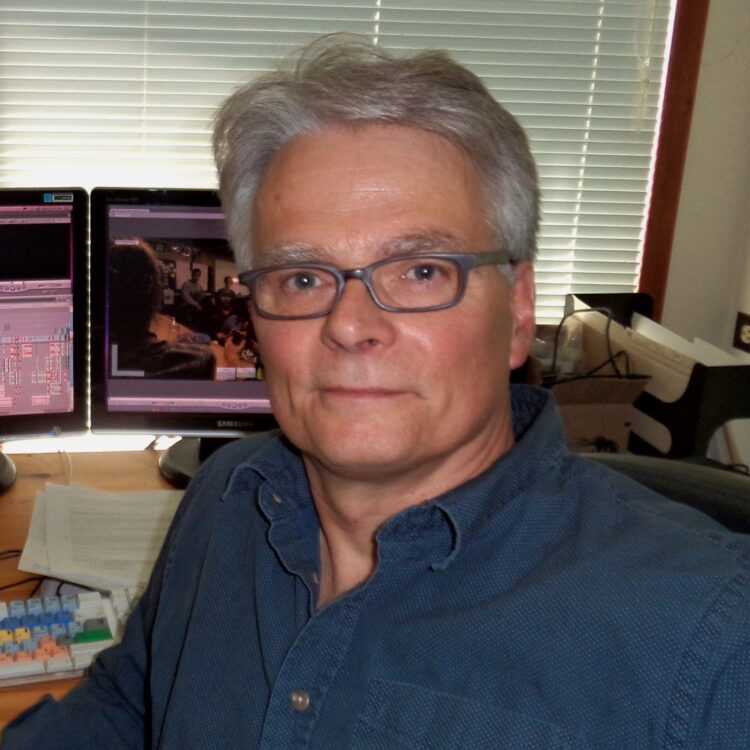
Mike has edited several award-winning feature documentaries, including STORIES WE TELL, for director Sarah Polley and THIS IS NOT A MOVIE for director Yung Chang. Most recently he completed TO KILL A TIGER for Nisha Pahuja, winner of the TIFF 2022 best Canadian feature award. Films that he has edited have played at Cannes, Berlin, Venice, Telluride and Sundance, among other festivals, with 13 features accepted into TIFF. Sarah Polley’s STORIES WE TELL was short listed for the documentary Oscar as well as being voted in a TIFF poll as one of the 10 best Canadian films of all time.

Lindsay Ragone is a Toronto-based editor with over 20 years of experience. She’s been nominated twice at the Canadian Screen Awards for her work on CANADA’S DRAG RACE and was an Emmy-nominee for the Scripted/Reality hybrid series THE QUEST on Disney Plus. Other recent credits include BLOWN AWAY for Netflix and ALL-ROUND CHAMPION for BYU.

Eui Yong Zong is a Toronto-based editor whose credits include: OVER TIME, HACK YOUR AGE, I HOLD THE DECHO IN MY HEART, PROMISE ME, MERB’YS, SPIRIT TO SOAR, LIDO TV, and ONE OF OURS which won a Jury Prize for Best Canadian Feature at Hotdocs Film Festival in 2021 and a Canadian Cinema Editor Award (CCE) for Best Editing in a Feature Documentary. He’s recently completed a feature documentary CHOSEN, which premiered in JeonJu Intl Film Festival in South Korea. Yong holds a BA in Middle Eastern Studies from University of Toronto, and a MFA in Film Production at York University.

À propos de l'événement

avril 2023

13-15h30 HAE

virtuel

fr_CAFR

stay connected

Subscribe to our mailing list to
receive updates, news and offers

Aller au contenu