

Meilleur montage : fiction
Bête noire « Épisode 2 »
FAITS DIVERS – SAISON 4 « Épisode 31 – Les heures avant la grande découverte »
Les Mecs « Épisode 9 »
M’entends-tu ? – saison finale « Épisode 10 »
Meilleur montage : affaires publiques, documentaire – émission
Mon Oncle Patof

Allan Cordero & Mike Goodings – HERO ELEMENTARY – EP. 1116A: BUGGING OUT
Dan Lee, Stephanie Duncan, CCE, Jason Cohen & Doug Appeldoorn – OLLIE’S PACK
Orion McCaw – CARMEN SANDIEGO SEASON 3: THE LUCHADORA TANGO CAPER
Paul Hunter & Merissa Tse – NATURE CAT: TALLY HO, A VOLCANO!/NO REST FOR THE SQUEAKY
Sponsored by/Commandité par: Annex Pro/AVID
Dan Hawkes – FEAR OF DANCING
Eugene Weis – HOWIE MANDEL, BUT ENOUGH ABOUT ME
Kyle Gregory Sanderson – RUNNING WILD: THE CATS OF CORNWALL
Michael Brockington, Caroline Christie, CCE & Astrid Schau-Larsen – FIRST WE EAT
Sponsored by/Commandité par: REDLAB
Andrea Beça – SOLIDARITY FILM CAMP
Hart Snider & Jason Schneider – MARTHA
Kyle Gregory Sanderson – PASS THE SALT
Rachel Guergis – THE PILGRIMAGE
Sponsored by/Commandité par: Boris FX
Carole Larsen – REBELLION
Ian Daly, Thomas Lieu, Steven Budd & Christina To – WHILE THE REST OF US DIE: COLLAPSE
Rob Chandler, BFE – BANGED UP ABROAD: POP STAR SMUGGLER
Robert Kew – STILL STANDING: RANKIN INLET, NUNAVUT
Sponsored by/Commandité par: IATSE local 891
Amélie Labrèche – NADIA, BUTTERFLY
Andres Landau – AKILLA’S ESCAPE
Matthew Hannam, CCE – THE NEST
Matthew Hannam, CCE – POSSESSOR
Sponsored by/Commandité par: Blackmagic Design
Andrew Gurney – ALL-ROUND CHAMPION: EP. 206 – SNOWBOARDING
Lindsay Ragone – ALL-ROUND CHAMPION: EP. 107 – BMX RACING
Michael Tersigni, CCE – HOME TOWN: FROM LOS ANGELES TO LAUREL
Wesley Finucan, Baun Mah & Peter Topalovic – GREAT CHOCOLATE SHOWDOWN: EP. 101 – THE WORLD NEEDS S’MORE PEOPLE LIKE YOU
Sponsored by/Commandité par: Bell Media
Courtney Goldman – GHOSTWRITER: CASE OF THE MISSING GHOST – PART 2
Courtney Goldman & Nathan Martinak – ENDLINGS: THE END IS THE BEGINNING – PART 2
Gordon Rempel, CCE – UPSIDE-DOWN MAGIC
Justin Li – THE ASTRONAUTS
Sponsored by/Commandité par: MELS
Diane Brunjes – THE CLARK SISTERS: FIRST LADIES OF GOSPEL
James Patrick – CHRIS WATTS: CONFESSIONS OF A KILLER
Lisa Binkley, CCE – ZOMBIES 2
Sandy Pereira – CARDINAL: SCOTT
Sponsored by/Commandité par: APM Music
Ben Lee Allan – TIGRESS
Lucius Dechausay – A REVOLUTION OF LOVE
Rick Bartram – LOLA’S WAKE
Yvann Thibaudeau – OUROBOROS
Sponsored by/Commandité par: Vanguarde Artists
Caroline Christie, CCE – JANN: EP. 202
Isabelle Malenfant, CCE – EN TOUT CAS: EP. 27
Kyle Martin, CCE – LETTERKENNY
Trevor Ambrose, CCE – SCHITT’S CREEK: EP. 614 HAPPY ENDING
Sponsored by/Commandité par: SIM
Aaron Marshall, CCE – VIKINGS: EP. 610
David B. Thompson, CCE – FORTUNATE SON: EP. 108
Eric Genois – FAITS DIVERS: EP. 32
Jay Prychidny, CCE – SNOWPIERCER: EP. 101: FIRST, THE WEATHER CHANGED
Jay Prychidny, CCE & Liyana Mansor – THE ALIENIST: EP. 204: ANGEL OF DARKNESS: GILDED CAGE
Sponsored by/Commandité par: Company 3
Alvin Campana – FOR THE RECORD: THE BROKEN HEARTS TOUR
Jon Anctil – 50 STATES OF FRIGHT: RED RUM (COLORADO) – PART 1
Justin Li – 50 STATES OF FRIGHT: ALMOST THERE (IOWA) – PART 3
Sabrina Pitre – 50 STATES OF FRIGHT: STEPS TO HELL (WASHINGTON) – PART 2
Sponsored by/Commandité par: Take 5 Productions
Calum Hotchkiss – CONTINUUM (University of Windsor)
Josh Wood – DOWN DELORO RIVER (Sheridan College)
Lexy Troth – ANAMNESIS (Sheridan College)
Nicolas Orska – MARIONETTES (Emily Carr University)
Sponsored by/Commandité par: Insight Productions
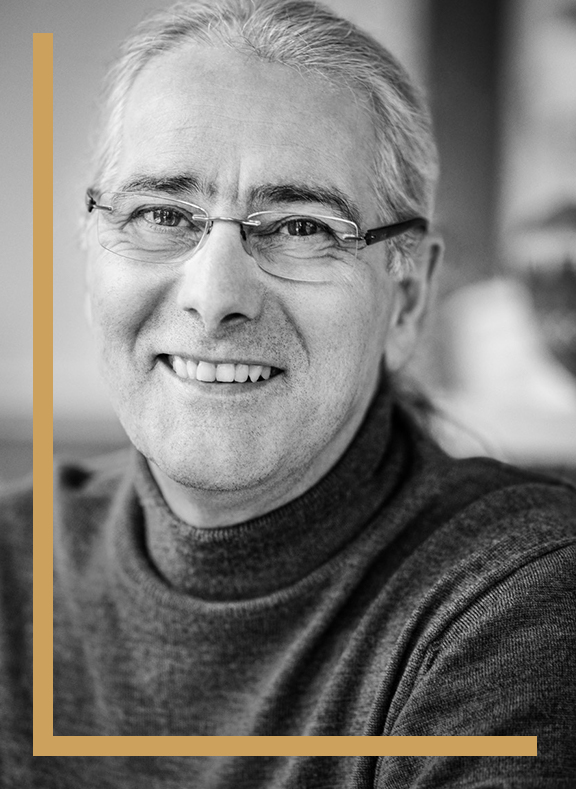
Michel Arcand’s career as an editor has spanned more than 40 years, earning him a unique place in the Canadian cinema community amongst the artists and professionals whose careers he has watched emerge and mature.
He has even guided—and continues to guide—some of our greatest filmmakers: Léa Pool, Jean-Claude Lauzon, Pierre Falardeau, Robert Ménard, Charles Binamé, Chloé Robichaud, and Sébastien Pilote, to name but a few.
Michel Arcand fait partie de ce groupe de créateurs et d’artisans de haut niveau dont la réputation a traversé les frontières et son talent a été mis à contribution dans des productions internationales d’envergure. Des films comme TOMORROW NEVER DIES : JAMES BOND #18, SUNSHINE ou THE SIXTH DAY ont été vus par des centaines de milliers de spectateurs à travers le monde.
Generous with his time and wealth of experience, he is a founding member of the Comité des Treize, an independent group whose mission is to unite editors of all stripes to promote the field and restore its prestige.
Pigiste depuis toujours, il est soucieux des conditions dans lesquelles lui-même et ses pairs exercent leur métier. Cette volonté d’appuyer autrement sa collectivité l’a mené à siéger au conseil d’administration de l’Académie canadienne du cinéma. Puis de 2006 à aujourd’hui, il siège à un conseil d’administration de l’Association québécoise des techniciens de l’image et du son (AQTIS section locale 514 de IATSE).
Homme de principes, il est attaché aux valeurs collectives et à l’équité entre toutes les fonctions essentielles à la réalisation d’une œuvre. Il milite en faveur d’une organisation forte et unifiante pour les représenter et assurer l’investissement nécessaire dans le perfectionnement professionnel et la formation de la relève.
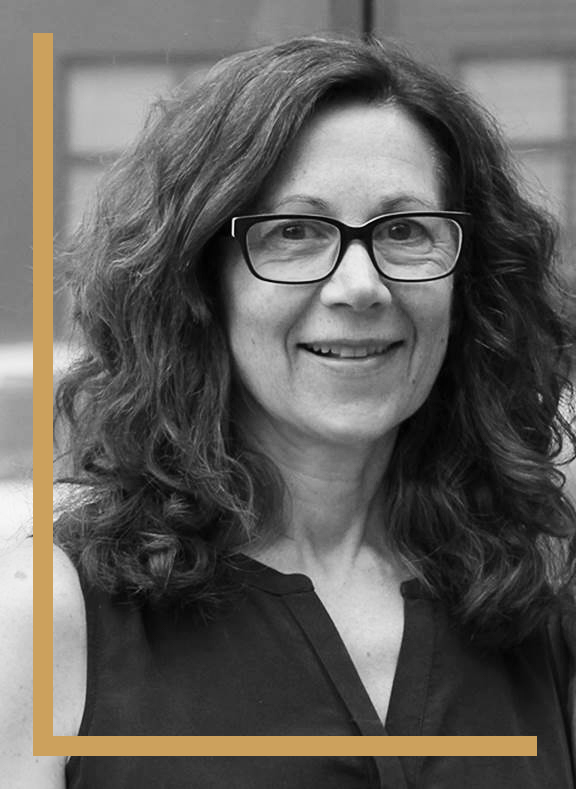
Jane Tattersall’s career in sound began during a rainstorm. A graduate of Queens University (philosophy), her first job in film was as a researcher/writer on a BBC/TVO documentary series. When the picture editor added the rumble of thunder to an otherwise merely beautiful landscape scene, it was love at first sound.
Si vous demandez à Jane ce qui a pu contribuer à son succès des 30 dernières années, elle en attribuera le mérite à la chance d’avoir été mentorée par les meilleur.e.s monteur.euse.s sonores et mixeur.euse.s du monde du cinéma. De grand.e.s réalisateur.trice.s comme Jaco van Dormael, Bill Forsyth, Deepa Mehta, David Cronenberg et Istvan Szabo ont contribué à son éducation.
Jane built relationships with Canadian filmmakers like Clement Virgo, Sarah Polley, Richie Mehta, and Mike McGowan. Jane’s passion for sound excellence and hard work helped this next generation of filmmakers take the stage at the Oscars, at Cannes, in Toronto and at film festivals around the world.
Jane’s work has taken her to studios beyond Canada, including stints in Berlin, Brussels, Budapest, London, LA, Skywalker, and New York. Numerous credits, nominations and awards followed and today Jane counts over 170 credits (film and television), and over 100 nominations and awards. Jane’s recent sound supervising includes THE HANDMAID’S TALE, THE NORTH WATER and 13 MINUTES.

Michel Arcand’s career as an editor has spanned more than 40 years, earning him a unique place in the Canadian cinema community amongst the artists and professionals whose careers he has watched emerge and mature.
He has even guided—and continues to guide—some of our greatest filmmakers: Léa Pool, Jean-Claude Lauzon, Pierre Falardeau, Robert Ménard, Charles Binamé, Chloé Robichaud, and Sébastien Pilote, to name but a few.
Michel Arcand fait partie de ce groupe de créateurs et d’artisans de haut niveau dont la réputation a traversé les frontières et son talent a été mis à contribution dans des productions internationales d’envergure. Des films comme TOMORROW NEVER DIES : JAMES BOND #18, SUNSHINE ou THE SIXTH DAY ont été vus par des centaines de milliers de spectateurs à travers le monde.
Generous with his time and wealth of experience, he is a founding member of the Comité des Treize, an independent group whose mission is to unite editors of all stripes to promote the field and restore its prestige.
Pigiste depuis toujours, il est soucieux des conditions dans lesquelles lui-même et ses pairs exercent leur métier. Cette volonté d’appuyer autrement sa collectivité l’a mené à siéger au conseil d’administration de l’Académie canadienne du cinéma. Puis de 2006 à aujourd’hui, il siège à un conseil d’administration de l’Association québécoise des techniciens de l’image et du son (AQTIS section locale 514 de IATSE).
Homme de principes, il est attaché aux valeurs collectives et à l’équité entre toutes les fonctions essentielles à la réalisation d’une œuvre. Il milite en faveur d’une organisation forte et unifiante pour les représenter et assurer l’investissement nécessaire dans le perfectionnement professionnel et la formation de la relève.

Jane Tattersall’s career in sound began during a rainstorm. A graduate of Queens University (philosophy), her first job in film was as a researcher/writer on a BBC/TVO documentary series. When the picture editor added the rumble of thunder to an otherwise merely beautiful landscape scene, it was love at first sound.
Si vous demandez à Jane ce qui a pu contribuer à son succès des 30 dernières années, elle en attribuera le mérite à la chance d’avoir été mentorée par les meilleur.e.s monteur.euse.s sonores et mixeur.euse.s du monde du cinéma. De grand.e.s réalisateur.trice.s comme Jaco van Dormael, Bill Forsyth, Deepa Mehta, David Cronenberg et Istvan Szabo ont contribué à son éducation.
Jane built relationships with Canadian filmmakers like Clement Virgo, Sarah Polley, Richie Mehta, and Mike McGowan. Jane’s passion for sound excellence and hard work helped this next generation of filmmakers take the stage at the Oscars, at Cannes, in Toronto and at film festivals around the world.
Jane’s work has taken her to studios beyond Canada, including stints in Berlin, Brussels, Budapest, London, LA, Skywalker, and New York. Numerous credits, nominations and awards followed and today Jane counts over 170 credits (film and television), and over 100 nominations and awards. Jane’s recent sound supervising includes THE HANDMAID’S TALE, THE NORTH WATER and 13 MINUTES.
 Richard Crouse est le critique de cinéma régulier sur les chaînes d’information en continu CTV News Channel et CP24. Il est fréquemment invité à de nombreuses émissions de radio et de télévision au Canada. Son émission de radio entendue partout au pays le samedi après-midi, THE RICHARD CROUSE SHOW, est diffusée à partir de la chaîne News Talk 1010 à Toronto. Il est aussi l’auteur de dix ouvrages sur l’histoire de la culture populaire, notamment de "Who Wrote the Book of Love," du best-seller "The 100 Best Movies You've Never Seen," sa suite intitulée "The Son of the 100 Best Movies You've Never Seen," le succès de librairie "Raising Hell: Ken Russell and the Unmasking of The Devils" et de l’essai "Elvis is King: Costello's My Aim is True." Il écrit aussi sur la culture populaire et les automobiles pour le Toronto Star.

2 X 1 ABONNEMENT D'UN AN À LA SUITE ADOBE CREATIVE CLOUD

1 CLAVIER DE MONTAGE BLACKMAGIC DESIGN
Kyle Gregory Sanderson
1 LICENCE DE DAVINCI RESOLVE STUDIO
Rick Bartram

3 X 1 ABONNEMENT D’UN AN À LA SUITE BORIS FX
Gordon Rempel,CCE | Sabrina Pitre | Chen Sing Yap

2 X 1 ABONNEMENT D'UN AN AU CCE
Denise Lee | Joan Hutton














Comité des prix CCE :
Comité des communications du CCE :
Responsable des opérations du CCE :
Spécialiste des communications du CCE :
Conception et réalisation du site web du CCE :

The CCE is thrilled to announce the recipient of the Lifetime Achievement Award for 2021 — Michel Arcand, CCE. For over 40 years, Michel’s work has elevated the craft of picture editing within Canada and beyond. His continued contributions to the editing community as a mentor and fierce advocate for editors have been immeasurable. The CCE will proudly present this honour to Michel virtually at the 11th Annual CCE Awards on June 3rd, 2021.
Michel Arcand’s career as an editor has spanned more than 40 years, earning him a unique place in the Canadian cinema community amongst the artists and professionals whose careers he has watched emerge and mature.
He has even guided—and continues to guide—some of our greatest filmmakers: Léa Pool, Jean-Claude Lauzon, Pierre Falardeau, Robert Ménard, Charles Binamé, Chloé Robichaud, and Sébastien Pilote, to name but a few.
Michel Arcand fait partie de ce groupe de créateurs et d’artisans de haut niveau dont la réputation a traversé les frontières et son talent a été mis à contribution dans des productions internationales d’envergure. Des films comme TOMORROW NEVER DIES : JAMES BOND #18, SUNSHINE ou THE SIXTH DAY ont été vus par des centaines de milliers de spectateurs à travers le monde.
Generous with his time and wealth of experience, he is a founding member of the Comité des Treize, an independent group whose mission is to unite editors of all stripes to promote the field and restore its prestige.
Pigiste depuis toujours, il est soucieux des conditions dans lesquelles lui-même et ses pairs exercent leur métier. Cette volonté d’appuyer autrement sa collectivité l’a mené à siéger au conseil d’administration de l’Académie canadienne du cinéma. Puis de 2006 à aujourd’hui, il siège à un conseil d’administration de l’Association québécoise des techniciens de l’image et du son (AQTIS section locale 514 de IATSE).
Homme de principes, il est attaché aux valeurs collectives et à l’équité entre toutes les fonctions essentielles à la réalisation d’une œuvre. Il milite en faveur d’une organisation forte et unifiante pour les représenter et assurer l’investissement nécessaire dans le perfectionnement professionnel et la formation de la relève.
The CCE is delighted to announce the recipient of the Career Achievement Award for 2021 — Jane Tattersall. This award is presented to a non-editor who has shown great support for Canadian editors and the editorial profession over the course of their career. Jane has been a fixture in the Canadian post-production industry for over 30 years. Her enormous support for Canadian filmmakers, from our most recognized artists to first-time storytellers, has fostered incredible growth of talent across our industry. The CCE will proudly present this honour to Jane virtually at the 11th Annual CCE Awards on June 3rd, 2021.
Jane Tattersall’s career in sound began during a rainstorm. A graduate of Queen’s University (philosophy), her first job in film was as a researcher/writer on a BBC/TVO documentary series. When the picture editor added the rumble of thunder to an otherwise merely beautiful landscape scene, it was love at first sound.
Si vous demandez à Jane ce qui a pu contribuer à son succès des 30 dernières années, elle en attribuera le mérite à la chance d’avoir été mentorée par les meilleur.e.s monteur.euse.s sonores et mixeur.euse.s du monde du cinéma. De grand.e.s réalisateur.trice.s comme Jaco van Dormael, Bill Forsyth, Deepa Mehta, David Cronenberg et Istvan Szabo ont contribué à son éducation.
Jane built relationships with Canadian filmmakers like Clement Virgo, Sarah Polley, Richie Mehta, and Mike McGowan. Jane’s passion for sound excellence and hard work helped this next generation of filmmakers take the stage at the Oscars, at Cannes, in Toronto and at film festivals around the world.
Jane’s work has taken her to studios beyond Canada, including stints in Berlin, Brussels, Budapest, London, LA, Skywalker, and New York. Numerous credits, nominations and awards followed and today Jane counts over 170 credits (film and television), and over 100 nominations and awards. Jane’s recent sound supervising includes THE HANDMAID’S TALE, THE NORTH WATER and 13 MINUTES.


Presented in English / Conférence en anglais
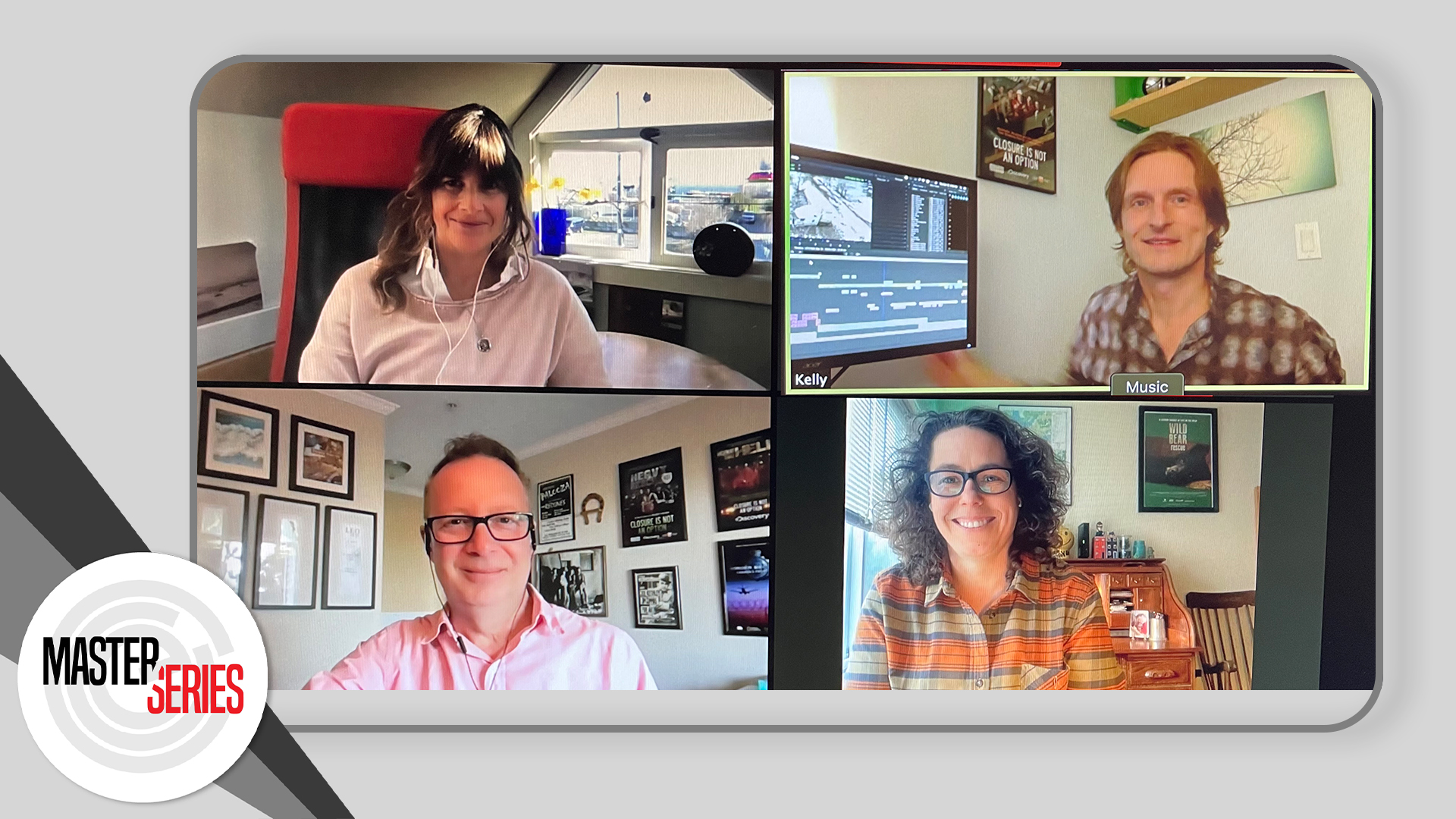
Join us on March 16th for In Conversation with Jenypher Fisher, CCE, Kelly Morris, CCE and Tim Wanlin, CCE. Veteran unscripted Vancouver editors Jenypher Fisher CCE, (RUST VALLEY RESTORERS) Kelly Morris CCE (HIGHWAY THRU HELL) and Tim Wanlin CCE (HEAVY RESCUE: 401) discuss their vast knowledge on crafting factual storytelling; the importance of finding the story’s truth, it’s language, and the importance of a strong, pivotal opening that will begin the audience’s emotional journey.
L’événement sera modéré par la créatrice, productrice, réalisatrice et scénariste Kelly McClughan.
La biographie suivante est uniquement rédigée dans la langue de présentation.
 A passion for factual story-telling and exploration has led me to some of the most remote and intriguing places on earth. I care about getting it right, thrive in challenging environments, and have successfully filmed in traditionally difficult to access communities. As a showrunner, producer, director and writer, I’ve created thousands of hours of factual television for Canadian, US and international markets, and am frequently consulted to help develop, shape and pitch TV projects. An extensive background in journalism has equipped me to apply my skills across multiple genres. As VP Production for Canadian factual producer Great Pacific Media from 2014-2019, I was involved in all aspects of pre-production, production and post, including hands-on story crafting, content oversight and development.
 Through hard work and determination, Editor Jenypher Fisher has developed a unique style, rivalled only by her keen sense of story and humour. Born and raised in Vancouver, British Columbia, for the past 20 years Jenypher has been responsible for crafting a wide and varied array of Canada’s unscripted series. Projects include RUST VALLEY RESTORERS, WILD BEAR RESCUE, ICE PILOTS, THE BACHELOR CANADA, JADE FEVER, YUKON GOLD, THIS IS HIGH SCHOOL, QUEEN OF THE OIL PATCH, THE NATURE OF THINGS, ER: LIFE & DEATH AT VGH, PARAMEDICS: LIFE ON THE LINE & EXPECTING!
 Kelly Morris CCE, is a Vancouver Based film and television editor and former president of the Canadian Cinema Editors, best known for his body of work in documentary and as senior editor for factual series. He has a passion for feature length film, investigative journalism and gritty reality. Series of note that he has worked on include Discovery Channel’s HIGHWAY THRU HELL, JADE FEVER and JETSTREAM, CBC’s HIGH ARCTIC HAULERS and investigative journalism series THE FIFTH ESTATE, natural history series BBC NATURAL WORLDLAND NAT GEO WILD, in addition to a wide breadth of documentary films, the most recent being Citizen Bio for Showtime. Shows he has worked on have received accolades including winner of the duPont-Columbia University Award for Broadcast Journalism (NUCLEAR JIHAD), a Sundance Grand Jury Prize Nomination (SEX: THE ANNABEL CHONG STORY), Gemini (THE FIFTH ESTATE) and CCE (A WOLD CALLED STORM) award nominations for Best Picture Editing.
 Tim Wanlin is based in Vancouver where he has been editing for the last thirty years. During that time his focus has been to seek out projects that allow him to draw out the strongest story, both visually and narratively. He has amassed over seventy documentary credits. Highlights include CTV’s Gemini Award winning, PEACE WARRIOR, WHEN THE DEVIL KNOCKS, which premiered in the 2010 Vancouver Film Festival and CBC’s Canadian Screen Award winning, WILD CANADIAN YEAR. More recently, while continuing to follow his passion for documentaries, Tim is busy with unscripted series work including BORDER SECURITY, JADE FEVER and his current project, HEAVY RESCUE: 401.


“Smart, confident and cleverly balanced”
#RTSAwards
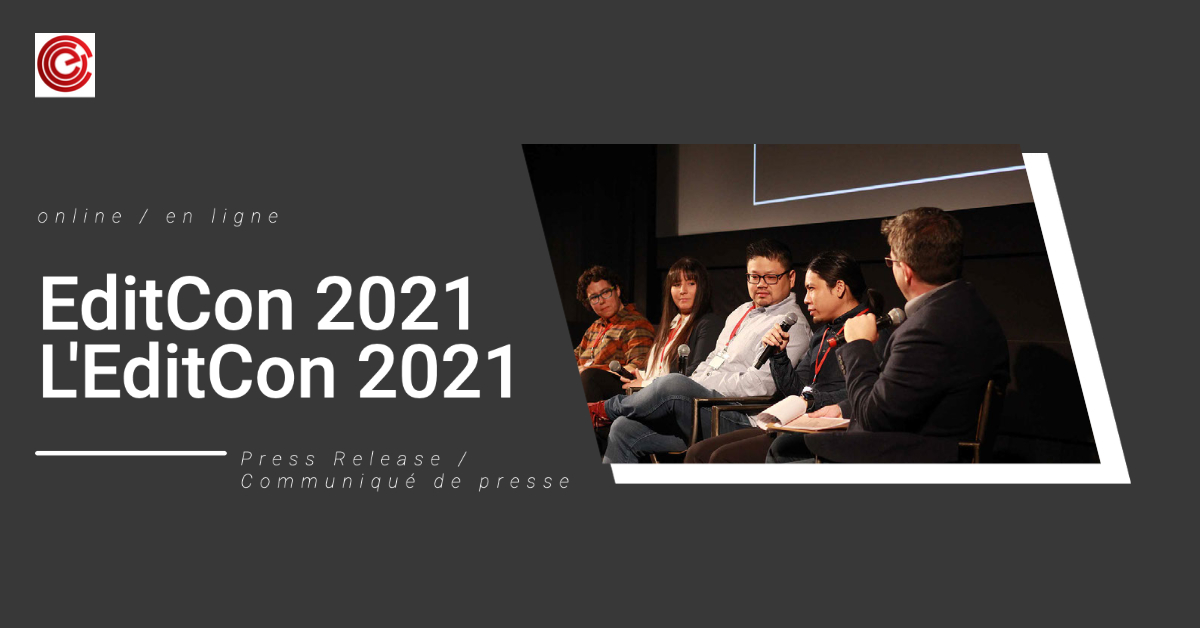
Les Monteurs et Monteuses de cinéma canadien sont heureux.euses de présenter l’EDITCON 2021, la quatrième conférence annuelle sur l’art du montage, qui se tiendra en ligne les samedi et dimanche 20 et 21 février 2021.
L’EDITCON 2021 aborde cette année le thème Un monde — et une industrie — en mutation.
Cette année, nous avons connu des changements sans précédent. La COVID-19 a eu des impacts sur tous les aspects de nos vies et le mouvement Black Lives Matter a porté la question de la justice raciale sur la scène internationale. Notre industrie prend conscience qu’elle doit se faire plus équitable et plus inclusive, tant devant que derrière la caméra. La façon de raconter les histoires change, et la diffusion change également. Avec la fermeture des salles de cinéma et les festivals en ligne, les cinéphiles n’ont d’autre choix que de se tourner vers les plateformes de visionnement en ligne pour assouvir leur passion.
En tant que monteurs et monteuses, nos vies professionnelles ont subi les contrecoups de ces changements. Nous travaillons davantage depuis la maison ou de façon plus isolée que jamais. Dans un avenir où les films passeront peut-être directement à la diffusion en ligne sans s’arrêter dans les salles de cinéma, est-ce que les budgets en seront affectés? Est-ce que le travail à distance a une influence sur le processus créatif et technique et est-ce que notre façon de travailler en sera changée, même après la pandémie? Comment pouvons-nous rendre la postproduction équitable? L’EditCon 2021 offrira un espace où nous pourrons retisser des liens et explorer les changements qu’ont connus nos vies professionnelles et notre industrie.
En partenariat avec Nordest Studio et leur nouvelle plateforme Neme.TV, nous allons créer une expérience de conférence unique et interactive. En plus de fantastiques tables rondes avec des invité.e.s tant canadien.ne.s qu’internationaux.ales, nous organiserons des discussions plus intimes, des sortes de tables rondes réduites avec des auditoires restreints pour permettre des discussions plus intimes et pouvoir poser des questions à des experts de l’industrie, notamment lors de démonstrations technologiques. Au-delà des zooms, nous voulons mettre à profit les nouvelles technologies afin de créer des expériences de réseautage uniques. Il y aura des jeux, des tirages et plus encore pour que cet événement ne soit pas un webinaire comme les autres.
Les billets seront en vente à partir du 1er janvier 2021. Les panélistes et les invité.e.s seront annoncé.e.s sous peu!
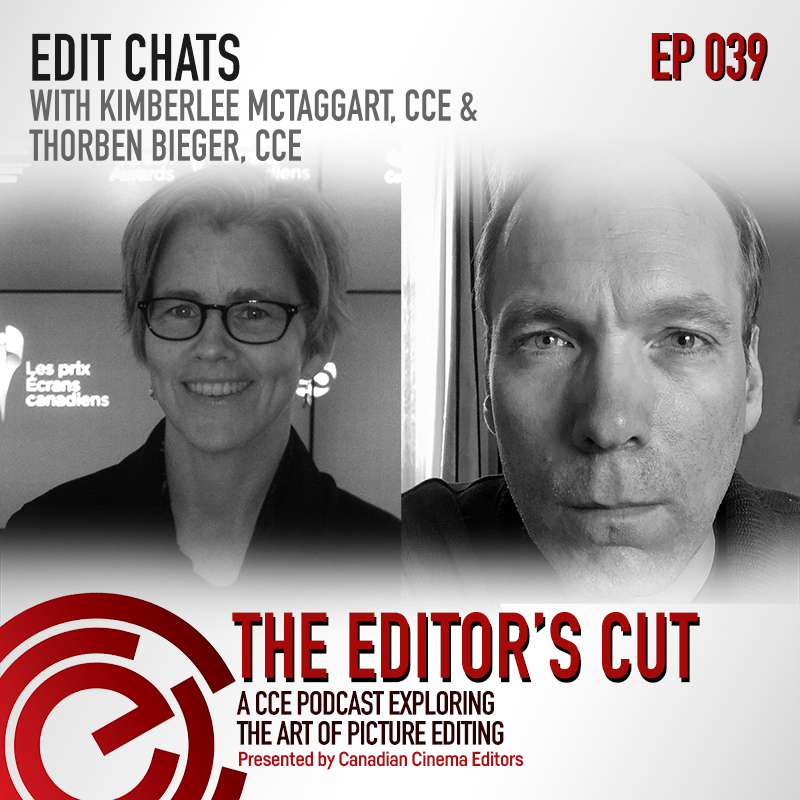

Thorben is a CSA nominated editor who has edited several series and a number of features including The Child Remains, Heartbeat et All the Wrong Reasons.
Kimberlee is a Gemini award winning editor of TV series, docs, and feature films such as Blackbird and the upcoming Little Orphans. Kimberlee et Thorben have worked together on several series such as Call Me Fitz, Pure et Diggstown. They discuss their work, and what it’s like to carve out a successful editing career while working and living in Nova Scotia.
This event was moderated by Amanda Mitro.
The Editor’s Cut – Episode 039 – Edit Chats with Kimberlee Mctaggart, CCE &Thorben Bieger, CCE
Speaker 1:
This episode was sponsored by Filet Production Services and Annex Pro Avid.
Sarah Taylor:
Hello and welcome to The Editor’s Cut. I’m your host, Sarah Taylor. We would like to point out that the lands on which we have created this podcast and that many of you may be listening to us from part of ancestral territory. It is important for all of us to deeply acknowledge that we are on ancestral territory that as long served as a place where indigenous peoples have lived, met, and interacted. We honour respect and recognize these nations that have never relinquished their rights or sovereign authority over the lands and waters on which we stand today. We encourage you to reflect on the history of the land, the rich culture, the many contributions, and the concerns that impact indigenous individuals and communities. Land acknowledgements are the start to a deeper action.
Sarah Taylor:
Today’s episode is the online master series that took place on May 19th, 2020. Edit chats with Kimberlee McTaggart, CCE and Thorben Bieger, CCE. Thorben is a CSA nominee editor who has worked on several series, and a number of feature films, including The Child Remains, Heartbeat and All the Wrong reasons. Kimberlee is Gemini award-winning editor of TV series, docs and feature films such as Blackbird and the upcoming Little Orphans. Kimberlee and Thorben have worked together on several series, such as Call Me Fitz, Pure and Diggstown. They discuss their work and what it’s like to carve out a successful editing career, while working and living in Nova Scotia. This event was moderated by Amanda Mitro.
[show open]
Amanda Mitro:
Welcome everybody to the masters series from Halifax, out in Nova Scotia here. I’m joined by Kimberlee McTaggart and Thorben Bieger. Thank you to the CCE for having us. And I guess should open up with introductions. Who wants to go first?
Kim McTaggart:
Thorben does.
Thorben Bieger:
Well, yes, this is exciting to be here. Anyway, my name is Thorben. I’m a picture editor. I live in Hubbard, Nova Scotia, and I have been working in the film and television business in one way or another for, I guess, almost 20 years now and editing for, I guess, the better part of 12 or 14 years. I’ve stopped counting anyway. I’m looking forward to having an interesting conversation about editing and related topics tonight.
Kim McTaggart:
I’m Kim McTaggart. I’ve been editing for over 30 years now. Pretty much all those years in Halifax. The other day I added up how much I worked on different shows in Newfoundland, about a year and a half. So we’ll throw that in there too. I was one of those kids who loved television and knew from, I think the time I was in grade seven, that this is what I was going to do, was make TV shows. I went to film school at York University back in the ’80s when it was all film, there was no digital. I’m aging myself there. It was just shortly before digital started to come in. It was all on Steenbeck’s and Moviola’s and benches, and the first two or three of my career was all on Steenbecks and benches, actually probably the first six years.
Kim McTaggart:
Then we moved into digital and yeah, do I miss it? No. Digital has been the best thing ever. Yeah, so I’ve been working on in Halifax the whole time, did a lot with the National Film Board in the beginning, so a lot of documentary, but then I moved into drama, a lot of comedy actually, and I still do the odd documentary, corporate videos for the liquor store. That’s the thing about the East Coast editing, you do it all. But mostly these days I do television series and mostly with Thorben.
Thorben Bieger:
Yeah, we’ve worked a lot together over the years. I guess I can add a little bit to my bio in parallel to what Kim was saying. I barely registered the existence of the film industry in Canada or film industry at all. Even though I liked watching movies when I was young, I went to university and studied sciences and worked in environmental sciences for six or seven years. Then somewhere along the way, it was a great gig, but there was something else out there for me. And once, eventually I guess my sister married a film producer and that gave me, opened my eyes to that being a possibility. My music recording was particularly of interest to me before that.
Thorben Bieger:
That was really my way into post production in recording and mixing music, a lot of similarities. With a couple of nepotistic breaks, I guess it was back in 1999, I took a leave of absence from my real job and came to Halifax to work as second unit boom operator on Lexx. That has happened to a lot of people on that show and that led to opportunities, battlefield promotions. And within a short time, I was doing recording sound on commonly called the second main unit.
We would have five page scenes with all the stars on second unit just to [inaudible 00:04:58]. From there, I had some chances to work in post-production on the next season and I’m still on it 20 years later. So I guess I’m not going back.
Amanda Mitro:
Cool.
Kim McTaggart:
I’m just going to add a little to that story. In post, I don’t know if other people have experienced this, but whenever the producer has a cousin or brother or brother-in-law and they’re going to put him somewhere in a department, they stick them in posts, because they think they can do the least damage. And we heard the brother-in-law is coming, I’m like, “Oh shit,” and then it’s torment. I’m like, “Oh, okay. Sometimes it works out really well.”
Thorben Bieger:
Work out well eventually.
Amanda Mitro:
Have either of you guys worked outside of Halifax or has it just been mainly the Maritimes for both of you?
Kim McTaggart:
For me, early in my career, I did a lot of what’s called dialogue editing back when it was still on film. And you basically, you checker boarded dialogue that people are probably … Well, these are all editors checker boarding on your digital screen. It was all done live with film audio. I would take all the production sound and checker board it all on big benches that were six feet wide, and reeling and all that sort of stuff. And nobody, Atlanta Canada did that. I would go to Newfoundland to do every film there was, and that brought me over there about three or four times.
Kim McTaggart:
Then I did it in my very first comedy series, television series I ever got national show was called Gullages, that it took place in Newfoundland with a local producer Bill McGillivray. That was my big break. That was two seasons of that over there. And also in my early days doing a lot of work with the National Film Board, one of my mentors was a sound editor from, who originally started in Montreal, Les Holman. He would take me to Montreal to work on a lot of stuff, [inaudible 00:06:43] things and that sort of thing. So yeah, in the early days when I was doing sound, I was traveling all over. But since then, it’s pretty much been confined to my basement.
Thorben Bieger:
Yeah. That’s much the same for me. I’ve worked in Newfoundland a tiny bit. I worked on The Gavin Crawford Show in Toronto, I don’t know, 2003 or four or something like that for a few months, but for the rest of it, I believe almost everything that I’ve done has been in Halifax. And as Kim just mentioned also, for the last years I don’t know, six, seven years or more, almost everything I’ve done has been from my home office, and from my basement.
Amanda Mitro:
Did you find it different working, I guess in Toronto versus how you typically work out here?
Thorben Bieger:
Well, there’s a reason, I guess why most of my work has been here. I like it here. There was a time when, of course, most people remember that post production was done in post facilities, still commonly is, but it was not really possible to do it anywhere else. There was a time when it was a fantasy to be able to have the equipment at home and very suddenly that became pretty straight forward. It’s always been, that’s always been the direction that I wanted to move in any way, rather than going to where the work is. It was exciting to work in Toronto for a while.
Thorben Bieger:
It was a break to work at the time I was working with Dean [inaudible 00:08:07], who was the editor, and he brought me along to work on the show and I lived in the edit suite. I’d gone in the Wellesley on the fifth floor of that building that some people might recognize in St. Nicholas.
Amanda Mitro:
So the both of you, I guess, have experienced the digital revolution in post-production, and maybe you guys can speak a bit to how things changed from working on like those big, massive machines to computers that you can fit in your pocket almost.
Thorben Bieger:
Well, I’ll let Kim take that one because I came in and I started working on Avid, so I’ve seen the hardware, but I’ve never, never had the chance to work with it.
Kim McTaggart:
Yeah. Part of the reason I ended up staying here, not doing anything to further field is when digital did come in, I invested in the equipment and I would rent out the equipment. It was an older system back then called Media 100, which actually had a far superior picture, finishing picture. So we would, was doing a lot of online, more so than off-lines. But I ended up, I think I had four systems at one point, so they were rented out to various series and that kept me hopping. And then I’d be off cutting on other shows, usually on an AVID, which I really wanted to own. But then eventually I did buy a used one and then upgraded it to the top of the line model.
Kim McTaggart:
I remember that cost me $110,000. It was like, the whole system was probably about $120,000, but the thing is you would rent it and get lots of money for it. So it all worked out in the end. In fact, it was great. Yeah, I went right from when everything was outboard, you needed all this other stuff to make it work. I couldn’t work at home. I needed my office, and all of that, but as computers became faster and faster, you didn’t need that outboard stuff. The computer did all the work and now it’s like, what we do with a laptop is just astounding. There of course is no real rental market anymore, because everybody can own their own.
Kim McTaggart:
I’ve seen it go the whole way. I don’t know what else to say about that, except I love where we’re at with it now. It’s just, it’s the best. And I mean we’re all going to be doing so much more of it now with this COVID-19. I mean Thorben and I have been living the quarantine life for the last six or seven years, the way we work, so nothing will change for us. But I think we’re going to see more and more people working the way I do or the way we do here in Atlanta, Canada.
Amanda Mitro:
How do you think that’ll open up the possibilities for working with people further afield, like collaborations between countries and continents and just opening that whole thing up?
Thorben Bieger:
I think it will. Some producers that I’ve worked with are made it part of their style to, or just experience with working remotely and with putting together teams that are geographically distant, and others not so much. I guess it’s just what their experience is. I’ve worked on teams where there was an editor in Nova Scotia and one in Toronto and one in Los Angeles. This was just, they were quite familiar with that process and it was seamless. Other people don’t, other producers who hadn’t done that just might be more familiar with just centralizing things.
Thorben Bieger:
And apart from the fact that we’re going to be coming up with new guidelines and that kind of thing for social distancing and for hygienic productions, it’ll be easy to implement that in post.
Kim McTaggart:
Yeah. We’ve already implemented, I think and internationally, I think people work that way. Like everybody in Toronto all works a certain way. Everybody’s together in their place and all that. It’s going to be new and exciting them, and maybe it will open up their possibilities, but there’s still, as we were talking about tax credits and provincial borders, which will still make it difficult for us to get hired in Ontario and vice versa and all of that. But still it makes it more possible, so you never know. Should we show, clip and talk about editing?
Amanda Mitro:
Quick question before we go to video, Jeffrey Fish wants to know, do you think that software platforms like Premier Pro, pushing for a shared project platform will create more possibilities for non-centralized post team workflows, or is there still a great benefit to post teams being together?
Kim McTaggart:
Well, I mean, Avid already has, can already do sharing. Jeff, have you ever been in CBC? It’s all network sharing, all that sort of stuff. It’s all there. I think people will get a taste of it now, because they’re really utilizing it extensively. I think those systems were more for sharing within the one building, like is how it’s really been used. And now people are taking their systems homes, because they have to, and they’re sharing it that way. So, yeah. Is there a benefit to everybody being in the same building versus that? We’ll find out. For producers or for a lot of folks, it’ll be financial what works out best but creatively, what works out best?
Kim McTaggart:
I mean we’ve been doing this for six or seven years, but I think back to the last project we did where we were all under the same roof on Call Me Fitz, four of us, all crammed together doing our work. There really is something to that too.
Thorben Bieger:
You really miss it when you’re gone. I think it’s a real, there is a trade-off and collaborating by notes. Well, for one, it depends on the quality of the notes. Some people are very good at giving detailed notes, but even in those cases, there’s something that’s lost when you don’t have intense hours in the same room together, which sometimes we still do. It’s not uncommon for a director or producer to come to where I live in Hubbard and spend part of a day. That’s usually as far as it goes. We might sport together for some hours on two or three consecutive days.
Thorben Bieger:
I think the driving factor; it used to be that an edit suite costs what, a couple of thousand bucks or more a week to rent and the schedule drove this style of working long hours in the same space. I miss… there are pros and cons to the way we work. It always was, so it’s fairly solitary work, but it’s become much more so now with edit suite and at home.
Kim McTaggart:
Then of course there’s a whole issue of assistant editors who used to always be around and would see your work. I know on Call Me Fitz, we’d always make our assistant editor watch the show, because she had fine impeccable taste and would give us feedback and notes, like first person who ran through. You could still get that, but you tend not to, just because they’re not there in the room with you and they’re off doing their thing. You just don’t have the same relationship and the same reciprocal learning that goes on there. I don’t want to say the editor always passing through the assistant editor. It’s really a reciprocal thing. That’s a big issue in editing is the passing on of knowledge.
Thorben Bieger:
But I do think there’s room for the software to catch up with that or to create, for it to offer some functionalities that make that more possible. We were talking Kim and I just recently in final cut, and an earlier version had this desktop theater or functionality that allowed you to, it created a video chat in which you could stream your output to another person, and that you were able to see that person’s face on their web cam. There was actually, you could see facial reactions of the person you’re working with. And as long as your internet connection was good, after a few minutes of working like that, you’d forget that you’re not in the same room, and that feature was completely dropped and no one has picked up on it in the last decade, really.
Thorben Bieger:
And it’s surprising to me that that’s not being really developed further, because it seems there are no constraints technically to making that collaboration.
Kim McTaggart:
Yeah. Built in into all the Annalise will be that function to share.
Amanda Mitro:
Okay. Cool. All right. Did we want to do a clip?
Thorben Bieger:
I guess the first one that I would maybe present is called the Corridor. I think this one is interesting to me, it’s during the best years I think that I can remember as an editor in Nova Scotia. One of the great advantages of working here for me has been the variety of things that you could work on. In the really good times there’d be a series to work on in the summer and a telephone, and like a little bit to tell its own feature to work on, which often happened in the off season and maybe some short films or little things and things, really get how all kinds of different work and a nice variety.
Thorben Bieger:
The Corridor was a feature that I, it was around 2010 or ’11 I think, a science fiction feature shot in Nova Scotia. Had a cast of, an ensemble cast of five guys. It’s cabin in the woods, science fiction kind of movie. They discover a bizarre phenomenon that starts affecting their minds. I thought it was interesting to take a look at it because for one thing, it was a fairly small budget, and another thing that I found interesting over time, it’s been in some of the low budget features, people have tried to discover ways to get more, to go further with the small budget that they have. Sometimes that involves different shooting styles, doing a lot of oner’s or not shooting regresses. You get a certain style of films from that.
Thorben Bieger:
This one was interesting to me, because with the kind of ensemble cast that they had, it wasn’t really possible to do that. They didn’t really scrimp on coverage and lots of different angles, the sizes, because with five people in the room, you had to move around, but I’ll let you be the judge of that after you’re going to look at the clip.
Amanda Mitro:
Also, clip number one.
Speaker 10:
I think it’s talking to me. That’s signing. It’s given me a sign.
Speaker 11:
It’s insane.
Speaker 10:
Connect, connect, connect.
Speaker 12:
Wait. No, did this fuck up the rest of my tapes?
Speaker 13:
Oh yeah, because that is real important right now.
Speaker 14:
What’s that supposed to mean?
Speaker 13:
Well, it means who gives a shit.
Speaker 12:
You want to smack in the mouth?
Speaker 14:
Something bigger is happening here.
Speaker 13:
No, no, you’re right. You’re right. Maybe the time has come for us to set aside all these childish things, bobcat.
Speaker 12:
Says the guy who can’t come at all.
Speaker 13:
What did you just say?
Speaker 12:
You don’t know what to do with that. Why for yours, do you, hugsy? Do you need me to knock her up for you? Your wheel spins so fast, but the rest of you is just shooting blanks.
Speaker 10:
Oh, shit.
Speaker 14:
Thanks a lot fucker.
Speaker 10:
I swear to God, I didn’t say anything.
Speaker 14:
Oh, sure. Well, I guess you’re [inaudible 00:19:41].
Speaker 10:
Look, I didn’t.
Speaker 12:
I don’t know how I knew. I thought we all know.
Speaker 14:
This is what’s happening. The corridors changing our mind.
Speaker 13:
Do you know what; you don’t even deserve a kid. You are a kid. You never got past high school football, your big bump baby.
Speaker 14:
Would you just listen to me? Look, why shouldn’t that place cross our wires like I did with the snowmobile or your cell phone? It’s opening up some sort of pathway out there, right? Well, what if it’s opening up a pathway in here too. It’s driving us out of our minds and into everyone else’s, and the one that I have to share is sick.
Thorben Bieger:
I was proud of this movie and who directed it, I think his words, I wasn’t actually at the premier, but he said on the first day when he started shooting movie, his plan was to make the best movie ever made.
And by lunchtime on the first day, he just wanted not to make the worst movie ever made, because of the number of compromises that happen every day, while you’re shooting and all the problems that you just, and the things that you have to, the ideas you have to throw away because you just can’t do this and that. But there was something, they really were kind of like a group of people …
Thorben Bieger:
The film is a cabin in the woods movie, and things very badly, but I think in a way I think they also were a little bit off in the woods and focused on something. I don’t know, I can’t tell too many stories about it because I wasn’t there, but I think some of the cast may have known each other anyway. Anyway they seem to form quite a good ensemble. And for me it was quite exciting to work on and a great team to be part of.
Amanda Mitro:
Cool. I think Jenna had a question, Jenna, I’m going to let you talk.
Jenna:
Hello. Hey, one question, you were saying about being remote editor. Right now, you guys working as a remote editor or you guys are working on projects that you already were working before this whole mess?
Thorben Bieger:
Right now I’m not working on a project at all, other than sorting through things in my office and working in my garden. There’s nothing really happening to work on in Nova Scotia right now.
Kim McTaggart:
Yeah. And I’m not working on anything either. The way the production cycles go, if we’re on a series issue in the summer, we’re usually done by February and then you wait for the cycle to begin. And now, as we know, everyone’s in a holding cycle, so not much going on yet.
Amanda Mitro:
Thank you. So maybe Thorben, you can speak a little more about what your process is for, when you’re approaching a scene or a project in general, but I know it’s sometimes easier to take it scene by scene.
Thorben Bieger:
Yeah. I’m not that methodical. Sometimes it changes. Some mornings I am or I approach things differently. Sometimes part way through, I realize that I’m making a mess. But if I… What I’ve gotten into the habit of doing, especially when I’m working, for example in a series, and there’s a lot of material to get through is on the first pass of watching dailies and starting to cut something, I no longer worry about leaving a complete mess on the timeline. Sometimes I used to have this fear that someone might see what, someone might look at my work and progress, and I think, “What is that person thinking?”
Thorben Bieger:
But now, I’ve found that if I just go through the material, and throw anything that I like on the timeline, maybe in a few places that are actual cuts or in a few places, it’s just a few different takes of the same line, my first pass sometimes is just … It’s not a cut at all. It’s just basically some selects and a few ideas. And what I found is that, when I do that, when I come back to that and just use that timeline with the selects on there as a starting point, sometimes it’s a much faster way for me to start putting something together, because of course, I’m still going to go back to the other material.
Thorben Bieger:
But those clips that I’ve pulled are more as reminders or as markers of what I was looking at or what I was thinking. And then looking at those will make me go back to other shots and say, “Well, okay, here’s how do I might do that.” It’s basically the first step is more about, becoming familiar with the material before it’s not a new cut, because I think for me, it’s a mistake to start cutting too soon to get … The temptation is to start fine cutting very quickly. And by doing this, it really is creating a step in which the very first so-called cut is really just, not even a, it’s not even a rough cut.
Thorben Bieger:
It’s just some selects. But then there are other days when I, for some reason you caught up on the wrong side of bed, start working completely differently. I’m not strict in that routine, but if I’m under had a lot of time pressure and I have to get through all this, then that’s usually the approach that I’ll take.
Amanda Mitro:
Do you find it when you find things kind of crystallize, when you start collaborating, when you go into the director’s cut?
Thorben Bieger:
For sure. In my first cuts, in the first assemblies that I will present to directors or producers, I’ll tend to stay close to the script and there may be … I may start getting ideas. I may see something that I’m not in love with or I think, “Well, I don’t think that part is necessarily, there’s something not working.” But no matter how well I read the script or how well I think I understand the piece, there are always surprises. And to often find myself re-interpreting what’s there based on conversations with the director, for example, who will explain why it was done a certain way, what they were looking for, and suddenly something that may have felt like it probably isn’t, because my eyes have been just a bit open to it a different interpretation of it.
Thorben Bieger:
I try not to become too attached, I guess, to my own interpretation. I guess the other philosophy that I’ve learned is that, editing doesn’t really start for real until there’s an assembly, until there’s a cut of a whole piece. Everything before that is legwork. And sure, it’s a creative process, but really the whole purpose of all that tedious legwork of putting together a piece is so that, you can then start tearing it apart and seeing it and changing it. I like to make it as presentable as possible, to put music in there and smooth it over to make it feel viewable, but all with the goal, just making it viewable so that I could start tearing it apart.
Thorben Bieger:
And for me, that’s really when the fun starts. Some of the things that you have in an early cut may stand the test and not change much, but nothing is spared from scrutiny at that point. And because it’s only then that you really see it for what it is.
Amanda Mitro:
Yeah. What was it like cutting, I guess like The Corridor you were saying is kind of like a cabin in the woods, so how did you find cutting like a suspenseful horror style film? What was your favorite part about it?
Thorben Bieger:
It was actually one of the early … I have to dig deep into my memory now, because this was, I think it was 2010 or ’11. It’s been some time, but it was an early, one of the earlier projects that I actually did in my basement. I remember, it was quite fun. There were times, my father was here for a visit and he was just sitting there watching it. It was the first time that he was observing what I was doing, the whole editing process. He was kind of just shaking his head at it. Yeah, I live out in the, kind of out in the woods myself, and so certainly it didn’t hurt. I wasn’t frightening myself quite yet. But it was nice to work that way.
Thorben Bieger:
At the same time, this was also an example where, because of schedules and the fact that I was working at home, it was a challenge to work together with the other … It was hard to schedule the time to work with other people. And back then we all had fast internet, but uploading high resolution cuts and sharing files, wasn’t quite as easy as it is now. It was more of a hybrid version of what we were doing. And sometimes I’d load everything into the car and drive to downtown and set up an edit suite somewhere, just to work for two afternoons with someone, because it was the only way to get at the time.
Amanda Mitro:
And just kind of going to throw this in there, Anthony Pete posed the question, for someone who feels stuck in ads and commercials, what’s your advice in successfully transitioning into narratives, whether TV or features?
Kim McTaggart:
I’ll go. I would say just you got to cut stuff. You got to cut for everybody and anybody who let you kind of film, you’re probably in, I don’t know where you’re at Anthony. I’m betting, you’re not in Halifax, because there’s not a lot of ads and commercials cut here. I’m betting you’re in Toronto, but I would just try and get in with co-ops, anybody doing short films, cut everything you can probably for free but just build a portfolio. And the other thing is assist in editing is another way in. If you’re cutting already ads and commercials, it may feel like a bit of a step down, but it’s a foot in as well.
Thorben Bieger:
Well this is something that we, Kim and I have a lots of common conversations about it. Assistant editing is really not what it used to be a lot of the time, because for me it was, and for many people, it was the way in. It was an apprenticeship opportunity. You get to work with material. First of all, you had access to an AVID back when there weren’t, when home computers couldn’t do this kind of thing. Over time, it’s become often a position that’s very much technical data management. There’s just not enough time on a typical editing room staff for the assistant to have energy and time, and the creative juices at the end of the day to start cutting scenes at night or whatever.
Thorben Bieger:
But if you can find your find opportunities to work in an editing department where there’s more than one assistant, where there’s a bigger team, that’s certainly a great way to get access to scenes. Even if it’s just in your spare time, even the editor doesn’t even know you’re doing it, you have those bins and all that footage there, you can cut it. I don’t know, don’t imagine that there are many editors out there who wouldn’t take an interest in watching what you’ve done and giving you feedback and encouraging that. I’ve had the opportunity to do it, but I don’t get to return that favor that much anymore these days, to give people that I’m working with scenes to work with.
Thorben Bieger:
If that’s an option to do that kind of thing, if there are opportunities for that, I would definitely look into it.
Kim McTaggart:
Assistants, they have a totally different job, and it doesn’t always lead into editing and that’s entirely true. And not every assistant editor wants to be an editor. If you are that type that do want to be an editor, make sure everyone knows it and that you do take those opportunities Thorben was talking about. And then maybe you will be given opportunities to cut. I know on a couple of my shows, usually I try and cut all my scenes right from the start, but there are times it’s gone so crazy, we just hand them off to assistants to cut a scene or two, and you don’t really worry if they’re good or, check your portfolio to see if they can do it. You don’t have time. You just say, “Please cut it,” and you get to see what they can do. The opportunities do exist there.
Thorben Bieger:
Yeah. In short films, Anthony, as Kim was saying before, film co-ops or any kind of opportunities like that to work on people’s short films. During the years that I worked as an assistant editor …there were I don’t know if it’s, I guess there still those kinds of things here now, right? Because film [inaudible 00:32:11] and those kinds of programs, they’re really great ways, because during the time when you’re working as an assistant editor, you get to work on a scene here and a scene there, or maybe a section or some sound effects, whatever, but then working on it on a short film, it felt like a big step. You’re doing the whole cut and it’s a really good exercise I think. If you can get involved in any of those, it’s very useful too.
Amanda Mitro:
All right. Kim, do we want to look at one of your clips?
Kim McTaggart:
Sure. What I get up first is a clip from a show that is actually over 20 years old, but it’s still on my demo reel. I have reframed it for 16 by nine. I cheat, it’s actually four by three, because of course it was shot on beta cam or whatever the hell they were shooting on back then. But this is a show called Made in Canada, which just became available again on CBC Gem. So if you like what you see, go check it out. This was about a fictional film production company in Toronto, headed up by a bit of a buffoon, and his underlings one played by the showrunner/creator Rick Mercer and Leah Pinsent. So this scene has Peter Keleghan as the head of the production company, Leah Pinson and Rick Mercer.
Kim McTaggart:
What I loved about the show was, it was the first time we really got to cut comedy where the editing really played a big role in the comedy. I’d said I worked on a series before called Gullage’s, and it was show run and created by a feature filmmaker. It was a half-hour comedy with the heart of an art film. Whereas this one is very much fast paced. Comedy comes into cuts. It’s kinetic. Everything is shot with two cameras at all times. AB camera both for the most part were all usable shots. Often your B camera can be kind of karate, it’s just there because it is. But this one had a great shot, so I had tons and tons of coverage.
Kim McTaggart:
And I’m just going to show it and then I’ll talk a little bit about how I approached the scenes for this show. Anyway, so it’s a second clip Made in Canada.
Peter Keleghan:
And then it occurred to me, it’s only the characters in the shows that audiences are interested in.
Leah Pinson:
Not to the exclusion of story or larger themes.
Peter Keleghan:
Yes.
Leah Pinson:
What about say a good art film?
Peter Keleghan:
Come on, come on. Be serious. I’m talking about real stuff that people actually watch. It’s only character.
Rick Mercer:
What about special effects?
Peter Keleghan:
Okay. Granted, but only character in special effects. We’ve been wasting a fortune on scripts and story departments. It’s all character.
Leah Pinson:
On what do you base this?
Peter Keleghan:
I base it on all the bio pics and the biographies that are out there now and the walk of fame. Are there any television shows in the walk of fame? No, it’s all people. It’s celebrities.
Leah Pinson:
I think Lass he got a star.
Rick Mercer:
The dog, not the show
Leah Pinson:
The dog got a star.
Rick Mercer:
It’s a leaf. They give you a leaf in Toronto.
Peter Keleghan:
Anyway, that’s besides the point. What I’m saying is that television is essentially voyeurism. Our faces are the glass screen and we are looking in, not out.
Leah Pinson:
Can I quote you on that?
Peter Keleghan:
No. I think I may have read that somewhere.
Rick Mercer:
It doesn’t sound familiar.
Peter Keleghan:
I probably got some of it wrong, anyway.
Rick Mercer:
Well, Alan, I agree with you 100%. Anything else?
Peter Keleghan:
Yes, yes, yes, yes, yes. Beaver Creek hasn’t been getting any ink this season, hasn’t it?
Rick Mercer:
Well, it’s been on the air for a long time. All the stories have been written.
Leah Pinson:
Most of them weren’t that favorable.
Peter Keleghan:
Right, so we set up a romance between two of the characters on the show and a parallel romance between two of the actors playing the parts, and we let the information out and people start watching. Maybe they get married on the show, but it’s for real and they have kids. And then the kids are on the show.
Rick Mercer:
You’re talking about breeding the actors.
Peter Keleghan:
Yeah. You think the Screen Actors Guild would have a problem with that?
Leah Pinson:
It’s a page one rewrite on God’s Script. That’s probably Writer’s Guild jurisdiction.
Kim McTaggart:
Julie says Made in Canada was terrific show and it was, it was really a great show. Four seasons on Gem right now. But yeah, I loved working on that show. I was telling Thorben I was young and eager then, and I poured over every single frame in that show. I remember my method was, I’d sit down with the dailies and there’d be a ton of them. And I would watch every single take including all the non-circle takes, everything. I kept copious notes. My big thing was, and the big thing on that show was every gag, gags were important, more important than the story. If we were running heavy, if a show was a minute heavy and you had to take seconds out of it, it was really easy just to pull out a joke here and there, but you were not allowed to.
Kim McTaggart:
There was no joke pulling. You could take out story. We’d take out some … I remember some episodes; I’m amazed that people can follow the story because the jokes had to be in there. But anyway, so that was what I treated the jokes like gold. I would build everything around all the gags and would pick the absolute best lines I thought could work for each gag, which frame size I would use. So I knew how to build around that. And also the whip pans that was a real hit and miss, because there was always a camera whipping around doing things and every now and then it would just do a perfect land on the perfect line, and those were pulled out.
Kim McTaggart:
So I’d have on my timeline, a chunk here, chunk there, chunk there usually the gags, and then I’d build around that because that was the most important stuff. And also they liked to punch in, punch in on a close up of the gag. So you had to have, make sure you have good wide shots for some other stuff. So that was a really fun show to learn how to cut comedy, because, well, it was all in studio for one thing. So it was really, you didn’t have to deal with any of that location stuff, so there was no technical problems ever. You were strictly dealing with performance of the actors.
Kim McTaggart:
The cast was amazing and gave you just great stuff. I used to always watch my … Since that show 23 years ago, I’ve started watching my takes always in backwards order. So I’ll watch take four first and three then two. It was because I realized on that show, I’d always tend to gravitate to the one that made me laugh first. And it was never, it wasn’t often the best take. It took me a while to realize that. I would just find it hilarious and that was it. That was the one. I started watching them backwards for that very reason. Anyway, I just want to show that, because I learned so much on that show, cutting that show and working with the showrunners on that show, which was basically Rick.
Thorben Bieger:
Was it common to find yourself at a dead end? How did you deal with that if you had the perfect whip pan, and the perfect something else and no way to connect them? Did that problem ever happen?
Kim McTaggart:
Well, you know what, you would think it could, but because two things, it was such a great cast and almost every director on that show, maybe it was a different time, more money, more days to shoot, probably a five day shoot. Now it’s commonly just four days, but there was so much coverage. There was so much coverage that you could pretty much build around whatever you wanted to build around. So yeah, it wasn’t too bad. Oh, there’s some notes, favorite line from Made in Canada, what’s the porn version of Beaver Creek called? Beaver Creek.
Kim McTaggart:
Yeah, that’s very funny. Then somebody says, “Yes, very funny, like Newsroom. Well, Newsroom is another great show that’s now on CBC Gem. If you’re a fan of Newsroom, you’ll remember the two reporters. One was Jeremy Holtz played one of them and the other reporter was played by Mark Ferrell, and Mark Farrell was the head writer on Made in Canada. I worked with him again later on This Hour has 22 Minutes. It had a real similar sensibility, funny yet just a touch mean.
Thorben Bieger:
Yeah, and very … Kind of just that clip, particularly is a good example, is full of inside jokes that I laughed several times, but there were just comments on the industry that people who aren’t in the industry might not find this funny.
Kim McTaggart:
Yeah. I learned the term from Mark Farrell inside baseball. He’s a big baseball fan too. I’d never heard that term before, but that show is inside baseball lots. The other cool thing about that show was no soundtrack or no music, none whatsoever. The only music we ever used was tragically hip. The theme song was tragically hip. Then maybe in the entire four seasons, maybe five times I got a tragically hip song to do a montage for. That was always just the best, the best when we got to do that. But yeah. So no music, no laugh, track nothing, which was pretty neat to it.
Amanda Mitro:
Did they end up doing a lot of improv or did they stick to a script?
Kim McTaggart:
No, no improv on that show. No. And the actors, I think weren’t comedians, they were actors. It’s not like they’d start riffing and coming up with all their own funny stuff. They pretty much stuck to the script and they were really great scripts. That was the best thing about that show is the writing.
Thorben Bieger:
Kim, also doesn’t that … That was the fairly early days of shaky cam, right? It may not have been the first, but I don’t, know how much of that there was before.
Kim McTaggart:
Probably not a half-hour comedy format. There certainly was in drama, The Hill Street, not Hill Street Blues, NYPD Blue or whatever it was called.
Thorben Bieger:
Yeah, homicide [inaudible 00:41:45].
Kim McTaggart:
Yeah. Were they on homicide all those shows? Yeah, they were on, but yeah, you didn’t see it much in a half hour comedy, and probably not in Canada. I’m just going to answer a question here, because they see my name. Kim, you spoke about loving the digital world of editing. How has working with film helped or hindered your schools in your career with the digital editing world? Well, I said I didn’t miss it and that’s true, but how has it helped or hindered it? It certainly hasn’t hindered. I think the thing I carried from the film days that has stayed with me is, when I’m watching a cut, I always try to go somewhere else and I won’t watch it here. Well, a few years ago I put it on a DVD and took it home and put it in, watch it on my TV, in my living room just somewhere else.
Kim McTaggart:
I think that comes from the days of cutting film. You couldn’t watch it on your little Steenbeck that was this big, you’d go get a theater and watch it and it would be different. You’d have people sitting with you, and it was always a real good experience to watch it with somebody else, watch it somewhere differently, so you could almost disconnect it from it a little bit. That’s something, it can be hard to do when you’ve been working on something for three weeks or three months, and it’s hard to pull away from it. So always make sure I go somewhere else, and I think that’s from my film days.
Thorben Bieger:
Yeah. Well certainly, it was an early lesson for me that, working on something and feeling really great about it, that feeling could evaporate painfully quickly when someone else was sitting next to you. You suddenly realize, “Oh, this is not … They’re not seeing that at all.” One’s own perception is so affected by being someone else watching the way an audience does, but I do the same thing, taking it upstairs, taking it anywhere other than … Even if it’s a different screen or a different room, and later on in the process with other people is … Because it does disconnect you from what you’ve kind of taken for granted. You assume that something’s working, but you notice very quickly if it’s not having the same effect on someone else, so you have to, resets your expectation.
Kim McTaggart:
Or you think it’s okay, “I’m not so bad. it’ll be okay, it’ll work.” Then somebody else sits with you and you go, “Oh God,” as soon as that cut comes up, you go, “No, it doesn’t work.”
Thorben Bieger:
It’s much more common for that to happen then for you to realize, “Oh, it’s not as bad as I thought [inaudible 00:44:09], but they laughed.”
Kim McTaggart:
That rarely happens.
Amanda Mitro:
There’s DGA [inaudible 00:44:15], what advice would you give students leaving college or university who want to be an editor? Secondly, what do you look for in a new assistant? What traits or skills make them attractive to experienced editors?
Kim McTaggart:
Well, I would say if you want to be an editor, two things, be an editor and cut everything that you can anywhere, a wedding video, your sisters, I don’t know the high school project, whatever, just cut stuff. And two, tell everybody you’re an editor. If that’s what you want to be, introduce yourself, tell people you’re an editor and that’s what you want to do. I mean that’s the big picture kind of stuff to do. The more practical stuff is yeah, to go the assistant editor route, which I see your second part is what traits or skills make them attractive to experienced editors.
Kim McTaggart:
I’ll go and then I know Thorben has stuff to say about that too. I think what makes a great assistant; obviously, you have to know the technical inside out. If you’re going to be working on the bigger shows, it’s going to be Avid. Know that Avid inside out and know everything that an assistant editor has to do and know it inside out. And secondly, what I’d be looking for is, assistant editors that want to be editors, I think is great. I mean I’ve had both assistant editors who are just assistant editors. That’s all they do.
Kim McTaggart:
They have no aspirations to be an editor, and then others that do want to make that leap and want to do anything creative that you hand them, whether it be cutting the previously ons, putting in sound, doing your soundtrack, cutting scenes, anything like that. They just take it with great joy and do it. They may not be that great at it right away, but that’s all part of learning and they just do it. So that’s what I would be I’d be looking for. Thorben?
Thorben Bieger:
Yeah, no, I think back to my own, what did I learn from and what did it take me time to learn? Some of those things were letting go of ideas that maybe were mine, but didn’t serve the film, and also what’s another thing that took me a long time to learn was, how to feel comfortable around, when suddenly a producer or a director was in the room. It is actually kind of , for me was unnerving, but spending a lot of time as an assistant editor and … It’s a low pressure place to be. You can watch so much going on and quickly, some of the aspects of the work are tedious, being there and being willing to absorb whatever you can, someone who’s willing to try anything.
Thorben Bieger:
Sometimes it might be straining out dialogue, but basically it’s a combination of knowing the software so well, that you can be helpful and make things easy and keep things really organized, and being game for trying anything creative.
Amanda Mitro:
The one thing I would say if you happen to be in Toronto and once all of the COVID thing is over, the CCE does have a fantastic assistant editing workshop with Paul Whitehead. He’s kind of like the godfather of assistants.
Kim McTaggart:
Join the CCE. And if you’re in Toronto, go to Edit Con and meet editors and talk editing.
Amanda Mitro:
All right. And I see that Jenna Spinola would like to pose another question. Hello, Jenna.
Jenna:
Hello again.
Thorben Bieger:
Hi.
Jenna:
Just following up this assistant editor subject, in the case how you guys see like someone that is an editor, like I forget the name of the guy that was asking that he was working on commercial. He’s already a seasoned editor on commercials and he wants to move to features, how you guys see like an editor that is already an editor that wants to assist to learn?
Jenna:
Is it a good thing or are you guys saying, “Oh,” maybe it would be like Thorben said start to cutting small films or something like that?
Kim McTaggart:
I think it’s probably a combo of both. You know if he was a brand new assistant editor or just out of college, like we were just speaking to the other gentlemen, you know then it’s assisting is a good way to go. And I say cut anything, but for somebody who is already an editor and they’re just going to be working in a different medium, they’re still bringing all those editing skills and sensibilities. You’re absolutely right. They should really be trying to cut some short films and get out there and cut some, not your sister’s high school project, but a young up and coming director who is doing a short film, just anything that they can get their hands on.
Kim McTaggart:
And it might be, it’ll be a little easier for them, because they are an editor and they do have some sort of portfolio, even if it isn’t in short films and people will look at it and see what you’ve done. And if they see something in you and want to take a chance on you doing it, then that’s great. So…
Thorben Bieger:
Well, I guess someone has to always be willing to hire you for the bigger project that you want to get. It depends on who that is, but it might be someone that you know, so that you have some kind of a relationship, with either they know what, you’ve worked with them before, maybe on a short film. But if it’s someone who’s completely unknown to you, you have to have some body of work to I think, to convince them. Or there has to be some kind of recommendation. Even when you’re moving from assistant editing to editing, sometimes in my own experience, there were times when I decided, “Okay, now I am an editor,” but I had to go back and do assistant editing jobs again.
Thorben Bieger:
There were times when I felt like, “At some point I’m going to not do that anymore,” but if the only opportunity that’s out there is assistant editor, in well, that’s what you do. And likewise, when you’re trying to maybe switch from one genre from commercials or from factual entertainment to drama, sometimes it might mean that you have to take a step back and make connections with other editors or with other, by working at a lower level in a different style, you’re meeting the other editors and maybe producers who then recognize you, and that goes all the way too.
Kim McTaggart:
Well, I’m just going to add one more thing. Just because there seems to be a lot of interest in how you get your jobs and everything, you know one thing I always say when you’re getting hired, how do you get hired? Do they know you? They already know your work and all of that. And yeah, that’s the answer, but really what it comes down to, I always say is trust. It’s what you’ve done your work, but it’s the trust that you built. They trust you. What I mean by they trust you is, you’re the one in there playing with this mound of material and pulling out the best takes and putting it together.
Kim McTaggart:
They have to trust your taste, your work method, that it’s going to be the best. When they come in and look at it and they like it, they go, “That’s great.” That’s probably, “She makes great choices.” So that’s probably going to be the best, something like that, but basically it’s trust between two people. So when you’re looking to become, meet other editors and you want to become an assistant and move up, make sure that that level of trust always is in everything that you do. Don’t flake out on anything. I always tell people, just work hard, just do your job and do it the hardest you can.
Kim McTaggart:
That helps build trust too. Let them know who you are. Don’t be afraid to talk about the films you watch and the television shows you like, because that helps give a sense of what your film sensibilities are and what you like, and that helps build trust too. So I mean maybe that’s a little esoteric, but I always think that is one of the biggest things besides your talent is that you build a trust with people.
Amanda Mitro:
Excellent answer. Did we want to do another clip?
Thorben Bieger:
Great. So, well, I guess, where do we go next? Maybe something completely bizarre and different. I worked on a very unusual show and as part of the fun of a good year in Nova Scotia, and the kind of mix of things that I enjoy working on, sometimes it’s very experimental. And a show that I worked on a couple of years ago was called Clay’s POV. It was a call itself the first ever, first person point of view series. I think it’s an interesting thing to look at because first it was very experimental. It’s people trying to come up in the world in the, in the size of budgets that we often work in here, it’s not possible to make anything that competes on the same level with shows like big cable dramas that everyone loves.
Thorben Bieger:
And so how do you do something different that doesn’t feel like a bad tone than something else? Well, this show is somebody who’s attempted at that. The concept is basically, it’s a travel blog type of series, but it’s fictional. It’s based loosely on a Japanese novel in which a husband is spying on his wife’s diary. But he’s pretty sure that she knows he’s doing it and the things he’s writing in it or she’s sending him messages through it. But then he constantly has to wonder if that’s the case or not. Maybe that’s the novel that it’s based on, and in this show there’s a Canadian hitchhiker who’s also a filmmaker, who’s traveling through Europe.
Thorben Bieger:
And the idea of this show is first of all, to make it through the eyes or through the camera of the main character. So you never see him, you only hear him and to use a very, very small crew and to use locations in Europe as sort of the production value, rather than trying to build big studios and big, you know or cool sets. They would take a very small crew and go on train to Amalfi Coast of Italy or to Pompei or Prague, and just kind of was very … There were scripts, but they often went off script. It was very documentary style of editing for a travel show, in which the travel…in which the beauty shots are just incidental to the background.
Thorben Bieger:
But I guess, editorially the main challenge of this show was how to try to make a show work without reverses, basically to tell a story through the eyes of the main character. Maybe we’ll take a look at the clip, and talk about how well that works or not after you’ve seen it. It’s number four Clay’s POV.
Anton:
Here, check it out.
Speaker 20:
650,000 for that. It’s ridiculous. I don’t understand.
Anton:
Yeah. Well, the boy, his father is a fat cat banker who stole millions from his shareholders. Money’s nothing to him.
Speaker 21:
And look who.
Speaker 20:
I know him. Isn’t it-
Anton:
Yeah, Pietro Pancetta, or he used to be. Now, he’s [inaudible 00:55:30] and he’s in the fine art business. I bumped into him in rehab in France. We became mates.
Speaker 21:
In rehab?
Speaker 20:
Didn’t you wish you were a fish?
Anton:
No.
Speaker 21:
Not so much.
Speaker 20:
You’re so beautiful. I think either other there’d be a fish.
Anton:
Yeah. I think you’re around the twist now.
Speaker 21:
Peter paid Anton to make the first bid.
Anton:
Yeah. He’ll get the ball rolling.
Speaker 20:
Is it allowed?
Anton:
Well, technically legally, no.
Speaker 21:
Then what if no one else bids and you win the auction?
Anton:
Well, then the painting doesn’t sell. Look, if some rich wanker wants to buy the art, he just buys it, okay? No one’s forcing him. I was just facilitating the mood, adding to the excitement which I’m doing as a one-off favor to Peter. It’s not like I’m going to make a career out of it or anything. He’s been showing me the ropes in the fine art business. It’s basically just an income tax from rich drunk guys, which gets me thinking.
Speaker 20:
Thinking how?
Anton:
Well, thinking that some of these rich drunk guys need to experience the fine art of sharing some of their good fortune with Anton Von Pinkel.
Speaker 20:
Yeah.
Anton:
Yeah. Meaning they buy some art from me.
Speaker 21:
Anton, everyone knows the art world’s, but there’s a difference between a genuine bullshitter and bullshit bullshitter. They’re going to smell you coming a mile away.
Anton:
Mate, that might be true, except that these drunk guys at the auctions, know fuck all about the art they’re buying, except for the name on them, which means all I need is something with the right signature on it.
Speaker 21:
And how are you going to come up with something with the right signature on it?
Anton:
Old Pinkel has a plan mate.
Amanda Mitro:
So that was fun. So the camera is a character in that?
Thorben Bieger:
The camera is, yeah. Right in the main title sequence, the character introduces himself and says, “You can hear me, but you can’t see me.” And sometimes the main characters habit of filmmaking was useful and was there by design, because it allowed sometimes his computer or his phone or his camera to be a device for which you would see things as well. So sometimes he lifts the camera right up to the screen. You see it, and you use reflections or what’s on the screen to add the missing element of the reverse shot.
Kim McTaggart:
That was well shot too. It looked really cool.
Thorben Bieger:
Well, and that’s another thing, one of the reasons why I chose that scene was because, it was always a challenge to come up with something. In this scene, it wasn’t planned. They found this location said, “Okay, we’ll stand around the aquarium,” and that way they could shoot through the glass and use that whole layer of fish, through which you could see the main character. It helps, at least I found it helped to get … When you’re cutting laterally from one character to another, without having ..without being able to go to the reverse, it’s finding ways to add density often helped.
Thorben Bieger:
There were times when they would try to do things in oner’s or try to do things with pens. And there were times when they would do things very experimentally, like let the camera roam around the room as if the person wasn’t interested in the conversation and was just looking at a corner of the ceiling. A lot of those things felt a little bit well, forced. It felt like he didn’t, it felt like naturally … It gives you that drunk feeling of being forced to look in another direction, when it’s not where your eye goes.
Thorben Bieger:
Whereas eventually after two seasons of the show, it was decided that it was better, to figure out ways to make cuts. For a lot of reasons, it was better to figure out ways to make cuts. And although it does take some adjusting, it starts eventually to feel quite natural, in the same way that perhaps shaky camera watching different frame rates, watching 60 frames per second, at first it can be really off-putting or difficult to become accustomed to. But after a while, you just accept is as a part of the show and become accustomed to it and stop thinking about it.
Thorben Bieger:
It was a very interesting project to work on, because there were basically no rules at all. There was nothing that you couldn’t try. Often episodes were little bit parts didn’t work, or they ended up being late and you’d have to invent something. We had lots of footage, wherever they traveled they’d mount GoPros or cameras onto cars or motorcycles, to shoot time-lapses. So we have all kinds of generic, I guess, material. And sometimes you’d have to invent something through a fantasy or just sort of a poetic inner moment of watching clouds or whatever it might be.
Thorben Bieger:
There really was no limit to what you could attend, and sometimes in desperation to put things together. It’s a real contrast to conventional television but one that was quite fun to work on.
Amanda Mitro:
That’s very cool.
Kim McTaggart:
Hey, Thorben when I said … I had said that it felt like it should be panning because that’s the way his eyes-
Thorben Bieger:
Mm-hmm (affirmative).
Kim McTaggart:
Did you ever think of adding blinks? Did you try that? It’s basically Walter Murch come to life, the blink of the eyes when you change your ideas and stuff, so he’d look at something else. I don’t know, it just occurred to me watching this stuff.
Thorben Bieger:
We did tamper with that a little bit, like creating sort of an aperture closing on … I mean there was hope of a third season. Because another thing we really wanted to do was kind of a VR version of this show. That would be a little more going back into the territory of Warners, but it definitely a show that could lend itself to a VR experiment.
Amanda Mitro:
Kim, do you want to do another?
Kim McTaggart:
I’ll do a clip. This is a show, it’s called Seed, did two seasons of it, 2013, ’14 or something like that. Seed is about a gentleman, you see him on the thumbnail there, who was a sperm donor and all his sperm donor families are starting to … They found out who the dad was. So they’re all connected now. He and three other families are connected because he’s sperm dad. So that’s the setup.
Kim McTaggart:
And the cool thing about this show was it was the first time I had ever used ScriptSync on a comedy show, which is where it just shines. I had used it on a feature just a few months before I did here, a feature that was half oner so it was still fun to have ScriptSync but it wasn’t…it didn’t utilize it to its fullest capacity. Whereas a comedy is just built. Script sync is just built for comedies where you’re line by lining everything just trying to find the funniest read on everything.
Kim McTaggart:
Script sync is just fabulous. So what we’re going to do is I’ll show you the clip and then I’m going to, because I’m a digital hoarder, I have all my projects and footage and everything from this seven-year-old show and my script. So we’ll just do a little screen share and I’ll just give you a quick little rundown of kind of how that’s set up.
Speaker 22:
Mild salsa, no, I can’t celebrate Father’s Day with this. Father’s Day is all about Zing.
Speaker 23:
Not going to happen.
Speaker 22:
Oh, hot salsa is happening.
Speaker 23:
Harry, Father’s Day is my time with Billy. It’s a tradition.
Speaker 22:
Yeah, that was before I came along. Now I can take over. You’re welcome.
Speaker 23:
I’m not losing this to our anonymous sperm donor. What part of Father’s Day is mine do you not understand?
Speaker 22:
The father part.
Speaker 24:
But Father’s Day is like Christmas to Michelle.
Speaker 22:
Fine. Then I can have Christmas.
Speaker 24:
But Christmas is my Halloween.
Speaker 22:
Okay. If you give me this, then you can have half of St Patrick’s Day and all of black history month.
Speaker 23:
No, I’m keeping Father’s Day. You can have Groundhog Day.
Speaker 24:
But Groundhog Day is my New Year’s.
Speaker 22:
What am I supposed to do for Father’s Day then?
Speaker 25:
This is the official agenda of our co Father’s Day this Sunday honored guests, Jonathan and Harry.
Speaker 22:
Well, at least someone wants to give me a Father’s Day. And I got us matching Father’s Day t-shirts
Speaker 23:
I’m with my princess.
Speaker 24:
Aw, my two gay dads.
Speaker 22:
It’ll work better with Anna between us.
Speaker 23:
Mm-hmm (affirmative).
Speaker 24:
I’m not wearing this.
Speaker 23:
But it’s such a good example of proper apostrophe usage. Fine, you don’t have to join us.
Speaker 24:
It’s Father’s Day.
Speaker 23:
It’s not Daughter’s Day.
Amanda Mitro:
Oh, that’s good.
Kim McTaggart:
So yeah, this was the first time I had ever used ScriptSync, which means I did not use any bins at all, I strictly used my script. It’s a great thing to use, it just means you have to have an assistant who will lay all this up for you. But the assistant I had on this show got so good at it. He was so fast, it was done in no time. And the time he took to do it, I would take that time tenfold I felt.
Kim McTaggart:
Where it really paid off is when I had directors and producers in the room and I could so easily go to every take, every line and do, for instance Father’s Day is like Christmas to Michelle, there it is, I could just go across and we could listen to every take. Because on the show, well, any show, I’ll do a lot of audio switching too. So I’ll keep the picture the same and I’ll swap out the audio so we just listen through every take.
Kim McTaggart:
So yeah, so now I rarely work without this. Even on a low budget show, if I don’t have an assistant I will take the time and do it myself because I really feel like it pays off in the end.
Amanda Mitro:
That’s really cool. And how how long has ScriptSync been an-
Kim McTaggart:
Been an Avid? It’s been an Avid since I can remember, for like 15 years. It had been in there even before it had voice recognition, you could still ScriptSync but you would have to kind of manually put where things are or it would kind a guess. The beginning is here, the end is here so halfway through must be there, and it would guess where things were, interpolate, if you will.
Kim McTaggart:
But now it has a voice recognition and it just literally recognizes the voices and creates the nodes of where everything is. So it doesn’t work on all shows. If you’re on a location with really noisy background, the voice recognition is tough to deal with, but the assistant can still manually do nodes so you can still use it. But on a show like this where it’s in studio with perfectly clean sound it works impeccably.
Kim McTaggart:
And it’s also great for your documentary editors out there. I shouldn’t say I just started using it. I used it way back in documentary. Whenever you have a transcript, this is brilliant for transcripts. If you have an hour and a half interview, you just lay that in there and you can just go to any word in your interview easily. So that’s where I really first started using it.
Kim McTaggart:
So I’ve been using it a lot longer than 2014, but that’s when I started using it pretty much exclusively now on dramatic shows too. Unless the assistant gets all grouchy and doesn’t want to do it and says they don’t have time and all that stuff. But really once you get used to doing it, it goes pretty quickly.
Amanda Mitro:
I guess that’s another tip for aspiring assistants, don’t be grouchy.
Kim McTaggart:
Don’t be grouchy and learn ScriptSync. Oh, somebody is asking how you cut with ScriptSync. Just like multicam. Oh, I’m sorry, I should have had that up there. I don’t cut it like a multicam show in the multicam mode. If you know Avid, it has a multicam mode. There’s no real advantage to that unless you have more than four cameras. No, I’ll just cut regularly.
Kim McTaggart:
But then even when the shot is sitting on your timeline, you can flip through and you can easily change it. And then whenever I have my shots in the source monitor, I usually have both shots up. It always surprises me how many people don’t use ScriptSync, like shows that do have lots of assistants and the ability to use it don’t use it.
Thorben Bieger:
[inaudible 01:07:17]. It’s learning a new thing.
Kim McTaggart:
And the other, just because we’re talking a little geeking out now, another feature a lot of people I find don’t use which I use all the time is the blue button. Do you use the blue button all the time, Thorben?
Thorben Bieger:
No.
Kim McTaggart:
No. See, I use it all the time, the replace button. If I’m trying out.. if I actually want to cut in a line, it’s easy just to play out through all five takes or whatever, but if you want to actually test it in your show, I’ll just land on a word in the middle of the take and then find that same word and then just blue button it in. It may not be exactly where it needs to be, but it’s quick and dirty and there’s no marking in and out and all that stuff, just blue button and boom it’s in.
Kim McTaggart:
So I use blue button all the time and it always astounds me that not everybody does. Although I know there’s a million different ways to do everything, and somebody probably has a much better way than the blue button.
Amanda Mitro:
Here’s a question for you guys, how does the camera choice affect your edit, whether it’s a, you know Red cam or GoPros or iPhone footage or all of that fun stuff, how do you guys like working with those?
Kim McTaggart:
It doesn’t matter. The only thing it affects is if it’s 4K you can punch in if you’re delivering. Well, now everybody wants 4K, so you can’t even punch in anymore. But it used to be if everything was in HD and they were shooting 4K, you could reframe so easily. And Thorben got into that more than I did. Thorben would reframe everything.
Thorben Bieger:
Well, it was a bit of a craze. For me it may affect more of the decision of what to work with. By far I work with Avid most of the time but there are times when I’ll work with other Final Cut 10 [inaudible 01:08:53] or something like that. And if it’s a show, for example, that last one that we looked at, Clay’s POV, that was a show that was full of GoPros and DSLRs, all kinds of different cameras.
Thorben Bieger:
There were probably five or six or more different formats. And all it was shot pretty haphazardly. The sound was on the camera, sometimes sound was on a separate system. And I found actually for that project it was quite useful to work in final cut because of the ability to just dump everything in. It didn’t even take a lot of transcoding on a fairly standard iMac to be able to play 4K in real time next to Canon 5D footage.
Thorben Bieger:
It really was useful for that kind of jumble of different formats. So, again, the camera choice might not affect. It would only affect editing, for me, in terms of perhaps driving the choice towards a different platform.
Kim McTaggart:
And I’m pretty much exclusively Avid unless there’s a real raging reason. Like on the first year Call Me Fitz, I don’t know, Avid, wasn’t playing nice with the red camera. We used Final Cut Pro. Otherwise, no, I’ll stick with Avid.
Amanda Mitro:
Any recent trends in editing that you’re noticing like stylistically that you like or don’t like?
Thorben Bieger:
Well, there’s one that I’ve been noticing more and more. The first few times I loved it and now I haven’t had the chance to imitate it yet myself, but it seems like everyone else is, which is in particularly exciting moments to cut so hard on the last word of the scene that you actually cut off part of the word. I’ve seen it in comedies and in really serious movies.
Thorben Bieger:
It’s usually, even in a serious drama usually has a somewhat comical effect. And the first few times I saw it I thought it was really cool. It’s getting less cool with every video.
Kim McTaggart:
I still love it every time I watch a Better Call Saul, which is a brilliant show. I love the big slow master shot shows like that. But the opening theme music, they cut it off at the end and every time I just go, “Oh, I love that.”
Thorben Bieger:
Yeah, and I’ve noticed it in Handmaid’s Tale.
Kim McTaggart:
Oh yeah. Yeah.
Thorben Bieger:
And just the other night I saw it in Killing Eve. It’s cool but everyone’s doing it now.
Amanda Mitro:
Yeah, Brooklyn Nine-Nine does it too.
Kim McTaggart:
I still love a good jump cut. Nothing I’ve done really we’ve gotten really into jump cutting. I remember when Call Me Fitz there was like a rule do not jump cut. It had to be very classical kind of stuff or you could jump cut to compress time but not a totally visual jump cut. I don’t know, I just love a really well done jump cut. Probably it excites me because I rarely get to do them in shows. They just don’t have that style.
Kim McTaggart:
I just did a feature and it was full of oners and stuff and I’m like, “Well, we’re going to have to incorporate jump cuts into the show.” And they’re just, “I don’t know.” I just love them.
Amanda Mitro:
And overall, for both of you, what is the most fun you have on the job? What’s the best part of being an editor? What just makes you want to go, “Yes, this is why I became an editor?”
Thorben Bieger:
[inaudible 01:12:20]. Temp ADR
Kim McTaggart:
Yeah, it’s funny, we were talking about remote editing versus all being together, and that’s part of it. We did lose some of the fun. It’s really fun to be together in one place and work. And the last time we did do it it was on Call Me Fitz, where they wanted us to make sure we had 10 PDR for everything. And we would just fill in crowd scenes and we’d have these loop group nights.
Kim McTaggart:
And Sarah who’s on the call was in on that. We had so much fun. I just love doing that stuff. And Thorben and I still do it but we have to email back and forth. It’s still tons of fun, yeah. He jokes when he says it, but it is. It’s tons of fun.
Thorben Bieger:
For me lately one of my favorite parts has been the very, very late stage of editing. Sometimes when you’re close to the first few rounds of notes feel really constructive and you’ve put together a piece and made something, you’ve had your chance as the editor to affect what’s going to happen when you start working with the directors and producers and writers to make changes.
Thorben Bieger:
Then it starts going to the studio or to the network and you’re starting to get note fatigue and you feel like some of the notes that you’re seeing are things you may have already gone through, or there may be completely new. Still those all really become sometimes a little trying to get through the later stages of notes. But in my experience they still tend to be really helpful or things you shouldn’t overlook.
Thorben Bieger:
But then sometimes very near the end, new ideas come up late in the game. But I find that exciting sometimes when you don’t when late in the creative process you’re still open to discovering something. And often I find it involves taking something out of the show, taking a line out or taking even a couple of lines out that actually make a scene better by dictating too clearly what someone is thinking or by letting facial expressions say something rather than dialogue.
Thorben Bieger:
When that’s happening later in the process I feel like you’re making changes that can have a gigantic effect on the piece and not compromising until the last minute. You’re still massaging or making changes at the very late stage. I find that quite fun to do.
Kim McTaggart:
Yeah, I’ll agree with that too. And you’re probably speaking to a showrunner we just worked with who would … He’d fly in to picture lock. You’re pretty much done, it would go onto the network and he’d fly into picture lock and he’d come in and say, “Hey, what would happen if we took that scene out and maybe put it in the next episode,” or some really big, little but big thing like that. And you’re like, “Fuck.” Sorry.
Kim McTaggart:
And you do it and you go, “Wow. Well, yeah. Yeah. Okay. That’s great.” But I don’t know why he’d save those golden things for the bitter end. But yeah yeah you’re doing those all the way along at the end. And as Thorben says, usually it’s taking out. That’s what I find really fun too, is when you’re at the last stage and you’re going through it, and Thorben probably does the same thing, you’re looking for every line to have meaning or need to be there. And if it doesn’t, take it out.
Kim McTaggart:
And I do that right to the end, and I find that process one of the most fun processes. And another one I worked with, oh my gosh, Rick Mercer, I’m going to tell tales, on Made in Canada, would come in and he’d always preface his ideas with, “I know you’re going to get mad. I know this is just crazy, but just, please, please indulge me. It’s really stupid.” And I’d say probably at least half the time they were, and I crankily do it and we’d go, “Okay, thanks,” and go back.
Kim McTaggart:
And the other half they were freaking brilliant ideas, because all of them were like just totally out there, nothing I would have thought of. And he’d come in and do that and half the time we’d just go back and the other half it’s like, “Holy shit, that’s brilliant.”
Thorben Bieger:
Sometimes it does make you cranky because you feel like you’re so close and on a series perhaps you’re tired or there’s a lot of pressure to get things done. But I find more and more easy not to feel that crankiness at all, but to to think, okay, this is where we’re actually going to add you know 10% or we’re actually going to lift the show quite a bit with a few last changes.
Thorben Bieger:
And if someone has the idea and brings it up at that point, first of all, it’s probably a showrunner or a producer and you’re going to listen anyway, but it’s probably because they know the material really well and because they’re thinking of the series, of the whole season and the series on a bigger scale, and they also created these characters and they’re getting ideas, they’re inspired.
Thorben Bieger:
And maybe it’s something that’s been percolating in the back of their mind or they just thought of it right now, but either way, when those things come up, I think it’s really important to listen to them and to be optimistic about them.
Kim McTaggart:
And the other fun part for me, and it still happens is I’ll cut a scene and I’ll just, I don’t know, something happens. It’s just like magic and my heart starts to beat fast and I’m just so excited by the scene. It’s jJust so excited. It doesn’t happen all that often. I remember once it happened on Call Me Fitz and I was so freaking excited, I cut this. It was Josh walking through the jail.
Kim McTaggart:
It was a big follow behind why he was in jail. And I cut it to this particular song that I thought was frigging brilliant. So I immediately export and send it off to the showrunner, and I know our showrunner then, Sherry, no matter what she’s doing, if you sent her something she would sit and watch it. And sure enough, 15 minutes later … I was so excited, “You got to see this, Sherry.”
Kim McTaggart:
15 minutes later sure enough comes back and she’s like, “Nah. Nah.” And I was crushed. So crushed that I would not change it. It took me at least two times before I would finally change that music because I was so certain it was brilliant. But anyway, still those moments that make your heart beat fast. They’re not always nay moments, sometimes they’re really great, but I love when I feel that.
Thorben Bieger:
Music is funny like that because it is so subjective, and you may.. one person may just not feel what you’re feeling with the music. But another thing that I really enjoy is, and it happens on every show somewhere along the way that there’s just a moment that gets you every time. And it might be, whatever, it might be something that makes you teary or makes me laugh.
Thorben Bieger:
There’s usually something along the way that has the same effect on you every time you watch it. And I’m quoting someone here who said that, as the editor it’s kind your job to fall in love with the show, whether you like the show or not or whether it’s your kind of show. It might not be the thing that you watch on your own free time, but it’s your job to fall in love with the material, to make it…just to make it as good as it can be and to fully invest yourself in that show.
Thorben Bieger:
And usually what happens to me is that when you go into it with that approach you start to like the characters and you start to care more about it. And when the actor has a really good scene you feel it much more, and I think it just contributes in general to one’s whole approach to the rest of the show when you say this is going to be good as good as it can get.
Kim McTaggart:
I mouth the words. I get so invested in them when I watch those scenes you were talking about, I’ll see my lips moving and I’m saying their words because I’m so excited for them. It’s funny. Somebody asked me once, working on the show so long, do you get so sick of them like you never want to see them again and you’re glad they’re out the door?
Kim McTaggart:
And I can honestly say no. At the end of every show I’m done, I’m still usually madly in love with it. I mean I might be a little tired and be glad to be moving on to the next one, but no, I fall in love with them all even if I didn’t think I would or wasn’t in the beginning. By the time I’m done I know them all so deeply and have such a vested interest in them and I always love it.
Thorben Bieger:
And you notice it when you watch it five years later or whatever, because you spend so much time preoccupied with things that you see as problems or things that you want to fix that the parts that are good, the parts that don’t need that tension are easy to just … You take them for granted. They no longer affect you. For me, the closer I come to the end, the more I need feedback and the more I need to figure out ways to reset my own perception of it or to rely on other people’s feedback to work on it.
Thorben Bieger:
And it becomes a fairly microscopic process. And it does take some time to see it with fresh eyes, sometimes years. And there is a feeling. For me sometimes when I look at something that I worked on a long time ago, I often feel much better about it than I did, right at the end. But then suddenly I also remember the sandwich I ate that day. It’s all bundled together.
Thorben Bieger:
I remember I had a, whatever, a meatloaf sandwich from the Italian market that they were working on that scene and the memories are … I don’t think those associations ever completely go away. You never get to see it for the first time again, I guess.
Kim McTaggart:
Yeah.
Amanda Mitro:
All right, it looks like we have time for one more question. Didier Kennel has one, what will the editing and industry be like five years from now? What would you prepare for now to be viable then?
Kim McTaggart:
You know what, I don’t think there’s anything we can do to prepare for five years from now for one thing. I think we can just roll with the punches and see where we land five years from now. But this whole new remote editing is going to be something we all have to get used to and learn. And I think that technology is really going to build, as Thorben says, these programs to help us do that.
Kim McTaggart:
They’re just going to take over and we’re all going to be working this way. But that’s still just rolling with the punches as they come.
Thorben Bieger:
I think the editing industry five years from now will be … It’s more of a question of what production looks like. But I do wonder the more remote editing becomes, the harder it will be to make contacts, and that’s a really important part, especially when you’re trying to establish yourself. The more producers retire that we’ve worked with in the past, the harder and the less exchange there is with people.
Thorben Bieger:
And together with remote technology I think it could make it harder to meet people that want… decide they like something about you and they want to work with you. You’re often told there’s an interview for a job on a series or on a feature, but again, that also often comes after some kind of initial contact through a recommendation or meeting that you had somewhere.
Thorben Bieger:
So I guess what I would try to prepare for in five years is somehow still being maybe networking. And networking not so … Well, I don’t know, maybe it’s all social, maybe it’s all social networking that you do, or maybe what sets you apart is some way of contacting people or making an impression on people in person. But yeah, I think that might be part of the picture in five years.
Amanda Mitro:
All right. Well, thank you everybody for coming and talking editing with us, and thank you, Kimberly and Thorben, you guys-
Kim McTaggart:
Thanks Amanda.
Amanda Mitro:
… are awesome.
Kim McTaggart:
Thank you to the CCE for hosting this event.
Thorben Bieger:
Great. Thanks everyone. And if you have any burning questions that you think of later on tonight, which I understand probably you may not have them, feel free to send an email or something.
Kim McTaggart:
And a shout out to James who said there should be temp ADR awards, because Thorben would be up for many of them. So that’s a billion idea. He says, hint, CCE, they should think about that. All right. Thanks everyone.
Thorben Bieger:
Bye everyone. Thank you. Goodnight.
Sarah Taylor:
Thanks for joining us today, and a big thank you goes to our panelists and moderator. Special thanks goes to Jane MacRae and Alison Dowler. This episode was edited by Dennis Leyton. The main title sound design was created by Jane Tattersall. Additional ADR recording by Andrea Rusch. Original music provided by Chad Blain. This episode was mixed and mastered by Tony Bao. The CCE has been supporting Indspire – an organization that provides funding and scholarships to Indigenous post secondary students. We have a permanent portal on our website at cceditors.ca or you can donate directly at indspire.ca. The CCE is taking steps to build a more equitable ecosystem within our industry and we encourage our members to participate in any way they can.
If you’ve enjoyed this podcast, please rate and review us on Apple Podcasts and tell your friends to tune in. ‘Til next time I’m your host Sarah Taylor.
[Outtro]
The CCE is a non-profit organization with the goal of bettering the art and science of picture editing. If you wish to become a CCE member please visit our website www.cceditors.ca. Join our great community of Canadian editors for more related info.
Veuillez nous envoyer un courriel en mentionnant les sujets que vous aimeriez que nous abordions, ou les monteurs.euses dont vous aimeriez entendre parler, à :
Un grand Merci à
Hosted and Produced by
Monté par
Design sonore du générique d'ouverture
ADR Recording by
Mixé et masterisé par
Musique originale par
Sponsor Narration by
 FR
FR  EN
EN