Étiquette : monteurs
Atelier : Le métier d’assistant.e-monteur.se, avec Paul Whitehead
- Auteur de l'article Par Alison Dowler
- Date de l’article 23 octobre, 2021
Cet événement a eu lieu les 23 et 24 octobre 2021
Presented in English / Conférence en anglais
Ce cours d’une durée de deux jours abordera non seulement les aspects procéduraux et logistiques de la fonction de l’assistant.e-monteur.euse, mais inclura également un survol global des enjeux politiques et psychologiques du montage et la façon dont ils affectent tout le monde impliqué dans le processus. Avec vingt ans d’expérience en tant qu’assistant-monteur, Paul Whitehead saura vous livrer généreusement ses conseils et ses anecdotes pour illustrer des leçons apprises à la dure. Les personnes débutantes comme les plus expérimentées pourront tirer profit de ce cours.
La biographie suivante est uniquement rédigée dans la langue de présentation.
Paul Whitehead has been a fixture in the Toronto Post Production community for over 30 years. He has worked as First Assistant Editor on over 50 film and television productions, and now edits episodic television and feature films. His career began at the dawn of non-linear editing technology, which allowed him to witness and contribute to its development over the years. Paul has taught others the art of assisting throughout his career both one on one and at the college level, and believes strongly that experience must be passed on to maintain the high standards that Canadian crews are known for.
À propos de l'événement
23-24 octobre 2021
en ligne
Episode 053: In Conversation with Terilyn Shropshire, ACE
- Auteur de l'article Par Sarah Taylor
- Date de l’article 5 octobre, 2021
- Aucun commentaire sur Episode 053: In Conversation with Terilyn Shropshire, ACE
Episode 53: In Conversation with Terilyn Shropshire, ACE
Today’s episode is the online master series with Terilyn Shropshire, ACE that took place on October 13th, 2020.
This episode was Sponsored by Finalé Post: A Picture Company, Annex Pro/ Avid, Vancouver Post Alliance , IATSE 891 & Integral Artists
Terilyn Shropshire, ACE provides an in-depth look at her stellar career and her collaborations, which include a 20-year working relationship with director Gina Prince-Bythewood, as well as with notable directors Kasi Lemmon, Catherine Hardwicke, Vondie Curtis-Hall, and Ava DuVernay.
From feature films (THE OLD GAURD, MISS BALA, THE SECRER LIFE OF BEES, LOVE & BASKETBALL, EVE’S BAYOU) to network television (WHEN THEY SEE US, Marvel’s CLOAK & DAGGER, SHOTS FIRED, and QUANTICO) Terilyn has had a hand in crafting some of the most revered stories on screen.
This talk was moderated by filmmaker V.T. Nayani.
À écouter ici !
The Editor’s Cut – Episode 053 – Terilyn Shropshire, ACE
Terilyn Shropshire:
When you think about it, we all edit everyday in our lives. We’re making decisions constantly in our lives,
whether how we move, or how we dress. I know for me, when I was in high school and English was one
of my favorite classes, and writing. And writing is rewriting, and writing is editing. And so I think in some
ways once I really understood how it applied to film, it made me realize that in some ways, I’ve been
preparing for this career.
Sarah Taylor:
This episode was sponsored by Finale Post a Picture Company, Annex Pro Avid, Vancouver Postal Lines,
IATSE 891, and Integral Artist. Hello, and welcome to The Editor’s Cut. I’m your host, Sarah Taylor. We
would like to point out that the lands on which we have created this podcast, and that many of you may
be listening to us from, are part of ancestral territory. It is important for all of us to deeply acknowledge
that we are on ancestral territory that has long served as a place where indigenous peoples have lived,
met, and interacted. We honor, respect, and recognize these nations that have never relinquished their
rights, or sovereign authority over the lands and waters on which we stand today. We encourage you to
reflect on the history of the land, the rich culture, the many contributions and the concerns that impact
indigenous individuals and communities. Land acknowledgments are the start to a deeper action.
Today’s episode is the online Master Series that took place on October 13th 2020, in conversation with
Terilyn Shropshire, ACE. She provides an in depth look at her stellar career, and her collaborations which
include a 20 year working relationship with director Gina Prince-Bythewood, as well as with notable
directors Kasi Lemmons, Catherine Hardwicke, Vondie Curtis-Hall, and Ava DuVernay. From feature films,
The Old Guard, Miss Bala, The Secret Life of Bees, Love & Basketball, and Eve’s Bayou, to network
television. When They See Us, Marvel’s Cloak & Dagger, Shots Fired, and Quantico, Terilyn has had a
hand in crafting some of the most revered stories on screen. This talk was moderated by filmmaker, V.T.
Nayani.
[show open]
V.T. Nayani:
I’m V.T. Nayani, I go by Nayani, and so grateful to be here tonight for this conversation, this necessary
conversation with Teri. I’m so glad to everyone for joining us from home, from wherever you are, and
choosing to be with us tonight. We’re so grateful to have you here in this conversation. I think as Teri said
just before we started, which you guys weren’t privy to, but obviously it’s still important to gather and
celebrate each other, and to continue to dream forward and move forward. I think this is part of a larger
practice. It’s a difficult time for all, we acknowledge that, and honor that. But it is wonderful that we can
still find ways to gather. I’m thankful to be gathering with you, and to be in this conversation, and to
have people at home join that conversation a little bit later. I’ll start with asking you how you doing
tonight? I love to do a little check in before we start. I guess for you it’s 5:00 PM in LA, right?
Terilyn Shropshire:
It is, yes. And the sun is just setting. So you’ll probably see it start to go that way.
V.T. Nayani:
You have a good glow right now, we’ll see it’s set with you. I wanted to get right into it if that’s cool with
you. Last night, we had a lovely conversation. And I’m so grateful to be moderating this, or having this
conversation with you. Really, it’s a conversation. I don’t want to look at it as a moderating a panel of one
person, but really just two artists, two people who are working in film sharing and talking. I’ve watched
your film, I mentioned it the first time we talked but I’ve spent my years watching your films growing up.
Some of them having a really deep impact on my early childhood girlhood. And still going back to them,
but also seeing your more recent work which we will speak to and have a chance to watch.
Something that stuck was me last night… And for those at home, we’re going to go more into the
storytelling aspect, we can get into the technical, and we will, but as a director, I often see the editor as
an integral part of the storytelling unit, you have the writers or the writer, the director or the directors,
and then you have your editor and without any one of them, we can’t get our job done. And it’s actually
my favorite part. I’m going to interview you or ask you questions from the perspective of a director who’s
really interested in your process, but also who you are as a storyteller.
Again, last night we spoke and the conversation still sitting with me because you spoke tenderly
about women’s empowerment, and agency, and giving characters agency through your work. And I
wanted to start there tonight. In this conversation between two of us who are two women working in
film in different capacities. What does that mean to you when you approach your work, and you’re
thinking about women’s empowerment and agency and in the editing process specifically?
Terilyn Shropshire:
Yeah. I’m really fortunate that the writer directors that I’ve worked with are people who are interested in
telling, obviously, a wide spectrum of stories and bring to the world a large spectrum of characters. I
think that part of their responsibility or choice as artists is to do that and to choose projects where they
see themselves reflected back. And in part, so do I. And so it is one of those things where when I’m on
those journeys, and I can be part of creating that reflection, and through the director’s lens, it’s always a
privilege, and it’s always appreciated. I think that as movie goers, we love to just immerse ourselves in
other worlds in other people’s worlds and cultures, lives, and in many ways our way of expanding our
world is through education, and travel, and meeting other people and experiencing other stories. I feel
really fortunate when I can be part of that.
V.T. Nayani:
I want to thank you for sharing. I wanted to ask you a question. I’m not going to get into all the reasons
why you got into editing, because we’re going to focus on your work. But I did want to start with having
this one question for you, which is, for me, I know I’m a director, but I didn’t necessarily know I was going
to be a director. I loved films and TV growing up which I think all of us who work in this industry love. We
have a love for the craft, and the stories that had a lasting impression on us as we were growing up. But
there were so many different pathways to get me to this point. And I’m wondering with you, how did
editing become an interest? How did it become something that you thought, “Oh, man, I could really go
for it, I could really explore that. That’s a thing I can do.” Do you remember that that moment, or that
inception? Or if there were multiple moments that led to you becoming that storyteller in post?
Terilyn Shropshire:
No, it’s a really good question because I didn’t grow up going… I mean, I would love to meet someone
who grows up thinking, “Oh, I want to be an editor when I grow up.” I want to be that person.
V.T. Nayani:
I know.
Terilyn Shropshire:
I really didn’t think about that while I was growing up. I was a movie watcher. Spent a lot of time in dark
theaters watching films. I also had a dad who seemed to always have a camera in his hand, or have a
Super 8mm in his hand, but as far as realizing the editing aspect of it, it wasn’t something that I focused
on. I don’t think that I really, really understood what it was about until I was in college. And I was literally
editing my first film that I shot, which was part of the requirement, that you had to both… I was a double
major, I majored both in journalism and film. So we have something in common.
And even in the journalism classes, and when you switch over to broadcast journalism, you had
to do everything. You had to write, you had to shoot and get on the studio and do all of that. And I think
it was really when I started to have to bring the material back into my personal space and figure it out,
did I really appreciate and truly understand what that meant. And yet, I have been watching it all my life,
but I’ve been watching the result of effortless storytelling in a sense. And I think that when you think
about it, we all edit everyday in our lives. We’re making decisions constantly in our lives. Whether how
we move or how we dress, or how we do. And I think even when we were… I know for me when I was in
high school and English was one of my favorite classes. And writing and writing is rewriting, and writing
is editing.
And so I think in some ways, once I really understood how it applied to film, it made me realize
that in some ways, I’ve been preparing for this career, because I love to write, and I also was a person
that when I was in school, my friends would bring me their papers and say, “Read this, and tell me what
you think.” And I would read it and I would give them suggestions, “Maybe if you move this sentence
here.” And I never thought about it as how it would relate to the career that I’m doing now. But I really
started feeling an appreciation for it when I actually had to become the problem solver, and try to figure
out how to fix the things that I had not maybe done right when I was out shooting.
And then when you’re in school, you also are working with other people. So then you start to
edit their material. And I just found that was the most organic and instinctive to me. And I could spend
hours doing it, and still want to get up the next morning and do it again. And I didn’t necessarily feel that
about directing.
V.T. Nayani:
I’ve tried my hand at editing and I definitely don’t… I feel that way about directing, but I think editing is…
I started from the roots. I’m always talking about the editors I work with, because it’s so fun to work with
the editor, I think you get… everyone says it, but when you’re in the edit, when you’re in that room with
someone you know what it feels like. You get a chance to retell the story, to reimagine it really, because
you have it on the page, and it’s one thing, and whether you wrote it or not is one thing as a director.
And then you shoot it and there’s all these questions and feelings that come up, and you don’t really
know where it’s going to go, you’re tired. You’ve got long days. You know there’s footage but you don’t
know what’s going to happen with it.
And then you get to the edit room, and there’s so much trust that you put in the editor that you
collaborate with. We’ll speak to some of the relationships that you’ve had with the directors you work
with. But I almost want to shout it from the rooftop every time that people don’t ever see the editor. It’s
not somebody you necessarily see all the time. But without them we have nothing. We actually don’t
have… and it’s like with any other role, and we can say that about an ACU for the focus, we can say that
about costume, but everybody’s integral, but the editor is a storyteller.
And when you mentioned being… I think there’s something at some point, obviously, we don’t
have to do it tonight, but to say about people who end up in film who really love writing or English. They
love their creative storytelling classes in high school, or growing up, they loved reading or writing. And I
think you’re speaking to… you doing those rewrites for friends, which I was also that person, speaks
directly to the fact that you are a storyteller in this process. So, thank you for sharing that. “When They
See Us” directed by Ava DuVernay, all of us know on Netflix, and we know the story and we’ve read the
news, and we’ve heard the stories for years, and then the weight of rewatching it on set is one thing.
There was so much content, and they filmed for quite a bit of time, a couple of months and it’s a
huge cast. I can’t imagine actually how much footage there was, especially for episode one. And I think a
lot of people that I’ve spoken to have shared that they struggled getting past episode one, because it’s
the inciting moment, is when everything happens. The journey that these men have been on. My
question for you is, being on set and seeing how it was being filmed, and then you getting all that
footage, what was your first reaction? I mean one, what brought you onto this project, I can imagine
from what you’ve already shared why you decided to come on board, that as well. But what was your
first reaction when you received this footage? How much footage did you receive? And how did you not
only start to process and move through it all as an editor, but also as a person to sit with that content?
Terilyn Shropshire:
As you know, it all starts with the script. I remember when Ava called me to ask me to be a part of this.
And then she sent me all four scripts, and I read them back to back. And I just remember being… by the
time I got to the last one, I was just completely devastated. And it’s always a privilege when you can take
a journey where you’re also learning about things. I knew the story, obviously, but to the depth that the
writers have really gotten into it, it was quite extraordinary. And so when the dailies started coming in
and the way that Ava was shooting, she was shooting multiple scenes for different parts at the same
time.
I was responsible for part one, Spencer Averick, did part two and four, and Michelle Tesoro did
three. We came on a gradual even though Spencer was starting to receive his dailies for two, he wasn’t
quite official, he was actually working from home. And so I was looking at all the dailies and then getting
back to production and Ava just tried to send a message every day to let her know what I was seeing. I
feel that the first time you watch dailies is the most important, it should be the purest and hopefully, you
can allow yourself to take it in for the first time as the audience would take it in for the first time.
I really don’t like to take a lot of notes the first time I watch dailies, I like to just… If I have the
time to do so, I like to just be able to experience it because I will never have that experience again. And
all editors know that. And so I just remember first of all, being incredibly impressed by the young men
who were playing the characters and because I had the five men as boys, I have the actors that were
playing the younger version. And every day I just became more and more just stricken by how beautifully
they were portraying these characters. And yet I had to focus on the characters because that’s ultimately
the stories I have to tell. So, It was never an easy day on dailies. The dailies were pretty tough, and you
had to be able to take those in and then, again, I go back and then make notes about the things that
were particularly effective to me.
I started in a very broad sense, and then you narrow things down. And then the script itself, at
least part one, there’s a tremendous responsibility because in one, you have to set the stakes, you have
to set the conflict. As an audience, they have to get to know who these young men were, as well as their
parents, and what everybody was going through so that you’re invested in them enough to want to
continue on the story. And so the script itself for part one was a bit more on the linear side than what
the ultimate version of the cut ended up being. It was shot in such a way, and conceived in such a way
where you went into each voice story. At the beginning, you get a sense of them going back and forth
and getting to know them before they go into the park.
But once you’re in the interrogations, there was a lot of going into each young man’s room, and
hearing the detectives question them, and then you go back to the detectives room, and you hear them
talk. And as we started to build it, it became very apparent that even though these boys were going
through some incredibly horrific experiences in their individual rooms, collectively, they were sharing the
same thing. They were basically being pitted against each other. They were trying to get one to, to
implicate the other. And they were in those rooms for a very, very long time. And it became very
apparent in working with the material and working with Ava, that we needed to give everybody a sense
of how even though these young men did not really know each other, ultimately Yusef, and Korey knew
each other, but it was one of those things where they were all experiencing the same hell, so to speak.
How to build that, and how to make you feel as an audience that the viewer is trapped in that
sense, as they were, and also to be able to really show what the detectives were doing in order to build
their case. And that’s very much the scene that you watch, this happens towards the end of part one,
after the boys have been interrogated for hours, and most of them without their parents, and now they
finally let their parents in. And you’re seeing the weight and the gravity of what’s happening.
V.T. Nayani:
Thank you for sharing. Yeah, I know you had mentioned that it was very linear. And in the edit it becomes
what it does. And I just wanted to understand a bit more of that process. And I guess my other question
was, how long did you guys work on that particular episode? And you got your dailies they came in,
you’re determining how you’re going to tell the story. What did that process look like as it got to the end,
because I’m interested also how it is working with the different… you’ve worked with incredible
directors, what is like working with Ava to really lock that and decide, “Okay, this is what we’re going to
do.” What did that process look like near the end, having it come together?
And half of that, the men were on set a lot of the time you saw Korey, and Yusef, many of them
stopped by, did they get to see a cut before it ended? And it’s going to go into my next question as well
with the next clip, but it is their story, were they involved at any point, or was it just you and Ava, for the
most part?
Terilyn Shropshire:
Those are good questions. While Ava was shooting, I was cutting simultaneously. And again,
communicating with her. I don’t remember really sending a lot of things forward. I think I sent her a few
scenes forward, but because she was… the schedule is pretty, non-stop. But there was also the benefit of
having the other editors around, because we could work off each other. As far as the part one process,
part one was the first and I think part one was probably one of the last ones to finish. And I think part of
it was, it was again, the weight of what it had to do for the rest of the other parts. Because one is
introduction to the young characters, and you do see them, you do see them in two.
But again, you have to be able to understand what’s going on in one. We spent a lot of time in
one, and we spent a lot of time editing and re-editing and also getting a lot of feedback from the other
editors in terms of… because the other thing too, is it was really important for me to be able to
communicate to them because we were handing off the character batons to them, and so it was
important for them to see what we were doing in one, and then ultimately we ended up finding
ourselves swapping footage. Footage that maybe was intended for one, but it seemed as if it was going
to work better and two, or a flashback, or something.
There were there were images that I had fallen in love with, with just… you know when you…
you know stock footage of New York and that time of the movie where suddenly I have this great image
and Ava would be like, “Oh, no, let’s leave that for two.” And you’re like, “Okay.” There was a lot of that.
But Ava is just… she is so clear with her vision, and very, very specific. So what’s great about Ava is just
that… and she had to move around a lot. And so in some ways you had her for a certain amount of time,
but that time that you were with her, she was so laser focused. So you could have been working on
something for hours, and then Ava would come in and go, bam, bam, bam, bam, bam. And you’re like,
“Oh, of course. Yes. Okay, we could do that.”
That part of it was great. And figuring it out. I love the problem solving part of what I do. And
with something like this, it wasn’t as if we were running into a problem. But we were running into that
realization of as you go into each room, and you keep hearing the same young man… or a different
young man say the same thing. “I didn’t do it. Who are you talking about? I don’t know who that is.” And
so in a sense, there was a rhythm to each scene that allowed you to say, “Okay, look, if we keep going
through each room, and they keep saying the same thing, at a certain point, the audience is going to be
ahead of us.” They know that these boys are going to… they’re going to deny what’s going on, and the
police are going to press them about that. So, why not create an environment where we’re moving
where one person starting a sentence, and the other person’s answering it.
Or where we disorient you in a way that you don’t know where we’re going to take you next.
And you also needed to understand and be clear that these guys did not know each other. They lived in
the same neighborhood. And like I said, two of them, and they might’ve passed each other on the street,
but you really need to understand that they were being categorized a certain way. And this wilding, and
this mentality that they all went out together. It took time to find the right rhythms and whose room
were you going to go into next? And how to how do you build that story where you understand that even
from the standpoint of someone like Raymond, who was completely just… he was with his grandmother,
and they took her out.
And he was in that room alone with those guys. And ultimately they were forcing them to
implicate the other. To answer your question, I think one took the longest, which made complete sense
that it would, and I think that with… as far as how Ava decided to show it, at a certain point towards the
end of our process, she did screen it for the actors, the young actors to see it. And then she made a
decision to screen it for the actual men. I think she flew them in actually, to watch it because she knew it
was going to be really important for them to be able to see it a certain way, and see it privately, frankly.
She was very, very respectful because as hard as it was, for us to make it and be a part of it. We were
trying to honor what they lived and what they went through. And it was always very sensitive and strong
about the story, and protecting their right to experience it.
V.T. Nayani:
Thank you for sharing. I’m going to go to the next film, “Talk To Me” the MLK clip, I’m thinking about
both pieces, both pieces of storytelling, and they are about real people and real lives lived based on real
men’s lives and what they’ve been doing, their story and their journey, but also within the larger social
political context within bigger movements. One of the questions I had was how does that factor into
your process of preparing and editing, but I think you spoke to that earlier. And so, I would love to
discuss what we had a conversation about briefly, which is the pacing. We’re going on this journey of
emotion, feelings, and there’s so many beats in there. Was that something that was on the page, and
even if it was or it wasn’t, how did you build that? What goes into crafting something that takes us
through so much as an editor?
Terilyn Shropshire:
Thank you. Well, the thing about that clip is, it speaks to tone. And when you’re working on a particular
film, where you’re going between moments of lightness and brevity and also dealing with serious topics
within the story of somebody’s life. This was a movie about a real person, Petey Greene, who was a radio
personality at WOL at the time, and this was based on his life. And he was a character. And he was
known as such. Dewey Hughes is also a real… was a real life character, this movie is about the
relationship between these two men who actually came from the same background. And ultimately,
their lives went in different directions, and yet their lives came back together. And they became very
dear friends.
The reason why I like this clip, in a sense is it speaks to, as editors, how we have to sometimes
navigate between something that is purely slapstick, or comedy, and then be able to make that shift. And
how do you do that? How can you do it in such a way that hopefully it feels organic, and feels natural to
what really happens in life, because in one minute we can be laughing, and something tragic can happen.
And life shifts on a dime, it shifts quickly. And so within that scene, it’s not even so much, really, again,
the cutting part of it, because really, the first shot is one shot. We take you all the way in until the fight
starts to happen. But it’s really about being able to bring something so crazy happening into a place
where these people are suddenly hearing one of the most devastating pieces of news that black people
heard in their history.
And so I felt like I was helped a great deal by the music and Terence Blanchard’s score, and
Tainted Love, which is the original artist, and Gloria Jones. Yeah, actually made a note on that. And being
able to go from something like that to then have Terence be able to help bring us in to what’s really going
on, because I think even when… I remember when people first started to see this scene, when you start
to see the station manager come in played by Martin Sheen, people are still laughing in the theater. It
was one of those things where even in seeing him come in, they were still in the head space of, “What is
happening with this fight?”
And just to even feel that shift happened in the audience was palpable, really. And then
ultimately, to then go into something that’s a lot more watching these people have to work, to continue
to do their jobs amidst this horrific information. The clip is shorter because it goes into a whole… even
more of the riots and more of ultimately… it then shifts into a whole musical section. So yeah, I think
that it’s one of those things where when you’re first starting out and trying to figure out your way in
terms of storytelling, part of that muscle you try to hone in on is how to be able to make those shifts in
storytelling. And how, as an editor, can you hopefully facilitate that, the way that you juxtapose the
images and emotions and that type of thing.
V.T. Nayani:
We also have two questions that are about “The Old Guard”, usually with fight scenes, or I feel like I
especially in the pandemic where I had the opportunity to pull everything back and rewatch things
multiple times. I always feel like I’m anxious and I’m caught up, and I’m missing things. Involved action
happening so fast, the tendency to cut it that way. I’ve seen in a lot of work, and what I felt about this
was I felt I was a part of everything, I saw every part of that fight. I didn’t feel like it was rushed. I didn’t
feel like I missed anything. It’s almost like I was a pilot, I was there and playing with them. And so yeah,
what was the process of editing that? Was that intentional that way? How did you approach this
particular fight scene?
Terilyn Shropshire:
It was extremely intentional from the standpoint of how Gina, how she and the DP Tami Reiker
envisioned the fight. Her conversations with the fight coordinators and stunt coordinators, and obviously
the choreography ultimately, and the training that both actors did Kiki Layne, and Charlize Theron, did to
be able to have the scene work the way it did. Gina has always… her mantra was always that she wanted
everything to feel real, to feel authentic. And she wanted to feel these two warriors taking each other on
without a lot of bells and whistles. And they purposely even within the plane, they built the plane in such
a way that they there were no walls that you could move out. They were in the fuselage working on the
fight.
And so from my standpoint, it was just really important that I honored that. Fortunately, you had
two very committed actors who really trained hard, and worked the choreography, and really made my
ability to let them do their thing much easier. It was structured in such a way that each part of the fight…
there were different stages of the fight. And so in a sense, as they were actually shooting it, and Gina
directing the fight scenes, they were done in such a way that, “Okay, we’re going to go from here to
here.” And then ultimately work on that part until they got that particular part of the fight done. It was
very much like a dance and choreography.
And then moved on to a different part of the fight. And so it was created in such a way that at
least the actors, if you can imagine, it’s a lot for them to take on, if you were to try to do the whole thing.
It was definitely divided into sections. And then it was really about them continuing to do a particular
move. And until they felt like they had the right look of the punch being thrown or being received, or any
number of those movements. And so within a take, I would actually have a lot of resets. Ultimately was
about going through and really looking at what was working, and just picking the best of the work that
they did. But it was a fun scene to work on. And it was great because there were things that ultimately,
you get a pre-stunt piece, that’s done by two of the stunt people that shows you what the choreography
of the fight is going to be.
But it takes on a completely different life when you have two actors taking on that, because they
bring their performances and their personalities, and the characters, and what the characters are going
through. And being able to capture that. And that’s part of it too, is that the whole idea of being able to
have a fight scene is it’s got to have a purpose. There’s a reason why we’re moving through it. And when
you say yeah, it’s not just about these two women punching each other out, they both have a goal,
they’re both trying to achieve something in this fight, and not just take you down the other.
This is the beginning of this master-student relationship. Nile is a warrior, she’s a Marine. She’s
going to have a certain education, a fighting styles based on how she was trained. Andy’s lived for
millennia. She’s learned every possible fighting style, she could have taken Nile down at any point. But
that wasn’t really the point of a fight, was it? For her, she’s about to bring somebody into her family and
to her team. And she’s got to see what this person’s made of. That was a fun part, was being able to let
them both have… where you get a little bit more of a window into each person’s personality within the
scope of the fight.
V.T. Nayani:
Thank you. One of the questions that they had was how did you land that job? I know you have a
relationship with Gina, so maybe that’s… how did you get that job, how did you sign up for that job? And
what was the best, and the most negative and positive, or the best and most challenging, maybe,
takeaways from working on “The Old Guard”?
Terilyn Shropshire:
I landed the job because I’ve know I’ve worked with this director for 20 years. And as artists we have
done, I think this is our sixth project together. As artists, we’ve grown together. I’ve been fortunate
enough to have earned her trust. And so when she was going to take on this project, she asked me if I
would be her editor. And of course, it was something that I ultimately, of course wanted to be a part of.
As artists, we always love to keep moving and navigating ourselves through different stories. As people,
we love living different stories and experiencing different stories and it’s no different when you’re an
editor. I was very fortunate that Gina asked me to be a part of it. I would say that as far as, I guess, what
was it the best part of it, the journey itself and the people that I got to work with-
V.T. Nayani:
And the most challenging.
Terilyn Shropshire:
Most challenging. The most challenging was… and this is not unique to “The Old Guard”, but there was a
lot of footage. And so there was a lot of footage to get through. And for me, I watch everything. So it was
a lot of time spent in a room with a lot of footage. But I think the other thing that I would have to say,
and I’m sure there are a lot of people that can relate to this right now, was having to finish a film of this
caliber at the level that Gina and I work, and everybody else works in a pandemic. And that I found to be
the biggest gauntlet that was… we have other gauntlets, but the one that really said, “Okay, how are we
going to navigate through this and be able to continue to work and make collaborative art?” Which is
what filmmaking is, “In a place where we have… a space where we have to isolate from one another.”
And I had the most amazing crew. And my crew just rose to the occasion, every single time. Even
though we were apart, we were a connected unit, obviously, Zoom, and Evercast, and Source-Connect,
and TeamViewer all of these things that kept us moving forward. And I think the thing that was also… the
thing that was hard, just at the point when I feel like sometimes as an editor, you’re still working, but
you’re starting to enjoy the fruits of your labor. You’ve gone through the production, and all that’s… the
drama that happens with that. And then you finally you’re close to locking. And now it’s time to work
with the sound people which I love. I love working with sound, and music, and scoring and all those
things where you get to move into other people’s rooms, instead of them coming into your room.
You get to go park to the scoring session, all of that went… we had to find a way to do all of
those things in a different way. And we did it, and I’m really proud that we got through, but that part was
hard. I love scoring, I love being part of hearing the score actually being recorded. And we did, we were
on Source-Connect. They were literally scoring in Iceland, and I was getting up at… I find myself like
falling asleep and waking up at three or four o’clock in the morning just to listen to the score being done.
But that part was challenging. And then not being able to see… I got to see it in Gina, and I got to see it
on the big screen, which was amazing just before, as we were doing our final checks. But when you saw
it finally at theater, it was extraordinary. And I keep hoping that we’ll do “The Old Guard” drive-in
because I really would love more people to have seen it on the big screen.
V.T. Nayani:
Yeah, I was watching it on my laptop, but I just don’t feel like it’s the same as being on the big screen so I
hope we all get to see that sooner than later. People that watched “Eve’s Bayou” before this, then you all
know that there’s a long history of her being in stories that explores supernatural and the mystical
forces, I guess, so to say. On your approaching… we talk about things that are about real people. And
then you have a film like this that explores family secrets, the rituals, and spirituality and other kinds of
practices. I’m always interested in that kind of stuff within my own culture. And so as an editor, as an
artist, as a storyteller, coming on board, documenting and putting together something that reflects
things that are so sacred for real communities. What’s your approach in that to edit something that does
mean something and does have a history, and indigeneity, and a sacredness to so many communities?
How was that?
Terilyn Shropshire:
It’s interesting, isn’t it? Because “Eve’s Bayou” was set in a world where it’s its own ecosystem in a sense
within the film. It’s this Southern Gothic world where there’s a lot of tradition, and one of the things I
loved about the script, again, all starts with the script. And Kasi’s approach to it was the idea that if you
think about it, “Eve’s Bayou” was made, and I’m going to age myself and I look at Young Journey and I’m
watching Lovecraft now I continue to be blown away by this young lady. I was blown away the first time I
worked with her, and she carries… not carries the film, but it is her… this movie is about… it’s her story,
it’s her point of view. It’s like we journey through journey.
And so what was amazing about this was… part of this too, was just based on Kasi’s life, and
how she grew up and the people that she grew up around. And be able to reflect that back in film is
something that we’re not always able to do. And certainly was much more difficult to do it back then.
And that’s what it was so refreshing about “Eve’s Bayou”. Was that you were able to take these traditions
that our culture have grown up with, and many other cultures have grown up in different ways, but share
the same type of traditions and having parents who live at home, with grandparents who live at home
with us. And kids who were basically disciplined a certain way, and beautiful women who… and black
men who were professional doctors.
This is the way that I grew up. And these are the type of people that when I read the script, and
ultimately started to work with this movie with Kasi, we were just reflecting a part of our lives that we
were familiar with. But yet it was considered different to people who maybe had not seen this type of
family. And so the mysticism part was, what was really great about this story was is that there were
these traditions, but if you can imagine it through the eyes of a young girl who, for her, it’s all both
exciting and scary, and she doesn’t clearly quite understand what’s going on. And then ultimately, she
realizes that she has this something special that’s been passed on to her from her family.
And so it was always fun to respect the magical part of the story, and to make it feel… because it
was real to these people, it was a real thing. And to be able to do that in a non-campy way and yet to
find both humor in it, but also within Eve’s mind, it was something very serious, she feels that she killed
her father with Voodoo. Like, “How do I kill my father with Voodoo?” But yet to actually have that loss, I
don’t know what kind of therapy she went through for the rest of your life. But yeah.
V.T. Nayani:
We do have a question from someone who says “Love & Basketball” is one of their favorite film. I find
that, and I mentioned this, we always focus on the love story, which is at the height of this film, and
watching those journeys unfold together and apart. And it’s one of my favorite films growing up. And it’s
so nostalgic, it takes you back to particular moments, particular time in your life. But I often find, and I
think this also comes from Sanaa, talking about her experience, prepping for and being in this film, we
forget about the process of her getting ready for it and becoming Monica, and the journey of becoming
Monica. And her story on its own, and her journey in its own.
I picked this clip, because it focuses on her, and is not necessarily we woven together with the
story of him and them together. And he talks about giving back agency in your work, and I see it here
with this scene… even if it’s one woman in the film, it’s about her journey. It’s about her story from her
perspective. What was it like working on this scene? And how did you cut that together? It’s such a
emotional moment, there are these beats there for her, and it leads to so much. What was that like, and
how did you carve space to tell the story of the individual characters, but also focus on the lightest story
of Love & Basketball?
Terilyn Shropshire:
I know, it all starts with Monica, doesn’t it? And I think that we all have a little bit of Monica in us. It’s not
the athletic part. But it’s the part of someone who’s struggling to find her place, to prove herself, to not
be limited in a world that wants to put you in a certain box, or tell you what you can’t do. And I think
that’s why we all relate to Monica, and I think that’s why we root for her because at any given point you
can be identified if you’re strong, or if you’re overly athletic, or you move a certain way… you’re basically
pigeon-holed, or people decide who you are, when sometimes you’re still trying to figure out who you
are.
I think that that’s why people really connect, aside from the fact that it’s a love story. And
because you’re in a situation where, again, this is centered around a young person, and it’s important
that… and Sanaa, again trained so hard for this, and she wasn’t a ball player, and she encompasses
Monica. And so I think that to Gina’s credit, it was also about trying to allow us as an audience to not
necessarily have each basketball game… yeah, each basketball game had to have a purpose. It wasn’t
just about showing that Monica could play, but also showing that Monica was vulnerable, and that she
didn’t always make the right decisions. And so what I loved about creating this game and building this
game, and Gina deciding to create it as a POV was what could I do to try to balance the time that you’re
with Monica in her head, basically going through what she was going through?
Initially, I didn’t have the voice, that was something that was recorded while that ultimately it
was… So it was trying to figure out building the actual POV part of the game, and when I was going to
take you in and out of that. At what point do you choose to step out of Monica in a way that he or she
would react. She would react to a buzzer, she’d react to a whistle. You go out in those moments, and yet,
even her stepping onto the court, it’s like… I was a swimmer in high school, and I remember when you
would come out to get ready to go off the blocks, and you’re walking to the blocks. And yet, you’re
somewhat aware of who’s in the stands, if your parents are in the stands.
And so I think that we all can connect to those feelings of what is it like. The boy that she has a
crush on is in the stands. All of that, that part of it was… it was kind of it’s always like putting yourself in
the position of where do I want to be as an audience? I think that the best thing sometimes you can do
as a technician, as an editor, is to remember go back to your roots, go back to what made you want to be
part of film. What it felt like to experience things, and try to approach your work that way. It’s hard
sometimes because you have to step in, and you have to be technical, and you have to figure it out. But
you have to sometimes get out of your own head space and become a viewer again, and re-experience.
That’s why I say forget what you know and try to allow yourself to have some degree of perspective as an
audience to what you’re working on whenever you can.
V.T. Nayani:
Thank you. There’s two audience questions. Speaking of audience, there’s two audience questions, and I
want to make sure we get to them. Again, Jennifer, I’m just going to read it word for word, “Love &
Basketball is one of my favorite films, what was the process of editing that final one-on-one screen
between Monica and Quincy? There’s so many quick little moments that were captured so perfectly.
How did you bring it all together?
Terilyn Shropshire:
That’s so funny that Jennifer asks that, because that’s usually the clip I show, actually.
V.T. Nayani:
Yeah.
Terilyn Shropshire:
But I felt like I should maybe show something different to this evening. Look, that game was… it was,
gosh. There was so much riding on it. I remember reading it, and I remember literally holding the script
like, “Oh, my God, what’s going to happen…” And so you want to honor that. You want to honor the first
time you experience it. That was a scene that was scheduled to be shot over two nights. And I think it fell
somewhere. I don’t know, it was somewhere… I don’t think it was toward the end of the shoot. But I do
remember… I don’t tend to always go to set. I have feelings about that, and there are some films where
I’ve been on set more than others. And it’s usually because there’s some choreography or something
going on, or playback, or something where I feel like it’s helpful for me to be there. But usually, I like to
keep a certain degree of filter, between what’s happening on set and what’s coming in to me as an
editor.
And so this was a scene where I remember seeing the early rushes of the stuff that was coming
in. And I could definitely feel that the game between Quincy and Monica. Originally, it was supposed to
be a much longer game. And then I think in the course of them choreographing that, they realized that it
was going to need to be a short… plus they were shooting this at night, and anybody who has shot at
night knows that you only have a certain amount of hours. Anyway, it came in, and I felt like both of
them by this point they both have the physicality of the game. And clearly, it had nothing to do with the
game. It was really about what was at stake at the game.
And I did feel as I was starting to put it together that I was wanting a little bit more of what the
game meant physically from an emotional standpoint, if that makes any sense. Yes, Monica would miss a
shot here, and Quincy would get a shot here. But I really wanted to feel what they were both going
through in the game. And I think that we had about 85% of it, but there was a 15% that I was missing. I
remember talking to Gina about it and saying that… because they were going to have to go back and
finish the game. It was one of those things where I did ask her, I showed her an early cut of it. That’s the
other thing. It’s like, when you suddenly have to cut something very quickly for a director, and you may…
and it may not have been a scene that I really wanted to cut right away, but I felt like I had to because,
again, there was an instinct where there was certain things I wanted to see.
I wanted to get more of the fight, get into the game of… And so what was great was is that we
looked at it together, and we found certain areas that we felt like she could go in and pick up some
things. And so when you watch it, it’s like some of this stuff is like just when they’re grabbing each other,
or he’s pushing her hand away, or a couple… I think we have like just a couple more close ups of them in
terms of relating to one another that really had nothing to do with the actual game itself. But the
internal fight that they were both going through.
And so then we put it together, and then the challenge becomes how do you take a scene like
this, and underscore it? Do you use score? Do you use source? What do you use as far as… what is going
to be the musical language of a scene like this, because so much of it’s at stake. And I remember,
because a lot of times when I’m editing, I will start to… Gina usually has a playlist when she’s writing, she
usually passes on the playlist to me, and I start listening to what she is listening to. And then I’m always
listening to a lot of different types of music. And it happened around the time that we were cutting the
scene, Meshell Ndegeocello’s album Bitter came out.
And I remember listening to it on my way in to work one day, and the song came up, Fool of Me.
And I was like, wow, this is our movie in a sense. This is what’s going on right now. And so when I got to
the cutting room, I talked to Gina about it, and we put it in. We had a cut of the scene, and I literally
dropped it in. And it was amazing. It just fell. Those happy accidents are rare. Often you have to
maneuver the music to… but it just, it was so emotional. We got so excited. I think we were running
around that editing room. It’s like we found the voice, the vocal voice of what we wanted the scene to
be. And so that was really exciting.
And yeah, it’s the scene that where you do have the cutting style of yes, the game. But then
there are times when you want to slow it down, and you want to feel what these characters are feeling.
And I think that that’s the balance of trying to have a certain momentum. But don’t lose the emotion in
the momentum. There’s a reason why this game is going on. And if they were just playing basketball, and
you were focused on the action of the game, the scene would have never worked.
V.T. Nayani:
Yeah, I saw the story of how the track was taped because that track is… I think when anyone thinks
about that movie, they think about that particular song, I think anytime they hear that song, it takes
them back to that movie, if you watch that film. Good to know the story behind you listening to the
album and suggesting it. It’s going to be my little bit of fact history that I can share with like, “Did you
know that actually, this is where the song came from?” We have two more questions, and one of them,
I’m going to… there’s one from your cousin. Your cousin Patricia. Patricia asks, “The Old Guard was so
very different…” I’m going to read her whole message. “The Old Guard was so very different it seems
from your other movies and work. Did it feel this way to you? Are there any common threads in the
movies, do you have edited you feel?” And then it says, “This silly question is from your cousin, I am so
very proud of you.”
Terilyn Shropshire:
Thank you. Oh, my goodness. Look, “The Old Guard”, what I loved about doing “The Old Guard” was it
was a perfect example of being an editor and wanting to be considered that you’re capable if you’re
really working on your craft, and you’re working on your skill, as an editor. You have lots of tools in your
toolbox, just as a director does. There’s a lot of muscles that you want to try to just stretch when you’re
an artist. And I think that sometimes when you’re working in commercial art, people want to tend to
limit you or pigeon-hole you into, again, saying what you can’t… not that they’re not saying that you
can’t do it, but they tend to want to go with what is tried and true, or the person that’s tried and true in
a particular area.
And they may be tried and true because they’ve been given the opportunity. Ultimately, us being
able to be our best selves is when people don’t try to limit us and try don’t try to tell us what we can’t
do, or don’t allow us to showcase our work. What was great about “The Old Guard” is that everything
that I’ve done before has prepared me for The Old Guard, it’s a different type of storytelling, but it’s still
storytelling, there was no reason for me to think I couldn’t do “The Old Guard”. Whereas at the same
time, I still had to go into meetings with the studio and educate them as to why wouldn’t I be able to do
“The Old Guard”. But I had to be able to do that in a way to assure them that I was the right person, even
though this was a choice of Gina’s, but there was still the necessity for them to meet me, which happens
on most films where, of course, the people that are giving you the money to make the film, are going to
want to know who have you chosen to take this journey with?
But what I would say about in terms of things that are similar, what I love about all of these films
is that they’re either telling you… they’re bringing you into a world that maybe you’ve been aware of,
maybe you haven’t certainly when you look at something like “When They See Us”, and you look at “Talk
to Me”, these were based on true stories of people you… I mean there are a fair amount of people that
knew about Central Park Five, but there are people that didn’t really know the story. With movies like
“Love & Basketball”, and “The Old Guard”, and other films that I’ve done with directors, especially the
female directors, and not to say that male directors don’t empower women, of course they do.
But being able to tell a particular story, or show a particular character through a specific lens, the
people that I’ve been fortunate to work with, really are trying to empower and show the strength of
their characters, whether they’re male or female, and vulnerability. And that especially in terms of
working with Gina, where you have women that have agency, and they’re trying to find their place in the
world. I’m just fortunate that the directors that I’ve worked with Ava, Gina, Kasi, Bob, if I start
mentioning I’m going to miss somebody. They really have a strong voice, and they want to reflect the
world that they want to see. And it’s not necessarily the world that we always are living, But I feel like
they’re trying to give us a different perspective and a different lens, and allow us to think and feel and
maybe see the world in a different way.
V.T. Nayani:
Patricia said, “Well, you knocked it out of the park.”
Terilyn Shropshire:
Thank you.
V.T. Nayani:
One last question for tonight. I know it’s getting late on the East Coast… late depending on who you are.
I tend to stay up late, I think that’s a lot of artists. And this is about “Eve’s Bayou”, we’ll wrap with this. “Is
there a part you would have cut that remained in Eve’s Bayou because the director wanted it? I read the
book a long time ago, but it was my favorite for many years. So is there anything left in that, that you
would have cut but it stayed in the film?”
Terilyn Shropshire:
That’s funny that they asked me about that “Eve’s Bayou” and none of other movies. But no, seriously,
with “Eve’s Bayou”, there was actually something that we didn’t want to cut that we had to take out. And
so it was actually the opposite happened, because in the original “Eve’s Bayou”, which you can still find
because ultimately there was a director’s cut that was released on “Eve’s Bayou”. But the original “Eve’s
Bayou” was there was a character named uncle Tommy, who lived in the house with Eve and her brother,
her family. And he was actually based on a character and a memory from Kasi’s childhood, again where
often in cultures in the past, families lived together in the same house.
Uncle Tommy was a character who had… I don’t remember whether it was cerebral palsy or
whether he had had a stroke. He was someone who was not able to speak, and he was in a wheelchair,
and they cared for him. Kasi’s memory as a young girl was having to go upstairs. Her parents say go
upstairs and say goodnight to Uncle Tommy. And for her, that that character, the idea of young kids
having to go up and say goodnight to “something” that they didn’t necessarily understand. Was a little
bit daunting to them. But yet, within Kasi’s writing and making a film, Uncle Tommy was actually a very
integral character because he ended up being the mute witness to what had happened that night that
Cisely and her dad there was a fateful evening where something happened and it changed the course of
their lives.
And that’s part of what the movie about. And yet, in the original, what you discover is, is that
you have two versions of what happened. And as we all know, again, memory is a selection of images.
That’s how we begin the movie. And our memories are different, like you and I could have an argument
and our memory of that argument is going to skew towards… But yet, within this particular movie, there
was somebody who saw what happened. But he doesn’t have the ability to say what happened. And so it
was a very layered character. And ultimately, when we… we had finished the film, and I don’t want to go
too far into it because we don’t have a lot of time. But we finished the film, and then we were told that
we had to remove that character.
And it was a big deal for Kasi, as you can imagine, as a director, to cross the finish line, and then
somebody pulls you back from the finish line and says, “No, you’re not done.” And it was the studio
decision to remove this character. And then it became my responsibility, or our responsibility together to
remove this character, and yet deliver a story and a film where you never knew the character was there.
Yeah, it wasn’t something… I don’t remember anything where I said, “Oh, this has got to go.” But I do
remember someone telling us that some character got to go.
V.T. Nayani:
Yeah, I remember Kasi being in Toronto at a screening of “Eve’s Bayou”, I guess, was last year sometime,
but I don’t know what time is anymore. But I remember her sharing that story. And I remember being an
audience. Do you remember what that feels like to be in an audience? And we were all like, “What?” And
it was a collective… especially not a filmmaking audience, in my mind that sometimes some of the
decisions it’s hard. It’s hard because we’re artists and, especially, I think for a story that’s so personal,
and comes out of your experience in some way. Yeah, I remember the collective gasp, so thank you for
sharing that story.
Thank you for tonight, thank you for making time to chat with us. Again, I was so excited to
speak with you. And I’m so glad that I know you a little bit. And I hope we can continue the conversation.
Just for making your time and being open and willing to share because this is how we learn. And this is
how we grow. We’re a community, for those who are filmmakers here and those who aren’t, and who
are just film lovers. Film never gets done. And you said it earlier, film never gets done on our own. And
we’re all integral to the process. I’m excited to see what you work on next. But it’s been a beautiful
career to watch. And I know there’s so much more to come, so thank you again.
Terilyn Shropshire:
Well, thank you. And I’m looking forward to seeing what you do next as well. And I really want to thank
you for taking the time to get my work, and ask such great questions and steer us through this. I want to
also thank the Canadian Cinema Editors for this honor of being able to talk with your group, and we’re all
in this together. So I really do appreciate it.
V.T. Nayani:
Thank you, Teri. Have a good night everyone, take good care, and I’m just wishing health and wellness for
everybody.
Sarah Taylor:
Thanks so much for joining us today, and a big thanks goes to Terilyn, and V.T. for taking the time to sit
with us. Our special thanks goes to Jane MacRae and Nagham Osman. This episode was edited by Alex
Schead. The main title sound design was created by Jane Tattersall, additional ADR recording by Andrea
Rusch. Original music provided by Chad Blain and Soundstripe. This episode was mixed and mastered by
Tony Bao.
The CCE has been supporting Indspire – an organization that provides funding and scholarships to
Indigenous post secondary students. We have a permanent portal on our website at cceditors.ca or you
can donate directly at indspire.ca. The CCE is taking steps to build a more equitable ecosystem within our
industry and we encourage our members to participate in any way they can.
If you’ve enjoyed this podcast, please rate and review us on Apple Podcasts and tell your friends to tune
in. ‘Til next time I’m your host Sarah Taylor.
[Outtro]
The CCE is a non-profit organization with the goal of bettering the art and science of picture editing. If
you wish to become a CCE member please visit our website www.cceditors.ca. Join our great community
of Canadian editors for more related info.

Abonnez-vous là où vous écoutez vos balados
Que voulez-vous entendre sur L'art du montage?
Veuillez nous envoyer un courriel en mentionnant les sujets que vous aimeriez que nous abordions, ou les monteurs.euses dont vous aimeriez entendre parler, à :
Crédits
Un grand Merci à
Jane MacRae
Nagham Osman
Hosted and Produced by
Sarah Taylor
Monté par
Alex Schead
Design sonore du générique d'ouverture
Jane Tattersall
ADR Recording by
Andrea Rusch
Mixé et masterisé par
Tony Bao
Musique originale par
Chad Blain
Sound Stripe
Sponsor Narration by
Paul Winestock
Commandité par
Finalé Post: A Picture Company, Annex Pro/ Avid, Vancouver Post Alliance , IATSE 891 & Integral Artists
- Étiquettes balado, CCE, Editor, femaleeditors, Lartdumontage, love&basketball, monteurs, monteuses, oldgaurd, podcast, terilynShropshire, theeditorscut, womeninpost
Félicitations : Finalistes des prix de la GCR 2021
- Auteur de l'article Par Jennifer Kidson
- Date de l’article 26 septembre, 2021
Prix de la GCR 2021
Congratulations to our DGC Award Nominations!
BEST PICTURE EDITING – FEATURE FILM
Michelle Szemberg, CCE & Orlee Buium
All My Puny Sorrows
BEST PICTURE EDITING – DOCUMENTARY
Steve Taylor, CCE
A.rtificial I.mmortality
Caroline Christie, CCE
Duet for Solo Piano
Événements « Offline » partout au Canada
- Auteur de l'article Par Alison Dowler
- Date de l’article 19 septembre, 2021
Cet événement a eu lieu le 19 septembre 2021
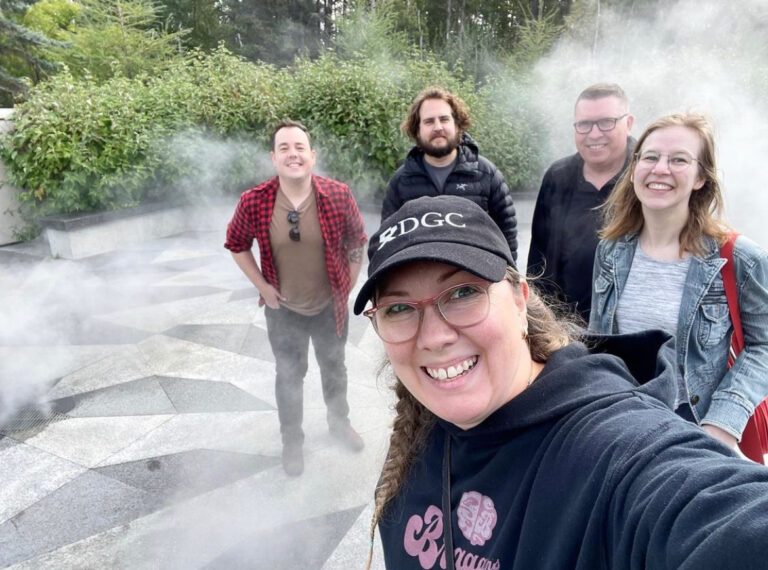
The CCE relaunched its outdoor wellness group – Offline! On September 19th, members and non members gathered at locations all across Canada as we took a break from our screens, got outside and walked in support of the Terry Fox Foundation!

Les participants d'Edmonton se sont rassemblés au parc Hawrelak.

Les participants d'Halifax se sont rassemblés à Point Pleasant Drive.

Les participants de Montréal se sont rassemblés au parc du Mont-Royal.

Les participants de Toronto se sont rassemblés au Beaches Boardwalk.
À propos de l'événement
19 septembre 2021
Toronto, Edmonton, Vancouver, Halifax, Montréal
Episode 052 – Interview with Elisabet Ronaldsdóttir
- Auteur de l'article Par Sarah Taylor
- Date de l’article 7 septembre, 2021
- Aucun commentaire sur Episode 052 – Interview with Elisabet Ronaldsdóttir
Episode 52: Interview with Elisabet Ronaldsdóttir
In this episode Sarah Taylor sits down with Elisabet Ronaldsdóttir.
Elisabet has a killer film resume and has cut many much loved action films – Atomic Blond, John Wick and Deadpool 2 to name a few.
This month she has two new films coming out – Marvel’s latest SHANG-CHI AND THE LEGEND OF THE TEN RINGS and the Netflix film KATE. Elisabet shares her career journey and so much wisdom!
À écouter ici !
Elísabet Ronaldsdóttir (Guest):
I have women or people of color, for example, in the cast. I try to remember that I am not raised
in a just society. So, I might have ideas that go against what these people are bringing to the
table, and I have to be aware of it. I ask myself, again, “Should I cut that dialogue out? Why am I
cutting it?” Just so I have a fighting chance to work against my possible prejudices.
Sarah Taylor (Host):
Hello, and welcome to The Editor’s Cut. I’m your host, Sarah Taylor. We would like to point out
that the lands on which we have created this podcast, and that many of you may be listening to
us from, are part of ancestral territory. It is important for all of us to deeply acknowledge that we
are on ancestral territory that has long served as a place where indigenous peoples have lived,
met, and interacted. We honor, respect, and recognize these nations that have never
relinquished their rights or sovereign authority over the lands and waters on which we stand
today. We encourage you to reflect on the history of the land, the rich culture, the many
contributions, and the concerns that impact indigenous individuals and communities. Land
acknowledgements are the start to a deeper action.
Before we get into today’s episode, the CCE is excited to be involved with the Calgary
International Film Festival’s Industry Week, from Thursday September 23rd to Sunday
September 26th. No matter where you are in your career, they are inviting those in the film, TV,
and adjacent industries, to mix, mingle, celebrate, and learn. Industry Week will feature inspiring
and engaging programming, tailor-made for industry professionals. Expand your knowledge, find
your inspirational fuel, and grow your connections. Your seat is waiting at the Calgary
International Film Festival’s first ever Industry Week. And, I’ll be there, moderating a panel with
the editors from Ghostbusters: Afterlife. Join us on September 26th, online or in person. I hope
to see you there.
Today, I bring to you the lovely Elísabet Ronaldsdóttir. Elísabet has a killer film résumé.
She’s cut many much loved action films, Atomic Blonde, John Wick, and Deadpool 2, just to
name a few. This month, she has two new films coming out, Marvel’s latest, Shang-Chi and the
Legend of the Ten Rings, and the Netflix film, Kate. Elísabet shares with us her journey and so
much wisdom. I want to be like her when I grow up. Please enjoy Elísabet.
Speaker 3:
And, action.
Speaker 5:
This is The Editor’s Cut.
Speaker 4:
A CCE podcast.
Speaker 5:
Exploring, exploring, exploring, the art…
Speaker 4:
Of picture editing.
Sarah Taylor (Host):
Welcome, Elísabet, to The Editor’s Cut, thank you so much for joining me today.
Elísabet Ronaldsdóttir (Guest):
Thank you for having me, Sarah.
Sarah Taylor (Host):
My first question is, where are you from? And, what led you into the world of editing?
Elísabet Ronaldsdóttir (Guest):
It’s a long story. I’m born and raised in Iceland, in Reykjavík. I’ve always been fascinated my
movies. When I was young, every week we would get to go to the movie house, because we
would go with the newspapers. And, [inaudible 00:03:07], we would get a movie every week. I
would go, and I was fascinated by this world. And, obviously never ever had an idea that I would
become a part of it. But, I was fascinated by that world, and the movies, and that form of
storytelling. And, when I’m, I think I’m 19 or 20, I decided to go to a film school. So, I went to
London International Film School, in Soho, in London.
Sarah Taylor (Host):
Nice.
Elísabet Ronaldsdóttir (Guest):
It was a lovely experience. But, you don’t learn how to make movies. You learn to use some
equipment or get accustomed to some of the equipment. And, you get really good connections
with people who have the same interest as you. And then, it’s a lifetime of practice and doing
things over and over again. I’m still learning. I don’t think this is a form you can learn. I guess any
art form, you can’t learn it, you just have to live it, and fail, and try again.
Sarah Taylor (Host):
Yes.
Elísabet Ronaldsdóttir (Guest):
So, that’s how I started films. But, in London Film School, I was set on becoming a
cinematographer. That was my passion and fascination, and then, I learnt through the years, I
learnt about editing and got more and more fascinated by editing. I also ended there because I
was getting pregnant all the time, I have four children, and it looked just easier to control my
time when I’m in the editing room. It’s difficult if you have 100 people on-set waiting for you and
you have to manage children, it’s easier with the post.
Sarah Taylor (Host):
What was your first job in the industry? Was it in London, or was it in Iceland, where were you?
Elísabet Ronaldsdóttir (Guest):
My first job in the industry was in Iceland. I was hired to answer telephones in a production
company that produced mainly interviews for TV and commercials. I think I stayed on the phone
for like two days and then I just dived head-first into production. Mainly as a set decorator for
the longest time, on commercials, and just assisting here and there. That’s how I started in this
business.
Sarah Taylor (Host):
How did you make your move into editing? You had some babies and you thought, “I need to go
into the edit room,” or did you do editing prior to that?
Elísabet Ronaldsdóttir (Guest):
I got pregnant and no one knew. I think I was six or seven months pregnant, and I was working
as a focus puller on a small Icelandic movie, and the DP realized suddenly I was pregnant and
they got so scared. It had to do with insurance and all kinds of stuff. But, they didn’t want to
throw me out, so they just invited me into the editing room. So, that’s how I started. I [inaudible
00:06:27] realize I’m very privileged in that way, that I just walked into an editing job. I didn’t
assist. I assisted myself, obviously, it’s small production in Iceland, so you kind of have to assist
yourself. But, I was editing from day one that I stepped into an editing room. That is a privilege.
Sarah Taylor (Host):
Totally.
Elísabet Ronaldsdóttir (Guest):
I think it’s also just the time. Now, it’s probably more difficult because more people have learnt
about the magic of editing and want to do it. So, it’s a more difficult task to get in there. But, I
was there at the right time.
Sarah Taylor (Host):
Yeah, at the right time and then also in a smaller market. Because, even for me in Alberta, I’m
based in Edmonton, and it’s a very small market, and so I do my assisting, I do my editing.
Sometimes I get an assistant and then it feels wonderful, but then you learn so much and you
get to do so many different genres, which I think is really fun too.
Elísabet Ronaldsdóttir (Guest):
Yeah.
Sarah Taylor (Host):
So, you came from an Icelandic market, you started editing, I’m assuming you did lots of
Icelandic films?
Elísabet Ronaldsdóttir (Guest):
Yeah, I did some. But, I moved to Denmark. I was going to Denmark to work on this movie for
Nordisk Film, but my parents at that point lived in Sweden. So, I actually moved to Sweden and
then I took a boat between Sweden and Denmark every day, because I needed my parents to
help me with the kids and my siblings, who all lived in Sweden. So, I moved to Sweden and took
the boat, and was working on Nordisk Film. I also did a year at a TV station in Denmark. That’s
probably the best school I’ve been to, where you have to work really fast and get to the heart of
the story in as a precise way as possible. I think that was very good training. I did a lot of Danish
movies, and documentaries, and TV, and then I moved back home to Iceland and kept doing
Icelandic movies.
I did a movie called Reykjavik-Rotterdam, an Icelandic movie directed by Óskar
Jónasson, and it was remade in the State as Contraband.
Sarah Taylor (Host):
Oh, yeah.
Elísabet Ronaldsdóttir (Guest):
I was asked to edit Contraband as well.
Sarah Taylor (Host):
Cool.
Elísabet Ronaldsdóttir (Guest):
Baltasar Kormákur directed that movie, and it was co-production between Working Title in
London, in England, and Universal. It was a big step into the American market.
Sarah Taylor (Host):
No kidding.
Elísabet Ronaldsdóttir (Guest):
There was no [inaudible 00:09:04]. It was straight into a big production with Universal and
Working Title. That was such an amazing experience. It was actually through Contraband that I
met an Editor, Dody Dorn, who is an American editor. Amazing editor. She just did the recut of
The Snyder Cut for [inaudible 00:09:33], and she had done Memento. She’s a big editing star. I
met her in LA when I was doing Contraband, we had dinner together. We are very good friends
today. We just hit it. And, she contacted her agent and asked them to talk to me and sign me on.
Sarah Taylor (Host):
Wow.
Elísabet Ronaldsdóttir (Guest):
And it happened, they signed me on.
Sarah Taylor (Host):
That’s amazing. So then, from that going forward you were now up for doing American films?
Elísabet Ronaldsdóttir (Guest):
Yeah.
Sarah Taylor (Host):
That’s amazing. You are in the world of action films now. Your latest movie that’s coming out
soon is the new Marvel movie, which I was very excited to find out that you’re cutting it,
Shang-Chi and the Legend of the Ten Rings. You did John Wick, Atomic Blonde, Deadpool 2.
High action, high Hollywood films. Was this a genre that you were always interested in? Tell me
about this action film journey.
Elísabet Ronaldsdóttir (Guest):
I think it’s just interesting and fascinating how life guides you to a certain place. There are two
things. One is, I did a lot of dance movies in Iceland with an artist Helena Jonsdottir, who works
very much in Europe with dance movies. So, I was extremely accustom to editing choreography.
Action is choregraphy. It is a dance. No one gets hurt. It doesn’t look bloody and disgusting until
they put all the visual effects on it. It’s a dance. So, I had this massive dance choreography
editing training from doing small indie art dance films with my friend Helena. Another thing, I
worked on this TV show for a year, called LazyTown, but I learnt so much about working with
blue screen and imagining how things are happening in the background, and just the workflow
of it. So, I had a massive training from there through this children’s show.
So, when I did my first big action, which was John Wick, I had all those elements already.
I wasn’t learning anything… Of course, I learnt a lot doing that movie, but I had the basis coming
in. And then, you do get pigeonholed, people decide that. But, it’s not only that you get
pigeonholed, but also I now have a great experience working with big budget movies. The
workflow of them is a bit different and it’s sometimes extremely hectic. It’s difficult with visual
effects… Not difficult, but it’s just different. Especially with really heavy visual effects movies,
you have to work so tightly with visual effects and make all the dates. It’s a lot of work.
Especially in Deadpool, where we had animated characters, and again in Shang-Chi. It takes a lot
of time to do this stuff.
Sarah Taylor (Host):
What do you feel you bring that’s unique to these films?
Elísabet Ronaldsdóttir (Guest):
I always try to bring a big heart. I think it’s a part of my job to be extremely critical of some stuff.
With action movies, are not just for 17 year old boys, and even if they were, there is no need to
degrade women in any way. So, I terrorized my directors talking about the male gaze [inaudible
00:13:23].
Sarah Taylor (Host):
I love it.
Elísabet Ronaldsdóttir (Guest):
By pushing it through, trying to make a change that way. But, every movie I work on, I look at my
work… I am kind of interpreting the work of so many people. If you imagine that you have a
script, it might be based on a book, so the script is an interpretation of a book that’s written, or
it’s an original script. But then, the whole crew, it’s the director, it’s the actors, the set designer,
everyone interprets that story into their art. For me, I gather all of it and then I try to interpret the
best version of the movie from what I have. I have such a respect for what everyone else brings
to the table. But, we also live in a world that’s extremely unjust, and racist, and misogynist, etc.
So, I try to remind myself of it every time I start working on a movie. I just go through the whole
cast, I go through the whole crew, the key positions in the crew, and I just think about that.
Especially if I have women or people of color, for example, in the cast. I try to remember
that I am not raised in a just society. So, I might have ideas that go against what these people
are bringing to the table, and I have to be aware of it. I ask my self, again, “Should I cut that
dialogue out? Why am I cutting it out?” Just so I have a fighting chance to work against my
possible prejudices.
Sarah Taylor (Host):
It’s such an important thing to hear, as an editor, and I think it’s an important thing for everybody
to hear, as filmmakers. That, those little things, we have control to help shape and hopefully
change our world. Hearing you be like, “I am going to be conscious and think,”…
Elísabet Ronaldsdóttir (Guest):
Sometimes it might be better for the movie and for them that I cut this dialogue. I just need to
be aware, “Why am I cutting it? Am I cutting it because it’s best for the movie? Or, am I cutting it
because I have some hidden prejudices about, ‘A woman would never say it like that’?” Then, I
have to question myself again, now I have to take a step back, “Why would I cut if it works for
the movie?” I’m a big believer in cutting dialogue left and right, I’m like, “[inaudible 00:16:09].” A
dialogue massacre. But, that’s because a dialogue in a script can be beautiful and it works
perfectly, but then you have the actors interpret that dialogue, and sometimes a whole speech
just comes with one look, and that speech becomes redundant. You don’t need it anymore
because the actor brought that look.
Sarah Taylor (Host):
Yeah, for sure.
Elísabet Ronaldsdóttir (Guest):
I’m a big believer in cutting dialogue. I want to be aware why I’m doing it.
Sarah Taylor (Host):
What brought you to think like that?
Elísabet Ronaldsdóttir (Guest):
I think that’s just how I’ve lived all my life, actually. I grew up through the feminist movement, I
was a very active young woman in the feminist second wave in Iceland. I just learnt a lot about
this stuff going through that. Just turning up in meetings, listening to talks. So, I think it came
early, this being aware that you are not living in a perfect society. It is a racist, misogynist
community we live in. Not the people, necessarily, it’s just we have built this society through
such a long time and it’s difficult to get rid of all the bad ideas we might have as a society. I’m
not talking about the individuals within it, they come in all sizes and shapes. You might grow up
just knowing that women’s voices are more annoying because they’re higher. As an editor, I have
to be aware that I might have that prejudice when I’m listening to dialogue, trying to deem which
take is best. You have to be aware that you might be… But, at the same time, you have to be
aware that the whole audience has the same prejudices. You just have to find the balance and
try not to…
What I absolutely do not want to do is step on women’s and minorities’ glory. I don’t want
to be the person that’s done that. I want people to flourish. Not that that’s in my power, I’m just
saying in my small bubble I try to do what I can.
Sarah Taylor (Host):
Every small step is a good thing. You talked about how you like to cut dialogue, I liked the line, “A
dialogue massacre,” that’s great. Tell us more about your process. How do you start a film,
what’s your process of watching the dailies, when do you start cutting scenes? Just do a little
rundown of what you’re editing process is.
Elísabet Ronaldsdóttir (Guest):
Usually, you turn up the day or the day before they start shooting, but you’ve read the script. I’ve
usually read it several times. Then, the shooting starts and you just get dailies every single day,
and you go through them. I watch them and try to remember what affected me watching it first
time, and I make some notes, then I start throwing the scene together. I do it very roughly. I don’t
necessarily do it with selects, I just throw the scene together like, “I want to be here, I want to go
there.” And then, I go through all the takes and see, “Do I have what it takes to fit into this form
that I’ve made?” Sometimes, it has to change a bit because of performances and how shots
were done [inaudible 00:19:55]. That’s how you eat this elephant, it’s one bite at a time. You
almost have a scene a day. And then, it strings up to a movie. That’s when it gets difficult for me
to hold back.
You have to edit this new scene that was shot today but, “Ooh, I want to dive into this.”
But, I try to stay focused and do my scenes every single day. Also, if anything is missing you can
notify the producers and the director. You might feel something’s missing or not covered well
enough. Even if you notify them, it doesn’t mean it’s shot, but at least you’ve notified them. And
then, at some point, you’ve got all the scenes and everything’s there, and then you just start.
Sometimes I work in sections. Sometimes, in the beginning especially, it’s good to work
in sections, get this section right, get that section right. I have a tendency, I just have to watch
the film again, and again, and again. I find it so important that what’s happening in scene 10 is
extremely important for what’s happening in 112, and you have to keep those connections going
the whole time. It’s one movie, it’s not 130 scenes, it’s one movie. That’s what you’re working
with.
Which, brings me also to why I dislike working with multiple editors. That has nothing to
do with most of the beautiful people I work with, but I do dislike the lack of understanding for
the art of editing, that it’s a singular vision. When you suddenly have three visions, or four
visions, it gets really difficult, for me. Also, because I’m a control freak.
Sarah Taylor (Host):
How has it worked for you, because you’ve worked on a few films where you’ve been in a team?
What do you get and how does it work?
Elísabet Ronaldsdóttir (Guest):
It hasn’t worked like that on the movies I’ve worked with, it floats around, goes back and forth.
For me, it’s not about editing a scene, it’s about editing a movie. It’s very difficult for me to step
out of that mode and just start thinking, “This is my scene, this is my part.” But, it’s not like that,
because then we talk about stuff, and we sit down, and we watch the movie, and we talk. But, I
wish they would fix schedules and allow the art of editing to flourish as a singular vision. Always
based on the director’s vision, it’s not [inaudible 00:22:49], it’s a singular vision in connection
with the director’s vision. I think the art of it and the flow of it, I just feel it all has to come
together.
Sarah Taylor (Host):
The films where you’ve had to work with a team, is it because of schedules, that the film needs
to get done so quickly that you need more hands-on-deck?
Elísabet Ronaldsdóttir (Guest):
Some studios demand it, mainly because of schedule. It’s a lot of material for a very short time.
Sarah Taylor (Host):
Mm-hmm (affirmative).
Elísabet Ronaldsdóttir (Guest):
But on Deadpool, for example, I just got sick. I ended up in the hospital.
Sarah Taylor (Host):
Oh no.
Elísabet Ronaldsdóttir (Guest):
I think I’m a method editor, because I got in such good forms when I was doing Atomic Blonde, I
was in the gym every day. That was really good. But then, I did Deadpool 2 and ended up with
stage 4 cancer, [inaudible 00:23:48].
Sarah Taylor (Host):
Oh no.
Elísabet Ronaldsdóttir (Guest):
But, I got cured. All is good.
Sarah Taylor (Host):
Good, but whoa.
Elísabet Ronaldsdóttir (Guest):
I had the best doctors, I was so lucky. Now, I’m working on a movie that has to do with faith and
luck, and I just lost my wallet yesterday and I’m thinking, “There’s something there,” maybe I’m a
method editor.
Sarah Taylor (Host):
Other than the cancer thing, which I’m very sorry that happened, but… I find, because I do a lot of
documentary stuff, I will definitely get into… I did one about a boxer and then I was like, “I want
to take boxing.” And then, I did one for the tap dancing and I’m like, “I’m going to take tap
dancing.”
Elísabet Ronaldsdóttir (Guest):
Exactly. [inaudible 00:24:23].
Sarah Taylor (Host):
Yeah, you just get into it. It’s their passion and you feel the passion.
Elísabet Ronaldsdóttir (Guest):
When I did John Wick, I got suited up.
Sarah Taylor (Host):
Oh yeah?
Elísabet Ronaldsdóttir (Guest):
Yeah.
Sarah Taylor (Host):
That’s amazing.
Elísabet Ronaldsdóttir (Guest):
I had to have a good suit, that’s really, really helpful.
Sarah Taylor (Host):
Do you still have that suit and do you still wear it?
Elísabet Ronaldsdóttir (Guest):
Oh yeah, I do.
Sarah Taylor (Host):
I love it. I want to see the suit. That’s so fun. You said that you like to cut the film, but of the film,
what are your favorite types of scenes to edit?
Elísabet Ronaldsdóttir (Guest):
I’m so fascinated by every single scene I have to tackle. Every scene brings you different
challenges and I’m just fascinated by all of them. I think they’re all just as fun. I think the easiest
scenes I edit are action scenes, actually. [inaudible 00:25:16] first, because I’ve been blessed
with amazing choreographers. Because, I don’t choreograph those fight scenes, someone else
does. I’ve just been lucky working with the best, both producers and directors that know action,
know what it takes to make action, and the choreographers and stunt people that know what
they’re doing. The best of the best. So, for me, editing action is just pure fun.
Dialogue is always more difficult because most people, I know there are exceptions, but
most people do not know how it is to end up in a shootout. Never been in a shootout. So, you
can kind of do whatever you like because who’s going to care? Who’s going to stand up and say,
“No, that’s wrong.” But, with dialogue, every single audience has had dialogue with someone, has
had discussions or arguments. Those are the trickiest scenes. I can spend hours because I
really want it to ring true, but it doesn’t take you out of the film, that this was a really [inaudible
00:26:25] dialogue scene. So, those are the trickiest scenes, but I do have fun doing all of them.
All of it is fun.
My favorite thing, is just watching it again, and again, and again. Both because you get
such a good understanding, I think I get a good understanding of the pace of it. But also, there
are just connections that you start understanding better, and then you can tighten it and make it
work so other people will notice them without watching something 400 times.
Sarah Taylor (Host):
Yeah. When you’re going through and you’re watching it again, and again, and again, are you
stepping back from the edit suite, watching it on a screen, just watching it? Or, are you still
sitting at your suite, making those adjustments as you go?
Elísabet Ronaldsdóttir (Guest):
Both. I think it’s very healthy to do… My father is a painter, and when I was young and he was
painting, and sometimes he would take a mirror and look at his painting through the mirror. I
think this is what happens when you take your movie and you watch it in different settings. If it’s
in a screening room, or take it home, watch it on your computer. Which, is probably the way most
people are going to see it in the end anyway. Because, it gives you a different perspective.
Because, the painter uses the mirror to get a different perspective of the work he’s doing, and I
think for me, as an editor, getting a different perspective is… Changing scenario, changing the
format I’m looking at it.
Sarah Taylor (Host):
What do you do when you find that there is a challenging scene, as in you’re stumped, or it’s just
not flowing right, or the dialogue isn’t going right, is there anything that you do to make it
happen?
Elísabet Ronaldsdóttir (Guest):
Yeah, I just go away. I just go have dinner with friends. Go watch a movie, go see art somewhere,
just do everything else. Because, that problem is still going to be there when you get back, but
you’re going to have more energy. You know how it is, sometimes just doing the dishes will give
you the best ideas. You just have to disconnect from the problem. It’s not going to go away. It’s
still in the back of your mind. And suddenly, you might get a solution.
I dream my movies. I dream edits, sometimes something cooler than I can actually do
myself, but I still have dreams about my projects. Actually, solutions have come when I’m
sleeping and I wake up and I have to write it down straight away because I realize, “Yes, that’s
how we’re going to do it.”
Sarah Taylor (Host):
Yeah. I find, for myself, it’s in the shower or if I go for a run or something. Like, “I got to get back
to the edit suite, I found the thing.”
Elísabet Ronaldsdóttir (Guest):
Exactly.
Sarah Taylor (Host):
That’s awesome.
Elísabet Ronaldsdóttir (Guest):
And, I think it’s very important because, for me, editing… I can imagine writers being a bit in the
same position, because we’re a bit alone, but we have to take care of ourselves. Because, the
problem is, I could sit 20 hours without standing up. I’m just completely engulfed in what I’m
doing, and that’s not okay. I learnt it the hard way. It’s not okay. You have to set time for yourself.
Take lunch, take dinner, take a break. It’s very important because when you edit a movie, for me I
believe… I’m sure this is not true, because I have heard of a lot of blockbusters that were very
successful where people didn’t have much fun, but I do believe if you have fun… I think it’s
important. If you don’t have fun working on this movie, how do you expect the audience to have
fun? I think it’s so important because I think it shows. I think it shows on the film how people felt,
and you want people to enjoy what they’re watching. You don’t want them to feel like, “Oh, that
was weird.” You just want to ooze some heart into that movie. Enjoy. I think it’s important.
That’s why I think everyone in the production is just as important. Someone just bringing
coffee to set can bring such joy to the people working there that they actually really affect the
production, and [inaudible 00:31:06]. So, I think it’s extremely important to have a good crew and
a closely-knitted crew.
Sarah Taylor (Host):
Do you have directors that you’ve with multiple times? That director-editor relationship I feel like
is really important. And, what you’re just mentioning now, having a connection with a director
and working on it as a team, that brings a heart to a film, if you have that good connection, that
good relationship.
Elísabet Ronaldsdóttir (Guest):
Yeah, it does. I think it’s important. I’ve done so many movies with David Leitch, and I’m working
with him now on a new movie. I love getting to know new people, but yes, working with
someone, we know each other’s language, we know what we’re thinking. Of course it’s
important. It saves a lot of work and heartache. He knows I’m not going to go and piss off and
do something horrible. He can trust that I’m going to put the work in. We have kind of a
shorthand in dialogue as well. And, I really enjoy working with him as a director. He’s so open to
suggestions, even though he has a very clear vision of what he wants. He has the confidence to
be open to other ideas, even though he has a very strong vision of what he wants.
Sarah Taylor (Host):
I think that’s interesting to say that, because I feel like when somebody’s really, really rigid,
maybe it is this lack of confidence, or they’re not sure, or, “Maybe it won’t work, I don’t know.”
Elísabet Ronaldsdóttir (Guest):
That’s how I feel about it.
Sarah Taylor (Host):
For yourself, throughout the years, you’ve been doing this for a while, have you found that you
have your own internal confidence now? When you were younger, getting feedback from
directors or producers, was it harder? How did you handle that and how do you handle it now?
Elísabet Ronaldsdóttir (Guest):
I don’t think it was harder getting feedback from others, in connection with the movie. But, in the
old days, I could not screen anything I did, I was in the bathroom throwing up. Physically
throwing up because I was so stressed. That has gone.
Sarah Taylor (Host):
Oh good.
Elísabet Ronaldsdóttir (Guest):
I don’t feel that stressed anymore. I think that’s just you do it so many times you stop throwing
up at some point, thankfully. I think it’s extremely important to get notes. I don’t think anything
that has to do with the film can be ego filled in any way. You have to just try to take in the notes
and realize… But, you are the professional, so when you get notes from screenings and stuff,
you have to take a step back and look at them. You’re trying to figure out what people’s
problems are with the movie. You are the professional. They might not know, they might say, “We
hated the middle,” but the problem is actually in the beginning. You know what I mean?
Sarah Taylor (Host):
Yeah, totally.
Elísabet Ronaldsdóttir (Guest):
Because, if the beginning is too long, you’re going to be too tired in the middle. But, the audience
might say, “There’s a problem with the middle,” so you have to learn to take the notes and use
your own professionalism and experience to realize where is the problem. It takes a community
to make a film. I think that’s the biggest joy for me, is just the journey with that village to make
this movie, and that is the most inspiring thing about movie making, for me.
Sarah Taylor (Host):
Yeah. Being the editor, you’re often not with the crew, do you get to get to know the crew? Is that
something that you try to make an effort doing?
Elísabet Ronaldsdóttir (Guest):
Sometimes, and sometimes not. It depends on so many things, like COVID. Usually you would be
in connection with the crew on set and visit regularly and stuff, but that changed this year.
Sarah Taylor (Host):
How has it been for you during COVID? Were you working on Shang-Chi during COVID?
Elísabet Ronaldsdóttir (Guest):
Yeah, we were stuck in Australia, we were there for a year.
Sarah Taylor (Host):
What? Tell us.
Elísabet Ronaldsdóttir (Guest):
I never knew I would live in Australia, but we ended up being there a year because of COVID.
Because, we had to stall production. We still kept working in post, and when we finished it had
been a year.
Sarah Taylor (Host):
Wow. Originally, before COVID, you planned to go to Australia to cut the film while they were
shooting and then come back to Iceland?
Elísabet Ronaldsdóttir (Guest):
[inaudible 00:36:06] and finish. We were supposed to premier it February 3rd, was the first
premiere day on it.
Sarah Taylor (Host):
Of 2021?
Elísabet Ronaldsdóttir (Guest):
2021, yeah. Last February.
Sarah Taylor (Host):
Wow. At least Australia wasn’t as bad as America.
Elísabet Ronaldsdóttir (Guest):
No, that was not bad. It was just a surprise to be so far from your loved ones…
Sarah Taylor (Host):
No kidding.
Elísabet Ronaldsdóttir (Guest):
… And your routines.
Sarah Taylor (Host):
Yeah, especially during a pandemic.
Elísabet Ronaldsdóttir (Guest):
Australians are very pleasant people. We were in Sydney the whole time, and just some precious
people I met there.
Sarah Taylor (Host):
And, you were working with a team of editors for that film as well?
Elísabet Ronaldsdóttir (Guest):
Yeah.
Sarah Taylor (Host):
So, were you all staying together and you’re able to really work on the process of stuff actually
together?
Elísabet Ronaldsdóttir (Guest):
[inaudible 00:36:54], we [inaudible 00:36:57] in and did some great work in Australia.
Sarah Taylor (Host):
I look forward to seeing that one. Now, you’re working on another film, are you working at it from
home, in Iceland?
Elísabet Ronaldsdóttir (Guest):
I am working from home. We were supposed to be working in Vancouver, and COVID, so in the
end they said, “We’ll be working from home in LA.” But, I pointed out, “Home for me is Iceland,”
but they accepted and said, “Okay, take it.”
Sarah Taylor (Host):
Amazing.
Elísabet Ronaldsdóttir (Guest):
So, I’ve been working from home since February.
Sarah Taylor (Host):
Typically, non-COVID days, would you just be going back from Iceland to LA or wherever the film
might be shooting, and you’re just always on the go?
Elísabet Ronaldsdóttir (Guest):
Yeah.
Sarah Taylor (Host):
That must have been an adjustment.
Elísabet Ronaldsdóttir (Guest):
I’m getting old, I’m getting tired by it. But also, I got the taste of it now, just to be home and work
from home. I like the idea. We’ll see what the future brings.
Sarah Taylor (Host):
Yeah. In the meantime, working from home, how has that been going for you, working remotely?
Has it been an easy transition?
Elísabet Ronaldsdóttir (Guest):
It’s been going really well. The biggest surprise, when COVID hit, is that all those pipelines to
work from home were already in place. They’re all in place. You just have to plug in and press
play. It was all there. So, that was probably the biggest surprise. Maybe independent movies
used it more, but the studios are very protective of their material, so usually everything is locked
inside the studios, so it was a bit of a surprise. But, a good surprise. It’s been easy, I like it.
Sarah Taylor (Host):
What are some things that you need to have in your edit suite that help you do your best work?
Elísabet Ronaldsdóttir (Guest):
I love to make it a bit cozy. I need to have the photos of my babies, or my children. I plaster my
wall with them, just so I can have a conversation sometimes with them. For me, it’s extremely
important that the editing is a sacred land. You cannot fight. If producers and directors want to
fight about something, let’s step outside, because it’s not a fight zone. This is a creative zone
where we talk about ideas. We can argue about ideas, but there is no fighting. That has to
happen outside the editing room. I just find it very important. It’s like the [inaudible 00:39:35] and
it has to be peaceful. I like to bring in some smells and candles and stuff.
Sarah Taylor (Host):
Do you have a certain routine every day, that you get up in the morning, and you get to work at a
certain time, and you have coffee, anything like that that keeps your day going?
Elísabet Ronaldsdóttir (Guest):
Yeah, always coffee and sit down. But again, it’s so different because of COVID, everything has
been different, we’re in different places, different timezones. It’s not the same. But, I do like
having our morning meetings, sit down and talk over what happened, what do we need to do. I
miss that. I miss my film community. But, I still keep the coffee routine going strong.
Sarah Taylor (Host):
It’s very important.
Elísabet Ronaldsdóttir (Guest):
Very important.
Sarah Taylor (Host):
Do you find that there’s a certain part of the day that you do certain activities or certain tasks at
certain times of day? Or, you just go with whatever the edit tells you to do?
Elísabet Ronaldsdóttir (Guest):
Whatever the edit tell me to do. For me, I wouldn’t be able to be that organized. I just follow. But,
I do love early mornings, because usually that’s the most quiet time. So, I like that. I like early
mornings, with my coffee, few people around, if any, and just me time. I like that.
Sarah Taylor (Host):
Mm-hmm (affirmative).
Elísabet Ronaldsdóttir (Guest):
But, it tends to be very long days anyway.
Sarah Taylor (Host):
Yeah, for sure. How does it feel when you’ve finished a film? It’s locked, what are your feelings
and your thoughts when that happens?
Elísabet Ronaldsdóttir (Guest):
I don’t think anyone that I’ve worked with would send anything out if we weren’t proud of the
product. It can be different genres and different movies, but this is the best version we could
come up with, and we are proud of the work we put in it, we can put it out. So, it feels good, but
you’re also nervous because you never know how anything is going to be received. Even though
you think, “This is going to be big,” and then it doesn’t become… You never know.
Sarah Taylor (Host):
Yeah.
Elísabet Ronaldsdóttir (Guest):
So, you’re kind of sending it out without knowing what’s going to happen to it. But, it always feels
good because it’s work well done. Everyone has put their best foot down. Again, it’s a group
effort, and you’re just there with a group of people that have been spending so much time on it,
and sending it off, and then it’s gone. But, that’s not how it is for the director and some of the
actors, because then they follow it to the film festivals, to whatever. But, we have to say
goodbye.
Sarah Taylor (Host):
Do you have one film that you’re most proud of? Can you pick one?
Elísabet Ronaldsdóttir (Guest):
I’m so proud of so many movies. I am obsessive as well. Very obsessive. I do have an obsessive
character. The film I’m working on now, it has all my energy. It’s the only thing I can think about.
Favorite movie would always be the movie I’m working on.
Sarah Taylor (Host):
That’s great. Do you have any tips for young editors or editors that are trying to make a career
transition into doing film? Scripted, as opposed to documentary? Anything like that.
Elísabet Ronaldsdóttir (Guest):
First thing, I think it’s important that there shouldn’t be a hierarchy here. Especially when it
comes to documentary, it’s such an amazing art form for me, I do love it. I’ve done some
documentaries. I wish I could do more. I think the most important thing is to always put all your
best out there, whatever you’re doing. The size of the budget doesn’t matter. You have to do your
best. I think if you always put your best foot down… Don’t write something off as bullshit,
because some things can just flourish and become something that comes back to you in the
form of a job opportunity, or something else. So, always put your best foot forward.
But again, I just find it so important that all of us understand this is work. It might be
ideal work, amazing work, so much fun work, but it’s work. We have to remember to take care of
ourselves. If we don’t take care of ourselves we won’t be able to make those movies. So, just
take care of yourself, be brave, and always, always, always take the dialogue. I think it’s
extremely important to be brave. I know it’s so hard right now, because there are so many people
and few opportunities. I’m sure so many people are getting, “No,” that shouldn’t be getting noes.
But, you have to remember that this is what you’re fighting against, so few opportunities. So, just
don’t give up. Or, give up. But, if you decide to not to give up, don’t give up. Just keep going with
that smile. But, it’s also okay to give up and to go to something else. That’s the beauty of life. It
just leads you to something else. Just don’t ever, ever, ever give up. Change direction if you feel
you need to, but just don’t give up.
And, I think it’s important to remember that there are so many editors out there, and
probably most of them better than I am. I’m also blessed with opportunities, but that’s one part
of being anything. You have to be able to grab the opportunity when they present themselves.
So, be open to opportunities. And again, that can be in a very small budget short film
somewhere, so do not cut corners because it’s a low budget short film. Give it all, because that
might come back to you as an opportunity. It’s tough out there, I know.
Sarah Taylor (Host):
That’s good advice. Do you have any films coming up? We’ve talked about the Shang-Chi and the
Legend of the Ten Rings, but anything else coming up that you want to tell us about?
Elísabet Ronaldsdóttir (Guest):
Yeah, I’m very proud of Kate, who’s going to be in September as well on Netflix. It’s a small
movie, but I had so much fun working it. And then, I’m working on Bullet Train. That’s probably
not going to come out until Christmas. Maybe it’s going to be a Christmas movie.
Sarah Taylor (Host):
Awesome. Thank you so much for taking the time to chat with me. You had such great insight
and lots of good one-liners that I’m going to try to take and put them in my pocket. Eating the
elephant one scene at a time, I love it.
Elísabet Ronaldsdóttir (Guest):
I didn’t know this, but maybe I’m the queen of one-liners.
Sarah Taylor (Host):
I think so.
Elísabet Ronaldsdóttir (Guest):
I’m happy you enjoyed it. I enjoyed it.
Sarah Taylor (Host):
Thank you so much. Take care, bye.
Elísabet Ronaldsdóttir (Guest):
Take care, bye.
Sarah Taylor (Host):
Thank you so much for joining us today, and a big thank you goes out to Jane MacRae. The
main title sound design was created by Jane Tattersall, additional ADR recording by Andrea
Rusch. Original music provided by Chad Blain. This episode was mixed and mastered by Tony
Bao.
The CCE has been supporting Indspire, an organization that provides funding and
scholarships for indigenous post-secondary students. We have a permanent portal on our
website at cceditors.ca, or you can donate directly to indspire.ca. I-N-D-S-P-I-R-E.ca. The CCE is
taking steps to build a more equitable ecosystem within our industry, and we encourage our
members to participate in any way they can. If you’ve enjoyed this podcast, please rate and
review us on Apple Podcasts and tell your friends to tune in. Till next time, I’m your host, Sarah
Taylor.
Speaker 4:
The CCE is a non-profit organization, with the goal of bettering the art and science of picture
editing. If you wish to become a CCE member, please visit our website www.cceditors.ca. Join
our great community of Canadian editors for more related info.
Abonnez-vous là où vous écoutez vos balados
Que voulez-vous entendre sur L'art du montage?
Veuillez nous envoyer un courriel en mentionnant les sujets que vous aimeriez que nous abordions, ou les monteurs.euses dont vous aimeriez entendre parler, à :
Crédits
Un grand Merci à
Jane MacRae
Hosted and Produced by
Sarah Taylor
Design sonore du générique d'ouverture
Jane Tattersall
ADR Recording by
Andrea Rusch
Mixé et masterisé par
Tony Bao
Musique originale par
Chad Blain
Sponsor Narration by
Paul Winestock
- Étiquettes balado, CCE, Editor, elisabetronaldsdttir, femaleeditors, johnwick, Lartdumontage, marvel, monteurs, monteuses, podcast, shangchi, theeditorscut, womeninpost
Coordonnateur·trice des communications
- Auteur de l'article Par Jennifer Kidson
- Date de l’article 10 août, 2021
- Aucun commentaire sur Communications Coordinator
Coordonnateur·trice des communications
Titre du poste : Coordonnateur·trice des communications (anglais-français)
Type: Contrat, télétravail, heures flexibles
Date d’entrée en service: 1er septembre 2021
Heures de travail: Environ 50 heures/mois, plus au besoin
Rémunération: 20 $/heure
Les Monteurs et Monteuses de cinéma canadien sont une association professionnelle, éducationnelle et culturelle. Notre mission est de :
- Soutenir la poursuite de la supériorité artistique et technologique de même que l’excellence en postproduction;
- Promouvoir l’éducation des pairs, des producteurs et des étudiants pour ce qui est de l’art et de la science du montage;
- Réunir des monteurs et monteuses qui ont en commun le désir de faire progresser la distinction et le prestige de la profession;
- Promouvoir les réussites de nos membres au Canada et à travers le monde;
- Obtenir et accroître la reconnaissance des monteur∙euse∙s en tant qu’autorité dans le processus narratif.
We are a non-profit organization with the goal of bettering the art and science of picture editing in all media. We are proud to welcome people of all races, genders, class, sexuality, ages and abilities who share the desire to tell great stories. We strive to be more inclusive in all our activities, and build a more equitable ecosystem within our industry. Through a better understanding of each other, and teaching others in our industry, we hope to advance the profile of professional film editors.
Les Monteurs et Monteuses de cinéma canadien sont à la recherche d’une personne passionnée, créative et qui fait preuve d’initiative pour se joindre à leur équipe en tant que coordonnateur·trice aux communications. This individual will have strong copywriting skills in English or French with a working knowledge of the other language, strong experience designing branded graphics, experience with Mailchimp, experience managing social media campaigns, and a general knowledge of the Canadian film and television industry. This position will execute the CCE’s communications strategy, including managing the organization’s social media channels, manage the monthly e-newsletter, and handle communications for the CCE’s events, podcasts, initiatives and activities.
Ce poste est un contrat à temps partiel en télétravail, avec possibilité de prolongation. Les heures de travail sont flexibles, mais la personne à la coordination des communications devra à l’occasion assister aux réunions du conseil d’administration du CCE ou des comités, qui ont lieu en soirée. Initialement, le contrat sera d’une durée probatoire de 6 mois.
RESPONSABILITÉS :
COMMUNICATIONS NUMÉRIQUES ET GESTION DU SITE INTERNET
- Working with the Operations Manager, write, build, send and manage the CCE’s e-newsletter Main release once a month, smaller campaigns scattered throughout the year
- En collaboration avec la personne responsable des communications et la personne responsable des opérations, rédiger des articles de blogue et du contenu pour le site internet du CCE
- In conjunction with the CCE Board, the Operations Manager, and third-party developer, maintain the CCE website’s events using the Modern Event Calendar Plugin
- En collaboration avec le conseil d’administration du CCE, assister à la rédaction/diffusion des communiqués de presse pour les événements et initiatives.
MÉDIAS SOCIAUX
- Following the CCE’s communication strategy, build and execute communication campaigns to support various CCE events, podcasts, our members, sponsor relationships, programs and initiatives
- Ceci inclut : rédaction, design graphique, travail en collaboration avec la personne responsable des opérations pour gérer la traduction, prévoir les dates de publication et évaluer les taux de mobilisation.
- Gérer les plateformes de médias sociaux du CCE et échanger avec nos abonné·e·s.
- Travailler avec le comité des communications pour élaborer et mettre en œuvre un calendrier préapprouvé de contenu annuel.
- Ceci inclut : les journées nationales de sensibilisation, les prix ou les mises en nomination de nos membres et l’art et la science du montage.
- Travailler avec la personne responsable des opérations pour se tenir à jour quant aux actualités qui concernent nos membres et en faire la promotion sur les plateformes de médias sociaux du CCE
- Using Buffer, Facebook, and other tools to collect, interpret, and report on the CCE’s social media statistics once monthly to Communications Chair
- Fournir du soutien lors d’événements et de programmes en direct sur nos réseaux sociaux (en soirée et fins de semaine, au besoin).
COMPÉTENCES RECHERCHÉES
- Excellent writing, editing and proofreading skills in English or French – with working knowledge of the other language
- Très bonnes aptitudes en design graphique, expérience avec la suite Adobe Creative;
- Très bonnes aptitudes organisationnelles, capacité à gérer de façon proactive les délais et respecter les échéances;
- Capacité à travailler de façon indépendante, à faire preuve d’initiative et de responsabilisation avec un minimum de supervision;
- Collaboration efficace dans un environnement de télétravail;
- Minimum deux ans d’expérience pertinente dans le domaine;
- Diplôme d’études postsecondaires, préférablement en communications, marketing, relations publiques ou équivalent.
- Engagement à promouvoir l’équité, l’inclusion et la diversité dans l’industrie canadienne du cinéma.
- Expérience avec Wordpress, Elementor Pro, Yoast SEO et d’autres plug-ins (ou une volonté de se familiariser avec ces outils) est un atout.
- Connaissances en données et statistiques des médias sociaux (Buffer/Facebook analytics) est un atout.
- Connaissance de l’industrie canadienne du film et de la télévision est un atout.
- Bilinguisme écrit et parlé (anglais-français) est un atout.
- Les candidat·e·s doivent être citoyen·ne·s canadien·ne·s ou résident·e·s permanent·e·s et aptes à travailler au Canada.
COMMENT POSTULER :
Les candidat·e·s intéressé·e·s doivent soumettre une lettre de motivation, un curriculum vitae avec références et trois (3) exemples de rédaction et de design à info@cceditors.ca by August 13, 2021 and indicate “CCE Communications Coordinator” in the subject line. Applications without all required components will not be considered.
Nous remercions tous·tes les postulant·e·s intéressé·e·s, toutefois, seules les personnes qualifiées seront contactées.
Congratulations: 2021 Emmy Award Nominations
- Auteur de l'article Par Jennifer Kidson
- Date de l’article 12 juillet, 2021
- Aucun commentaire sur Congratulations: 2021 Emmy Award Nominations
Finalistes pour les prix Emmy 2021
Félicitations à Wendy Hallam Martin, ACE, CCE, qui a été nommée aux prix Emmy, pour LA SERVANTE ÉCARLATE : LE PASSAGE.
- Étiquettes ACE, CCE, CCE Member, Emmy Award Nominations 2021, Emmy Awards, monteurs, monteuses, Wendy Hallam Martin
Congratulations: 2021 Leo Award Winners
- Auteur de l'article Par Jennifer Kidson
- Date de l’article 8 juillet, 2021
Lauréat.e.s des prix Leo 2021
Best Picture Editing – Documentary Series
Patrick Carroll (+1 editor)
TITANIC: STORIES FROM THE DEEP, SURVIVOR GUILT
Best Picture Editing – Youth or Children’s Program or Series
Gordon Rempel, CCE
UPSIDE-DOWN MAGIC
Best Picture Editing – Music, Comedy or Variety Program ir Series Winner
Lisa Robison, CCE
LOUDERMILK: WHEN I’M ALONE
Best Picture Editing – Motion Picture
Greg Ng, CCE
SNIPER: ASSASSIN’S END
Best Picture Editing – Dramatic Series
Christopher Smith
WARRIOR NUN: REVELATION 2:10
- Étiquettes CCE, CCE Member, Christopher Smith, Gordon Rempel CCE, Greg Ng CCE, LEO Awards, Lisa Robison CCE, members, membres, monteurs, monteuses, Patrick Carroll
Félicitations : Finalistes des prix de la GCR 2021
- Auteur de l'article Par Jennifer Kidson
- Date de l’article 8 juillet, 2021
Finalistes des prix de la GCR 2021
Congratulations to our CCE members who have been nominated for DGC awards!
BEST PICTURE EDITING – DRAMATIC SERIES
Christopher Donaldson, CCE
American Gods, Episode 305, Sister Rising
Jonathan Eagan
Ginny & Georgia, Episode 103, Next Level Rich People Shit
Roderick Deogrades, CCE
The Expanse, Episode 509, Winnipesaukee
Teresa De Luca, CCE
Coroner, Episode 310, Christmas Day
D. Gillian Truster, CCE
Pretty Hard Cases, Episode 105, Kids
BEST PICTURE EDITING – MOVIES FOR TELEVISION AND MINI–SERIES
Courtney Goldman
Dino Dana: The Movie
Stephen Philipson, CCE
Faith Heist
BEST PICTURE EDITING – COMEDY OR FAMILY SERIES
Daniel Sadler
The Hardy Boys, Episode 113, While the Clock Ticked
Eamonn O’Connor
For Heaven’s Sake, Episode 101, The Disappearance
Aren Hansen & Lee Walker
Kim’s Convenience, Episode 510, Who’s Pranking Who?
BEST SOUND EDITING – DRAMATIC SERIES
Janice Ierulli (+4 others)
Hudson & Rex, Episode 307, All in the Litter
- Étiquettes Canada, CCE Member, DGC, DGC Award Nominations 2021, Editors, monteurs, monteuses