Categories
Articles

2023 Gémaux Award Nominees

2023 Gémaux Award Nominees

Congratulations to our CCE members who were nominated for a Gémeaux Award!

Best Editing: Fiction
  • Amélie Labrèche – AVANT LE CRASH – SAISON 1 – « Épisode 5 »
  • Myriam Coulombe – MÉGANTIC – « Épisode 8 – L’histoire de Marie »
  • David Di Francesco – VIRAGE – DOUBLE FAUTE  – « Épisode 2 – Prêtàtout »
Best Editing: Public Affairs, Documentary – Program 
  • Justin Lachance, CCE (+1 monteur) – CANADIENS NORDIQUES, LARIVALITÉ – « Épisode 1 – La bataille du Québec »
  • Catherine Legault – PRENDRE LE VENT – « Épisode 10 – Guadeloupe » 
Categories
Past Events

In Conversation with Michel Giroux and Denys Desjardins: I LOST MY MOM 

In Conversation with Michel Giroux and Denys Desjardins: I LOST MY MOM
June 15, 2023

This event took place on June 15, 2023

Presented in French / Atelier en français

Join us on June 15th for our Master Series in Montreal. Listen to editor Michel Giroux discuss with director Denys Desjardins their work on the film I LOST MY MOM.  There will be a screening of the film, followed by the Q&A.

In-person in Montréal at Cinema Public – 505 Rue Jean-Talon E, Montréal, QC H2R 1T6

The following bios are available only in the presenting language:

Michel Giroux HeadshotŒuvre dans le domaine de la vidéo et du multimédia depuis le début des années 80, il collabore à des bandes vidéos, installations, performances, trames visuelles pour multimédia, danse, musique contemporaine… avec Geneviève Cadieux, Nathalie Derome, Istvan Kantor, Michel Lemieux, Pauline Vaillancourt, Jean-Pierre Perrault… Parallèlement et, de plus en plus exclusivement, il se passionne pour le montage de documentaire. Il collabore, entre autres, avec Paule Baillargeon, Michka Saäl, Céline Baril. Luc Bourdon, Magnus Isacson, Martin Duckworth… incursion en fiction avec Robert Morin.

Toujours fasciné par le processus d’écriture-composition propre au montage ainsi que par la proximité, la profondeur de la rencontre qu’il provoque avec l’auteur et cette œuvre qui prend vie. Il considère et approche le cinéma, le multimédia comme des médiums sensoriels. Le désir de toucher en sculptant du temps, de la lumière, des sons, de la forme, du sens… Il y a encore beaucoup de plaisir à tout ça, on n’a pas tout vu et entendu.

Denys Desjardins HeadshotSELON LE DICTIONNAIRE DU CINÉMA QUÉBÉCOIS, DENYS DESJARDINS EST UN «CINÉASTE À L’ESPRIT CURIEUX ANIMÉ PAR UNE CINÉPHILIE DÉBORDANTE». DENYS DESJARDINS A ENSEIGNÉ LE CINÉMA ET LES COMMUNICATIONS PENDANT VINGT ANS.

PENDANT SES ÉTUDES EN CINÉMA, IL EXERCE LE MÉTIER DE PRÉPOSÉ ET DÉCOUVRE LE MONDE À TRAVERS LES YEUX DES MARGINAUX. ARTISTE ENGAGÉ, IL UTILISE TOUS LES MOYENS CRÉATIFS À SA DISPOSITION POUR CONFECTIONNER DES ŒUVRES ET DES EXPÉRIENCES SIGNIFIANTES QUI PARTICIPENT À L’ÉVOLUTION DE LA SOCIÉTÉ.

EN 1990, IL FONDE SA COMPAGNIE DE PRODUCTION LES FILMS DU CENTAURE.
DEPUIS, IL A RÉALISÉ ET PRODUIT UNE VINGTAINE DE FILMS ET PLUSIEURS SITES INTERNET, TANT DANS L’INDUSTRIE PRIVÉE QU’À L’OFFICE NATIONAL FILM DU CANADA. IL MILITE DEPUIS TRENTE ANS POUR DÉFENDRE LA CAUSE DES ARTISANS DU CINÉMA.

IL A SIÉGÉ SUR DIVERS CONSEILS D’ADMINISTRATION ET IL FIGURE NOTAMMENT PARMI LES MEMBRES FONDATEURS DE QUÉBEC CINÉMA. PRODUCTEUR ET CONCEPTEUR DU SITE CINÉMA DU QUÉBEC.COM, IL A FONDÉ ET DIRIGÉ LE DOCFEST DE L’ISLE-AUX-COUDRES, UN FESTIVAL DÉDIÉ AU CINÉMA DOCUMENTAIRE, AVANT DE SE CONSACRER À LA COALITION POUR LA SUITE DU DOC.

Master Series 2023 Sponsor Banner

About the Event

June 2023

5:30 EDT

Montréal

Categories
Past Events

CCE Offline and Social Summer Event: Winnipeg

CCE Offline and Social Summer Event: Winnipeg
June 11, 2023

This event took place on June 11, 2023

June 11th – 4:00PM CDT

The Forks, Winnipeg

Meet near the rink/stage area


**Winnipeg is hosting their Summer Social after this Offline walk. Once the walk is complete everyone is invited to the Forks Marketplace, CCE members will receive their first drink free. Be sure to RSVP so your name is on the list! Non Members are welcome to attend.

About the Event

June 2023

4PM CDT

Winnipeg

Categories
Past Events

CCE Offline and Social Summer Event: Edmonton

CCE Offline and Social Summer Event: Edmonton
June 11, 2023

This event took place on June 11, 2023.

Join us on June 11th for an Offline/Summer Social in Edmonton. We will be celebrating the start of summer!


June 11th – 1:00PM MDT

9100 Walterdale Hill, Edmonton, AB T6E 2V3

Meet at the steps of Kinsmen Sports Centre


**Edmonton is hosting their Summer Social during this Offline walk. There will be a pitstop along the way and CCE members will receive their first drink free. Be sure to RSVP so your name is on the list! Non-members are welcome to attend.

About the Event

June 2023

1PM MDT

Edmonton

Categories
Past Events

Offline Events Across Canada

Offline Events Across Canada
June 2023

These events took place in June 2023.

Join us in June at locations all across Canada, as we take a break from our screens and get outside! We look forward to seeing you all in person! We also welcome our new Ukrainian members who joined recently and encourage them to attend and meet members from our CCE Community!

TORONTO

June 10th – 10.00am EDT

Brickworks: 550 Bayview Ave, Toronto, ON M4W 3X8

VANCOUVER

June 11th – 11:00am

Quarry Rock in Deep Cove. 

About the Event

June 2023

10am EDT

Canada

Categories
The Editors Cut

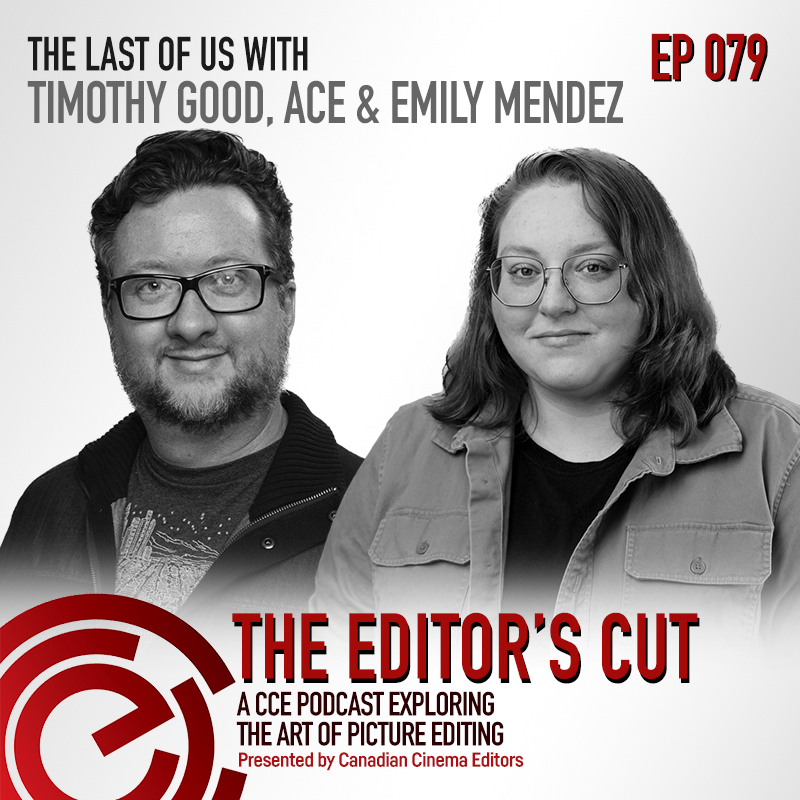
Episode 079 – The Last of Us with Timothy Good, ACE and Emily Mendez

TEC EP079: The Last of Us with Timothy Good, ACE and Emily Mendez

Episode 079 - The Last of Us with Timothy Good, ACE and Emily Mendez

In this episode Sarah Taylor sits down with the editor’s of one of the most successful series this year - THE LAST OF US!

Timothy Good, ACE and Emily Mendez share their favourite episodes, how they co-edited together and what it felt like to work on such a popular series!

TEC EP079: The Last of Us with Timothy Good, ACE and Emily Mendez

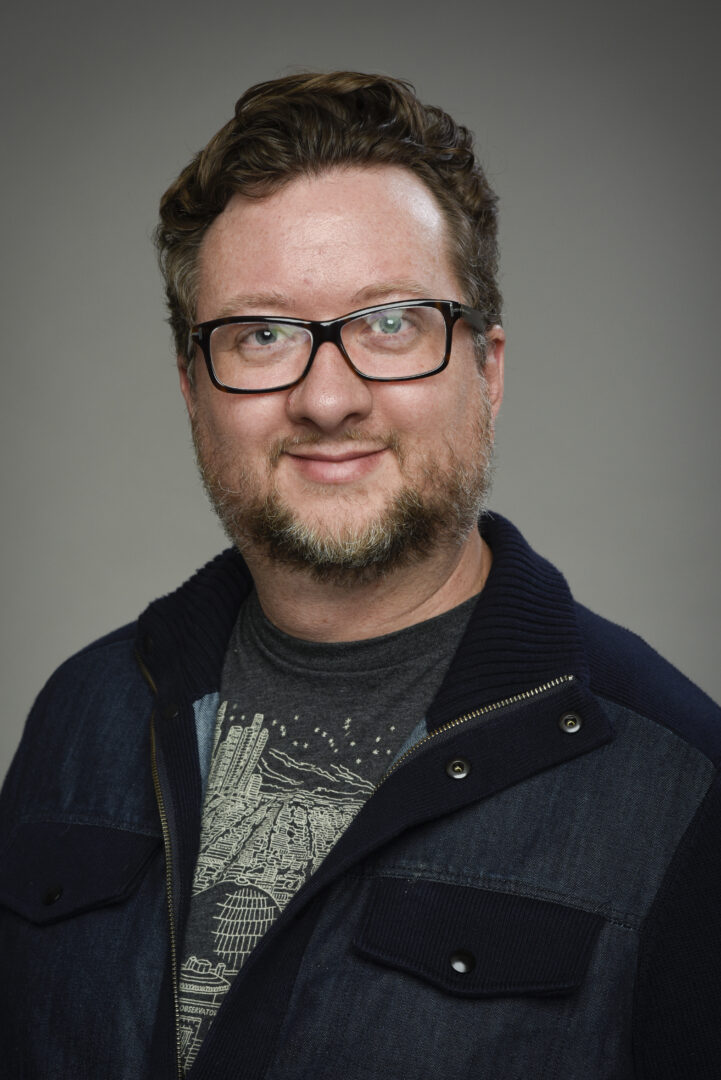
Film editor Timothy Good, ACE recently finished editing the hit series THE LAST OF US, cutting episodes including the first season finale and the acclaimed third episode, featuring the characters Bill and Frank. He has edited a wide variety of TV series and miniseries, including WHEN WE RISE, THE UMBRELLA ACADEMY and FRINGE. He also worked on classic series such as the original GOSSIP GIRL and THE O.C.

TEC EP079: The Last of Us with Timothy Good, ACE and Emily Mendez

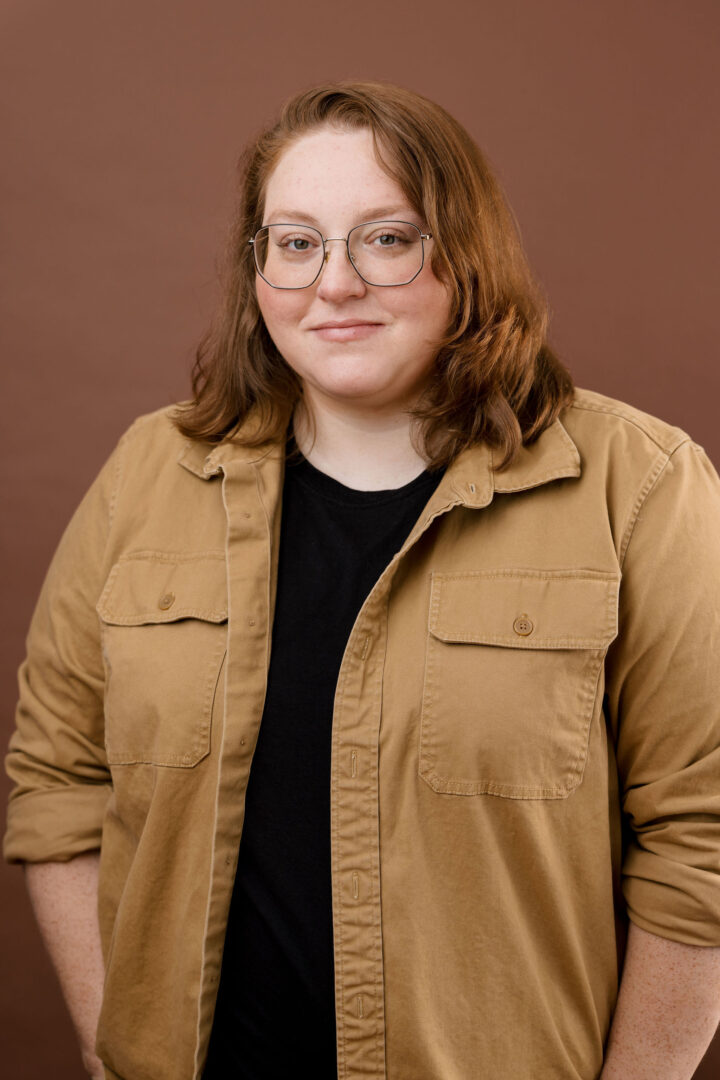
Emily Mendez grew up near Fort Worth, Texas, where she spent most of her childhood creating family videos with her siblings. After graduating as a film major from TCU, she made her way to Los Angeles where she received her masters degree in film editing at the American Film Institute. It was at AFI that she was lucky enough to study under many talented editors, including DONN CAMBERN, ACE, and FARREL LEVY, ACE, who encouraged her interest in visual storytelling to bloom. This mentorship led to Emily’s eventual entrance into television, where she has worked on the editorial teams for THE UMBRELLA ACADEMY, THE RESIDENT, LIGHT AS A FEATHER, ROSEWOOD, and most recently THE LAST OF US. During THE LAST OF US, Emily was given the opportunity to rise from assistant editor to co-editor alongside TIMOTHY GOOD, ACE, for four episodes. Her partnership with Tim has allowed Emily’s understanding of editorial architecture and design to flourish.

This episode is sponsored by DGC Alberta and Annex Pro.

Listen Here

The Editor’s Cut – Episode 079 – The Last of Us with Timothy Good, ACE and Emily Mendez

Sarah Taylor:

This episode was generously sponsored by the Director’s Guild of Canada, Alberta District Council and Annex Pro. If you reside in the province of Alberta like I do and are interested in editing, connect with the DGC Alberta to learn more. Come edit with me at the DGC Alberta District Council. 

Did you both anticipate the show to be as big as it was?

Timothy Good, ACE:

Okay. So, no, but it was funny because Craig’s like, “You guys, it’s good. And I know.” And we go, okay. The moment where I knew it would be a little bit bigger than I thought it would be was at the premiere when we were all together in this ridiculously huge tent. At midnight, the review embargo ended and all of the reviews could be released and we were still there. I remember being right next to Craig and Bella Ramsey and all the reviews started piling in and they were looking at them and they’re reading them and they were like, oh my God.

Sarah Taylor:

Also fan art started coming out more every week. That to me has just been awesome.

Hello and welcome to The Editor’s Cut. I’m your host Sarah Taylor. We would like to point out that the lands on which we have created this podcast and that many of you may be listening to us from, are part of ancestral territory. It is important for all of us to deeply acknowledge that we are on ancestral territory that has long served as a place where indigenous peoples have lived, met, and interacted. We honour, respect and recognize these nations that have never relinquished their rights or sovereign authority over the lands and waters on which we stand today.

We encourage you to reflect on the history of the land, the rich culture, the many contributions and the concerns that impact indigenous individuals and communities. Land acknowledgements are the start to a deeper action. 

Today I bring to you an interview with the editors of the series that broke record after record and the service I used to stream it here in Canada – The Last of Us. Timothy Good, ACE and Emily Mendez share their favorite episodes, how they co-edited together and what it felt like to work on such a popular series.


And action. Action. This is the Editor’s Cut.

Speaker 3:

A CCE podcast.

Sarah Taylor:

Exploring, exploring, exploring the art-

Speaker 5:

Of picture editing.

Sarah Taylor:

Tim and Emily, thank you so much for joining us on The Editor’s Cut. I am very excited and I think so are our listeners to talk all things The Last of Us, but also learn a little bit about the both of you and how you got into the world of post-production. So I think just to start things off, I’m curious about how you each became part of this epic record-breaking series, The Last of Us.

Timothy Good, ACE:

Well, thank you again, Sarah, so much for inviting us to be a part of this. We’re so excited to talk to everyone. We came as a package deal because originally Emily came as my assistant editor, and during the process of season one, she was elevated to co-editor alongside me, which was a tremendous experience for both me and I know for her. So we came together through a very strange happenstance way, which is I happen to be married to a screenwriter, and he is very good friends with Craig Maison, Craig Maison being the showrunner of The Last of Us. So I actually hung out with Craig in social situations where he and his wife and other writers would come over to our house and have little dinner parties and game nights. So at the time I was just sort of like the guy serving drinks and the husband in the corner who’s just making things happen for them.

Then one time Craig showed everyone the trailer for Chernobyl, his previous series, and I was floored. So I said to him, “I know I may just be the guy who’s helping being cool here, but I’m also a really great editor who I think I would love to work with you if the chance ever happened again.” And he says, “Oh yeah, I’ve seen your work. I’ve watched The Umbrella Academy. My kids are fans. Maybe that can happen.” I said, “Okay, well I’ll keep in touch then.” And over the next three years or so, while that all happened, I kept in touch and things weren’t going to work out at the time. There was some scheduling issues, blah da da da as usual. But then one of the directors from The Umbrella Academy, which we were just previously working on, said, “Hey, I just got hired on The Last of Us and I would love it if you guys could come and be a part of the team that works on my episodes.”

I said, “Well, I’ve been trying to get on this as well, so maybe there’s an opening here.” He went to them and they said, “Oh, unfortunately we’ve already hired everyone.” And we’re like, oh, no, disaster! So we said, all right, well that is what it is. But then as luck would have it, one of the editors had a scheduling issue themself and they had to drop out and then suddenly there was a spot available. I get this call saying, “If you can be in Calgary in four weeks, we think you can get you in here.”

Of course, I had to meet with everyone. I had to have the interviews. Then they said, ‘Well, who’s the assistant editor you want to bring?” I said, “Well, Emily is the assistant editor I’ve been working with and she’s been co-editing with me. She’s really fantastic. You will not regret this choice.” They said, “Okay.” And so we got the job and then next thing we knew, I was in Calgary working alongside the production. Emily was working remotely in Los Angeles as the assistant editor, and the first episode they gave us was episode three.

Sarah Taylor:

That’s an amazing first episode to work on. Holy moly.

Timothy Good, ACE:

Yes. No pressure.

Sarah Taylor:

No pressure whatsoever. Again, breaking records. So Emily, what was your journey? You’re assisting with Tim, you’re hearing about this Last of Us show. What were your thought processes when all of this was going on?

Emily:

When I first heard from Tim that he was in the talks of potentially going onto the show called The Last of Us, I was super excited because I played the games, I loved the games, and so I was like, “Tim, we have to do this.” So for me it was really just excitement and just feeling lucky that Tim wanted to take me on to the show with him. We’d been working for several years together at this point, so we’re kind of like a duo. So it just made sense for us to go together onto the show, and I’m really glad that he took me with him.

Sarah Taylor:

That’s wonderful. Tim, were you a fan of the game?

Timothy Good, ACE:

I have never played the game, nor have I since played the game. It was an odd – it wasn’t an odd decision. It was what turned out to be a really good decision. Because we were so sort of late to the hiring process, I didn’t really have time and I didn’t know anything much about the video game. Whereas Emily was like, “Tim, come on. We got to do this thing.” She’s like, “You don’t understand.” And I’m like, “I don’t understand.” But that’s kind of what made it interesting. When we were about to do it, I said, “Well, what if I decide not to play it?” Then everything that’s coming into the room, I will approach from the perspective of someone who knows nothing. Then along the way, what organically happened is that Emily would point things out to me that really helped me in terms of her knowledge of the game and what was important from the game’s perspective.

So suddenly there were, even when I was using certain techniques, she said, “That’s like the game.” Then I remember as I’m going through dailies and I see this red shirt that’s being lifted up out of a suitcase, I’m like, ahhh. And she goes, “No, no, no, no, no. That shirt is really important and you have to use it because it’s going to be a wonderful tease because it’s the most iconic shirt from the game of what Ellie wears. And if you show it a little bit earlier, I think it’s going to make the game folk go crazy. Meanwhile it still tells the story of what you’re doing at the moment, which is them packing up the truck.”

So having that kind of dynamic between the two of us was just a wonderful way to approach it because we were kind of satisfying both sides of the audience, the audience that knows nothing about it, and then the audience that is very much looking forward to seeing how the game is adapted. Emily, do you have anything else to add to that?

Emily:

Yeah, these are details that Craig and Neil would’ve eventually gotten into the cuts if we’d missed them, but I think it was very helpful because Tim and I were able to get those details in at an early stage for the cuts, so they were just ready to go. So there were things, even in that episode three where Ellie and Joel are in a gas station, she runs up to an arcade game and she’s like, “Oh, I used to have a friend that knew everything about this game.” I said to Tim, I was like, “You know who she’s talking about, right? This is an important character that, you know, she’s talking about Riley.” So we would have discussions like that just to get those details in early on, and I think that really helped our process a lot.

Sarah Taylor:

Yeah. Well, I feel like that was the big commentary that I heard is that there were so many great moments in the series that were from the game that people just were so excited about. So –


Timothy Good, ACE:

Yep.


Sarah Taylor:

Good job, both of you.

Timothy Good, ACE:

Thank you.

Sarah Taylor:

What were the episodes that you cut? You cut episode three.

Timothy Good, ACE:

I did the pilot and then episode three, episode four. Then Emily and I started teaming up on five, six, seven and nine.

Sarah Taylor:

Wow, so you basically did almost all of them.

Timothy Good, ACE:

Yeah. What was crazy is I did episode three and episode three was a beautiful script, the most beautiful script. They had hired Peter Hoar, who’s an amazing director from the UK who did this series It’s a Sin. He also did The Umbrella Academy pilot. So I kind of knew him sort of tangentially through that. So we did this episode and Craig was like, “This – You guys have unlocked what I’m trying to do, and I didn’t even really give you a roadmap, and I really am trying to figure out what the series is, and if it’s okay with you, I really kind of want to put you guys in front of as many episodes as possible. I think you guys get it.” That was a blessing, and it was also terrifying because then it’s like, oh gosh. So now we have to do all of these things, as many as we could.

And of course, we had some fantastic editors who would pinch hit and do an episode here or there to help us out. But in general, Craig wanted me to be doing as many as I could. Ultimately what I said to him is, at a certain point when I was juggling three episodes at once, and then we were about to start a fourth, I said, “There’s really no way to do this without losing the quality of what we’ve been putting into all of the episodes. So here’s an episode we’re about to start filming, and it’s the Riley episode.” So it’s something that Emily is so fond of, and she’s already proven to Craig through her sound design sort of amazing work. Also, I’ve been giving her scenes to edit along the way because that’s what I’ve always been doing with every assistant I work with, but specifically with Emily, because she has such a talent, such an eye, and such a fantastic sense of editing that I’ve been mentoring her along the way.

So Craig was aware of her talent. So I said to him, “Wouldn’t it be great if Emily can do this with me? Because number one, it’s another gay love story.” I did the gay love story between Bill and Frank, and that was between two men. It’s something I understand very intimately. And Emily is lesbian and understands very clearly what it would be like between two girls at a certain age. I said, “That’s going to really help the storytelling here. As much as I can do a good job with it, I bet you that she’s going to find things that other people will not.” And specifically me, I didn’t think I could find the details as much as she could. Craig said, “You know what? That’s a really good idea.” So he’s very open to giving chances to young artists, and I was just so excited about that, that I believe Emily, didn’t I call you, was it Christmas?

Emily:

It was around Christmas, yeah.

Sarah Taylor:

Little present for you.

Emily:

Yeah, it was the best present ever. So yeah, it was Christmas and then we went back after the break, and then we basically got started on Left Behind very soon after that.

Sarah Taylor:

So how did it feel for you, Emily, going through this process working – how long did you and Tim work together as assistant editor?

Emily:

We had been working together for a few years, right, Tim?

Timothy Good, ACE:

Yeah, like three years.

Emily:

Yeah, like around three years.

Timothy Good, ACE:

We co-edited before as well. That was the thing. It was really easy. I had known her through, she used to be the assistant to another editor, so I knew her even more than that. I actually knew her probably five years.

Emily:

Yeah.

Timothy Good, ACE:

And therefore I was very aware of her talent.

Sarah Taylor:

What did you feel like when you found out, okay, this is my episode now and I’m taking the reins? Was there pressure? Were you excited?

Emily:

It was really surreal. The good thing is I had been with Tim for three years at that point working with him, and Tim is so great as a mentor. He’ll let his assistants come in and just sit and he’ll talk through everything he’s doing. So up to this point, I had really taken advantage of that. So whenever I’d finish my work for the day, I would almost always go to Tim and be like, “Can I sit with you for a bit?” And stay in his room and just watch him edit, learn from him. I’ve been lucky enough to adapt a lot of the things Tim does in his work, because I think a lot of his approaches are really fantastic. So luckily for me, what Tim was doing for The Last of Us was really working for Craig.

So a lot of how I edit is very similar to him. So I felt that if I stayed that course, things were going to go well. There was a little bit of pressure, but ultimately I was co-editing with Tim, and so I had him to work with, and I just decided, I was like, well, this is it. I always kind of tell myself, you can sink or swim and this is my time to swim. So that was kinda how I approached it, and it really worked out, and it was so exciting. Honestly, I was mostly just excited.

Sarah Taylor:

Yeah, and what a great episode too to work on. One of the things that I reflected when I was thinking about chatting with both of you was how all these episodes we meet these characters that you fall in love with. I fell in love with Riley, I fell in love with Bill and his partner. We have not even an hour, maybe some of them are a little longer, but how are you creating these amazing characters that your audience is devastated, but already knowing that they’re probably going to die because it’s a zombie show.

Emily:

Yeah.

Sarah Taylor:

So you’re editing, and I’m sure the writing and everything else too, it all comes together. But what was your process going into these episodes knowing that these characters needed to be impactful, but also that it was just kind of like one episode they’re done?

Timothy Good, ACE:

So number one, it’s Craig and the scripts that he writes are really detailed, and the things that he values are very much about building characters. The other thing that I think that we did very well as editors is we didn’t just rush through the openings. The openings were critical in terms of the audience sort of attaching themselves to these characters. A lot of what I believe as an editor is that if people are talking while they’re being introduced, it’s hard to really get a sense of them because you’re not really getting a chance to study them without also simultaneously digesting what they’re saying. So a lot of the stuff that we would do is we would start things in a more silent fashion, either because they were scripted like that, or because it helped us like that, or I would find ways to slow scenes down when they became about character development so that you could actually focus on the faces of the characters without any dialogue.

So there’s an uninterrupted portion of time where you as the audience really get to think about who they are and wonder about their intentions and see their transitions. So it was about building the idea of the story from these characters’ point of views. I can give you a good example. In the very first episode, the pilot, Sarah is the daughter, and you have to love her. The plan, the strategy that we employed here was I wanted to tell every scene from her point of view and always focus on her transitions, her perspectives more than anyone else’s. Even when Joel was in the scene, even when Tommy was in the scene, it was all about how she experienced things. So she got a majority of the closeups, usually way more than the other characters, because at the time, I was hoping the audience would say, this is who …

And again, not the gamers, because the gamers know what’s going to happen with her, but the audience that doesn’t know the game is going to think that this is the person they’re going to follow this story with. When she dies at the 35 minute mark or so, it’s hopefully horrifying. You realize at that point, the point of view is about to shift to Joel, and you have now had an entirely formed character of Joel based on how he interacted with Sarah. So a lot of it was about building the character through sort of surreptitious means. Specifically with Bill, you don’t meet Frank until Bill has a whole life that he performs. You show what satisfies him, what makes him happy. What makes him happy is a nice steak and a booby trap that works and that’s incredibly satisfying. Then you go, okay, this is what this guy is. He’s okay being alone, but is that a life?

That was the question and that’s the conflict that Frank brings into it. With the two brothers, Henry and Sam, it was about finding sort of silent moments with them. It was much easier because of course they’re using ASL to communicate to begin with that you had this sort of cinematic language between the two of them. I’m just really aware that allowing people to have moments where they can study the characters allows them to be more connected, and to see the transitions that they’re making really gives you a sense of why they’re doing what they’re doing. So by the time you get to the point where the plot kicks in at the very end, and if they die or whatnot, you feel like that’s not fair to you because you’ve really grown to love these characters. I think that’s one of the ways that we do it. Anything I’m forgetting, Emily?

Emily:

I also just think it’s a testament to how great our cast is. We have incredible actors playing these roles. So Tim and I, were always just supporting them in the way that we watch through everything. So we’re watching through footage, we’re throwing down markers, we’re like, oh, I like this look that Ellie’s giving at this moment, or I like this look that Riley’s giving. So we’re marking down things that we think feel real for the characters from what we’ve gotten from the script, and then when we’re watching the dailies and how that’s feeling. So it’s great when you have these actors that are just incredible. So you have lots of options for those things.

So really, I also think that’s a reason why these characters are sticking with people. We have great people that we’re working with. We have a great script we’re working off of, and then it’s just Tim and I are going through and just finding all those moments and putting them together. One thing Tim always talks about is it’s like preparing your ingredients for a recipe. It’s like you’re going through and you’re taking all this time at the beginning to find everything that is correct and right for the characters. So I think that really helps us too.

Sarah Taylor:

Yeah, that’s a good analogy. I like that idea. You kind of started talking about workflow, so I’m curious how you typically both work. You’re watching all the dailies, you’re putting markers down. What is it exactly that you’re looking for? Anything that strikes your fancy, any look? What are you looking for when you’re watching dailies?

Timothy Good, ACE:

What are we looking for? What I love about being an editor is that you just get to be an armchair psychologist.

Sarah Taylor:

Yes.

Timothy Good, ACE:

It’s fantastic to be … and also as someone who I really, truly believe in the architecture of building scenes and sequences, I love to create sort of moments of, oh, this can be used for a moment where someone is feeling vulnerable. This can be used for a moment when they’re feeling strength. So all these little building blocks are accumulating. As I’m watching things, as Emily’s watching things, we go, this can be used to create this, this can be used to do this. All of these things are possibilities. So we just sort of have this wonderful amount of possibilities. And more than anything, when we watch something is I just try and react in the moment instinctually to what I feel is emotionally real and tells a really good story.

Any time I watch an actor in that character doing multiple things, I always go, this is a really great moment because this is A) really hard, I know for anyone to do. And for an actor and being in a character, I’m thinking specifically of when Ellie is being taught how to use the gun. She goes from crying in one moment to fascinated because she’s about to get the gun, to smiling about the gun, to then being like, I’m so cool with the gun.

Sarah Taylor:

Wow.

Timothy Good, ACE:

So she goes from four different emotions in one shot. I said, well, isn’t this how you connect to a character? You see how they can shift from one thing to the next. So those are the kind of things I am looking out for. It’s about finding those little tiny nuances. Sometimes the actors don’t even know they’re doing them, and the director doesn’t even see them because they’re running… everything is a take and then the next take. As editors, we have the luxury of watching again and again and again.

Emily:

I think all the little details that we can incorporate, each one that works towards making the character feel more real is helpful. So the example that I’m thinking of is, I was lucky enough to cut Riley and Ellie’s dance and kiss in episode seven. There was a little piece, and there was a take and a wide shot after they kiss. Bella was holding onto the werewolf mask the entire time and then dropped it at the very end. I thought to myself, how cute is this that she was so nervous that she doesn’t want to drop this … She doesn’t drop the mask, she doesn’t even think about it, because that’s not what she’s thinking about. Then she drops it at the end after they’ve kissed, and it’s kind of like this release of this tension and this fear and first love and all this stuff.

I just thought to myself when I was watching the dailies, I felt something when I watched that. I was like, that just felt so real to me, like a teenager. So I kept that little … I marked that piece, and I made sure to get it in my cut. It’s still in there now in the scene. It’s actually one of my favorite little moments in that whole scene. I think it’s incorporating those little things that make us feel, we hope that the audience will also feel the same. So that’s where I think that kind of helps in that way.

Sarah Taylor:

Oh, even you describing that makes me all misty.

Timothy Good, ACE:

Good.

Sarah Taylor:

So good. Yeah. I’m curious on the technical side of things, how many cameras were shooting for most of your scene? Was it 4K? Were you having to reframe anything? What were you getting on it?

Timothy Good, ACE:

Generally, we didn’t reframe much. I have to say the cinematographers were pretty incredible with their framing, as were the directors. I don’t remember if it was 4K or not.

Emily:

We’re working in Avid, we don’t get the 4K stuff because it’s-

Timothy Good, ACE:

Yeah, for sure not.

Emily:

Yeah, I’m not sure about that either. But it was generally around three cameras sometimes, sometimes less. I’d say on average though, three cameras, right? Sometimes two.

Timothy Good, ACE:

It was mostly, I would say more early on, it was more like two. Then later on it was a little more like three. When we did the battle sequences, it was four, at least four, and sometimes they would have what we would call in the past IMO cameras, small little stunt cameras here and there for little pieces. But yeah, they were very smart in terms of getting really sharp, really good A cameras work. So that’s a majority of, they had a really great operator, Neil Bryant, who is just a really good artist when it comes to working with the camera.

The approach of The Last of Us was always this grounded approach where you’re with these characters from their level, and more than not, you’re experiencing the world from their perspective as opposed to very rarely would we go outside of their perspectives and show the world. Obviously we would once in a while because sometimes it’s just too claustrophobic to be that close with them. But more often than not, that was the strategy to bring you into that world. So a lot of times that A camera had this sort of lyrical movement that was more often than not the thing that we would go for.

Sarah Taylor:

Well, it’s great to hear that you didn’t have to battle any sort of technical issues.

Timothy Good, ACE:

Didn’t seem to be, no.

Sarah Taylor:

That’s great.

Timothy Good, ACE:

We always think about the creative aspect of it anyway. It’s like, what does this shot even mean from a psychological and emotional perspective? Do we need it? There may be three cameras, but the other two, even they’ll say, we had to get these other two because they were sitting around and we had to cover ourselves, but we don’t necessarily need them unless we need them.

Sarah Taylor:

Yeah. Well, that’s so great. Okay, I want to dive into episode three and then episode seven since you two both worked on those.

Timothy Good, ACE:

Sure, yeah. Of course.

Sarah Taylor:

So when you read the script for episode three, Tim, were you instantly taken into that world of them as a … how did you feel when you read that script knowing that this was your episode?

Timothy Good, ACE:

This was the only opportunity I had as the editor to experience this episode. It was insanely moving to me, A, because I felt like I understood these characters. I truly am a Frank, and I am married to a Bill, which is really kind of weird.

Sarah Taylor:

Perfect.

Timothy Good, ACE:

We do have a little place on the East Coast, which I’m at right now actually, and it does have a fence. Craig’s writing was so just incredibly vivid in terms of the relationship he was building about a couple over time. I think that as someone who’s been together with my husband for 20 years now, I understood those scenes, those relationships. But I also very much remember the experience of when you first meet people and how you’re trying to … and especially 20 some years ago when it was a little bit harder and you weren’t sure if you would be safe by talking to people and trying to connect with them, you just weren’t sure. A lot of those scenes, to me felt so real and so just beautiful that I was like, I know I can make a difference in this episode. I feel these feelings myself. So when we started doing it, I just was determined to make sure that the episode reached its full potential.

Sarah Taylor:

Well, I think you were successful on that.

Timothy Good, ACE:

Thank you. It was a pure – just a wonderful opportunity to add nuance to what I felt was just a beautifully drawn script to begin with.

Sarah Taylor:

And something that we don’t always see on screen. I think that was pretty remarkable. Did you read the feedback coming out after it came out?

Timothy Good, ACE:

Yes.

Sarah Taylor:

How did you feel about all that? That must have felt pretty good.

Timothy Good, ACE:

I loved it. And here’s the thing, this is what I love. I loved the positive and I loved the negatives. The positive was amazing to me because A) I didn’t understand the extent to which this would be felt by so many. I knew it was good. I knew that it would have an impact. I didn’t know the extent of it. For me, the best thing was to have people call me or write me and say, I talked to my mom the day after and she wanted to talk to me about this. I was connecting with my family more. My dad called me and said, oh, I kind of understand, and that those guys were great, and this is okay. I’m like, well, this is good. Because ultimately that was my goal personally, was to show not necessarily like, look, we’re equal people, blah, blah, blah.

These are – love is the same no matter who’s in it. A lot of people said, I recognize myself in these characters, which is again, what I was going for as an editor and what I think they were going for as on a story base as well. So for me, it was wonderful. Then the negative response was awesome because it meant to me that it worked and it meant that it was wildly successful and they recognized it was wildly successful. So they did their very best to try and say, this isn’t good, this isn’t good. So they tried to review bomb it, they tried to say, no, this is wrong, blah, blah, blah. I’m like, great, because this means that the loudest people are the ones that are losing. And therefore, I feel, I felt really good about it because I knew that they knew that it was showing a universal human condition.

Earlier today, I just spoke to students in Denmark because they were obsessed with how the episode made them feel. These are people far, far away, half way across the world. So I just love the fact that it has done that for so many, and it’s always going to have some people who hate you, and that’s okay.

Sarah Taylor:

Yep. I think I remember too, the numbers went up the next … the numbers progressively got higher and higher after that episode. So it’s like, success.

Timothy Good, ACE:

Yes. It’s like, sorry guys, we can’t do that.

Sarah Taylor:

You’re wrong.

Timothy Good, ACE:

Yeah.

Sarah Taylor:

Emily, what was it like cutting episode seven? Your description of just that one dropping of the mask was, what a beautiful thing to capture. Also I know that feeling as a teenager, or even just anybody kissing somebody for the first time, right?

Timothy Good, ACE:

Yeah.

Sarah Taylor:

So tell me what it was like for you to cut this.

Emily:

It was so meaningful getting to cut it. I have experienced that same thing of falling in love with your best friend as a teenager. Does she like me? Does she not? So I just felt like I just understood what those feelings were. So to be able to visually get those up on screen, it’s really great. I think that the Left Behind episode is so interesting because it’s a very unique episode and it just felt so different from everything else. So to get to work on that just alone I think was awesome. But the character of Riley is very special to me. The Left Behind portion of the game was always my favorite.

So getting to work on scenes with them, it was really kind of a dream come true for me. The mall is so cool. Just the fact that they’re in a mall, I just think that’s cool. That’s just a detail that I just personally love. I’ve always loved things set in malls. I don’t know why, but for me, I loved it.

Sarah Taylor:

Did you grow up in the mall? Because I spent a lot of my youth at the mall.

Emily:

Yeah.

Sarah Taylor:

It’s nostalgic, right?

Emily:

Nostalgic, really cool. Then you have the arcades. So we have all these really cool scenes in that episode that are just fun to work on. I’m just watching the dailies, and I’m just like, this is just fun to watch. So that episode for me was just a blast. I had the best time.

Sarah Taylor:

So my daughter, who’s seven, I don’t know if it’s appropriate for her to be watching the show or not, but she did. She watched with us and I was like, “Hey, I’m going to talk to the editors today. Do you have anything you want to say or any questions?” She said, “In season two, if there’s another mall thing, tell them not to include too much American Girl dolls because they’re really scary.” The clip you put in was really scary. She was more scared of American Girl dolls than the zombies.

Emily:

Oh my gosh, that’s so funny.

Sarah Taylor:

Good detail.

Emily:

I agree. They are pretty creepy. I love it.

Sarah Taylor:

Anyway, I think episode seven and episode three were probably, I’m going to guess your favorite episodes. I could be wrong, but what was the favorite scene that you got to edit and why?

Emily:

My favorite scene has to be the dance and the kiss for Ellie and Riley. That scene to me, just ‘cause since that was first episode that I was co-editing. When I got to that scene and I was able to cut that scene, and then I showed it to Tim and I got to hear his reaction. We were still remote when we were working on that scene, but he called me on the phone and he was freaking out, so excited. I was like, I got this. That was the scene where I kind of was like, okay, I can do this kind of in a way since I had been moving up and all this pressure. I think that that scene means so much to me on so many different levels of my life, and I am very, very proud of it.

Timothy Good, ACE:

Oh, yeah, she destroyed it. Then for me, it could be one or the other. One of my favorite sequences is the Bill and Frank meet cute in the dining room, which I just love because it has so many instances where timing was so critical that editorially, I had to make sure that when he bumps… he runs through the door of the kitchen, Frank has to be suitably like, oh, I was caught. But then Bill’s like, was I caught though looking too excited? Then there’s this sort of dance between the two of them throughout that dinner sequence where they’re trying to figure out … Frank’s like, “I think you might be…” and Bill’s like, “I hope he doesn’t think that he knows who I am.” So those two dynamics butting up against each other made for a really fascinating dynamic at first. And then when it goes into the piano sequence, Frank makes this really beautiful transition.

At first, he’s sort of playing with Bill and going, “I know who you are.” He’s like, “Oh, I think you are the kind of person who knows exactly what wine to put with these things.” And he’s like, ah, what is all this piano stuff? But then by the end of it, Bill shows who he is in this, using the piano song, a Linda Ronstadt song, and Frank has this beautiful transition where he realizes, oh, I was just playing with him and now he’s opened up and I recognize him as someone so beautiful and so worthy, and I never intended to feel this way.

So that sequence ends on Frank and it didn’t have to. It could have ended when Bill left and we could have cut right upstairs. But I said, no, no, no, no. It has to end with Frank because he’s now recognizing that I just came in for a couple of lunches, but I don’t think I’m leaving because I think I’m falling in love with this person that I did not anticipate.

For me to be able to take a scene from that beginning to that end from one character’s perspective, I don’t know. As a gay man, being able to show the meeting of these two people together and able to show how that feels when you first meet, to be able to bring my own experiences into it, that’s going to have to be the most important one for me, just to think about what Emily just said, from a pure emotional standpoint from my own life. My other one is when Joel teaches her how to use a gun, but that’s because that was a really cool scene too. But emotionally speaking, it’s got to be the dining table.


Sarah Taylor:

For sure.

Emily:

Yeah. My second one, I have a second one too, by the way, Tim. It’s Ellie’s birth. That’s my second.

Sarah Taylor:

Oh, that was so good.

Emily:

So I was able to cut that whole sequence of Anna running through the woods and into the house. Then she has Ellie. That is a close second for me. That was a very fun sequence to work on.

Timothy Good, ACE:

Yeah, once again, because I knew that she was such a big Ashley fan from the game. So I’m like, “Emily, I think you’re doing the opening.” And she was like, “Yes.”

Sarah Taylor:

Yes, I am.

Emily:

It was so much fun. That opening has … you’re scared because she’s running. There’s a horror element, and then she’s giving birth, and then you’ve got the whole thing once she gets in the house and gets upstairs. You have the infected breaking in, and so you hear the infected. So we got to play with sound a lot. Everything about that sequence was so much fun to work on.

Sarah Taylor:

This is awesome. Were you referring to them as the infected and not zombies?

Timothy Good, ACE:

Yeah, we were pretty good about that.

Emily:

We pretty much did. Yeah, yeah.

Timothy Good, ACE:

It was kind of like, once we understood from an early point, because in episode three, we had the sequence where Ellie has to kill an infected underneath the Cumberland Farms. Craig’s directive was, “I don’t want him to be scary. I want him to be sad. This used to be a person that is no longer there, and I want it to not be this thing that’s trying to get you. I want it to be this thing to be mourned.” So when I understood that, it was easier to think of them as infected, as opposed to zombies, because the way Craig was thinking about them himself was as these sort of … yes, they’re obstacles, but they’re obstacles because they’re behaving in a way that nature has made them. So they’re not necessarily zombie enemies. They are just obstacles and they once were human.

Sarah Taylor:

Well, that’s special. I like that.

Timothy Good, ACE:

Yeah.

Sarah Taylor:

What would you say was the most challenging aspect of working on this show?

Timothy Good, ACE:

Ooh, challenging. That’s a really good question. I would want to say that it was time, but it wasn’t because I felt like once we had this rhythm going, Emily and I just were in a flow this whole time. And yes, there were times when we had to move a little faster than others, but not much. I think that overall, the biggest sort of challenge was making sure that we were consistent across episodes because there’s different directors who will come in and they’ll have different cinematographers who come in. So our biggest challenge was to make sure that everything was still feeling like it was connected to the same authorship. Craig had a really strong feeling of how everything was going to come together. So for us, it was making sure that everything, despite having multiple different creative people at different times, felt of the same cloth.

Emily:

I totally agree. Time is the first thing that came to my mind too, which is interesting because you’re right, we sometimes had a lot of time, but also sometimes didn’t. So time was one of those things that… it was a back and forth. But what is interesting is when we were co-editing, we were putting our scenes together and they were fitting together very well. Tim always says, you cannot tell which scenes are his or mine, which is I think always a nice compliment. But that would be something that you would think would’ve been a challenge. Although I’d say that it ended up working out really well.

Timothy Good, ACE:

A lot of that is because we would talk back and forth with each other’s scenes. So I will give Emily all the credit in the world for pushing me to make sure I’m finding character beats that I might have been missing. Then I would say, “Hey, what about if you did it like this?” So by feeding back with each other, we were heading towards the same goals.

Emily:

Always pushing each other and in a good way. Also, we have similar approaches, so we’re always focusing on story and character. I think when you’re doing that from the beginning, then all those things start to work together anyways. So yeah, I think that that process was really fun. It was just always so much fun.

Timothy Good, ACE:

Yeah, it really was. Craig Maison creates a whole feeling of a family. He’s really good to his crews. We would have Dungeons and Dragons nights that he would host, and he’s like, “If you’d like to stay and play some Dungeons and Dragons with me, feel free. If not, please go home and have a night off.”

Emily:

And 13 people would show up for Dungeons and Dragons on a Tuesday at six. We would all stop working and go and play in the kitchen, and it was the best thing ever. So much fun.

Timothy Good, ACE:

Yeah. So we were all very, very connected together. And he wanted that. He wanted everyone as close to each other as possible. We became very close with the visual effects team who are all Canadian. It was awesome. They were so fantastic, and we were very close to the sound team. We would go to the sound mixes and make sure that they understood all of the things that we knew from the picture editing side. So he just wanted to make the sort of creative interconnections between all these characters, all of us together. It worked out really well because there was never any sort of miscommunication per se, because we were right next to each other and we would always say, oh, no, no, not that, this. As opposed to, oh my gosh, you did three hours of work, and that’s not what we asked for at all. No, it was always 10 seconds later, we’d be on the right direction.

Sarah Taylor:

That’s amazing. I think that’s a huge thing that I’ve noticed in my career too. When you’re working with a team that you truly feel like you can collaborate with, it just takes the projects to the next level. It’s always going to end up getting better if you can just be on the same page and feel that comradery that you’re describing.

Timothy Good, ACE:

Hundred percent.

Emily:

Definitely. Then Craig loves puzzles, and Tim and I love puzzles, and so sometimes it’s just us sitting there trying to figure out puzzles. Editing is kind of a puzzle.

Sarah Taylor:

Yeah, totally.

Emily:

That’s always changing, always evolving. So it’s the ultimate puzzle. So I feel like all of us kind of geek out and love it, so that also kind of connects us.

Timothy Good, ACE:

Yeah, for sure.

Sarah Taylor:

There’s been other editors who’ve mentioned that that’s something that they do as well. They’ll have a puzzle going on at the same time as editing.

Timothy Good, ACE:

Oh, wow.

Sarah Taylor:

So they could go and sit back at the table and work on the puzzle if they’re stuck in an edit. I was like-

Timothy Good, ACE:

Ooh, I love that.

Sarah Taylor:

Another person mentioned something about Lego, having a Lego set to build. So anyway.

Timothy Good, ACE:

I can see that. Totally.

Sarah Taylor:

Okay. So you mentioned that, Tim, you came to Alberta, which I’m from Alberta, so of course I want to talk a little bit about the landscape and where you got to shoot, but you also got to be here to cut. So tell me about your experience.

Timothy Good, ACE:

Well, it was so spectacular because they graciously set us up in the production offices just outside Calgary. So I had an editing room there, but then I also had, because we were still in the COVID era, I had an editing room in the apartment that we were in the BeltLine area.

Sarah Taylor:

Nice.

Timothy Good, ACE:

Oh, it was beautiful. I loved the BeltLine. I loved all of Calgary, actually. The first day I was there, I just went to the Beau River and I’m like, oh my God, this is absolutely beautiful. I just loved how easy it was to get around, how friendly everyone was. It was just a uniquely wonderful place to work and be. And having the Canadian Rockies just in your backyard is stunning. So on weekends, I would just go, I’m going to go up there. So I would go to Lake Louise and Banff, all those fantastic places. And of course the locals would say, “Oh, you have really go out further if you want to see the real deal.” And I go, well I’m not going to risk that one.

Sarah Taylor:

You’re like, I do have to work still.

Timothy Good, ACE:

I want to come back. So you guys can probably do that. But it was really great. All of us were there as a team, and the visual effects team was there. Like I said, they were all either from Vancouver or Calgary. So they really took me under their wing and showed me around and showed me all about what’s the best kind of poutine, the very best of this. Oh, don’t have that. Have this. If you’re going to go here, go there. So I really had a wonderful experience there. They were filming all over Alberta. They would go as far as Olds up north and Fort McLeod in the south, and then up to, oh gosh, in the mountains before Banff. It’s called Canmore.

Sarah Taylor:

Canmore, yeah.

Timothy Good, ACE:

Yeah. Canmore was where they filmed the fort in episode six where Tommy is with Maria. So all of that was absolutely stunning. Then, oh gosh, the eighth episode was filmed in this really cold area. It’s a national park. I forget what it’s called, but I remember the very first shot. I’m like, “That is a visual effects shot, right?” They’re like, “Nope, that’s real. That’s a real shot. That’s a really cold, cold, cold place.”

Sarah Taylor:

That’s a winter.

Timothy Good, ACE:

I think they had to add something in visual effects just to make sure people knew it was real, which was ironic, is that they literally were like, this looks too much like a visual effect. How can we make it look more real? Oh my gosh. I’m like, but it is real. So that was a strange thing. But I absolutely loved being in Canada. It was a uniquely wonderful experience to be around. The crew was all Canadian, Calgary based, wonderful individuals.

I remember walking down a street in the BeltLine and the art department’s having a party in one of the bar houses. I forget what it’s called. It’s a really cool little house bar. They said, “Hey, we’re having a party. Come in. We saw you outside.” I’m like, oh my gosh. So next thing you know, we’re all hanging out together. Again, this whole idea of your crew is all together and everyone is in the same place so that you can collaborate in the most efficient and creative way possible. So from that perspective, I was so excited about being in Calgary, and I look forward to season two when unfortunately we’re going to Vancouver, but I will always want to come back to Calgary. I know it so intimately at this point, and I really want to return as often as I can.

Sarah Taylor:

Well, we will welcome you with open arms.

Timothy Good, ACE:

Thank you.

Sarah Taylor:

What is something that you will take away from this experience that you’ll take to your projects going forward? Any techniques you learned or a way of being?

Emily:

One thing that Tim and I started using on … this is more technical Avid thing, but one thing that we started using was real time de verb in our tracks, which we had never really used before, but helps with things for transitions and music that you want to end. You just have this track that anything you throw down, you get a long de verb tail. And so that was one thing that we were using a lot and I think we’ll probably continue to use that.


Timothy Good, ACE:

Oh, we’ll continue to use that. That was a great, wonderful thing because a lot of times, and especially with the way Gustavo … I’m going to screw up the name, Santoaya. It’ll be close enough. How he scores is he doesn’t score necessarily to the pictures. He just creates themes and thematics and relies on you as the editors of the piece or the music editors to create the structure of the cues. So when we were trying to find endings for things, we would say, well, this will be the last note of the piece. Then if we just throw that note on the bottom track, it can ring out and then they can fix that on the mixing stage. So that’s why we use that quite a bit. It was easier to create score that way. That was a lot of fun.

From my perspective, what I’ve learned a lot, and a lot of it was from what I call … not what I call, what is the brilliance of Craig Maison in my opinion, is that he just understands how not to push too hard on an emotion. He says it’s going to be better if you allow the audience to experience the emotion versus telling them how to feel in this moment. So what I learned from him was restraint and the ability to not try to force things. I always tell Emily, I don’t stop learning. I’ve been doing this for 20 years, but I’m never going to stop learning. Because every time you work with someone else, you get their entire lifetime of knowledge, their entire creative life, and they’re going to start exposing what they have learned. Then that can be osmasized into your own processes. I find that that’s always the case. In this specific instance, that was the thing I really, really, truly felt like I learned so much from Craig was how to just really allow the audience to do a lot of the work.

Emily:

And not only just restraint in picture, but also I was learning a lot of restraint in sound design too. That was something that I think we used with Craig a lot. I think that was also a really awesome tool, was to make things feel a little more real, sometimes it is about holding back and not doing it too much or too loud. Sometimes it’s leaning into the silence. That was something we also worked on a lot with Craig that I definitely will use in the future.

Sarah Taylor:

Did you both anticipate the show to be as big as it was?

Timothy Good, ACE:

Okay. No, but it was funny because Craig’s like, “You guys, it’s good. And I know.” We go, okay. I said, “Well, we hope it’s good.” He goes, “Yeah, me too. Obviously we all hope it’s good.” I think the moment where I knew it would be a little bit bigger than I thought it would be was at the premiere when we were all together in this ridiculously huge tent. It was pouring rain outside in Los Angeles, which makes no sense, but that’s what it was. At midnight, the review embargo ended and all of the reviews could be released. We were still there at that moment.

I remember being right next to Craig and Bella Ramsey and all the reviews started piling in and they were looking at them and they’re reading them, and they were like, “Oh my God.” They were just going, “This is really good.” Bella Ramsey is a revelation. And they’re like, “Wow, you guys, this is going to be something.” And I was like, okay, maybe this will work. That’s when I knew it would be something. But when it really came out of the gate like that, and then when I saw that every week it was gaining viewers, that just doesn’t happen.

Sarah Taylor:

No.

Timothy Good, ACE:

That’s why I was like, wow, okay, this is really something.

Emily:

Yeah. Then like, also fan art started coming out more every week. We would be playing Dungeons and Dragons, and then everyone would be sharing the fan art from the week that they’d been seeing posted. We’d all be looking at it and be like, oh my God, that’s so cool. So it’s like, as the episodes were coming out, we were still working. That was really fun to see the fan … some of the fan art is just incredible.

Timothy Good, ACE:

Oh yeah.

Emily:

The scenes, how they touched people and what it means to them, like a specific scene. That to me has just been awesome.

Sarah Taylor:

Wow. Did it shift how you were working after all of the hype was happening, you were still finishing things. Did it shift any feelings when you were working?

Timothy Good, ACE:

No, we were really close to the end. We were mostly doing sound mixes at that point. What was great, and I don’t think we would ever change how we worked, I hope. But it was a very detailed process the whole time to the sound mixes are, Craig processes things through sound. He loves sound so much. So all of our sound mixes were big detail fests and again, best about – do we need this sound or should we remove this sound? So it was always, everything was picked over to the point where he was really happy with it. So near the end, we were just finishing those sound mixes and it was great to know that the last episode, as we were putting the last little touches on it, we’re like, I think it’s going to work. I think people are going to like it.

Sarah Taylor:

And they did.

Timothy Good, ACE:

Yeah.

Sarah Taylor:

My last question, what’s the next thing for both of you, other than season two, but is there anything coming in between that we should keep our eyes open for?

Timothy Good, ACE:

Oh my goodness, I have nothing. It’s the weirdest thing because I was working kind of straight through for three years once COVID hit. So I was doing multiple things with overlaps, and I told myself this year, you need to take for yourself and to return to the wild, as I like to call it, and become a human being again, and re-experiencing life. Not only that, but because of the enormous success of the show, we’ve been so lucky and grateful that we’ve been able to sort of go to places and talk about the work we’ve done. We were just in Las Vegas altogether for NAB. We were on a panel there. And tomorrow I will be flying to Norway to be part of a panel in Bergen about Nordic Media Days, where again, they have invited me as the editor of episode three because they really want to discuss the processes of how editing helped make it a wonderful episode.

I’m so excited about doing that. So I’m trying to keep myself open to these opportunities because one never knows when these things are ever going to happen again in their lives. So I might as well just enjoy it while I have it, and luckily I can do that right now and so I can be ready for a season two when it comes.

Sarah Taylor:

Oh, love it. What about you, Emily? Anything on the horizon?

Emily:

I’m in the same boat as Tim. I am also taking a break. I was also working all that time that he was working, and so I’m mostly just spending time with family, like my wife, my dogs, working on some house projects, getting caught up on all those things that I wasn’t able to do when we were working before.

Timothy Good, ACE:

And not only that, but she was working harder than I was because she was sometimes doing two jobs on those times.

Emily:

Yes, right.

Timothy Good, ACE:

Yeah, she gets all the benefits.

Sarah Taylor:

I think that it’s really great to hear this, that you’re choosing to take a break. I think often we forget that we are human and we’re allowed to stop.

Timothy Good, ACE:

Yeah, and also how can we have any kind of insight into experiences without experiencing things ourselves.

Sarah Taylor:

Yeah, and I think your conversation about episode three and episode seven is a reminder that who we have behind screen, who we have in our crew in the writer’s room really makes a difference to the quality of the messaging, the story, everything. So I think that’s something to remember, that we need to fill all of the spaces with diverse individuals who have different lived experience than the dominant culture. So I’m really glad to hear that was the case.

Timothy Good, ACE:

Wonderful. Thank you.

Sarah Taylor:

Well, thank you for taking time to sit with us and chat with us and answer all of our questions. The season was a joy to watch, and I’m excited to follow both of your careers going forward, and I can’t wait for season two.

Emily:

Oh, thank you so much.

Timothy Good, ACE:

Thank you so much, Sarah. Thank you.

Sarah Taylor:

Thank you so much for joining us today, and a big thanks goes to Tim and Emily for taking the time to sit with me. This episode wraps up our fifth season of The Editor’s Cut. If there are any editors that you would love to hear from, please let us know. You can reach us at podcast@cceditors.ca. In the meantime, have a listen to some of our past episodes or our French podcast, LA Art de Montage. We have lots of gems. We’ll be back in September. I hope you all can take some time, like Tim and Emily are to live life and bring new experiences to your edit suites.

A special thanks goes to Kim McTaggert CCE, Alison Dowler and Catie Disabato. The main title sound design was created by Jane Tattersall, additional ADR recording by Andrea Rush. Original music created by Chad Blaine and sound straight. This episode was mixed and mastered by Tony Bao. The CCE is proud to support HireBIPOC. HireBIPOC is the definitive and ubiquitous industry-wide roster of Canadian bipoc creatives and crew working in screen-based industries. Check out hirebipoc.ca to hire your next crew or create a profile and get hired.

Speaker 5:

The CCE is a nonprofit organization with the goal of bettering the art and science of picture editing. If you wish to become a CCE member, please visit our website, www.cceditors.ca. Join our great community of Canadian editors for more related info.



Subscribe Wherever You Get Your Podcasts

What do you want to hear on The Editors Cut?

Please send along any topics you would like us to cover or editors you would love to hear from:

Credits

A special thanks goes to

Kim McTaggart, CCE

Alison Dowler

Hayley Reid-Ginis

Hosted and Produced by

Sarah Taylor

Main Title Sound Design by

Jane Tattersall

ADR Recording by

Andrea Rusch

Mixed and Mastered by

Tony Bao

Original Music by

Chad Blain

Sponsor Narration by

Paul Winestock

Sponsored by

DGC Alberta

Annex Pro

Categories
Articles

2023 Leo Award Nominees

2023 Leo Award Nominees

LEO Awards 2021

Congratulations to our CCE members who were nominated for a Leo Award!

Best Picture Editing, Motion Picture
  • Simone Smith, CCE – Float
Best Picture Editing, Television Movie
  • Allan Lee, CCE – Cruel Instruction
  • Gordon Remple, CCE – Monster High: The Movie
  • Saeed Vahidi – Rip In Time
Best Picture Editing, Short Drama
  • Kyle Sanborn – Cloud Striker
Best Picture Editing, Dramatic Series
  • Allan Lee, CCE (+ 1 editor) – Flowers in the Attic: The Origin – The Marriage
  • Christopher Smith – Warrior Nun – Jeremiah 29:13
Best Picture Editing, Feature Length
  • Greg Ng, CCE – The Grizzlie Truth
Best Picture Editing, Short Documentary
  • Alan Flett, CCE: The Teenager And The Lost Maya City
Best Picture Editing, Documentary Series
  • Graham Kew (+1 editor) – Women Who Rock – Defiance
Best Picture Editing, Information, Lifestyle or Reality Series
  • Tim Wanlin, CCE (+1 editor) – Deadman’s Curse – The Charnley Clues
Best Picture Editing, Youth or Children’s Program or Series
  • Meagan Oravec – Run Jump Play
Best Picture Editing, Music, Comedy or Variety Program or Series
  • Jon Anctil, CCE – Fakes – A Cup of Ambition
  • Lisa Binkley, CCE – Reginald The Vampire – Fools in Love
Categories
Past Events

CCE Health Talk –  Mental Health in the Edit Suite

CCE Health Talk – Mental Health in the Edit Suite
May 17 and June 7, 2023

This event took place on May 17 and June 7, 2023

Presented in English / Atelier en anglais

Join fellow editors and mental health advocate Malikkah Rollins from DocuMentality to explore issues that impact many editors but often go unspoken. In these two online sessions, we will discuss:

Wednesday May 17 – 7PM EDT

  • Results of qualitative research DocuMentality conducted with filmmakers around their mental health and well-being.
  • Secondary trauma that some editors experience (what it is and how to recognize)
  • Share how others may be addressing isolation in the editing profession

Wednesday June 7 – 7PM EDT

  • Sharing of ideas for how they can self and group advocate (for all sorts of issues like long work hours)
  • How to handle emotions facing co-workers of the overly stressful or critical type.

The following bio is only written in the presenting language.

Malikkah RollinMalikkah is a co-founder of  DocuMentality, an initiative designed to elevate the conversation around mental health in the global documentary industry. She is a trained psychotherapist which she served as for 10 years, specializing in supporting young adults experiencing mental health challenges. In her full-time life, she is the Director of Industry and Education at DOC NYC, the largest doc film festival in the United States. She’s been invited to speak or mentor with various film organizations such as TIFF, EFM, Documentary Campus, Sundance and Gotham Labs. She is a member of Brown Girl Doc Mafia, on the board of Women in Film and Video-DC and was an independent doc producer for 6 years. When she’s not busy watching films, Malikkah likes to plot her next international travel adventure.

Master Series 2023 Sponsor Banner

About the Event

May / June 2023

7pm EDT

Virtual

Categories
The Editors Cut

Episode 078 – Everything Everywhere All at Once with Paul Rogers

The Editor's Cut - Episode 078: Everything Everywhere All at Once with Paul Rogers

Episode 078 - Everything Everywhere All at Once with Paul Rogers

In this episode Sarah Taylor sits down with Paul Rogers.

This episode is sponsored by DGC Alberta.

Paul Rogers - TEC 078
The Editor's Cut - Episode 078: Everything Everywhere All at Once with Paul Rogers

Paul Rogers began his professional career in 2007 editing documentary films for public television in Alabama, winning 4 Emmy Awards. He made the jump to Los Angeles in 2013 and kicked off a career in music videos with the DANIELS’ directed ‘Turn Down For What’ and further collaborated with DANIELS on the short films ‘Interesting Ball’ and ‘Boat Dad’ as well as one half of the duo, Daniel Scheinert, on the A24 feature film ‘The Death of Dick Long,’ which premiered at Sundance in 2018. He dipped back into documentaries in 2020 with ‘You Cannot Kill David Arquette,’ an official SXSW selection and winner of the Adobe Editing Award. His next film is Isaiah Saxon’s debut feature ‘The Legend of Ochi.’ Along with feature films, he has edited for the Eric Andre Show, Kendrick Lamar, Flying Lotus, Haim, and Thundercat among others. Paul has also collaborated extensively with director Kahlil Joseph on projects such as ‘Lemonade’ for Beyonce, ‘Process’ for Sampha, and Joseph’s most recent work ‘BLK NWS.’ Paul is a partner in the editorial company PARALLAX located in Los Angeles.

Sarah and Paul discuss his career journey and how he approached the editing behind Everything Everywhere All At Once.

The Editor's Cut - Episode 078: Everything Everywhere All at Once with Paul Rogers

Everything Everywhere All At Once Trailer:


This episode was generously sponsored by DGC Alberta
 

The short film that inspired Paul to go to LA!

Listen Here

The Editor’s Cut – Episode 078 – Everything Everywhere All at Once with Paul Rogers

 Sarah Taylor: 

This episode was generously sponsored by the Directors Guild of Canada, Alberta District Council. If you reside in the province of Alberta and are interested in editing, contact the DGC Alberta to learn more.

Paul Rogers:

We wanted to stay in the wides as much as we could, and we wanted to not be cutting around when we didn’t know what was happening. And a big way of leveling that playing field between us, indie action film and big blockbuster film, was time-remapping and splitting the screen and combining takes; and making a punch that may not have been thrown quite with the force it needed, speed ramping it, and making it feel better. And when someone flies back, slowing them down in midair so that there’s more of a weight, and then speeding it up right as they hit the ground so that you feel that impact. These are all just little reasons why Premiere worked out really well.

Sarah Taylor:

Hello and welcome to The Editor’s Cut. I’m your host, Sarah Taylor. We would like to point out that the lands on which we have created this podcast and that many of you may be listening to us from, are part of ancestral territory. It is important for all of us to deeply acknowledge that we are on ancestral territory that has long served as a place where Indigenous peoples have lived, met and interacted. We honor, respect and recognize these nations that have never relinquished their rights or sovereign authority over the lands and waters on which we stand today. We encourage you to reflect on the history of the land, the rich culture, the many contributions and the concerns that impact Indigenous individuals and communities. Land acknowledgements are the start to a deeper action.

Today, I bring to you an interview with Paul Rogers, the Academy Award-winning editor for Everything Everywhere All At Once. We discuss Paul’s journey from Alabama to Hollywood, what it was like working with the Daniels on Everything Everywhere All At Once, and Paul’s philosophies in and outside the edit suite. Without further ado, I bring you Paul Rogers.

Speaker 3:

And action.

Sarah Taylor:

This is The Editor’s Cut.

Speaker 4:

A CCE podcast.

Speaker 3:

Exploring, exploring, exploring the art-

Speaker 4:

Of picture editing.

Sarah Taylor:

Paul, thank you so much for joining us on The Editor’s Cut today. I’m very excited to chat with you all things editing.

Paul Rogers:

Yeah. Thanks for having me. It’s always fun.

Sarah Taylor:

Excellent. Yeah, I know. Editors talking with editors is like-

Paul Rogers:

I know.

Sarah Taylor:

I can just do it for days.

Paul Rogers:

I know. It’s funny. I was just talking to somebody the other day about this about the American Cinema Editors, which I guess is the American version of y’all, we… 

Sarah Taylor:

Yeah.

Paul Rogers:

-when we get together. I’m not a member, but I was invited to do some stuff this year, it’s almost more awkward because you’re like, “Oh, my God.” These people not only speak the same language as me, but like… but they understand the work in a way that’s different and they can see the both the good parts and the cracks and the flaws in what I do you know more than most people, who are just like, “Wow, that was… that was  cool. That was crazy. I’m very impressed.” They’re like, “Yeah, well, but that one like.. . one  part was a little funky.”

Sarah Taylor:

Like, “What were you doing there?” No, well, I don’t have anything critical to say about the work you’ve done on Everything Everywhere All At Once. But before we start talking about that specific film, because I think you’ve probably talked about it a lot as of recent, I’m sure; but I want to know, how did you get to where you are today? What was the thing that drew you to editing? And a… just a little bit of your backstory. What’s your origin story?

Paul Rogers:

I started in high school. I grew up in Birmingham, Alabama, and I went to Homewood High School. And there was a guy in my high school who I had kinda observed. He had what I guess I would call a bit of a racket, in that he would… we would all get assigned these essays on you know… the Spanish War of whatever, and he would be like, “I’m going to make a video. I’m going to make a movie about it.” And then he would go and make a kung fu movie-

Sarah Taylor:

Oh, my gosh.

Paul Rogers:

… and submit it. But it would be so… He put so much time and effort into it that the teacher would be like, “Eh, well,  you know… you tried hard, so here’s a B…B-plus.” And I was like, “That seems cool.” So he… we had like a similar social studies project and he umm.. you know.. was making, obviously, a mafia movie about whatever. And uhh.. so I just joined up and we you know… spent all night at my dad’s office just running around and having you know pretend fights and shooting pretend guns. And then uhh… I was like, “This is some of the most fun I’ve ever had.” And so we just started making a lot of films together. His name was Peter Hastings. And… and eventually, I got to a point, this is all in high school, where I was like, “I wonder if I could do this for a living.” I started looking into film schools and talked to my parents. And to my surprise, they were supportive. And I went… ended up going to College of Santa Fe, which is a small little undergrad school in New Mexico, and uhh… loved it. It was beautiful. Uhh… and they had a start… first year or two of the school, we had to shoot and edit everything on 16.

Sarah Taylor:

Mmm.. Nice.

Paul Rogers:

And so I was on a steam beck you know.. umm… cutting film and.. and…liked it; but it was you know… it’s intimidating and it’s hard. It’s hard work. And then by the time they let us start using Final Cut and Avid, you know I had… It’s its… nice because coming to Final Cut or Avid from a year or two of editing on film is like a revelation-


Sarah Taylor:

Mmhmm…

Paul Rogers:

…and it’s incredible and you realize just how amazing they are. Whereas I… you know.. I grew up with computers. I was making… This stuff we were working on in high school, I was using Windows Movie Maker or whatever-

Sarah Taylor:

Wow..


Paul Rogers:

…so it just kinda seemed natural. Of course, this is how it works. So you know… learning on film really gave me an appreciation for what non-linear editing is, you know… for what it… what it can do for you, and .. and how amazing it is. And I found myself in school, in college, directing and writing and shooting and acting and just every time I would do one of those, I would kinda just be waiting to get to the edit so I could play, so I could really have the fun that I wanted to have. And it took me a while to realize that I could do that for other people. So I remember the first guy, his name is Zeeshan McCaughney. He asked me to cut his film that he had shot. And I was like, “You can do that? You can do other people’s stuff?” And so I did it. It was amazing and it was really fun. He was really happy. And I just started doing that in school and cutting stuff for other people and realized that it was… that  was where I was happiest. And so  got really lucky; got out of college and got a job at public television, cutting documentaries in Alabama, and did that for you know… even years and kinda thought I was settling in you know.. I… I like…I was 24, got married, got a dog, got a house,like.. you know… had a good job with a retirement plan, and was like, “All right. Now we’ll just do this forever and then I’ll get old and die.” And I was at work doing what you do at a job sometimes, which is kinda like screwing around on the internet and watching other stuff and not working. And I watched a film called Until The Quiet Comes by a director named Kahlil Joseph. Just watched it again and again and then was just floored by it. And I went home and told my wife, Becky, “I think I have to quit my job and I have to find these people and I have to move to LA and… and-

Sarah Taylor:

Wow.

Paul Rogers:

… uproot our lives.” And she was like, “Uhh.. Okay. No, thank you.” Uhhh.. But she you know… was like, “Look, you go out there and and… give it a shot and I’m gonna stay here and keep my job and keep our house, and I… you know… keep the the.. bank account, checking account with a little bit of money in it.” Because I went out there at age 29 and became an unpaid intern and was just working for free.

Sarah Taylor:

Wow.

Paul Rogers:

So you know.. I foun… found Khalil’s editor, Luke Lynch, who cut that with him, and took him out for drinks and you know… got some advice. And when I came out here, I never asked for a job and I never asked for work or never asked for anything except for advice. And so he just gave me advice and he invited me to uhmm.. Absolutely Productions, which is where Tim and Eric, you know… the comedy duo, it’s their company. And he was cutting The Eric Andre Show, season one… Season two, maybe. And he just gave me the code for the door of the production company.

Sarah Taylor:

Wow.

Paul Rogers:

So I just started showing up every morning, just dialing in the code. And I would you know sweep the floors or organize the cereal boxes or whatever, just make myself useful. And one day, one of the producers there was like, “You’re an intern, right?” And I was like, “Yeah, sure.” He was like, “Did you fill your paperwork out?” I was like, “Nope.” He was like, “Okay, here’s your internship paperwork.” So that’s how I became an intern.

Sarah Taylor:

Oh, my goodness.

Paul Rogers:

I just slid in.

Sarah Taylor:

You got the code and you organized that cereal.

Paul Rogers:

I just showed up. I think in general, I had had interns at my old job. I knew what a good intern was; just someone who doesn’t walk around asking people for things to do. They just do stuff that needs to be done. And it doesn’t matter if it’s like, you know…  “Do you want me to organize this footage?” or this was back when tapes were still a thing, too. I’ll organize your tapes, I’ll label your hard drives. I will go to the grocery store and I’ll go pick up lunch you know… and then I got lucky enough to intern on season two, assist on season three, and then I was cutting on season four of The Eric Andre Show. And in between there, I was you know… meeting people. I met Dan and Daniel, roller skating in Glendale and cut the music video with them.

Sarah Taylor:

Were you good at roller skating and then that was like, “Oh, this guy’s cool”?

Paul Rogers:

Yeah. I can do it.

Sarah Taylor:

I can do it.

Paul Rogers:

I stayed upright-

Sarah Taylor:

Perfect.

Paul Rogers:

… for the most part. But yeah, so that… it wasn’t super linear, like I interned and then I assisted and then I edited and then that was it. That was my big break. Because I was doing stuff on the side and so was Luke. And and… Luke and I ended up becoming partners with Kahlil and with Graham Zeller in a company that was called Parallax. and yeah, I met Dan and Daniel roller skating. We hung out. It was great. I was like, “These are good people.” I volunteered at a kids’ camp that they had going on where they teach kids how to make music videos.

Sarah Taylor:

Oh, that’s cool.

Paul Rogers:

And they saw you know… some of my editing that I did on the kids’ music videos and were like you know…, “Hey, we have this silly music video called Turn Down For What, if you want to… We’ve never worked with an editor, so maybe you could give it a shot.” And so I did and it worked out well and we just kept working together. We did Interesting Ball, a short film, and a couple other things. And so you know… I just kinda like… tried to follow my interests and and… surround myself with good people who were also doing good work and try to stay away from the bad people who were doing good work or… you know… I definitely you know… I prefer good people who do bad work, to bad people who do good work.

Sarah Taylor:

I would have to agree with that. 

Paul Rogers:

Yeah.

Sarah Taylor:

How did you determine, like decipher that when you first got to L.A.? Like who was right? Who was good for you?

Paul Rogers:

It was really just gut feeling. Like  I met with Luke at a bar the first night or maybe the second night I flew into L.A., because I flew out really just to take Luke out for drinks. I flew out here, I took him out for drinks, I flew home. And then I…  I was like, “It seems like he’s a nice guy. I can make this work.” About six months later, I got my stuff in order and I drove out-

Sarah Taylor:

Wow.

Paul Rogers:

… in my CRV. and uhmm.. but yeah, it was really just Luke was a good guy. He was nice and he was straightforward and honest and it didn’t feel like he was bullshitting me and he wasn’t trying to get free work out of me. He would pay me when he could and you know… but a lot of that stuff, like I said, was… you know.. A music video, you get paid like 200 bucks.

Sarah Taylor:

Yeah.


Paul Rogers:

It was nothing. And most of it, that was back in the day when legally you could be an unpaid intern. So I worked for free for a long time and my wife was just paying my bills.

Sarah Taylor:

Thanks, Becky.

Paul Rogers:

Yeah, totally. And then even when she moved out, she got to keep her job and go remote, which back then was not really a thing. So yeah and then Dan and Daniel were just… I mean… You can see it when you see them in interviews. They’re just really solid, great, wonderful people. So it wasnt any kinda… I didn’t have any kind of checklist. It was just like… if I vibed, if I got a good feeling, then great. If I got a weird feeling, then no, thank you.

Sarah Taylor:

I think that’s a hard thing for people you know…  younger in their career to listen to that intuition and that gut. I know a lot of that plays into all you do in the edit suite as well, but you need to have that trust with the people you’re working with.

Paul Rogers:

I think so. And I think it’s also like if you find yourself trying to convince yourself to do something, to take a project, or trying to convince yourself to work with somebody, well, you know… coming up with reasons, probably not a good idea. Something in your gut is telling you not to and then your brain’s trying to convince your gut to do it you know.

Sarah Taylor:

Yeah, I’ve had many experiences like that and I’m always like-

Paul Rogers:

Me, too.

Sarah Taylor:

… “Remember that time when this happened before?”

Paul Rogers:

yeah I still do it. I’m still like, “Well, it’s a good opportunity and I don’t know, it could be nice.”

Sarah Taylor:

Yeah, but then it’s always a challenge.

Paul Rogers:

I never… I have never proven my gut wrong. Every single time I’ve done that, I’ve been like, “I fu… I knew it. I knew this was going to end.” But I just I… convinced myself it was going to be fine and it’s never worked out.

Sarah Taylor:

Yeah. So how long was it from the time that you you know… took out Luke for drinks to then having… now you have a company, you’ve worked together, you’re doing Oscar winning films? How long have you yeah I guess how long have you been in L.A.?

Paul Rogers:

I’ve been in L.A… Well, 2013, July, 2013, so it’s coming up on 10 years. But like I said, I had you know… seven years of editing experience professionally in Alabama. Although, I think it paid off. It didn’t pay off in terms of real… Nobody cared what I did in Alabama. Its In L.A., it’s very much, “What have you done with people that I know?”

Sarah Taylor:

Yes.

Paul Rogers:

And what have you done that I’ve seen? And I hadn’t done any of that. It was all stuff that’s just airing you know… locally. So… I had the work ethic, I think, and the ability to work with people. And I was beginning to develop a kind of… I don’t know if you would say a style, but just a sensibility, I guess. 


Sarah Taylor:

Mmhmm…


Paul Rogers:

And so I think that helped me kinda accelerate here a little bit faster than if I’d come out here when I was 23 you know…. Yeah. And it was 10 years and then all of a sudden, to be honest.

I did a film in, what was that, 2016, called The Death of Dick Long. It was my first feature. It was really fun. It was with Daniel Scheiner. That wasn’t like the big break. Then all of a sudden, I was doing features and just meeting with all kinds of directors. It was a great experience and it was you know… one of the most fun edits I’ve ever done. But its not you know…. it was really like Everything Everywhere that all of a sudden it just hit so hard and and worldwide. I think all of us who worked on it were just kinda blown away. And our lives changed overnight, professionally, at least.

Sarah Taylor:

Wow. Well, I’d like to talk about Everything Everywhere All At Once. You know… you  mentioned that you met the Daniels rollerskating, which I think is awesome. Led you to music videos, short films. What was that initial conversation when they said, “Hey, we have this film”? How did did that go?

Paul Rogers:

They had made a film called Swiss Army Man with an editor named Matt Hannam.

Sarah Taylor:

Oh, yeah. He’s Canadian.

Paul Rogers:

He’s Canadian, right?

Sarah Taylor:

Yeah.

Paul Rogers:

He’s become a great friend. He’s got just an incredible like CV. He’s got so many great films and worked with so many great filmmakers. So they told me that they were working on Everything Everywhere and they invited me to Dan Kwan’s back kinda his back office, which basically is his converted garage. And they just said they wanted to walk through the script, that they had been doing this with people. They had been talking through the script with people because it helps them in the writing process to talk it out and then to ask questions afterwards.

And so I sat back there with John Wong, the producer, and they just acted it out. They weren’t jumping around and wearing outfits or anything, but they were like they would just talk it through. “Okay, this happens, this happens. And then he comes up and the dad says this.” And then they would say it. And it took two hours or something. It was a long time just sitting and listening. But it was really, really fun and really beautiful. And and I.. you know.. I cried four times. I remember being like, “That was amazing.” I’ve never cried, someone just telling me a story.

And back then, it was a story of a father-daughter, and it was Jackie Chan, was the idea. And Evelyn was more of a… not a side character, but she wasn’t the main character. And then they did that and I was like, “This is amazing. I cannot wait to see it. I hope you make it. I hope you get all the money you need. And I hope you cast… I hope you get Jackie Chan,” because that was who they were going out for. And then a while later theysaid they let me know that they had changed the script up. They had switched it to be about a mother-daughter, and Evelyn was now the main character and they had Michelle Yeoh in mind.

And I was so excited because I love… Crouching Tiger Hidden Dragon was a pretty important film for me growing up because, this is sad, but it’s one of the first foreign films that I’d seen, really, in theaters. My dad would always rent foreign films and bring them home and we’d watch them, but that was my first theatrical experience with that. And it really opened me up and got me excited and I really started exploring just just foreign films, in general. And anything outside of the mainstream started to be exciting for me and it even got me into indie filmmaking. And I loved Michelle in that and so I was really excited.

And then they asked me if I wanted to cut it, and I was like… immediately terrified. Because I had sat through that thing and I was like, “This is going to be an insane film and it’s going to be really hard to cut and shoot and act.”

Sarah Taylor:

Yeah.


Paul Rogers:

Like All of it was a challenge. Everything they were laying out seemed impossible. So I said, “Yeah.” And then I immediately called Matt Hannam and I was like, “Can you… can I take you out for drinks or dinner? And I just I think I need your help. I need to know that I could do this. I need your moral support.”

And he was super gracious and you know.. we went out. It was like the week before lockdown too. We were like, “Should we be out? And he just walked me through his process and the experience of working with them and… and just his experience working on so many films with so many directors. And a lot of it was just kinda like talking about personality and keeping the energy up and keeping everyone happy and excited. And that stuff’s the stuff that I really… like.. I know that through the process of editing, the iterative just work through it process, we’ll figure it out editorially.

I just wanted to also make sure that it was a positive experience and that we all could stay friends; because I was good friends with Dan and Daniel, and this was a big movie, and I knew it was going to be stressful and knew it was going to be hard, and I didn’t want to jeopardize or what we had going personally. So that was a really, really big help. And then yeah they sent me the script. I read the new script. I was scared all over again. And then we just got to it. I just kinda had to not think about it as a filmmaker at first and think about it as just I was excited to help my friends make this crazy thing you know.

Sarah Taylor:

From that.. the rewrite of the script that you read after you signed on as editor, how much has that has that changed to what we see in the final film?

Paul Rogers:

The rewrite’s you know… pretty much there. There’s some stuff that got cut, but they had worked on that script for maybe, I think, three years you know.

Sarah Taylor:

Oh, wow. Yeah.

Paul Rogers:

And they had a lot of help from other people just reading it and giving notes and smart filmmakers and writers. I think people would be surprised at how dialed in it was and how much the edit reflects that script. We cut a couple of universes. There was one called the Spaghetti Baby Noodle Boy Universe.

Sarah Taylor:

Oh, my gosh.

Paul Rogers:

Yeah, that one’s on the cutting room floor. It’s on the deleted scenes, though. But it was Evelyn was a spaghetti noodle in a pot of spaghetti noodles, and then Jenny Slate played her little boy who was a macaroni noodle, who was like, you know…”I’m the only one that’s not shaped like the other noodles. I have a hole. No noodles have holes. I don’t belong.” And anyways, it was a… it’s very funny. You should check it out.

Sarah Taylor:

Yeah, I’m going to totally check that out. That’s amazing.

Paul Rogers:

It was one of my favorite parts of the script, but it just didnt it  never worked in the film. And we really tried. It was in there until some of the later, later, later cuts. And every screening people would be like, “Yeah, I dont…I dont.. I didn’t really vibe with that part of the film.” We were like, “Just wait. We’ll just well change the treatment, we’ll change the genre, we’ll mess with the music, change the voiceover.” And then we’re just like, “No, nothing’s working.”

Sarah Taylor:

You really wanted to save the spaghetti.

Paul Rogers:

We really did.

Sarah Taylor:

Wanted it to be saved. I’d like to talk about like the team that worked in post. Did you have assistant editors? I know you were working during COVID, so that changed how it would work and everybody had to change how they worked. 

Paul Rogers:

Yeah.

Sarah Taylor:

So..What was the team?

Paul Rogers:

It started off with me and Zekun Mao, who’s incredible. And she was from AFI and yeah she had to pivot immediately the first week of… We had one week where we were working in the office off of our network, off our server. And then we all got an alert on our phones. It was like, “Go home and stay home.” And so I…I  remember just grabbing an iMac off the desk and a hard drive and running home. And we all did that. And you know.. I had never worked remotely. I had taken a music video home and done that, but not like this and not with a team. And the way that me and Dan and Daniel work is they cut with me. you know… They have the premier project and we’re trading ideas constantly. And so it was a challenge, to say the least.

And she just figured it out. We got on Resilio Sync, we synced up all our hard drives. We got Evercast going. We tried everything you know… We tried Zoom, we tried Google Meet. Just, “How can we si… how can all  sit in a room together and work?” She figured it out. It was amazing. And I didn’t really have to worry about it. And also, Adobe was really helpful because this was before productions came out. And for those that don’t know, productions is basically It… functions the way Avid has, as far as sharing bins and having multiple editors in a project. It was still in beta. And we just reached out and said, “We’re doing this crazy thing. Do you have any help for us?” And they said, “Well, we have this secret thing we’re working on and maybe we can get you on the beta and you can try it out.” And that was a lifesaver.

Sarah Taylor:

Oh, my goodness. No kidding.

Paul Rogers:

Yeah, and it worked out great for remote work, and they also just gave us access to their engineers so we could be like, “How does this work?” And they would jump on a Zoom and just walk us through it or you knwo…

Sarah Taylor:

Oh, wow.

Paul Rogers:

Or occasionally, we…we.. because it was in beta, we found a bug and they would just push an update for us you  know… So that was a dream come true. We had a lot of great smart people figuring out how to work remotely. And then Zekun had to leave about halfway through to cut her first feature. And she introduced us to Aashish DeMello who took over and he took us through to the end. And it was like you know.. a dream team. Everyone was great, everyone was on it. I had very little to.. to… worry about. The one thing that I wish I had done more of is just relied on them creatively more, because I think I was so wrapped up in just my own like anxieties about the film. And because of the remote workflow where they weren’t in the office, I had dreamed of including them a lot more. of like “Do a pass on the scene and and you know.. come sit with me for a while.” And it just didn’t work out that way. And I think a lot of it was just kinda me yah me getting caught up in my own anxieties about the film. But the couple of times when I remembered to do it, it was great.  you know It was a good cut. Did some assemblies of scenes that were really, really fun. And she was great because she spoke Mandarin and Cantonese. I don’t speak Mandarin and Cantonese. Dan Kwan speaks a little bit, but he’s not fluent. And so she was subtitling for us and she would even say, like you know… “That’s a pretty good take, but they you know they flubbed the line there or they said the word a little funky. It just sounds weird.” And so she would help us even with our selects and stuff.

Sarah Taylor:

That’s amazing.

Paul Rogers:

Yeah.

Sarah Taylor:

That’s a great asset. Yeah. You mentioned your anxieties of doing this massive film that had many themes, many genres, or styles you could say, of different inspiration from different films. How did you handle all that? Were there films that you watched to be like, “Oh, this is a good reference for this universe,” or like yeah… how did you tackle all the worlds?

Paul Rogers:

I mean I think it’s pretty obvious that the Matrix was a huge influence and reference. And I think you can’t really make a sci-fi action film in our generation of filmmakers without even accidentally referencing and pulling from the Matrix. It was so influential. I just bought tickets to watch it on 35, actually, last night.

Sarah Taylor:

Nice.

Paul Rogers:

It’s at a local theater. I haven’t seen it in theaters since it came out. You know… I watched it when I was 15 or whatever.

Sarah Taylor:

Oh, my goodness.

Paul Rogers:

Anyways, so that was a big one. And the temp score, half the temp score at the very beginning was the Matrix score because it just fits, and it also has kinda shorthand. They did a really good job of establishing… I guess it’s the its kinda the water harp. I don’t know exactly what it’s called, but this sound that they use that just lets you know something funky is going on in the Matrix right now. Just pay attention. That kind of stuff was really useful. And Son Lux, our composer, ended up, I think, taking some inspiration from that and trying to figure out their own version of that. What was that version of the Multiverses, is something’s happening you know… or something’s coming. The Matrix Dan and Daniel had us watch Holy Motors, which is incredible; but it’s less of a stylistic reference or storytelling reference and more of a reference of, “Hey, you can ignore the rules of filmmaking and storytelling and still have a really powerful emotional experience.” you know… And uhhh.  we watched Paprika, which is a great film from Japan, and Mind Game. And really for Mind Game, there was …there’s a section at the end of that film, it’s animated, where they’re trying to escape out of the belly of a whale. And it’s like 30 minutes and I don’t think there’s any dialogue and it’s just pure insanity. And so Dan Kwan always talked about that as a reference for the end of our film, kinda going up the staircase, that section. There’s just so many like incredible films that would come up. Obviously, In The Mood For Love. they… I don’t even know if we even mentioned it by name while we were cutting because it was just so obvious. This is in the In The Mood For Love universe you know; what we would call, I guess, the movie star universe. I call it a sexy wayman universe.

Sarah Taylor:

Yeah, that’s true.

Paul Rogers:

The nice thing about audiences today is we’re all… Because of streaming and because we grew up with just film as an… such a more accessible, even just because we had Blockbusters where we could rent movies and re-watch them; versus my parents’ generation we’re like, “If you didn’t catch it in theaters, you didn’t see it.” Because of that, we have a really kinda ingrained knowledge of genre and an understanding of the tropes of each genre. Even if we don’t have that kinda vocabulary, we’re just general film goers, we know what it means, what it sounds like and feels like, to be in an action film or romance or rom-com or you know comedy. And so we could lean on those editorially as we’re jumping back and forth between universes to just center people and ground people in what they’re what theyre in. Because its its… we’re asking a lot of the audience. We talked a lot about this; the whiplash the whiplash the film is by design creating as you fly back and forth between genres. And it’s nice to just give people a clue, like, “Okay, you are in the  this is the Lifetime family drama genre.” you know..  And the aspect ratio plays into that, the music, the color correction, you know… even their performances. They kinda dialed in to that you know… And the pacing of it, we would just try to emulate those things. Comedy genre or multiverse, the action universe, the horror film universe, or just you know… those moments. That was really fun to get to play in all those different genres and be like, “Okay, what are the things we can do to help the audience know where they where they are and what’s going on and and how they can.. how they should be reading this andand and and ingesting this?”

Sarah Taylor:

You came up with a technique and I’m curious where it came from, to signal the audience that were you know…. there’s going to be a shift, we’re going to go into the multiverse. And there was the glass cracking, the sounds. Was that some of stuff that was established within like the initial edits or was that after the fact?

Paul Rogers:

Yeah, it was  editorially, we figured it out. And the glass cracking, I remember early on Dan and Daniel, they were just they were trying a bunch of stuff with Zak Stoltz, the VFX supervisor, and the glass cracking was just one of them you know..  They had a bunch of different ideas. And then I was playing around a lot with sound design you know. What would it sound like? That reverse bell ring that ended up being… It was just one of many options we had. And you know… the nice thing about the glass thing, too, was the sound of it is so visceral and gives you that feeling because it’s not a pleasant sound and it sounds like something’s going wrong. And that’s how it should feel you know.. when she’s split between these universes and trying to center herself.

So pretty early on, we we.. I think Dan and Daniel and Zak decided that that was the move. And then it was just a matter, for me, of kinda sound design and how can I play within that space and how can we all just experiment so that no no like no multiverse shift is ever exactly the same. And can we can we tailor them each to what’s going on in that moment, and can we have fun and play and subvert expectations now that… Once we establish a language, can we play within that you know…

Sarah Taylor:

Break those rules.

Paul Rogers:

Yeah.

Sarah Taylor:

Yeah. I like it. Was there a scene that was the most challenging?

Paul Rogers:

God, I mean the whole thing was challenging. I think we for different reasons, different scenes. The first 15 minutes in the laundromat were challenging, only because we found out pretty early that if we didn’t nail the characters and who they are and their motivations and and also just make the audience care about them within the first 15, that the rest of the film just never worked. And especially that end scene, the parking lot between Evelyn and Joy. The first couple cuts, like people got it, but they didn’t feel it. People weren’t crying as they watched that you know. And it was because we weren’t doing what we needed to be doing in the first 15 minutes.

Sarah Taylor:

Right… yeah.

Paul Rogers:

And we ended up really dialing in the performances. and… Not that they weren’t there, but we just weren’t using them the way that we needed to be. And then they added a.. a pickup shot of Joy driving away crying; because the way that her character was handling all this drama with her mom in the in the script and the way that it was shot was she was putting up a brave face and just giving it back as much as she was giving it to her mom, for the most part. We were trying to figure out ways within what they shot to just like, “Okay, can we hold on Joy as she’s upset with her mom for calling Becky her friend.” And we were pushing that as much as we could. And then finally, Dan and Daniel were like, “I think we just need to do a pickup.” And so they shot that moment of her weakness and her vulnerability and it really just carries through for the rest of the film.

Sarah Taylor:

Yeah, I think that… Yeah, what a good… what a good  decision.

Paul Rogers:

Yeah.

Sarah Taylor:

Yeah. Knowing that you have a background in music videos, did you find that was really helpful for a lot.. lot of the action scenes and the speed ramping, those skills…  technical skills that you would’ve taken from the music video world?

Paul Rogers:

Yeah, I think the more expansive the type of work you can do, the better. I mean… you know I wish I had done more weird stuff and it all would’ve been helpful. Music videos are fun because there’s a general like lower stakes quality to them that allows you to really just get weird and experiment. And whatever makes it fun and enjoyable to watch, works. So you don’t have to follow many rules. The only rule is try to make the song better, somehow you know. I feel like Turned Down For What, because of the treatment of the way that they made that music video like, it makes me like the song more and I picture that. And.. you know… same with Until The Quiet Comes by Kahlil is like. That song means a lot to me when I hear it because I see those images in my head.

Sarah Taylor:

Mmm. Yeah.

Paul Rogers:

It’s one of the sources of anxiety, sometimes, in working on a music video for a really good song, is is like…if you don’t elevate it, then you might run the risk of the opposite, of making it be like, “Yeah, when I… now when I hear that song, I see that terrible music video in my head.”

Sarah Taylor:

They ruined it.

Paul Rogers:

Yeah. And that’s scary. That’s a real responsibility that editors have, I think, in everything we do is like I felt that on this film. “Man, if I screw this up, it’s going to make Michelle look bad, it’s going to make Ke look bad, Stephanie Hsu, it’s going to make Dan and Daniel look bad, the production designer, Jason you know… These are all my friends that work on this stuff. And so it passes through my hands at the very end; and in my mind, that means if it’s not good, it’s my fault and I’m letting all these people down. I think it’s important to hold that responsibility every day.

Sarah Taylor:

I’m curious about your choice to use Premiere. I’m primarily a prem…Premiere editor myself and so…

Paul Rogers:

Mmhmm..


Sarah Taylor:

And what were the advantages… Obviously, productions was…very handy for you, but what were some of the other advantages you found using that system?

Paul Rogers:

I learned Avid in school and liked it. And I also learned Final Cut in school. It was probably 4, Final Cut 5, or I don’t know 3 I dont know what it was.

Sarah Taylor:

3 was their big one that came out. We were like, “Whoa.”

Paul Rogers:

That was probably it. Yeah.

Sarah Taylor:

Yeah.

Paul Rogers:

Final Cut 3. And then I… when I got out of school, my job at public television, they were on Final Cut Pro, so I just got used to that. And then when they decided to go to X…Final Cut X, me and Luke, I remember, were working and we were like, “Should we do Avid? Should we go to Avid or should we go to Premiere?” And we were both like, “We don’t really want to go to Premiere,” because we don’t know it and it it… didn’t have a good reputation and so…. Because we were dismissing it, we were like, “Well, we should try it then because that’s dumb to not try it and just dismiss it.” you know And so we gave ourselves a week and it was a pretty slow week and we had maybe a music video or something. And we cut it and you know.. Premiere was smart and you could choose Final Cut 7 keyboard shortcuts, which I’ve still… My shortcuts are super modified, but they’re kinda based on that.

And we liked it and there was a lot of like freedom in the Premiere workflow. It’s a little more kinda improv jazz. It’s a little less tied to the film workflow. Avid is very much like emulating the film workflow, which is great for people who came from film, who cut in film for years and years and years. Because Final Cut was less of a film workflow, as well, I think I was just separated from that workflow so much that Premiere made more sense and felt more free to me. And and honestly, it just like… I feel like it’s like arguing over what brand of drill you like its like.

Sarah Taylor:

Hundred percent.

Paul Rogers:

They both fucking drill holes like…. you know.

Sarah Taylor:

Nobody knows the difference between those two holes, what drill happened. Yeah.

Paul Rogers:

Yeah, that’s what I’m saying so like…. As long as the work gets done, it doesn’t matter. It’s just a personal preference of what frustrates me less; and Premiere personally frustrates me less. And I like i like Avid. I’m working on Avid on a project right now. It’s just because certain projects are started, then it’s a pain to convert them. I like, also, the fact that Dan and Daniel… And I think 95% of the VFX in this film were done in After Effects. And they would just you know.. shoot it off to After Effects and bring it back and it was so easy and so fast.

And I love… I temp in a ton of VFX in my projects and I do a ton of audio effect work. And so it’s heavily sound design and heavily affected. And being able to like…  do a really fast mat over someone and split screen to combine two takes, like it takes me four seconds to do a really pretty solid key. you know… And there’s this good amount of green screen in this. And then once…  I’d never really used time-remapping keyframes on the timeline; and once I figured that out in Premiere for this film especially, it became huge.

Sarah Taylor:

Yeah, it’s a game changer once you can wrap your head around how to make it work.

Paul Rogers:

Man it was like… we.. they shot a lot.. Because of the music video background, they shot a lot of their stuff at high frame rates so that we had the option to slow down. Even if we didn’t, I could play so much with just like… Not so much performances, but like… what’s going on in the background while someone’s doing something in the foreground you know.. in a non-action scene. But in the action scenes especially, we would really like… Because we wanted to not… A lot of the reason that indie action movies get so cutty in their in their… action scenes is because they have to. Because they just don’t have the time for rehearsal, they don’t have the time and money for a four-day shoot on a one scene fight. And that was how this was. like… The fanny pack fight they shot in a day, I think, which is crazy. They spend a week on that stuff in Hong Kong.

Sarah Taylor:

Wow.

Paul Rogers:

And we wanted to stay in the wides as much as we could and we wanted to not be cutting around where you didn’t know what was happening. And a big way of leveling that playing field between us, indie action film and big blockbuster film, was time-remapping and splitting the screen and combining takes; and you know… making a punch that may not have been thrown quite with the force it needed, like… speed ramping it, and making it feel better. And when someone flies back, slowing them down in mid-air so there’s more of a weight, and then speeding it up right as they hit the ground so that you feel that impact. and so that was…

Sarah Taylor:

Yeah.

Paul Rogers:

…that was…These are all just little reasons why Premiere worked out really well.

Sarah Taylor:

Very effective. Okay, so let’s jump to the Oscars. like… What a ride for your whole team.

Paul Rogers:

Yeah.

Sarah Taylor:

It came out, I think, when it needed to come out.

Paul Rogers:

Mmhmm.

Sarah Taylor:

It Landed in the right spot, I think, when it needed to land. What was that journey like for you?

Paul Rogers:

It was overwhelming. It was a lot. I think no… no one was expecting it. i mean.. There’s a joke in.. you know..  when… when..  Jobu is cycling through the weapons in her hand and like… One of the VFX guys threw an Oscar in there as a joke because it was such a silly idea….


Sarah Taylor:

Yeah

Paul Rogers:

And now, you know… if we had known it was actually going to happen, we would not have put that in there because you know…  then it’s like… not cool.

Sarah Taylor:

Oh, it’s totally cool.

Paul Rogers:

And we… Yeah, it is kind of funny, but we you know… we just never, ever… And you know..  people would say like, “You know.. you think you’ll get awards?” And I’m like, “This is not that kind of movie. I’m just going to tell you, it’s just not.” There’s a lot of butt plugs and there’s a whole fight where just stuff shoved up at people’s asses. People were eating their boogers in the movie like you know…. It’s just weird. The first thing was that we were just really excited that people were watching it. And it grew pretty slow. It wasn’t like it hit and had like a huge opening weekend. It just kept expanding and growing organically. But I remember the first week it came out, Dan Kwan was in a coffee shop down the street from my office and he was like..  texted us. He was like, “I heard somebody talking about our movie. They’d just seen it. Isn’t that crazy?” The fact that someone in a coffee shop had seen the movie was a big deal for us. 

Sarah Taylor:

Yeah

Paul Rogers:

And then obviously, it just kept getting bigger and bigger and bigger and bigger and bigger. And then we were like, “Oh, my God.” And you know… I remember… I don’t have a Twitter, but you can search on Twitter, and I would go and search the title of the movie and just see is anyone talking about it. And there would be six tweets in a day and I’d be like, “Oh, my God, it’s amazing. Six people are talking about the movie.” I remember Ke Quan at one of… not the friends and family, the crew screening, basically, where everyone got…  finally got to see the film. Ke, we were talking and he said, “you know… I think this could really be big. I think it could… could win some Oscars.” And I was like… I kinda gave that same dismissive like, “No, that’s so thats not going to happen, Ke.” And he was right. And now… and now.. now I’m just like, “God. Man, we just need to all learn the lesson to just not doubt Ke, because is.. you know like.. he is …he just knows what’s up.” And he is uhhh… you know… it’s the same thing. That’s why he ended up having to leave Hollywood, was people just kept doubting him and he’s like he’s a fucking amazing actor you know….

Sarah Taylor:

Yeah, totally.

Paul Rogers:

So I was like, “God, now I’m in that line of like… assholes that just…doubted.”

Sarah Taylor:

Shut him down.

Paul Rogers:

you know… Yeah.

Sarah Taylor:

Oh, man.

Paul Rogers:

But he was right and he won an Oscar… like.. That’s crazy. He came back. First film like… after, what, 20, 30 years and came back and won an Oscar.

Sarah Taylor:

It’s amazing. Yeah.

Paul Rogers:

It’s amazing. And I was just really, really excited for the most part for Michelle and Ke and Stephanie and Jamie you know…. Jamie’s a legend, but it was crazy that her first Oscar nomination… oscars… was mine; like… that our first Oscar was together was really strange. It was overwhelming because I don’t… I mean… Editors are not we are not… designed or built for that kind of attention and for that kind of like… interest. And I also realized that we… aren’t built to talk about what we do. We’re just built to do it. And so a lot of my early interviews, they talk about my process and I would just make it up. I’d be like, “This is what I do and da da da.” And then later I’d be like, “That’s not what I do.” I mean… I did that once. 

Sarah Taylor:

Yeah

Paul Rogers:

I did that on a… for a day; but like…  I was just trying to make it interesting and then I So.. The more I would do them, the more I realized like  I’ve just got to be honest and be like, “Every day it’s different.” you know… Because I get bored if I get… have one process. If I only do dailies and selects one way, I’m going to get bored. And my timeline’s messy. My bins are messy like… you know…  That’s why there’s this timeline floating around from the film. I was like… doing a presentation and I had Zuken and Aashish clean up the timeline for me. And I was like, “I want it to look good.” And they did and they sent it over; and then I was looking at it and I was like, “That is’nt… It is unrecognizable to me.” It’s not me, it’s not the way I work. And I don’t want like…  people out there just getting started to be like, “Oh, I can never be a real editor unless I spend a lot of time being organized.”

Sarah Taylor:

Yeah

Paul Rogers:

Because thats like…  being creative is messy and weird And you know…  I can look at a crazy timeline with literally 40 layers of video and a bunch of disabled clips and I’ll be like, “Oh, I know. That this was an idea I had…

Sarah Taylor:

Yeah

Paul Rogers:

-here and that might come back, so maybe I’ll keep that on a timeline and just disable it.

Sarah Taylor:

Yeah

Paul Rogers:

“So I was like, “Just put out the messy one.” And even that messy one is like… half cleaned up because they would clean as I went you know… 

Sarah Taylor:

Yeah

Paul Rogers:     

Like if y’a ll saw the real one, I don’t know if I would ever work again. That shit is crazy.

Sarah Taylor:

Well, other editors would appreciate it, because I am definitely one of the messy ones.

Paul Rogers:

Yeah. I should dig up like some of my early… you know.. The act one, the first timeline of that is just insanity.

Sarah Taylor:

What I found really interesting with the whole Oscar thing and you winning… which is Congratulations.

Paul Rogers:

Thank you.

Sarah Taylor:

I’d never seen an editor be shared memes and your speeches from people who are not in the film industry. like.. You became a famous editor. And I was like, “What is happening? This is amazing.” I don’t know if you felt that. I’m sure you have.

Paul Rogers:

A little bit. I mean… I’m not on social media, so it was nice that I could just turn my phone off and-

Sarah Taylor:

You could do it from afar.

Paul Rogers:

I love the stuff about work-life balance, and all the other stuff was not fun and kinda anxiety inducing.

Sarah Taylor:

You taking that opportunity when you were in the limelight to make that statement like, “Well, this kind of thing happens to guys that look like me all the time,” thank you. That was a moment where I feel like you did service to our industry. What made you feel like this was the time to make that.. to say that? Is this something that you are trying to change how our industry is not as diverse as it could be behind the scenes?

Paul Rogers:

Yeah, I think..  it felt very obvious to me because it’s something that, we… in our company at Parallax, we talk about it all the time. And its.. it’s also just obvious when you look around the room at the Oscars or wherever I was you know… At all the other award shows that I got invited to, it was like it was really obvious that it was mostly white men. And I didn’t feel like I was like… breaking news. And it’s something we think about a lot with how how..  we hire and the interns that we bring on and who we’re mentoring and really, a lot of it is just like what kind of projects and stories are we giving our pretty considerable time and energy to …

Sarah Taylor:

Yeah

Paul Rogers:

-telling?

Sarah Taylor:

Yeah

Paul Rogers:

-right? Because that’s really where we have the most power, is like…  we are storytellers. What stories are we going to tell, are we going to help people tell? And its also like…. I recognize that when I came out here, I went to college, I had no college debt you know…. I got some grants and then my parents paid for my college. And I had a wife who paid all my bills and I could also just walk into a production house and no one would be like, “What are you doing here?”

Sarah Taylor:

Yeah, you could use that code and you wouldn’t get kicked out.

Paul Rogers:

Yeah. I just… you know…I look like I belong coz like…  all the other interns were young white guys…

Sarah Taylor:

Yeah

Paul Rogers:

-and so I kinda like… just fit into the… you know…  And that’s just not the way it works for everybody. And so.. I can’t be like, “Just do it the way I did it. Just show up to where you want to be and pretend you work there.” 

Sarah Taylor:

Yeah

Paul Rogers:

You know.. That just doesn’t work. I mean… You know how it is with editors… like.. We don’t go out and go to these big functions a lot. And so I ended up meeting a lot of other editors or former editors. And you know… I was talking to a woman, she was like, “Yeah, I was a picture editor. Loved it. It was my life. I had kids. It became harder. And then I got a divorce and became a single parent and it became impossible and I quit and I became a music editor.” And its like…  that’s also a problem with the fact that we work 12, 14-hour days. 

Sarah Taylor:

Yeah

Paul Rogers:

Not even just 12 to 14-hour days. The fact that we work 10-hour days is too much. And I know… like… I… I for a long time had the feeling people would be like, “Man, this is… you know… 50 hours a week is a lot.” And I’d be like, huhhh.. you know..  “Come on.”

Sarah Taylor:

Yeah

Paul Rogers:

I work 12 hours a… a day…

Sarah Taylor:

Yeah

Paul Rogers:

you know… for… 14 hours a day…. like…Just buck up and deal with it.

Sarah Taylor:

Yeah

Paul Rogers:

It’s a bigger issue like…. It’s really like… if you want… And it’s not just for parents and people with families like… But for me personally, if I go to work, if I start at 9:00, 10- hour day is 9:00 to 7:00, that doesn’t include a lunch break. So let’s throw 30 minutes in for lunch. Drop my kids off at daycare. I go to… get to the office at 9:00. I work til.. 7:30. I drive home. By the time I get home, it’s 8:00. Both my kids are in bed. I’m just going to accept that I just don’t see my kids until the weekends. And then the weekends are recovery. 

Sarah Taylor:

Yeah

Paul Rogers:

Weekends shouldn’t be recovery. Weekends should be like… we fly into the weekends with a bunch of energy and we do all the stuff that we want to do. But because of the way that we work, we spend a full day recovering and then on Sunday we just do all the shit that we need to do really fast and clean up our house and do-

Sarah Taylor:

Exactly. Yeah.

Paul Rogers:

It’s not a sustainable way of working. And so I want to figure out a way where we can work eight, nine-hour days and still get the work done. Because also, what happens is when you work a 12-hour day, you pace yourself. You’re not working as fast and it’s hard because you’re like, “I’m going to be fucking here all day like….” I’m going to take a ton of breaks. We can do the work in in…-

Sarah Taylor:

Here. Yeah, exactly.

Paul Rogers:

… a reasonable amount of time and we need to figure out a way to got to-

Sarah Taylor:

Got to get another coffee.

Paul Rogers:

… adapt so that the work… its…  our workdays are set up differently for people with different needs. People with different mental health needs, people who are single parents, people who just can’t swing the crazy schedule that we have all just become accustomed to. And not even accustomed. We’re like… thankful for an 11-hour day. We’re thankful for a 10-hour day and that’s not good. I’m excited that people are talking about that. I don’t know what all the answers are. I’m trying to figure it out and my company’s trying. We’re now… we’re… we’re doin… doing our best to try to figure it out. We still have the needs of these clients that have these expectations that are set from decades of overworking us. And so it’s it’s…  a battle sometimes, but it’s worthwhile. And as we’ve all matured and the pandemic helped a lot of just letting us know like, man, you can really have a great life and you can do great work. I did this whole movie during the pandemic. I saw my family all the time. And there would be days where I was like, “Look, Dan, Daniel, I’m tired. I really need to go to the park with my kid. He’s…. he’s 3 years old.” And they’d be like, “Sweet. can we… We’re going to go grab some beers and you know… we’ll throw you a beer from six feet away.” And we hang out in the park. like… that sounds great. It was such a great way to work.

Sarah Taylor:

If we grind all day long, all the time we’re telling stories about life, but we’re not living life. We need to be able to go out there and live life. Right?

Paul Rogers:

I totally agree. Yeah. And the more… the more the life you live, the better the stories you can tell, is exactly what you’re saying. But I also think that like… it’s a diversity issue in the sense of the more interesting and diverse and… and… varied the people you surround yourself with, the more interesting and real the stories that you tell, and the… the ways that you can tell stories are going to be much better. And so… it’s like if you make a gumbo with one ingredient, it’s going to taste like that one thing. I don’t know if that metaphor makes any sense.

Sarah Taylor:

We need to have more flavor.

Paul Rogers:

We need to have more flavor. Right.

Sarah Taylor:

How can we as individuals in the sys… in the system that we’re in right now help make a shift, especially people who have more privilege? What are we able to do to help?

Paul Rogers:

I don’t know if it’s possible to just shed your privilege, but it’s definitely possible to re-weaponize it for a different… And.. and retool it and use it. It’s definitely something that we think about and talk about a lot. And its.. you know…  it seems… it just seems so obvious.

Sarah Taylor:

I agree.

Paul Rogers:

you know.. its like… It’s crazy that people were like, “Wow, he said that.” I’m like, “Y’all aren’t saying this every day?” I think just… it’s so minimal. Just be deliberate and think about what you’re doing.

Sarah Taylor:

Yeah, totally.

Paul Rogers:

I think that’s kinda… the genesis of it. Just think about what you’re doing. Can we do that?

Sarah Taylor:

One last question is, what’s coming up next? Is there anything that we can watch out for?

Paul Rogers:

I just finished a film called The Legend of Ochi, directed by Isaiah Saxon. He’s another first-time director. And uhmm… it stars Willem Dafoe and Wolfhard and Emily Watson and and Helena Zengel. and it’s this kinda cool… It’s a little bit of a throwback and that… it’s about a girl who learns to speak to animals, but it’s like… all animatronics and people in… in… puppetry and-

Sarah Taylor:

Cool.

Paul Rogers:

so…its… you know… It’s got that little old… old school vibe to it, which I love. And then I’m working on a film with Kahlil Joseph, who’s my partner at Parallax, his first feature called Black News, which is based on an art installation, an urban project that he has had ongoing for the last couple of years. And that’s a big fun one because it’s a its…a  ton of editors and it’s years of edited material that we’re also pulling in from all kinds of editors with varying levels of ex… experience. And so thats… we’re still working on that one. so.. and then you know… maybe a little break. We’ll see.

Sarah Taylor:

Well, I hope you can take that break and I look forward to all this great stuff coming out. And yeah, thanks again so much.

Paul Rogers:

Thank you for having me. It was great.

Sarah Taylor:

Thank you so much for joining us today. And a big thanks goes out to Paul for taking the time to sit with me. Special thanks goes to Allison Dowler and Kim Taggart, CCE. The main title sound design was created by Jane Tattersall; additional ADR recording by Andrea Rush. Original music created by Chad Blain and Soundstripe. This episode was mixed and mastered by Tony Bao. The CCE is proud to support HireBIPOC. HireBIPOC is the definitive and ubiquitous industry-wide roster of Canadian BIPOC creatives and crew working in screen-based industries. Check out hirebipoc.ca to hire your next group or create a profile and get hired.

Speaker 4:

The CCE is a non-profit organization, with the goal of bettering the art and science of picture editing. If you wish to become a CCE member, please visit our website, www.cceditors.ca. Join our great community of Canadian editors for more related info

Subscribe Wherever You Get Your Podcasts

What do you want to hear on The Editors Cut?

Please send along any topics you would like us to cover or editors you would love to hear from:

Credits

A special thanks goes to

Kim McTaggart, CCE

Alison Dowler

Catie Disabato

Akash Nandakumar

Hosted and Produced by

Sarah Taylor

Main Title Sound Design by

Jane Tattersall

ADR Recording by

Andrea Rusch

Mixed and Mastered by

Tony Bao

Original Music by

Chad Blain

Sponsor Narration by

Paul Winestock

Sponsored by

DGC Alberta

Categories
Articles

2023 Screen Nova Scotia Winner

2023 Screen Nova Scotia Winner

Congratulations to our Screen Nova Scotia Award Winner!

Outstanding Achievement in Editing
  • Kimberlee McTaggart, CCE – Moonshine
en_CAEN

stay connected

Subscribe to our mailing list to
receive updates, news and offers

Skip to content