Catégories
The Editors Cut

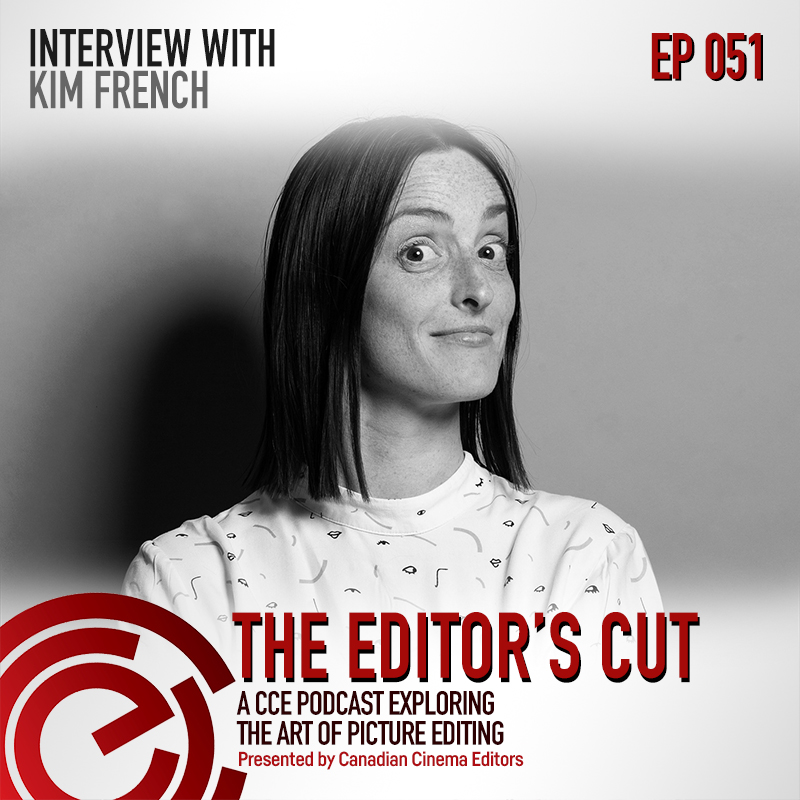
Episode 051: Interview with Kim French

The Editors Cut - Episode 051 - Interview with Kim French

Episode 51: Interview with Kim French

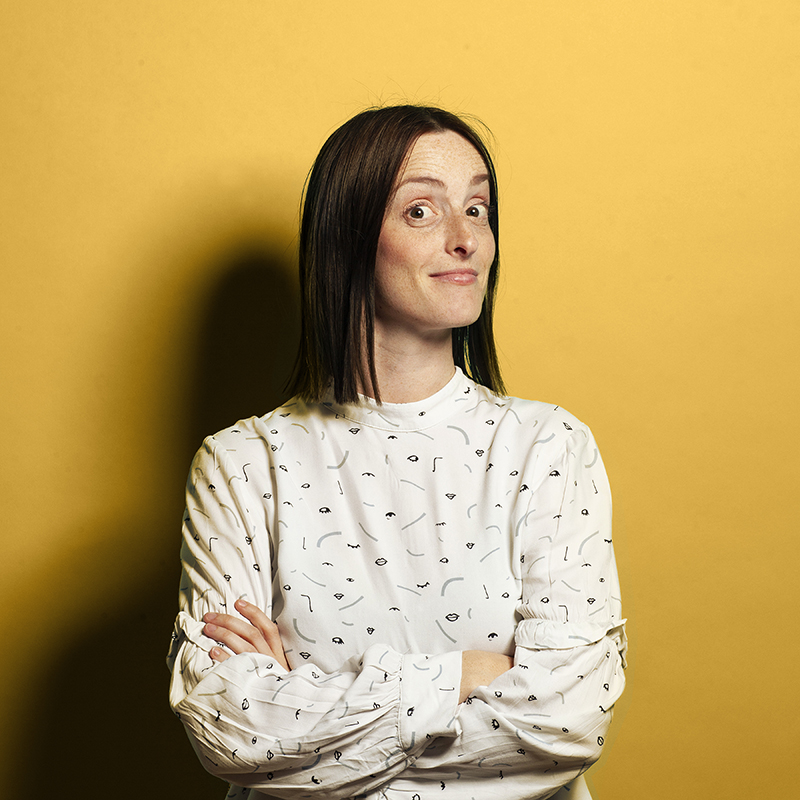
In this episode Sarah Taylor sits down with Kim French the creator of Edit Girls.

Kim French

Edit Girls is a collection of career stories from women working in Post-Production. It began life as an Instagram page, which was founded by Kim French, and kept going with the support of Mathew White and now has a home on it’s webpage www.editgirls.org.

Edit Girls was born out of frustration at a lack of seeing these stories being told when Kim knew they were out there. She started her career as an editor back in 2006 and would have loved to have had this kind of insight into how other women started their journeys as editors, VFX artists, colourists and sound engineers.

Kim started by reaching out to editors that she knew to share their stories but it didn’t take long for women to start approaching her wanting to share how they started their careers and give insight into their working life. It quickly became clear that this was a much-needed space and the response has been so heartwarming.

Kim and Sarah discuss her career journey and how platforms like edit girls are much needed in our society and industry!


This episode was generously sponsored by IASTE 891 

iatse

À écouter ici !

The Editor’s Cut – Episode 051 – Interview with Kim French

Kim French:

It was a very similar type of person that was applying to the roles. And then to be told that oh, we’ll just hire the best person for the job was really frustrating because I was always like, well, we don’t even have a starting point that is diverse enough. The likelihood is that we’re going to hire a white guy because that’s who’s applying. And I thought, hang on a minute.

Sarah Taylor:

This episode was generously sponsored by IATSE 891.

Hello, and welcome to The Editor’s Cut. I’m your host, Sarah Taylor. We would like to point out that the lands on which we have created this podcast, and that many of you may be listening to us from, are part of ancestral territory. It is important for all of us to deeply acknowledge that we are on ancestral territory that has long served as a place where Indigenous peoples have lived, met and interacted. We honor, respect and recognize these nations that have never relinquished their rights or sovereign authority over the lands and waters on which we stand today. We encourage you to reflect on the history of the land, the rich culture, the many contributions, and the concerns that impact Indigenous individuals and communities. Land acknowledgements are the start to a deeper action.

Sarah Taylor:

Today I sit down with Kim French, the creator of Edit Girls. Edit Girls is a collection of career stories from women working in post-production. It began its life as an Instagram page, @EditGirlsInsta, which was founded by Kim French and kept going through the support of Mathew White, and now has a home on its webpage, EditGirls.org. Edit Girls was born out of the frustration at a lack of seeing these stories being told, when Kim knew they were out there. She started her career as an editor back in 2006, and would have loved to have had this kind of insight into how other women started their journeys as editors, visual effects artist, colorists, and sound engineers. Kim started reaching out to editors she knew to share their stories, but it didn’t take long for women to start approaching her, wanting to share how they started their careers and give insight into their working life. It quickly became clear that this was a much-needed space, and the response has been so heartwarming. 


Kim and I discuss her career journey, and how platforms like Edit Girls are much needed in our society and industry.


[show open]


Sarah Taylor:

Well, Kim, thank you so much for joining us on The Editor’s Cut.

Kim French:

You’re welcome. I’m very excited to be here. 

Sarah Taylor:

As you all know, Kim French is the person behind Edit Girls, which is originally an Instagram account, and a website profiling women in editing and post-production. You do some colorists, and-

Kim French:

Yeah, that’s right. Colorists are featured, visual effects artists and post-producers as well. Majority, editors.

Sarah Taylor:

Before we dive into the Edit Girls and the process of how that started, I want to know a little bit about yourself. Where you’re from, and I’m assuming that you were an editor at some point in your life. Give us a little Coles Notes of how you got to where you are now.

Kim French:

I’m from the UK, as you can probably guess. But I do have a connection to Canada, which is quite nice. When you asked me to be part of this, I was like, yeah, Canada. My career in editing started in Toronto in 2006. I’d moved over there. Basically, I’ll go back a tiny bit more. I studied television production, and within that you end up doing lots of different roles, like you direct something, you produce something, you do camera and you do editing. Kind of had a broad view of all the different aspects of TV, but I didn’t really hone in on editing there. But when I moved to Canada, which was to, at the time, follow a boyfriend, although I ended up staying and he ended up moving to New York. And that’s a whole other story. But I was always very kind of … Yeah. Just grateful, I guess, for that introduction to Canada because Toronto is like a second home. 

Sarah Taylor:

Oh, great. 

Kim French:

So, I did one of those … You know the five-day documentary challenges? Or they do 48-hour film challenges.

Sarah Taylor:

Yeah.

Kim French:

I ended up getting involved in one of those because at the time, I was doing lots of sound recording. I was booming on set, and I’d had documentary experience. I was doing student films. I’ve got a ton of friends who went to Ryerson. Ended up meeting lots of people through that. 

Anyway, I did the five-day documentary challenge. I was booming. It was me and two other filmmakers, Alex and Eric. And I was able to edit that. I said oh, I’d really love to edit this five-minute doc. I learnt loads from the director, Alex. And it was, I didn’t realize at the time, but my key, pivotal moment into editing.

Sarah Taylor:

Amazing.

Kim French:

Yeah. It was really like, special. I look back on it and the film. I would say, you know considering it is, gosh, 17 years old … umm, no, 15. It just still really holds up, and I’m really proud of it as a piece of work. It was about a female boxer. It was following her story. We found her within the five days, we created and filmed it within the five days. Yeah. Yeah. 

Sarah Taylor:

And you cut it within the five days?

Kim French:

Yeah. Yeah.

Sarah Taylor:

Nice. 

Kim French:

And then obviously, loads of Red Bull and coffee, and you know doing that last stint of the last night. But we did it. You had to film at the end the newspaper, so that they knew that you’d sort of filmed it and done it within the time. So, I had this film. I had, I guess, the beginnings of my portfolio from that. And I ended up doing an interview which at the time, I thought was for a … Like a job interview. I thought was for more production side of things. Very random, how it came about. But it was actually an assistant editor position. And because I had this film, I was able to show that, and they could see from that that I had that sort of raw, I guess, talent for being able to edit.

And going back, actually, the film won an award for best editing at Hot Docs. At the time, it was I think a particular part of Hot Docs that was more about this particular festival. It’s not like headliners, or anything. But yeah, it was like a special little moment in time. And I got my first assisting job from it.

Sarah Taylor:

That’s amazing. 

Kim French:

Yeah. Yeah. And then from there, the rest is history. I was an editor for, well, an assistant to an incredible editor. If I name drop people. A guy called Dave DiCarlo, who I learnt, yeah, a huge amount from. I’ve worked with lots of amazing directors. There was all the commercial world, so not like TV and film which … Again, obviously there’s lots of overlap, but they’re very different worlds, really, aren’t they? 

Sarah Taylor:

Totally, yeah. 

Kim French:

It was the commercial world that I started in and was most familiar with. And then I got very, very homesick. I was editing there and I was part of a few different post houses, and after about four years I was extremely homesick. And you know it all came to a bit of a crunch, and I just decided to go back. That was 2010. And then I got a job editing at the company I still work at now, but I’m no longer an editor. I started editing there, and then I grew as the company grew. Like as in, grew into a different role. Because I think I was more drawn to, certainly at the time, the producing side of things. And then ultimately where I am is actually in the marketing and sales side of things. So, yeah. I haven’t really cut anything for a long time. But I’ve done a few things in my spare time, but yeah. In terms of making a living out of doing it, it’s been a while. 

Sarah Taylor:

Being a commercial editor probably really did impact … Well, obviously got you the job in the company you’re at now. And that experience really led to where you are now. And obviously, that was a big interest for you, which is exciting. And I’m assuming because you are an editor, when you’re working with different teams you know how to speak the language. I’m sure it makes things so much easier for everybody in the process of creating something. That must be an added value.

Kim French:

Yeah, completely. I mean, I think when you ask someone to do something of any sort of aspect of filmmaking, having even just the slightest experience in it is so important because you just know what you’re asking. You know how much time it’s going to take. You don’t take advantage of people. I’m working on stuff at the moment where I need to make showreels and bits of marketing content, and I’m asking a lot from an editor. But I’m able to quickly get the flex, help them with the music, all of those kinds of things. Yeah. It helps, definitely. 

Sarah Taylor:

That’s fantastic. And what’s the company that you’re working for right now?

Kim French:

We’re called Preen. That’s P-R-E-E-N, for November. It’s one of those ones that kind of sounds like an M sometimes, but yeah. Preen. We were originally called Cherryduck, which is a really funny name. But for years, nearly a decade, it was Cherryduck, and then we rebranded at the end of last year for a bunch of reasons. But we’re a very different company now. You kind of grew from shooting behind-the-scenes videos, to be honest, and stuff for publishers, and then brands wanted to get in on it. And now we predominantly work direct with brands, or larger agencies.

Sarah Taylor:

Was there one job you got that made you be like, I am a real editor.

Kim French:

Yeah, so…I mean like I said, I was assisting. And I was given the opportunity through a series of events to work with … I think it was 11 or 12 animators on a music video for R.E.M. They would create individual … It was like a minefield, but it was so much fun. It was a song called Man-Sized Wreath, which is from one of their more … I guess, yeah, 2006 sort of album. And each animator had a little section of the track, and then they would create something in their own style, so it wasn’t just one style all the way through. And it was quite like trippy, in many ways. But that was the time where I was like, okay. Yeah. I’m really doing this, in that sort of sense. Because obviously, it’s a big name. But also because it was about working out what the story was with all these different parts.

And I ended up doing, from that point, more commercial work that had a lot of green screen and visual effects and cutting things for animation, which meant I was just given sketches of a storyboard and I had to cut things out and paste things. And it was very, I ended up having to be really, really tactile with editing not just from shot to shot, but within the shot itself. And I remember a piece of advice about, you’re not just cutting from shot to shot. You’re cutting within the shot. What can you manipulate and chain? And I was like, oh wow. So, yeah. So, yeah. I guess that was the moment that my career really took off within that particular time, and I was able to work on some great music videos, and some great commercials with some brilliant directors. 

Sarah Taylor:

Yeah. It’s really interesting that you mentioned the cutting within the shot, because I don’t know how long ago it was, but I remember watching something … I think it was Mindhunter. There was a behind the scenes of Mindhunter, and it’s very common where they deliberately shoot this way but where they will take the actor that … Take three, that was on the left side of the screen, and then put it with take five of the other actor. And I remember watching, like, oh my God. I could totally do that. It just expanded all the things that you can do and where your creativity can go in making it the best thing it can be.

Kim French:

Yeah, completely. And it’s funny, I think again within EditCon they were talking about it, and I’m trying to remember who said it. But there was a scene … There’s a series called Black-ish. Is it Black-ish? Or Black as fuck. BlackAF.

Sarah Taylor:

You can say that, yeah. 

Kim French:

We’ll just say BlackAF. Yeah. One of the editors of BlackAF was talking about how she was cutting these scene with the mobile phones, and reactions on a FaceTime, you know a FaceTime call. And how they all did that individually, but then she could manipulate the timing between them all. And I was just like, that is a perfect example of editing within the screen, and the power you have as an editor to be able to manipulate, yeah, the pacing and ultimately what the audience feels about it. And I love that. 

Sarah Taylor:

Yeah. And the comedy in that case. What she chose to do with the reaction. It makes the laugh, right? Yeah. We have so much … Editors have so much power.

Kim French:

Yeah. They really do.

Sarah Taylor:

Did you notice a huge difference when you were coming from Canada with your beginning career as an editor in Canada, then moving back home? Did you see….Was it an easy transition to have the skills that you learnt in Canada and how Canada operates in that world as it is in the UK?

Kim French:

It’s a really good question. I remember when I was assisting, I was also helping directors pull together new films and helping them with their creative treatment. And they were always like, oh, bring some of the English. They were just obsessed with British advertising. And well, the reality was I hadn’t really worked in British advertising. Toronto was my first experience. I was like, okay. I’ll help you make it feel a bit more British. That was the golden, the gold standard for them, anyway, at the time. Although to be honest with you, Canadian advertising and the incredible talent that comes out of Canada you know is something that I think globally the commercial world can really learn a lot from. But I was also on the cusp of film to digital, so I only had a few times where I was running film from you know the grade to the sound, and like obviously all of these buildings were really close together, so all of that was possible. And then instantly was like, okay. Well, we’re final cut now and we’re going to be doing like digitally, and the footage isn’t going to be shot on film any more. It was this cusp of time. 

And then when I came to England, four years later, I moved into a really different world. And I found that I was able to apply a lot of the skills that I’d learnt in Canada from this pretty high standard of commercial world that I was in to what we now know as content, and at the time was just online video in its infancy. Yeah. I was able to transition a lot of the skills, but I couldn’t give it a direct analysis of how it’s different because it was just a really transitional time, I think, in the whole branded content, commercial world that no two companies were the same, in that sense. And everything was quite new.

Sarah Taylor:

Yeah. You’re just growing with it. You’re learning. You’re creating that world, really. 

Kim French:

Yeah, yeah.

Sarah Taylor:

That’s really cool. And I love that you had a Canadian connection. When you told me like that, I was like that’s so awesome. And Hot Docs, that’s great, that’s amazing. Now, Edit Girls. When I discovered Edit Girls, I was like, whoa, yes. This is what we need. I’ve missed this. And every time I’d see a post come up, I’d be like, like it, like it. And yeah, it made my heart happy, my little edit heart happy. First off, thank you for doing that. But I want to know what made you want to start Edit Girls. 

Kim French:

It’s so nice to hear you say that. Yeah. I think the reason I’ve kept it going, to be honest, is because of such amazing feedback and how I knew it was, in terms of why I started it, something that had it been around at the beginning of my career, who knows? Maybe I would have stuck it out longer in terms of editing and sound. The reality is it is very male dominated. It can be quite lonely, as a woman. There was just definitely this sense of, oh, okay … Certainly at the time. Oh, there’s one, maybe two women are part of the commercial post house of 10, 12 editors. And even though I had huge amount of support, I don’t know. The way that women are able to come together now is different. It’s just different to how it used to be. 

So, I mean the real trigger, to be honest, was the lack of women applying for roles at my company. Because we have a team of editors, a real great post department. Whenever we would try and expand the freelance pool or look for new assistants, it was really hard to be honest, to kind of make sure that the initial pool of talent was diverse enough. And that’s not just women, obviously. It’s Black women, Black men, people with different backgrounds, different socioeconomic backgrounds. It was all a very similar type of person that was applying to the role. And then to be told that oh, we’ll just hire the best person for the job was really frustrating because I was always like, well, we don’t even have a starting point that is diverse enough. The likelihood is that we’re going to hire a white guy because that’s who’s applying.

And I thought, hang on a minute. I was an editor. I know these women are out there. Where are they? And it turns out, they’re on Instagram. In many respects, I was able to connect. I put a few posts up, I think, saying yeah, I’m looking for female editors to share their stories. And I got … I think one of the first was actually a colorist, a woman called Jen. And she was amazing. And oh God, somewhere in the States. And I was like, wow. She’s found this, and she’s resonated with it, and she wants to share her story. So, she was one of the first stories that I put up. And that was four years ago now. And I think that … I counted it earlier. There’s been 91 career stories that have been shared.

Sarah Taylor:

That’s amazing.

Kim French:

Yeah. The reality is, because it’s a side project you know, I go through periods of doing loads, and then I have to stop for a bit because I have a four year old daughter and I have a full-time job. Yeah. It’s a lot to keep up. Even though I do have help. I have got a guy, an amazing guy. If anyone wants an assistant, he’s looking for a job. Called Matthew, who’s been amazing and like helps me with making the posts. But yeah, it’s a lot of work to keep it going.

Sarah Taylor:

That’s amazing, you being able to profile 91 women doing this work. It’s so great. Something you said earlier where you were like oh, there’s usually only one … Back in the day. Or maybe still today. One or two women in a post house. And I remember in my beginning of my career, I was always the only female editor. And I held onto that. I’m like no, there can only be me. There’s only room for one. And then obviously as I grew and I learnt stuff, I was like no. I need to be bringing more women into the fold. And it’s just interesting how just in our society and in the patriarchy where it’s like oh, there’s room for an editor that’s a woman, but just the one of you. Yeah. But no, it’s like all of us need to be. Now I want to work in a house with all women. Anyway. 

Kim French:

No, I really resonate with that. You know, I think that you’re, you’re right. It kind of felt like there was only space for one, so therefore it was harder to then understand that you should, and could bring up other women and promote other women without it being a bad thing for your career. Yeah. I mean, it’s a whole, deep conversation, isn’t it? 

Sarah Taylor:

Totally, yeah.

Kim French:

To work out these things.

Sarah Taylor:

Yeah. It’s a bit of a mind fuck, where you’re like wait a minute, I don’t need to think this way. But yeah, it was something that I actually had to unpack and be like, whoa. And I was, like, 22. Back in the day, I was young and didn’t… I’m like, oh, I’m one of the guys. And now obviously we’re all learning a lot more, and especially as of late. Which is why I feel like initiatives like this and stuff like this is so important so that young girls can see all these women in this role. And I know for myself, I’m a big … I hire female assistants, I’ll always talk to grad people in school or who are about to graduate, and try to talk up editing as the best thing. Well, I think it’s the best thing. Like, yeah, be an editor. It’s awesome. So, do you find women approaching you now that you’ve done this? And maybe not even just women in editing, but women in general approaching you to talk to you about women in the industries? Especially in ad industry, because I feel like that’s not as male dominated as well. 

Kim French:

I mean, I guess in terms of the response, like you said, it was just really refreshing to see it. I’d had lots of lovely messages from women saying that they’ve been able to connect with other women that have then allowed them to … I’ve literally had messages like; “Oh, by meeting this person that you profiled I was able to contact with them, and now they’re my cheerleader and it’s kept me going.” And I’m just like, that’s amazing. I should probably keep doing this. 

Sarah Taylor:

Yes. Please keep doing it.

Kim French:

Yeah, exactly. And I have to be honest, I have a few stories that I still need to share, right now. And it is very much I get a wind of energy with it where it’s like, right. I remember a period of last year and to be honest, whenever anyone listens to this, last year was 2020. So, it was the hardest year. And it was this little bit of light for me, and I really was posting a lot. And it was something that … I started the website in that time. Turns out there’s a whole set of other work. 

Basically, I’ve got these stories across Instagram. The way that it works is I share the story and it’s like a carousel of the text, but then if it’s on the website I then need to copy all of that text within a website. It takes time to get the stories together. Takes time to get people to answer them. Some people are amazing and do it straight away. Sometimes life gets in the way. I totally get it as well. I’ll have people that I’m like, please share your story. Because I know people are going to love it, and it’s like oh, I’m so busy. And that’s fair enough. I think the reason that it works is because I’ve kept the questions the same. 

Sarah Taylor:

Yeah, that’s good. 

Kim French:

So, it’s just formulaic. I mean, I think with Wendy, actually, I got cheeky and I was like, I’m going to ask her a couple more questions specifically, especially as the editor of…

Sarah Taylor:

A legend.

Kim French:

Handmaid’s Tale, and Queer As Folk. So, I snuck a few more questions in for Wendy. But mostly, they’re five or six standard questions. Like I said, last year it gave me so much light and hope and it was just every woman. And the reality is I share, I’m a bit undecided about how to move forward with this. But I really share any woman working in post in terms of, even if she’s been doing it for a year. I’m interested in all the different stages, and all the different stories. I don’t want to stop that, but I think on the website you can see I’ve kind of tried to section it in terms of years of experience. So, it’s one plus years, five plus years, 10 plus years. So, you can search for women with more experience, or maybe if you’re mid-level, someone of your experience if you’re searching for stuff. I have not even got a third of the stories up from Instagram on the website yet, because I’m chipping off-

Sarah Taylor:

Yeah, yeah. It’s a lot. Yeah. But it’s out there, so that’s great. How do you find these women? I know you said you found some on Instagram at the beginning, and now people are coming to you, which is awesome. 

Kim French:

I need to, I think, move away from just finding them on Instagram. What’s been great about Edit Con … And I went to EditFest, which was the American cinema editors last year. Also, the amazing thing of 2020 if we’re going to look at silver linings is the fact that these events became virtual. It was like, oh, wow. S normally, I don’t know where they would be hosted, but I wouldn’t be able to go to them. So, that’s been pretty cool. And then I plugged them, basically. I’ve been plugging it at Girls in the chat, and then people have approached me with stories. People have nominated people, which has been really nice. I’ve got a ton of like messages that I need to still send questions to. But then there are specific people that I will go out and say, okay. Like Wendy, for example, and an amazing editor called Sabrina Plisco, who edited Doctor Strange. I just like going to get those special stories with women that have cut some incredible, like really well-known stuff. It’s super inspiring.

Sarah Taylor:

Yeah, totally. It’s very similar to how I like to look for people to interview for the podcast. What are they cutting?

Kim French:

Yeah, exactly. Yes. 

Sarah Taylor:

Yeah, yeah. And how did they get there? Yeah. There’s some really fantastic people out there. You’ve touched on this a little bit, but it gave you a lot of hope during 2020 to be able to profile these women. But how do you feel personally, creating this Instagram account/website, almost like a platform for women to feel inspired? How do you personally feel, knowing that you’ve done that?

Kim French:

I think, I mean, I’m super proud of it. Really, it’s like a pillar in things that I’ve done that I think yeah, I’m really proud of that. I’d like to do more. Like I feel as though yes, the Instagram can connect people, but … And it’s not just women, right? I mean, it is for men in the industry to be working with more women, to know that they have a space that they can read their stories, and then hire them. I feel like there’s way more to do, and it’s connecting with people like you, and thinking about how do we profile more women in the industry to make it so that … The reality is, it’s the whole you can’t be it if you don’t see it, sort of thing. For younger women to know that there is absolutely a space and a career for them in this world, which I don’t think in the past has necessarily been that obvious. It’s been seen as something like … Not that women can’t be technical, but it’s like oh, it’s a tech-y, guy thing. And it’s just really guys do it. And it’s like, first of all, it’s not about tech, right?

Sarah Taylor:

No. No.

Kim French:

It’s about the storytelling, and we all know this. But do you know what, what really excites me is the fact that content bloggers … If you want to call them influencers, whatever. There’s crazy talented editors out there. I mean, you just have to look at TikTok.

Sarah Taylor:

I know. It blows my mind. 

Kim French:

I know. It’s like, oh my God. 16 year old me would have been all over that. At the moment, I’m kind of like, okay. I need to know about it because of my job. And I do, and TikToks great. But you see a lot of women and girls, younger women, producing phenomenal, like amazing edits. Rhythm and pace and really smart transitions, and I love it. And I think that now’s the time for them to, I guess, realize that yes, TikTok’s amazing, but there’s so many other ways to express that talent and to make a career out of it.


Sarah Taylor:

Yeah. That’s totally … Because, yeah. Even maybe parents of kids who are really into TikTok would be like oh, stop doing TikTok. But yeah, you’re learning a skill that you could actually translate into a career. And how cool is that? You mentioned you have a daughter. I have a five year old, and of course she sees me at it. And then there’s moments where she’s like, we went to this winter festival. It’s an outdoor festival. And one of the films I cut was playing, which I didn’t know. And I was like, oh my … And she was like, “Mommy. Your movie on.” Which is so cool. But she will take her iPad … I have to set it to the camera. And she’ll record her Barbie dolls doing whatever they’re doing.

Kim French:

I love it.

Sarah Taylor:

And I think it’s amazing. And I push her to do that. And so…Yeah, I think if young girls are able to see you can be creative and you can take that thing that you’re doing for fun, or whatever and make it into something really … Make it into your life, your career. And for myself, I’m all about sharing stories. That’s the biggest part of editing for me, is like sharing stories that aren’t heard and stuff. Anyway, I think these young girls, especially now, who grew up with phones, and the technology, they could take over the world. 

Kim French:

100%. I mean, I could kind of hear it in your voice as well, and I think I feel the same with my four year old. It’s like, a fine line between … I remember growing up, my parents were like, “How can you watch that movie more than once?” I’m like, are you kidding? I just have movies on repeat. And then I analyze them. And it is like my daughter is the same. And it’s kind of like no, I love that. But I get it. Sometimes, it’s like oh, should they have so much screen time? Or should they be hearing this? And should they be … Actually, okay. Of course, there is a balance. But she wants to do videos on your iPad and make things and become really natively familiar with creating things that way, like it’s an art form.

And when I was 15, I was bought a video camera, which obviously at the time was like a massive brick. And I think people’s phones now, and the quality of that at the time, my God. But I filmed everything. And I’ve got all that footage, still. I’ve got in cupboards here, with all these old, skiddy tapes and stuff. Yeah. Of house parties, and I would edit videos for my friends for their birthday. I would do really fun little moments with them. And that’s what I see girls and women doing now with TikTok and with social. And I guess the frustrating and difficult thing is when it goes into this realm of comparison, and it’s no longer a creative outlet. It’s actually a really dark place, right? Well, if we can keep it creative and keep individuality, and individual stories, what it’s all about, then yeah.

That whole ability now to have, in your pocket, a camera with amazing quality that you can just … You could see something in a movie and go, oh, I want to try a horror movie, for example. And just be like, oh, let’s just see a few shots and make our own, little film. And you can do it.

Sarah Taylor:

Totally, yeah. The possibilities are amazing and endless. But you’re right to touch on the dark side of it, because yeah. But I guess that’s what hopefully, as parents, and as people in this industry, we can shed light on that.


Kim French:

I mean, our kids will be the ones telling us you know … I mean, it’s when your four year old says oh, get off your phone, or get off your computer, mummy. You’re like, okay. 

Sarah Taylor:

No, I get that all the time. 

Kim French:

They know more than we do, really. 

Sarah Taylor:

That’s it. Oh, it’s terrible. No, but I had the same conversation with my husband, because I work in TV and my husband works in entertainment. And we were like, oh, this screen time thing. I’m like, but that’s my life. I watch TV too. That’s part of my life. And I’m happy with how it … Yeah. It’s a very fine balance I suppose, yeah.

Kim French:

It’s a balancing act. But I mean at the moment, for us it’s … I don’t know if she’s too young, but I realized the other day that actually, apparently it is a U, but we’ve been watching the Labyrinth. And it’s like, she’s totally obsessed with it. We’ll watch it two times a day at the weekend. And just like, oh my God. But she loves it. And then she brings it into her play.

Sarah Taylor:

Exactly, yeah. I think it’s an interesting thing I’ve observed with my daughter, because we’ve always been like, you know movies and TV, as I said, it’s part of my life. It’s ingrained in who I am. We’re always watching shows. And yesterday, we went for a little cake date, and then we reenacted a scene from some Pokemon movie or whatever. And then she’s asking questions, like, well, why does the dad … What does that mean? And really dissecting and analyzing the film. And I’m like, I like this. Let’s keep this going.

Kim French:

That’s definitely your daughter. I love that. Yeah.

Sarah Taylor:

Yeah. Well, you touched on this earlier when you were initially thinking about how you were trying to hire more women, and you couldn’t find them. And then also people of color. And so in light of all of what’s going on in the world … Which, I think it’s even more important that we talk about this and we make space so that we can have an industry that’s equitable and diverse, and we’re hearing voices from everyone. Have you thought about that in Edit Girls, and how you can push forward even more diversity and inclusion?

Kim French:

Yeah. I mean, on this I’m very aware that I am a white woman with a huge amount of privilege in terms of how I’ve been brought up, and the opportunities that I’ve been given. I think that fundamentally, it is about unpacking a lot of personal bias. You know, I’m not going to pretend I don’t have experience in the past that maybe I would look at something in a certain way and think oh, I understand. You know, make an assumption about people, right? And think that you understand who they are and where they’re coming from. But actually, until you truly get to know them, you don’t. And I think that what I love is seeing so many more platforms now. It’s not … 

Yes, I think Edit Girls in many respects is obviously niche because it’s post-production, rather like filmmaking as a whole. But certainly in the UK, there’s lots of platforms now where it’s like, Black creatives, and different talent that no longer is the excuse; “Oh, I can’t find the talent.” People have to … And when I say people, I mean senior people who are responsible for the hiring, who are responsible for making the structures of employees in these companies, whether it is commercial, advertising, which is obviously the world that I’m familiar with, or TV, you know and film. To not make the excuse that they can’t find the people, because the reality is, that’s really the worst excuse, you know. The talent is there. There’s no question. You just have to try and open up all the other doors that are being closed for so long and let them in.

And it is not just about beings at the very beginning of people’s careers. It’s about giving the opportunities higher up, like truly just encouraging progression in people that have been systemically oppressed within the system. And I think that until we look at it like truly, and like I said, it’s a personal bias thing, and you have to be willing to make mistakes. And you know I’ve made mistakes. You have to be willing to learn from them, and yeah. Just appreciate that it’s going to take work. But the talent is there, I guess is what I’m getting at. 

And I’m very conscious of making sure that who I profile within Edit Girls, that they don’t all look the same. And it will come to a point where I think, yeah, I’ve featured a lot of a particular type of woman. Even if it’s actually within the niche of what they’re working in. I want the stories to be different. I guess that’s a bit of an editing role from my perspective, the order in which I share things and where they appear on the site in making sure that it feels really accessible for every type of woman looking their way through it. 

Sarah Taylor:

Yeah, totally. Yeah. That’s really great. If you had all the time in the world and resources, what would you want Edit Girls to become?

Kim French:

So, I had this conversation with my husband, actually. And I hadn’t realized … Because again, I’ve been doing this myself in the evenings. We’ll have dinner, and then I’ll sit and do an hour with Edit Girls stuff and chip away at it. And all of a sudden yesterday, he became very … He’s always been interested and supportive, but he was throwing these ideas around of what we could do with it. I was like, okay. That’s a huge amount of work, but okay. I like the vision. I like the vision. But I guess the space that I’m really comfortable is putting together teams of people. So, if I was able to do it full time, like you said, I would love to be in a position where I can really … I guess an agency, of sorts. Where it’s like really understanding the individual talents of the women, and then putting them when a project comes along and someone says oh, I’m looking for talent for this … Whatever it may be. For me to be able to go, I know the perfect person for that. So, I guess, an agency. 

But then other things that could … I guess I’m very aware of my own … Not even limitations, but boundaries. I’ve had-

Sarah Taylor:

Yeah. It’s huge.

Kim French:

Yeah, it’s huge. And it’s really hard. And I’m 36, and it’s like, okay. It’s taken me this long to get it. And as passionate as I am about it, I almost don’t want to take on the world because of my own life. I don’t know. We’re talking nitty gritty here, right? But I’m just very aware of all the things that I sometimes say yes to. But if, for example … And I actually have been approached you know5569

 by people who run courses, asking for help in sourcing people that are more diverse. So, I know there’s a space for training as well. There’s something where we could use it as a platform for younger women wanting to get into the industry. Maybe it’s about mentorship and pairing them up. I mean, I’d love that. Yeah. 

And then there’s the whole line around brands. I mean, I’m a brand person in marketing and I’m thinking, okay. Could there be a sponsorship level where Avid, or Final Cut, or Adobe want to get involved and say they sponsor this particular series of these stories, and then put the money back into it so that we could do more, like on the platform? Yeah. Those are some thoughts.

Sarah Taylor:

Yeah. Oh, there’s so much that could be done. I’m in Alberta, in Edmonton, Canada. And we have a group that I’ve been mentoring called GIFT. It’s Girls In Film and Television. And they focus on young women, 13 to 20, in some cases. We did a pilot where it was a week crash course in filmmaking, with high school students. And that went really well, and then they got funding to do a summer where it was like a week in different, smaller cities in Alberta. So, I got to fly to Lethbridge, which is very exciting. And then this summer, they did a feature film. And it was obviously very tricky because of COVID. So, they had a very, very small crew. It was all women. And they made this feature film that had mostly women in the film. There’s a couple of male roles. And I’m cutting that film.

But to see that there’s been a few of the girls who started at the very beginning in the pilot and they’re already working in camera crews on actual shows. So, like these things work. And it’s so cool. And those women are now in the industry, and then they could see things like Edit Girls, or they could see whatever other things are out there and be like, yeah. I can see it. And we see ourselves, and here’s an example of it. And it’s just by … You know there’s two women producers in Alberta that took that initiative to start this program. Seeing Edit Girls really did make me feel a lot like how GIFT is, and how if we’re just showing young women at the age where they have to … What are you going to be when you grow up? You have to decide. In high school, all of a sudden you’ve got to pick everything. But that that’s an option, this creative role. You don’t have to just be a teacher. You don’t just have to be a nurse, like the typical things that women are often shown. There’s way more. Anyway. That was a little tangent.

Kim French:

No, I love that. And I love the acronym as well. Is acronym the right word? 

Sarah Taylor:

Yeah, I think so. 

Kim French:

GIFT. Perfect. 

Sarah Taylor:

GIFT, yeah.

Kim French:

But I really believe in mentorship, and the stuff that you’re doing sounds like yeah, perfect. You could already see from the glimmer of these young women being interested in something to then be like, yeah, given the opportunity to get that foot in the door. So often, this whole industry is built on nepotism and that feeling of oh, my friend’s niece would love, nephew or … Yeah. Would love a job. And that’s good to a degree. I get it. But it puts such a big wall up against a whole section of society that do not know someone who works in TV. Those are the ones we need to give the opportunities to, because from a selfish perspective, there’s so much wasted talent, you know if you don’t make it accessible to other people. 

Sarah Taylor:

Totally, yeah. Yeah. Is there anything else that you’re working on right now, or doing right now that you want to share?

Kim French:

Lots of going on with my company. With Preen, we’ve recently got a new MD, and a new business director. And bearing in mind this is a company that I’ve been a part of for over a decade, in its many different forms, it’s actually given me, certainly, a new sort of lease of life within it. And I’m excited about the future of what we can do, and incorporating the things that I’ve learnt through Edit Girls in terms of how we put teams together, in terms of the kinds of … Because we’re working with brands to make branded content. And okay, it is not brain surgery and we’re not saving people’s lives, but there is an opportunity to put a stake in the ground in terms of like what we produce, and how that can be a positive influence on society, basically. We can do that with the people that we show on screen or behind the camera. Yeah. I guess, check Preen out. It’s early days in terms of we’re going for lots of social changes, but yeah. 

But with Edit Girls, I guess you asked me to do this. It’s also just given me that kind of focus again to go, okay. How can I do this so that I make it as consistent as possible? Because that’s how you build it, right? I mean, we’ve got 3,400 followers now. And over the last month and a half where I’ve not been able to give it much attention, it still ticked over and got another 100 followers. Amazing. And really relevant people, I can see from the people that are following it that if I was able to give it that other 10% again and share even more stories, that who knows where I could go? I’m open for being open to doing things and to spreading the message and getting people’s input on what they think it could be, you know.

Sarah Taylor:

Awesome. Well, if anybody wants to reach you, obviously you need to set your boundaries. But if someone wants to nominate an editor, or they’re like, “Hey, I have a great story, can they reach you on Instagram?”

Kim French:

Yeah. The handle is, if I remember correctly, EditGirlsInsta. You can message me there. Obviously, sometimes when I’m not following people back I don’t see it straight away, but the best thing to do is actually email my personal email, which is … I don’t know if I give it here. It’s Kim, K-I-M, and then Laoni, L-A-O-N, for November, I-, French, @Gmail.com. But then maybe you can, I don’t know, share it somewhere. But that’s the best way to get me straight away. And I will be able to send the questions to people or to you if there’s someone that wants to share their story. But yeah, definitely get in touch.

Sarah Taylor:

Awesome. Well, thank you for taking the time to chat with us today. I could talk about this kind of stuff forever. 

Kim French:

Yeah, well, you’re next. You’re going to share your career story and we’ll get you on the website ASAP. 

Sarah Taylor:

Thank you so much. Yeah, thanks again for sharing. And thank you so much for doing this. I understand, I run this podcast as a volunteer. I understand you have a passion for something but you only have so much time in your life and your days, especially having a young child. So, thank you for taking the time, for doing this work. It’s so, so important. And you are impacting many, many lives, so thank you so much. 

Kim French:

Oh, that’s great. And thank you. 

Sarah Taylor:

Thanks so much for joining me today. And a big thank you goes out to Kim for taking the time to sit with me, and for creating Edit Girls. Be sure to follow Edit Girls on Instagram, @EditGirlsInsta. And check them out online, EditGirls.org. And special thanks goes to Jane MacRae and Nagham Osman. The main title sound design was created by Jane Tattersall. Additional ADR recording, by Andrea Rusch. Original music provided by Chad Blain and Soundstripe. This episode was mixed and mastered by Tony Bao. 

The CCE has been supporting Indspire – an organization that provides funding and scholarships to Indigenous post secondary students. We have a permanent portal on our website at cceditors.ca or you can donate directly at indspire.ca. The CCE is taking steps to build a more equitable ecosystem within our industry and we encourage our members to participate in any way they can.  


If you’ve enjoyed this podcast, please rate and review us on Apple Podcasts and tell your friends to tune in. ‘Til next time I’m your host Sarah Taylor.


[Outtro]

The CCE is a non-profit organization with the goal of bettering the art and science of picture editing. If you wish to become a CCE member please visit our website www.cceditors.ca. Join our great community of Canadian editors for more related info.


Abonnez-vous là où vous écoutez vos balados

Que voulez-vous entendre sur L'art du montage?

Veuillez nous envoyer un courriel en mentionnant les sujets que vous aimeriez que nous abordions, ou les monteurs.euses dont vous aimeriez entendre parler, à :

Crédits

Un grand Merci à

Jane MacRae

Andrea Regan

Animé, produit et monté par

Sarah Taylor

Design sonore du générique d'ouverture

Jane Tattersall

ADR Recording by

Andrea Rusch

Mixé et masterisé par

Tony Bao

Musique originale par

Chad Blain
Soundstripe

Sponsor Narration by

Paul Winestock

Commandité par
IASTE 891

Catégories
The Editors Cut

Episode 050: Animation with John Venzon, ACE

The Editors Cut - Episode 050 - Animation with John Venzon, ACE

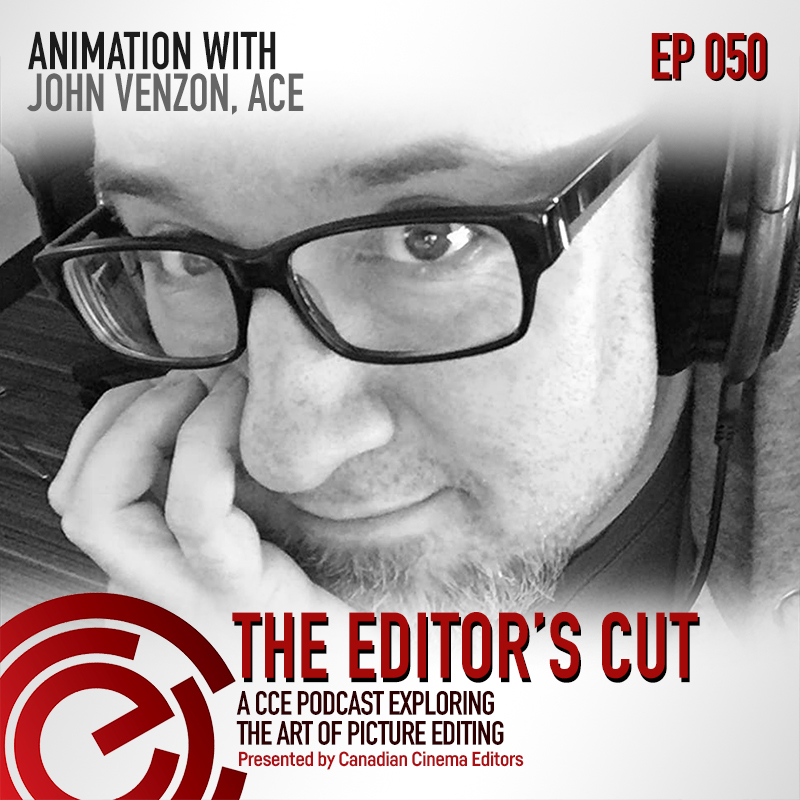
Episode 50: Animation with John Venzon, ACE

Today’s episode is the online master series that took place on September 29th, 2020. Canadian Cinema Editors and American Cinema Editors presented a discussion with animation editor John Venzon, ACE.

John Venzon, ACE

John Venzon, ACE is a feature film editor who works primarily in Animated Feature films. He was the lead editor on “South Park: Bigger, Longer and Uncut”, DreamWorks Animation/Aardman Pictures’ “Flushed Away” Warner Animation Group’s “Storks”,”The Lego Batman Movie” and is currently editing a new animated feature for DreamWorks Animation.

Graduating with a BFA in Film Studies from The University of Colorado at Boulder, he made his way to Los Angeles learning his craft as an assistant editor on films from directors such as Oliver Stone’s “Natural Born Killers” , Robert Redford’s “The Horse Whisperer” and David Fincher’s “The Game”, “Fight Club” and “Panic Room” before crossing over to animation with director Trey Parker. He is a member of both American Cinema Editors and The Academy. He resides in Los Angeles with his enormous music collection.


This event was moderated by Carolyn Jardina, Tech Editor at the Hollywood Reporter.

À écouter ici !

The Editor’s Cut – Episode 050 – John Venzon, ACE

Carolyn Giardina:

Favorite snack or drink while you’re editing?

John Venzon:

Movie theater popcorn and a giant Diet Coke. Don’t do that, you’ll die.

Sarah Taylor:

Hello and welcome to the Editor’s Cut. I’m your host, Sarah Taylor. We would like to point out the lands on which we have created this podcast, and that many of you may be listening to us from, are part of ancestral territory. It is important for all of us to deeply acknowledge that we are on ancestral territory that has long served as a place where indigenous peoples have lived, met, and interacted. We honor, respect, and recognize these nations that have never relinquished their rights or sovereign authority over the lands and waters on which we stand today. We encourage you to reflect on the history of the land, the rich culture, the many contributions, and the concerns that impact indigenous individuals and communities. Land acknowledgements are the start to a deeper action.

Today’s episode is the online Master Series that took place on September 29th, 2020. The Canadian Cinema Editors and the American Cinema Editors presented a discussion with animation editor, John Venzon, ACE. John is a feature film editor who primarily works in animated feature films. He was the lead editor on South Park: Bigger, Longer, and Uncut, Dreamworks Animation, Ardman Pictures, Flushed Away, Warner Animation Groups, Storks, the Lego Batman movie, and is currently editing a new animated feature for Dreamworks Animation. Graduating with a BFA in film studies from the University of Colorado at Boulder, he made his way to LA learning his craft as an Assistant Editor on films from directors such as Oliver Stone’s Natural Born Killers, Robert Redford’s The Horse Whisperer and David Finch’s The Game, Fight Club and Panic Room, before he crossed over to animation with director Trey Parker. He’s a member of both American Cinema Editors and the Academy. This event was moderated by Carolyn Giardina, Tech Editor at the Hollywood Reporter.

[show open]

Carolyn Giardina:

I’d really Like to start with animation editing. It’s often described as being different from live action editing in the sense that in live action you shoot first and then edit, and in this case, it’s almost the opposite. You’re almost edit first, and then produce if you will. 


So would you take us through the process and some of the key considerations that you have when you’re working on these movies?


John Venzon:

I find it really interesting when I talk with people who go, “What do you even do? In animation, don’t you, isn’t it you just animate it? Do they hand you the shots and you just cut off the slates and put it together?” And by the way, I never take offense at this because even fellow editors who have cut many, many movies will say to me, “What do you even do?”

And the best way I can think to describe it is to say to the fellow editors, imagine you get a phone call saying, “Oh, I want you to edit my next movie, but  you know what we’re going to do is we’re to spend the next two to three years with you, me, the director, the writer, the cinematographer, and we’re going to make the movie in the room, just us as a group, over and over and over again, making sure that we like the story and making sure we have the flow, we understand where the act breaks are, and that it has real emotion. And only after that time, do we feel like, yes, we’ve gotten the story, right, we then shoot the movie.” Which, I think, is a really wonderful way to spend a couple of years, especially when you feel a kinship with the team you’re working with.


Carolyn Giardina:

Now, tell us a little bit about the collaborative process and also the timeline. So, as you go through these stages, who are you working most closely with on the team? You mentioned the writers, you mentioned the director and from one of these, this could be a year or more. So would you give us a little bit more of a sense of what it’s like to be in the trenches?


John Venzon:

Each one of these stages, I have a central partner, in addition to my director, that I’m spending the majority of my time with. The first stage being story, I typically work with the story department and they have a main storyboard artist who’s usually called the head of story. That person is kind of like a junior director for the storyboard team. Obviously, everything we’re doing is in conjunction with the director. The director in an animated movie serves the same purpose as a director in a live action feature, but just a little bit different specialized position, because they have to understand every stage of the process. Whereas I think in live action, you can tend to rely more on say your cinematographer if you don’t understand camera. But if you’re in animation, you have to know, deeply, what a 50 millimeter does to your character’s face as opposed to 150 millimeter lens.

And so, as a result, I tend to find that animation directors tend to have a broader base, not always, but that tends to be the case. But in working through the story, we go through, we put up the script, and storyboard artists are almost like co-editors with me because they’ll go through and they’ll storyboard the sequence. And by the way, just to put it in a way that that makes sense, in live action, storyboard artists really exist to help with the cinematography, whereas the storyboard artist on an animated film works as a cinematographer, as the co-editor, and as the actor, because they have to act everything out.

And from my part, when I’m in storyboard, I’ll get a sequence, and I’m sure just even in that little clip right there, it’s a very short shot. And if I were treating it as a live action editing situation, that would be one cut. But in fact, that’s five to 10 edits internally because I’m cycling between the boards to indicate movement. And those timings will then carry forward to the animators once they get it, to kind of see where I’m timing the acting change ups. And the director will work with me to say, “Oh, hey, you know what? Let’s have his face turned from happy to sad a little bit later.” So we’re actually getting to be really granular. And we’ll go through and we’ll do temp voices, which are a lot of times people who are in the editing room with us. People at the studio who are actors will come in and do voices for us, and we iterate over and over and over again because we have screenings where we’ll sit down and we’ll watch the script, full motion with the storyboards, the voices, the sound effects and the music.

And we’ll say, “Oh, well, the first act is great. That feels about right, but what is happening in the second act?” And by the time I get to the third act, I’m just way too confused. So we’ll rip it apart and go, “Okay, where is it broken?” And we’ll end up going through and redoing storyboards, maybe sometimes we’ll go through and we’ll combine characters. A lot of times, in the script, we’ll realize, like on the movie Shark Tale, there were two mafia type characters, one that was going to be voiced by Martin Scorsese, and one that was going to be voiced by one of the members of the Sopranos. And we realized watching the film that we only needed one mob character type. And so we ended up combining the characters and moving the story points onto the Martin Scorsese character. And these are things that you discover as you go through.

So what ends up happening is, I also, when I’m cutting these things, I’ll look at what the storyboard artist’s pitch is, and I’ll say, “Oh, we could use a closeup here,” or, “I’m a little confused here,” or, “I’d rather be wider here.” And so the board artists and I will kind of figure out how to adjust the timing and the composition. I’ll take it and then cut it, and we iterate over and over and over again. I like to think of the Avid as the world’s most expensive typewriter, because we’re basically just rewriting the movie as we go.

Then after we get done with that, we’ll say, “Okay, this feels good,” then we’ll bring in the actors. In the case of the Lego Batman movie, it was Will Arnett as Batman and Zach Galifianakis is the Joker, and we’ll record the movie with them. And this is the case with a lot of comedians or improv actors, you’ll end up getting stuff that was never in the script, and you’ll go, “Oh, that’s a great bit.”

And I’ll talk more about cutting improv a little bit later, but the idea is that we then look at the movie, again, and we say, “Okay, great, this scene is working and we’re going to move it into the layout” which is the stage where you saw the digital mannequins, that’s really when we shoot the movie, and it gives me the second chance to edit the movie. So I am editing the movie the first time in storyboards, and then I re-edit the movie completely because once we get in with like a real 50 millimeter lens, I’ll say, “Oh, you know what? We can’t see quite as much,” or, “The Joker, the guy was standing in front of the camera, and the little guy was way in the back doesn’t work.” So we end up having to reshoot the movie and recut it.

Sometimes we’ll combine shots, sometimes we’ll do things that are too labor intensive for a storyboard artist. Like a steady camera, [a viper] like a moving camera is really labor-intensive in storyboards, but in layout it’s much easier. Then we go through, we recut, we write new lines, so we’re still rewriting, as needed, up to that point.

And then we go into animation and that’s where the dollar values are double. It gets really expensive. So the further you go along, you want to get your story really dialed in because it gets to be really expensive. So, and the animators are, as I said, in the clip, they’re really the actors of the movie. It’s really interesting because if you think of a character, I’ll just think of Will Arnett in Lego Batman, he really had two actors. It was Will Arnett as the voice, and then you had all the animators that were working to kind of pose him and do the change ups. And the animators are looking at the timing that the director has approved and the storyboards kind of give rough timings, but that’s really where they bring it to life. And lengths will change, and we’ll kind of get it to a place where we’ll say, “Okay, that’s it, the scene, that’s exactly what we want from the scene.”

And then we go into the lighting stage, which is really where the movie is lit. And up until that point, the textures, in CG anyway, are all kind of like digital mannequin-y, they’re really kind of gray or one tone. Well, it gets into lighting, all of a sudden everyone’s skin looks like real skin and there are real lights out there. 

And we also integrate visual effects, so pretty much, and this is where it gets crazy, in order to interact with fabric or hair, that has to be treated like a visual effect. So, that’s where everything gets integrated, in the lighting, and if you change stuff in lighting, it’s really expensive. So that’s why, for me, I feel like as soon as we go into animation, that’s when we really shoot the movie.


Carolyn Giardina:

Before you fell in love with animation editing, you actually started in live action. So would you tell us a little bit about your experiences in live action? And then how did those experiences bring you to animation?


John Venzon:

I went to film School at the University of Colorado at Boulder, and I had a really, as one does in your early twenties, I had a really rigid idea. I’m going to Hollywood. I always wanted to be an editor, I’m going to go to Hollywood, I’m going to become editor, and then I’m going to edit the next Star Wars movie. That was kind of what I had in my mind. And so what I found was, once I got out, I wanted to find editors whose work I really admire. So I had grown up really loving the movies that Donn Cambern had cut, the Michael Tronick, the Alan Heim, the Michael Kahn, Carol Littleton, these were the editors that really inspired me. And so I decided that if I was going to be an Assistant Editor, I wanted to have a chance to work with these people.

And I just really caught a really lucky break and got hired as an Assistant Editor on Natural Born Killers, Oliver Stone’s movie, Natural Born Killers. And I was hired by Brian Berdan and Hank Corwin, both with ACE. And it was the thing where I got interviewed at 9:00 o’clock at night on a Thursday, I got the job at 10:00 o’clock on a Thursday night, and I was on a plane to Gallup, New Mexico, the next morning. And I think that was the thing, I was young enough to not realize that that’s not a normal way to live your life. And thank goodness, I haven’t really been paying attention to what seems like a normal life, because it allows you to kind of follow the things that seem really exciting. And thank goodness I did that, I made lifelong friends with both Hank and Brian and the other people that I worked on that show.

But the thing that was really interesting working for Oliver Stone and that particular group of people was understanding that you have the lead editor, but they’re not the only editor. That you can actually have a really successful film that has its own unique identity because you have multiple people putting their own creative hands into the film. And I think that that was something I didn’t really understand before. I thought it was the lone editor who was making all the editing creative choices. But, and certainly there are movies that way, and I’ve done movies that way.

But it opened my eyes to realize that there’s another way to work, which is finding people that you feel that you can collaborate with and get to a really vulnerable state where you go, “This is what I think the movie should be,” or, “This is what I think the scene should be,” and being open to having someone say, “Well, have you considered exactly 180 degrees opposite from what you’ve done?” And not be hurt about that, not be upset or see that as a failure, but see it as, “Oh, wow. Well, wait a minute. Well, if we go completely other direction, what does that do?”

So that led me to, after Natural Born Killers, going to work on a movie called Little Giants, which was edited by Michael Tronick, Billy Weber, and Donn Cambern. And I got to assist for my editing idols, it was amazing. And that was kind of the beginning, my career really started to take off because I got to know more people. And I got a chance to, because of that show, it was an Amblin film, I was a known quantity to Amblin. And so when Michael Kahn needed a Digital Assistant Editor, I got the call. And I got to assist Michael Kahn, which, for me, was like being the bat boy for the Yankees as they were winning all those World Series back in the day.

And I really got a chance to watch Michael, watch his cutting, kind of learn from him, see how he handled screenings, see how he handles directors. And I think that that’s probably one of the best things that editors can do for their assistants, which is just to be open door, to observe, and in so much as you can learn by watching, that editors have more to teach than just covering a wide into a closeup, or making sure you don’t trombone, like cut in, cut out, cut in, cut out. That’s all important, but probably the more important thing is how do you handle it when your director is having a really rough day and maybe isn’t really in a space where they can be their best creative person? When is it right to give them the space they need to kind of get to a place where they’re ready to work? And when is it important to kind of help them along? And these are all things that you kind of realize and learn as you do films.

But basically what ended up happening is after working for Michael Khan, I can’t even believe I got the good fortune of getting tapped to be James Haygood’s assistant on The Game for David Fincher. And then we rolled right into Fight Club, and here I am, like an Assistant Editor, we were doing Fight Club. I’m like, “This movie is going to be amazing. It’s unlike anything, and I’m going to be an editor. I’m going to work my way up and cut for David Fincher.” When all of a sudden the phone rang and a friend of mine from college said, “Hey, John, I’ve got this low budget animated movie. Would you like to edit it for me?”

And of course, the smart thing to do would be, “What are you, nuts? I’m not going to leave a David Fincher movie to cut some no-nothing animated movie.” But I said to my friend, “It sounds amazing, but I don’t know anything about animation.” And he said, “Nah, don’t worry about it. We’ll figure it out together.” And that movie turned out to be the South Park: Bigger, Longer, and Uncut movie. My friend was Trey Parker, and Matt Stone, who I went to film school at the University of Colorado at Boulder with. And it was one of those things where when you get an opportunity in your life where someone believes in you, to say, “I’m going to take a chance on you. You’ve never done this before, but I like working with you.” You can’t say no.

So I ended up having to go into David Fincher’s office and say, “David, I’m quitting,” which it was maybe the hardest conversation I’ve ever had. And by the way, and to David’s credit, he was so lovely about it. And so for me, I have two movies on my resume in 1999, South Park and Fight Club, and I think that pretty much the rest of my career, it’s just all downhill from that.

So yeah. So South Park, I don’t know if folks know about South Park: Bigger, Longer, and Uncut. I’ll just tell a really quick story, just to set up what it is to have worked on the South Park movie. We started out, the South Park movie, and it was originally kind of tentatively titled South Park Goes to Hell, right? And the MPA said, “You can’t call your movie South Park Goes to Hell. It’s an animated movie, absolutely not. You have to come up with a different name.” And they said, “Well, what do you want us to call it?” And they said, “Well, submit a list of names, and then we’ll tell you what ones are okay.”

So they wrote up a list of names, and on that name was South Park: Bigger, Longer, and Uncut. And they submitted to the MPA, and the MPA said, “Yeah, that’s fine. It is up on the screen, so it is bigger, and it is longer than a TV show, and it is uncut because there’s swearing in it. So, okay.” And so they approved it, and then a week later, the MPA came back and said, “You snuck a dick joke into your title. No, no that’s unacceptable.”

And they said, “Well, you approved it.” And they said, “Well, we’re unapproving it.” And they had to get Paramount involved to say, “Look, you said we had to change the title. We changed the title, and now you’re telling us we have to change it again, no, no.” And that’s why it’s called that, to this day. Just as an aside, I debated picking Blame Canada, but I didn’t want anyone to feel like that was a slight, because honestly, from everyone who was working on the movie, we love Canadians. As a matter of fact, maybe my favorite part of the whole movie is when the Canadian Prime Minister gets to tell the US military, “Hey, fuck up buddy,” which always makes me laugh. 


But the reason I picked that scene is because in cutting that movie, I got to cut alongside Gian Ganziano and Tom Vogt, who came from the TV show, and they came on to cut with me on the show.

But my main co-editor on that show was Trey Parker himself. He is an amazing editor. He would always cut his stuff at school, and it felt really natural to be cutting with him. But I learned so much about comic timing from him. And you’ll see in the film, he wasn’t afraid to push me to do cuts that maybe they weren’t exact match cuts, but, South Park has baked into its DNA kind of a crappy level of quality as part of its quality, at least in the early sessions, the early parts of the show. But the reason I really picked up there was, that was the first song in the first batch of songs that Trey wrote for the movie when I realized, “Oh God, we’re making a musical because…”


Carolyn Giardina:

What? You have to tell us about how it actually became a musical.


John Venzon:

Here’s the best part about Trey and Matt. At that point, they were in season two or season three of the show, and people were giving them advice, “Look, you guys have maybe two years more on the show max, and it’s going to go off the air. So you guys need to do a cash grab, get in, get as much money as you can, and get out before the house falls apart.” And Trey and Matt took a much different approach. They felt like, well, if we’re only going to be able to do this for a couple of years, let’s do a movie that we want to do, and just do something completely bonkers. They went to Paramount and they said, “Yeah, we’re making a musical, it’s going to be South Park: The Musical.”

And Paramount went, “Under no circumstances are you making a musical. No one wants to see a musical, musicals don’t make money. This is a cute, swearing, we’re going to let you swear. That’s the deal. Go make your sweary movie. We’ll make our money. We’ll get out before this thing falls apart.” So Trey basically went, “Well, we’re making a musical.” And they said, “No, you’re not.” And he said, “Yes, we are.” And the studio went, “Do we understand each other?” And Trey said, “Yeah, we do understand each other.” And then we went back and we made a musical.

And by the time the studio got a chance to see the screening, it was too late to really do much to change it. And so they’re like, “All right, fine. Just give us something that we can put in theaters.” And so Trey, they got to make the musical, and this piece of music I heard when Trey brought it in, when I was just starting to cut the scene. And it was really the first time I realized that my friend who I’d gone to college with was not only a comic genius, but he was also a musical genius. Keeping in mind that this song is being written 11 years before he wins the Tony for Book of Mormon, right?

So I’m listening to the song and I’m going, “Oh my God, this has everything that’s wonderful about Broadway musicals. It’s not some crappy knockoff.” And so I think this is an important thing to pay attention to when you’re doing comedy, because you can imagine a less talented director doing this as a parody, because clearly it’s a parody of a part of Your World from Little Mermaid. So you can imagine a version that is just like the filthy version of that. And you might get a laugh out of it, but it’s just kind of a, “Ho, ho, I see what you did there,” kind of comedy. But Trey and Matt did something really smart. They made the character of Satan not the worst person in the film. The fictional Saddam Hussein is really the bad guy in the movie. And so by taking and humanizing Satan, and realizing that he just wants to be loved and he just wants to be genuine and be himself and be with people he feels are like him up above now. Admittedly going up above fulfills the prophecy and then Armageddon happens. So it’s kind of hard to root for Armageddon, but you do, because you can completely see the character separate from Satan, but you see the character and you understand, I know what it is to want to feel accepted and loved and not mistreated by someone who should be treating me better.


Carolyn Giardina:

How did the character change and evolve during the process of editing? I’m sure you tried different approaches too.


John Venzon:

My memory of Satan and Saddam’s relationship is being pretty bedrock to the movie. That was the one thing that changed is just making, coming up with more and more, just terrible things that Saddam would do to make Satan feel bad about himself, in being ashamed of being in relationship with him, just basically everything a bad boyfriend would do in a relationship. And just, I think that was really just finding the line between, just over the top, because obviously once they get up in the prophecy is done and the world burst into flames, it’s very bad. But that the idea being that you understand emotionally what’s going on, and that’s actually one of the things that I tried to do on every single movie, because I’ll sensibly…

When you think of bad animated movies, you think of just the cheap, disposable animated movies. It’s about two friends who find out what it means to be friends, because they want to be friends. And at the end of the movie, they’re friends. There’s no, there, there. It’s just so what. But if you can always wind your character back to something that’s super relatable to you on a basic level and either relationships or just feeling you don’t have a voice in the world or not really knowing what you want and being afraid to go out make yourself vulnerable. I think anytime you can tell a story where you reveal part of your heart, that is kind of scary to say out loud, and you can put that into a character.

People respond to that. You know, South Park is such a weird example to begin as my first animated movie, because by the time I got to the end of it, basically everything I learned could not be applied to just about any other animated movie I would do for the rest of my career. Most animated movies take between two and a half to five years to make, the South Park movie was made in 11 and a half months. Like I said, the crummy jitteriness of it is baked into the DNA. And even though it appears to be


Carolyn Giardina:

[it’s just unheard of] in animation.


John Venzon:

That is, that is super fast. So the timeline is, I’m working on Fight Club. I quit Fight Club. I cut the South Park movie. I finished the South Park movie. And then I go back as an assistant and I finish Fight Club. Because David had had a year and a half to make Fight Club, I managed to squeeze another film right in the middle of it. So that was my career. I was like, well, I’m back working for David again. I’m an assistant editor again. That was a fun adventure, I guess that’s my career. I guess it’s very confusing until I get a phone call-


Carolyn Giardina:

Now it wasn’t your career, because then the next step was DreamWorks animation and Aardman, wonderful comedy Chicken Run, which had also fantastic characters.


John Venzon:

Oh yes. And actually this is a really interesting thing that… Just going back to the idea of working with multiple editors and realizing that’s a really wonderful way to work. And actually a lot of my friends like Rob Komatsu ACE, who is one of the top television editors on the planet and just a super gifted editor, he works with multiple editors. 


And as they’re swapping the episodes between the two of them you make something where you all figure it out together. I’m always really in awe of how those guys and men and women on TV shows make things that are as cohesive and as emotionally effective as any animated feature or any live action feature that it actually… I find myself gravitating more to TV shows these days than movies. If I’m being honest, it feels like that’s where the really interesting stuff is being made.

In terms of Dreamworks, I get a call from Marty Cohen, rest in peace, Marty. He was the head of post for Amblin and he was head of post for Dreamworks. I worked with him on two shows and he said, “Jeffrey Katzenberg saw the South Park movie. He thinks it’s really funny and wants to know are you an animation editor?” And I said, “Is there money?” And he said, “Oh yes.” And I said, “Well, that is exactly what I am.” And I’d never really thought of myself as an animation editor. I’d wanted to be an animator kind of for a while because Looney Tunes when I was a little kid. Because I couldn’t draw, I just gave up on it. So then in realizing, oh my God, I could actually work on animated movies, as a thing, as a regular thing.

And so Jeffrey started me out on a directive video sequel to Prince of Egypt called Joseph King of Dreams, which makes sense. I do an R-rated animated movie. And then I do a Bible picture as a palette cleanser. Once they saw that I wasn’t a complete maniac, they said they needed help on Chicken Run because they had discovered that the two rats, Nick and Fetcher, were feeling like something that they wanted to have as a runner through the film. And they were working over in Bristol. Mark Solomon, the lead editor, very talented editor, along with his coeditors, Robert Francis, and Tamsin Parry. They said, “Hey, we could use some help. And we heard good things about you and why don’t you come work on it?” And so I was in Glendale, working on beats while they were in Bristol, where they were actually shooting the film.

Now, one thing I want to say about Aardman, it was a lifelong dream of mine. Well, when I say lifelong, since I saw the very first Wallace and Gromit short to be able to work with Aardman, I mean, oh my God, they’re one of the best animated studios, animation studios it’s ever been. And so for me it was again another one of those, “I can’t believe I’m getting the chance to do this.” And so I had to storyboard artists that would send me the boards, David Bowers and David Soren. And so what I would do is I would work in Los Angeles with the scratch voices. We would bring people with English accents in and they would do the characters and I would cut it together. And then once I cut the scene, I would send it over to Mark who would then integrate it into the film. And then he and Nick and Peter Lorde, the directors would work the sequences and they would give me notes and I would make changes.


Carolyn Giardina:

Nick made up the core team and the editorial team on that one.


John Venzon:

Mark Solomon, he was the lead editor. So he was the main person who was integrating everything and making sure that Nick and Pete were happy with everything. And then Robert and Tamsin, who I really hope I’m pronouncing Tamsin’s name correctly. They were working over at Aardman. This is an interesting thing when you’re working on… The scene I’m about to show you is the section that I cut, but of course it goes through the process of the lead editor to make sure that I wasn’t, that my timing… And I might’ve cut it a bit more aggressive than perhaps the rest of the film. And I think that that’s… Just like a conductor doesn’t play the music but they determine the pace and to make sure that everyone is cohesive. That’s really the role of the lead editor. And so when I come onto a show, helping out, I’m always really respectful of the fact that the lead editor is determining the overall pace and tone of the film and you really want to get in and just help them out.


And I think that being an animation editor and maybe being a live action as well, it’s really about getting in and supporting the lead and doing good work. But always asking yourself, What’s the emotional point of the scene? What’s going on and making sure that is done in conjunction. So then that way you’re not throwing out a bunch of, “Hey, how about these jobs wakka, wakka, wakka.” And then they get it and they go, “This is pointless. None of this is on theme. These characters are doing things that they don’t do in the rest of the movie.” You have to, you have to really be cognizant of how your pieces are fitting into the larger hole.


Carolyn Giardina:

I was trying to get to this with the team, is you were also working with the director who was also one of the founder’s of Aardman-


John Venzon:

Yes.


Carolyn Giardina:

… So that played a big role in a lot of the creative decisions as well.


John Venzon:

Yes, absolutely. And Nick and Pete were both full time because this was getting close to the end of the film. So they were frantically shooting up… By the way, just as a thing about Aardman and all stop motion animation, that’s like, Corpse Bride, any stop motion animated movie, you can think of. It’s like someone said, I want to take everything that’s miserable and difficult about live action filmmaking and everything that’s difficult and miserable about animation and make one misery sandwich. Because you have to build everything and actually really build everything in real. If there’s a tiny fork in that scene, someone has to carve a tiny fork. You can’t go down to the grocery store and say, “I need a pinata, I need a fruit bowl.” Someone has to physically make those things.

And then if that wasn’t bad enough having to build sets, then you have to painstakingly make it one frame at a time. So I think that it takes a really special type of animator to really excel in stop motion. And God bless them. They make the best. I love stop motion movies. But that’s… And another thing about stop motion is you go from storyboard to finished animation. There’s no like weird middle step because you’re actually on a set with a camera and you shoot it. So you still work the film in storyboards, but you really, you go from storyboards to that’s it, you’ve got the movie and you color time it. Getting to cut something for Nick Park it was absolutely on my bucket list. It’s a thing where you just end up doing something where you think how many puns can I fit into the smallest space area?

And the storyboard artists just were reeling them off. I think that those two characters really work as kind a Greek chorus to give the audience a sense of where Ginger and Roger are in terms of their development and whether or not they’re actually going to be able to escape in time. But I think that it’s important to understand that you shouldn’t always get too bogged down in story, that sometimes you want to make sure you have fun.

And I think that that’s a good example of just getting in and really having fun. I think the other thing I wanted to say is, is that sometimes when you do jobs, you’re helping out, but it can lead to wonderful diversions in your career. Because of my work on that I ended up doing two more features with Aardman one called A Tortoise versus the Hare, and then Flushed Away, which was produced by Pete Lord, who was a co-director and one of the founding members of Aardman.


This pretty much this leads into the stage of my career where I call it, learn by doing. Which, when I was given the amazing opportunity to cut the South Park movie, not only was I beginning editor, but I was also a beginning animation person. And then I really needed to get in and start cutting and honing my craft and learning what, how far you could push timings. Because when you’re in storyboards that times it a little bit different than the layout, things tend to expand and slow down. And you only learn these things by cutting. And so I was at Dreamworks for another eight years after that. And then I thought to myself, I bet the world’s economy is going to collapse in 2008. I should probably leave Dreamworks and go start working in independent studios, which by the way, you can never control your career that way.

The world as we all know, can change on a dime and you just have to do what feels right. During, after leaving Dreamworks I ended up working for a number of independent studios. I got to work for Illumination. I got to cut over at paramount for a while. But the main thing was, is just getting to work with the different variety of directors, that sometimes come from storyboarding, sometimes come from animation, sometimes come from writing. And you really learn how… The person will usually direct from their strength of where they come from. And so you kind of learn the animator might not be able to communicate as well in storyboards as they do in the animation process. But sometimes you end up getting an experience with someone who comes from a writer, director, point of view, that you don’t expect. And that’s what happened when I landed at Warner Brothers to edit the movie Storks.


Carolyn Giardina:

John, I would really love you to talk about the use of improv in animation, because this is a fantastic example of what improv can really bring to a story.


John Venzon:

Thank you for bringing that up. Because the main thing you need to know about this, was the Warner brothers decided to try a different process of making films. What they decided to do was to pair a really talented live action comedy person, a director with a really talented animation director. And so I got my two dads, the amazing team of Doug Sweetland, who was one of the star Pixar animators. He animated so much of Woody in the Toy Story films, along with Nick Stoller, who was the writer director behind, Get him to the Greek, and Forgetting Sarah Marshall and Neighbors. And so as a result, they had two very different ways of working. Typically when we do scratch temp voices and when we record the actors, we record them in isolation. And then that gives us 100% control over overlapping dialogue. And what ended up happening is Nick said, “Well, Hey, can’t we get a couple of microphones and get the actors in and record everyone in the room together.” Which by the way, saying that to an animation person is like…. What?

We don’t have complete control over everything. And so what Nick did is he chucked the standard way of working out the window. Basically, it’s the story of Junior, who’s a stork and Tulip, who is a young woman, and they have to deliver a baby, which Junior basically just wants to get the baby delivered and go back to his life. That’s the basic storyline and Tulip wants nothing more than to deliver this baby. And Junior’s going to cut corners because he just wants this baby out of his life so he can get back to it. The thing that I love the most about that movie and the thing that was amazing about cutting it, was two things. One Nick decided to make that movie because of a really genuine life experience that he had. He and his wife were having trouble conceiving their daughter, and they were going to fertility clinics.

And it was, it was really difficult on both of them. And he remembered he had a thought that wouldn’t it be great if you’d just write a letter to the storks and they could bring you a baby, that would be so much easier. And so that inspired him to create the story of the baby and kind of getting a family a brand new baby, because it’s such a primal thing.


And also the fact is, is that when a baby smiles, I defy you as a human, you can be an ex-con. You can be a MMA fighter, but if a baby smiles at you, it melts your heart. There’s no defense against a smiling baby. So that was number one, that was Nick’s superpower, number one, Nick’s superpower number two is, that he loves improv. And so in getting into the room, he would get… That was Katie Crown as Tulip, Andy Samberg as Junior.

And then the wolves. And I say the wolves, all of the wolves were voiced by Key and Peele. So Michael Key and Jordan Peele came in and recorded the voices for every single one of those wolves. And basically what would happen is Nick being the writer director would write the scene and then we would get into a room with all four of them together with four microphones. And then we would read through the script as written. So we would have a pass of the script and then Nick would start shouting out improv prompts. So he would just randomly say things like, “Okay, Andy, pretend that you can’t hear Tulip. And let’s just do a pass where you go through and go, no, I can’t hear you. I’m not listening.” And then Katie would respond to that.

Or they would just turn Jordan and Keegan loose and they would just improv. And what would happen was, is that I would be in the room with Nick, with the script and I would be lining it and going, “Okay, that’s a funny thing. And Nick laughed at that.” And then we would get done with a run and I would have to turn to Nick and say, “Okay, Nick, we need to write some dialogue. So we can get from seeing the baby and fighting and then kind of getting back into the aah section.” And he would write the script on the fly and give the actors prompts. And then I would get back to the cutting room with literally five or six different versions of the scene. And it was just a matter of going, okay, not only what was the funniest, but what was also the most on theme for what’s going on with Junior and Tulip.

But the other thing is that it allowed me to exercise a philosophy. I have of instant karma for characters who are undeveloped, when I say undeveloped, I don’t mean they’re not well drawn. I mean, underdeveloped in the sense that they are not, they’ve not come to the self realization that they’re going to come through over the film. So Junior was a jerk and was mean to Tulip when, Tulip was just trying to help this baby and be a good person.

And so much of the comedy is watching Junior get hit over and over and over again until he starts realizing, oh wow, the world is bigger than just me and what I want, and actually this baby is maybe the most important thing in the world. And that actually is more important. And that’s drawing upon my experiences as a parent and realizing that at three in the morning, when your kid is really sick, it doesn’t matter that you love vinyl records or that you how to parasail or whatever it is.

All that matters is that, you know, instantly what pharmacy is open right now. So you can go get medicine, so your kid can feel better. And that those are the things that you really look for in characters. And you know, when you’re working on an animated movie, what characters don’t feel like they could be real humans. I spend most of my time, when I’m editing an animated movie, imagining those characters are people that I would see in the world rather than talking birds. And then it allows you to relate to it. And it allows you to say to the director, “I’m having a problem because when juniors coming in, I don’t believe what he’s saying because he would…” And if he’s going to say something exactly opposite, what he should be saying, I need to understand why he’s pushing. Is he saying it because he doesn’t want to deal with something or is he just unaware? And that’s really how you and the director and the writer in this case, director and writer figure out the story as you’re going through storyboards.


Carolyn Giardina:

Could you also talk about how the voice casting went for Tulip? Because, I think that also gives you an interesting-


John Venzon:

Oh Yeah.


Carolyn Giardina:

… Perspective on the behind the scenes process.


John Venzon:

Typically, what you’ll go through, as I talked about the scratch voices, you’ll get either an actor or just a normal human being, who happens to be working on the film and you’ll do temporary voices. And every once in a while, you’ll find someone who is so unique and has such a… It’s so hard to point, but when you hear their voices, you go, “This is the character.” Because I think that they had always thought, “Well, We’ll get Katie Crown in, she’s a standup comedian, she’s a writer and she’ll help us flesh things out, but clearly we’ll replace her with Melissa McCarthy.” Or with whoever, whatever actress that fits the role. But we realized about halfway through the storyboarding process that she is, that Tulip is so heartfelt and wonderful.

And if we bring someone in, maybe they can replicate it, but we won’t get this specific thing. So Nick went to the studio, went to the head of the studio and said, “I want to cast this complete unknown woman because she is doing this magical thing with the film. And we really should hire her to be the lead voice” And to Warner Brothers credit they said, “Well, all right. As long as we have other people to do marketing. We had Jennifer Aniston in the film and we had Andy Samberg. And as long as we have people that can do the marketing push, yeah, we can cast her.” And it also helped that everyone really liked her in terms of her performance. Also, she’s a wonderful person. And to this day, she’s the head writer on Bob’s Burgers now. And she does voices on the show and she is, she’s a wonderful and wonderful to edit and super lovely as a human.


Carolyn Giardina:

And because they creative process is so collaborative it’s really not unusual to have even a director or a member of the crew end up voicing a character in these movies.


John Venzon:

That is correct. Improv because of the strength of what happened on… Oh, and by the way I need to mention is vitally important, that when I was cutting Storks, I was the lead editor. And just when I was working as an additional editor, helping out Mark Solomon on Chicken Run, I had Chris Cartagena and Steve Liu, who are both wonderful editors and lead editors in their own right. Came and helped me out on the show. And so it allows you to focus on one area of the film while they’re getting, say something in the second act cut together. So Jesse Averna and Christine Haslett are my current fellow editors on the film that I’m cutting right now. And I would be dead without them. And that’s the thing where you give your all, when you’re not the lead editor, because you know, the lead editor appreciates it.

And then you give your all as the lead editor, because you’ve got people who are fearlessly cutting with you. It’s wonderful when you find people that you feel that connection with. That’s how these animated movies really get made and wonderfully. Because I had done all of this editing, all this improv editing, it was about eight months towards the end of the Lego Batman movie. And they needed help working on the second and third act. And so they said, “Hey, this guy knows how to cut improv and he’s in house. Let’s have him come help out.” And that’s how I ended up getting hired onto the Lego Batman film. So basically all you need to know is this is the big finale scene. Batman and Joker have been battling through the whole film and Joker has finally decided to blow Gotham up with a giant bomb that Batman isn’t able to diffuse. The thing that’s really interesting about the way the Lego projects are done is that they have very large editing crews because at least for when we were making the Lego Batman film that we had the team in Los Angeles, and we had the animation team along with the main editors over in Sydney, Australia at [Animal Logic]


Carolyn Giardina:

[Do you want to give a shout out] to the main team?


John Venzon:

Yes, I absolutely want to give a shout out to the main team. We had so many talented editors working on that and I had to write everyone’s name down. So I made sure not to miss anyone. Well, first of all, the main editor, the lead editor was David Burrows, who was the co-lead editor on the first Lego film, really talented editor, along with Matt Villa, also an amazing editor. Garret Elkins, who was cutting on this. He also cut Anomalisa, just a [mwah], such a wonderful animated movie. [Vanara Taing], John Tappin, Doug Nicholas, and Todd Hansen, who are by the way, a team, they’re working together at, I think over at Sony right now, working with Phil and Chris on their next project over there. Along with Ryan Boucher and our director, Chris McKay, who was the main editor on the first Lego film, in addition to directing, he was also another one of the editors on this film.

And so this was really a whirlwind thing because we had to get the second and third act really up on its feet and iterate over and over and over again in a fairly short amount of time. And boy, I’ll tell you, David had his hands full along with Matt over in Sydney, just trying to get the film finished. I picked that scene because it was the culmination of something that I think Chris was so smart to do, which was how do you do a new version of the Batman and Joker story? Because it’s, I mean, 70 years or 80 years, or however many years those two have been going at it. How do you do a new version? Well, I think the way you do it is you make it a super relatable story and you borrow the arc of a romantic comedy that you have the Joker who just wants to be heard and just wants to hear, “You matter to me.”

And Batman, who is, of course, the Dark Knight in this film, is very much, “I’m a lone wolf. I talk to my low voice because I have to be by myself.” And for him, the growth in that film, which by the way, I think it’s super relatable. You can’t reinvent Batman, but you can certainly take him from a person who is isolated and only cares about himself because he has to do the superhero job, to expanding his circle, to include Robin and Alfred and Batgirl and the Joker. And for the Joker, his arc is literally similar to the Satan and the Saddam storyline from the South Park movie that if you’re in a relationship with someone who takes you for granted and doesn’t hear you, it’s really relatable because you want to be heard.

You don’t want to be in a relationship with someone who treats you poorly and just takes you for granted. And so by looking at the romantic comedy arc, it allowed us to do, to plot it. Basically, Batman in the first act saying, “I like to fight around, I didn’t say you were the only villain I was fighting. We never agreed to be exclusive.” And then kind of seeing Joker realized, well, maybe I should try and make him want me more and then finally turning his back. Yeah, I did say Matt Villa, by the way, Jenny McCormick says, Matt is, I did mention him and he’s wonderful.

Anyway, the idea being that the arc is that he has to then say, “I’m breaking up with you, Batman.” And then Batman has to get to [the point in the] story he realizes, I don’t want to live a life without having the Joker in my life, because he pushes me to be a better superhero by him being a better villain. So I think that once we got that arc in, it allowed us to really shape it. 


And I cut so many versions of that scene, where we protracted the breakout, the bit where the conversation kind of changed. But ultimately, in these cases, is you always have to keep reminding yourself what is the core emotion? And the core emotion is, is that Joker has turned his back and in the scene, he literally turns his back on Batman and then Batman has to win the Joker back.

And that the point is, is that he is genuine and sincere about what he says. So at any rate, that was such a wonderful experience, mostly because I was such a big fan of the Lego movie. It is cut so aggressively and I remember seeing it for the first time, I was cutting Storks when they released it, when I was at Warner Brothers, and I just saw it and went, “Oh, that is everything I want.” The jokes are furious, they come right on top of one another, and it’s probably more my taste to be a bit more aggressive in the cutting. And that’s the Lego Batman movie.


Carolyn Giardina:

Let’s bring us to where you are now. You are busy working from home. You have [a remote] set up in your house.


John Venzon:

Behind my evil layer poster, you would see a giant continuity bar with all the scenes from the movie I’m editing, which I had to hide. But yes, I’m back at Dreamworks and I’m editing a movie that I often realize that when you get a project that you work on you care so much about, you really draw upon everything you’ve learned and this movie is pushing me to cut in a way that informs. Every single clip that I showed you guys now funnels into the movie I’m editing now, it is what I’m considering to be the pinnacle of my editing career. And I can’t tell you anything about it because Dreamworks will shoot me. They have snipers outside my window waiting to make sure that I’m not breaking my non-disclosure agreement.

But I can tell you it’s called The Bad Guys. It’s based on a book series from Australia by an author by the name of Aaron Blabey. And if you are a 10-year-old or know a 10-year-old, you know all about this book, it is a big hit and is really funny. And it comes out in the mysterious future. So look for it in the next a year or two.


Carolyn Giardina:

We look forward to it. We’re going to go to Q and A. I’m going to ask one quick question first, before we go. And there are a lot of questions that we’re going to try and get through as many as possible.


John Venzon:

All right.


Carolyn Giardina:

But real quickly, before we go to the ones from the audience. You often hear about writer’s block, but what happens when you get editor’s block? You have to get it at some point.


John Venzon:

Yeah. This is actually one of the real big advantage of being in animation, because when you’re cutting a scene and you feel like, ah, nothing is working and it feels like you’re pressing wet newspaper together, and nothing is sticking. I can stand up and walk to the storyboard artists, so Matt Flynn, who is one of my favorite storyboard artists who’s ever lived, he was the head of story along with Craig Berry on the Storks movie, and I’m working with him on my current movie. I can walk into his room and go, “This scene is kicking my butt. I can’t figure out, I’m doing the scene and the character is doing this, but none of the jokes are landing, and it feels like something is wrong in the movie.” 

And so [to kind of combat] what feels like writer’s block is, is that a lot of times Matt will say, “Well, okay, what’s happening in the scene?”

And I’ll say, I’m just going to make something up. The guy comes in and he says, I want everyone to listen to me, right? And it’s basically, I say, it’s driving me nuts because the audience is expecting him to walk in. And then nothing is a surprise and nothing is funny. And Matt will suggest, well, what if he does the opposite? What if we flip the scene and we make it he’s already there and he doesn’t want to talk, and everyone is expecting him to talk. The audience and the characters in the scene, what would happen if we did that? And then all of a sudden he goes, “Oh, oh, oh, that’s great.” And then we’ll hash out a basic pitch and then this is my microphone right here. I don’t know if you guys can see, this is I record all my voice stuff for the movies I’m cutting on that microphone. And we’ll get in and we’ll record the voices and we’ll cut it together using the existing storyboards.

And then we’ll call the director in and say, “Hey, we had a thought, what if we did this?” And then we’ll play the scene. And a lot of times, the director will go, “Oh my God, that’s it. That’s the problem. The audience is expecting this and they’re bored when we give them exactly what they’re expecting.” So I think that kind of inverting what you’re doing in so much as you can, inverting it and then trying it again. The other thing I do is I find work that inspires me. If I have an editor’s block, I think my friend, Melissa, who’s cutting the Ted Lasso Show, she’s wonderful. And Ted Lasso, if you guys haven’t seen it, is the best show on TV right now. It’s on Apple TV and it’s the best mix of comedy and heart. It is everything that I want. Most of the quite really talented editor or I watched The Good Place, the editors of The Good Place or the editors of 30 Rock. That’s also how I get over writer’s block or editor’s block.


Carolyn Giardina:

Okay. Next question. You’ve been asked, if you could share a few tips on comic timing, what works and what doesn’t?


John Venzon:

Oh, yeah. Yeah, yeah. One of the things that I focus on when I’m cutting a scene, is I’ll try to stay as true as possible to the script, right? Or the way it’s been boarded by the storyboard artist. And I’ll go through it and feel my way through it and try and make myself laugh. I think that a lot of editors talk about how we editors are the first audience. And so I think that you have to always remind yourself that you’re the first person to see the movie and react to it. And so you have to really remember that your honest reaction, the first time you saw it, either in [dailies] or, or in my case, the first pass assemble. But a lot of times, I’ll watch the scene and I’ll shape it and I’ll shape it and I’ll shape it and still, it feels loose or flabby, or the jokes aren’t landing. And I’ll think to myself, “[ugh], this scene would be so much better if we lost that shot.”

Then I’ll remind myself, “Well, hold on. Why don’t you just try losing that shot and see if that works,” and invariably, I’ll do that and go, “Oh my God, the scene is so much funnier now,” because it’s sharper and you’re paying attention to the setup for the joke and the payoff for the joke are much closer together. And so you have to give yourself permission to go through and do the good version.

And I know this sounds really lame, but I’m just going to say it out loud. Sometimes, you have to remind yourself, hey, why don’t I do a version where I just take out the bad stuff and just use the good stuff? Because sometimes, you get really caught up in, this is the way the scene has always been. And it’s been this way a while. And I think someone liked it, but I can’t remember who and you have to go, “No, no, no, no. Set it aside because,” good Lord, we have Avids or Premiere or whatever we have copies. We can always revert back, but give yourself permission to do the version you think is really funny. And invariably, you’ll find the comic timing that way.


Carolyn Giardina:

Next question, does the storyboard timing for jokes or [inaudible] jokes stay the same into final animation?


John Venzon:

Sometimes it will. It usually will, if the joke is a big facial change up. So like if a person is like, oh, talking about Junior, the scene from Storks where Tulip goes, “Hey, I just realized this baby and I have the same birthday and Junior’s like, “Oh really? I don’t care.” That change up that I used, the storyboard is going from I’m really interested in what you have to say. I don’t care what you’re saying. That timing stayed very specific of the timing of the board there into animation.

But I tend to pay attention to change ups, big change ups like that or the change up gets a laugh. And I tend to be a bit more less uptight about other elements that the animator is going to do a much better performance because they have the full range of motion of the body of the character. So I tend to remind myself to stay open and not be too rigid about mandating, “Hey, you didn’t do it exactly in the [boards].” Only do that when you get to a place where you’re like this used to get a laugh and now it’s not getting a laugh.


Carolyn Giardina:

As an editor, do you ever struggle with the director to get your point across? I think the question is, how do you explain, convey a decision to a director?


John Venzon:

The interesting thing is the question under that question is how can I make sure the director hears me? That I want to make sure… I think because that’s the thing that we’re all creative people, and when we do a cut of a scene, we’re really putting ourselves out there. I mean, we’re really taking a risk and maybe we’re thinking, “I know the writer wanted this, but I feel like the movie has changed. And actually this actor or this voice has changed the nature of the film. And actually, I really want the director to hear me when I say the old way that everyone has been holding onto doesn’t work anymore.” That’s an old version of the movie. And that happens a lot in animation because we’re throwing things out and reinventing things. And a lot of times, we call it vestigial organs that stay in the film, we’re like, we don’t need that placenta anymore.

That placenta was for an earlier version, we don’t need it anymore. And sometimes, you can really be nervous about stepping forward and saying, “Hey, we don’t really need it.” Or maybe it’s a thing where you have a director that has a really specific idea about something and then they don’t really want to be open to it. There are two ways that I approach it myself. And again, this is just John [Venzon] and ACE, your mileage may vary. My feeling is do the version they’re asking for always. Always do the version they’re asking for, because here’s the deal. Let’s say I have a really rigid view on something and I’m like, “No, that guy’s wrong. He’s super wrong. When I play the scene, he’s going to see how wrong he is.” Because the thing is then you put the director in a position where the director has to go, “Come on, stop being a jerk. Just please show me the version I’m asking for.”

And then you’re like, “”All right, fine.” And you do it, right? And it works. Oh, oh, you’re an asshole. That’s terrible. Or that’s option number one or option number two, you do it and it works, and you’re the genius who made the director happy, or the director sees it and goes, “Oh, oh, that didn’t work.” I had an idea that didn’t work and then you say, “Well, hey, here’s what I was thinking; another way we can go or options.

 I tend to use language like options or suggestions or what if we tried, because the idea is, is that we’re not like this warring state, we’re a team. And I mean, there’s diplomacy. And I think that’s a big part of it. I tend to think of the director and editor as the mother and father of the film, that the film is our baby.

And that sometimes, the dad is completely right and sometimes, the mom’s completely right. But the truth is, is that you both want to have a voice in how your child is coming along. And I think that it’s a matter of if you say to the director, “Hey, I’m going to totally do the version you’re talking about. I’m super onboard with this, but what if we tried this as an alt?” Use words like alt, so then that way, you understand that the director hears you say, “I’m super on board with what you want to do. I just want to give you options.” Because that’s ultimately what we do as editors.


Carolyn Giardina:

We have a question about the difference in assisting for animation vs live action. How [are they] same or different?


John Venzon:

I was only ever a live action assistant. And so my whole experience of seeing animation assistance is from the editor’s point of view, but I can tell you what the… The assistance that I’ve seen that have been since gone on to editing. I can kind of tell you the things that are consistent with them instead of loading dailies, you’re loading individual storyboards. And I mean, tens of thousands of drawings go in to make a movie. So you have to basically import and keep track of all of that. The scratch that you’re recording is like hours and hours and hours and hours of voices that you’re going to throw away. And then hours and hours and hours of voices that you have to track. So I think that consistency and strong organization is consistent across the two. It’s just your media management is a little bit different, but turnovers to sound are the same, turnovers to composer, prepping for screenings.

You’re seeing cuts. By the way, one of the big advantages of working in animation as an assistant is that our films tend to be shorter, so your QC time is less. So that’s a plus to me, as a person who worked on The Horse Whisperer as an assistant editor, having to QC a four-and-a-half hour cut of a movie is a real bummer. I tend to give the assistance more to cut in animation because you’re building the scenes. The first pass at the assemble is usually the storyboard artist’s cut of the sequence. And so I think it’s important to let the assistants get a chance to cut that way, because it’s fairly organized and the shots are in the order.

Because just as I’ll take it and I’ll go through and I’ll say, okay, that’s the first pass as pitched by the board artist, but I know that we don’t want to be in a closeup that quickly, or there are three shots when we could do this in one. And that’s something I can do once the assistant has done an assemble pass on sometimes. You get to listen to a lot more music as an assistant editor in animation because we’re cooler. Maybe that’s… We have Fridays, we drink on Fridays, we have cocktails. It’s much cooler. I’m sorry. The answer is it’s way cooler to be an assistant editor [laughs].


Carolyn Giardina:

We have so many great questions. Next one is, does your temp music and effects play a big part in storyboards?


John Venzon:

Yes. Oh my God. That is a brilliant question. Yes. The answer is a lot of times because our visuals are so threadbare because they’re just black and white drawings, we have to really let the sound effects and the music do a lot of heavy lifting. 

And a lot of times also, we’ll record lines that we know we’ll take out once we get into animation, because you might have a character say, “I’m so scared,” that when you get into animation and you see the scared look on their face, you go, “Oh, we don’t need to say it because we completely see it.”

But I mean, we always fall prey the same way in live action that you can get into a temp love situation, where you go, “Oh, I love that piece of music,” or “Those sound effects were amazing,” And then you ended up mandating to you’re a very talented composer, or you’re a very talented sound designer. Look, just do a better version of the thing we already did. You have to realize that those sound effects and those pieces of music are just the boat you take to get to the new world. And when you get to the new world, you got to burn those boats and commit to being in the new world with the composer and the sound designer. Otherwise, you’re going to make them miserable, and you’re going to get a lamer version of the movie.


Carolyn Giardina:

And a related question, at what point does the composer get involved and, or do you ever use temp music tracks?


John Venzon:

If you look at what we call needle drop music, like songs that are going to make it in into the show, those songs might be picked and that might be in the temp version, and it might be in the final version. It’s a matter of sometimes, the composer a lot of times will come on an animated movie typically, eight months before the release of the movie. The movie I’m on right now, I just had my first meeting with the composer and I’m so excited. This particular composer started playing themes and the director and the producer and I were all just giddy with anticipation.

But so in animation, the composer like on Flushed Away, Harry Gregson Williams, started a year-and-a-half before our movie, starting to play themes. Again, animated movie released animation, the animated movie release dates tend to be a bit more flexible because they’re so complicated to make, that a lot of times, that can push the release date out and then the composer is on for a lot longer. But sooner than usual, it isn’t a thing where three months before the release or four months, you have your composer come on. It’s composer really gets to live with the movie quite a bit.


Carolyn Giardina:

Other than the nonlinear editing system, what software must animation editors be well-versed in?


John Venzon:

I will tell you what extra programs I use, Pro Tools for sound design. Although you could use Garage Band, anything where you want to have a design work, if that is your side thing or After Effects. After Effects is wonderful because the storyboard artists are all drawing in Photoshop. And so you’ll have layers and you’ll be able to… Like, for example, if there’s a shot where the camera flies into the room and goes past a bunch of people to end up on a character, if a storyboard artist was drawing it, it would be like kick, kick, kick, kick, kick, kick.

But if you get the storyboard artists to give you the layers, you can actually fly the camera in 3D past. So it’s kind of like two-and-a-half D rather than 3D flying through up to the character. And so you can do basic animation. And I try to use those for shots where jokes aren’t landing, because sometimes, change up on the boards allows you to sell the joke. But sometimes, if it’s a gradual thing, like watching something rise, I think it’s helpful to have After Effects to be able to do basic animation to sell the boards.

Carolyn Giardina:

Next one, do you ever try to assume a particular mindset to help you edit? I’ve heard of editors that try to assume the mindset of the character in the scene they’re cutting or the mindset of the viewer, basically like method acting. Have you ever tried this or do you have your own method to help you edit?


John Venzon:

Yeah. To tell you the truth, the mindset I get into is reminding myself no matter what scene I’m cutting, pretending that they’re real people, that I’m in the room that that scene is taking place. And if I’m in the room, I try to listen to my own internal voice of what am I paying attention to? Do I believe what this person is saying? In other words, like if I was in the room with them, would I be looking over at the person who’s not speaking? Would I want to see them react like, oh, this guy or whatever. And then that will lead me towards how to cut that scene because it might not have been boarded that way, and it allows me to go back to the storyboard artists to say, “Hey, what would be great is if you could have this character getting more and more frustrated and annoyed as the blowhard keeps talking.” So I think that the mind state is just pretending that they’re real people and if they don’t, and I know it sounds like a crazy thing to say because I’m imagining myself in a cave with hundreds of wolves and a woman and a talking bird. But the truth is if I imagine that that is a young guy and this is a woman who is totally wonderful and not being listened to and these wolves are people that want the baby, and they want the baby, I’m imagining, what am I paying attention to?

I’m wanting to clock the baby. I want to know if… Want to know how the… In that scene, I found myself cutting it going. I want to check in with the baby to let the audience know that the baby is in no danger because that was when the scene was pitched; my instant reaction was, “Well, no mother will ever let their children watch this film because they’re saying they want to eat the baby?” How do you sell that? Well, then I imagined myself in the scene going, “Oh, if I see that the baby is okay and happy and that the wolves are doing basically the bare minimum of taking care of the baby, like putting the baby on a blanket that you feel, okay, okay, the baby’s not in any harm.” If the baby is happy, then I’m happy, and I can enjoy the scene, but that’s really about making sure that you treat everything like it’s really happening.


Carolyn Giardina:

Do you play a musical instrument? And if so, do you find this has an impact on your editing? I can help answer that question. Yes. He is a fantastic bass player. John, how does that impact your editing?


John Venzon:

I’ll tell you that is a really good question. I think in so much as any one of us editors if there’s ever been a time in your life where you were like, “I really wish I’d stuck with the piano,” or “God, I always wanted to play the guitar,” or in my case, play the bass, do it because it will make your editing so much better. Just on a very practical level playing music allows you to feel change-ups in the song so you’ll know, “oh, I need to, I need to slide up the neck, and now I really need to come in hard on this beat in the song,” because then when you’re cutting music, you’ll go, “Oh, oh, oh my God I hear the change-up in the ride of the song, I’m going to sync that up with when the character does this flourish.”

And those are things that I didn’t really pay as much attention to before I started playing the bass. I’ve been playing for about six years now, but understanding tempo and being able to listen and play at the same time will help your editing immensely because it is all rhythm. It is all rhythm. Sometimes it’s visual, sometimes it’s in music, and sometimes it’s the sound of a person’s voice.


Carolyn Giardina:

Do you start working on a film before panels or drawing? I think that means storyboards. If you get[so], what are you doing at that stage?


John Venzon:

That’s a good question. The answer is typically… I start on the movie, right… Probably a week before the storyboards come up. So this is where it is analogous to a live-action show where you’ll come on, maybe a week or two weeks, most before dailies start coming in because storyboards are effectively dailies. I’ll come on a little bit before the boards because I’ll need to record all the temp voices for the script. So the storyboard artists might still be drawing, but I’ll have the script, and I’ll be able to go through and say, “Oh, we need to cast a female lead and a male lead.” And then we’ll go through, and we’ll actually audition temporary voices because those temp voices have to sell the movie until we can get to a place where we have our real actors come in. And if you have temporary voices that are terrible, it will sink your movie, and you will never get your movie made.


Carolyn Giardina:

Do you feel more connected to the story when you’re working on animation, as opposed to working in live-action? It seems like the editor or editors are involved basically from the start to finish as opposed to live-action.


John Venzon:

Yeah. And I’ll tell you the answer to that is a resounding yes. I feel so much more connected. When I was… And I’ve edited four or five live-action movies in my career. And in each of those films, I always felt like it was all about trying to get what was on the page implemented as best as possible because obviously, that’s what’s been shot. So I’ve always felt like these are the pieces, I can make a truck, or I can make a car, but it has to be a vehicle. In animation, I can say, “All right, we tried the truck, we tried the car, what if it’s a plane? Or what if it’s a cheeseburger?”. The idea is that because I’m there talking with the director and sometimes the writer and the story team, and we’re all working together, it allows us to go, “What’s really important about this?”, and I’ve worked on so many animated movies, including Storks, where we started out with one idea, and it changed very drastically.


The original version of storks was about the military. The storks were an emotionless military organization, and it was a father and son story. And we did two screenings, and we realized no one wants to see another father and son story. This military thing where the storks are all emotionless is a stone-cold bummer. And that’s when we realized, “Wait a minute, hold on, what if instead of the military, it was corporate?”. So the idea is that it was emotionless, but kind of a phony bottom-line emotionless. And once we realized that was the way to go, it allowed us to reframe the movie completely, and that’s what I’m talking about, where you have to kind of let go of the old idea, burn those ships. You’re in the new world; commit to the new idea.


Carolyn Giardina:

Two-part question one: you ever miss working in live-action? And part two of that question is: would you recommend trying to focus your career on one genre that you love or being open to anything?


John Venzon:

I think I’ll answer the last part first. I think you should really be open to anything because I think anytime you have a rigid view of your career, the career you end up having will end up feeling like a disappointment because it went in a different direction. And ultimately, we never really know. I never thought 20 some years ago that I would be an animation editor, but thank God I am. I love it so much. And to answer the second part of the question is I think you… Once you start doing something, then you have that kind of spark of, “Ooh, oh, I like doing jokes this way,” or “I really like more emotional stories,” or “I like quieter things or more contemplative scenes.” You’ll gravitate towards your strengths because you’ll have success at it. And whether or not you actually get to do the thing you want to do, I still haven’t ever edited a Star Wars film.

You kind of just say, “Okay, well, that if that ever happens, great, but I’m not going to kill myself.” But I think the idea is to be open to anything and pay attention to the voice inside you, as you’re building something going, “Oh, oh, oh, this feels right.” I tend to think of the metaphor of if my hands get grabby, then I know I should do more of that. And then the ultimate thing is I do really miss a live-action from time to time, mostly because you ultimately can say, “Look, I have 10 shots, which take would you like”? The character still needs to walk into the room. There’s some kind of… Cutting a live-action film is very much like cutting the animation on a film that you’ve been working on because unless you want to go re-shoot it at a great expense, this is what we’ve got. But if the idea of working on the same film for three years terrifies you, then animations probably not for you, but it is the thing we always say, it’s a marathon, not a sprint. And if you can imagine, an animated movie is an enormous… Enormous marathon, a live-action feature is maybe like a 5k and a commercial is like a hundred-yard dash. So that’s… pay attention to your temperament.


Carolyn Giardina:

How do you find work-life balance?


John Venzon:

I think it’s tough for editors. I mean, I’ll be completely honest. I do my best with work-life balance, but the truth is when we have screenings, it consumes my life. I mean, I just have to go, “Well, I really would’ve liked to have gone out to dinner, but unfortunately, the director needs to see this tomorrow morning,” and you push back when you can. And you try to find people who respect the fact that you have a family or that you’re a human being with bodies that break. I will tell you that has been a big, a big surprise, a positive surprise on the animation side is that because we’re making movies for families, most people in animation have families. And so when you say, “Hey, I have to cut out early tonight because my daughter has a concert recital or I have to pick up my son from the airport,” that people tend to be a lot cooler than they would be if they were all people in their mid-twenties with no children.

And, and ultimately I ended up crossing over into animation right around the time I became a parent, and sort of working at Dreamworks for almost 10 years was great because it was stable work, it wasn’t far from my house. And so I think that… I think the idea is that you always have to be vigilant about making sure that A you work with people in so much as you can, that aren’t maniacs, and that don’t have kids. And if a parent… If you have a director that has a kid, you’ve won the lottery, because then you know when I say I need to do this for my daughter, the director is going to go, “Well, I don’t understand why I thought why you’re doing that.” So it’s, you have to… it’s difficult. Sometimes you get… Sometimes it’s a bad balance. Sometimes it’s a good balance, but we always have to keep trying.


Carolyn Giardina:

You mentioned television…


John Venzon:

Oh yeah.


Carolyn Giardina:

Inspire to do more television. And what are the separate challenges to each?


John Venzon:

Television animation work is very different than live-action animation work. I would say, I would say that if you talk to Robert or to Melissa, that they would tell you that the schedules are more compressed, but you’re effectively working on a nine-hour feature film that it’s spread out over however many episodes. In animation, television animation is difficult because the compressed schedules means that you have to cut corners. Sometimes you can still do good work. By the way I’m not condemning all television.

If you look at… look at films like Avatar: The Last Airbender, or you look at The Legend of Korra, you look at like any number of animated TV series. You can do great work, but by and large feature animation work tends to be three to five years on a project. You’ll do six or seven series in the amount of time it takes me to do a feature. So I tend to like to stay in feature land just because I like to have the time to expand. But I do think the appeal of being able to get it onto something and finish it and move onto something new that has its appeal.


Carolyn Giardina:

Do you have dreams of cutting any particular style of animated film? Is there a story you’d love to see animated with you as the editor? Also, have you ever cut a documentary, or would you like to?


John Venzon:

I have cut a documentary. My senior thesis for film school was an hour-long documentary I made about selling my family home. And actually, the thing that you’ll find is animation editors, and documentary editors have a lot of weird crossover in our jobs. We’re trying to figure out the story. We’re Kind of trying things and throwing things away and trying to manufacture the structure of the film out of things of disparate parts that maybe weren’t meant to go together. So I have a feeling if you’re a documentary editor and you feel like you have an aptitude, you probably would do really well in animation.

And in terms of style, Brad Bird, his films are wonderful. I would love to cut a film for Brad Bird. If I ever can. The Incredibles is one of my, if not my favorite animated movie of all time, one of boy… Anyway, so like a superheroy, Brad Birdy, Pixary thing, that sounds like something… That sounds all right for me. And also, the other style that I would love to do would be a heist movie. I would love to cut a heist movie. I’m such a big fan of film noir and heist movies. I would love to do that would make me really happy.


Carolyn Giardina:

Speed round. We’re going to try to do a couple more before we wrap up.


John Venzon:

Oh yes, here we go. Give them to me, give them to me.


Carolyn Giardina:

Will we ever see another South Park movie?


John Venzon:

I wonder the same thing about Trey and Matt. I mean, maybe I think tonight is the premiere of their quarantine episode. So the thing I find with Trey and Matt is that the stuff like Imagination Land was originally meant to be a feature, but they ended up doing it as a multi-part thing on the show. And so maybe they’ll never do another movie. I think that Trey has aspirations greater than South Park someday. I mean, Book of Mormon is brilliant. I can’t wait for him to write more musicals.


Carolyn Giardina:

Favorite snack or drink while you’re editing.


John Venzon:

Oh, well, okay. I’m going to… I’m going to do a category. Favorite snack or drink, things that I should be eating and things that I shouldn’t be eating, things I should be eating our water, more water. My favorite snack is of course, movie theater popcorn and a giant diet Coke that, but again, don’t do that. You’ll die, but I’m trying to figure out how much I can do and not die.


Carolyn Giardina:

Favorite actor you worked with on a film.


John Venzon:

This is going to sound really strange. Martin Scorsese. Martin Scorsese was my favorite actor I’ve ever worked with on the film, just because he was like, “I’m not an actor. I’m just going to talk like myself”. I could listen to Martin Scorsese for hours. So weirdly Martin Scorsese in Shark Tale.


Carolyn Giardina:

What are some of your favorite animated movies that you would recommend everyone watch?


John Venzon:

Oh, wow. This is good. Storks. Number one top of the list Storks full-stop. Well, of course, Storks, but if you haven’t seen Princess Mononoke, Miyazaki’s Princess Mononoke, rent that it is a wonderful film. And it’s an amazing film because it’s actually really mature in the sense that it deals with conflicting emotions. You actually have characters where the villain, you see the villainy, and you’re like, “Well, actually the villain has a good point and she’s actually doing really good things for people. So she’s kind of not the villain, but she’s also doing terrible things”. And so you see everyone’s point of view in that movie.

I would say Akira, if you haven’t seen Akira, it is one of the best animes ever created. If you haven’t seen Anomalisa, which is Charlie Kaufman’s film that my friend Garret cut. It’s wonderful. It’s a movie that really sneaks up on you because it’s really about depression. It has a really relatable thing. And of all the Pixar movies, this is going to sound really crazy, my favorite thing that Pixar has ever done is the short Presto, which Doug Sweetland directed. I think that’s the best thing Pixar has ever done. And I wish they would do more stuff like that.


Carolyn Giardina:

Someone asked if you’d clarify the difference between a co-editor and an associate editor.


John Venzon:

You’ll hear the expression associate editor, and then you’ll hear co-editor. I think that it really depends on how the lead editor wants to organize the show. There are some editors, and I was certainly this way on Storks, where I wanted to have my hand in every single scene because I wanted the specific execution because of the immense amount of improv and the fact is there was no script to follow. So I had to be the point person for all of it, but now the movie I’m working on right now, I have an associate editor, and the associate editor tends to be more like a junior editor, but they are, let’s make no mistake. They are editors. My associate editor, Christine, is an editor. She edits on the movie, and my co-editor, which is Jesse Averna. He is also an editor, and I’m just the lead.

So they tend to be… it tends to be however the lead editor wants to organize the show. Sometimes the associate editor will just do music and sound effects or basic assemblies. Sometimes they’re actually working with the director. The way we were organizing the show right now, Jesse works with the director, Christine doesn’t tend to work with the director as much, basically by virtue of the fact that we have to set up remote connections to be able to drive the avid in sections. But if we were all together in the same room, Christine would probably be working with the director from time to time, as opposed to not at all because of internet connections and Evercast licenses.


Carolyn Giardina:

Do you have any personal projects you aspire to create?


John Venzon:

I do have a movie. I have a movie that I have a pitch for, but I think part of me stops doing it because I don’t want to appear like, “This guy talking about his movie.” the best to kill a friendship is to say, “Hey would you read my script”? you really have to be good friends with someone. Maybe you’ve bought them a car, and then you can ask them to read their script. But I do have a comedy that I think would be fun.


Carolyn Giardina:

And if you could only be involved in one part of the editing process, would you choose cutting the storyboard or taking over in the animation phase?


John Venzon:

I have to tell you, I think my favorite part of the process is the story processes, storyboards because the way I like to work is to work with the storyboard artists because you are really, you are joined at the hip because they are co-editors they’re cinematographers, and you’re making the movie together, and you’re discovering what your film is becoming together. So if I had to pick one, it would be storyboards with layout being a very close second because then you get to re-shoot and recut the movie a second time. But this time with actually achievable shots.


Carolyn Giardina:

We’re done. Would-


John Venzon:

Yay. Thank you, everyone. This was really nice. That’s all I’ll say. I’ll say one last thing. And then you say one last thing. My last thing is I deeply appreciate everyone in CCE and in ACE coming to hear this talk. We’re weird people that work in dark rooms. And so it’s really lovely to come see my fellow editors in a discussion. And I’m really humbled and deeply appreciative that you want to hear what my experiences have been. So thank you. Thank you all for coming. I really appreciate it.


Carolyn Giardina:

Thank you to both organizations, and thank you, John, for being such a fantastic guest and sharing so much information and everyone; thank you for great questions. Have a safe evening.


John Venzon:

Thanks, everyone. Goodbye.


Sarah Taylor:

Thanks so much for joining us today, and a big thank you goes to John and Carolyn for taking the time to sit with us. Special thanks goes to Jane MacRae and Nagham Osman. This episode was edited by Jana Spinola. The main title sound was created by Jane Tattersall, additional ADR recording by Andrea Rusch. Original music provided by Chad Blain and Soundstripe. This episode was mixed and mastered by Tony Bao. 


The CCE has been supporting Indspire – an organization that provides funding and scholarships to Indigenous post secondary students. We have a permanent portal on our website at cceditors.ca or you can donate directly at indspire.ca. The CCE is taking steps to build a more equitable ecosystem within our industry and we encourage our members to participate in any way they can.  


If you’ve enjoyed this podcast, please rate and review us on Apple Podcasts and tell your friends to tune in. ‘Til next time I’m your host Sarah Taylor.


[Outtro]

The CCE is a non-profit organization with the goal of bettering the art and science of picture editing. If you wish to become a CCE member please visit our website www.cceditors.ca. Join our great community of Canadian editors for more related info.


Abonnez-vous là où vous écoutez vos balados

Que voulez-vous entendre sur L'art du montage?

Veuillez nous envoyer un courriel en mentionnant les sujets que vous aimeriez que nous abordions, ou les monteurs.euses dont vous aimeriez entendre parler, à :

Crédits

Un grand Merci à

Jane MacRae

Nagham Osman

Hosted and Produced by

Sarah Taylor

Edited By

Jana Spinola

Design sonore du générique d'ouverture

Jane Tattersall

ADR Recording by

Andrea Rusch

Mixé et masterisé par

Tony Bao

Musique originale par

Chad Blain

Soundstripe

Sponsor Narration by

Paul Winestock

Commandité par
ACE and CCE

Catégories
The Editors Cut

Episode 049: Interview with Jane Tattersall

The Editors Cut - Episode 049 - Interview with Jane Tattersall

Episode 49: Interview with Jane Tattersall

Today’s episode is an interview with the recipient of the CCE Career Achievement Award for 2021 — Jane Tattersall.

This episode was generously sponsored by IATSE 891

This award is presented to a non-editor who has shown great support for Canadian editors and the editorial profession over the course of their career. Jane has been a fixture in the Canadian post-production industry for over 30 years. Her enormous support for Canadian filmmakers, from our most recognized artists to first-time storytellers, has fostered incredible growth of talent across our industry. 

Jane’s sound work has taken her to studios beyond Canada, including stints in Berlin, Brussels, Budapest, London, LA, Skywalker, and New York. Numerous credits, nominations and awards followed and today Jane counts over 170 credits (film and television), and over 100 nominations and awards. Jane’s recent sound supervising includes THE HANDMAID’S TALE, THE NORTH WATER and 13 MINUTES.

À écouter ici !

Abonnez-vous là où vous écoutez vos balados

Que voulez-vous entendre sur L'art du montage?

Veuillez nous envoyer un courriel en mentionnant les sujets que vous aimeriez que nous abordions, ou les monteurs.euses dont vous aimeriez entendre parler, à :

Crédits

Un grand Merci à

Jane MacRae

Alison Dowler

Hosted and Produced by

Sarah Taylor

Design sonore du générique d'ouverture

Jane Tattersall

ADR Recording by

Andrea Rusch

Mixé et masterisé par

Tony Bao

Musique originale par

Chad Blain

Soundstripe

Sponsor Narration by

Paul Winestock

Commandité par
IATSE 891

Catégories
L'art du montage

Episode 7 : Editing in advertising with Hubert Hayaud

EPISODE007_Interview with Hubert Hayaud

Episode 7 : Le montage en Pub avec Hubert Hayaud

Cet épisode est consacré au montage en publicité.

Hubert_Hayaud_photo_WEB.jpg

David Di Francesco, notre co-animateur du balado, s’est entretenu avec Hubert Hayaud, monteur aux multiples facettes dont celui de monteur pub. Il va nous raconter sa vision de ce monde parfois secret et souvent très convoité du monde de la publicité, et de sa façon à lui de naviguer avec succès dans cet univers bien particulier.

Présenté en français.

À écouter ici !

Abonnez-vous là où vous écoutez vos balados

Que voulez-vous entendre sur L'art du montage?

Veuillez nous envoyer un courriel en mentionnant les sujets que vous aimeriez que nous abordions, ou les monteurs.euses dont vous aimeriez entendre parler, à :

Crédits

Un grand Merci à

Hubert Hayaud

David Di Francesco

Bam Library, Maud Le Chevallier

Animé, produit et monté par

David Di Francesco

Mixé et masterisé par

Tony Bao

Musique généreusement offerte par

Catégories
The Editors Cut

Episode 047: In Conversation with Nena Erb, ACE

The Editors Cut - Episode 047 - In Conversation with Nena Erb, ACE

Episode 47: In Conversation with Nena Erb, ACE

This episode is the online master series that took place on August 25th, 2020. In Conversation with Nena Erb, ACE.

This episode is sponsored by Annex Pro/AVID

The Editors Cut - Episode 047 - In Conversation with Nena Erb, ACE

We discuss Nena’s television career which started as a PA in the art department of MADtv and has progressed to being an Emmy winning editor on HBO’s documentary series Project Greenlight and Insecure. She has also worked on Crazy Ex Girlfriend and the Apple series Little America. We talked about her work on Insecure which landed her an Emmy win in 2020 and most recently an Eddie award nomination.

This master class was moderated by Sarah Taylor.

À écouter ici !

The Editor’s Cut – Episode 047 – Interview with Nena Erb, ACE


Nena Erb:

I have a really weird method of cutting. 


Sarah Taylor:

Oh, tell us, tell us! 

Sarah Taylor:

Hello, and welcome to The Editor’s Cut. I’m your host, Sarah Taylor. We would like to point out the lands on which we have created this podcast, and that many of you may be listening to us from, are part of ancestral territory. It is important for all of us to deeply acknowledge that we are on ancestral territory that has long served as a place where indigenous peoples have lived, met, and interacted. We honor, respect, and recognize these nations that have never relinquished their rights or sovereign authority over the lands and waters on which we stand today. We encourage you to reflect on the history of the land, the rich culture, the many contributions, and the concerns that impact indigenous individuals and communities. Land acknowledgements are the start to a deeper action.


Sarah Taylor:

Today’s episode is the online master series that took place on August 25th, 2020 in conversation with Nena Erb ACE. We discussed her television career, which started as a PA in the art department of Mad TV and has progressed to being an Emmy-winning editor on HBO’s documentary series, Project Greenlight and Insecure. She’s also worked on Crazy Ex-girlfriend and the Apple series, Little America. We’ll talk about her work on Insecure, which landed her an Emmy win in 2020 and most recently, and Eddie award nomination. This event was moderated by me. 


This podcast contains language and content that some may find disturbing or offensive. Listener discretion is advised. 


[show open]


Sarah Taylor:

Welcome Nena Erb ACE. We’ve got to add the ACE. It’s very exciting. 


Nena Erb:

I don’t know, CCE sounds kind of interesting too.


Sarah Taylor:

Well you’d have to move to Canada, but that’s okay. You can have both. Thanks so much for joining us today. We do have lots to cover. We have some clips to show, lots of questions to ask. But first I’m going to give a little bit of a bio on Nena. She is an Emmy winning editor based in Los Angeles. She has edited projects for HBO, Apple, Universal, Killer Films, and many others. In 2016, she received an Emmy award for her work on HBO documentary series, Project Greenlight. In addition, she has received two ACE Eddie nominations for her work on season three of HBO’s comedy drama series Insecure, which is what we’re going to talk about today. Well, season four.

And the other would be for CW’s acclaimed, a series Crazy Ex-girlfriend. Nena’s received her second Emmy nomination in 2020 for her work on season four of Insecure, which I was really excited that I had got to know Nena through back and forth about doing this event. Then I saw that she was nominated for an Emmy and I got really excited, and I was like, I emailed her in the middle of the night, “Congratulations.” So congratulations to you.


Nena Erb:

Thank you so much, and thank you for having me. 


Sarah Taylor:

Yes. I’m so glad that you could Join us today. So to get things going, tell us where you’re from and how you ended up in this world of film, television, and specifically editing?


Nena Erb:

Well, I’m originally from Taiwan, Taipei, Taiwan but we pretty much grew up in South L.A. and I’ve been there ever since. I didn’t go to film school. I went to art school and ended up being a PA in the art department on Mad TV and did that for a while and bounced around production. Nothing felt the right fit, so I just kept trying different things. It wasn’t until I was working as an associate producer that I really understood what editing was about, because the editor I was working with he completely opened my eyes and then showed me how you can shape characters and change the tone, and how much control you have over the story. 

Of course after that, I was like, I was hooked. There was no turning back. So I learned the software and he was kind enough to hire me as his assistant, and here I am many, many years later. 


Sarah Taylor:

What was one of the first jobs you had that made you be like, “I am an editor now. This is it. I’m a real editor.”?


Nena Erb:

Gosh, it’s so hard to say because honestly there are days when I’m not sure that I’m an editor on a show for the first time, whether it’s a pilot or if I’m in a first season show or even my first season on Insecure, which is last season, I wanted to make sure that I did a really good job. When you’re new, you want to make sure you fit in. You want to make sure you’re getting the tone right, the pacing right, the look right. All of it has to be … You have to blend in seamlessly with the team and your work has to be seamless. 

And so yeah, whatever I’m in those environments, I don’t feel I’ve made it until the first screening, and until I know that the producers are happy. Then it’s like, okay, I’m okay. I’m good. I can keep editing.


Sarah Taylor:

I feel that’s a really common thing that happens is like, because every project has a whole … Because everything’s different. You have different people to work with, different stories to tell, and then once you get the ball rolling, you’re like, “Wait a minute, I got this. It’s okay. I know what I’m doing. This is great.” First I want to ask, because you started doing more work in unscripted, is that right? And then moved to scripted. How did that process work from being an assistant or an editor in the unscripted world and then making that jump to be in scripted? Because I feel a lot of people will want to make those transitions, and so how did yours work?


Nena Erb:

Well it took a long time, easily a span of like 10 years. What happened was I had started in non-fiction and there’s a show called Curb Your Enthusiasm that came around, they were looking for an assistant. I thought this is the perfect chance for me to get into scripted television. I interviewed. Didn’t get the job.


Sarah Taylor:

Darn it.


Nena Erb:

Yeah.


Sarah Taylor:

I was like, “I didn’t see that one. That was exciting.” Anyway …


Nena Erb:

Didn’t get that job at all. But the interesting thing is I befriended the editor. His name is Steve Rasch ACE, and I became friends with the associate producer whose name was Megan Murphy. And we just kept in touch, and at one point in the season they needed some extra help for a short, very short term. I went in there and helped him out, and that kind of took my friendship with them to a different direction. Steve became my mentor, Megan became a really good friend and a champion. After that I think Curb wrapped, she took a job on a reality show, and I happened to be on that show.

I didn’t know that she was … I knew that she worked there, but I didn’t know she was keeping an eye on my work. 


Sarah Taylor:

Oh wow.


Nena Erb:

She was just secretly watching my cuts and evaluating me, I guess. After that she had a show that also included improv comedy, and she knew that I could handle copious amounts of dailies with different lines and the camera everywhere else, so she brought me on and that was my very first scripted credit. 


Sarah Taylor:

What was that show? 


Nena Erb:

Lovespring International. 


Sarah Taylor:

Then have you worked with her since then? Have you kept that relationship going through the years? 


Nena Erb:

Yeah, definitely. She’s hired me to do music editing for one of Jeff Berlin’s movies. Then later on she hired me to do some editing for one of his movies as well. 


Sarah Taylor:

That’s awesome. 


Nena Erb:

Yeah.


Sarah Taylor:

I think that’s something to be said about our industry too, is that you make those connections with people and you become their friends or you just you’re friendly with people and they want to work with you because they like you right? And they want to keep bringing you back because they want to spend time with you and you do good at your work and all that stuff so, something to be said about making sure we keep our relationships good with people in the world in the industry. 


Nena Erb:

Yeah, definitely.


Sarah Taylor:

So, I’m curious as every editor I think has slightly different processes on how they handle dailies, and when they get to look at scripts, or how they look at the notes and all that kind of stuff. Do you get to have a look at the scripts before you start? Do you have any input in scripts, or the scripts before you get to start post? It’s probably different in TV because it’s a pretty fast turn around and the writer’s room is happening now for Insecure, but you’re not part of that. So yeah. What is your process with that? Do you get to be part of the table read, like that kind of thing? Then what happens once you get in the edit suite and you start cutting?


Nena Erb:

Typically I’m usually getting the scripts a day or two before the table read. Unless it’s something really, really glaring, we don’t really chime in about the scripts. There’s a whole team of people that get paid to do that, so I’m just happy to read it and show up with a table read, show up at their tone meetings, and then once the dailies come in, what I’ll do is I’ll watch everything including just the nothingness in between resets, because I’ve found reaction shots that have bailed me out many times in those moments. I watch it from the first frame to the last frame. As I’m watching it, I’m cutting it in my head too. And of course, if I love a performance, I’ll just make a note of that or I’ll put a locator on it. After that I start cutting. I have a really weird method of cutting. 


Sarah Taylor:

Ooh tell us, tell us.


Nena Erb:

I like to do multiple versions of every scene. Because sometimes there might be two or three performances of a certain line that I like, so I’ll have different versions with different performances, different ways to get into the scene, out of a scene. My first pass is not perfect. I’m just trying to put it all together, put the bones together and then I’ll move on. The next morning while my assistant’s prepping dailies, I’ll come in and I’ll watch all those different various scenes. And it always happens that there’s one version that’s going to jump out, or maybe parts of one version end up another. Once I pick those versions, then I clean it up and polish it and make sure it’s perfect. 

Usually by then dailies are ready for the next day and it all starts over again.


Sarah Taylor:

That’s a really great way of doing it, because then you have those fresh eyes on it in the morning time where you’re like, in the heavy of it during the afternoon or whatever the day before, and then you get those fresh eyes and yeah things do pop out right?


Nena Erb:

Yeah.


Sarah Taylor:

Have you ever found that with doing that process where you have all these different variations of the same scene that you have been able to audition them for the director if they’re like, “Oh, something doesn’t feel right.” Do you bring those other versions up and say, “Oh, I tried it this way.” or is it just go away because you’ve already picked your favorite? 


Nena Erb:

Sometimes. Very rarely, but sometimes I’ll have two versions that are just like, I can’t pick. Either one works. If that’s the case, I’ll pick one that might reflect the script more, and just so … because I know that writers want to see their words on it, so it’s kind of important to present that. And then as you know when you’re cutting, there’s always things where like, “Hmm, that’s got a bull’s eye on it. I know that people are going to bump on that,” or those parts kind of like, “It’d be better if those lines are switched.” I have a log of all the scenes, and there’ll be a version of that. And if they’re in the room and they’re like, “I’m not so sure about this area right here.” I will say, “You know what? Let me show you this other version I was working on. And that’s when I show it to them. Yeah.


Sarah Taylor:

What’s your typical schedule for, like I say for Insecure?


Nena Erb:

Well, I usually start cutting the next day so I can stay up to camera and make sure that nothing is missing or that there’s no issues with the dailies. Then after the last two dailies, we have three days to finish our editors cut, typically like two days for editing, the last day’s reserved for music, because music is a huge thing and it takes a long time. After all the songs.


Sarah Taylor:

How is your relationship with your assistant? What stuff do you rely on them for in your process? 


Nena Erb:

Oh my gosh. My assistant is amazing. She’s my teammate. I bounce things off of her often and especially with music because sometimes you’re like, I love all three of these songs, but I know I can’t put three right there, so I’ll play them for her and she’ll usually help me narrow it down. And sometimes I’ll realize once we’re narrowing it down, like, “Oh wait, this song would actually work great in another scene or another episode.” I trust her opinion and I’m always … We have an open door policy. She cuts whatever she is drawn to. We work on it and yeah and once she cuts something, I’m very open to putting it in the episode and screening it with the producers and directors.

Sometimes I’ve been able to convince directors to let her jump in and get a little practice in to do notes. Because it’s easy for me and her to work because it’s very … we have a relationship, a friendship. I think when you’re on the hot seat with a director who’s breathing down your neck, it’s a whole different experience. It’s something that I think it’s important for them to go through, and so I’ve done that to her a few times and she’s done amazing all those times. So yeah, I definitely treat my assistant like a number of the team. 


Sarah Taylor:

Have you used the same assistant for a long time, or is it depending on the show that you’re on?


Nena Erb:

I’ve been working with Lynarion for about three years going on four, I think. Prior to that I had an assistant for, I think one season, it was … I walked into a pre established show that had an assistant that they wanted me to use. Then prior to that, I had an assistant for about five years. I try to work with the same people.


Sarah Taylor:

Now when also comes to your process and stuff. Is there anything that you need to have in your edit suite or that is a must have shortcut or something that you do all the time that if you didn’t have, you’d be like, “I need that thing,”?


Nena Erb:

I mean there are so many things.


Sarah Taylor:

Well, tell us the things. I have many too. 


Nena Erb:

I like to have my tea there. I like to stand, I like to have my bench a certain way so that people aren’t behind me. I have it setup, so I’m able to talk to them face to face. It sounds really strange, but it works great. I highly recommend it. 


Sarah Taylor:

Do you have a monitor behind you for them to screen …? How does that set up work? That sounds really good. I’m curious.


Nena Erb:

Yeah. Pretend your desk right now is your [inaudible] right? And I’m the producer. I’m actually sitting this way, but I can talk to you and then he’d be right there. For them it’s like a living room area you know?


Sarah Taylor:

Yeah, yeah.


Nena Erb:

For me, I can … Once I do something, I can poke my head out and talk to them about stuff. I just think that it’s better when they can see your face. But I just think that it’s … when you can see someone’s face when you’re working on notes and stuff, I feel you can establish a rapport quicker. Trust is built quicker too so …


Sarah Taylor:

And then can you watch them when they’re watching easier that way? Like you could see their reactions and be like, “Oh yeah, I was right. That’s not working.”?

Nena Erb:

Yeah. I try to watch them, but I don’t want to be like … You know? Because then they’ll feel very self-conscious. But I always like sneaking a little peak, and especially in areas where I’m not 100% sure that it’s working, so…


Sarah Taylor:

That’s a good technique, and you’re usually always cutting in AVID. Is that your main software? 


Nena Erb:

Yes definitely. Yep. I wanted to teach myself Premiere during COVID, but I kinda never got around to it.


Sarah Taylor:

There’s a lot of things that we have to sort through during COVID so I can understand that. Is there a project that’s been maybe stood out to you either because it was super challenging and then you had to overcome something to make it be whatever it ended up being, or it was like, “Hey, this works really good. It’s smooth sailing.”? I don’t know if that ever happens, but has there been one thing that’s really stood out to you? 


Nena Erb:

Yeah, yeah. It was last year, I worked on a series called Little America. It’s a series that I don’t think would have gotten made even five years ago. It’s a series about the immigrant experience. Each episode is completely different one could be comedy, another one could be drama, and so as an editor, it’s really nice to have all those different genres to stretch your creative muscle. For that, I mean that I loved just the ability to be able to jump between the two genres, and also I’m an immigrant and I never thought that I would be working on a show that’s about the immigrant experience, something that I’ve actually gone through and I can relate to. 

I love that the show runners, they didn’t want to paint them as stereotypes that you normally see, you know? So that was great. It was great to be able to humanize them and show them as normal people. It was…I think there’s a lot of criticism about the show because we didn’t involve politics, but I think that it was important for them not to do that, because it’s not about an agenda for us. It’s just about showing immigrants as normal human beings. Someone that might be related to you. 


Sarah Taylor:

Yeah. I really enjoyed the series. I think if you did include the political side of it, then people who might not have watched it and then might have realized, wait a minute, that person is like me, or made it relatable. I, of course, watched year two shows episodes, which I loved. Do you want to talk a little bit about, was it called The Silence? That was the episode title, right? 


Nena Erb:

Yeah.


Sarah Taylor:

For people who haven’t seen it, it’s an episode where basically the whole thing takes place at a silent meditation retreat, so really there’s no dialogue. But Nena did a brilliant job, and it was funny, and there was … It was so good. I was laughing then I was crying. It was great. Anybody who hasn’t seen it yet, please go watch Little America, The Silent. And then the other one was called The Sun?


Nena Erb:

The Sun yeah.


Sarah Taylor:

Which was heartbreaking, but also very good. How did that work for you, to cut almost … They were 30 minute episodes, right?


Nena Erb:

Yeah.


Sarah Taylor:

With really no dialogue. Did you add sound effects? Were you shaping the soundscape and all that stuff? Because man, it was good. There was lots of good moments. 


Nena Erb:

Yeah. That’s probably the hardest thing I’ve ever edited so far. I’m sure there’s going to be harder things coming up. But up until now, that’s probably the hardest one, because there is no dialogue. Certain times the performance can be really subjective when there isn’t dialogue surrounding it, propping it up. The first cut came in a little along, it had a lot of different storylines, and watching it felt like you’re just watching a documentary. Not really sure who the main characters are, or who you’re supposed to be following, because you’re following multiple people. We slowly chipped away at it, chipped away at it. Because in the beginning there was a scene with dialogue that set up everything. 

Then in the middle there was a little more dialogue, and then there’s all the dialogue in the back. Through experimentation we got rid of all the dialogue in post, and we had to get rid of many, many different characters stories so that Sylviane’s can rise and you end up realizing, “Oh, I’m supposed to be following her. This is her journey as a seeker. She’s here, she’s looking for love, she’s looking to belong. That story finally bubbled up to the top after 50 some odd versions. 


Sarah Taylor:

Wow. 


Nena Erb:

Yeah, it was … We did a lot of different versions. I think I did like 10 one night. It was ridiculous. 


Sarah Taylor:

Wow. Well you wouldn’t tell by watching it. It looks great. I liked that there was no setup. Right? I feel like you guys … Yeah, you did a great job of … Everybody kind of has … Maybe not everybody, but there’s a vision of what a silent meditation looks and there’s like … You’re like, “Oh, okay. They’re not talking. Okay. Yup. That’s how it goes. Yep. This makes sense.”


Nena Erb:

Yeah. Lynarion, my assistant, she did a phenomenal job with the sound design. She really did. It was so good that when we got to the stage, I think we had to go back to what she had a lot of times.


Sarah Taylor:

Nice. 


Nena Erb:

Yeah. That was an interesting mixed day. 


Sarah Taylor:

You’re like, “Actually it was better before, sorry.”


Nena Erb:

Yeah. They were great with it though. Cool, very, very understanding of it. They were able to still add their own little touches, but yeah, she knocked that out of the park. The sound design was so great. 


Sarah Taylor:

Yeah. It was really good. Did you want to talk about The Sun and how that came together, that episode?


Nena Erb:

That one came together more traditionally I think. But of course, anything compared to The Silence and all those versions that we did seem easier. I wouldn’t say it was easy, but … But yeah, that one was … It was interesting for me because I didn’t want to demonize Syrians. It’s about a Syrian man who seeks asylum because his father discovered he was gay and is trying to kill him. It’s a heartbreaking story. At the same time it was very important to the director and to myself and producers to make sure that we didn’t shamed him into that, “Oh, you should be more accepting,” kind of a role. We tried to explain why these mercy killings or whatever they’re called are done in that culture. That was, I think, probably the most eyeopening experience for me to be able to really scrutinize all the different performances to make sure like, “Okay, this is emotional, but not too sappies.” Because you don’t want to like … anything too syrupy. 

When the guy’s explaining why the father is hunting him. And also we couldn’t be too angry either. Then now you’re demonizing the father and the whole culture, religious reasoning behind it. For the tone it was really tough to find the right balance, but I think we did okay. 


Sarah Taylor:

Yeah. I think that’s such an important thing to talk about and that you have those discussions because it’s so easy and in a lot of media, it’s so easy for that to be … Well, you’re just, you’re the bad guy period. But he’s a whole human and there’s reasons why he believes a certain thing, and there’s culture, and there’s religion, and there’s … We all have good and evil. It’s good to have stories that where you see, well that’s really crappy, but also I can see where he’s coming from right?


Nena Erb:

Right.


Sarah Taylor:

I think we definitely, as editors can help shape those things. And yeah, you’re right. The fact that you took that time to really look at all the reactions or all of the takes and say to you know … To be thinking about that while you’re cutting, because that could be lost on … Other people might not, or if that’s not brought up in whatever you might miss it and then we’re telling a completely different story. 


Nena Erb:

Yeah. Definitely.


Sarah Taylor:

It’s a reminder to all the editors out there that we do have a lot of control in the edit suite. We can really shape things to be impactful, I think right?


Nena Erb:

Yeah.


Sarah Taylor:

Yeah, I think you did a fantastic job on that one. 


Nena Erb:

Oh thank you. 


Sarah Taylor:

So yes, everybody, please go watch Little America. It was a really great series. Highly recommend it. Apple TV. Well, speaking of things to watch, so Insecure. This was season four. Yes. We’re watching clips from season four. I’m a huge fan of Insecure, and when I was looking to see who we could bring on for the master series, I discovered that Nena had cut Insecure and I got very excited. I was like, “We must interview Nena.” Then I saw all of her other credits and I was like, yes, she’s got lots of good stuff. This is great. I’m a fan of, and familiar of your work and a fan of your work. We have a few clips to watch. Do you want to maybe set up the series and we’re going to watch self-care Sunday as the first clip, just so in case people haven’t seen it or…?


Nena Erb:

Yeah. This is episode six. It’s basically the first few scenes of the episode. It comes after the block party episode where Issa and Molly, her best friend, they have the big blow out. Of course neither wants to apologize to the other, because they all feel like they’re right. Even though the block party was a huge success in this episode, Issa’s feeling a little empty, and she’s missing her friend. And so throughout the entire episode, she’s constantly checking to see if Molly’s called and Molly hasn’t. This is her kind of … We’re not going to show this part, but the episode’s all about her trying to prove that she’s not a selfish bitch. What we’re about to see is the aftermath of a fight that happened between her and her best friend.


[clip plays]

Bitch, do you hear yourself? Nobody has more drama than you, Issa. You still the same selfish bitch you always been. You need to figure out your shit and stop using people.

Last night was lit. 

When’s the next one? 

Where were those bomb tacos from? 

Thought that shit was going to be whack.

But that shit was tight. 

The most fun I had an Inglewood in a minute. 

I can’t believe Vince Staples was there.

We need more events like this. Even my grandma was out there dancing.

Tonight in the South L.A. niggas gathered for fried chicken, cocoa butter, and violence. But as always, you can count on Shannon on the scene.

Yo, just checking in on you. Don’t let that Molly fuckshit ruin how well you did today, you killed it Iss. By the way, did you invite mom, because she keep blowing my-

Hey, morning after update. It looks we are waiting on deposit returns from four vendors. But in the meantime, I did have a few questions about something that you was telling me that-

You okay girl. What was that last night? What happened with y’all. Okay this baby won’t stop crying. Why you reaching for my titty, ain’t nothing in there. Is that a Wheat Thin? That’s a Wheat Thin.

So what am I supposed to do now? 

That’s a good question. You fucked up.

I didn’t fuck up. She fucked up. 

And she got you fucked up.

Fucking right.

That’s what the fuck I’m saying. 

I should probably reach out though. 

Reach out? Have you noticed that you’re always the one reaching out and apologizing.

The fuck.

Yeah. Let her reach out to you. She’s wrong too. Effortless bars.

Okay. Yeah. But what do I do while I wait? 

Relax, relate, release. Take care of you. 

Self-care Sunday. 

I’m sorry, what? Speak up.

I said self-care Sunday. It’s when you take care of yourself on a Sunday. 

I know what that means. I read too. 

Okay. 


Sarah Taylor:

I love the mirror talks always. They’re my favorite scenes. Tell us about this scene and why you chose it to talk about.


Nena Erb:

Yeah. I feel like every season there’s always an outlier episode. I had that in season three as well, and I feel this is very similar. There’s a lot of use of the graphics from social media, and the whole concept of the half of the screen being taken up by her brother, her assistant and social media stuff, the YouTube clip. It’s always taken up by somebody else but never Molly. It’s like the two halves and half of one’s gone. That was kind of the idea for me anyways. I wasn’t in the writers room so I don’t know what they had. But for me, cutting, I was always, I had that in mind. The amazing thing was we never discussed what any of the graphics would look, or whether it would be picture and picture or exactly 50/50 split. It went back and forth multiple times.

Knowing that that could be very, very challenging, the notes process and it could change a million times. I just decided, I made a decision, let’s just do half and half and Lynarion made all those graphics which are phenomenal.


Sarah Taylor:

Yeah.


Nena Erb:

Yeah. I think it presented well, and so there wasn’t a single note. 


Sarah Taylor:

Nice. 


Nena Erb:

And all the graphics.  I had a lot of notes from the VFX team.


Sarah Taylor:

Yeah.


Nena Erb:

[crosstalk 00:29:47] put that together, but yeah, I was relieved and amazed that Lynarion did such a great job with that, that we just sailed through. There’s a phone conversation that we’ll probably take a look at later, but that was also a continuation of … Originally it was supposed to be a split-screen conversation, and we tried it that way but it … I don’t know. I didn’t feel like we still needed to use a 50/50 visual language that we used earlier, because it comes from after she had her chat with her mom. So maybe she’s starting to feel whole, so I didn’t feel like we needed to split the screen. That was just a crazy, crazy concept that I ran with. 


Sarah Taylor:

I hear you. Well, it worked, and I think, yeah, it had lots of good, good … Well, there was lots of good things of what was on the other screen. The graphics or that YouTube lady. Like [laughs]. Do you want to touch on music for this series and why music is such a big part of the series, and what that process is like in the edit suite? 


Nena Erb:

Sure. Yeah. Music is a huge character. Issa’s a big fan of music. She’s always said that she wants a great show, but she wants the music to be dope. We’re always trying to use artists that are unreleased or about to release when the episode drops. It’s a whole timing thing that our music supervisor Kier Lehman has to deal with. He’s been able to find all these incredible artists that I had never heard before. So yeah. We have like thousands and thousands of songs to choose from. 

Sarah Taylor:

Wow.


Nena Erb:

It’s got to be West coast, it’s got to be the right vibe. It’s got to sound great. It’s got to have lyrics that fit the scene. There’s a lot of different boxes that we need to tick, and so that’s why it takes forever. But I feel like we’re doing okay with the choices that we’re making. Yeah. Issa always has ideas too, because maybe she’ll be driving into work and she’ll hear a song and she’ll say, “Oh, let’s try that there.”


Sarah Taylor:

One question that popped up in the thing was does she ever come to the edit suite and work with you?


Nena Erb:

Yes.


Sarah Taylor:

What is it like working with her? I think she’d be really fine but …


Nena Erb:

She’s great. She’s super smart. She’s able to look at herself and be very objective. I know that that can be really hard sometimes for producers who are also acting in the episodes, but she’s great. The first time I worked with her, I wasn’t sure what to expect. But, within minutes it felt I was hanging out with a friend criticizing what’s on TV. 


Sarah Taylor:

That’s awesome. Do think that growing up … Because when did you move to L.A.? You were a young child when you moved to L.A.?


Nena Erb:

Yeah.


Sarah Taylor:

Do you think that growing up in L.A. is helped you work on the show because you are from L.A.? Do you feel that’s a benefit for you? 


Nena Erb:

I think so. I feel it has … South L.A. in particular that whole neighborhood that the show is based on, or based out of, was where we settled when my family and I immigrated here. So yeah. So that community has always been very, very special to me because it was our first experience in a whole new country. It could have gone south really bad but it didn’t, because like … It was incredible. Our neighbors embraced us and just helped us along. I had friends almost immediately.


Sarah Taylor:

That’s great. 


Nena Erb:

Yeah, so growing up in that area, it’s always been very special so … I love featuring South L.A. so…


Sarah Taylor:

I feel like that’s a really special part of the show, is that you have these really great drone shots and just street shots of the space, and it’s like a character in itself I feel like. And … So yeah, I was curious to know if there’s … what you felt there was that connection. Thinking back to when you were your young self, did you ever think that one day you’d be making a show based in that community? That must be pretty wild to think about. 


Nena Erb:

Yeah, definitely. I did not think that would happen and I made it a point not to say anything in my interview because I didn’t want that to be … I didn’t want that to sound fake because it’s not.


Sarah Taylor:

Yeah for sure.


Nena Erb:

For sure, people have like, “Oh yeah, I love that city,” and stuff, like using it in the interview. But for me it was a very personal thing so I didn’t tell Issa until we were done with season three. 


Sarah Taylor:

Oh, she must’ve felt … That must’ve been a special connection there-


Nena Erb:

Oh yeah.


Sarah Taylor:

… to talk about that yeah.


Nena Erb:

It’s so interesting because South L.A. changes. It’s always changing, constantly evolving. From season to season, we have to shoot new exterior’s. Things are just different. 


Sarah Taylor:

Do you want to show the next clip? I guess it would be the phone call. 


Nena Erb:

This comes after an entire episode of her giving an older man a ride. He’s this prickly old man who’s making her life miserable, but she’s just trying to prove that she’s not a selfish bitch.


[clip plays]

Hey.

This is Kelli, may I ask who’s calling?

Kelli it’s Issa. You called me. 

I know I called your ass, but you’re ignoring me like you’re my biological father. Where you been? Are you okay? 

Yeah. I’m okay. I’ve just been busy. 

Okay. Well have you called Molly yet? 

Uh-uh (negative).

Why not? 

Because she hasn’t called me. 

So that’s it. That’s a wrap? Issa, come on. I know you’re upset right now, but maybe if y’all sat down and talk face to face, you could work it out. 

Are you giving Molly the same energy? 

Yes. I’ve been calling that bitch too. Look when me and Tiff let our shit sit too long, we almost didn’t come back from it. 

I just don’t want to be the one to reach out this time. 

Okay. So what? If she doesn’t call, y’all just never going to speak again. 


Sarah Taylor:

I really liked the pacing in that one, and them walking and stopping and …


Nena Erb:

Oh yeah, yeah. That was a very deliberate choice. I wanted to make it seem like they were going to potentially meet in the middle. As a symbolism of them coming to accord and she’s going to go call Molly. But they never do meet in the middle so … and she never calls Molly. 


Sarah Taylor:

Nothing is solved.


Nena Erb:

Yeah.  I had a little fun cutting that once I didn’t like what it looked like as a split-screen. I tried that other concept of trying to make it seem like they’re mirroring each other as they’re getting closer and closer together only they really weren’t. I’m glad that in the end Issa likes this version better. 


Sarah Taylor:

Yeah. Yeah. I think it worked really well. When you’re in this show, because the framing is very … a specific style of framing for a lot of the shots and stuff. Are you at all ever helping with that process? Where like, if it’s in the suite you’re maybe punching in a little bit or shaping things differently to make sure it fits into that vibe I guess is … I don’t know?


Nena Erb:

No, no. I think that look was established since the pilot, and all of our DPs and our directors have honed in on it, and they’re very aware of when to shoot these short-sighted shots and when not to. Because we don’t use them a lot. We use them sparingly. There might be one potentially two in an episode, but not … It’s typically just one. 


Sarah Taylor:

Yeah. But it’s still like, to me when I see it just … I’m like, “Oh yeah, that’s the style of the show.” It’s interesting, I’ve never actually thought to count how many shots are like that, but that there’s only one shot like that in an episode or maybe two that it still is something that I’m like, yeah. That’s part of the show. That’s fun.


Nena Erb:

Yeah.


Sarah Taylor:

What is it when you’re hiring an assistant? Is there certain types of skills that you expect from your assistants? 


Nena Erb:

I have to get along with them. That’s the most important one, and hopefully they want to be a teammate. I like assistance that want to cut, because I like having someone to bounce certain things off of. That only comes with someone who wants to be an editor, right? 


Sarah Taylor:

Yeah.


Nena Erb:

Skills, they’re always evolving. Right? Because I feel like our digital media is constantly changing, so as long as they can do the normal things prep dailies, and maybe script sync scenes, that’s kind of it. Sound design is very important, but I feel like both of the assistants on Insecure this past season are Louis and Lynarion. However they have spoiled me because they’re both so good at everything. Like everything. The effects, temp effects, sound design. Like all of it. It’s going to be hard to replace Lynarion, it really will be. But she’s on her way to editing so I’m pretty excited for her. 


Sarah Taylor:

That’s awesome. You’ll have to get her to be like, who’s the next person like you come my way?


Nena Erb:

Yeah. She’ll have to do the first round of interviews.


Sarah Taylor:

Yeah. Have you ever had moments of creative differences with the director and had to stand your ground to get the approval for the cut that you knew was the right creative direction? 


Nena Erb:

No. 


Sarah Taylor:

Oh, that’s good. 


Nena Erb:

Yeah.


Sarah Taylor:

You lucked out.


Nena Erb:

I pick my battles. I try to see it from their point of view, and I know that the director’s cut is a director’s vision and I try to make sure that I’m able to provide that for him or her. If it’s completely off the mark, I know it’s going to get changed. 


Sarah Taylor:

Yeah. 


Nena Erb:

There’s no reason to get into it with them. There’s no reason. I just want to make sure that they’re comfortable and they are happy with what we’re turning in, and putting their names on. So, yeah, I don’t get into it. 


Sarah Taylor:

I think that’s the biggest difference between a film and television, is that the producers always have the final round. So, if something doesn’t make pass the producers, it doesn’t matter if you fought with the director about it, the producer is going to change it or vice versa, right? 


Nena Erb:

Yeah. 


Sarah Taylor:

Yeah. Do you have any techniques or things that you’ve learnt over the years on how to deal with different personality types in the edit suite? Because every director coming in, every producer coming in, they’re all different. They all have their own quirks and stuff. So, how do you navigate it for yourself in the edit suite, and how do you communicate with all the different people? 


Nena Erb:

Well, if it’s a director I haven’t worked with before, I usually try to introduce myself either at the table read or at the tone meeting, make sure they have my contact information. I always … I offer this to every director. I always tell them …I go, “Hey, if you have a scene that you’re a little nervous about, that you’re not sure about, let me know. Shoot me an email, shoot me a text, whatever it is, and I’ll make sure that I cut that first the next day, so you can take a look at it and see if your concerns were valid, or if it was just something that you just weren’t sure, but now that you see it, it’s fine. I find that that really calms them down a lot, and it starts us off on a good foot. So, that’s typically what I do, and I always let them know like my job is to make sure their vision is realized, especially in TV. I think that means a lot to them because they don’t usually get that. 

With producers, it just comes from being in the room with them and trying to read their vibe, and understanding what their internal pacing is and what they respond to in terms of jokes or performances, and really observing them, I think. For a lot of editors, myself included, it can be a little frustrating after you’ve explored all the different avenues of what the scene could be from the dailies, and then they want to like dig into it and start from scratch because they haven’t seen all the things, but it occurred to me that they want to do that, not because they don’t trust me, but because they haven’t gone through all the different avenues that I have. I think of myself as a little tour guide at that point, and we always typically come back to the version that I had or some form of that, because I think once you get to know all the material, I mean, everyone kind of agrees on what’s working and what’s not, or at least I hope so, because you should be a good fit with your show runners. 


Sarah Taylor:

For sure, that helps. But that’s a good point of … I feel like maybe early on in careers or yeah, the more experience you have, the more you realize like, okay, no, I’m here as part of the team. Yeah, you do trust me, that I’m providing you with the cut that I think is right, but it’s okay for you to look at other scenes, or other takes. It doesn’t mean that I sucked at my whatever, right? I feel like it takes some time to realize that we can all … or we’re creating something together, right? 


Nena Erb:

Yeah. 


Sarah Taylor:

And maybe, luckily … being fortunate to work with directors and producers that you can collaborate with, I think that’s a huge thing to get that confidence up for young editors or new editors, that they can work together to make the thing. 


Nena Erb:

Definitely. 


Sarah Taylor:

What are your current thoughts or ideas on what you think the future of post is, now that we’re living in a different world right now? What are your feelings on where things might go in L.A. and for you in the future? 


Nena Erb:

Everything is uncertain. I imagine we’ll be working from home a lot more with the potential going into an edit bay, if there’s a tough scene that the director or the producer wants to work with you on in person. There’s been shows that have a protocol in place where if that is to happen, they’ll have an edit bay set up. If you’re going to go in, you’re both going to get tested. It has to happen like a week from the time that you have to in or something. Then of course, you’re sitting far apart with the mask, but honestly, I’m happy to work from home, if it means that my family and I stay safe. 


Sarah Taylor:

Yeah, yeah. But it’s pretty amazing how much you can do from home and how … even just Zoom, like right now. I have Zoom calls with my directors and stuff, and I was doing that before COVID, just because we were in different places. So, it is handy how our technology works. But do you feel like you’ll miss that face to face, or to have those conversations in person, or in the same room? 


Nena Erb:

Absolutely. Yeah. I think the rapport will be there, if you’re working with someone you’ve worked with before, but I think if you’re doing a new show with a new team, it might take a little longer for you to establish trust and get on the same page, I guess, with the other person. So, that’s going to be really interesting. I am curious to see how that’s going to go. 


Sarah Taylor:

Yeah. As we all are. And every location is different, right? Every place that … yeah. I know more films are coming up to Canada to shoot because we have less numbers, but then it’s like, yeah, it’s just a wild. The new world. What are your thoughts about making the post-world more equitable, in light of the Black Lives Matter movement and all these other things coming to light. What are your thoughts on how we can make the post-world more equitable and how we can have a different looking people behind the computer shaping these stories, right? 


Nena Erb:

Yeah. This is so interesting. I was just actually talking to Netflix about this.


Sarah Taylor:

Oh, good.


Nena Erb:

Yeah. I had just a general meeting with them and someone asked me like what I thought of including apprentice editors again, and I thought that was a great idea because apprentice editors, it used to be a thing that they would have on films. Someone that comes in that’s the entry level assistant, the apprentice, and they would learn from the two … the first and second assistants and be involved in the environment without a lot of risk. I feel like they should bring that back. 


Sarah Taylor:

Totally. Yeah. 


Nena Erb:

That would help a lot of people build credits and have a resume, so that they can be up for jobs and be considered, because I feel like you can have diversity programs all you want, but if they’re coming out without credits, I don’t know that they’re going to get a chance. You know? I mean, everybody’s always going to say, “Oh, well, here’s two candidates. This person has a lot more credits and you’ve got none.” I think if there are apprentices and they can have like a list of credits on projects, I think it’ll be a lot more helpful. It’s similar to the DGA training program. 

I don’t know if you guys saw that up in Canada, DGA, they pick I think two or three … I don’t remember how many people they pick, but they basically put them on a feature film for a month, put them on another one for a month, put another one for a month, and then they do TV shows. By the time they’re done, they have a tremendous resume and they know how all the different genres work and they can run the set on anything. So, I think if we can do that, I think that’ll make a big difference. 


Sarah Taylor:

That’ll be huge. I think that’s something that’s just missing for a long time now, that we have come to the digital world where we don’t need to be in this expensive cutting film. We’ve lost that, where we’re passing our knowledge down as much, right? Especially in our smaller industries, like within Canada. I hardly ever have an assistant, let alone am I able to help somebody as much as maybe somewhere like in L.A. where you can have assistants. Then if we can do this apprentice thing, so many doors I think would open for people, and I think it’s so important. 

And it’s just to share our craft so that people can learn, and they’re not flailing. People are flailing trying to figure it out on their own. They could learn from somebody who has great experience. So yeah, I think that would be fantastic. I know the DGC has trainee programs, but I don’t know … I don’t think I’ve ever seen it for editing. I don’t think it’s in the editing realm, but that would be fantastic. Do you have a story of your own authorship that you may want to tell one day? 


Nena Erb:

No. I don’t … 


Sarah Taylor:

You like to help others tell stories. That’s fair. 


Nena Erb:

Yes. I mean, honestly, I don’t think my life is that interesting. So, I’d rather tell other people’s stories. Yeah. 


Sarah Taylor:

That’s awesome. Keith asks … his question’s about the speed of editing. Do you or any of your assistants ever take time to pick up visibility? Is it something you allow your assistants some time to acquire, or do you expect it to be right away … how fast they edit? 


Nena Erb:

I don’t really expect my assistants to edit fast. I know that takes time. It took time for me. I think a large part of it comes with practice, but also the ability to really understand the material that you’re working with. If you know where all the bodies are buried, so to say, I think you can solve problems quicker, and I think that’s the perception of speed. When someone’s giving your note and you’re like, oh, right, okay. I can do this, this, this, and this. It’s because you’re accessing what you know, the tools that you have to work with. Because I feel like once you’re … a quick type of … I mean, it’s all the same, right? I think really, the speed comes from how quickly you’re able to solve a problem rather than the actual physical act of executing it. 


Sarah Taylor:

What advice would you have for a new learning film student who wants to become an editor? 


Nena Erb:

Oh, wow, there’s so many. Let’s see. Gosh. Well, American ACE. They have an internship program that is hugely valuable and it introduces you to all kinds of different genres, puts you in rooms. I mean, now everything’s virtual, but back when you can send someone to an edit bay, they would have you in a feature film room for a week. They would have you in an episodic TV room for a week. They would have you in a documentary reality room for a week, so you understand the workflow, and then they do a week in your mix house, your sound houses, your online facilities, so that you can understand, okay, all these things that you’re doing when you’re assisting, that’s where it goes and you understand why it has to be a certain way. So, I think it’s just such a great program that recent graduates should definitely apply. I don’t know if you guys have something similar. 


Sarah Taylor:

We have a mentorship program, yeah, and for the CCE that we just started this year … 2019, so last year, but going through this year, and we had a pilot project in Toronto. So, eventually we’re going to try to do it across Canada, but so, yeah, right now in Toronto it’s happening. Of course, it started pre COVID. So, we had all these things set up where people were getting to go into edit suite. So, they’re doing it virtually and stuff now, too, but it’s very similar. But more, they’ve been paired with an editor or an assistant that they’re … So, then they get to be mentored with that editor or assistant that they’re paired with. Yeah, we’re definitely trying to get that going more as a program, similar to what ACE is offering, because I think that’s huge. 


Nena Erb:

Yeah. And also, I think the interesting thing is, with everybody being home because of COVID, you can reach out to people whose work you admire because chances are they’re hanging out. They might be open to just having a Zoom coffee with you. 


Sarah Taylor:

Yeah. 


Nena Erb:

I think so much of this business is about relationships. I would just make it a point to reach out to someone new once a week or once a day, if you’re really ambitious, and yeah. Get to know a lot of people, establish and foster the friendships, and eventually they’ll become your network and they’re going to be able to help you move up, move around. So, all that, in addition to trying to cut as much as you can for practice, those are all things that I would suggest. 


Sarah Taylor:

Awesome. Can you speak more about the interview process? How do you prepare and what’s the best piece of advice you would give to put your best foot forward in an interview? 


Nena Erb:

Well, I typically try to get the script, if it’s a new project or a pilot, and I’ll read it a couple of times. I always try to think, okay, for this scene … if I have questions, I write them down. If there’s something that I really connect with, I write it down. If I can think of music that would go great with the scene, I write that down. You want to come in with questions about the characters, the story. You want to bring something to it as well. So, maybe that’s a music thing, maybe it’s something else that you’re envisioning, or maybe you read the scene and you suddenly have a concept of how they can shoot it. That might be worth bringing up, just to spitball. But yeah, it’s really just doing your prep, and when it’s possible … because sometimes I’ll get a script and I’m meeting them in the … the meeting’s next morning, so I don’t have time to watch other programs or other movies that the producers have done before, because it helps to know some of their work, too. 


Sarah Taylor:

Keith says he’s been teaching himself for the past six months and he’s been waiting to pick up freelance jobs to build his portfolio, and he wants to become assistant editor. So, he’s wondering how he should approach that. Is it more important to meet and make friends, which is kind of what you just said, with post-production people, or have a demo reel? Do you also have any good advice on how he can reach that goal of becoming an editor? 


Nena Erb:

Well, I don’t think you need a reel, if you want to be an assistant editor. I think it’s more important to meet people and connect with editors that you get along with, that will potentially need an assistant. That would be probably the quickest way to get a job as an assistant, but if you want to edit, then a reel is important because it helps to be able to show people what you’re capable of. And in terms of being an editor, I think for most people, they work their way up from being an assistant, so then it’s just finding an editor that will mentor you. And I would just try to do my job as best as possible, as fast as possible, so that I can cut something every day, you know? And I think sometimes, if your time allows and if your editor is cool with it, I would just try to cut something every day and then see at the end of the week, okay, how many minutes is that? Is it three minutes? Is it five minutes? And then if it’s five, the next week you aim to do seven- 


Sarah Taylor:

Oh, yeah. 


Nena Erb:

 … and the next week 10, you know? So, that’s how you build up your speed and how quickly you solve problems, right? Yeah, I think making sure that you can keep up is going to be really, really important on your first editing job, because you don’t want to not be able to deliver on that deadline. 


Sarah Taylor:

For sure. Yeah. And if you are in Canada … Keith, I don’t know if you’re in Canada … we, pre-COVID, had lots of gatherings with editors. We’d have pub nights and stuff like that, but we are … as you know like events like this … yes, so he’s in Canada. Yeah. So, events like this, you can connect and learn from editors. Then also, we have Edit Con every year in Canada, where it’s like a full day of chatting with editors. Again, this year it’s probably … it’s going to be online, but those moments, getting out and going to networking events where you’re just connecting with editors and talking edit … because we all get excited and we all want to talk about it … is huge. So, yes, keep up with the CCE and hopefully when we have in-person events again, you can make some of those in-person connections. Another question from Sabrina. She says, as an editor, do you feel having a reel or series of reels put together as important? Or do you only provide examples of your work upon request from specific productions? 


Nena Erb:

It’s funny. When I first got an agent, she said to do a reel. I never got around to it, but I said, “Hey, I don’t have time to cut a reel, but here’s what I can do. I can do a website, and I’ll just put certain scenes up,” and she’s like, “That’s fine.” So, that’s been that, and honestly, I don’t know how many people have looked at it, if at all, but I imagine that if I was starting out, I imagine people would want to see something. So, I think that would be a helpful thing to do. 


Sarah Taylor:

I feel like it’s more, now, examples of a piece of work or, yeah like a scene or something is really important because you … well, I can’t say anybody can put together a montage of the cool music track and a bunch of clips, but to get your story sense or your pacing sense or whatever, the actual pieces of work is important. Do you have any tips for people who want to make the move to Hollywood or to L.A., and try to get into that world? Because yes, I feel like it would be daunting, but what are your ideas on that? 


Nena Erb:

Yeah, I think it’s definitely possible. Absolutely. I would save money, a lot of money. because you want to make sure that you have a nice cushion, because there are times when you’re not working and it might be a month or two, and you don’t want to … It’s really stressful if you don’t have that financial cushion. So, I would plan and save as much as you can. I would … and as you’re saving, reach out to editors and assistants, depending on wherever you are level-wise in terms of your career. Reach out to people whose work, I guess, you admire or assistants who you know that have done really difficult V effects, movies. Whatever skill that you want and whatever job that you want, reach out to those people and try to make a connection. 

Again, when you’re meeting people, I would try to find out what they like as a person, rather than just all talk about working. And definitely don’t ask for a job. Get to know them first, because it becomes very awkward when you meet someone for the first time and then they hit you up for a job, and it’s like you want to help them, but you just met them. So, it’s a little difficult to know what their skill sets are, to know what their personality is like, and who they’re going to fit with. So, it just puts the other person at a very awkward position. So, I would definitely reach out, try to foster a genuine friendship, and maybe by the time you save up your money, you’ll know many, many people, and you move here and they can help you out. 


Sarah Taylor:

That’s awesome. Are there any groups or things … like, there’s ACE, but is there anything else in L.A. specific that editors connect on or events that they go to, or anything like that? 


Nena Erb:

I think Blue Collar Post Collective. 


Sarah Taylor:

Oh, yeah. Yeah. 


Nena Erb:

Yeah. I think they’re pretty big and they’re great with welcoming people that are coming into L.A. or California. I believe it’s based in L.A., but I’m not 100% sure. They’re phenomenal. They’ve been very helpful. They sponsor people to go to EditFest every year. Yeah, I think that’s a great organization to connect with. 


Sarah Taylor:

So, Derek is asking, are there any techniques to use to build pacing in your edits? 


Nena Erb:

No. I rely on my gut. It’s always … it’s an internal thing. I can’t really explain it, but yeah, it’s all just up here. And I think it’ll come to you with practice … come to anybody with practice, I think. You’ll know what the pacing for a certain scene is, if you want it to be comedic versus dramatic. I think after … it just comes with practice. You’ll learn to trust your gut. 


Sarah Taylor:

What are your thoughts on temp music and cutting with music when you’re assembling? What is your ideas on … 


Nena Erb:

I don’t work with temp music when I’m assembling. I don’t do music until after I’m done, because I want to make sure that the scene can stand on its own without dressing it up with music. So, yeah, I don’t do that. 


Sarah Taylor:

What editors would you advise people to study their techniques and style? Do you have any favorite editors? 


Nena Erb:

I love Anne V. Coates and how throughout the years, her work is always changing and growing, and she experiments and she wasn’t afraid to try different things. I’m a big fan of her work, and other editors … it’s really just whatever you gravitate towards. I think it’s going to be tough to emulate and to copy another person’s style. I think you have to find your own because I think it has to feel natural to you, right? if you’re always trying to do something that someone else did, and if it doesn’t feel right to you, I don’t think that that would be a good fit. 

So, for me, yeah there’s lots of editors whose work I admire, but at the end of the day, I don’t ever approach a scene and go, oh, Anne Coates would cut it like this. It’s really just what I find in the dailies that speaks to me. And there are times when I’m like, I don’t like the scene. I know that I can do more, and then I’ll think of the crazy stuff that she did, in Out of Sight, and now it’s like, okay. I’m going to step away, kind of free my mind up, so I can think outside the box. So, there’s been times like that, where something she’s done has reminded me to take a risk. 


Sarah Taylor:

Yeah, totally. I think that’s really interesting when you start to hear other editors techniques, and I think I watched something with a Mindhunter and how they were using lots of picture to picture takes of one actor from another scene, and then … and that was one of the first times I heard that and I never really thought about that. I was like, oh, my god, that’s such a great idea. We can do that. The technology’s there, and of course they shot it in a way that it would be also easier to do those things, but yeah, when you start hearing how people break apart things and put things back together, and then you just have that … It’s not even that it’s their specific technique. It’s how they accomplished something for that specific show, because every show has its own style. So, as an editor, our style is dictated by what the show is or what the film is, right? 


Nena Erb:

Yeah. 


Sarah Taylor:

But to learn how people craft something with what they have and within that style, you can … yeah, you have those little things in your pocket, which I think is really fun. Do you think it’s necessary for somebody to go to film school … which you did not, but you went to art school … or is it better to find a mentor? 


Nena Erb:

I didn’t go to film school, so I can’t really speak to that part of it. I think mentors are very important. I’ve definitely had many throughout my career and I don’t know that I would have the same path without them. So, I highly suggest getting a mentor and film school is not bad. I’ve always wondered if I would have liked film school. If I had the time, I’d probably do it, but is it necessary, I don’t know that it is because I know so many people that didn’t go to film school and they have phenomenal careers. 


Sarah Taylor:

What is the role of an editor in pre-production? We touched on you get the script before the table read, but maybe tell us that. You get the script, you read through it. When you’re at the table read, what are you looking for? What are you there to get when you’re watching the table read? 


Nena Erb:

If it’s a comedy, I try to pay attention to which jokes are getting the biggest laugh and which jokes aren’t. I think the only show where I’ve been more involved with pre-production has really been Crazy Ex-girlfriend, because of all the musical numbers. They have dance, concept meetings, they have different … There was just a lot of different meetings to go into the prep of it, and sometimes they’ll want to do something that’s really out of the box and they want to make sure that the editor is there to make sure that they can do it and have it be cut together. So, that’s really the only show where I was involved from the pre-production standpoint, I guess. 


Sarah Taylor:

Yeah. What was it like working on My Crazy Ex-girlfriend, having to be a musical and having all those major dance numbers? Did you love that? Was it fun or was it challenging? What did you like about that show? 


Nena Erb:

I loved it. It was so fun because every episode has at least two, if not … I think eight is the most we’ve had in an episode, and it can range so wildly in terms of genre. You can have an episode where you’re doing Simon and Garfunkel, and then the next piece is an ’80s hip hop song, and then the next piece … and we’re still in the same episode, could be hard rock. So, yeah, it definitely … I think, as an editor, you have a wide palette to choose from, and I think that’s always exciting, and it’s fun. It’s fun. The lyrics are great. They’re hilarious. The visuals are fun to cut and because they’re not the same genre, I enjoy doing the research for it because that sometimes will always inspire something else, too. So, I really enjoy that. 


Sarah Taylor:

What would you recommend people do when it comes to researching things about what they’re going to get into in the edit suite? 


Nena Erb:

Well, I think there’s a wealth of information on the internet now. I think if it’s a first season show, I would definitely research the creator, because chances are, they did a pilot somewhere, provided it’s a 

TV show. Yeah. So, there’ll be articles about it, I think, because pilots, when they get picked up, it’s always in the trades, and they’ll interview them. Or maybe they’ve given interviews on other projects they’ve done. See what their creative viewpoint is, if possible, if there’s articles about that. And if they’ve done a show before that, take a look at an episode or two, because I think that’ll really inform what they like and that’ll help you. As you’re starting to cut dailies, you’ll have their taste in your mind, so you can try to give them something that you think they’re going to like. 


Sarah Taylor:

Charmaine says, do you ever find that your first cuts are super cutty? What’s your protocol for resolving that and pacing it out? 


Nena Erb:

I’m not a person that likes to cut a lot. I cut when it’s necessary. I don’t find that my first cuts are super cutty. I find that they might be … they should be more cutty. Yeah. But also, I think it … so much is dictated by the story that you’re telling, right? If it’s a moment that was kind of frenetic, yeah, I’m going to do more cuts. But if it’s a moment where they’re … there’s an episode in season three where Issa is walking down the street with Nathan, and the entire thing is like a very before sunrise episode. For that one, their chemistry was so good. I just let it play. I had some really, really long takes that just … unless the story dictated a cut, I just let it go. I really let the story dictate how often I cut, when I cut, if I cut. 


Sarah Taylor:

Totally. Yeah. Curious about … so, Andrea is curious about what mouse you use. 


Nena Erb:

I have it right here. I’ll show. 


Sarah Taylor:

Excellent. 


Nena Erb:

It’s one with a track ball, but I’ve mounted it so it’s vertical. Your elbows will thank you. 


Sarah Taylor:

That makes total sense. Yeah. Any other pieces of equipment, gear that you … You said you like to do standing … a standing desk, 


Nena Erb:

There’s a new piece of equipment that I’ve recently discovered and think it’s the best in the world. It’s the cube tab. 


Sarah Taylor:

And what is that? I don’t know what that is. 


Nena Erb:

I’m pretty sure Ruben introduced us to that. It’s basically a little cube, electrical outlet that basically, you plug it in and it has different prongs. So, you can plug different things into this cube that is now plugged into your outlet. Does that makes sense? 


Sarah Taylor:

Yeah, yeah. That’s awesome. 


Nena Erb:

You can put all kinds of stuff on it. You used to have one outlet and now you have three.


Sarah Taylor:

Is it USB things that you can put in, or is it other plugs, just like another …


Nena Erb:

I think it’s just more electrical plugs. It’s really ever used on set, because they have  lots of things to plug into it. 


Sarah Taylor:

For sure. Yeah. Well, I know for myself, I get a lot of hard drives, so there’s definitely a lot of things to plug in and I only have so much room on my backup generator thingy. Yeah. Did you have a home system set up and have you been working at home during this time? 


Nena Erb:

Well, we finished the final episodes of Insecure at the beginning of lockdown. 


Sarah Taylor:

Okay. 


Nena Erb:

The cuts were mostly done, so it was just a matter of approving mixes and doing VFX shots, but I had a laptop and one extra monitor that was always set up. I wouldn’t call it a full system by any stretch of the imagination, but I imagine that my next job, we’ll probably set one in there and we’ll see. Personally, I don’t want to use my own system, even if I had one. I would rather the show rent me one, because I don’t want to be responsible for getting it back up if it crashes.


Sarah Taylor:

Yup. 


Nena Erb:

I’m not a technical, so … I turn it on and that’s about it. So, yeah. 


Sarah Taylor:

Do you find that your assistants are super technical? I wonder, there’s a special skillset where I find some editors are like, “No, I don’t want to do the technology,” but then the assistants seemed to be really, really good with the technology. 


Nena Erb:

I’ve met many assistants that were phenomenal and they were very tech savvy, which is great, because I’m not, and they can just help troubleshoot much better than I can. I find that very interesting because it’s got to be such a different frame of mind to do your work as an assistant, and then have to switch so that you’re thinking with the creative part of it for editing. 


Sarah Taylor:

Yeah. 


Nena Erb:

That’s got to be a tough thing to juggle on a daily basis, if you’re trying to cut after your assistant duties, but … 


Sarah Taylor:

Yeah. I find … because I often have to do both. So, I find for myself, when I’m sinking and stuff, I’m turning off a certain part of the brain, right? Then when it comes to creativity you’re turning it back on, it’s almost like folding laundry, so you can just do it. It’s like you’re doing the motions or whatever, and then when it comes to the … sometimes it feels harder, like you’re working harder, because your brain is working harder to do the actual editing, if that makes sense.


Nena Erb:

Yeah totally.


Sarah Taylor:

So, sometimes it’s nice to take that break. If I’m feeling stuck on a cut, I’ll be like, go sync to the next 

whatever I need to sink or whatever I need to prep. I can go do that to take a break from the story issue or whatever it might be. So, if you’re able to do that … maybe I just do that because I have to do that. Derek is asking, do you think … does age come into play when you’re hiring an assistant? 


Nena Erb:

For me personally? No. No. I’ve just got to make sure I get along with the person and that this person is a team player. If my assistant isn’t great, we’re both going to go down. Yeah, not just him and not just me. We’re both going to go down. So, yeah, it has to be someone who’s going to have my back and do the work, and someone that I want to have a drink with and hang out with. 


Sarah Taylor:

Having a connection is … yeah. But then you can trust each other, right? You have each other’s back, right? 


Nena Erb:

Yeah, exactly.


Sarah Taylor:

We have a question from Sabrina. She’s going to talk. I’m going to allow you to speak. Go ahead, Sabrina. 


Sabrina:

Hello. Thank you so much for doing this. Anyways, my question was about cutting different genres. Do you find … is there a genre that you really, really want to cut, that you have yet to? Or do you find you can jump around fairly easily, or was it difficult to switch around? Do you find you get pigeonholed very easily if you stick to a certain genre and you’re not able to move around as easily? 


Nena Erb:

Oh, gosh. A few years ago, I was very deliberate in terms of picking a drama and picking comedy, and then in the last few years, there’s this new blend of comedy that has a lot of drama in it, like Insecure and similar to Crazy Ex, and something like a Little America, too. So, I’ve been trying to do that more, but I’ll tell you, I think it’s … even though it has both comedy and drama, I don’t know that a true drama, like something like Game of Thrones, would even look my way. And actually, I don’t really … I enjoy the Game of Thrones, but I don’t know if I would want to cut that, to be honest. But yeah, so a true drama, I don’t think, would come my way, which is unfortunate. So, yeah, I think people do get pigeonholed. 


Sarah Taylor:

How long are you in the edit suite, usually? 


Nena Erb:

It’s usually … I try to not go past 12, because then I’m just fried, but there are times when you have to do more than 12, depending on the deadline, if you have a shorter amount of time to turn in an episode or a scene over, but yeah, I try not to go past 12. It’s usually about 10, 11-ish, somewhere around there. Again, a lot of it’s going to depend on how many dailies you get. I’ve had directors that shoot nine hours of dailies. So, for someone like me that wants to watch everything, my days are going to be long. But then you have other directors that shoot three hours a day, then it’s like, oh, it’s perfect. I can watch it all. I can cut it, and I can be home for dinner. 


Sarah Taylor:

Yay! 


Nena Erb:

You know.


Sarah Taylor:

Do you do any color correcting when you edit? If so, do you have any tips for how someone new to that process should go about it? 


Nena Erb:

I don’t really do a lot of it. I will, if a scene … if the dailies come back and it’s not quite right, if it’s too dark, or I’ll probably just drop a color effect on it and up the gamma, just so you can see the image better. But yeah, typically I don’t do color correcting. 


Sarah Taylor:

Are you typically involved in the color timing when it comes to it at the end? Are you in for that, or just for sound? 


Nena Erb:

Just for sound, yeah. I’ve been invited to color sessions on other shows, but on this show, it’s very much the TPs domain. 


Sarah Taylor:

That was a big … when I first started talking to editors down in L.A., it was a surprise that you were included in even the sound. That wasn’t something that often … sometimes you’re invited. Well, in my experience anyway. It wasn’t something that was part of the process. You just handed it off and then you were onto the next thing. It wasn’t part of the contract or anything like that. Then I heard editors getting to do that and I was like, well, that makes so much sense. Then now, there’s been a few times where I’ve gotten to and then, yeah, it’s been huge. So, I’m glad that that’s part of the process down in the States, but I’d be curious to hear what other editors in Canada have experienced, because yeah, I don’t think it’s as common. 


Nena Erb:

Well, I think it’s so important because there’s a few times where they’ll drop dialogue lines. I will often replace dialogue from another take, but put it in the mouth of … so, the videos from audio, and then in the mix, I’m like, wait a minute. That’s not the one I put in there. I think it’s important for editors to be able to mix because no one’s going to know, other than you. You’re the one that knows it the most.


Sarah Taylor:

Yeah, totally. When you’re in those sessions, are they taking your direction? Are you in control? Like, you and the director are in control of what’s happening? Can you say, “No, that’s wrong,” and like be okay with that? 


Nena Erb:

Yeah, we usually screen it and then I jot down time code and notes, and then we go through the list of notes and we go to the time code, and they play it and they’re like, “Oh, okay. I see what you mean.” Then you know address it. Some people do it after I leave. Some people do it during. It just depends on how much time you have and all of the mixer. 


Sarah Taylor:

I think, also, sometimes … often things get like lost in the translation to the sound system, right? So, you’re like, “How did you … why did you change that?” And it’s like, oh, it just didn’t connect properly, or whatever, right? It’s a simple thing to change, but if you’re not there to do it … Do you have anything on the goal coming up in the future that you know of yet? 


Nena Erb:

Yeah, potentially. Potentially. I’m not sure if I should talk about it just yet.


Sarah Taylor:

That’s fair. That’s fair. That’s good to hear that things are coming. That’s good. 


Nena Erb:

Yeah. Yeah, there’s production that’s slowly trickling back in. Of course, no one wants to be the first, so there’s always a show that’s going to be the first early adopter. So, we’ll see what happens. 


Sarah Taylor:

Yeah. 


Nena Erb:

And hoping that no one gets sick and we can all go back to work, and yeah. 


Sarah Taylor:

Yeah. It’s definitely … yeah. It’s been a long time. So, hopefully it all works out. It’s been really great. You’ve given us a lot of great advice and insight on your workflow and your process, and your mouse, which these are important things. We need to hear these things, and I’m looking forward to keeping my eyes open for the Emmy’s, to find out if you win. I’ll be cheering for you, regardless. Do you have any last advice, or any other last tips that you want to share with us before we call it a night? 


Nena Erb:

You know, I just think, yeah, just keep meeting people. This is such a great time right now, just to meet whoever you want. I would take advantage because I don’t know that we’re going to ever have such access to people that would normally be not within reach at all. 


Sarah Taylor:

Yeah, totally, because they’d be in their edit suite for 12 hours a day, not able to talk to us on Zoom. So, thank you for letting me reach out to you and talk to you about one of my favorite shows, and for taking the time to chat, all things editing. I wish you the best of luck in the future. I hope that everything gets picked up. 


Nena Erb:

Thank you so much. 


Sarah Taylor:

And I’m so grateful that you took the time to spend with us today. So, thank you again, Nena. 


Nena Erb:

Well, thank you so much for having me, and thank you all for coming.


Sarah Taylor:

Good night, everybody. 


Nena Erb:

Bye.


Sarah Taylor:

Thank you so much for joining us today and a big thank you. goes to Nena for taking the time to sit with us. A special thanks goes to Jane MacRae, Jenni McCormick and Ruben Lim. The main title sound design was created by Jane Tattersall, additional ADR recording by Andrea Rusch. Original music provided by Chad Blain and Soundstripe. This episode was mixed and mastered by Tony Bao. 


The CCE has been supporting Indspire – an organization that provides funding and scholarships to Indigenous post secondary students. We have a permanent portal on our website at cceditors.ca or you can donate directly at indspire.ca. The CCE is taking steps to build a more equitable ecosystem within our industry and we encourage our members to participate in any way they can.  


If you’ve enjoyed this podcast, please rate and review us on Apple Podcasts and tell your friends to tune in. ‘Til next time I’m your host Sarah Taylor.


[Outtro]

The CCE is a non-profit organization with the goal of bettering the art and science of picture editing. If you wish to become a CCE member please visit our website www.cceditors.ca. Join our great community of Canadian editors for more related info.


Abonnez-vous là où vous écoutez vos balados

Que voulez-vous entendre sur L'art du montage?

Veuillez nous envoyer un courriel en mentionnant les sujets que vous aimeriez que nous abordions, ou les monteurs.euses dont vous aimeriez entendre parler, à :

Crédits

Un grand Merci à

Jane MacRae

Nagham Osman

Jenni McCormick

Reuben Lim

Hosted and Produced by

Sarah Taylor

Design sonore du générique d'ouverture

Jane Tattersall

ADR Recording by

Andrea Rusch

Mixé et masterisé par

Tony Bao

Musique originale par

Chad Blain

Soundstripe

Sponsor Narration by

Paul Winestock

Commandité par
Annex Pro/AVID

Catégories
L'art du montage

Épisode 006 : Rencontre avec Myriam Poirier, CCE

EPISODE006_Interview with Myriam Poirier, CCE

Épisode 6 : Rencontre avec Myriam Poirier, CCE

Cet épisode est consacré à la classe de maître de Myriam Poirier, CCE, enregistrée en janvier 2021, et animée par Isabelle Malenfant, CCE.

Dans cet entretien, nous allons passer à travers la carrière de Myriam Poirier‘s career, with a special emphasis on her latest work, the film 14 DAYS, 12 NIGHTS, réalisé par Jean-Philippe Duval.


Conférence en français


Cette classe de maître a été généreusement commanditée par IATSE891, Integral artists, et la Vancouver post alliance.

À écouter ici !

Abonnez-vous là où vous écoutez vos balados

Que voulez-vous entendre sur L'art du montage

Veuillez nous envoyer un courriel en mentionnant les sujets que vous aimeriez que nous abordions, ou les monteurs.euses dont vous aimeriez entendre parler, à :

Crédits

Un grand Merci à

Isabelle Malenfant, CCE

Myriam Poirier, CCE

Attraction Images Inc., Shannon L'Hérault

Bam Library, Maud Le Chevallier

MELS Studios, Rachel Lampron, Raphaël Paré and Mathieu Maillé

Animé par

Isabelle Malenfant, CCE

Monté par

Pauline Decroix

Design sonore du générique d'ouverture par

Jane Tattersall, adapté en version française par Pauline Decroix

Mixé et masterisé par

Tony Bao

Studio de prise de son

Services Sonores de MELS

Musique généreusement offerte par

Bam Library

Catégories
The Editors Cut

Episode 046 : In Conversation with Sonia Godding-Togobo

The Editors Cut - Episode 046 - In Conversation with Sonia Godding-Togobo

Episode 46: In Conversation with Sonia Godding-Togobo

Today’s episode is the online master series that took place on August 18th, 2020: In Conversation with Sonia Godding-Togobo.

This episode is sponsored by Jaxx: A Creative House & Annex Pro/Avid

Sonia is a film and television editor to know. Her rise in the industry is nothing short of prolific. After 20 years, she has acquired an assortment of credits including editing television programs for the Oprah Winfrey Network, Channel 4, The Discovery Channel, HGTV and the BBC. In this episode we discuss the award-winning CBC POV documentary Mr. Jane and Finch, a portrait of long-standing community activist and amateur documentarian, Winston LaRose.


This talk was moderated by Sedina Fiati, a performer, producer, creator and activist for stage and screen. She holds a BFA in Music Theatre from the University of Windsor and is also a graduate of Etobicoke School of the Arts. Sedina is very active in the Toronto media arts scene advocating for increased representation of people of colour, LGBTQ+, D/deaf and disabled artists on camera and in all creative and crew roles.

À écouter ici !

The Editor’s Cut – Episode 046 – “In Conversation with Sonia Godding-Togobo”

Sarah Taylor:
This episode was generously sponsored by JAX:A Creative House, and Annex Pro/Avid.

Sarah Taylor:
Hello, and welcome to The Editor’s Cut. I’m your host, Sarah Taylor. We would like to point out the lands
on which we have created this podcast, and that many of you may be listening to us from, are part of
ancestral territory. It is important for all of us to deeply acknowledge that we are on ancestral territory
that has long served as a place where indigenous peoples have lived, met, and interacted. We honor,
respect, and recognize these nations that have never relinquished their rights or sovereign authority
over the lands and waters on which we stand today. We encourage you to reflect on the history of the
land, the rich culture, the many contributions, and the concerns that impact indigenous individuals and
communities. Land acknowledgements are the start to a deeper action.

Sarah Taylor:
Today’s episode is the online master series that took place on August 18th, 2020 in conversation with
Sonia Godding-Togobo. Sonia is a film and television editor to know. Her rise in the industry is nothing
short of prolific. After 20 years, she’s acquired an assortment of credits, including editing television
programs for the Oprah Winfrey network, Channel 4, the Discovery Channel, HGTV and BBC. In this
episode, we discuss the award-winning CBC POV documentary Mr. Jane and Finch, a portrait of a
long-standing community activist, and amateur documentarian, Winston LaRose .

Sarah Taylor:
This talk was moderated by Sedina Fiati, a performer, producer, creator and activist for stage and screen.
She yields a BFA in music theater from the University of Windsor. Sedina is was very active in the Toronto
media art scene, advocating for increased representation of people of color, LGBTQ+, deaf and disabled
artists on camera and in all creative and crew roles.

[show open]

Sedina Fiati:
Welcome everybody. Sonia, tell us right off the top, Mr. Jane and Finch won a CSA. This is amazing. Like
what, a Canadian Screen award. This is a year for black people. I mean every year is a year for black
people to see this film when speaks so much to this moment and what you need to know. Just to start
back, tell us how you became an editor. Why were you attracted to it?

Sonia Godding-Togobo:
Okay. I kind of became an editor officially, I think in 2003, but I wanted to become an editor when I was
in film school, I went to Humber. And while I was there, it was clear that everyone wanted to produce,
everyone wanted to direct, which I liked those departments and those crafts, but I was , “Well, first of all,
if we leave this place and everyone wants to direct and produce, none of us are going to be doing that.
So none of us are going to be working in that field.” And I quickly learned that editing is where the magic
happened. When I would work on my film projects, I quickly learned that editing is where it actually
happens. You don’t have a film until it’s edited.

Sonia Godding-Togobo:
And so for me, it was while I was in school, I was just if I can master this craft, then I can really learn the
art of storytelling via editing. And so, yeah, I quickly was attracted to editing while at school and
everyone would give me their projects. I was dating somebody at the time who was like, “Oh, you’re a
really good editor.” So my friends wanted to direct they would send me their projects and I would edit
their projects. And I liked the isolation of it. I liked the fact that I was left alone to just create something
that blew people’s minds. My goal was always to sort of enhance directors visions or producers visions.

Sonia Godding-Togobo:
I always wanted to create something that felt magical and better than their own expectations. So out of
film school, my first gig was with a post house called Post Producers Digital. I learned to assisting editing
there. And from there quickly moved around the city. I worked in animation, I was working as an
assistant editor. At that time we were hooking up decks, right? Instead of knowing codecs and all that,
that assistants have to know now I was literally physically hooking up super beta decks and digital beta
decks.

Sonia Godding-Togobo:
I mean, I’m sure there’s some young people in here that don’t even know what that means. Really
showing my age, but it’s cool. So yeah, I really learned the chops of assisting editing, and I was always
lucky enough to work with folks who let me edit stuff while I was assisting in editing. And so I remember
the first film that I worked on was for my mentor, Alison Duke. She worked on a film called Deathly
Silence for the CBC. I literally was working at Nelvana at that time. So I would go to Nelvana and I would
assist to edit there and then I’d go and work on Alison’s film afterwards. That’s when I fell in love with
documentary and I knew I wanted to work in documentary as an editor and director. And so the rest is
history.

Sedina Fiati:
Amazing. Okay. What was the name of the production house you worked at as assistant editor?

Sonia Godding-Togobo:
Post Producers Digital, which it does not exist anymore.

Sedina Fiati:
Which is what I thought.

Sonia Godding-Togobo:
I mean, there’s still post houses, of course, but there was tons of posts houses at that time. There was so
many of them because commercials were big in the city at the time and obviously series where the big
King street was the Mecca for post houses. So we had tons of them on and off King and queen street at
the time. And so I gained ground at Post Producers digital.

Sedina Fiati:
So further question to that, you just marked such an important moment in film and television. In that
move from analog to digital. And what were the big differences? Because I know now you can edit from
home quite easily without needing thousands and thousands of dollars of equipment and the freedom
that gives people. I’m so interested, and even just going from all of that to now, everyone can edit not as
well as professionals, mind you, not at all, but everyone is learning that craft. I even feel like 10 year olds
are learning it.

Sonia Godding-Togobo:
My daughter doing TikToK videos. Right?

Sedina Fiati:
Right? Yeah.

Sonia Godding-Togobo:
It’s literally an editing app for sure. Absolutely.

Sedina Fiati:
Totally. Yeah. Tell me about that trajectory and that was for you moving from this analog world to this
digital world where things are a lot different. And even then needing to go in editing studios. You don’t
even need to do that as much anymore. So yeah. I’d love to hear your thoughts on that.

Sonia Godding-Togobo:
One of the things that I keep telling folks timing is everything and I was at the right place at the right
time in terms of where I was in my career and also where I was physically, right? So I was at a place
called Nelvana, like I mentioned, and they literally just started going through the transition. And so they
were editing on avid and they had to get a dongle and they had these big part drive systems that you had
to buy. They were hundreds of thousands of dollars and the editors there were used to working on avid
and suddenly this thing called Final Cut Pro came out. Final Cut Pro also with those first digital cameras,
which I’m going to butcher because my memory. I think it was the Panasonic camera. I can’t remember
which one it was, but there was a Panasonic camera that everybody started using and it was still tape at
the time, but it had that look.

Sonia Godding-Togobo:
And so after that period they went to DSLR. And I think Final Cut Pro was really what made the digital era
along with Canon and Panasonic and Sony sort of come to where we are now. Instead of using these big
cameras with these big tapes, it just, everything started becoming smaller. And then the editing software
became more comprehensible in terms of being able to digitize this footage and use this footage. And in
a way that was more comprehensible, right? And you didn’t need a dongle, you could edit from your
laptop. I remember the day, literally one of the editors who I was assisting for say, “Wow, I can edit on my
laptop. I can edit my pitch down.” He was so ecstatic about that, right? And so that shift changed a lot. It
changed the industry hugely. As an editor it allowed you to access more genres, right?

Sonia Godding-Togobo:
For me anyway, I was at the time, like I said, working in animation, but I was really into drama and I was
really into short films. And so my friends, because of the medium changing they had access to these
cameras. So they were like, “Oh, we need someone to edit it. Sonia edits. Let me send her my stuff.” And
why that was good is that I was able to practice the craft, learning the craft, and then also just develop a
little demo reel. And so would I be here if the digital era didn’t happen? Who knows? Right? I know that
it allowed me access and it enabled me to be able to afford to be in this medium. Let’s keep it real.
Right?

Sonia Godding-Togobo:
I remember buying my first Mac and being able to install Final Cut and work my friend’s music videos
from home. Right? Opposed to having to be hired by somebody else to do that.

Sedina Fiati:
Another followup question to that though, do you feel there’s a sense of community that was a little lost
from having to physically leave your house and go places? You know what I mean? As opposed to you
could edit it in your pajamas, as you said, it’s now become an even more solitary art form?

Sonia Godding-Togobo:
Right? That’s a good question. I think even at that time, everybody was still especially is expected to be
in the office at work. Right? So you could edit from your Pj’s, people weren’t. Even now I think literally
it’s because of COVID that we’ll see a big shift in terms of editing from home. But prior to that last year, I
was in edit suites all the time. All the time. It was more independents that I would edit from home. But
most production companies, they want you in office because of that face-to-face collaboration, which is
a crucial part to editing when you’re working with somebody directly. Even right now I’m working on a
project and I have my junior editor here because it’s much easier to collaborate face to face than it is via
virtually. Right? So I think there’s something to being sad about being in isolation and working from
home. But I still think it’s much more efficient to work Face-To-Face. I say that and everyone going to
look at me like, “No, don’t say that. I work from home.”

Sonia Godding-Togobo:
Well I do too. There’s something about, I think that face to face collaboration that you can’t replicate
virtually. I’ll say it. I’m sorry. I’m sorry y’all.

Sedina Fiati:
No, it’s true though. It’s true. It’s that collaboration piece, right? That instead of writing a bunch of
emails or a bunch of notes, or even chatting back and forth on this kind of chat. To see someone to hear
them and understand what they’re saying is way different. You know what I mean?

Sonia Godding-Togobo:
Listen, we can do 90% of our job here. My thing is, I think there’s still should be space for seeing each
other [inaudible 00:10:08]. I think we can do [inaudible 00:10:10] job. I’m not trying to be in the office
for no reason y’all [crosstalk 00:10:13].

Sedina Fiati:
No, but when you do have that time, let it be valuable. You know what I mean? We’re not meeting just
for the sake of meeting. It’s just, this is going to be valuable time for us to really dig deep into the work
and we have done the preliminaries. So, okay. All right. Who are some editors that you look up to? Or
even just overall mentors in the possibility models within the industry?

Sonia Godding-Togobo:
The first editor who unofficially took me under their wing was this woman named Susan Maggi. She’s old
school. She cut a lot of Clement Virgos films, and we would have phone calls where she would just kind
of let me ask her questions. I’d ask her about how do I move into the industry? What’s it like? What kind
of stuff should I start doing? And she was very generous with her time and very generous with her
advice. And she wasn’t a possibility model. But let me be honest, I didn’t have many because only black
woman I knew who was editing.

Sonia Godding-Togobo:
I remember when I mentioned to another mentor, I said to her, I want to get into editing. And she was
like, “Oh my God, you’re the first black woman I’ve ever heard say that.” Right? So do it, but just know
that there’s not many of you. So there’s lots of folks that of course inspired me from an editing
perspective but just to seeing somebody that looks like you, we all know how important that is. I didn’t
really have that. And so when I think about mentors, all my mentors, they came from other parts of the
industry. Somebody like Alison Duke, who I mentioned earlier, the first black woman who let me work on
a project directly, right? Who let me put my hands on her documentary film, A Deathly Silence.

Sonia Godding-Togobo:
There were others but I was really inspired by a lot of American filmmakers. I was really inspired Kasi
Lemmons, Spike Lee of course. Those are the big two that but I remember literally seeing Eve’s Bayou.
Oh, of course John Singleton, rest in peace with Poetic Justice. When I saw Poetic Justice, I was like, oh
my God, I want to do this. I want to make these films. I want to be able to tell the stories that are
important to me.

Sedina Fiati:
I have another question I was going to ask you later on but I’ll ask you now and then maybe we’ll show a
clip. So how does your eye as a black woman affect the work that you do and how you edit, how you
direct? Why is it important to have a black editor?

Sonia Godding-Togobo:
Right now? You just go it in. Okay.

Sedina Fiati:
I know there are so few black women, black people period, doing editing. I’m sure there’s more now
especially with a younger generation with more accessible technology, but still it’s still just this is one of
the overlooked positions that is actually so important. Why isn’t it important to have the black women’s
eyes, especially if it’s a black project?

Sonia Godding-Togobo:
Well, this is the thing, right? There’s two ways to answer that question. The way that feels authentic to
me is I can’t separate myself from being a black woman, right? How I view the world. And so I think what
I bring is a sense of compassion, a sense of storytelling that really lends to a certain level of uniqueness.
And so I think in terms of my own personal sensibilities, I kind of came up through music television and
worked much back in the day. So I know music sensibilities are a big part of the work that I do and the
projects that I even am attracted to. But at the end of the day, storytelling is storytelling.

Sonia Godding-Togobo:
I do hear that. I don’t only have to edit black projects, I love them because really rare, but that’s an
ingrained number one. And two, I think there’s universal realities, right? There’s universal themes that
obviously crossover race, gender, class, sexuality, and for me is good storytelling is good storytelling. I
just think I bring myself to every project and I bring a lot of heart and compassion and honesty. I feel I
bring a lot of honesty to my storytelling. So I hope that comes across in the work that I do.

Sedina Fiati:
Yeah. And it’s interesting, you talking about your lens on storytelling, right? That is unique to you and
give a project to different editors and they’re all going to see different things. But it’s important for me if
I could have a black woman’s eye I would want that. Even for a project that isn’t necessarily about black
people because I’m interested in that eye because that storytelling eye hasn’t been given enough voice.
Has not been given enough space. So we don’t even know what that means. We’re still deciding it. I think
we have a lot of clues because I think as black storytellers, storytelling is actually in our DNA. It’s an
important part of who we are as people is to be able to tell stories, period.

Sedina Fiati:
And be able to tell engaging stories. Not even just stories, engaging stories. Because black people are just
like, if you’re boring I’m not going to listen to you.

Sonia Godding-Togobo:
Did you see that meme that came out a few weeks ago about black people?

Sedina Fiati:
Which one?

Sonia Godding-Togobo:
It was about black storytelling. And it was like, when somebody says this person right here showed up. It
was little points that we use to emphasize our stories. Mind you, when this is mind you, listen to this part
right here. [laughter]. Yeah. I just thought it was really cute because there is definitely vernacular. And
there’s a way that we tell stories that I think. Yeah.

Sedina Fiati:
Yeah. I don’t know if you remember this thread last year on Twitter, that was the black dissertation
thread. It gave me life. I don’t know if-

Sonia Godding-Togobo:
That was brilliant.

Sedina Fiati:
Wasn’t it so good? What did someone say? It was such a great prompt on Twitter she just be like, “What
is your real black dissertation?” And just the storytelling that came through. I’m going to be there in 10
minutes. Meditations on blackness and relationship time. They actually told so many stories just within a
made up dissertation title. So in general black Twitter gives me life. But yeah. Okay. Speaking of your
storytelling eye and such, tell us about Shella Record. I think this is such a cool project. When I read
about it at hot docs, I just was like, what is this? This genre bending? Yeah.

Sonia Godding-Togobo:
So cool filmmaker approached me and actually I was [inaudible 00:16:04] again timing, right? I was
coming out of a lot of reality, and if you know its cool, but I wanted to take from that. And [inaudible
00:16:13] time that I wanted to edit documentary because Flanagan who was the director of Shella
Record approached me about this film. And he had gotten my contact, I think, he said from Leah Marin,
which was pretty cool because I had never worked with Leah. We had the talk, I’ve met Chris on my
vibed with Chris, I liked what he wanted to do. I think he said it early on in our conversations that he
wanted a black woman or a woman of color to be on the project.

Sonia Godding-Togobo:
He knew he was making a film about a Jamaican woman. And so I said, cool. Yeah. I like that fact that you
had that awareness. Part of the intro, there’s kind of two interests to this film, the second intro to Shella
Record where it’s really setting up Chris’s mission, who he is as an artist. And with this, I think it was cool
because we went back and forth on it a bit and we were structurally trying to figure out how the film was
going to work. I always big up Chris, because he would come up with these ideas and I’d be like, “Okay,
I’ll try it.” and then they would work. So. Yeah, I remember us talking about the intro and he’s a really
strong writer and he came up with this idea about linking the earlier opening or I think we did this part
first. It was his sort of final section.

Sonia Godding-Togobo:
And so, yeah, this is a little bit about him and his love of music and the whole mission of the film. And I
think we did it in maybe two minutes. I’ll preface the second clip when Chris showed me a really loose
assembly of his film, I don’t even know if I told Chris this, but this part here is the part that I was like, “Oh
my God, we have a film. This is magic.” And so I love this second clip. A little change we tightened the
scene or whatever, but I just love the organic-ness of the second clip.

Sedina Fiati:
Yeah. Where can we watch it?

Sonia Godding-Togobo:
Okay. So the timing is amazing because Shella Record actually has its premier television slot. Isn’t that
cool?

Sedina Fiati:
And then do you think it’s going to be on Gem?

Sonia Godding-Togobo:
Yes. It’s going to be on Gem.

Sedina Fiati:
Amazing.

Sonia Godding-Togobo:
Amazing. Congrats to you Chris, once again, it’s not easy to make an independent film and then get that
acquisition afterwards so it’s a big deal. I’m really happy that that happened because it’s such a cool
project.

Sedina Fiati:
A quick note about it. Tell us a little bit about this decision to use subtitles

Sonia Godding-Togobo:
Yeah, Chris and I went back and forth about it. I personally don’t think we needed subtitles with the IDs,
but I get it, for him his audience needed that. Right? My audience wouldn’t need that.

Sedina Fiati:
Yeah.

Sonia Godding-Togobo:
So I get it. And you’ll see in another film that we’ll go to later, we purposely did not put subtitles on
anyone who had accents. And so yeah, it’s a decision that has to be made. And so, yeah, I mean, Chris
felt he need the clarity. Listen, my patois isn’t the greatest. So at the times.

Sedina Fiati:
True.

Sonia Godding-Togobo:
But yeah, I mean that was a choice that Chris made.

Sedina Fiati:
You know what? It’s so familiar to my ear. I know I’m not Jamaican but I’ve been around so many
Jamaicans and my sister is Jamaican so it was so familiar but I hear you. Sometimes, especially some
folks who are very immersed in Jamaican culture, the way that one of the gentlemen was, it’s just, yeah,
maybe it would make sense to have them on there.

Sonia Godding-Togobo:
Right, right, right, right. Right. Exactly.

Sedina Fiati:
And then this segues right into talking about Mr. Jane and Finch. But yeah, tell us how do you choose
projects? What’s important? I feel it at the beginning of your career, I’m sure you were just, for the most
part, you had to say yes to a lot of things. And then now you’re at the point where you’re like, okay, what
am I going to choose to do? And so how do you make those choices?

Sonia Godding-Togobo:
I don’t think I’m quite there. I’m en route to that. There was a few things that since COVID happened,
Black Lives Matter resurgence happened.

Sedina Fiati:
Mm-hmm (affirmative).

Sonia Godding-Togobo:
I got a lot of phone calls, which is interesting. But for me perspective is really important. What’s the
perspective and why is the perspective that? And so I’m really interested in people who have boundaries,
I’m really interested in folks challenging stereotypes. I’m really interested in folks giving us something like
with Mr. Jane and Finch. Jane and Finch, hello you had this stigma and one of the things that Ngardy was
really big on was getting rid of that stigma and helping us dissect that stigma. And so I’m interested in
things that kind of push the envelope truth be told. I’m really interested in illuminating a brilliance, the
complexity of black folks. I am. So projects that have that I’m like yay, I’m in. And then obviously timing,
right?

Sonia Godding-Togobo:
I’ve gotta be available first of all. And it’s got to feel relevant. And then also I think there’s something
about the collaboration process that I’m learning about. How important it is. We can’t always know how
well you’ll collaborate with somebody, right? And so figuring that out, I’ve started to learn how to figure
that out, right? Can we vibe? Can we work together? Is this something that we can collaborate well on?
Because the collaboration process in post is everything. It really is. In these two projects I was really
lucky. It wasn’t to say that we agreed on everything, but we had a mutual respect whereby we could
hear each other out when there were disagreements or different points of view.

Sedina Fiati:
Oh, very cool. Okay. Mr. Jane and Finch, let’s talk about this. Another amazing project that you’re part of.
How did you come to be involved with it?

Sonia Godding-Togobo:
Alison who’s the producer on the film, Ngardy, who’s the director producer on the film and myself, we
worked on [inaudible 00:21:15] films called The Akua Benjamin legacy project, which was about profiling
and pioneering black activists and individuals. And so we worked on that project and we got on really
well. Ngardy had me look at one of her films and it was brilliant. And I gave her a little bit of notes. At
that time Ngardy just had a baby. So I know she was really busy and she was looking for someone to help
her with the vision. It was such a good film in the end and [inaudible 00:21:44] reading process was
pretty smooth. And so I think from there, she felt like [inaudible 00:21:49] Mr. Jane and Finch and it was
a pleasure because I hadn’t worked with Alison since maybe six or seven years prior to that.

Sonia Godding-Togobo:
And so working with her again was pretty smooth. It just felt really good. And so when they joined
forces, Alison and Ngardy, and brought me in and it was like a trifecta. It was just really good to have
three sort of strong women working together on a project. And we just had a nice synergy and I think it
shows, I hope, in the project.

Sedina Fiati:
Yeah. What are we looking for in this film? And just tell us a little bit what it’s about.

Sonia Godding-Togobo:
So, similar to Chris’s film, I picked the introduction and you actually see some similarities. You’ll see in
the introduction of our main protagonist, who in this film is Winston LaRose. And he just kind of gives
the bio in terms of who he is as an elder in our community. I just love everything about it because he’s
80 and in this sequence, you see him running on a track, you see him doing a plank. It was mind blowing
when I saw that stuff. And so I felt really good starting the film with that footage because it set it up like
this is not your average 80 year olds, right? This is not your average granddad.

Sonia Godding-Togobo:
So that was cool. And then you see him walking through the mall, which is where his community office
was. And he’s just got so much swag. He’s just so cool. Well, I do love that opening sequence. Oh my
God, the second clip it’s heavy, but I picked that part because it’s relevant. It’s Mr. LaRose, Winston
LaRose interviewing Mr. Ubowo, Isaac Ubowo. So whose son went through some traumatic stuff and
who ends up dying? And so there’s this really intimate conversation that’s happening between the two
of them. It’s actually probably my favorite part of that film because when we think about activism, it’s
usually people protesting, aggressive, fist in the air.

Sonia Godding-Togobo:
And yeah, that’s good, right? I think that’s generally good for young people, but I feel like seeing Mr.
LaRose in this role, it just really reminds us that activism can look different and how it evolves as you get
older. Such a strong intimate conversation. And then it’s just the history of police brutality in our
community, right? It’s implied. And some folks might see it as paranoia, but it’s just such our lived
experience. And I feel this clip really speaks to that.

Sedina Fiati:
Thank you for sharing. Yeah. That was such a beautiful film. And using Mr. Jane and Finch as an entry
point for understanding a much maligned and misunderstood community, it was just brilliant. It still had
so much hope personally. Personally I’m always looking for hope and joy. Well, we need the sorrow, we
need what’s difficult. I’m interested in black joy and I’m interested in black progression as well.

Sonia Godding-Togobo:
I’m so glad you said that Sedna because two things Patty was really clear about when we started this, she
did not want to re-trigger, re traumatize, re stigmatize people from Jane and Finch and the community.
Really clear about that. And so we were really clear about when we’re choosing footage, how we chose
footage and even at the end he lost, but we wanted to end it up on the up because you know what?
Man, he’s 80. So we just felt that piece around black joy, it’s just so needed. And so that’s important to
me too.

Sedina Fiati:
Yeah. I’m so interested as to how the vision of the film evolves from this idea that you all had to this final
product.

Sonia Godding-Togobo:
Yeah. But as you know like in docs, right? It happens all the time because you really find the story in the edit. And so initially the film about a elder filmmaker who had been filming the black community in Toronto for close to 25, 30 years. And so initially Ngardy had wanted to really profile him as a, sort of an archivist documentarian. This man who had been documenting black Canada, literally, the greats in our community. And so while she was in development, he announced that he was going to run for city council. So I was like, okay. And so we were committed when we started the film to tell these stories alongside each other, but then it became clear that essentially we had to choose. And so we chose the
story of him running for city council, which was brilliant because it was such a momentous year with our
city council.

Sonia Godding-Togobo:
So that was pretty cool because we also got to tell that story. Right? And so we did get his archive in the
film, we got that little history section. I call it a philosophy section because we really understand
Winston’s headspace as to why activism is important to him. And so we got to see sort of his evolution
as an archivist. And that’s where we got to put his archive in the film. It was a little bit of the broadcaster,
it was a little bit of, hey guys, choose one story here, and so that made it easier for us. When the
broadcaster was like this is the story I want you guys to focus on.
Sedina Fiati:
How do you think just politically as well, Mr. Jane and Finch is a part of this moment of reckoning,
uprising for black lives. And what a triumph for all of you to make this. We were like as black people, I
feel we’re ready. We’ve been ready, we done been ready. And for you to make this. Yeah. So what are
you thinking of it in terms of sort of given the timeline, because so interesting your initial impetus was a
film was to document his documentary, but then it just actually became about him. So just tell me about
what is going through all y’all’s minds, as you think about this moment that we’re having and what the
role that Mr. Jane and Finch plays within that?
Sonia Godding-Togobo:
I think it’s crucial. I think if the timing is so crucial because, number one, I have not seen a story like this
told about any black person in Canada ever. We don’t get to see our elders on screen and we know what
elders are in our community, but I don’t think folks outside of the community really necessarily get that.
And so for me it really gave window to this whole idea of eldership. And then again, like I said before,
this idea about what activism looks, there’s a very narrow perspective of what activism means. And I feel
he just represents a more nuanced version, a different version that folks are not necessarily familiar with.
Sonia Godding-Togobo:
There’s people literally who sit down and just talk to folks who need help with reading their mail. There’s
a scene where he’s reading an elderly woman’s mail for her. What? Their scenes, where he’s talking to
parents whose kids need help. If that’s not activism, I don’t really know what is. And so I feel it serves of
reminder that there’s not one way to do things. It serves as a reminder that we need all of these
multi-pronged approaches to solving problems. Yeah. That’s what I love about the film, that’s why I think
it’s timely. And I just have so much reverence for elders. There’s so much to learn from them and so I just
love the fact that we were able to give space to somebody who dedicated 30 years of his life to a
community that he wasn’t even from.
Sonia Godding-Togobo:
He used to travel in from Hamilton every day to go be in that community because he was like this
community needs help. It’s been stigmatized and I’m going to help change the stigma. I don’t know if
that’s not commitment. I don’t know what is it? So I just find him so inspiring.
Sedina Fiati:
Yeah. You bring up such good points that your editors, I picked up on it, in terms of what is activism? And
what people think it is versus what it actually is in practice.
Sonia Godding-Togobo:
Mm-hmm (affirmative).
Sedina Fiati:
And I think immediately images come to your head about when you heard the word activism was
marching in the streets, protesting writing letters, standing up the city council. You think about all those
things, but from Mr. Jane and Finch, for Winston, it’’s also, as you said for you to capture those moments
of tenderness, of caring, that is hugely a part of what the revolution is about. It isn’t always about
running for city council, which is great too, but what led him to that point was so many moments of
caring. For those to be captured and then for you of course, to be able to draw that out in the
storytelling, I think is so beautiful. And speaks to the eye that you have and the lens that you have on the
work. So.
Sonia Godding-Togobo:
I want to give props to the producers and the director. It was a journey to get there. When the story got
turned on its head, we had to turn ourselves in our heads and just kind of approach it differently. I
always tell folks, there’s always a point where you’re like, what is this about? What is the film about?
What are we doing here? And so it’s part of the process. I always big up Ngardy because there was one
point where we were in that and Ngardy was just like, no, we got to tell a little bit about who he is as a
man and his motivations, because it’s consistent. Why he’s running for city council is the same reason
why he documented black Canadians. It’s about uplifting us. It’s about us knowing who we really are. It’s
the same motivation. And so once we were able to connect those dots, it changed everything.
Sedina Fiati:
Yeah. That’s amazing. Talk to me a little bit about that moment when you said, if they ask what is this
about? And it’s a really scary moment, right? There’s from production to post, it’s scary. Because in
production everyone has a sense of what they’re doing. You’re like we’re doing this thing, we have a
thing and there’s suddenly what are we doing again? Whoever directors, producers, everyone’s like do
we have faith in and what was done? That this is actually going to come together? And it could be, as
you said, a scary and confusing moment. So what are some ways you navigate through that with folks
who are, what’s going on? I’m not sure.
Sonia Godding-Togobo:
Yeah. You just got to breathe through. I literally repeat to myself, everything is, figureoutable. Literally
those are the things that I say to myself. It’s always coming back to the intention but then at the same
time letting go of that. It’s a weird dance that you do, right? Because footage tells the story. The footage
tells the story, you just have to lean into it. I’m old school in that way. I’m willing to surrender to what the
footage shows, right? You’ve got to be able to obviously craft it, but the footage of itself has its own
story. And so leaning into that and finding that, I feel like that’s really what my job is. And then being able
to represent the audience in the edit suite in terms of clarity and emotional potency, that’s what my job
is.
Sonia Godding-Togobo:
My job is to say, hey, yeah, this is what hits, this is what misses. Just leaning into the mess, leaning into it.
It’s okay. Honestly, that advice was given to me by some editors that I worked with years ago, it’s a puzzle
and it’s going to change and you’re not going to know where you’re going sometimes, but just lean into
the processes and trust it.
Sedina Fiati:
Yeah. I feel like also as a producer, I’m now asking the editors to perform miracles. You’re just, “Okay, I
have a thing I’m unsure about what this is going to be, or I am sure.” Which is rare. And then it’s, “okay,
work some magic here.” And you know what else is magical? It is, it sounds so cheesy but it just is, does
all these disparate parts and then you get first cut. Right? And you’re like, “Oh, okay. Okay.”
Sonia Godding-Togobo:
And I also will say this too, right? The format helps, right? For us, we were part of a series of
documentary films that has a particular format. And there’s times where you fight the format. Right?
There’s times where you’re just like, “Oh, this is the form.” And there’s times where you’re grateful for
the format.
Sedina Fiati:
Right.
Sonia Godding-Togobo:
Because it helps you make decisions, right? So I think that’s, there’s something about editing a television
documentary versus editing a documentary for trickle release, right. They’re different. And so I think just
understanding the format is a big part of the decision-making too. I just cut something for a young
filmmaker in the NFP. And first of all this film maker, her name is Olivia Combs, it’s one of those places
you see this talent you say, Oh my God, she’s gonna blow up. She’s just so talented. And it was really
smooth. It was really smooth to the very end and Leah who was the executive producer on it was like,
“Yep. See, it always happens, it always happens. The edit is smooth there’s things like legal, you have to
think about, right?
Sonia Godding-Togobo:
This ability to be flexible and not rigid. I don’t even know if I was born that way, but I definitely became
that way as a result of being an editor, right? There’s something about being flexible that I think lends
itself to good storytelling. Or if you’re okay with being flexible, I think that helps. I don’t know, that’s me.
Some people may disagree with that, but I think that helps myself my storytelling.
Sedina Fiati:
Yeah, sure. I hear you. As you said, everything is solvable. You know what I mean? Before It’s just like,
“No, we didn’t get the sound, but we got something,” You know what I mean? Something was messed up
with the picture but okay. Okay. I hear you as a constant problem solving that you have to do creative to
tell that story the way it should be told. And it also, I’ve always found that I always use challenges as
opportunities. Are there opportunities to learn, opportunities to try something new, opportunity to be
more creative. I always view them that way. So yeah. You were born flexible.
Sonia Godding-Togobo:
Yoga. Yo, it’s the yoga!
Sedina Fiati:
Okay. All right. Let’s get to some questions. We’ve got a few here so Let’s get to them. Okay. Any post
houses you would recommend for an up and comer here in Toronto, specifically Urban Post.
Sonia Godding-Togobo:
Recommend for an up and comer. Okay. Urban Post. Yeah, Urban Post. Is that the post house we worked
with Ngardy? I think that was where we worked. I can’t remember. I’m not the one to answer that
question because I work in post houses. And so I feel I shouldn’t necessarily recommend one, but I would
say, do your research, talk to the people that work there. If you can get your hands on one of the editors
that worked there, because they’ll give you the in. And more so than a post house find an editor that you
like their work, you’ve seen their work, you’ve seen their credits or whatever, and find one that will be
willing to mentor you and bring you in.
Sonia Godding-Togobo:
I don’t know, someone correct me, but I feel the post house model is different now because there aren’t
that many and a lot of us are working as freelancers. And so if you can find an editor who’s willing to sort
of train you a bit and then recommend you out, I think that’s a good look. A company that has a lot of
shows that you can work your way up in is where you want to be. So somewhere like a CineFlix or Cream
would be good. Oh yeah, media group, Hello, they’ve got a whole youth training program called
pathways to industry and maybe that’s something we need to look at in terms of assistant editing. I think
that’s a good idea actually, because that’s a whole other beast. But I would say find an editor more so
than a post house.
Sedina Fiati:
Well, that segues to another question about, as someone who is searching for a mentor, what steps did
you find worked for you to find one that fit?
Sonia Godding-Togobo:
I think you ask around. You talk to people that you know and you network. I was pretty good at
networking at a young age. Talk to people that you whose work you admire, if you can get in contact
with them drop an email and drop a LinkedIn, but then that personal face-to-face, which is hard,
obviously during COVID always helps too. When you go to those networking events, I feel like that’s a
good entry point. But then also I think just in terms of mentorship and you want to make sure that the
person that whose work you like has the capacity to be a mentor because mentorship, that’s a serious
thing.
Sonia Godding-Togobo:
Somebody may be a very good editor, but they may not be a good mentor. Right? Or even have the
capacity to mentor. Right? And so I think you just got to have an honest conversation about what your
expectations are both ways and hope that it works out. I don’t know, mentorship, I feel , it’s like a dying
thing. I don’t know, maybe that’s just me. There’s people who’ve asked me to mentor them and I’m very
particular because I’ve got to see that you’re committed if I’m going to spend time mentoring somebody.
And in the past, that was really hard. Seeing folks who had the commitment to the gig because editing is
not an easy gig. Let me just say that. Editing is not easy. Right?
Sonia Godding-Togobo:
And so it takes a certain amount of commitment and stick-to-it ness that I struggled to find in a lot of
mentees. I found one, she’s literally in the hallway right now and I’m going to work with her because I
see that she’s got that. I think if you can prove that you’re committed and you can prove that you’re
willing to learn most folks who have the capacity, we’ll bring you in.
Sedina Fiati:
How was it working editing animation? What experience did you have with animation to know how to
work with it?
Sonia Godding-Togobo:
Okay. So animation. So I was working for this company that was producing all the big animated shows.
And so Nelvana then they did all these big animated series. It was cool because literally shows that I was
grew up watching, they had produced. It is so different than what I thought. From an assistant editing
perspective what you would do is you would edit together the drawings, the storyboards of stuff before
it got animated. That was a lot of what I did was called animatics at that point. And so you would edit
that together with sound effects and sort of create the vibe. And then the animators would take that and
then create the animation. Right?
Sonia Godding-Togobo:
And then the senior editors would take that footage and trim it down and give them notes on if things
needed to be corrected in terms of color and whatnot. So it’s its own beast but if that’s something you
want to learn, you definitely need to hook up with an animated producer or an animation house if you
want to learn animation as well. And you’d have to go through that whole process. Right? Look for the
animation studios. So Nelvana is one and there’s another one that’s I don’t know the name of it, If it
comes to me, I’ll mention it. But look for those places and see if you can get in. See if you can get an
internship.
Sedina Fiati:
That’s the way it is. I mean, from my perspective, as a producer and an actor, editors, there’s not that
many of you. It’s a smaller pool of people, because of that mentorship is really key as you said, and it
probably won’t be terribly hard to find somebody. It’s not there’s tons and tons and tons of people who
want to be editors. I feel I could be wrong, but my impression of it is it’s a small community of people
who do this and a lot of you know each other.
Sonia Godding-Togobo:
Yeah. And the hard thing is that we’re always busy. That’s the hard-
Sedina Fiati:
Yes, right?
Sonia Godding-Togobo:
Just busy. Editing the full-on gig. It’s really full on. You know, it’s just the time capacity that’s hard for
folks. It’s not about sitting in the edit suite. I don’t think that’s what mentorship looks like for editors, but
it’s really is the time piece.
Sedina Fiati:
Yeah. Just finding that time and yeah, whatever you can avail yourself in terms of any funding as well. If
there’s funding that you can find and CTE has a mentorship program. Oh, great. CCE is offering a one
year free associate membership to new members, identify as BIPOC. That’s amazing. Some thoughts
from my end, just to give you some my for some newcomers, which I suspect are also on this call,
definitely check out ACTRA Toronto. I used to be the co-chair of the diversity committee and still a
member and ACTRA has two programs. They have the Yap program, which is a partnership with real
world. So if you’re looking for projects to edit that will actually be seen in a festival that is one way. Just
go and network with Yap. And then also they have talk, which is the Toronto ACTRA committee.
Sedina Fiati:
They do one project every year that there’s funded and supported by ACTRA. So that too is another way.
Just wedge yourself in. And also for folks who identify as black, indigenous, or people of color, there’s
Bipoc TV and film, who’s been doing all kinds of work. They’ve been staggering. I don’t know how they
do it all. It’s just been a lot. They have a great Facebook group, which is probably another place you
might even be able to find a mentor as well. If you posted in there and say, hey, I’m looking for a mentor.
Who’s out there? Who has some time to take me on?
Sedina Fiati:
No matter what aspect of the industry you’re in, you will do better if you network and make
relationships really be out there attending things like this. This is how the inroads happen, there’s no
magic. It just is a lot of relationship building and a lot of work. It’s worth it in the end. Another question,
but have a few more…
Sonia Godding-Togobo:
I thought you would have asked if Sonia get nominated for CCE? Yes. I got nominated for Mr. Jane and
Finch, which is-
Sedina Fiati:
Amazing.
Sonia Godding-Togobo:
So, y’know…
Sedina Fiati:
That’s amazing. Congratulations, very much deserved. As you said for docs the story is made in the
editing, so much of it. So congratulations. All very well deserved. I remember when I watched it at the
Toronto Black Film Festival, it was a full theater, which is great. People from Jane and Finch were there,
which was great and there was so many wonderful reactions. That’s something I clocked. People were
really invested in it. I was invested of course. There was a big emotional investment to what was
happening. Laughter and gasps and tears so this is such a wonderful offering. You’re just hitting it out of
the park for a Stella Record.
Sonia Godding-Togobo:
Thank you. Timing, right? Timing is everything in this business. If I don’t know if that’s luck or being
prepared or whatever, but the timing just worked out.
Sedina Fiati:
Yeah, very much so. How do we nurture this next generation of editors and specifically black editors?
What do you think needs to happen? So that there’s more people. And there’s more black women doing
it, more black men doing it, do you know what I mean?
Sonia Godding-Togobo:
I think mentorship is huge. I think folks who are outside of the black community, it’s a hard business to
get into, but there’s lots of programs that are popping up that are really good and I think creating that
portal or pipeline is really important. I think reaching outside the film schools, I think a lot of the film
schools are good and listen, I will always recommend a film school. For me I did well with it. But there’s
programs like Pathways To the Industry that OEM media group is running.
Sonia Godding-Togobo:
Programs that are around the city, Centre for Young Black Professionals runs a film program as well.
Right? Getting post-production programs in those types of environments. I don’t know, I just think being
here and having a commitment to bringing somebody in, that’s something that I’m committed to. And I
think as people who work in the industry yourself, when you see that young talent or if you see
something in somebody who may not have even tried post, maybe it’s something that you recommend. I
think it’s just even like, “Hey, you should try this. Do you know that this career exists too?” Right?
Because I think a lot of the times folks might run to the producing of the directing because that’s what
people know, but there’s not knowing that editing is such a big part of a business as well.
Sonia Godding-Togobo:
I feel like the younger generation, I just see them, right? They’re so amazing first of all, I would like to big
of gen Z because-
Sedina Fiati:
Me too. Big up Gen Z, big time.
Sonia Godding-Togobo:
They are so dope, right? They’re so smart. They’re so on-point. There’s such a efficiency, a go get it-ness
that I really admire. The fact that they do so much, Right? I think that’s dope. So I was big up that
generation for their ability to just get it done. I think it’s been really encouraging to the next generation
and letting them know what the challenges are, being authentic about what those challenges are really
allows for things to be made and [inaudible 00:45:22] had like, “Oh, I can do this too.”
Sedina Fiati:
Yeah, for sure. What is on tap for you? What are you working on right now that you’re excited about?
Sonia Godding-Togobo:
Listen, there’s so much happening. Can’t really speak about some of them, but there’s a series that’s
coming out in October called Enslaved: Stories From The Ocean Floor. That was produced with CBC and
Channel 4 in the UK and Epics in the States. And that’s a pretty big series. I worked on it for about two
months. It’s a huge series. It’s with Samuel Jackson and a Afua Hirsch and Simca, oh my God, whose
name I’m just going to butcher so I’m not going to try right now. It’s a pretty amazing series that’s coming
out in October. So I’m looking forward to that, seeing that on air. Got to touch it a little bit.
Sonia Godding-Togobo:
Yeah. There’s a few things that are just kind of in development, floating around. I’m hoping to be working
on my first feature drama in January of next year. That’s it for now really.
Sedina Fiati:
That’s great. That’s amazing. Good luck on October 2nd is when the virtual CCE awards are going to be so
fingers crossed, say your prayers. It would be amazing if you won and I’ll just steal a question from
amazing podcast that I’ve listened to called Here To Slay with Roxanne Gay and Tracie McMillan Cottom,
they’re two amazing women and they just sit down and talk about all kinds of thoughts. How can we
support you?
Sonia Godding-Togobo:
Can you all become editors so that I can give some of this workload? What about that? You know what?
Honestly, for me, it’s really a personal thing. Those one line texts like, “Hey, you good?” That means so
much to me. During COVID when folks were doing that, coworkers, friends who just dropped that line
and be like, “Hey, you good? What’s up?” Because editing is such an isolating field.
Sedina Fiati:
Mm-hmm (affirmative).
Sonia Godding-Togobo:
A lot of editors are introverts, but some of us aren’t and we appreciate the face to face and the
interaction with folks. I think just staying connected, you can reach it out and that’s important to me and
just remind me that it’s okay to promote myself. I even feel bad, I think I promoted this three hours
before it started, you know what I mean? It was just so busy. So the support is tell me to take time for
myself, tell me to rest, it’s okay to rest. I don’t always have to be so busy. But I think from a more just
professional standpoint or just drop me a line, send me a DM. A thing I always tell folks, let me know if
there’s anything you want me to take a look at and I’m always happy to do that with folks.
Sedina Fiati:
That’s wonderful. Okay. A couple things actually. Where are you at in terms of programs that you’re
using?
Sonia Godding-Togobo:
So I still love Avid, Avid is my best friend. I love Avid. I love it, that’s how excited I am. Because every time
I go on something else, when I go and premier I’m like ughhh.. That’s how I feel. I literally feel, okay, I can
use this, but I don’t love it, right? FCP 10, nobody uses, I still use that sometimes.
Sedina Fiati:
The way you said it. You’re [crosstalk 00:48:23].
Sonia Godding-Togobo:
Quick projects. There’s some things that I do like about it, but generally nobody uses it. They mess that
program up when they went to the 10, when they went to the X. Premier is the one that everyone loves.
I use it now. Actually Chris and I had to migrate our project from Final Cut to Premiere and that’s when I
was forced to become familiar with it and since then I’ve make myself do projects in premiere just to
continue to learn. And so, yeah, I’m pretty good at it now, but I could be better. But Avid is for me. Yeah.
That’s the one that I always use it.
Sonia Godding-Togobo:
There’s this whole thing of the younger generation not sure about, or being told that Avid’s no longer
industry standard, it’s a lie. Avid is still industry standard for sure. So you can get your on a version do it
it’s worth.
Sedina Fiati:
It’s lasted, It sounds like. Because Avid’s the one you said you started at, you know what I mean? And
that FCP, I bet you’re like, you know what? It’s spinach is to kales, spinach is still good.
Sonia Godding-Togobo:
Exactly.
Sedina Fiati:
Kale shouldn’t get all of the attention. It’s good too, but spinach is the OG super food and Avid is the OG
editing suite. It still is solid. Even if it isn’t as fancy or as well-marketed as Adobe.
Sonia Godding-Togobo:
Exactly good analogy. For sure. Thank you so much Sonia, you are such an amazing woman and juggling
Parenthood and juggling this really extensive editing career and directing and activism. I know you do
activism as well, so I’m in awe of you. So thank you for sharing so much of yourself with us today.
Sedina Fiati:
Thanks everyone.
Sonia Godding-Togobo:
Bye.

Sarah Taylor:
Thank you so much for joining us today. And a big, thanks goes to Sonia and Sedina for taking the time to
sit with us. A special thanks goes to Jane McCray. This episode was edited by Charlotte Pang. The main
title sound design was created by Jane Tattersall, additional ADR recording by Andrea Rusch. Original
music provided by Chad Blain. This episode was mixed and mastered by Tony Bao.
The CCE has been supporting Indspire – an organization that provides funding and scholarships to
Indigenous post secondary students. We have a permanent portal on our website at cceditors.ca or you
can donate directly at indspire.ca. The CCE is taking steps to build a more equitable ecosystem within our
industry and we encourage our members to participate in any way they can.
If you’ve enjoyed this podcast, please rate and review us on Apple Podcasts and tell your friends to tune
in. ‘Til next time I’m your host Sarah Taylor.

[Outtro]

The CCE is a non-profit organization with the goal of bettering the art and science of picture editing. If
you wish to become a CCE member please visit our website www.cceditors.ca. Join our great community
of Canadian editors for more related info

Abonnez-vous là où vous écoutez vos balados

Que voulez-vous entendre sur L'art du montage?

Veuillez nous envoyer un courriel en mentionnant les sujets que vous aimeriez que nous abordions, ou les monteurs.euses dont vous aimeriez entendre parler, à :

Crédits

Un grand Merci à

Jane MacRae

Nagham Osman

Hosted and Produced by

Sarah Taylor

Monté par

Charlotte Pang

Design sonore du générique d'ouverture

Jane Tattersall

ADR Recording by

Andrea Rusch

Mixé et masterisé par

Tony Bao

Musique originale par

Chad Blain

Sponsor Narration by

Paul Winestock

Commandité par

Jaxx: A Creative House & Annex Pro/Avid

Catégories
The Editors Cut

Episode 045 : Mental Health with Rebecca Day

Episode 045 - Mental Health with Rebecca Day

Episode 45: Mental Health with Rebecca Day

It’s been one year since our worlds have changed and we thought it was a good time to check in on our mental health.

This episode is sponsored by IATSE 891

Sarah Taylor sits down with psychotherapist Rebecca Day to talk about our mental health as creatives in the midst of a pandemic. 

Rebecca Day is a qualified psychotherapist and freelance documentary producer. She founded her company, Film In Mind in 2018 to address mental health in the film industry and has spoken at festivals such as Berlinale, IDFA, Getting Real Documentary Conference, WIFT and Sheffield DocFest on the issue. She offers therapeutic support and supervision to filmmakers working in difficult situations and with vulnerable people, as well as consultancies and workshops on mental health in the film industry. 

Her previous feature, Becoming Animal, directed by Emma Davie & Peter Mettler was a Scottish/Swiss co-production and premiered at CPH Dox in 2018. She is currently working with the impact team on Evelyn, an intimate and poignant film about death by suicide, made by academy award-winning director Orlando Von Eisendel at Grain Media and is producing a documentary with first-time feature director, Duncan Cowles titled, Silent Men.

For more info about Rebecca go to Film In Mind.

Another great mental health resource in Canada is Calltime: Mental Health. The site has a learning centre where you can take online courses about mental health as well as many resources. Links to help with general mental health, depression, anxiety, sleep, alcohol and addiction, suicide, BIPOC and LGBTQ+ resources. There is loads of information!

À écouter ici !

Sarah Taylor:

This episode is generously sponsored by IATSE 891.

Sarah Taylor:

Hello, and welcome to The Editor’s Cut. I’m your host, Sarah Taylor. We would like to point out

the lands on which we have created this podcast, and that many of you may be listening to us

from, are part of ancestral territory. It is important for all of us to deeply acknowledge that we

are on ancestral territory that has long served as a place where indigenous peoples have lived,

met, and interacted. We honor, respect, and recognize these nations that have never

relinquished their rights or sovereign authority over the lands and waters on which we stand

today. We encourage you to reflect on the history of the land, the rich culture, the many

contributions, and the concerns that impact indigenous individuals and communities. Land

acknowledgements are the start to a deeper action.

Sarah Taylor:

It’s been quite the year, right? Feel like it’s a good time to check in with our mental health, so

today, I’m bringing you a conversation I had with psychotherapist Rebecca Day. Rebecca’s a

qualified psychotherapist and freelance documentary producer. She founded her company, Film

in Mind, in 2018 to address mental health in the film industry. She has spoken at festivals such as

Berlinale, IDF, Getting Real documentary conference, WIFT, and Sheffield Doc/Fest on the issue.

She offers therapeutic support and supervision to filmmakers working in difficult situations and

with vulnerable people, as well as consultancies and workshops on mental health in the film

industry. Her previous feature, Becoming Animal, directed by Emma Davie and Peter Mettler,

was a Scottish-Swiss co-production and premiered at CPH:DOX in 2018. She’s currently working

with the impact team on Evelyn, an intimate and poignant film about death by suicide made by

Academy-Award-winning director Orlando von Einsiedel at Green Media and is producing a

documentary with first-time director Duncan Cowles, titled Silent Men.

[show open]

Sarah Taylor:

Rebecca Day, thank you so much for joining us today. You’re based in London, is that correct?

Rebecca Day:

Well, actually in the Lake District in the north of England. It’s not in a city, which is lovely.

Sarah Taylor:

Oh, awesome! So thank you for joining us from all the way over the pond. Today, we’re going to

talk about mental health. We’re in a really trying time in the world, and I think it’s a good time to

check in and see how we’re all doing and maybe talk about things that can make our lives as

creatives a little bit easier. I’m really interested to learn about your journey, because you have a

company called Film in Mind, and you’re a psychotherapist, but you’re also a filmmaker. So can

you tell us a little bit about where you’re from, how you got into the film industry, and then how

Film in Mind came to be?

Rebecca Day:

Yeah, of course. Well, firstly, thank you for having me. It’s a real pleasure to be here. Yeah, I’ve

been working as a documentary producer for about… I think it’s coming on to 15 years, actually,

now. I’m still producing a little bit, but I’m pretty much almost full-time now as a

psychotherapist. I worked pretty much all in independent documentary, so feature-length films

being made for cinema, very tricky, challenging funding routes; tricky, challenging stories; lots of

really moving, emotional subject matter. Also, a really varied stuff over the years, and moving

around that independent international film circuit and just really getting to know the industry on

that level.

Rebecca Day:

During my time doing it, I guess there were just parts of the producing work that resonated with

me more than other parts, so it would be more of the emotional connection work, the outreach

and audience engagement stuff that I started working on, really appealed to me, and I wanted to

find out how I could connect with that more in the work that I was doing and sort of moving

away from some of the budgeting kind of stuff. Which I guess I was good at, but it didn’t really

speak to me from a passion perspective, I suppose, and I started my psychotherapy training a

few years ago, I think. 2016, I think it was, and qualified a couple of years later.

Rebecca Day:

And it was during that transition period that I started to make these connections between the

therapy world and the world of documentary in particular. I’m starting to see this with the fiction

world now as well, but at the time, it was very much about documentary, and it was this

realization that people making documentaries are immersing themselves in very much the same

difficult content, if I can use that word, because obviously, we wouldn’t use that word as a

therapist, but I can (as a) filmmaker. Subject matter, stories, being immersed with people in that

way, but without the support structures and without the training, really, to emotionally hold

themselves safe while doing that work.

Rebecca Day:

I’d experienced through colleagues, my own experience as well, and friends of mine, seeing

people drop out of the industry from burnout and exhaustion, or relationships breaking down

because we didn’t have the time to communicate effectively with each other, and a lot… I guess

lots of emotional strain that wasn’t being talked about that I then really wanted to address once

I’d gone through my training and realized that I kept writing about this in all of my essays. Yeah,

so it kind of came out of that, and then I created Film in Mind. I set it up as a private practice,

really, just reaching out to the film community and saying, “I’m here for therapy,” and it’s kind of

snowballed from there. I work with clients as a therapist, hourly sessions, weekly or fortnightly,

all around the world, all on Zoom. There’s not many filmmakers in the Lake District. And then

speaking on.. speaking in events and festivals and doing a little bit of training.. as well. So..Yeah,

it’s really varied and really rewarding work.

Sarah Taylor:

Do you find that a lot of your clients are actually in the film industry? Like did you really, like

they’ve tapped into that, and they’ve found you.

Rebecca Day:

Yeah. Yeah. Yeah. I have a.. Yeah! I do work with clients who aren’t in the film industry as well,

but it’s a very small percentage of my work. The majority of my clients are… mostly directors, but

I do have a lot of other practitioners working in different departments coming for support as

well, and sometimes we focus completely on the work, and I’d say for the most part, you know,

it’s all the other stuff that life chucks at us that comes into the therapy as well.

Sarah Taylor:

Totally, yeah. I think it’s really interesting, and I’ve never really sat back to think about it, but as a

therapist, you’re trained on how to give yourself space and time to process and not to take on

other people’s stuff. That’s what I’m assuming. And as the documentary editor, I’m really digging

into these people’s stories, and they’re stories that are traumatic, and there’s all sorts of things

that we discover in the edit suite.

Sarah Taylor:

But yeah, we don’t have the tools to see that, “Oh, I’m feeling really stressed right now,” or, “I’m

feeling really anxious right now. Well, maybe it does have something to do with what I’m

working on, and it’s not just something’s wrong with me, but it’s how I’m consuming and

absorbing the information that I’m looking at all day long.” So I’m just commenting on how

fantastic it is that you saw that, and you decided, “I’m going to pursue this, and I’m going to help

people unpack all this information, and how do we protect ourselves?” And so I’m just curious, is

there something that you could suggest as a first way of maybe shifting our mindsets into how to

keep ourselves safe when we’re working on content that’s really challenging?

Rebecca Day:

Yeah, I think the first, most important thing is for us as a community to recognize that the work

we do is emotionally challenging. That’s the first part, because we seem to work in a culture

where we’re not allowed to admit it. It’s that sort of show-no-weakness kind of attitude, and it’s

not a weakness to say that when you’re sitting for hours editing really hard footage that that is

going to have a strain on you emotionally. That’s one of the first things we learn as therapists, is

don’t shy away from the work, but learn how to do it safely, because the work is always going to

be challenging, and if this is where you want to be, then there’s things that you can put in place

to make sure that you can show up for your clients. And I think for me, it just felt exactly the

same for filmmakers. It wasn’t saying, “Don’t do that work, because it’ll be too hard for you.” It’s

saying, “How can you do it in a way that keeps you strong and keeps you healthy and keeps you

really present in it?” And the first step of that is saying, “Oh, no, this is going to be difficult for

me, but that doesn’t make me weak.” It’s that recognition of it.

Sarah Taylor:

Yeah. Yeah, and I think once you have those realizations, it’s things like, okay, well, I know that

the first few weeks of doing a new doc, when I’m looking through all the footage and really

getting to know what’s happening, I might not overbook myself, or I might need to make sure I

put in place things that make me feel good after I’m done working, or that sort of thing. But we

can’t do that until we acknowledge that yes, this is going to be challenging, and that is okay. So

that’s really great.

Sarah Taylor:

As you know, as a filmmaker, obviously, we aren’t in a career that is stable or constant. There’s

always stuff that’s happening where we don’t know when the next gig’s going to be, or we don’t

know how long the project might be, or now we’re in the middle of a pandemic that has been

almost a year. And so how do we, as creatives, stay healthy and avoid burnout or avoid

depression when we’re kind of always trying to catch the next thing in some ways?

Rebecca Day:

It’s a really good question, Sarah, because I think if you had asked me that question

pre-pandemic, my answer probably would’ve been quite similar. I think the pandemic has added

a layer onto what we were already experiencing. Especially in the doc world, we were starting to

recognize that we were in a mental health crisis before the pandemic hit, and conversations

around burnout and depression were happening, but they were happening very quietly and

behind the scenes. I think what the pandemic has allowed us to do is, in some ways, made us

realize how resilient we are because we are used to working with uncertainty.

Rebecca Day:

Some ways, we’ve actually been quite well-equipped to cope with this, because we’ve been used

to that sort of shifting world around us and never really knowing on, but in other ways, I’ve really

noticed as well that the industry just galvanized and were like, “Right, what can we do? How can

we survive this? How can we get through it?” And there was sort of this huge lead as well for a

pause and just to use the time that we had to… You know..When work was being canceled, and

all of that was happening, just to say, “This is time for you to kind of heal from the ten years, or

however long you’ve been working in the industry, to heal from all of that potential burnout that

you’ve been suffering,” and for people to notice where they were at, to take stock.

Rebecca Day:

And I’m hearing that had happened to lots of people, but on the flip side, there was also that

real FEAR of, “I CAN`T… I don’t feel creative. I can’t muster the energy to work on these projects

that I’ve been putting off and now have time to do,” or whatever we have been placed with…

And I think what we weren’t really talking about or recognizing is that we were all experiencing

some kind of collective trauma. I think we probably understand that a bit better now, but we

were kind of living in this sort of weird state of fear, quite prolonged, lengthy period of fear. Well,

when your brain is in sort of protective mode, actually can’t be creative. That part of your brain

shuts down, because it’s in survival mode.

Rebecca Day:

So I talked a lot at the beginning of the pandemic about just being kind to yourself and not

pushing yourself too hard and waiting for the creativity to come back, because your body kind of

needed to come back down to Earth and feel safe again before you could start being creative.

And it’s very possible that some people are still in that place.

Sarah Taylor:

Yeah, yeah. Yeah, that’s really… makes me think. Totally, that makes sense, and we put a lot of

pressure on ourselves, because it’s like, “Well, what else am I supposed to do right now? I’m

home. I can’t go anywhere. I should be able to make this thing, and I should be able to make it

really great, but I can’t.” So to hear, “Yeah, well, your brain is on overdrive, and you’re working

through something that is something we’ve never dealt with before.” And..Yeah… And I know for

some people, they were then trying to do their work and have their kids at home and have their

spouse at home, and maybe they had no one at home, and they were alone. So we’ve really had

to work through… a lot of heavy things, I feel, during this time.

Sarah Taylor:

On the flip side, though, it kind of, for me anyway, showed how important the work we do is,

how people then turn to the TV or to films to kind of maintain some sort of comfort. And we got

to see all these shows and binge-watch the shows that we never got to watch before because we

were too busy and learned stories from people that we didn’t necessarily know about before,

because we had this time to just kind of be. So for me, it made me proud of the work that I do

put out in the world, because sometimes, in a moment of crisis, a world crisis, people took time

to reflect and be in those moments with those films and those shows. So there’s two sides to

everything, I guess.

Rebecca Day:

Yeah, absolutely.

Sarah Taylor:

Yeah. I kind of touched on, some people were isolated and alone, and as editors, we typically do

work alone most of the time. So now, there’s people that are working alone and not able to see

people, so do you have any advice or tips about how to deal with that isolation and that

loneliness that’s happening normally, maybe, in our work, but also extra now because of the

pandemic?

Rebecca Day:

I guess it really depends on your living situation, doesn’t it, because some people might be

working alone in their job, but as soon as they finish, they’re then dialing into a noisy family and

all of that brings. So you might find that what you’re not getting is any head space to yourself.

And then there could be people with different experiences, who are living alone and are really

craving that human contact and I guess it’s about trying to make the most of the things that you

are allowed to do, whether it’s going for a walk with a friend… I can´t imagine for editors, it must

just feel exhausting, the thought of getting on Zoom and talking to a friend.

Sarah Taylor:

Yes.

Rebecca Day:

Having been on screen all day, and… Yeah, I definitely have Zoom fatigue, it became a thing quite

quickly, because I do all of my work on Zoom now. I find that going for a walk and having a phone

call instead was a really nice way to connect with people. I don’t know what it’s been like where

you are, Sarah, but we’ve always been allowed to exercise with one other person as well. I like

exercising on my own, because it gives me head space, but I’ve also used it as an excuse to meet

up with a friend and have a walk or a run, just to have some contact with someone. I guess it’s

about finding those ways that you can connect that also take you off the screen, which is really

hard.

Rebecca Day:

In the long term, when we’re not finding ourselves in a pandemic, loneliness and isolation is

something that filmmakers, not just editors, but directors and especially documentary makers,

obviously, because we work in really small teams, talk about a lot. Maybe the times they only

really connect with other people is when they go to a film festival, and one of the things that has

been really useful for me as a therapist, and I wish I’d had this when I was producing full time, is I

do peer-to-peer… We call it peer-to-peer supervision, but it’s really a catch-up with two or three

other therapists once a month, and we schedule it in monthly. We put two hours aside for it, and

we make sure that everyone has a chance to talk. So it’s useful to structure it so that if

somebody has an issue that they want to bring, something… so it’s not just a free-flowing

conversation, that there’s space for people to bring the thing that’s on their minds. That can be a

really useful sort of constructive but supportive place just to share and feel safe in doing that.

Sarah Taylor:

Especially as a freelance editor, for myself, I don’t work with other editors unless they are

working in their edit suite in their house or wherever they are, and that is the thing that I hear a

lot of people say that they miss about not working in a studio, and I think a lot of people who

had worked in studios pre-pandemic miss that you can go down the hall, and you can sit in the

edit suite, and you can say, “Hey, I just need a break from my screen,” or, “Hey, can you come

look at this edit?” So to actually give yourself the permission to schedule in time to be like, “Hey,

let’s watch my cut,” that’s brilliant. That’s such a great idea. I hope that people take that and do

it, because I think I’m going to have to implement that into my schedule.

Rebecca Day:

Yeah, I think so. And obviously, nobody’s getting paid for that time, but I see it as a really crucial

part of my work, you know.. To set that time aside. And if it’s once a month, it doesn’t feel like a

huge commitment out of your working schedule, but it feels really nourishing and important.

Sort of keep me steady.

Sarah Taylor:

Yeah. And I think we often get those kind of… I know when I go to, say… because before, with

the CCE, we would have pub nights, and we would get to talk shop, and we’d meet and have

different talks and stuff, and I would always get energized after that, because I got to sit with an

editor and talk about editing for three hours, and it was just the best thing ever. So yeah, to

implement that into your schedule and make that part of being an editor, yeah, that’s a brilliant

idea. Thank you for that one.

Rebecca Day:

You’re welcome.

Sarah Taylor:

Something else I think is really interesting and something I worked through as a freelancer is

setting boundaries of when I’m working and when I’m not working, and I think it’s really hard

right now, too, because a lot of people are working from home, to kind of blur the work time

with life time, and like, “Well, I’m here all day anyway. I’ll just work for 12 hours.” Do you have

any suggestions or ways of you know, setting boundaries for yourself, to say, “This is what’s good

for me,” and then being able to relay that to the directors or the producers you’re working with?

Rebecca Day:

Yeah. I mean, it’s easier said than done, isn’t it? But just set your working hours.

Sarah Taylor:Yes

Rebecca Day:

I would just really strictly set your working hours right at the very beginning when you establish

that relationship. You know that if things overrun or you’re working on something really that you

don’t want to step away from, and you want to continue for another hour, you as the editor then

have the choice about whether or not you want to extend for an hour or you know offer a couple

of hours over your weekend, if that’s what’s needed. You get to choose that. But if you set really

strict working hours, there are the ones you commit to, and then you have the choice and

flexibility of whether or not to play with those hours as and when it’s needed, but only when it

feels critical.

Rebecca Day:

You know, I’m really strict about my weekends. It helps that I have a child, so I kind of need to be,

you know but I do occasionally work at the weekends when I have to. But it is that moment

critical moment of, “What’s the benefit of doing this at the weekend if I can’t fit this into the

week?” So it has to be.. I have to kind of talk it through, mull it through, in my head and make

sure that my family’s okay with it and just have those really strict boundaries. Once you get into

the habit of it, it starts to feel very easy. It’s just breaking the habit of being available all the time.

Sarah Taylor:

Yeah, yeah. I think with technology being in our hands to answer the email or the thing, it is

really easy to just always be on. I found for myself I didn’t set those boundaries until I had a kid,

too, and then I was like, “Well, I can’t. I physically can’t be in my edit suite, because I have to take

care of my child.” So…

Rebecca Day:

I was just going to say about notifications, Sarah, one thing you could do is just turn your

notifications off, but maybe a more helpful thing, because I know people find that difficult, is I

turn off the description of the notification, so when it comes to my phone, I can see I have an

email, but I can’t see who it’s from or what’s in it, and I find that so helpful. Because then I’m

like, “Okay, there’s an email. I’ll choose to look at it when I.. I have time. But if you can see the

content, it’s really hard to step away from it then.

Sarah Taylor:

Yeah, yeah. Especially when you’re really excited about a project, and you’re like… there’s that

other side of it where you really want to actually do the work, but you need to allow yourself to

have time to reset and settle, I think.

Rebecca Day:

Yeah.

Sarah Taylor:

Sometimes that’s even hard, when you’re really passionate about what you’re working on. You

might want to work all the time. Something you said earlier is not giving yourself mental space

for yourself, and I think sometimes we miss that. If you are a caregiver to children or you have

other responsibilities, you still have to incorporate time for just you. Because I know for myself,

sometimes, I’m like, “Oh, well, I worked for eight hours today. I was by myself. That’s me time.”

But it’s not me time, because I’m working, and I’m doing other things. I’m not doing just what I

need to do to be a full human. Do you have any thoughts on what we could do to allow ourselves

to have those times?

Rebecca Day:

Yeah, again, I guess it’s listening to your instincts, isn’t it? I understand what you’re saying,

especially when you talk about really enjoying your work, because I love my work. I’m so happy

to do the job that I do and to sit down at my desk and connect with people in this way, but that

doesn’t mean that I want to do it all of the time, and I still try to set those boundaries between

work, life, and that time that I need for myself. If I can feel myself getting irritable or too tired or

a bit detached from my work, that’s often a sign for me. It’s just either wanting the day to end or

not really being 100% present. That’s when I notice that, “Okay, I need to take an hour to myself

with nobody else and go for a walk or go for a run,” or whatever it might be. Or just cook with

nobody else around. Or you know… The weather’s getting warmer, gardening tends to be my

thing as well.

Sarah Taylor:

I just got into gardening last year, and I was like, “Why have I missed this all these years? It’s so

relaxing.” I loved it.

Rebecca Day:

Me too. Yeah, it was last year for me as well. Through the lockdown.

Sarah Taylor:

Yeah, the lockdown brought out all sorts of things that we could invest in or look into.

Rebecca Day:

Yeah, yeah.

Sarah Taylor:

We talked a little bit about this earlier, about working on traumatic content. Do you have a

suggestion on if we know… “Okay, I’m going to start this project, and I know it’s going to be really

heavy.” Is there a way of looking at it or prepping ourselves to feel like we have more control of

our emotional state while we’re working on something that’s very dramatic?

Rebecca Day:

I think it’s really wise to say to yourself that yeah, you could be traumatized from working on

this. And again, the same as I said before, that doesn’t mean you shouldn’t do it, but there’s

things that you can put in place to make sure that you’re resilient through it. The first question to

ask is, “Am I likely to be traumatized because this is really challenging, or am I likely to be

traumatized, or am I doing this project, because I relate to the trauma?” Because if there is

something I’ve known from a lot of people are drawn to work because it’s something they see

themselves in or a subject they’re familiar with. If that’s the case, and it’s a processed for you, I

wouldn’t say, “Don’t do it,” but I would say, “Make sure that you’ve processed it emotionally first,

or at least while you’re working on the project.” And the best way to do that is with a therapist.

They’re hard questions to ask. They’re big questions to ask yourself, but you don’t want to

potentially be re-traumatized or traumatized in the middle of that work. I don’t know if the

editing world talks about vicarious trauma very often.

Sarah Taylor:

I don’t think I’ve ever heard that phrase, so tell us. Tell us more.

Rebecca Day:

It’s not something we talk about usually in the film industry, but it’s second time trauma.

Therapists obviously understand this quite well, the idea that you can be traumatized from

sitting with someone else’s trauma, from supporting someone, or helping someone else cope

with their own trauma. Which I realize editors aren’t communicating directly with the people

who might be revealing their trauma in the footage, but you’re witnessing it over and over and

over again quite repetitively as well. So vicarious trauma is a very real risk, and there’s certain

ways that you can notice that might be happening.

Rebecca Day:

The first and most simple thing is a mood check. If you’ve finished a day of editing, and you’ve

stepped away from the computer, are you coming away with rage, or sadness, or anger that feels

out of proportion to how you normally might feel? And it could be that you’re holding onto

something. The other feeling you could have is feelings of guilt. Say, if you’re working on

something like a climate change documentary, or something like that, or something that’s sort of

speaking to the politics of our time, and you’re sitting there with all that guilt, what’s happening

in the world, and again, it’s out of proportion to how you might normally feel about something.

You’re holding all of that, and you’re not able to switch off from your work. That’s another

indication of vicarious trauma. The other thing to be wary of that you can notice is detachment.

So, if you feel yourself having no emotions to it, detaching from it, again, that’s the brain’s way of

saying, “This is too much.” You don’t want to be surrounded by it.

Sarah Taylor:

So if you notice those things, any of those four, I think you said, what should you do?

Rebecca Day:

I think you should ask yourself if you’re getting enough breaks. Are you working seven days a

week? Because if you are, that’s probably not wise. Are you stepping away from your computer,

even if it’s just for five minutes every hour, to just make sure that you have a break from the

screen and just to clear your head? Are you eating enough? Are you sleeping enough? And then

lastly, do you need extra support? So, wherever that’s speaking to a therapist, or again, that idea

peer-to-peer supervision would be really helpful in that sense. I’m also working with filmmakers

in a supervisory way as well, so where it’s not the personal that they’re bringing to the therapy,

but it’s completely work-related. So looking at projects and the effects that they’re having on

you. Yeah.

Sarah Taylor:

So if you’re working on a film that you know is going to be something heavy, you could have

somebody like you on hand and be like, “Okay, I’m starting to feel detached, or I’m starting to

feel whatever it might be. I think I need to talk to this.”

Rebecca Day:

Mm-hmm (affirmative).

Sarah Taylor:

Yeah.

Rebecca Day:

Yeah. It’s a step towards normalizing it, isn’t it?

Sarah Taylor:

Yeah, yeah, and knowing that, “Oh, I can listen to myself, and I can step away,” because again, in

this industry, and I feel like a lot of it’s shifting because of us being in a moment of reflection

with COVID, that we are like, “Get it done, go, go, go. Get it as much as we can cut out. You

know?” And we are not looked at necessarily as humans with emotions. You work your 12-hour

day, you work seven days a week, because we have a deadline, and there’s notes to do, or

whatever. And this is why I want to talk about this stuff, so that we can normalize it, like you say,

to normalize that we do, are going to feel things, and that that’s normal and that we can get the

supports we need, if we continue to talk about it.

Rebecca Day:

Absolutely. I think the need for normalizing it is so, so important. In terms of long working hours,

you know as a therapist, I have a set number of clients that I would see in a day, and however in

need somebody is, I won’t squeeze in another appointment, because I have to have the energy

to be there for them. It’s more dangerous for me to show up for a client and be exhausted and

without the energy to actually engage with them than it is to squeeze them in. You know? And

so those sorts of boundaries are so important, and I think it really applies here in filmmaking as

well, in terms of energy levels that you have for your edit. So if you’re working 12 hours a day,

seven days a week, I would suggest that you’re probably working at half your capacity during

some of that time.

Sarah Taylor:

For sure!

Rebecca Day:

To reduce that, you might be working at 75% of your capacity rather than 50%.

Sarah Taylor:

Yeah, that’s something that I noticed. I started to really tune into myself and be like, “Okay, well,

this is when I’m the most creative, so let’s do this type of work when I’m most creative.” The

theory of working smarter instead of working harder, and I think we, by, again, talking about it

and sharing how you work as an editor can allow other people to take that time to reflect and be

like, “Oh, well, when am I the most creative? Maybe I do work best at one in the morning

because I’m a night owl,” or whatever. And just to be like, “That’s how I work, and that’s how I do

my best work, and I don’t have to be working for 12 hours a day, because I’m going to be sitting

there for six just zoning out at the screen and not actually doing anything.

Rebecca Day:

Yeah.

Sarah Taylor:

Yeah, I think we as creatives and as editors have to take that time to just reflect and be like,

“Well, what’s best that I can bring to the job to do the best job I can do?” And definitely, for me,

no more than eight hours in the edit suite, because I’m not productive anymore.

Rebecca Day:

Mm-hmm (affirmative).

Sarah Taylor:

Yeah. Another thing that we as freelancers, because a lot of editors are freelancers, we usually

get work through word of mouth, and going to events and networking, and meeting new

producers or directors, and now we can’t do that, and a lot of people have been kind of forced to

try to network online. So I don’t know if you have any ideas or thoughts on how to be more

comfortable, even just selling yourself and being like, “I do this work. I’m really good,” but also

doing it online.

Rebecca Day:

It’s really hard, isn’t it? Because I’m not naturally comfortable online either. And thankfully,

because there’s not many of us doing this work as therapy for film, there’s not a huge amount of

competition for me at the moment, so I don’t have to do an awful lot of marketing, which is a

real relief, because I’d be terrible at it. So I really sympathize with that. I really miss film festivals.

I love going to those places and just those spontaneous meetings that you have with people that

lead to really fulfilling working relationships.

Rebecca Day:

It is something that will start again. I know it will, I just don’t know when, and I know everyone

else feels the same, so I guess all we can do at the moment is just show up for the online stuff if

it feels useful, and to know that if you’re going to show up and can’t find the opportunity to

speak, then maybe it’s not the most useful thing for you. But also, I guess there’s something

about being proud of the work that you’ve done and shouting about it if you can, if that’s what

you want to do. I know a lot of people feel quite awkward about that, don’t they? About going

online, going on Instagram or Facebook or whatever the platform is that you use and saying, “I

worked on this amazing documentary,” and really owning the role that you had in that, whatever

film it was that you made. Maybe that’s where we need to be a little bit louder and a little bit

more confident. I don’t have a brilliant answer for that one, I’m afraid.

Sarah Taylor:

Well, even that’s helpful. I’ve found over the time… We..I was introduced to you through a panel

at a random virtual coffee with filmmakers, and I was like, “Well, I’ll just go.” And my plan when I

went to that event was to just do some work and listen, and then it was actually really engaging,

and I was just into it. So sometimes, you can actually find those moments via this weird Zoom

world, that we can.. Somebody might say something that sparks something, and we can.. it’s

almost like we have the permission even more so now to just be like, “Hey, can I connect with

you? Because..you know? Can I have your email? Can we exchange later?” And we can connect

with people from around the world in our house, which is nice, but we have to still put ourselves

in that situation in order to make those connections.

Which, I guess in reality, even we’d still have to go to the event to go and network in person,

which can be really challenging, too, and a little nerve-racking, especially… often as editors, like

we said earlier, we work by ourselves, and we might work with a huge team of people, but we’ve

never met them. So we go to these events, and you’re like, “I worked on this film. Hey, I worked

with your footage,” or, “I saw your name in the credits. I put your name in the credits, but I’ve

never met you.” And to have that courage to go up and say, “Hi, this is who I am,”. It also, I think

that even extends to posting about what you work on and being like, “Hey, this is what I did.”

Again, giving yourself permission to just be proud of what you do and how you contribute to

stuff.

Rebecca Day:

Yeah. And knowing how you feel comfortable communicating and socializing as well, because I

notice that since I’ve been working in the film industry as a therapist, I feel a lot more confident

in myself than I did as a producer. I always felt that I wasn’t loud enough as a producer. I’m

naturally quite a quiet person, and for some reason, that’s more acceptable in the role. I feel like

it’s more acceptable now than when I was a producer, and so I’ve just become more at ease, I

think, with my voice and how I can use it in a way that I was as a producer. So I guess it’s

knowing yourself in that way as well, and saying, “How far am I willing to go out of my comfort

zone?”

Sarah Taylor:

Something else that I’ve encountered over the years is a lot of… I guess this kind of relates to

cheerleading for yourself, but the negative self-talk we often have as creatives, where it’s like,

“Oh, this isn’t going to be good. I don’t know what I’m doing.” Every project’s different, and

there’s always challenges, and how to maybe deal with what you might be telling yourself when

you’re in the midst of doing something, and the creativity it’s not there? Especially this year,

where you were mentioning earlier how our brains weren’t being creative because we were in

trauma. So how can we practice speaking to ourselves better?

Rebecca Day:

I really like that question. I think kindness goes a long way, and the kindness that you offer

yourself, as well as the kindness that you need and are hopefully receiving from other people.

Getting to know your critical voice is a really crucial thing. Everyone has one, but some people’s

critical voice is a lot louder than others, I think. I attended a training course recently, and we did

a little bit of work on the inner critic. There were 120 people in the course, and everyone was

communicating over the chat box on Zoom, and when they moved on to the inner critic part,

they asked us, you know, we did a sort of self-reflection exercise on our critical voice, and you

were asked to identify it. Get to know it. Could you describe it?

And it was amazing the amount people that were like, “Yes, it’s me when I was ten,” or, “Oh, it’s

my mother,” or, “It’s my…” And… Really how intimately people knew it when they were

prompted in the right way, of going, “Where is that criticism coming from, and how can I

challenge it kindly?” So not shut it down. It’s there for a reason. Imagine a world where you

didn’t have a critic. We’d all be enormous egos. It’s there for a reason, but if it’s dominating,

what does it need? How can you sort of talk to it in a compassionate way to try and reduce that

criticism down so it’s not destabilizing for you, or paralyzing? Again, useful with a therapist.

Sarah Taylor:

Yes. Yeah. You’ll learn those things. Well, that does bring to me the question of what kind of tips

do you have for self-care for creatives and for keeping ourselves healthy and well in our mind

during normal being in this industry and also amidst a pandemic?

Rebecca Day:

Yeah, I think I’ve said to you before that there’s… We’ve talked about a lot of this already, I think,

in the podcast.

Sarah Taylor:

I think so, yeah.

Rebecca Day:

About self-care and setting boundaries, stepping away from the screen, finding the thing that

relaxes you. Don’t listen to your friend or Instagram or your parents who think you should be

doing the thing that works for them. I mean, it’s nice to get tips and advice, and you can take

that and try things, but it might not be the thing for you. So the important thing is when you

discover something that relaxes you, do that thing, because for everybody, it’s different. Like you

and I were talking about gardening. We only discovered that last year, and I find it so soothing,

and I can’t even really describe why. Sometimes, I can go for a run, and it can make me feel really

anxious, and other times, it can make me feel great, and it’s just knowing what I need in that

moment as well. So there’s not just one thing that works, it’s, “What do I need right now, in this

moment?”

That’s always a really good question, “Is the thing that I’m about to do what my body is asking

for, or does it need to be something else?” Because sometimes we’re too exhausted to exercise,

but that’s often the go-to kind of thing, and maybe you just need to curl up and read a book or

cook yourself some nice, healthy food. It’s different for everybody, but just allowing yourself that

question, “What do I need right now in this moment to feel more stable?” or calmer, or whatever

it is that you’re going through, is that first step, I think. The self-care is every day. Something

every day to take care of yourself is really important.

Sarah Taylor:

That’s key, hearing you say “every day,” because I feel like often, we… go to the… “Oh, I guess I

should pause,” when you’re already at that state of almost at the end, almost about to burn out,

or almost about to break down, or whatever. You’re like, “Whoa, I should go to the gym, or I

should whatever…” But just like you say, with that peer-to-peer support, like, maybe schedule

yourself in. Like, “Okay, I’m gonna give myself… It doesn’t matter what time of the day, but I need

to give myself an hour to just do whatever feels right for today,” to give yourself that space.

Rebecca Day:

Yeah.

Sarah Taylor:

Can people from Canada or around the world reach out to you if they find what you’ve said in

this episode helpful and maybe want to work with you on the therapy side of things?

Rebecca Day:

Yeah. Yeah, they absolutely can. You could… I’m a little bit active on Instagram, I guess. You can

contact me that way, but my email is on my website, filminmind.co.uk. I couldn’t get .com,

annoyingly. So yeah, I can be contacted that way. I’m hoping to have some other therapists that I

can work with soon, because I’m getting very busy. But yeah, if you know of any

editors-turned-therapists out there, then let me know. Maybe we should have somebody

specifically with it.

Sarah Taylor:

That would be amazing! Hey, any listeners out there who are editors-turned-therapists, we have

a new colleague.

Rebecca Day:

Yeah, yeah, exactly. I mean, it’s a natural progression, it seems. I think I’ve used this phrase quite

a lot, but I do find that this industry naturally attracts people who are very compassionate and

caring, so I’m not surprised often that a lot of people who’ve worked in the creative roles end up

moving into therapy.

Sarah Taylor:

Well, there’s a thing that a lot of editors say, is that the edit suite is a therapy room, because we

deal with the emotions and feelings of the directors we work with, and so in a way, yeah. We’ve

already listening to everybody’s problems. We obviously don’t have the training, which is why it’s

important to talk about this stuff.

Rebecca Day:

That’s an interesting thing to bring up, Sarah, and I don’t know if you were about to close there,

but just the idea of caring for others as well, because it’s not just the subject matter that you’re

sitting with. It is the fact that you’re often sitting in the room as the person that the director can

talk to about what they’re going through, and that is exhausting. You are sitting in the therapist’s

chair then, but without anywhere to take it, and you can’t be that person for the director as well

as working through all of that footage. I mean, of course a relationship needs to be established,

but when we’re talking about boundaries, that needs to be really clear as well in that

relationship, because it has to be healthy and working. So if it’s exhausting you, then maybe

there needs to be a conversation about where else you can both get some extra support from.

Sarah Taylor:

Yeah. I think it’s interesting, because in the doc world, often the filmmaker can be part of the

documentary, right? They’re the ones that… they’re searching for whatever answers there are.

And so I’ve definitely experienced seeing directors work through their own stuff as… It is a form

of therapy for them to tell the story that they’ve been meaning to tell or wanting to tell, and they

go through a transformation. And you, as their editor, you’re joining them. You’re seeing it

happen. You’re seeing it unfold.

And I know for myself, it’s hard not to take some of that on, because I think in some ways, too,

some of the personalities of people who are in the role of editor, we do feel emotion deeply, and

which is, I think, why we’re drawn to this type of work. So, yeah..What we’ve talked about, I

think, is really helpful that you know. Acknowledge that that’s happening. Ask the questions, or

ask for help. Or, yeah, set the boundary, like, “I can’t talk about this right now. I’m not in the right

space to talk about this right now,” or whatever it might need to be. But to know that you have

control to do that and that it’s safe for you.

Rebecca Day:

Yeah. Something about it being… “Oh, this feels like a bigger conversation outside of what we

need to achieve today, so how can this happen for you?” Because you’re working with the

director at their most vulnerable, I think, in the edit room. Their whole film is sitting there before

them. The both of you are responsible for putting it together, and they’re bringing all of their

emotion and sometimes years and years of filming that material into the room.

Sarah Taylor:

Yeah. These are the things that we maybe don’t realize, don’t think about, don’t talk about, but

have a huge impact on what we deal with and go through every day.

Rebecca Day:

Yeah.

Sarah Taylor:

I don’t know. Maybe for some people, because we haven’t been able to have in-person edit

sessions with our directors and whatever this year as often, maybe… I’m curious if people have

noticed a difference in how they feel, because maybe they’re not having to have that role of

therapist to the person anymore, and that kind of thing.

Rebecca Day:

Wonder if you’ve experienced increased anxiety from your directors for being…

Sarah Taylor:

Farther?! In some ways, people have had to adjust, and then it’s also a moment where people

are like, “Oh, it does work. It’s okay. We can still do this. It’s okay.” And I feel like for me, I like to

work alone on stuff, and then I’ve had people who… “No, I want to sit with you for the eight

hours,” and I’m like, “But I don’t like that…” And now, it’s like, “Oh, no, she can still do the job,”

or, “We can still get it done,” and schedule two hours to do the thing. But every editor’s

different, and every director/producer’s different.

Sarah Taylor:

But I know for myself during this whole thing of the pandemic and also being a freelancer for…

I’ve been working on my own for almost 12 years, and so I know how I work, and I know how I

operate now, and having this time to really just be like, “No, this is how I need to do things, and

this is good, and I’m glad that I know…” It’s kind of given me more confidence, in a way, to be

like, This is how I can get things done at the best that I can get them, and now I have had the

time to figure it out, and that’s good. And, so just letting ourselves have the time and to not have

to take every project on and be constantly working, to give the time to actually look inside.

Rebecca Day:

Yeah. And then ask for what you need as well..

Sarah Taylor:

Yeah, yeah.

Rebecca Day:

State the terms for how you are at your most productive and your most creative and your best.

Yeah.

Sarah Taylor:

I think that’s the biggest thing I learned recently, was to say, “I work the best by doing this, and

to provide you the best edit, this is how I can do it for you. And if that works for you, then we can

work together. If that doesn’t work for you, then maybe I’m not the editor for you.” But to allow

yourself to… And sometimes, you can’t do that. Sometimes you need to take a job because you

need the money, but to know what your ideal is and to be able to voice that.

Rebecca Day:

Yeah. But normally, you find that the more confident you are about that, people have a lot of

faith in that. They really do.

Sarah Taylor:

Totally. Well, this has been really enlightening, and you’ve given me some things to think about. I

just want to thank you for taking the time.

Rebecca Day:

You’re welcome. Thank you so much for having me.

Sarah Taylor:

It’s been fantastic. Thank you so much, and I will make sure that I link your website into the show

notes, and hopefully, you don’t get too much more busy, but yes. Thank you for supporting our

community.

Rebecca Day:

Yeah. No, if anyone needs to reach out for some advice. That’s always welcome. It’s always good

to hear from people, and the aim is for this type of support to become really normal and

standard practice within our industry, so the more we’re talking about it, the more we’re

reaching out, and the more support I can provide for people, the better, really. This is just the

beginning of it. So..Yeah.

Sarah Taylor:

Awesome. Well, thank you so much.

Rebecca Day:

Thanks for having me. It was really nice to talk.

Sarah Taylor:

Thanks so much for joining us today, and a big thank you goes to Rebecca for sharing such

wonderful information. If you would like to learn more about Rebecca, head to her website at

www.filminmind.co.uk. Another great resource here in Canada is called Calltime: Mental Health.

The site has a learning center where you can take online courses about mental health as well as

many resources. Links to help with general mental health, depression, anxiety, sleep, alcohol and

addiction, suicide, and BiPOC and LGBTQ+ resources. There’s loads of information. Just head to

calltimementalhealth.com. Special thanks goes to Jane MacRae. The main title sound design was

created by Jane Tattersall, additional ADR recording by Andrea Rusch. Original music provided by

Chad Blain. This episode was mixed and mastered by Tony Bao.

The CCE has been supporting Indspire – an organization that provides funding and scholarships to

Indigenous post secondary students. We have a permanent portal on our website at cceditors.ca

or you can donate directly at indspire.ca. The CCE is taking steps to build a more equitable

ecosystem within our industry and we encourage our members to participate in any way they

can.

If you’ve enjoyed this podcast, please rate and review us on Apple Podcasts and tell your friends

to tune in. ‘Til next time I’m your host Sarah Taylor.

[Outtro]

The CCE is a non-profit organization with the goal of bettering the art and science of picture

editing. If you wish to become a CCE member please visit our website www.cceditors.ca. Join our

great community of Canadian editors for more related info.

Abonnez-vous là où vous écoutez vos balados

Que voulez-vous entendre sur L'art du montage?

Veuillez nous envoyer un courriel en mentionnant les sujets que vous aimeriez que nous abordions, ou les monteurs.euses dont vous aimeriez entendre parler, à :

Crédits

Un grand Merci à

Jane MacRae

Jana Spinola

Animé, produit et monté par

Sarah Taylor

Design sonore du générique d'ouverture

Jane Tattersall

ADR Recording by

Andrea Rusch

Mixé et masterisé par

Tony Bao

Musique originale par

Chad Blain

Sponsor Narration by

Paul Winestock

Commandité par

IATSE 891

Catégories
The Editors Cut

Episode 044: In Conversation with Tom Cross, ACE

The Editors Cut - Episode 044

Episode 44: In Conversation with Tom Cross, ACE

Today’s episode is the online master series that took place on August 4th, 2021.

This episode was generously sponsored by Annex Pro/AVID

TomCrossMasterSeries

Tom Cross, ACE and Sarah Taylor discuss his career journey from video store clerk to assistant editor to Oscar awarding winning editor. As well as his collaboration with director Damien Chazelle on the films WHIPLASH, LA LA LAND and FIRST MAN. They also talked about the anticipated release of NO TIME TO DIE and what it was like working on the James Bond series.


Tom Cross, ACE is a BAFTA and Academy Award winning film editor for his work on WHIPLASH. He received his B.F.A. in Visual Arts from Purchase College and began working on commercials in NYC before transitioning to independent films.

He edited Michel Negroponte’s sci-fi documentary W.I.S.O.R. and then was an Additional Editor on James Gray’s WE OWN THE NIGHT and TWO LOVERS.  For director Travis Fine he edited THE SPACE BETWEEN and ANY DAY NOW. Cross subsequently edited the short film version of WHIPLASH, for Director Damien Chazelle. Later, they collaborated on the feature film version which won the 2014 Sundance Audience Award and Grand Jury Prize.

In addition to the best editing Oscar and BAFTA, Cross’s work on the feature also received an Independent Spirit Award. Cross received his second Academy Award and BAFTA nominations for Damien Chazelle’s musical LA LA LAND. He went on to win the Critics Choice Award and ACE Eddie award for best editing. Other credits include the comedy-drama JOY for David O. Russell, Scott Cooper’s western HOSTILES, starring Christian Bale and Rosamund Pike and the 20th Century Fox musical THE GREATEST SHOWMAN (Directed by Michael Gracey). Prior to working on NO TIME TO DIE with Editor Elliot Graham, he cut Damien Chazelle’s FIRST MAN for Universal Pictures and Dreamworks. Cross’s work on the Neil Armstrong movie received ACE Eddie and BAFTA nominations and eventually a Critics Choice Award for Best Film Editing.

À écouter ici !

Sarah Taylor:

This episode was generously sponsored by Annex Pro Avid. Hello and welcome to the Editor’s Cut. I’m

your host, Sarah Taylor. We would like to point out that the lands on which we have created this

podcast and that many of you may be listening to us from are part of ancestral territory. It is important

for all of us to deeply acknowledge that we are on ancestral territory that has long served as a place

where indigenous peoples have lived, met, and interacted. We honour, respect, and recognize these

nations that have never relinquished their rights or sovereign authority over the lands and waters on

which we stand today. We encourage you to reflect on the history of the land, the rich culture, the many

contributions, and the concerns that impact indigenous individuals and communities. Land

acknowledgements are the start to a deeper action.

Sarah Taylor:

Today’s episode is the online master series that took place on August 4th, 2020 in conversation with

Tom cross ACE. Tom and I discussed his career journey from video store clerk, to assistant editor, to

Oscar award-winning editor, as well as his collaboration with director Damien Chazelle on the films,

Whiplash, Lala Land and First Man. We also talked about the much anticipated release of no time to die

and what it was like working on the James Bond series. This podcast contains language and content that

some may find disturbing or offensive. Listener discretion is advised.

[show open]

Sarah Taylor:

Thank you so much for joining us today.

Tom Cross:

Thanks for having me.

Sarah Taylor:

I’m sure that you all know that Tom Cross is an Oscar award-winning editor and he’s worked on many

films, but notably whiplash, Lala land, First Man, and no time to die that we’re all waiting to see. But we

have lots to talk about today. So we’re just going to get into the first question, which is, tell us where

you’re from and why editing. What got you to pursue editing?

Tom Cross:

Yes, well, I was born in Wisconsin… Milwaukee, Wisconsin, but very quickly, I basically moved to

Rochester, New York where I primarily grew up. I mentioned Wisconsin because it’s both Rochester and

Wisconsin have these heavy, brutal winters. And so I always think of that as being a large part of my kind

of upbringing and stuff like that. The changing seasons and stuff I grew up in Upstate New York and my

mother was an artist. She painted sculpture. My dad was… Did administrative work for organizations

such as the Red Cross. He was an early peace core member. So my mom was an artist, but my dad was

not an artist, but he was a movie lover.

Tom Cross:

And so I grew up, watching a lot of movies and, I can remember early on him taking me to a movie.

Some movies at the public library. And one of them was this French film Wages of fear, which was

amazing to see because I… It had subtitles. It was a French film. I didn’t speak the language and I don’t

really remember the subtitles. I just remember understanding it. I remember understanding the

characters and their emotions, and it was this thrilling story. And so I just remember being really

affected by it. And the thing that was… That I remember about my parents is that they always made

space for me to watch movies, to enjoy them. And there was nothing overtly highbrow about that. It

was just this acceptance that movies were fun to watch. They were great. They were great stories. And

so we went to the movies a lot. We went to… There was a movie series at the university of Rochester. So

even when I was a kid and getting into high school, my parents would take me to these college

screenings of movies and all kinds of movies.

Tom Cross:

So I don’t know. I kind of grew up loving movies and for some people, it’s like they have a passion for

literature and books and they just sort of devour all these books. For me it was movies. So, I grew up at a

time when videotape and video stores started getting big. And so I would go out to the movie theater to

watch movies, but I would also like rent videos all the time, seeing all these movies. And then, my

parents… My dad in particular lovingly kind of encouraged it and he would buy me books about movies.

Like the art of watching movies and things.

Tom Cross:

And he would just kind of encourage it. And somehow I decided with the help of my parents, that I

would try to go to film school. And at that time I thought I wanted to make my own films. I thought I

wanted to be a director. So I went… I ended up going to this very small art school that had this film

conservatory. It was a school called, now it’s called Purchase college. When I went, it was known as the

State University of New York at Purchase SUNY Purchase. And it was a small film conservatory. And I

went to school there thinking that I wanted to do my own films.

Tom Cross:

And as the school and the curriculum took me through the different steps of the process, acting, writing,

producing, directing, editing. I found that I really gravitated towards editing after I graduated, and my

friends and I from film school had to start looking for work. I kind of knew that I wanted to get into

editing. That was the thing that kind of, I don’t know, it kind of attracted me. I think early on when I

started really getting to know movies and watch movies. I mean, I loved certain things about it. I love the

performances. I love the photography, but I… But it was the editing that I really kind of… I don’t know if

that sparked my imagination. I remember watching… Early on watching Alfred Hitchcock movies. And so

many of his movies are full of these sort of very visual set pieces, the shower scene in psycho or any

number of scenes and the birds, the end of strangers on a train. I mean, they’re all these things that now

I look at and think of as editing masterpieces. And so, I don’t know, I think that always kind of sparked

my imagination.

Tom Cross:

So when I got out of college, I eventually got a job as kind of an apprentice editor or low guy on the

totem pole at a commercial editing company. And I think that was kind of key for me because at the

time technology was evolving and nonlinear editing was coming in. It was just getting introduced. Avid

was new. And I got into commercials. I didn’t know anything about advertising, but I knew I wanted to

get into an editing room. And commercials were the ones… We are the only places at the time that

really had Avids. And so that was kind of a big deal to get a job where you had an… You had access to

this amazing new technology. And so there were a lot of things that I think suited me. I mean, it was

something that I could sink my teeth into. I remember editing in college and really just the time would

go by and I’d be editing all night. And it was something that suited me more than directing actors or

producing.

Sarah Taylor:

I bet a lot of editors can relate to that idea that time flying by in the edit suite. And you’re like, Oh, wait a

minute, 12 hours just passed. I guess this is something I should do. It feels good.

Tom Cross:

The [crosstalk 00:07:45] coming up.

Sarah Taylor:

Yeah. Like, Oh wait! I haven’t gone to sleep yet. What was the first job… Your first job in the industry

that really made you feel like I am an editor, I’m a real editor.

Tom Cross:

It’s funny because every job I… And I feel like I pass it some sort of benchmark where I say, okay, now

this job. Like I remember when I got Whiplash and no one… I really had no idea how, where that movie

was going to take me. All I knew was that it was a brilliant script. And I was just in sync with this director

but one of my first thoughts was, Oh, good, it’s a union job. That means that my… I’ll get a certain wage

and my health insurance will be paid for. So when I got that job, I was like, okay, now I’m a real… This is

a real thing. My first real editing job, a union job. And so I think all along the way, I still do that. I still like,

I don’t know. I remember.

Tom Cross:

So my very first job working at the commercial editing company, I remember I was on salary. I worked at

this company that had 30 employees or something. And of all different ages. I mean I was the young kid

whereas a lot of other people, the editors were much older. And I remember being aware that that was

my first adult job. Before that I had worked in video stores. I did that in high school as my first job ever

working in a video store. And even when I got to college, I got a job in New York, just at a video store.

And that was certainly amazing because I was around movies. I love movies. But the commercial editing

job was like, Oh wow! I get a salary. I get paid vacation. I get sick days. And I get health insurance. And

meanwhile, I’m learning from all these grownups who are around me. And so that, I remember being

aware that, wow! This is my first professional job. And what’s ironic is now, I’ve worked freelance ever

since. So I don’t have sick days. I don’t have paid vacation. We’re not in the same wave.

Sarah Taylor:

Yeah, exactly.

Tom Cross:

So that’s the only straight job I’ve ever held that way. Even the bond movie now, it’s like, Oh! Now I’m

cutting like a bonafide, franchise blockbuster. So with each movie, there’s something that becomes…

that’s real about each one of them, if that makes sense.

Sarah Taylor:

No, that totally makes sense for sure. Yeah. That’s the also… The joy of the work that we get to do is that

every project is different and is exciting, and there’s something… Usually there’s something that we can

learn from and take away from, which is awesome. I’m thinking we will talk a little bit about your

process. Like, when do you get the scripts? And do you get to have input in the script? And how do you

watch your dailies? Like all that kind of stuff. Just give us a little Coles note of your process.

Tom Cross:

I think like many of us, or all of us, I’m eager to get the script and eager to sort of see if there’s

something I latch onto. How do I respond to what… That’s the starting point. So like in the case of

Whiplash, that was one of the best scripts I’d ever. And so when I got that, it just got me so excited and

because it’s such an intense story and the intensity and the emotion is just, if anyone’s out there and

you can find the script online, if you read it, I mean, to me, all that intensity, so much of that is baked

into the writing… Into Damien Chazelle’s writing. And he’s not afraid to embellish in a certain way to

kind of enhance that. Just enough to I think, give you the ideas that you need. You can… I mean, when I

read the script, I could picture the cutting in my head.

Tom Cross:

So that’s an example of a script where I thought it was so perfect. I mean, I got different drafts and he

would change things, but I didn’t really have much to say about that one. What’s really funny though, is

that the script… I mean, the order of scenes and things change quite a bit, once we got into the cutting

room… So it’s not like the script was the final draft or the final order on everything. Once we got the

footage and once we got into the cutting room. Once I was with Damien, then I did have opinions and I

had things to say. And it’s almost like it was better. I was more comfortable and in a better place to react

once I had it in the building blocks and the form that I could work with.

Sarah Taylor:

Yeah, totally.

Tom Cross:

I mean, I thought the script and I’ve said this before, no pun intended. And I thought the script was tight

as a drum. Like I didn’t need to do anything to it. So I didn’t really comment on that one. I mean, on

other projects, I can remember if something doesn’t make sense, like on the bond project and No time

to die. If that was a script that was written at… A lot of it was written and continued to be written as

they were shooting. And a lot of that had to do with the change in directors. Danny Boyle was going to

direct it until he dropped out and Cary Fukunaga came on. And it went through a lot of different phases,

creatively, script wise.

Tom Cross:

And so, there were often questions about that. That I, and my brilliant co-editor Elliot Graham, like we

would bring up these questions to the director and often we bring them up if there was a curve. We had

a really good relationship with the producers and we could all communicate about what made sense and

what didn’t make sense or… So that was something where we could chime in and actually we were

expected to chime in, which was great.

Tom Cross:

There are other situations like when I worked on Joy with Teva Russell. The script was extremely

ambitious and had brilliant things in it, but it was also very, very big. And I think we all knew that it

would really go through immense changes in the editing room and part of why we knew that it was

because, I was working with three editors who had worked with David before. I had never worked with

David. So Jay cast and Alan Baumgarten Chris Tellefsen, they… J especially could tell me, what this is

going to change. So we ha… When I asked like, how’s the script and he was like, well, in a sense, there

isn’t one, because it’s going to be rewritten heavily.

Tom Cross:

So that’s an example of where there might’ve been things to comment on in the script, but it was…

That’s one where I kind of, I would listen a little bit of wait and see mode. Let’s… Like, I love the stuff I’m

seeing. It’s brilliant. I don’t know how it’s going to flow, but what I’m getting from these other editors

who’ve worked with them before that this is part of the process and that we’re going to revisit this and

discover this in the cutting room. And what’s really funny too is, initially when I was approached to work

on Joy, this was shortly after Whiplash came out. When I was approached to do that, I was beside myself

because I’m such a fan of David’s movies. And I was just so excited to do it.

Tom Cross:

And I was called up a friend, an older friend. I said, Hey, it looks like I’m going to work on David O

Russell’s next picture. And he was like, and I’m really excited. And he was like, great, how’s the script?

And I was like, I have no idea. I haven’t seen it yet. But that’s one of those things where it’s like, normally

the script is so important to what we do and it is, but that was something where it’s just a dream to

work with that filmmaker and everything else will follow. So that’s my roundabout rambling way of

talking about my input on script.

Sarah Taylor:

Yeah, no, I like it. Some editors don’t even get to read it until it’s about to be shot. So you’re there,

they’re shooting, you’re getting dailies. Do you have a technique? Do you have a way of doing it?

Tom Cross:

It differs and it evolves. I found that it evolves with every project. I learned stuff from every project. So

early on, I really would kind of replicate… Try to replicate what some of my mentors had done. Tim

Squires an editor I worked with early on and John Axelrad. I would just try to follow a lot of the steps

that they take. And with each of my projects I kind of make it my own because the challenges are

different than the challenges they had and the challenges that I saw that they had.

Tom Cross:

So, I mean, basically what I tend to do is I like to have… I cut an avid and I like to have everything as

visual as possible. So I’m not really a text person. I know some editors I’ve worked with in the past really

are deeply into text and descriptions. I’m a frame view guy. I like to see everything arranged in the little

tiles and the setups in a certain way. And basically, I… When I open up a bin that my assistants have

arranged, I’ll look at the last take of every setup just to kind of get a feel for what the parameters of the

coverage are. And then I’ll go back.

Tom Cross:

Once I do that, once I get a feel for where everything goes, what are the angles, how deep is the

coverage, then I’ll go back to the beginning and starting with, take one for setup, I’ll watch everything.

So I’m one of those guys that doesn’t really dig into cutting until I watch everything. Who knows maybe

that may, with the next movie, maybe I’ll be buried and that’ll change. But that’s what I’ve been doing

now for the past several movies. And I like to kind of make select roles. And so I will, if it’s a simple

dialogue scene, I will start kind of either dropping local caters on little things. I like, or in the case of First

Man, I kind of developed a different way for myself to work. Because that had… First Man had a lot of

cinema verite and improv footage, almost like documentary type footage. So every take was often

different. So that was much harder.

Tom Cross:

So for example, my simple idea of like, Oh! Let me look at the last take of every set up to see where it

goes. That often didn’t work because every take was different. So, and by the way, that’s the way it was

kind of on David O Russell’s picture as well. Like you’d only get a partial idea of where things would go

because they would… The camera would do any number of things-

Sarah Taylor:

Right.

Tom Cross:

In each take, lot of takes within takes. That’s the same with First Man. So in the case of something like

First Man, I mean, I’ll… My assistants always will build all the footage. I have all the tiles, but they’ll also

build little camera rolls or daily rolls. That… A little sequence I’ll have at the bottom of the bin. And so in

that case, I’ll take the camera and I’ll duplicate it and then I’ll just start watching it, like from start to

finish. So I’ve got all the footage and I’ll start dropping locators that represent, in points and out points.

And then I’ll go through the footage that way.

Tom Cross:

And depending on the footage, if it’s not dialogue, if it’s visual, I can even double speed, double time,

depending on what it is. And I can still drop my end points and out points. And I try to be exact when I’m

doing my end points and outpoints, because I figured now is the time to really… I can save myself in the

decision-making later if I do it now. And so I’ve got like a keyboard Maestro macro that will go through

and kind of use my end points of my own outpoints and cut up the daily roll to just a little select role.

And then if it’s a massive… Like on First Man, if it would be this massive select role, I’ll hand it over to

one of my assistants who will then I’ll asK to put it into script order. So that’s a whole other big task. And

one that I’m lucky I can do.

Tom Cross:

I have people to hand it over to. Because in that movie I had a big enough crew. But put in script order

and then they’ll hand it back. And depending on the scene, sometimes it’s almost like based on my cuts.

The screen almost begins to cut itself-

Sarah Taylor:

That’s great.

Tom Cross:

because all the pieces are now together. And then I start just going through it.

Tom Cross:

But my process in general, whether it’s a dialogue scene or verite footage is to really just sketch it out

quickly. And if I can sometimes just work silently, because I can cut faster without the… With the sound

turned down and I’m just try to get a shape for it, and I will… I think sometimes in a way that probably

scares some of my editing cohorts that I’ve worked with… I’ll leave this really rough thing. Like I’ll put it

on the shelf and I’ll move on to something else. And if they look at it or if I show it to them or something,

they’ll be like, Oh my God! This is so rough. And it’s like awful or whatever, but I’ll go back to it. And I

find that like, just by putting… Just getting away from it, move on to something else and then come

back. I feel like I’ve almost like softened up the footage a little bit and even just being away from it for a

couple hours or half a day.

Tom Cross:

I returned to being much more objective and then I can dive into it and start finessing it. So that’s a little

bit of my internal process in terms of showing when I get to showing the director, I really try never to

show them anything that is that rough. I always really try to polish it. Polish the dialogue. I like to do a

lot of that myself. If I have the time, if I don’t have the time I give it to my assistants, but I love to polish

dialogue, add in sound effects, hard effects. I love to put it in that stuff backgrounds and the music. So

that’s the stuff. So what I’m presenting is definitely something I think of as polished. But internally I

don’t have any qualms about roughing something together just to get an impression just to move on.

Sarah Taylor:

Yeah. So does it gets you to your pile of dailies, right? Like sometimes you can get hung up on something

and then you’re like, Oh! The day’s gone. And I have all these other scenes to attack.

Tom Cross:

Yeah, I’m very guilty of getting stuck in the weeds on something. And so I really try to remind myself just

to bang these things out and come back to it. That’s the same with alternate versions. I mean, if I have

ideas to do them, I’ll do them, but I really try to get through something fast. I mean, look, I’ll… On First

Man, I would tell my assistants, what do we have? Give me the oners to do, so as Martin Carver, my

great first assistant who I worked with on No time to die. I mean, he would just say, here’s another one

for you to top and tail, meaning cut off the head and tail of it, that’s it.

Sarah Taylor:

But then you feel I’ve done some, something it’s off the list I can get onto the next thing. Yeah.

Tom Cross:

And even though there’s not much cutting to do. What’s the big deal about that? I mean, I had to look at

the footage. I had to organize it. I had to really note where everything is and so I have accomplished

work. So that is a value. So I was trying to get, I try to like, especially if I’m getting buried in footage, I try

to do the easy stuff first just to get it off my plate. And so it also warms me up.

Sarah Taylor:

That’s a great technique. You mentioned your assistant. Is there anything specific, like how you like to

work with your assistant?

Tom Cross:

It’s almost like when you work with filmmakers and directors. I think you want to be really… You just

want to be really comfortable with your assistants. You know, I really, and maybe this comes from my

many years assisting and stuff like that, but I just love the… I love the camaraderie of the crew. I love

having… I love working with a crew and I’ve been lucky to work with fantastic people.

My first assistant John Tau is someone who I’ve been with since before Whiplash. He started with me on

this movie any day now. And as we’ve gone on and Damien Chazelle’s movies, Damian’s become

comfortable with them too. And like some, a lot. And we do.

Tom Cross:

We give them a lot of creative work to do. So like John would… I’d like to give my assistant scenes to cut.

And I was lucky to work for some editors who would do the same with me. But part of it is that it’s kind

of win-win because, I need the help. That’s a big part of it is that. Like, wow! I’m getting buried on

perfect cases. First Man, I’m getting buried in footage. I need the help. So I’ll give John. John take these

scenes. Take a stab at these. So I like to work creatively that way. But even when I’m not doing that in

general, I mean, I like to… I trust them. And so, like on No time to die. I was… These are my… These are

the first eyes and ears on stuff that I’m working on. So I would often tell my assistants to come in and

can you take a look at this? What do you think? They could look at the somewhat objectively.

Tom Cross:

That’s how I like to work. And of course, a lot of editors like to do that too. And I think that’s a benefit of

working with great people, is that you can get these other point of views and you can… They can see

something that I’m missing. And just… I like to not only have people to bounce ideas off, but I like having

people that I like to have lunch with too.

Sarah Taylor:

So that’s a bonus, yes?

Tom Cross:

That’s that’s huge for me. I mean, I’m… I remember talking with one editor about a certain no-nonsense

or like, nothing bad, a good editor. But the comment was like, Oh yeah, so-and-so yeah. He… He’s a

great editor, but he’s not there to make friend meaning he’s all business, he’s there to cut. There’s

nothing wrong with that at all. Because that’s the job and that’s what we do. But in a way, I am there, I

am there to make friends because I consider my crew, we become like a family. And it sounds like a

cliche, but-

Sarah Taylor:

It’s true though.

Tom Cross:

But it is true. And those are… So that’s my goal is to work with people that I will consider a family. So I

don’t… If I can help it, I don’t like to have drama. I don’t like to have… It’s not what I’m looking for. It’s

not in my… I just think,… Don’t think it’s in my personality. I like to spend time with crew people that I

want to spend time with.

Sarah Taylor:

Speaking of spending lots of time with people, you and Damien have worked together a lot. So how did

that relationship get started? Like you… Did the short film of Whiplash. Is that when you first connected

with him?

Tom Cross:

Yeah. Well, my relationship with Damien really kind of sprung out of the seeds that were planted during

my assistant editor years. When I was assistant editor I met and worked with this producer named

Cooper Samuelson and we kept in touch. He remembered me and I also reminded him of myself

because every time I had a little project or if I cut an indie film I would email him and he was on my list.

“Hey, I worked on this movie. I want to invite you to the screening.” He was always very supportive, had

words of support.

Tom Cross:

But he didn’t call me for a lot of jobs that much but there was one thing he did call me for and it was the

Whiplash short, which at the time we didn’t think of it as a short film. He called me and said, “Hey, I’ve

got this little,” it was almost like a sizzle reel that he needed cut. And we’re doing this sizzle reel so that

we can get financing for this feature film and it’s a great script and all this stuff. So I said, “Wow, yeah, I’d

love to do this. It sounds great. Send me the script.” And he sent me the script, which I mentioned

before, was one of the best thing I’d ever read and I said, “Wow, I would love to do this. It just feels like

this would be a great project to do.” And it was weird. It was a story about a jazz musician but somehow

it felt all intense. It felt very subjective and I could, in that way, when I read the script I’m like oh in the

right hands this could be very cinematic.

Tom Cross:

And so I did some research on the director and the director had done one film, an Indie film called Guy

in Madeline on a Park Bench. A black and white, 60 millimeter cinema verite musical that the director

made as his thesis film and he cut it himself and I watched this film and I was just like this is so brilliant.

This is so beautiful. And it was very exciting. It was nothing like Whiplash but it was so beautifully cut, so

beautifully executed. It was poetic, it was lyrical, it was musical, it was great. So I was into it. And then

Damien is a fan of James Gray’s films and I had worked as an assistant editor/additional editor on two

movies for James Gray, We Own the Night and Two Lovers. So I had some credentials that Damien was

interested in and we reached out to each other and we met up and had coffee and we started talking

movies and editing and we found that we had a lot in common in terms of what we really loved from

Hitchcock, Scorsese, Fincher, things like that. And we really hit it off.

Tom Cross:

And so we decided let’s do this sizzle reel together and the sizzle reel kind of evolved into this short film.

I mean it was really always a short in that it had a beginning, middle and end. It kind of functioned as

this self contained thing and then very quickly the short won an award at Sundance and the financing

came through and then the idea all along was that whoever worked on the short film would be able to

work on the feature. And once the financier came in, they had their own ideas about who they wanted

to work on the movie and I was not part of those ideas. And so Damien wanted me to do it and luckily

Cooper and [inaudible 00:29:46], one of the other producers, they fought for me.

Tom Cross:

I was only allowed to cut it after Cooper came up with this plan where he said, “Look, if it doesn’t work

out with Tom, we’ve got this other, more experienced editor waiting in the wings.”

Sarah Taylor:

No pressure.

Tom Cross:

Yeah. And it was a friend of mine, someone I had assisted before so he was doing me a favor by lending

his name. But it didn’t end up coming down to that. That wasn’t needed. So in that way I was very lucky

but there’s been a couple movies where I hadn’t done a movie, Whiplash is a small movie, but I hadn’t

done a $3 million movie before on my own so I was not the first choice to do it. And similarly, La La Land,

that was, at the time, a $20 million, I think it ended up being a $30 million movie. But I hadn’t cut a

movie of that size before. So initially, I think I was very vulnerable in terms of getting picked to do it and

I think the deal was only sealed because I think Damien, I think he insisted by that point. I can’t

remember if he had editor approval. He may have at that point, I’m not sure. But then all the success

from Whiplash helped that. But it’s been more precarious than it would seem sometimes.

Sarah Taylor:

Well yeah you have that relationship with the director but then yeah, the director doesn’t always have

the control to pick who they get to work with. But clearly your relationship is strong enough that he’s

able to fight for you or get the right people to fight for you so that’s a great thing to have.

Tom Cross:

And certainly at this point now, he exerts a lot of creative control over his productions now. But

Whiplash, he did not have the final stand in that at all. So I was very lucky.

Sarah Taylor:

It turned out really good for you in the end.

Tom Cross:

Very, very lucky.

Sarah Taylor:

Well, let’s jump into, maybe, a Whiplash clip and then we can talk a little bit more about Whiplash.

[clip plays]

Sarah Taylor:

So, Whiplash is an intense film. Are you a drummer?

Tom Cross:

I’m not a drummer. I used to play piano and violin when I was a kid but I am definitely not a, don’t

consider myself a musician. I probably would have a hard time to read sheet music now to save my life.

So I’m not a musician. Damien Chazelle was a drummer, competitive jazz drummer, and so he is a

musician. In terms of cotting Whiplash, I always saw it as it’s so much about music but I always really

saw it more about just emotion and I saw it transcending just being a technical music movie. All that

being said, it was important to Damien that it really feel authentic, that it really speak to the musicians

in the world who were interested in jazz music and would appreciate this.

Tom Cross:

So it was very important to him that the drumming look realistic. Miles Teller is not a jazz drummer. I

think he had done some rock drumming in his time but they had to tutor him and train him, which they

did before and during the shoot. So all the big numbers, the big musical numbers, they had a

pre-recorded track with professional musicians playing on a pre-recorded track. But it was Miles, for the

most part, doing the drumming visually, pantomiming. There’s only a handful of shots here and there

where we might use an insert shot or a double. And I think there’s a couple of shots where it’s actually

Damien’s hands drumming. But most of it is Miles Teller doing it.

Tom Cross:

It’s another way that I think Damien wanted to make it feel realistic and make it really feel like this world

that these characters are living in. One way of doing that was to show all these little details and so he

used inter photography to really put the viewer in that place, really revel in these closeups of musical

instruments and part drum keys, tightening snare drums and things like that. So number one that helps

create the texture of this world that these characters are living and breathing. But at the same time, he

knew that we would use these pieces, these insert shots, these closeups, we would use those for stylistic

purpose, we’d use them for rhythm, we’d use them for transitions. We would use them to help the

energy.

Tom Cross:

So in a way, how do you make something exciting where characters are just sitting in chairs? They’re not

even rock musicians running around a stage. Literally they have to stay put. One way Damien figured out

was through these little details and he came up with the most amazing coverage of that stuff. Because

Damien always wanted to have the movie feel like a war movie. He wanted it to be intense like the

stakes are life and death and so it was like how do you do that? This is kind of, the way he shot it and the

way he wanted it put together is kind of an execution of that idea.

Sarah Taylor:

Did you guys sit together in the edit suite a lot to make sure that the drumming was right and to get that

back and forth or were you still able to do a lot of it? What was your working style?

Tom Cross:

So Damien’s style in general is he loves the editing process so once he’s done shooting, he’s always

there. We’re locked together in this editing room for hours and hours and hours. And Whiplash, we had

a very accelerated schedule. They started shooting the movie early September, like September 3 I

remember is when they started shooting. We had to send a cut to Sundance in the first week of

November and we had to lock picture or we locked picture for Sundance December 6. So started

shooting September 3, locked December 6 and then played in Sundance in January.

Sarah Taylor:

Yeah that’s tight.

Tom Cross:

It was very fast. So we were in the cutting room not 24 hours a day but close to that. 20 hours a day. We

did these all night sessions and it was very intense but he’s a great collaborator. And even within being

together and even with him being a perfectionist and his brilliance touches all of our work and when I

say all of our work I mean Justin Hurwitz, the composer, me, [inaudible 00:41:48] the photographer, et

cetera, et cetera, everyone. He’s a great collaborator. So when it came to my input and my suggestions,

that’s why he wants me there. That’s what I’m there for. And so he has very clear ideas what he wants

but he wants a creative partner to be the sounding board or to tell him when something’s not working

and how do we make it work? And so the section we looked at, those are some of the scenes that

comprised the short film, that are the short film. So we worked out a lot of the stylistic things and the

way we wanted to establish the tension in the short film. And we got that to a place where both of us

were really, really happy with it.

Tom Cross:

And so when it came time to do the feature, Damien, who is always very well prepared going into these

things, he had drawn himself these crude story boards for the entire movie and he even had created

these crude animatics for the musical scenes and he would draw these stick figures and he would shoot

them with his phone and he would throw them into iMovie or Final Cut or whatever and he’d put them

together in this way and it was great. But for that section we just watched, he said, for this section, his

instruction to me, was let’s just rip off the short, just follow the short exactly. And so when I put

together this scene, the rushing and dragging, all of that stuff, I just said, “That’s great. All we have to do

is just copy ourselves.” So I just literally cut it exactly like that. And what we found is when we watched

the first cut when Damien was done shooting, that was the section that was the biggest problem. It

didn’t work at all. It did not work at all. And we spent more time working on that section you just saw

and the surrounding scenes than on the end of the movie. It was much harder.

Tom Cross:

And a big problem with it was that it just did not cut. It didn’t cut the same way. This sounds kind of

obviously now in retrospect but our editing concepts were based on other footage. It was based on the

footage from the short, which was different. Even though he tried to replicate the shots and you have

different performances, even the actor who played Andrew in the short film, it’s a different actor, it’s

Johnny Simmons who is brilliant in his own way in the short, but it’s different for Miles Teller who’s in

the feature.

Tom Cross:

So what we found was that we had to cut it, a lot of it, cut it very differently to make the tension, to

make the character of Fletcher scary because in our first cut of it it just seemed sort of mechanical. It

didn’t seem very intrinsic. Fletcher didn’t seem very scary, Miles Teller played it differently than Johnny

Simmons. They both played it brilliantly but in different ways and so I had to cut it differently. If you look

at the short film, when he’s slapping Andrew, that’s cut very differently than the way it’s cut in the

feature. So we had to almost just use the short as a starting point and toss out our preconceived notions

and just approach it on it’s own merits.

Tom Cross:

I always think of it as us using every trick in the book just to get that emotion out because there are a lot

of stolen moments, there’s little moments, both visually and a lot of audio that’s stolen from the short

film. We took different pieces of JK Simmons’s performance when he’s berating Andrew, we took some

of those audio pieces from the short film because we liked that performance better. There’s a like that

JK said almost by accident. He flubbed it in the short. He was supposed to say, “I’m going to gut you like

a pig,” or something like that and then he accidentally said, “I’m going to fuck you like a pig.” That was

more vulgar and intense and scary and so we used that in the short and JK didn’t do the take for the

feature but then Damien liked the audio so we took it from the short.

Tom Cross:

And there’s close up insert shots of instruments. I’m not sure if they were in this scene but in the

surrounding scenes there’s close ups of insert shots of tightening drum keys and things like that in the

short film. There’s a lot of split screens that we ended up using to combine performance pieces so when

JK is berating Andrew and Andrew starts crying and he says, “Is that a tear?” There was only one take of

a tear going down and it didn’t happen at the moment we wanted so we did a split screen and timed

different takes. Actually JK and Andrew. And then we recycled it. The tear is we used one tear for raking

and it comes down and then at the very end when you have a two shot and JK is berating him and you

see another tear go down, that’s the same tear.

Sarah Taylor:

Nice.

Tom Cross:

Every trick in the book, whatever it takes to get the emotion out of it. So that section, the scene you

played, was very hard. The other thing I’ll mention about it, and this really speaks to Damien’s, I think,

his brilliance as a story teller is that the section, the rushing and dragging section appears the way

Damien really designed it and that is that he wanted it to play as a back and forth where the coverage

and the pieces don’t really change that much. There’s other places in the story where you need an

abundance of coverage, you need different pieces and angles and that’s what helps make it exciting and

that’s what helps make it, in some cases, feel overwhelming and feel like abundance. Whereas in a scene

like this, the rushing and dragging, the whole point is to feel uncomfortable. And so he insisted that we

cut it in a very simple back and forth way and really stick to the same angles. We’re really cutting just

back end shot, counter shot. And the angles, the sizes don’t change really, JK starts moving in closer, he

walks closer as he approaches he gets closer and closer. But the camera angles aren’t really changing.

Tom Cross:

And that’s really a Damien strategy where he knew that if you don’t vary up the coverage, the audience

is going to start feeling more and more uncomfortable. You’re really going to start holding your breath

and you’re like when is this going to end? And as a viewer, you’re waiting for that angle change and

normally, when we cut stuff as editors, that’s part of our repertoire, we know to keep people interested

and invested, we need to place emphasis. We need to change the size, we have to change it up because

otherwise it gets boring. Well this is part of Damien’s point is it needs to be uncomfortable. So that’s

something that I learned by doing this with Damien. I never really thought of it that way but when there

are times where there’s power in redundancy, if that makes sense.

Sarah Taylor:

Totally. I don’t really like Fletcher at all.

Tom Cross:

Nor I.

Sarah Taylor:

Terrible. Do you want to touch a little bit on what it was like riding the wave of Whiplash? It made it to

Sundance and then you made it to the Oscars.

Tom Cross:

That was all, just to do the movie, like I said before, just to get a script like that and to be able to cut the

movie, that was already a win for me as an editor. I had been an assistant editor for many years kicking

around in different genres. I worked in reality, episodic TV, commercials, fashion videos, industrial

documentary, et cetera, et cetera. And so by the time I really decided I wanted to just cut full time, I was

just chomping at the bit to cut anything. And like many editors, at some point you reach the end of your

rope and you say I’m so desperate to cut I’ll cut anything. And I was at that place and I said yes to a lot of

different things. I went on interviews for jobs that had less than stellar scripts, had a lot of problems and

most of these things are jobs that I didn’t get. But I would have shown up to do them. That’s something I

always remind myself is that I have to be … I was at a point where I was so desperate to cut that I was

not picky. But when this came along, I knew enough to know that this was a fantastic opportunity, I just

didn’t know how fantastic it was going to be. I just knew it was a great story and had a lot of potential.

Tom Cross:

And so like I said before too, I was very lucky that I was not superseded or replaced along the way. There

were a couple points where I could have been pushed out and even when the movie went to Sundance

and was a big hit, Sony Classics bought the movie, I was just crossing my fingers that they would not

have studio changes that they would want to execute. And Sony Classics, I don’t think they do that so

much but other studios when they buy a movie, they buy an Indie, often they have things they want to

do to it. And I’ve been on movies that that’s happened with, movies where I was an assistant. And so I

was kind of waiting for that shoe to drop. And I’m convinced that the movie was so modest and small,

I’m convinced that it just went under the radar and people just loved it on it’s own merits and didn’t feel

the need to tinker with it. So I dodged bullets a couple times there.

Tom Cross:

And being a movie lover and having grown up as a kid watching, with my parents watching

Tom Cross:

Watching the Academy Awards on TV, that was part of this almost mythic Hollywood existence that I

could only dream of. Getting all those awards is a dream come true. I think the best thing that has

happened out of all of that is that because of the work, I get to meet and be connected with other

editors. I got to meet editors who I idolize, and it’s because they know the work, they’re familiar with

the work. So in terms of the awards and all that stuff, I don’t take any of that lightly and it literally has

been life-changing for me. If all that stuff with Whiplash didn’t happen, I wouldn’t have cut James Bond,

which was another lifelong dream to do.

Tom Cross:

So all that stuff, I’m just very grateful for. And again, the best part is it’s allowed me to connect to other

editors and especially editors whose work I admire. I’m an editor buff so I am always… If I learn that Joe

Hutshing is somewhere and I want to go say hi to Joe Hutshing, or I want to go… At the last ACE Eddies I

went to, I’d never met this editor, Frank Urioste who cut Die Hard and Basic Instinct and RoboCop. I

idolized his work so I’m like, “I got to go meet Frank Urioste.” And what’s great is I could meet him and

say, hey and it could come out that I worked on La La Land or Whiplash and he knows the work. And so I

think as a total movie geek editor buff, I think that’s probably the biggest plus that’s come out of all of

this.

Sarah Taylor:

That’s awesome. Speaking of La La Land, we have a clip. It’s the opening of the movie. Did you want to

intro it at all or have anything to say before we watch it?

Tom Cross:

I’ll mention the beginning of La La Land changed quite a bit from what it originally was, the way it was

originally shot, and the way it was originally conceived. But what I will say about this section is that it’s

supposed to be one unbroken take and it’s made up of, I forget whether it’s three or four interlocking

pieces, I have to watch it and remember. So it’s made up of these interlocking pieces that have these

specific join points, a la Birdman, a la 1917, a la Hitchcock’s Rope, that are supposed to make it seem like

one unbroken take. What I will say is that as originally conceived, the piece that we end up with, the last

piece used to be the first piece. That’s how it was conceived. And so what you see now in the movie, we

moved things around and it’s executed differently. And we did that for a bunch of reasons, which I can

talk about after, but I’ll set the table by saying that.

[clip plays]

Sarah Taylor:

Tell us about cutting that scene.

Tom Cross:

Well, so the original idea that Damien had for the beginning of the movie was it was always going to

start with a vintage logo that would segue into like a cinema scope logo, 20th century Fox, 1950s cinema

scope, widescreen logo. And then it was supposed to go to a main title sequence, which was just going

to be basically old fashioned title cards, beautifully done, but done in the style of an old Hollywood

movie. And it was going to have as a backdrop, a palm tree, and the background colors were going to go

from day to night. It was going to go through this whole cycle of colors and no image, other than that.

And then the palm tree, it was going to segue to the final card directed by Damien Chazelle. It was going

to have this palm tree over this blue sky.

Tom Cross:

And then the title would come up that would say winter. And then it would pan down to this wide shot

we have where you see that all the traffic on the freeway going off into infinity toward downtown Los

Angeles. So the idea was this main title sequence was going to serve as an old fashioned overture in the

way that if you ever watch any of these old roadshow musicals, like West Side Story. And I think

Tarantino replicated that for Hateful Eight, where you basically have music play, you might have a still

image and then we would have titles changing over it. But he wanted to musically go through all the

different melodies that you would hear later on in the movie. And so in that way, it would serve as an

overture.

Tom Cross:

Then we were going to go to the traffic number. But the difference is, as I mentioned, we changed the

order of some of the events. The way it originally was shot and intended was that we were going to start

on this wide shot, where you were looking down on the traffic and the freeway goes off to infinity and

the joke was that it would say winter, and this is winter in Los Angeles. It basically doesn’t look like

winter at all. There’s no snow. It’s just the sun beating down. And the camera was going to move down

and discover Ryan Gosling, playing, monkeying around the tape deck. Then the camera was going to go

to Emma Stone and she was going to be reading her sides in her car and then the camera from there.

Tom Cross:

So basically the original idea was to introduce Ryan and Emma first. Then the camera was going to pan

from Emma, rotate 180 degrees and start panning past these cars where all these people are singing

different songs or humming different pieces of music to the different car radios and that’s… There was

going to be a stitch there. So that’s the shot that the number begins on now, but it was going to be

preceded by… And so the reason we had a problem with it is because the way it was in its original

configuration, we meet Emma and Ryan. Then we pan away from them. Then we go to this musical

number where people are humming in their own cars. And then a woman gets out of her car and starts

the whole number. We go to this whole number and it was supposed to end with people closing their

doors.

Tom Cross:

At that point, there was no title card there because the title had happened already in the title sequence.

So they would slam the doors. Then you’d start hearing honking. And then we would cut for the first

time. And we’d cut to Emma in her car being honked at by Ryan. Then we’d go back to Ryan. So when we

did it originally, it always seemed a little weird that we met our main movie stars and then we went

away from them because Emma and Ryan were not part of the musical number. And then when we

would go back to them and something always felt a little strange about that. It didn’t sit well. And so

while we were cutting… We actually for several months, we lived with the movie, a version of the movie

without the traffic scene. We cut that musical section out. So the movie would start with the main title

sequence. And then I think it just went to Emma and Ryan honking at each other or something like that.

Yeah. And that’s it, no musical number.

Tom Cross:

And then we went on with the movie and we even previewed that version for an audience once. And

that version didn’t work at all. It was completely weird. We thought we were solving a problem because

the traffic thing was so weird, but what became really bad is that in that version, we didn’t have the

musical number. The first musical number where people break into song is with the roommates, with

Emma’s roommates later on. And that’s like 15… Yeah. It’s a while away, like 15 minutes into the movie.

And when they start singing, it’s weird because it’s like, “Wait a minute. Is this movie we’re watching?.

Oh, okay. What’s going on?” Yeah.

Tom Cross:

So it really reminded us that we needed to create a roadmap for the audience to understand that they

were going to be in this musical. So we were scratching our heads and went back to the drawing board

and we’re like, “Okay, well, what do we do? How do we fix this?” And also by the way, when we had the

main title sequence, which we thought was very important to establish a tone and sound and music and

the traffic sequence, the movie was way too long. It’s already a very hefty movie because you have the

whole story and then you have an epilogue at the end of the story. So it was just way too long. So we

had these problems on our hands.

Tom Cross:

And so somewhere along the way, we came up with this solution where we got rid of the main title

sequence, dropped that. And we started with the traffic number and we figured… And we had to take, it

was a risk. We took a leap of faith that visual effects could make the stitch, make this join between these

two shots because basically when the people slam the doors, when they close the doors at the end of

the sequence where the title La La Land comes up, when they close the doors, there’s a visual effects

transition that transitions to the first opening shot, which by the way, was shot on different days and

actually has different cars in them. So they were able to do… It’s still a little bit of magic to me.

Tom Cross:

When Damien and I did it in the cutting room, we just put like a dissolve, which totally did not work. You

could see the dissolve. Cars are different. Where the scene ended up on that shot and where that shot

started, if that makes sense, the end of the last piece, the beginning of the first piece, the composition is

pretty much the same. But again, they were shot on different days and there are different cars there. It’s

not exact, it’s not identical. So we just put a dissolve to do the transition. And we tried to come up with

like, “Do we do a trick where when the title La La Land comes up, that’s where you do your transition?”

But that didn’t work either.

Tom Cross:

So we left it to our visual effects company to work on. And I think they ended up doing basically a CG

takeover of some sorts where they just held and did a CG takeover of this traffic. And if you really

examine it, when the camera comes around behind Ryan, when you’re close, you can see when the

camera, if you look for it, there are cars in front of him. When the camera comes down and then the

camera’s in the cars in front of Ryan disappear for a moment. When the camera moves to a point where

they come back in they’re different cars.

Sarah Taylor:

I’ll rewatch it.

Tom Cross:

If you really scrutinize it, you’ll see. Anyway, they made that work. I think what is always a great lesson

for me from working on that scene is to think outside of the box for solutions. I think for the longest

time we kept telling ourselves, “Well, this is designed to be a one or all this stuff stitches together in a

very specific way. There’s no way you can change it. You can’t get out of it. You’re stuck. We don’t have

any coverage. You don’t want to cut. Even if we did, it’d be weird to cut to. We don’t have any.” But it’s

just a reminder to think outside of the box. And we somehow came up with this idea. Well maybe if we

move the first piece to the end and somehow make this transition work, stitch it together, we can

actually make this make sense.

Tom Cross:

And so what we ended up with was something that I think we found worked for the story, which was set

up the world. We don’t know the characters yet. Set up wide. Set up the world like here’s LA, here are

people in cars, traffic. We don’t know who these people are, but it’s okay. They kind of become the

Greek chorus of the movie. And then when the musical number’s done punctuated by coming on with

the title saying, this is La La Land, and then the title disappears. Now we focus in on specific characters.

Now we meet Ryan Gosling, Emma Stone. That makes more sense. But it took some outside of the box

thinking for us to arrive at that.

Sarah Taylor:

Now, where are the three points that you cut?

Tom Cross:

They were basically the first, I think when the woman comes out of the car and she’s dressed in yellow.

We’ve just panned past all these cars, that’s all a single take. And when she gets to the car, she starts

singing. At some point we whip pan around and it’s really on these whips that usually the transitions

happen. So yeah, that’s an easy transition there. So it’s on one of those whips. And then there’s a couple

of whips later where that happens. And those are basically the standards.

Sarah Taylor:

Yeah, totally.

Tom Cross:

I will say that there’s additional composite work within even those pieces. There were a couple points

where we wanted to, I think change the parkour guy into an [inaudible 01:09:54], is a different piece.

And then there’s a different piece when we were panning past the cars in the beginning of the

sequence, there was one extra in the background who fell asleep in his car because they shot this on

location. Obviously, hours and hours of shooting.

Sarah Taylor:

In the hot sun.

Tom Cross:

Yeah. If we want to change out a performance. So that’s a comp we comped in. So there’s a little point.

And then there’re speed changes all over to sync up the music more perfectly with the pre-recorded

music. And there’s also some moments where in the background, you see some dancers standing up on

the cars. There were a couple of dancers that were comped in later to add some symmetry that wasn’t

there on the scene on the day. It was intended, the way they shot it, was intended to be all pretty much

in camera, knowing that they’d have to clean up some of the crew trucks in the background, but

everything was as much as possible and tended to be in camera. But we did end up doing some

embellishing later.

Sarah Taylor:

That’s a fun one. You saying in camera work brings me to First Man, because from my understanding

there wasn’t very much visual effects. A lot of it was in camera for the space stuff.

Tom Cross:

Yeah. A lot of in-camera for… That’s the way Damien wanted to do it. Yeah.

Sarah Taylor:

Yeah. I was surprised to hear that. That’s really cool. So I’m sure that there’s maybe challenges with that,

or maybe there wasn’t challenges with that. But we have one more, the last clip. Do you want to say

anything about the clip before we jump to that?

Tom Cross:

Only to say that with this movie, Damien really wanted to do something, he was hoping to do something

that people hadn’t seen in terms of space movies. And the classic space movies, there are so many giant

movies that loom really large in the Pantheon of sci-fi and space movies, the biggest one being 2001: A

Space Odyssey, which is shot in large format, is very much about the futuristic look. It’s very minimal. It’s

very clean. It’s almost antiseptic.

Tom Cross:

And so with First Man, he wanted to go away from what had been done so well before in 2001, in

Interstellar, in Gravity, he wanted really to make a movie that felt like the astronauts were filming it

themselves. He wanted something very gritty and very documentary like because he felt like… Very

machine age was his big thing because I think something he and Josh Singer, the screenwriter, learned

when they were doing the research was these space capsules are really more like tanks and more like

these machine age things, as opposed to these futuristic space age crafts. And so he wanted to highlight

the low-fi quality of what the astronauts had to deal with. And he figured a great complimentary way of

doing that would be to also go with this more low-fi cinematic approach.

[clip plays]

Sarah Taylor:

Does that bring back memories of the edit suite?

Tom Cross:

It does. I had a lot of help working on that movie. I mentioned my first assistant John To, who did

additional editing on the movie. I also brought in a friend, Harry Yoon an editor, a friend to do some

additional cutting. And then my whole crew was just stellar. That was the hardest movie I ever worked

on. That was just to… The footage was amazing. The footage was beautiful. I remember every time my

assistants would be

Tom Cross:

Prepping the footage, they would call us in the room. And someone would call us in the room and say,

“Take a look at this,” and they point out some amazing stunt that was done in camera or something like

that. Like Neil Armstrong ejecting from this lunar landing training vehicle. And so it was very beautiful,

but there was so much of it. There was so much footage. And you can see by this scene, not only was

there a lot of footage, it’s done in this verite, very scrappy sort of style. So it’s very challenging to

organize and piece together. And there are, also, you can see by this clip, there’s an enormous amount

of insert photography too. There was tons of insert photography.

Tom Cross:

And when you’re doing something like First Man, you are also somewhat responsible for the technical

authenticity part of things. And that’s something that Damien was very sensitive to. And we were

constantly checking with experts. And this happened during the script phase, that happened during the

shooting, happened during the editing phase. And it happened after we were done with kind of rough

cuts of it. We really had to make sure we were doing [inaudible 01:19:22]. Are we being true to things

on a technical level? So the scene in the craft, that’s a scene again, Damien is very prepared when he

goes into shoot these things. And that’s a scene that he had previs for, but what we ended up with was

entirely different from what was visualized. Some of the essence is the same, where you end up. And

some of the building blocks like the shot of the craft mounted camera, where the earth seems toSarah

Taylor:

Spinning, yeah.

Tom Cross:

… be spinning around that, we knew that was going to be a building block. But where we use it and how

often we use it, that’s the sort of thing that organically would change when Damien and I were cutting

the scene. With Damien and all his movies, he doesn’t like to start at the beginning. When he comes in

after filming is wrapped, we don’t really start at the beginning. He likes to start at the end. So we start at

the last scene, and we start cutting that together. And part of it is that usually the last scene, I mean, the

way he looks at it often is that the last scene should be maybe the best scene of your movie, or basically

should be your best scene. And so it’s going to be a big one. And it was that way for Whiplash, it was

that way for La La Land, and it was that way for First Man in a lot of ways. And when I say the last scene,

with First Man it was really the entire Apollo 11 landing on the moon. And so the last section.

Tom Cross:

And so with Damien, we knew that if we got through the end of the movie, we would check a huge thing

off our list in terms of our to-do list. But we could also, if we got it to a place where we were happy with,

it would help inform how we kind of feather everything into that last section. But then also we could feel

good about accomplishing something.

Sarah Taylor:

That’s always the best.

Tom Cross:

That’s always a good thing, right? But in some ways, this section with Gemini 8 spinning, that whole

section was a monster. We knew that if that whole section, if that doesn’t work, then the movie’s not

going to work. So yes, Apollo 11 was obviously, we’re leading up to that. Everyone is going to see the

movie because of that. But Gemini 8 is the thing that in some ways people know the least about. And in

some ways it’s harrowing because it was a mission that almost turned into a disaster. And so anyways, it

was very daunting to work on.

Tom Cross:

But it was kind of breaking it up into, into several sections. So we had mission control, which was all this

verite footage of all these technicians and mission control. And that was all shot in this verite style. And

then there was the footage at home with Janet Armstrong played by Claire Foy with her sons, and all

these interactions that she has with this little squawk box that she’s trying to listen in on the mission.

Tom Cross:

And then there’s the mission itself in the Gemini 8 capsule. And so again, I feel lucky as an editor

because with Damien I got to go on these very different journeys. I got to cut Whiplash, which has a

certain sort of editorial style. La La Land is also a very different style in a lot of ways, one with a lot of

long takes and montages and stuff like that, but it’s much more lyrical and slow. And then this movie,

which is very scrappy. I mean, I think he liked to do things rhythmically. You can see it when they’re

getting into the space capsule, not in this clip, but before when they’re getting in the space capsule and

their getting buckled in. There are a lot of pieces that Damien wanted to use that we tried to cut in a

way that would create a certain sort of rhythm with these buckles and doors closing.

Tom Cross:

But it’s not the same rhythmic precision that you have with Whiplash. With whiplash, he wanted cuts to

be kind of, as he put it, done at right angles. To be very, almost mathematical. But this, it’s much more of

a scrappy sort of feel. And you can see it more in the mission control scenes, and also the press

conferences that happened later on where he wanted it to really feel like a 1960s or 70s cinema verite

movie, like by the Maysles or by D.A. Pennebaker. He wanted it to feel very documentary in theory,

jagged in a way, if that makes sense.

Sarah Taylor:

Totally. A lot of people are commenting on the sound cues, the audio cues you used for the space

spinning. And did that stuff happen with you in the suite?

Tom Cross:

Yes. Well, and that happened very transparently with Ai-Ling Lee, our sound designer. She started early

on in the process. During the process when I was in dailies, she would kind of start creating a whole

library that I could use of sound design and sound effects. So space launches, things like that. So she

would build us a library. And sometimes along the way we would request things. I remember my friend

Harry Yoon did a first cut of the multi-access trainer, where the astronauts are strapped into this

gyroscope thing and they spin it around. Well, he did an early cut of that and a first cut of it. And he had

Ai-Ling, to give to Ai-Ling to sort of fill it out with some sound.

Tom Cross:

And so once Damien came in, and we started working with Damien, we already had a lot of this temp

sound figured out. And then it was further embellished when I worked with Damien. So we added

things. We added animal sounds. So in Gemini 8 spinning, there’s a lot of animal sounds in there that

Damien and I laid in and we started working with. And then Ai-Ling embellished those, and then she

added her own, things like that. So that’s one that it was meant to be very overwhelming and very

subjective.

Tom Cross:

And if you see the section where they’re in the capsule, for example, when they’re being buckled into

the capsule, and we just see Ryan Gosling’s eyes, so much of that is just sound. Because pictorially, at

some point you’re just seeing a bunch of eyes, and maybe you’re seeing a POV of some gauges, but

there’s not much. It’s very minimal pictorially. We really lean on Ai-Ling’s sound to kind of tell the story

with all the creeks and stuff. And so in terms of cutting, very different from La La Land, very different

from Whiplash. We had to cut it in a way where we were kind of, picture wise, it would get very spare,

but we would leave room for Ai-Ling’s sound. And we would put sounds in ourselves or get sounds from

her to do it while we were picture cutting. But then we’d hand it over to her and she would embellish,

and then she’d hand it back and we would embellish again. So we had a little sort of back and forth with

her. Yeah.

Sarah Taylor:

One other question I was wondering, since Ryan Gosling was in two, in La La Land, and then in First Men,

was that a benefit that you’d already seen how he works, and did that help you in editing First Man? Or

was it just so different that it didn’t really matter?

Tom Cross:

I mean, a little bit of both. First of all, he doesn’t really have any things, bits or ticks, or anything. So he’s

such a talented… He’s a movie star who’s a great actor. He’s both.

Sarah Taylor:

That’s good.

Tom Cross:

He holds the screen like a movie star, but then he is a great actor. And so the performances are just

stellar. So they are obviously very different. But I think the thing that was nice about it being Ryan and

having that history is that I like to think that he trusted us in terms of the work we were doing. So Ryan

came in, he came in on La La Land to give his opinion on some things. And he definitely did that on First

Man.

Tom Cross:

And contrary to what might be the stereotype or the cliche about actors wanting you to show them

more, Ryan was the opposite in a lot of ways. Often he would say, “You know what? I think we’re on my

face for too long here, and we’re not getting anything.” So he’d be the harshest critic in some ways like

that. But also there were many scenes where he would really have some ideas. We’d go through takes

with him. And he would say, “What about this take? Should we try this?: And a lot of times he would

help us take it to that next level. In the scene where Neil Armstrong is telling his boys that he might not

come back alive before he goes on Apollo 11, I mean, there are a lot of pieces that Ryan helped us kind

of mine and put in. So he was a great collaborator.

Sarah Taylor:

Oh, that’s awesome to hear. I want to ask you about how you got onto No Time To Die and what that

was like for probably young Tom Cross, who I’m assuming watched a lot of the James Bond films.

Tom Cross:

I grew up a total Bond geek. I mean, I saw, when I was a kid, it was Roger Moore in the movie theater. I

would see Sean Connery Bond movies on TV. I just loved it. So out of all the success and all the heat that

happened with Whiplash, I said to my agents, I’m like, “I’m not sure what I’m supposed to do with this. I

don’t have any instructions or requests other than if there’s any way you can get me on a James Bond

movie, I would love to.” I don’t have a soft spot. I mean, I grew up with the Star Wars movies and stuff,

and of course it’d be a dream to work on that, but I didn’t really have any overt sort of a bucket list

things in that way, but the franchise that I really had a soft spot for was Bond.

Tom Cross:

And so I said, “Get me on a Bond movie.” I didn’t know any sort of organic way that that was going to

happen. And so I think it really came about because they were looking for two editors. And Elliot

Graham, whose work I completely admire. He did brilliant work on the movie Milk and Steve Jobs,

amongst many other movies. He was already going to cut the movie for director Danny Boyle, when

Danny Boyle was going to direct it. And so I think they knew that they had him. And he had worked with

Cary Fukunaga before who ended up being chosen for the director.

Tom Cross:

But I think they had a very ambitious schedule. And I think they knew that they would need two people.

And so my name somehow got thrown into the hat. And they were considering Linus Sandgren, the

cinematographer of First Man, Damien’s collaborator, for No Time To Die. And so they set up a special

screening of First Man before it came out. They screened for Cary Fukunaga and Barbara Broccoli. And

they were looking at Linus’s work. And I think somewhere in there, they probably also thought about

me. And so I think that’s how it came about. And so I just obviously jumped at the chance to do this. It’s

kind not a lot of people get to do this, and I certainly am a fan. So it was amazing.

Sarah Taylor:

And did it meet your expectations working on it?

Tom Cross:

I mean, more than met my expectations. I had a lot of great things that satisfied the inner child. But it’s

great also do it, collaborate with another editor so I didn’t have to bear the whole weight of the movie,

neither did Elliot. I mean, the two of us could do it together. We’d show scenes to each other all the

time. We bounced off each other all the time. And we had an amazing crew. It was an all British crew

who were incredible. And my first assistant, Martin Corbett actually had worked on Quantum of Solace.

So it was actually his second Bond movie. And our visual effects editor, Billy Campbell had worked on a

couple of Bond movies before that too. So we had kind of had a veteran crew to a certain extent.

Tom Cross:

I had some of the most fun I’ve ever had on a movie on that movie, on No Time To Die. When we had to

go to Matera, Italy to film some of the opening sequences for No Time To Die, that was some of the

most fun I’ve ever had on a movie. We got to go to this beautiful place in Italy that I brought my family

along. And I got to edit action scenes with Bond’s Aston Martin DB5. So to see that car which I grew up

seeing in old movies, right? So it was cool.

Sarah Taylor:

Well I had more questions, but I feel like I should let people ask you questions too. So I’m going to open

it up to the audience.

Audience Question:

Hey, Tom, I’m big fan of all the Damien Chazelle movies.

Tom Cross:

Thank you.

Audience Question:

I had a question about editing styles, and whether editors have certain cutting styles, or do they just

serve the story at the end of the day?

Tom Cross:

That’s a great question. There’s a big part of me that thinks that editors should not have their own style.

By the way I’m saying this, and I don’t think it’s black and white. I don’t want to be completist about this.

But I usually think that editors aren’t supposed to have your own style, that the style and your cutting is

supposed to be informed by the project, and by the dailies, by the footage, by the performances you’re

getting. All that being said, I think if you look at people’s work, I think you do often see a style. And it

might be one that maybe the editors themselves are aware of. They might not be aware of it at all.

Tom Cross:

But I think there is an organic thing that just happens with people. I mean, we all approach editing and

working on movies, we all approach it with our own different experiences. I have a family, I have two

children. I have my own life experiences. Those are different from everyone else’s. And so every person

brings their own life and their own selves to the table. And that can’t help but be informed how you cut

it. And so I think there is probably an inherent thing, an inherent something within each person.

Tom Cross:

I know that when I was starting out, or when I was getting into being a film lover, I would watch movies

edited by Jerry Greenberg who edited The French Connection and Apocalypse Now. And he used to be

Brian De Palma’s editor. And his movies were filled with these amazing set pieces, these little almost

self-contained action sequences that would be cut in a certain way that I would look at these things and

start to recognize things that I thought were stylistic choices. And I don’t know if that was intentional. I

never really got to speak with him about that.

Tom Cross:

But I think there’s a way that you can look at others and say, “Oh, that’s kind of like this person.” I think

if you look at the work by Hank Corwin, I think he has this brilliant style, that his cutting is really

amazing. And he does apply it to most of the movies that he works on. But again, I think he would also

say that what he applies and what he does is informed by the footage. And so the reason, my first thing

out of the gate was I don’t think an editor should have a style is just that I think the most important

thing is to really follow what your film is and follow what the footage is.

Tom Cross:

So since Whiplash, I’ve done little work on little projects where some people have said, “Well, I want it

to be like Whiplash.” But if it’s shot differently, if the intent is different, then you have something that

might feel forced, or something you might not be able to accomplish. Because it is so dependent on how

it’s shot and what it really wants to be organically, if that makes sense.

Audience Question:

First of all, I’d like to thank both of you for doing this. This is a very fascinating talk.

Tom Cross:

Thank you for listening.

Audience Question:

I was just wondering if Tom, you could speak a little bit about what specific values or qualities that you

look for in assistant editors.

Tom Cross:

Okay. Sure. I look for people who ideally love what they do. I mean, I love editing. I love what I do. When

I show up with filmmakers, I go to work shot from a gun in the morning. And I want to work with people

who want to be there. I want to work with people who are passionate, who love movies. And I want to

work with people who want to spend time with me because invariably they’ll have to. And so like I said, I

like to have lunch with my crew. It gets very different when the directors come in, because then often

it’s just me and the director. With Damien, he loves getting to know the crew, but then when we’re

working together, it’s often just us. So it’s breakfast, lunch, and dinner. Or maybe not breakfast, but it’s

us together.

Tom Cross:

But when I’m in dailies, it’s just all about me and the crew. And so when I worked on First Man, every

day I would say to the crew, “Let’s go for a walk on the backlot.” And we’d go for a long walk, probably

too long, but we’d walk in the backlot of the studio, and look at all the standing sets and facades, and we

would just chat along the way. And I would get to know people. But I think it’s similar to probably, what

you want to project as an editor to filmmakers, you want to bring your passion to it. And you want to be

someone who people are going to want to spend time with.

Tom Cross:

So I think I look for that in the people that I hire for my crew, if that makes sense. And of course, above

all else, I assume that they are good at what they do. In other words, they know how to work with crew.

I like people who are good with people, who can work with crew, where there’s not any drama. But I

look for people who can kind of run the cutting room in a way, take care of all of that stuff. But definitely

personable. Personable and passionate.

Audience Question:

Hey. I was curious if you could speak to your experience co-editing on the Bond film. I guess when you

mentioned a bit how you came onto the project, but did you meet with your co-editor a little bit

beforehand to see if you guys got on? Was the chemistry there necessary in terms of bringing you on

board? How did you guys work out differences in your opinions on edits, and how’d the process go?

Tom Cross:

It went really well. It went great. But I will say that when you work with editors, I think it’s all about

casting. I think editors have to be cast well, because not all editors are the same. People have different

personalities. And I think Elliot and I were cast very well. I think that a lot of times we found,

aesthetically, we were on the same side of the coin. I think sometimes where we differed was just

different approaches in terms of process. Like, “Hmm. I don’t think this scene works here, but maybe we

should wait for a screening before we really make the decision.” Whereas Elliot might say, “You know

what? I don’t think it works either. I think we should cut it out sooner than later,” or vice versa.

Tom Cross:

I mean, I think where we differed was more the process in some ways. But differed, not so much that we

couldn’t get along. We always came back to the same place. We always were very unified as a team. And

I think that’s an important thing. And I’ve done this on Greatest Showman, I did this on David O. Russel’s

Joy. To a certain extent, you have to kind of check your ego at the door. And it also requires a lot of

restraint and self-discipline in terms of not being too precious about your work. You have to be

passionate. That’s the biggest thing you bring to this in some ways. You got to be passionate about what

you’re doing. But at the same time a director, like on other movies, I’ve worked on David O. Russell,

worked with Michael Gracey on Greatest Showman and Cary on this.

Tom Cross:

I mean, a director might say, “Look, I want this other editor to take a crack at something,” and you have

to be okay with that, or not okay with it. But if you’re not okay with it, maybe that means then these are

the scenarios where you want to try to avoid them. But I always try to approach it still as a passionate

storyteller. But at the same time, I try not to be too precious about it. It’s very different because you

realize that you’re not the only one sort of steering this vehicle.

Sarah Taylor:

Two things that you need to have in your edit suite to keep you safe during your edit.

Tom Cross:

This will sound like a cop-out. But to do my work, I really need a scene picture wall cards. I’d like to have

scene cards on the wall that illustrate all the scenes in the movie. I need that because I tend to lose track

of what scene comes after what scene. It’s another way of, for me, to kind of look at the blueprint of the

movie. So that’s one. Everything else is either a must or disposable.

Sarah Taylor:

Maybe like a plant, a special plant or something.

Tom Cross:

Assistants have put plants in my room, and that’s been great. I always forget about it. I mean, I guess,

again, it’s another cop out. It sounds so boring, but I mean an electric desk. I mean, I stand and I sit, and

to be able to change that up and moving it up and down. It sounds so geeky. I feel like I should have

something a little more Zen.

Sarah Taylor:

No, I think that’s important. That’s good for your body. So yeah why not?

Tom Cross:

That’s a good thing. I mean, I guess, I don’t know. I guess I’ll leave it at that.

Sarah Taylor:

That’s great. Well Tom, thank you so much for taking the time to sit with us.

Tom Cross:

Thank you so much. I love doing this. And thank you to all the Canadian cinema editors. Thank you.

Sarah Taylor:

Awesome. Okay, bye everybody.

Tom Cross:

Bye-bye.

Sarah Taylor:

Thank you so much for joining us today, and a big thank you goes to Tom for taking the time to sit with

us. Special thanks goes to Jane MacRae and Jenni McCormick. The main title sound design was created

by Jane Tattersall, additional ADR recording by Andrea Rusch. Original music provided by Chad Blain.

This episode was mixed and mastered by Tony Bao.

The CCE has been supporting Indspire – an organization that provides funding and scholarships to

Indigenous post secondary students. We have a permanent portal on our website at cceditors.ca or you

can donate directly at indspire.ca . The CCE is taking steps to build a more equitable ecosystem within

our industry and we encourage our members to participate in any way they can.

If you’ve enjoyed this podcast, please rate and review us on Apple Podcasts and tell your friends to tune

in. ‘Til next time I’m your host Sarah Taylor.

[Outtro]

The CCE is a non-profit organization with the goal of bettering the art and science of picture editing. If

you wish to become a CCE member please visit our website www.cceditors.ca. Join our great community

of Canadian editors for more related info.

Abonnez-vous là où vous écoutez vos balados

Que voulez-vous entendre sur L'art du montage?

Veuillez nous envoyer un courriel en mentionnant les sujets que vous aimeriez que nous abordions, ou les monteurs.euses dont vous aimeriez entendre parler, à :

Crédits

Un grand Merci à

Jane MacRae

Nagham Osman

Jenni McCormick

Hosted and Produced by

Sarah Taylor

Design sonore du générique d'ouverture

Jane Tattersall

ADR Recording by

Andrea Rusch

Mixé et masterisé par

Tony Bao

Musique originale par

Chad Blain

Sponsor Narration by

Paul Winestock

Commandité par
Annex Pro/AVID

Catégories
The Editors Cut

Episode 043: In Conversation with Jeremy Harty, CCE & Cory Bowles on the film Black Cop

he Editors Cut - Episode 043

Episode 43: In Conversation with Jeremy Harty, CCE & Cory Bowles on the film Black Cop

This episode is the online master series that took place on July 21st, 2020.

This episode was generously Sponsored by Filet Production Services & Annex Pro/Avid

The Editors Cut - Episode 043 - Black Cop group photo

The CCE partnered with BiPOC TV and film to bring you In Conversation with Jeremy Harty, CCE and Cory Bowles about the movie Black Cop. On its release in 2017, Black Cop garnered critical acclaim as an unapologetic challenge of race and police. With a range of visuals from body cam to camera phones – dash cam to traditional camera work, Black Cop made use of multiple techniques to bring a fast paced hyper connected narrative to life. Edited by Jeremy Harty, CCE and was the directorial debut for Cory Bowles. 

This event was moderated by Shonna Foster.

À écouter ici !

Sarah Taylor:

This episode was generously sponsored by Filet Production Services and Annex Pro Avid. Hello and welcome to the Editor’s Cut. I’m your host Sarah Taylor. We would like to point out that the lands on which we have created this podcast and that many of you may be listening to us from are part of ancestral territory. It is important for all of us to deeply acknowledge that we are on ancestral territory that has long served as a place where indigenous peoples have lived, met, and interacted.

Sarah Taylor:

We honor, respect, and recognize these nations that have never relinquished their rights or sovereign authority over the lands and waters on which we stand today. We encourage you to reflect on the history of the land, the rich culture, the many contributions, and the concerns that impact indigenous individuals and communities. Land acknowledgements are the start to a deeper action.

Sarah Taylor:

Today’s episode is the online master series that took place on July 21st, 2020. CCE partnered with BIPOC TV and Film to bring you in conversation with Jeremy Harty CCE and Cory Bowles about the movie Black Cop. On its release in 2017, Black Cop garnered critical acclaim as an unapologetic challenge of race and police. With a range of visuals from body cam to camera phones, cam dash, to traditional camera work, Black Cop made use of multiple techniques to bring a fast-paced hyper-connected narrative to life.

Sarah Taylor:

Black Cop was edited by Jeremy Harty CCE. It was the directorial debut for Cory Bowles. This panel was moderated by Shonna Foster.

[show open]

Shonna Foster:

Thank you, everybody, for joining us today. Of course thank you, Cory and Jeremy and the CCE for hosting this. I’m very excited. It’s my first time moderating something. See how it goes.

Jeremy Harty:
My first time attending one, so.

Shonna Foster:

Excellent. We’re in the same boat, Jeremy. I guess I’m going to assume maybe that everybody’s watched the movie, but for those who haven’t, my little spiel about Black Cop is it’s a film which explores racial profiling and police violence through its main character Black Cop played beautifully by Ronnie Rowe, who goes through an entire work shift interacting with people and choosing to treat white civilians that he encounters the way that black people are often treated by the police.

Shonna Foster:

The film incorporates archival footage, as well as dash cam, body cam, and cell phone footage to tell the story almost entirely from the POV of Black Cop. What I most appreciate about this film is how

unapologetic it is and how it’s strategic and unconventional in the way that it handles insular moments of Black Cop. Just a black man, in general, moving to the world, whether he’s in uniform or not.

Shonna Foster:

I love that Black Cop truly takes up the space in this film, and that it’s us, like we’re invited to live in his head and in his car and in his space and experience his life through his own vantage point as we go on this journey with him. I guess we can start there, a kind of two-part question. So a lot of the film is internal dialogue and monologue. Those are several moments where he’s speaking directly to camera and I guess I would like to know what challenges did this present in the editing process?

Shonna Foster:

In discussing that, did you craft the story around the running monologue when you were in the cutting room and how did that all go down?

Jeremy Harty:

Really, this is Cory’s vision, so I went with his lead. There were times where we were doing little bits and messing around on certain sections, because he had a copy of all the footage and I had a copy of all the footage. We came to certain things that maybe my perspective being a white male, being out of the process I could ask him things, because I haven’t lived the life of a black person in these troubling times and stuff. I had to like fall back on him.

Jeremy Harty:

I’d like to think, maybe, that sometimes I could bring a different perspective to certain things too. It was a good collaboration though, I think. I’m not really great at answering questions, because I don’t get out much. I stay here behind my desk and I’ve got a wall of monitors here and a desk that rises, so when people come in the room they can’t see me and this is new for me.

Cory Bowles:
That’s true about the wall. There’s a wall just behind you.

Jeremy Harty: Yeah.

Cory Bowles:

Yeah. It was a really good collaborative process. I find it when I’ll explain certain things to Jeremy and I have a hard time articulating exactly what it is that I want. So, a lot of times we’ll play around and he might say, “Well, why don’t you show me kind of what you want with an edit?” Then, he’ll take it and sort of tighten it, flip it, turn it, give me some things, and then I find a lot of the discovery of the piece, obviously, for anyone that’s interested in making films, a lot of the movie is built, that’s your third part, basically, your edit is making sometimes a whole new movie.

Cory Bowles:

So, with this one it’s always surprising and we really push each other to get something new. It always changes as well, because we had such good performances by Ronnie, we were like, “How do we

enhance his performance and pull it out even more?” It can get frustrating, because you have all these great options when you have-

Jeremy Harty:

A lot of great options. This is the first dramatic piece that I’ve done that’s been this long, and seeing Ronnie on camera and seeing all the dailies and stuff, it was really nice to have the options that we had. Even when he’s not speaking his face is just speaking volumes. He’s just got that presence of him. It’s really strong, really strong. Amazing casting, so lucky to get him. But Cory has that ability of… He’s worked with enough different people in all the aspects of his life that he can bring them in when he has a project and this was the big first one. Hopefully, not the last.

Shonna Foster:

Not at all. Off that note, Jeremy, so Cory, he described your relationship as one where you both push each other as much as you can in the process. He shared with me that you are a cinephile who will often use references from classic movies to inform your process, and that you also do research on films that a director likes. What were some of the references you may have used for this film and from those references, what are the elements that would have influenced cutting this film?

Jeremy Harty:

Really, Cory’s the lead for that. I like to watch a lot of different films, and basically, because I’m cutting comedy all the time, I find that watching more and more comedy, so it doesn’t really relate to this, but when Cory says, “Okay. There’s this film, there’s this scene that I’d like to talk about. They did this and that film.”

Jeremy Harty:

I would go with him and whatever library of stuff he was talking about, I tried to watch them all again just to get a refresher of what’s going on. There’s so many things you can cherry pick little bits from other films that are out there and stuff. I really just look to him for that kind of stuff.

Jeremy Harty:

Then, I like to noodle things in the suite and mess around. I’m trying not to curse here. I tend to curse like a sailor. But I’m pulling it back as best possible. There’s certain things… One memory I have is I was listening to different songs on iTunes one day while I was cutting and looking through dailies and stuff, and a song was recommended in my iTunes list, and I really gravitated towards it.

Jeremy Harty:

Then, I played it to Cory and he was like… You should tell the story, man, because you got the connection there.

Shonna Foster: Yeah.

Cory Bowles:
Which one is it? You had a lot of songs lined-

Jeremy Harty:
Well, it’s the Zeal & Ardor stuff.

Cory Bowles:
Oh, yeah. Well, I loved Zeal & Ardor too. It was like-

Jeremy Harty:

But I’ve never known about them that like from you and I just heard them by chance in my iTunes stream.

Cory Bowles:

Right. Yeah. They ended up basically almost soundtracking the whole movie. I just reached out to them and asked if I could use a song, and then Aaron took over, our producer, and was like, “Let’s get a jam.” All of a sudden we had… His whole album was ours for free almost. I think we made them take money from us. They were giving it to us for free.

Cory Bowles:

Yeah. I guess was that [inaudible 00:08:00]. I mean there’s so many music stories, I didn’t even know that one. I just remember when you were throwing me like beans and cornbread, some other tunes like-

Jeremy Harty:

Yeah. Well, how did I get that in my head? I don’t know. It’s been a while like the Zeal & Ardor stuff is really what struck me, and then we’ve had… There were other sections that we tried some of their other songs and they stuck into. Then, you had some other songs that you were working on because you write and you do your own stuff too.

Cory Bowles:

Yeah. It’s funny because I remember going after Charles Bradley song for the very first part. It was how long for the… I remember not being able to let go of that song. I remember calling up, at that time, we were so excited, because we were just calling up people out of the blue and being like, “Can we use your songs?” Explain in the thing.

Cory Bowles:

People are like, “Yeah. Sure, man.” Publishing is going to be cool with it. If anyone makes a movie, and it’s really hard to secure music. We didn’t have the time or the money to actually like… We had a music supervised. We didn’t really have the time or money to go through these insane label contracts. We were just like, “Look, can you like… We will give you kit back, whatever you need, but can we use the song?” I remember that how long song at the beginning, I was so married to it-

Jeremy Harty:

Yeah. You had it in the cut for a while, man. You were like not letting go. You’re like, “Oh, we’re going to get it. We’re going to get it.”

Cory Bowles:

Then, they-

Jeremy Harty:
Let’s have an alternate.

Cory Bowles:

… they stayed shape. They’re like, “Yeah. We want 35k for the song.” I was like, “Well, that’s more than my lead actor is going to make and that’s like one third-“

Jeremy Harty:
That’s more than the post budget.

Cory Bowles:

Yeah. He’s like, “[inaudible 00:09:30] part of my movie?” I was like, “Take a hike, man. Give it to us for free if you’re going to be like that much. I’ll give you some…” They were like, no. Then, I was… Zeal & Ardor to the rescue. It actually ended up being a stronger song with black spiritual death metal. It was really nice. It’s always fun when we lay music in to tracks. We always experiment quite a bit.

Jeremy Harty:

Yeah. Like in the workout scene, just like changing the cuts a few frames here to land on certain beats and stuff like that. Sometimes I’m not 100% sure whether or not my system is perfectly in sync. I’m looking to Cory saying, “Does that seem like bang on to the beat for you and, or on the offbeat?”

Jeremy Harty:

I’m not musically inclined, but Cory was like, “Dude, you got that on the offbeat.” I’m like, “I don’t know what the heck you’re talking about, man. I just cut it because it kind of worked for me. That’s it.” But that was a fun scene. Yeah. I also have a copy of the film here if you want me to pull up anything too, Cory. We can show people or two.

Cory Bowles:
Oh, yeah. Oh, you know what? If you want to show the workout scene, that’s great.

Jeremy Harty:
Yeah. We can show anything, man.

Shonna Foster:
We could show the whole movie.

Cory Bowles:

This was right after he gets profiled. So, this is like the sort of triggering incident in the movie where a Black Cop gets profiled, if anyone hasn’t seen it. Then, after he stands for… We have a two-minute scene where he’s just standing and he’s recollecting, and it’s everything coming to a head, and then the next scene we show him venting out his energy and we put it on…

Cory Bowles:

Actually, the first song we got for Zeal & Ardor, which is the Devil is Fine. Which we even named our company after the song. Yeah. This was a fun one to cut and play music to. It was a really strong scene.

Jeremy Harty:
I have it kind of queued up here.

Speaker 12:
[crosstalk 00:11:14] (singing)

Speaker 13:
My dad used to say that a change in attitude is due to blacks-

Shonna Foster:
Can we talk a little bit about the scene before the one going, the one where he gets profiled?

Jeremy Harty: Yeah.

Shonna Foster:

Can you talk a little bit about cutting that process? What’s very interesting about this scene is you don’t really see the cops who… We never see the cops who stop him in full, and can you talk a little bit about that choice and what it was like cutting that? Because there’s focus on elements of them, but we never get to experience who those men are, we’re really focused on just Black Cop himself, and so how did you choose, Cory, the things you were going to focus on in that scene?

Cory Bowles: Okay.

Shonna Foster:
Like hands and radios and these sorts of things.

Cory Bowles:

Sure. That whole scene is an example of the collaboration of the whole team. I had a certain way that I knew what I wanted going into that scene, and the main thing I wanted was to focus on his confusion, the frustration, the fear, and what it’s like in that moment and how where someone is like, “Oh, you’re just being pulled over by the police.”

Cory Bowles:

It’s like, no, what’s really happening to you at that moment and what’s that, so many things. So my original way I wanted to shoot it was just basically never seeing the cops. I always just wanted to keep it on him. I wanted to do the thing where I pushed in close. The cinematographer, Jeff Wheaton, who had come with this scene. We need to do really extreme close-ups. We need really hard stuff.

Cory Bowles:

He’s like, “I want to slow down the frames. I want to like really pop in.” Then, we were able to sort of… Once I knew what he was trying to interpret, I was like, “Okay. We went with him and we just played that night.” It was a lot of times where I’d be like never put this person in focus. We’d be like pop into the mouth, get the car.

Cory Bowles:

Then, I think we ran the scene quite a long time. It was really challenging. When it came time to cut, that’s where it was like, “Okay. We’re going to from a nice free scene into something really claustrophobic and something panicky.” We played with that, actually, in different cities. Yeah. We spent a long time-

Jeremy Harty:
There was a lot on that one. Yeah.

Cory Bowles:

It might have been the first scene, the first actual thing we really spent time on cutting in the movie, I think, when I went to Calgary.

Jeremy Harty:

Yeah. That was one of those scenes that kept on getting reworked, because there was certain elements that we’re just missing the focus here or you want to make the tension a little bit more, so you want to use this shot and insert something else. Man, I just remember the last shot of him just putting the earbuds on. That was a conversation you and I had a lot of times about keeping that one shot for the whole way.

Jeremy Harty:

I was like, “No, man. It’s killing me. It’s strong. But it’s like so much time where nothing really changed.” That’s a different decision that really pays off when you’re in the theater. The uncomfortable silence and awkwardness of that long shot, but I had digitally pushed in on parts of it, try to change it up, try to jump cut parts just so that one shot, the top of that whole scene is like mostly Cory coming back with a note here.

Jeremy Harty:

Then, we try something else or trim a few frames here and there. There’s a lot of messing with frames just to get it where it is now I guess.

Cory Bowles:

Yeah. I learned a lot. I learned so much just on that scene alone. I still have the old cut of it and comparing to what I built and was like, “Here, I want something like this.” I’m looking at it now I’m like, “Oh, my god. I should never make a movie again.”

Jeremy Harty:
No. It’s a team effort, man. It’s a team effort.

Cory Bowles:

Yeah. For anyone watching the long scene, if you haven’t seen what Jeremy’s talking about, it’s after the profiling scene which is tension, tension, tension. We just have a shot where we linger on him and it’s the aftermath of the scene, and we hang there close to… Almost two and a half minutes. We just use a build of music and Ronnie’s acting, he made a choice.

Cory Bowles:

I said, “Take your time with what you want to do in this.” He took his time. He played it real. He didn’t do what I was expecting to do, which I thought he was going to freak out or something or do some sort of… He went so far away from that, that it was actually perfect, and that scene that we did, there was a lot of big debate on it.

Cory Bowles:

It was one of those things where it was so real and raw, I didn’t want to change it, but I was really scared. I remember being worried about that shot, because I was like, “How are people going to watch this for two minutes?” But then the reactions came in and Chicago, there were some men crying during that scene because they had that experience as well. That’s when I was like, “Okay. We made the right choice.” It was a risk, like Jeremy said that paid off.

Jeremy Harty:

That’s an example of what I was saying earlier where I don’t have those experiences, so I have to fall back on Cory for that to really understand how impactful that will be to the black community or people that have been racially profiled, because I’m a white male. I’ve been blessed in that regard. I just haven’t had to deal with that, but that long awkwardness and his brain just processing what just happened.

Jeremy Harty:

Then, he just kind of like switches and jogs off, but then, obviously, it’s still affecting him because that’s the rest of the whole film, right?

Shonna Foster:
Jeremy, do you go on set?

Jeremy Harty:
Did I go on set? Yeah.

Shonna Foster:
Do you go on every day?

Jeremy Harty:

Ah, no. Not every day. I think I was still working on this other show at one point. I can’t remember, but they were shooting in my neighborhood because Halifax is relatively small. I think I walked down from my house, one or two days on set and just checking it out, make sure they’re going to get it all. Like I have any power there, but I did it. Show the team that we’re in it together, because most people don’t see the editor, right?

Shonna Foster:

Cory, do you guys work in that you’ll take the pass, and then Cory will give notes or are you in the room together in the end? Can you talk a little bit about your process, how you work together?

Jeremy Harty:
It’s kind of all of it, right?

Cory Bowles:
Yeah. I think there’s a question here that is on that vein as well.

Jeremy Harty:

Yes. Cory was in the edit suite sitting like two feet from me. That’s not going to happen now with COVID. We were working, and then at some points he was working wherever he was traveling around the world doing his thing. I was locked here in my little room and sending files back and forth. I’d tweak a scene or whatever, send it off to him see what he thought. Got his notes, take another crack at it and stuff, and then he’d come in and we…

Jeremy Harty:
Did we sit and watch the whole thing a few times here in Halifax?

Cory Bowles:

Yeah. By the building when I watched cuts, so I remember pacing and Jeremy’s all being like, “It’s going to be fine and-“

Jeremy Harty:
Cory is like that in general though. He’s got energy that I just don’t have, so.

Cory Bowles:

Well, I’ll tell you with Jeremy, as a director, I will say I’m really, really fortunate because most directors want to be involved in the edit, for sure. I want to be right in there, but you have to give trust to your editor as well. He presents you something, he always has to explain to me like… I always have to explain to other people when I’m mentoring at CFC or something. It’s like, “Never worry about your first cut.” Because he’s like, “This is just an assembly pen. This is to show you what you have and we’re going to work through from there.”

Cory Bowles:

A lot of times what I find Jeremy does, which is a natural thing that I don’t really get from another editor is that he’ll say, “Why don’t you have a crack at cutting the scene?” It’s not judgmental on how I’ll cut it, because I cut it terribly. I don’t know how to use the software so good and I’ll send it back and he’ll be like, “Okay. Let’s now let’s tweak it. Let’s work it.” Me takes that and adds in something, and then we really start to cook. A lot of times by him allowing me that freedom to sort of explain what I’m looking for, really helps, because a lot of times as directors, we can’t articulate like an editor.

Cory Bowles:

We can think about the edit, but to actually specifically articulate something to someone, and then someone to present it back to you, you can get locked in just sitting down and going, “Well, I’ll settle for it because I don’t know.” But Jeremy’s always like, “What do you want?” Let’s look at what you want and let’s see what you can play with. I really appreciate [crosstalk 00:20:28]

Jeremy Harty:

Thanks, man. But it’s really hard… I can relate. It’s hard to convey a thought sometimes, just articulating it with words. I really enjoy the process of just noodling stuff, throwing it around, and if Cory has the same access to the same footage as I do, and he can put it in an order that I haven’t thought of, why would I get upset, right?

Jeremy Harty:

It’s his project. It’s his vision. I’m there to help with other stages that maybe he has some difficulty with, and at the end of the day, it is a team effort. If he comes away after cutting something feeling self-conscious about it and I go, “No. No, man. That worked.”

Jeremy Harty:

But I have the same problem too. There’s scenes I cut and I was like, “I don’t know about this, man.” He goes, “No. It’s great.” Or that, “No. That’s it. That’s it.” Then, we work from there.

Jeremy Harty:

Another thing that we did was he shot a lot of little stuff in the black box, the mic drop is what I’m thinking of Cory. You had the footage of the mic being picked up, him using the mic, dropping the mic. I think at one stage, it wasn’t fully finished. It just didn’t feel like it was its own thing. Then, I was like, “What if he dropped the mic?” Correct me if I’m wrong because I’m going by memory and it’s a little ways ago. I’ve had kids since then and all sorts of stuff, brain just gets mushy at some point.

Cory Bowles:
Yeah. You were talking about when you move the mic scene around.

Jeremy Harty:
Yeah. Because we tried to like bookend that into the film its own way.

Cory Bowles:

Yeah. Well, I mean you did that a lot. You did a lot of little things that really sort of popped. I mean some of the other things too was I’m really about having a lot of space in the scene. I want to have space and I want to have time and I want to have beats, but we also have to keep the scene moving. I found that I would…

Cory Bowles:

This is where things I don’t know as the directors are so good at going, “Okay. We could keep your space, but we can tighten up this.” We like to work on an intensity graph through a scene that kind of has ups and downs and a lot of slopes in it and I find that I can cut a sort of dynamic scene, but the meat’s not there and that’s where when we get together and we start digging things and Jeremy will

suggest something, move something around and we solved a lot of problems in the edit room, because the other thing about shooting a movie like this, and Andrew to your question about spending time.

Cory Bowles:

I spend a lot of time as much as I can with Jeremy, and it’s so exciting when you go away from a room and you see us, you get something back. That’s like one of the… Regardless if it’s good, it’s just exciting to get something back, because you live with it and it’s daunting. It’s really hard, but I find… I was going to say one thing that happens when we play, we solve a lot of problems in the set that we… There’s a lot of things that aren’t necessarily going to work in the movie and you have to build it from scratch in the edit.

Cory Bowles:

That’s what I think we do. We’ve always done well together was create things when we just had no scene at all, like nothing was going to work and we made it work.

Jeremy Harty:

There are still examples of things where, because it was only shot within what? 12 days. There was one shot I was like I really wish we had, but we just didn’t have the opportunity of when a white cop gets his uniform taken, you remember that, Cory? I was like-

Cory Bowles: I sure do.

Jeremy Harty:

I just want to see him in the garbage naked or in his underwear, whatever, but I just wanted to see that visual. We just… One, you’re asking a lot for the actor to do that, and the time frame to do that and would it have been the best use of our time to get that one shot or to go out and shoot an insert or whatever? But, yeah, you can get bogged down by those kind of wish lists, but then you start thinking of other things to help solve that problem. That’s one of the reasons why I like editing, because you really do get to shaped the whole film. I also color correct. We’re tweaking stuff and trying to make things punch and fix issues.

Cory Bowles:

What did we have for the first kind of the movie was like, an hour? Like 66 minutes or something like that, right?

Jeremy Harty:
Yeah. One shortcut and it was like, “What else is going to go in this film, Cory? I don’t know…” But you-

Cory Bowles:
I was like, “My career is over.”

Jeremy Harty:

No. But that was a problem solving… You had to solve that problem, so you were forced into it. You already had the idea of having the radio through stuff, but then some of the narration, some of the black box stuff, doing a little montage helps pepper that in throughout and it helps too.

Jeremy Harty:

Then, those cards with the white text, you had two or three different versions, different quotes, at one point it’s like, “No. We can’t go with that quote. We’re going with this quote.” I’m like, “All right. Does that work now or does that make it better? I’m lost. I don’t know anymore.” Spending so much time in the edit suite too, at some point, I could see Cory’s point about being away from the edit, coming back and seeing something that’s like fresh eyes.

Jeremy Harty:

I think that’s important too. We did have a little break here and there where we were busy with other things, and then came back to finishing Black Cop or working on another scene or-

Shonna Foster:

I know the film started as a short. Cory, did you make it with the intent to make it into a feature? Did you know making the short that you were going to make a feature film?

Cory Bowles:

Yes and no. Originally, I conceived it as a feature back in 2014 maybe, and then I did the short in 2015. I kind of just thought that was it. It was a very… But the thing I was like, “I need to do now.” I think I went and shot it at a weekend that we were doing [inaudible 00:26:01] boys went home, shot it, and then grabbed the GoPro.

Cory Bowles:

I think it was the following year, coming through the following year when I figured… I was actually told by a few people that, and a friend of mine, Nelson, Nelson McDonald who said, “Yo, I think they should be actually expanded. So if you know what you think you want to say.” Because I talked about it. I talked about the character and why he did what he did in the short film.

Cory Bowles:

Yeah. It kind of came back around to the feature, but I didn’t expect it. It was kind of an unexpected thing to happen. Suddenly, I was paired up with Aaron and we were going to write a movie… I was going to write this film, we were going to go after it, and suddenly, we were doing it. I had another project that I was trying to do too, actually, and then this one just swept everything else away.

Shonna Foster:
Yes. Is your project’s still going to get made?

Jeremy Harty:
I’m hoping these projects get made. Maybe I can hang out with him again. I don’t know.

Shonna Foster:

I’m going to pull a question from the Q&A. Did you have test screenings with friends and family and crew before picture lock?

Jeremy Harty:
I think there were quite a few people watching it, weren’t there?

Cory Bowles:

Yeah. We are like a tight-knit group. I’m really afraid of that. This is going to sound really funny, but I only showed it to, personally, myself. I only showed it to a few people. I tend to not believe what my team says, and that’s not that I don’t trust them. It’s like Aaron, the producer is like, “It’s looking good.” I’m like, “You’re lying.” I don’t like-

Jeremy Harty: He does say that.

Cory Bowles:

I shout to my partner or you show it to a couple of close friends. I think I showed it to my friend, Mark Claremo. I sent it to Clark Johnson as well, but that’s generally about it. Mostly because I’m really afraid of it. So, even like I’m so afraid to do it. I don’t want to know. I don’t care if they show it, but I’m like I don’t-

Jeremy Harty:

I’m a little different with my assistant editors or people I’m working with in the building. I’ll show them scenes, but I won’t show them the whole thing, mostly because we’re not there yet, and when we were close to picture lock, I don’t know if I showed them the whole film then, because there’s still things that were going to be worked out or the color timing would be done.

Jeremy Harty:

I felt strongly that if we had too much input from people who weren’t in the whole part of the process, it might get watered down or there might be weird notes that come out of nowhere. Dealing with broadcasters, and then broadcaster goes, “Yeah. Do you have any takes where they say these lines?” You’re like, “What do you mean these lines? Like now? We’ve already locked the picture. Like you want to rework a whole scene? No. We don’t.” That’s what we got to work with so… That’s the fear that I have by bringing in a bunch of people and saying, “Okay.”

Jeremy Harty:

They’ll watch the cut, and then they’ll be like, “Yeah. What if you had this shot? What if you had that shot?” This a small budget, 12-day shoot, and this is what we got. We’re making it work and it worked with this one I think.

Cory Bowles:

Yeah. I’m of two minds of that. I think in some cases you need to have test screenings and you need to do those things, but in some cases when you’re doing a project that’s like, it’s you’re doing a different thing, you’re doing something that’s like… In one case, it was like, “We really couldn’t care. We had to actually be like…” It just has to be really good, it has to flow well and it has to be honest.

Cory Bowles:

We tried to stay away from anything that was like, “Well, this doesn’t work because the rule is…” Sometimes, if you get into too much of that type of viewing, that people don’t understand rules. We were doing something that, at the time, we were like, “We don’t want this to be conventional in any way. We just want you to be affected by it when you see it.”

Cory Bowles:
It’s a challenge, but I do believe in testing. Just that was a tough one for me. I’d give-

Jeremy Harty: [crosstalk 00:29:45]

Cory Bowles:
It was so hard to even hit the send button when I showed someone the link.

Shonna Foster:

It does seem like a challenge though because the film is unconventional, because you both seem to work that way. Navigating notes from producers, how do you go about that when you’re getting… Did you get a lot of notes back from producers as you were going and-

Jeremy Harty:

We got notes. I get notes from a co-worker, and then I found myself saying, “Well, you’re not really seeing it from Cory’s perspective, right? It was the confrontation, the Skittle scene or however you want to refer to it with the big fence that shot. There were a lot of people in my shop they were like, “That shot so long.”

Jeremy Harty:

I was like, “Oh…” That’s why I did other versions, because I was so listening to them, and at some point I just had to step back and go like, “You got to trust Cory and Ronnie. That they did that shot, they want that length, and everyone else their perspective is valid, but we have to push something.

Jeremy Harty:

To me, that’s one of those shots that’s really pushing that urge of an editor to cut. There’s some people that just cut every three seconds. It doesn’t matter. It’s like cutting cut, cut, cut, angle, angle, angle, angle, angle. And to fight those urges of just cutting the shot, it’s hard. It’s a hard thing to do. Trusting the process and getting people’s notes is important.

Jeremy Harty:

I want to know why I have to defend it sometimes, but then with this project, I’m kind of just along for the ride with Cory.

Cory Bowles:
Oh, stop. That’s funny. Because I trust so much of what he does… But I’ll tell you on top of that-

Jeremy Harty:
We got so much history too. That’s probably why. We’ve known each other since ’99, ’98, ’99.

Cory Bowles:

Yeah, and we had on top of that, we have one producer with Aaron. Aaron was always in the room, but Aaron as producer was totally like, he totally trusted us too. He’s just like, “Yeah. I think this…” Any time he did give a note, it was… It’s like one of those things where you… He’s like that player, you bring him to take the shot right at the buzzer who knows that they’re going to hit the shot at the buzzer.

Cory Bowles:

He’s one of those note givers. He drops the note when the note really needs to be given. It’s usually one that’s just like… For example, in that scene that we did in the fence, his note… I was ready to, because we had to send it off to Tiff, because we’ve been in at that time, but we had to give them the actual version.

Cory Bowles:

I wasn’t happy with the music we’d scored. We’ve done the improv score with the band. I just threw a piece in and Aaron had said, “I don’t think you’re happy.” I was like, “It doesn’t matter if I’m happy, we have to get it.” He goes, “Well, you’re not happy and this isn’t what you said you want to do.”

Cory Bowles:

I was like, “What am I supposed to do?” Then, he goes, “You’ll figure it out.” He left. [inaudible 00:32:30] I’m so mad. I was just like I wanted to go hit him. I was so angry I was like, “I can’t do this. We’re never going to do it in time.” Then, I ended up taking two pieces of different versions of the same song, flipping them, making stuff go backwards. I put up a mic and started doing my own vocal things in it.

Cory Bowles:

Then, I came back and he comes and listens. I show him the scene. He just goes like this. He’s like, “Yeah.”

Jeremy Harty:

Why didn’t it occur to me why you did the reaction? No one wants to see me watching you do the reaction.

Cory Bowles:
Oh, sorry. Anyway-

Jeremy Harty:
That’s bad editing right there.

Cory Bowles:

[crosstalk 00:33:02] you just did a head nod, but those notes, he would give us both. He was really trusting. It’s really important.

Jeremy Harty:

Yeah. He’s in the building where I am and I’ve been cutting and stuff. He could drop in any time. See what I’m working on, and see what it is. I could go to him and say, “Okay. I’ve retackled this. What do you think?” We’re not really hung up on a power struggle or anything, which is good. I think there’s too many people that get bogged down by that, and that’s the really great thing that Aaron brought to the project.

Jeremy Harty:
Ego could just put you in such a bad place. I don’t want to have a big ego, but I do sometimes.

Shonna Foster:

I’m going to pull another question from the Q&A. How did you time the scene where the student is in the distance and Black Cop shoots him with his finger as a gun? Very good question.

Jeremy Harty:
I was not on set that day so I don’t know how it was done, but I suspect I do know how it was done.

Shonna Foster: Share your secrets.

Cory Bowles:

Yeah. That’s my dance background, timing, rhythm, and two really good actors with experience on stage and experience in blocking and timing where I could say, “Hey, you’re going to take… You’re going to run till you get to there.” Ronnie’s going to watch him go. He’s going to take a deep breath and shoot.

Cory Bowles:

That was sort of a thing that they were pretty linked up and you can, they felt it. We just ran it. They nailed it, and yeah. There was no sound effects or anything like that. It was one of those things where you… It’s so hard to say to an actor like when you get around this area, you have to feel like when you get hit.

Cory Bowles:

Then, the person shooting the person in the back, but they were on the same wavelength. That’s very much how dancers work, right? Dancers work with instincts and trying to feel each other’s time as you spread out. They just nailed that. Lots of rhythm. I like to work with-

Jeremy Harty:
I thought you had someone out on the side just waving them down to fall like an AD?

Cory Bowles: No.

Jeremy Harty:
You didn’t yell behind camera, fall?

Cory Bowles: No.

Jeremy Harty: No?

Cory Bowles: No.

Jeremy Harty: No?

Cory Bowles: No.

Jeremy Harty:
All right. That was what I was guessing.

Cory Bowles:

To be authentic you got… I mean sometimes if we were in TV, we would have to and AD would come over and be like, “Nope. You’re doing it this way. I have someone here. They’re going to get queued. Go back to the monitor. See you later.” Like by that. No. For this it was just the whole movie is as organic as possible, so.

Jeremy Harty:
What was the crew size? How many people were on the crew? I put you on the spot there.

Cory Bowles:

Yeah. I want to say 20, maybe 22 max. Yeah. Because we had two camera assists, we had two electric, we have… We basically have two of everybody, except the hair and makeup, wardrobe, there’s three, and so I would say just around 20 max maybe.

Jeremy Harty:

What gets me is with all the different camera formats too, we had to worry about frame rates, aspect ratios, all that stuff, just the file formats themselves bringing them in to the system, I can only imagine how much pain in the butt it was on set having to chase cameras, getting them all set up with a smaller crew.

Shonna Foster:
What kind of camera did you shoot with?

Jeremy Harty: FS7, wasn’t it?

Cory Bowles: Yeah.

Jeremy Harty: Yeah. Sony FS7.

Cory Bowles:
Yeah. Then, GoPros. GoPro Hero. Was the Hero 5 or 4?

Jeremy Harty:
I think it was 4 at that time. Yeah.

Cory Bowles:
Hero 4 and my iPhone.

Jeremy Harty: iPhone.

Cory Bowles: Yeah.

Jeremy Harty:
Did you have like a Samsung in there too or some other phone?

Cory Bowles:

No. I don’t think I used the… I thought I’d just use my phone. I might use something else, but, yeah, I think just those three. Then, yeah, the GoPros were all the dash cams as well.

Jeremy Harty:

Yeah. We tried to muddy up some of them to look a little bit different even though they were shot on some of the same cameras.

Shonna Foster:
I have a question for Jeremy.

Jeremy Harty: Oh, no.

Shonna Foster:
Did you go to film school?

Jeremy Harty:

I went to a community college taking radio and television broadcasting for two years. I was originally going to be in radio production. I was going to do commercials on tape to tape. That was my plan. Then, I asked one of the guys working at the local radio station how much they made per year, how long he’d been there. At that time he was there for maybe 15 years and he was making 38,000 a year. I said, “Okay. Screw this shit. I’m out.”

Jeremy Harty:

Luckily because of my program, we did journalism. We did radio, and we also did television. I just gravitated halfway through my first year into the television side of things, which really pissed off the radio teacher, because he thought he had another radio convert early on in the process, because that’s how I came into the program.

Jeremy Harty:

I’m just one of those guys with a blessed mind for tech. I started learning all the tapes and the systems. We had a non-linear system. It was a light wave I believe. It was just after the EditDroid. It was on an Amiga. It was cumbersome. Painful as hell, but it was dead when I got to the school and we resurrected it when I was there.

Jeremy Harty:

Then, I never used it because it sucked. I just really enjoyed the creative side of editing, taking different footage. One of my major projects I got a bad mark on, but I loved it. I took a song by Stone Temple Pilots to Return of the Jedi. It’s the song Tumble in the Rough. I took that song that was cutting it to the walkers being crushed. Oh, so cheesy. I wish I had it soon.

Shonna Foster: Okay.

Cory Bowles:
This is pre YouTube, so that’s the stuff now that will get like [crosstalk 00:38:31]-

Jeremy Harty:

Oh, god. Yeah. Oh, yeah. I’d probably have 100 million easy, easy views on that, right? Probably had some take down notices. Probably would have put it up somewhere else, still got another 100 million. Would have been DMCA, got in trouble for that I’m sure, but that’s when I really thought, “Okay. Audio editing was great in a sense, but video editing is so much more, because you have audio, you have picture, just twice as good.” That’s how I got into working in the biz.

Shonna Foster:

In biz, and what advice would you have for any upcoming editors and now everything’s digital and software and things can be very expensive, and so what are some tools that you use?

Jeremy Harty:

Oh, now is amazing. Now’s an amazing time, because you can get the DaVinci Resolve for free. You can edit, you can color correct, you can do some special effects and some audio editing in there too. If you were starting out and you’re in high school or junior high or something like that, if you got like an AV

Club or something extracurricular that you can do like that, you should watch as many movies and TV shows as you can get your hands on.

Jeremy Harty:

You got to watch some of the really bad stuff to realize what not to do sometimes, but try to watch the really classic stuff, so that you can really appreciate and get into that mindset, but with YouTube and all the other platforms of people offering tutorials on everything out there. I would kill, kill to be starting my career at this point being much younger because there’s just so much more to learn.

Jeremy Harty:

Film school is good for certain people. I don’t know if I could gone through film school and be where I am now. I think I’m one of those people that has to do it, has to have my hands on, and suffering through it, and working long hours, and getting punched in the arm when the director wants me to make an edit. That’s not Cory. That was another director I worked with early on in my career.

Jeremy Harty:

Every time he wanted me to cut was [inaudible 00:40:26] right in the arm. You have to go through that stuff. I think that will shape you into it, but don’t be afraid to work long hours and research and watch as much as you can.

Shonna Foster:
A question from Andrea. What is your preferred editing platform?

Jeremy Harty:

I use Final Cut Pro. I’ve used it since it was beta. Before that, I used the Media 100. Oh, my god. That was painful. We only had two tracks of video and a graphics track and we used to cheat the graphics track to be a third layer of video by exporting all our footage, and then re-importing it and putting it in this graphics, but then when I made the move to Final Cut, it was the beta version and I’ve been on Final Cut or Final Cut X ever since.

Jeremy Harty:

Now, I’ve dabbled in Avid and Touched Premiere. When we finish our shows, we generally use DaVinci Resolve to do the final color and send it back to Final Cut for our export and our mastering.

Cory Bowles:
Andrea, he is a Final Cut snob.

Jeremy Harty: I am.

Cory Bowles:

I mean it in the sense that when the Final Cut came out and it was like a glorified iMovie. He was raving about it and I was like, “Yo, man. This is kind of like what’s up?”

Jeremy Harty: Whack.

Cory Bowles:

[crosstalk 00:41:34] taking the old Final Cut style and this is awesome. He was just like not having it. He’s like basically Final Cut could have been just like… It just could have been like one [inaudible 00:41:45] it would be okay. He’d be like Final Cut, he’d find the… He would find the positive in it.

Jeremy Harty:
I’m a Mac snob what it really comes down to, so, just straight up Mac snob.

Cory Bowles:
He taught me how to use the new Final Cut very well.

Jeremy Harty:

Yeah. I suffered greatly when they switched from Final Cut 7 into Final Cut X. I was doing a short film and I was trying to do all these multi-layer stuff and it was crashing, and then I was just… But I found that having a project to do in it, I learned it, and if I was forced to use another software, I’d just be like, “Oh, I want to go back to Final Cut,” because it’s what I know.

Jeremy Harty:

What it comes down to is go with the tool that you feel strongest in, but be aware of the other tools, because they all have their advantages and disadvantages. One of the things I really like about the Final Cut is being able to create roles where you assign different things, and when I go to output, I can output five or six different versions of the same timeline with just a few keystrokes.

Jeremy Harty:

It’ll do export of different files like if I had a German language and a French language on the same thing, I could do two exports. So a German one and the French one, but only have to have one timeline if you prepared your project properly and stuff. That’s why I stick with Final Cut. Sorry.

Shonna Foster:

Another question. What is your decision-making process in approaching pacing in your edit? I guess that’s for both of you actually.

Jeremy Harty:

Well, for me, I generally slap together everything dialogue based in the order of per script or whatever, and re-watch it, and then see if there’s duplicate thoughts being said or expressed, and then looking at how to pepper in the coverage over top of that. So, if I want to go to someone’s reaction and stuff. That’s how I tend to build it. Worrying about the actual script first, and then worrying about coverage and all the other angles or the timing of things, but as of late, in the last year or so, I’ve been working on Trailer Park Boys animated series.

Jeremy Harty:

It’s totally different. You do your audio cut and you send it off, and then they do the storyboards and all that stuff. It’s like four or five months later, it comes back to you and you’re like, “Oh, that’s how they drew that. Okay. Well, let’s maybe cut these lines out now that I thought I needed.” Tossed. So, different experience, but interesting. Cory, yourself?

Cory Bowles:

Oh, for me, rhythm is really important. I like to try to find a natural emotional rhythm and everything and if I can’t find it in the scene, I don’t want the scene, but if I really want the scene, I have to find the rhythm. I believe in a lot of space and a lot of time, but I don’t want anything to be sluggish.

Cory Bowles:

I guess it’s always hard to find the right balance and you kind of know… Actually, we played a lot with the pacing and there’s a scene where Black Cop is stopped by a rookie cop in the movie. We played a whole… I think we have like six different versions of that scene or just-

Jeremy Harty: Yeah. There’s a lot.

Cory Bowles:

… [crosstalk 00:44:52] what we were cutting, what we’re dragging out? What are the most tense? One of them was like snappy and one of them was like boring. One of them was like exciting and hype. Then, we were like, “Okay. Well, how do we find the right balance of each one?”

Cory Bowles:

Again, we really try to find peaks and valleys as much as possible in a scene. If something ramps up, you find the ramp up and if something is supposed to have the, just hold you there. We make sure we build it with a hole or we might pull out when you don’t want to get pulled out. It’s kind of things like that.

Cory Bowles:

On Jeremy’s other point about, it’s different in television. I get to sit on the edit, I do a lot of the edit, the Director’s Cut for Diggstown. I show I work on, Diggstown. I’m really adamant about sort of not doing a cut that the network is necessarily going to like. I always try to find and I cut it as tight as possible. I shouldn’t say this because… I cut it as tight as possible so they can’t make very many changes.

Jeremy Harty:
You just told a trade secret, man.

Cory Bowles:

Yeah. Usually, you give a long cut and give it, so the producers can have their cut. I’ll cut it really tight. Then, they’ll have some things they can change, but usually the essence is there. Then, it usually shifts some… There goes my dog. I got to just pause.

Jeremy Harty:

To further Cory’s point there, there’s a thing when you’re working with a broadcaster where certain broadcasters after you’ve worked with them for a while they might trust you, but other ones you know they’re going to just need to make a note, even if it’s not a note that should be made. They just have to be part of the process.

Jeremy Harty:

You kind of have one obvious bad scene or edit or line and you kind of just leave it there for the first pass where they see it, and then that’s going to be the thing that they focus on. You go, “Oh, yeah, yeah, yeah. Great note. We’ll take that out.” You cut it out. Then, they look like a hero.

Cory Bowles:

[inaudible 00:46:51] networks in there, but sometimes [inaudible 00:46:54] and sometimes in some cases it’s like I would try to keep a little bit there, but I also want to make sure that they hire me to direct the show and they hire me to put my touch on it. I want to make sure they get what is my touch, and if they go, “Okay. Well, this isn’t what we want.”

Cory Bowles:

Then, I’m like, “Well, then, I’ll learn what you want, but this is… I want to make sure you get the most that I can give you in an edit. I always will push, push, push as well for that.” It usually turns out well. Everyone is happy at the end. There’s some things that may work or may not, but I think that’s important to experiment there as well.

Jeremy Harty:

Yeah. In regards to what I was saying with the note process that I’m used to. I’m used to working on a series that has been going for so long, has the same director, and Cory’s coming from it from he’s the hired gun. You’re hiring him for his perspective. You should get his perspective. You should get what he thinks and feels is best.

Jeremy Harty:

I’ve worked with other directors on other series where that’s what they do. They do their thing, and of course, the producers and everyone else overrules them at some point and things get changed, but at least you know where that person’s come from and their vision is there, and generally you hire them because you want their vision.

Cory Bowles:

Yeah. In a show like Trailer Park, I direct Trailer Park and Jeremy edits that. I’m not actually involved in the edit. I’ll shoot for the edit to give him options, but really it’s about… In that case, I’m trying to get as much dynamic and as much good material in the scene, so then they can play with everything they want.

Jeremy Harty:

Yeah. There’s not complaints in that regard because Cory’s been in the family or the show for so long. He knows the characters and knows the crew and everything. It just works. It’s so easy. He just walks in, bangs it all out. We’re done. Right, Cory, no pain?

Cory Bowles:

Yeah, but you’ve also given me some lectures about things that I may or may not have gotten or things that-

Jeremy Harty:

I choose not to remember those moments, but, yeah. I’m sure they’d happened. In that regard, that series, I cut in a trailer near the set. It used to be the point where I’d come out to set and everyone would go, “Oh, shit. Jeremy’s here.” Because I guess I’m just that big a dick when I come out on set or something’s gone wrong and I caught it in the suite and I’m coming out to say, “It’d be really nice if you shot a color chart or you gave us a few more seconds when you say cut, like this really sucks to be in this room over there.”

Cory Bowles:
Jeremy is known to come out to set, stand there, and then leave. If he does that, you know something

that like… Everyone’s like, “What did we do? We did something.” Jeremy Harty:

There’s always a department going, “Something went wrong. Was it our department? I don’t know.” Sounds messed up-

Cory Bowles:
[crosstalk 00:50:04] everyone sees it.

Jeremy Harty:
Did we have a continuity issue? I don’t know. He didn’t talk to me so I think we’re good. Okay.

Shonna Foster:
Jeremy, do you have an agent? How do you get gigs?

Jeremy Harty:

I do not have an agent. I get all my gigs word of mouth. Luckily, I keep busy just because of that, but I haven’t been out there doing… I don’t sell myself. I don’t peddle my wares. I’ve just been blessed to be able to be working Trailer Park stuff and working on Cory’s stuff and working with people who were with Trailer Park and moved on to other projects at some point and said, “Hey, yeah, let’s bring Jeremy along.”

Jeremy Harty:

But Nova Scotia is hard to get some gigs sometimes. It’s really painful for other editors out here and teams. Especially now with COVID, it’s tough for everyone.

Shonna Foster:

For both of you, is there a genre that you haven’t worked in that you want to? I know Jeremy you’ve done animation shorts.

Jeremy Harty:

Mm-hmm (affirmative). It’s going to make you sound like the biggest wimp ever. I don’t watch horror movies. I don’t think I could ever cut a horror movie. I don’t know. For me, I would like to do more dramatic stuff. I really enjoy the dramatic stuff. I find it sometimes a little bit more restrictive though than comedy. Comedy just have such… There’s so much more we can mess with.

Jeremy Harty:

That’s why Black Cop really worked for me is because even though it was so dramatic, there was a lot of freedom. There’s a lot that could be reshaped and juggled around. It wasn’t so fixated on shot by shot by shot as per his list or the script. It was a little bit more free-form.

Cory Bowles:
I would trust Jeremy with any genre of film. I would trust him with horror. I would trust him with-

Jeremy Harty: No. Horror.

Cory Bowles:
I would trust him do a Hallmark movie. I actually think [crosstalk 00:51:55]-

Jeremy Harty:
Oh, Hallmark movie [crosstalk 00:51:57]

Cory Bowles:

I actually think Jeremy is an absolute gifted editor. I think that he is one of the very few editors, and I’ve worked with really good editors and I love my relationship with everyone, but I think there’s something that Jeremy taps into that I find very rare and I find really special that I think that he has an extremely open mind.

Cory Bowles:

He’s not afraid to go away from his comfort zones and just try something. That’s one thing that I’ve always noticed is that he never approaches it by rule. He approaches it, but this is what’s in front of us, this is what we can work with, and let’s start from there.

Cory Bowles:

I find that that’s great when you have your toolbox and you have your methods and you have your go-to’s. I don’t like to work that way myself. It’s like we have our toolbox, we just go for it. I feel that is one of Jeremy’s strengths is that once he understands what the pacing is or gets an eye for something, then he pulls out stuff that I hoped for, but also wouldn’t have been able to think of. I think he’d be good at anything really.

Jeremy Harty: Thanks, bud.

Cory Bowles:

That’s why he’s on my team.

Jeremy Harty:
Cory loves me so much he named his dog Jeremy.

Cory Bowles:
Well, her name is Peanut.

Jeremy Harty: Oh, damn.

Cory Bowles:
She’s named after Peanut [inaudible 00:53:15], Shannon.

Jeremy Harty: I don’t know.

Cory Bowles:
Actually, a choreographer I love so very much.

Jeremy Harty:
Okay. Maybe your next dog, right?

Cory Bowles:
Maybe, yeah, my fish. Maybe.

Jeremy Harty:

Yeah. I have to say over my career I’ve been very blessed to work with people that are very creative types and are kind of on the fringe, not that mainstream. I think that’s helped me mold myself into something where I am now, but I definitely can’t do horror. I don’t think I can do horror. I could maybe do a slasher, but not like the jump scares.

Jeremy Harty:

I don’t know. I’d be probably curled up in a ball in the edit suite crying after seeing some of the footage. I don’t know. Maybe it’s just all in my head because I haven’t been forced to do that.

Cory Bowles:
[crosstalk 00:54:01] to trigger something then, hey, don’t ever do horror.

Jeremy Harty:

But, yeah. But comedy and drama and even maybe action, stuff like that. I think I could do a half decent job. Just haven’t had that many opportunities. I don’t know if Cory and I have done anything really action driven. Maybe the lightsaber battle between Leahy and Ricky.

Cory Bowles:

Yeah. No. I mean besides those little things like, no. I mean because most of my stuff is satire drama and it has a bit of comedy, but we’ve… No. Not really, but I also, again, like it would just be… I would just expect it of you, because we will be doing it. It’s like, if I’m doing an action movie, you’re right, you’re cutting it.

Jeremy Harty:

Yeah. If I’m there I’m doing it. If I say I’m going to be on the project, I’ll give it 110% and I’ll watch a movie I’ve never heard of before or-

Cory Bowles:

I think it’s safe to say that a lot of people will sort of like you look at a Trailer Park is a sort of mock or a dog or things like that. Like a mock dog or that… That show even is full of action. We explode cars. There’s guns. There’s [crosstalk 00:55:09]-

Jeremy Harty:
Oh, yeah. That’s true.

Cory Bowles:
The only difference is as if a live camera crew was there so, yeah.

Jeremy Harty: Yeah.

Cory Bowles:
Action is timing and energy and pacing. I think that’s something Jeremy is really, really good at, so.

Jeremy Harty:

But that said, I don’t tend to watch my old work, even though like it’s been so many years ago that we worked on Trailer Park and stuff like that. I have re-watched some things and I don’t want to get bogged down into this like, “Oh, I wish I did that.” Now, that I know this, because at the time, that is where I was as a creative type. That’s where my skill set was. That’s where the gear and equipment and technology was.

Jeremy Harty:

I have to live with what that is. It can help mold me to the next stage. Maybe there’s a moment where I go and say, “Oh, yeah. That scene I cut years ago, that really worked.” Maybe that kind of thing we could discuss or do again. I don’t know what else to say.

Shonna Foster:
Well, Andrea’s asking how about documentary? Good question.

Jeremy Harty: Oh, yeah.

Shonna Foster:
Cory, what about you, would you do docs?

Cory Bowles:

Yeah. I mean I think that’s more about what type of things you’d edit. But I personally I’m going to… The way Jeremy is with horror movies, I feel like I’m not sure as much… I’ve wanted to do a couple talks. I’ve been tapping them and I’m afraid I would just ruin everything. I think I would do it, editing wise, if this was an editing question, I think Jeremy would do it well, because he understands story.

Cory Bowles:

I mean which is essentially what doc is. It’s story and engagement and understanding that. I think that’s a whole other art form that as personally as a director or filmmaker, writer even, that’s just a whole different unique beast that I just didn’t… In awe of all the time. Personally, I don’t think I’d be good at it. Maybe I would, I doubt it.

Jeremy Harty:

In my early career I did do some doc stuff. I worked on a series that was for Vision Television maybe, where a bunch of people were on a ship, a tall ship sailing across the world, and that was really one of the first doc style things that was truly doc because they were just documenting what happened on the ship, but I’ve never done like a biopic dock or anything like that.

Jeremy Harty:

Basically, just building the story from whatever is available is what Trailer Park kind of was from the beginning too. It wouldn’t be far stretch for me to jump into doing a doc series or something.

Cory Bowles:

I’d tell you, I would want to do something like McMillions or The Last Dance. Any type of drama doc series, those things are next level. That would be like-

Jeremy Harty:

Yeah, but getting all that footage and access to that archives and stuff, that’s what makes your edit, man. You could be, you really have to have the production team behind you and access to all that to really make those rock.

Cory Bowles:
Yeah. Well, I think there’s-

Jeremy Harty: You could do it.

Cory Bowles:

Yeah. There’s something to be said too about depending on… I guess I was called recently or last year to do a doc to be part of a doc series of hip-hop. I had a lot of really… That I actually saw. I had a real vision of how I wanted it to be or what I thought I could do with it. That would have been fun. Something like

that I think would have been fun because I would have been able to play with the elements of hip-hop and how that worked.

Cory Bowles:

I think one of the most recent things, our friend, Jason, who really sort of took the dark side of the ring and he has such a childlike mind that he made this incredibly dark series, but had the sort of the mystique and the wonder of what it was like to be a kid watching wrestling. That’s like doc, filmmaking has that sort of blend that’s like a win for me, which [crosstalk 00:59:11]-

Jeremy Harty:

He just knows that content too, right? When you know the subject matter and you’ve lived and breathed it for so long, I think that kind of storytelling just comes so naturally, right? I could see you doing hip-hop from your days back in the hip-hop community.

Cory Bowles:
Yeah. We’ll move on.

Jeremy Harty:
All right. Any other questions? I guess not. I must have covered everything in the world.

Shonna Foster:
We’ve covered everything. Everything. We did it in an hour and 20 minutes.

Jeremy Harty: Record-breaking, right?

Cory Bowles:
Are we that long, really?

Jeremy Harty: Yeah. I think so.

Shonna Foster:
This is great. Let’s see if anyone else has any questions. Feel free to pop them into the Q&A chat.

Cory Bowles:

I’m going to say something because I think that Jeremy is such a good resource and I’ll say one thing I really appreciate about him that he does, that he did with Black Cop. I think I told you this Shannon is that he would send me scenes to look at and see what I thought, and they were scenes that he would give to… If you asked if he had worked with assistants, as I guess he has assistants and people he works with at Digiboyz, his company.

Cory Bowles:

He would give them a crack, cutting a version of my scene, a scene in my movie. I would get a version from each of those people and they would have their own crack. He was teaching them as well. They were learning how… I’ve said notes back and do cut, that used elements of each one or we do things like that. I found that was a really… I really strongly believe the mentorship, obviously.

Cory Bowles:

I think that that’s imperative of people in our position that we use that position that we have to be able to share. I feel like we’re in such a constrained time to make this movie that we did in 12 days and we had under a year to get it ready for TIFF. It was just a few months. The fact that he’s going to give that time and that space for them to get those cuts, hear those notes, do all that.

Cory Bowles:

It’s really and I’m all for it too, because I learn as well, because I’m seeing other perspectives as well as ones that we have ourselves. I feel that that’s really important and a really great quality in Jeremy. I think he’s really strong-

Jeremy Harty:

I definitely picked that up by my early days editing and stuff, giving opportunities like first Trailer Park film, the Black and White was cut in a week. We just had 13-hour day straight, but I was given that project because no one else at the company felt comfortable and didn’t really want to jump into it and commit that much time in such a short time to it. I was keen, but mentorship is definitely important.

Jeremy Harty:

I try to take interns from the community college and the other schools locally for a few weeks to get them into our environment and feel comfortable and put them through some paces. I’m not going to shove them in the room and make them paint a wall. I actually give them footage and say go to town. Like here sink a whole bunch of stuff, start cutting the scene, noodle it, and try to go from there, because I don’t have all the answers to every cut.

Jeremy Harty:

Like Cory said, it’s nice to see different people’s perspectives too, because you might get something that you just couldn’t see because there’s just so much footage and you couldn’t process it or wrap your head around. It’s nice to… I want to give them more opportunities and stuff. Right now we don’t really have many opportunities, for me, so, maybe I’ll give them some old projects and tell them to recut Black Cop, the Assistant Editor’s Cut.

Shonna Foster: Let’s do it.

Jeremy Harty:

I don’t know what that would be, man. I mean pretty gnarly I think. They wouldn’t have the elements that Cory put into it or maybe they get married to the cut.

Cory Bowles:

That’s a cool idea. We did a lot of shorts together too. I mean I think that would be really a fun project to be like, “Here’s our footage of our other short. Here’s the 10 tracks and the music we had and here’s the music we use. These are the music tracks like cut it. That’d be kind of fun. I mean, of course, it’s a lot of work though, but-

Jeremy Harty:

I remember decades ago when GarageBand first came out. That put up a whole song and all the elements for the song and let people remaster the song in GarageBand. That’s been done before, but it would be definitely interesting to see the content produced by it. Maybe we’ll do that with Righteous or something or your next film.

Cory Bowles: Yeah.

Shonna Foster:
Speaking of which, we have a question. What’s next? What’s next for both of you?

Jeremy Harty:

Oh, well, my answer’s going to be shorter than Cory’s. I’ll go first, Cory. Right now I don’t know what’s next. I was on a project. It’s on hold for a little bit now. There’s some other things because I’m affiliated with the Trailer Park boys and their web components and stuff that they do, I supervise some of that, putter around on some of their stuff, but there’s nothing really set in stone. So, summer’s almost over and I don’t know what the next gig is.

Cory Bowles:
I’m going to be his agent and try to get him to work.

Jeremy Harty:
Thank you. I need it for now. For sure. But what’s your answer, Cory?

Cory Bowles:

Well, I’m, of course, we were all on hold because of COVID up here in Ontario and Diggstown was delayed for a while. So, now that’s not going in until actually a year from now. Actually, a little earlier, thank you. Yeah. I’m about to do a show called Nurses. I’m about to direct an episode of that. Then, I’ll move on to a new show called Lady Dicks, which is knock on wood if [inaudible 01:04:46] I’ll be going back to Nova Scotia to do something through the winter, otherwise, I just finished another feature that I’ve been working on for a bit and we’re trying to get Aaron and I in the same team.

Cory Bowles:

We’re trying to get the team together to do that. We’ll see how things work as time goes. Now, I actually had another project that was very contained, which now seems to be a good idea with two people. Now, it’s like we’ll see. I was also working on an animation, developing an animation called… Well, it’s called Spacism now, which is like a play on racism, but it was called Maze in Space, but now it’s Spacism.

Jeremy Harty:
That is a project I’ve heard about, how many years now, bud? You got to get it off the ground.

Shonna Foster:
Did you change the title [crosstalk 01:05:32]-

Cory Bowles:

Yeah. It’s maybe 2000… I don’t know, ’10. But I’ve had it for a long time. Yeah. It’s basically, it’s a social commentary in space. It’s a satire, but it’s a cartoon that takes place there. Yeah. Been noodling with that.

Jeremy Harty:
Yes. You chose to change the name, which Shonna asked about.

Shonna Foster: Yeah.

Cory Bowles:
I like Spacism. I think Spacism is a cool name, but-

Jeremy Harty:
Oh, no. I think it’s a good name. It definitely works better I think than the other one for stability.

Cory Bowles:
Probably, yeah. Probably.

Shonna Foster:
We have another question from Andrea. Technically the long distance showing of scenes to Cory for-

Jeremy Harty:
Oh, how did we do the technical side for showing?

Shonna Foster: Yeah.

Jeremy Harty:

This was before Frame.io. Cory could correct me if I’m wrong, but I think at the time I was using Sony Media Share, Sony CI at one point it was branded, where you just dump it out, password protected, and then they could access it or we were using Dropbox. It was one of those two, but now all the shows that I’m working on… Sorry. Was working on, we were using Frame.io.

Jeremy Harty:

We would push out our cuts, the producers and the other writers or whoever else was involved in the process would leave all their notes there and we reimport them into Final Cut, right onto the timeline, and it makes note taking and giving way easier for me, because nothing sucks more than getting four different emails from different people and trying to figure out, one, what they’re talking about because there’s no time code stamp, two, just in general what they’re talking about like they say, “Yeah. Ricky says this line.”

Jeremy Harty:

Okay. Where? You’re searching for it and you got four other people saying, “No. I like that.” You’re like, “Uh.” So who overrules who? But I think we were doing Dropbox, submitting the whole scene, and then you just… Did you call me and we talked about it on the phone most of the time?

Cory Bowles:

Sometimes we’d have a chat and we would chat on Messenger too, by Message or Messenger or whatever it’s called now. I’ll tell you, Andrea, that Jeremy and I have been working remotely for years and when I see years, I mean like a decade. We were figuring out how to do iChat. I used to teach you-

Jeremy Harty: Oh, yeah.

Cory Bowles:
Yeah, man, because [crosstalk 01:07:47]-

Jeremy Harty:
Oh, my god. Yeah.

Cory Bowles:

We were cutting my movie Heart of Rhyme while I was… I’ve finished class. I’d go home. We’d be on iChat and we’d be working remotely like figuring out… You bring up how we share screen and we’d be just doing it that way. I didn’t know that wasn’t a way that you worked so suddenly it’s like when I got to other places like in the Canadian Film Center, it was like I would go home and I’d be like, “Well, there’s no reason why I can’t do this remotely?” Which we would set up, set up with my, the person I was working with there to do the same thing, which wasn’t happening at the time.

Cory Bowles:

It’s been a thing for us to be able to do that and just be able to chat or talk on the phone and see how things work. We were pretty on that ball for 10 years.

Jeremy Harty:

Yeah. I totally forgot, which is funny, because there’s other things too that one thing, to my own horn. I developed doing dailies that were a podcast, but they’re password protected. You just use iTunes. You had one little link that I’d emailed to each user, and they would access that link and subscribe to the iTunes podcast and all the dailies would just get pushed out right to their phone or their iPad or whatever they were using at the time.

Jeremy Harty:

They could watch the dailies, and at one point, Technicolor, called me up, and they’re like, “How are you doing this? How are you building it into a website?” I’m like, “I don’t know if I want to tell you without getting money.” They’re like, “Ah, don’t worry about…”

Cory Bowles: We’ll figure it out.

Jeremy Harty:

Yeah, and they did. They figured it out. They did it differently, but for a time. But, yeah, the iChat video thing was… Yeah. It was just screen sharing and pushing that out to Cory through iChat, so he would see full screen, whatever we were cutting. We’d talk about it. I could scrub through a little bit. It worked really well. Then, at some point it kind of just chunked. It just got chunky and it wasn’t working as well.

Jeremy Harty:

Then, they changed the software a little bit and it was gone. Now, we have Zoom and other systems that took over. That’s how big a nerd I am.

Cory Bowles:
I was thinking back, and again, trying to get a cut to finish a stronger cut [inaudible 01:09:55] we wanted

a better cut. It’s like we would be working on… Yeah, straight through the- Jeremy Harty:

Well, there was a time where I was on set of another series as the data management tech and I was cutting… Was it righteous? Yeah. It was righteous I think at the time. Another short of Cory’s that it was on hold for a long time. Why was it on hold? What was… We were waiting for one shot.

Cory Bowles:

I didn’t get the most important shot in the movie. We were so excited about we did, we forgot to get a single shot of a handshake, which is the actual crucial point of the movie. We shot it in another town 100 kilometers away. We’re never going to get that store again that we shot inside and we were driving home and we were like, “I think we forgot the shot.” They did zillion cuts, and finally, I just shot my brother’s hand. We finally did it. Yeah.

Jeremy Harty:

Yeah. Cory is like, “Yeah. We’ll get it done. We’ll get it done.” I was on set doing data management stuff, processing footage all day and I brought the footage from that out on set and just started cutting. At one point, I had directors and producers come in and they’re like, “What are you working on?”

Jeremy Harty:

I’m like, “Ah, another short film. Sorry.” I kind of forced Cory’s hand and said, “We’ve got to get this done, man. Seriously, this film has to be done.” It turned out great.

Shonna Foster:

Are these shorts available?

Cory Bowles: Sorry?

Jeremy Harty:
Yeah. Are your shorts available?

Cory Bowles:
some I think are, but most, no. I think-

Jeremy Harty:
If you were smart, you would release them somewhere maybe on YouTube.

Cory Bowles:

Well, there’s a couple, there’s a few of them online, but I am… You know what? I probably should just put a bunch up online like this week and I have a Vimeo, just my name is at Vimeo. I should… Yeah. I’ll just put them up online. They’re done… I mean Righteous was released back in 2014. It’s not like that’s… All those movies are… Some, I think CBC has the rights to one and they still show it once in a while, but I think I’m allowed to drop it out now.

Cory Bowles:
Yeah. You know what? That’s a good idea. I’m dropping out all my shorts this week and there you go.

Jeremy Harty:
You should. You really should, because-

Cory Bowles:
I should say our shorts because we all worked on them, so.

Jeremy Harty:
I didn’t work on all your shorts.

Cory Bowles: Well-

Jeremy Harty:
But I worked on the best ones.

Cory Bowles: Oh.

Jeremy Harty:

Oh, no. There’s some really nice shorts that Cory has never shown me, so I’d be interested to see some of those.

Cory Bowles:
This is true. I was really-

Jeremy Harty:

I don’t know if I ever saw the Heart of Rhyme short. Not the Heart of Rhyme. Sorry. Black Cop short. I don’t know if you ever showed it to me.

Cory Bowles:
Oh, because I was worried you’d judge me, because I edited that.

Jeremy Harty:
Yeah. I think so. I think that’s why you never let me see it.

Cory Bowles: Yeah.

Jeremy Harty:

Which may have been a blessing, it may have been a curse. I don’t know. Maybe I would have been on page one with you like right away, maybe it would have taken a little while for me to fight-

Cory Bowles:
Yeah. I don’t know.

Jeremy Harty:
… through in edit. It’s funny.

Shonna Foster:
Derek is asking where to see Black Cop. I know it’s available on CBC Films.

Cory Bowles:

Yeah. It’s on CBC here. If you’re in Canada, yeah. At CBC Gem right now showing it. It’s also on iTunes I think. It’s like 99 cent rental or something now. It’s on Google Play. It’s on Hulu if you have that. It should still be on Amazon Prime. It’s an Amazon movie so I think it’s there.

Cory Bowles:

It’s not [inaudible 01:13:15] any bell anymore, but I think it’s actually on YouTube Movies now for free right now, I think. It’s a special thing I guess because they’re doing all that. Let’s bring these type of movies back for free for a bit. Yeah. It’s on Apple too. Yeah. I said iTunes, Apple TV, whatever it’s called now. I don’t know. It’s always different.

Jeremy Harty:

Yeah. Awesome. Thanks, Cory, because Cory didn’t come here I probably wouldn’t have done this, just because I’m so shy of cameras and being in the public eye.

Shonna Foster:
Jeremy, you keep saying you’re shy, but I have yet to witness the shyness.

Jeremy Harty:

This is something my wife’s told me for years. She’s like, “You hate going to social gatherings, but when you’re there, you’re fine.” I’m like, “Yeah. Maybe, but I dread going to it. I dread the concept.” But when I’m in it, I just push through.

Cory Bowles:
Well, Snuffleupagus no more. He’s out. There you go.

Jeremy Harty:
That’s a weird reference, man.

Cory Bowles:
You’re like the invisible letter.

Jeremy Harty:
Yeah, but do people even know who Snuffleupagus is anymore?

Shonna Foster: Yes.

Jeremy Harty:
Our age group, sure.

Cory Bowles:
Everyone knows Snuffleupagus.

Jeremy Harty: Our age.

Cory Bowles:

But I had the editor I was working with at the Canadian Film Center wanted to meet you and you were just nowhere. Because you get to choose your mentors, right? He was like, “Go and talk to Jeremy. I want this guy.” I don’t know what happened, but he just like disappeared.

Jeremy Harty:
He came here to Halifax?

Cory Bowles:

No. No. He wanted to talk to you because he chose you to be his mentor, but you were like MIA somewhere.

Jeremy Harty: When was that?

Cory Bowles:
I don’t know. It was 2013.

Jeremy Harty:
I must have been deep into Trailer Park or something.

Cory Bowles:
You know what? I think you were in the middle of, it was the movie.

Jeremy Harty: Oh.

Cory Bowles: It was in-

Jeremy Harty:

Yeah. Getting into the middle of the film is different than cutting the TV series. Yeah. That’s probably, but I can still meet that person. I still live. I’m alive.

Shonna Foster: He exists.

Cory Bowles: [crosstalk 01:15:05]

Shonna Foster: [inaudible 01:15:05]

Jeremy Harty:
He moved on. He’s on the bigger, better editors out there and hobnob [crosstalk 01:15:13]-

Cory Bowles: [crosstalk 01:15:13]

Jeremy Harty:
I missed out. I missed out.

Cory Bowles: Oh, stop it.

Jeremy Harty: It happens.

Shonna Foster:
Hey. Well, I guess we’ll wrap it up. This was great.

Jeremy Harty:
Thank you very much for-

Shonna Foster: You’re welcome.

Jeremy Harty:
… being the host.

Shonna Foster:
This is my first time doing this.

Jeremy Harty: The moderator.

Shonna Foster: This was fun.

Jeremy Harty:

I think you did lovely, but, again, this is my first time too, so I don’t know. I have no reference, but I’m sure it was great.

Shonna Foster:
Same time next week, Jeremy.

Cory Bowles: It’s awesome.

Jeremy Harty:

Hell no. No. Look at how I’m blushing. That’s how out of my comfort zone I am, but this was way less painful than I thought it would [crosstalk 01:15:47]-

Shonna Foster:
Would you do it live if it was, I don’t know, in a theater or stage?

Jeremy Harty: I’ve talked once.

Cory Bowles:
He did a live chat with me here during TIFF.

Jeremy Harty: Yeah. I did.

Cory Bowles:
For Penshoppe College. It was great. He was awesome too. I think you should [crosstalk 01:16:03]-

Jeremy Harty: I think-

Cory Bowles:
… more. I think it’s important. I think that he has a lot of good and valuable things to say.

Jeremy Harty:

Thanks, bud. Well, you have a lot to say too. You got to make your next film or TV series or short, whatever. Make what makes you happy.

Cory Bowles:
Whatever we’re doing, we’ll be back soon. We’ll be back soon.

Shonna Foster:
Thank you very much for offering me this opportunity, Cory, as well. I appreciate it.

Jeremy Harty:
It was nice to meet you.

Shonna Foster:

It was nice to meet you, Jeremy, and everybody thank you for tuning in. Have a good rest of your evening and-

Jeremy Harty: Bye, everyone.

Shonna Foster: … bye, everyone.

Sarah Taylor:

Thank you so much for joining us today and a big thank you goes to Jeremy, Cory, and Shonna. Special thanks goes to Jane MacRae. This episode was edited by Malcolm Taylor. The main title sound design was created by Jane Tattersall, additional ADR recording by Andrea Rusch. Original music provided by Chad Blain. This episode was mixed and mastered by Tony Bao.

The CCE has been supporting Indspire – an organization that provides funding and scholarships to Indigenous post secondary students. We have a permanent portal on our website at​ c​ ceditors.ca​ or you can donate directly at​ ​indspire.ca​. The CCE is taking steps to build a more equitable ecosystem within our industry and we encourage our members to participate in any way they can.

If you’ve enjoyed this podcast, please rate and review us on Apple Podcasts and tell your friends to tune in. ‘Til next time I’m your host Sarah Taylor.

[Outtro]
The CCE is a non-profit organization with the goal of bettering the art and science of picture editing. If you wish to become a CCE member please visit our website www.cceditors.ca. Join our great community of Canadian editors for more related info.

Abonnez-vous là où vous écoutez vos balados

Que voulez-vous entendre sur L'art du montage?

Veuillez nous envoyer un courriel en mentionnant les sujets que vous aimeriez que nous abordions, ou les monteurs.euses dont vous aimeriez entendre parler, à :

Crédits

Un grand Merci à

Jane MacRae

Karin Elyakim

Hosted and Produced by

Sarah Taylor

Monté par

Malcolm Taylor

Design sonore du générique d'ouverture

Jane Tattersall

ADR Recording by

Andrea Rusch

Mixé et masterisé par

Tony Bao

Musique originale par

Chad Blain

Sponsor Narration by

Paul Winestock

Commandité par
Filet Production Services & Annex Pro/Avid

fr_CAFR

stay connected

Subscribe to our mailing list to
receive updates, news and offers

Aller au contenu