Catégories
L'art du montage

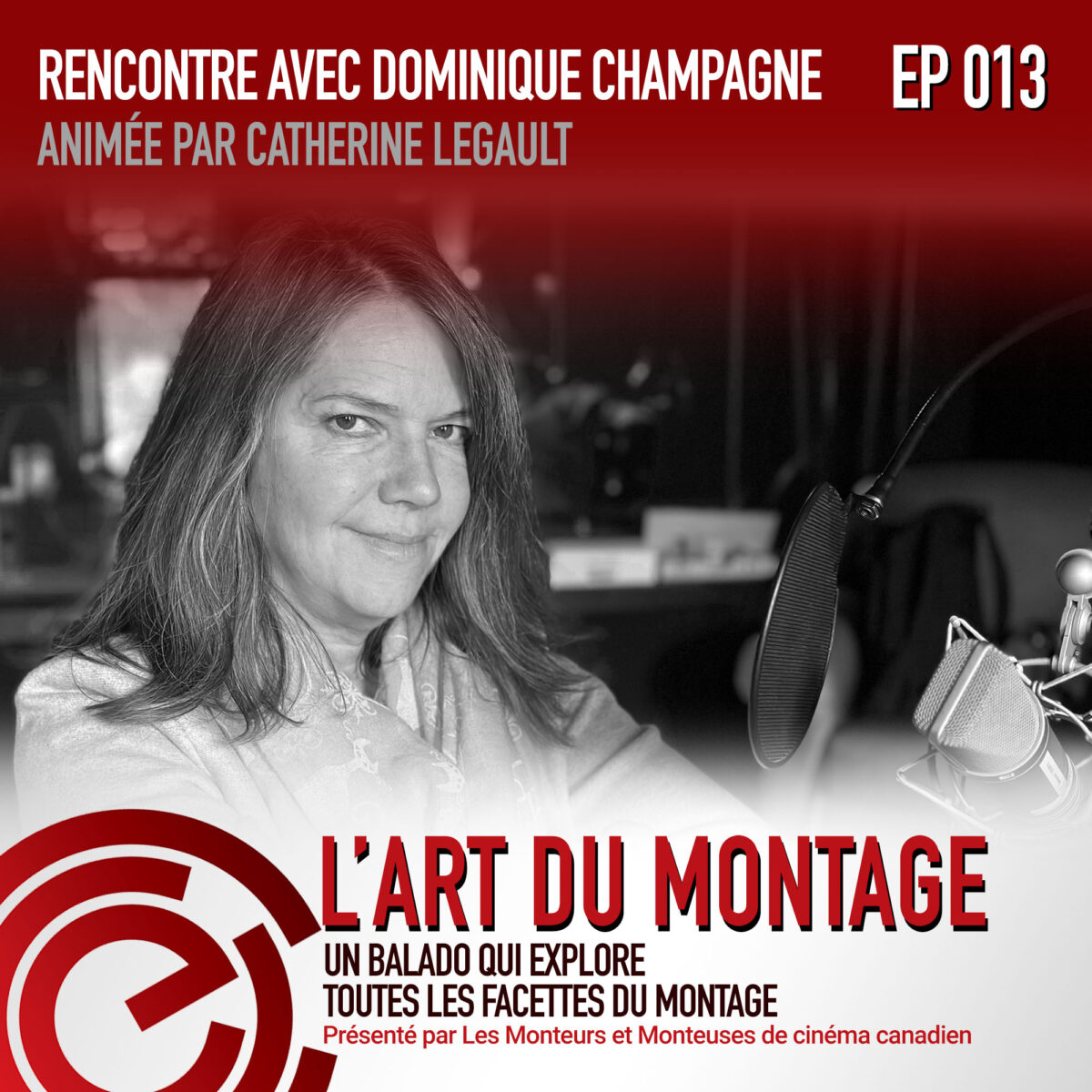
Épisode 013: Rencontre avec Dominique Champagne

LADM Episode13 Dominique Champagne

Épisode 13: Rencontre avec Dominique Champagne

Cet épisode est commandité par MELS STUDIOS

Pour ouvrir la nouvelle saison, nous avons le privilège de recevoir une monteuse chevronnée : Dominique Champagne.

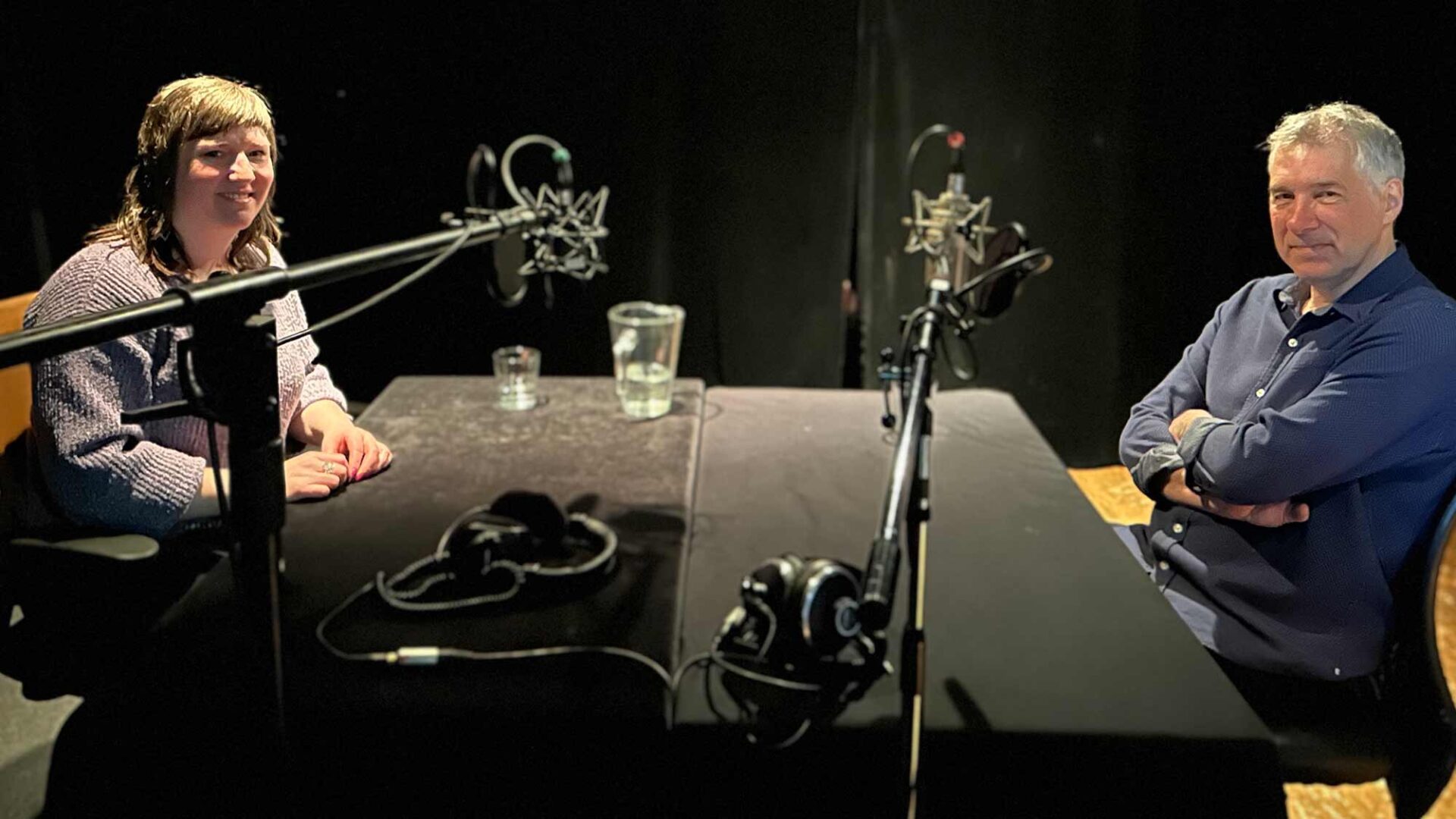
Dominique Champagne and Catherine Legault at MELS Studio
Photo credit : François Pecard

Dominique has edited feature films, documentaries, and it is really thanks to her work in TV series that she has made a name for herself, notably with SHARP OBJECTS, where she collaborated with Jean-Marc Vallé, but also with Sophie Deraspe, on the series DARK SOUL (BÊTE NOIRE) and MOTEL PARADIS. Our host, Catherine Legault, invites you to discover the behind-the-scenes of Dominique’s career, and maybe she’ll even share some editing tips with us.

 Bonne écoute!


Sélection des derniers projets de Dominique

3 Videos

À écouter ici !

Abonnez-vous là où vous écoutez vos balados

Que voulez-vous entendre sur L'art du montage?

Veuillez nous envoyer un courriel en mentionnant les sujets que vous aimeriez que nous abordions, ou les monteurs.euses dont vous aimeriez entendre parler, à :

Crédits

Un grand Merci à

Dominique Champagne

Catherine Legault

François Pecard

Les Studios MELS

Maud Le Chevallier

Audrey Sylvestre

Animatrice

Catherine Legault

Montage

Pauline Decroix

Design sonore du générique d'ouverture

Jane Tattersall, adapté en version française par Pauline Decroix

Mixé et masterisé par

Tony Bao

Musique offerte par

Commandité par

Catégories
The Editors Cut

Episode 070: In Conversation with Shaun Rykiss & Bretten Hannam of Wildhood

The Editors Cut - Episode 070- In Conversation with Shaun Rykiss & Bretten Hannam of Wildhood

Episode 070 - In Conversation with Shaun Rykiss & Bretten Hannam of Wildhood

Today’s episode is the panel that took place virtually on April 11th 2022 - In Conversation with Shaun Rykiss and Bretten Hannam on the film WILDHOOD.

The episode was generously sponsored by Integral Artists, IATSE 891 and AQTIS 514. 

Today’s episode is the panel that took place virtually on April 11th 2022 – In Conversation with Shaun Rykiss et Bretten Hannam on the film WILDHOOD.

Shaun Rykiss and director Bretten Hannam discuss their approach to bringing one of this year’s most acclaimed films, WILDHOOD, to the big screen. This panel was moderated by Kimberlee McTaggart, CCE.

WILDHOOD is a film about two brothers who embark on a journey to find their birth mother after their abusive father had lied for years about her whereabouts; along the way, they reconnect with their indigenous heritage and make a new friend.

The Editor's Cut - Episode 070 - In Conversation with Shaun Rykiss and Bretten Hannam of WILDHOOD

Shaun Rykiss

Shaun Rykiss is an award-winning film and television editor based in Toronto, Canada. He is a graduate of Vancouver Film School and an alumnus of Norman Jewison’s Canadian Film Centre Editor’s Lab. Rykiss served as supervising editor for five television docuseries including YUKON HARVEST, which is nominated for the 2022 Canadian Screen Awards for Best Factual Series and Best Editing, Factual. He has since transitioned into scripted film and series. Rykiss’s work on the digital series, I AM SYD STONE, garnered him the 2021 Canadian Cinema Editors award for Best Editing in Web Based Series. His first two feature films, WILDHOOD (dir. Bretten Hannam) and LEARN TO SWIM (dir. Thyrone Tommy), both had their world premieres at the 2021 Toronto International Film Festival, and are collectively nominated for eight 2022 Canadian Screen Awards.

The Editor's Cut - Episode 070 - In Conversation with Shaun Rykiss and Bretten Hannam of WILDHOOD

Bretten Hannam

Bretten Hannam is a Two-Spirit L’nu filmmaker living in Kespukwitk, L’nuekati (Nova Scotia) where they were raised. Their films deal with themes of community, culture, and language with a focus on Two-Spirit and LGBTQ+ identity. They wrote and directed NORTH MOUNTAIN, a Two-Spirit thriller that won Best Original Score at the Atlantic Film Festival and the Screen Nova Scotia Award for Best Feature. They also wrote/directed the short film WILDFIRE which premiered at BFI Flare and went on to play at Frameline LGBT Film Festival, Vancouver International Film Festival, ImagineNative, and Inside Out LGBT Film Festival. Recently, they wrote and directed WILDHOOD, the feature version of the short WILDFIRE, which premiered at TIFF 2021. Bretten is a Fellow of the Praxis Centre for Screenwriters, Outfest Screenwriting Lab, Whistler’s Indigenous Filmmaker Fellowship, and the CFC Screenwriter’s Lab.

À écouter ici !

The Editor’s Cut – Episode 070 – “In Conversation with Shaun Rykiss & Bretten Hannam of Wildhood”

Sarah Taylor:
Today’s episode was sponsored by integral artists – IATSE 891 and AQTIS 514.
Shaun Rykiss:
You know you can often use temp music as a crutch to convey emotion and to set up the tone feel of the scene and as with everything else in this film, with the material, with the writing, you know it’s very organic and it’s freeform and it’s a bunch of boys wandering through the woods. And it required musically a similar feeling and was very hard to temp for, for one thing. But also I think the floaters had a natural rhythm that we wanted to abide by. So I’m glad we cut it without, because by the time we did get the composer on board it just was a natural fit.
Sarah Taylor:
Hello and welcome to The Editor’s Cut. I’m your host Sarah Taylor. We would like to point out that the lands on which we have created this podcast and that many of you may be listening to us from are part of ancestral territory. It is important for all of us to deeply acknowledge that we are on ancestral territory that has long served as a place where indigenous peoples have lived, met, and interacted. We honor, respect, and recognize these nations that have never relinquished their rights or sovereign authority over the lands and waters on which we stand today. We encourage you to reflect on the history of the land, the rich culture, the many contributions and the concerns that impact indigenous individuals and communities. Land acknowledgements are the start to a deeper action.
Today’s episode is the panel that took place virtually on April 11th, 2022. In conversation with Shaun Rykiss and Bretten Hannam on the film Wildhood. Shaun and director Bretten discuss their approach to bring one of this year’s most acclaimed films, Wildhood, to the big screen. Wildhood is about two brothers who embark on a journey to find their birth mother after their abusive father had lied for years about their whereabouts. Along the way they reconnect with their indigenous heritage and make a new friend. This panel was moderated by Kimberlee McTaggart, CCE.

Speaker 4:
And action.
Speaker 5:
This is The Editor’s Cut.
Speaker 6:
A CCE podcast.
Speaker 5:
Exploring.
Speaker 4:
Exploring.
Speaker 6:
Exploring.
Speaker 5:
The art.
Speaker 6:
Of picture editing.
Kimberlee McTaggart, CCE:
Thanks everyone for joining us, and Shaun and Brett. I’m located in Mi’gma’gi, the ancestral unseated territory of the Mi’kmaq people and we acknowledge them as the past, present, and future caregivers of our land.
So yes, I’d like to welcome Brett Hannam, who is also here in Nova Scotia, and Shaun who is in Toronto right now. Shaun Rykiss is the editor of Wildhood, directed, written, and produced by Brett Hannam. The film has been making the festival circuit including TIFF Vancouver and won, I think just about every award here at the Atlantic Film Festival. You laugh, but it’s true. It was nominated for six CSA awards and did win for best supporting actor for Joshua Odjick who plays Pasmay.
Brett, a very wise man once told me that any award for a film is an award for the writer. So there you go. And also when it’s for performance, I always think that the editor owns a little piece of that award too. So congratulations to you both.
Bretten Hannam:
Thank you.
Kimberlee McTaggart, CCE:
Shaun, before we get into the film, I just wanted to ask you, as an editor, I’m always interested in other editor’s journey, how they came to be sitting in front of their editing suite. So, what’s your journey and how did you become an editor, and why editing?
Shaun Rykiss:
The how is it starts with just you know having fun with editing software. Growing up, you know I remember it’s just…I remember, for example, taking some of my favorite clips when I was a teenager from movies, like action scenes like Lord of the Rings and stuff like that and Star Wars. And like just with Windows Movie Maker, editing my favorite rock music or that sort of thing to the scene, just to like have fun with it. That was the first memory I have of really editing anything. That and school projects, that sort of thing.
But that all came to a head when after going through university, I initially studied psychology and then transitioned out of that when I got my degree into film studies, which eventually led me to and that was in Winnipeg where I’m from originally. That led me to go to Vancouver Film School where I attended Vancouver Film School for 12 months. It was a great intensive program where we got to dip our toes into kind of every different type of discipline. Made a lot of short films while I was there and just continued to realize how much I love editing.
I love the craft of post production, of taking footage and making something of it, making something out of it that you didn’t expect and that led me to my first job as an editor, which was working for a…aside from editing short films and that sort of thing, I was working for a bit of a gorilla operation in Vancouver, editing unscripted television and docuseries, that sort of thing.
That started in that producer’s apartments and a bunch of editors in the different corners of his living room. And eventually that spawned into multiple TV series over the course of my time involved, four or five years, and we got an office. And that resulted in me getting to wear a lot of hats because as one of the earlier editors involved in the studio, as we grew, I got to take on more responsibility, got to dip my toe into post-production supervision as well as eventually series editing as well as the actual editing of the episodes.
But all things considered, I missed scripted storytelling. I had edited short films here and there, music videos, that sort of thing intermittently…but I always got into film because of script storytelling. So in trying to pursue that further, that led me to discover the Canadian Film Center, which is based in Toronto. Happened to apply back in 2016, got accepted and decided to make the move to Toronto, both to attend the program and to expand my career. And so that’s where I met a lot of my fellow filmmakers based in Toronto, one which is Gharrett Patrick Paon, who is the producer on Wildhood. And the rest, as they say, is history.
Kimberlee McTaggart, CCE:
Is that how you were led to Brett? And Brett, I know that there is this feature film lived as a short film first called Wildfire, which is a lovely little short and even though it’s quite different having to be a short, I love how there’s scenes that are moments in it that are just directly into the feature film. But I know you edited that, Shaun, so is that how you two came together?
Shaun Rykiss:
Yeah, 100%. As I recall, Gharrett had sent me an early version…early cut of Wildfire. Brett, you had edited the first rough cut, right?
Bretten Hannam:
Yeah.
Shaun Rykiss:
And Garrett had sent it to me just for some notes and I guess he liked what I had to say because then he followed up by asking if I’d be willing to take a crack at it, obviously with Brett’s permission. And that led us to building our relationship and edited Wildfire as you now see it and on we went.
Kimberlee McTaggart, CCE:
Okay. Well then on to Wildhood. First of all, well, you know I’m a huge fan of the film. I think it’s an absolutely beautiful film. I’ve watched it twice, the first time as a viewer, always the best way to view a film, just as a viewer. The second time I viewed it as an editor. And I know I was telling you I felt when I was watching it that there was probably a lot more to this film that didn’t make the film. And I say that not feeling that it was too long or that there were things…that felt things were missing, just the nature of the film felt like you probably had a lot of material. So, can you tell me about that? Kind of what you were dealing with, how much you had to work with?
Shaun Rykiss:
A lot of content. I was editing in Toronto while they were shooting in Nova Scotia, I was editing about a day or two behind. And by the time we had an assembly cut put together soon after they finished production, the initial assembly cut was three hours and 12 minutes.So…and that was pure content. Obviously there’s always room to trim and tighten things up, but overall compared to the one hour and 40-minute final film, there was a lot of extra, like I said, content and material that could have ended up in the film. So lots to work with, which was in the end such a blessing because it allowed us to make a lot of you know…play with a lot, try different things and try to tell the most focused story that we ended up with.
Kimberlee McTaggart, CCE:
So Brett, in doing that, in sculpting down the film, what was your guiding principles in deciding what stays and what goes?
Bretten Hannam:
Well, I mean, it’s always a discussion. Part of it was that there’s the macro part and the micro part, but ultimately it was, is this true to the story or the spine of the story is there and the flow and shape of the story? So when you make your assembly, it’s like a hodgepodge and you hope there’s something in there. And then as we were going along, it was like, let’s try this. We’d talk about the scenes and what was in there and what we’d include and we’d watch it. I think in the early days we weren’t doing livestream edits. It was more like Shaun would do a bunch of stuff…we’d talk, Shaun would make a bunch of cuts, he’d send them to me, I would watch them and then we’d get back together. This was really kind of a longer process, but it was just really honestly being about like, this scene doesn’t feel like it wants to be there or it feels like we want to move to this place faster, or we get into the story faster, or we want to stay with this character here or that character there.
So part of it is maybe instinct and then saying, is this the best scene or the best way the scene can be, or the best place for this scene for the story as we’re kind of finding the shape of the story again in the editing phase. So it’s a collaboration, primarily between Shaun and I, and then we’d get feedback from our producing team and other people as well and then decide what to ignore. No. But the great thing about editing is you can try out a lot of stuff. So we would try stuff and I’m like, oh no, totally, that doesn’t work okay. Or like, oh, that thing I didn’t think would work or we didn’t think would work is not a bad idea. So it was an interesting living process.
Shaun Rykiss:
Yeah, especially having had to do it remotely because again, Brett is based in Nova Scotia, I’m in Toronto and this happened, I think Wildhood was the first production that shot in the pandemic. Didn’t it? In the East Coast.
Bretten Hannam:
Yeah.
Shaun Rykiss:
So, we were all trying to kinda figure out the best possible way to do this. Initially before COVID really hit, we planned to fly Brett in to work with me at least for week at a time…weeks at a time. And then when everything happened, the outbreak got a little out of hand, then we were like, okay, let’s try pushing this remote thing and see how far it takes us. So, finding that rhythm was interesting early on, but we definitely, especially as Brett alluded to you, once we started live editing and figured out a system for that, it had a natural flow to it.
Kimberlee McTaggart, CCE:
And it’s certainly something we’re all getting used to. I know it’s probably harder with feature film to do it remotely in the notes way, but in television, wow, sometimes you can go whole season without seeing your showrunner. Now it’s kind of-
Shaun Rykiss:
Here’s the funny thing about that though is last year, including Wildhood, I cut three feature films and I did all of them remotely. I didn’t sit one day in the edit room with …
Kimberlee McTaggart, CCE:
Wow.
Shaun Rykiss:
So I don’t know how to cut film.
Kimberlee McTaggart, CCE:
And to get into a techie question, do you deal, in those three cases, for instance, mostly with notes or do you do any live over the airwaves type editing?
Shaun Rykiss:
Mostly live.
Kimberlee McTaggart, CCE:
Oh really?
Shaun Rykiss:
And that was partially a workflow that was developed through Wildhood. I like to do a combo between, I use Frame.io as a service because I just find it’s a great way for-
Kimberlee McTaggart, CCE:
It’s fabulous.
Shaun Rykiss:
It’s just a really polished experience and it’s easy for…once you get the directors and the producers acclimatized to it because they’re not all initially. Actually that’s a good point too, just to go on a tangent quickly because one of the earliest conversations Brett and I had was trying to figure out the best way to literally communicate with each other creatively. And I remember we had to do a little bit of back and forth with Frame.io to figure out what the best use of language was. And I remember the key to it, for me at least, was when we agreed like, okay, Brett, just when you’re typing notes on Frame.io, say whatever’s on your mind. Literally just, even if it’s a paragraph or an essay, just type it as it’s coming out of your brain.
And for me that’s always essential because it’s sitting in a room, you’re going to get all those kind of intangible thoughts that you then take. And as an editor especially, you try to then translate into what ends up in the timeline. I love…I’m an editor who loves information. Give me more, give me as much as possible and then I’ll filter that down and ask a lot of questions. So that philosophy kind of unlocked, at least for me, I don’t know about you, Brett, but a productive flow of communication. And then to get back to the initial question, Kim, once we got that settled up with Frame.io, and basically we would use Frame.io on earlier cuts like Brett said. And then once we decided to get into the fine-tuning, then we would hop onto a live session.
Kimberlee McTaggart, CCE:
Right
Shaun Rykiss:
And with the live sessions, the workflow I use is through a chat app called Discord, which was a gaming platform initially. So it has a streaming function. And just experimenting with it, you could stream 720 P pretty smoothly as long as you have a decent internet connection. And it took a little messing around with because we’d have to set up a separate communication call, whether it’s on a phone call or FaceTime or whatever to handle communication and then I would stream both my video and picture from my system through Discord.
So there’s a lot of muting and unmuting yourself to make sure that during playback you’re not getting too much feedback, but you find a rhythm and you get used to it and you get used to each other’s rhythms and figure it out. So that’s how I’ve been editing these films. That’s how we learned how to edit on Wildhood.
Kimberlee McTaggart, CCE:
All right, well why don’t we move to our first clip. We’re going to start at the beginning. This is the intro to the film, of course being one of the most important parts of your film is your intro to your film.
[clip plays]
Shaun Rykiss:
Again, that’s the clip as it appears in the final film. What we’re going to show next is a rough cut version of it that included additional content that you’ll see sets up the film in a little bit of a different way.

[clip plays]

Kimberlee McTaggart, CCE:
So quite a difference. That’s some important decisions to make. I mean that is your opening scene, setting your character, setting your tone, letting us know what we’re going to be seeing. So how did you come about with what you did?
Shaun Rykiss:
The first thing that I think is worth mentioning is again, what the differences do to the film. Obviously what we landed on is quite a bit more concise and moves quite a bit faster and that’s always something that you’re conscious of, it’s certainly something that came up a lot as we got into the later phases of the editing is…how can we get the ball rolling quicker?…How can we get the boys on the road quicker?…And that’s not always…it sounds like a bit of a rote note because you’re like, well what if we don’t want to get them on the road quicker? What if we just want to enjoy the long part of the journey? But there is always value in getting the first 10, 15 minutes of your film moving quickly, so that’s always something to be conscious of.
That being said, one thing, Brett probably hasn’t seen this in a long time and certainly hasn’t seen this with music, this is something I tossed in at the end in preparation for this because we cut it without music initially. And that’s some of the final music in the film that you hear in there that I added in. There’s a lot of interesting character notes in the extended version that set up some things and set up the world that we either don’t quite get to in the final film or we do in other ways.
And so that’s something else that we’re always asking ourselves is in trying to condense the start of the film, are there ways to introduce these elements elsewhere in the film? Do we have to do it here? Can we find ways to drip feed that information throughout? So those are some of the thoughts that went into the different types of things that got cut. Brett, any thoughts on specifics about some of that extra content?
Bretten Hannam:
Super weird to see it with music, that’s all.
Kimberlee McTaggart, CCE:
Well, one thing is we learn that he is gay there, or most likely gay, which I’m not sure exactly where we learn that now.
Bretten Hannam:
It depends on what you’re cued into. But yeah, so there’s that. We talked about centering things more on Link’s identity and how he sees the world and interacts with the world and that scene is kind of more a view, and oppression maybe from outside. A force from outside the world pressing in on him and setting up that he’s at odds with also his environment, which kind of became a double beat in a way because his father does all that anyway.
So it became one of those things where…are we doing this in other places?…and then do we need this…and then let’s try it without it and then oh, we don’t need this or maybe we do…no, we don’t. So that’s kind of…at least part of me remembers that conversation. And then the whole dirt bike thing, we didn’t lose too much by not having the dirt bike in, though I love the dirt bike. I love it all. All the stuff that we cut was not like, this is terrible, we have to cut it. It was more like, is this the way we want to go or is this giving us what we need at this point? Early on I think we take a little bit of time with the hair dying scene, the beginning, and then we took time with the bullies and then we took time with the dip, then we took time with the paint and it’s like we took a lot of time.
Kimberlee McTaggart, CCE:
One thing that I found interesting too is when you have so much material that you have to shake down and you’re in the middle of a pandemic is how important it is to show people and get feedback as you’re cutting and when you get really into the thick of it, you start to lose your objectivity and all of that sort of stuff. So who did you rely on? Did you have a whole group of people who you would send and save the certain cuts for some people? Or how did you deal with it?
Shaun Rykiss:
Yeah. Obviously our internal team to start, which was us plus our three producers, Gharrett, Julie, and Damon. And they were great about giving us the space to do the work and get cuts prepared to the point that we were comfortable with them and then we would have intermittent kind of checkpoint reviews with them. And then once we, I can’t remember what phase exactly, but definitely later in the rough cut is when we first started to show people. And I think it was just general colleagues within and without the industry of different focuses and disciplines. Certainly I have my gang of editors who I like to show things to and get their perspective and then Brett and the rest of the team I’m sure have their own…their different disciplines.
Kimberlee McTaggart, CCE:
Did you have any big surprises in that process?
Shaun Rykiss:
I don’t remember there being too many big surprises. The one major surprise we kept coming up against, which led to a huge change in our film, was how much people didn’t need to see as much of the dad, of Arvin and how comfortable people were with the idea of because as we’ll probably talk about at some point there was a lot more of Arvin throughout the film. And that’s definitely something that I remember coming up in multiple sessions was people being like, “I get it, he’s an asshole, he’s oppressive, he’s evoking or imposing these worldviews on Link.” People were getting that right from literally the first frame of seeing him and subsequent scenes. So that made it a lot more comfortable to make some heavy edits, heavy cut downs, which took out a lot of time, which is great.
Bretten Hannam:
We got pretty bold at one point. It was just like, let’s make these deep cuts and just see what happens, and you know, because, well, we can always undo.
Shaun Rykiss:
Yeah.
Bretten Hannam:
So I think Shaun went through…we had divided the film into reels, so went through and like made these deep cuts and then it was like, let’s watch it. And it’s like, oh, actually these deep cuts are pretty on the money.
Kimberlee McTaggart, CCE:
Most of that was with Arvin.
Bretten Hannam:
Yeah and some of its whole side adventures inside with the characters. Like entire big scenes that are just…they change maybe the perception of the characters, or it kind of feels like they’re on a journey and then they kind of went over here and they hung out for a while and then they kept going like it loses momentum.
Kimberlee McTaggart, CCE:
Right.
Bretten Hannam:
So those were kind of like we were pretty merciless. Which is hard to do, but you find a way.
Kimberlee McTaggart, CCE:
And did you feel the loss of anything in losing Arvin? I mean he was chasing them, right? And coming upon them every now and then kind of thing?
Bretten Hannam:
Well…part of it is…yeah. I mean it’s just a facet that we don’t get to experience with the way the story is now. But did we need it? I don’t think we did. Arvin has a bit more character development. Right? He’s not just a two-dimensional character. There’s more nuance. He doesn’t do like a 180 degree change at the end. He’s just kind of like maybe three degree change. He’s slightly less of an asshole, but he’s still an asshole. But there are confrontations that happened between him and Link where Link is more asserting his identity and asserting his personhood, I guess, and getting in shouting matches and running through corn fields. I mean I miss those things, but they are kind of…Shaun, we talked about it being like you know those scenes, even though they’re not there, they were instrumental to the scenes that come after them. Right? We still build…the performances build on those things, I think that’s one of the things that makes the film seem like it has a bigger life or world behind it, something like that.
Kimberlee McTaggart, CCE:
Well I was actually quite surprised when you told me he was initially all through it, which is good. I mean it felt totally organic without, so…
Bretten Hannam:
That was thanks to some little wizard tricks that Shaun did.
Shaun Rykiss:
Well, but again, it comes down to the advantage of having so much footage and so much content. You guys shot for, what, 30 days out in the hot summer in Nova Scotia. And I don’t know…I couldn’t tell you…I can’t remember exactly how much footage it was, but again, there was a three hour and 12 minute assembly. It gave us the flexibility to find creative ways to condense and lift chunks of scenes out so that we could merge others. And without all that footage, I don’t know if we could…I think we would’ve been locked into a lot more tough decisions,so…
Kimberlee McTaggart, CCE:
Right. All right, well let’s move on to another clip.

[clip plays]

Kimberlee McTaggart, CCE:
Here’s, I guess, one example of showing your audience and getting some feedback. So why don’t you tell us about this scene and how it came about.
Shaun Rykiss:
The first sequence rather when he gets out of the car and they’re walking off, that was all written, shot, and designed as a beautiful water, that works great. But then going into the next scene, which is a talk at a campfire, we felt like…in putting together the assembly and showing it to the internal team that there wasn’t quite enough tension at that point. Clearly you can tell by Link’s body language at this point, things are tense between him and Pasmay. Link’s still trying to make these tough decisions to keep him and Travis safe and going from that directly into the campfire scene, they got a little too cozy too quickly. There’s a little bit too much…the tension was lost a bit, whereas in acknowledging that, I believe it was our producer Gharrett who came up with a great idea during production while they were still shooting to get this purple sky scene, which was an example of trying to generate a little bit of extra tension in the group dynamic, create some separation between Link and Travis and Pasmay and just show that they weren’t quite connecting yet. There was room to grow there and through some great blocking and obviously a gorgeous setting, I think it accomplishes that in three or four shots, showing them collecting together. Link kind of throwing a wary glance over at Pasmay with almost no dialogue, but sometimes that’s enough to just help sell that type of tension, so, yeah.
Bretten Hannam:
Plus the hiccups.
Kimberlee McTaggart, CCE:
Yeah, this was the first time I noticed the hiccups.
Shaun Rykiss:
That’s part of the thing that makes that scene work so well too is that despite the tension, which is there, you have Travis. First of all, the relationship between Link and Travis is so clear that older/younger brother relationship where Link’s trying to help Travis in his own way and Travis is like, “No, leave me alone. I got it. I’m big enough, I can do it.” Which is already great. And then the whole time he’s hiccuping while he is trying to be this big strong man. And then that goofy little thing that he does holding the branches, trying to carry them over, it just adds that extra bit of genuineness that you can only get by having a kid actor involved. So credit to Avery for that.
Kimberlee McTaggart, CCE:
And it really shows too how beautifully shot this film is. You did a fabulous job. All right, why don’t we go to… I love this scene, the first dance.

[clip plays]

Shaun Rykiss:
You know, it’s always interesting when you get a scene that is mostly silence and body language in addition to having a little bit of action because in terms of setting up the various checkpoints that you have, the beats and the blocking that you want to hit, you have to be a little bit…usually with dialogue you have those key lines that you’re building towards and that you’re wrapping the edit around, and with this it was more about glances and it was more about gestures. So, thankfully there was some beautiful blocking that really highlighted those things.
But I do remember, one of my earlier cuts, didn’t quite have a shape that we ended up with. It was a little bit more dry, it kind of got to the dance a lot quicker. And when Brett and I finally got digging into it, they really spent a lot of time with me developing that shape. And one thing we talked about a lot was the intimacy of the moments, and intimacy not just between the two of them, but for Pasmay alone at this moment, at this time of day when everyone else is asleep. Brett, you can speak more to this, but the interesting dynamic of Link accidentally invading that. And then the reaction that they have to that moment and obviously what spurs from that.
Building up to the moment where they come together was an interesting process of slowly stretching out moments and figuring out, okay, we should cut back to Link one extra time to make sure that we’re seeing his processing of what he’s observing and give Pasmay time to take that in, digest and figure out how he wants to proceed.
Bretten Hannam:
Yeah, I mean that’s kind of how the discussion evolved. Talking about what the moment is or what the emotional moment is between the characters and what’s going on. So you have these two that have been coming along, well and Travis, he’s sleeping. But they’re slowly getting closer throughout this time. And this is a private moment for Pasmay, a prayer. You can’t quite hear it, but there’s a prayer that he says in Mi’kmaq before. As Link is waking up, he kind of hears it and then he’s practicing his dance. And it’s not just dance moves that anyone is practicing at home, dancing is a sacred thing, a special thing.
So it’s quiet, he’s with these others that aren’t really…he’s not super close, but they’re beginning to get there and he’s interrupted and then it’s a moment where you can choose to be like, okay, well I’m not going to do this right now, or I could proceed and just ignore them. But instead the choice that Pasmay makes is to invite Link into the moment, into the space. So they’ve crossed that threshold and that’s that hand extending and being pulled up and then passing on this knowledge, this tradition and reconnecting.
So they’re both getting different things out of what’s going on, and we’re very with them in the moment too. And then the Travis comment and the rebuke I think is always interesting to watch or experience with an audience because most of them are in that moment laughing because Travis is…that’s the kind of kid he is. Right? He’s kind of off the cuff, “You look like a douchebag.” And I said, oh, that’s a funny thing. Like, oh, he’s just a jerky little kid or whatever.
Shaun Rykiss:
Without fail that moment has gotten a laugh in every screening. Whether it was notes that we got where people would kind of live comments on their thoughts, they would always comment that they found that funny at first, or witnessing it with audiences like Brett’s saying. People always laugh. And then it’s always interesting seeing the tension that fills the room afterward when you hear Pasmay’s reaction.
Kimberlee McTaggart, CCE:
And also to see the look on Travis’s face is just almost heartbreaking.
Bretten Hannam:
But that’s a teachable moment too. Those are teachings as well. We teach in many different ways. And so for Travis, they’re all learning something in that scene. It’s one of the reasons it’s a great scene. And then at the end when we see his face like that, he probably also feels guilt and shame and all sorts of things. But then we go, I think in the end of that clip there’s a little bit of the next one, which is they’re walking but Link’s not quite with them and that tension and separation is something I think that you feel when you watch it because that moment is set up like that.
Shaun Rykiss:
And that took a lot of extra work because I remember we had to…that footage of them walking, we had a bunch of different footage of that same kind of sequence of events, from different angles, from different times of day and it took a while to get the right amount of it, the right shot composition, just to make sure that you lived in that moment for the right amount of time, but also didn’t get too bogged down by it. That was actually an interesting…it required an amount of extra work compared to it could have just been one shot and then you’re done. I remember we had to go back to it quite a few times to make sure that it felt right.
Kimberlee McTaggart, CCE:
And at the beginning of that scene, we saw one of the flashbacks. Can you talk a bit about that, how you decided where to put those in the film and at what moments and show how much? And were they unscripted or did that all kind of get moved and created in the editing suite?
Shaun Rykiss:
Yeah. Brett, do you remember if this one was in the script at this point? I actually don’t recall.
Bretten Hannam:
I think they’re more or less where they go in so far as where they are. But then what they are is something that’s shaped more by the shooting, how we ended up shooting and approaching the moments and then the editing of them, the shaping of them into the story. Some of them are a lot quicker than I imagined, and there’s different motivations for when we were talking about how we’re going to use them and build them. Really, there’s an arc to them in a way. At the very beginning it’s kind of more vague, not in focus, it’s not quite clear. It’s more fragments, working up to a bit of clarity, a bit more, what’s the word? Intercutting with the real world. So back and forth to a more clear memory kind of at the end. Those were shaped as we went. Did we do a pass that was only memory?
Shaun Rykiss:
We may have. Yeah, I think during the final cut, you’re right. I think we had at least had a pass as we were working through the film, we’re like, let’s make sure we’re keeping track of flashbacks specifically and see if there’s ways to shape it. Because as Brett said, there was an arc to the flashbacks. I think total there’s probably, well, there’s definitely less than 10 shots of flashback throughout the film, maybe somewhere closer to eight. But in addition to the vagueness and the more surrealist portrayal of flashbacks earlier on versus the more grounded portrayal later on.
We also talked a lot about how…because every flashback sequence, because as Brett said, they were scripted and they were shot for those moments. There was quite a bit of footage for each one, and we talked early on about how much to show. Do we develop these into a little bit more substantial two or three shot series/sequences or do we keep them more minimal and make them more moments in time?
And that’s essentially what we landed on was these are flashes of thoughts that Link is experiencing at every given point that we see…we witness them in the film. And I remember we really realized in experimenting that that was the best way to go because it felt the most real and the most tangible. It felt the most relatable because that’s how memories come to us. Right? They’re often not full-fledged sequence of events. Even dreams, they’re constantly…you’re flashing between things that are changing and ebbing and flowing. And we wanted to make sure that the flashbacks felt that way, especially because Link’s memories are…they’re deconstructed, they’re not fully formed. And so we wanted to make sure that the audience was with Link in that same feeling of disconnection.
Bretten Hannam:
I think one of my favorite uses of that is actually it’s in the house, and it just comes at…there’s a scene that’s more of a flashback and then we kind of move away from it. But then when it’s in the emotional space, where it is called for a flashback comes up for, what’s that shot of Sarah’s face completely out of focus, very quick.
Shaun Rykiss:
Her from the blurry perspective, POV perspective of young Link as an infant and her doing a peekaboo or something and it’s just for an instance and it’s right at the peak of a moment of music, but that’s how memories hit us. It’s like you see something or you smell something or taste something and suddenly you just get that flash, that flicker of, wow, where am I for a second? And we really tried to embrace that as much as we could throughout the film.
Kimberlee McTaggart, CCE:
I’m just curious, what was your schedule like? How many weeks did you have to edit this film?
Shaun Rykiss:
We took our time, it was about a seven-
Kimberlee McTaggart, CCE:
No shame in that.
Shaun Rykiss:
…seven or eight month edit.
Bretten Hannam:
Yeah.
Kimberlee McTaggart, CCE:
Oh wow. That’s fabulous.
Shaun Rykiss:
Yeah, I don’t think that was intended initially, but that speaks to the patience and the quality of our team. They really…our producers really gave us the time and the space to play and experiment. And when we sent out the cuts for feedback, we would take a little bit of time off and let it digest and we wouldn’t rush back into it. I was so grateful for that experience because again, it was my first feature film. And not having to rush it and feel rushed in getting it done really allowed us to do things like cut an hour and a half of the film.
Kimberlee McTaggart, CCE:
And breaks. I mean to have a break in the middle of a feature film edit is…that’s the best.
Shaun Rykiss:
Because I’ve had it the other way now. And yeah, you don’t want to feel rushed in the decision-making. Sometimes it’s good. Sometimes it’s good to have a sense of urgency and you know you need to get a scene done and you will focus on what’s required of that scene. But especially with a feature film, you need to give it time to breathe and tell you what it is because it’s not most of the time what you wrote. Right, Brett?
Bretten Hannam:
Yeah.
Shaun Rykiss:
And you need to be willing to listen to what the footage tells you, what production gave you, what the decisions of all of the other filmmakers who became involved, what they provided and what the performers provided. To rush a film is often the worst thing you can do.

Kimberlee McTaggart, CCE:
And speaking of that, surprises, did any of the actors give you something really surprising, Brett? Or are they pretty much as you had on the page? Or did something surprising come on the floor with your actors?
Bretten Hannam:
There was always surprises with them. We were doing two weeks of quarantine at the time, so you have no rehearsal time or you have one day of rehearsal time. I’m like, that’s terrible. And they can’t rehearse over Zoom because who could ever do that? So then they’re like, “No, we’re doing it every day. And we had an acting coach.” So every day they were rehearsing, and then I would be working with them and they would go away and do some work and they’d be like, “Here’s what we found or what we are working on.”
And so there was a good relationship there as well of, oh, okay, I can see clearer. This is the way things are going naturally and this is the way I’m dictating things. So it would make a better story if I let go of that thing and I follow what’s going on here, keeping things kind of on track, more or less. And then on the day, because they’re so in the characters and into the material, there were several scenes that were…people were, not just me I think, but very moved by or upset by or slightly traumatized by.
So there was always that willingness to be vulnerable and to go to those places, I think. And that’s what brings out those surprises. And we did some unscripted stuff too. I wish we had more time to do unscripted stuff because it’s super fun and you never know what you’re going to get. Sometimes you get half an hour of like…they’re kicking cans and nothing’s going on, and then other times there’s loon calls and great material.
So then it was looking all over all that stuff with Shaun and being like, okay, what do we have? And let’s find those real moments. I think at one point in the script, Link and Travis are going through a junkyard and Link is going to chase him with grease on his hand or something, and he trips, he falls because his pants are caught up in something. But that was just a thing that happened. And so it was like, oh, let’s find those things and put them as many as we can, if it makes sense, into the story.
Kimberlee McTaggart, CCE:
Yeah you can feel those in the montages. I mean they feel almost documentary-like, they definitely feel real, yeah like not something you would script, so that’s-
Bretten Hannam:
Yeah it was kind of looking for those magical things and then being like, let’s keep those in the edit, just to build that sense of the world and that it was happening and not scripted and away from the script, far away from the script.
Kimberlee McTaggart, CCE:
It’s nice that you could take that time on the set as well as in the edit suite to get that sort of stuff because it really did create magic in your film.

Bretten Hannam:
Yeah, it was one thing that we talked about going through the process and editing was like, from now on when I’m shooting, I’m going to do at the end, just a take that’s all silent. Just do it all in looks, do it all in motion and movement because there’s so much of that that is so powerful when you get into the editing stages about, well, Shaun, you’re stealing little kind of bits and things here and there for looks and stuff. It’s like, wow, if we did that take, it’s just a take at the end of takes. If there’s time to do that, then you have this extra little bit of icing that you can be like, oh, we want a little sweet spot here and there.
Shaun Rykiss:
Yeah, further to that point too, that was one of the earliest conversations Brett and I had. Whenever I start on a project I always like to talk to the director about just their vision. Based on the script and based on your experience shooting, tell me how feel, how this film feels to you. Tell me, obviously references and stuff are great, but describe what you think the sense of flow is and time. And one of the earliest things Brett said to me was, “If this film could be silence without dialogue, I would love that version.”
And obviously in my mind I’m like, what? What are you talking about? But it was such a wonderful guiding principle because again, it opened up for me like, okay. We never got as far as to really try it with a given scene. But my approach then, whenever I was assembling a scene and refining it was, is this dialogue necessary? Is there a way to do it without dialogue? And if not, or even if you only remove a little bit of dialogue, how much can I tell with a glance? How much can I tell of this feeling with just emotion or body language?
And I think that ended up coming through, that principal came through with the performances, especially with Link, who is always…Phillip is always doing so much. There’s a weight to Link’s character that is prominent throughout the film. And we spent the most time from the beginning of the film at that three hour stage up until the final moments of locking was making sure that every bit of Link’s nuance was coming through and that you always felt like there was more going on underneath the surface no matter what scene he was in. And I’m proud of what we ended up with.
Kimberlee McTaggart, CCE:
Absolutely. And did you end up losing a lot of dialogue in the film, in the process?
Bretten Hannam:
Not as much as I thought we would. But yeah, when I write there’s not a ton of dialogue anyway. And I remember talking to Gharrett, one of our producers, and I was like, “Yeah, but it’s fine. They can say this scene.” Or, “In this scene they can say this or that.” I was like, “This dialogue is just to get us to the place anyway. I’m going to cut it.” And he is like, “What? There’s like barely any dialogue, how can you cut?” and then as we began to work on it and Shaun is kind of retooling and approaching these scenes in these different ways with these looks and really crafting with silence, which I love, then I think it became clearer about like, oh, okay, yeah, do we need this? I was like, “No, we do need that line. We do need that.”
Shaun Rykiss:
There was a lot of taking out dialogue to see if we needed it and then putting it back in.
Kimberlee McTaggart, CCE:
Right right, see if you can get away with it.
Bretten Hannam:
Yeah.
Kimberlee McTaggart, CCE:
Yeah. Nice.
Shaun Rykiss:
Well, that’s what happens when you’re writing good scripts.
Kimberlee McTaggart, CCE:
Well, on that note, let’s talk about reshaping a scene a bit and go to the Smokey meeting.

[clip plays]
Kimberlee McTaggart, CCE:
So Shaun, why don’t you tell us about the challenges in that scene?
Shaun Rykiss:
Yeah, this, as you alluded to, was quite a challenge, actually, the most challenging. This and the scenes that follow for about the next 10 mins or so…5-10 minutes were the most challenging part of the edit because we ended up completely retooling the use of this character Smokey. In the script and what was shot, Smokey is much more of a vague character. Vague is actually the wrong word, he’s more of a red herring in that he’s presented to the boys, and through their perspective, he’s much more of a darker character. He’s a lot more…they build this…they see this kind of biker looking dude with tattoos and in the original performance that we had more of a tough portrayal, tough personality. They misconstrue Smokey as a bit more of a criminal type.
And so in the original staging of the sequence, we don’t reveal that he is a baker initially. He’s a lot more shady is the word I keep trying to look for and then when he asks them to come help him, it’s more of help him with a job. And so by the time they get to the convenience store, that whole engagement outside of the convenience store at the van is a lot more ambiguous and it’s more like Link and the boys are tense about Link going in to help Smokey pull a job.
And then the scene that follows when they get back into the van after talking to the store clerk, Desna, it’s a lot more tense. And Link thinks that Smokey robbed the place while he was swinging around back. And at one point there’s a gun involved. And we ended up cutting all of that, not cutting it out, but we cut out the gun, we cut out the tension and we brought a lot more focus to the real Smokey who inevitably in the original version would’ve discovered this sweet kindhearted baker who is just a member of the community who ends up being a gateway for Link and the boys into this inclusive community that they end up meeting.
Ultimately, we changed it for a number of reasons. This was the thing that we got the most feedback on, that people continuously in that original version were either confused by or they thought there was too much going on, or it was just…just wasn’t feeling quite right. It also was a longer sequence. So we were constantly looking for ways to get it more concise, trim it down and to clarify. And in the end it resulted in, why don’t we just try making Smokey who he is from the beginning? Which then dictated how the rest of the changes played out.
But ultimately I would say we’re happier with it because Smokey’s already a unique, interesting character without the red herring and especially in this film full of joy and community building and discovery of culture, you want that to be the driving force behind their interaction with Smokey. And the other stuff, as much as it was fun and there’s some action and whatnot, it was getting in the way of the bigger journey. So we got down to it and started cutting out guns and stuff.
Bretten Hannam:
There’s too many rocks in the river. We had to pull up some rocks and let the water keep going.
Kimberlee McTaggart, CCE:
Fair enough, fair enough. Speaking of the river, let’s go to the waterfall, also known as the sex scene.

[clip plays]
Kimberlee McTaggart, CCE:
So why don’t you tell us about that? You wanted to talk about length, we spent a lot of time with them. So tell us about your decisions in that.
Shaun Rykiss:
Yeah, the main point to discuss, as you pointed out, is the length. Because it’s a longer scene, it was always a longer scene from every point. It certainly was longer at the earlier stages and we did find ways to cut it down. But one of the most interesting things that happened with the scene was every time we cut it down more we felt resistance from the scene. We felt like we were losing too much or we often felt like there was a beat that got lost or there wasn’t enough time between beats compared to a previous version.
So, ultimately the scene didn’t change too much from what those early release rough cut scenes and the version of the scenes ended up being because every single beat, every single moment of intimacy throughout felt like it wanted to be there. It felt like it was earned. And as soon as you lost one, even in trying to make things a little bit more concise, you realized that you lost a piece of the journey, a piece of the boys becoming comfortable with one another or a piece of permission because one thing that we were incredibly careful with with the scene was making sure that both parties felt included, both parties wanted what inevitably comes. We never wanted this to be at all ever portrayed as there might be an imbalance within this moment. It was always 100% the two of them together in the moment. And they progress slowly because that’s how these things in a loving relationship do, without force and without resistance. And so that was incredibly important to us to make sure that the intimacy felt genuine.
Bretten Hannam:
It’s one of those things where it’s weird to watch it out of the context. Joshua and Phillip were incredibly vulnerable in this scene and just…I didn’t expect them to do some of the things that they did like they worked the scene on their own. And it was more kind of me talking to them and saying, “What are you comfortable with? How far are we going to go?” With these different stages of elevating the intimacy between them.
And then there’s just stuff in there kind of…Kim, you were talking about like, did they do anything that surprised me ever, and this was one of those times. In kind of close to the end, or after this interaction is finished, you hear a little bit of dialogue between them. That’s not…that just kind of comes out in the moment when Pasmay says, “Are you okay? Are you sure?” That was like…you can’t write that. It just happens. And then making sure in the edit, when we’re doing the sound edit, the edit is there and we can hear, and then we’re doing the sound edit. I think it got pushed back at some point because the-
Shaun Rykiss:
Because it was soft.
Bretten Hannam:
Yeah, it was very soft. And I was like, “No, we got to bring that back” and preserving that moment. But really the thing about the scene is when we were shaping it and some of the things that we tried was kinda getting into it quicker and then it becomes more about, oh, they’re just two teenagers hooking up.
Kimberlee McTaggart, CCE:
Yeah.
Bretten Hannam:
Right? That’s a different vibe than this is really about an emotional connection, like a deeper connection that happens. It’s not you know one then done and one-night stand type thing, they’re actually kind of building off this existing bond and that’s the first part of like, oh, they’re kind of playing around and then it’s kind of like, okay, we’re kind of doing this and then, oh, we’re doing this and then, okay, let’s do this. We’re in…like together.
So I think that, Shaun, is the thing when we kept taking parts out, we were deconstructing that ramp up or that progression and then it just felt kind of like, whoa, now we’re just pulling middle parts out of the thing and it doesn’t seem to be…you can’t collapse the middle part. And you just get a beginning and an end and it’s like, it’s fine, but it doesn’t have that weight to it. And then the consent too as well between them is, the clarity of that was important because of the scene, the day after scene that happens.
Shaun Rykiss:
To Brett’s point, in addition to those earlier moments of them being playful early on leading to the first kiss, the final moments were one that got played with a lot too, because the exit of that scene could be at various points. There was a point where we went as far as cutting out in the middle of one of their big heavy breaths while there was a thrust going on and then we cut hard into the next scene.
And again, we felt we lost…immediately Brett and I felt like we lost so much by doing that. We gave it a try. We showed it to people just to see how it felt but ultimately hearing the two. First of all, seeing them embrace lovingly in a relatively non-sexual way after their intimacy was so essential because the most important thing was that this was a loving relationship that we were building towards that.
And two was the smile that Link gives Pasmay at the end was also essential for that reason. Because even then going further, where okay we didn’t cut quite as early as I just said, but we cut before that smile because the note was to tighten up the finale. Okay, we’ve seen them do it, we see them, they’re happy…okay, let’s just get out. And again, by cutting even just that little moment of them kissing and then backing off a little bit and Link giving him a little bit of a glance, losing that you lost some intimacy, it became more vague. And especially going into the next scene where things are a lot more ambiguous, it created a lot of questions and problems in terms of where the two were in the relationship. So in the end, every one of those beats in the sex scene earned its spot and became required for the journey that we were trying to build.
Bretten Hannam:
It’s a delicate thing, the smallest little moment can change the context of everything that comes after it.
Kimberlee McTaggart, CCE:
Yeah. Okay. Well why don’t we show the scene after? And I’m really glad, I don’t know if budget-wise you tried to get talked out of it, Brett, but I’m so glad you did go underwater or you had the camera.
Bretten Hannam:
Yeah.
Kimberlee McTaggart, CCE:
It really does something for the first part of the scene when they’re just playing around or whatever. There’s something…I don’t know. There’s something really that works about that, so I’m glad you did that.
Bretten Hannam:
I wanted more, but…

[clip plays]
Shaun Rykiss:
Well obviously it’s a direct continuation off of…so that is exact following scene coming from the sex scene and just on the page, it’s already such a fascinating scene because the dynamic is so interesting. Certainly the dialogue implies that Link is in a very strange headspace. He’s not sure how he feels. He’s obviously grappling with a lot of different emotions, a lot of his history and a lot of probably his father’s in the back of his mind, his upbringing, the world of oppression that he’s been feeling. Those things stick with you.
And so in having this wonderful experience the night before, his world has been rocked a bit and he clearly has experienced something that he’s never experienced before. Be it that level of intimacy or love, be it that style of physical interaction. A lot of that is vague, which is deliberate on Brett’s part, and I think rightfully so, because it makes far more interesting scene to leave it open-ended.
But from an edited standpoint, it was one of those just fantastic scenes where you’re again, working not as much with dialogue entirely as much as you are with body language as well. One of the best notes that I got in the film was when we were editing an early version of the scene that was a little bit less deliberate with the footage and the coverage in that you could see more of Link’s face and Brett rightfully pointed out, “I want to try it where you never see Link’s face except for right at the end when he turns to camera” to help obfuscate his feelings.
So you don’t get a specific sense of how he’s feeling in the moment. Let his vocal performance and his body language dictate how people perceive Link in that moment. But let all of Pasmay’s vulnerability drive that scene more than anything and this is my favorite Pasmay scene. I think Josh brings such an interesting energy because he’s clearly full in on this relationship at this point and his reaction to how Link is feeling is…I always find it interesting because he doesn’t know what to do. He’s clearly found somebody who he thinks is his person and he doesn’t want to lose them and clearly Link is in a space where as much as he enjoys being with Pasmay, he’s not sure how to handle this. So the dynamic is just fantastic.
Kimberlee McTaggart, CCE:
And tell us about the tail end of the scene.
Shaun Rykiss:
The Mi’kmaq dialogue before Pasmay walks off and that was from another scene that we ended up losing over the course of the edit and that scene is actually in the montage that follows, which is in the laundromat. And there was a full-fledged scene there that we won’t get into because there’s a lot. It was one of our longest scenes, it was like an eight-minute scene or something. But one of the best moments of that scene was this quiet little interaction at the end when the boys are alone. And as you hear it, Link asks Pasmay to speak the language because it comforts him and in losing that scene for various reasons, we missed that dialogue.
And so you’re always looking for opportunities to reuse material because that’s the best part about editing is that nothing is final and nothing is concrete and you can move things as you wish as long as you get creative. So after refining the scene a bit, I just decided to play around with placing that dialogue elsewhere, and thank goodness we had a scene where most of the dialogue is off camera…or faces are off camera and so in finding some extra footage where they’re not talking and you can move their body language to the language, placed it in and did a little bit of an edit on the dialogue. It was a little bit longer initially. And through Brett’s translation and some ADR, we tightened that up a bit and made it work within the context. But it ended up being one of our favorite moments and whenever we hear from audiences, people often quote that line that Pasmay says when he’s talking about Link and thank goodness we kept it in because I think it defines both of them so beautifully.
Kimberlee McTaggart, CCE:
Yeah, very nice and then it was the laundromat scene that was eight minutes long, did you say?
Shaun Rykiss:
Yeah, something like that.
Kimberlee McTaggart, CCE:
Yeah. And it’s distilled down to just a couple shots now with something…I think it’s the only time you ever use it as the voiceover disconnected from the shots.
Shaun Rykiss:
We do one other time in a couple scenes that follow and another montage scene. And it is something that in discovering in one of those two scenes we were editing, that we would’ve liked to have done more of in hindsight because-
Kimberlee McTaggart, CCE:
Yeah, there was something very powerful about just that little bit in the laundromat. To have those lines spoken that way.
Shaun Rykiss:
Well, and I personally, I love when you can marry disconnected audio with image and editing. I love those shots of Pasmay in the laundromat where you can see by body language he’s uncomfortable and he’s tense. And in combination with that line of dialogue that we included, it just told the story and was able to resolve some exposition that we thought we needed, that we didn’t, just by rewriting a line a little bit and placing it with the right picture and getting a little montage going. So, we’re happy with the way that turned out.
Kimberlee McTaggart, CCE:
And the film does have…there’s several montages throughout. Were those scripted, Brett, or did those all come about in the edit suite?
Bretten Hannam:
I don’t think they were…I don’t think I wrote any montages.
Shaun Rykiss:
As I recall, most of the montages, like we talked about earlier, there was just so much great footage and you guys had just, because you were shooting in the middle of the summer and you’re often waiting for certain times a day, you just got a lot of extra stuff. If you saw a great landscape, you might as well shoot walking along it and stuff. And so we had this plethora of great, beautiful footage of the boys in various scenarios. And so we were always looking for opportunities, especially when you’re trying to pace out the film.
There was a lot of times where emotionally you’re going from big changes and there were a few moments like this one where you’re coming off of Link and Pasmay having the most emotionally draining experience and there’s a lot of tension between them. And without this montage, initially it went to another scene where they’re immediately at each other’s throat and they argue at a payphone and it just felt too rushed. As much as there was tension between them, it wasn’t quite anger and frustration yet, but we were going there immediately.
And so this was one of those opportunities where we’re like, well, aside from trying to find a scene that we could place there that we had cut and not having that available that fit, what else could we do? Well, let’s try building a montage. And then through order of operations, you’re sitting there trying to think of what can we layer onto this to add to it to make it fit within our film and the flow of things? And so you start with the visuals and then you start layering on. What if we added narration? What if we took some dialogue and helped clarify where they’re at? Or right now at this point, we need to remind audiences that they’re on a journey to get to this place, Blanket Hill. And then you kind of take all these ideas and you end up with a concise montage like this.
Kimberlee McTaggart, CCE:
And did you cut any of them to temp music, Shaun?
Shaun Rykiss:
No, none of them. That was partially because we had been looking for a composer for a while throughout the editing. Again it’s a seven, eight month edit so you’re obviously trying to lock it in a composer as early on as you can, but unfortunately we just didn’t have the right person at the time. Eventually we did find the right person, which was Neil Haverty, who did a fantastic job with what you hear.
But no, we had, as a result of not having a composer on board, made the choice to edit without music and so we edited the entire film right up until almost picture lock, or I should say fine cut. By the time we got to fine cut, we did end up temping in a few things just to make sure that we had the right tone but for the first six months or so, up to the late fine cut, there was no temp music.
And I’m so grateful for that because you can often use temp music as a crutch to both convey emotion and to set up the tone feel of a scene. And as with everything else in this film, with the material, with the writing, it’s very organic and it’s freeform and it’s a bunch of boys wandering through the woods and it required musically a similar feeling and was very hard to temp for, for one thing but also I think it just had a natural rhythm. The footage had a natural rhythm that we wanted to abide by. So, I’m glad we cut it without, because by the time we did get the composer on board, it just was a natural fit.
Kimberlee McTaggart, CCE:
I was going to say it’s brave cutting it with no music, but maybe I should say it’s confident cutting it with no music.
Shaun Rykiss:
Well, I appreciate both those statements. It was definitely a fearful experience initially because again, it’s music. You know that feeling when you put the right piece of music in, you’re like, ah, this is the one. And we all know, what do we call it now? Tempatitis or whatever it is, where you get attached to your temp. And I’ve had that experience when I’m dealing with other smaller projects and I just wanted to try to avoid it for as long as possible. Because the idea of hearing a movie with music for the first time when it’s just the music that was meant for that film, I still strive for that experience. Haven’t had it yet, but this is as close as I’ve come.
Kimberlee McTaggart, CCE:
Nice. And you do some other, I think it is kind of sound draining throughout the film where it’s almost devoid of any sound but music. Was that a sound mix thing or did you work with that, Shaun? Or? Oh no, you didn’t have music. So, that would’ve been a mix thing.
Shaun Rykiss:
By the time we got to the end of a fine cut for the last few weeks, we did start temping stuff in. So there were definitely moments where we then played with, okay, is this a moment that is entirely musically driven or not? I like moments that are entirely musically driven, whereas oftentimes people feel like everything needs to be grounded within the film and you need to hear what you’re feeling.
Yeah, I think ultimately the moments that we did end up without much diegetic and we just lived in the music, those were designed from the beginning to be that way. Sometimes it was necessary because again, with these montages, it’s like there wasn’t necessarily dialogue or production sound that was worth including. So sometimes it was out of necessity when you’re building a montage and you’re like, well, should we try to plan in the mix to build in a soundscape? And we almost always did at least include some nature stuff because it was just so important to the film as a whole. But yeah, I don’t think it’s always necessary. I think sometimes the right piece of music can absolutely carry a sequence. And I think it does in this case.
Kimberlee McTaggart, CCE:
Yeah, absolutely. So we have your scene with Becky.

[clip plays]
Kimberlee McTaggart, CCE:
I love that in the credits it says, “And introducing Becky Julian.” That’s so nice. As if she’s a young one, and she knew we’re going to be seeing lots more of, and I certainly hope we are going to be seeing more of her because she really is fantastic in this. Okay, so I’ll leave it to you guys. What do you want to tell us about this scene?
Bretten Hannam:
For all the scenes with Elder Becky Julian, she speaks Mi’kmaq, she speaks the language. I am not fluent. I’m learning. So we got the scripts, I think Gharrett gave her the pages. We talked about the story with her. She agreed to do it. She was translating pages as she wanted. I can’t tell her what to do. I would never presume to do that. It’s a bit odd because you don’t really direct elders, you treat elders with a lot of respect. So, it’s more kind of like, what can I do to facilitate what she’s just going to do and I don’t have control over that. I mean…do I have control over it with other actors? Probably not either.
So embracing that and the direction that I’m giving her is more kind of like, “Do you need a break? Do you need some tea? Do you need some water? Are you okay to do this again, or are we done?” And she would kind of dictate that as she was comfortable, or if she felt she had said what she needed to say. And she was translating on the fly too. So she would read her page or she’d read her dialogue and then speak in English as a lot of people do to teach and then that would be that.
The camera just absolutely loves her and she has such a presence. In real life, there’s so many more sides always to a person. But Becky’s just Becky. Elder Becky’s just…that’s her. And so it’s kind of like we got all this footage and we’re starting to look through it. It’s like, okay, well this will have a dialogue in it and it will have as much possible. Can we get Elder Becky’s face in there? And just having this moment, this connection.
You can see Link very actively listening and Phillip too, when he was there, the way we’re interacting with this elder, he’s actively listening and just kind of like very absorbed. And I think that kind of comes across too with the footage and how it’s shaped as well. But that is definitely one of the easier experiences for me working with non-actors because you never know who…and then, so it’s like, are we going to be covering this from 20 angles? Or 4 or 1, or are we just going to…and then Guy of course is so good. Guy finds it.
Kimberlee McTaggart, CCE:
Did you have much coverage on this, Brett?
Bretten Hannam:
I don’t think we did, Shaun?
Shaun Rykiss:
Basically what you see in the scene is what we had. I wouldn’t say that we had anything else and as Brett said, the guiding philosophy with this scene became, let’s stay on Becky as long as humanly possible because in addition to the camera just loving her visibly, she’s just so…the way that she performed, the way that she spoke the lines and added her own flare, there’s just such truth in it. You just believe every single word.
It really is fascinating watching Phillip, who’s a seasoned young actor and you know he’s a good performer is how engaged and how much he’s listening. That’s what a good performer does. They listen. And even though it’s his movie and always technically leads scene, she absolutely steals it but in a way that he offers the scene to her by just listening and reacting in a way that feels so weighted. The words hit him that she speak.
A. they’re so beautiful and genuine, and
B. as a result, they hit Phillip performing as Link so wonderfully that you feel every single word and you feel the connection that she forms between him and his mother and it is so essential because it sets up the final sequence of events. And I’m just so grateful that Becky brought so much of herself to the scene because you feel it and the wisdom of it makes it one of those just blowout scenes that you want to come back to because it has worth, it has emotional and spiritual and wise worth.
Kimberlee McTaggart, CCE:
And did she do all of her lines in English and Mi’kmaq?
Bretten Hannam:
She just had the script in English. So, she would read the script, then she would speak it in the language, and then she would give the English version of it. So, I don’t even remember…I don’t think what I wrote is exactly what she said in the English one either, but whatever.
Kimberlee McTaggart, CCE:
It works.
Bretten Hannam:
Who cares?
Kimberlee McTaggart, CCE:
It works. Yeah. Yeah.
Bretten Hannam:
It’s way better anyway.
Kimberlee McTaggart, CCE:
It’s very authentic. So, Brett, distribution of this film, what is happening with it? How will the world get to see this?
Bretten Hannam:
I think it’s finishing up a theatrical right now in like one or two spots.
Shaun Rykiss:
I think as of today it’s up on VOD.
Kimberlee McTaggart, CCE:
Oh, cool cool. And while they’re checking that out, Brett, too, Brett has also done another wonderful film that I love, North Mountain which is a thriller set in Nova Scotia, which is tons of fun with a fine acting turn by your producer of this film, Gharrett. So, folks have got to check that out. Is that available anywhere, Brett?
Bretten Hannam:
I don’t know if it is. It kind of only comes out once a year.
Kimberlee McTaggart, CCE:
Is that…
Bretten Hannam:
When the distributor pulls it out. Yeah, I’m sure there’s a copy of it somewhere online somewhere.
Kimberlee McTaggart, CCE:
Well seek it out, folks, because it’s worth a look too – North Mountain. Well, thank you both so much for being here today. It truly is a wonderful film. Congratulations on all the accolades it’s received. And congrats to Joshua too for his CSA. Well deserved. There’s some amazing performances in the film, so kudos to your actors and both of you of course, too.
Bretten Hannam:
Thank you.
Kimberlee McTaggart, CCE:
All right, thanks, Brett. Thanks, Shaun.
Shaun Rykiss:
Thank you.
Kimberlee McTaggart, CCE:
Bye, you all.
Sarah Taylor:
Thank you so much for joining us today, and a big thank you goes out to Brett, Shaun, and Kimberlee.

The main title sound design was created by Jane Tattersall, ADR recording by Andrea
Rusch. Original music by Chad Blain and Soundstripe. This episode was mixed and mastered by Tony
Bao.

The CCE has been supporting Indspire – an organization that provides funding and scholarships
for Indigenous post secondary students. We have a permanent portal on our website at
cceditors.ca or you can donate directly at indspire.ca. The CCE is taking steps to build a more
equitable ecosystem within our industry and we encourage our members to participate in any
way they can.
If you’ve enjoyed this podcast, please rate and review us on Apple Podcasts and tell your friends
to tune in. ‘Til next time I’m your host Sarah Taylor.

[Outro]
The CCE is a non-profit organization with the goal of bettering the art and science of picture
editing. If you wish to become a CCE member please visit our website www.cceditors.ca. Join
our great community of Canadian editors for more related info.

Abonnez-vous là où vous écoutez vos balados

Que voulez-vous entendre sur L'art du montage?

Veuillez nous envoyer un courriel en mentionnant les sujets que vous aimeriez que nous abordions, ou les monteurs.euses dont vous aimeriez entendre parler, à :

Crédits

Un grand Merci à

Jane MacRae
<br

Sharvai Barfiwala</br

Hosted and Produced by

Sarah Taylor

Design sonore du générique d'ouverture

Jane Tattersall

ADR Recording by

Andrea Rusch

Mixé et masterisé par

Tony Bao

Musique originale par

Chad Blain

Sponsor Narration by

Paul Winestock

Commandité par

Integral Artists

IATSE 891

AQTIS 514

Catégories
L'art du montage

Episode 012 – Meet Amélie Labrèche

EPISODE012_Meet AMELIE LABRECHE

Episode 12: Meet Amélie Labrèche

Cet épisode est commandité par MELS STUDIOS

For this new episode, we welcome our new host: Catherine Legault, she will introduce us to Amélie Labrèche.

Episode 012-Amélie Labrèche and Catherine Legault

Catherine a repris le flambeau de notre chère Myriam Poirier, pour quelques épisodes. De son côté Myriam a pris une pause du micro pour se consacrer pleinement à ses projets.

 We chose to speak with the young and prolific editor, Amélie Labrèche. After working for years as an assistant, Amélie made the leap to editing in 2016. Since then, she has been working on fiction, documentary and TV series projects. Catherine invites you to trace the path of Amélie’s young career.

kuessipan_picture lock_Amelie Labreche

Listen this episode to have more context behind this photo of Amélie’s Timeline.


Kuessipan’s Picture Lock

Crédit photo: Amélie Labrèche

Amélie Labrèche in session with Catherine Legault at MELS Studio

Catherine Legault and Amélie Labrèche during their recording session at MELS Studios in downtown Montreal.


Crédit photo: Catherine Legault

Catherine Legault balado podcast

Pour en apprendre un peu plus sur notre nouvelle animatrice :

Catherine Legault is an award-winning documentary filmmaker and film editor. She graduated from Film Production at Concordia University’s Mel Hoppenheim School of Cinema, in Montreal. Over the past 20 years, she has worked on several films that have screened internationally in theatres, festivals, and on television. Her collaborations have included PilgrIMAGE, by Peter Wintonick and Mira Burt-Wintonick, Mort subite d’un homme-théâtre, by Jean-Claude Coulbois, Les manèges humains, by Martin Laroche, The Wandering Muse, by Tamas Wormser, La démolition familiale by Patrick Damien, Les lettres de ma mère, by Serge Giguère, and Rebels on Pointe and FANNY: The Right to Rock, by Bobbi Jo Hart. Recipient of two Gémeaux awards for her TV series editing work, she received the Iris award for Best Documentary Editing at the Gala Québec Cinéma for La démolition familiale, in 2017. She was nominated again for Les lettres de ma mère and Fanny: The Right to Rock. In 2019, Catherine directed her first feature documentary, Sisters: Dream & Variations, which was awarded at the IndieFEST Film Awards in five categories and at the Gala Québec Cinéma for Best Documentary Original Score. Catherine is currently in production for her next film, LARRY (They/them), which will be released in 2023.

À écouter ici !

Abonnez-vous là où vous écoutez vos balados

Que voulez-vous entendre sur L'art du montage?

Veuillez nous envoyer un courriel en mentionnant les sujets que vous aimeriez que nous abordions, ou les monteurs.euses dont vous aimeriez entendre parler, à :

Crédits

Un grand Merci à

Amélie Labrèche

Catherine Legault

Maud Le Chevallier

Animé par

Catherine Legault

Montage

Pauline Decroix

Preneur de son

Mathieu Maillé

Design sonore du générique d'ouverture

Jane Tattersall, adapté en version française par Pauline Decroix

Mixé et masterisé par

Tony Bao

Musique originale par

Commandité par

Catégories
The Editors Cut

The Editors Cut – Episode 065 – Creatives Empowered Presents: Why Anti-Racism Still Matters

Episode 065 - Creatives Empowered Presents: Why Anti-Racism Still Matters

In today’s episode we talk with the Executive Director of Creatives Empowered, Shivani Saini. We talk about how Creatives Empowered came to be and share a panel that Creatives Empowered produced called Why Anti-Racism Still Matters. The panel includes Reneltta Arluk (Director of Indigenous Arts, BANFF Centre for Arts and Creativity), Patti Pon (President and CEO, Calgary Arts Development), and Kizzie Sutton (Executive Director, Calgary Society for Independent Filmmakers).

CREATIVES EMPOWERED (CE) is a non-profit collective of artists + creatives. We are Black, Indigenous and People of Colour, empowering each other as an allied community. We are film + tv, media and arts professionals – from emerging to established – based in western Canada. We are the first and only organization of its kind in Alberta. CE is inspired by and embodies what is truly possible when racialized talent are empowered to thrive. To learn more, please visit creativesempowered.ca

Shivani is an award-winning producer, consultant, strategist and skillful communicator with over 25 years of professional film, television, media and arts experience. She is a dedicated advocate for equity within mainstream media and the cultural sector. A Ryerson Radio & Television Arts graduate, her career spans all genres of production, from the creative to the business side. Her portfolio includes critically acclaimed film and television, groundbreaking museum content, cutting edge theatre, international visual arts affairs, social media initiatives and festivals that cultivate new works. Select producing credits include the award-winning dramatic tv series Blackstone. Her company Atelier Culturati, empowers arts + culture through consulting, producing and communications, and is uniquely positioned to create strategies, content, and engagement that fosters true equity, diversity and inclusion. Atelier Culturati’s vision is to create and support works that positively transform the human condition.


The resources mentioned in this episode can be found ici.

À écouter ici !

The Editor’s Cut – Episode 065 – “Creatives Empowered Presents: Why Anti-Racism Still Matters”

Patti Pon:
As people of colour or marginalized communities, every day we walk through life, and every day we catch arrows, right? I’m the only person of colour. I’m the only woman. People say stupid things to me. They mistake me for the catering staff instead of the attendee at the conference, right? They’re surprised when I don’t have an accent. So every day, I get those arrows. And every day I have to come home and pull the arrows out all by myself, or with the support of my loved ones. You want to be an accomplice: how about, make it so that those arrows don’t come at me in the first place?
Sarah Taylor:
Hello, and welcome to The Editor’s Cut. I’m your host, Sarah Taylor. We would like to point out that the lands on which we have created this podcast, and that many of you may be listening to us from, are part of ancestral territory. It is important for all of us to deeply acknowledge that we are on ancestral territory that has long served as a place where Indigenous peoples have lived, met and interacted. We honour, respect and recognize these nations that have never relinquished their rights or sovereign authority over the lands and waters on which we stand today. We encourage you to reflect on the history of the land, the rich culture, the many contributions and the concerns that impact Indigenous individuals and communities. Land acknowledgements are the start to a deeper action.
Sarah Taylor:
Today, I’m talking with the executive director of Creatives Empowered, Shivani Saini, and sharing a panel that Creatives Empowered produced called “Why Anti-Racism Still Matters.” Creatives Empowered is inspired by, and embodies, what is truly possible when racialized talent are empowered to thrive. Creatives Empowered is a federally incorporated, virtual non-profit organization founded by Shivani Saini and Atelier Culturati and made its inaugural public launch on November 16th, 2020. Their strong and growing membership demonstrates the need for this organization in Alberta and is already proving that the talent does exist. Their ownership, leadership, and board governance is 100% racialized and all Alberta-based. It’s also important to know that Creators Empowered inherently serves all racialized talent within Alberta.

[show open]
Sarah Taylor:
Shivani, thank you so much for joining us today on The Editor’s Cut.
Shivani Saini:
My pleasure. Thank you for having me.
Sarah Taylor:
To start off, can you tell us a little bit about your background in film and television and how Creatives Empowered came to be?
Shivani Saini:
I’ve worked in professional film, television, media and the arts for over 25 years. I actually started my career when I was quite young, as a teenager, with the National Screen Institute. And I’ve had the opportunity throughout my career to work in virtually every discipline, every type of production, genre of production that exists, everything from the creative side to the business side. And in November of 2020, I launched Creatives Empowered alongside other established racialized professionals here in Alberta.
Sarah Taylor:
And now can you tell us a little bit about what Creatives Empowered is, and what the mission of Creatives Empowered is?
Shivani Saini:
So, Creatives Empowered is actually Alberta’s first and only non-profit collective that’s by and for BIPOC film, television, media and arts professionals who live and work in the colonial boundary known as Alberta. And we exist to be a safe and supportive community for BIPOC artists and creatives. We’re here to advocate for and represent their interests and their needs. We work to increase professional opportunities for them, to provide empowering and educational resources, events, and professional development. And we also network, collaborate and share with like-minded individuals and organizations across Canada and also around the world.
Sarah Taylor:
Why did you feel like you needed to create an organization like this in Alberta?
Shivani Saini:
In 2019, I had a series of professional experiences that I would describe as empowering and disempowering, which I think every human being can relate to, regardless of background. For myself personally, I started to become consciously aware of the correlation, the relationship between the disempowering experiences I was having and systemic racism. And once I started to see this pattern and then really started to reflect back on my entire 25-plus-year career, I couldn’t ignore what I was seeing anymore. And this conscious awareness was something I developed really at the tail end of 2019, so the timing of it was quite interesting. And then of course the pandemic began in 2020, and then the events of the summer of 2020 happened.
And, it was at that point that I realized it would just be really, really important to really consider doing something here. And this was actually an idea I had in 2019, because one of the empowering experiences I had actually involved working with the Reelworld Film Festival and Screen Institute, which was established over 20 years ago to advocate for equity in Canada’s screen sector. And it was founded by Tonya Williams. So it was clear to me that it just would’ve been so incredible to have had access to something like that in my formative years, and I thought it would be great to set something up here in Alberta. Prior to the pandemic, it wasn’t something I had the time and the energy to do, but after the events of the summer of 2020, I started to have a lot of conversations with other established, seasoned, racialized professionals here in Alberta, and also with folks across the country.
And these conversations were so interesting and they were really empowering because despite the fact that each of our respective experiences with systemic racism, of course, are going to be a little bit different because we’re all different people—we’re all different individuals with different journeys and life paths—there was this commonality, this universality in our experiences that just created an inherent understanding of what being subjected to systemic racism is actually like, and that the understanding is almost unspoken. We just know. And it just became so clear to me that it would be tremendously valuable to have something here in Alberta that’s by and for people who live and work here.
And I know that in Canada we’ve got film and television production regions that are bigger—places like Toronto, places like Vancouver—but the reality is there are a lot of really talented artists and creatives living and working in Alberta that want to tell stories. And some of those folks are also BIPOC, IBPOC, racialized, and it was just really clear we needed something that was really by and for us. And so after having a series of conversations, it just became very apparent in November that it was time to put something together. And one day I sat down in front of my computer and wrote out what Creatives Empowered was. I wrote out the vision mission and value statement, and this material really wrote itself. It did not take long to articulate what this was. And then shortly thereafter, the Canada Media Fund had come out with sector development support specifically for initiatives like this one. So the timing was quite serendipitous and obviously meant to be, and we applied and were successful, and that’s what brings us to where we are today.
Sarah Taylor:
Amazing. Well, with that funding and I’m sure other people supporting Creatives Empowered, you’ve been able to put on a bunch of different workshops and events. And we, as the Canadian Cinema Editors, have joined Creatives Empowered as an ally partner. So we’re going to share today on the podcast, an event that Creatives Empowered put on. Can you tell us a little bit about the panel that we’re going to listen to today?
Shivani Saini:
So this event that you’re going to listen to today is such a powerful conversation. It’s called Why Anti-Racism Still Matters. It features Reneltta Arluk. She is the director of Indigenous Arts at the Banff Centre for Arts and Creativity. She is also the founder of AKPIK Theatre. It features Patti Pon, who’s the president and CEO of Calgary Arts Development. And Kizzie Sutton, the executive director of the Calgary Society of Independent Filmmakers. And to be honest, the idea for this event actually was a sticky note. I had just wrote down the words “why anti-racism still matters,” and these three names came to mind. The sticky note was sitting in my notebook since last year, and I had a chance to reach out to the three of them and say, “Hey, I’d like to invite you to be a part of this event. What do you think?” They all said yes. And, the rest is history. These are three incredible women doing incredible work in their respective fields, and just absolute powerhouses. And we had such an incredible and enlightening conversation on why anti-racism still matters.
Sarah Taylor:
Oh, amazing. I can’t wait to share with everybody. Before we jump to the panel, I want to know, how can people participate and/or join, and work with Creators Empowered?
Shivani Saini:
Sure. So we offer free lifetime membership to racialized individuals and any of the organizations they own and operate. And you can easily sign up for that on our website, you just have to go to the “join” page. And if you’re interested in becoming an ally, that’s something that organizations can also do, the information’s available on that page. And we are, actually—because of the fact that we were born out of the pandemic—a virtual nonprofit. And we have designed a website that allows us to deliver our mission online, and we do it through social media. So you can explore our website, you’ll see that we have different events and resources just like the one that we mentioned, that are available for people to check out. We also have an opportunities page, which is basically a free classified section for Alberta’s cultural sector. So if you have opportunities, job opportunities, project opportunities that you want to share with a diverse community, you can easily post them there. And there are other ways to support as well. We are always seeking supporters and partners, sponsors. So folks can absolutely feel free to get in touch with us. You can do that through our website too, and we can start some great conversation to see what might be possible.
Sarah Taylor:
Amazing. Well, I’m glad that we did, and I’m glad that we can share this panel with everyone today. Thank you so much for joining us.
Shivani Saini:
Thank you.
Crew Member 1:
And action.
Crew Member 2:
Action.
Shivani Saini:
Hello everyone. Thank you so much for joining us. Creatives Empowered is pleased to present “Why Anti-Racism Still Matters.” I’d like to start off with a land acknowledgement. Creatives Empowered is a virtual nonprofit that serves all racialized talent within the colonial boundary known as Alberta. We acknowledge that we live, work, and play on the traditional Treaty Territories of 4, 6, 7, 8, and 10, along with the Métis Nation regions of 1, 2, 3, 4, 5, and 6. We also acknowledge that we are on stolen land. These are the traditional territories of many First Nations, Métis and Inuit peoples, specifically in Treaty 6, the Cree, the Dene, the Anishinaabe, the Saulteaux, Nokota Isga, the Nakota Sioux, and the Blackfoot peoples. Specifically in Treaty 7, the people of the Blackfoot Confederacy in Siksiká, Kainai and Piikani, the Tsuu T’ina First Nation and the people of Stoney Nakoda, and Chiniki, Bearspaw, and Wellesley. And specifically in Treayt 8, the Cree, the Dene Tha’, the Dane-zaa, the Denesuline, the Nakota Sioux, the Iroquois, and the Inuit peoples. We express, with the utmost of respect, our deepest gratitude for the manner in which these traditional peoples have honoured these treaties. And in the spirit of reconciliation, we are committed to doing the same in how we live, work, and play on their traditional lands.
Thank you once again, for joining us, I’d like to introduce you to our fantastic guests today. Let’s start with Reneltta Arluk. She is the director of Indigenous Arts at the Banff Centre for Arts and Creativity. She is Inuvialuit, Dene and Cree. She’s a mom from the Northwest Territories. She’s also the founder of AKPIK Theatre, which is a Northern-focused professional Indigenous theatre company. As we were just talking, it’s the first and only professional Indigenous theatre company in the Northwest Territories.
We have Patti Pon, who is the president and the CEO of Calgary Arts Development. She is a veteran community and arts champion, and her extensive track record of leadership and service in Calgary includes staff leadership positions at EPCOR Centre for the Performing Arts, Alberta Performing Arts Stabilization Fund, and the Alberta Theatre Projects, and volunteer positions with Calgary Foundation, Calgary Stampede, and the Asian Heritage Foundation of Southern Alberta.
We also have with us today Kizzie Sutton, and she is the executive director of the Calgary Society for Independent Filmmakers. She’s an engaging arts and community professional, and is happy to be returning to her roots in film as the executive director of CISF. I want to thank you so much, each of you, for joining us today. And I just want to start off by mentioning that this event was inspired by a sticky note that had all three of your names written down. I wrote down the words, “Why anti-racism still matters.” Your three names were the names that came to my mind. That sticky note lived in a notebook for months and then I finally got in touch with all of you to say, “Let’s make this happen.” So, thank you so much for being here today. I’m so excited to explore this really important topic.
And what we’d like to do is maybe just start off by taking a look at a definition of anti-racism. This is a source that comes from an organization called Race Forward, and I had the privilege of discovering this source through resources that Black Lives Matter had put together. “Anti-racism is defined as the work of actively opposing racism by advocating for changes in political, economic, and social life. Anti-racism tends to be an individualized approach, and set up in opposition to individual racist behaviours and impacts.” So, I’d like to start by exploring, I think a really important question to start off with just coming off of the definition that we saw, which is what really is the distinction between racism and anti-racism? And I’d love to hear some thoughts on that. Kizzie, why don’t you go first?
Kizzie Sutton:
I think the critical difference between racism and anti-racism is the direction in which people are putting their effort. At first, I was thinking, “Oh, it’s actively opposing racism.” But at the same time, when we look at systemic racism, when we look at how racism plays out within our daily lives, that is also active and very present and deliberate. So I no longer think that anti-racism is the counter, if you will, to racism as a means of where people are putting their energy, but it’s also the intent behind. Anti-racism is also hoping to reduce harm—again, my perspective—and hopefully also encourage education and learning so that we can start to change people’s perspectives and, most likely, learned patterns of behaviour. So for me, one of the biggest differences between racism and anti-racism is the act of work of trying to dismantle systems of systemic oppression, systemic racism, and impacting daily lives and trying to change the way we, as individuals, interact with each other.
Reneltta Arluk:
Yeah, I find it interesting that anti-racism seems to be an individual effort and that active racism is actually a systemic collaborative group effort. So that’s kind of an interesting awareness when we look at anti-racism from that perspective.
Patti Pon:
Yeah. I think… Just before I go there, I just want to [introduces self in Siksiká]. I have the honour of being gifted a Blackfoot name, and I do that. And so, whenever I have a chance to speak publicly, I always want to acknowledge where I’m speaking from, and that is the Treaty Seven territory of the Niitsitapi, the Blackfoot people. And it was an honour to be gifted that name, which stands for “Two Standing Headdress Woman.” It also compliments my Chinese name, which is [says name in Mandarin], which is “the Goddess on the Moon.” And then of course my English name, Patti Pon.
And I think anti-racism for me is very much what Reneltta talked to, which is, when you hear the term, I think there is an association with more of an individual approach versus when you hear the term “racism” where there’s a tendency to apply it to a system, but not apply it to me. Not, kind of, embrace that I maybe have a role to play in that. Anti-racism in the way it has surfaced or maybe what the zeitgeist is, there appears to be an association that maybe there’s something I need to do as an individual. And with the three ways in which I identify with my name, I think it attributes to—there is that many and then some ways I live and walk in this world, and that anti-racism has an application in every single one of those identities. And it recognizes that entirety of who you are and how you are in this time. So, that’s what it means to me.
Kizzie Sutton:
It’s, I guess, the pluralism of walking in the very many different facets that we as individuals take for granted and take space in. And, just like the other lovely women here shared, it’s again that act of participation in trying to dismantle that individual versus system—us, them. I love the way that anti-racism is trying to deal with the individual. We also now need to add, how does anti-racism also deal with the larger, and the group thinks that we all interact with? So, yeah, I pretty much want to echo what has been said and reiterate the importance behind it.
Shivani Saini:
I’d love to just follow up with another question. What role does accountability play in helping to understand this distinction? How important is it, why is it important, for organizations to be able to take accountability, for example, for individuals to be able to take accountability. Let’s talk a little bit about that and why that’s needed.
Reneltta Arluk:
I mean, what’s challenging and a gift is that… Yeah, I’m witnessing this now because it has become so apparent that, I think we’ve interpreted that anti-racism is neutrality, but it really isn’t. Racism is active and anti-racism has to be equally, if not stronger, in activation. But when we think about silence and complacency, I don’t think we really align that with racism. I think we align that with peace, or neutrality means that I don’t agree with you. But in truth now, I’m really encouraging people to think about, anti-racism as voice. You have to actively state, you are not racist by being present, by speaking up, by witnessing. I think we have to activate our bodies and our minds and our voices to actually be an anti-activist. Whereas before, I think we’re taught that by not engaging means that we’re not agreeing, but actually now, what I’m witnessing and seeing is a need for us to actually say, “I am not a racist. I will not tolerate that. I will not stand here and listen to that. I disagree with what you’re saying.” That we have to activate our voices more when we witness situations that are happening, that are racist.
Shivani Saini:
Thank you, Reneltta. Patti, go ahead.
Patti Pon:
Well, and I think, absolutely. And to add onto that, there’s been that adage around that if you’re not racist, then you must be anti-racist. There’s no in between. Like, that’s it. They’re binary, right? And they are mutually exclusive. And so in the same way that colonial systems, as an example, that racist systems that exist within that—we’ve had centuries to have that imposed and embedded in us, right? Even as people of colour, or visible minorities. or marginalized communities. So, we have to take that active effort to apply it and actively have anti-racist systems in place. So part of the accountability, I think, is recognizing these two things actually are mutually exclusive. You can’t be both. And so, pick a side. And for those who benefit or have had power and privilege because of the existing racist systems in place, you got to come clean.
It is a reckoning. And that doesn’t mean that you have to completely give up everything. But as Reneltta said: call it when you see it, when you know it’s wrong. And we know it’s wrong. And use that power and privilege that you have been given the benefit from this system, to get us to a new system, a different system where everybody can derive. This isn’t like a pie and there’s only so many slices. It is infinite, if we’re talking about an anti-racist system. And I think that’s something that people don’t get. We’re not replacing one, we’re starting a new one that has room for everybody. And you know, why wouldn’t you want that? And why wouldn’t you want to play your part in creating that system? And there’s space for everyone.
Shivani Saini:
Thank you, Patti. Kizzie.
Kizzie Sutton:
I think I just want to highlight that it is a dual system. It’s either on or off. It’s not, “I’m going to be Switzerland and stay neutral,” and “Oh, I don’t want to offend grandpa so I’m just not going to bring my mixed-race boyfriend over to family dinner.” Because you’re actively denying something. And if you’re actively denying something… if you look at it the other way around, you’re actively perpetuating the same system that you’re saying you’re trying to pull down. I think that’s one of the slippery slopes of allyship is that reckoning within, I guess, Caucasian and European-based families and homes, is recognizing that yes, me as an individual, we as a family, and us as a people have benefited from these systems and now it’s been so long that it feels like you’re right to be able to do whatever it is that you’re doing.
However, we recognize that it’s not right. And we recognize that we as people are all people. I say, “we.” My hope is that all of us recognize that there are people out there that obviously do not. To be an ally means to have those tough conversations in places and spaces with loved ones that I wouldn’t have access to, nor would they give me the time of day if some of their thoughts were as deeply embedded as they can be. So a part of the anti-racism state for me is really taking on that leadership role as an individual and trying to make change within the smaller circles or spheres of influence that we have.
Shivani Saini:
Thank you. Let’s jump a little further into anti-racism and allyship. One of the things that I have seen repeatedly, in terms of accountability, I see a lot of folks that come from what used to be described as “the predominant culture.” A lot of individuals, a lot of organizations in the cultural sector, really struggling to be able to take that accountability. And yet, despite the struggle, despite the reluctance or the aversion to taking accountability, simultaneously they are moving forward to demonstrate that they’re trying to be as non-racist as possible. And I think we’ve all seen examples and situations of how this can actually start to become quite problematic and perpetuate further harm against people who are racialized. And I want to talk a little bit about that right now, and talk about what really should our allies be doing?
Reneltta Arluk:
Be uncomfortable. They should just really be uncomfortable and start being okay with being uncomfortable. I just finished listening to Jesse Wente’s “Unreconciled,” which is very powerful, and we listened to it on our drive as an audio book. So he’s actually narrating his own book, which made it even more powerful… crying and laughter. But listening to that and just reflecting that in my own life, my own journey, working at Banff Centre and the work that I do as an artist and arts leader in this country is that I think we’ve just… Indigenous, BIPOC, people of colour, we just have a capacity that we’re born with. And we didn’t choose to have this capacity, we just have it.
To be successful in what we do, we have to not only balance bias, racism, judgement, gender, age—everything—roles, family roles, patriarchy, matriarchy. We have to do all that and then still be successful, and so my capacity is larger than most people that I know, because I wouldn’t be able to do what I do if I didn’t have a large capacity that… And white people don’t have to have capacity. They get to be born without suffering in a way that doesn’t challenge them every moment of the day. And so when I listen to that, I go, “Okay, so how can we raise and elevate conversation changes, undo bias?” Reconciliation is not for us, right? It’s not for our society. It’s for society to… the predominant, as you mentioned, is about growing the capacity to be uncomfortable, in just a little way. I mean, there’s techniques to do it. And I think that that would be a really great way to learn how to become more inclusive. [laughs] I’m sorry.
Kizzie Sutton:
Can I jump in? That just sparked a beautiful idea—a process, as well—is, I love that idea of the dominant culture needs to be uncomfortable because those of us that are not a part of the dominant culture have been uncomfortable for hundreds of years. So the one, two, three generations of discomfort that we hope that the dominant culture will have to deal with pales in comparison! [laughs] Generations of people of colour have been altered mentally, physically, in all areas. And that discomfort was not something that we chose. It was put upon us, but we were able to live through it and I believe we are stronger for that. And trust that, if you’re a part of the dominant culture, that you too can make it through the discomfort. It’s not, “Oh man, this bag is so heavy, I might as well just quit.”
No, you’re developing the muscles. You’re learning how to sit in the silence and hear what others are saying, and then have that change and impact the way you, again, move through your life as an individual and as a leader through and through and through. I mean, if we go back to the family unit, which is a critical unit in most peoples of colours’ backgrounds, all of the nationalities and nations that I have contacted with, the family unit is huge. And if we can really get the parents and the extended generation to connect and talk about these issues that have come to a head during our time, we really can deal with this and move forward with the anti-racism push, which will then hopefully get us to, dare I say, parity. But I think what Patti was saying is, we need to tear down the old system. We don’t need parity. We don’t need equity. What we need is a new system.
Patti Pon:
A hundred percent, Kizzie. And so, related to the… Like Shivani says, yes, the question, my immediate instant response was, “Welcome to my life. Welcome to the last… Welcome to my parents’ life. Welcome to my grandfather’s life when he came to build the railway.” So, this five or 10 or 15 or 20 years of you feeling uncomfortable is going to give you a way to relate to me that maybe you haven’t related to before. And we can do it in small doses. One thing I would say: go to a pow-wow and take in the environment, feel what it is. Be curious when you’re there, because you don’t know the protocol, you don’t know the tradition, you might not know the meaning. But I promise you, when they see you, you will be welcome. And then you will understand what a different system can look like and make you feel like when you are the other.
So there’s those kinds of things we can do that aren’t going to hurt you. At the same time, we then… I talk about a long game to those new systems, right? As a funder, as a granter, especially a public funder, right? All of the funds I invest into the sector, the vast majority of it is public. And so I’m very conscious that for decades, right, the Massey Commission report that created the Canada Council was written in like, the 1950s. And it’s the same system that we run in as funders now. I don’t know, call me crazy: a few things have changed. And what we’ve done as funders is we’ve worked on the margin, right? We’ve tried to change the system from within, and—kind of 18 months, two years ago, it occurred to me: This is no longer about working inside the system on the margins. This is about a new system. And if we don’t come to that new system, we’re never going to get to an anti-racist system of funding in the arts, of public funding.
And so some of the things we’ve done—like, we created an Indigenous arts granting program that was created by Indigenous artists. And it includes the things that the Indigenous communities who live in Treaty 7 territory believe should be supported. And then we support that community and our advisory to then do that. And so that’s what I mean about how we use our power and privilege to support other ways of knowing, of being, of funding in this particular case. And my hope is we learn something from the original… Well, not hope. We have learned things from the original people’s investment program that we are now going to transfer into our standard project grants and operating grants, and whatever other kind of grants exist from the old system. But we have to make our way there, and so for those in the dominant culture, you got to come with us on the ride. And the last thing I’ll say about that—so there’s a wonderful artist here, Adrian Stimson. I think he’s from the Kainai nation, but he’s from Treaty 7.
Reneltta Arluk:
I think he’s from Siksiká.
Patti Pon:
Is he from Siksiká? Oh, sorry Adrian. For years he has said, “I don’t need any more allies. I need accomplices.” And I would even go so far as to say, we actually need co-conspirators. Who’s interested in changing the system, however we got to do it? That’s what we need right now. But I get that you got to start somewhere. And being an ally, trying to place yourself in our shoes, trying to feel that discomfort, that’s the start. And then, come walk with us on that journey to co-conspiracies. I love that.
Shivani Saini:
In terms of allyship, maybe just to wrap up some thoughts on allyship because there are other aspects to the discussion we want to get into as well. I had asked like, what our allies should do. I would love to know what are our allies… From your perspective, what are our allies getting right, and what are they getting wrong?
Patti Pon:
I think what they’re getting right is understanding and recognizing the necessity for the change, right? So that, there’s a whole readiness for change that we talk about in systems change. That’s a good thing. The challenge then becomes… So readiness for change, and then what do you do? What do you do is, recognize that your organizational journey cannot happen unless there’s a personal journey for each and every single person inside that organization to be a part of. So you can’t just report to me and say, “Oh, we have the right representation on our stages,” or… That’s great, I’m glad, and I look forward to the day when you might have over-representation. However, then as you learn more, you do more.
And so don’t just sit in on Calgary Arts Development town halls on commitments to equity, actually go inside your… What’s the training you’re doing, what’s the learning? What are you offering people as resources? And there’s a couple of resources that I sent over that we can put up whenever it’s appropriate. Continue to learn, continue to be curious, and then apply it. Again, individual and organizational journeys have to go hand in hand. And I think that’s sometimes what people get wrong is, they’re just going to go through the motions. As a funder, right, I can do things. I can ask you what your representation is and you’ll check the box, but you gotta mean it. You gotta understand why it’s there and you won’t, unless you take that personal individual approach and that… So back to, right, our very first question.
Reneltta Arluk:
Yeah, no, a hundred percent. And I think it’s really important to just say that organizational and personal have to be aligned because, as an Indigenous woman who sits on juries, I can see through those checked boxes. So, it’s not good lying. You’re not a good liar, really, if you’re looking at representation instead of embodiment and actual curiosity. And I think, saying earlier too how about, like, curiosity–be curious, you know? When I look at allyship… I see it on social media, when we look at the war that’s happening in Ukraine and everyone’s wearing the babushka scarves. That to me is anti-racism activism. When I see you posting pictures of things that aren’t related to that, I start wondering how engaged you are in the global conversation of oppression and colonization.
And so, when we were going through the Indigenous Lives Matter, Black Lives Matter, I looked very closely at my non-BIPOC friends and saw them… If I saw them posting actual engagement with conversation and learning, I really value that as allyship. When I saw my non-BIPOC friends and colleagues just posting pictures of books they’ve read, or shows they’ve watched, and they’re not engaged in what’s happening, I go, “Hmm. I wonder how engaged you are with me as a colleague or as a friend.” And I start wondering, who are my friends and who are my workmates, and how well do I know them? And that’s that relational work. When we think about systems… We’re not in a time of complacency. We’re in a time of activism. We have to make decisions to be healthy, we have to make decisions to be alive. And so I don’t think now’s the time to sit back and scroll. I think we have to really be activists in that way.
So in a social media lens, that’s how I’m seeing it. In a more in-person lens, it’s about… it’s really, you have to actively teach yourself what’s going on and ask those questions. And I think the struggle that I’m starting to see a bit more is, these systems work because they work for how they are. And when we’re introducing new systems—which are not new systems—but when we’re introducing new systems, what’s happening is that, it’s learning how to undo what you know, and that’s very uncomfortable and maybe won’t work in the system that you’re currently very comfortable in. And I think that’s that fear of wrong. And so what I always say is: you’re going to get it wrong, just do it. Just do the wrong so that you can learn the right. So that’s like my big offer for allyship.
Kizzie Sutton:
Again, echoing what was said before, at the same time, I’m going to start with the end of the question of, what are some of our allies doing wrong? I’m going to say not calling out microaggressions. I think we, as people of colour, have become so good at tolerating and dealing with microaggressions on the outside, the full impact of what those microaggressions do to us as individuals, what it does to us in our physical health and our mental health… It gets lost when we talk about allyship. Mainly because we’re like, “Oh, Kizzy, that doesn’t matter.” I mean, one of the comments that I got when I was working in an arts organization that I thought was extremely liberal was, and I quote, “Oh, our coolness factor just went up because we hired you.” Huh! You know what I mean? Like there’s certain statements that you’re just like, “Wow, a lovely compliment, that I’m cool because I’m Black?” Like, what are we saying?
And now, me as a professional, I need to smile and nod, otherwise, I become the angry Black woman. So there’s weight that gets put on our shoulders, that if other people of the dominant culture could call them out so that the person who is being inflicted with these microaggressions don’t have to… I think that would be a great step for allies to help out with lifting the weight on our shoulders.
And what they’re doing right? Curiosity. And keep being curious. Keep sitting in that discomfort.
Patti Pon:
Super true. And I think there’s something else, Kizzie, that actually, you just said that reminded me—and I’ll try to do this short because it’s a bit of a shaggy dog story, Shivani. So, one of the things that a great friend, JD Derbyshire, shared with me and I walk with it every day is that, as people of colour or marginalized communities, every day we walk through life and every day we catch arrows, right? I’m the only person of colour. I’m the only woman. I’ve helped increase a factor. People say stupid things to me. They mistake me for the catering staff instead of the attendee at the conference, right? They’re surprised when I don’t have an accent. So every day, I get those arrows. And every day I have to come home and pull the arrows out all by myself, or with the support of my loved ones.
You want to be an accomplice: how about make it so that those arrows don’t come at me in the first place? How about, be a support to me to pull those arrows out? Every time you ask me, because I’m the only person in the room who can help you with an equity statement, or can help you understand, “Why do people get so mad? I didn’t do it. It wasn’t me who did it.” All those, like—by the way, which is an incredibly racist comment. But, so, that’s where the curiosity part becomes so important. But every day: those arrows. And I’m not saying that people in the dominant culture don’t get arrows, but you sure as heck don’t get the arrows that we get. And lately, they’re big arrows. And when we’re asked to help solve the problem, that actually, as Reneltta said, isn’t actually my problem. Go figure it out! Like I’ve had to do for my whole life. That’s what you need to do, that’s what this discomfort means. And I know it isn’t fun, but you know, try getting the arrows every day, and then tell me it’s not fun. And then maybe we can get into a conversation that’s meaningful and really starts to make those changes we need.
Shivani Saini:
Thank you, Patti. Amazing. I love the analogy of the arrows. I’m so glad microaggressions were brought up, just from my own personal perspective. Legit, if I had a dollar for every time a racial microaggression, which is just basically a racial micro-inequity, was thrown my way, I would be a very, very rich woman today, and I would probably be doing this event with you from my beach house somewhere tropical. No joke, no joke there. I would be rich. My personal experience embodies the onslaught of microaggressions. And I’ve heard this expression before, “it’s like death by a thousand cuts.” I also have had plenty of experiences where I’ve actually tried as a racialized person to call out the behaviour to identify it. And then what ends up happening is, I just get destroyed with more arrows. It can be really dangerous for you as a racialized person to call that behaviour out in particular, depending on who it’s coming from.
One of the things that I’ve seen a lot of organizations—and say, specific individuals within those organizations—get wrong is that, when a racialized person, someone who’s Black, someone who’s Indigenous, someone who’s a person of colour, someone who comes from an underrepresented community, is actually taking on the emotional labour of legitimately raising a concern about something that they’ve experienced. It can be… I see this quite often, it can be really easy for those individuals and those organizations to just immediately get defensive. And instead of taking the time to actually listen and understand, it becomes about reacting and ensuring that they’re not actually going to be labelled as racist.
And I want to bring this back to that point about being uncomfortable, because what people really need to do is they need to move away from fear. They need to move away from fear. We all need to move away from fear. Racism, in its… If you break it down to its most fundamental element, it is ultimately a fear of something that is different. A fear of an individual that is different. And that fear and the way that that fear can become the basis, the driving factor behind racial and unconscious biases and then how that behaviour can manifest is like… Oh my gosh, we could talk about that for days. But, you know, it’s so important for everyone, allies that are listening to this and also folks who are racialized, to really become consciously aware of the fear that is driving a reaction, a response to something that might be driving how you want to respond to something that you’ve just heard.
And, it’s important for cultural sector organizations to really pay particular attention to the fact that if you’ve got individuals that come from these underrepresented communities, and more than one individual is starting to raise the same concern about, whether it’s microaggressions or systemically racist behaviour that’s much more overt, that there is a need to pay very careful attention to what’s going on. And like our incredible guests today have said, to be able to get to a place where you’re willing to be uncomfortable so that you can start creating the right kind of change to ensure it doesn’t keep continuing. Microaggressions, you really got me there with that one Kizzie, thank you.
So, we have a little bit of time left and I think what I’d like to do is see if we can also explore what anti-racism means to each of you personally. And I think it would be great to get some of your personal perspectives. Reneltta, let’s start with you. I’d love to get your perspectives on what anti-racism means to you personally. I know you’ve touched a little bit on it, but… As an Indigenous woman, as an artist, as the director of Indigenous Arts at Banff Centre and the creator of AKPIK Theatre.
Reneltta Arluk:
Yeah I mean, there’s a lot of different ways to look at anti-racism in those areas. I mean, the beautiful thing about working in community, being engaged in community, is that there’s a value system. And that you learn your value system culturally, and then you carry those values forward. And then those values systems naturally adapt themselves into the systems that you surround yourself with. And I’m grateful for the teachings that I received in my life, and I continue to receive in my life, and how they can be adapted and applied to it. And then how systems that are systemic, or are oppressive or colonial, tend to not fit into those systems because of the value system.
So I really look at… So whenever I start having conversations with organizations or people that I don’t know very well, I start looking at, “What is your value system, and do we align?” And if not, then how can we have conversations around changing those systems? I really value hearing, “It’s not pie.” I have said in so many rooms, “It is not pie, it’s cake.” It’s a layered cake with lots of flavours and everybody loves cake. So let’s look at cake and not pie. And I don’t know why, and maybe it’s the education system where we’re taught the pie chart. Maybe that’s the ultimate problem, is that we’re taught to divide though our way of thinking, instead of looking at it from a collaborative, inclusive way of thinking.
And so, when we look at community and going into, say, Banff Centre, and doing the work that we’re doing, it’s affording that place of agency and self-determination. So I say Indigenous-led a lot and I say it purposefully, so that other people can start thinking “Indigenous-led” instead of thinking, “Oh, this is our Indigenous arts area under the Banff Centre guise.” And this is, everyone’s here, I’m like, “Hmm, we’re Indigenous-led, which means we’re running systems differently, so our systems are going to impact recruitment, impact production, impact technical, impact programming.” And slowly, in my four years of being there, I have seen some really great change. And I feel like if you don’t embody it, then you’re just progressing a system that will clash. And so, I mean, keeping it short and tight and trying to encapsulate everything in there: value systems, systems that need to change. It’s not pie, it’s cake.
Kizzie Sutton:
Love the analogy of cake ’cause who doesn’t love cake? As long as it has cream cheese icing. [laughs] So for me, and this is going to be a little obscure, but every time I think of what does anti-racism mean for me personally, I think about the fact that I am of Afro-Caribbean descent, living in Canada, which is clearly founded on, based on, systemic principles that lead to racism. But also the fact that I am benefitting from the fact that I’m living in Canada, which is a system that stole the Indigenous lands. And if we want… ‘Cause sometimes we’re faced with, “Well, I didn’t do that. That’s not my fault.” Well, if I’m benefitting, even though I am one of the members of society that is being discriminated against, I too have to recognize that in my privilege, I too have to go through some discomfort of, “Yeah, I’m living on stolen land.” And being a stolen group of people, like, that hits home for me in a way that I don’t know if it hits home for other people. And I need to consistently think, “Okay, Kizzie, how is what you’re doing either perpetuating or not perpetuating harm in communities and spaces where what you really want to do is build them up and encourage?”
And for me, I really like the idea of partnership. It’s not about going into some community and bringing… Like the Christian period, they came over here to “civilize”… Everyone was civilized. There was nothing wrong with the people that were here. Our thought processes were what was wrong. And me being, again, of Afro-Caribbean descent, whose parents immigrated here for the better life, and I’m able to enjoy that better life while still knowing that I’m living and breathing and participating in a system that is oppressive to other people of colour, that really hits home for me. I don’t know, I don’t think I have an answer yet on how I’ve resolved that dissonance, ’cause I haven’t. It’s something that I’m working on. It’s something that I’m dealing with. And I think about the fact that anti-racism hits us all individually and we have to recognize that my journey isn’t going to be another person’s journey, but we can at least share some of the discomfort. So again, move us to that full new system that will allow us all to be able to participate in our fullest way. So a little bit of a unique situation, but that’s one of the things that’s really hitting me.
Patti Pon:
I think that from a personal perspective, sometimes it’s just about getting through the day. It’s coping, right? And so moments like this, where I can have a shared conversation, where there’s not a lexicon. Like we all get it, and we actually have embodied it. That’s a salve, to me. It’s sort of something I kind of have in immersing myself in. So that it gives me the courage to go into that day knowing I’m going to get the arrows, right? And, and so what I look for now is, if I’m asked to join a committee or sit on a board or be a part of an initiative, I use the power of three. And so there have to be at least two other people who are going to be in that circle who either look like me, or they think like me, or I know them to be accomplices or co-conspirators. I need that now. Because in the same way that we’re asking others who maybe haven’t experienced discomfort in the past like I may have, it’s not like it makes it less uncomfortable for me.
I know the rest of my life. I will continue to be in this place of discomfort. It is not going to change in my lifetime, or my work life that I have remaining. However, I hope that there is a shared experience. And so, knowing that, I look to find ways, look for that salve, look for that bandage, look for that moment where I can be in a shared community or in a shared circle. And that, the one thing that will happen in my lifetime is that circle will get bigger. And then we will all understand what our place is in that circle. I think sometimes for organizations who are finding their way, they’re in the circle and that’s awesome, but what they don’t know is what everybody’s place is around that circle. Why you’re there. And so, I try personally to live my life and get through each day, making it clear what I think my place in the circle is, what I hope it is, and then also connecting the others in it to what their place is, and create that exchange.
Conventional colonial systems don’t actually allow for that, right? Granting systems are competitive. You shouldn’t know the other people. You can’t know who the assessors are. We don’t want to tell you why we didn’t give you the grant. It’s so secretive, right? And maybe, if we were a bit open, instead of being like this, if we were like this. So personally, for me, anti-racism is about trying to be like this. And it’s really hard, by the way, for those of you who maybe don’t have to find yourself looking like us in other circles. And so I guess I ask of any of you who are in the dominant culture who watch this—try to be like this with me, or with others who look like me, or who talk like me, and then we’ll get there. And then we’ll share in this discomfort together, and hopefully to a way where we don’t have to have that anymore.
Shivani Saini:
Amazing. Thank you. Such great thoughts that are being shared. I’m so appreciative, so grateful to hear all of these different perspectives right now. And I also very much feel like the conversation has been a really nice salve as well. I wanted to see if there were any other thoughts about anti-racism in the cultural sector at large. Specifically, what has changed since 2020, and where do we still need to go?
Patti Pon:
I guess for better or for worse, what has changed? Not a lot. And I hesitate, because I see steps. But there’s that adage about two steps forward, three steps back. And maybe it’s because it speaks to the complexity of anti-racism and trying to create these new systems. To be fair, there are way more people who try to understand, who come from dominant cultures. My staff, my team at Calgary Arts Development are superheroes when it comes to really trying to see the world from 360 degrees, and I really appreciate that. So, I shouldn’t be so glib to say, “not a lot.”
It’s the individual journeys that I would say that have really changed since 2020, that more and more people are recognizing, “I have a part to play as a person, let alone whatever organization I might be a part of,” so I think that’s a really good thing. And then in terms of your question, where do we need to go, it is: continue to be curious, continue to be vulnerable, continue to have humility, which as Reneltta said, these are not new things in other systems, in other ways of being. So that’s where that curiosity comes into play. Everybody go read Jesse’s book or go listen to his audiobook. Start somewhere, take the course at U of A. Come recognize the Lunar New Year and what that might mean to the majority of the world, by the way. There are more people who celebrate Lunar New Year than celebrate January 1st, thank you very much!
But anyway, that’s the world we live in. In the same way that you’re putting the blue and yellow on your Facebook profile, there’s lots of other things that, as both Kizzie and Reneltta have said, you can do. And I would just welcome and invite you to continue to be on this journey, and know that it’s a long journey. So pace yourself. And I look forward to welcoming you as part of the circle, being welcomed into your circle, and sharing in that journey.
Kizzie Sutton:
Yes, maintain that curiosity. And I think, organizationally, it’s about checking in on my experience. It’s about checking in on our racialized staff members, just talking about those arrows. There’s been weights that’s been put on our shoulders additional to the regular arrows that we normally live with. And if you notice a staff member who, two years ago was go-lucky and happy and da, da, da, and now they’re no longer showing the characteristics and personality that you know is truly or traditionally them, I would encourage you to ask, “How are you doing?” And be there to truly listen and see if there’s something that you can do as it relates to race, as it relates to being the shield for microaggressions. There are steps that us as racialized people can do, and there’s lots of steps that dominant culture can do to, again, bring us to a space where we’re not all covered in arrows at the end of the day.
And the other thing I’d like to just highlight as Patti shared: just because we live here in the West, our perspective is not the majority. There are more people that celebrate the Lunar New Year than January 1st. If we let that sink in and resonate, and allow that to be a bit of a compass or a way for us to reevaluate what is normal, I think that kind of curiosity would really allow for people to let go of systems that they thought they knew when they realized, “wait a second, if the majority rules, then what does that look like?” So, yeah.
Reneltta Arluk:
No, this has been such a powerful conversation. But I think what I’m walking away with and what I’m really hearing is that it’s just really, institutionally, the systems are there to help you succeed, but they’re helping you succeed in a way that maybe isn’t actually the right way to succeed. And I think we have to look at success from, “What is success for me?” And individualizing that, like… I was offered to direct a workshop of a play, and I read the play and the play clearly was Two-Spirited and I just read it and I loved the play and I loved the people involved. And I finally just went, “I don’t see myself here, because I’m not Two-Spirited in that way that this story could be brought forward in the best way.” And so I echoed that back and I got such a welcomed response.
And so when we look at leadership, how are you a leader? And is it for you to lead because the opportunity has been given to you or you’ve worked somewhere for 10, 15 years and it’s mandated that you get to rise? But is it really your voice that needs to be risen? And that’s a challenging question of leadership. And I kind of go off the rules of acting where it’s like, the first impulse is not the only impulse. And so it’s like, yes, you’re given the opportunity, it’s your one opportunity… Eh, you’re going to get two or three more opportunities somewhere else where you’re better aligned to use your voice and bring that leadership. And so I don’t… I say yes to a lot of things, because I think that I believe in a lot of things, but I also say no to a lot of things where I go, “I’m not the person for this.”
And it’s like looking at your ego, looking at your place. But when you look at it from the greater circle or as a hummingbird or however, you kind of realize, “I’m still involved, I’m still part of this community, I’m just not the voice that needs to be heard.” And I think once you’re okay with that, it’s a better world, and it’s better for you too, actually. But when you see the systems going, “Well, the chartered agreement says…” or, “The collective agreement says…” then it’s like, does it though? Is that the right choice? And so when we do personal, I really value—I’m walking away with this, Patti—with the personal to the systemic, it’s like it has to be personally driven, and a better understanding. And so that’s where, again, that discomfort and that knowing kind of comes in. So I’m just really grateful for today.
Shivani Saini:
Amazing. I’m so grateful for this conversation. I wish that we had more time. Clearly we could keep talking about the subject and unpack, deep dive a lot more. Patti had shared a few resources. What I’d like to do just before we wrap things up is, just bring them up. Patti, do you want to maybe just say a few quick words? We’ll also put these up on our Creatives Empowered website as well.
Patti Pon:
For sure. Again, I think just in terms of feeding your curiosity and equipping you with resources, Stop Race-Based Hate, which I know Shivani already has up on the Creatives Empowered website, is a really great website. How to recognize those microaggressions, and how you might respond to them so that you understand why they’re there. The repository from Belonging at Berkeley is, while it’s predominantly US-based, so much literature and surveying and research is being done in the area of equity, diversity, inclusion, of language, all those things. This is one repository that offers a number of resources on how to address anti-racism. My hope is someday we might have a similar repository for Canada, but this is a good start. There’s great reading there.
And then the last one, coco-net.org. There’s a particular diagram called The “Problem” Woman of Color. And again, to give you some insight, you may empathize or relate to what’s in that diagram. The thing you need to know about women of colour is, it happens every time. It’s not just a one off. And so it just starts to give you some sense and context for the way in which someone else like me might walk in this world, might be in this world. Even as the CEO of an 18-million dollar granting agency in Calgary. And so, it’s there to serve as a resource for anybody. It’s not only for white people. People of colour, Black, Indigenous, also may find some comfort sometimes in knowing that it doesn’t have to fall on you. That all you gotta do is give them the website and say, “Here you go. Go figure it out.” Thanks very much Shivani.
Shivani Saini:
Amazing. Thank you, Patti. So two of those resources, Stop Race-Based Hate and the COCo diagram of The “Problem” Woman of Color. We have those up on the Events & Resources page of our website. That diagram, by the way, was sent to me by an Indigenous theatre maker in the summer of 2020. And when I first looked at it, I was like, “This is a diagram of my life! Wonderful, thank you!”
I just want to express my sincere gratitude to our three incredible guests today, Reneltta Arluk, Kizzie Sutton, and Patti Pon. Thank you so much for being a part of this conversation and for helping to manifest an idea that I wrote down on a sticky. It has been a fantastic discussion and I’m so happy that we’ll be able to keep sharing this out with the world. Thank you so much to Matt Waterworth, our technical wizard behind the scenes, and just a heartfelt thanks to every single person who has tuned in, and to anyone else that might continue to watch this in the future. Thank you so much. And anytime you’re looking for information, you want to learn more, please feel free to visit creativesempowered.ca. Thank you.
Sarah Taylor:
Thank you so much for joining us today. And a big thanks goes to Shivani and the folks at Creatives Empowered. If you would like to learn more about Creatives Empowered, please check out their website at creativesempowered.ca. There you can find resources, information on training courses and, of course, join or support. The CCE is proud to be a Creatives Empowered ally. Special thanks goes to Jane MacRae.
The main title sound design was created by Jane Tattersall. Additional ADR recording by Andrea Rusch. Original music created by Chad Blain and Soundstripe. This episode was mixed and mastered by Tony Bao. The CCE has been supporting Indspire, an organization that provides funding and scholarships for Indigenous postsecondary students. We have a permanent portal on our website at cceditors.ca, or you can donate directly to indspire.ca. The CCE is taking steps to build a more equitable ecosystem within our industry, and we encourage our members to participate in any way they can. If you’ve enjoyed this podcast, please rate and review us on Apple Podcasts and tell your friends to tune in. Till next time, I’m your host, Sarah Taylor.
[Outro]:
The CCE is a non-profit organization with the goal of bettering the art and science of picture editing. If you wish to become a CCE member, please visit our website, www.cceditors.ca. Join our great community of Canadian editors for more related info.

Abonnez-vous là où vous écoutez vos balados

Que voulez-vous entendre sur L'art du montage?

Veuillez nous envoyer un courriel en mentionnant les sujets que vous aimeriez que nous abordions, ou les monteurs.euses dont vous aimeriez entendre parler, à :

Crédits

Un grand Merci à

Jane MacRae

Shivani Saini

Lily Makowski

Hosted and Produced by

Sarah Taylor

Design sonore du générique d'ouverture

Jane Tattersall

ADR Recording by

Andrea Rusch

Mixé et masterisé par

Tony Bao

Musique originale par

Chad Blain

Soundstripe

Sponsor Narration by

Paul Winestock

Catégories
The Editors Cut

Episode 058 – Editing Seduced: Inside the NXIVM Cult with Inbal B. Lessner, ACE and Gillian McCarthy

Episode 058: Editing Seduced: Inside the NXIVM Cult with Inbal B. Lessner, ACE and Gillian McCarthy

Today’s episode is the master series that took place on January 12th, 2021, Editing Seduced: Inside the NXIVM Cult with Inbal B. Lessner, ACE and Gillian McCarthy.

Seduced: Inside the NXIVM Cult is about women by women. It had women in all key positions, and they took great care in creating an environment for the cult survivors who shared their stories, in which they felt supported before, during and after filming. We discussed the ins and outs of shaping such a complex and sensitive story and the challenges that Inbal and Gillian came across in the edit suite.

Inbal B. Lessner, ACE is an Emmy® and Eddie-nominated editor and producer. On her latest project, “SEDUCED: Inside the NXIVM Cult,”  which she co-created with her filmmaking partner, Director Cecilia Peck, she takes on the roles of Lead Editor, Writer and Executive Producer. This four-part documentary series, premiering on STARZ, follows one young woman’s perilous journey through the dark and criminal world of NXIVM, the notorious self-help-group-turned-sex-slave-cult. 

Inbal and Cecilia Peck’s last collaboration was the Emmy-nominated feature documentary Brave Miss World, which debuted on Netflix in 2014. It is the story of an Israeli beauty queen, who was raped seven weeks prior to her winning the Miss World pageant, and her crusade to reach out to fellow survivors while trying to keep her own rapist behind bars. 

In 2019, Inbal edited and co-produced “The Movies: The Golden Age,” executive produced by Tom Hanks, Gary Goetzman and Mark Herzog. This was the latest in her 4-year-long collaboration with the team that produced CNN’s Emmy-nominated “Decades” series. Inbal has edited seven episodes in the series and was nominated for an ACE Editing Award for “The Nineties: Can We All Get Along.”

Inbal’s editing credits include ReMastered: The Two Killings of Sam Cooke (Netflix Original, Dir. Kelly Duane), nominated for an Outstanding Documentary NAACP Image Award, and Autism: The Sequel, (HBO, Dir. Tricia Regan), a follow-up to the Emmy-winning Autism: The Musical (2007). She edited and co-produced the internationally acclaimed, award-winning, I Have Never Forgotten You, about Nazi hunter Simon Wiesenthal.  Inbal also directed the docudrama Night Bites and was second-unit producer on the HBO/ARTE documentary Watermarks.

Over the course of her career, Inbal has worked in the cutting rooms of directors such as Davis Guggenheim (Teach), R.J. Cutler (“American Candidate”), Kief Davidson and Daniel Junge (A Lego Brickumentary), Jeremy Simmons (“Transgeneration”), Tracy Droz Tragos (Be Good, Smile Pretty) as well as Natalie Portman’s feature directorial debut (A Tale of Love and Darkness). 

Inbal began making films when she was in high school and later produced training films for the Israeli Defense Forces.  At NYU, she was the recipient of the prestigious, merit-based, WTC Johnson Fellowship, awarded to one student filmmaker a year.  Since moving to Los Angeles, Inbal has edited hundreds of hours of non-scripted network and cable television shows. She was also a Visiting Professor at UNCSA Film School, and a mentor in the Karen Schmeer Diversity in the Edit Room Program.

Gillian McCarthy is an accomplished editor whose creative style combines compelling storytelling with a cinematic sensibility.  Her feature documentary credits include the Oscar-nominated Operation Homecoming: Writing the Wartime Experience, Girl Rising, and Above and Beyond: 60 Years of NASA. Her television credits include work for ABC, PBS, Showtime, STARZ, Discovery and OWN.  She learned her craft working in the most precise form of visual storytelling, the television commercial, editing countless national campaigns in New York and Toronto.  A dual American and Canadian citizen, she lives in Los Angeles.

À écouter ici !

The Editor’s Cut – Episode 058 – Editing SEDUCED: INSIDE THE NXIVM CULT with Inbal B. Lessner, ACE and Gillian McCarthy

Sarah Taylor:

This episode was generously sponsored by IATSE Local 891, Integral Arts, and the Vancouver Post Alliance.

Inbal B. Lessner, ACE:

We were contracted to do a four hour series, and that was a really big creative challenge of how to distill this very complex world. How much you explain, what you don’t need to explain, what you need to stay the hell away from because it’s- we would take two hours to explain.

Sarah Taylor:

Hello and welcome to The Editor’s Cut. I’m your host, Sarah Taylor. We would like to point out that the lands on which we have created this podcast, and that many of you may be listening to us from, are part of ancestral territory. It is important for all of us to deeply acknowledge that we are on ancestral territory, that is long served as a place where indigenous peoples have lived, met and interacted. We honor, respect and recognize these nations that have never relinquished their rights or solve an authority over the lands and waters on which we stand today. We encourage you to reflect on the history of the land, the rich culture, the many contributions and the concerns that packed indigenous individuals and communities. Land acknowledgements are the start to a deeper action.

Today’s episode is the master series that took place on January 12th, 2021. Editing Seduced: Inside the NXIVM Cult with Inbal B. Lessner ACE and Gillian McCarthy. Seduced: Inside the NXIVM Cult is a series about women by women. It had women in all key positions and they took great care in creating an environment for the cult survivors who shared their stories in which they felt supported before and after filming. We discussed the ins and outs of shaping such a complex and sensitive story, and the challenges that Inbal and Gillian came across in the edit suite. Seduced: Inside the NXIVM Cult is available on Crave in Canada and on the Starz app almost everywhere else. I hope you enjoy.


[Show Open]

Sarah Taylor:

Welcome, welcome, welcome, thank you both for joining me today, us today, I’m very excited to talk all things Seduced. I kind of got hooked, by kind of, I really got hooked and I’m very excited to discuss this show and the making of this show. So I want to start off a little bit by just finding out a little bit of about you and where you come from and how you got into the world of editing. So whoever wants to start first dive, right-in!

Inbal B. Lessner, ACE:

I’m Israeli. Started studying filmmaking and especially falling in love with editing in high school. And then in my military service in Israeli army and then went to film school in New York. And that’s kind of like how my American journey started. My most influential teacher in high school was a documentary editor, probably one of the leading documentary editors in Israel, and it just always fascinates me, fascinated me how to mold random footage into a story. And so while I’ve done, you know,  any kind of genre and anything from wedding videos to narratives and instructional films about explosive in the army to you name it, documentaries have been my focus of my career.

Sarah Taylor:

Awesome. And Gillian?

Gillian McCarthy:

I’m Canadian, I grew up in London, Ontario, and I also went to a high school that had a broadcasting television program and did editing in high school. And then I went to Fanshawe College in London, taking television broadcasting, and I worked at the local television station in the news department while I was there. Then after college, I moved to Toronto to assist an editor in a small commercial editing company that did, for television commercials. That was kind of my post-graduate, experience with the budgets and 35 mil filmmaking and technology that commercials did. I assisted for a while, and then I was lucky enough to help a creative team for an advertising agency, do a pitch, which turned out to be the original Molson Canadian “I am Canadian” beer campaign.


Sarah Taylor:

Awesome!


Gillian McCarthy:

Then I was 25 sitting doing that and did the sort of beer, cars and communications commercial work. Then I was recruited to a company in New York, and that started my American experience. I did commercials in New York and then just as I was about to get married and move to Los Angeles, I was lucky enough to be introduced to Richard Robbins, who was a producer and writer working mostly through ABC news. We happened, I happened to be moving to his neighborhood in Los Angeles, so we became friends and he hired me to work on a television doc about Bill Bratton’s first year as the LAPD chief of police. We did a few more docs over the years. Then we did Operation Homecoming, which got nominated for an academy award. Ever since then, I’ve been doing nonfiction television and documentary features.

Sarah Taylor:

Fantastic, that’s exciting! I love that both of your stories began with a high school teacher who really had an influence in the editing world. That’s really exciting to hear. Nowadays I think kids are learning younger and younger because the technology is just, we have the capabilities, so that’s really exciting to hear. Now, let’s get onto Seduced. What led you both to this project? I know Inbal you’re the executive producer. Your story probably started much earlier than Gillian’s, but tell us how you, how this project started and how you got involved.

Inbal B. Lessner, ACE:

My producing partner, Cecilia Peck, we’ve done a feature doc together called Brave Miss World, released in 2014 and was nominated for an Emmy. We were looking for another project to work together. In the meantime, I just work as an editor, and she called and said, she has a few ideas and a few things she was working on. One of them was NXIVM. She was actually an intern who worked on Brave Miss World, attempted to recruit her.

She sent her a lot of emails about this woman’s group, and Alison Mack, all these amazing women she must meet and come to an intro and come, there’s mentorship, and networking and women empowerment. Cecilia wasn’t interested at the time and finally said, I’m happy this is working for you, but please stop emailing me. It’s getting too much. About a year later after the emails stopped, she called her up and said, I’m sorry, I just realized I was in a cult and I was under pressure to recruit. They met and she told her her story. Then Cecilia brought that to me and said, I think we have an in. She had already, she had just shot a little reel with this former member.

This one intern introduced her to through three or four other former members. She shot a little footage for a couple hours just to get them on camera. She asked me actually to join her and cut a sizzle reel, like a little presentation. And so we- I downloaded a few things I found online. I had no idea what NXIVM was. I was not following the story in the news. It really took me I have must say months to wrap my brain around what it was and what was wrong with it. I downloaded what I could. Cut that with the footage that Cecilia shot. We were able to go into Starz and pitch it together. I helped with the pitch and in of command there, and eventually got greenlit to do a series. That’s how, kind of, how I got started.

Sarah Taylor:

What was the timeframe from the, you doing the sizzler stuff to getting to greenlit to actually start the series?

Inbal B. Lessner, ACE:

So I think we, trying to remember, we started working on the pitch and had the first few meetings end of 2018.

Sarah Taylor:

Okay.

Inbal B. Lessner, ACE:

Then we got greenlit. We started developing, got greenlit officially April of 2019. The trial I believe started in May that year, the Keith Raniere trial, and then Starz thought and pushed us to make this plan that we would film and edit and be completely done and delivered in about six months. That was not, [crosstalk 00:09:02] a reasonable expectation. We ended up working almost two years and we locked the show in this, this past summer.

Sarah Taylor:

Then did you, you did have to open the lock when you find out the results of what his conviction and stuff, right? You were kind of waiting for, were you waiting for that?

Inbal B. Lessner, ACE:

Well, we were just putting the last finishing touches on episode four.

Sarah Taylor:

Yeah.

Inbal B. Lessner, ACE:

It was locked, but we put it in to the end credit.

Sarah Taylor:

Yeah.

Inbal B. Lessner, ACE:

We added that information. With couple of the cards, I think we updated them after the most up to date information.

Sarah Taylor:

We’ll get Gillian to tell us your story of being approached to do the show and what your thoughts were when you got to get into the edit suite.

Gillian McCarthy:

I had talked on, to, Cecilia Peck on the phone a bit around the time that they were doing Brave Miss World. I think you might have been making it from a feature to a series or something, but it didn’t really work out. Then she contacted me to come in to talk about this series. And so I came in and met with Inbal and Cecilia in at little edit room. They said, do you know anything about cults? I had just, I worked on the Bikram film earlier that year. I knew a bit about cults and they showed me the reel. I don’t know if reel is the same one they pitched to Starz, but they showed me the sizzle, which, and then I was wow, that’s a crazy story. Then I started in October of 2019 originally scheduled to work through the end of January 2020, but ended up going through April or May? Of 2020.

Sarah Taylor:

I noticed that you had a big importance of the team of the series is to be female led. Why was that important from the creative standpoint, and to keep this series female led. I kind of want to know the thought process behind that and how it worked out for you.

Inbal B. Lessner, ACE:

We had experience from Brave Miss World, which is a film about rape and sexual assault. Of interviewing and working with working to tell the stories of sexual assault victims. We learned what needs to be done to create a safe environment on set, and then to tell the stories in the most respectful way honoring the trauma and not exploiting it, or sexualizing it. Cecilia, and I are both women. It happened that both our network executives were women and, definitely on set, we felt that a female, either a complete female crew or a female heavy leaning crew, was going to help these women and former members open up and feel safe to share. What we didn’t expect is that, and that’s a little anecdote, that a lot, our crew members, it was their first time working on an exclusively female crew.

It was like an unusual experience for them too. They started sharing things and they were like the vibe was just so different for them. Nobody was mansplaining. Nobody was kind of taking over. The egos were all a check. I think it was just very special environment that we created on set. Even on days that we had male crew members, we, they were carefully chosen. Everybody, male and female were carefully chosen and trained for sensitivity. We had a protocol of how to approach our subjects. What to tell them when they finish telling their story, not just like, okay, next setup, but, thank you for sharing. This is really meaningful. There’s just a way that we established to interact with these people, so they don’t shut down or they don’t, just to feel supported and comfortable. Then with, as we were hiring the production end post and post team, we certainly made sure people were, had in their heart, a place for this story. Whether they were male or female, they understood it, understood what we were trying to do with it and had the proper sensitivity to tell it.

Sarah Taylor:

You can see that in the final outcome, I feel anyway. Gillian, did you have any sort of take on seeing the footage in the end, edit suite and how that, did that come into a play, that there was a female? Could you, tell, could you feel a difference? What was your take on it?

Gillian McCarthy:

Especially in the interview dailies, you can tell it’s so hard. I can only imagine to be telling those stories in front of a bunch of people. There was, you can tell in the interviews where there’s breaks and there’s, we come back and a reset and think that it was a very respectful and gentle perspective in that way.

Sarah Taylor:

I feel like it would easily reflect into your edit when you see that care being taken in the footage and with the people that’s gonna happen in the edit as well. Now with the actual series, it’s such a complicated story with so many layers, so many things going on, and you had footage from the insider footage from NXIVM itself, you had their promotional videos, you had news clips, you were sourcing from everywhere. How could, how did you wrap your mind around how you’re going to tell this story? It’s going to be led with India’s, her story. You still need to explain what NXIVM is. You have your experts, which I love that you had experts in there explaining what cults were and what, how they were manipulating people and all that information. How did you go about, setting out to make it so concise? So we could all understand, wow, this is how it happens and how it can happen to anybody and understanding all of the ins and outs of a cult.

Inbal B. Lessner, ACE:

Well, I kept saying this story could be, if they gave me 10 hours or 20 hours, or 30 hours, I could fill those, no problem. We were, we were contracted to do a four hour series. That was a really big creative challenge of how to distill this very, as you said, complex world, very intricate web of different companies, and sub companies, and courses, and seminars and the lingo, the vocabulary and how much you explain, what you don’t need to explain, what you need to stay the hell away from. Because it’s, it would take two hours to explain. There were a lot of difficult choices in constructing it. The basic structure was there from the pitch, from the beginning, even before we had India involved. So India joined actually pretty far. India is through the process of being in a high control group like this.

Episode one was always about seduction, and getting hooked and what it feels like to join a group like this. Episode two was about, as it turned out to be about indoctrination. What happens with thought reform and what does your brain go through when you’re fed up this information over and over again? And how does it really changes your thinking? The later episode were always about, the heart of darkness kind of like, what does it mean to be in the center, of gravity of this organization? What are the worst kind of crimes and start unpeeling what the worst crimes and experiences of abuse that happen in the inner circle of the cult. Then we initially imagined it as a five episode with the last one being about recovery and healing.And so that was a lot of back and forth, but eventually when Starz insisted on keeping it down to four, which is a really brave choice and also means a lot more people actually going to commit to watching the whole thing, possibly binge it in one night or two.

Sarah Taylor:

Guilty.

Inbal B. Lessner, ACE:

That really constricted us in telling the story a lot more economically and make more choices, but we did come to a compromise with them and had episode four, as some of you’ve seen, as a supersized episode with the kind of healing and-and what these women go through to overcome what happened to them and find their voice again, as the kind of last chapter of this saga.

Sarah Taylor:

That is a lot to put into four hours of content. There’s just a couple questions that I’ll get you to, from the audience. For Inbal. What was your experience writing and editing at the same time?

Inbal B. Lessner, ACE:

Well, if you’re a doc editor, you’re a writer always.

Sarah Taylor:

Yes.

Inbal B. Lessner, ACE:

Whether or not you’re credited for it, I’m sure Gillian, anybody will tell you, they always write. I think every single editor we had on the team, as well as any film, any documentary film I ever cut, I probably should have gotten an edit, a writer credit and part of an organization who that advocates for editors to get writer credits. Ultimately there was a lot of writing done in order to really help the audience go through the experience and understand what they needed to understand, but also not think about the thousands of questions they might have. That they shouldn’t be thinking about when they’re watching. There was a lot of choices and careful writing throughout, and I’m glad that Starz agreed to give that credit to myself and Cecilia, but it’s really, I mean, as a doc editor, you’re always writing. You’re just writing from existing warrants. Opposed to making stuff up on a clean piece of paper.

Sarah Taylor:

Totally.

Inbal B. Lessner, ACE:

But what was, what was your experience, Gillian, writing?

Gillian McCarthy:

I think that you might be forgetting how hard you worked. You would spend the day producing, executive producing, directly, setting up doing all that. Then, you would spend the all night editing. It was 24/7 for you [crosstalk 00:19:49]. You did a lot in that way, but I think also for me the, helping the structure, was the story editors. This is the first thing- time I’d ever worked with story editors, because I’d only done single feature docs. Where you’re the writer with the director and some series that were more discreet episodes, so they didn’t have somebody who needed to have that overall awareness of the story arc over multiple episodes. I found that Sarah and Tara were really helpful in structuring that keeping the awareness because you don’t- you dont know where you are sometimes, and everything was cut so wide. The first version of Genessee was probably 15 minutes in itself with everybody’s story. Then you’d start to distill it down. I think if for you, my perspective of Inbal’s work was that she had two jobs and worked twice as much.

Sarah Taylor:

Wow, you were two people. A question that also came for Gillian was there a piece of footage that you really loved, or part of the footage that you really loved that you had to let go? Which you mentioned the Genessee was 15 minutes long, so you did obviously have to pair back a lot of stuff to get to what we have now. Was there something that you were really upset or kind of sad that had to leave?

Gillian McCarthy:

The one thing that I was sad that had to leave was when they took India back to Silver Bay and they shot her in the winter, and she went into the auditorium and did a lot of talking when she was on the stage and talking about her experience in her promotion ceremony. We’d done some inter cutting with what we had of clips of the promotions. It didn’t really survive, but I thought that stuff was really good and she was really good in it.

Sarah Taylor:

Got to let them go. Should we look at some clips?

Inbal B. Lessner, ACE:

Cause I don’t know how many people watch the entire series, but it’s towards the end of the first episode you see in India take, the annual retreat, the annual summer camp of NXIVM and it’s in upstate New York. She really makes a decision to confront what happened to her emotionally and physically, and actually go to that place. You’ll see the beginning kind of part of it.

Sarah Taylor:

Just a warning for all of the clips, just a content warning, we are talking about assault and there’s, it’s sensitive subject, so just be warned


[Clip Plays]

Sarah Taylor:

Where do we start? I love how you really worked with the mood in that sequence and how it went from, “Yeah, I want to go to V week. Totally. I want to do that.” And then you’re like, “Woomph, nope.” You did a really great job of taking us on the journey, the emotional journey. So would you like to share your thoughts on that clip and why you chose it?

Inbal B. Lessner, ACE:

It’s definitely my favorite in episode one and one of the favorite overall. I mean, this magic that happens when we start intercutting from her in present day to fragments of archival footage, inside a footage that was shot in that same space, and how that’s such an emotional manifestation of what’s happening inside her head. And it’s one of the first sequences we cut in episode one. And once you saw it, you just knew there was something there that was so special. I think the decision we made behind the scenes, in production, to go there and the fact that we couldn’t get there, that it was the dead of winter and we got a call that it was going to be snowing when we got there. And we’re like, oh, all the curse words you can think of. But then I was like, “No, this will be great.”

Sarah Taylor:

Yeah, it was perfect.

Inbal B. Lessner, ACE:

Initially we were like, “Oh, it has to look the same.” But the fact that the difference between the beautiful summer images of V week in August versus what’s happening as she’s going back and it’s cold and snowy, and snow is on the ground. And it was freezing to shoot it, but it was really great that we were able to capture this dissonance that’s happening inside her brain and also visually. And then, later in the clip she goes into that auditorium where all the events and promotions and performances and speeches used to happen, and you really feel like she’s sitting there remembering what was going on on-stage while she’s in the audience. And so that was obviously, well thought out, but then it just became even better than what we could imagine in the edit.

Sarah Taylor:

Yeah. It was very powerful. And you could really feel her emotion that you… Yeah, some of the people are saying like they felt every minute of it. It is so powerful. Gillian, did you have anything with this clip?

Gillian McCarthy:

No. I did not work on episode one at all. I was originally, came in to work on episode two only and then ended up working on two, three and four.

Sarah Taylor:

Oh, excellent. Okay.

Gillian McCarthy:

And never got to one, although there’s maybe a little bit of Jness that when they rebalance the episodes that got pulled on up from two to one. And I kind of feel good about not having to work on one because openings are the hardest thing, like you could just cut forever, forever on getting that, the first 10 minutes in the first episode. There was a lot of heavy lifting in that episode to set up everything, so people could understand it, get to know all the people, not just India, all the other amazing women, understand the cults and the cult experts and that, so.

Sarah Taylor:

Yeah. Yeah. There’s a lot. And effective, how it all came together. But yeah, so much that, Inbal, you mentioned earlier like even the terminology and the lingo. And here you hear one of the women saying like, “Oh, they called them objectives.” So, I liked how you incorporated in your interviews that they were explaining what it was and it just was so organic that you just kind of got it, you just understood, which is really great. So, kudos to you. Good job.

Inbal B. Lessner, ACE:

Thank you. I just wanted to quickly say, again, plans and reality collapse, but originally I was planned to cut episode one myself and have three editors hired to help with two, three and four, but it was budgeted and scheduled that I would cut episode one myself. Well, that did not happen. I was needed on set a lot. When we were supposed to be full time in editing, we had just started filming with India. It was quickly apparent that that was not going to be the case. And we hired the marvelous Caitlin Dixon to work on episode one. And then Matthew Moul. When Caitlin had to leave, Matthew Moul joined us later and really helped shape this episode.

But yes, so much to accomplish in setting up India’s story, the other women, the whole spine of this mother-daughter story, that’s in the heart of the series, and how Catherine took India to the first seminar, and how the guilt that she feels about India going deeper in. This story that wasn’t told even in Catherine’s book, that she actually went on much farther, and then that India ever planned to, and even hosted events in her home and then India followed somewhat reluctantly and then ended up really getting chosen, selected, hooked, but hooked meaning-

Sarah Taylor:

They picked her, right?

Inbal B. Lessner, ACE:

Yeah, exactly. She was targeted.

Sarah Taylor:

She was targeted, yeah.

Inbal B. Lessner, ACE:

Yeah. She was targeted to go further in. And Sarah Edmondson actually asked her if she wanted to be a coach, she thought she would be a really good coach. So, once India goes on this coaching path is when things really start getting dangerous. And we needed to do all that and then get India out there as she starts exploring in real time, in veritae scenes, take us on this journey of unpacking and understanding what happened to her.

And Gillian and I talked earlier today and we were saying, the India we met, who we started filming with around October of 2019 is not the same India you see today in press or even the same India that was four months later. She was really going through a real time process while we were filming of understanding, as she said, the difference between what really happened and what she was made to believe happened. And that tension drives the entire narrative. And that took us a while to understand, that the whole series is about the difference between how- what the members experienced and what is really at play, the coercion tactics. And that’s why all these experts are really critical to give you that outside perspective, as the members are trying to explain you their firsthand experience.

Sarah Taylor:

Because I feel like often we’ll just, people will jump to like, oh, well they must be- something must be wrong with that person to get hooked into that. So, to hear the experts explaining it and clearly explaining like, no, no, no, this is how it works, this is how manipulation works. Because there’s other shows that have been things, other things that have been done about NXIVM, but we didn’t get that key, the expert element, to understand what’s happening in people’s minds and how they’re using the language and manipulating the people that are in the cult. Somebody asks or mentions, since India did join the project later, how did she become involved? And then, how did you make it safe for her, so she felt empowered that she could be vulnerable and do this journey on camera of healing and working through all this incredible- incredibly hard stuff?

Inbal B. Lessner, ACE:

We always wanted to get to a story obviously as producers, investigative journalists, we wanted to get at least one member that was at the core of this cult within a cult really, of DOS. And it became apparent that nobody was going to talk to us before the trial is over. So, our goal was to get women that were in, that would feel empowered enough to, after all that power was taken from them, would feel empowered enough to share their story.

And in the meantime, we were just really working hard at getting other aspects of the story. And we realized that Catherine Oxenberg played a major role in that story. And we had planned to interview her. We did interview her just to get her perspective and kind of her perspective as a former member, as somebody who had a daughter that went really far into it. And what did she do publicly to expose and bring the cult NXIVM to an end, really. And I think once we talked to her, she saw what our team was about, what was our perspective, and she appreciated our point of view.

And India at the time was still working on her own healing and deprogramming. And I think, she was just getting ready to share her story and she wasn’t sure whether that’s going to be a book, which she also did, or a TV show or a documentary, or. I think because of our relationship, the relationship we built with her mother, she felt comfortable meeting with us. And then once she saw what we had put together up until then, she really decided to join us. She felt we would do justice for her story and treat it the way she wanted it to be told, tell it the way she wanted to be told. So, we worked with her, but we let her take it as far as she could at any given moment, meaning, the first time we flew to Belgrade and filmed with her, I personally didn’t even know that she was sexually abused, nor did I ask. So, that had to come from her and she initiated how much she wanted to share.

And then she’s the one who said to Cecilia like, “I want to show that healing and deprogramming.” And therapy is complicated. And talk therapy for example, talk therapy was very triggering for her because NXIVM was a lot about the DCMs and talk therapy. So, she invited Cecilia to film that buddy therapy session that you see in episode four. So, it was really letting her lead the way and take us on this real journey of what she was willing to share and show. But she was an open book. And she started remembering more things. I know Gillian has a story about can we learn more things from her as we were going through it.

Gillian McCarthy:

Where I was just recalling that, I think episode two or three had gone into the network, maybe, at least once and Inbal, you stopped by the edit room and said, “Well, India just told us about the situation where Keith would make her pull over and take more vulnerable picture, more vulnerable picture. And we didn’t know this and you’re not going to ask like, “Oh, how bad did he get?” She just offered that up. And it was like, okay, so we’re going to go. I mean, obviously they did multiple interviews with her to talk about things and that just opened up other paths and other memories and talking about more stuff. So I think, the first day I started involving, Cecilia weren’t even there because they were on a plane to Belgrade to go shoot with India, and that was the first time they had done that interview. And then-

Inbal B. Lessner, ACE:

That trip was confirmed the night before. It all happened very fast.

Sarah Taylor:

Wow. And so how much editing did you do before you made that shift where you had to change the structure of the series to really be driven by India’s story?

Inbal B. Lessner, ACE:

I started working and laying out some sequences for episode one and actually laid down sequences for the entire series, sort of things that we didn’t know where they would go yet. And you know, we had amazing scenes that we shot during the trial. We initially thought that the trial was going to be the spine, the narrative spine of the series, and that you would learn more and more about what happened inside NXIVM as the trial unfolded. And we had these other really brave former members who sat inside the courtroom and then had interesting reactions outside about what they experienced inside the courtroom, where we were obviously not allowed to film or record anything. So, we had started cutting all these scenes and started imagining what it would be like animating some of what happened inside the courtroom in order to kind of utilize it.

And then when we got India, we just thought, oh, it’s just another voice added to this chorus and we’ll just figure out how to weave her hand in. But it quickly became apparent that she had to be the narrative spine that would get you from beginning, middle and end, from the moment she joined till the time it all went down, that she was one of the last people standing, she stayed there really until the bitter end. Maybe not as far as dancing outside his bell-

Sarah Taylor:

That scene. Oh, my word. Like, what are you doing?

Inbal B. Lessner, ACE:

Not that far, but almost, very close to that. So, once we realized she had to be this spine, we had to completely take down the board, take down the storyboard, put new cards and reimagine it around her story. But there was a lot of stuff already in place and done that we just kind of started weaving around.

Gillian McCarthy:

You feel like the other women like Naomi and Tabby and Ashley, although their stories are part of it and we had that to work with too and a lot of that stayed in. But their experiences really, I think, help and support India’s. Like, how do you get into that? One of the most affecting things for me is when Naomi is talking about how if you are in a room and everybody’s saying something and you don’t feel the same way, how do you stand up to that? And are they wrong? Are you right? And that filled it out too, a lot.

Sarah Taylor:

One question here, did you have any concerns or worry about knowing other documentaries were being made about NXIVM while you were crafting this one? Did you think about that or did you just do what you needed to do?

Gillian McCarthy:

I think it was six or eight weeks after I’d started that somebody was like, “Oh, HBO’s doing a 10 part doc.” I was like, “Well, what are you going to do?” It’s a different perspective too.

Inbal B. Lessner, ACE:

I mean the most fascinating thing, we locked the show before they started airing. So, at that point we were done with the hard work and just sat down and enjoyed the show. But it’s fascinating how the approaches and the end result is so different. I mean, I was worried that it would be the same or redundant, but. We didn’t know anything, obviously with documentary, but most film productions, you sign all these you confidentiality agreements, and you’re supposed to be really tightlipped about what you’re doing. So, we didn’t share anything about what we’re doing, neither did they. So, until they dropped their trailer, we found out about their air date like everybody else. We didn’t know that they were not even going to go into the trial in season one. We really had to stick to our own lane and do our thing.

We had- we respect them as filmmakers. We were working side by side, outside the courthouse. We had an understanding that we would share some experts. Like if somebody’s an expert on a call, it’s fair game that both projects would interview them. But with former members and main characters, we try to stay away and not approach the same people that we knew were already working with them, if that makes sense. So yeah, I think, at the end of the day, there were something like 17,000 members that went through NXIVM. So, that’s 17,000 stories. And there was coercion and trauma, I think, on almost every level, even those who were involved for a short time. And I just think there’s a lot of stories to tell, and the more are told the better it is, because it just helps people understand coercion, coercive control and unpack this unbelievable story.

Sarah Taylor:

Totally, yeah. Wow. Another question here, which I think will take us into maybe the next clip. Did you have to go through all the modules to understand how NXIVM worked? Did you take the time to watch all their videos to really understand how it worked?

Gillian McCarthy:

I don’t think it would be possible.

Sarah Taylor:

There’s a lot, right?

Gillian McCarthy:

I mean, we only had what we had and we didn’t have much material. I guess people got stuff in their classes, like papers and stuff. Like Keith says in one of those interviews, he’s like,”We have thousands of modules.” But to me, the gist of it was what it was actually teaching didn’t really matter. I mean, to me it was like, it was an MLM. So it wasnt-, you weren’t ever designed to get fixed or win or develop. You might feel like you were, but they were always going to be moving the bar, so. Other than the idea that your life issue,  that you were inherently broken, that they would instill into you. What they would do to fix it, didn’t really matter to telling the story.

Inbal B. Lessner, ACE:

I remember we did take a lot of time talking to the former members. I personally, I made Tabby perform [miniem 00:45:03]. Not personally on me, but on our co-producer Morgan Poferl. And I filmed it with my phone. I was trying to figure out how that would play. I wanted to understand the hook, the draw. Because you see so many people that went so far and so you were like, wait, but what did they say? What’s the secret? What was so positive? What was the one thing that got you hooked? So yeah, there wasn’t a lot available in terms of material. NXIVM team was very protective of their copyrighted, patent pending materials. Everything was locked up. It wasn’t like people took copies of the curriculum home. Even the coaches, you were not allowed to take it out of the center, it was always locked. It’s not like there’s a ton of material available online. And frankly, we didn’t have videos of all the modules. We have very little and we did the best with the most of it.

But Cecilia and I did have, and Morgan had long conversation with the former members to understand the teachings and what the structure of the classes were and what exactly they learned or remembered, or. It’s like a word salad. It’s just that an attack and that’s part of the tactic. You get numb because all these words are just, it’s an over saturation to your brain. But I think our job as editors and that’s what Gillian is brilliant at, is to find the one line, the one moment where you’re like, okay, in that ocean of words, that’s the one thing where they hook you or where the implant is starred into your head, that will later pay off or later build into self-hatred, or this misogyny. It wasn’t as clear as it is in Seduced, right? It was veiled in a lot of other bullshit. So that was our job, to find those moments, that in five seconds you could understand what was really happening as opposed to what they thought was happening.

Gillian McCarthy:

It was also, I think, where the people involved because such a slow build. They didn’t start out saying you’re going to go to this SOP thing and have to wear a jockstrap on your head. That build. You started with the introductory courses and then they could see who would accept, how far you could go. You’d fill out the form and they’d be able to see who they could push. And just working on it for five or six months, you’re not getting that slow build, so you look at something and go, this is nuts, because you’re coming in with a perspective. And then their point is to have you have no perspective. Anything outside is not valid. It’s only what we’re telling you in here is the valid thing.

Sarah Taylor:

They get you to trust the process and trust the people. And then, yeah, totally.

Gillian McCarthy:

That said, the production did say there was people available for us to talk to if we felt like we were getting… There’s a lot of traumatic stories and to listen to that all day is difficult.

Sarah Taylor:

Yeah, that was one of the questions is like, did you have to take a step back? And I know Inbal mentioned when we talked before this, that you had put together supports for your team for that case. If you’re feeling triggered or you need to talk something out, here’s something to help you. So, why did you feel like that was important? I think a lot of series and documentaries probably need to have that in place.

Inbal B. Lessner, ACE:

I do think it’s an important conversation that needs to be had. And I’ll just mention quickly that I’m on a brand new mental health committee that we started at the Alliance of Documentary Editors, the ADE, which is an organization for doc editors. And we realized early on that we needed to provide a professional support for the people on camera. I mean, that was a no brainer. I can’t… I can be nice and supportive and as kind as I can be, but I’m not a mental health professional. And when somebody’s triggered or having really scary, suicidal thoughts, or really severe PTSD because of what they’re decided to share on camera, I need to make sure they have a professional standing by to help them before, during and after filming. So, that was a no brainer. The network didn’t completely understand it. So, we actually had to raise the funds ourselves to make that happen.

And then when we started editing, I just remember this one day, Roxy who used to be my film student and then was a post BA and eventually was promoted to assistant editor, but she did a lot of logging. And I remember walking the hallway and behind the closed door, I hear her yelling at her screen, like “What the hell!” And…

PART 2 OF 4 ENDS [00:50:04]

Inbal B. Lessner, ACE:

Screamed, like what hell? And I was like, “Roxy, what happened?” She’s like, “Why are they staying? How they’re not getting up and leaving, like what is happening?” And so in our weekly post meetings, we would try to discuss those things.

And then Cecilia and I decided to make the same services that were … mental health services that were available for the subjects, also to the crew. So if somebody felt like … Tracy Layman, who also helped with watching some of this stuff, and she said, “Sometimes I feel like I need to take a walk, because my brain is scrambled. I’m starting to not know what’s real or not.” And I was like, “Okay, we need to provide that same help to people on the editing team who are getting … ” I don’t want them to be brainwashed by Keith from watching this footage.

Sarah Taylor:

Yeah. No kidding. And so Gillian, did you take breaks and did you think about that? Were you mindful of that you had that option to seek assistance if you needed it or?

Gillian McCarthy:

Well, they told me. I mean, I didn’t take advantage of it, but you can’t just drive a highway all day. So you’ve got to do something else. It’s like, maybe I’m just going to take a look at somebody else’s interview you or go look at the news archive for a bit or go read the trial transcript. There’s not really a break, but it’s … Or just go to the lunchroom and get a donut.

Sarah Taylor:

Sugar always helps.

Gillian McCarthy:

Always. You can’t go wrong with a donut.

Sarah Taylor:

You also mentioned at one point an organization FACT, I think you said?

Inbal B. Lessner, ACE:

Families Against Cult Teachings. That’s the organization, the 501c3 organization we partnered with that would accept the donations. And they managed the fund of therapy for the NXIVM survivors. And Starz made a very generous donation to it, to keep supporting them through the release. Because the release became another trigger. Now they didn’t just share with our a crew, but also shared with the world.

And sometimes you have to bend the rules for when you do these difficult projects. And I remember we invited … And Gillian met them several times. We invited some of the former members and then the others to the edit room. And we would share sequences with them. We want them to feel like we really embrace them. We care about how they feel about sharing their story. We care about making sure that their perspective is represented truthfully.

It was very complicated. I think I underestimated how much of my work was caring for our subjects. Interacting with them, caring for them, considering them. All those things was quite consuming.

Sarah Taylor:

Yeah. It’s so important. I think sometimes we lose sight of that in the doc world, that these people are sharing them. And we need to be very, very delicate with that. And so I hope more and more productions do things like this. And for the post crew for everybody. Because it’s heavy. Even watching it like, oh, take a break. I’m going to drink some water or whatever. Right? So I think, yeah, thank you for doing that.

Gillian McCarthy:

There was not a lot of potential to be … I mean, not exploitative, but as you could see, it really was a TMZ moment. Especially when Catherine did her- went public with it. And India had been through the ringer with that. And it was sensationalized and it needed to be looked at. Because this happened to a lot of people. Was there 150 people in DOS?

Inbal B. Lessner, ACE:

Yeah.

Gillian McCarthy:

All smart.

Sarah Taylor:

Mm-hmm (affirmative).

Gillian McCarthy:

All of those people were super smart and driven and focused. And that’s why they were chosen.

Sarah Taylor:

Yeah.

Gillian McCarthy:

And deceived.

Sarah Taylor:

Mm-hmm (affirmative). Well, shall we watch another clip? We have a clip from episode two, the JNESS tracks.

Inbal B. Lessner, ACE:

This is really the heart of the indoctrination. There was a lot of stuff in NXIVM teachings that looked legit. And when we really dug into it, we decided, Cecilia and I, that the gender-based programs were really the core cause for what ended up happening in DOS. And how they changed people, perception about gender and really made the women hate themselves. This is just a little snippet of how we had to distill that down to a little tiny clip.


[Clip Plays]

Sarah Taylor:

In a distilled three and a half minutes, hearing them say like, “Oh, yeah, monogamy is not … ” Just all those lines that you’ve picked to explain. Yeah. Like somebody just put, it makes your blood boil. It does. And like, ugh, there’s so many elements to it that you’re like, how is this- how is this happening? Especially right now, how did this happen? Give us some insight on what you chose and how you chose to shape this.

Inbal B. Lessner, ACE:

So we needed India by the end of episode two, to accept a membership in a slave master sorority. Now we have 90 minutes from beginning to that point. In about an episode and a half to get her there. And so we had to distill five years of her in NXIVM with all the indoctrination and many programs that we don’t even mention. With her being on the coaching path and trying to advance on the coaching path. And maybe figure out how to make it a sustainable career.

And what she’s hearing along the way. We really realized that, as I said before, the gender-based programs were the most harmful in terms of how it changed her thinking. And JNESS was in existence for years. And Naomi took JNESS classes here in LA. So they had- The curriculum was coming down from Keith and then distributed confidentially. Or like with secret kind of … Like never just emailed. But then read on conference calls or in different forums around the country. And in some places in other countries, as well.

What came from him and eventually at the end of the clip, you see where he gets to. Is like, okay, rape is not really a rape. And the victim is really the abuser. And you want to make sure that by the time you hear that, you can understand how somebody can be susceptible to accepting it.

And it’s still like, as somebody commented on the thread here, makes your blood boil. And it’s like, there’s no way. But hopefully we gave you enough clues where you could see there might be a way. Because anything that makes you jolt or want to run away, they told them that’s exactly how you need to feel. If you have the urge to bolt out of your seat, you’re doing the work. You’re doing the hard work. You are opening your mind. You’re not accepting anything as a given. You’re really fighting what they call indoctrination, which is the way you were raised, the way you were indoctrinated as a child. You challenging your perception of the world to accept this other things.

And so they kind of used their instincts against them. And that eroding of instinct is what eventually leads India to accept this membership in DOS. And so that was really important to lay it out gradually. But also very concisely.

Gillian McCarthy:

It makes you wonder if there was a huge game plan from the beginning that they … I don’t know that they were all that clever. But to start with JNESS and roll it into the tracks. Which they were called intensives for a reason. That they would take people, make you go to Albany, usually. I think most of them were in Albany. And spend 12, 15 hours a day in these rooms, listening to this stuff with minimal food.

And I know from some of those testimonials we had, in the B roll, people were talking like it’s 11:30 at night, it’s midnight. After they spent this day, they were required to go and record their thoughts on it. And be coached into what to say, as well.So It’s a physical breakdown, as well as a mental breakdown. But JNESS was a gateway, for sure.

And the last clip of Keith is government evidence, right? That was in- came from the FBI. That one I watched. And that’s hard to take from top to bottom. Nancy Salzman is there hitting record and setting it up. And they’re all sort of … The first line DOS women are, can’t really tell, are sitting around the table, nodding and agreeing.

If they did even say, like, I don’t understand, it would just be dismissed. And Kelly said that about JNESS, the tracks that she took. Where she was like, if you had anything to say, they’d be like, “No, you’re wrong.” You were supposed to discuss the curriculum, but there was no real discussion. You were told what to think.

Sarah Taylor:

Was there any challenges in putting this together, the edit of making this concise? Giving us that information on how- what they’re telling the people to believe to get to that point where we hear Keith say the victim’s the abuser? Did you find that clip and think, “Okay, this is how I’m going to … ” And this is like … How did you get to that stage of piecing it together?

Inbal B. Lessner, ACE:

I think the biggest challenge was letting go of anything that wasn’t directly informing India’s through line. There was a lot more things and stuff. And seeing a lot of the other key players kind of in moments where they’re overwhelmed or kind of this gazed look on their faces as they’re like totally brainwashed, as Gillian said. They would make them sit at the end of a really long day and be a PR machine for spelling out, again, everything they learned that day. And which I think is a really dangerous part of this, how they make all these members be PR machines for the organizations.

So I think we just had to be really thoughtful about what India’s experience was and only use the pieces that informed her story and her experience and just kind of bravely let go of everything else.

Gillian McCarthy:

It was, I think originally the concept of the JNESS groups, which as Inbal said, were held. You had your friendships where you had your group of women that you would hang out with once a month, rolled straight into the tracks. And that was a longer sequence. There was this process of splitting that up and moving part of it to episode one and seeing what made sense with episode two. It went through a lot of iterations.

And then I think we watched it once and then we rolled straight into the SOP, which was the men’s group like JNESS. But at a certain point, it all just … you just become numb to it. Because it’s hard to differentiate on just if you’re just going to watch it once.

Sarah Taylor:

Well, another component that you used a lot in the series was animation of the reenactments of moments in India’s story. The next clip that we have is from episode three, and it’s the branding sequence. Which again, I’m going to give a content warning, because it is intense.

Inbal B. Lessner, ACE:

Obviously, there was no footage that we could use. It was such a tentpole- important part of the story. And to really understand how they willingly and knowingly went into that room to be branded. We wanted to make sure people understood the context, how they made that choice under coercion, but still a choice. And what actually transpired in that room.


[Clip Plays]

Sarah Taylor:

How was that to put together?

Gillian McCarthy:

I think that the tone and the texture that Elyse and the people at the animation brought to it, transformed it. I’d like to just recognize that.

Inbal B. Lessner, ACE:

There’s a good story behind it. When India joined as an executive producer, she was really … her first film. And she kind of fell in love with the process and started watching and binging a lot of documentaries. And so she would say, “Oh, watch this. And what do you think about that?” And so Cecilia and India and I would start binging on the same docs over the weekends.

And she watched … One weekend, I got a text. She watched Miss Americana, the Taylor Swift documentary. And so then Cecilia watched it. So I had to watch it. And so I watched it. And it’s a beautiful doc. And there’s a little sequence in it about a court case that Taylor was involved in when she was suing for a dollar somebody who sexually harassed or assaulted her. In any case, they couldn’t shoot in that. They didn’t have footage from that court case of that courtroom. And they just used this amazing, beautiful, very subjective illustrations that looked like nothing I’ve really seen before.

And so I contacted the producer of Miss Americana, whom I worked with before. And I said, “You have to give me the contact. We need to illustrate all these court room moments.”

Sarah Taylor:

Mm-hmm (affirmative).

Inbal B. Lessner, ACE:

That’s back when we thought that was going to be the through line. And she connected me with Elyse Kelly. She’s a DC-based animator. She’s just a wonderful, beautiful person and an artist. And it just became better than what we could have imagined ourselves. Every frame was very well thought out. Again, from the texture to the choice of colors, to the composition. There were key moments in the story that we didn’t have any footage or photos. Well we’re not going to do re-creations. We were really stuck with trying to figure out how to visualize that and still tell this important story.

And it wasn’t something we had budgeted for or really planned going into this project. And animation is expensive. Luckily, Starz supported once they saw what Elyse can do and they understood our vision for it and understood the necessity for it. We really had to fight almost like scene by scene. Like, we really need this illustration and this animation. They’re like, “Okay.”

The branding was number one on the list. We knew that we had to tell that story and we knew we are going to have to come up with the money to do that. But I think that the challenge was how do you show these moments that are so revealing, traumatic and not make it look like porn? Tell it really from the perspective, from the point of view of the victims and their trauma.

And the goal was we worked with Elyse to make it like a visual manifestation of India’s memories.

Sarah Taylor:

Mm-hmm (affirmative).

Inbal B. Lessner, ACE:

And kind of like you saw in V Week, as she’s going through the reception area and seeing those people still there. That should have give you the same feeling like she’s remembering these shreds of images and voices.

And we had one visual reference of what that whole branding could have looked like. But we mostly flying blind. We had to just come up with this world, but from the details that India gave us. So place, it was important to place the phones recording it. Because you see later that Keith said you have to videotape it from different angles to create more collateral. We wanted to make sure that was clear. That they knew they were being filmed with multiple devices. And some of the pod mates had to hold the phones and tape and record them. And then get on the table themselves and let their friends tape them.

It’s really so wild to think somebody would willingly go through that. I don’t know. It’s kind of hard to put into words, but when it all-

PART 3 OF 4 ENDS [01:15:04]

Inbal B. Lessner, ACE:

I know it’s hard to put into words, but when it all came together and as I’m sure people on this seminar know, you don’t get this final animation day one, right? You get a sketch and so to see the process evolving to finally both, the amazing sound design work, that was done by Snap sound, the team from Sweat Snap sound and the animation work with India’s voice on camera. So with really all the elements kind of pulling together.

The reaction on her face as she’s watching that YouTube video that they showed them, it really builds a certain feeling that we wanted to make sure you get the horror of it and relate to her and the other victim who’s anonymous. Who’s telling you, “well, they told us one thing, but then it was something else.”

So this is the whole tension between what they thought it was going to be and what it actually turned out to be, which is so horrific and I think for me personally, the fright experiment that appears in episode two, we didn’t show you that clip, but they set women in front of a screen and showed them both clips from movies and real videos of cartel beheading women, and recorded their brain reaction and, put a video camera in front of their faces to record their facial expressions as they’re watching it.

It’s like a crazy Clock Orange moment, and for me, that is the most horrible thing for various reason that I ever seen and I saw the clip of the beheading and we used it in a way, but, it took the branding to move the justice system. So that’s why this is so important. Without the branding, there could have still been NXIVM today. So that’s the line he had crossed. I feel like he crossed it a million times before, but in terms of law enforcement, that had to happen for people to pay attention. For it, to be, a front page photo on the New York Times and for people to finally take them down. The branding wasn’t a prosecutable crime, but it took that to bring down NXIVM.

Gillian McCarthy:

I mean Danielle Roberts still has her medical license, right?


Sarah Taylor:

What?

Inbal B. Lessner, ACE:

There’s hearings now that have been delayed because of COVID, but she’s about to lose it. It’s under hearing now.

Gillian McCarthy:

But the branding in itself wouldn’t have brought NXIVM down if it didn’t turn out to be his initials. And at that point when they were getting branded, and from the series India, 100% believed it was even when she was told straight to her face, what it was. She simply did not believe it until she heard it from his own mouth and I think from the interviews from other people, they had no idea.

Inbal B. Lessner, ACE:

When we did research into other sex trafficking organizations, that’s not like an unusual thing to do marking your slaves, marking the women with tattoos, with brands. That’s actually something other sexual offenders and sex trafficking organizations or men sex traffic women, they do that. They mark their women in some way and it’s incredibly shocking when it happens.

Sarah Taylor:

Wow. Somebody was asking about security. Did you have to do any special security about potential, dangerous things happening by telling the story of NXIVM? Because they are- they had been so powerful over the course of the time they were on.

Inbal B. Lessner, ACE:

Yes, it’s hard to think about it now because now Keith is in prison for a life sentence-  more than a life sentence and Clare Bronfman is finally in prison, but that was not the case when we started filming. And most people we talked to actually decided to not go on camera cause they were so afraid of retaliation. Not just what their families would say, but could they be sued by Clare Bronfman? What was going to happen?

They were in an organization that vilified anybody who tried to speak against it. So they knew firsthand or secondhand what happens to those who speak against it. So, it was complicated to get people to tell the story. And once we did, I think the security is probably typical studio security because you get that on other shows where they’re really concerned about their footage for any sitcom too, leaking out. But it was especially important on our project where, nothing was coming out and so when COVID hit in March and we had to move to editing from home, we really had to figure out how we going to translate the tight security and the editing office to everybody taking those drives home. So, it was tricky, it was complicated.

Sarah Taylor:

Another question came up of, how did you get permission to use audio from the jump drives that were taken from Allison’s house and some of the other insider footage, even any of that stuff. How did you get permission to use that?

Gillian McCarthy:

I think a lot of it was exhibits in the trial. It was released by the DEA.

Sarah Taylor:

So if it’s in the trial then that says- I don’t know the rules.

Gillian McCarthy:

Then it’s public.

Sarah Taylor:

That makes sense then, yeah.

Inbal B. Lessner, ACE:

Anything that the prosecution releases as exhibit becomes public information cause the U.S. courthouses are like the court of the people.

Sarah Taylor:

Yeah, yeah.

Inbal B. Lessner, ACE:

So those were in the public domain in a way and then other material was carefully reviewed by a team of lawyers to make sure we have the right to use it and that we’re not violating anybody’s rights, but still with commitment to telling the best story we can. So not everything passed legal review, but a lot of it that I didn’t think would, did. So I felt very, I mean, I remember my first ugly cry was the day that the fair use lawyer called us and told us that he thought everything we used in episode one or one and two was like clear. And I just couldn’t I was like, mind blown could not believe it.

Sarah Taylor:

That’s amazing, yeah.

Inbal B. Lessner, ACE:

Was actually crying.

Sarah Taylor:

Yeah.

Gillian McCarthy:

I think that also informed who was obscured in the footage and who was left clear. I mean, definitely if they have the trial exhibit with the sort of circle of Keith in the middle with all the people. So if they were in there, that’s, they’re in the public, identified already. So we’re not going to secure them.

Sarah Taylor:

One more quick question here, and then we’ll show one more clip before we run out of time. Did you, either of you do any research on understanding like cult practices and learning how the coursing works and stuff like that, did you investigate, or did you just go with what the footage was or your expert said?

Gillian McCarthy:

The Canadians will know Ticket to Heaven, which is a fantastic film that you should watch and then talks a lot about how cults work. And again, I’ve done a bit of work on the Bikram, so I need about it from that. But, I think the interviews with the experts really did illuminate specifically with this cult where you could say this intake sheet means this, when they say this, if you question, it just shows how much more work you have to do. So-

Inbal B. Lessner, ACE:

Normally I like to not educate myself or read things outside. It sounds like stupid and lazy, but I like to learn from what’s on the screen. So, I don’t want to assume things that are not actually there just because I knew them on other documentaries I’ve worked on, I usually avoid reading things and just try to learn from the material.

And so if something doesn’t make sense, I’ll maybe like go specifically to one area or look for a book or expert, or pick up the phone and ask India or an expert. But for the most part, I try to let the footage inform me as much as possible. So I don’t bring assumptions into it and I try to maintain sort of virgin clean slate perspective. So I’m as close as I can be to my audience, as opposed to like patronizing them, telling them how much I know.

I think it was really important with this series to make it feel accessible, to as many people as possible. The Def stars definitely drove us to make something that felt commercially accessible, viable, palatable to a large audience. And sometimes our instinct were not… Our storytelling style was different. We wanted to reveal things more elegantly or more slowly.

I remember the first cut we screened of episode one at the end of it. Somebody from Deborah told us, “I felt like I could join.” And I said,”yes, mission accomplished. This is exactly what we wanted you to do.” But they said, “no! We want to know that it is evil from moment one. We want to make sure we know who’s the protagonist and antagonist and set that up really clear clearly and tell you along the way.” And so that was really tough to like change our perspective and understand the value in that way of revealing it and really letting the tension between what you learn from the experts as you go along and what you don’t learn yet, to the moment they going to say that’s makes the job of the interview is the subject a lot harder.

You put a lot of responsibility on their shoulders to explain to you their perspective, despite like I’m telling you, there’s all these red flags I’m telling you that this is evil, and I still need to believe this woman that she didn’t see any of that. That She thought it was good and so that I think was super challenging.

Sarah Taylor:

Yeah. That’s a really hard balance because you don’t want your subjects to look like a fool where if the audience is smarter, but I could see how you could watch a cut and be like, yeah, I want to be a better human. I want to do that too. Yeah, yeah, yeah. Such a fine balance.

Inbal B. Lessner, ACE:

Yes, it was.

Sarah Taylor:

That’s tough.

Inbal B. Lessner, ACE:

Should we quickly watch the other-

Sarah Taylor:

Yeah, so we have the… this is a really great sequence that Gillian is famous for I’d say. Is going to be extra famous for.


[Clip Plays]

Sarah Taylor:

The music. How did you decide that piano playing was going to be like, that is just, yeah.

Gillian McCarthy:

We had this footage of him playing and they recovered it and he stopped and started again. So I kind had it twice, which made it convenient. And I came across it and knew that it existed. And then when I ended up on 104 and we had this had been structured because of Tara, one of the story editors had, and they had structured it with the people gushing about him on stage with the arrests. But it… the gushing on stage had already been seen in episode one. So it was reiteration of that, and I remember talking to Inbal, cause I had this idea because I felt like the presence of Keith within that section, wasn’t there because it was the news footage and the archive clips. We hadn’t really seen him for a while too, because by this time he had been put in jail.

So I remember proposing this to Inball because it took some doing and it’s not something that I could just go and spend a couple days and doing and then be like, “no one likes it or it wasn’t a good idea.” So we talked about it. Should we use it in that sequence or somewhere else? So, and then it did take some doing because I wanted to get the reveal, that it was him playing. So I had to like back time and maybe do a little bit of music editing to get that reveal up from the piano that it wasn’t score, that it was him playing that and then to- we even and out in the right points because the person was just shooting and there was only like so many really good shots of him to use. So it took a bit and I did it and you know, it was the typical, everyone was like, “I love it.” Here are notes. That’s not okay. Its great but-

Inbal B. Lessner, ACE:

But we knew it was genius from the first moment. I mean, people watched a very early version of this episode after Gillian had put this together and said, “this is like the godfather, this is like, just so amazingly put together.” And I felt also like for me, how magic can happen working in a team like a store, the senior store producer had this idea of like Gillian said, inter-cutting, the professing their love as they are led to court. And then Gillian had the idea to add Keith playing the piano.

It had to take that time and all these people involved in that particular team to come at that final result. And then it had to have that, extra sound design to really make it sing and it’s most people who comment like on Twitter or friends, family, people we heard from it’s their favorite sequence of the entire series and it’s just so really beautiful, beautifully, beautifully kind.

It was one of the things they told him that he was a genius. He had the highest IQ ever and he was a Judo Champion and the concert pianist. I know piano, I’m married to a concert pianist who’s also the composer of the series like, Moonlight Sonata is something you learn in your first year of piano, but somehow like that is still impressive enough that he could like fumble through that and still impress everybody. Yeah. It’s not even a great performance of the Moonlight Sonata, but I guess it was enough for them to think it all that.


Sarah Taylor:

Yes.

Gillian McCarthy:

I love the fumble at end. He just doesn’t care about these people.

Sarah Taylor:

Biggest challenge that you faced working on this project?

Inbal B. Lessner, ACE:

For me personally, was my first time as an executive producer showrunner so to balance being used to being the editor and touching everything, to trusting the amazing team we assembled to do their thing and still get the show done under very, a lot of pressure from budget, schedules, network. We had to have every single shoot pre-approved and then record it too, we had to have every week kind of accounted for. There was a lot of show running, heavy lifting that had to be done on a daily basis. And so at the very end, after COVID hit, we all disassembled and became harder to really do the kind of one-on-one interfacing communicating, and I ended up locking the show by myself.

So like, and Gillian helped me towards the end. We brought her back, after she was already wrapped to kind of help us a little, but it was a lot, it was like a lot of as Gillian said producing and managing and helping, watching cuts and giving notes and then at night I would be cutting all night. So it was… I don’t think I want to do that again. Like if I’m a showrunner, then I’m just a showrunner and like, I’m not going to commit to being an editor, full-time editor as well. Like that’s just too much to chew.

Sarah Taylor:

Yeah. Rightly so.

Gillian McCarthy:

The challenge of wrangling this huge story over the multi episode arc, that’s always challenging. It’s much easier to do like discreet, where things stop and start. COVID was a big challenge too and I just felt like… and it happened at a time where we were getting into the point where you would be working in the room with Cecilia and Inbal in a more direct, because there was a lot of… as they were shooting, we were just cutting and not so that I missed that part of it, that we were separate. I wanted to say this though, for everybody that they interviewed, no matter what happened, So many people said, ultimately that they got something out of NXIVM and that to me was the challenge of… I found that striking. Pretty well all of them said, “it ended like in a mess and it was terrible what happened, but there was something in that that helps them, and they might do it again.”

Sarah Taylor:

Interesting. Was there anything from working on this series that you’ll take to other shows that you do? I guess we know Inbal will not do editing and executive producing at the same time, but what’s something that you’ll take with you from doing this project.

Inbal B. Lessner, ACE:

I mean, we’ve certainly learned a lot in developing this relationship with our subjects and what, what are ethical guidelines that we will continue to follow and develop further? You know what we talked about caring for editors as they’re handling tough subject matter, kind of a long, secondhand exposure to trauma through the footage, I think is really something that we should look at very seriously across the industry. I think the response to this series has just been so positive and amazing. I was addicted to Twitter for the first few weeks to just like, see how people respond and that they really got it all and they were drawing parallels to their own lives and they understand that coercion doesn’t just happen in a crazy sex cult.

It happens everywhere. And they were able to see parallels to their romantic relationships or workplace abusive bosses or our political situation. I mean, there are people this week- last week that were tweeting about, oh, you want to understand people in Mega, you know, mega people watch seduced. I mean, people were tweeting that, making something that’s, that’s palatable to a large audience and make it educational and impactful at the same time. I think that was the biggest challenge and I really feel that we scored pretty high on that front. So I think that will continue to learn in that direction.

Sarah Taylor:

Yeah. Thank you for taking the time to let us ask questions and explain the process and thank you both so much for taking the time today. It sounds like everybody in the chat is saying, thank you and they’ve enjoyed it and so, yes, thank you again for sharing with us and we’ll look forward to seeing more of you in the future.

Inbal B. Lessner, ACE:

Thank you, Sarah. Thank you so much everybody.

Sarah Taylor:

Thank you so much for joining us today and a big, thank you  Goes out to Inbal and Gillian for taking time to sit with us. A special, thanks goes to Jane MacRae and Alison Dowler. The main title sound design was created by Jane Tattersall, additional ADR recording by Andrea Rusch. Original music created by Chad Blain and Soundstream this episode was mixed and mastered by Tony Bao. The CCE has been supporting Indspire, an organization that provides funding and scholarships for Indigenous post-secondary students.

We have a permanent portal on our website @cceditors.ca, or you can donate directly to indspire.ca, I-N-D-S-P-I-R-E.ca. The CCE is taking steps to build a more equitable ecosystem within our industry and we encourage our members to participate in any way they can. If you’ve enjoyed this podcast, please rate and review us on Apple Podcasts and tell your friends to tune in. Till next time, I’m your host, Sarah Taylor,

Speaker 41:

The CCE is a nonprofit organization with the goal of bettering the art and science of picture editing. If you wish to become a CCE member, please visit our website www.cceditors.ca. Join our great community of Canadian editors for more related info.

Abonnez-vous là où vous écoutez vos balados

Que voulez-vous entendre sur L'art du montage?

Veuillez nous envoyer un courriel en mentionnant les sujets que vous aimeriez que nous abordions, ou les monteurs.euses dont vous aimeriez entendre parler, à :

Crédits

Un grand Merci à

Jane MacRae

Alison Dowler

Ryan Watson

Hosted and Produced by

Sarah Taylor

Monté par

Sarah Taylor

Design sonore du générique d'ouverture

Jane Tattersall

ADR Recording by

Andrea Rusch

Mixé et masterisé par

Tony Bao

Musique originale par

Chad Blaine

Soundstripe

Sponsor Narration by

Paul Winestock

Commandité par

IATSE 891, Integral Artists, VPA

Catégories
The Editors Cut

Episode 057: The Business of Freelance with Accountant Brian James Taylor

Episode 057: The Business of Freelance with Accountant Brian James Taylor

In today’s episode Sarah Taylor chats with Brian James Taylor. Brian is a retired chartered accountant and also happens to be Sarah’s Dad. Sarah and Brian talk about all things tax. He shares the same wisdom that helped Sarah succeed in her freelance career with all of you!

Brian's future tax clients

À écouter ici !

The Editor’s Cut – Episode 057 – “The Business of Freelance with Accountant Brian James Taylor”

Brian Taylor:

Ultimately, you’re going to have to pay some income taxes. In the first year you start out, your taxes are all going to be due the following April 30th. And if you don’t remember that, then you’re going to come to April 30th you’re going to have spent all your money on capital equipment or just life. So, I suggested to you, I believe that you should sort of set aside 25% – 30%. You’re just a single freelancer. That probably would be sufficient to set aside enough money for taxes and you’d probably find you won’t need it all. And that will allow you to buy the new computer, the new edit suite. Obviously, you may need that stuff anyways, but if you can try and set aside those kinds of funds that should probably do you in good stead.

Sarah Taylor:

Hello and welcome to the Editors Cut. I’m your host, Sarah Taylor. We would like to point out that the lands on which we have created this podcast and that many of you may be listening to us from are part of ancestral territory. It is important for all of us to deeply acknowledge that we are on ancestral territory that has long served as a place where indigenous peoples have lived, met, and interacted. We honor, respect, and recognize these nations that have never relinquished their rights or solvent authority over the lands and waters on which we stand today. We encourage you to reflect on the history of the land, the rich culture, the many contributions, and the concerns that impact indigenous individuals and communities. Land acknowledgements are the start to a deeper action.

Sarah Taylor:

I sat down and interviewed Brian James Taylor, a retired chartered accountant, who also happens to be my Dad. When I first started freelancing, my Dad was the go-to for anything tax related or finance related, and it made a huge difference in my business. So, I thought it would be great to share that wisdom that he shared with me with all of you. I hope you enjoy.

Speaker 3:

And action. This is the Editors Cut.

Speaker 4:

A CCE podcast.

Speaker 5:

Exploring-

Speaker 3:

Exploring-

Speaker 6:

Exploring-

Speaker 3:

The art-

Speaker 4:

Of picture editing.

Sarah Taylor:

Welcome to the Editors Cut, Brian Taylor, also known as my Dad. Thank you for joining us today.

Brian Taylor:

Not a problem. Before we get started on the questions, Sarah, I just want to mention that nothing that we discussed today should be considered to be tax advice that you can rely on. Everybody’s situation is different and unique. And if you’ve got specific questions or issues, you should be sitting down and discussing those with your tax advisor.

Sarah Taylor:

When I started freelancing, I had so many questions. And my Dad was like, so important in that process of figuring out, well, what am I supposed to do? And so I was asking him stuff all the time. So I thought that maybe I would ask Dad these questions now, because there’s probably lots of other people out there that are in similar situations that I am. One of the first questions I have is I remember you telling me at every paycheck I got, that was a freelance check, because when I first started freelancing I was like working on the side, still had a full-time job. And you had told me that there’s a certain percentage that we should always save or be mindful of, for when we are receiving this freelance money. So, what should we think about when we’re first preparing with our first amounts of money that we’re getting as a freelancer?

Brian Taylor:

Well, what I was telling you and telling anybody just starting out in business is that ultimately you’re going to have to pay some income taxes. In the first year you start out, your taxes are all going to be due the following April 30th. And if you don’t remember that, then you’re going to come to April 30th, you’re going to have spent all your money on capital additions, capital equipment or just life. And so, I suggested to you, I believe, that you should sort of set aside 25% – 30%. And I think that’s probably going to be high initially until you really become full-time and have more staff, et cetera. But you’re just a single freelancer. That probably would be sufficient to set aside enough money for taxes. And you’d probably find you won’t need it all. And that will allow you to buy the new computer, the new edit suite. Obviously, you may need that stuff anyways, but if you can try and set aside those kinds of funds that should probably do you in good stead.

Sarah Taylor:

This might be a really basic question, but can you explain what it means to write something off? What does that actually mean?

Brian Taylor:

You have your income that you earn. You had to pay for things. You had to spend money to earn that money. So, maybe you had to do some advertising so, people knew that you were out and about and available for work. Maybe you paid somebody to design a webpage for you. So, if you have spent money in an attempt to earn income those generally you can deduct as an expense. So, when I say right off the cost of the advertising really you’re deducting it. And there are a lot of different expenses you should look at. I always say that if you think it might relate to trying to earn your business income, then keep the receipt or hopefully you’ve got a system where you’re able to record your expenses as you go along and your income so you’re not… Like one client I had many, many years ago brought all his receipts, he was a farmer in a Kellogg’s Corn Flakes box.

Sarah Taylor:

It’s a system of some sort.

Brian Taylor:

Well, there was no system at all because… Anyways, it was awful. But fortunately, I didn’t have to do it.

Sarah Taylor:

Yeah, no kidding.

Brian Taylor:

But let me run through some of the expenses that maybe you wouldn’t think about. Meals and entertainment. The lunch you have today, not a deductible expense. But if you take a producer out to lunch to convince him or her that you’re the editor that should be working on the particular job and you pay for it, then you can call that a legitimate business expense. In this case, meals and entertainment are only 50% deductible. 


But you could do the same thing by taking a producer, or a potential client to some kind of a show, or you pay for them to go to a conference. But if you’re paying, then you can get that as a deduction. You might have to buy some insurance for liability issues, or errors and emissions. That would be deductible. Interest on business loans. So, if you have to go to the bank because you’re just starting and you have to buy your edit suite, you might have to borrow, that interest would be deductible. I assume you pay fees to belong to the Alberta and the Canadian editor associations?

Sarah Taylor:

Yeah.

Brian Taylor:

Deductible. Office supplies, legal and accounting fees. If you don’t work in the office, rent, tenant insurance, utilities. Do you have to get your equipment repaired? That would be a deductible expense, or something you could write off. If you get big enough, then you have employees, obviously salaries and benefits. Do you outsource some of the work that you do? Do you get somebody to help you out? The contract payments you make to that person would be deductible.


I know you at one time traveled. You traveled to Calgary to do some work. Your expenses to go there, your travel costs to get there, plane, train, taxi, car, hotel costs, your meals while you’re away from home would be deductible. Conferences, out town conferences you’ve gotten. I know you’ve had to go to conferences. You’ve gone to the awards ceremonies when you won your awards as Canada’s Best Ever Editor, or maybe no, maybe not quite that. Okay, it was Alberta.

Sarah Taylor:

Thanks Dad.

Brian Taylor:

When you finish a product, and you can’t drive it over yourself do you get a courier company to send it over? That cost would be deductible. Postage. Cell phone. Use your cell phone for work, maybe there’s a percentage of the cell phone that’s work related and you can claim 30% or 40 or 50, depending on how much you use the phone for.

Sarah Taylor:

Yeah. Well, some producers it’s all the time because they text you, and they email you, and they call you [crosstalk 00:08:01].

Brian Taylor:

Well, so there you go. I mean, that’s a business cost because you are using it, you know from… during the business hours, you’re using the cell phone primarily for work. And I may have missed some things, but what I’m saying is, think…whenever you spend some money, think about; Is this related to my business? And then if it’s a possibility it might then keep the receipt and make note of it and talk to your accountant if you’re using somebody to finish off your books, your accounting file and your tax return at year end and see what he, or she says. You can’t claim it if you didn’t keep it.

Sarah Taylor:

Exactly. So you need to have those receipts. That’s the key.

Brian Taylor:

Yeah. You need the receipts for at least two reasons. One, because you need to know the amount you paid and what it’s for. And secondly, if Canada Revenue Agency does decide they want to do an audit, and they do audit periodically, then you need to be able to support what your expenses are.

Sarah Taylor:

Right. Yeah. So, you can’t make up an arbitrary number, being like; “Oh, I went for lunch four times this year,” or whatever. “And it kind of cost this much money.”

Brian Taylor:

It’s not a good idea.

Sarah Taylor:

Yeah. It’s not ideal. Okay. Now what about gas and mileage? If you’re driving to somebody else’s office to do work, that sort of thing would also be something I could write off?

Brian Taylor:

Yes. So you’re driving over instead of sending the courier company over or a taxi, what the government likes you to do is keep track of all of your car expenses. And so, that’s your car insurance, your license plates, your oil and filter changes, any repairs, gas, and also keep track of your kilometers. And so, you keep track of your business trips. And so you then, so you say, “Okay, I did 10,000 kilometers this year and a thousand of it was on business trips. And so, I claim 10% of all my expenses.” Now that’s what you’re supposed to do. If you don’t use the car that often, and these days it’s probably even less and less because-

Sarah Taylor:

Never.

Brian Taylor:

… of COVID, what you could do is, if you’re taking some trips, like let’s say you went down to Calgary for a one day conference or something, you could just keep track of the gas that you spent on that trip and claim that because that was a business trip. 

Sarah Taylor:

Yeah. 

Brian Taylor:

So that’s not as good and you may not be getting as much of expenses. The other thing I forgot is you might have borrowed to buy the car. And so you’ve got interest expense you could deduct as well, and depreciation. So, but it’s a lot of work.

Sarah Taylor:

Yes.

Brian Taylor:

Well, it’s just you have to get into a system. And so, if you take an odometer reading on January 1 if you’re at December year end and you take it on December 31st, that gives the total. And then what I would suggest you do is you just write down the business trip only. If you don’t have a lot of business trips then you’d write down, “On April the 19th, I went 30 kilometers to and 30 kilometers back from my producer’s place of business,” named the producer, maybe even name the show you worked on and do it that way. But it is more work. So, it just depends on how much you’re using the vehicle, as to whether it’s worth your while.

Sarah Taylor:

Yeah, I know in the past I’ve used in the past, different apps to keep track and I’ve also heard of apps that can… they know when your car’s moving and they just keep track of it on its own. But it is something you have to remember, and I’ve been notoriously bad for remembering. But to know that, yeah, if you’ve bought a car or you have a car loan it could really add up quick I’m guessing.

Brian Taylor:

Oh, definitely.

Sarah Taylor:

If you are driving all the time for work and even if you’re not, but just that little extra, I’m sure, every little extra helps.

Brian Taylor:

Yeah. Now the one thing I should say is if you are working out of an office, and so you’ve rented an office somewhere, driving from home to that office is considered to be personal because that’s where your work is. Just bear that in mind.

Sarah Taylor:

Yeah. But then I guess for most freelancers they work from home and then they will go to somebody’s studio if they get contracted. So, that would still be considered business if they’re going to somebody else’s studio. Okay. Well, that’s good.

Brian Taylor:

Yeah. Your place of work, your main place of work is your residential address. So anything related to work when you leave the home that would be considered business use.

Sarah Taylor:

So, now coming to home offices, how do we write off the expenses of our house that are like for work?

Brian Taylor:

Okay. So, you have an office in your house that is exclusive for your work. And so, I believe what you’ve done is you’ve determined the square footage of your office and the square footage of your house. And so, let’s say that number is 8%. You can then deduct for your office, if you like, 8% of the heating costs, your home insurance, electricity, cleaning materials, which I don’t imagine is much, property taxes, mortgage interest, and the government will let you claim depreciation, or tax lingo it’s capital cost allowance. But I don’t normally recommend that because if you’re claiming capital cost allowance on a portion of your house, when you sell it then you’ll have to pay tax on a portion of the house.

Sarah Taylor:

That could get complicated.

Brian Taylor:

Normally, principal residents, you don’t have to pay tax when you sell it. You have to report it on your tax return but you don’t have to pay tax on it normally.

Sarah Taylor:

That’s good to know. When should somebody register for GST and PST as a freelancer sole proprietor person?

Brian Taylor:

The rule for GST is that when your income in the first year exceeds $30,000, you have to register. If you’re going to be full-time as a freelancer, you’re probably going to be over 30,000 anyways. So, what you probably should do is register when you start your business. That means that you will have to charge GST on your invoices, but you’ll also then be able to claim any GST you’ve paid on your expenses. You will be able to recover that GST. So, if you have a $1000 invoice that you charge 5% GST on, and so that’s $50, if you spent $10 on supplies that month, the GST was $10, then when you file your GST return, you would say; I collected $50, or I will be collecting when my producer pays me. I paid $10. So, I only have to send $40 to the government. Now it won’t be, necessarily monthly. You might even be filing annually. I’m not sure whether… or quarter quarterly depending on your revenue source. PST, provincial sales tax, I’m sure you’ve registered for PST in Alberta since you don’t have any.

Sarah Taylor:

Nope.

Brian Taylor:

So, other provinces do have provincial sales tax. So, you’d have to take a look at their rules and regulations to see if the work you’re doing is something that you have to charge PST on. Provincial sales tax was not an area I dealt with or dealt in. So, I can’t tell you which provinces require you to register for PST. But just be careful because you don’t want to get caught not complying with the laws. So, if your work is something that is taxable for the province that you live in, then you should be registering and paying the provincial sales tax as required, and charging your clients.

Sarah Taylor:

Yeah. So what happens if you don’t do that?

Brian Taylor:

Well, if you get caught, if there’s an audit done and you haven’t been collecting and charging and collecting GST then they can fine you. They can charge you interest, and penalties for the shortfall, and they can make you pay the GST that you should have paid.

Sarah Taylor:

Oh, wow. Yeah.

Brian Taylor:

So, generally not a good idea to not get involved in paying the tax, whether it’s provincial, federal, GST. You should always file your tax returns. Now I would suggest you file them on time because if you don’t there can be a late filing penalty. And why would you want to give more money to anybody because you just didn’t get around to pulling together your accounting information and getting somebody to file a tax return for you?

Sarah Taylor:

Yeah. Yeah. And then if you do owe, then you’ll pay interest on top of that as well I’m guessing, right?

Brian Taylor:

Yes. Yeah. And that actually leads to another issue. I don’t know if that was a question you’re going to ask, but your income tax. As I said before, your first year taxes are all due April 30th, because the government doesn’t know that you’re working as a freelancer. But once you’ve filed your first tax turn and if there is taxes payable, then the government’s going to want you to pay installments. If you’re an employee, your tax is taken off from your paycheck every period, every pay period. So they’re very happy. They get their tax every month or every two weeks. But as a self-employed individual, there’s nobody to take the tax off. So, they ask you to pay installments on March 15th, June 15th, September 15th, and December 15th. And if there’s any more taxes owing they want you to pay it the following April 30th.


They will send you a notice. So, if you don’t get a notice because you didn’t have to pay installments they won’t send it to you. But once you get the notice, for example, you get one in probably August for September and December. They’ll send you a notice. They’ll send you some slip you can take over to the bank if you don’t pay it online, and you should, unless you know your income is going to be way lower in the current year maybe because COVID didn’t let you work, unless you’re in that situation, if your income is consistent or maybe growing every year, you should always pay what the government tells you. And if you do, they won’t charge you interest for being late. But if you’re late and you should have paid the taxes and your tax bill is higher next April then they will probably charge you installment interest too. And that right now is… I believe it’s 5%.

Sarah Taylor:

Whew.

Brian Taylor:

So, it’s more than what you probably would pay on overdraft in your bank or loan you could get. So, way better off to try and pay the installments as required.

Sarah Taylor:

Yeah. It’s always something that I think I message you every year. I’m like, “Dad, do I have to pay this?” You’re like, “Yes. Pay the installments.”

Brian Taylor:

Yeah. Like I said, the issue is in a year when your income is expected to be down. It’s a little tougher because as a freelancer you still don’t know for sure what you’re going to earn in September and November.


Sarah Taylor:

Exactly. Yeah.

Brian Taylor:

So, you’re guessing. But you are allowed to estimate what your taxes will be in the current year and reduce your installments. But if you’re wrong then there’ll be some tax to pay… or some interest to pay.

Sarah Taylor:

And then if you pay the amount and you make less than you could get money back in the end, right?

Brian Taylor:

Well, if you’ve paid “too much”, yes. You’ll get your refund back when you file your tax return, usually in April.

Sarah Taylor:

Now I think the March 15th date is really tricky because I know for myself, I think I forget about that sometimes because I’m in the process of prepping all of my tax information that I forget to pay the March 15th tax installment. And then I think what also is kind of sometimes confusing is… So, maybe you can walk us through this again. So, I’m going to… I have to pay tax installments, March 15th, August 15th-

Brian Taylor:

March, June, September, and December. I have diarized in my calendar and diarized forever that I have installments to pay and I put it on March 13th or 14th just so I’m a day early. But I’ve got them all diarized. I don’t know the amount that I’ll pay next year, but I know that I have to pay it. So, if I don’t have that installment notice from CRA in my hands, in my case, because it’s sent to me electronically, my calendar reminds me.

Sarah Taylor:

Yeah. Okay. So, it’s good to keep on track of that stuff.

Brian Taylor:

Yeah.

Sarah Taylor:

I know there’s lots of places that we can donate our money to different charities and organizations. We can claim that in our taxes. But what if we’re donating our time for projects, for nonprofits? Is there a way of getting any sort of recuperation in our taxes from that set kind of work?

Brian Taylor:

The short answer is no. And I’ll tell you why. If you are donating your services, and let’s say it’s worth $1000. What you would normally do is you would invoice the charity a $1000 and then you’d say, “Oh, but I’m going to give that. I’m going to wipe out that invoice because I want your good cause and I want to donate my time.” Well, in the accounting world or the tax world, what you should be doing is showing income of $1000, and then a write off of $1000, or a deduction of $1000, which nets to zero. So that’s why the short answer is no. When a business person is donating his or her time that they charge people for it, it should be included income and as a deduction. So, basically it’s a wash.

Sarah Taylor:

Right, because there’s no money transferring.

Brian Taylor:

Correct.

Sarah Taylor:

Another big question that comes up often is when should somebody who’s self-employed, or a sole proprietor decide to incorporate or should that even be something we think about? What are your stance on that from the accounting side of things?

Brian Taylor:

I told my clients, and I think I told you the same thing, and this first part’s the legal part, but if you’re in a business that is really risky legal wise, that there could be somebody that could be hurt on your premises, a construction company, for example, I guess if there’s something you could do and if you really made a big mistake, it’s going to cost somebody millions of dollars and they’re going to sue you for the mistake you made, and you can’t get enough insurance to cover that error and omission, the errors and omissions insurance, or liability insurance for somebody hurting themselves on your site, then you might want to consider incorporating. But talk to your lawyer about that or insurance broker. If you are going to make more money than you will possibly need in a normal year then you might want to incorporate. And I’ll explain why in a minute.


And the other reason is if you have a lot of debt related to the business. So, you had to borrow like thousands and thousands of dollars, or tens of thousands of dollars, then you might want to incorporate. And the reason for that in Alberta, a small business, the first $500,000 is taxed at 11%.

Sarah Taylor:

Oh, that’s a lot less.

Brian Taylor:

Whereas a person who makes 100 to 150 thousand dollars would be paying 38%. So, if you earn $10,000 and you pay 38% tax you’ve got $6,200 left to pay off your bank loan. If you have $10,000 and pay 11%, you’ve got $8,900 to pay off your bank loan. So, you can pay it off quicker if you like. And if you only need $100,000 or $50,000 of your income, net income, then if you can leave the other $100,000 in the company you pay 11% versus paying say 38%. So, in that case, it’s a deferral because when you take the money out you’ll have to take it out as a dividend and then you will pay tax.


Sarah Taylor:

Right. Yeah. Okay. That makes sense.

Brian Taylor:

So, if you have a company, you pay corporate tax and then you pay dividend tax when you take it out. If you earn it personally, you just pay your one level of tax.

Sarah Taylor:

But then you also pay yourself a salary if you’re incorporated. So, then if I was incorporated and then I’d still have to do personal taxes and my corporate taxes. Correct?

Brian Taylor:

Yes, yes, yes. And you’re right. If you’re making $150,000 in your company and you only want $50,000, you could take a wage of 50,000, send in the tax and CPP, and leave the rest in to be taxed in the company. Now you’re going to have to incorporate a company. That’s probably going to cost you $1000 or so. You’re going to pay an annual… I’ll call it a registration fee to the government every year that could… and maybe $30-$400 bucks. You’re going to pay an accountant to do the corporate accounting, and the corporate tax return. And then you’ll pay probably that same accountant if you’re doing that to prepare your personal tax return. So, there might be an additional cost of $1,500 to $2,000 dollars depending on how complicated things are and how much you do versus how much you have the accountant do. So, you want to make sure it’s worthwhile.


Another thing you have to do is you have to remember this is now a separate entity. And so, you’ll need a separate bank account. And you can’t just take the money whenever you want without having to either declare a dividend, or pay a salary. Now you should probably have a separate bank account anyways. I always recommend that you keep your business separate from your personal bank. For one reason, it’s easier to remember all your expenses because you look at the bank statement say, “Oh, look, I spent that $500 and I forgot about that in my accounting record.” So, when you try and reconcile your bank, you’ll see that you’ve missed an expense. That’s a recommendation anyways.

Sarah Taylor:

The incorporation thing sounds like… For me personally, it sounds like a lot of work that I wouldn’t really need to do. So, I’m glad that I’ve chosen not to.

Brian Taylor:

But if you had developed your business where you had three or four editors working for you. You were just out and about generating new business. And you might be making enough money off the other employees that you don’t need it all.

Sarah Taylor:

That’s true. Yeah. Yeah.

Brian Taylor:

So, everybody’s situation is different.

Sarah Taylor:

For sure. Yeah.

Brian Taylor:

For a single freelance editor probably it may not be worthwhile.

Sarah Taylor:

Would you recommend that you do, like go to an actual accountant to do your taxes, or are these online tax software sites good?

Brian Taylor:

Well, it depends on how comfortable you are in doing financial work, how comfortable are you in keeping track of all your expenses and doing your own accounting. Once you’ve got the accounting done the tax return isn’t all that complicated. It just shows up as net business income. But do you know what depreciation rate to claim on a computer, on… Yeah. No. So you may need… yes, you could do some research and you could look it up. It’s easy to find things online these days. But what’s your comfort level and frustration, anxiety? You may be able to find it eventually. It might take you 10 or 20 hours to do something that might take me an hour.

Sarah Taylor:

Exactly. Yeah.

Brian Taylor:

Or where would you rather spend your time? So, is it, can you make more money by spending that extra five hours or so working, or the anxiety and the extra hours to work on the accounting side?

Sarah Taylor:

For sure.

Brian Taylor:

So, a lot of people, that if it’s not there bailiwick then they get somebody else to do that. That’s why we have plumbers, because I don’t know how to deal with plumbing.

Sarah Taylor:

I hear you. What do you think are the best practices that we should do throughout the year to ensure that the process is smooth when it comes to the tax time?


Brian Taylor:

Biggest thing, a couple things I guess, is keep track of your expenses. I mean, you can keep track of expenses yourself. You can do an Excel spreadsheet. There’s probably software out there you can keep track of it as well. But if you are not so inclined, then set up a system with your accountant as to how that information gets to him or her and might be better to do it monthly, quarterly than waiting until you year end because then you’ve got that Kelloggs box of Kellogg’s cereal box of receipts. We don’t want to do that. Or a shoebox we used to call it.


The other thing is try and make sure you invoice on a regular basis. Well, first of all, you need the cash. So, that’s one reason why you want to invoice as often as possible. But set up a system with your clients and whether it’s monthly, bimonthly, maybe if it’s a small enough job it’s just when job’s finished, but you need the cash. So ,you’ve got to pay expenses. So, try and keep that done on a regular basis too.

Sarah Taylor:

I know with my accountant I was able to… They did bookkeeping and accounting in one. I don’t make my dad do my taxes anymore. He used to do them when I was young, but I’ve grown up and I have my own accountant. I’m sure he still would though if I asked him. But yes, so there are systems out there where you can find accountants that can offer that, and mine’s just all online. And I’m sure there’s other online programs that people use. So, it’s definitely something that can be… not easy but for sure.

Brian Taylor:

Correct.

Sarah Taylor:

But still it’s something you have to keep up on. And I still have trouble with that. One of my other questions is should we consider getting EI, or contributing to EI? So, that if anything goes wrong, we have some sort of help, I guess?

Brian Taylor:

Well, that is now an option. It wasn’t always an option. Generally, self-employed individuals do not have to pay EI. But that means they don’t get any of the EI benefits. So you don’t get maternity leave and you don’t get any kind of benefit if all of a sudden your income is gone. I think each person has to look at it separately and say what are the benefits? If you are a 45 year old, just starting in business and you are not going to have any more children, that means you haven’t got a chance to get the maternity benefit. Then look ahead and say, “What are the chances that I might need to qualify to get some support if I work real well for four or five years and all of a sudden everything dries up?”


It’s a call you have to make. I mean, the cost is right now, it’s 1.58% on $54,200 maximum. So, the maximum this year is $856. So, that’s your cost. So, look at what the benefit might be. And I don’t have that information handy, but I don’t know what the… For maternity leave it’s a year, I believe.


Sarah Taylor:

Yeah. It’s a year’s money, cash wise, but you can spread it out to 18 months. But yeah, it’s a-

Brian Taylor:

Yeah, but it’s only a year of money.

Sarah Taylor:

Only a year. Yeah.

Brian Taylor:

Yeah. So, if you’re younger and you might have two or three kids, you might look at it. But remember, once you’ve signed the form, or signed on to be part of EI, my understanding is you have to be pay EI for the rest of your business career. So, if you’re 25 years old and you’re going to work for another 30 years, that’s 30 years times $850. And it changes. So, that’s $24,00 or $25,000 so, over time. The benefit, if you need it, it might be worthwhile because when you need it that means things are tough.

Sarah Taylor:

Exactly. Yeah. This year shows us, right? It was a tough year. So, yeah. These are the moments when we’re like, “Ooh.” Yeah. So, it’s good to think about that stuff. Now RSPs are something that I always invest in. So, that’s a way to save us money on our taxes.

Brian Taylor:

Correct.

Sarah Taylor:

So, tell us a little bit about RSPs, why that’s something that we should consider doing for our taxes. And then maybe after that, tell us if there’s any other things that we should be considering investing in that maybe we don’t know about.

Brian Taylor:

Well, the RSP was sort of first introduced to help people who wouldn’t otherwise have a pension. So, if you’re self-employed and you are your pension plan, this was a way to put money into an investment vehicle called an RRSP, a registered retirement savings plan. And while the money is sitting in that RRSP, it grows tax free. So, it grows quicker. When you take it out, then you pay tax. So, the concept was, let people do this every year, those they can set aside. Current rules are 18% of your earned income to a maximum… Sorry, I forgot to look that up. It’s around 20… 25, $28,000, something like that. So, you can put that money into RRSP. You can do it through your bank. You can do it through a stock broker. You can do it through an online investment account. And as long as you invest in qualified investments, then that money just grows, and grows, and grows hopefully.


So, you get to deduct it at your marginal tax rate. So if you’re at a 38% tax rate, then you save 38% of whatever you put in. So, if you put in $10,000, you save $3,800. When you take the money out when you retire, then you pay tax at whatever your marginal rate is. So, the ideal situation is you contribute when you’re at a high tax bracket. And then when you retire, you have less income and you also have less financial needs. You don’t need to spend as much money. Surprisingly, that does happen. Then maybe you’re in a lower tax bracket. So, you’ve saved at 38 and maybe you only pay at 26. And also, you’re not paying until 30 years from now. So, you’re deferring the tax as well. So, it’s generally a good idea.


The other option is a tax free savings account. And that is limited at the moment to $1600 dollars that you can put in annually, and it grows tax free as well, but you don’t pay tax when you take it out. So, it’s really tax free. But there are obviously lower limits as to what you can put in. So, if you’re in a low to mid tax bracket and you have to look at which one do I do, probably suggest a tax free savings account, because you never have to pay tax on it. And the other reason is if you buy an RRSP possibility is, you might end up in a higher tax bracket when you cash in, and now you’ve deducted low and you’ve paid tax high. So, that’s not as good an idea.


Now that’s a general concept. Talk to your financial advisor about that. Nice thing about a tax free savings account, if you have an emergency and you need some money and let’s say you’ve got $10,000 sitting in your tax free savings account, you can take that out. Don’t pay any tax. Next year you can put it back in. So even though the limit for next year might be $1600 dollars, you can put in the $10,000 you took out in 2021. You can’t do that with an RSP.

Sarah Taylor:

With an RSP you can take some money out if you buy your first house, but then you have to pay that back. Right?

Brian Taylor:

Correct.

Sarah Taylor:

But with a tax free savings account, you can just take it out. And if you don’t end up putting that money back in you’re not going to get penalized.

Brian Taylor:

No. Yeah. You don’t ever have to put it back in. But if you’ve got investments or you have enough income that you can have investments, you are better to put it back in.

Sarah Taylor:

Yeah, for sure.

Brian Taylor:

The other thing for people who have younger children is a registered education savings plan. Those funds grow tax free and the government helps… they kick in cash as well. So, there’s limits. You can put in up to $2,500 in a year and the government will match 20%. So, they’ll top it up with $500. You can put $3000 in, but they’ll only match the first $2,500. That money grows tax free. And when it comes out, as long as it’s being used for education for your child, or children then the principal you put in, is returned tax free. But the earnings that come out are taxed in your child’s hands. Traditionally they don’t have much other income. So, they generally don’t pay tax, but they do have to report it. And the financial institution that you dealt with for the registered education savings plan will give you a tax slip to show how much is taxable.

Sarah Taylor:

Are there any other tips that you would have that we haven’t covered for making things easier on the minds of a freelancer?

Brian Taylor:

It can seem to be like a daunting experience, but if you ever in doubt ask somebody. Well, first I guess these days go online and see if you can find something on a government website or whatever that is a little more authoritarian than perhaps somebody, Joe’s website, not picking on Joe. But yeah. I mean, most accounting tax financial advisors, they’re willing to sit down and talk to you and might even sit down for 10, 15 minutes if it’s a real quick thing and say; “no charge”. We’re all in business to make money. So, don’t expect it to be no charge, but sometimes I was willing to help people out because it didn’t take much of my time, and I could see that it was important to them.

Sarah Taylor:

Yeah, yeah. Well, and you have that knowledge. It’s just in your brain. So, if you have a dad that’s an accountant, that’s really helpful. He doesn’t charge you.

Brian Taylor:

True.

Sarah Taylor:

Or does he? Anyway, thank you, Dad. This has been really helpful. And by the way, this is Brian James Taylor. He’s a retired C.A. He’s also my Dad, and it’s been really great that he always shares his knowledge with me and that he was willing to share his knowledge with all of you. And I hope that it’s been helpful.

Brian Taylor:

Thanks, Sarah.

Sarah Taylor:

Thank you so much for joining us.

Brian Taylor:

Bye.

Sarah Taylor:

Thank you so much for joining us today and a big thank you goes to my Dad, Brian James Taylor, for taking the time to chat with me and for being so supportive over my career. And a special thanks goes to Jane McCrae and Alison Dowler.. The main title sound design was created by Jane Tattersall. Additional ADR recording by Andrea Rush. Original music created by Chad Blain and Soundstray. This episode was mixed and mastered by Tony Bao.

Sarah Taylor:

The CCE has been supporting Indspire, an organization that provides funding and scholarships for indigenous post-secondary students. We have a permanent portal on our website at cceditors.ca, or you can donate directly to indspire.ca, I-N-D-S-P-I-R-E.ca. The CCE is taking steps to build a more equitable ecosystem within our industry. And we encourage our members to participate in any way they can. If you’ve enjoyed this podcast, please rate and review us on Apple podcasts and tell your friends to tune in. Till next time I’m your host, Sarah Taylor,

Speaker 4:

The CCE is a nonprofit organization with the goal of bettering the art and science of picture editing. If you wish to become a CCE member, please visit our website, www.cceditors.ca. Join our great community of Canadian editors for more related info.

Abonnez-vous là où vous écoutez vos balados

Que voulez-vous entendre sur L'art du montage?

Veuillez nous envoyer un courriel en mentionnant les sujets que vous aimeriez que nous abordions, ou les monteurs.euses dont vous aimeriez entendre parler, à :

Crédits

Un grand Merci à

Jane MacRae

Brian Taylor

Jana Spinola

Hosted and Produced by

Sarah Taylor

Design sonore du générique d'ouverture

Jane Tattersall

ADR Recording by

Andrea Rusch

Mixé et masterisé par

Tony Bao

Musique originale par

Chad Blain
Soundstripe

Sponsor Narration by

Paul Winestock

Catégories
L'art du montage

Episode 8 : Rencontre avec Teresa De Luca, CCE

Episode008_LADM_TERESA_DE_LUCA

Episode 8 : Rencontre avec Teresa De Luca, CCE

Dernier épisode avant l’été, celui consacré à Teresa De Luca, CCE.

Cardinal Sandy Pereira 2021 BEST PICTURE EDITING, DRAMA

Teresa est originaire de Montréal, elle y a vécu d’ailleurs une bonne partie de sa vie. Mais aujourd’hui, elle vit à Toronto, et travaille sur des séries télés à succès, comme 19-2, CARDINAL, ou encore CORONER que vous pouvez voir en ce moment sur Netflix. Nous avons voulu en savoir plus sur son parcours, et sa décision d’aller vivre dans la ville Reine.


Présenté en français.

Coroner_poster_Teresa_DE_LUCA

À écouter ici !

Abonnez-vous là où vous écoutez vos balados

Que voulez-vous entendre sur L'art du montage?

Veuillez nous envoyer un courriel en mentionnant les sujets que vous aimeriez que nous abordions, ou les monteurs.euses dont vous aimeriez entendre parler, à :

Crédits

Un grand Merci à

Teresa De Luca, CCE

Myriam Poirier, CCE

Sarah Taylor,

Maud Le Chevallier

Animé par

Myriam Poirier, CCE

Monté par

Pauline Decroix

Design sonore du générique d'ouverture

Jane Tattersall, adapté en version française par Pauline Decroix

Mixé et masterisé par

Tony Bao

Musique généreusement offerte par

Bam Library

Catégories
L'art du montage

Episode 7 : Editing in advertising with Hubert Hayaud

EPISODE007_Interview with Hubert Hayaud

Episode 7 : Le montage en Pub avec Hubert Hayaud

Cet épisode est consacré au montage en publicité.

Hubert_Hayaud_photo_WEB.jpg

David Di Francesco, notre co-animateur du balado, s’est entretenu avec Hubert Hayaud, monteur aux multiples facettes dont celui de monteur pub. Il va nous raconter sa vision de ce monde parfois secret et souvent très convoité du monde de la publicité, et de sa façon à lui de naviguer avec succès dans cet univers bien particulier.

Présenté en français.

À écouter ici !

Abonnez-vous là où vous écoutez vos balados

Que voulez-vous entendre sur L'art du montage?

Veuillez nous envoyer un courriel en mentionnant les sujets que vous aimeriez que nous abordions, ou les monteurs.euses dont vous aimeriez entendre parler, à :

Crédits

Un grand Merci à

Hubert Hayaud

David Di Francesco

Bam Library, Maud Le Chevallier

Animé, produit et monté par

David Di Francesco

Mixé et masterisé par

Tony Bao

Musique généreusement offerte par

Catégories
The Editors Cut

Episode 047: In Conversation with Nena Erb, ACE

The Editors Cut - Episode 047 - In Conversation with Nena Erb, ACE

Episode 47: In Conversation with Nena Erb, ACE

This episode is the online master series that took place on August 25th, 2020. In Conversation with Nena Erb, ACE.

This episode is sponsored by Annex Pro/AVID

The Editors Cut - Episode 047 - In Conversation with Nena Erb, ACE

We discuss Nena’s television career which started as a PA in the art department of MADtv and has progressed to being an Emmy winning editor on HBO’s documentary series Project Greenlight and Insecure. She has also worked on Crazy Ex Girlfriend and the Apple series Little America. We talked about her work on Insecure which landed her an Emmy win in 2020 and most recently an Eddie award nomination.

This master class was moderated by Sarah Taylor.

À écouter ici !

The Editor’s Cut – Episode 047 – Interview with Nena Erb, ACE


Nena Erb:

I have a really weird method of cutting. 


Sarah Taylor:

Oh, tell us, tell us! 

Sarah Taylor:

Hello, and welcome to The Editor’s Cut. I’m your host, Sarah Taylor. We would like to point out the lands on which we have created this podcast, and that many of you may be listening to us from, are part of ancestral territory. It is important for all of us to deeply acknowledge that we are on ancestral territory that has long served as a place where indigenous peoples have lived, met, and interacted. We honor, respect, and recognize these nations that have never relinquished their rights or sovereign authority over the lands and waters on which we stand today. We encourage you to reflect on the history of the land, the rich culture, the many contributions, and the concerns that impact indigenous individuals and communities. Land acknowledgements are the start to a deeper action.


Sarah Taylor:

Today’s episode is the online master series that took place on August 25th, 2020 in conversation with Nena Erb ACE. We discussed her television career, which started as a PA in the art department of Mad TV and has progressed to being an Emmy-winning editor on HBO’s documentary series, Project Greenlight and Insecure. She’s also worked on Crazy Ex-girlfriend and the Apple series, Little America. We’ll talk about her work on Insecure, which landed her an Emmy win in 2020 and most recently, and Eddie award nomination. This event was moderated by me. 


This podcast contains language and content that some may find disturbing or offensive. Listener discretion is advised. 


[show open]


Sarah Taylor:

Welcome Nena Erb ACE. We’ve got to add the ACE. It’s very exciting. 


Nena Erb:

I don’t know, CCE sounds kind of interesting too.


Sarah Taylor:

Well you’d have to move to Canada, but that’s okay. You can have both. Thanks so much for joining us today. We do have lots to cover. We have some clips to show, lots of questions to ask. But first I’m going to give a little bit of a bio on Nena. She is an Emmy winning editor based in Los Angeles. She has edited projects for HBO, Apple, Universal, Killer Films, and many others. In 2016, she received an Emmy award for her work on HBO documentary series, Project Greenlight. In addition, she has received two ACE Eddie nominations for her work on season three of HBO’s comedy drama series Insecure, which is what we’re going to talk about today. Well, season four.

And the other would be for CW’s acclaimed, a series Crazy Ex-girlfriend. Nena’s received her second Emmy nomination in 2020 for her work on season four of Insecure, which I was really excited that I had got to know Nena through back and forth about doing this event. Then I saw that she was nominated for an Emmy and I got really excited, and I was like, I emailed her in the middle of the night, “Congratulations.” So congratulations to you.


Nena Erb:

Thank you so much, and thank you for having me. 


Sarah Taylor:

Yes. I’m so glad that you could Join us today. So to get things going, tell us where you’re from and how you ended up in this world of film, television, and specifically editing?


Nena Erb:

Well, I’m originally from Taiwan, Taipei, Taiwan but we pretty much grew up in South L.A. and I’ve been there ever since. I didn’t go to film school. I went to art school and ended up being a PA in the art department on Mad TV and did that for a while and bounced around production. Nothing felt the right fit, so I just kept trying different things. It wasn’t until I was working as an associate producer that I really understood what editing was about, because the editor I was working with he completely opened my eyes and then showed me how you can shape characters and change the tone, and how much control you have over the story. 

Of course after that, I was like, I was hooked. There was no turning back. So I learned the software and he was kind enough to hire me as his assistant, and here I am many, many years later. 


Sarah Taylor:

What was one of the first jobs you had that made you be like, “I am an editor now. This is it. I’m a real editor.”?


Nena Erb:

Gosh, it’s so hard to say because honestly there are days when I’m not sure that I’m an editor on a show for the first time, whether it’s a pilot or if I’m in a first season show or even my first season on Insecure, which is last season, I wanted to make sure that I did a really good job. When you’re new, you want to make sure you fit in. You want to make sure you’re getting the tone right, the pacing right, the look right. All of it has to be … You have to blend in seamlessly with the team and your work has to be seamless. 

And so yeah, whatever I’m in those environments, I don’t feel I’ve made it until the first screening, and until I know that the producers are happy. Then it’s like, okay, I’m okay. I’m good. I can keep editing.


Sarah Taylor:

I feel that’s a really common thing that happens is like, because every project has a whole … Because everything’s different. You have different people to work with, different stories to tell, and then once you get the ball rolling, you’re like, “Wait a minute, I got this. It’s okay. I know what I’m doing. This is great.” First I want to ask, because you started doing more work in unscripted, is that right? And then moved to scripted. How did that process work from being an assistant or an editor in the unscripted world and then making that jump to be in scripted? Because I feel a lot of people will want to make those transitions, and so how did yours work?


Nena Erb:

Well it took a long time, easily a span of like 10 years. What happened was I had started in non-fiction and there’s a show called Curb Your Enthusiasm that came around, they were looking for an assistant. I thought this is the perfect chance for me to get into scripted television. I interviewed. Didn’t get the job.


Sarah Taylor:

Darn it.


Nena Erb:

Yeah.


Sarah Taylor:

I was like, “I didn’t see that one. That was exciting.” Anyway …


Nena Erb:

Didn’t get that job at all. But the interesting thing is I befriended the editor. His name is Steve Rasch ACE, and I became friends with the associate producer whose name was Megan Murphy. And we just kept in touch, and at one point in the season they needed some extra help for a short, very short term. I went in there and helped him out, and that kind of took my friendship with them to a different direction. Steve became my mentor, Megan became a really good friend and a champion. After that I think Curb wrapped, she took a job on a reality show, and I happened to be on that show.

I didn’t know that she was … I knew that she worked there, but I didn’t know she was keeping an eye on my work. 


Sarah Taylor:

Oh wow.


Nena Erb:

She was just secretly watching my cuts and evaluating me, I guess. After that she had a show that also included improv comedy, and she knew that I could handle copious amounts of dailies with different lines and the camera everywhere else, so she brought me on and that was my very first scripted credit. 


Sarah Taylor:

What was that show? 


Nena Erb:

Lovespring International. 


Sarah Taylor:

Then have you worked with her since then? Have you kept that relationship going through the years? 


Nena Erb:

Yeah, definitely. She’s hired me to do music editing for one of Jeff Berlin’s movies. Then later on she hired me to do some editing for one of his movies as well. 


Sarah Taylor:

That’s awesome. 


Nena Erb:

Yeah.


Sarah Taylor:

I think that’s something to be said about our industry too, is that you make those connections with people and you become their friends or you just you’re friendly with people and they want to work with you because they like you right? And they want to keep bringing you back because they want to spend time with you and you do good at your work and all that stuff so, something to be said about making sure we keep our relationships good with people in the world in the industry. 


Nena Erb:

Yeah, definitely.


Sarah Taylor:

So, I’m curious as every editor I think has slightly different processes on how they handle dailies, and when they get to look at scripts, or how they look at the notes and all that kind of stuff. Do you get to have a look at the scripts before you start? Do you have any input in scripts, or the scripts before you get to start post? It’s probably different in TV because it’s a pretty fast turn around and the writer’s room is happening now for Insecure, but you’re not part of that. So yeah. What is your process with that? Do you get to be part of the table read, like that kind of thing? Then what happens once you get in the edit suite and you start cutting?


Nena Erb:

Typically I’m usually getting the scripts a day or two before the table read. Unless it’s something really, really glaring, we don’t really chime in about the scripts. There’s a whole team of people that get paid to do that, so I’m just happy to read it and show up with a table read, show up at their tone meetings, and then once the dailies come in, what I’ll do is I’ll watch everything including just the nothingness in between resets, because I’ve found reaction shots that have bailed me out many times in those moments. I watch it from the first frame to the last frame. As I’m watching it, I’m cutting it in my head too. And of course, if I love a performance, I’ll just make a note of that or I’ll put a locator on it. After that I start cutting. I have a really weird method of cutting. 


Sarah Taylor:

Ooh tell us, tell us.


Nena Erb:

I like to do multiple versions of every scene. Because sometimes there might be two or three performances of a certain line that I like, so I’ll have different versions with different performances, different ways to get into the scene, out of a scene. My first pass is not perfect. I’m just trying to put it all together, put the bones together and then I’ll move on. The next morning while my assistant’s prepping dailies, I’ll come in and I’ll watch all those different various scenes. And it always happens that there’s one version that’s going to jump out, or maybe parts of one version end up another. Once I pick those versions, then I clean it up and polish it and make sure it’s perfect. 

Usually by then dailies are ready for the next day and it all starts over again.


Sarah Taylor:

That’s a really great way of doing it, because then you have those fresh eyes on it in the morning time where you’re like, in the heavy of it during the afternoon or whatever the day before, and then you get those fresh eyes and yeah things do pop out right?


Nena Erb:

Yeah.


Sarah Taylor:

Have you ever found that with doing that process where you have all these different variations of the same scene that you have been able to audition them for the director if they’re like, “Oh, something doesn’t feel right.” Do you bring those other versions up and say, “Oh, I tried it this way.” or is it just go away because you’ve already picked your favorite? 


Nena Erb:

Sometimes. Very rarely, but sometimes I’ll have two versions that are just like, I can’t pick. Either one works. If that’s the case, I’ll pick one that might reflect the script more, and just so … because I know that writers want to see their words on it, so it’s kind of important to present that. And then as you know when you’re cutting, there’s always things where like, “Hmm, that’s got a bull’s eye on it. I know that people are going to bump on that,” or those parts kind of like, “It’d be better if those lines are switched.” I have a log of all the scenes, and there’ll be a version of that. And if they’re in the room and they’re like, “I’m not so sure about this area right here.” I will say, “You know what? Let me show you this other version I was working on. And that’s when I show it to them. Yeah.


Sarah Taylor:

What’s your typical schedule for, like I say for Insecure?


Nena Erb:

Well, I usually start cutting the next day so I can stay up to camera and make sure that nothing is missing or that there’s no issues with the dailies. Then after the last two dailies, we have three days to finish our editors cut, typically like two days for editing, the last day’s reserved for music, because music is a huge thing and it takes a long time. After all the songs.


Sarah Taylor:

How is your relationship with your assistant? What stuff do you rely on them for in your process? 


Nena Erb:

Oh my gosh. My assistant is amazing. She’s my teammate. I bounce things off of her often and especially with music because sometimes you’re like, I love all three of these songs, but I know I can’t put three right there, so I’ll play them for her and she’ll usually help me narrow it down. And sometimes I’ll realize once we’re narrowing it down, like, “Oh wait, this song would actually work great in another scene or another episode.” I trust her opinion and I’m always … We have an open door policy. She cuts whatever she is drawn to. We work on it and yeah and once she cuts something, I’m very open to putting it in the episode and screening it with the producers and directors.

Sometimes I’ve been able to convince directors to let her jump in and get a little practice in to do notes. Because it’s easy for me and her to work because it’s very … we have a relationship, a friendship. I think when you’re on the hot seat with a director who’s breathing down your neck, it’s a whole different experience. It’s something that I think it’s important for them to go through, and so I’ve done that to her a few times and she’s done amazing all those times. So yeah, I definitely treat my assistant like a number of the team. 


Sarah Taylor:

Have you used the same assistant for a long time, or is it depending on the show that you’re on?


Nena Erb:

I’ve been working with Lynarion for about three years going on four, I think. Prior to that I had an assistant for, I think one season, it was … I walked into a pre established show that had an assistant that they wanted me to use. Then prior to that, I had an assistant for about five years. I try to work with the same people.


Sarah Taylor:

Now when also comes to your process and stuff. Is there anything that you need to have in your edit suite or that is a must have shortcut or something that you do all the time that if you didn’t have, you’d be like, “I need that thing,”?


Nena Erb:

I mean there are so many things.


Sarah Taylor:

Well, tell us the things. I have many too. 


Nena Erb:

I like to have my tea there. I like to stand, I like to have my bench a certain way so that people aren’t behind me. I have it setup, so I’m able to talk to them face to face. It sounds really strange, but it works great. I highly recommend it. 


Sarah Taylor:

Do you have a monitor behind you for them to screen …? How does that set up work? That sounds really good. I’m curious.


Nena Erb:

Yeah. Pretend your desk right now is your [inaudible] right? And I’m the producer. I’m actually sitting this way, but I can talk to you and then he’d be right there. For them it’s like a living room area you know?


Sarah Taylor:

Yeah, yeah.


Nena Erb:

For me, I can … Once I do something, I can poke my head out and talk to them about stuff. I just think that it’s better when they can see your face. But I just think that it’s … when you can see someone’s face when you’re working on notes and stuff, I feel you can establish a rapport quicker. Trust is built quicker too so …


Sarah Taylor:

And then can you watch them when they’re watching easier that way? Like you could see their reactions and be like, “Oh yeah, I was right. That’s not working.”?

Nena Erb:

Yeah. I try to watch them, but I don’t want to be like … You know? Because then they’ll feel very self-conscious. But I always like sneaking a little peak, and especially in areas where I’m not 100% sure that it’s working, so…


Sarah Taylor:

That’s a good technique, and you’re usually always cutting in AVID. Is that your main software? 


Nena Erb:

Yes definitely. Yep. I wanted to teach myself Premiere during COVID, but I kinda never got around to it.


Sarah Taylor:

There’s a lot of things that we have to sort through during COVID so I can understand that. Is there a project that’s been maybe stood out to you either because it was super challenging and then you had to overcome something to make it be whatever it ended up being, or it was like, “Hey, this works really good. It’s smooth sailing.”? I don’t know if that ever happens, but has there been one thing that’s really stood out to you? 


Nena Erb:

Yeah, yeah. It was last year, I worked on a series called Little America. It’s a series that I don’t think would have gotten made even five years ago. It’s a series about the immigrant experience. Each episode is completely different one could be comedy, another one could be drama, and so as an editor, it’s really nice to have all those different genres to stretch your creative muscle. For that, I mean that I loved just the ability to be able to jump between the two genres, and also I’m an immigrant and I never thought that I would be working on a show that’s about the immigrant experience, something that I’ve actually gone through and I can relate to. 

I love that the show runners, they didn’t want to paint them as stereotypes that you normally see, you know? So that was great. It was great to be able to humanize them and show them as normal people. It was…I think there’s a lot of criticism about the show because we didn’t involve politics, but I think that it was important for them not to do that, because it’s not about an agenda for us. It’s just about showing immigrants as normal human beings. Someone that might be related to you. 


Sarah Taylor:

Yeah. I really enjoyed the series. I think if you did include the political side of it, then people who might not have watched it and then might have realized, wait a minute, that person is like me, or made it relatable. I, of course, watched year two shows episodes, which I loved. Do you want to talk a little bit about, was it called The Silence? That was the episode title, right? 


Nena Erb:

Yeah.


Sarah Taylor:

For people who haven’t seen it, it’s an episode where basically the whole thing takes place at a silent meditation retreat, so really there’s no dialogue. But Nena did a brilliant job, and it was funny, and there was … It was so good. I was laughing then I was crying. It was great. Anybody who hasn’t seen it yet, please go watch Little America, The Silent. And then the other one was called The Sun?


Nena Erb:

The Sun yeah.


Sarah Taylor:

Which was heartbreaking, but also very good. How did that work for you, to cut almost … They were 30 minute episodes, right?


Nena Erb:

Yeah.


Sarah Taylor:

With really no dialogue. Did you add sound effects? Were you shaping the soundscape and all that stuff? Because man, it was good. There was lots of good moments. 


Nena Erb:

Yeah. That’s probably the hardest thing I’ve ever edited so far. I’m sure there’s going to be harder things coming up. But up until now, that’s probably the hardest one, because there is no dialogue. Certain times the performance can be really subjective when there isn’t dialogue surrounding it, propping it up. The first cut came in a little along, it had a lot of different storylines, and watching it felt like you’re just watching a documentary. Not really sure who the main characters are, or who you’re supposed to be following, because you’re following multiple people. We slowly chipped away at it, chipped away at it. Because in the beginning there was a scene with dialogue that set up everything. 

Then in the middle there was a little more dialogue, and then there’s all the dialogue in the back. Through experimentation we got rid of all the dialogue in post, and we had to get rid of many, many different characters stories so that Sylviane’s can rise and you end up realizing, “Oh, I’m supposed to be following her. This is her journey as a seeker. She’s here, she’s looking for love, she’s looking to belong. That story finally bubbled up to the top after 50 some odd versions. 


Sarah Taylor:

Wow. 


Nena Erb:

Yeah, it was … We did a lot of different versions. I think I did like 10 one night. It was ridiculous. 


Sarah Taylor:

Wow. Well you wouldn’t tell by watching it. It looks great. I liked that there was no setup. Right? I feel like you guys … Yeah, you did a great job of … Everybody kind of has … Maybe not everybody, but there’s a vision of what a silent meditation looks and there’s like … You’re like, “Oh, okay. They’re not talking. Okay. Yup. That’s how it goes. Yep. This makes sense.”


Nena Erb:

Yeah. Lynarion, my assistant, she did a phenomenal job with the sound design. She really did. It was so good that when we got to the stage, I think we had to go back to what she had a lot of times.


Sarah Taylor:

Nice. 


Nena Erb:

Yeah. That was an interesting mixed day. 


Sarah Taylor:

You’re like, “Actually it was better before, sorry.”


Nena Erb:

Yeah. They were great with it though. Cool, very, very understanding of it. They were able to still add their own little touches, but yeah, she knocked that out of the park. The sound design was so great. 


Sarah Taylor:

Yeah. It was really good. Did you want to talk about The Sun and how that came together, that episode?


Nena Erb:

That one came together more traditionally I think. But of course, anything compared to The Silence and all those versions that we did seem easier. I wouldn’t say it was easy, but … But yeah, that one was … It was interesting for me because I didn’t want to demonize Syrians. It’s about a Syrian man who seeks asylum because his father discovered he was gay and is trying to kill him. It’s a heartbreaking story. At the same time it was very important to the director and to myself and producers to make sure that we didn’t shamed him into that, “Oh, you should be more accepting,” kind of a role. We tried to explain why these mercy killings or whatever they’re called are done in that culture. That was, I think, probably the most eyeopening experience for me to be able to really scrutinize all the different performances to make sure like, “Okay, this is emotional, but not too sappies.” Because you don’t want to like … anything too syrupy. 

When the guy’s explaining why the father is hunting him. And also we couldn’t be too angry either. Then now you’re demonizing the father and the whole culture, religious reasoning behind it. For the tone it was really tough to find the right balance, but I think we did okay. 


Sarah Taylor:

Yeah. I think that’s such an important thing to talk about and that you have those discussions because it’s so easy and in a lot of media, it’s so easy for that to be … Well, you’re just, you’re the bad guy period. But he’s a whole human and there’s reasons why he believes a certain thing, and there’s culture, and there’s religion, and there’s … We all have good and evil. It’s good to have stories that where you see, well that’s really crappy, but also I can see where he’s coming from right?


Nena Erb:

Right.


Sarah Taylor:

I think we definitely, as editors can help shape those things. And yeah, you’re right. The fact that you took that time to really look at all the reactions or all of the takes and say to you know … To be thinking about that while you’re cutting, because that could be lost on … Other people might not, or if that’s not brought up in whatever you might miss it and then we’re telling a completely different story. 


Nena Erb:

Yeah. Definitely.


Sarah Taylor:

It’s a reminder to all the editors out there that we do have a lot of control in the edit suite. We can really shape things to be impactful, I think right?


Nena Erb:

Yeah.


Sarah Taylor:

Yeah, I think you did a fantastic job on that one. 


Nena Erb:

Oh thank you. 


Sarah Taylor:

So yes, everybody, please go watch Little America. It was a really great series. Highly recommend it. Apple TV. Well, speaking of things to watch, so Insecure. This was season four. Yes. We’re watching clips from season four. I’m a huge fan of Insecure, and when I was looking to see who we could bring on for the master series, I discovered that Nena had cut Insecure and I got very excited. I was like, “We must interview Nena.” Then I saw all of her other credits and I was like, yes, she’s got lots of good stuff. This is great. I’m a fan of, and familiar of your work and a fan of your work. We have a few clips to watch. Do you want to maybe set up the series and we’re going to watch self-care Sunday as the first clip, just so in case people haven’t seen it or…?


Nena Erb:

Yeah. This is episode six. It’s basically the first few scenes of the episode. It comes after the block party episode where Issa and Molly, her best friend, they have the big blow out. Of course neither wants to apologize to the other, because they all feel like they’re right. Even though the block party was a huge success in this episode, Issa’s feeling a little empty, and she’s missing her friend. And so throughout the entire episode, she’s constantly checking to see if Molly’s called and Molly hasn’t. This is her kind of … We’re not going to show this part, but the episode’s all about her trying to prove that she’s not a selfish bitch. What we’re about to see is the aftermath of a fight that happened between her and her best friend.


[clip plays]

Bitch, do you hear yourself? Nobody has more drama than you, Issa. You still the same selfish bitch you always been. You need to figure out your shit and stop using people.

Last night was lit. 

When’s the next one? 

Where were those bomb tacos from? 

Thought that shit was going to be whack.

But that shit was tight. 

The most fun I had an Inglewood in a minute. 

I can’t believe Vince Staples was there.

We need more events like this. Even my grandma was out there dancing.

Tonight in the South L.A. niggas gathered for fried chicken, cocoa butter, and violence. But as always, you can count on Shannon on the scene.

Yo, just checking in on you. Don’t let that Molly fuckshit ruin how well you did today, you killed it Iss. By the way, did you invite mom, because she keep blowing my-

Hey, morning after update. It looks we are waiting on deposit returns from four vendors. But in the meantime, I did have a few questions about something that you was telling me that-

You okay girl. What was that last night? What happened with y’all. Okay this baby won’t stop crying. Why you reaching for my titty, ain’t nothing in there. Is that a Wheat Thin? That’s a Wheat Thin.

So what am I supposed to do now? 

That’s a good question. You fucked up.

I didn’t fuck up. She fucked up. 

And she got you fucked up.

Fucking right.

That’s what the fuck I’m saying. 

I should probably reach out though. 

Reach out? Have you noticed that you’re always the one reaching out and apologizing.

The fuck.

Yeah. Let her reach out to you. She’s wrong too. Effortless bars.

Okay. Yeah. But what do I do while I wait? 

Relax, relate, release. Take care of you. 

Self-care Sunday. 

I’m sorry, what? Speak up.

I said self-care Sunday. It’s when you take care of yourself on a Sunday. 

I know what that means. I read too. 

Okay. 


Sarah Taylor:

I love the mirror talks always. They’re my favorite scenes. Tell us about this scene and why you chose it to talk about.


Nena Erb:

Yeah. I feel like every season there’s always an outlier episode. I had that in season three as well, and I feel this is very similar. There’s a lot of use of the graphics from social media, and the whole concept of the half of the screen being taken up by her brother, her assistant and social media stuff, the YouTube clip. It’s always taken up by somebody else but never Molly. It’s like the two halves and half of one’s gone. That was kind of the idea for me anyways. I wasn’t in the writers room so I don’t know what they had. But for me, cutting, I was always, I had that in mind. The amazing thing was we never discussed what any of the graphics would look, or whether it would be picture and picture or exactly 50/50 split. It went back and forth multiple times.

Knowing that that could be very, very challenging, the notes process and it could change a million times. I just decided, I made a decision, let’s just do half and half and Lynarion made all those graphics which are phenomenal.


Sarah Taylor:

Yeah.


Nena Erb:

Yeah. I think it presented well, and so there wasn’t a single note. 


Sarah Taylor:

Nice. 


Nena Erb:

And all the graphics.  I had a lot of notes from the VFX team.


Sarah Taylor:

Yeah.


Nena Erb:

[crosstalk 00:29:47] put that together, but yeah, I was relieved and amazed that Lynarion did such a great job with that, that we just sailed through. There’s a phone conversation that we’ll probably take a look at later, but that was also a continuation of … Originally it was supposed to be a split-screen conversation, and we tried it that way but it … I don’t know. I didn’t feel like we still needed to use a 50/50 visual language that we used earlier, because it comes from after she had her chat with her mom. So maybe she’s starting to feel whole, so I didn’t feel like we needed to split the screen. That was just a crazy, crazy concept that I ran with. 


Sarah Taylor:

I hear you. Well, it worked, and I think, yeah, it had lots of good, good … Well, there was lots of good things of what was on the other screen. The graphics or that YouTube lady. Like [laughs]. Do you want to touch on music for this series and why music is such a big part of the series, and what that process is like in the edit suite? 


Nena Erb:

Sure. Yeah. Music is a huge character. Issa’s a big fan of music. She’s always said that she wants a great show, but she wants the music to be dope. We’re always trying to use artists that are unreleased or about to release when the episode drops. It’s a whole timing thing that our music supervisor Kier Lehman has to deal with. He’s been able to find all these incredible artists that I had never heard before. So yeah. We have like thousands and thousands of songs to choose from. 

Sarah Taylor:

Wow.


Nena Erb:

It’s got to be West coast, it’s got to be the right vibe. It’s got to sound great. It’s got to have lyrics that fit the scene. There’s a lot of different boxes that we need to tick, and so that’s why it takes forever. But I feel like we’re doing okay with the choices that we’re making. Yeah. Issa always has ideas too, because maybe she’ll be driving into work and she’ll hear a song and she’ll say, “Oh, let’s try that there.”


Sarah Taylor:

One question that popped up in the thing was does she ever come to the edit suite and work with you?


Nena Erb:

Yes.


Sarah Taylor:

What is it like working with her? I think she’d be really fine but …


Nena Erb:

She’s great. She’s super smart. She’s able to look at herself and be very objective. I know that that can be really hard sometimes for producers who are also acting in the episodes, but she’s great. The first time I worked with her, I wasn’t sure what to expect. But, within minutes it felt I was hanging out with a friend criticizing what’s on TV. 


Sarah Taylor:

That’s awesome. Do think that growing up … Because when did you move to L.A.? You were a young child when you moved to L.A.?


Nena Erb:

Yeah.


Sarah Taylor:

Do you think that growing up in L.A. is helped you work on the show because you are from L.A.? Do you feel that’s a benefit for you? 


Nena Erb:

I think so. I feel it has … South L.A. in particular that whole neighborhood that the show is based on, or based out of, was where we settled when my family and I immigrated here. So yeah. So that community has always been very, very special to me because it was our first experience in a whole new country. It could have gone south really bad but it didn’t, because like … It was incredible. Our neighbors embraced us and just helped us along. I had friends almost immediately.


Sarah Taylor:

That’s great. 


Nena Erb:

Yeah, so growing up in that area, it’s always been very special so … I love featuring South L.A. so…


Sarah Taylor:

I feel like that’s a really special part of the show, is that you have these really great drone shots and just street shots of the space, and it’s like a character in itself I feel like. And … So yeah, I was curious to know if there’s … what you felt there was that connection. Thinking back to when you were your young self, did you ever think that one day you’d be making a show based in that community? That must be pretty wild to think about. 


Nena Erb:

Yeah, definitely. I did not think that would happen and I made it a point not to say anything in my interview because I didn’t want that to be … I didn’t want that to sound fake because it’s not.


Sarah Taylor:

Yeah for sure.


Nena Erb:

For sure, people have like, “Oh yeah, I love that city,” and stuff, like using it in the interview. But for me it was a very personal thing so I didn’t tell Issa until we were done with season three. 


Sarah Taylor:

Oh, she must’ve felt … That must’ve been a special connection there-


Nena Erb:

Oh yeah.


Sarah Taylor:

… to talk about that yeah.


Nena Erb:

It’s so interesting because South L.A. changes. It’s always changing, constantly evolving. From season to season, we have to shoot new exterior’s. Things are just different. 


Sarah Taylor:

Do you want to show the next clip? I guess it would be the phone call. 


Nena Erb:

This comes after an entire episode of her giving an older man a ride. He’s this prickly old man who’s making her life miserable, but she’s just trying to prove that she’s not a selfish bitch.


[clip plays]

Hey.

This is Kelli, may I ask who’s calling?

Kelli it’s Issa. You called me. 

I know I called your ass, but you’re ignoring me like you’re my biological father. Where you been? Are you okay? 

Yeah. I’m okay. I’ve just been busy. 

Okay. Well have you called Molly yet? 

Uh-uh (negative).

Why not? 

Because she hasn’t called me. 

So that’s it. That’s a wrap? Issa, come on. I know you’re upset right now, but maybe if y’all sat down and talk face to face, you could work it out. 

Are you giving Molly the same energy? 

Yes. I’ve been calling that bitch too. Look when me and Tiff let our shit sit too long, we almost didn’t come back from it. 

I just don’t want to be the one to reach out this time. 

Okay. So what? If she doesn’t call, y’all just never going to speak again. 


Sarah Taylor:

I really liked the pacing in that one, and them walking and stopping and …


Nena Erb:

Oh yeah, yeah. That was a very deliberate choice. I wanted to make it seem like they were going to potentially meet in the middle. As a symbolism of them coming to accord and she’s going to go call Molly. But they never do meet in the middle so … and she never calls Molly. 


Sarah Taylor:

Nothing is solved.


Nena Erb:

Yeah.  I had a little fun cutting that once I didn’t like what it looked like as a split-screen. I tried that other concept of trying to make it seem like they’re mirroring each other as they’re getting closer and closer together only they really weren’t. I’m glad that in the end Issa likes this version better. 


Sarah Taylor:

Yeah. Yeah. I think it worked really well. When you’re in this show, because the framing is very … a specific style of framing for a lot of the shots and stuff. Are you at all ever helping with that process? Where like, if it’s in the suite you’re maybe punching in a little bit or shaping things differently to make sure it fits into that vibe I guess is … I don’t know?


Nena Erb:

No, no. I think that look was established since the pilot, and all of our DPs and our directors have honed in on it, and they’re very aware of when to shoot these short-sighted shots and when not to. Because we don’t use them a lot. We use them sparingly. There might be one potentially two in an episode, but not … It’s typically just one. 


Sarah Taylor:

Yeah. But it’s still like, to me when I see it just … I’m like, “Oh yeah, that’s the style of the show.” It’s interesting, I’ve never actually thought to count how many shots are like that, but that there’s only one shot like that in an episode or maybe two that it still is something that I’m like, yeah. That’s part of the show. That’s fun.


Nena Erb:

Yeah.


Sarah Taylor:

What is it when you’re hiring an assistant? Is there certain types of skills that you expect from your assistants? 


Nena Erb:

I have to get along with them. That’s the most important one, and hopefully they want to be a teammate. I like assistance that want to cut, because I like having someone to bounce certain things off of. That only comes with someone who wants to be an editor, right? 


Sarah Taylor:

Yeah.


Nena Erb:

Skills, they’re always evolving. Right? Because I feel like our digital media is constantly changing, so as long as they can do the normal things prep dailies, and maybe script sync scenes, that’s kind of it. Sound design is very important, but I feel like both of the assistants on Insecure this past season are Louis and Lynarion. However they have spoiled me because they’re both so good at everything. Like everything. The effects, temp effects, sound design. Like all of it. It’s going to be hard to replace Lynarion, it really will be. But she’s on her way to editing so I’m pretty excited for her. 


Sarah Taylor:

That’s awesome. You’ll have to get her to be like, who’s the next person like you come my way?


Nena Erb:

Yeah. She’ll have to do the first round of interviews.


Sarah Taylor:

Yeah. Have you ever had moments of creative differences with the director and had to stand your ground to get the approval for the cut that you knew was the right creative direction? 


Nena Erb:

No. 


Sarah Taylor:

Oh, that’s good. 


Nena Erb:

Yeah.


Sarah Taylor:

You lucked out.


Nena Erb:

I pick my battles. I try to see it from their point of view, and I know that the director’s cut is a director’s vision and I try to make sure that I’m able to provide that for him or her. If it’s completely off the mark, I know it’s going to get changed. 


Sarah Taylor:

Yeah. 


Nena Erb:

There’s no reason to get into it with them. There’s no reason. I just want to make sure that they’re comfortable and they are happy with what we’re turning in, and putting their names on. So, yeah, I don’t get into it. 


Sarah Taylor:

I think that’s the biggest difference between a film and television, is that the producers always have the final round. So, if something doesn’t make pass the producers, it doesn’t matter if you fought with the director about it, the producer is going to change it or vice versa, right? 


Nena Erb:

Yeah. 


Sarah Taylor:

Yeah. Do you have any techniques or things that you’ve learnt over the years on how to deal with different personality types in the edit suite? Because every director coming in, every producer coming in, they’re all different. They all have their own quirks and stuff. So, how do you navigate it for yourself in the edit suite, and how do you communicate with all the different people? 


Nena Erb:

Well, if it’s a director I haven’t worked with before, I usually try to introduce myself either at the table read or at the tone meeting, make sure they have my contact information. I always … I offer this to every director. I always tell them …I go, “Hey, if you have a scene that you’re a little nervous about, that you’re not sure about, let me know. Shoot me an email, shoot me a text, whatever it is, and I’ll make sure that I cut that first the next day, so you can take a look at it and see if your concerns were valid, or if it was just something that you just weren’t sure, but now that you see it, it’s fine. I find that that really calms them down a lot, and it starts us off on a good foot. So, that’s typically what I do, and I always let them know like my job is to make sure their vision is realized, especially in TV. I think that means a lot to them because they don’t usually get that. 

With producers, it just comes from being in the room with them and trying to read their vibe, and understanding what their internal pacing is and what they respond to in terms of jokes or performances, and really observing them, I think. For a lot of editors, myself included, it can be a little frustrating after you’ve explored all the different avenues of what the scene could be from the dailies, and then they want to like dig into it and start from scratch because they haven’t seen all the things, but it occurred to me that they want to do that, not because they don’t trust me, but because they haven’t gone through all the different avenues that I have. I think of myself as a little tour guide at that point, and we always typically come back to the version that I had or some form of that, because I think once you get to know all the material, I mean, everyone kind of agrees on what’s working and what’s not, or at least I hope so, because you should be a good fit with your show runners. 


Sarah Taylor:

For sure, that helps. But that’s a good point of … I feel like maybe early on in careers or yeah, the more experience you have, the more you realize like, okay, no, I’m here as part of the team. Yeah, you do trust me, that I’m providing you with the cut that I think is right, but it’s okay for you to look at other scenes, or other takes. It doesn’t mean that I sucked at my whatever, right? I feel like it takes some time to realize that we can all … or we’re creating something together, right? 


Nena Erb:

Yeah. 


Sarah Taylor:

And maybe, luckily … being fortunate to work with directors and producers that you can collaborate with, I think that’s a huge thing to get that confidence up for young editors or new editors, that they can work together to make the thing. 


Nena Erb:

Definitely. 


Sarah Taylor:

What are your current thoughts or ideas on what you think the future of post is, now that we’re living in a different world right now? What are your feelings on where things might go in L.A. and for you in the future? 


Nena Erb:

Everything is uncertain. I imagine we’ll be working from home a lot more with the potential going into an edit bay, if there’s a tough scene that the director or the producer wants to work with you on in person. There’s been shows that have a protocol in place where if that is to happen, they’ll have an edit bay set up. If you’re going to go in, you’re both going to get tested. It has to happen like a week from the time that you have to in or something. Then of course, you’re sitting far apart with the mask, but honestly, I’m happy to work from home, if it means that my family and I stay safe. 


Sarah Taylor:

Yeah, yeah. But it’s pretty amazing how much you can do from home and how … even just Zoom, like right now. I have Zoom calls with my directors and stuff, and I was doing that before COVID, just because we were in different places. So, it is handy how our technology works. But do you feel like you’ll miss that face to face, or to have those conversations in person, or in the same room? 


Nena Erb:

Absolutely. Yeah. I think the rapport will be there, if you’re working with someone you’ve worked with before, but I think if you’re doing a new show with a new team, it might take a little longer for you to establish trust and get on the same page, I guess, with the other person. So, that’s going to be really interesting. I am curious to see how that’s going to go. 


Sarah Taylor:

Yeah. As we all are. And every location is different, right? Every place that … yeah. I know more films are coming up to Canada to shoot because we have less numbers, but then it’s like, yeah, it’s just a wild. The new world. What are your thoughts about making the post-world more equitable, in light of the Black Lives Matter movement and all these other things coming to light. What are your thoughts on how we can make the post-world more equitable and how we can have a different looking people behind the computer shaping these stories, right? 


Nena Erb:

Yeah. This is so interesting. I was just actually talking to Netflix about this.


Sarah Taylor:

Oh, good.


Nena Erb:

Yeah. I had just a general meeting with them and someone asked me like what I thought of including apprentice editors again, and I thought that was a great idea because apprentice editors, it used to be a thing that they would have on films. Someone that comes in that’s the entry level assistant, the apprentice, and they would learn from the two … the first and second assistants and be involved in the environment without a lot of risk. I feel like they should bring that back. 


Sarah Taylor:

Totally. Yeah. 


Nena Erb:

That would help a lot of people build credits and have a resume, so that they can be up for jobs and be considered, because I feel like you can have diversity programs all you want, but if they’re coming out without credits, I don’t know that they’re going to get a chance. You know? I mean, everybody’s always going to say, “Oh, well, here’s two candidates. This person has a lot more credits and you’ve got none.” I think if there are apprentices and they can have like a list of credits on projects, I think it’ll be a lot more helpful. It’s similar to the DGA training program. 

I don’t know if you guys saw that up in Canada, DGA, they pick I think two or three … I don’t remember how many people they pick, but they basically put them on a feature film for a month, put them on another one for a month, put another one for a month, and then they do TV shows. By the time they’re done, they have a tremendous resume and they know how all the different genres work and they can run the set on anything. So, I think if we can do that, I think that’ll make a big difference. 


Sarah Taylor:

That’ll be huge. I think that’s something that’s just missing for a long time now, that we have come to the digital world where we don’t need to be in this expensive cutting film. We’ve lost that, where we’re passing our knowledge down as much, right? Especially in our smaller industries, like within Canada. I hardly ever have an assistant, let alone am I able to help somebody as much as maybe somewhere like in L.A. where you can have assistants. Then if we can do this apprentice thing, so many doors I think would open for people, and I think it’s so important. 

And it’s just to share our craft so that people can learn, and they’re not flailing. People are flailing trying to figure it out on their own. They could learn from somebody who has great experience. So yeah, I think that would be fantastic. I know the DGC has trainee programs, but I don’t know … I don’t think I’ve ever seen it for editing. I don’t think it’s in the editing realm, but that would be fantastic. Do you have a story of your own authorship that you may want to tell one day? 


Nena Erb:

No. I don’t … 


Sarah Taylor:

You like to help others tell stories. That’s fair. 


Nena Erb:

Yes. I mean, honestly, I don’t think my life is that interesting. So, I’d rather tell other people’s stories. Yeah. 


Sarah Taylor:

That’s awesome. Keith asks … his question’s about the speed of editing. Do you or any of your assistants ever take time to pick up visibility? Is it something you allow your assistants some time to acquire, or do you expect it to be right away … how fast they edit? 


Nena Erb:

I don’t really expect my assistants to edit fast. I know that takes time. It took time for me. I think a large part of it comes with practice, but also the ability to really understand the material that you’re working with. If you know where all the bodies are buried, so to say, I think you can solve problems quicker, and I think that’s the perception of speed. When someone’s giving your note and you’re like, oh, right, okay. I can do this, this, this, and this. It’s because you’re accessing what you know, the tools that you have to work with. Because I feel like once you’re … a quick type of … I mean, it’s all the same, right? I think really, the speed comes from how quickly you’re able to solve a problem rather than the actual physical act of executing it. 


Sarah Taylor:

What advice would you have for a new learning film student who wants to become an editor? 


Nena Erb:

Oh, wow, there’s so many. Let’s see. Gosh. Well, American ACE. They have an internship program that is hugely valuable and it introduces you to all kinds of different genres, puts you in rooms. I mean, now everything’s virtual, but back when you can send someone to an edit bay, they would have you in a feature film room for a week. They would have you in an episodic TV room for a week. They would have you in a documentary reality room for a week, so you understand the workflow, and then they do a week in your mix house, your sound houses, your online facilities, so that you can understand, okay, all these things that you’re doing when you’re assisting, that’s where it goes and you understand why it has to be a certain way. So, I think it’s just such a great program that recent graduates should definitely apply. I don’t know if you guys have something similar. 


Sarah Taylor:

We have a mentorship program, yeah, and for the CCE that we just started this year … 2019, so last year, but going through this year, and we had a pilot project in Toronto. So, eventually we’re going to try to do it across Canada, but so, yeah, right now in Toronto it’s happening. Of course, it started pre COVID. So, we had all these things set up where people were getting to go into edit suite. So, they’re doing it virtually and stuff now, too, but it’s very similar. But more, they’ve been paired with an editor or an assistant that they’re … So, then they get to be mentored with that editor or assistant that they’re paired with. Yeah, we’re definitely trying to get that going more as a program, similar to what ACE is offering, because I think that’s huge. 


Nena Erb:

Yeah. And also, I think the interesting thing is, with everybody being home because of COVID, you can reach out to people whose work you admire because chances are they’re hanging out. They might be open to just having a Zoom coffee with you. 


Sarah Taylor:

Yeah. 


Nena Erb:

I think so much of this business is about relationships. I would just make it a point to reach out to someone new once a week or once a day, if you’re really ambitious, and yeah. Get to know a lot of people, establish and foster the friendships, and eventually they’ll become your network and they’re going to be able to help you move up, move around. So, all that, in addition to trying to cut as much as you can for practice, those are all things that I would suggest. 


Sarah Taylor:

Awesome. Can you speak more about the interview process? How do you prepare and what’s the best piece of advice you would give to put your best foot forward in an interview? 


Nena Erb:

Well, I typically try to get the script, if it’s a new project or a pilot, and I’ll read it a couple of times. I always try to think, okay, for this scene … if I have questions, I write them down. If there’s something that I really connect with, I write it down. If I can think of music that would go great with the scene, I write that down. You want to come in with questions about the characters, the story. You want to bring something to it as well. So, maybe that’s a music thing, maybe it’s something else that you’re envisioning, or maybe you read the scene and you suddenly have a concept of how they can shoot it. That might be worth bringing up, just to spitball. But yeah, it’s really just doing your prep, and when it’s possible … because sometimes I’ll get a script and I’m meeting them in the … the meeting’s next morning, so I don’t have time to watch other programs or other movies that the producers have done before, because it helps to know some of their work, too. 


Sarah Taylor:

Keith says he’s been teaching himself for the past six months and he’s been waiting to pick up freelance jobs to build his portfolio, and he wants to become assistant editor. So, he’s wondering how he should approach that. Is it more important to meet and make friends, which is kind of what you just said, with post-production people, or have a demo reel? Do you also have any good advice on how he can reach that goal of becoming an editor? 


Nena Erb:

Well, I don’t think you need a reel, if you want to be an assistant editor. I think it’s more important to meet people and connect with editors that you get along with, that will potentially need an assistant. That would be probably the quickest way to get a job as an assistant, but if you want to edit, then a reel is important because it helps to be able to show people what you’re capable of. And in terms of being an editor, I think for most people, they work their way up from being an assistant, so then it’s just finding an editor that will mentor you. And I would just try to do my job as best as possible, as fast as possible, so that I can cut something every day, you know? And I think sometimes, if your time allows and if your editor is cool with it, I would just try to cut something every day and then see at the end of the week, okay, how many minutes is that? Is it three minutes? Is it five minutes? And then if it’s five, the next week you aim to do seven- 


Sarah Taylor:

Oh, yeah. 


Nena Erb:

 … and the next week 10, you know? So, that’s how you build up your speed and how quickly you solve problems, right? Yeah, I think making sure that you can keep up is going to be really, really important on your first editing job, because you don’t want to not be able to deliver on that deadline. 


Sarah Taylor:

For sure. Yeah. And if you are in Canada … Keith, I don’t know if you’re in Canada … we, pre-COVID, had lots of gatherings with editors. We’d have pub nights and stuff like that, but we are … as you know like events like this … yes, so he’s in Canada. Yeah. So, events like this, you can connect and learn from editors. Then also, we have Edit Con every year in Canada, where it’s like a full day of chatting with editors. Again, this year it’s probably … it’s going to be online, but those moments, getting out and going to networking events where you’re just connecting with editors and talking edit … because we all get excited and we all want to talk about it … is huge. So, yes, keep up with the CCE and hopefully when we have in-person events again, you can make some of those in-person connections. Another question from Sabrina. She says, as an editor, do you feel having a reel or series of reels put together as important? Or do you only provide examples of your work upon request from specific productions? 


Nena Erb:

It’s funny. When I first got an agent, she said to do a reel. I never got around to it, but I said, “Hey, I don’t have time to cut a reel, but here’s what I can do. I can do a website, and I’ll just put certain scenes up,” and she’s like, “That’s fine.” So, that’s been that, and honestly, I don’t know how many people have looked at it, if at all, but I imagine that if I was starting out, I imagine people would want to see something. So, I think that would be a helpful thing to do. 


Sarah Taylor:

I feel like it’s more, now, examples of a piece of work or, yeah like a scene or something is really important because you … well, I can’t say anybody can put together a montage of the cool music track and a bunch of clips, but to get your story sense or your pacing sense or whatever, the actual pieces of work is important. Do you have any tips for people who want to make the move to Hollywood or to L.A., and try to get into that world? Because yes, I feel like it would be daunting, but what are your ideas on that? 


Nena Erb:

Yeah, I think it’s definitely possible. Absolutely. I would save money, a lot of money. because you want to make sure that you have a nice cushion, because there are times when you’re not working and it might be a month or two, and you don’t want to … It’s really stressful if you don’t have that financial cushion. So, I would plan and save as much as you can. I would … and as you’re saving, reach out to editors and assistants, depending on wherever you are level-wise in terms of your career. Reach out to people whose work, I guess, you admire or assistants who you know that have done really difficult V effects, movies. Whatever skill that you want and whatever job that you want, reach out to those people and try to make a connection. 

Again, when you’re meeting people, I would try to find out what they like as a person, rather than just all talk about working. And definitely don’t ask for a job. Get to know them first, because it becomes very awkward when you meet someone for the first time and then they hit you up for a job, and it’s like you want to help them, but you just met them. So, it’s a little difficult to know what their skill sets are, to know what their personality is like, and who they’re going to fit with. So, it just puts the other person at a very awkward position. So, I would definitely reach out, try to foster a genuine friendship, and maybe by the time you save up your money, you’ll know many, many people, and you move here and they can help you out. 


Sarah Taylor:

That’s awesome. Are there any groups or things … like, there’s ACE, but is there anything else in L.A. specific that editors connect on or events that they go to, or anything like that? 


Nena Erb:

I think Blue Collar Post Collective. 


Sarah Taylor:

Oh, yeah. Yeah. 


Nena Erb:

Yeah. I think they’re pretty big and they’re great with welcoming people that are coming into L.A. or California. I believe it’s based in L.A., but I’m not 100% sure. They’re phenomenal. They’ve been very helpful. They sponsor people to go to EditFest every year. Yeah, I think that’s a great organization to connect with. 


Sarah Taylor:

So, Derek is asking, are there any techniques to use to build pacing in your edits? 


Nena Erb:

No. I rely on my gut. It’s always … it’s an internal thing. I can’t really explain it, but yeah, it’s all just up here. And I think it’ll come to you with practice … come to anybody with practice, I think. You’ll know what the pacing for a certain scene is, if you want it to be comedic versus dramatic. I think after … it just comes with practice. You’ll learn to trust your gut. 


Sarah Taylor:

What are your thoughts on temp music and cutting with music when you’re assembling? What is your ideas on … 


Nena Erb:

I don’t work with temp music when I’m assembling. I don’t do music until after I’m done, because I want to make sure that the scene can stand on its own without dressing it up with music. So, yeah, I don’t do that. 


Sarah Taylor:

What editors would you advise people to study their techniques and style? Do you have any favorite editors? 


Nena Erb:

I love Anne V. Coates and how throughout the years, her work is always changing and growing, and she experiments and she wasn’t afraid to try different things. I’m a big fan of her work, and other editors … it’s really just whatever you gravitate towards. I think it’s going to be tough to emulate and to copy another person’s style. I think you have to find your own because I think it has to feel natural to you, right? if you’re always trying to do something that someone else did, and if it doesn’t feel right to you, I don’t think that that would be a good fit. 

So, for me, yeah there’s lots of editors whose work I admire, but at the end of the day, I don’t ever approach a scene and go, oh, Anne Coates would cut it like this. It’s really just what I find in the dailies that speaks to me. And there are times when I’m like, I don’t like the scene. I know that I can do more, and then I’ll think of the crazy stuff that she did, in Out of Sight, and now it’s like, okay. I’m going to step away, kind of free my mind up, so I can think outside the box. So, there’s been times like that, where something she’s done has reminded me to take a risk. 


Sarah Taylor:

Yeah, totally. I think that’s really interesting when you start to hear other editors techniques, and I think I watched something with a Mindhunter and how they were using lots of picture to picture takes of one actor from another scene, and then … and that was one of the first times I heard that and I never really thought about that. I was like, oh, my god, that’s such a great idea. We can do that. The technology’s there, and of course they shot it in a way that it would be also easier to do those things, but yeah, when you start hearing how people break apart things and put things back together, and then you just have that … It’s not even that it’s their specific technique. It’s how they accomplished something for that specific show, because every show has its own style. So, as an editor, our style is dictated by what the show is or what the film is, right? 


Nena Erb:

Yeah. 


Sarah Taylor:

But to learn how people craft something with what they have and within that style, you can … yeah, you have those little things in your pocket, which I think is really fun. Do you think it’s necessary for somebody to go to film school … which you did not, but you went to art school … or is it better to find a mentor? 


Nena Erb:

I didn’t go to film school, so I can’t really speak to that part of it. I think mentors are very important. I’ve definitely had many throughout my career and I don’t know that I would have the same path without them. So, I highly suggest getting a mentor and film school is not bad. I’ve always wondered if I would have liked film school. If I had the time, I’d probably do it, but is it necessary, I don’t know that it is because I know so many people that didn’t go to film school and they have phenomenal careers. 


Sarah Taylor:

What is the role of an editor in pre-production? We touched on you get the script before the table read, but maybe tell us that. You get the script, you read through it. When you’re at the table read, what are you looking for? What are you there to get when you’re watching the table read? 


Nena Erb:

If it’s a comedy, I try to pay attention to which jokes are getting the biggest laugh and which jokes aren’t. I think the only show where I’ve been more involved with pre-production has really been Crazy Ex-girlfriend, because of all the musical numbers. They have dance, concept meetings, they have different … There was just a lot of different meetings to go into the prep of it, and sometimes they’ll want to do something that’s really out of the box and they want to make sure that the editor is there to make sure that they can do it and have it be cut together. So, that’s really the only show where I was involved from the pre-production standpoint, I guess. 


Sarah Taylor:

Yeah. What was it like working on My Crazy Ex-girlfriend, having to be a musical and having all those major dance numbers? Did you love that? Was it fun or was it challenging? What did you like about that show? 


Nena Erb:

I loved it. It was so fun because every episode has at least two, if not … I think eight is the most we’ve had in an episode, and it can range so wildly in terms of genre. You can have an episode where you’re doing Simon and Garfunkel, and then the next piece is an ’80s hip hop song, and then the next piece … and we’re still in the same episode, could be hard rock. So, yeah, it definitely … I think, as an editor, you have a wide palette to choose from, and I think that’s always exciting, and it’s fun. It’s fun. The lyrics are great. They’re hilarious. The visuals are fun to cut and because they’re not the same genre, I enjoy doing the research for it because that sometimes will always inspire something else, too. So, I really enjoy that. 


Sarah Taylor:

What would you recommend people do when it comes to researching things about what they’re going to get into in the edit suite? 


Nena Erb:

Well, I think there’s a wealth of information on the internet now. I think if it’s a first season show, I would definitely research the creator, because chances are, they did a pilot somewhere, provided it’s a 

TV show. Yeah. So, there’ll be articles about it, I think, because pilots, when they get picked up, it’s always in the trades, and they’ll interview them. Or maybe they’ve given interviews on other projects they’ve done. See what their creative viewpoint is, if possible, if there’s articles about that. And if they’ve done a show before that, take a look at an episode or two, because I think that’ll really inform what they like and that’ll help you. As you’re starting to cut dailies, you’ll have their taste in your mind, so you can try to give them something that you think they’re going to like. 


Sarah Taylor:

Charmaine says, do you ever find that your first cuts are super cutty? What’s your protocol for resolving that and pacing it out? 


Nena Erb:

I’m not a person that likes to cut a lot. I cut when it’s necessary. I don’t find that my first cuts are super cutty. I find that they might be … they should be more cutty. Yeah. But also, I think it … so much is dictated by the story that you’re telling, right? If it’s a moment that was kind of frenetic, yeah, I’m going to do more cuts. But if it’s a moment where they’re … there’s an episode in season three where Issa is walking down the street with Nathan, and the entire thing is like a very before sunrise episode. For that one, their chemistry was so good. I just let it play. I had some really, really long takes that just … unless the story dictated a cut, I just let it go. I really let the story dictate how often I cut, when I cut, if I cut. 


Sarah Taylor:

Totally. Yeah. Curious about … so, Andrea is curious about what mouse you use. 


Nena Erb:

I have it right here. I’ll show. 


Sarah Taylor:

Excellent. 


Nena Erb:

It’s one with a track ball, but I’ve mounted it so it’s vertical. Your elbows will thank you. 


Sarah Taylor:

That makes total sense. Yeah. Any other pieces of equipment, gear that you … You said you like to do standing … a standing desk, 


Nena Erb:

There’s a new piece of equipment that I’ve recently discovered and think it’s the best in the world. It’s the cube tab. 


Sarah Taylor:

And what is that? I don’t know what that is. 


Nena Erb:

I’m pretty sure Ruben introduced us to that. It’s basically a little cube, electrical outlet that basically, you plug it in and it has different prongs. So, you can plug different things into this cube that is now plugged into your outlet. Does that makes sense? 


Sarah Taylor:

Yeah, yeah. That’s awesome. 


Nena Erb:

You can put all kinds of stuff on it. You used to have one outlet and now you have three.


Sarah Taylor:

Is it USB things that you can put in, or is it other plugs, just like another …


Nena Erb:

I think it’s just more electrical plugs. It’s really ever used on set, because they have  lots of things to plug into it. 


Sarah Taylor:

For sure. Yeah. Well, I know for myself, I get a lot of hard drives, so there’s definitely a lot of things to plug in and I only have so much room on my backup generator thingy. Yeah. Did you have a home system set up and have you been working at home during this time? 


Nena Erb:

Well, we finished the final episodes of Insecure at the beginning of lockdown. 


Sarah Taylor:

Okay. 


Nena Erb:

The cuts were mostly done, so it was just a matter of approving mixes and doing VFX shots, but I had a laptop and one extra monitor that was always set up. I wouldn’t call it a full system by any stretch of the imagination, but I imagine that my next job, we’ll probably set one in there and we’ll see. Personally, I don’t want to use my own system, even if I had one. I would rather the show rent me one, because I don’t want to be responsible for getting it back up if it crashes.


Sarah Taylor:

Yup. 


Nena Erb:

I’m not a technical, so … I turn it on and that’s about it. So, yeah. 


Sarah Taylor:

Do you find that your assistants are super technical? I wonder, there’s a special skillset where I find some editors are like, “No, I don’t want to do the technology,” but then the assistants seemed to be really, really good with the technology. 


Nena Erb:

I’ve met many assistants that were phenomenal and they were very tech savvy, which is great, because I’m not, and they can just help troubleshoot much better than I can. I find that very interesting because it’s got to be such a different frame of mind to do your work as an assistant, and then have to switch so that you’re thinking with the creative part of it for editing. 


Sarah Taylor:

Yeah. 


Nena Erb:

That’s got to be a tough thing to juggle on a daily basis, if you’re trying to cut after your assistant duties, but … 


Sarah Taylor:

Yeah. I find … because I often have to do both. So, I find for myself, when I’m sinking and stuff, I’m turning off a certain part of the brain, right? Then when it comes to creativity you’re turning it back on, it’s almost like folding laundry, so you can just do it. It’s like you’re doing the motions or whatever, and then when it comes to the … sometimes it feels harder, like you’re working harder, because your brain is working harder to do the actual editing, if that makes sense.


Nena Erb:

Yeah totally.


Sarah Taylor:

So, sometimes it’s nice to take that break. If I’m feeling stuck on a cut, I’ll be like, go sync to the next 

whatever I need to sink or whatever I need to prep. I can go do that to take a break from the story issue or whatever it might be. So, if you’re able to do that … maybe I just do that because I have to do that. Derek is asking, do you think … does age come into play when you’re hiring an assistant? 


Nena Erb:

For me personally? No. No. I’ve just got to make sure I get along with the person and that this person is a team player. If my assistant isn’t great, we’re both going to go down. Yeah, not just him and not just me. We’re both going to go down. So, yeah, it has to be someone who’s going to have my back and do the work, and someone that I want to have a drink with and hang out with. 


Sarah Taylor:

Having a connection is … yeah. But then you can trust each other, right? You have each other’s back, right? 


Nena Erb:

Yeah, exactly.


Sarah Taylor:

We have a question from Sabrina. She’s going to talk. I’m going to allow you to speak. Go ahead, Sabrina. 


Sabrina:

Hello. Thank you so much for doing this. Anyways, my question was about cutting different genres. Do you find … is there a genre that you really, really want to cut, that you have yet to? Or do you find you can jump around fairly easily, or was it difficult to switch around? Do you find you get pigeonholed very easily if you stick to a certain genre and you’re not able to move around as easily? 


Nena Erb:

Oh, gosh. A few years ago, I was very deliberate in terms of picking a drama and picking comedy, and then in the last few years, there’s this new blend of comedy that has a lot of drama in it, like Insecure and similar to Crazy Ex, and something like a Little America, too. So, I’ve been trying to do that more, but I’ll tell you, I think it’s … even though it has both comedy and drama, I don’t know that a true drama, like something like Game of Thrones, would even look my way. And actually, I don’t really … I enjoy the Game of Thrones, but I don’t know if I would want to cut that, to be honest. But yeah, so a true drama, I don’t think, would come my way, which is unfortunate. So, yeah, I think people do get pigeonholed. 


Sarah Taylor:

How long are you in the edit suite, usually? 


Nena Erb:

It’s usually … I try to not go past 12, because then I’m just fried, but there are times when you have to do more than 12, depending on the deadline, if you have a shorter amount of time to turn in an episode or a scene over, but yeah, I try not to go past 12. It’s usually about 10, 11-ish, somewhere around there. Again, a lot of it’s going to depend on how many dailies you get. I’ve had directors that shoot nine hours of dailies. So, for someone like me that wants to watch everything, my days are going to be long. But then you have other directors that shoot three hours a day, then it’s like, oh, it’s perfect. I can watch it all. I can cut it, and I can be home for dinner. 


Sarah Taylor:

Yay! 


Nena Erb:

You know.


Sarah Taylor:

Do you do any color correcting when you edit? If so, do you have any tips for how someone new to that process should go about it? 


Nena Erb:

I don’t really do a lot of it. I will, if a scene … if the dailies come back and it’s not quite right, if it’s too dark, or I’ll probably just drop a color effect on it and up the gamma, just so you can see the image better. But yeah, typically I don’t do color correcting. 


Sarah Taylor:

Are you typically involved in the color timing when it comes to it at the end? Are you in for that, or just for sound? 


Nena Erb:

Just for sound, yeah. I’ve been invited to color sessions on other shows, but on this show, it’s very much the TPs domain. 


Sarah Taylor:

That was a big … when I first started talking to editors down in L.A., it was a surprise that you were included in even the sound. That wasn’t something that often … sometimes you’re invited. Well, in my experience anyway. It wasn’t something that was part of the process. You just handed it off and then you were onto the next thing. It wasn’t part of the contract or anything like that. Then I heard editors getting to do that and I was like, well, that makes so much sense. Then now, there’s been a few times where I’ve gotten to and then, yeah, it’s been huge. So, I’m glad that that’s part of the process down in the States, but I’d be curious to hear what other editors in Canada have experienced, because yeah, I don’t think it’s as common. 


Nena Erb:

Well, I think it’s so important because there’s a few times where they’ll drop dialogue lines. I will often replace dialogue from another take, but put it in the mouth of … so, the videos from audio, and then in the mix, I’m like, wait a minute. That’s not the one I put in there. I think it’s important for editors to be able to mix because no one’s going to know, other than you. You’re the one that knows it the most.


Sarah Taylor:

Yeah, totally. When you’re in those sessions, are they taking your direction? Are you in control? Like, you and the director are in control of what’s happening? Can you say, “No, that’s wrong,” and like be okay with that? 


Nena Erb:

Yeah, we usually screen it and then I jot down time code and notes, and then we go through the list of notes and we go to the time code, and they play it and they’re like, “Oh, okay. I see what you mean.” Then you know address it. Some people do it after I leave. Some people do it during. It just depends on how much time you have and all of the mixer. 


Sarah Taylor:

I think, also, sometimes … often things get like lost in the translation to the sound system, right? So, you’re like, “How did you … why did you change that?” And it’s like, oh, it just didn’t connect properly, or whatever, right? It’s a simple thing to change, but if you’re not there to do it … Do you have anything on the goal coming up in the future that you know of yet? 


Nena Erb:

Yeah, potentially. Potentially. I’m not sure if I should talk about it just yet.


Sarah Taylor:

That’s fair. That’s fair. That’s good to hear that things are coming. That’s good. 


Nena Erb:

Yeah. Yeah, there’s production that’s slowly trickling back in. Of course, no one wants to be the first, so there’s always a show that’s going to be the first early adopter. So, we’ll see what happens. 


Sarah Taylor:

Yeah. 


Nena Erb:

And hoping that no one gets sick and we can all go back to work, and yeah. 


Sarah Taylor:

Yeah. It’s definitely … yeah. It’s been a long time. So, hopefully it all works out. It’s been really great. You’ve given us a lot of great advice and insight on your workflow and your process, and your mouse, which these are important things. We need to hear these things, and I’m looking forward to keeping my eyes open for the Emmy’s, to find out if you win. I’ll be cheering for you, regardless. Do you have any last advice, or any other last tips that you want to share with us before we call it a night? 


Nena Erb:

You know, I just think, yeah, just keep meeting people. This is such a great time right now, just to meet whoever you want. I would take advantage because I don’t know that we’re going to ever have such access to people that would normally be not within reach at all. 


Sarah Taylor:

Yeah, totally, because they’d be in their edit suite for 12 hours a day, not able to talk to us on Zoom. So, thank you for letting me reach out to you and talk to you about one of my favorite shows, and for taking the time to chat, all things editing. I wish you the best of luck in the future. I hope that everything gets picked up. 


Nena Erb:

Thank you so much. 


Sarah Taylor:

And I’m so grateful that you took the time to spend with us today. So, thank you again, Nena. 


Nena Erb:

Well, thank you so much for having me, and thank you all for coming.


Sarah Taylor:

Good night, everybody. 


Nena Erb:

Bye.


Sarah Taylor:

Thank you so much for joining us today and a big thank you. goes to Nena for taking the time to sit with us. A special thanks goes to Jane MacRae, Jenni McCormick and Ruben Lim. The main title sound design was created by Jane Tattersall, additional ADR recording by Andrea Rusch. Original music provided by Chad Blain and Soundstripe. This episode was mixed and mastered by Tony Bao. 


The CCE has been supporting Indspire – an organization that provides funding and scholarships to Indigenous post secondary students. We have a permanent portal on our website at cceditors.ca or you can donate directly at indspire.ca. The CCE is taking steps to build a more equitable ecosystem within our industry and we encourage our members to participate in any way they can.  


If you’ve enjoyed this podcast, please rate and review us on Apple Podcasts and tell your friends to tune in. ‘Til next time I’m your host Sarah Taylor.


[Outtro]

The CCE is a non-profit organization with the goal of bettering the art and science of picture editing. If you wish to become a CCE member please visit our website www.cceditors.ca. Join our great community of Canadian editors for more related info.


Abonnez-vous là où vous écoutez vos balados

Que voulez-vous entendre sur L'art du montage?

Veuillez nous envoyer un courriel en mentionnant les sujets que vous aimeriez que nous abordions, ou les monteurs.euses dont vous aimeriez entendre parler, à :

Crédits

Un grand Merci à

Jane MacRae

Nagham Osman

Jenni McCormick

Reuben Lim

Hosted and Produced by

Sarah Taylor

Design sonore du générique d'ouverture

Jane Tattersall

ADR Recording by

Andrea Rusch

Mixé et masterisé par

Tony Bao

Musique originale par

Chad Blain

Soundstripe

Sponsor Narration by

Paul Winestock

Commandité par

Annex Pro/AVID

Catégories
L'art du montage

Épisode 006 : Rencontre avec Myriam Poirier, CCE

EPISODE006_Interview with Myriam Poirier, CCE

Épisode 6 : Rencontre avec Myriam Poirier, CCE

Cet épisode est consacré à la classe de maître de Myriam Poirier, CCE, enregistrée en janvier 2021, et animée par Isabelle Malenfant, CCE.

Dans cet entretien, nous allons passer à travers la carrière de Myriam Poirier‘s career, with a special emphasis on her latest work, the film 14 DAYS, 12 NIGHTS, réalisé par Jean-Philippe Duval.


Conférence en français


Cette classe de maître a été généreusement commanditée par IATSE891, Integral artists, et la Vancouver post alliance.

À écouter ici !

Abonnez-vous là où vous écoutez vos balados

Que voulez-vous entendre sur L'art du montage

Veuillez nous envoyer un courriel en mentionnant les sujets que vous aimeriez que nous abordions, ou les monteurs.euses dont vous aimeriez entendre parler, à :

Crédits

Un grand Merci à

Isabelle Malenfant, CCE

Myriam Poirier, CCE

Attraction Images Inc., Shannon L'Hérault

Bam Library, Maud Le Chevallier

MELS Studios, Rachel Lampron, Raphaël Paré and Mathieu Maillé

Animé par

Isabelle Malenfant, CCE

Monté par

Pauline Decroix

Design sonore du générique d'ouverture par

Jane Tattersall, adapté en version française par Pauline Decroix

Mixé et masterisé par

Tony Bao

Studio de prise de son

Services Sonores de MELS

Musique généreusement offerte par

Bam Library

fr_CAFR

stay connected

Subscribe to our mailing list to
receive updates, news and offers

Aller au contenu