Categories
The Editors Cut

Episode 069: Editors Across Canada

The Editors Cut - Episode 069 - Editing Across Canada

Episode 069 - Editing Across Canada

Today's episode is a conversation with Editors Across Canada that took place virtually November 2nd, 2021.

This episode was generously sponsored by IATSE 891. 

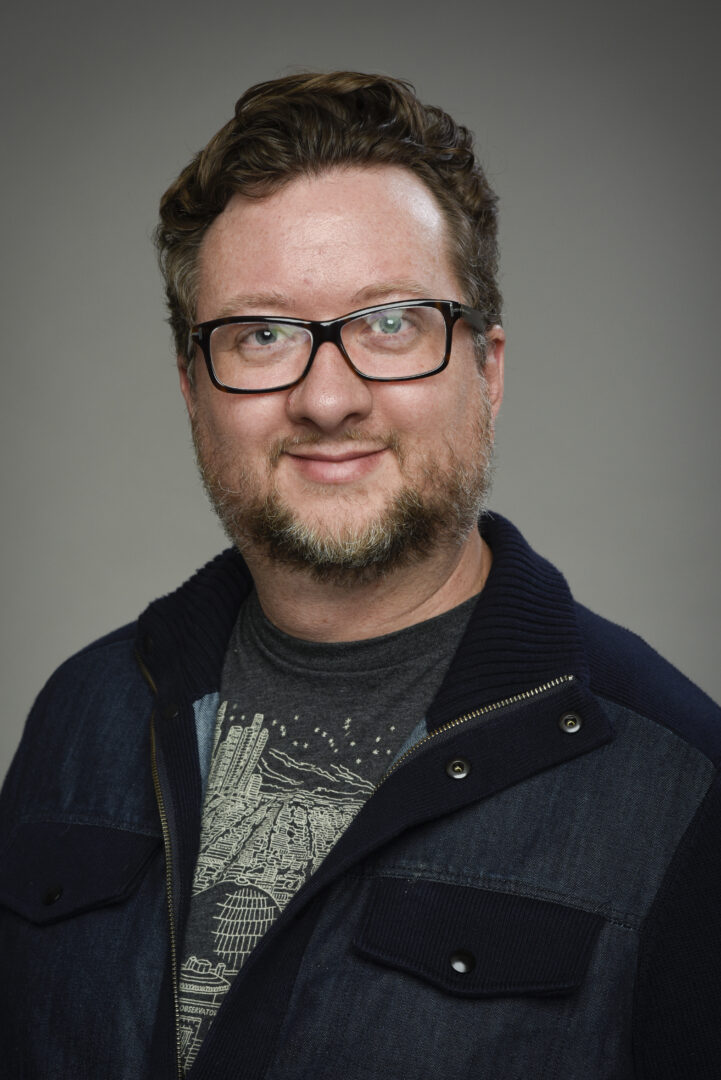
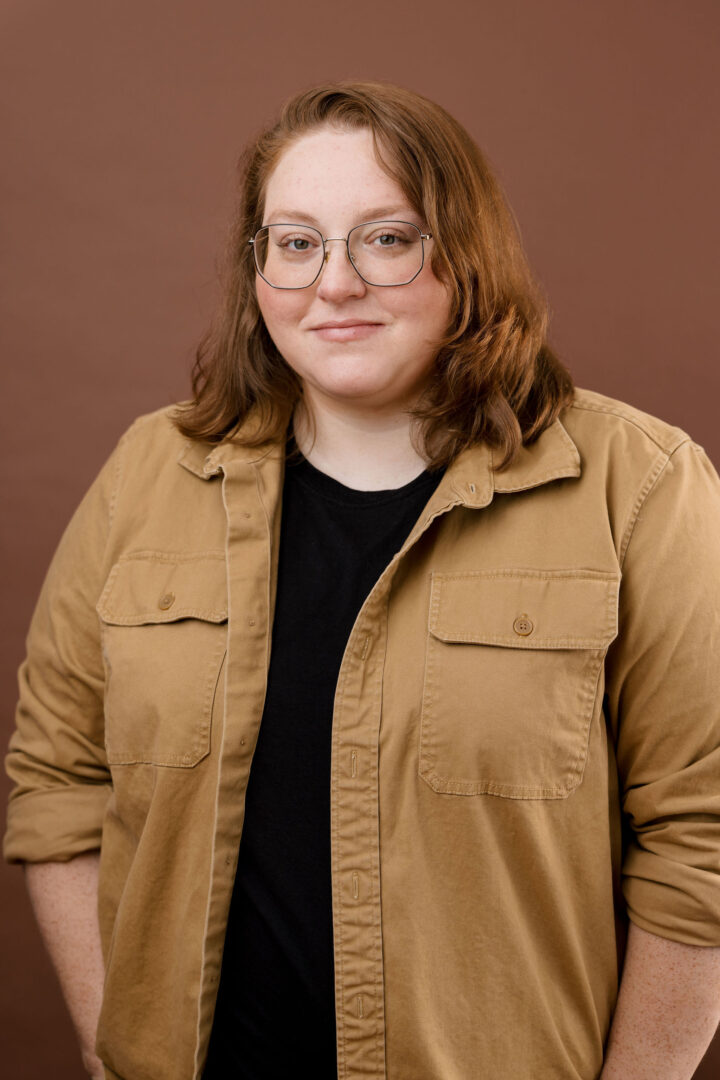
Annie Ilkow, CCE (GHOSTS) from Quebec, Jeremy Harty, CCE (TRAILER PARK BOYS) from Nova Scotia, Lisa Binkley, CCE (ZOMBIES 3) from British Columbia, Roderick Deogrades, CCE (CHAPELWAITE) from Ontario and Sarah Taylor (THE LAST BARON) from Alberta talk about their process and how it can be different (or similar) based on where they live.

Annie Ilkow

Annie Ilkow is a Montreal-based editor whose recent work includes Ghosts (CBS, single-camera comedy), TRANSPLANT (2 seasons, for NBC/CTV), and BLOOD & TREASURE (2 seasons, CBS action-adventure). She also edited the critically-acclaimed drama 19-2, the seminal DURHAM COUNTY. A graduate of the film program at Concordia University, she earned her MFA in Cinema at the University of East Anglia, UK.

Jeremy Harty, CCE

Born in BC, Raised in NS, calls Halifax home since 1998. Met Mike Clattenburg and edited his low budget feature TRAILER PARK BOYS in 1999. Since then has been doing anything TRAILER PARK BOYS related. Started editing things with Cory Bowles whenever our schedules allowed. Married with three kids and owns and operates Digiboyz Inc. (Post Production) since 2001.

Lisa Binkley, CCE

Award winning film and television editor Lisa Binkley began her career in post-production after having studied theatre and film production at U.B.C. She graduated from the Media Resources Program at Capilano University. Since then she has worked on numerous feature films, MOWs and television series. Her work was recognized when she received a Gemini Award (CSA) for her editing of the mini-series, HUMAN CARGO. This Canadian/South African co-production was directed by Brad Turner (HOMELAND & 24) and it received 17 Gemini Nominations and also won a Peabody Award. Her work on MGM’s critically acclaimed science fiction series, THE OUTER LIMITS and Showtime’s, THE L WORD (Written and produced by by Ilene Chaiken) has given Lisa the opportunity to work with such directors as Marlee Gorris (Academy Award Winner – ANTONIA’S LINE), Moises Kaufman (THE LARAMIE PROJECT), Helen Shaver (VIKINGS), Lynne Stopkewich (KISSED), and Kimberley Peirce (BOYS DON’T CRY). She is currently working on ZOMBIES 3 for Disney+, directed by Paul Hoen. Lisa is a full member of IATSE 891, ACFC West and is a voting member of the Academy of Television Arts & Sciences. In 2008, she was inducted as a full member into the Canadian Cinema Editors (CCE) honourary society.

Roderick Deogrades, CCE

Roderick is an award-winning Picture and Sound Editor who has worked in the film industry for over twenty years. His extensive knowledge of both sides of the post equation has proven invaluable. His experience in feature films, TV series, shorts and documentaries has established him as one of the industry’s most sought-after collaborators. On the picture side, he is known for his work on STILL MINE (2012), VICTORIA DAY (2009) and ONE WEEK (2008). For television, he has edited THE EXPANSE (Season 3 to 6), KILLJOYS (Season 4 & 5), and Chapelwaite (2021). He picture edited acclaimed documentaries such as 100 FILMS & A FUNERAL (2007), THE GHOSTS IN OUR MACHINE (2013), DAVID & ME (2014) and SILAS (2017). His sound editing work includes SPLICE (2009), PASSCHENDAELE (2008) and SILENT HILL (2006). He is currently picture editing the series BILLY THE KID.

Sarah

Sarah Taylor

Sarah Taylor is a multi-award-winning editor with twenty years of experience. She has cut a wide range of documentaries, television programs, shorts, and feature films. Sarah strives to help shape unique stories from unheard voices. She is a member of the Directors Guild of Canada (DGC) and the host of of the Canadian Cinema Editors (CCE) podcast The Editor’s Cut. Sarah is also the co-host of the podcast Braaains.


This episode was generously sponsored by IATSE 891.
 

IATSE Sponsor logo

Listen Here

The Editor’s Cut – Episode 069 – “Editors Across Canada”

Sarah Taylor:
This episode was generously sponsored by IATSE 891.

Lisa Binkley, CCE:
Saying no sometimes can be a good… and it’s taken me a long time to learn that. And I think if more of us do that, I think it might be a better working conditions for everybody. So, does this really have to go out tonight? Does it really? Or can this wait till tomorrow?

Sarah Taylor:
Hello, and welcome to the Editor’s Cut. I’m your host, Sarah Taylor. We would like to point out that the lands on which we have created this podcast, and that many of you may be listening to us from, are part of ancestral territory. It is important for all of us to deeply acknowledge that we are on ancestral territory that has long served as a place where indigenous peoples have lived, met, and interacted. We honor, respect, and recognize these nations that have never relinquished their rights or sovereign authority over the lands and waters on which we stand today. We encourage you to reflect on the history of the land, the rich culture, the many contributions, and the concerns that impact indigenous individuals and communities. Land acknowledgements are the start to a deeper action.
Today I bring to you the virtual event that took place on November 2nd, 2021, a conversation with editors across Canada. We’re joined by Annie Ilkow, CCE from Quebec, Jeremy Harty, CCE from Nova Scotia, Lisa Binkley, CCE from British Columbia, Roderick Deogrades, CCE from Ontario, and myself, Sarah Taylor from Alberta. We talk about our process and how things are different and the same, based on where we live.

[show open]

Sarah Taylor:
Today, we are going to be talking about editing across Canada. So, I’m pleased to be joined with Lisa, Annie, Jeremy, and Roderick. So to start, I just wanted to go through the group and kind of give a brief history of our careers and, where we’re from, where we started, and how we got to the location we’re at now. I figured just to get the ball rolling, I’ll start. I’m Sarah Taylor and I’m based in Edmonton. And I’m wearing my, still in Edmonton shirt because I’m still in Edmonton. I went to Grant MacEwen, which was a local college, now university. Took a digital arts and media program, which was kind of a generalist program. We learned graphic design, photography, shooting, editing. And then I fell in love with editing, realized that I could sit in a dark room for hours and hours on end by myself, and I really liked it, so I pursued it.
I had the privilege of working at a local TV station for about four years where I got to work with seasoned editors, which I think is kind of a novelty now. I feel like that’s not happening as often. So, I was lucky to learn from some pros, which really gave me a good learning ground. And then I dabbled in some corporate video production houses for a while, and then I broke it into the freelance world in 2012. And that’s where I’ve been ever since. And my main focus has been documentary, because documentary’s quite strong in Edmonton, but I have been lucky enough to do a bit of everything. So, I’ve done some scripted comedy, I’ve done some feature films, I’ve done a lot of short films. And I love living where I’m living, and I have a family and it’s great for me. So, that’s my start and where I am now. So, I’m going to pass it on to Lisa.

Lisa Binkley, CCE:
My name’s Lisa Binkley, and I’m based out of Vancouver, British Columbia. I went to UBC for two years, and I took theater. And as part of the theater program, I took a film history course. And it was by a woman who was an incredible teacher of film history, and she totally opened up my eyes to the fact that, oh my God, you can actually earn a living and work in this industry in Vancouver. And it was back in the early days. I’m embarrassed to say it’s quite a few years ago when the film industry was just sort of starting here. So, I went to school for two years at UBC, and then I went to two years to a media resources program at CAP College in North Van. And that was great because it was everything. It was photography, audio, video, film, editing, everything, and graduated from that. And a couple of people from that program had gone on into editing. And through the film history course that I took, I realized the people who I most admired and the films that really impacted me as a young person, I studied who those filmmakers were, and they were at one point editors. So I thought, I’m going to go into editing. That’s what I’m going to do. And I did. And so I harassed every editor in town after I got out of school until one assistant finally called me back and asked me to come down. And I worked as a PA at first. And since then, worked my way up. I went from production assistant running around getting lunches for everybody on a show called MacGyver. And I just worked my way up as a second assistant, first assistant, and then begged and begged and begged to get episodes to cut, and got an episode, got a couple more episodes, and then finally made the jump, which is very difficult from assisting to editing. And I’ve done editing full-time since ’95.

Sarah Taylor:
That’s awesome. Jeremy!

Jeremy Harty, CCE:
My name is Jeremy Harty. I started out in radio and television broadcasting, of course, in Nova Scotia, and that’s where I am right now, in Halifax. And that was in ’98. I got lucky with an internship at a small post-production company in the city, and that turned into a full-time job. And from that, I met some people. I got connected with Mike Clattenburg, the creator of Trailer Park Boys, and that pretty much started my career and doing short films with some of the cast from the show over the years, like Cory Bowles. And then he did a feature film. And I’ve done all sorts of weird stuff like that. But I’ve been mostly Trailer Park and comedy, and that’s my bread and butter. Not too exciting, but…and I own a small post production facility out here just to try to keep myself busy on different facets besides just editing.

Sarah Taylor:
I think it’s pretty exciting. I’m just going to say, comedy in the edit suite’s the best.

Jeremy Harty, CCE:
Oh yeah, there’s lots of good pranks.

Sarah Taylor:
Yeah, I bet. Annie.

Annie Ilkow, CCE:
Well, I grew up in Montreal. I’m one of those Anglo-Montrealers, that small slice of the population. And I went to Concordia University. I did two degrees. Actually, I have third degree burn… I did a BA in English and a BA in film production, and then I did an MFA in England in film. I was lucky enough to come into the NFB in Montreal at the tail end of some of the careers of some of the pioneers of the sixties, so Wolf Koenig and those crew who gave me my start as an editor. So, I started cutting documentaries, and then I have moved on to doing… Well, one of the nice things about Montreal is that it’s a very small pond, and so we’re lucky enough that we get to do a lot of different things. Not a lot of editors in the industry get to do doc and fiction and comedy and move between those throughout our career, so I’ve been lucky enough to do that. My husband’s also an editor, and we’ve been working consistently for the last 25 years, and that’s where I’m at.

Sarah Taylor:
It’s really cool to hear that in Quebec that I wouldn’t think that you would have the luxury to jump between genres cuz that’s what it’s like for me in Alberta. And I am surprised to hear that. That’s really great!

Annie Ilkow, CCE:
Yeah, I think it’s because it’s a small community of Anglo editors. That, we…you know, there is not that many of us. So we get to move between the genres. And it’s a real privilege for sure. I know how lucky I am.

Sarah Taylor:
Yeah, awesome. And last but not least, Roderick.

Roderick Deogrades, CCE:
So, I’m based out of Toronto, Ontario. Roderick Deogrades. Hello everybody. Welcome. I guess ever since high school, I knew I wanted to be in film. I just didn’t know how or what I was going to do. So, I pursued that. I tried to get into Ryerson. I didn’t make it into Ryerson’s cut. It was funny because they asked for like… an eight by ten envelope of submitting anything that you have. So, I came with my little envelope, and everybody came with boxes and reels and stuff, so I knew I didn’t have a chance. (deleted) So another university I applied for, I got in was University of Windsor. I thought I’ll go there for a year, and then go back to Ryerson. But I discovered fairly quickly that Windsor’s program was quite great. It was a communications studies program. And you start off by doing everything from film, TV, radio, advertising. And then your second year, you can focus on whatever you wanted to.
So, that’s what I did, and I focused on film and television production. And at the same time, I found a little bit of a loophole where instead of taking my electives, I can do another double major. So, I double majored in dramatic arts. So while I was doing film and TV, I was doing directing, acting, improv, costume design, stage lighting. It was a blast. I had such a great time at university. Got out of there, and I knew that I loved editing and I loved camera, so I didn’t know which way I was going to go. So, I kind of said to myself, the first one that hires me, that’s the road I’m going to go down. And I got a trainee assistant position at a low budget feature film, and it just snowballed from there for me. I took a little bit of a side tandem, almost like with the film and TV and dramatic arts. As I was trying to pursue picture editing through assisting and everything, I got connected with Jane Tattersall here in Toronto and I started assisting her in sound, ’cause I figured, oh… half of picture editing is sound editing, so I’ll learn that too. But fairly quickly, I became one of her sound editors doing features and TV shows while I was, at the same time, trying to work up my ranks as an editor. And so for a while, it was a bit like a lot of sound, hardly a lot of picture. And then all of a sudden, this kind of came up. And then, so now I’ve mostly been focusing on picture editing for a few years now. And I’ve done everything from features to series to shorts to a lot of documentaries, different genres too as well. And I have a blast doing it.

Sarah Taylor:
Working with Jane Tattersall, that must have been so much amazing knowledge to gain. And like bringing that into the picture editing world, that’s amazing.

Roderick Deogrades, CCE:
It was great. When I started with her, it was just her and David McCallum and me.

Sarah Taylor:
Wow.

Roderick Deogrades, CCE:
So, it was like very early days when she left Casablanca, and it was great. What a great mentor to have in terms of the sound and of things. And everything that I’ve learned in sound, I just use every day in picture.

Sarah Taylor:
Oh…That’s awesome. That’s a great… I feel like all editors should have at least like…I don’t know…. a couple weeks working with the sound, like somebody like Jane Tattersall that would bring a lots back into the edit suites. Well, my next question is how do we find work in our area? Like…what are the ways of getting your next job? For myself, it’s just been word of mouth for me. And I find, like I mentioned earlier, working in the TV station, a lot of young producers and directors started their careers there too. So, I made these connections with all these people just starting their career. And then as I got more seasoned, they were also getting better and doing more, and they would remember me from back in the day. And so I’ve got a lot of work either through the people, directly through them, working with them, or they said, “Oh, you should go talk to Sarah.” And then slowly as I… and then I just built a reputation. I work with the same directors and the same producers often over and over again. I’m guessing similar to Jeremy, I started working on a series called Caution: May Contain Nuts. And we did five seasons, and then we did Tiny Plastic Men, so we did four seasons of that. And then we did another show called Delmer. And so I just kept working with that production company on all of their shows, and that’s kind of how it’s been going. And then it’s helped being part of the CCE and getting nominated for awards and for people to put their name out there because I’ve been also lucky enough to get jobs by not even winning the awards necessarily, but my name being on an awards nominee list. Then somebody’s looking for an editor, they wanted somebody new to work with, and I’ve gotten contacts that way too. So yeah, it didn’t really matter that I was in Edmonton for some of those jobs. They just found me through an award list. And then I got to work on a cool show that wasn’t based out of Alberta. So, that was a neat turn of events for me. Let’s go backwards. We’ll start with Roderick in this one.

Roderick Deogrades, CCE:
Well, I was the same as you kind of starting off. It was always word of mouth. It was always through like people that I’ve worked with before that would then seek me out under next projects. Lots of things like, “Hey, do you know an editor?” “Yeah. Oh yeah. Actually, I just worked with somebody.” So, it was a lot of that. And that’s how I relied on getting my next gig for the longest time. And I kept consistently busy. Now lately, I’m in that kind of world of being represented by agents, and so my agent now plays a bigger part in terms of getting me into doors, where I normally… before I got an agent, I normally wouldn’t have the opportunity to, because either it’d be too late because I didn’t know about them or the particular job. So, I get that. I still get my regular sort of people I collaborated with in the past. And you make a really great point, Sarah, about the whole kind of awards and nomination thing, because it is another way to get your name out there and doing things like this and just being visible and being upfront as somebody that people can recognize and look at and seek out.

Sarah Taylor:
Yeah, I totally want to touch on the agent stuff.

Roderick Deogrades, CCE:
Yeah.

Sarah Taylor:
So, we’ll talk about that again later, but I think-

Roderick Deogrades, CCE:
Sorry. Yeah.

Sarah Taylor:
I would just be curious to know your experience and if anybody else has got experience with that. How about Jeremy?

Jeremy Harty, CCE:
Basically, it’s word of mouth for me. And like I said, I got partnered up with Clattenburg early on. We were doing a beer commercial. And then one day, the editor at the post house said, “Yeah, Clattenburg has some short film or feature length film. I don’t know. I don’t have the time for it.” And so for 13 hour days for five days straight, we cut the first black and white feature. And then it got sold as a series, and that just was along that path. And everything else in my career has basically been with people that were brought on as producers on that or actors from the show that have done other things, and just that kind of word of mouth. Unlike some people, I haven’t been too blessed with nominations or anything. Trailer Park’s not really one of those things that people go to and say, “Oh, the editing is so amazing on that show.” So, that doesn’t get me any gigs. It’s just working with the small people in this community that are tight-knit and having that word of mouth is a godsend really.

Roderick Deogrades, CCE:
Sorry Jeremy, but the editing in Trailer Park Boys is pretty damn good.

Jeremy Harty, CCE:
Sometimes. Sometimes.

Sarah Taylor:
Yeah, it’s very important.

Lisa Binkley, CCE:
Yes, an iconic television. It’s like it doesn’t get much bigger than that in Canada. It’s amazing.

Sarah Taylor:
Come on!

Jeremy Harty, CCE:
Well, we are blessed with our fans that are still following us, even though we’re not so active. We did the animated series, which is… that was so different, cutting animated from the stuff that I was used to. It was a big learning curve, but I was-

Lisa Binkley, CCE:
No kidding.

Jeremy Harty, CCE:
… blessed with some good people that help me along on that path.

Sarah Taylor:
I didn’t even think about… I noticed that that was on your resume, and I didn’t even realize, well yeah, that’s a whole different world, doing animation editing versus normal picture editing.

Jeremy Harty, CCE:
Yeah, you’re just cutting sound and hoping that the picture won’t suck later.

Sarah Taylor:
Oh, I love it. That’s awesome. Okay, how about Annie.

Annie Ilkow, CCE:
The situation in Montreal is, as you can imagine, a little bit unique in that we’re dealing with the two solitudes. And I always get my jobs through producers and directors that I’ve worked with before, but there’s the added difficulty of crossing over between the languages sometimes. And usually what ends up happening is a francophone director will get a gig in English, and then they will meet me and they will bring me over to the French side, because otherwise, I wouldn’t be asked to do those jobs. There’s many, many great francophone editors in this town. So, that’s the way I’ve managed to cross over to do work in French, but it hasn’t happened as much as I would like. So generally, I work for two or three production companies in our town. And some of them are service jobs, and some of them are homegrown productions. And there’s a few shows like Transplant that I’ve been cutting for the last two seasons that are shot in Montreal, so I got the gig. But generally, it’s those relationships with the production companies that are doing big budget stuff, and I’ve been lucky enough to get those gigs, but it is tricky. And in terms of agents and stuff, I know a lot of other editors who have ditched their agents because all of the jobs come through word of mouth, and they just don’t feel like they want to cough up the 10% or 15% to the agent because it’s not really bringing them anything, because it is such a sort of a word of mouth kind of community here. So in Montreal, it doesn’t really work. But definitely, I think we are all looking at how things are changing in terms of tax credits and jobs being kind of done remotely. And I got a job in LA and I got a job out of BC. And so because there’s such a demand for labor, sometimes people are willing to take the hit in terms of the tax credit and hire you out of province to work somewhere else. So, that’s starting to happen I think more and more.

Sarah Taylor:
That’s really great to hear. I think Roderick, you have a similar story where you’re working in BC on a show. And I think even for myself, over COVID was working with a company in Italy. So, there’s like a weird random things that can happen. I don’t know how tax credits work there, but typically, it was always like, “Oh no, sorry, you need to be an Ontario resident or you need to be an Alberta resident because we need this tax credit.” So, it’s really great to hear that that’s shifting. I think through COVID, we’ve realized we can do work anywhere. It’s possible.

Annie Ilkow, CCE:
Exactly.

Annie Ilkow, CCE:
Yeah.

Sarah Taylor:
A lots great to hear.

Annie Ilkow, CCE:
Yeah.

Sarah Taylor:
Lisa.

Lisa Binkley, CCE:
Yeah, it’s the same thing. I find out from word of mouth from producers and directors I’ve worked with in the past. I’ve never had an agent. I think I looked into doing that at one point because I was hoping that it would bring a variety of other projects or higher profile projects. But I found from talking to other people, at least in Vancouver, that it is pretty much word of mouth and your reputation. So, I just haven’t thought that it would be something that… because I kind of feel like I’ve got a name for myself here, so I think people will call upon me. I have to admit though, some of the bigger projects that have come to town you’d miss out on, and I kind of wonder what was that because either you didn’t get the connection of the person that was involved or agents got there beforehand. And people, sometimes they’ve gotten interviews, and you didn’t even get a chance to interview and they’ve already got the job. So, it depends. I can see a benefit to agents, but for me personally, I’ve been, I guess, fortunate to have not to had to rely on one. In Vancouver, the climate’s a little different in that it’s a heavy service industry here, and they do a lot of shooting on bigger shows, but they don’t necessarily hire editing here. So, it’s tough because we primarily… most of the shows that work here that hire editors traditionally have been Hallmark and Lifetime. And right now, it has sucked up quite a few of our talent so that people aren’t available for the bigger shows that do come to town that would maybe hire local editors. So, it’s tough because you do want to get better shows to work on, more creatively interesting shows to work on, but for a lot of us it’s really difficult because those opportunities are pretty slim. So, there’s so many of us, and then we’re all vying for the same kind of jobs. And we really don’t have a lot of local independent Canadian production happening here as well. We lost our Western drama division years ago, so everything sort of is being developed out east, and it’s not really happening out here. I’m very fortunate to be starting on a show that is a local show, and I have been very fortunate to work on local shows in the past, but we really don’t have as much as, say Toronto does with their co-productions. It’s very competitive here.

Sarah Taylor:
That’s kind of that idea of… same with like in Alberta. Maybe it’s similar in Nova Scotia where there’s shows that got shot in Alberta in the Mountains in Calgary all the time, major, huge shows. And the thought of post is like meh…not even a…yeah…which is unfortunate.

Annie Ilkow, CCE:
I just wanted to ask… like I said, I’ve been really lucky to be working consistently and on good budget shows and interesting shows, but I got to admit that it’s usually like there’s one or two. And are you actually in a position to pick and choose between two, or God knows, three projects? Does that exist in the rest of Canada? Is that something that happens. Because I’m like, woo, okay, I got that show for the next three months, woo-hoo. And I’m not complaining. They’re great shows, but there is one, and I know there’s six of us in town that… and so it’s kind of like that here. I don’t know. What is it like for you guys? Do the people living in bigger cities or with agents, does that make a difference? Are you picking and choosing or-

Roderick Deogrades, CCE:
I think to a certain degree, they’re like in Toronto anyway, there is a lot more productions going through here and looking for editors. And I mean, once a while…we started up after the lockdown and production started going back, and everybody was clambering to get crewed. And so there was so much to choose from. During that time, there was actually a lot to choose from in terms of where you wanted to end up first. And even now, I find that there is… my agent, I’ll call and kind of coming up to the end of a show that I’m on, it’s like, “Okay, so what’s coming up?” And she’ll usually say, “Okay, well, there’s this show, there’s this show, and there’s that show. Which one are you interested in? Which one should we pursue?” Right? But that doesn’t mean that I’m like, all three shows want me. It’s like what do I want to go for?

Sarah Taylor:
Yeah.

Annie Ilkow, CCE:
Right. Right. That’s great.

Roderick Deogrades, CCE:
And also is it like, do you want to get into features on your next round? Do you want to go into series? Right?

Annie Ilkow, CCE:
Yeah.

Roderick Deogrades, CCE:
So, there is… and then plus, and that’s what the agent is sort of presenting to me. But sometimes, at the same time, I’ll have producers and directors I’ve worked with before also emailing and calling and saying, “Hey, somebody’s coming up, what’s your availability?” So, I got to weigh all that together.

Sarah Taylor:
Yeah.

Annie Ilkow, CCE:
Right.

Roderick Deogrades, CCE:
So I mean, it’s Toronto, right? Because I could imagine that it’s not like that countrywide, but that’s what I’ve experienced. And not just me, but also other editors that I talked to as well.

Jeremy Harty, CCE:
I have to say that out east out here… it was funny, when Lisa was referring to out east, I was thinking-

Lisa Binkley, CCE:
How far east?

Jeremy Harty, CCE:
Yeah. This far east, we maybe have three or four shows, tops. I have to say that there’s a lot of resentment in my heart sometimes when I hear of a show shooting here, and then I hear that, Toronto. That’s where all the post is going back. And I’ve started a post house here in hopes of keeping some stuff here, but it’s hard. Even with a post house, we were the lab on The Sinner, and they didn’t even want to talk to any of us about editing that. So, it’s… shows come in, and they’ve already planned they’re going out. They’re not going to even sit here. And sometimes, they don’t even process their footage here when they’re done shooting. They just ship it all out to Toronto or New York or LA.

Sarah Taylor:
Or they bring their own crew. I know that happened… I was talking with the editors of Ghostbusters, and they went to Calgary and were doing cutting in Calgary. I was like, oh, I’m glad that you cut it, but I was like, oh-

Jeremy Harty, CCE:
There’s been some editors that have cut shows that have been shot here, and that we were hoping crews would be working here. But yeah, they went back, one editor there and one editor here.

Sarah Taylor:
Yeah.

Jeremy Harty, CCE:
Split.

Sarah Taylor:
For me in Alberta, I just say yes to everything. Now, I’m trying to say no more, but I often find that I’ll be like, oh God, every… and especially after COVID, and we paused and then everything started again, I was like, this hasn’t worked well for me. I have too many things to do. It’s all doc, mostly doc for me. And so the only scripted show that’s been happening as of late has been Heartland, and that’s done now in Calgary, so it’s not even on my radar. So yeah, there’s definitely not any vying for options really.

Lisa Binkley, CCE:
Here in Vancouver, I think there’s a lot more opportunity to work on bigger projects if you’re an assistant.

PART 1 OF 4 ENDS [00:25:04]

Sarah Taylor:
Yeah.

Lisa Binkley, CCE:
They tend to get better opportunities in terms of the big features and working with editors that are iconic people. That’s cool for assistance in Vancouver. I just wish on some of the shows that were up here that are the bigger ones that they would at least interview. If we could just get an interview just to meet people. I find that the local producers here barely know what we do. It’s really… it’s sort of hard… you can’t even get yourself at the table, which is too bad, because we have so many talented editors and assistants here who are incredible. As I’m sure that we are across the country. It’s, again, trying to get the opportunity to get your foot in the door is a real challenge.

Jeremy Harty, CCE:
I got to figure too, that we’d be cost effective.

Sarah Taylor:
Yeah.

Lisa Binkley, CCE:
I know. I know.

Jeremy Harty, CCE:
Why aren’t they even considering that. I’ve cut shows that I know if it was cut in Toronto or somewhere else it’d cost even more than me cutting it. I’m pretty cheap.

Annie Ilkow, CCE:
Right now I’m cutting a show for CBS, which is normally would’ve been cut in LA, but it’s being cut in Montreal and there is an LA editor and then two Montreal editors. It’s a bit of a learning curve for the Americans, because they’re used to… they’re a bit chauvinistic when it comes to talent. It usually… It takes two or three weeks before they’re like, “Oh, you guys get it?”

Lisa Binkley, CCE:
Yes.

Annie Ilkow, CCE:
It’s all like… I’ve seen it. I did a show for MGM. I did another show for CBS. Then the same thing happens every time. They’re like, “Yeah, I don’t think you guys… do we really… have you seen Seinfeld? Do you understand?” They really don’t think that we share any cultural touchstones at all.

Sarah Taylor:
Oh dear.

Annie Ilkow, CCE:
They think we’re like Finland? Then they see your work and they’re like, “Oh, oh, okay!” They’ve sort of accepted it from the crew for a long time, but from… in post it’s kind of new. The show I’m doing now is a comedy and they’re like, “Oh, but you’ve done drama, but comedy that’s way different. You can’t possibly know what that is.” They get it and then they’re like, “Okay.” It’s really… it’s top heavy. It’s hard for them to get it at the beginning, but eventually they do. They have to… it’s, obviously, the bottom line. We’re so much cheaper, and the tax credits, and everything make it just much more attractive. CBS has a relationship now with the company I work with in Montreal a lot. It’s really a tough slog to get them to see the post as good as the crews are now. I think the crews are seen as top-notch, but at post they’re still not getting that.

Lisa Binkley, CCE:
We’ve been saying this, I remember when I started out, it’s been that way since the beginning. It’s almost… When I started out I was on a big MGM series, the first, I think, it was the first visual effects series done in Canada called the Outer Limits. It was an amazing project and it trained a whole ton of people that have since gone on to do really incredible things, but the opportunities for that talent, the types of shows, levels of shows that we could be working on it hasn’t gone like we were all hoping it would. Do you know what I mean? It’s sort of stagnated.

Sarah Taylor:
And in BC, you have damn good editors. Is that what this is called?

Lisa Binkley, CCE:
Yes, with IATSE.

Sarah Taylor:
And we have a post production allian… or association in Alberta, that’s talking to government and trying to like, promote Alberta editors and I know that Ontario has Ontario Creates so maybe and like there’s all these, I think people are trying to start. They are starting, but it’s still getting the message out there that giving us a chance or at least looking at the options. The more we talk about it maybe the more it’ll get better? I wanted to ask Rodrick, what made you decide to get an agent and how have you noticed the shift? Because I think people are curious about that.

Roderick Deogrades, CCE:
I was very late and I was very hesitant in the whole agent thing, because for years and years, I’m cutting docs, I’m cutting features, I’m doing all this stuff, and I’m not having to look. I didn’t… as Lisa was saying, I didn’t want to give up 10%, right? But slowly but surely what I started discovering was the shows that I did want to get onto every time I contacted the producers or the production they’d already crewed, right? Way ahead of me even knowing that they were going to be in town. I was like, “Hmm, okay. Great.” Or I would get calls from those big shows saying, “Hey, we need another editor. We lost an editor. Are you available?” But, I’m already committed to something else that I’d gotten on my own, so I couldn’t really leave. And then the clincher for me was early in my career I would have up-and-coming creatives and professionals, “Hey, can we go for coffee? I just want to pick your brain about getting into the industry.” I’m like…

Sarah Taylor:
Yeah.

Roderick Deogrades, CCE:
“…yeah, absolutely.” Right? Then slowly but surely those people a few years later are the ones that are getting the gigs that I wanted. I was like, “What? What’s going on here?” It was because they were repped. Pretty quickly I was like, “Okay, I got to change my tune about this whole agent thing.” I did my due diligence and I got signed up with Vanguard. What that has afforded me is having a line into these productions that are thinking about coming to Toronto. The first thing those productions do in the States and everywhere else is they call the agencies in Toronto saying give us a list of your editors, right? Already they’re looking at my resume or they’re putting my name forward before they even set foot in here. Sometimes before they’re even green lit to come here. So by the time they do come here I’ve already been tossed around in their head. That’s the biggest advantage for me in terms of… that and not having to talk money with the producers.

Sarah Taylor:
Yeah. That would be the thing I would want.

Roderick Deogrades, CCE:
Going, oh yeah, you got to talk to my agent.

Sarah Taylor:
Talk to my agent!

Roderick Deogrades, CCE:
Sorry.

Sarah Taylor:
Oh, I would love that. Sometimes I joke that I’m like, I’m just going to pretend my husband’s my business manager. He’s got a different last name. Speak to my manager.

Roderick Deogrades, CCE:
Yeah, that’s the plus, right?

Sarah Taylor:
Yeah.

Roderick Deogrades, CCE:
I still get my roster of people I collaborate with and producers. I’m more than happy to do that, but it feels like now I’ve got, as sort of being in Toronto, I have more choice in terms of what I want to do next, where I want to take my career. And my agent is also very keen, tuned into what I want to do or where I want to be in five years, in ten years.

Sarah Taylor:
Yeah.

Roderick Deogrades, CCE:
They’re strategic about where to put me. They’re not going to just put my name out anywhere. They’ll go, “Oh, no. That’s not for you. This one. I want you to work with this filmmaker, because I think this is a good investment in that.” Right.

Sarah Taylor:
You saying that makes me think it almost forces you to have like… a plan, right?

Roderick Deogrades, CCE:
A plan.

Sarah Taylor:
To think where do I want to go? Where do I want to be? Maybe other people do this, but I’m not the best at it. Where it’s like, “I’m busy. I’m working. I’m just going to keep working. I’m going to keep doing the thing I do, because I’m making money. Everything’s great.” But you need to sometimes pause or have an external person be like, “Well, what do you really want to work on?”

Roderick Deogrades, CCE:
That was the first question they asked me. Where do you see yourself in five years? What kind of shows do you want to cut in five years, right? Within the year they got me that kind of show.

Sarah Taylor:
Oh, that’s awesome.

Roderick Deogrades, CCE:
Right. I was just like, “Okay.”

Sarah Taylor:
What’s happening?

Roderick Deogrades, CCE:
This is great, right? Yeah. After a year we had a meeting, I was like, “Now what?”

Sarah Taylor:
Yeah. Like you… That’s great. Oh!

Roderick Deogrades, CCE:
Right.

Sarah Taylor:
Well, that’s a success story. An agent success story. Okay.

Roderick Deogrades, CCE:
Yeah. It is.

Sarah Taylor:
That’s great.

Roderick Deogrades, CCE:
Look, I have to say that it’s not just get an agent and everything will work out great, because it really is a relationship that you have to… as much as they’re interviewing you to sign you up to their agency you’re interviewing them. Is this the kind of person that has your best interest at heart? Are they going to work with you in terms of where you want to go? That’s something to really consider when you are talking to agents. A little bit about what the roster is like. Do you feel a niche in their group of editors that they might have that doesn’t match somebody else? Therefore, now you’re unique within their roster of editors. That’s something else to look into as well.

Sarah Taylor:
Awesome. That’s great. We have a couple of questions that actually go into our next topics. First, Alex wants to know, Annie, what Montreal post houses do you work with?

Annie Ilkow, CCE:
Well, it’s…become heavily consolidated lately. So there is MELS and there is Difuze, those are the two main places that are still hosting out edit facilities. Of course, there are lots of tiny ones, but those are the two main labs down. And they are both owned by…well one is owned by Quebecor, and that’s probably follows the move in most of the industry, just that consolidation. That’s like all the small places that used to be the little boutique places that are really fun to work at, kind of gotten eaten up. So that’s the situation in Montreal now.

Sarah Taylor:
Similar to Toronto, I feel like, too, right? There’s been a bunch of places merged. And then, Alex’s another question which is one of my questions is unions. So are you part of the union? What union are you part of? I’m a DGC Alberta person, but I haven’t had a DGC Alberta show in like five years, so it’s because it’s not happening. Yeah, where is everybody at with union?

Roderick Deogrades, CCE:
I mostly focus on that. Occasionally, I’ll get a doc that might not be DGC and then I get dispensation, but I’m mostly doing DGC Ontario shows.

Sarah Taylor:
I’m IATSE and we have a Quebec Union also called Actis. They recently merged, because it was for a long time it was just the Quebec Union and then some of the cinematographers called on IATSE and said, “Hey, we would kind of like representation.” Then it was like the monster came in. In a way it’s been awesome. So now that the two unions have merged, and it depends on the budget level of the show, but IATSE is. Yeah, that’s our main union here.

Lisa Binkley, CCE:
Same with us. We have IATSE 891 here, which I’m a member and we also have ACFC West, which is an affiliate union. Then we have a ton of non-union work, as I said, with the Hallmark and Lifetime. So-
Annie Ilkow, CCE:
Right.

Lisa Binkley, CCE:
Because we don’t get a lot of work, a lot of people are a part of everything, because it’s just the nature of the beast is that we have to earn a living, so-

Annie Ilkow, CCE:
Right.

Roderick Deogrades, CCE:
Lisa, what’s the difference between the IATSE and the ACFC unions out there?

Lisa Binkley, CCE:
It’s basically their contracts that they negotiate. Usually the IATSE shows are bigger budget-
Roderick Deogrades, CCE:
I see.

Lisa Binkley, CCE:
The ACFC shows are lower budget. The ACFC shows tend to support more local, locally independent Canadian or BC based productions, whereas, IATSE is this machine juggernaut for the service industry for all of the American TV shows that are coming here.

Annie Ilkow, CCE:
Yeah, same here.

Jeremy Harty, CCE:
I’m in the DGC and at the same time I am also in IATSE 667 as a DIT.

Annie Ilkow, CCE:
Okay.

Jeremy Harty, CCE:
Digital imaging tech. That actually has got me way more phone calls than DGC. I’ve been offered gigs in Manitoba and elsewhere, just because there’s a shortage there. So it’s funny, because I hope that there’d be more shortage of editors, so I could get more editing gigs, but there’s not.

Sarah Taylor:
The next thing I was curious about is what is your work environment like? We can talk about, what was it like pre-COVID and post-COVID. For me personally, it didn’t really change. I work from home. This is my edit suite where we are right now. There was one… I had one client director that liked me to work out of her home studio, so I would go there a few weeks out of every couple months, but then that stopped. That was basically it for me. Work from home kind of creates my own schedule. That’s what it’s been like since I started freelancing in 2012. I sometimes miss the potlucks that we used to have in offices and getting to have an editor come and look at a cut if I needed to get a fresh set of eyes, I miss that sort of thing, but I like that I can export something at six o’clock and then upload it and I don’t have to run around. Yeah, I can be at home still. Then it was an easy transition during COVID, because I was already used to being by myself.

Lisa Binkley, CCE:
Yeah, that’s great.

Sarah Taylor:
Yeah.

Lisa Binkley, CCE:
That’s great.

Sarah Taylor:
Yeah.

Lisa Binkley, CCE:
I was working at…it was strange before COVID I was at Finale this facility working on a show, a Netflix show, and there was three editors working, and, I think, we had four assistants. Then COVID hit, and we went home, and finished the shows, and we were like within two days up and going at home to continue. And then everything stopped after that show. Thank God we had that show. That was good, because it gave us some work into the time when everything shut down and then there was nothing for months. Then I worked on an independent feature that was shot in Taiwan…shot in Taiwan, Beijing, Detroit, and in Vancouver. I worked out of my living room, if you will, on a system. That was great. My assistant was in… two assistants were in Taiwan. It was fascinating, because we were thrown into that remote workflow and it worked really well. Then started on this project that I’m on right now at home. It was shot in Toronto and I was working at home and then the director, who’s from Los Angeles, wanted to work in person. I came back to Finale and he was here and this is why we have a little plexiglass. He sits over behind me with his N95 mask on and all the safety protocols are in place here. We did his cut and then it went to testing. We’re dealing with our testing notes now. It’s been a bit of both worlds. I loved working from home. I really did, because I found I was more focused. I was able to… I don’t know. I was able to concentrate better, but what I missed dearly was, as you said, bringing people into the room to get their feedback and to brainstorm. It’s harder to do that on Zoom. You can still do it, but it’s something about bringing somebody physically into the room that I really missed.

Annie Ilkow, CCE:
When COVID hit I was working on a show called Blood and Treasure for CBS and my husband was on the show also. We worked out of our home studio, which is this three of us here, my teenage son and the two of us editors working with headphones for three months. I could not wait to get back to the lab. They were on hiatus for a while, because it was all being shot in Thailand in Italy. They had to wait till the restrictions lifted and they were finally able to finish the shoot. We had 20 days left of shooting out of 170 days for the series. They finished the shoot and I went back to the lab. My husband kept cutting here and we’ve been cobbling it all together. Now, my husband cuts a show that shot mostly here, but during the director’s cuts he goes to the lab and they cut together in the studio.
I was very happy to go back to the cutting room where I had my assistant who I’ve worked with for 25 years and that whole… all the support that was wonderful. I really like my little room there where I can get out of the house and that suits me very well. A bike ride, and 10 hours, and then home.
It’s been… I work in different places in Montreal, but the main one has been, because the companies that I work with tend to use the same labs all the time. That’s where I’ve been at for the last two years and it’s very comfy, and I have my workout equipment, and my humidifier, so it’s very homey.

Sarah Taylor:
I was just curious about the… because you mentioned that your husband’s still doing some stuff at home, but then does his director’s cuts in the studio. Is it because that post house or that lab is connected already with the production that there’s a space for him to do that?

Annie Ilkow, CCE:
Yes.

Sarah Taylor:
How is…?

Annie Ilkow, CCE:
Yeah.

Sarah Taylor:
Okay, that’s how it’s set up.

Annie Ilkow, CCE:
They’re processing the rushes and they’re doing everything. When he was just assembling he was working at home and then when they had to come together it was considered sort of like A) safer and B) that was just a protocol, because they were having producers, and directors, and sometimes six people in the room. They needed a really big suite to accommodate all those people for screenings and stuff.

Sarah Taylor:
I feel like for me in Alberta, that’s the one thing that I kinda miss… I wish there was… I think there are some… I can probably find out if there is something that I can do but where I could, just for those moments, sort of like fine cut sessions, or getting to picture locked, not always have somebody come to my house, like, it’s okay, but during COVID that’s where it kinda became this kind of weird like “I don’t know if I really want you in my house, so to have that opportunity to be able to…”. And then I was like I have a server here, I can’t really take my server with me, too. Yeah, that’s like to have that option is pretty awesome.

Roderick Deogrades, CCE:
I was in this odd, I only say odd because mostly everybody I knew once Toronto production started up again or post production they all started from home. I was kind of… me and a couple of other editors were actually went into a facility to start working in August, which in the beginning was very scary. Right? What I discovered was it was fairly safe, because everybody followed protocol. Everybody was followed the rules and the facility itself was great. One way into the building, one way out, that kind of stuff. What I discovered was it was really great for my mental health. Is what I found, because rather than being cooped up at home, which I could work from home easily and be productive and all that stuff. I do know of a lot of editors that have been working from home since August 2020 that are now just clamoring for anything social or interactive with another body. For the same reason, because I thrive on collaborating. I thrive on pulling other editors and assistants and saying, “What do you think of this?” Going for a walk to go get coffee, and talking story, and talking characters. The funny thing is on that first show, the first director came in for their director’s cut, and then the producer came in for their producer’s cut. After that it was all remote. All the creatives, directors, and show runners, and producers from that point on since then on three show shows, I guess, I’ve been on since last August have all been remote through like ClearView or Whatnot. That’s been odd, but being able to separate home life and work life has been really, I find, in terms of my mental health and dealing with the pandemic and being affected by it kept me sane. I was really thankful for that.

Sarah Taylor:
Yeah. Totally. That totally makes sense.

Roderick Deogrades, CCE:
Yeah.

Sarah Taylor:
How about you, Jeremy?

Jeremy Harty, CCE:
Well, I own my own post house. So-

Sarah Taylor:
That’s good. That helped.

Jeremy Harty, CCE:
It’s very small. We are also a lab that do our own processing and I’m in the same building as the Trailer Park Boys. When COVID hit we were actually working on an animated series and a lot of the team were outside of the province already. We were using Frame.io and that’s how most of our workflow was going. When we kinda had to shut down I was still able to come to the building, because we had very few people in the building and all the protocols were fine. Then when we had to record some sessions and stuff, we’d Zoom in, but I was literally in the same building as they were in a back room hiding, and recording their lines, and stuff. It never really changed for me. It’s been pretty much the same. I guess, I’m the most lucky, because I have my own office. I control everything. If there was a moment where shut down had to happen and stuff I said to my staff, “None of you guys come in. You’re fine. You’ll get paid.” Or whatever. “Work from home, but I’m definitely not going to be trying to work from home.” I tried, I really did. I was in a basement in, basically, a closet and my kids were upstairs running around all the time. Not too productive.

Sarah Taylor:
Yeah.

Jeremy Harty, CCE:
Not nearly as productive as being here.

Sarah Taylor:
Yeah. I have to say, during COVID when my daughter had to stay at home, it was a bit of challenging. That’s for sure. Yeah.

Jeremy Harty, CCE:
I end up doing a lot of tech support for their calls at schools than doing the editing I was supposed to be doing.

Sarah Taylor:
Totally. I think that’s a common theme. We have a few questions here. Gordon’s asking what we’re charging or if we’re charging for our home suites across Canada. I put mine into my day rate, because I’m always working for home. It’s not like per show. Certain companies, like the… I work with NFB will always pay a day rate plus the kit, which is great, but that doesn’t always happen. Yeah. It’s a bonus when I get it. Anybody else have any kit options?

Annie Ilkow, CCE:
No one wants to say.

Sarah Taylor:
Nobody. We don’t want to talk about money. That’s what our agents are for.

Lisa Binkley, CCE:
It all depends on the budget too, right?

Annie Ilkow, CCE:
Yeah.

Lisa Binkley, CCE:
I think that here in Vancouver, it’s some people don’t pay anything, I’m sure. Some people pay a hundred dollars a week. Then I know that, I think, through the ACE practices and also IATSE, I believe that if you have a machine and you’re working from home, I think, it’s on average, they’re trying to get people to get at least $500 for the office and everything. Which is still a deal.

Sarah Taylor:
That’s for the whole production.

Lisa Binkley, CCE:
Per week, but I mean that’s on the bigger budget things. I’m not sure about any.

Roderick Deogrades, CCE:
Yeah, that’s in Ontario that’s about the going rate. About 500 for the bigger budget shows. Anything smaller will just incrementally get less than that. Sometimes they go can you throw in your system? Depending on the show. Right? Five is probably the most that you can get. I think I got 550 once, but that was a really big budget show and they were like… That’s what the agent kind of –

Sarah Taylor:
Shout out to the agent.

Roderick Deogrades, CCE:
I didn’t ask for it. I was like, “Oh, really? Okay, sure. You got it. Okay.”

Sarah Taylor:
I sometimes forget about the kit, the rental suite, the suite rental. When this last NFB thing they’re like, “Oh yeah. What’s your suite rate?” I was like, “Oh yeah. I should be charging for that.”

Lisa Binkley, CCE:
They break it down. It’s interesting, because they do break it down to not only your space, but your security, your internet, your utilities, your power, your…

Sarah Taylor:
Yeah.

Lisa Binkley, CCE:
If you’re in an office regularly, I don’t know, I should know, but I’m sure they’re paying more. It becomes sort of a fair and equity thing. Everything you don’t realize that you’re utilizing all the time.

Sarah Taylor:
Yeah. Another question was the process of moving from an assistant editor to an editor.

Jeremy Harty, CCE:
I was very lucky. Like I said, I started off as an intern. Last three months of the school year they actually wanted to hire me, so I graduated early. And I was assisting with commercials, some comedy shows, and some docs, and stuff like that. Like I said, I got partnered up, because the senior editor didn’t want to work on a show for one week and that just skyrocketed from there.

Sarah Taylor:
You snuck right in.

Jeremy Harty, CCE:
Yeah, snuck in.

Sarah Taylor:
It’s mine now.

Jeremy Harty, CCE:
I’ll do it. No sleep. Sure.

Sarah Taylor:
I’m young. I’m eager. That’s awesome.

Annie Ilkow, CCE:
I always ask my assistant editors to cut scenes and I’ve got to be honest, I look at them and I have a feeling just the same way I have about what I’m looking at my own cuts. How they’re doing, whether they have an instinct for it. If they’re really good, I’ll just say, “You know what? This is what should be doing.” There are some assistant editors who are super happy doing what they do. They’re organizational geniuses and that they love doing that. But if I see someone who’s got real potential I will push them and say, “You know what?” Often it’s not their personality or some of them are super young. Like, “You have something.” I can see right away that they have an instinct. The way they lay out their tracks, the choices that they make, they do things that I didn’t expect, and I’m like, “You know what? You should do this more.” I will give them more and more scenes to cut and I will talk about them to the producers first. Oftentimes they’re totally surprised. They’re like, “Really, that’s good.” Everyone needs a leg up and everyone needs a little affirmation to know that they have that thing. The judgment or whatever. I try and find ways to give people opportunities, whether it’s cutting a previously on or, like I said, scenes that I haven’t gotten around to. Then we talk about them. That’s the key part is taking the time to talk about them and saying like, “Okay, so why did you choose that? Maybe, you could do this.” I find that so rewarding and they often love it. The post houses hate me, because I try and promote them and everyone needs assistant, good assistant editors. Yeah. If they’re into it, it shows right away.

Sarah Taylor:
Would you suggest an assistant… let the editor know ahead of time, “Hey, I’m really interested in cutting scenes if you have any available” or to put that…?

Annie Ilkow, CCE:
Totally, absolutely. Yeah. I want to know. I want to know that that’s your interest. Like I said, some assistants, that’s not for them. They just don’t… it used to be when I startet…
PART 2 OF 4 ENDS [00:50:04]
Annie Ilkow, CCE:
… it was like everyone wanted that, but it’s not necessarily the case now.

Jeremy Harty, CCE:
I have a thing I should interject, if it’s okay. Because I own a post house, I’ve employed some people over the years as assistants for me and for other people too. And one thing I’ve did really early on was a Lego test. I give them a kid Lego and I make them put it together and time them and see how accurate they were, and then I found that some of my interns that did it well were bang on great assistants.

Sarah Taylor:
Would they get Lego with instructions?

Jeremy Harty, CCE:
Yep, with the instructions.

Sarah Taylor:
Because I’m not good at creating my own Lego images, but I could work on the one with instructions. I’m like, I don’t know how my feelings with the test.

Jeremy Harty, CCE:
You would think you would, but I’ve given them little spaceships, Star Wars stuff, and the power supplies are backwards, the roof doesn’t close, all sorts of weird stuff and just little details and you start figuring out who’s got attention to detail.

Sarah Taylor:
So everybody who’s an assistant editor on this call, be sure to practice your Lego skills and then Jeremy will give you a job, he’ll know.

Jeremy Harty, CCE:
I also do the same test, so that sets the bar.

Sarah Taylor:
I love it.

Jeremy Harty, CCE:
I’ve only had one assistant ever be better than me on one test.

Sarah Taylor:
So next time we have a call, we’ll supply the same Lego kit to all the editors on this call and we’ll just do a Lego test.

Jeremy Harty, CCE:
If you could see my room and the amount of Lego in here, I think you guys might all lose.

Roderick Deogrades, CCE:
I love everything that Annie said because I completely follow that kind of train of thought. When I land on a show, I ask and I determine what kind of assistant they are. Are they the kind of assistant that’s a career assistant, love career assistants, or are they the assistant that wants to move up into the chair? As soon as I find out they are, then I’m one of those guys because I had really strong mentors. And so, I only find it fitting that I need to be a strong mentor to anybody that I’m working with. And so, because of that, I seek them out and I go and I encourage them. I do exercises with my assistants where I go, “Okay, I’m about to cut this scene, you cut it too. And then when you’re done let me know and let’s watch both of ours together and talk about.” And we’ll do that and I’ll find things that they’ve done that, “That’s great. I’m stealing that if you don’t mind.” Or sometimes I’ll go, “Okay, see. There’s this look. What do you think about this look that I used?” And they’re like, “Oh my gosh, I never thought of that.” So it makes them think about how to cut, not just cutting and how to look for performances. I look for pacing and all that. And if I work with the same assistant on another show, they maybe move up, then I start giving them scenes. And I say, “This is your scene.” When the director has notes, you are doing these notes and they’re yours. And I don’t hide the fact that they are, I tell the director, I go, “By the way, my assistant cut this,” and they love it. They’re like, “Really? Cool.” And then they take ownership and they go, can you tell them to…” And then all of a sudden, as an assistant, when they watch it on air, they watch it on the screens in the theater, they know that’s their work that’s up there. And to give that encouragement and that support I think is really important. But it is hard to make that transition and you just have to be very, as an assistant, make it known. I don’t think you should ever be scared to tell them what your ambitions and your passions are because if they don’t know, then they won’t be able to help you then.

Annie Ilkow, CCE:
That’s true.

Lisa Binkley, CCE:
And then just that question, do you have more than one assistant on each project? Or is it mostly one assistant, in terms of your guys’ teams?

Roderick Deogrades, CCE:
If it’s a feature, it’s usually one assistant. I’d be lucky. And we’re trying to change things here in Ontario, where we have a more complete roster in terms of the crew, where we have a trainee and all that. If it’s series, especially if it’s a bigger TV series, usually they will have two firsts, a second and a trainee.

Lisa Binkley, CCE:
Nice.

Sarah Taylor:
And they’re working amongst all the editors on the series?

Roderick Deogrades, CCE:
For the most part. I like all hands on deck. Although I did work on Killjoys where there were two first assistants and they focused on one editor, and the other assistant would work with another editor at the same time. That’s a bit harder because then they’re spread thin, I think, because not only are they doing what you need done, but they’re also doing what the department needs done, so it’s a bit trickier for them to manage. But I like all hands on deck where everybody’s just like, “Can you do this? You pick this up and do script sync on that one, while I do this bin and all that.” That’s great.

Lisa Binkley, CCE:
Because that’s what I find for us in Vancouver, we’re lucky to get. Usually you’ll have one assistant, if you’re on a series, you’ll have two, hopefully, but we rarely have a second assistant position. And we rarely have a visual effects editor. So the opportunity, when I started, it was back in the day when they were still shooting on film and you would have three first assistants, two seconds, a production assistant, and a whole other visual effects team. And since that time, over the years, it’s becoming less and less and less and less. The coordination side of things has gotten bigger it seems, but the editorial teams are, it’s just you and your assistant. And it is, I find, a lot of times, the assistants are so run ragged doing everything that there’s no time to have them cut. I’ll say, “Do you want to cut?” And they’re like, “When am I going to cut? I can’t.” And it’s a luxury now to have them come in and watch cuts. It’s a real issue here I find, but in my words of wisdom to somebody who’s an assistant that wants to cut as everybody else, let people know, let everybody know, and try to cut as much as you can. And back in the day when I was learning, I wasn’t allowed to touch the machines because it was heavily unionized and I’d had to come in on the weekends or late at night to figure them out and to play with stuff. And now I just find it so tragic because we’re all connected, all the materials there. I would kill to be able to learn that way now because that’s what I would do. I would come in on the weekends and not look at what the editor had done and start cutting my own scene and then I’d get it all done. I think it was really great. And I’d be like, “Oh my God, let’s see what…” And then I’d go into the bin and find out how the editor cut it, and I would look at it and go, “Oh my God.” And I would just do that constantly and it was fascinating because you could compare stuff and it forced you to see things completely differently than… and you were just so… That’s how I learned.
And then, the editors would find out that I was doing that, and then they’d have conversations and certain editors were more giving of their time and discussions, which was fantastic, but I do find now it’s really tough because our assistants have no time. We all don’t have any time. Everything’s just go, go, go, go. And I just thought with COVID, I thought, “Oh great, they’re going to give us more time. The schedules are going to get more relaxed. We’re going to get more help,” because we need more help. Because that hasn’t unfortunately happened in my experience, it’s the same schedules.

Jeremy Harty, CCE:
Are you guys finding that the lab is doing less of the work and your assists are doing a lot of the syncing and stuff like that? Or is it different for you guys? Because I am the lab and my own team, my team, but doing all that stuff. But I know that some people, they rely on the lab to provide them with all the files on the drive and they just start cutting and labeling and going from there. So your assists might be busy, are they loading footage, raw data, converting it, transcoding, applying LUTs, stuff like that, or are you finding that they’re just busy with keeping up with notes and all the other-

Lisa Binkley, CCE:
Here, it depends on the budget of the show. The lower budget Hallmark shows, the assistants, they’ll hire somebody to come in at night to do the syncing. The things that the bigger budget shows, like the one I’m on now, the facility will do that for us. So the assistants are strictly receiving the synced material and are bending them and grouping them and preparing them. So in our experience in Vancouver, it’s totally budget based.

Roderick Deogrades, CCE:
In Ontario, very much so there’ll be shows where the assistants are managing and transcoding and syncing, but then there’s the bigger shows where the lab does it and then the assistants just gets everything and bins, and then they organize and they prep everything in the avid for the editor.

Annie Ilkow, CCE:
Generally here, it’s always the lab that preps everything, even on docs and low budget stuff. Yeah, it’s good because there’s plenty, like we were saying, there’s plenty for the assistants to do otherwise already.

Sarah Taylor:
And Edmonton, or for me, some shows will say, “Okay, you can have an assistant.” And then I’ll be like, “Yay.” And then recently I’ve just been like, “Okay, I’m going to just hire you to do this for me because I’m busy on this other project, so can you sync and organize my footage?” And it’s been working great, but I’m just going out and doing that because I want to save my time. And so, assistants are important. Thank you, assistants. Thank you a lot.

Lisa Binkley, CCE:
Especially nowadays too, for all of us, I find that the expectation with less time to do it, fully temp scored, fully sound designed, fully temp visual effects. It’s like a massive undertaking. And there’s two of us.

Annie Ilkow, CCE:
That’s right. In Montreal, we don’t really have that American sort of structure of first and second assistants. It’s just like everyone does everything and everyone pitches in. And some people just like, it’s just their… It’s luck of the draw. Someone happens to know After Effects, someone happens to be really great with music or sound effects or whatever. And then so you just go like, “oh, okay, you.” And that’s when division of labor happens kind of that way. It’s just a bit random, but that’s Quebec, it’s very not hierarchical. It’s just all hands on deck. So that’s the way it works here. But it’s not something you want to rely on, but that’s generally the way it works.

Lisa Binkley, CCE:
I miss the hierarchy, in terms of training opportunities, because it’s a real shame that we… That’s how you learn. You learn by watching, you learn by seeing what other people do and you get that experience that when the assistants were busy, they’d throw the second assistant, “Okay, you do this temp score, can you figure out this visual effect?” And it would be, we’d be so exciting. It’d be like, “Oh my God, I could do something other than paperwork.” And it’s sad because I think a lot of people are being thrown into, especially now, thrown into situations where they’re not prepared and they’re not trained. And it can backfire, obviously, for everybody’s sake. And so, I think it really, and especially now that we are working more remotely, the people are saying it’s even harder to get learning opportunities. And I think that’s something that we really have to be aware of and figure out a way to work, because it’s our future and things seem to get busy, but we need to really look at the…It shouldn’t always and it’s this whole thing we’re all going through right now with this horrible incident that happened in the States on the set of Rust, where there’s a definite hierarchy for a certain reason. And traditionally, that hierarchy has been, sometimes it’s for safety, sometimes it’s for respect, sometimes it’s for communication, sometimes it’s for politics. There’s many, many reasons why this hierarchy, over time, has been the way it’s always been. And to lose that now because of budget, if we aren’t careful, it’s going to really impact our ability to work properly and to serve the client’s needs, which are huge, big studio, sometimes, expensive things if they aren’t getting what they want.
So it really would be my plea somehow to say to producers and people who are in charge of budgets to really not look at being a hero to save money, 5 cents, to look good for the production. When in fact if you spent more and supported your team and trained people so that we can work together towards the future where we all learn and we all… how I was privileged to have come up the ranks of that system, it would just make this world a better place, and it would be less stressed and more happy people.

Sarah Taylor:
Yeah, totally.

Jeremy Harty, CCE:
And better creativity, I think too. You got more minds working on it. It’s just going to get better.

Sarah Taylor:
Well, that kind of brings into another question. Our working conditions, our working hours, what is it like? In our different areas of the world… Of course, in light of what happened on the set of Rust and with IATSE and the States wanting to strike, how are things in your world? For me, luckily, because I’m working by myself and my house. I do an eight-hour day. I don’t push myself… sometimes it’s only six hours, depending on where my creativity is that day. But as long as I meet my deadlines and get things done, I’m okay. I had to learn to do that. I had to force myself to be like, these are my working hours, so I need to make sure that I can try to learn how to be creative in these hours and not burn the candle or whatever they say, midnight oil, because I have a young family. So for me, once that happened, I like, “I can’t do this.” I can’t function as a human working 10 to 12-hour days and then trying to be a mom. So I made that choice, but I know that’s not the choice that’s easy, that can be made by many other people. So I’m curious, how does it work in the other parts of Canada?

Roderick Deogrades, CCE:
Work-life balance is so important to me, presently. I used to be one of those guys, years ago, where it was like, I’ll work as long as I can, hours upon hours to get the work done. But then, you slowly realize, or you get better at actually being more productive in the shorter amount of time. And then, once I had a family, I was like, “I can’t do that anymore.” So what I started doing was actually going into work super early, like you know 6, 6:30, so that by the time everybody starts rolling in, I’ve done half the stuff that I needed to do for that day. So I’m less stressed and I can leave when… there’s still going to be late nights, there’s still going to be a cut is due, and I’m a bit behind and that’s still going to happen. But I try to make sure that that’s not every day, and as long as it’s not… and I get to see my family at the end of the day and chill and relax and then go in the next morning, that’s really important. I think that eventually everybody should strive for that ideal.

Sarah Taylor:
I think that those conversations we’re having more, where we’re like, “We need to be human,” and I feel like something I always like to share with younger editors is that you need to bring life to your edit suites too. You’re telling stories about life, but if you’re not living life, then… you need to be part of life too. And so, I think that’s really important. And also the morning times. It’s probably super nice to go into the office, it’s quiet, nobody’s there usually that early. I would get so much work done if-

Roderick Deogrades, CCE:
I love it. I was always a night owl until I had kids. Then I was like, “Okay. Forget that.” And it’s great leaving early in the morning because the kids aren’t up yet, so you get to sneak out.

Sarah Taylor:
There’s no traffic, probably, that’s pretty sweet.

Roderick Deogrades, CCE:
Exactly.

Sarah Taylor:
That’s awesome.

Jeremy Harty, CCE:
My routine is, I get up at seven and get my kids off to school, and then I’m in the office at 9 and I don’t leave until maybe 12 at night. But that’s not because I’m editing the show necessarily, it’s also because I’m trying to run a business and do other things here. And sometimes I’m just in the office taking a few hour breaks, watching movies and TV shows to just be a little bit more aware of what’s going out there and stuff. And because I cut predominantly comedy, I try to watch comedy from all over the world as much as possible just to get a sense of what other people might think is funny. So that keeps me busy. And then the weekends are totally my family time. That’s it. No emails, no phone calls, unless the building’s burning down.

Sarah Taylor:
I just want to quickly, as a sidebar, what’s the most recent thing comedy wise you’ve watched from somewhere else in the world that you were like, “That’s great.”

Jeremy Harty, CCE:
Oh, okay. It’s going to make me sound like a weirdo, but I do watch a lot of weird shows. There’s this thing called Last One Laughing on Amazon Prime, and it started off in Japan. And then there’s been an Australian, and a German, and Italian, and Spanish, and Mexican one, and Indian one. I’ve watched every different country’s versions. I just finished watching the second season of the German one, and it’s ten comedians locked in a room for six hours, where they try to make each other laugh, but if they laugh, they get voted out and the last one at the end wins all the money.

Sarah Taylor:
I love it.

Annie Ilkow, CCE:
That’s awesome.

Jeremy Harty, CCE:
And actually, there’s supposed to be a Canadian one that Jay Baruchel is rumored to be hosting, but I don’t think they’ve shot it yet. And that’s something I’d like to work on, or at least maybe get one of the Trailer Park Boys on, see if they can survive.

Sarah Taylor:
I would not.

Lisa Binkley, CCE:
I was just going to say that I think, for people to keep in mind is to know your worth and take care of yourself. Because, as a younger person, I didn’t do that. I didn’t know my worth, I didn’t know that somebody asked you to do something you kind of felt was inappropriate, you just did it because it was like, “Oh my God, I’ll never work again.” And I guess now I’m just starting now, as old as I am, to have a confidence to say, “No, this isn’t right. I’m not being treated right.” So saying no sometimes can be a good thing. And it’s taken me a long time to learn that. And I think if more of us do that, I think it might be a better working conditions for everybody. So does this really have to go out tonight?
Does it really? Or can this wait till tomorrow? Because I’m very aware of schedules, I’m very responsible, I work very hard. But I think there’s a certain point where you have to let… and I try to, when I’m working with directors or producers, they say, “We need to get this done.” I have to say to them, “Look, let’s bring the assistant in and let’s find out how long this is going to take, and how late in the night is that assistant going to be here to make sure that this gets out. And are you really wanting this assistant to stay till X amount of time?” And I involve the assistant so that they can say… we block it out. Because I think people don’t real… a lot of people don’t have a clue what we do, and they certainly don’t know what assistants do, and they certainly don’t know how long it takes.
So when they ask for things, and things happen, like they always happen, magically in post. And I find that when I bring people in and have that discussion, that directors and producers will go, “Do the best you can.” There’s leeway, but you can not guilt them into it, but go, “Guys, how important is this?” And I don’t think a lot of people do that. And I do think that I wish that, again, as a collective whole, we start doing that, because it can wait for the most part.

Sarah Taylor:
Well, there’s moments where it’s like, is the broadcaster actually going to watch this on Friday at five in the afternoon?

Lisa Binkley, CCE:
Exactly.

Sarah Taylor:
They’re not going to watch it till Monday.

Annie Ilkow, CCE:
I’m on the wrong show to be asking this question right now.

Sarah Taylor:
That’s reality though, it’s the reality of lives. What’s it like everywhere?

Annie Ilkow, CCE:
I really love what everyone’s been saying, but it is the kind of show where none of those things apply. There’s two different situations. One is where you’re like, “I’m not going to let this go out until it’s as good as it can possibly be.” And then there is like, “I am here for 10 extra hours because of someone else not doing their part.” So those are the difficult ones, for sure. But I do try and find, some days I’ll work 16 hours, but some days I’ll work four and I’ll leave. So I find my ways to make it feel equitable, but sometimes you’re working with people who have zero consideration for what happens downstream. And that’s just the way it is.

Lisa Binkley, CCE:
And that happens a lot. That does happen a lot.

Sarah Taylor:
We touched a little bit on it, both, I believe Annie and Roderick have worked out of their district, you could say. But Lee had asked, how did you manage the tax credit thing? What has everybody’s experience been working in other areas of the world?

Annie Ilkow, CCE:
Well, I was working on a co-pro, I guess it was co-pro where I was working in LA, but I was being paid by a Canadian company. And that’s how that worked out. And then I was hired by a BC company to do MOW, and then last year I did a co-pro with France. So I spent a month there, but that was it. In terms of the structuring of the finances, it was a little of this, a little of that, but generally still, it’s mostly the Quebec tax credit that determines my gigs for sure.

Roderick Deogrades, CCE:
I’m fairly new to working out of Ontario. I haven’t actually started the BC show yet, that’s in a couple of weeks. But in the end, it’s like if they want to hire somebody outside of their province, then it’s their purview to lose whatever tax credit they want for that talent that they’re trying to get in. So I think that was what happened to me. I’m not sure what the distinction that was. And as everything everybody’s been saying, it’s been easier, or more acceptable, to do that now. I think people are looking outside of their bubble in terms of where they’re at to really try to find the best possible people for the job. To Jeremy’s point, I do support, and wish, that they did actually start for where they are and start looking. And if there’s nobody there, then start looking elsewhere. But I feel like I’m a bit of… I feel guilty because I worked on Chapelwaite, which is shot in Nova Scotia, but then posted in Toronto. I’m working on Billy the Kid, which is shot in Calgary now.

Annie Ilkow, CCE:
Cool.

Sarah Taylor:
That’s cool though. That’s great.

Roderick Deogrades, CCE:
The thing is, but it’s not as if they’re like, “We’re going to shoot here, and then we’re going to find somewhere else.” I think it’s different. I think they find the servicing production or where they want to base their post and then they go, “Where do we want to shoot?” I think sometimes it’s the other way. So they’ve settled into where their home base is and then they find the location that fits their genre, their project.

Sarah Taylor:
Or there’s a comfort, they’ve worked in that production house before and so this is where we’re going to go back.

Roderick Deogrades, CCE:
Exactly. And then, from the LA thing to going up to BC and then going, “Well, I want to go home and cut.”

Sarah Taylor:
I want to spend eight months cutting in my home instead of-

Roderick Deogrades, CCE:
Exactly. So it’s challenging.

Sarah Taylor:
And I think with remote editing, now, we’re figuring out, there’s lots of great software out there that we can do remote sessions with. The opportunities could open up. For me, I’ve worked with a company out in Italy during COVID, but they were specifically like, “We want to do this project that’s kind of COVID related and we want to work with editors from around the world.” So they went out and looked for people from different places. And so they had an editor in Australia, they had me in Canada, they had somebody, I think, somebody from the States.
I think the opportunities can be there. It’s just how we get our names out into the international market. How do we make people know that we exist, and like Annie’s saying, that we actually can edit. We’re not just, “Not at all.” And I don’t know in Canada being… I don’t know what they would think we’re doing like that. We watch Netflix, we watch all the same shows, we understand the pop culture references. I think that’s interesting. And another question I had was… other than the CCE, because this is the best editing organization in Canada, are there any other local organizations that you are part of or have been part of in the past that has helped you in your career or in your creative journeys?
PART 3 OF 4 ENDS [01:15:04]
Sarah Taylor:
… in the past that has helped you in your career or in your creative journeys?

Roderick Deogrades, CCE:
I’m involved … within the DGC in Ontario, a bunch of us editors have gotten together actually, and formed our own little, not official DGC, but a BIPOC diversity and inclusion committee that we actually have this … we started it back in April when lockdown started, and this all has to do with diversity inclusion training, building crews, building stronger crews within Ontario through either courses and training and mentorship and all that stuff. Organizations like that exist, and I know that the CCE does their own mentorship thing too, as well. And also there’s other organizations like that in Toronto, like the BIPOC Film & TV, where you can join up and be a part of a community that’s all headed towards the same goal of trying to be successful and support each other in doing that. So there are lots of organizations like that, that you can network and meet people and make connections, and then down the line work on stuff together.

Sarah Taylor:
There’s one in Alberta called Creatives Empowered, and it’s another BIPOC organization specifically for creatives in all arts. And they started up probably around right after COVID hit. And they’ve been doing lots of really great things here. And then my last question, what are you working on right now? And what might be coming out soon for us to watch? I have a request for Lisa to tell me when Zombies 3 is going to be released, because my daughter’s very excited and wants to know, will there be Zombies number four?

Lisa Binkley, CCE:
Well, I guess I’ll go, because I’m currently working on Zombies 3 and we just got our test screening notes back. They don’t have an air date, but it’ll be sometime, I think in the spring of next year. And you know what? I can’t say. But I think it will be hopeful that it will go on-

Sarah Taylor:
Excellent.

Lisa Binkley, CCE:
In some way, shape, or form. Yeah, it’s a really fun… I got to say, it’s such an amazing… The cast is incredible. These young people are so talented and they do everything, they sing, they dance, they do their own stunts, they’re funny, they’re dramatic. And they have a really great chemistry. They have a whole new people that have come in and they all click so well. I’m so blown away, because I don’t know what I was doing at their age, but it certainly wasn’t… I’m just blown away by the talent that is there.

Sarah Taylor:
That’s great. Well, we’ve watched Zombies 1 and 2 on repeat for quite some time, well, I quite enjoyed it.

Lisa Binkley, CCE:
And the music, the music’s incredible.

Sarah Taylor:
I think it’s so fun.

Lisa Binkley, CCE:
Yeah, it is.

Sarah Taylor:
Yeah. I don’t mind sitting down and watching it with her, so I was like, “Yeah, I’m talking to the Zombies editor today.” She’s like, “What?” So you’re a rockstar in our house.

Roderick Deogrades, CCE:
Wow.

Lisa Binkley, CCE:
I didn’t realize, it’s very popular. Apparently it’s a huge hit worldwide too, so it’s-

Sarah Taylor:
Oh, that’s great.

Lisa Binkley, CCE:
And then I’m going to start on hopefully, a series called Reginald the Vampire. So I’m going from zombies to vampires.

Sarah Taylor:
I love it. That’s great. Jeremy, what’s up for you?

Jeremy Harty, CCE:
I just finished a show that was based off of a Facebook and YouTube group called Tracy and Martina. They’re two Cape Bretoners that are basically like Jersey Shore Cape Bretoners in a way. And that’s a weird comedy to work on, because I am in Nova Scotia and I do know a lot of Cape Bretoners, but there’s some things that they’re saying that are just, it’s a different language, it’s a different universe. And then of course, I do whatever trailer park stuff the guys do, because they own their own website. So they do podcasts weekly and their own little series and stuff, and yeah, that keeps me busy.

Roderick Deogrades, CCE:
Jeremy, what’s your post-production facility called?

Jeremy Harty, CCE:
Digiboyz.

Sarah Taylor:
Oh, I like it.

Jeremy Harty, CCE:
Digiboyz.

Lisa Binkley, CCE:
All right.

Jeremy Harty, CCE:
Yeah.

Lisa Binkley, CCE:
That makes sense.

Sarah Taylor:
That’s right, it does.

Jeremy Harty, CCE:
It was because way back in the day, I started it with Clattenburg.

Lisa Binkley, CCE:
Yeah.

Jeremy Harty, CCE:
And we were at a coffee shop and he’s like, “Yeah, let’s start a post house.” And I’m like, “Uhhh.Okay.” I think I was 20 at the time.

Sarah Taylor:
Wow.

Roderick Deogrades, CCE:
That’s amazing.

Jeremy Harty, CCE:
Yeah. And that’s the name we came up with because of Trailer Park Boys.

Sarah Taylor:
That’s so good.

Roderick Deogrades, CCE:
I’m just wrapping up Billy the Kid, just waiting for my final notes before I lock. And then I’m starting that BC show, which is a CBC mini-series called Bones of Crows. It’s a five part mini series, it’s about residential schools. And yeah, so I’ll be working remotely for the first time for a while during the winter. And then in January I might see you, Lisa, because I’ll be over there for about two months.

Lisa Binkley, CCE:
Oh, that’s cool.

Roderick Deogrades, CCE:
Yeah. And then still working out there and then-

Lisa Binkley, CCE:
And the best time of year to be in Vancouver.

Roderick Deogrades, CCE:
Yes, that’s what everybody says, and they’re all trying to sell me on it, and it’s going to be awesome. And I’m so looking forward to it, because I’ve always wanted to be out west. So yeah, I’m very, very looking forward to it.

Sarah Taylor:
And Annie, I have to say, I watched the first episode of Ghosts. I quite enjoyed it.

Annie Ilkow, CCE:
It’s a very cute show. I have to say, it’s really fun and working on comedy as a lot of you know, is just the most demanding and surgical and precise kind of editing that you could do. And it’s wonderful for your chops. It’s been really great working on that show. And the writers are very funny and it’s a sweet show. The cast is… it’s like a big cast, and they’re all at the top of their game, so it’s a very fun show to do. I’ve got a few more episodes on that. And then Transplant just got renewed for season three, so I’ll be doing that sometime in the new year.

Lisa Binkley, CCE:
Which is a great series.

Annie Ilkow, CCE:
Thank you. Thank you very much. Really, that’s wonderful to work on. Joseph Kay, the creator is just like a dream to work with. He really appreciates editing. And again, the performances are really great. And there’s a little gap in the middle there, but it seems like there’s a lot of stuff happening in town, so I’m hopeful. I’m hopeful. Let’s see.

Sarah Taylor:
That’s great. For myself, I’m working on a lifestyle TV series called Rodeo Nation, and it’s about indigenous rodeo in Alberta.

Annie Ilkow, CCE:
Oh, cool.

Sarah Taylor:
And that’s been super fun. And I just wrapped on a CBC version of a doc called The Last Baron, which is about a burger joint called the Burger Baron, and it is run by Lebanese immigrants. And so we’re now expanding it into a feature film, which was going to be called the Lebanese Burger Mafia.

Annie Ilkow, CCE:
Oh, great.

Lisa Binkley, CCE:
Excellent.

Sarah Taylor:
And yeah, we found that with the 46 or 44, whatever, 30 that we had to tell the story was not enough time. There was so many amazing stories of the journey these people made to come to Canada, and so we’re going to expand on that. And the filmmaker is the son of a Baron, so his dad owned a Burger Baron when he was growing up. So he decided to investigate, “Well, where did this come from? Why are all these Burger Barons owned by Lebanese families? What is happening?” So we unpacked all that. So that’s on CBC Gem if you want to learn about burgers. And then promptly eat a burger, because it’s very tasty looking at all that stuff. So then I’ve eaten a lot of Burger Baron in the last few months.

Lisa Binkley, CCE:
For research purposes.

Sarah Taylor:
Yes, totally. And actually, I went to Burger Baron on Saturday, and the owner who’s in the doc was serving me, so I said to my daughter, “Hey, that’s the guy that’s in the documentary I worked on.” And she’s like, “Are you going to tell him that?” I was like, “Yeah, probably.” And so I said, “Hey,” and he’s like, “Oh my goodness.” And then he wanted to buy us something. Anyway, it was so sweet. And I’m like, “I know everything about you and you know nothing about me.”

Lisa Binkley, CCE:
“You have no idea who I am.”

Sarah Taylor:
Yeah, “I’m this strange random blonde lady.” So yeah, they were all very sweet people, and yeah, it’s been fun.

Lisa Binkley, CCE:
Annie, did they improvise quite a bit on Ghosts?

Annie Ilkow, CCE:
Not at all.

Lisa Binkley, CCE:
That’s good. Oh, really? Why?

Annie Ilkow, CCE:
Well, no, that’s not true. They improvised a lot and we didn’t use any of the ad libs. Yeah, no, there was a writer on set, and so they tried stuff, but generally I would say maybe 5% of the ad libs survived into the cut, yeah.

Jeremy Harty, CCE:
Is that show based on a UK show?

Annie Ilkow, CCE:
That’s right.

Jeremy Harty, CCE:
Yeah, okay.

Annie Ilkow, CCE:
The BBC show is in the second season only, and CBS bought it and remade it with most of the same characters, but a few sort of more American…

Jeremy Harty, CCE:
Americanized, yeah.

Annie Ilkow, CCE:
Yeah.

Jeremy Harty, CCE:
They do that with everything.

Annie Ilkow, CCE:
Yeah, basically. Basically, yeah. But the two creators, very smart guys, very funny guys. They did New Girl and they’re really sharp and they have a good crew. But the actors are really amazing. And the crew in Montreal is spectacular. They rebuilt the whole house that they had made, that was a set in LA and they made it here in Montreal, and it looks amazing, I think, better than the pilot. So yeah, it’s really, really good.

Sarah Taylor:
Farid is asking, “What software did you train on before applying for jobs?” He says, “I heard Premiere for small productions and Avid for big ones. What do you suggest?” I cut Premiere, but I’ve worked on all of them. I think it’s good to know all of them.

Roderick Deogrades, CCE:
Yeah, I think that’s my advice, is know as much as you can. There’s always, “Avid’s the best,” or “Premiere is the best.” But for me, it’s like, no, it’s all going to churn out the same exact product, it’s you, it’s you that’s pressing the buttons, and that’s what creates the magic. But the more you know and feel comfortable about different software and different platforms, the better you’ll be when you do get a job. And you might not know everything about Avid, but at least if you’re familiar with it, then you can learn it. If you’re Premiere Pro proficient and you dive into Avid, you’ll learn what that language is and then you’ll pick it up and then away you go. So just don’t be intimidated by different technologies and things like that.

Annie Ilkow, CCE:
Yeah, I think Premiere is great for productions that are sort of all in the box, so it’s really good to know that, especially if you’re starting out and you’re trying to build your reel and you’re going to be the whole show. Avid, it’s just for big series and stuff, it’s just a much more solid platform in terms of the file management and everything. It’s just for me, much more reliable.

Roderick Deogrades, CCE:
When I’m on a scripted, I’m on Avid, when I’m on docs, I’m on Premiere. That’s the way I like to work. Although with Script Sync, I want to try Avid and docs using that…[inaudible 01;30;03;23]

Jeremy Harty, CCE:
I’m going to blow all your minds.

Lisa Binkley, CCE:
Oh yes.

Jeremy Harty, CCE:
I cut Final Cut Pro.

Sarah Taylor:
No.

Lisa Binkley, CCE:
Oh, no.

Jeremy Harty, CCE:
And I have forever.

Sarah Taylor:
Final Cut X or whatever it’s called?

Jeremy Harty, CCE:
Seven?

Lisa Binkley, CCE:
Ten?

Sarah Taylor:
Ten?

Jeremy Harty, CCE:
X, yeah. Nope.

Annie Ilkow, CCE:
Seven.

Jeremy Harty, CCE:
Seven, I started with it-

Sarah Taylor:
Yeah, I was a seven before too.

Roderick Deogrades, CCE:
Me too.

Jeremy Harty, CCE:
I started when it was a Beta, and then I went to all the way up to X. And I do have Avid, I do have Premiere, and I do have DaVinci.

Sarah Taylor:
Yeah.

Jeremy Harty, CCE:
But I’m way faster in Final Cut.

Sarah Taylor:
Okay. Tell us, why did you stay? Not that it’s bad, I’m just curious.

Annie Ilkow, CCE:
Why?

Jeremy Harty, CCE:
Why did I stay in it?

Lisa Binkley, CCE:
Annie, why?

Sarah Taylor:
Yeah, I know it’s gotten better. Obviously, I haven’t tried it.

Jeremy Harty, CCE:
Well, there definitely are limitations and stuff, but when they introduced roles in Final Cut, that just sealed it for me, because I could do multiple outputs and just from one timeline turn off the other roles, and they’re just gone, done. And for me, the turnaround is much faster with our workflow and stuff.

Annie Ilkow, CCE:
That makes sense.

Sarah Taylor:
Yeah.

Jeremy Harty, CCE:
The Premiere has a lot of things going for it, but I also don’t like paying for software over and over and over. I have one account and everyone’s using that Final Cut, and I haven’t had to pay for Final Cut ever since I bought X way back in the day.

Sarah Taylor:
Right.

Lisa Binkley, CCE:
And now it’s like $300 or something. It’s really cheap.

Jeremy Harty, CCE:
That’s what it was when I bought it.

Lisa Binkley, CCE:
Okay. Yeah.

Jeremy Harty, CCE:
And it’s what? I don’t know. I think when-

Sarah Taylor:
That was 10 years ago, I feel like. It was a long time ago.

Jeremy Harty, CCE:
Yeah, I think so.

Sarah Taylor:
Wow.

Jeremy Harty, CCE:
But when I was starting out, I was on Media 100.

Sarah Taylor:
Me too.

Jeremy Harty, CCE:
Yeah.

Sarah Taylor:
Yeah.

Jeremy Harty, CCE:
Wow. I loved that.

Sarah Taylor:
You had two tracks.

Jeremy Harty, CCE:
Yeah, the limitation, and then you’d export stuff-

Sarah Taylor:
You had two tracks and-

Jeremy Harty, CCE:
And bring it back into the graphics stack to get it burnt…[inaudible 01;31;53;09].

Sarah Taylor:
There was no nesting or… What I remember when I found Final Cut, I think it was on Final Cut 3 and I’m like, “99 tracks of video.” And now I’m like, “Two tracks. I only use two tracks when I clean it up.” But yeah, oh, Media 100.

Jeremy Harty, CCE:
Yeah.

Sarah Taylor:
Amazing.

Jeremy Harty, CCE:
So yes, I am using Final Cut, and I do pass it off to people onlining and sometimes I online my own stuff in DaVinci.

Sarah Taylor:
Yeah, so they worked out those kinks, kind of?

Jeremy Harty, CCE:
Not all of them.

Sarah Taylor:
Or you figured out the workaround?

Jeremy Harty, CCE:
Yeah.

Sarah Taylor:
Yeah. Which we do, I think we do in all of the softwares, there’s like, “Oh, it doesn’t do that, but I can do it this way.”

Jeremy Harty, CCE:
That’s right. Or you buy a third party program, that maps it out.

Sarah Taylor:
Yeah, Automatic Duck.

Jeremy Harty, CCE:
Yeah.

Sarah Taylor:
That’s what I used to use.

Jeremy Harty, CCE:
I haven’t used that in a while, but yeah, I remember Automatic Duck.

Sarah Taylor:
That’s how I talked to the Avid when I was on Final Cut Pro.

Annie Ilkow, CCE:
That’s right.

Sarah Taylor:
I love it. Is there one project or series or something that you’ve worked on in your career that has left a real lasting impression on you as a human or as an editor?

Jeremy Harty, CCE:
Good or bad impression?

Sarah Taylor:
Both. That could be… Yeah, take it in that direction. Why not? “I’ll never work with so-and-so again, because of this project.”

Jeremy Harty, CCE:
There was a director who would work with me, and when he wanted me to make a cut, he punched me in the arm.

Lisa Binkley, CCE:
What?

Sarah Taylor:
That’s awful.

Jeremy Harty, CCE:
And that is definitely not a person I ever worked with again.

Roderick Deogrades, CCE:
No.

Lisa Binkley, CCE:
There’s been directors who have like done the *snap* this and I stop. And I’m like, “Okay, no, that’s not happening. We’re not doing that.” But then they actually think that that’s okay, “Cut there.”

Jeremy Harty, CCE:
Right now.

Sarah Taylor:
I had somebody who would stamp the desk, “Right here.”

Jeremy Harty, CCE:
And they don’t realize there is a lag, you might do that, but when I hit the keyboard, it’s not going to be right there.

Lisa Binkley, CCE:
No.

Jeremy Harty, CCE:
Yeah.

Sarah Taylor:
Any positive ones? End it on a positive note. I’m just kidding, Jeremy, you gave us good stuff, [inaudible 01;33;50;29].

Annie Ilkow, CCE:
I probably have a positive one somewhere, I know. I loved working on Durham County. I got to say, it was probably the first time where I was like, “Ooh, Canadian TV could be really good.” It was dark and terrible and you hated all the characters. But at the same time, I felt like it was the first show that I ever worked on where it was close to my sensibility and we could really dig in. And the filmmakers were very daring and everyone was on board. That was very inspiring to work on that show.

Roderick Deogrades, CCE:
I was a fan of that show when that aired. I loved it.

Annie Ilkow, CCE:
Oh, thanks. Cool.

Lisa Binkley, CCE:
A highlight for me was working on a show called the L Word.

Annie Ilkow, CCE:
Oh, it was great.

Jeremy Harty, CCE:
Oh, yeah.

Lisa Binkley, CCE:
The original series.

Jeremy Harty, CCE:
Right.

Sarah Taylor:
Oh, it was so good.

Annie Ilkow, CCE:
Awesome.

Lisa Binkley, CCE:
I know it’s going back a few years, but when you’re working on something at the time, you kind of know it’s special. And I knew it was very special at the time, but as the years have gone further away from it, you look back going, “God, we were so fortunate to have that opportunity.” And just the filmmakers that we were introduced to that we would never in my lifetime, ever get a chance to meet and talk to and learn from. And it was treated very much like an independent film. The showrunner, Ilene Chaiken, she was really good about letting the directors have their cut, and it was a respected cut. It wasn’t like, “Okay, get out of the chair, next.” Which sometimes happens, as we all know. But it was a great filmmaking experience, and again, it was revolutionary for its time, now it’s not so much. But at the time it was incredible. And they had incredible-

Annie Ilkow, CCE:
Absolutely.

Lisa Binkley, CCE:
Guests, appearances. It was iconic, and it was really a highlight for me.

Annie Ilkow, CCE:
Yeah.

Roderick Deogrades, CCE:
A highlight that I had, one of my most memorable ones was working on a documentary feature called David and Me. It was about, back in the eighties, a 16-year-old was convicted of murder and he was innocent. And so the director of the film befriended him, and as we were making his story, the director was actively investigating and trying to come up with new evidence to exonerate him. By the time our schedule ended, nothing new surfaced, so we had to end the film with him still in prison. And the film was released and the district attorney in New York City saw it and opened it back up, and a few months later he was released.

Annie Ilkow, CCE:
Wow.

Sarah Taylor:
Wow.

Roderick Deogrades, CCE:
Not that it was the cause, not that it was the reason he was released, but they were like, “Okay, we got to look into this.” So they opened it up again and he became part of a series of all these wrongfully convicted kids back in the eighties that were then released. And actually the filmmakers went back, we shot his release and we recut the film with the new one at the end.

Lisa Binkley, CCE:
Oh, cool.

Annie Ilkow, CCE:
So good.

Roderick Deogrades, CCE:
Yeah, so that was really just amazing, and we got to meet him. And it was such a personal story for the director and just the investment that the ownership everybody had that was working on it. And Rubin Carter was in it too, “the Hurricane”.

Sarah Taylor:
Oh, cool. Yeah, yeah.

Roderick Deogrades, CCE:
Because he was a big champion of the guy. And yeah, so that was pretty special to be a part of.

Lisa Binkley, CCE:
That’s when you’re making a difference.

Roderick Deogrades, CCE:
I think we all want to work on things that affect people’s lives.

Jeremy Harty, CCE:
I did have a positive note, it took me a while to figure it out.

Sarah Taylor:
Last one. Let’s do it.

Jeremy Harty, CCE:
Okay.

Lisa Binkley, CCE:
Jeremy.

Jeremy Harty, CCE:
For me, it was working with Cory Bowles on Black Cop.

Roderick Deogrades, CCE:
Oh, yeah.

Jeremy Harty, CCE:
That was the first dramatic thing that I cut in many, many years.

Lisa Binkley, CCE:
Oh, wow.

Sarah Taylor:
It was so good. You did such a good job.

Jeremy Harty, CCE:
Well, it’s a lot of him, you got to know that if you know Cory, right? But just working with him and the way he works and the synergy that we could have, no ego, that is the best kind of cutting for me.

Lisa Binkley, CCE:
Yeah.

Jeremy Harty, CCE:
I’d love to have that on everything, where I do something, he does something, my assistant cut a scene that he watched it. It was just everyone’s in it to win it.

Sarah Taylor:
Yeah.

Jeremy Harty, CCE:
That’s good stuff.

Sarah Taylor:
That’s the best one, when everybody’s egos are out of the game. We’re just there to create the best that the piece can be.

Jeremy Harty, CCE:
Yeah.

Sarah Taylor:
Yeah, it feels so good. Feels so good. Well, on that note, thank you everybody for joining tonight. This has been an awesome conversation. And thanks for all the people here that asked questions, and I hope everybody took a little bit of something with them. And maybe one day soon we can all get together in real life.

Annie Ilkow, CCE:
That would be great.

Sarah Taylor:
That would be amazing.

Lisa Binkley, CCE:
I know.

Jeremy Harty, CCE:
Thanks.

Lisa Binkley, CCE:
It was so nice talking to you guys.

Roderick Deogrades, CCE:
Yeah.

Jeremy Harty, CCE:
Yeah.

Roderick Deogrades, CCE:
It was great to meet all of you.

Annie Ilkow, CCE:
Yeah, really.

Lisa Binkley, CCE:
Getting different perspectives from across the country, which is really cool.

Sarah Taylor:
Yeah, yeah. No matter where you are, you can do it. You can get a job. Just put yourself out there. You can do it. Awesome.

Annie Ilkow, CCE:
Thank you, Sarah.

Sarah Taylor:
Okay.

Annie Ilkow, CCE:
You did a great job.

Sarah Taylor:
Oh, thank you.

Jeremy Harty, CCE:
Thanks, Sarah.

Lisa Binkley, CCE:
Yes. Thanks, Sarah.

Sarah Taylor:
Bye everybody. Have a good night. Thanks, everybody. Bye.

Annie Ilkow, CCE:
All right.

Lisa Binkley, CCE:
Good night.

Annie Ilkow, CCE:
Take care.

Lisa Binkley, CCE:
Thank you.

Sarah Taylor:
Thank you so much for joining us today, and a big thanks goes out to Annie, Jeremy, Lisa, and Roderick. Special thanks goes to Kimberlee McTaggart, CCE and Alison Dowler. The main title sound design was created by Jane Tattersall. ADR recording by Andrea Rusch. Original music by Chad Blain and Soundstring. This episode was mixed and mastered by Tony Bao.

The CCE has been supporting Indspire, an organization that provides funding and scholarships for indigenous post-secondary students. We have a permanent portal on our website at cceditors.ca. Or you can donate directly to indspire.ca, I-N-D-S-P-I-R-E dot C-A. The CCE is taking steps to build a more equitable ecosystem within our industry, and we encourage our members to participate in any way they can. If you’ve enjoyed this podcast, please rate and review us on Apple Podcasts and tell your friends to tune in. Till next time, I’m your host, Sarah Taylor.

[Outro]
The CCE is a nonprofit organization with the goal of bettering the art and science of picture editing. If you wish to become a CCE member, please visit our website, www.cceditors.ca. Join our great community of Canadian editors for more related info.

Subscribe Wherever You Get Your Podcasts

What do you want to hear on The Editors Cut?

Please send along any topics you would like us to cover or editors you would love to hear from:

Credits

A special thanks goes to

Jane MacRae

Chengzhi Jin

Hosted and Produced by

Sarah Taylor

Main Title Sound Design by

Jane Tattersall

ADR Recording by

Andrea Rusch

Mixed and Mastered by

Tony Bao

Original Music by

Chad Blain

Sponsor Narration by

Paul Winestock

Sponsored by

IATSE 891

Categories
The Editors Cut

Episode 068: In Conversation with Post in Black

The Editors Cut - Episode 68 - In Conversation with Post in Black

Episode 068 - In Conversation with Post in Black

In today's episode, Sarah Taylor chats with the wonderful team behind the podcast Post in Black.

Daniel Hunter, David Hunter Jr. and Tatiana Johnson share the journey of how Post In Black started as a blog and is now in it’s 3rd podcast season showcasing post-production professionals in the black community. We talk about their hopes for the future of Post in Black and the industry at large.

The Editors Cut - Episode 68 - In Conversation with Post in Black

Daniel Hunter

At an early age Daniel Hunter developed a love for the arts growing up in the Washington D.C. Metro area. An alumnus of Berklee College of Music, Daniel went on to work for Paul Haslinger Productions, Danetracks, Gray Martin Studios, and Extreme Music (Sony/ATV). Daniel has worked with over eleven television networks in the post production realm and has cut his teeth into shows such as HBO’s Curb Your Enthusiasm, MTV’s Making His Band, Awkward, and FX’s The League. His passion for post production led him to establish Post In Black. He is a Co-Founder of Made For More Entertainment and currently works as a software engineer at Crossbeam.

The Editors Cut - Episode 68 - In Conversation with Post in Black

David Hunter Jr.

David Hunter Jr. is an actor, writer and producer born in Washington DC and raised in the surrounding Metro Area. He studied at Hampton University and has since performed at the DC Improv, studied at the Identity School of Acting (Los Angeles) and voiced numerous commercials and tv spots as a voice actor. He is the Co-Founder of Made For More Entertainment and is based in Los Angeles where he and his team are working continuously to produce projects that educate, entertain, inspire and impact the audiences they reach.

The Editors Cut - Episode 68 - In Conversation with Post in Black

Tatiana M. Johnson

Hailing from Durham, NC, Tatiana M. Johnson is a producer and creative consultant with more than a decade of experience. She holds a B.A. in Broadcast Journalism and Business Management from Hampton University and has worked directly with companies including Leslie Lewis Consulting, WME Entertainment, Canady Foundation for the Arts, and Duke University. She has maneuvered throughout various industries but finds joy in partnering with creatives to bring their artistic visions to fruition. The mantra she carries with her is “There are two ways of spreading light: to be the candle or the mirror that reflects it”.

 
This episode was generously sponsored by Purple Dog Light Vault. 

Listen Here

The Editor’s Cut – Episode 068 – “Post in Black”

Sarah Taylor:
This episode was generously sponsored by PurpleDOG LightVAULT.
Tatiana Johnson:
I think it’s interesting the past two years with the pandemic in the bit of social unrest here in America, we have seen a lot more DEI initiatives, where doors have been opened. I think we’re just hoping that the opening of those doors are genuine and authentic and not just for show, but we want that to be in the long term, 10 years from now, 25 years from now. What does your set look like? What does your edit bay look like? It’s our hope that some of these moves that are being made by some studios and productions are genuine and live long.
LAND ACKNOWLEDGEMENT:
We would like to point out that the lands on which we have created this podcast and that many
of you may be listening to us from are part of ancestral territory. It is important for all of us to
deeply acknowledge that we are on ancestral territory that has long served as a place where
indigenous peoples have lived, met, and interacted. We honour, respect, and recognize these
nations that have never relinquished their rights or sovereign authority over the lands and waters
on which we stand today. We encourage you to reflect on the history of the land, the rich culture,
the many contributions, and the concerns that impact indigenous individuals and communities.
Land acknowledgements are the start to a deeper action.
Sarah Taylor:
Today I sit down with the wonderful team behind the podcast Post in Black, Daniel Hunter Jr., Daniel Hunter, David Hunter Jr., and Tatiana Johnson share the journey of how Post In Black started as a blog and is now in its third podcast season, showcasing post-production professionals in the Black community. We talk about their hopes for the future of Post in Black and the industry at large.
[show open]
Sarah Taylor:
Thank you so much for joining us on The Editor’s Cut today. I’m very excited to chat all things editing and post-production and podcasting. How fun is this? So welcome, Daniel, David, and Tatiana.
Tatiana Johnson:
Thanks for having us.
David Hunter:
Thank you for having.
Sarah Taylor:
I am going to steal a note from your playbook and we’re going to do a little icebreaker. So this icebreaker is, what show on Netflix or any streaming service did you binge watch embarrassingly fast? We’ll start with David.
David Hunter:
Ooh, I definitely binge watched House of Cards when it first came out. Daniel and I were born in DC and I saw that and then, obviously, there was a lot that happened with the show with a certain individual, but I remember when the character Frank turned to look at the camera and started talking directly to me, it felt like. I was like, “What is this? What going on?” and I just could not wait to watch another episode. When they paused in between seasons, Frank and his wife Robin Wright, such an amazing portrayal. I love that show and so I watched that ASAP. There was no waiting. Anytime a season dropped, I was on it.
Sarah Taylor:
And wasn’t that one of the first originals? I feel like that was one of the first original streamers.
David Hunter:
House of Cards is what made Netflix. I mean, it really popped. And then Orange is the New Black obviously was right along with it, but House of Cards really popped it and it turned everything on to where we see Netflix now.
Sarah Taylor:
Amazing. Okay, we’ll go with Tatiana.
Tatiana Johnson:
So yeah, recently for me, it was Ozark, the final season. I probably watched five episodes in the day, just took a Sunday and was just like, “I have to watch it. I have to know what happened.” So yeah, it was Ozark for me recently.
Sarah Taylor:
Love it. Daniel.
Daniel Hunter:
For me, I would say The Queen’s Gambit.
Sarah Taylor:
Oh, so good.
Daniel Hunter:
Yeah, I just flew through that. It was incredible.
Sarah Taylor:
Oh, I love it. Okay, now we’ll get to the real questions that I’ve already shared with you so we’re not testing you on the spot, but I’d love to learn a little bit about each of you, where you’re from, and how you ended up being part of the podcast team of Post In Black. Let’s give Daniel a go first because I feel like he might have been the catalyst, maybe.
Daniel Hunter:
Yeah. Yeah. I went to undergrad at Berklee College of Music and that’s where my introduction to post-production began. And it continued after college in LA, where I interned at a post-production facility called Danetracks, which was founded by a sound designer, Dane Davis, who worked on the Matrix trilogy, won Academy Award for the first one, actually got to hold his Oscar as an intern, which is amazing. Early on clearly saw a lack of diversity in the industry, and that was the inspiration and motivation for starting Post In Black. Originally it was just a blog and over time, it’s grown into a podcast, and just wanting to give folks in the industry of colour an opportunity to tell their stories and also to inform Black people who may not know of post-production and the opportunities that are there, that it’s a career path for them, too.
Sarah Taylor:
Yeah. Amazing. Okay, and Tatiana, and what’s your story?
Tatiana Johnson:
So yeah, I did my undergrad at Hampton University in Virginia, where I met Dave. After I graduated, I moved straight out to LA and David reached out to me and said, “Hey, my brother’s out there,” so I got a chance to meet Daniel while I was out there and I think probably a couple months after that or maybe the next year, Dave moved out. And he’s such a people person so he connected us all to a bunch of other Hamptonians that were out there. And I think at one point, there was 10 of us living in the same complex. We were all creatives, filmmakers, directors, editors, kinda working in the field, so we were able to collaborate and work on each other’s projects and really encourage each other during that time.
And while I was out there, my 9 to 5 was working at a talent agency. So I was working in the music department doing music bookings and tourings for various artists all over the country, so that was really exciting for me, but on the side also doing a little bit of talent management and a little producing, so had my hands in a bunch of stuff. That was an exciting time, I think, for all of us as collaborators out there and decided to move back to North Carolina and got married and decided to take a “stable job,” that took me out of the industry a little bit. But unfortunately or fortunately for me, I went through a divorce and after that, just really seeking more creative things to pour into my soul. And then Dave pitched Made For More to me and Daniel around that time and the concept of building this company that would create content that outlived us and doing content that was more purposeful, so I was really excited about that and the opportunity to breathe new life into Post In Black, which originated as a blog. So just really excited in what we’ve been able to do in just two and a half years, some of the strides that we’ve been able to do, and also the things that are on the horizon for us, so excited about the journey.
Sarah Taylor:
Amazing. And David, the voice and the face of Post In Black podcast.
David Hunter:
Yeah. Now Daniel and Tati are so chill, so humble, but they’re real. I’m using slang when I say that they’re real hitters and what I mean by that is they are the ones, Tatiana is the one that makes Post In Black go. So Daniel started it and founded it, but none of this happens without Tati. Tati runs all the stuff behind the scenes, coordinates getting all the interviews scheduled, gets Daniel and I on track for what we need to follow up on, make sure we’re responding to emails, sending us voice notes, so I’m going to give Tatiana a little bit more credit. And she said a little entertainment industry, like a little market? She worked for WME, so that’s one of the top five out here. And Daniel worked at Sony, so I’m not going to let them downplay themselves. They are some real, real talented people.
But Daniel and I were born in Washington DC and we grew up in the suburbs in Northern Virginia and we lived in Maryland as well. I moved to LA after going to Hampton and I was working in DC doing improv shows, all of that, but I wanted to pursue acting, primarily in LA. When I got here, I was really focused on doing that and Daniel was so diligent. We were living together, but he was working in post and doing things and he was telling me, he is like, “Man, there’s nobody like me. I’m 21, 22 and I don’t see anybody like me,” so he just started emailing people and I didn’t know what he was doing, but he was like, “I’m going to Warner Brothers.” And I was like, “What?” He was like, “Yeah.” And we used to collect the passes that he used to keep from going on set, but I didn’t know he was meeting Terilyn Shropshire, he was working with Dane Davis.
I didn’t know all these things were happening until I started going with him to some of these lots. And then he started making this blog, talking about he wanted to interview people in post. So again, I’m primarily focused on acting and I’m doing all these things, but I’m going with him. Skipping ahead, Daniel helped me out so much because I got sick, really sick, and almost lost my life a little bit. I was really down. It was a really bad experience and then Daniel ended up moving when I was getting my health back. Now during that time I really thought about, “Man, my brother was doing all this stuff with Post In Black,” and I wasn’t really focused on that. I was focused on trying to get my career going, but what’s this about? And I looked at some of the names of the people that he had already interviewed in the blog and I said, “No, man, we got to restart this.”
So Made For More, our production company, came out of me being sick and almost losing my life to say, “I’m made for more than just being an actor,” because you don’t know how long you have to live. So while you’re here, let’s make every day count. So every day may not be perfect, but every day is a blessing. And so Post In Black, I said, “Let’s relaunch it and let’s relaunch it maybe as a podcast.” So Daniel, he did all that work initially by himself and his words to me were like, “Well, fine, if you want to do it. I’m not going to do it by myself.”
So we got Tati on and we talked for maybe about four or five months before we actually did anything, but we started interviewing people in February, 2019 or 2018, I believe. It’s really taken off since then and it’s been a lot of fun. And I think that’s the joy, that’s the goal for a lot of people. You want to work in entertainment, you want to work and do what you love, you want to have fun, and you want to do it with people that you love, and so I think I’ve been blessed that Daniel started this and now to see where we are now, we’re getting to meet so many great people like yourself, so that’s the gist. I’ve been in LA now 15 years and I look forward to another great 15 years from now, too.
Sarah Taylor:
I love that you also, as brothers, came together, you have a team of people that you can rely on, and what you’re creating is amazing. I love it. It’s so great. And I think our listeners of The Editor’s Cut totally obviously overlap with Post In Black. We often have some of the same guests too, so it’s just exciting to have people spread the word about post-production because we’re often left behind the screen. But more so, I think we need more diversity behind the screen and in the edit suite. We’re telling stories about all the people. We need to have all different people in the seat that’s helping shape the story, makes the most sense. Like, hello!
Daniel Hunter:
Right.
Sarah Taylor:
I’m curious, what have you learned through this process of producing and creating Post In Black?
Daniel Hunter:
I would say the biggest takeaway has been just noticing that people don’t know each other, is eye-opening and enlightening. The fact that we’re interviewing folks and after the interview, we’re just talking about just life in general and they’re like, “Oh, I didn’t know so and so,” or “I had heard about that person but never met them.” And it’s exciting because I feel like we’re, in a way, bringing a lot of people together, not formally, but it’s nice to be able to see people learn about their colleagues because it’s hard. You’re in an edit bay, what, 40, 50 hours a week for weeks at a time. And then when you get a break, you’re just trying to probably spend time with your friends and family, catch your breath, and then you’re back at it again and so it’s hard to get to know other people, so that was surprising and enlightening.
Sarah Taylor:
You’ll have to do a Post In Black wrap up season party and all the guests can join in and they can all meet each other. That’d be so fun.
Daniel Hunter:
Exactly. Yeah.
David Hunter:
That’s actually in the works. Yeah.
Sarah Taylor:
Yeah. Nice.
David Hunter:
I would say one of the things I think that’s been difficult sometimes is just you’re doing the work but staying encouraged yourself because sometimes it feels like you’re doing a lot, but you don’t know if everybody’s watching or if people are really… you know. You just don’t know what the impact you’re making is because it’s not always visible. People watch it all the time, but they may not comment. They may not say anything. They may not say, “Oh I’m listening to Spotify.” You may not know how many people are sharing it. There’s another one and it was a slip of the tongue sometimes when people talk about it, but we’re Post In Black, but there’s something else called Black In Post and it’s not anything against anybody, but you do the work and, “Oh, man, I’m meeting you guys. Man, it’s so great to meet Black In Post.” And we’re like, “No, we’re Post In Black.” Not to be defeated or competing with anybody because we want to get the word out, that’s the goal, but I think sometimes you’re just like, “Is what we’re doing being received? Is it really making the impact that we think we’re making? Is the work that we’re doing actually going to pay off in a way where it’s what we dreamed of, what we hoped for?” so I think you just got to keep running towards a goal that you can’t necessarily see, but you know it’s there.
Sarah Taylor:
Yeah, totally. Yeah.
Tatiana Johnson:
Yeah, I agree. I’m so inspired by these stories that I’m hearing, also, when we do get into those realms of being defeated because Daniel and I still have full-time jobs, we’re producing on the side, but hearing how these very successful editors and sound engineers have pivoted midway through their careers and it’s just like, “Hey, some of my skills are transferable and this is something that I love.” Being outside of the typical cities where this is supposed to happen, hearing the stories about people that have come from the South or the Midwest and decide to make a career change into this industry is very inspiring and it’s why we do what we do because some kid in rural America could watch an episode of Post In Black and is like, “Oh, I didn’t think I could do that. I thought I could just be an actor or director. I can work in all these other fields and still be involved in entertainment,” so that’s what drives me and inspires me as I’ve been producing the shows.
Sarah Taylor:
Yeah, yeah. I find that’s the biggest thing, talking to young kids in high school. I’ve been fortunate enough to do some mentoring with this program called Girls in Film and Television. So for me, really trying to uplift young women to join the industry and to join post and they’ve no idea that there’s so many different positions that we could be in and not really understanding what editing is until I drop a few clips down on the timeline and they’re like, “What? You can do that?” And so exposing young people and people who just don’t realise that there’s options in this world, in this field, and we’re here. I’m like, “I’m here. I’m ready. Let’s do this. I want to bring you up,” so it’s exciting to have people like the three of you helping lift groups of people.
Tatiana Johnson:
And also the post community that we’ve interviewed, they’re so welcoming. It’s like, “Oh, yeah. Just email us. Hit us up. We’ll be welcome to talk to you.”
Daniel Hunter:
That makes it easier to do this work, is how welcoming and open people in the community are to speaking with us and to doing these interviews. We couldn’t do it without them and they’re very gracious with their time and it’s amazing.
Sarah Taylor:
Have you, over the years, because it’s been years of doing this, has there been an important skill that it seems like everyone has that are in this industry of post-production? What is the one thing that’s come up a lot that you’ve seen over the years?
David Hunter:
I would say outside of the technical skills of editing or working, colouring, all that, it’s being self starting, being a self starter. A lot of our team, the people that we interview, are freelance. They work on these shows, but then when the show’s over, then you got to get your next one. And you know, as quiet as some of them may seem, you can’t be that quiet and actually still work. You actually have to speak up. You actually have to reach out to people. You actually have to know how to talk, and so I think that’s the biggest thing in the industry, being able to be your own cheerleader in a way to like, “Hey, I need a job,” because they say closed mouths don’t get fed. I think that’s one of the biggest things I’ve seen, in terms of networking, connecting, reaching out, asking. They’re not afraid to ask questions. They’re not afraid to say, “Hey, I don’t know how to do this. Hey, what do you guys think?” Being confident enough to put yourself out there, I think, that’s one of the biggest keys that I’ve seen, just in terms of interviewing people and talking to them.
Sarah Taylor:
Yeah. Totally.
Tatiana Johnson:
Yeah, perseverance is a big one. We had the interview with a sound designer who told us point blank. He was in a break room and one of his coworkers was like, “Oh, you’ll never get promoted because you don’t fit the mold.” It’s not that you’re not talented, but just the way you look. So the fact that he didn’t just say, “Okay, well, forget this. I’m going to do something else.” He was like, “No, I’m going to get promoted. And matter of fact, I’m going to make my own company.” And this guy has a slew of credits now. Shout out to Ken Johnson, just his tenacity and his posture to not be shot down in that moment, because it’s so easy to come into these rooms and not see people like you to turn right around and walk out the room, so you got to have some tenacity in you.
Sarah Taylor:
Yeah, totally. I felt that too, as a woman in the industry. That fire is lit in you sometimes and you just keep going. I’m going to do it to spite you!
Daniel Hunter:
Exactly.
Sarah Taylor:
Well, since you’ve been doing this for a while, have you noticed the industry shifting or changing since you’ve started?
Daniel Hunter:
I have. So I’ve seen more and more producers and creators supporting the post-production teams that are helping build and craft these powerful stories. And I’m not going to attribute that to us or any podcasts or any specific group, but I do see that improving and I think the more podcasts, the more exposure that these incredible artists, in my opinion, get, the better it’ll get and more recognition and the more exposure to communities that need to know this exists, which is the ultimate goal for us, since we want people who have no idea post-production exists or what it is to learn about it. I think when you start seeing A-list actors and “celebrities” talking about post-production, I think that’s when we’ll maybe reach a tipping point, where it’s like, “Oh, man. This is what we’ve been dreaming of all this time,” is for it to be on the same level as everything else and it should be.
Sarah Taylor:
I remember one year there was an actress that thanked the editor. I was like, “Yes”.
Daniel Hunter:
Right. Yeah.
Sarah Taylor:
Because we do make a difference, what happens when they’re on screen.
Daniel Hunter:
It’s so rare.
Sarah Taylor:
Yeah, it’s very rare. Yeah.
David Hunter:
I would definitely say I’ve seen a change in the industry, too. And I think one of the things that’s pretty cool, again, I say this a lot on the podcast, but I came into the industry and I still am primarily an actor in front of the camera, do a lot of voiceovers, but a lot of my friends, they’re all actors and they’re like, “Hey, what’s this Post In Black? What are you doing?” And I talk to them about it and they’re like, “Oh, that’s cool.” And I think bringing awareness, because sometimes regardless of race or whatever, I think you don’t do things or you don’t try things out of fear. And then as you get older, you don’t want to look silly, you don’t want to look stupid. You don’t try because you might fail.
And I’m the opposite. Daniel and Tati will tell you. Sometimes people will see somebody and they’re like, “Man, I haven’t talked to them in a year, I can’t reach out.” And I’m like, “I ain’t talked to them a year, I got to hit them,” and that’s just how my mind goes. And so I really don’t think about, “Well, if they don’t reach back, whatever,” but that’s not how a lot of people work in terms of this. So trying post, a lot of people may want to try it and may want to give it a go, “But I don’t even know where to start. And then once I start, what if I’m not good right away? What if I ask a question that looks silly or what if I don’t how to format things or what if it takes me longer?” It doesn’t matter. Just start where you are and you can try. And then that first day we leave it to your next day and next thing you know, it’s two weeks and three weeks, but I think we got to just get the conversation going, get people started, and lose that sense of fearing what could happen in a negative light and thinking of the possibilities that could happen in the positive way. It’s definitely sparked more conversation.
Sarah Taylor:
Well, and by highlighting the people that you do, I feel like as an editor you’re always learning. There’s always something new to learn, so we’re always unknown in what we’re doing. We’re just collecting more skills as we go and so that’s how it’s always going to work. So to have the ability or the want to learn and keep growing, it’ll be great.
Tatiana Johnson:
Because I’m not directly in the edit bay, I admire all of you that are, but I think it’s interesting the past two years with the pandemic, in the bit of social unrest here in America, we have seen a lot more DEI initiatives, where doors have been opened. And I think we’re just hoping that the opening of those doors are genuine and authentic and not just for show. I think a lot of people are jumping on the bandwagon just to say, “Hey, yeah. We support women. We support people of colour. Yeah,” but we want that to be in the long term, 10 years from now, 25 years from now. What does your set look like? What does your edit bay look like? And there’s nobody that I know that are going to these sets and going to these editing rooms just to make sure it’s like, “Oh, how many women do you have? How many people of colour do you have?” Nobody’s really checking, so I think it’s our hope that some of these moves that are being made by some studios and productions are genuine and live long and not just a brief six-month initiative for one particular project. There’s other projects that need to be staffed other than Black Panther, and I’m just putting that out because the trailer just dropped.
But one of our guests was saying they don’t want to be pigeonholed as the BET guy, you can only do Black films. And it’s like, “No, I can cut some action films.” I love seeing Terilyn Shropshire and it’s the action films that she’s able to do now. That’s amazing to me so I just hope that there’s more mentorships, more opportunities for women and people of colour as well, as we move forward.
Sarah Taylor:
Well, and you’re creating a database. People can’t say, “Oh, I just don’t know where they are.” It’s like, “Well, no. They’re right here. Here they are.”
David Hunter:
Right. Sometimes, and I’m just being real, if I could speak candidly. Sometimes when you’re Black, you feel like when you bring up race, you don’t want to bring it up because then people are always going to be like, “Oh, you’re always bringing up race,” but you’re just trying to make a point. And the point of the matter is, for a lot of the editors or people that are working behind the scenes when they work on a Black show, what has a predominantly Black cast, and usually that means more than two Black leads. You know what I mean? Oh, that’s a Black show. Then it’s like, “Oh, that’s what they cut,” versus somebody else who’s just an editor and they work on The Queen’s Gambit and it’s like, “Oh, they do that.” You know what I mean? I think there’s certain people like Terilyn, who have crossed over where she’s just considered an editor, but you got other talented people who are working and they’re cutting a lot of things that are really great, they have that unique style to do that, but they can cut other … It’s dialogue. It’s storytelling.
There’s a lot of stuff that’s on TV now that’s very diverse. I’m saying back in the day, I sound like I’m old, where TGIF, all these shows, we grew up watching predominantly shows that sometimes didn’t have Black people on them. We weren’t thinking as a little kid, “Oh, it’s like this.” It was storytelling, it was captivating. And I think when you just put an editor in that room, give them a chance, give them a shot, that’s all you’re asking for. You’re asking to be considered equal and not considered a quota because we’re not stupid. We know when you’re filling a data sheet, we know when you’re filling or checking a box and I don’t want a job that I feel like you’re just checking a box on. That’s not fun. That doesn’t qualify me. That doesn’t reward what I’ve been doing. And I think nobody wants to feel like that. I think that’s just what we’re trying to highlight and showcase. It’s not trying to take anybody else’s jobs. It’s not trying to move people out the room. It’s just saying, “Hey, give a chance, give a shot, give an opportunity.” I really think that’s the gist of it.
Sarah Taylor:
Yeah, there’s more than enough pie to eat, as they say.
David Hunter:
Yeah.
Daniel Hunter:
Yeah.
Tatiana Johnson:
Hell, yeah.
Sarah Taylor:
Obviously, I’m white, as people know but I was always identified as the female editor. There could only be one of me in the room. When I first came up in the industry, which is very rare, there was a team of 10 of us in the studio I worked at, but I was the only woman. And then if another woman came in, I was like, “Mmmmm!” I’m the only one, right? I had to shift internally as well. “Oh, wait. No.” And now I’m like, “Everybody, come on. Let’s go. Let’s create stuff,” but it takes a shift on all parts to-
Daniel Hunter:
Yeah.
David Hunter:
Right, a hundred percent.
Sarah Taylor:
… to be not threatened because society is telling us, “Nope, just room for one. We’ve made that check.”
Daniel Hunter:
That’s a great point. Yeah.
David Hunter:
That’s fine.
Sarah Taylor:
Anyway, so let’s talk some hopeful, future stuff. What is your hope for the future of Post In Black?
Daniel Hunter:
I think the vision is to do more things centred around community. COVID happened and that made things difficult, but we definitely want to do more in-real-life events at film festivals. We’d love to do tours of panels at historically Black colleges and universities in the US. We want to go to where the people are. It’s great to do things virtually and we have the podcast and we’re creating all this content online, but there’s something special about being in person in a room with someone who looks like you talking about something you don’t know about, but are curious about. You’re like, “I don’t know what post-production is, but I know it’s related to filmmaking and this person worked on Insecure and I loved Insecure, so let me go and check it out.” But doing that in someone’s neighbourhood is a whole nother level, versus creating a podcast. The podcast is our foundation, it’s great, but taking the next step and going to where people actually live, who we’re trying to reach, I think, is a bright future for Post In Black and will help us achieve our ultimate goal of getting more people into the industry.
Tatiana Johnson:
And I think in addition to that community piece, a lot of the barriers to entry is financial. So being able to partner with companies and get sponsorships so that we can offer scholarships to students who might be interested in, if not going to film school, taking an editing course, because they’re doing this anyway on TikTok. You already have the basics. Let’s teach you the system. And just being able to financially assist different communities who might need that support as well, I think, is another goal of ours.
David Hunter:
No, I would agree with both of those points, just continued exposure. I think we’ve just touched the tip of the iceberg with what we’re doing. And like you said, money definitely helps and not for anybody to get rich, but Daniel and Tatiana are both working other jobs and I’m in the industry and I think we’ve come as far as we can come doing it this way. I think some changes do need to be made so that we can all work together full time in this thing and that happens with partnerships, that happens with grants, that happens with investors. That’s what we’re at the next phase of right now, looking towards that, just to help facilitate more forward movement with Post In Black and the exposure and connecting us to audiences that are still out there that don’t even know about us.
Sarah Taylor:
So exciting. Well, what is your hope for the future of post industry in general?
Tatiana Johnson:
That’s a big question.
Daniel Hunter:
Yeah, I think I’d love to see supervising, sound editors, sound designers, mixers, getting more, I’m not sure what the right wording is, but better credits in the films instead of you wait until when the film is over and you see the long scroll of all the people that worked on the film. It’s this little small line, their name, because their impact on projects is so great, as great as the producers and the editor and the composer. I would love to see that eventually.
You’ll notice in animated films, like Pixar films, they do that. Skywalker Sound is one of the premier post-production sound facilities, probably the premier, I would say. I don’t think many people would argue with that. And if you look at all other films, the sound designers get single frame credit. I think one of the best examples of this was Ben Burtt on the film WALL-E, because he actually was the voice of WALL-E. If remember correctly, I think he had to join SAG because he was basically an actor now. But he was the film, as a sound designer and WALL-E was incredible, won a ton of awards. So if Ben Burtt can get credit for WALL-E and him getting that credit didn’t hurt the film, it’s like, “Oh, why did we take up one second to give the sound designer a frame?”
Sarah Taylor:
It failed. Come on.
Daniel Hunter:
Yeah, it’s insane, so I’d love to see that.
Sarah Taylor:
What a good point because I have a sound designer I work with on almost everything. He’s the guy that I go to and I get the sound back and I put it to my picture and I don’t know. There’s something special about watching that with that fresh sound and… oh, changes everything. It’s amazing. It makes the show, right? And you add colour on top, but those things make the show. If you watched the picture lock with no colour and unmixed sound, you’d be like, “What crap is this? It’s horrible.”
Daniel Hunter:
Yeah.
David Hunter:
Yeah.
Tatiana Johnson:
Yeah. No, I agree with that. I think there needs to be more acknowledgement of the post community. And credits for sure, but some of these awards shows can stand to take a couple minutes to acknowledge your sound editors, your music supervisors. They give credit to the editors, but the “little guys” that actually make it happen and whether that’s a segment the day before, where they have a full-on, “Okay, this is our post award ceremony,” and just so that kid or somebody who’s looking to pursue a career in this, they’re like, “Well, I do all this work. First of all, I’m not getting paid a lot, but what other recognition do I get besides the small prints at the end of the movie?” It’s like, “Oh, well you could be up for this award or this award or whatever,” and actually having some competition as you’re working, too, so just having that acknowledgement, I think, will be important, moving forward.
Sarah Taylor:
Totally. Yeah.
David Hunter:
I guess just to sum it up, I agree with all of that. I think it’s really important, and again, I speak from actor’s standpoint, again. A lot of people want to be actors nowadays, and I don’t know, I can’t read everybody’s mind, but sometimes they want to be famous. You know what I mean? I remember going to the movies and wanting to be an actor because of the way the movies make me feel. And I was like, “I want to make people feel like that.” And so I could care less about the fame. You’re going to be noticed just because of what you do, because of that, but I think if we took more time at the award shows or these places to highlight how important it is for these positions…
I remember specifically, and I forget the name of the studio, but it was a studio down in Santa Monica with Daniel and Tom Hanks had a studio right next to it. And I remember we were in there and Daniel and the team, they were in there cutting or doing some ADR on a film for the Wayans Brothers. And I was watching it and I was like, “Yo, this is crazy,” because there were some issues with the dialogue and so the editors, the sound mixers, they were in there actually doing the ADR themselves. And they were like, “Yo, you’re a actor. You want to say something?” And they actually let me just get on there and obviously they had to do it themselves, but they just let me see what it was like to dub and do that. And I’m like, “Wow, the actors are important but the team behind them are the ones that make the actors look great,” and so it really made it clear to me how important their job is.
And so I know the actors, and I’m speaking as one, we get the credit for it, but if we really highlight how important the team is behind the scenes, really bring more exposure to that and not just oh, cast away, because I’m telling you, no film gets done. All the stuff you film on set is important, the camera, all that, but everything that happens after the fact, that’s the magic of putting it together. I didn’t even know when I was young growing up that movies are filmed out of sync. I’m reading the whole script and then they’re telling me I got to cry from the beginning of the first day. I’m like, “No, that’s at the end.”
Sarah Taylor:
“I’m not prepared yet!”
David Hunter:
They’re like, “No, but the lighting is here. We’re going to film at the house this day.” And I was like, “What are you talking about?” And so being able to take the first day and make it the last day and put that together, that’s the team behind. So I really didn’t, just more exposure and really making it clear what these jobs are, because again, it’s out of sight out of mind. If you don’t know, you’re just like, “Oh, okay.” But if you make it clear what it is they’re doing, it becomes cool, so that’s what it is.
I think even for directing, I said this before, I think when Ava DuVernay jumped out there, I think where she really made directing cool for women and Black women or women in general and for Black women just in the last few years because before, I think it was still primarily in acting, but then everybody’s like, “Oh, Ava. Yeah, we like Ava,” and so that opened the door for a lot of other women directors of colour, too. All it takes is one and then we can keep going.
Sarah Taylor:
Totally. Yeah. Well, leads to my next question of how can other post professionals in the industry help make some of these changes? What can we do to open the doors?
Tatiana Johnson:
Yeah, I was thinking about that question so I was looking at … Well, I was listening to one of your interviews with, was it Elísabet [Ronaldsdóttir]?
Sarah Taylor:
Yes.
Tatiana Johnson:
I thought it was amazing what she said. She’s like, “Basically, we all enter the edit suites with our own bias and with our own prejudices so you got to check yourself once you get in there.” It’s like, “Okay, why am I making this cut? Is there anything inside of me that’s causing me to cut this way or whatever?” I thought that was really interesting that she brought up that point. So I think for any allies or accomplices that want to help more women and people of colour enter, just checking your own bias. Of course, we’re never going to get it all right. Even with me, myself as a Black woman in America, you think I’m the bottom of the totem pole, but I’m also able-bodied and I’m of the hearing community so I don’t need those types of hospitalities afforded to me, but also being cognizant that other people might need those things. So I think in that, if we could all just check ourselves, as we walk forward and just as we’re walking through doors, leave the door open. Just don’t just slam it like, “Okay, there’s only one Black woman allowed.” No, bring us all. Like you were saying earlier, there’s pie enough for all. Who doesn’t like pie?
Sarah Taylor:
Everybody loves pie.
Tatiana Johnson:
Everybody loves pie! Yeah, just leaving the doors open for others and stretching yourself a little bit. I know there’s probably speakers that go to USCs and the NYUs. Expand your reach. Go to a historically Black college and go to a community college. There’s people there that would love to be exposed to these types of industries and have the talent for it, too. It’s just they don’t know about it, so just expanding ourselves.
Sarah Taylor:
As Dave puts his hand up, money, we need money.
David Hunter:
I was also going to say, sometimes the people that go to community college, maybe it’s not that they don’t want to know, but they didn’t have the resources to go to a bigger school, so they go there, but that doesn’t mean that you can’t go to them. That’s great. Great point. Tati, you answered that well. I don’t know how-
Sarah Taylor:
You nailed it.
David Hunter:
Anything I say would take away from it.
Daniel Hunter:
I know.
Sarah Taylor:
Just a little story I want to share. I’m working on a show coming up. As a crew and as a team, we had to take accessibility training, which is great. I’d never been offered that. And I feel like this thing or diversity inclusion training, I feel like we should all be taking those courses, just so that we can even acknowledge the biases that we have that we don’t even know it’s a bias yet because we haven’t been shown the other side. So even in this accessibility training, they have an accessibility coordinator on the show, and so the point of that is to go out and ask, “What do you need as a person to do the best work you can do?” and so that was something that twigged in my brain.
I’ve never thought about that for my world. What do I need in order to do the best I can do? And so in this same situation, it came up with, in the editing world, we have many platforms to edit on. So there was this, “Oh. Well, this person only uses Avid and this person only uses Adobe.” So I was like, “Well, how can we figure out a way that we can all use what is the best for us so we can do the best work?” That wouldn’t have been something I would’ve even dared to bring up years ago. I’d been like, “Oh, we’ll just do Avid. It’s fine. Everything’s fine.” But I was like, “No, it’s not fine. That’s closing the door. That’s not fair,” so I decided I was going to speak up and I did it, and then it worked out. We’re just going to make it work. We have to allow ourselves to have those tough questions or conversations, of how about we try doing it a different way because this way isn’t always going to … It’s not always working. It’s not always the best way.
Tatiana Johnson:
And a lot of people see it as them being called out in … I heard this phrase recently of calling people in, so it’s not like, “Oh, you’re wrong. You’re doing X, Y, Z.” It’s like, “No, I just want to show you a new way that you could possibly do this. Come in. Let’s have a conversation.
Sarah Taylor:
Yeah, let’s try this. Everybody can feel comfortable. How can we make everybody feel comfortable?
Tatiana Johnson:
That’s what we need. Advocacy.
Sarah Taylor:
Advocacy, yes. If you’re in a state, a position where you’ve been in the industry for a while, you have a reputation, use your voice where it matters and make a shift or at least let people think about something in a different way. Maybe they’ll shut you down, but at least you’ve used your voice to try to push something in a different direction. Anyway, that’s my little tidbit.
Daniel Hunter:
I like it.
Sarah Taylor:
Are there any episodes that you’re particularly happy about or loved and want our listeners to check out?
Tatiana Johnson:
All of them.
Sarah Taylor:
I had a feeling that might be the answer. We can’t just name one.
Daniel Hunter:
I mean, I guess the last one, to be honest. I would say watch them all, but Madonna Wade-Reed, music supervisor. And if there’s one other episode, it’s probably be the first one with Adam Lingo from National Geographic.
Sarah Taylor:
Oh, I liked that one.
Daniel Hunter:
Which was actually at Nat Geo in DC, so that was fun to be in person there. But yeah, watch them all.
Sarah Taylor:
That’s what I really love about what you’re all doing, is you highlighted a world where we don’t hear much about. We don’t hear much about how National Geographic shows are made, right?
Daniel Hunter:
Yeah, exactly.
Sarah Taylor:
That’s not something that we talk about. It’s so cool as an editor to learn about, Oh, that’s neat, how that works and how he got in. Anyway, I thought that was a great episode.
Tatiana Johnson:
Yeah, I’ll piggy back on that with Madonna’s episode. She’s also a fellow Canadian, so she talks about how she made her transition to Hollywood, so that was interesting, going international that way. But yeah, I’m going to stick with all of them because they all have so many different gems and their backgrounds and where they came from and how they’ve manoeuvred throughout the industry. So I’ll just stick with that.
David Hunter:
I talked to everybody and I really think I’ve been blessed to be able to have these conversations with so many different people. I would say everyone stands out differently, but we talked to Darryl Jefferson and hearing about his schedule for the Olympics and then like Daniel said, going to Nat Geo, that was really special. Being a kid, even though we were born in the city and we grew up outside in the suburbs a little bit, but DC is really special. And so to be able to do that as an adult, to be in the building and do that and your hometown, that was really cool. That really meant a lot. Talking to a legend like Terilyn, and obviously, Daniel knows her very well, so she responds to Daniel’s emails like, “What do you need? Anything you want,” but just being able to talk to her was really special because you understand who she is and what she does.
I just went to a screening and they show clips of The Woman King and Gina Prince was just talking about, “Oh, my editor, Terilyn,” and I was like, “Man, I know her.” You know what I mean? And it was a room full of people, but I felt really special. I’m like, “Man, that’s a privilege I get to talk to her.” And then I do crack jokes about how Daysha Broadway and that episode, I just had so much fun with her energy and talking about her experiences. She’s just a great person. So Stephanie … When you start naming names, you get in trouble, but I think there’s something from each one. And what excites me is that, again, it’s just the tip of the iceberg. We’re going to look at this years from now and be like, “Man, look at all these amazing people that we got to talk to and had these unique relationships with throughout the years.”
Tatiana Johnson:
And I’d like to credit that also, too. Of course, we’re a great team, but our team of editors behind the scenes, Precious and Andrea, that are based here in North Carolina, have to put that out there, Southern girls, but Black women, brown women just doing it for us and making these episodes really pop from season to season. So you’ll see the trends, the transformation from season one to now and the certain elements that they’ve been able to bring to each episode have been really awesome, so shout out to Precious and Andrea for making us look good.
Sarah Taylor:
Yeah. Shout out to the editors. I love it.
David Hunter:
Shout out to them.
Sarah Taylor:
Is there anything exciting coming up that you want to share with us?
David Hunter:
We’re going to be doing a panel at the Guild of Music Supervisors here in LA in October and so that’s going to be a really fun event. And we have some pretty cool guests. Can’t announce some just yet, because we’re still solidifying everything, but it’s going to be in person. It’s their first one since the pandemic, so we’re excited. And that’s just another testament to the reach that Post In Black has, that people are reaching out to us now to ask us to do these really cool events and opportunities. And then like I said, there is talks about having an in-person Post In Black event for our past guests of all the seasons, so to have them all be in person and meet will be very cool. And I think they’ll be good and it could be the start of something that we do annually.
Sarah Taylor:
I just want to come and be the fly on the wall.
David Hunter:
Come on, come on.
Tatiana Johnson:
Come on.
David Hunter:
Come on. We got to bring Sarah. We could bring you in.
Sarah Taylor:
Amazing. Amazing. Well, I hope one day y’all can come to Canada for our edit conference and do a panel. I think that would be so fun.
Tatiana Johnson:
We would love that.
Sarah Taylor:
See what we can do. It’ll be cold in winter, though. I don’t know. You’ll have to bring a winter coat.
David Hunter:
We’ll be there. I’ll get a parka or something.
Sarah Taylor:
Awesome. I love it. I love it. Well, thank you so much for taking the time to sit with me to chat, all. Thanks, Post In Black. I love what you’re doing. I think it’s so important and I will continue to cheer you on and I hope all of our listeners tune in as well, so thank you so much.
Daniel Hunter:
Thank you for having us, Sarah.
Tatiana Johnson:
Thank you.
David Hunter:
Thank you for having us, Sarah. Appreciate it.
Sarah Taylor:
Thanks so much for joining us today and a big thanks goes out to Daniel, David, and Tatiana for taking the time to sit with me. Special thanks goes to Jane MacRae and Alison Dowler. The main title sound design was created by Jane Tattersall. ADR recording by Andrea Rusch. Original music by Chad Blain and Soundstripe. This episode was mixed and mastered by Tony Bao.
The CCE has been supporting Indspire – an organization that provides funding and scholarships to Indigenous post secondary students. We have a permanent portal on our website at cceditors.ca or you can donate directly at indspire.ca. The CCE is taking steps to build a more equitable ecosystem within our industry and we encourage our members to participate in any way they can.
If you’ve enjoyed this podcast, please rate and review us on Apple Podcasts and tell your friends to tune in. ‘Til next time I’m your host Sarah Taylor.

[Outro]
The CCE is a non-profit organization with the goal of bettering the art and science of picture
editing. If you wish to become a CCE member please visit our website www.cceditors.ca. Join
our great community of Canadian editors for more related info.

Subscribe Wherever You Get Your Podcasts

What do you want to hear on The Editors Cut?

Please send along any topics you would like us to cover or editors you would love to hear from:

Credits

A special thanks goes to

Jane MacRae

Alison Dowler

Chen Sing Yap

Hosted and Produced by

Sarah Taylor

Main Title Sound Design by

Jane Tattersall

ADR Recording by

Andrea Rusch

Mixed and Mastered by

Tony Bao

Original Music by

Chad Blain

Soundstripe

Sponsored by

Purple Dog Light Vault

Categories
The Editors Cut

Episode 067: In Conversation With Sophie Farkas Bolla

The Editors Cut - Episode 067 - In Conversation With Sophie Farkas Bolla

Episode 067: In Conversation with Sophie Farkas Bolla

Today's episode is the master series that took place virtually on June 5th 2021.

This episode is in conversation with Sophie Farkas Bolla (editor of BEANS and ROADS IN FEBRUARY). Moderated by Jessie Anthony (writer/director of BROTHER, I CRY), they discuss the ins and outs of editing the breakout film BEANS. Watch the film’s trailer here.

Inspired by true events, BEANS is about a Mohawk girl on the cusp of adolescence who must grow up fast and become her own kind of warrior during the armed stand-off known as the 1990 Oka Crisis. World Premiered at Toronto IFF 2020. Honored as One of Toronto IFF Canada’s Top 10

The Editors Cut - Episode 067 - In Conversation with Sophie Farkas Bolla

Sophie Farkas Bolla

Filmmaker and editor, Sophie Farkas Bolla was born in Montréal and started being involved in both visual and performing arts at a very young age. She attended Concordia University in Film Production and graduated in 2006. Soon after, she began working as a film editor while continuing to develop her own films. In 2009, she directed CHRONICLES BY THE OTHER, which enjoyed a good festival run. In 2012, she completed her second short entitled, ISTVAN AND THE FUR TROUT, a cinematic tale about growing up and disillusionment. WHEN MONSTERS WERE REAL (2015) is her third film and explores our fears from childhood. She is also writing her first features, NAGYPAPA, a dramatic comedy evolving in a charming, yet particular family and JULES AU PAYS D’ASHA a fable set in 1940’s Québec where imagination and reality collide. This film is in pre-production and will be shot this summer. When Sophie is not working on her own projects, she is also an editor and in 2018 she was nominated for an Iris awards for best documentary editing for P.S. JERUSALEM by Danae Elon (official selection TIFF and Berlin). Among the many fiction and documentary films that Sophie has edited, there is the award-winning ANTOINE (2009) by Laura Bari (Iris nomination), ANGRY INUK (2016) by Alethea Arnaquq-Baril (Audience award at HotDocs), MY DAUGHTER IS NOT FOR SALE (2017) by Anaïs Barbeau-Lavalette, ROADS IN FEBRUARY (2018) by Katherine Jerkovic (Best Canadian First Film Award, TIFF 2018) and most recently BEANS (2020) by Tracey Deer (TIFF, Berlinale) and THE GIG IS UP! (2021) by Shannon Walsh. Finally, Sophie was also a Filmmaker-Trainer for Wapikoni Mobile and accompanied many young people from Tobique First Nation in their creative journey, including Oqim Nicholas with his film AMONG THE FOREST (2018) (Award for best pan-Canadian student film at the FNC).

The Editors Cut - Episode 067 - In Conversation with Sophie Farkas Bolla

Jessie Anthony

Writer/Director/Producer Jessie Anthony is a proud Haudenosaunee woman from the Onondaga Nation, Beaver clan, born and raised on the Six Nations of the Grand River Territory in Ontario Canada. Jessie is a graduate of the Indigenous Independent Filmmaking Program and Bachelor of Motion Picture Arts Degree from Capilano University. Jessie is a Telefilm Talent to Watch winner for her first feature film titled “Brother, I Cry” which won the 2020 BC Emerging Filmmakers Award at the Vancouver International Film Festival and picked up the Audience Choice Award in the 2020 imagiNative Film Festival. She is currently in post-production with the series QUERENCIA which won the imagineNATIVE Pitch Competition, gaining a broadcast deal with APTN/The Bell Fund. Jessie has produced shorts funded by Telus Optik and BravoFact as well as many music videos. She was the first Assistant Director on The Edge of the Knife, co-directed by Helen Haig-Brown and Haida Artist, Gwaai Edenshaw. Jessie was a finalist at the MPPIA short film award competition, where she received an honourable mention. She directed the documentary Through My Needle, which follows a Mohawk designer and her family; exploring culture and clan through the beading and design of indigenous regalia. Jessie worked on the Girlfriends’ Guide to Divorce (NBC Universal), River of Silence (Telefilm), Going For Broke (Telus/Red Castle Films), Man in the High Castle (Amazon) and La Quinceanera (Lucha Gore -Time Warner) and many more. When Jessie isn’t working within film you can find her on her Facebook live feeds helping indigenous communities with healing and spiritual guidance.

Listen Here

The Editor’s Cut – Episode 067 – “Beans”

Sarah Taylor:
This episode is generously sponsored by IATSE Local 891 Integral Artists and the Vancouver Post Alliance.
Sophie Farkas Bolla:
When you’re an editor, you have the chance to tell them if you feel like something is not quite right and it’s better you tell them than a critic in the newspaper after. So if you tell them and they decide not to change them, that’s fine. Don’t take it personal. It’s their filmmaking, it’s their process. But it’s important to always say what you think, because in the end, you want to make the best possible movie.
Sarah Taylor:
Hello and welcome to the Editor’s Cut. I’m your host Sarah Taylor. We would like to point out that the lands on which we have created this podcast and that many of you may be listening to us from, are part of ancestral territory. It is important for all of us to deeply acknowledge that we are on ancestral territory that is long served as a place where Indigenous peoples have lived, met, and interacted. We honor, respect and recognize these nations that have never relinquished their rights or soverign authority over the lands and waters on which we stand today. We encourage you to reflect on the history of the land, the rich culture, the many contributions and the concerns that impact Indigenous individuals and communities. Land acknowledgements are the start to a deeper action.
Before we get started, I wanted to let you know that the CCE is proud to sponsor an Industry Week Panel at this year’s Calgary International Film Festival. Ethics of documentary filmmaking will be happening on September 24th at 11:00 AM. Join us in a conversation between editors and directors about the ethics of documentary filmmaking and the line we draw between truth and entertainment. Today, I bring to you the master series that took place virtually on June 5th, 2021, in conversation with Sophie Frankas Bolla, editor of Beans and Roads in February. This conversation was moderated by Jessie Anthony, writer, director of Brother, I Cry. They discussed the ins and outs of editing the breakout film, Beans.
Speaker 1:
And Action.
Action.
This is the Editor’s Cut.
A CCE-
Podcast.
Exploring.
Exploring.
Exploring…
The art…
Of picture editing.
Jessie Anthony:
[foreign language 00:02:04]. My name is Jessie Anthony. I’m from the Onondaga Nation Beaver Clan from Six Nations of the Grand River Territory in Ontario, Canada. I currently live, reside, work, play on the unseated territories of the Coast Salish peoples. And I am a filmmaker, and I am super, super excited to be here today with the editor of Beans, Sophie Farkas Bolla, welcome. I’m excited to dive into this, but before I do that, I’d love for you to just do introduction and let us know of some of the work that you’ve done and what brought you to Beans.
Sophie Farkas Bolla:
Absolutely. Yeah. So I studied films, I went to film school at Concordia University and I graduated in 2006. And ever since then I’ve been editing films. I’ve done both fiction and documentary. And so, I’ve been doing this for I’d say, well, almost 15 years now. And then, I always wanted to be a filmmaker and an editor. I love the editing process because I really feel it’s like the final step of a film, of the writing process, of the filmmaking process. It’s really the final step before it’s really… you can still change things, make the story a little better, make this, make that. It’s really… so that’s wonderful process to be part of, and to share with different directors. So one of the last films I edited was Beans. It was a great, great process, a great experience and really, really actually fun to work on.
Jessie Anthony:
And for those joining us, Beans, is a first featured debut… feature film by Tracey Deer that is a coming-of-age story surrounded around the historical event of the Oka Crisis. So I guess, my first question would be, because I really do want to dive into that relationship with the director. But first I’d like to jump into your first initial connection with the story. When you read the script, your first thoughts and I guess that interview process or how did you get the job?
Sophie Farkas Bolla:
How did I get the job? How did I get the job? Well first, how did I get the job? So I had edited the short film with the producer, [inaudible 00:04:23], a few years ago and it was a great experience. And so, when they were looking for someone for Beans, the producer thought that I should meet Tracey because she was like, “I think you would get along really well with Sophie.” So she sent me the script, I read it. And when I read the script, there was not a doubt in my mind that I wanted to edit this film.
The screenplay was so well written, it was a classic coming of age story, but it had such a powerful purpose and all the back story obviously, around the Oka Crisis, and it gave it just that much more. And so, I went to the interview and all I remember from the interview, it was two or three days before they started shooting. So it was very hectic in the production offices. And I think I just talked a lot about how I loved the project and how I thought we could work together and bring it to where she wanted it to go. And so, that’s how it went. And then a few weeks later she called, and she was like, “Let’s do this”. And I was like, “Wonderful.” So that’s how it happened, sort of, I guess.
Jessie Anthony:
Very cool. And did you have knowledge of Oka Crisis? Did you know a lot about that time in period and everything that had happened around Kahnawake and Kanesatake?
Sophie Farkas Bolla:
Well, I was young when it happened. I was seven-years old. At the time, when I thought about it, I was like, “What do I remember from that period?” And all I remember really, from that period was that the news, because I remember my parents always watching the news every day, there was the news. And it was this thing about the bridge. The bridge, the bridge was blocked, and it was mostly around the bridge. Obviously, I was seven years old, so I didn’t understand much. All I understand is that some people were upset, and they were blocking a bridge and it lasted the whole summer. For me, as a seven-year-old, that was the understanding I had of it. And the other funny thing was that, that summer, my mom had a cousin visiting from France and so, he thought it was very interesting that Indigenous people were blocking a bridge.
For him, it was very unheard of. And I remember his reaction more than anything else. This European man being a… very surprised by this situation. That’s what I remember as a seven-year-old. Obviously, I saw Alanis Obomsawin’s film probably, I don’t know, when I was in film school, had a very, very, very deep impact on me. And then I remembered me as a child thinking of how… of those few little things I remembered from that time. And yeah, so I would say that my… what I knew about that whole situation, from my memories as a seven-year-old and then seeing that film. And then having a chance to work with Indigenous filmmakers, also, talking about land claims and Indigenous rights and all of that. So by the time I got to Beans, I was very aware and very much wanted to be part of the process.
Jessie Anthony:
Wow. It’s an interesting situation to be on the other side of the bridge and then have this opportunity years later to sit collaboratively to tell this story. I got goosebumps thinking about it and I think that’s the most amazing thing about film work and collaboration and those sorts of things. So do you feel or think that those experiences helped you in that process when sitting with Tracey and with the material?
Sophie Farkas Bolla:
Yeah. I think so because I think Tracey is very much… I work with another filmmaker and a new filmmaker called, Alethea Arnaquq-Baril, in Angry Inuk, and I think her, and Tracey are very much want to help have more bridges between Indigenous and non-Indigenous. And to tell stories in ways that reach out to people in emotional ways so then that we can connect to the issues. And so, by the time I got to Beans, I had already done that process once and was totally on board with it. And felt it was really important that we can… I continue in that direction. Yeah.
Jessie Anthony:
That’s very cool. For me, I would love to dive into, I guess the editing process. That’s what we’re here to talk about. So I’d love to know that director, editor relationship. Anything you want to tell us or bring up or anything like that about that process would be really great.
Sophie Farkas Bolla:
So what we did on Beans is that… so Tracey finished the shoot and then she took a break, which I thought was great. Because while she was gone, I just dove into the material and watched everything. Watched everything, and I was seeing it from a fresh eye. Tracey wasn’t there to tell me what she thought. So I was really just getting my sense of what it was, because often directors are very emotionally attached to the material and then they remember on that day what went right, what went wrong, and they have all this emotional baggage with the material, which is 100% normal. But having nobody there, it just allowed me to have a fresh start and just see the material, see the footage for what it was. So I was able to make my own idea of what was working and better than not and what wasn’t working as well.
So I got to see everything. And then when Tracey came back from her holiday, she was all relaxed and she had taken time off and she had stepped away from the material. So she was really ready to dive in also with a fresh new perspective from the shoot. So what we did at the beginning is that I would assemble some scenes during the week and then, every Friday she would come and we would go through the scenes together. And then this is where we started collaborating. So we would go through the scenes, through the sequences, she would tell me, “Oh, my intention here was to do this. Or let’s do that, and let’s try this.” And so we would do that. So we did that for maybe, I would say, two months. And then, eventually, I’d gotten the whole sequences shot and we put the whole thing together and we watched it for the first time.
And so we had an assembly. And then from the assembly point on, we were spending much more time together. And so I would say Tracey was there almost every day or whenever, two days depending on what we were working on. Sometimes she would say, “Okay, we would work on the scene and then I would work on it by myself.” And then she would come back the next day and we’d watch it again and then we’d move on. So we did that until Christmas and then we had a Christmas break, which was great. So we took three weeks off and then we came back at the end of January and we just had another three weeks, and we just fine tuned the film until the end.
And I remember the day we finished this film, I think it was like midnight. We were in the cutting room, and we were like, “Okay, we are happy. We’ve gone through every single thing”. And the fine-tuning process was really great on that film because we really went deep into the performances. We really went to see how we could… how every single scene, every single sequences, how we could just really go get the perfect rhythm and create the film. So that’s how we worked with Tracey. So it was very collaborative, very collaborative.
Jessie Anthony:
I guess, with that being said, watching some of the scenes come to life and assemble. So initially, this clip is the family has left the reserve and they’ve gone into town to get some food, and ultimately the racism here shown hugely in terms of they’ve been kicked out of the store. So no supplies are coming in and no supplies… it’s hard to get supplies when they leave the reserve to go. How was it for you editing the scene and what was the intention in this scene? For me, I’ll say that moment that they’re walking out and everybody’s clapping and the edit back and forth between the main character and the cashier lady. Yeah, if you want to speak a little bit on that, that’d be really great.
Sophie Farkas Bolla:
I think it’s a great scene because there’s lots going on in that scene, actually. There’s the interaction with the mom’s friends with the cashier. And then there’s also what’s going on with Beans and her little sister and how this, benign grocery shopping thing, that we do every day, becomes really, really dramatic. So I think what we did is that we focused primarily on the main action, which was them behind the counter trying to negotiate to get the food. And what was really interesting about that scene is that Tracey didn’t want to just… she wanted to nuance it even though it’s really horrible what’s going on in the sense that… she wanted to nuance it in the sense that there’s the main cashier but then there’s the manager and the manager refuses to sell them the food. Yet, the younger cashier sees that this is not going to go well for Beans and her family, and she sees that they’re not going to get the food they need. And she sees Beans putting the little roll-ups in her bag and just letting her go with the food, anyways, she doesn’t tell on her.
So I felt that we had to sort of make sure that all the different lines were happening at the same time and that we got all of them. So I feel like in the end the overall impression is that it’s a terrible racist moment for Beans in their family. So I think that is the main impression that goes on, but yet the way the scene plays out, Tracey wrote it in a way so that there were still some subtleties and nuances, and it wasn’t just a blank racist moment, there was a lot going on.
Jessie Anthony:
Yeah. It’s a pretty powerful scene. I mean, here’s the thing about this movie, is that every single scene is so powerful and it’s constantly moving you forward, which is like, “Job well done, of course, it’s been very successful.” And is there a difference working with a director that is taking somebody else’s script and putting it together than more of a true event experience that the director has gone through? Can you tell that there’s a different connection with the director in the material when you’re going through the editing process?
Sophie Farkas Bolla:
You know, It’s interesting that you ask that, because for Tracey it’s obviously, so inspired from what she lived as a young girl. I’m trying to think of other fiction films. Roads in February, which I did a few years earlier is also a fiction film. But you know when directors write something, usually, it comes from them and usually there’s always something of them in the film. And so, in some ways it’s more direct than others. But for Tracey it was very obvious. But even Roads in February, it’s all about the director and her relationship to having immigrated and being from somewhere but living somewhere else. And so, I think even the character in that film is very much inspired by her even though it’s not a direct conversation that we had in the editing room. So I feel that like it’s always there and that ultimately when you write a script, you’re the one that has all the answers.
Jessie Anthony:
That’s true. Do you find that it’s harder for directors to, I guess, cut certain things, they really want to make it fit. How do we make it fit, but in the edit it’s just not fitting. Because there’s always the story that’s written or there’s the… the story that’s written, the story that’s shot and the story that’s edited, right?
Sophie Farkas Bolla:
Of course.
Jessie Anthony:
So initially, there’s always three stories to this. So when you’re in that editing process, have you come across, I guess, any directors where it’s been a real challenge and try to make it work but ultimately you have to make that-how do you have that discussion with the director?
Sophie Farkas Bolla:
I think it’s a process. I think it’s a long process. I think at the beginning of this… I always tried to remember how I felt the first time I watched the dailies, the rushes, because I feel like people that go to the movies, they see the thing for… they see the film for the first time and so that impression is what counts. And when you’re editing a movie, obviously you’re going over and over and over and over and over the stuff, so it’s hard. It’s really important to keep an emotional connection. But eventually, obviously, it’s hard because you just don’t have it anymore. But you have to trust that the one you had at the beginning is the right one. So I always try and remember exactly how I felt at the beginning, so I can just focus and move forward and make sure that we’re making the right decisions.
So early on in the process I’ll notice if something is working less than it should and I’ll address it right away with the director. I’ll just say, “Well I’m not sure this is working or maybe we will get it to work.” But I’ll usually say it early on in the process because I know that it takes time for directors sometimes to come to terms with this scene or that scene because they’re so attached to it and it’s super normal. So I say it early on and then I just let time go and eventually, I think it makes its way to the director. And eventually, by the end of the process, usually, those scenes have organically been removed from the film or edited or arranged differently. So it usually, happens pretty naturally. It just a process, you have to be patient.
Jessie Anthony:
Right. Patience is key.
Sophie Farkas Bolla:
And sometimes you’re wrong as an editor, sometimes you think, “Oh this is not it” but it’s not that scene that’s the problem, it’s another one that’s sort of similar. But then when you remove that one then the one that you felt was problematic ends up working. So it’s important to be really listening to the directors because they know the film more than anybody ever will and it’s important to listen to them, because sometimes you’ll realize, “Oh, my solution to this issue was not necessarily the right solution.” So it’s always important to know where we want to go and depending on the path we take, as long as we know where we’re going. If the path changes a little bit doesn’t matter, as long as we get to where we want to go at the end.
Jessie Anthony:
With that being said, do you prefer, having worked on my first feature film with an editor and not ever being taught how to communicate what’s in your head in a certain way with the edits. Is there certain things you like to see like references or I would say references or pictures or things of how a certain cut, maybe if they can articulate the type of cut they want. Is that something you invite into the editing room?
Sophie Farkas Bolla:
I feel like when there’s… I feel like I need to know what the director wants right from the start so we can go in the same direction. And so, usually, we’ll talk a lot about the film, what movies she likes as references and why, and what she was trying to do in this scene and if it worked, or if it didn’t work. Usually, you’ll see in the style of the way it was shot, what they’re trying to do with the scene. So I’ll look at the rushes and I’ll be like, “Oh I think I know what she wants to do there.” And so, I’ll go ahead and try to do that. Usually, if the intention is clear, then I see it right away. And then if it’s not clear then we talk about it. But we talk… there’s a lot of work before, we just talking about other films and what she was trying to do in this, and in this scene.
And usually, we manage to figure out what we want and what she wants. But it’s always finding the best way to communicate, that is the key to good editing, I find. And it always takes a week or two for me to understand that when Tracey uses this word, what she really means is this. And so, I have to just pay attention to what she’s saying and to be able to understand what she really means, because every director communicates in different ways. And so, I feel like it’s the editor’s job to translate what that means in editing terms and in editing language. And that’s why I have to do that, not theirs.
Jessie Anthony:
So do you have any advice for any first time feature editors or somebody who’s taking that leap into editing and working with a director, whether the director is inexperienced or experienced? Do you have any advice for those people?
Sophie Farkas Bolla:
Yeah. I think if you’re going to cut your first fiction film, the best thing you can do is really just, if you just talk with the director, try and understand what their vision is, what they’re trying to do and if you feel like you understand what their ultimate goal is, then just try and always work in that direction. That doesn’t mean don’t be critical of certain things. If you feel some scene or something is not working or the rhythm is off or there’s something, it’s important to say, but it’s always important to say in a way that’s constructive and that’s respectful. Because it takes time to see things in different ways and not the way you imagined it as a director.
So it’s important to always talk about it and just be open. Because ultimately, I think that when you’re an editor, you have the chance to tell them if you feel like something is not quite right. And it’s better you tell them than a critic in the newspaper after. So if you tell them and they decide not to change, that’s fine, ultimately. Don’t get upset about it. Don’t take it personal, it’s their filmmaking, their process. But it’s important to always say what you think because in the end you want to make the best possible movie.
Jessie Anthony:
Absolutely. Because I’m learning a lot in terms of being a director who has sat with an editor on my first feature, and I’m learning different ways of, “Okay, how do I communicate?” And I’m sure every movie is that learning experience, right? You’re going to get better at it. And I guess, what are some dos or don’ts, do you have… feel free to answer it, if not, we can pass on to my next question. But if there are some dos and don’ts in terms of, I guess, from an editor’s perspective, if I was coming in as a director, what are some dos or don’ts in the room?
Sophie Farkas Bolla:
Don’t ever take the mouse from the editor.
Jessie Anthony:
Oh my goodness.
Sophie Farkas Bolla:
Don’t ever take the mouse. I think that’s… unless you ask them, and they say yes or no problem. I feel like that’s a barrier that should not be crossed, because it’s a way… that’s a don’t, definite don’t for me. Don’t take the mouse. That’s my only don’t. I think anything else if you… I think this whole thing about not taking the mouse is also about communication. And if you can’t communicate what you’re trying to express is like, “Don’t take…” and your only way to communicate is to take the mouse from the editor. That’s not a good sign.

Jessie Anthony:
That’s a really good don’t. That is a very good don’t. Because you would never, hopefully, take a camera from a camera operator or the DP, right? So do not take the mouse. I do have a question here. (Audience Question): “Hi, Sophie. I’ve not seen the film yet. Very eager to finally watch it. I’m wondering if there were scenes in the film that had improvisations or if everything was scripted, how did you approach the improvised bits?” Good question.
Sophie Farkas Bolla:
Great question. Most of it was scripted. There is some scenes that were improvised… there’s one scene I can think about in the film, which was, it was one line in the script. That was basically, just before the SQ attacks the pines where, where the Mohawks were protecting their land. The little girls are in the cemetery in the pines and they’re picking up the golf balls, that they find in the cemetery, because it’s right next to a golf course. And so, it’s basically, one line in the script, it says, “Beans and her little sister are in the cemetery having fun in the woods. And then they find all these golf balls and they decide to pick them up.” So it’s basically, one line.
And so for that scene, Tracey just, she didn’t have a choreograph like, “Okay, you’re going to go here and you’re going to find these ball and then you’re going to go there.” It was just sort of, she just told the girls to do what they want and wanted it. And so, we had all this footage. It was shot on steady cam, so there was lots of footage. It was just a bit of a free, more like a documentary style shooting. And then, so I just looked at the whole… all the footage and I was like, “Okay.” And so I just cut it in an emotional way and then that was it. I was actually… one of the scenes that I cut once, and we never changed.
Jessie Anthony:
Oh wow.
Sophie Farkas Bolla:
Yeah. So Tracey saw it the first time and she was crying and she was like, “That’s good, let’s not change that.” And then we moved on. So that was a scene that was improvised, but there was no dialogue. Dialogue [inaudible 00:25:50], there was none in this film. It was all very much scripted.
Jessie Anthony:
Wow. Is that rare to have? Again, I can only go by what I’ve done in terms of what actors just go, have free range of it. Is it normal mostly, for things to be very on point scripted or do you tend to come across… I know you’ve done the doc that would be a little bit different. But with feature I guess scripted… yeah, do you find that often?
Sophie Farkas Bolla:
In the films that I’ve done, no. Most of them, I’ve always been very much scripted. There hasn’t really been any improv in the films. I think it’s because also of the shooting restrictions, they had a certain amount of days. And they didn’t necessarily have the luxury to just go on these big improv scenes and when you’re working… yeah, no. So the films that I’ve cut, I really haven’t had any improv except for that one scene, just saying. Documentary, there’s lots of that. It’s totally different approach, obviously.
Jessie Anthony:
The next question I have is from Jennifer. (Audience Question): “When you disagree about a scene and you offered solutions and the director is still passionate about their decision, what are some ways you navigate around that if you truly believe your decision as an editor is better than the course for the film?”
Sophie Farkas Bolla:
It happens a lot. I feel like we have to try it with, we have to try it without. We have to give it time and see how the film evolves because sometimes I’ll be like… early on I’ll be like, “I don’t think this scene is going to make it in the film,” but it’s too early for the director to actually agree with me. So I just let it pass. And we tried with and tried without and then eventually it will stay or not in the film. But I must say that it’s never happened to me ever that I was like, “This scene should not be in the film,” and it still is in the scene… in the movie, sorry. It’s never happened to me. So I think we always end up finding, either, I go with on the directors side or the director comes on my side and we always end up agreeing in the end if the process is done properly. Yeah.
Jessie Anthony:
Right. (Audience Question): “Hi, Sophie. Very excited to see the film. I feel like the beginning of the project is always the most daunting. How do you like to start your edit? You have the rushes organized in your bins, then what? Select reel, assemble scenes by scene, a full first cut right away, string outs by beats or by line or some other way?”
Sophie Farkas Bolla:
I watch everything and then I’ll just start by cutting a scene that I feel like cutting. I just want to make it fun. So I’ll just… usually, I’m by myself at that stage too. So I’ll just start with a theme that I feel like cutting and when I’m happy with it, then I move on to another one that I feel like cutting. And then eventually, I go through all of them. Start with something that’s fun that you feel like doing. Don’t start with the first one because it’s the first one and you feel you have to go in the chronological order. Don’t do that. Just start with something that you feel like.
Jessie Anthony:
Right. Do you normally cut to music? Do you temp music? Do you…
Sophie Farkas Bolla:
Yeah.
Jessie Anthony:
…Yeah?
Sophie Farkas Bolla:
Yeah, Yeah. I’ll cut it once without music, obviously. And then I feel like this needs music and then I’ll choose the music that I feel is appropriate with the director or without the director. And then, some directors have very clear ideas on the music they want and then others have no idea. So I suggest things and then we go from there.
Jessie Anthony:
There’s so many amazing scenes in this movie and one of the reasons I really connected to that is growing up on my territory, you know, Six Nations and growing up here and knowing that feeling that Beans is going through when it’s… your group of friends, because a lot of people who live on the same street as you, that’s the kids you grow up with. That’s the people you have around you. So what type of emotions or what type of conversation happened around this particular scene with Tracey?
Sophie Farkas Bolla:
I think what particular about that scene, honestly, it was a lot. We wanted to make them look like cool playing…We wanted them to be good playing lacrosse. So I remember that was… at the beginning of scene, they’re playing lacrosse just for fun and they’re sort of not too serious about it. And I felt like that was something that Tracey really, really wanted to have in the film, like just two girls playing lacrosse for fun, not like, because she felt that it was always, if you see girls in films doing sports, they’re always on soccer teams or it’s a sports film. And she was like, “No, girls hang out and do sports just for fun too.” So there was a lot of discussion about the lacrosse, actually.
And then just getting the timing to work, like teenagers talking and trying to get one’s attention versus the other one’s attention. And trying to relate to Beans, who sort of trying to fit in, who wants to fit in and not saying anything and not wanting to disappoint her friend because she’s sort of the one that’s letting her into this new group. So she doesn’t want to disappoint her, but she have to say something cool and she’s sort of intimidated by this guy and…
So we were just trying to convey all these emotions that Beans is going through in that scene once those guys show up. But even before that, when she burns the book because she wants to go to this other school and April is like, “No, you’re not going to stupid school.” So there’s all these conflicting emotions all the time in that scene. And I felt like Tracey really wanted to convey all these emotions. And also, just a general vibe of like kids growing up, like you said. I think that was something that just like all around the scene. It’s like the…
Jessie Anthony:
Very universal. Yeah.
Sophie Farkas Bolla:
Yeah. I think that’s what she really wanted. I think everybody relates to that. I think we’ve all been in more situations, similar situation when we’re growing up, when we just really want to be the new cool kid. We really want to be part of this new gang, and anybody can relate to that scene.
Jessie Anthony:
That’s very, very true. And I think that’s what makes it so lovely, so universal that I wish I could have seen this in the theater and had that collective experience of coming of age. Oh, so I do have another question here from Sophia. (Audience Question): “Hi, Sophie. How much are you referring to this script once you have already read it many times and are editing? Are you keeping that handy on your first pass and following order, direction or mainly watching, gathering and editing a scene based on instincts, emotions first?”
Sophie Farkas Bolla:
Yeah, I usually only read the script. I read the script once and then that’s it. Unless I’m mixed, that’s it. I mean I’ll never read it again honestly. Unless there’s a comprehension thing, like I don’t know, it’s written in another language or something like that. But otherwise, no, I just read it once. I have a general… I get that feeling of reading it once that was very strong in case of Beans. And then I just sort of bring that with me in the editing room and I just work from the new material. Because I don’t want to be influenced by something that was written and that doesn’t exist in the footage, which happens because obviously, all kinds of things happens on shoot. So I just try to work from the footage as the new material. And I don’t really go back to the script.
Jessie Anthony:
So do you work highly… do you work heavily off of script notes as well or the scripty notes?
Sophie Farkas Bolla:
Not really. I’ll look at the script notes, let’s say I’m by myself… let’s say when I’m screening the rushes for the first time and I feel really strong about one take for some reason, I’ll go to the script notes, especially, if the director’s not there, and I’ll go through the script note and see if in the script note that too was the best take for the director. Or if there’s something… if I feel really strong about a certain take, I like to go and validate that feeling just to see if I’m on the same wavelength as the director. So when I’m screening, I’ll go back to them.
And then the only other reason I’ll go back to is like the classic situation, you’re in the cutting room with the director and they’re like, “I’m sure we shot an insert shot of this.” And I’m like, “I never saw it. It’s not in the bin. Where is that shot?” And then we go back to the script notes and then we’re like, “It is in the script notes or it’s not in the script notes.” So sometimes, you think you did something, and you didn’t, and sometimes you did and it’s not there for some reason and then you have to go back in the footage and maybe the assistant editor didn’t put it there for some reason. Anyway, so then you go look hunting for clips that are not where it should be. And then that’s where I would go back to script notes. Honestly, I don’t really go back to them either for other reasons because then you’re working with the director. And…
Jessie Anthony:
Right. Well, we got a few minutes here left and would really… there was something we had talked about around the feelings, the feelings of the edits and what you were trying to portray, you and Tracey, with the images and the edits. So something really you unique and pretty cool about this film is that there’s actual archive footage, correct? That is throughout the film, and that propels the story forward or it helps you. I guess, I’ll have you dive more into this with the emotion. So if you want to talk about that a little bit and then we can show the final clip and answer any last questions before we call it a day.
Sophie Farkas Bolla:
Absolutely. So we cut from archival footage. There’s four moments in the film where there’s archival footage. Some of them are for context, some of them are to accentuate an emotion, something that we were trying to convey. So what we did for the archival footage is we looked at all this footage. I don’t remember how many. So we cut the film first with no archival. We didn’t have any of the archival. Once we had a first cut, we knew what we wanted to… how we wanted to use the archival and where we wanted to put it in the film. We had a big idea, but then it got really precise. So we looked at all the footage and then we sort of put them in on timelines where there was this emotion, this idea, this emotion, this idea. And then we went from there.
So interestingly enough, all the archival footage, except maybe for the first one, is really focused around one emotion that we were trying to convey, rather than making it like validate historically. I mean it does that, but we didn’t want to give information in those sequences because they were archival. We weren’t like, “We’re going to give information, we’re going to…” so we weren’t looking to do that. We were really more looking to bring out one emotion in this archival footage. And I think it works because it’s real. So then it just lifts everything up.
Jessie Anthony:
Yeah. It’s a very powerful clip. And then what comes after that as well is quite a interesting moment. And I’ll talk for myself, it’s very triggering. It’s very triggering and heartbreaking for me when I watch that, because it ignites a lot of anger and sadness.
Sophie Farkas Bolla:
Yeah. We were really trying to go for anger, and I think it was… it’s the most intense emotional archival sequence that we cut. We were going for anger and rage because there was just such a huge frustration in that moment, because the moments that follow after that was when the army decides to step in. And then the last one is a hopeful one, we tried to do something that was hopeful where people were trying to listen to each other, and some sort of hope was on the way. So there was anger, there was tension with the army. And then it was really hope at the end.
Jessie Anthony:
Well, I definitely bravo on the emotional parts of that because, especially, the beautiful transition when it ends to her coming into screen. It makes my heart stop, almost like a breath, right? The breath has been knocked out of me and I couldn’t imagine watching that footage over and over and over again. What kind of experience was that for you to be able to… and I guess maybe I’m not speaking for Tracey, but maybe just your experience with Tracey during some of this really triggering, reliving life experiences. How did you guys take care of each other or yourselves?
Sophie Farkas Bolla:
Yeah. I think… Well, the hardest scene in the film, and maybe, we can talk about that scene, is the rock throwing scene at Whiskey Point. So for those of you who haven’t seen the film, it’s basically, Beans, her mom and her little sister are leaving the community to go and stay outside in the hotel because it’s become too dangerous with the army. And they have to cross the bridge and on the other side of the bridge… so they open the bridge to let the people go. And on the other side of the bridge, there’s just these mobs of people that are frustrated and angry about the whole situation, and they just start throwing rocks at all the cars of all these families that are leaving. And it’s a really, really hard scene… it’s very difficult, but it was even more difficult to edit because that’s a moment that Tracey actually lived through when she was 12 years old.
So what we did to edit that scene is that I edited it once and then we would watch it and it was really hard for Tracey to watch those scenes because it was just brought her back to that moment. So we would watch it once and then we would talk about it and I would go on my own and recut it, and then maybe a week later we would rewatch it again. But we really… we spaced it out as much as we could.
We just took our time, we didn’t want to rush it because the first time Tracey watched it, obviously, she cried a lot and it was a very difficult moment. And you know I’m just there, obviously, it’s very emotional. So we just tried and listen to each other. And we knew it wasn’t going to be an easy moment, so we were just gentle with ourselves. Let’s just take the time we need, and it’ll take the time it takes. And that’s that’s how we approached it. So that was the hardest scene to cut in terms of emotion and because it was very intense. There’s a lot of intense scenes in that movie, the archival footage, but that one was the hardest.
Jessie Anthony:
And I just want to say what an incredible… to Tracey, an incredible film, to you for taking on this project, being able to be a part of that journey and capture it from your own lived experience, your own communication with the director. And I guess, for me, this is completely out of story context, but when you’re editing, what program do you like to use, and does it matter what program an editor uses?
Sophie Farkas Bolla:
I don’t think it matters. I think it’s just whatever the editor is comfortable with, that’s the most important thing. Everybody has a little, “I like this function in this program versus that program, they don’t have that function.” It’s like little things, but I can work with any really, basically. I work with Avid Premiere and recently I actually cut a film on Resolve, which was the first time, DaVinci Resolve, which was the first time I did that. So I’m really flexible. They all have their little pros and cons, but I think if I had a choice, I would say Avid. But they’re all fine, they’re all good. If somebody asks me, I’ll say Avid. If I don’t have, if it’s more complicated for whatever reason, I’m good with the other two. They all have pros and cons.
Jessie Anthony:
I want to say thank you so much for having this conversation with me. I think that sometimes the editing process… something I wish I knew as a first-time director was that, that it doesn’t stop after production. That you really have to dive and continue to dive in through all of the postproduction. And in film school, they don’t focus enough on postproduction, it’s just how to get your movie going, how to shoot it, and then that’s it. So…
Sophie Farkas Bolla:
We’ll fix it in post.
Jessie Anthony:
Yeah. Oh, that’s something like, “If we can do it on set, let’s do it on set.” But it’s so nice to have conversations like this to dive into, listen to, and understand some of that someone’s process in feature films. I’m sure editing docs and television are a different beast on their own, but in such an epic feature film, it’s beautiful. It’s absolutely beautiful. Congratulations. All of the success that it’s getting as well, it’s really great. Thank you, Sophie.
Sophie Farkas Bolla:
Thank you, Jessie.
Jessie Anthony:
Yes. It was a great conversation. And I hope that you enjoy the rest of your day.
Sophie Farkas Bolla:
Me too. Thank you so much.
Jessie Anthony:
Thanks everybody.
Sophie Farkas Bolla:
Bye.
Jessie Anthony:
Bye.
Sarah Taylor:
Thanks so much for joining us today, and a special thanks goes to Jane MacRae and Alison Dowler The main title, Sound Design was created by Jane Tattersall, ADR recording by Andrea Rush. Original music was created by Chad Blain and Soundstripe. This episode was mixed and mastered by Tony Bow. The CCE has been supporting Indspire, an organization that provides funding and scholarships for Indigenous postsecondary students.
We have a permanent portal on our website @cceditors.ca, or you can donate directly to indspire.ca, I-N-D-S-P-I-R-E.C-A. The CCE is taking steps to build a more equitable ecosystem within our industry, and we encourage our members to participate in any way they can. If you’ve enjoyed this podcast, please rate and review us on Apple Podcasts and tell your friends to tune in. Until next time, I’m your host, Sarah Taylor.
Speaker 2:
The CCE is a nonprofit organization with the goal of bettering the art and science of picture editing. If you wish to become a CCE member, please visit our website, www.cceditors.ca. Join our great community of Canadian editors for more related info.

Subscribe Wherever You Get Your Podcasts

What do you want to hear on The Editors Cut?

Please send along any topics you would like us to cover or editors you would love to hear from:

Credits

A special thanks goes to

Jane MacRae

Alison Dowler

Ryan Watson

Abeeshan Arulnesan

Hosted and Produced by

Sarah Taylor

Main Title Sound Design by

Jane Tattersall

ADR Recording by

Andrea Rusch

Mixed and Mastered by

Tony Bao

Original Music by

Chad Blain

Soundstripe

Sponsored by

IATSE Local 891, Integral Artists, and VPA

Categories
The Editors Cut

Episode 066 – In Conversation with Jenypher Fisher, CCE, Kelly Morris, CCE and Tim Wanlin, CCE

The Editors Cut - Episode 0066

Episode 066 - In Conversation with Jenypher Fisher, CCE, Kelly Morris, CCE and Tim Wanlin, CCE

Today's episode is the master series that took place virtually on March 16th 2021.

In Conversation with Jenypher Fisher, CCE, Kelly Morris, CCE and Tim Wanlin, CCE


Veteran unscripted Vancouver editors Jenypher Fisher, CCE, (RUST VALLEY RESTORERS) Kelly Morris, CCE (HIGHWAY THRU HELL) and Tim Wanlin, CCE (HEAVY RESCUE: 401) discuss their vast knowledge on crafting factual storytelling; the importance of finding the story’s truth, it’s language, and the importance of a strong, pivotal opening that will begin the audience’s emotional journey.


This panel was moderated by Showrunner, Producer, Director and Writer, Kelly McClughan.

Jenypher Fisher, CCE

Jenypher Fisher, CCE

Through hard work and determination, Editor Jenypher Fisher has developed a unique style, rivalled only by her keen sense of story and humour. Born and raised in Vancouver, British Columbia, for the past 20 years Jenypher has been responsible for crafting a wide and varied array of Canada’s unscripted series. Projects include RUST VALLEY RESTORERS, WILD BEAR RESCUE, ICE PILOTS, THE BACHELOR CANADA, JADE FEVER, YUKON GOLD, THIS IS HIGH SCHOOL, QUEEN OF THE OIL PATCH, THE NATURE OF THINGS, ER: LIFE & DEATH AT VGH, PARAMEDICS: LIFE ON THE LINE & EXPECTING!

Kelly Morris, CCE

Kelly Morris CCE

Kelly Morris CCE, is a Vancouver Based film and television editor and former president of the Canadian Cinema Editors, best known for his body of work in documentary and as senior editor for factual series. He has a passion for feature length film, investigative journalism and gritty reality. Series of note that he has worked on include Discovery Channel’s HIGHWAY THRU HELL, JADE FEVER and JETSTREAM, CBC’s HIGH ARCTIC HAULERS and investigative journalism series THE FIFTH ESTATE, natural history series BBC NATURAL WORLDLAND NAT GEO WILD, in addition to a wide breadth of documentary films, the most recent being Citizen Bio for Showtime. Shows he has worked on have received accolades including winner of the duPont-Columbia University Award for Broadcast Journalism (NUCLEAR JIHAD), a Sundance Grand Jury Prize Nomination (SEX: THE ANNABEL CHONG STORY), Gemini (THE FIFTH ESTATE) and CCE (A WOLD CALLED STORM) award nominations for Best Picture Editing.

Tim Wanlin, CCE

Tim Wanlin, CCE

Tim Wanlin is based in Vancouver where he has been editing for the last thirty years. During that time his focus has been to seek out projects that allow him to draw out the strongest story, both visually and narratively. He has amassed over seventy documentary credits. Highlights include CTV’s Gemini Award winning, PEACE WARRIOR, WHEN THE DEVIL KNOCKS, which premiered in the 2010 Vancouver Film Festival and CBC’s Canadian Screen Award winning, WILD CANADIAN YEAR. More recently, while continuing to follow his passion for documentaries, Tim is busy with unscripted series work including BORDER SECURITY, JADE FEVER and his current project, HEAVY RESCUE: 401.

Generously sponsored by IATSE Local 891, Integral Artists and  VPA

Listen Here

The Editor’s Cut – Episode 066 – “In Conversation with Jenypher Fisher, CCE, Kelly Morris, CCE & Tim Wanlin, CCE”

Sarah Taylor:
Today’s episode is generously sponsored by IATSE Local 891, Integral Artists and the Vancouver Post Alliance.
Jenypher Fisher, CCE:
The sandwich reality is a phrase made up by my friend, Ted Tozer, who’s an editor, and it’s basically, if you have something in the middle, that’s like, sort of staged and you want to make it seem more real and you want to make it seem a little less wooden. You put something at the front that’s reality and you put something at the back that’s reality and you put the problematic section in the middle and you cover it. And it’s actually more believable that way. You’ll get away with a lot. That’s the sandwich of reality. Book ending bad things with real things and marrying them.
Sarah Taylor:
Hello and welcome to The Editor’s Cut. I’m your host, Sarah Taylor. We would like to point out that the lands on which we have created this podcast, and that many of you may be listening to us from, are part of ancestral territory. It is important for all of us to deeply acknowledge that we are on ancestral territory, that as long served as a place where indigenous peoples have lived, met and interacted. We honor, respect and recognize these nations that have never relinquished their rights or sovereign authority over the lands and waters on which we stand today. We encourage you to reflect on the history of the land, the rich culture, the many contributions and the concerns that impact indigenous individuals and communities. Land acknowledgements are the start to a deeper action.
Sarah Taylor:
Today’s episode is the panel that took place virtually on March 16th, 2021. Veteran unscripted Vancouver editors, Jenypher Fisher, CCE of Rust Valley Restorers, Kelly Morris, CCE of Highway Thru Hell and Tim Wanlin, CCE of Heavy Rescue 401. They discuss their vast knowledge on crafting factual storytelling. The importance of finding the stories truth, its language and the importance of a strong pivotal opening that will begin the audience’s emotional journey. This event was moderated by showrunner producer, director and writer, Kelly McClughan.

[Show Open]
Kelly McClughan:
All right. Well, welcome to this CCE master series in conversation with three titans of editing who I’ve had the pleasure of working with. Jenyfer Fisher, Kelly Morris and Tim Wanlin. During the next hour or so, we’re going to talk about how to approach story, methods of organizing media, using footage in unexpected or creative ways to further story and character. What to do when the footage you hoped was there isn’t there, which happens.
Kelly McClughan:
And these three are all finishing editors, but they’ve also worked story from the ground up and continue to work with footage from the ground up to create stories. So both at the beginning, end of a process and the finishing. So there’ll be something for everybody during this conversation, and we’re going to save the Q&A for the end of this, and you’ll be able to put your questions in the Q&A at that time. And we’ll tackle as many as we can. And right now I’m going to throw it over to these three to introduce themselves and tell us a little bit about them. Jen, why don’t you kick it off?
Jenypher Fisher, CCE:
My name’s Jen, I’m an editor, obviously I didn’t have a lot of money when I started. So my way into the industry was going to a technical Institute called BCIT, which technically taught me how to do news. I wasn’t particularly interested in news, but the second year I was there, it was a two year program, second year I was there, the Avid showed up and that changed everything. Because as far as I was concerned, that was the coolest thing I’d ever seen.
Jenypher Fisher, CCE:
And no one knew how to use it, including me, but I taught myself how to use it. So I’ve been in the industry for about 23 years. And when I started the type of TV that we three sort of do had just started up. And I remember very clearly people saying, it’s not going to last. It’s a flash in the pan, whatever. I’ve been editing this type of television for 20 years now. So I don’t think it’s going anywhere. And I’ve done a huge variety of shows from men’s TV, mining shows, car shows, logging shows, cooking shows, home renovation, long form doc, science doc, competition, to The Bachelor. And in my opinion, that’s great because it’s a wide variety. And you learn things on The Bachelor that you use on a science doc. It’s weird, but it happens.
Tim Wanlin, CCE:
Hi, my name’s Tim Wanlin editor for 30 some years. Started off unorthodoxly, I think with cable access in my hometown in Kelowna BC, they had a cable access channel. I volunteered when I was 15 years old, I think, worked three years there, volunteering, learning all kinds of different aspects of television and right out of high school I got a job at the local CBC affiliate, where again, I did a wide range of jobs, including editing.
Tim Wanlin, CCE:
Got my first real taste of editing in the news, taught me how to edit quick and make decisions, but like Jen, news wasn’t where I wanted to be. And I moved to Vancouver and started freelance work at Knowledge network where I met a whole wide range of people, did a wide range of shows. I spun that into doing CBC early life and times episodes, rough cuts, whole bunch of Nature of Things. Went on to do Ice Pilots, Highway Through Hell. I think I did season five of that. And then that got me into Heavy Rescue 401, and Border Security, which I’ve been doing all along at the same time. And that’s it in a nutshell.
Kelly Morris, CCE:
Hey everybody, my name’s Kelly Morris. So I’ve been editing for about 30 years now. I guess I first started when I was going to Simon Fraser university, I was approached by some people to go to El Salvador and shoot a documentary about the student movement there during the war, it was kind of my first film. And I came back, I edited it a one hour doc. And just kind of realized that editing was something that was just kind of a natural thing for me, sort of a transition from the written storytelling I was doing at school into film work. So most of the work I do is in documentary editing. And after that El Salvador trip, I did a few things around town here, and then I moved to Toronto. In Toronto, I cut a film that got into Sundance. It was nominated for the grand jury prize there.
Kelly Morris, CCE:
After that, I worked for the CBC, the Fifth Estate for about seven years doing broadcast journalism, which was a really great experience in terms of honing my documentary story skills. From there, I did work at discovery channel in Toronto. I did my first documentary series, a series about Doctors Without Borders with a New York company that had come up, sort of a co-production.
Kelly Morris, CCE:
I eventually moved back to Vancouver in 2007, worked on a series called Jet Stream with Kelly McClughan, which was a great series. And that was my first experience being a lead editor on a series. From there, I did some nature documentaries for CBC Nature of Things, BBC Natural World, did some true crime shows. I’ve done a little bit of drama in there.
Kelly Morris, CCE:
And over the past few years it’s been senior editor on docuseries has been kind of my main gig. I guess it’s my fourth season of senior editor on Highway Through Hell. done Jade Fever, a series recently called High Arctic Callers for the CBC, all in my senior editing capacity. I’ve always been quite involved in the world of editing. I was involved in the CCE on the board of directors first as secretary for two years. And then as president for four years, up until 2018. Most recently I’ve gotten into doing some field directing for Highway Through Hell. And that’s about 30 years in a nutshell.
Kelly McClughan:
Let’s shift into talking about how you approach because all of you have worked in different genres, but you have similar approaches, no matter what it is you’re attacking. Kelly, I mean, you’ve talked about sort of the variety of things. Once you’ve chatted with the show runner or a senior story person or the director, where do you begin and how do you begin to get your head around story, a bit briefly?
Kelly Morris, CCE:
I mean, the first, if I was to sit down and just do it from scratch, it’s almost like doing a little bit of investigation. I interview the director and ask them questions about their film. I want to know who the characters are, where it was filmed, when it was filmed, what the subjects are going to be covered in the film, the style, the pacing, but really trying to figure out an inventory of what’s there. Because often the actual story that we’re going to tell in the edit suite isn’t obvious. So I think the first order of business is to kind of understand the palette of what we’re going to be working with.
Kelly McClughan:
Sure. And when you’re actually looking for a way in, you’ve sort of described, you’re looking for something to find a way into this thing, describe that. Because we have a couple of examples that are quite different examples coming up. So what are you actually looking for? How do you characterize that?
Kelly Morris, CCE:
Yeah. It’s interesting, for me, I’m always thinking it’s either going to be, what’s the first thing I’m going to hear or what’s the first thing I’m going to see. And I’m I’ve never sat on either one of those approaches, but I know either one of those things is going to evoke something.
Kelly McClughan:
Okay, well, let’s actually go to your first clip because it’s kind of an unexpected start, I think, for some people. It’s called The search for Freedom, was the documentary. And it was really about what it’s like to be immersed in the moment. It involved a lot of high action sports, big waves surfing, mountain biking, extreme drop-ins, real fed by adrenaline moments, but let’s actually everyone take a look at how Kelly chose to start this. And then we can talk a little bit about why you chose to do what you do.
Speaker 7:
I watch my 16 month old son and he’s fearless and he wants to just walk out into the shore break. I mean, there’s something so interesting about that, to watch him just stare at the ocean, stare at waves coming in and watch them just crash on the shore. And that’s super entertaining. So much of it is just you put your feet in the water and you feel your toes sinking in the sand and to feel that just draw the pull of the tides and the surge of the shore break and you want to go out deeper.
Kelly McClughan:
All right. So Kelly, you could have started in so many ways that would’ve been predictable to start a show about adrenaline, high energy sports, and being in the moment. What made you decide to start that way?
Kelly Morris, CCE:
Yeah. Well, you see now for the participants, just to fill you in on what would come next. Coming after that montage, we sort of start to reveal elements of action sports, surfing, skiing, and it gets more and more adrenaline based. But we started off slow. Part of it’s kind of a polarity right? Something will seem more action based as opposed to something that’s feeling softer. So we started off soft. But also we wanted to create some intrigue for what the main theme of the film was, which was the search for freedom.
Kelly Morris, CCE:
So we wanted to start off with… what is this child seeing? What is the child being drawn to? The child’s being drawn to the surf, the child’s being drawn towards the ocean. And coming up with this as an intro there was a lot of discussion with the director about what are we going to see first? What are we going to hear first?
Kelly Morris, CCE:
So we had a little touch up here in the ocean. Because nature was going to play really big into this film, whether it be the snow on the mountains, a cliff that you’re climbing, you’re skydiving, flowing through the air. So the natural elements were really playing big into this film. So the first thing we were hearing was the sound of the ocean, the sound of feet, walking into the water. To evoke some emotions around that. And then I think the last line of that clip, I think it sort of inspires what is this kid walking towards? And then from there, we start to answer that question.
Kelly McClughan:
Right. And I’m going to shift now to the Highway franchises, Highway Through Hell and Heavy Rescue 401, have a more prescribed opening. And usually, for those of you who haven’t seen it there’s usually kind of a radio call about the weather and or about the wreck or the traffic. And you would think that it would be hard to find, I think, Kelly, what you call it the hook of intrigue. But you found a way in one of these episodes. So let’s actually take a look now at clip two, and it’s a very different genre. And yet you tried something different with it.
Speaker 8:
They just spotted a cougar there, so be careful.
Speaker 9:
400 kilometers north of Hope, in a remote region of British Columbia.
Speaker 8:
Sure, it’s pretty quiet up here.
Speaker 10:
Battles on, get ready for action.
Speaker 9:
Two requiring heavy records.
Speaker 39:
What the hell are those guys doing all the way out here?
Speaker 9:
Are a long way from home.
Speaker 10:
Stay away from the coal. I don’t think there’s too many tow trucks up there today.
Speaker 9:
Leading the expedition.
Speaker 10:
Apparently they’re heading to Gold Bridge.
Speaker 9:
Is Al Quiarrie.
Speaker 11:
Gold Bridge is in a location where time actually stands still. Some of the best hard rock gold mining in the world comes from Gold Bridge.
Speaker 39:
Apparently there was a crash.
Speaker 10:
One of our logging customers has had a little bit of a mishap on the narrow winter road.
Speaker 9:
Joining Al.
Speaker 12:
I live for jobs like this.
Speaker 9:
His operator, Gord Boyd.
Speaker 12:
Where we’re going. If you get hurt, help is a long ways away. To be able to get to go up to a place like this is an adventure.
Speaker 9:
But getting there.
Speaker 48:
We got a challenge ahead of ya.
Speaker 10:
We’ll take it how it comes.
Speaker 9:
Means navigating-
Speaker 48:
Be safe, that road’s real narrow.
Speaker 9:
… A narrow mountain pass
Speaker 12:
Calling that a road is being rather generous.
Kelly McClughan:
Okay. So there you started with a radio call, but instead of weather or truckers talking about the accident, you kind of had a humorous reference to a cougar sighting. And it’s actually a long time before we see the wreck, what was your thinking there?
Kelly Morris, CCE:
Now I’m going to have to give credit to the story team. You see, this is an episode that I was senior editor on. So my job in this one was more actually finessing the image sequence, finessing the sound. This actually came to me this way. I mean, I did do a little bit of juggling on it, but I want to give credit to the story team, as well as the rough cut editor, Javan Armuth who gave me the working bits of that.
Kelly Morris, CCE:
But I think that is something we do on this show. I mean, you can come in hard on a scene. In this case, we wanted to set up a little intrigue with where we were going, because it was the town of Gold Bridge, BC was really part of the hook for the story. They’re going there for a wreck. But a wreck is a wreck. What was interesting about this story was that it was in this really quite exotic, remote location that very few people get to see. We really wanted to feature this journey to where they were going deep into the mountains, in this high mountain, gold mining town.
Kelly McClughan:
So Jen, talk about your approach. What do you often see and what do you do when you get it?
Jenypher Fisher, CCE:
No matter whether I’m assembling from the start or if I’m taking something over after rough cut, generally my plan is always the same. The first thing I do is always watch the string out. But not with a like super critical eye. I’m just looking to see what’s there and where the story goes. I’m not like trying to pick it apart or anything. I’m just kind trying to see what the writing team’s plan is.
Jenypher Fisher, CCE:
And in general, there is always a plan, but some plans are better than others. I generally like to think of the plan that they’ve presented me, no matter what it is, as an opening theory, because sometimes they know what the story is. And sometimes they’re still trying to figure out what the story is or they’re just working on it. And sometimes they know that and sometimes they don’t. And I’m the new voice in the room who gets to like look at it and go, “Oh, we need to like focus this a little bit more.” Or “Yeah, you got it. I just need to like make this better and flashier or whatever.”
Jenypher Fisher, CCE:
Either the story team’s given me an assembly that’s like thought out for weeks and ahead of time. And I have a reason for wanting to tell this story or they present me with a timeline that’s a rough cut and same difference. The other thing I always do is organize the audio. Always. It doesn’t matter. Because I like a clean workspace. And I like to familiarize myself with the footage. Also with where the audio is, because it’s super important.
Kelly McClughan:
Yeah. We’re going to talk about the audio. We’ll talk about the audio a little in, I think, greater depth down the road a little bit, because you’ve got some really good examples of that. But the point that you made, which was interesting is that other set of eyes. That you get to sort of see this material, you know these people have been immersed in this stuff and they’re living it and breathing it and you kind of come at it with a new set of eyes. And Tim, you had an example where your set of eyes changed the course of the story to some extent.
Tim Wanlin, CCE:
Yeah. Sorry. Now, which one are you referring to on that?
Kelly McClughan:
Embracing Bob’s Killer.
Tim Wanlin, CCE:
Oh, embracing Bob’s Killer. Yes on that one we sat through and we watched the show, it’s an incredible show. It’s a story about a woman whose husband is house sitting for a neighbor. He’s watching his house while he’s gone away for new year’s. So New Year’s Eve, he wanders up to this, to his friend’s house and there’s a large party going on there. He goes in, it’s full of teenagers in Squamish trying to quell the party. He ends up getting punched. And when he is down on the ground, he gets kicked and he dies. And code of silence in Squamish. No one says who did it. Eventually it comes out. It’s a young man from town, Ryan, is the one who killed him and he gets caught. So Bob’s wife, Bob is the one who got killed, his wife instead of seeking vengeance. She immediately forgives him.
Tim Wanlin, CCE:
And it was interesting right from the start, that dynamic between the two of them. And eventually they went on a talk circuit and would go to schools and everything. But what happened on the show was that Ryan wasn’t a really happy participant. He didn’t want to talk too much. He was very shy.
Tim Wanlin, CCE:
So what we ended up doing with that was, we said, “Well, how can we get him in a relaxed place to talk? What can we do?” We had one scene where he had said the crew could go to his soccer game, be discreet, shoot it on a small camera. He didn’t want any hoopla. He was the goalie in the game. And part was through the game they took him out of goal and he got to play out on the field and he scored a goal. And he was just walking on air after that, because we had said, we need to get him relaxed. He was the most relaxed. They approached him. They went and had a little interview off to the side with him. And it was the only pure time where he spoke in the show. Rest of the time he was on several interviews, very guarded. It was just nice to see him talk. And we gave us not a lot but enough that we could now have him as a presence in the show.
Kelly McClughan:
And, I mean, you mentioned to me and we’ll take a look at this clip and we’ll be able to see this, I think, that you came in and looked at that footage and recognized there is something more going on here.
Tim Wanlin, CCE:
Yes.
Kelly McClughan:
There was a relationship that you could see in the footage that you drew attention, that you sort of highlighted, I guess, for the producers.
Tim Wanlin, CCE:
Yeah, very much so. I think we all saw it when we started looking at the footage, but it was a chemistry between the two of them, that it was awkward and yet intimate. And it was an incredible dynamic throughout the show that we were able to play on. And we kind of brought it to the forefront in the opening of the show.
Kelly McClughan:
Yeah. So let’s take a look at that opening. And I think people will be able to see what you’re talking about there. What twigged you guys to like, okay, this is a guy we really need to have on camera.
Speaker 14:
They’re one of those couples you wonder about, what’s the relationship. She looks too young to be his mother. And he looks too adolescent to be her friend. Could they be lovers? There’s a chemistry of some kind going on, but no, not lovers. Their relationship may be more intimate. Katie was widowed eight years ago. Ryan’s the man who killed her husband. And this is the story of how they got from that moment to this one.
Kelly McClughan:
Okay. So yeah, I mean, what we see there is the kind of looks you’d give someone you know really well, there’s a real ease of familiarity between those two. And that’s what you guys were picking up on, I guess when you realize we’ve got to get this guy, we’ve got to talk to him.
Tim Wanlin, CCE:
That’s exactly right. Because he had been there and the other interviews we had, he sat with Katie. It was the two of them and she was quite animated and talked and he was very, very shy. We knew from the get go, once we poured through that footage, that we had to cut him aside somehow. And he was very reluctant to do it, but it was just a little bit of luck, but also some planning and some drive to get it done. And we got it. And I think it was really the icing on the cake for the show.
Kelly McClughan:
Yeah. I’m going to shift us to the technical stuff because I think that… Well, I don’t think that, I know that some creatives and producers underestimate how important organizing your material is. And I think especially on a number of the shows that we work on, the Highway shows, Rust Valley, Jade, they heavily rely on actuality and that sound to further story and build anticipation and drama. Kelly Morris, talk to us a little bit about the way that Highway organizes things. Can you sort of, in a nutshell, tell us how that is and why that works.
Kelly Morris, CCE:
Yeah. I mean, the way it’s organized on Highway, it’s kind of becoming a bit of a standard way that it’s organized on a lot of TV series. You want to have access to your media by date, by tapes that are named by date, by shooter. I mean, I’ve been on some shows where I’ve received bins and bins and bins of individually logged clips. I was on one show where people had gone through and wrote detailed notes on 40,000 clips. I counted them. But there were really inaccessible because nothing was really prepared in any way that I could scrub through it. I guess for me, I need to know the date something was shot. I need to know the tapes that were shot on that date. And that’s kind of first element of where my organization would start. So, I mean, Highway’s pretty basic like that. It’s organized by date and by tape number, I throw that down onto a timeline and I scrub.
Kelly McClughan:
Right. And are there keywords?
Kelly Morris, CCE:
They do.
Kelly McClughan:
That’s a big assist on a series where things depend heavily on a specific character or weather or a particular truck that they’re using.
Kelly Morris, CCE:
Yeah. So that’s something really good that they do on Highway. Like you say, they have it… I’m just looking at a bin right now. They have a type of shot, the character location, weather, the truck, time of day, keywords. So yeah, if I need to dig in and look for like a character at a certain time of day, because a lot of the stuff I’m doing, especially at the senior editor level, is finding these little bits and pieces that will stitch scenes together or stitch moments together. Kind of fill these gaps. And they actually have people create here what’s called an evergreen project that has all the past seasons material loaded in of like general type shots that you could use as cheats, or scene setters or weather transitions or location transitions. So we’re able to use those keywords on this show to search for those elements.
Kelly McClughan:
Right. And I know Jen, I mean, you are… Well, you’re so anxious to talk about audio you tried to talk about it about five minutes ago. So audio organization.
Jenypher Fisher, CCE:
It’s an obsession.
Kelly McClughan:
It is an obsession. I know that. I know that about you. Talk about fixing the audio. That’s one of the very first things you do, which I think is why you mentioned it earlier. Tell us what is fixing the audio.
Jenypher Fisher, CCE:
Fixing the audio for me is going through the timeline and basically organizing things, making sure all the interviews are isolated from all the sound ups, which are isolated from all the background sound on various tracks. So that any time I want to look at my timeline, I know where the interviews are. I know where the sound ups are. I know where the background sound is.
Jenypher Fisher, CCE:
And I get rid of anything that isn’t important. You can see on the timeline that Kelly’s got in his background there it’s pretty sparse. That’s a well organized timeline I can tell from a distance. I like that timeline. That gives me hope. If I saw that I’d be like, cool, someone made choices and got rid of mics that didn’t have to be there. And I tend to be slower at the start of any edit because I put a lot of work into like, making a clean space and getting rid of all the extra stuff and making sure everything’s sorted. But it’s really, really, really important. And it pays dividends down the line. I’m way quicker.
Kelly McClughan:
It kind of states the case for doing the work up front.
Jenypher Fisher, CCE:
Yeah. The other thing I do is color everything. I want to be able to look at the timeline and always be able to tell. Writers sometimes think I’ve written too much voiceover, there isn’t enough interview or there’s not enough sound up. I can look at my timeline immediately and be like, no, there’s a good amount of VO, voiceover. I can see it and calm them down. So I don’t know, I like that.
Kelly McClughan:
Well, and you guys all talked in sort of our earlier discussions, you were talking about the importance of doing that. Because later on you might have to go back and use wave forms to build out scenes or to build out character or to build out drama. Any of you at this point, want to jump in and talk about how you use wave forms to sort of build story.
Kelly Morris, CCE:
I could talk about how I use audio to build story. And this is the section I was about to get to, it’s going to have way more audio. This is where I left off work.
Jenypher Fisher, CCE:
It’s still nice and clean.
Kelly Morris, CCE:
And that’s a good delivery from somebody. I’ll be definitely digging back into the stack to add more audio in. But that particular scene needs more audio. So this timeline that I’ve been working on here, it’s a rough cut. And what I was finding when I first got it, it was very narration driven and what it really needed was more sound up. Because I don’t want to be told the story. I need to hear the story. So what I do when I get a sequence like that, and I just finished the first part of this timeline today, most of my work was pulling the music off, hearing what was there, building out any sort of background ambience I needed to build out, but also digging back into the stack and seeing if there was any sound ups from the characters.
Kelly Morris, CCE:
In lieu of that, we actually have a bin, evergreen sound ups from our characters that we can cheat in of them saying things like, “Oh, wow, look at that wreck.” Or, “Let’s get this pole going.” Or just little sound ups like that you can kind of cheat in if there’s nothing else. Just to make it feel like you’re in the moment with the characters. So it’s not just narration, narration, narration, narration.
Kelly McClughan:
But I mean, I know I’ve used wave forms on occasion. Usually after- Well, sometimes in the beginning when it just feels like narration, narration, narration. And sometimes when broadcasters come back and say, “Gee, can we build a little more drama into this?” And you’re looking to build it with something that’s authentic, Jen or Tim, do you guys have any thoughts on the use of waveforms to help you find that stuff? In which case organizing the audio, the way you’ve done it, will be a massive help.
Tim Wanlin, CCE:
I’m a big fan of going through and marking with locators. The story team does it a fair bit where there’ll be locators on the timeline and I’ll open up markers bin and pour through it. But for all those little sounds. Somebody just like, “Over here.” Those things that you need on Heavy Rescue 401. I’ll constantly be marking when I hear them, there’s one, there’s one, there’s one. And I’ll save them. And as we go, when I need to open things up, as I’m building it, I’m layering them in. And sometimes the guy’s not in the exact right location and you have to bury it under another shot. But every now and again, you get lucky and there’s the guy just at the spot and saying his word and you pepper him through there. And these shows need that. If it’s narratively driven, it starts to die. And it needs to have those people in the show and you need to hear their voice.
Jenypher Fisher, CCE:
That’s okay. I do the same thing. I just don’t use locators. I know a lot of editors do. I like make a timeline with all the sound ups organized by audio track and like the characters. So it’s like, if I need a, I don’t know, one from character A, they’re all on track one. But I can just like easily sort through them and like throw them in. My example for waveforms would be, I just worked on a Rust Valley Restorers. There was a massive car crash. A guy on a track going around very fast, drove into the underside of a Winnebago by accident. So we went from like really fast, to not fast at all immediately. And it was horrifying. If you saw the crash, you just want to like, ouch. But he got out and he just kind of like slept it off and went, I’m fine. Everything’s fine.
Jenypher Fisher, CCE:
He did the broey thing. It’s not a bad deal. He went from like 80 kilometers an hour to zero in like, no time, he wasn’t fine. And the problem with the story is he ended up going to the hospital. So I had to get him there. Even though every time the camera was on him, he said, “I’m fine. Everything’s okay.” So I opened up the wave form and I started trolling his mic because his mic was live the entire time. It wasn’t a big deal. So anytime he spoke, I just looked at it for hours and I eventually found him moaning and saying, “Dad, it’s not good. Oh, my back hurts.” And then you go in and you find video of him like leaning over. So you can like fake that… Well, he did say it, but you can pretend he said it right there. So that’s a good use of-
Kelly McClughan:
Jen, can I just interrupt? You had something called the sandwich of reality. It seems like this is a good time to introduce that idea. The sandwich of reality.
Jenypher Fisher, CCE:
The sandwich of reality is a phrase made up by my friend, Ted Tozer who’s an editor. And it’s basically, if you have something in the middle, that’s like sort of staged and you want to make it seem more real and you want to make it seem a little less when you put something at the front that’s reality and you put something at the back that’s reality, and you put the problematic section in the middle and you cover it. And it’s actually more believable that way. You’ll get away with a lot. That’s the sandwich of reality. Book ending bad things with real things and marrying them.
Kelly McClughan:
And keeping people engaged, keeping the action, sort of riveting. I mean, Kelly, on the visual side, you have a strategy that I call… I mean, it seems to be, it essentially boils down to don’t be boring visually in terms of camera angles. Can you talk a little bit more about that?
Kelly Morris, CCE:
What I like to do, I mean, this is something that… I was actually sitting down with a drama editor and he mentioned this to me. He said never go from like A, to B to A, to B, to A, he’s like go to A, to B, to C, to D to E just keep moving it forward. And that kind of helped me hone in something that I had been doing a lot in my career, which is, I don’t like to come back to that same spot. So as I’m editing I’m always seeing, well, what’s the next camera I can go to? If I have to come back to my same camera again, I will, but I want it to be at a different angle or at a different place in time. So visually I’d like to keep things pushing forward.
Kelly McClughan:
Right. And Tim, you have a particular challenge on occasion with the Heavy Rescue series because of the nature of how the crews actually arrive at those scenes and because of what’s really happening. Can you describe a little bit about what you’re confronted with and how you have to satisfy audience expectations nonetheless?
Tim Wanlin, CCE:
Yeah. The one thing that we always want to do is when there’s a wreck is arrive at the wreck with the crew. The cameras want to be there. The crew arrives, they get to see it for the first time. The audience gets to see it for the first time. Unfortunately, that doesn’t always happen. The 401 series of Highways are busy and the crew is somewhere else, and lots of times they’ll get the call and they have to get there. And this accident has caused a giant traffic jam. So what we often have to do is a creative way of arriving at that accident as if we really did arrive at the accident, even though we didn’t.
Kelly McClughan:
And we actually have a clip that illustrates how you finessed your way into that.
Tim Wanlin, CCE:
It’s not the most exciting clip, but it’s a very, very practical problem that we face.
John Allen:
We have a little straight truck rolled over here.
Speaker 9:
John Allen from Abrams towing is heading for the source of the slow down
John Allen:
The spot where this rollover is, it’s right where the 403 joins into the QEW heading down Niagara bound. So it’s a main artery.
Speaker 9:
With two major Highways converging this stretch needs to be open by morning.
John Allen:
Terrible spot. There’s going to be a lot of people held up by this. Went for a little ride down here.
Speaker 9:
The truck was hauling a load of 20 liter jugs of water.
John Allen:
This thing is in there pretty good.
Speaker 9:
When it slipped off the road and took a hard tumble into the ditch.
Kelly McClughan:
So, Tim, yeah. You had to sort of sneak your way into that scene.
Tim Wanlin, CCE:
Yeah. So essentially like I said, it’s not the most dynamic scene, but what they did is after the fact, they went back in the truck with the operator and did the interview with him as if he’s arriving. So that was faked in, and the rest of it was just creative editing, where we had a shot of him exiting the truck from one of the times when he moved the truck, the highway cameras that they, that we get from MTO and Ontario. Their traffic cameras cut in that was wide. You can’t really see. But their crew was there before our crew was quite a ways. And yet you’d have a simple way of just putting a few shots together. Boom, boom, boom. He’s arrived and you’re thinking he’s on the scene with us and smoke and mirrors.
Kelly McClughan:
Yeah. Well, and on that note, Jen Fisher, you had a particular challenge where you had the narrative payoff was taking place on one day, the visual payoff was taking place on another day without the central character. That was a Jade Fever situation. Tell, tell us what you were faced with. And then we can take a look at the clip and see how you resolved it.
Jenypher Fisher, CCE:
Okay. I’ve used this clip before, but it’s actually a great clip. And the wonderful thing about this clip is it’s 100 percent true and about 80% made up. The important thing to know when I got the sequence from the writer, the plan was for the jade buyer to buy the Jade as a boulder. It’s not cut yet. So you can’t actually see the jade. He was just going to buy a boulder and say, sure. This was the end of a six year journey to finally sell jade. And you weren’t going to get to see the jade. The jade was going to be shown in the next episode. I thought that was bonkers. So the problems that I faced were many, the buyer was actually leaving. He was out of there. He never got to see the jade. And the thing was shot over two days, one day was cloudy. One day was sunny. It’s just so many problems. And the entire time the buyer is there, trying to buy jade. The boulder he actually bought is being sawed directly beside him or directly behind him. And I have to cover that the entire time.
Kelly McClughan:
Right, so let’s take a look at the clip.
Speaker 16:
Super close.
Speaker 17:
Early evening at Two Mile.
Speaker 42:
It’s going to fall over.
Speaker 17:
The clock is ticking.
Speaker 16:
Can we start here and it cut hard like that. Getting close.
Speaker 17:
The crew have just one more hour to try and sell a jade slab to their buyer, Mr. Long.
Speaker 43:
I don’t know. We’ll see what happens.
Speaker 16:
Clear, now it’s done. It’s a big chunk of jade.
Speaker 42:
Beautiful break.
Speaker 16:
Now, before he flies out, he can see it. I hope it’s good.
Speaker 17:
If Mr. Long likes what he sees, this sale could go a long way towards paying for their mining season.
Claudia:
This is it. Our last visit.
Speaker 44:
Yes.
Claudia:
We worked so hard to get here. This could change everything. Okay. Is that good?
Speaker 17:
Mr. Long has to make sure he can work around any fractures to carve this piece of jade into a five foot tall Buddha statue.
Claudia:
So Long, are you still thinking about it?
Mr. Long:
I find this good.
Claudia:
Yeah. This one’s a deal, like a handshake deal. A yes. 100%? 100%? Are you sure? I think I just sold Jade.
Speaker 16:
That’s happy dance right there.
Claudia:
This is what we mine for. This is our dream.
Speaker 19:
We got a job next year, maybe. We got a job next year, maybe.
Kelly McClughan:
Right. So Claudia sold Jade and you sold viewers on the fact that the guy was there on the day and was actually looking at the jade?
Jenypher Fisher, CCE:
And that anyone else was there looking at him, looking at the jade because they were just talking about lunch around a truck later on that day. There were so many problems. He wasn’t there, also when he agrees to buy the rock, it’s not actually the rock he bought. It’s a second rock because when he bought the actual boulder that we say he’s buying, he wasn’t super clear. And he wasn’t… He just kind of went… And everyone moved on. The second boulder, he’s a lot more animated. So I had to put them in front of the second boulder while hiding the fact that it’s a second boulder and make it the other boulder that I can’t show you anyway. Also I forgot. We never got the jade falling, which totally sucks. But c’est la vie, what are you going to do? It’s kind of like the truck not arriving. It’s all about the jade falling. And they never got it.
Kelly McClughan:
Right. And Kelly you’ve observed, you often have the opposite problem where all the stuff is there, but by the time you get it or when you get it’s been so Frankenclipped or so condensed that actually you end up reverse engineering.
Kelly Morris, CCE:
Yeah. I do that quite often in terms of the workflow on these series. Sometimes I will get a scene in. I remember getting this comment years back, I was working on this scene and this journalist, I was working with, the writer. He kept saying, make it faster, make the scene faster, this scene. And I was like, no, you want it to be faster because it’s going too fast already. If I slow it down and I play it out and you can get into the moment with it, you’re going to like the scene. We need to invest in it. So a lot of the times I’ll get a scene in here where yeah things are Frankenclipped, or it’s just feeling rushed. So what I’ll do is I will pull out the moment. I’ll let somebody speak longer, let more of their interview clip, play out. So they have more of an on camera moment.
Kelly Morris, CCE:
See if I can let the actuality dialogue play out more, make it feel more natural. One thing that happens, I think people are editing on a script. They’re editing on paper and they’ll do a lot of splices in there. And then somebody will kind of cut all that together. But then when you’re playing it live like you just hit match frame and you’re like, well, this is a good moment. Why are we editing it so much?
Kelly McClughan:
Sure.
Kelly Morris, CCE:
Let it play out.
Kelly McClughan:
Yeah. And Tim, you’ve kind of observed on one of the docs you worked on, you actually kind of got the opposite. You got all the footage and the story about what the story was. And then it was up to you to create the scene. And then the narration was written to that.
Tim Wanlin, CCE:
Yeah. So lots of the nature docs worked this way. And when I worked on Wild Canadian Year, the researchers had worked out, what they want to happen. They go out and they shoot in nature and set up a few things. But what happens really happens. And so we have to take this and they give you tons of footage. I mean, they shot for several days of chipmunks. They steal each other’s nuts when they’re hiding them away in the fall. And I had just hours of it.
Tim Wanlin, CCE:
So I took that edited probably into a 20 minute piece of these chipmunks chasing each other. We watched it, me and the director, cut it down some more, put some music to it. And very late in the game, they add some narration. This is two days before the rough cut’s going out. They’ll write some narration to it. So what always happens is that narration just doesn’t quite fit in. And then I need to edit my music and edit the shots again and do a quick thing the night before. And then we get it out. But this is a really good example of editing picture and then writing to that picture.
Kelly McClughan:
Sure. And let’s take a look at it.
Speaker 20:
Chipmunks live alone and each build their own cache of nuts. Keeping well back the nosy neighbor tracks the hardworking chipmunk to his borough. Now he knows where his neighbor’s larder is. Inside his private borough his cache may contain 5,000 to 6,000 nuts. If he isn’t burgled. When the industrious chipmunk gets back to work, his sneaky neighbor decides it’s time for a home invasion. He must be quick and silent to avoid an altercation. A red oak acorn is tasty plunder, high in fat, and it remains dormant longer. The best kind to steal.
Kelly McClughan:
Right. A little chipmunk B&E right there. So, yeah. So I’m just looking at the time that you selected that clip was like 1:45. So you got 20 minutes down to 1:45 and then the narration.
Tim Wanlin, CCE:
Yeah and the whole story was probably three and a half, four minutes long. But yeah, we went from 20 minutes down to maybe six minutes and then finally distill it down to that.
Jenypher Fisher, CCE:
How long does that take?
Tim Wanlin, CCE:
How long does that take? It seems to take a long time at the beginning, watching the footage, going through. I like this shot. I like this shot. Piling things up. It seems like it takes a long time to build the beginning and then it goes real fast once you’re coming down and putting those words in, it seems to be accelerated as you go. That music was written for it. But we wanted to have our own guide track music in as well when we send it to the network. So music placement was really crucial. And so we did a whole hour of all animal stories and the researchers are fantastic. They all know their stuff. So they go out with an idea of what they’re going to shoot. But then again, nature does take over sometimes. And that story is very much how we had planned it, but other ones it’s you’re dictated by what really happens when they go out and shoot the footage.
Kelly McClughan:
Wow. And actually that leads us kind of nicely into the next segment, which was where our directors went out. I think Kelly Morris, and they had probably something in mind for footage. And here, we’re talking about sort of a rolling along kind of travel, probably a transition use of footage. And you used it in an unexpected way, I suspect. Tell us a little bit about… Maybe set up that clip a little bit for us.
Kelly Morris, CCE:
Oh, this is the Citizen Bio clip.
Kelly McClughan:
Yeah. Because that seemed to be an example where the directors probably had something else in mind when they shot the footage. And then you used it in an unexpected way.
Kelly Morris, CCE:
Yeah. This was kind of interesting. So this clip we’re going to look at, it was for this film called Citizen Bio, which was about biohacking and there’s two kinds of biohackers. There’s the kind that want to edit their genes. And then there’s the ones who do what’s called wetware, where they’re implanting technology into their body. Now we really needed to create a scene about these grinders, the ones who were into wetware as a sort of aside for this film. There was an event that they were holding in the Mojave desert. And on the way to that event, there was some windmills.
Kelly Morris, CCE:
And the crew, I guess they just thought the windmills looked cool. They stopped to film one and they recorded some really great audio from this windmill. And when I saw that windmill and I heard the sound, I thought, well, this would be a really great way to foreshadow what these people are going to do with their bodies by giving a hint of the sound of technology, the sound of a machine before getting to them. And I also thought that this kind of inhuman sound that the machine was making would enhance the gravity of implanting technology into your body.
Speaker 21:
When I think of biohacking, I think of people who work with the living organism as a medium, that’s the bio part. And the hacking part is utilizing the hacker ethic of saying, we can make a better world with technology. We can utilize things in ways for which they were not designed. And we don’t wait for permission to do so.
Speaker 22:
If you put a magnet under your finger, you could sense these electromagnetic fields. And it was like, somebody hit me in the side of the head. It was like, the revolution started without me. Oh shit, I got to catch up. And so I heard about that in April and by May, there was a magnet in my finger. I just was not waiting anymore. There is no fucking way that I would ever pass up an opportunity to prove the efficacy of this movement.
Kelly Morris, CCE:
Now what comes after that scene is we see that the guys implanted this, I guess it was an RFID, some sort of RFID reader under his skin.
Kelly McClughan:
Yeah. It was a neat use of the footage. I can just imagine how that was originally intended to just be rolling along to the event footage and you did something really neat.
Kelly Morris, CCE:
Yeah. There was a beauty to that sound, but kind of a violence to it too.
Kelly McClughan:
That’s cool.
Kelly Morris, CCE:
And that was the actual sound from the windmill.
Kelly McClughan:
I’m aware of the time here. And I just want to sort of open it up to any questions if anybody has any questions at this point, because I’m aware that some people back east time might be of the essence for them. So if you have any questions, you can put those in the Q&A and we can get to those. And in the meantime, I will ask you guys, the panelists here. We’ve talked about cheating things a little bit, moving things around a little bit. Is there any line you won’t cross? Is there anything you must not mess with, the three of you?
Jenypher Fisher, CCE:
I don’t like lying honestly. I generally don’t lie with the exception of The Bachelor, which that is the job and that’s fine. It’s a bit more of a farce than whatever. Generally I don’t lie. And my general rule is if you could show a scene to the people who are actually there and they’re fine with it, then it’s a win. I never put words in anyone’s mouth that they wouldn’t have said, even if they didn’t say it and we need them to say it with the exception of The Bachelor.
Tim Wanlin, CCE:
Yeah, I can remember back when I worked in the cable access days, very simple editing. The guy who ran the place showed me. So you do an interview, you record the person talking. Then when they’re done, you turn that camera around point at you and do a few head nods and then you can use those head nods to edit them.
Tim Wanlin, CCE:
And I remember that moment distinctly, just going, wow, I can make this person say whatever I want them to say by doing a simple cutaway of something. And so it’s great power that we have. And I’m like you, Jen, I would never lie. I would never have the person say anything that they wouldn’t have said. There’s all kinds of times where we cheat and we edit sentences together, but it’s to move the story forward the way it really happened. As opposed to taking somebody out of context, because I would- wouldn’t feel comfortable with that. And the people who we work with, see the shows and you need people to have trust in you. So that’s a line I wouldn’t cross is lying.
Jenypher Fisher, CCE:
They’re not going to show up for season two if you spend the entire first season lying about everything that they said.
Tim Wanlin, CCE:
That’s exactly right.
Kelly McClughan:
Yep. Kelly, what’s your view on the line? You won’t cross
Kelly Morris, CCE:
Same. I mean, it’s the same thing here. I’m always making people say things, but I just won’t make somebody say something they didn’t mean to say. I mean, sometimes I’ll have to clean up their sentence or help them out a little bit. I’ll cut away and I’ll reconstruct their sentence to make them say what they were trying to say. I will do that, but definitely keeping the integrity. I don’t want to mischaracterize somebody or character assassinate them by putting horror music underneath a slow motion show while somebody’s walking.
Kelly McClughan:
Well, a good point. Because the music can convey so much. We have a question here that I’m going to put to you guys. Has documentary editing changed over the years?
Tim Wanlin, CCE:
I will say yes. I think there’s much more point of view documentaries now. We can get away with simple things, handheld cameras, somebody telling a story very simply as opposed to a big production. In the 30 years I’ve been doing it’s much less planned, much less of a production, I think. People have an idea and you go out and do it as opposed to a bigger production in that way. It’s changed and there’s less dissolves.
Kelly Morris, CCE:
Definitely less dissolves. I mean, personally, I feel like the techniques we use for editing a documentary for me are the same. I still use the same techniques that I learned at the start of my career in terms of a story structure, getting out the post-it notes, looking at maybe a three act structure. Or organizing the material, going through the transcripts, marking them up. So that’s the sort of foundations of how to tell a story. It’s still the same foundations, even though we can dress them up better or use fancier techniques like what Tim was just talking about.
Jenypher Fisher, CCE:
When I started the role was see it, say it, key it. If you’re going to show something, if the VO says something, you want to show it, and make it really evident what they’re talking about. Whereas it’s getting a little more ethereal, a little more like show the water.
Tim Wanlin, CCE:
And I think that the viewer’s more sophisticated now perhaps. I think the people take in much more media and quick things. And I think they’re sophisticated in that way. You don’t need to see it, say it, text it, to get a point across.
Jenypher Fisher, CCE:
Which is nice.
Kelly McClughan:
Are they more forgiving? Continuity issues for example or are they prepared to forgive that kind of stuff? In the old days we used to like, ring our hands over continuity.
Jenypher Fisher, CCE:
Character is king. If the characters are good, the audience will forgive an awful lot. And certainly YouTube I think is actually changing the way we edit. Sometimes not the really high end docs, the really pretty docs, but like, people will take cut, cut, cut, cut, cut. Like a YouTube video a lot more. Not that I want to do that, but that’s the thing I can see coming because so many people watch YouTube stuff. Just me. Actually I’ve cut one show like that. But I was told that I made look too good and they said, cut it dirtiest like YouTube. And I said, okay. And so I made it worse, which felt bad, but I did it anyway.
Kelly McClughan:
What is a senior editor? Is it similar to a post supervisor? Boy, the naming of things really can trip people up. Because different things are different things in different production companies too sometimes. Or different parts of the country.
Kelly Morris, CCE:
Maybe I can jump in. We had to change our name to senior editor here at Great Pacific, because we found out that lead editor, and finishing editor, none of these qualified for the Canadian Screen Awards. So we had to usename senior editor. Seriously. Those other ones disqualify you.
Kelly Morris, CCE:
So senior editor’s not a post supervisor. A senior editor works with the editing team sort of at the top level. So like here at Highway Through Hell, they’ll be the, what they call the episodic editors. There’s junior editors, assistant editors. So as a senior editor, I work with those people and mentor the junior editor and work with the show runner to do the network rough cut, fine cut, picture lock. And then work with the color correctionist and the composer and get the sound ready to be sent off to the mix.
Kelly McClughan:
Well, and here’s a great question on that very topic to start working as an assistant editor, what’s the kind of knowledge of Avid you need to have.
Tim Wanlin, CCE:
I find my assistant editors know a lot about Avid. Sometimes I’m intimidated by how much, how they can dig in and do things. So I would say the more about Avid, the better chance you’ll have of getting work.
Kelly Morris, CCE:
If you know more about Avid than I do, that’s a great thing.
Kelly McClughan:
Yeah. And I mean, Avid is the predominant system in the west, correct? Is that what you guys find they’re using across the country? I was just asked to use Premier recently, which I had zero knowledge of. So is there any other system that you guys have been asked to deal with or is it pretty much all Avid all the time these days?
Jenypher Fisher, CCE:
For me, it’s Avid all the time.
Kelly Morris, CCE:
I did Citizen Bio on Premier. The drawback with premier is working in a network setting. We used to be able to do that with final cut pro. And Avid’s good for working in a network setting where you have multiple people accessing the project. You can do that with Premier, but it’s got some qualities to it that make that difficult. And the project really gets bogged down, the more times you pass the project back and forth. So yeah, Avid is the way to go.
Tim Wanlin, CCE:
For these episodic shows. Same as me. I know a few people that work on Premier, but for any of the big series shows we’re using only Avid in BC, anyways.
Jenypher Fisher, CCE:
It used to go back and forth between Final Cut and Avid. But since final cut went to whatever Final Cut is now, it’s all Avid all the time.
Kelly McClughan:
I’m going to move along to what we had considered to be one of our final topics and that’s breaking format. Plus it involves an explosion and who doesn’t want to at least get one explosion in one of these things here. Jen set, set this up. This was a situation, as I understand it, with Rust Valley Restorers and you had some great footage and you sent it and the broadcaster said, give us more. And then you had an additional idea.
Jenypher Fisher, CCE:
This was a episode of Rust Valley from this season where the lead character Mike has made a deal with the other characters that he won’t buy anymore cars. And of course he buys many, many, many cars. So as a punishment, they say if you buy cars, we’re going to blow up one of your cars. So they blow up the car. And the explosion is epic. They use so much explosive, it was the legal limit of what they could do. They covered it from like 80 billion angles. They had three drones in the air. There were GoPros everywhere. It was fantastic.
Jenypher Fisher, CCE:
So the note came back from the broadcaster. “It’s amazing. Can we do it more?” And the only… The first time I watched it, I wasn’t actually the assembly editor, the rough cut editor. I picked it up at fine cut. And the first time I watched it, it was the last act of the show where the explosion happened.
Jenypher Fisher, CCE:
The only thing I wanted to do when the credits finished rolling was see the explosion again. So I sold everyone on the idea that we should just do that. We should just blow the thing up again, which is not something this show does. They don’t step out of time at all, ever, but it was the right thing to do. Because who isn’t going to scroll back and watch the giant massive explosion. So let’s just do it again. So I dug into the footage, found a plausible, semi-plausible reason to do it and then did it.
Kelly McClughan:
All right. Well, let’s look at what you did.
Speaker 24:
This car is fairly rare, but it is so far gone and so rotten, there’s nothing left worth saving. It’s destined for flight.
Speaker 25:
You got your pea shooter.
Speaker 24:
I got it.
Speaker 25:
It’sa going to go boom.
Speaker 26:
Do you guys think this is funny, don’t you.
Speaker 46:
This is the price you have to pay for not keeping your word. What do you think, Avery, should I pick off a headlight first? There goes a headlight.
Speaker 26:
Just torturing it for something to do.
Speaker 47:
Torturing you for something to do. You guys ready?
Speaker 27:
It’s gone.
Speaker 24:
We may have underestimated the effect the tannerite would have on this car.
Speaker 27:
Look at after, there’s shit all the way up there. And there’s shit over there.
Speaker 26:
66 years old, and for shits and giggles, they destroyed it.
Speaker 27:
Tell you what, one of the funnest things I think I’ve ever done.
Speaker 26:
Glad you had fun. Small things amuse small minds. That’s all I got to say.
Speaker 27:
I find it highly unlikely that it’ll change anything that he does, but you know what? It was one hell of an outing.
Speaker 47:
That was fun.
Speaker 28:
We need to make more bets with him like this.
Speaker 47:
Right. I could do this every day.
Kelly McClughan:
Yeah. So that was incendiary. For sure.
Jenypher Fisher, CCE:
The other thing I did was actually extend the explosion. Rule of thirds, you’ll notice it goes boom-boom-boom]… Really close together without seeming like I did it three times. Rule of thirds wins the day.
Kelly McClughan:
Yeah. And the format break just to clarify was, was replaying it in the credits.
Jenypher Fisher, CCE:
Yeah. The show would never, ever have done that. They just would never have done that. And I was like, it’s the only thing we should do. Please let me do this. Please let me do this.
Kelly McClughan:
As a final point. When can you break format? When can you break the rules?
Kelly Morris, CCE:
I’m always breaking rules and trying to get away with things. I mean, this is a creative process. And I think if I can come up with something new in here I’m feeling pretty good about it. But I mean, it’s something that’s got to work. I mean, there are certain rules around like rhythm and pacing and there’s certain things that kind of work. But within those frameworks, I think you can really get creative.
Jenypher Fisher, CCE:
I think you can break format, for me whenever you have a good idea, try it. 25% of the time You’ll get away with it. 75% they’ll send you back and say no. But if you think it’s a great idea and you were hired for your skill and your whatever, go for it, maybe you’ll get to create something new and maybe you’ll just amuse yourself. That’s fun too. Someone will be amused by that.
Tim Wanlin, CCE:
Same as how I feel. So that’s why I’m always uncomfortable working with someone watching me edit, because I’m aware that I’m being watched and I won’t try something crazy. If I’m by myself, I’ll try something crazy. But the last thing I want to hear is, “That’s not what you want to do.” It’s like, we might not want to do it, but we also might want to do it if it works. So I’ll try it. And depending on the show, depending on the series, depending on who gets to say you can do it or not, it’s fun to break the rules.
Jenypher Fisher, CCE:
Just go for it. I worked on another show called Expecting a long time ago, and I was obsessed with doing this opening… It was a pregnancy show based on YouTube videos. The one I had to cut worse. And I was obsessed with trying to do a Brady Bunch style opening with the nine boxes. And every time I told people, everyone thought… I just got this look like, “No, terrible idea.” And I was like, I’m going to do it. I’m going to find time and I’m going to do it. And I’m not going to tell anyone I’m doing it. I’m just going to do it. And yeah, that became the opening titles. Everyone loved it. It was a ton of work, but it was like, totally worth it. And it was fun.
Kelly McClughan:
And one thing that I kind of wanted to touch on because I think it’s important, especially for people starting out to recognize. I mean, you guys have been doing this a while now and all of you talked early on about sort of the hurdles and the early insecurity sometimes when you… And by early, I mean now, still, but when you get a story or you get a doc in front of you and you’re like, “Oh man, how am I going to handle this?” Or you get up against a scene that seems impossible. You’ve all talked about sometimes the solution doesn’t come in the edit suite. Talk a little bit about that that never really goes away. That feeling like am I going to be able to overcome this? And then how you do overcome it.
Tim Wanlin, CCE:
Yeah. That’s pretty much every single show I work on. When I’m starting, it’s like, this is not going to work. This is never going to work. I’m never going to get this done on time and it slowly gets rolling. But on specific things, if I’m locked on a scene or something, I’m trying to figure out what will happen to me again and again and again in my career is- I walk away from it. I’ll leave it. And so often I’ll be lying in bed 4:00 in the morning, bing, I know what I have to do. I wake up and I have an answer and I’m itching to get to work. And to go in and make it work. And so it’s, for me, it’s stepping away as opposed to keep beating it and beating it and beating it. I can’t tell you how many times that’s happened for me over the years.
Jenypher Fisher, CCE:
I do the same thing. Well, one, I do both the same things. I force myself to leave at the end of day one. Because at the end of day one, I’m usually like, it’s never going to work. There’s not enough time. In fact, I usually go home slightly early and I force myself to do it because I used to not do it. And a friend of mine looked at me one day and texted me from another building and went, go home now because they knew I was going to be there late stressing on it. So I make an effort to do that. And the other thing… Oh, I forgot the… I lost the thread. I leave it too. But I don’t actually… Usually I’m pretty good about leaving work at work. Sometimes I get ideas sitting on the sofa or in the bathroom or whatever, taking a shower is a great place to have ideas, but usually I’ll just leave it.
Jenypher Fisher, CCE:
If I’m having a problem with something on the timeline, I’ll just leave it and then revisit it the next morning, because it’s amazing how many problems you can solve if you revisit something the next morning. And go, oh, the answer was right there. And if it doesn’t work on day two, it’ll probably work on day three. So it’s just another version of leave it, walk away, go look at it, consider it. But don’t spend like… I know editors who spend tons of time, days trying to solve problems. And you got to keep moving forward because there’s deadlines to meet.
Kelly Morris, CCE:
Yeah. I mean, I usually have a couple days when I’m starting off a project where I go through a whole bunch of existential angst and doubt my creative talents and think this is it, I’ve lost it now. All my years of experience, don’t matter. My career’s over. It’s going to happen. It’s always a bit of a bit of a mind squeeze when you get overwhelmed with all this new footage. And it just feels like a lot of problems. But yeah, actually a couple things Jen mentioned, it’s sort of the same for me. After day one, I’m like, I’m not going to do anything today. I’m just going to go home. And I too get inspiration in the shower in the morning. That’s where my ideas come to me. I really don’t think any more, it’s just when I’m taking a shower. It’s like, oh yeah, that’s it. Yeah, yeah, yeah.
Jenypher Fisher, CCE:
It’s a weird spot.
Kelly Morris, CCE:
Something about the soothing hot water, I don’t know it’s pretty creative. Gets things flowing.
Kelly McClughan:
Well, look, excellent tips and tricks. I think really helpful to people who are just starting out and also people sort of further along in their career to be reminded that there’s always things you can learn and there’s always ways through these problems. I want to thank you guys so much for putting so much thought into this process today. It was a lot of fun for me. And thanks also to Trevor, Mirosh and Allison for all the assistance they gave us in pulling this together. It’s been a lot of fun. So thank you. Thanks, very, very much.
Kelly Morris, CCE:
Thanks everybody for coming.
Tim Wanlin, CCE:
Thanks everybody.
Jenypher Fisher, CCE:
Thanks.
Kelly McClughan:
Take care, everybody.
Sarah Taylor:
Thank you so much for joining us today and a big thank you goes to Jane MacRae and Alison Dowler. This episode was edited by Andrea Reagan. The main title sound design was created by Jane Tattersall. Additional ADR recording by Andrea Rusch. Original music created by Chad Blain and Sound Street. This episode was mixed and mastered by Tony Bao..
The CCE has been supporting Indspire, an organization that provides funding and scholarships for indigenous, postsecondary students. We have a permanent portal on our website at cceditors.ca, or you can donate directly to Indspire.ca, I-N-D-S-P-I-R-E.ca. The CCE is taking steps to build a more equitable ecosystem within our industry. And we encourage our members to participate in any way they can. If you’ve enjoyed this podcast, please rate and review us on Apple podcasts and tell your friends to tune in till next time. I’m your host, Sarah Taylor.
Speaker 29:
The CCE is a non-profit organization with the goal of bettering the art and science of picture editing. If you wish to become a CCE member, please visit our website www.CCEditors.ca. Join our great community of Canadian editors for more related info.

Subscribe Wherever You Get Your Podcasts

What do you want to hear on The Editors Cut?

Please send along any topics you would like us to cover or editors you would love to hear from:

Credits

A special thanks goes to

Jane MacRae

Ryan Watson

Hosted and Produced by

Sarah Taylor

Edited by

Andrea Regan

Main Title Sound Design by

Jane Tattersall

ADR Recording by

Andrea Rusch

Mixed and Mastered by

Tony Bao

Original Music by

Chad Blain

Soundstripe

Sponsor Narration by

Paul Winestock

Sponsored by

IATSE Local 891, Integral Artists and  VPA

Categories
The Editors Cut

The Editors Cut – Episode 065 – Creatives Empowered Presents: Why Anti-Racism Still Matters

Episode 065 - Creatives Empowered Presents: Why Anti-Racism Still Matters

In today’s episode we talk with the Executive Director of Creatives Empowered, Shivani Saini. We talk about how Creatives Empowered came to be and share a panel that Creatives Empowered produced called Why Anti-Racism Still Matters. The panel includes Reneltta Arluk (Director of Indigenous Arts, BANFF Centre for Arts and Creativity), Patti Pon (President and CEO, Calgary Arts Development), and Kizzie Sutton (Executive Director, Calgary Society for Independent Filmmakers).

CREATIVES EMPOWERED (CE) is a non-profit collective of artists + creatives. We are Black, Indigenous and People of Colour, empowering each other as an allied community. We are film + tv, media and arts professionals – from emerging to established – based in western Canada. We are the first and only organization of its kind in Alberta. CE is inspired by and embodies what is truly possible when racialized talent are empowered to thrive. To learn more, please visit creativesempowered.ca

Shivani is an award-winning producer, consultant, strategist and skillful communicator with over 25 years of professional film, television, media and arts experience. She is a dedicated advocate for equity within mainstream media and the cultural sector. A Ryerson Radio & Television Arts graduate, her career spans all genres of production, from the creative to the business side. Her portfolio includes critically acclaimed film and television, groundbreaking museum content, cutting edge theatre, international visual arts affairs, social media initiatives and festivals that cultivate new works. Select producing credits include the award-winning dramatic tv series Blackstone. Her company Atelier Culturati, empowers arts + culture through consulting, producing and communications, and is uniquely positioned to create strategies, content, and engagement that fosters true equity, diversity and inclusion. Atelier Culturati’s vision is to create and support works that positively transform the human condition.


The resources mentioned in this episode can be found here.

Listen Here

The Editor’s Cut – Episode 065 – “Creatives Empowered Presents: Why Anti-Racism Still Matters”

Patti Pon:
As people of colour or marginalized communities, every day we walk through life, and every day we catch arrows, right? I’m the only person of colour. I’m the only woman. People say stupid things to me. They mistake me for the catering staff instead of the attendee at the conference, right? They’re surprised when I don’t have an accent. So every day, I get those arrows. And every day I have to come home and pull the arrows out all by myself, or with the support of my loved ones. You want to be an accomplice: how about, make it so that those arrows don’t come at me in the first place?
Sarah Taylor:
Hello, and welcome to The Editor’s Cut. I’m your host, Sarah Taylor. We would like to point out that the lands on which we have created this podcast, and that many of you may be listening to us from, are part of ancestral territory. It is important for all of us to deeply acknowledge that we are on ancestral territory that has long served as a place where Indigenous peoples have lived, met and interacted. We honour, respect and recognize these nations that have never relinquished their rights or sovereign authority over the lands and waters on which we stand today. We encourage you to reflect on the history of the land, the rich culture, the many contributions and the concerns that impact Indigenous individuals and communities. Land acknowledgements are the start to a deeper action.
Sarah Taylor:
Today, I’m talking with the executive director of Creatives Empowered, Shivani Saini, and sharing a panel that Creatives Empowered produced called “Why Anti-Racism Still Matters.” Creatives Empowered is inspired by, and embodies, what is truly possible when racialized talent are empowered to thrive. Creatives Empowered is a federally incorporated, virtual non-profit organization founded by Shivani Saini and Atelier Culturati and made its inaugural public launch on November 16th, 2020. Their strong and growing membership demonstrates the need for this organization in Alberta and is already proving that the talent does exist. Their ownership, leadership, and board governance is 100% racialized and all Alberta-based. It’s also important to know that Creators Empowered inherently serves all racialized talent within Alberta.

[show open]
Sarah Taylor:
Shivani, thank you so much for joining us today on The Editor’s Cut.
Shivani Saini:
My pleasure. Thank you for having me.
Sarah Taylor:
To start off, can you tell us a little bit about your background in film and television and how Creatives Empowered came to be?
Shivani Saini:
I’ve worked in professional film, television, media and the arts for over 25 years. I actually started my career when I was quite young, as a teenager, with the National Screen Institute. And I’ve had the opportunity throughout my career to work in virtually every discipline, every type of production, genre of production that exists, everything from the creative side to the business side. And in November of 2020, I launched Creatives Empowered alongside other established racialized professionals here in Alberta.
Sarah Taylor:
And now can you tell us a little bit about what Creatives Empowered is, and what the mission of Creatives Empowered is?
Shivani Saini:
So, Creatives Empowered is actually Alberta’s first and only non-profit collective that’s by and for BIPOC film, television, media and arts professionals who live and work in the colonial boundary known as Alberta. And we exist to be a safe and supportive community for BIPOC artists and creatives. We’re here to advocate for and represent their interests and their needs. We work to increase professional opportunities for them, to provide empowering and educational resources, events, and professional development. And we also network, collaborate and share with like-minded individuals and organizations across Canada and also around the world.
Sarah Taylor:
Why did you feel like you needed to create an organization like this in Alberta?
Shivani Saini:
In 2019, I had a series of professional experiences that I would describe as empowering and disempowering, which I think every human being can relate to, regardless of background. For myself personally, I started to become consciously aware of the correlation, the relationship between the disempowering experiences I was having and systemic racism. And once I started to see this pattern and then really started to reflect back on my entire 25-plus-year career, I couldn’t ignore what I was seeing anymore. And this conscious awareness was something I developed really at the tail end of 2019, so the timing of it was quite interesting. And then of course the pandemic began in 2020, and then the events of the summer of 2020 happened.
And, it was at that point that I realized it would just be really, really important to really consider doing something here. And this was actually an idea I had in 2019, because one of the empowering experiences I had actually involved working with the Reelworld Film Festival and Screen Institute, which was established over 20 years ago to advocate for equity in Canada’s screen sector. And it was founded by Tonya Williams. So it was clear to me that it just would’ve been so incredible to have had access to something like that in my formative years, and I thought it would be great to set something up here in Alberta. Prior to the pandemic, it wasn’t something I had the time and the energy to do, but after the events of the summer of 2020, I started to have a lot of conversations with other established, seasoned, racialized professionals here in Alberta, and also with folks across the country.
And these conversations were so interesting and they were really empowering because despite the fact that each of our respective experiences with systemic racism, of course, are going to be a little bit different because we’re all different people—we’re all different individuals with different journeys and life paths—there was this commonality, this universality in our experiences that just created an inherent understanding of what being subjected to systemic racism is actually like, and that the understanding is almost unspoken. We just know. And it just became so clear to me that it would be tremendously valuable to have something here in Alberta that’s by and for people who live and work here.
And I know that in Canada we’ve got film and television production regions that are bigger—places like Toronto, places like Vancouver—but the reality is there are a lot of really talented artists and creatives living and working in Alberta that want to tell stories. And some of those folks are also BIPOC, IBPOC, racialized, and it was just really clear we needed something that was really by and for us. And so after having a series of conversations, it just became very apparent in November that it was time to put something together. And one day I sat down in front of my computer and wrote out what Creatives Empowered was. I wrote out the vision mission and value statement, and this material really wrote itself. It did not take long to articulate what this was. And then shortly thereafter, the Canada Media Fund had come out with sector development support specifically for initiatives like this one. So the timing was quite serendipitous and obviously meant to be, and we applied and were successful, and that’s what brings us to where we are today.
Sarah Taylor:
Amazing. Well, with that funding and I’m sure other people supporting Creatives Empowered, you’ve been able to put on a bunch of different workshops and events. And we, as the Canadian Cinema Editors, have joined Creatives Empowered as an ally partner. So we’re going to share today on the podcast, an event that Creatives Empowered put on. Can you tell us a little bit about the panel that we’re going to listen to today?
Shivani Saini:
So this event that you’re going to listen to today is such a powerful conversation. It’s called Why Anti-Racism Still Matters. It features Reneltta Arluk. She is the director of Indigenous Arts at the Banff Centre for Arts and Creativity. She is also the founder of AKPIK Theatre. It features Patti Pon, who’s the president and CEO of Calgary Arts Development. And Kizzie Sutton, the executive director of the Calgary Society of Independent Filmmakers. And to be honest, the idea for this event actually was a sticky note. I had just wrote down the words “why anti-racism still matters,” and these three names came to mind. The sticky note was sitting in my notebook since last year, and I had a chance to reach out to the three of them and say, “Hey, I’d like to invite you to be a part of this event. What do you think?” They all said yes. And, the rest is history. These are three incredible women doing incredible work in their respective fields, and just absolute powerhouses. And we had such an incredible and enlightening conversation on why anti-racism still matters.
Sarah Taylor:
Oh, amazing. I can’t wait to share with everybody. Before we jump to the panel, I want to know, how can people participate and/or join, and work with Creators Empowered?
Shivani Saini:
Sure. So we offer free lifetime membership to racialized individuals and any of the organizations they own and operate. And you can easily sign up for that on our website, you just have to go to the “join” page. And if you’re interested in becoming an ally, that’s something that organizations can also do, the information’s available on that page. And we are, actually—because of the fact that we were born out of the pandemic—a virtual nonprofit. And we have designed a website that allows us to deliver our mission online, and we do it through social media. So you can explore our website, you’ll see that we have different events and resources just like the one that we mentioned, that are available for people to check out. We also have an opportunities page, which is basically a free classified section for Alberta’s cultural sector. So if you have opportunities, job opportunities, project opportunities that you want to share with a diverse community, you can easily post them there. And there are other ways to support as well. We are always seeking supporters and partners, sponsors. So folks can absolutely feel free to get in touch with us. You can do that through our website too, and we can start some great conversation to see what might be possible.
Sarah Taylor:
Amazing. Well, I’m glad that we did, and I’m glad that we can share this panel with everyone today. Thank you so much for joining us.
Shivani Saini:
Thank you.
Crew Member 1:
And action.
Crew Member 2:
Action.
Shivani Saini:
Hello everyone. Thank you so much for joining us. Creatives Empowered is pleased to present “Why Anti-Racism Still Matters.” I’d like to start off with a land acknowledgement. Creatives Empowered is a virtual nonprofit that serves all racialized talent within the colonial boundary known as Alberta. We acknowledge that we live, work, and play on the traditional Treaty Territories of 4, 6, 7, 8, and 10, along with the Métis Nation regions of 1, 2, 3, 4, 5, and 6. We also acknowledge that we are on stolen land. These are the traditional territories of many First Nations, Métis and Inuit peoples, specifically in Treaty 6, the Cree, the Dene, the Anishinaabe, the Saulteaux, Nokota Isga, the Nakota Sioux, and the Blackfoot peoples. Specifically in Treaty 7, the people of the Blackfoot Confederacy in Siksiká, Kainai and Piikani, the Tsuu T’ina First Nation and the people of Stoney Nakoda, and Chiniki, Bearspaw, and Wellesley. And specifically in Treayt 8, the Cree, the Dene Tha’, the Dane-zaa, the Denesuline, the Nakota Sioux, the Iroquois, and the Inuit peoples. We express, with the utmost of respect, our deepest gratitude for the manner in which these traditional peoples have honoured these treaties. And in the spirit of reconciliation, we are committed to doing the same in how we live, work, and play on their traditional lands.
Thank you once again, for joining us, I’d like to introduce you to our fantastic guests today. Let’s start with Reneltta Arluk. She is the director of Indigenous Arts at the Banff Centre for Arts and Creativity. She is Inuvialuit, Dene and Cree. She’s a mom from the Northwest Territories. She’s also the founder of AKPIK Theatre, which is a Northern-focused professional Indigenous theatre company. As we were just talking, it’s the first and only professional Indigenous theatre company in the Northwest Territories.
We have Patti Pon, who is the president and the CEO of Calgary Arts Development. She is a veteran community and arts champion, and her extensive track record of leadership and service in Calgary includes staff leadership positions at EPCOR Centre for the Performing Arts, Alberta Performing Arts Stabilization Fund, and the Alberta Theatre Projects, and volunteer positions with Calgary Foundation, Calgary Stampede, and the Asian Heritage Foundation of Southern Alberta.
We also have with us today Kizzie Sutton, and she is the executive director of the Calgary Society for Independent Filmmakers. She’s an engaging arts and community professional, and is happy to be returning to her roots in film as the executive director of CISF. I want to thank you so much, each of you, for joining us today. And I just want to start off by mentioning that this event was inspired by a sticky note that had all three of your names written down. I wrote down the words, “Why anti-racism still matters.” Your three names were the names that came to my mind. That sticky note lived in a notebook for months and then I finally got in touch with all of you to say, “Let’s make this happen.” So, thank you so much for being here today. I’m so excited to explore this really important topic.
And what we’d like to do is maybe just start off by taking a look at a definition of anti-racism. This is a source that comes from an organization called Race Forward, and I had the privilege of discovering this source through resources that Black Lives Matter had put together. “Anti-racism is defined as the work of actively opposing racism by advocating for changes in political, economic, and social life. Anti-racism tends to be an individualized approach, and set up in opposition to individual racist behaviours and impacts.” So, I’d like to start by exploring, I think a really important question to start off with just coming off of the definition that we saw, which is what really is the distinction between racism and anti-racism? And I’d love to hear some thoughts on that. Kizzie, why don’t you go first?
Kizzie Sutton:
I think the critical difference between racism and anti-racism is the direction in which people are putting their effort. At first, I was thinking, “Oh, it’s actively opposing racism.” But at the same time, when we look at systemic racism, when we look at how racism plays out within our daily lives, that is also active and very present and deliberate. So I no longer think that anti-racism is the counter, if you will, to racism as a means of where people are putting their energy, but it’s also the intent behind. Anti-racism is also hoping to reduce harm—again, my perspective—and hopefully also encourage education and learning so that we can start to change people’s perspectives and, most likely, learned patterns of behaviour. So for me, one of the biggest differences between racism and anti-racism is the act of work of trying to dismantle systems of systemic oppression, systemic racism, and impacting daily lives and trying to change the way we, as individuals, interact with each other.
Reneltta Arluk:
Yeah, I find it interesting that anti-racism seems to be an individual effort and that active racism is actually a systemic collaborative group effort. So that’s kind of an interesting awareness when we look at anti-racism from that perspective.
Patti Pon:
Yeah. I think… Just before I go there, I just want to [introduces self in Siksiká]. I have the honour of being gifted a Blackfoot name, and I do that. And so, whenever I have a chance to speak publicly, I always want to acknowledge where I’m speaking from, and that is the Treaty Seven territory of the Niitsitapi, the Blackfoot people. And it was an honour to be gifted that name, which stands for “Two Standing Headdress Woman.” It also compliments my Chinese name, which is [says name in Mandarin], which is “the Goddess on the Moon.” And then of course my English name, Patti Pon.
And I think anti-racism for me is very much what Reneltta talked to, which is, when you hear the term, I think there is an association with more of an individual approach versus when you hear the term “racism” where there’s a tendency to apply it to a system, but not apply it to me. Not, kind of, embrace that I maybe have a role to play in that. Anti-racism in the way it has surfaced or maybe what the zeitgeist is, there appears to be an association that maybe there’s something I need to do as an individual. And with the three ways in which I identify with my name, I think it attributes to—there is that many and then some ways I live and walk in this world, and that anti-racism has an application in every single one of those identities. And it recognizes that entirety of who you are and how you are in this time. So, that’s what it means to me.
Kizzie Sutton:
It’s, I guess, the pluralism of walking in the very many different facets that we as individuals take for granted and take space in. And, just like the other lovely women here shared, it’s again that act of participation in trying to dismantle that individual versus system—us, them. I love the way that anti-racism is trying to deal with the individual. We also now need to add, how does anti-racism also deal with the larger, and the group thinks that we all interact with? So, yeah, I pretty much want to echo what has been said and reiterate the importance behind it.
Shivani Saini:
I’d love to just follow up with another question. What role does accountability play in helping to understand this distinction? How important is it, why is it important, for organizations to be able to take accountability, for example, for individuals to be able to take accountability. Let’s talk a little bit about that and why that’s needed.
Reneltta Arluk:
I mean, what’s challenging and a gift is that… Yeah, I’m witnessing this now because it has become so apparent that, I think we’ve interpreted that anti-racism is neutrality, but it really isn’t. Racism is active and anti-racism has to be equally, if not stronger, in activation. But when we think about silence and complacency, I don’t think we really align that with racism. I think we align that with peace, or neutrality means that I don’t agree with you. But in truth now, I’m really encouraging people to think about, anti-racism as voice. You have to actively state, you are not racist by being present, by speaking up, by witnessing. I think we have to activate our bodies and our minds and our voices to actually be an anti-activist. Whereas before, I think we’re taught that by not engaging means that we’re not agreeing, but actually now, what I’m witnessing and seeing is a need for us to actually say, “I am not a racist. I will not tolerate that. I will not stand here and listen to that. I disagree with what you’re saying.” That we have to activate our voices more when we witness situations that are happening, that are racist.
Shivani Saini:
Thank you, Reneltta. Patti, go ahead.
Patti Pon:
Well, and I think, absolutely. And to add onto that, there’s been that adage around that if you’re not racist, then you must be anti-racist. There’s no in between. Like, that’s it. They’re binary, right? And they are mutually exclusive. And so in the same way that colonial systems, as an example, that racist systems that exist within that—we’ve had centuries to have that imposed and embedded in us, right? Even as people of colour, or visible minorities. or marginalized communities. So, we have to take that active effort to apply it and actively have anti-racist systems in place. So part of the accountability, I think, is recognizing these two things actually are mutually exclusive. You can’t be both. And so, pick a side. And for those who benefit or have had power and privilege because of the existing racist systems in place, you got to come clean.
It is a reckoning. And that doesn’t mean that you have to completely give up everything. But as Reneltta said: call it when you see it, when you know it’s wrong. And we know it’s wrong. And use that power and privilege that you have been given the benefit from this system, to get us to a new system, a different system where everybody can derive. This isn’t like a pie and there’s only so many slices. It is infinite, if we’re talking about an anti-racist system. And I think that’s something that people don’t get. We’re not replacing one, we’re starting a new one that has room for everybody. And you know, why wouldn’t you want that? And why wouldn’t you want to play your part in creating that system? And there’s space for everyone.
Shivani Saini:
Thank you, Patti. Kizzie.
Kizzie Sutton:
I think I just want to highlight that it is a dual system. It’s either on or off. It’s not, “I’m going to be Switzerland and stay neutral,” and “Oh, I don’t want to offend grandpa so I’m just not going to bring my mixed-race boyfriend over to family dinner.” Because you’re actively denying something. And if you’re actively denying something… if you look at it the other way around, you’re actively perpetuating the same system that you’re saying you’re trying to pull down. I think that’s one of the slippery slopes of allyship is that reckoning within, I guess, Caucasian and European-based families and homes, is recognizing that yes, me as an individual, we as a family, and us as a people have benefited from these systems and now it’s been so long that it feels like you’re right to be able to do whatever it is that you’re doing.
However, we recognize that it’s not right. And we recognize that we as people are all people. I say, “we.” My hope is that all of us recognize that there are people out there that obviously do not. To be an ally means to have those tough conversations in places and spaces with loved ones that I wouldn’t have access to, nor would they give me the time of day if some of their thoughts were as deeply embedded as they can be. So a part of the anti-racism state for me is really taking on that leadership role as an individual and trying to make change within the smaller circles or spheres of influence that we have.
Shivani Saini:
Thank you. Let’s jump a little further into anti-racism and allyship. One of the things that I have seen repeatedly, in terms of accountability, I see a lot of folks that come from what used to be described as “the predominant culture.” A lot of individuals, a lot of organizations in the cultural sector, really struggling to be able to take that accountability. And yet, despite the struggle, despite the reluctance or the aversion to taking accountability, simultaneously they are moving forward to demonstrate that they’re trying to be as non-racist as possible. And I think we’ve all seen examples and situations of how this can actually start to become quite problematic and perpetuate further harm against people who are racialized. And I want to talk a little bit about that right now, and talk about what really should our allies be doing?
Reneltta Arluk:
Be uncomfortable. They should just really be uncomfortable and start being okay with being uncomfortable. I just finished listening to Jesse Wente’s “Unreconciled,” which is very powerful, and we listened to it on our drive as an audio book. So he’s actually narrating his own book, which made it even more powerful… crying and laughter. But listening to that and just reflecting that in my own life, my own journey, working at Banff Centre and the work that I do as an artist and arts leader in this country is that I think we’ve just… Indigenous, BIPOC, people of colour, we just have a capacity that we’re born with. And we didn’t choose to have this capacity, we just have it.
To be successful in what we do, we have to not only balance bias, racism, judgement, gender, age—everything—roles, family roles, patriarchy, matriarchy. We have to do all that and then still be successful, and so my capacity is larger than most people that I know, because I wouldn’t be able to do what I do if I didn’t have a large capacity that… And white people don’t have to have capacity. They get to be born without suffering in a way that doesn’t challenge them every moment of the day. And so when I listen to that, I go, “Okay, so how can we raise and elevate conversation changes, undo bias?” Reconciliation is not for us, right? It’s not for our society. It’s for society to… the predominant, as you mentioned, is about growing the capacity to be uncomfortable, in just a little way. I mean, there’s techniques to do it. And I think that that would be a really great way to learn how to become more inclusive. [laughs] I’m sorry.
Kizzie Sutton:
Can I jump in? That just sparked a beautiful idea—a process, as well—is, I love that idea of the dominant culture needs to be uncomfortable because those of us that are not a part of the dominant culture have been uncomfortable for hundreds of years. So the one, two, three generations of discomfort that we hope that the dominant culture will have to deal with pales in comparison! [laughs] Generations of people of colour have been altered mentally, physically, in all areas. And that discomfort was not something that we chose. It was put upon us, but we were able to live through it and I believe we are stronger for that. And trust that, if you’re a part of the dominant culture, that you too can make it through the discomfort. It’s not, “Oh man, this bag is so heavy, I might as well just quit.”
No, you’re developing the muscles. You’re learning how to sit in the silence and hear what others are saying, and then have that change and impact the way you, again, move through your life as an individual and as a leader through and through and through. I mean, if we go back to the family unit, which is a critical unit in most peoples of colours’ backgrounds, all of the nationalities and nations that I have contacted with, the family unit is huge. And if we can really get the parents and the extended generation to connect and talk about these issues that have come to a head during our time, we really can deal with this and move forward with the anti-racism push, which will then hopefully get us to, dare I say, parity. But I think what Patti was saying is, we need to tear down the old system. We don’t need parity. We don’t need equity. What we need is a new system.
Patti Pon:
A hundred percent, Kizzie. And so, related to the… Like Shivani says, yes, the question, my immediate instant response was, “Welcome to my life. Welcome to the last… Welcome to my parents’ life. Welcome to my grandfather’s life when he came to build the railway.” So, this five or 10 or 15 or 20 years of you feeling uncomfortable is going to give you a way to relate to me that maybe you haven’t related to before. And we can do it in small doses. One thing I would say: go to a pow-wow and take in the environment, feel what it is. Be curious when you’re there, because you don’t know the protocol, you don’t know the tradition, you might not know the meaning. But I promise you, when they see you, you will be welcome. And then you will understand what a different system can look like and make you feel like when you are the other.
So there’s those kinds of things we can do that aren’t going to hurt you. At the same time, we then… I talk about a long game to those new systems, right? As a funder, as a granter, especially a public funder, right? All of the funds I invest into the sector, the vast majority of it is public. And so I’m very conscious that for decades, right, the Massey Commission report that created the Canada Council was written in like, the 1950s. And it’s the same system that we run in as funders now. I don’t know, call me crazy: a few things have changed. And what we’ve done as funders is we’ve worked on the margin, right? We’ve tried to change the system from within, and—kind of 18 months, two years ago, it occurred to me: This is no longer about working inside the system on the margins. This is about a new system. And if we don’t come to that new system, we’re never going to get to an anti-racist system of funding in the arts, of public funding.
And so some of the things we’ve done—like, we created an Indigenous arts granting program that was created by Indigenous artists. And it includes the things that the Indigenous communities who live in Treaty 7 territory believe should be supported. And then we support that community and our advisory to then do that. And so that’s what I mean about how we use our power and privilege to support other ways of knowing, of being, of funding in this particular case. And my hope is we learn something from the original… Well, not hope. We have learned things from the original people’s investment program that we are now going to transfer into our standard project grants and operating grants, and whatever other kind of grants exist from the old system. But we have to make our way there, and so for those in the dominant culture, you got to come with us on the ride. And the last thing I’ll say about that—so there’s a wonderful artist here, Adrian Stimson. I think he’s from the Kainai nation, but he’s from Treaty 7.
Reneltta Arluk:
I think he’s from Siksiká.
Patti Pon:
Is he from Siksiká? Oh, sorry Adrian. For years he has said, “I don’t need any more allies. I need accomplices.” And I would even go so far as to say, we actually need co-conspirators. Who’s interested in changing the system, however we got to do it? That’s what we need right now. But I get that you got to start somewhere. And being an ally, trying to place yourself in our shoes, trying to feel that discomfort, that’s the start. And then, come walk with us on that journey to co-conspiracies. I love that.
Shivani Saini:
In terms of allyship, maybe just to wrap up some thoughts on allyship because there are other aspects to the discussion we want to get into as well. I had asked like, what our allies should do. I would love to know what are our allies… From your perspective, what are our allies getting right, and what are they getting wrong?
Patti Pon:
I think what they’re getting right is understanding and recognizing the necessity for the change, right? So that, there’s a whole readiness for change that we talk about in systems change. That’s a good thing. The challenge then becomes… So readiness for change, and then what do you do? What do you do is, recognize that your organizational journey cannot happen unless there’s a personal journey for each and every single person inside that organization to be a part of. So you can’t just report to me and say, “Oh, we have the right representation on our stages,” or… That’s great, I’m glad, and I look forward to the day when you might have over-representation. However, then as you learn more, you do more.
And so don’t just sit in on Calgary Arts Development town halls on commitments to equity, actually go inside your… What’s the training you’re doing, what’s the learning? What are you offering people as resources? And there’s a couple of resources that I sent over that we can put up whenever it’s appropriate. Continue to learn, continue to be curious, and then apply it. Again, individual and organizational journeys have to go hand in hand. And I think that’s sometimes what people get wrong is, they’re just going to go through the motions. As a funder, right, I can do things. I can ask you what your representation is and you’ll check the box, but you gotta mean it. You gotta understand why it’s there and you won’t, unless you take that personal individual approach and that… So back to, right, our very first question.
Reneltta Arluk:
Yeah, no, a hundred percent. And I think it’s really important to just say that organizational and personal have to be aligned because, as an Indigenous woman who sits on juries, I can see through those checked boxes. So, it’s not good lying. You’re not a good liar, really, if you’re looking at representation instead of embodiment and actual curiosity. And I think, saying earlier too how about, like, curiosity–be curious, you know? When I look at allyship… I see it on social media, when we look at the war that’s happening in Ukraine and everyone’s wearing the babushka scarves. That to me is anti-racism activism. When I see you posting pictures of things that aren’t related to that, I start wondering how engaged you are in the global conversation of oppression and colonization.
And so, when we were going through the Indigenous Lives Matter, Black Lives Matter, I looked very closely at my non-BIPOC friends and saw them… If I saw them posting actual engagement with conversation and learning, I really value that as allyship. When I saw my non-BIPOC friends and colleagues just posting pictures of books they’ve read, or shows they’ve watched, and they’re not engaged in what’s happening, I go, “Hmm. I wonder how engaged you are with me as a colleague or as a friend.” And I start wondering, who are my friends and who are my workmates, and how well do I know them? And that’s that relational work. When we think about systems… We’re not in a time of complacency. We’re in a time of activism. We have to make decisions to be healthy, we have to make decisions to be alive. And so I don’t think now’s the time to sit back and scroll. I think we have to really be activists in that way.
So in a social media lens, that’s how I’m seeing it. In a more in-person lens, it’s about… it’s really, you have to actively teach yourself what’s going on and ask those questions. And I think the struggle that I’m starting to see a bit more is, these systems work because they work for how they are. And when we’re introducing new systems—which are not new systems—but when we’re introducing new systems, what’s happening is that, it’s learning how to undo what you know, and that’s very uncomfortable and maybe won’t work in the system that you’re currently very comfortable in. And I think that’s that fear of wrong. And so what I always say is: you’re going to get it wrong, just do it. Just do the wrong so that you can learn the right. So that’s like my big offer for allyship.
Kizzie Sutton:
Again, echoing what was said before, at the same time, I’m going to start with the end of the question of, what are some of our allies doing wrong? I’m going to say not calling out microaggressions. I think we, as people of colour, have become so good at tolerating and dealing with microaggressions on the outside, the full impact of what those microaggressions do to us as individuals, what it does to us in our physical health and our mental health… It gets lost when we talk about allyship. Mainly because we’re like, “Oh, Kizzy, that doesn’t matter.” I mean, one of the comments that I got when I was working in an arts organization that I thought was extremely liberal was, and I quote, “Oh, our coolness factor just went up because we hired you.” Huh! You know what I mean? Like there’s certain statements that you’re just like, “Wow, a lovely compliment, that I’m cool because I’m Black?” Like, what are we saying?
And now, me as a professional, I need to smile and nod, otherwise, I become the angry Black woman. So there’s weight that gets put on our shoulders, that if other people of the dominant culture could call them out so that the person who is being inflicted with these microaggressions don’t have to… I think that would be a great step for allies to help out with lifting the weight on our shoulders.
And what they’re doing right? Curiosity. And keep being curious. Keep sitting in that discomfort.
Patti Pon:
Super true. And I think there’s something else, Kizzie, that actually, you just said that reminded me—and I’ll try to do this short because it’s a bit of a shaggy dog story, Shivani. So, one of the things that a great friend, JD Derbyshire, shared with me and I walk with it every day is that, as people of colour or marginalized communities, every day we walk through life and every day we catch arrows, right? I’m the only person of colour. I’m the only woman. I’ve helped increase a factor. People say stupid things to me. They mistake me for the catering staff instead of the attendee at the conference, right? They’re surprised when I don’t have an accent. So every day, I get those arrows. And every day I have to come home and pull the arrows out all by myself, or with the support of my loved ones.
You want to be an accomplice: how about make it so that those arrows don’t come at me in the first place? How about, be a support to me to pull those arrows out? Every time you ask me, because I’m the only person in the room who can help you with an equity statement, or can help you understand, “Why do people get so mad? I didn’t do it. It wasn’t me who did it.” All those, like—by the way, which is an incredibly racist comment. But, so, that’s where the curiosity part becomes so important. But every day: those arrows. And I’m not saying that people in the dominant culture don’t get arrows, but you sure as heck don’t get the arrows that we get. And lately, they’re big arrows. And when we’re asked to help solve the problem, that actually, as Reneltta said, isn’t actually my problem. Go figure it out! Like I’ve had to do for my whole life. That’s what you need to do, that’s what this discomfort means. And I know it isn’t fun, but you know, try getting the arrows every day, and then tell me it’s not fun. And then maybe we can get into a conversation that’s meaningful and really starts to make those changes we need.
Shivani Saini:
Thank you, Patti. Amazing. I love the analogy of the arrows. I’m so glad microaggressions were brought up, just from my own personal perspective. Legit, if I had a dollar for every time a racial microaggression, which is just basically a racial micro-inequity, was thrown my way, I would be a very, very rich woman today, and I would probably be doing this event with you from my beach house somewhere tropical. No joke, no joke there. I would be rich. My personal experience embodies the onslaught of microaggressions. And I’ve heard this expression before, “it’s like death by a thousand cuts.” I also have had plenty of experiences where I’ve actually tried as a racialized person to call out the behaviour to identify it. And then what ends up happening is, I just get destroyed with more arrows. It can be really dangerous for you as a racialized person to call that behaviour out in particular, depending on who it’s coming from.
One of the things that I’ve seen a lot of organizations—and say, specific individuals within those organizations—get wrong is that, when a racialized person, someone who’s Black, someone who’s Indigenous, someone who’s a person of colour, someone who comes from an underrepresented community, is actually taking on the emotional labour of legitimately raising a concern about something that they’ve experienced. It can be… I see this quite often, it can be really easy for those individuals and those organizations to just immediately get defensive. And instead of taking the time to actually listen and understand, it becomes about reacting and ensuring that they’re not actually going to be labelled as racist.
And I want to bring this back to that point about being uncomfortable, because what people really need to do is they need to move away from fear. They need to move away from fear. We all need to move away from fear. Racism, in its… If you break it down to its most fundamental element, it is ultimately a fear of something that is different. A fear of an individual that is different. And that fear and the way that that fear can become the basis, the driving factor behind racial and unconscious biases and then how that behaviour can manifest is like… Oh my gosh, we could talk about that for days. But, you know, it’s so important for everyone, allies that are listening to this and also folks who are racialized, to really become consciously aware of the fear that is driving a reaction, a response to something that might be driving how you want to respond to something that you’ve just heard.
And, it’s important for cultural sector organizations to really pay particular attention to the fact that if you’ve got individuals that come from these underrepresented communities, and more than one individual is starting to raise the same concern about, whether it’s microaggressions or systemically racist behaviour that’s much more overt, that there is a need to pay very careful attention to what’s going on. And like our incredible guests today have said, to be able to get to a place where you’re willing to be uncomfortable so that you can start creating the right kind of change to ensure it doesn’t keep continuing. Microaggressions, you really got me there with that one Kizzie, thank you.
So, we have a little bit of time left and I think what I’d like to do is see if we can also explore what anti-racism means to each of you personally. And I think it would be great to get some of your personal perspectives. Reneltta, let’s start with you. I’d love to get your perspectives on what anti-racism means to you personally. I know you’ve touched a little bit on it, but… As an Indigenous woman, as an artist, as the director of Indigenous Arts at Banff Centre and the creator of AKPIK Theatre.
Reneltta Arluk:
Yeah I mean, there’s a lot of different ways to look at anti-racism in those areas. I mean, the beautiful thing about working in community, being engaged in community, is that there’s a value system. And that you learn your value system culturally, and then you carry those values forward. And then those values systems naturally adapt themselves into the systems that you surround yourself with. And I’m grateful for the teachings that I received in my life, and I continue to receive in my life, and how they can be adapted and applied to it. And then how systems that are systemic, or are oppressive or colonial, tend to not fit into those systems because of the value system.
So I really look at… So whenever I start having conversations with organizations or people that I don’t know very well, I start looking at, “What is your value system, and do we align?” And if not, then how can we have conversations around changing those systems? I really value hearing, “It’s not pie.” I have said in so many rooms, “It is not pie, it’s cake.” It’s a layered cake with lots of flavours and everybody loves cake. So let’s look at cake and not pie. And I don’t know why, and maybe it’s the education system where we’re taught the pie chart. Maybe that’s the ultimate problem, is that we’re taught to divide though our way of thinking, instead of looking at it from a collaborative, inclusive way of thinking.
And so, when we look at community and going into, say, Banff Centre, and doing the work that we’re doing, it’s affording that place of agency and self-determination. So I say Indigenous-led a lot and I say it purposefully, so that other people can start thinking “Indigenous-led” instead of thinking, “Oh, this is our Indigenous arts area under the Banff Centre guise.” And this is, everyone’s here, I’m like, “Hmm, we’re Indigenous-led, which means we’re running systems differently, so our systems are going to impact recruitment, impact production, impact technical, impact programming.” And slowly, in my four years of being there, I have seen some really great change. And I feel like if you don’t embody it, then you’re just progressing a system that will clash. And so, I mean, keeping it short and tight and trying to encapsulate everything in there: value systems, systems that need to change. It’s not pie, it’s cake.
Kizzie Sutton:
Love the analogy of cake ’cause who doesn’t love cake? As long as it has cream cheese icing. [laughs] So for me, and this is going to be a little obscure, but every time I think of what does anti-racism mean for me personally, I think about the fact that I am of Afro-Caribbean descent, living in Canada, which is clearly founded on, based on, systemic principles that lead to racism. But also the fact that I am benefitting from the fact that I’m living in Canada, which is a system that stole the Indigenous lands. And if we want… ‘Cause sometimes we’re faced with, “Well, I didn’t do that. That’s not my fault.” Well, if I’m benefitting, even though I am one of the members of society that is being discriminated against, I too have to recognize that in my privilege, I too have to go through some discomfort of, “Yeah, I’m living on stolen land.” And being a stolen group of people, like, that hits home for me in a way that I don’t know if it hits home for other people. And I need to consistently think, “Okay, Kizzie, how is what you’re doing either perpetuating or not perpetuating harm in communities and spaces where what you really want to do is build them up and encourage?”
And for me, I really like the idea of partnership. It’s not about going into some community and bringing… Like the Christian period, they came over here to “civilize”… Everyone was civilized. There was nothing wrong with the people that were here. Our thought processes were what was wrong. And me being, again, of Afro-Caribbean descent, whose parents immigrated here for the better life, and I’m able to enjoy that better life while still knowing that I’m living and breathing and participating in a system that is oppressive to other people of colour, that really hits home for me. I don’t know, I don’t think I have an answer yet on how I’ve resolved that dissonance, ’cause I haven’t. It’s something that I’m working on. It’s something that I’m dealing with. And I think about the fact that anti-racism hits us all individually and we have to recognize that my journey isn’t going to be another person’s journey, but we can at least share some of the discomfort. So again, move us to that full new system that will allow us all to be able to participate in our fullest way. So a little bit of a unique situation, but that’s one of the things that’s really hitting me.
Patti Pon:
I think that from a personal perspective, sometimes it’s just about getting through the day. It’s coping, right? And so moments like this, where I can have a shared conversation, where there’s not a lexicon. Like we all get it, and we actually have embodied it. That’s a salve, to me. It’s sort of something I kind of have in immersing myself in. So that it gives me the courage to go into that day knowing I’m going to get the arrows, right? And, and so what I look for now is, if I’m asked to join a committee or sit on a board or be a part of an initiative, I use the power of three. And so there have to be at least two other people who are going to be in that circle who either look like me, or they think like me, or I know them to be accomplices or co-conspirators. I need that now. Because in the same way that we’re asking others who maybe haven’t experienced discomfort in the past like I may have, it’s not like it makes it less uncomfortable for me.
I know the rest of my life. I will continue to be in this place of discomfort. It is not going to change in my lifetime, or my work life that I have remaining. However, I hope that there is a shared experience. And so, knowing that, I look to find ways, look for that salve, look for that bandage, look for that moment where I can be in a shared community or in a shared circle. And that, the one thing that will happen in my lifetime is that circle will get bigger. And then we will all understand what our place is in that circle. I think sometimes for organizations who are finding their way, they’re in the circle and that’s awesome, but what they don’t know is what everybody’s place is around that circle. Why you’re there. And so, I try personally to live my life and get through each day, making it clear what I think my place in the circle is, what I hope it is, and then also connecting the others in it to what their place is, and create that exchange.
Conventional colonial systems don’t actually allow for that, right? Granting systems are competitive. You shouldn’t know the other people. You can’t know who the assessors are. We don’t want to tell you why we didn’t give you the grant. It’s so secretive, right? And maybe, if we were a bit open, instead of being like this, if we were like this. So personally, for me, anti-racism is about trying to be like this. And it’s really hard, by the way, for those of you who maybe don’t have to find yourself looking like us in other circles. And so I guess I ask of any of you who are in the dominant culture who watch this—try to be like this with me, or with others who look like me, or who talk like me, and then we’ll get there. And then we’ll share in this discomfort together, and hopefully to a way where we don’t have to have that anymore.
Shivani Saini:
Amazing. Thank you. Such great thoughts that are being shared. I’m so appreciative, so grateful to hear all of these different perspectives right now. And I also very much feel like the conversation has been a really nice salve as well. I wanted to see if there were any other thoughts about anti-racism in the cultural sector at large. Specifically, what has changed since 2020, and where do we still need to go?
Patti Pon:
I guess for better or for worse, what has changed? Not a lot. And I hesitate, because I see steps. But there’s that adage about two steps forward, three steps back. And maybe it’s because it speaks to the complexity of anti-racism and trying to create these new systems. To be fair, there are way more people who try to understand, who come from dominant cultures. My staff, my team at Calgary Arts Development are superheroes when it comes to really trying to see the world from 360 degrees, and I really appreciate that. So, I shouldn’t be so glib to say, “not a lot.”
It’s the individual journeys that I would say that have really changed since 2020, that more and more people are recognizing, “I have a part to play as a person, let alone whatever organization I might be a part of,” so I think that’s a really good thing. And then in terms of your question, where do we need to go, it is: continue to be curious, continue to be vulnerable, continue to have humility, which as Reneltta said, these are not new things in other systems, in other ways of being. So that’s where that curiosity comes into play. Everybody go read Jesse’s book or go listen to his audiobook. Start somewhere, take the course at U of A. Come recognize the Lunar New Year and what that might mean to the majority of the world, by the way. There are more people who celebrate Lunar New Year than celebrate January 1st, thank you very much!
But anyway, that’s the world we live in. In the same way that you’re putting the blue and yellow on your Facebook profile, there’s lots of other things that, as both Kizzie and Reneltta have said, you can do. And I would just welcome and invite you to continue to be on this journey, and know that it’s a long journey. So pace yourself. And I look forward to welcoming you as part of the circle, being welcomed into your circle, and sharing in that journey.
Kizzie Sutton:
Yes, maintain that curiosity. And I think, organizationally, it’s about checking in on my experience. It’s about checking in on our racialized staff members, just talking about those arrows. There’s been weights that’s been put on our shoulders additional to the regular arrows that we normally live with. And if you notice a staff member who, two years ago was go-lucky and happy and da, da, da, and now they’re no longer showing the characteristics and personality that you know is truly or traditionally them, I would encourage you to ask, “How are you doing?” And be there to truly listen and see if there’s something that you can do as it relates to race, as it relates to being the shield for microaggressions. There are steps that us as racialized people can do, and there’s lots of steps that dominant culture can do to, again, bring us to a space where we’re not all covered in arrows at the end of the day.
And the other thing I’d like to just highlight as Patti shared: just because we live here in the West, our perspective is not the majority. There are more people that celebrate the Lunar New Year than January 1st. If we let that sink in and resonate, and allow that to be a bit of a compass or a way for us to reevaluate what is normal, I think that kind of curiosity would really allow for people to let go of systems that they thought they knew when they realized, “wait a second, if the majority rules, then what does that look like?” So, yeah.
Reneltta Arluk:
No, this has been such a powerful conversation. But I think what I’m walking away with and what I’m really hearing is that it’s just really, institutionally, the systems are there to help you succeed, but they’re helping you succeed in a way that maybe isn’t actually the right way to succeed. And I think we have to look at success from, “What is success for me?” And individualizing that, like… I was offered to direct a workshop of a play, and I read the play and the play clearly was Two-Spirited and I just read it and I loved the play and I loved the people involved. And I finally just went, “I don’t see myself here, because I’m not Two-Spirited in that way that this story could be brought forward in the best way.” And so I echoed that back and I got such a welcomed response.
And so when we look at leadership, how are you a leader? And is it for you to lead because the opportunity has been given to you or you’ve worked somewhere for 10, 15 years and it’s mandated that you get to rise? But is it really your voice that needs to be risen? And that’s a challenging question of leadership. And I kind of go off the rules of acting where it’s like, the first impulse is not the only impulse. And so it’s like, yes, you’re given the opportunity, it’s your one opportunity… Eh, you’re going to get two or three more opportunities somewhere else where you’re better aligned to use your voice and bring that leadership. And so I don’t… I say yes to a lot of things, because I think that I believe in a lot of things, but I also say no to a lot of things where I go, “I’m not the person for this.”
And it’s like looking at your ego, looking at your place. But when you look at it from the greater circle or as a hummingbird or however, you kind of realize, “I’m still involved, I’m still part of this community, I’m just not the voice that needs to be heard.” And I think once you’re okay with that, it’s a better world, and it’s better for you too, actually. But when you see the systems going, “Well, the chartered agreement says…” or, “The collective agreement says…” then it’s like, does it though? Is that the right choice? And so when we do personal, I really value—I’m walking away with this, Patti—with the personal to the systemic, it’s like it has to be personally driven, and a better understanding. And so that’s where, again, that discomfort and that knowing kind of comes in. So I’m just really grateful for today.
Shivani Saini:
Amazing. I’m so grateful for this conversation. I wish that we had more time. Clearly we could keep talking about the subject and unpack, deep dive a lot more. Patti had shared a few resources. What I’d like to do just before we wrap things up is, just bring them up. Patti, do you want to maybe just say a few quick words? We’ll also put these up on our Creatives Empowered website as well.
Patti Pon:
For sure. Again, I think just in terms of feeding your curiosity and equipping you with resources, Stop Race-Based Hate, which I know Shivani already has up on the Creatives Empowered website, is a really great website. How to recognize those microaggressions, and how you might respond to them so that you understand why they’re there. The repository from Belonging at Berkeley is, while it’s predominantly US-based, so much literature and surveying and research is being done in the area of equity, diversity, inclusion, of language, all those things. This is one repository that offers a number of resources on how to address anti-racism. My hope is someday we might have a similar repository for Canada, but this is a good start. There’s great reading there.
And then the last one, coco-net.org. There’s a particular diagram called The “Problem” Woman of Color. And again, to give you some insight, you may empathize or relate to what’s in that diagram. The thing you need to know about women of colour is, it happens every time. It’s not just a one off. And so it just starts to give you some sense and context for the way in which someone else like me might walk in this world, might be in this world. Even as the CEO of an 18-million dollar granting agency in Calgary. And so, it’s there to serve as a resource for anybody. It’s not only for white people. People of colour, Black, Indigenous, also may find some comfort sometimes in knowing that it doesn’t have to fall on you. That all you gotta do is give them the website and say, “Here you go. Go figure it out.” Thanks very much Shivani.
Shivani Saini:
Amazing. Thank you, Patti. So two of those resources, Stop Race-Based Hate and the COCo diagram of The “Problem” Woman of Color. We have those up on the Events & Resources page of our website. That diagram, by the way, was sent to me by an Indigenous theatre maker in the summer of 2020. And when I first looked at it, I was like, “This is a diagram of my life! Wonderful, thank you!”
I just want to express my sincere gratitude to our three incredible guests today, Reneltta Arluk, Kizzie Sutton, and Patti Pon. Thank you so much for being a part of this conversation and for helping to manifest an idea that I wrote down on a sticky. It has been a fantastic discussion and I’m so happy that we’ll be able to keep sharing this out with the world. Thank you so much to Matt Waterworth, our technical wizard behind the scenes, and just a heartfelt thanks to every single person who has tuned in, and to anyone else that might continue to watch this in the future. Thank you so much. And anytime you’re looking for information, you want to learn more, please feel free to visit creativesempowered.ca. Thank you.
Sarah Taylor:
Thank you so much for joining us today. And a big thanks goes to Shivani and the folks at Creatives Empowered. If you would like to learn more about Creatives Empowered, please check out their website at creativesempowered.ca. There you can find resources, information on training courses and, of course, join or support. The CCE is proud to be a Creatives Empowered ally. Special thanks goes to Jane MacRae.
The main title sound design was created by Jane Tattersall. Additional ADR recording by Andrea Rusch. Original music created by Chad Blain and Soundstripe. This episode was mixed and mastered by Tony Bao. The CCE has been supporting Indspire, an organization that provides funding and scholarships for Indigenous postsecondary students. We have a permanent portal on our website at cceditors.ca, or you can donate directly to indspire.ca. The CCE is taking steps to build a more equitable ecosystem within our industry, and we encourage our members to participate in any way they can. If you’ve enjoyed this podcast, please rate and review us on Apple Podcasts and tell your friends to tune in. Till next time, I’m your host, Sarah Taylor.
[Outro]:
The CCE is a non-profit organization with the goal of bettering the art and science of picture editing. If you wish to become a CCE member, please visit our website, www.cceditors.ca. Join our great community of Canadian editors for more related info.
Subscribe Wherever You Get Your Podcasts

What do you want to hear on The Editors Cut?

Please send along any topics you would like us to cover or editors you would love to hear from:

Credits

A special thanks goes to

Jane MacRae

Shivani Saini

Lily Makowski

Hosted and Produced by

Sarah Taylor

Main Title Sound Design by

Jane Tattersall

ADR Recording by

Andrea Rusch

Mixed and Mastered by

Tony Bao

Original Music by

Chad Blain

Soundstripe

Sponsor Narration by

Paul Winestock

Categories
The Editors Cut

Episode 064: EditCon 2021: Breaking the Mold in Series TV

Episode 064 - EditCon 2021: Breaking the Mold in TV series

Episode 064 - EditCon 2021: Breaking the Mold in Series TV

This episode is part 6 of a 6 part series covering EditCon 2021 that took place virtually in February 2021.

We’re currently experiencing a watershed moment for increased representation in storytelling. This year we’ve seen a wealth of stories originating from the BIPOC, LGBTQ2S and female perspectives that not only tackle tough topics surrounding mental health, addiction, sexual assault and racial prejudice, but also present powerful aesthetic and editorial triumphs. The editors behind I May Destroy You, Euphoria, and #BlackAF join us to discuss their groundbreaking work.


Christine Armstrong is a picture editor splitting her time between Los Angeles and Toronto. She has edited a variety of feature films, television series, short films, web series and commercials. Armstrong’s recent work includes editing the series #BlackAF (Netflix), Barbelle (Amazon) and feature films Sugar Daddy, Mary Goes Round and The New Romantic which premiered at SXSW and won the Special Jury Recognition for Best First Feature. She is currently editing the series Rutherford Falls (NBCUniversal/Peacock) starring Ed Helms.

Shannon Baker Davis, ACE is an award-winning television and film editor. She began her career in unscripted television on iconic and Emmy-winning shows such as Top Chef and Project Runway. Her feature film credits include collaborations with directors Stella Meghie (The Weekend, The Photograph), and Ali LeRoi (The Obituary of Tunde Johnson). She has worked with creators Issa Rae (Insecure), Ava DuVernay (Queen Sugar), and Kenya Barris (Grownish, #BlackAF).

Julio C. Perez, IV, ACE lives and works in Los Angeles, editing in both narrative and documentary. His feature film work includes Chad Hartigan’s award-winning This is Martin Bonner, which screened at Sundance, and an ongoing collaboration with director David Robert Mitchell, editing The Myth of the American Sleepover, It Follows, and Under the Silver Lake, which have all screened at Cannes. He has recently worked with director Sam Levinson on the series Euphoria, as well as the upcoming feature Malcolm and Marie.

Christian Sandino-Taylor is a film editor, and occasional screenwriter. His career started in the writers room and as editor on the surreal comedy series Campus. Recent work includes I May Destroy You, Sally4ever, Love Wedding Repeat, and the upcoming From Devil’s Breath, directed by Orlando von Einsiedel (Virunga/The White Helmets). In 2018 he wrote and edited To Wendy Who Kicked Me When I Said I Love You, an offbeat, romantic short film which premiered at the London Film Festival.

Shonna Foster is an award-winning director, storyteller, and producer. She received her BFA honors degree in Theatre from York University, where she studied in the Creative Ensemble Conservatory. She currently works as a freelance director, producer, and story consultant in film, television, and branded content, and is a long standing board member of BIPOC TV and Film.

Listen Here

The Editor’s Cut – Episode 064 – “EditCon 2021: Breaking the Mold in Series TV”

[show open]

 Sarah Taylor:

Hello, and welcome to The Editor’s Cut. I’m your host, Sarah Taylor.

LAND ACKNOWLEDGEMENT

We would like to point out that the lands on which we have created this podcast and that many of you may be listening to us from are part of ancestral territory. It is important for all of us to deeply acknowledge that we are on ancestral territory that has long served as a place where indigenous peoples have lived, met, and interacted.

We honor, respect, and recognize these nations that have never relinquished their rights or sovereign authority over the lands and waters on which we stand today. We encourage you to reflect on the history of the land, the rich culture, the many contributions and the concerns that impact indigenous individuals and communities. Land acknowledgements are the start to a deeper action.

[show open]

Today’s episode is part six of our six-part series covering EditCon 2021 that took place in February of 2021, Breaking the Mold in Series TV.

We’re currently experiencing a watershed moment for increased representation in storytelling. This year, we’ve seen a wealth of stories originating from the BIPOC, LGBTQs plus, and female perspectives that not only tackle tough topics surrounding mental health, addiction, sexual assault, and racial prejudice, but also present powerful aesthetics and editorial triumphs.

The editors behind I May Destroy You, Euphoria, and Black As Fuck join us to discuss their groundbreaking work. This panel was moderated by award-winning director, storyteller, and producer, Shauna Foster.

Intro Voices:

And action. This is The Editors Cut, a CCE podcast exploring, exploring, exploring the art of picture editing.

Shauna Foster:

Let’s start by thanking the CCE and welcoming everybody to EditCon 2021. I just want to take the time to introduce our panelists.

So we have Christine Armstrong and Shannon Baker Davis from Black As Fuck, #blackAF; Christian Sandino-Taylor from I May Destroy You; and Julio C. Perez from Euphoria. So we are super lucky today to have you all here.

Thank you for being with us. I May Destroy You, #blackAF, Euphoria are shows that definitely line with today’s theme for discussion, which is Breaking The Mold in Series Television.

These are three shows that, through their story, through content, through structure, through editing, through the creative teams, definitely align with breaking molds. To break molds, we have to be daring.

We have to be daring. And there’s a lot of discourse out there where the creators behind these shows, they talk about these shows coming from deeply personal places and from personal experiences.

And I just want to quickly read a quote that Sam Levinson, who’s the creator of Euphoria, said. He said, “I just wrote myself as a teenager. I think those feelings and memories are still extremely accessible to me, so it’s not hard to reach.”

And this notion of feelings and memories being extremely accessible is applicable, I think, to all these shows and the way that shows lift off the screen in such an explicit way, and so with the notion in mind of being vulnerable and being daring, let’s start with the question, how do you all as editors manage the process in a way that supports the creator and the personal element of each story? And let’s start with Christine.

Christine Armstrong:

I think it’s just being able to create a creative space. My favorite times in the edit suite, in the edit room, is when the showrunner is just having fun and just in the creative juices.

And I’m able to create that for them, and kind of when they have different ideas and everything, just kind of playing in the sandbox, I think, is the best way to kind of support them because this is all about being creative, and it’s a collaborative process. And even creating that space in the edit suite, I think, is the best way to support.

Shauna Foster:

Thank you. Julio.

Julio C. Perez:

So speaking of vulnerability, that’s how I feel right now, very vulnerable. But I think for me, I mean, there’s a lot of different approaches, I think, to this.

But for me, it’s sort of starting with the foundation of sort of the philosophy of what kind of editor that I’d like to be, and when you’re, one, interested in things that are tonally complicated and intricate, disturbing sometimes, emotional, and then also being very interested in working with directors of vision and conviction… And then for me as an editor, to do everything with my skillset and everything within my powers as an editor to help hone and possibly even enhance that vision, do everything I can to get it out in the world at its optimal state. And I care about what the director and/or showrunner wants to say, and I desperately want to help bring that out into the world, I guess.

Shauna Foster:

Thank you, Julio.

Julio C. Perez:

Thank you.

Shauna Foster:

Christian.

Christian Sandino-Taylor:

Yeah. Yeah. I mean, just sort of, I suppose, echoing what Christine and Julio have already said, I mean, it’s all about the edit suite, such as we all know and I’m sure the audience who are watching.

It’s a sort of priest’s hold, isn’t it? It’s a place of trust.

There’s two of you, and they’re getting to know each other. I mean, I think a big thing is, especially on these three shows where you have these very powerful voices and distinct voices, you want to get to know the people you’re working with, right?

I mean, in order to sort of please them and challenge them at times and surprise them, you have to get to know them. So I think, as Christine was saying about playing, I was saying to a lot of people, like Michaela, for example, is such a great person to talk to.

She’ll come in, and you’ll start talking, and then 10 minutes later, you’re talking about your divorced parents. And you sort of build on these things, and you start to get to know each other.

And I think our job as editors a lot of the time is to get to know our directors or whoever the creative force is behind the projects we’re working on, so not psychoanalyze them but understand them and be sympathetic to them. And then we know we can be the best creative partner we can be for them.

But yeah, play and trust is, I suppose, the big thing. As soon as you have creative trust with each other, then you can go anywhere. And yeah…

Shauna Foster:

And Shannon.

Shannon Baker:

I think everything that’s been said, of course, I agree with. I live those themes all the time.

I think something that hasn’t been said is that I think directors and producer writers expect you to bring yourself to the project so that the part of you that is triggered or the part of you that questions a character’s motivation, all of those things come into the edit and give what you’re doing so many layers, because if you are not bringing the real world and your experiences to it, it becomes kind of blank.

And like Christian said, you get into it when you have these conversations, and your producer or your director is sitting on the couch. And they’re tired, and they’ve been with it for so long, and I think they expect you to bring something to it that they maybe haven’t heard or haven’t thought of, and I always aim to be that sort of editor.

I don’t want to just push buttons or blankly just cut the script together. That’s just not the kind of person that I am.

Shauna Foster:

Since I have you on, Shannon, I’m going to go around again with this question. Do you get to do the first pass?

Shannon Baker:

Yes.

Shauna Foster:

Is the process you get to do the first pass and then they come in, or are they with you?

Shannon Baker:

Normally, for the television shows, you get to do an editor’s cut. That’s part of bringing your ideas to it.

Some of that stuff may get vetoed, and it goes through many, many iterations, but it’s always a feather in your cap when a scene you cut exactly the way you cut it ends up in the final product.

Sometimes, you’re like, “Oh, I keyed in. That particular day, I keyed into something.”

And you’re always looking for that high, but yeah, you get to do a first pass that is yours. And a lot of times, some of the best editors that have mentored me always say, “That’s your pass.

“That’s your pass. Do what you want to do to it. Stay within the tone of the overall series, but it is yours,” because it might not be yours after you release to the director [crosstalk 00:10:06] no longer.

Christine Armstrong:

Yeah.

Shauna Foster:

Is that a similar experience for everybody in terms of doing that first pass?

Christian Sandino-Taylor:

In the UK, I mean, I don’t know if maybe I’m wrong about this in general, but my experience has been… Maybe we have less time than you guys, but two days after they wrap, the director’s in.

So for us, and I May Destroy You is completely different and is a kind of crazy one because we had a mad deadline to hit. So basically, we finished, and bear in mind, Michaela is writing and acting and co-directing.

She comes in two days later, and then basically, there’s six editors going at the same time, and she’s just dancing between us, so I don’t know. It’s interesting.

For me personally, I was not trained as an editor. I wasn’t assisting or anything, so sort of my way has always been, in a way, in reacting to that, has just been to go for it on the assembly.

So exactly, as you were saying, Shannon: All of the stuff I want to try and put out, I’ll just throw into that. But we don’t get the luxury of a kind of necessarily first proper pass.

The director’s in two days later, and you’re going through it, and then it depends on the director, so on this, Michaela’s in and out, off over there. She has to jump between six edits.

So it was specifically quite different, but in general, yeah, we don’t get that time. I mean, so do you guys literally get some time to fine cut a first cut for yourselves?

Shannon Baker:

[crosstalk 00:11:46] four days. It’s not like you get a whole lot of time. [crosstalk 00:11:48].

But it just depends because block shooting changes everything, changes all of that. And I’m assuming you’ve done a block shot, so to have six going on at once, it’s a different thing.

Usually you’re just in the round robin, and it depends. Limited series are different, but the director is for hire, and the directors, they’re in there for four days, and then the producer writers come in and do the final cut.

Christine Armstrong:

Yeah, you’re cutting as they’re shooting, and then so I’m shaping my editors cut in that time. And using that time while they’re shooting is the best part, because it’s just like, you have no holds barred.

You can have any music. You can put everything. It’s so great to have that kind of editors cut, to have-

Christian Sandino-Taylor:

And it comes back to what Shannon was saying. I’ve found, anyway, that the really good directors and creators are always enablers of other people’s creativity, right? They want your opinion on stuff.

They want a fresh opinion. I mean, I think that the myth of the director genius, the auteur, is dangerous in that sense because actually, the truth is usually that there’s a million people coming up with brilliant ideas all the time, and they’re just open to them.

They have good taste. They choose a good one.

Shauna Foster:

Going off that, that’s a perfect segue into where we’re going next, topic of doing things differently. So in my discussions with each of you, in one way or another, you all talked about how to do the job in a way that’s different from what’s been traditionally done and this notion of being a little bit anti-establishment, which I think is awesome.

And so let’s talk about that a little bit. Let’s watch this clip from episode nine of I May Destroy You.


[clip plays]

Shauna Foster:

Hey. [crosstalk 00:15:36].

Christian Sandino-Taylor:

Not my editing though, not my editing. The brilliant Amy Hounsell cut that episode, so props to Amy.

Shauna Foster:

Can we talk about though how the show uses POV and the fracture of time and sound in the cutting? And in episode nine that we just saw, it is definitely very heavy in that episode, but in episode 101, which we saw in the trailer, which just uses everything, all the things, can you talk about how you used that in the cutting?

Christian Sandino-Taylor:

Yeah, and I suppose also the question you asked before about breaking the mold and being anti, all of that stuff, I think what was fun about this show creatively was that Michaela’s, she’s not someone who’s obsessed with television. So I think her obsession is people and their motivations, and she’s curious about the world and systems.

She has a real sort of amazing, kind of omnivorously curious intellect, so what’s interesting is when they shot all this stuff, and we were sort of able to shape it in an interesting way as long as it reflected the script… So yeah, the first episode, when the lead character, she’s drugged and then comes round and then basically has post-traumatic stress and a panic attack, it was just a way of trying to find a way of doing that on screen.

So I don’t know if anyone remembers in the beginning montage, there’s sort of a jump cut sort of drug sequence where time starts to go back and mix, and then there’s the hardest of hard cuts intended to be the most horrible, sort of badly timed cut ever when she comes to later in the morning, which is also biographical from Michaela’s experience. And then basically, time starts to fracture again, which I was reading a bit about post-traumatic stress and how the brain starts to protect itself by rearranging time, so you forget things.

It’s basically protecting you, and so that’s what we start to do when she goes into the toilet and stuff like this, but I suppose we were never trying to be anti-establishment. We were just free to just try and tell the story.

So I suppose that was a nice thing about working with Michaela and Sam is Sam’s very encouraging. Sam’s the co-director.

He’s done lots of television, all sorts of different styles down the years, and Michaela’s just one of these people who just sees the world fresh. So you were kind of encouraged to just do this sequence as you were interested.

And of course, we had support from HBO and the execs and everyone who were just like, “Yeah, do it. If you have an idea, let’s do it.”

And within the confines of, we had 12 episodes of half an hour, we had to hit those marks. But other than that, we were kind of free to just investigate anything we could do, and there was no style guide.

There was nothing. There was no conversation about that. It sort of evolved from episode one, I guess.

We sort of got that down first with music and everything, but it was an ongoing conversation. And the use of point of view… And that is a good example. Point of view is such a delicate thing, isn’t it?

You stay with a character for 20 frames, and you’re with them in that moment, and then you stay with the next character for another 20 frames, and you’re with them, and you change the shot, et cetera. But yeah, it was interesting because I think when someone says to you, “Hey, I want to do something different and fuck things up,” I always think, “Why?” You have to know to just do it is a teenage thing, just stick two fingers up to establishment figures.

I think you just have to have a reason, and I think for us, I don’t think we ever thought we were doing that. It was never discussed.

If it came out in that way, it was because of the source material, because of what Michaela was writing about. She’s writing about characters and institutions and ideas in flux and change.

And anything we did as editors, playfully or consciously whatever, was just a way of trying to deal with very complex subject matter, stuff that is dramatic ironies; characters where one minute you love, one minute you’re questioning their motivations; all sorts of philosophical counterpoints. Basically, it’s a show where everyone has their own truth, and they just keep clashing, so how do you do that?

You don’t follow a single emotional narrative. So yeah, I guess I’m rabbiting on, but yeah, I guess it’s just interesting that we never talked about [crosstalk 00:20:46].

And I think that’s because Michaela isn’t one of these people who knows every episode of Friends or even cares about television enough to have an argument with it. Television happens to be the medium where she told that story.

And it could well have been a play or a poem. She’s done all sorts of things, and that’s really refreshing because it means you’re not part of this industry.

And suddenly, you are not doing the things you normally do because you’re not having conversations about it. There are a lot of examples where you have this amazing footage where you think, “Oh, great, I’ll just lay down a sad track, and I’ll win her a BAFTA for best actress because she’s doing something amazing.

“I’ll just play the emotion of the scene, and we’ll win every award in town.” But she was saying, “No, no, no. We don’t want to use emotion.”

It’s such a seductive thing to manipulate people in a good way, that we all do it. We love it, but she wanted to make a show that was about ideas and was about argument.

And as soon as you privilege one idea by making it emotional, then we all tend to follow that story, whereas if you just hold back and don’t play for the normal things that we are asked to do in shows and dramas and movies, techniques she probably learned in the theater… And she talks about art cinema, and these distancing techniques to ask us to make the decision ourselves, because she’s not someone who has any answers. She’s someone who’s continually questioning the world.

Shauna Foster:

Thank you, Christian. Can we play this clip from episode five? We’re going to watch something from #blackAF.


[clip plays]


Christian Sandino-Taylor:

These are good shows, guys. I’m very proud to be on a panel [crosstalk 00:24:34].

Julio C. Perez:

Amen. Amen. I’m dying, man.

Shauna Foster:

[crosstalk 00:24:38]. Yeah. Shannon, can you talk about the challenges of cutting that scene? Because I believe [crosstalk 00:24:44] everything there was filmed separately. Am I correct?

Shannon Baker:

They all-

Shauna Foster:

It was all filmed separately?

Shannon Baker:

… filmed separately-

Shauna Foster:

So yeah, what were-

Shannon Baker:

… six separate-

Shauna Foster:

… what were some of the challenges that you had?

Shannon Baker:

[crosstalk 00:24:55]. It took me three or four days to do that one scene, and on a television schedule, that’s a lot, but they shot everyone separately. Most of the time, Kenya was not there.

Sometimes he was there on the phone talking to them as they shot in their trailers or wherever they were, because they did it iPhone style. And they’re all very, very funny people that do improv.

And they did a lot of improv, and he just wanted to get all of that in, but one person couldn’t have known the improv line that the other person did because they did it separately. So it was about finding reactions and trying to…

There was a script, but the improv is so good that it was about finding reactions and lining them up and lining up Kenya’s reaction to all of that. And yeah, that was one of the scenes that I was like, “Please don’t let anyone try and pull this apart,” because it’s like Jenga.

You pull that one thing, and the whole thing would come tumbling down, and it pretty much stayed the same. There were a couple of jokes that we had to take out because they were, I guess, insulting or whatever.

[crosstalk 00:26:22] too much? Should we say this?

Should we pull back? But for the most part, they went for it.

Kenya went for it, and it’s a tough thing because the whole episode is about critics, and it’s a tough thing when you decide to talk about critics in your medium that is critiqued by critics. So that was an interesting rollercoaster to ride, but yeah, that scene was one of my favorites.

Shauna Foster:

Thank you, Shannon.

Julio C. Perez:

So good.

Shauna Foster:

I love your [crosstalk 00:27:02]-

Julio C. Perez:

So good.

Christine Armstrong:

[crosstalk 00:27:02] Shannon. That’s so funny.

Shauna Foster:

So good. We’re going to continue on-

Christine Armstrong:

[crosstalk 00:27:06] funny as hell.

Shauna Foster:

I feel like if you all have questions, you could pipe in too. I don’t got to ask all the questions because everyone’s [crosstalk 00:27:15], so I feel like-

Shannon Baker:

I love I May Destroy You. I love Euphoria, so I’m just sitting here-

Christine Armstrong:

Yeah, I love them too, big fan.

Shauna Foster:

So tell me-

Julio C. Perez:

Oh yeah. No, I feel like I’m standing right now for everything. It’s amazing to be a part of this as far as excited about the work I do.

But then I mean, watching… Is #blackAF the official way to say it during this panel? But I was just absolutely just laughing out loud with the headphones on late at night where Anna, my spouse, is going to bed.

But I’m laughing in the living room, and I’m like, “Did I wake her?” Because I mean, I was rolling.

And with I May Destroy You, the incredible texture between the lighter comedic moments that could be acerbic and then instantly shifting to something very deep and personal and dealing with some real trauma and hurt, those turn on a dime. I mean, both shows are great, so I’m stoked to be here.

Shauna Foster:

We’re going to continue with #blackAF. We’re going to play a clip from episode number two.


[clip plays]


Julio C. Perez:

Nice.

Christine Armstrong:

I had so [crosstalk 00:29:50].

Julio C. Perez:

[crosstalk 00:29:50] Butterfly Festival, that’s right.

Shauna Foster:

Christine, Shannon already a little bit touched on this, but I’m curious to know, because the show incorporates a lot of improv, what were some of the challenges in cutting that episode, if there’s any sort of devices that you may have used? Perhaps because when there’s so much improv, you might not have the most seamless footage to work with because of all the improv, and so can you talk to us a little bit about cutting that episode?

Christine Armstrong:

Yeah, for sure. What’s kind of great about this episode or this show is it’s very mockumentary documentary style, and there was a lot of camera movements and everything. So especially in this whole scene at the festival, I used a lot of wipes to cut, if that makes sense, to hide the cut, and adding more jokes and stuff like that.

And that’s kind of what I kind of about comedy too is the challenge of improv and all that kind of stuff, because you kind of can rewrite the jokes in a sense. And I just loved all of that stuff that he was saying about the headdress with her friend, so I was like, “I have to include this, and this has to be in the cut.”

And so it’s so much fun to be able to rewrite the show in that way and put in all the funny jokes, and you have so many options and so many different ways you can cut the scene and so many jokes. And so maybe that’s the challenge is just trying to pick and kind of rewrite the whole scene to make it as funny as possible.

And it’s kind of great because in that scene, they had the iPhone, and then they had the different cameras and all that kind of stuff. And it was just lucky, and I was just happy of how it all kind of came together, and it was really fun.

Shauna Foster:

It looks fun. I wish I was there.

Christine Armstrong:

It was so cool because they created a whole festival for that episode, so it was a fake music festival, of course, after Coachella and all that kind of stuff. And they just did it in a hanger in a lot in California and just made that whole place look like a whole festival, and I thought that was really well done.

Shannon Baker:

[inaudible 00:32:08] big scenes like that [crosstalk 00:32:11].

Christine Armstrong:

I know.

Shannon Baker:

Crowd replacement and stuff now is the [crosstalk 00:32:16].

Christine Armstrong:

The effect [crosstalk 00:32:17] is going to have a lot of work to do in the future.

Christian Sandino-Taylor:

Can I ask you three a question? Just watching those clips, and Julio, from what I know about Euphoria and Sam, both of your bosses… this is true of Michaela as well… they’re sort of really flailing themselves, aren’t they, on screen? They’re using very super personal stuff or their personas.

I don’t [inaudible 00:32:45] Michaela, but sometimes you’re sitting there thinking, “Wow, you are brave to do this and put this out into the world.” Did you find you had to encourage them?

I mean, what was that like? Because they’re seriously personal things, both the creators, all three of them, are putting out there. How was that [crosstalk 00:33:06]?

Christine Armstrong:

Especially them acting in it as well.

Shannon Baker:

[crosstalk 00:33:08] acting-

Christian Sandino-Taylor:

Yeah, exactly.

Shannon Baker:

… first time acting in it, yeah. Ours was heavily leaning on race and race in the industry that he’s still trying to make product in.

And granted, he’s he’s a super producer, and he can do what he wants most places, but he still talked about certain things and still has to go into meetings with people that may have committed some of these race aggressions. So there was a lot of, he would ask me, “Should we talk about this?”

And for the most part, I was like, “Yes, because people are talking about it.” So it’s the same with kind of I May Destroy You.

It happens. It happens to people, so it resonates.

And they it’s definitely had to be brave or brazen. I don’t know what the word for it is.

It’s weird to call it bravery because they’re just being who they are, and there’s no magical thing to it, and it shouldn’t be that way. It shouldn’t be like, “Oh, you’re so brave to talk about issues that everybody’s dealing with on a daily basis,” that kind of thing.

Christine Armstrong:

I feel like all our creators or all our showrunners are being very vulnerable to their audience, which is kind of nice because you kind of feel connected in that sense. It’s like, “Oh, I’m not the only one who feels this way or anything.” And especially them putting themselves in the forefront too and putting themselves in it, I think, is also vulnerable and brave, as you say, for them.

Shauna Foster:

Being your authentic self in the world.

Julio C. Perez:

You hear it in ways that become a little bit cliche about an artist needing courage to the point where you don’t really know what courage is. You don’t know what that means because, oh, this show becomes popular or this or that.

What do you mean? How courageous is it?

But when you blend this autobiographical material, and you blend it with this incredible, fantastical realms, and it’s really hard to tell where imagination and reality begin and end; they sort of blend into each other; I think there’s a courage in the writing stage and then a courage to present it and an obsessiveness linked with that courage to actually have it fully realized through the editorial process. And I find it a really rare quality in directors and showrunners.

But I’m amazed by Levinson and courage, just tons of courage, to the point of sometimes recklessness, because he just believes in what the show needs to be and what he wants to say. And he has to do it.

It’s a compulsion, and it’s amazing to be a part of it. I’m inspired by it daily, and actually, in a bit of a contrast, actually, sometimes as editor, I’m like, “Whoa, should we be saying this? Is this okay?”

Or I actually will bring up some caveats and concerns, and we’ll talk it out and figure it out and see and decide whether it stays or goes. And then that discussion extends to the producers when their concerns come up in notes, and then the HBO execs and drama, HBO, they’ll air their concerns as well.

And then Sam and I will have those long discussions, like, “Okay, do we agree with this? How does this enhance the narrative that we’re telling? How does it shift characterization?”

You get in these long discussions. I feel really blessed to be working with someone with as much courage and audacity as Sam Levinson. It’s pretty awesome.

Shauna Foster:

Nice. Thank you.

Shannon Baker:

I feel like it’s your job as an editor to come at it from all angles, and if somebody says something on Twitter when it comes out, and you didn’t think of that, you’re like, “Why didn’t I think of that?” [crosstalk 00:37:47] may think about it, and I just want to present all those ifs.

Julio C. Perez:

Yeah, that’s why I’m not on Twitter.

Shannon Baker:

Hashtag get off. [crosstalk 00:38:02].

Christine Armstrong:

Yeah, it’s interesting because as the editor, we’re the first audience, because we’re the only people who weren’t on set, even though sometimes you visit, but weren’t on set. And we’re the first test audience in a weird way because we’re kind of cutting it for other people, but I’ve been cutting it for myself too and being like, “This is how see it,” so it’s a gift that we get to do that.

Christian Sandino-Taylor:

If I can also add, when we were cutting it, I had no idea that I May Destroy You would be what it… I mean, I know that when a show gets big or popular or has a cultural impact, you can never predict these things.

I was more worried, I was like, “God, are people going to stay with it on episode three?” I had these stupid, pretty minor worries.

I had no idea, and then I remember I had to help out getting some clips for a thing and seeing episode two, and bear in mind, we’ve been seeing each other’s episodes. Normally on a show, you’re bored.

You’ve seen it a million times, right? And you’ve pretty numb to it, but it’s one of the first times I’ve ever been on a show where I was like, “Wow, that is something.”

I didn’t think it would be popular, and I definitely didn’t think it would blow up in the way it’s done and that it’d end up me talking to you guys. But what Shannon said, I think, is really true, that these three creators are just being themselves and that we’ve come on that train ride, and they don’t think twice.

And so yeah, like you guys in the edit, I personally just didn’t think twice about any of the things we put in it and let the execs or the networks worry, if they were going to worry. Most of the times, we had amazing support from HBO and BBC. They didn’t really get in the way.

Shauna Foster:

Let’s watch a clip from Euphoria-

Christian Sandino-Taylor:

We’ve been in lockdown for a year. I need to speak.

Julio C. Perez:

Get it out. Get it out.

Christine Armstrong:

[crosstalk 00:40:02] Christian.


[clip plays]

Christine Armstrong:

I must say, that’s one of my favorite Euphoria episodes. It’s so great.

Shauna Foster:

Yes, yes. It’s so fun.

Julio C. Perez:

Thank you so much.

Shauna Foster:

It’s so fun. I mean, Julio, so-

Christian Sandino-Taylor:

[crosstalk 00:40:35] I’m telling you.

Shauna Foster:

In our discussion, you talked about knowing tradition in order to subvert it, and how did that play into cutting the carnival scene? Which I believe you cut on site.

Julio C. Perez:

I did. Yeah.

Shauna Foster:

Actually, let’s go with that, and then I’ll ask the other question after. Let’s start with that.

Julio C. Perez:

All right, great. So yes, much like the Lunar Butterfly Festival in #blackAF, or should I say Black As Fuck or #blackAF?

Shauna Foster:

Whatever you want.

Julio C. Perez:

All right, great. I’ll keep it family friendly since it’s a panel.

Shauna Foster:

No judgment either way.

Julio C. Perez:

#blackAF, much like that Coachella-esque festival atmosphere, they actually put a real carnival down right there somewhere in Pomona, and yeah, they brought Sam. And Marcell Rév, the cinematographer, spent a lot of time planning it out and also storyboarding very, very intricately.

And Sam wanted to make sure, especially with the stitches at the top, wanted to make sure that they got it right, so that was the primary motivator. But then it ended up being just go ahead and cut alongside camera as much as I can right there where they’d pop into the room and get excited or be very, very distraught.

No, I think they usually ended up being okay with it. But so, yeah, that was an adventure, and then as far as with tradition and subverting it, I think part of me that’s locked inside me is still a teenage boy.

And so the way I can channel that into this show, I think, is very joyous, and I feel very fulfilled by that. But I think as a teenager, I had a bit of the iconoclast in me, always wanting to find a different answer than what the generalized establishment had for us or what society at large might say.

And I’d be like, “But what about this?” As I’ve gotten older and moved along in my career and watched more and more film more deeply as well as some series, I feel like you see the traditions that you played in, even if you didn’t know it, early in your career.

And for the carnival in particular, I think you can look at, for instance, these interlocking narratives with a plural protagonist, so to speak, where you have these different characters, and they’re intertwining, and their ideas and lives, little snatches of it you catch here and there.

I feel like it’s hard to not think about Robert Altman as a filmmaker and his influence in telling those kind of tales. He took it to certain heights with 3 Women and Nashville and Short Cuts, things like that, and then so he might cast a long shadow from the new American cinema of the late sixties and into the seventies.

And then you have how that might have been interpreted by American filmmakers in the nineties, American independent filmmakers like Paul Thomas Anderson and the way he employed very similar storytelling techniques in Magnolia. So you start to look at, let’s say, the traditions that are very deeply entrenched in American filmmaking from classical Hollywood, and you adapt some of those techniques or techniques of using establishing shots.

And how do you subvert that? How do you do something a little different yet get the information across?

Sometimes you want to pay homage to something that you consider exceptional, but then never wanting to lean on convention for its own sake, that when you start to sniff something out as being overly conventional, you start wanting to find angles around it, over it, under it, away from it, whatever you need. And then once in a while, you might use the on-the-nose conventional technique or device in order to have clarity for the audience.

So then you can kind of go on a wild ride of unconventional storytelling, and you still have them because you gave the audience a grounding. So then you can go on these flights of fancy.

I acknowledge and admire those that went before us as filmmakers, and we have to forge our own path with today’s ideas, what’s going on in our society right now, in this moment. And to me, there’s always going to be resistance to something that isn’t conventional.

Even if it becomes popular, you’re going to have factions that want to, let’s say, knock it down a little bit, take you down a peg or whatever. That’s fine.

That’s part of the game, but I’d say it’s just the way that I’m built, and the collaborators and the brilliant directors and writer directors and showrunners that I’ve ended up with, we have a kindred spirit. It’s like, here’s what we call normal or conventional.

Well, how do we mess it up? How do we forge a new path?

How do we innovate? And it’s an exciting thing to just dream on it.

And then to actually get a chance to execute it on certain types of shows or films, it feels indulgent and just so, so beautifully decadent. I get a chance to engage in that kind of cultural dialogue. I feel it’s just the best, just exciting and beautiful.

Christine Armstrong:

That’s so great. [crosstalk 00:46:46].

Speaker 7:

That is good.

Julio C. Perez:

Well, thank you. [crosstalk 00:46:51].

Christian Sandino-Taylor:

You can see the joy and the love of cinema, especially. Even just that clip, I’m going, “Yeah, Magnolia, Boogie Nights, 400 Blows. Oh my God.”

You can see [crosstalk 00:47:05] love. You can see it.

It’s in that lineage, and it’s so lovely that also, cinema is in such a state that it’s so lovely that you guys are doing that with the camera, with style. Yeah, I’m of that. I love the people you’re talking about, and to me-

Julio C. Perez:

Amen.

Christian Sandino-Taylor:

… I’m not going to dump on Marvel or anything, but I want independent filmmakers to be given $70 million to make a film as well as Marvel.

Julio C. Perez:

Absolutely. We need those mid to large budgets back. We need to fight for it because, well, what it is, and it’s wonderful, what’s occurred with series work, is that television series and streaming has sort of, let’s say, substituted and sort of drawn some energy for better and… I don’t know if worse is the word for it, but I think there are effects that do maybe harm the state of cinema, but then we do have a bit of a fluorescence of somewhat or very cinematic series I’d say at a fairly high level compared to what it was in the past.

But I am deep in my heart a spiritual warrior for filmmaking and for cinema. That-

Christine Armstrong:

That was perfectly timed.

Julio C. Perez:

I feel it so deeply, so I’m with you. I feel like if we can get enough people that feel similarly, and let’s continue to not only fly the flag of cinema but also celebrate in series work where the cinematic and the bold…

And what we’re talking about here, there’s that mold; I want to break it. Let’s break the hell out of that mold.

Christine Armstrong:

That’s what I like about the streaming services, because working for Netflix and Amazon, I feel like they’re giving the creators this freedom because there’s no time limit to where you can make that space, and I feel the difference in that kind of energy.

Shauna Foster:

I feel it too, Christine. [crosstalk 00:49:27].

Christian Sandino-Taylor:

I mean, I don’t know about American networks, but in England, shows like I May Destroy You, you can’t imagine them happening before all of the streaming services and HBO all upped the ante and upped the quality of work. And we’ve all had dumb exec notes, but they were great on this, I think because they recognized that shows like Black as Fuck and Euphoria are out there.

So you can’t pull your punches, not that Michaela’s ever going to do that. But I think for the general level of dramatic and comedic quality, it’s great, because you can go, “Hey, look at these great shows.

“They’re huge. They’re successful on these huge platforms, and look at what they do.”

Because I know we’ve talked about how our creators are just being themselves, but for execs and commissioners, they look on those as massive risks. They look on, “You want to do it in one shot? No. Sorry, mate.”

“You want to say that? You want to get Ava DuVernay to say that?”

I think it’s so exciting, like you say, that these shows are coming out and being watched by millions, and I think you’re right, Julio. In the nineties when I was younger, both of these shows might have been independent movies developed at Sundance and taken to can and stuff.

But we are lucky that they’re out there somewhere, and not just somewhere; they’re huge. They’re all over billboards and on these massive streaming services.

So yeah, we’re lucky, and yeah, amazing [crosstalk 00:51:13]. Yeah, exactly.

Shannon Baker:

Well, there’s also more opportunity for ideas. Because there are so many shows, I feel like the shows that are trying to push the needle, they have so many more episodes to do that.

When you had just independent features was the only outlet, how often did one of those come along where, on a series, you have four or five different directors; you have four editors; everyone is getting involved, and there’s more ideas in the pot, and that makes everything better?

Christine Armstrong:

So true, Shannon.

Christian Sandino-Taylor:

Yeah. I mean, look at these three shows. They’re amazingly different shows that all pursue the truth in their different ways.

And there’s so many different pleasures just in these three shows. What an amazing watch viewers have if they watch these three shows.

Completely different views of the world, completely different styles, genres. In terms of TV, we’re very lucky to be working now, aren’t we?

Shauna Foster:

All right, we are winding down a little bit, so I want to get to this last bit of stuff we have. Can we show episode one, a clip from Euphoria?


[clip plays]


Shauna Foster:

Wow. This is from episode “The Pilot.” This is the pilot.

And before I ask this next question, I want to share this with you. So in a discussion with Julio, he said, “The moment you define art, you miss it.

“The most important thing about art and its function is building empathy to change the idea of being an addict with a capital A to being a human being who just needs the world means something. The moment someone feels less alone because of something I did, I’ve done my job.”

I’m getting emotional. [crosstalk 00:55:26]. The question is, is there a specific moment, episode, scene, a time when you’re in a cutting room where this became especially clear for each of you, where you felt like, “I did my job”? Let’s start with Christine on this one.

Christine Armstrong:

Man, there’s just so many moments that are magic that happens in the edit suite. Sometimes I think for me, when I’m working with a showrunner or a creator on a film or a TV show, and they’re watching it, and they’ve created it; they’ve wrote it; they’ve watched it; they’ve watched all the footage; and they’re still evoking emotion, I feel that’s a great thing for me, because I think in the sense, sometimes when you watch the medium over and over again, you kind of get lost in it.

And to be able to bring back that person who knows it’s coming, who knows that the laughter’s going to be there or there’s a sad moment, and they are still emotionally involved and invested, I feel I’ve done a good job in terms of that, I think, because if they, who’ve seen it many times, and people who are going to see it many times are going to still have that feeling. So that’s kind of my mark, I guess, what comes off my head.

Shauna Foster:

Thank you, Christine.

Julio C. Perez:

Awesome.

Shauna Foster:

Shannon.

Shannon Baker:

I don’t know. I think I’m the opposite. I think I never know. You never feel like you know. I suffer from imposter complex, so-

Shauna Foster:

Me too.

Shannon Baker:

You too. You too. You feel like you do a good cut, but then they always have to take it away from me, always have to take it away from me, because there could be one more frame that could do something, or you just try so many different things.

And I always have to try to remember how I felt about it when I first watched the dailies, and I take very extensive notes. Did this one make me cry?

Because we watch people’s faces so intently, and the good actors are doing something different every single time. It’s very, very subtle.

So you just have to try and remember how you felt about it the first time you watched it and trust that that is still there, but I just never know. I never know.

Christine Armstrong:

That trusting in this whole thing, that’s all you have.

Shannon Baker:

[crosstalk 00:57:54] trusting that it didn’t get lost in all of the notes and all of the iterations that the cut goes through. You kind of have to trust and be like, “Okay, I know I felt this way. Hopefully it’s still there.”

Christine Armstrong:

And sometimes it’s trusting your past self too who was watching it. [crosstalk 00:58:14].

Shannon Baker:

[crosstalk 00:58:15] reading your notes, like, “Why did I say this was good?”

Julio C. Perez:

Yeah. Exactly. That’s so hard to do, to maintain that objectivity.

That’s the single greatest challenge, I think, is to be just as engaged with the ideas and the form and the technique and the emotional sort of oscillations. To stay engaged with that as you’re approaching the final mix, that’s the biggest challenge for me ever as an editor is to keep that the sensitivity open and not sort of shut down and become sclerotic, I guess you could say.

Christine Armstrong:

Christian, what about you?

Christian Sandino-Taylor:

Yeah, I mean, kind of echoing everyone else’s thoughts, I suppose you just have to believe the thing you’ve made. You don’t know, do you?

You and your director, you try and get it right. You can tell if someone is working with people in the room who aren’t you because you can feel if they’re in.

You can feel if they’re locked in because you’re so sensitive to body language of other people when they come and watch it. You can feel when they’re locked in.

You know when they’re when the shift of a bum means, “Oh, God. Yeah. Okay, yeah, yeah, yeah. I’ll cut that scene. Yeah, yeah. I get it. I get it.”

But equally, when it goes out into the world, you just don’t know, do you? I mean, my partner was kind of like, “Right, we’re going to watch episodes one and two when they go out.”

And I was like, “Really? Okay.” And I watch again, and then after episode one cut to black, she was so proud.

It kind of made me go, “Oh, right. Oh, okay,” because I really respect her, but like everyone, you try to do your best. You don’t know.

You just hope. We sort of try and be surgeons of emotion and ideas, but ultimately, just then we’ve all been lucky that other people have felt the same things that we felt on viewing 808 rather than viewing 7,000 or whatever it is when we just can’t see the width of the trees. But yeah, same thing, I suppose.

Shauna Foster:

Thank you. Julio, do you want to add to that?

Julio C. Perez:

I completely understand where Shannon’s coming from too because I think when you get absorbed in this sort of wash of deadlines and pressures and everything that you have to do, and to just remain sensitive and open to the sort of magnetic presentation of certain performances, to sort of make sure that you’re receiving the performances accurately and the little nuances of micro expressions and joy and pain and whatever flashes across a human face, while people are like, “Hey, we got to do this, and by the way, do that. And don’t forget, oh, this is a new rule, and everything’s going on.”

So you can have a low-grade chaos outside your edit bay door, and to maintain that focus is a primary task. That’s a foundational task and can be very tricky.

But as far as any one moment, I’m not necessarily a big person for epiphanies. I feel like if I have revelation, it’s over time and over experience and from hard knocks and from dealing with this and sort of picking yourself back up and keeping on going, less than that one vision on the mount or anything like that.

But so for me, I’d say specific to season one with Rue and saying like, “I’ve done my job,” I’d say it’s after the blur of getting it done, and I barely remember. It was a blur.

I just can’t believe we actually got through it and that it was intelligible, and I’m so excited about it. I knew it was a good script, so it’s even more pressure, like, “Oh, man, I can’t fuck this up.”

And you see that people are loving Rue and that are invested in her journey, accepting of her frailties and foibles and wanting to keep going, and then you’re desperate and afraid that she’s going to relapse. And you want her to do what’s right, but you also want her to be herself. When you see someone else talk about her as if she were a real person and a character that seems fully realized those little moments, I think you can be like, “I didn’t fuck it up.”

Shauna Foster:

Thank you, Julio.

Shannon Baker:

Yeah, just going off of that, tons of people thought that #blackAF was a documentary [crosstalk 01:03:18] they thought that those were his real kids.

When I was cutting it at first, I thought the baby was his real baby. I was like, “Oh, is that your baby?”

He was like, “No, that’s an actor too.” So something [crosstalk 01:03:32]-

Christine Armstrong:

So cute.

Shannon Baker:

… were like, “Oh my God, I hate him so much. He’s such an asshole.” And it’s like, that’s not a real personality.

Christine Armstrong:

Rashida Jones is not his wife.

Shannon Baker:

Yeah. It’s not his real wife. [crosstalk 01:03:50] Twitter [crosstalk 01:03:53], people, but they do. They think that that was a real documentary of his life.

Shauna Foster:

Wow.

Christine Armstrong:

Well, it’s just funny how I was just thinking that the other day, Shannon.

Shannon Baker:

They were very upset. They were very upset.

And especially in the clip that you showed where the daughter calls him a dick, people are like, “Oh my God, how could he let his daughter call him that?” It’s like, it’s a television show. They wrote it.

Shauna Foster:

It taps into where we started because I believe I read that Kenya gets his own kids to read the scripts, and there’s an article where he talks about getting his older kids to read, and they have to kind of be on board with it. And again, all that whole notion of, this is personal.

And we see it. We love it. It’s so there that we think what we’re watching is his real family.

Christine Armstrong:

Yeah. Write what you know.

Shauna Foster:

Write what you know. Exactly.

Julio C. Perez:

That’s right.

Shauna Foster:

Let’s play this clip from episode 10.


[clip plays]

Shauna Foster:

I’m going to read a quote, and let’s start there. So Michaela gave an interview to GQ last year, and I’m going to read.

I wish Michaela was reading this quote, and this is what Michaela said. “I need to big up my editors. They’re brilliant, particularly Christian Sandino-Taylor, who did episode 10.

“He’s the controller of that episode. He got my script, chopped it up, threw parts of it in the bin, dragged some stuff, fucked the whole thing, and created something far better than I could have ever made.” Christian, how? How?

And [crosstalk 01:07:44] dig into this next question, but we’ll start with you, Christian. How did you find points where the audience can just absorb the content, and can you talk to a little bit about leading the audience versus just giving us the answers here?

Christian Sandino-Taylor:

I suppose in general, on that show, that actually is probably not a great example of this because that, we do use. We do play on the emotions very strongly.

But I suppose in general on the show, it was about trying to balance truths. So it’s difficult to explain what I did on that episode because I basically was given it and recut it, changed the shape of it, and, as Michaela said, fucked it up.

But I suppose that ending, that last scene, which was earlier on in the episode before, what I try to do is initially, it was an episode just about Arabella and her journey, and the lessons she learned at home, she applied to her life. And then it wasn’t really working, so I realized you could make it about the family.

And what happens in that episode is the brother knows that the dad’s a philanderer, and the mother’s kept it secret, and Arabella is in awe of her father and ultimately finds out that that’s not true.

So basically, I was able to build it so you shifted perspectives. And then at the end, I suppose, yeah, what you’re saying, Shauna, is you allow that scene to play out largely in silence.

You’re basically watching these people have a meal, but by now, you should know the full context of that scene is that Arabella has learned the truth of her father and can forgive him. The brother knows everything about the mother and how long she’s suffered with her dad’s philandering over the years.

So he’s watching the mother, and then the mother is trying to keep the whole thing together and has just been told that her daughter was raped. So placed earlier on, that scene, it had the context but not the power, whereas by placing that scene there and playing it in that way, you allow all the emotions to reach this crescendo and all the ideas, which are conflicting, to become this sort of coherent whole.

But again, across the series, what you’re trying to do is you’re not just trying to build the story of Arabella and make you empathize with her. Michaela wants you to also question her and then also understand the effects her actions have on other people.

So I guess I can’t remember the original question, but I suppose that’s what you do. You just build in those conflicting ideas, and then you let the audience deal with it.

You make the decisions. Here’s all the information you need.

She’s feeling this. She’s feeling this.

And it’s not necessarily going to be a comfortable ending for you. There’s lots of different questions going on here, and there’s no closure often.

So here you go. I suppose in that way, we use emotion to give you an emotional closure, but it still should be complex and should incite a kind of level of debate about-

Shannon Baker:

I remember watching so many of the episodes and being like, “Oh, this could be the end,” because you set up that we were not going to get the answers from the very top, from the very beginning. And I remember being so afraid that we would not find out, Michaela would not find out, who had done what he had done to her.

And I just remember because you just kept setting that up. There are no answers.

You’re not going to get the answers in the show, and I just was so afraid, like, “Is this the last episode? Oh, okay. Okay. We have one more. Maybe I’ll get… “

But it was very satisfying. It was satisfying in that the journey, you were just watching her go through this process.

And it was very real and very guttural, what was happening. So I was okay with that somehow.

Christian Sandino-Taylor:

Yeah, I mean, lots of people weren’t. Lots of people weren’t.

Julio, God forbid you ever do go on Twitter, but if you do, you’ll see lots of people loved it. But lots of people were like-

Shannon Baker:

But it was so set up. It was so set up. You set up the kind of show we were going to get from the beginning, from the very beginning.

Christine Armstrong:

And sometimes in life, we don’t get those answers. That’s [crosstalk 01:12:23], right? So that’s why I kind of like it. Yeah.

Christian Sandino-Taylor:

Yeah. Yeah, [crosstalk 01:12:24] Michaela and Sam, all of our creators have done amazing work, haven’t they? We’ve been lucky to work with them.

Julio C. Perez:

Absolutely.

Christian Sandino-Taylor:

Snuck it in.

Julio C. Perez:

Absolutely.

Christian Sandino-Taylor:

[crosstalk 01:12:38].

Julio C. Perez:

Yes. [crosstalk 01:12:38].

Shauna Foster:

Unfortunately, we have run out of time, but we want to wrap with one last question for each of you to answer in one short sentence, and we’ll end with this, okay? Why do you do this work as an editor? Let’s start with Julio.

Julio C. Perez:

Damn, you had to start with me with that question.

Shauna Foster:

[inaudible 01:13:09].

Julio C. Perez:

To discover and explore. I’ll keep it simple.

Shauna Foster:

Christine.

Christine Armstrong:

I think to be a storyteller and help others tell stories and to get their voices heard.

Julio C. Perez:

Yeah, that’s great.

Shauna Foster:

Shannon.

Christine Armstrong:

Because people are complex, and I like pulling out those intricacies.

Julio C. Perez:

Yeah.

Shannon Baker:

Nice.

Shauna Foster:

Thank you. Christian.

Christian Sandino-Taylor:

A combination of all three. Honestly, I can’t add anything.

And because it’s really fun to do. Not always, but ultimately, it’s quite fun [crosstalk 01:13:48].

Christine Armstrong:

There are un-fun parts, yes.

Julio C. Perez:

Oh, yeah.

Christian Sandino-Taylor:

Yeah.

Julio C. Perez:

Oh, yeah.

Shauna Foster:

That’s another panel, the un-fun parts. Thank you all.

Thank you all. This has been an honor.

Christine Armstrong:

Thank you.

Shauna Foster:

Thank you to the CCE. I hope our audience enjoyed the conversation today.

Sending love and light. Everybody keep safe, and enjoy the rest of your day. Bye, everyone.

Christine Armstrong:

Great work, everybody.

Christian Sandino-Taylor:

You take care.

Julio C. Perez:

Honor and a privilege. [crosstalk 01:14:13].

Christine Armstrong:

Thank you.

Sarah Taylor:

Thanks so much for listening today, and a special thanks goes out to Jane MacRae and Alison Dowler. This episode was edited by Jana Spinola.

The main title sound design was created by Jane Tattersall. Additional ADR recording by Andrea Rush.

Original music created by Chad Blain and Soundstripe. This episode was mixed and mastered by Tony Bao.

The CCE has been supporting Indspire, an organization that provides funding and scholarships for indigenous post-secondary students. We have a permanent portal on our website at cceditors.ca, or you can donate directly to Indspire.ca, I-N-D-S-P-I-R-E dot C-A.

The CCE is taking steps to build a more equitable ecosystem within our industry, and we encourage our members to participate in any way they can. If you’ve enjoyed this podcast, please rate and review us on Apple Podcasts, and tell your friends to tune in. Until next time, I’m your host, Sarah Taylor.

[Outro]

Speaker 32:

The CCE is a nonprofit organization with the goal of bettering the art and science of picture editing. If you wish to become a CCE member, please visit our website, www.cceditors.ca. Join our great community of Canadian editors for more related info.

Subscribe Wherever You Get Your Podcasts

What do you want to hear on The Editors Cut?

Please send along any topics you would like us to cover or editors you would love to hear from:

Credits

A special thanks goes to

Jane MacRae

Mandy Germain

Hosted and Produced by

Sarah Taylor

Edited by

Jana Spinola

Main Title Sound Design by

Jane Tattersall

ADR Recording by

Andrea Rusch

Mixed and Mastered by

Tony Bao

Original Music by

Chad Blain

Soundstripe

Sponsor Narration by

Paul Winestock

Categories
The Editors Cut

Episode 063: EditCon 2021: Thrills & Chills

The Editors Cut - Episode 063 - EditCon 2021: Thrills & Chills

Episode 063 - EditCon 2021: Thrills & Chills

This episode is part 5 of a 6 part series covering EditCon 2021 that took place virtually in February 2021.

EDITCON 2021 Thrills & Chills

The past year has brought our lives no shortage of fear-inducing moments, and yet films that offer us frights continue to be one of our greatest escapes. Join editors Michele Conroy (In the Tall Grass, The Silence, Mama), Jeff Barnaby (Blood Quantum, Rhymes For Young Ghouls), Dev Singh (Incident in a Ghostland, Backcountry) and moderator Erin Deck (Rabid) as they share their insights into crafting successful films that both entertain us and play upon our fears and anxieties.

Jeff Barnaby

Jeff Barnaby was born and raised on the rural Mi’gMaq reserve of Listuguj, Quebec. A multi-disciplined artist, he has won several awards for his artwork, poetry, short stories, music and films. His work provides a bare-knuckled view of post-colonial Mi’gMaq life, defying stereotypical treatments of First Nations’ narratives by using horror/sci-fi tropes to explore themes of violence, gender, race and Indigenous futurism.

Michelle Conroy

Michele Conroy is a veteran film and television editor. Her work has earned multiple DGC awards including: Mama, Pompeii and Splice, which was produced by Guillermo del Toro and directed by longtime collaborator Vincenzo Natali. Other collaborations with Natali include the ensemble romance Paris, je t’aime, Nothing, Getting Gilliam, and most recently In the Tall Grass. Other theatrical releases include Little Italy, The Grizzlies, and Ginger Snaps: Unleashed. Her TV credits include Vikings, Penny Dreadful, Flashpoint, and This Is Wonderland.

Dev Singh

I edit movies and television. I hold a BSc in Biochemistry from Queen’s, attended Ryerson’s Film Studies program, and was a resident at the Canadian Film Centre. I’ve been fortunate to work with many wonderful artists and it is a joy to count them amongst my friends and collaborators. My credits include the acclaimed Backcountry, People of Earth, and Picture Day. In theatres and festivals soon: Cinema of Sleep and Spiral. I’m currently working on the Resident Evil reboot.

Erin Deck, CCE

Erin Deck is an editor in both film and television. Her work has earned her multiple nominations and awards through the DGC, CSA and CCE. Some of her TV credits include Altered Carbon, Into The Badlands, Ginny & Georgia and Killjoy

Listen Here

The Editor’s Cut – Episode 063 – EditCon 2021: Thrills & Chills

Michele Conroy:

I love cutting horror, especially ghost stories and thrillers. It is magical in the edit suite when you can cut it. There’s so many ways to cut it.

Jeff Barnaby:

As an indigenous storyteller, it’s a space that it seems to be we relate to the most. That’s why I gravitate towards it because I can integrate my stories in there in a way that codifies them for a non-native audience.

Dev Singh:

There’s so many sub-genres in horror, too.

Michele Conroy:

Yeah.

Dev Singh:

As you were saying, ghost stories. And as Jeff is saying, there’s so many variations that you start to play in and mix together when you’re cutting them. They’re so much fun.

Sarah Taylor:

Hello, and welcome to The Editor’s Cut. I’m your host, Sarah Taylor. We would like to point out that the lands on which we have created this podcast, and that many of you may be listening to us from, are part of ancestral territory. It is important for all of us to deeply acknowledge that we are on ancestral territory that has long served as a place where indigenous peoples have lived, met and interacted. We honor, respect and recognize these nations that have never relinquished their rights or sovereign authority over the lands and waters on which we stand today.

We encourage you to reflect on the history of the land, the rich culture, the many contributions and the concerns that impact indigenous individuals and communities. Land acknowledgements are the start to a deeper action. Today’s episode is part five of a six-part series covering EditCon 2021 that took place virtually in February 2021, editing dark genre and feature film. This past year has brought our lives no shortage of fear-inducing moments, and yet, films that offer us frights continue to be one of the greatest escapes.

In today’s episode, join editors Michele Conroy from In the Tall Grass, The Silence and Mama. Jeff Barnaby from Blood Quantum and Rhymes for Young Ghouls. Dev Singh from Incident in a Ghostland and Backcountry, and moderator Erin Deck, from Rabid, as they share their sights into crafting successful films that both entertain us and play upon our fears and anxieties.

Speaker 5:

And action.

Speaker 6:

This is The Editor’s Cut.

Speaker 7:

A CCE podcast.

Speaker 8:

Exploring, exploring, exploring the art.

Speaker 7:

Of picture editing.

Erin Deck:

Hello, I’m Erin Deck. I’m joining you this morning from Toronto, and acknowledge that we are on traditional territory of many nations, including the Mississaugas of the Credit, the Anishnabeg, the Chippewa, the Haudenosaunee and the Wendat peoples, and is now home to many diverse First Nations, Inuit and Métis peoples. Hi, everyone. Just briefly, Jeff Barnaby, Michele Conroy, and Dev Singh, our editors, welcome. Thank you for being here. I’m going to be just a little formal for a second, and I’m going to introduce our panelists properly.

Dev is an accomplished film and television editor. He holds a BSc in biochemistry from Queen’s, attended Ryerson Film Studies program and was a resident at the Canadian Film Center. He is one of only three editors ever named in the yearly Playback magazine 10 to Watch. His credits include the acclaimed Backcountry, People of Earth and Picture Day. In theaters and festivals soon is Cinema of Sleep, Spiral, and currently, he’s working on the Resident Evil reboot. Hi, Dev. Welcome.

Dev Singh:

Hi.

Erin Deck:

Hi. Michele is an extraordinary film and television editor. Her work has earned multiple awards, including for Mama, Pompeii and Splice, which was produced by Guillermo del Toro and directed by longtime collaborator, Vincenzo Natali. Other collaborations with Natali include an ensemble romance, Paris, je t’aime, Nothing, Getting Gilliam, and most recently In the Tall Grass. Other theatrical releases include Little Italy, The Grizzlies, and Ginger Snaps 2: Unleashed. Her TV credits include Vikings, Penny Dreadful, Flashpoint, and This is Wonderland.

I would also like to point out that when Mama was released in theaters in North America, it was the number one film, so that’s awesome. Hi, Michele. Welcome.

Jeff was born and raised on the rural Mi’kmaq Reserve of Listuguj, Quebec. A multi-disciplined artist, he has won several awards for his artwork, poetry, short stories, music and films. His work provides a bare knuckle view of the post-colonial Mi’kmaq life, defining stereotypical treatments of First Nations narratives by using horror and sci-fi tropes to explore themes of violence, gender, race, and indigenous futurism.

His 2010 short film, File Under Miscellaneous, was nominated for a Genie Award for Best Live Action. In 2019, Jeff premiered his sophomore feature, Blood Quantum, at the Toronto International Film Festival, as the opener for Midnight Madness.So hi, Jeff.

Jeff Barnaby:

Hi.

Erin Deck:

Yay. I’m super happy that we’re all here. I think just to get us in the mood, I’m going to read just three quick horror quotes. Okay. This one’s by Wes Craven. “Horror films don’t create fear. They release it.” This one’s by Stephen King. “I recognize horror as the finest emotion, and so I will try to terrorize the reader. But if I find that I cannot terrify, I will try to horrify. And if I find that I cannot horrify, I’ll go for the gross out. I’m not proud.”

Then this last one’s by Guillermo del Toro. “When I’m watching a horror movie with other people, and there is a jump scare or tension, you all react at the same time. It’s beautiful, it’s very connecting. It’s very empathic. There is a joy in being scared. I love that there is a community experience in watching a horror movie.” I love those quotes. Okay. So my first question is just going to be an easy one to warm us up. I’m just curious how all three of you got into editing horror movies?

Jeff, I know that you write and direct also your films. But so when you started, did horror films, was that just the jobs that came or did you actively seek them? How did you get into cutting horror films? Dev, I’ll start with you.

Dev Singh:

Yeah. I did a short film while I was at the CFC and it got the attention of Adam MacDonald, who was the director of Backcountry. I went for an interview for Backcountry and he just sat down and said, “Hey, this isn’t an interview. You’re my guy if you want to do this movie.”

I had done all the research and everything, and I was all ready for it. That never really happens, so I was like, “Yeah. All right, this is great. Yeah, love to do it.” And so then we got into it. That started it really.

Erin Deck:

That’s amazing. That was the same way it happened for me with Darren Bousman. I hadn’t cut a feature before and we just went for an interview, and he just wanted somebody who liked to talk about horror and liked horror movies as much as he did. I had some editing experience, but it was just kind of like do our personalities work together?

Dev Singh:

Totally.

Erin Deck:

Yeah. Michele, what about you? Did you seek out horror movies or did they seek you out?

Michele Conroy:

They sought me out. I was doing a lot of TV and then this one producer, who’s working with Copper Heart said, “Vincenzo Natali’s looking for an editor.” And she arranged an interview and took off from there. He and I just hit it off as soon as we met each other. And then Steve Hoban from Copper Heart offered me Ginger Snaps 2. I realized I really enjoy cutting horror.

I love, love cutting horror, more so than drama, more so than comedy. I love horror, it’s fun. It’s fun when you’re in the edit suite and you can just create something you don’t even know in a scene that doesn’t even have a jump, but just suddenly you can create something like that.

Erin Deck:

There’s fun. You have a good time with horror. Even if you’re dealing with sometimes some more serious moments, there’s a bit of a joy in cutting. Hearing someone scream, you almost block that out and just like, “Oh, that’s a good scream. Oh, that scream’s better. Or that stab actually works a lot better than that stab.”

So Jeff, how did you start? Because I know that you write, direct, and edit. Was it something that you always just moved towards?

Jeff Barnaby:

It was always due to financial necessity. I cut my first film in school and it just progressed from there, where I was doing music and all the stuff you mentioned already. I had a pretty good honed artistic sensibility and it was easily transferable to the editing process. I already had a really keen sense of timing because I’d been doing music forever. I had a really keen sense of organizing my thoughts. So it just seemed like a natural progression to do all this artwork and transfer all that skill into cinema. Then it just made sense to take all that other sensibility and apply it to editing.

There’s an interesting byproduct of being Mi’kmaq is that there’s no editors out there that knows Mi’kmaq, so nobody’s going to be able to edit that material anyway. I ended up having to do that regardless. So it became I’d say, “Well, why don’t I just do it?” And then as I was doing it, I began to realize that there’s a language, there is a definitive, native cinematic language to editing that other people don’t really get. It’s a lot about embedded storytelling and disjointed narratives. This goes way back, thousands of years to oral storytelling traditions.

When you think about telling a story orally, you’re telling a story and you never stick to that linear point. You’d be talking and you’d go, “Oh, you remember Larry, Larry from way back when? He used to pump gas over at John’s place.” It’s all over the place. That’s what attracted me to editing was taking that sensibility of indigenous storytelling and applying it to something that hasn’t been around as long as that tradition has. It becomes a new form. So as a native storyteller, of course, that was super exciting to me and being a native filmmaker. Then it just became about the energy to do all of that shit.

Erin Deck:

Yeah. I guess that going into film because of your music, and poetry, and short stories, it’s just another venue to explore. I guess it keeps progressing.

Jeff Barnaby:

The space between music, and imagery, and sound is pretty negligible, so you’re editing all that stuff. Everybody thinks of us as just image editors, yet 90% of our timelines are going to be sound. It’s like you get three bars of editing images and you get 50 sound tracks. I don’t think anybody really, particularly with horror editing because so much of our jumps or our tension is built from sound. You look at something like Ginger Snaps, the first one, where they have that scene where they all get trapped in the dark.

There’s no image there. It’s just sound. You’re editing sound in that closet where you’re hearing that werewolf footage. It’s horrifying, but you don’t actually see anything. Then your talent, you become a musician. Sure, you don’t know how to play any instruments, but you know the rhythm of sound, you know the rhythm of music in order to apply the images.

Erin Deck:

You’re absolutely right. I feel that horror editing really does rely a lot on being a sound designer and a music mixer because it all plays together in one.

Jeff Barnaby:

The only other genre that could probably contend with it is musicals, where you need to be on point with every image you edit.

Erin Deck:

Absolutely. No, absolutely. And going off of the tension, it’s interesting because I was thinking about this. I was thinking a lot of the great movies have different emotions, but horror films really rely on tension and use a high level of tension. There’s this director, he once described tension as an elastic band.

I guess my next question is I’m curious, how do you guys know how far to pull that elastic band? And when to stop and be like, “Okay, I’ve hit it. That’s the perfect amount of tension.” Michele, do you want to start with that one?

Michele Conroy:

It’s hard to say. Usually, you need an audience to know or just test screening personally.

Erin Deck:

Yeah.

Michele Conroy:

Actually in the project I’m working on now, I cut it very loose. Then the process, you keep on pacing it up, pacing it up. The last pass you watch it, and it just was the same rhythm through the entire film. There was no air. I just realized I took all the tension out of this one scene and we have to add four seconds here, three seconds there.

Erin Deck:

I love that you use the emotional response from an audience how to craft that tension, because you have amazing experience in cutting tension. You’re right. A lot of horror, like the Guillermo del Toro quote, you have to see it with somebody.

Even if it’s your assistant or somebody comes in, you’re like, “Can you watch this?” Sometimes they don’t even need to say a word and you can see how they’re reacting.

Michele Conroy:

That’s exactly it. You know the feeling. You’re watching it. Even when the director watches the cut with you for the first time, you’re like, “No, that’s off. I need to open that up. Or you know what? I know it’s off here. I have to add frames here or trim it there.”

Erin Deck:

Tension is a hard thing to fully know if you’ve gotten it right. Dev, do you feel like when you’re cutting footage that when you’re alone in your room, do you just put it together, and I think I got this? Or do you wait until maybe you can screen it with somebody?

Dev Singh:

No. Part of it’s intuitive. You just feel a rhythm. You’re trying to do it a little bit different. Part of it is you’re thinking about what you had done before, and so how that plays into the particular scene or section that you’re doing, I think. And then just overarching things. It’s like tension is the precursor to conflict. So if you think of it dramatically, you’re like, “Oh, how can I stretch that out?” I remember hearing Joe Walker say a similar thing that you were saying, which is a bow and arrow thing, and how you release it, and when you release it.

I think a lot of it is fun with surprise. They give you set ups, something where a person walks into the back of the frame, when you’re in a long shot or a moving master or whatever. Then the next time, you hold that same shot with the audience’s expectation that it comes from there. Then you bait and switch them with the other side. You’re playing on intention, the things that you’ve done before, a little bit of surprise. Then it’s like everyone expects it, so you get used to that expectation and then you change that on them. That’s the fun part if you play into that expectation and turn it.

Michele Conroy:

Yeah. It’s cutting and it’s not cutting when you expect to cut.

Erin Deck:

Yeah.

Dev Singh:

Exactly. It’s fun to do this where like Jeff was talking about, which is that you’re just changing timing and you’re using your own inner timing.

Erin Deck:

Yeah. Jeff, you were going to add to that?

Jeff Barnaby:

I was thinking about a movie like The Conjuring and The Conjuring is a fucking masterclass intention, the whole thing from start to finish. And for me, it was what Dev was talking about is that you need to know the destination in your head. There’s nothing to feel tense about if you don’t know that something is awry.

So they set up this opening of the doll. From that point on, you’re just horrified about what’s going to come around the corner. The great thing about it is the only thing that dies in that whole movie is the dog. 

Erin Deck:

Oh, my God, you’re right.

Jeff Barnaby:

So the idea of violence or the idea of any real threat is almost all psychosomatic in that there’s something going on in the house, but he’s just being an asshole. He’s not really doing anything real sinister outside of terrorizing the family. And everything happens there off screen. Everything is just, it’s such a brilliant setup of how to do tension. It really is about the destination. Once you set the tension, what they did with the opening in The Conjuring, then you could just mess with it. And that’s what they do the entire time.

It has nothing to do with that doll, but they already put it inside you and you just maintain it. So you just sit there in that creepy house, making all those weird noises and shadows in the background, and the occasional wipe of a person going back in the background. This is all classic stuff. You can go all the way back to Caligari to see some of this stuff happening. And there’s a lot of classic stuff in horror, the frame just abhors negative space, so the classic thing, right? The classic scene is seen in every horror movie.

Somebody opening a refrigerator door and blocking out that fucking hallway, and what’s going to happen when you close it. So it’s really just an extension of that idea of setting up there’s something amiss going on, and just riding it out through the whole film. Really horror is about great openings. It sets the tone.

Erin Deck:

Yeah, I agree. I feel like those first few minutes of a horror film, they really set up. And when Michele was deciding which clip to use, I was pushing for the opening of Mama but she didn’t go with that one, but that’s okay. The opening to Mama is from the first frame. Then it’s five minutes of just, you don’t blink, and it’s tension all the way through. Then that sets it up because I’m not going to talk too much about Mama, like I know it like Michele does, but it sets it up for the rest of the movie. You’ve got that in you now. Like you were saying, you’ve got that fear, you’ve got that tension. Jeff Barnaby:

One more thought about that. I’m sorry, I keep thinking about 28 Weeks Later and the way they set it up there. It’s a microcosm of what I’m talking about, because how do they introduce that tension in the first place? You’re in a zombie apocalypse, but everything seems cool, they’re cooking and everything’s chill. Then you hear a bang at the door, and that kid shows up.

And from that point on, that scene is what’s coming after next? Then it’s just a rapid fire assault on your senses. It’s the best zombie opening in the history of cinema and I don’t think it’ll ever be topped. It’s exactly that. It introduces the idea and follows up with technique of master filmmakers.

Erin Deck:

This is our hour of Sunday morning horror talk and I love this. I was working on a TV show and it was a drama, but they had a Halloween episode. And this Halloween episode, they gave it to me because they know I love horror. I had cut it in a way that I emotionally responded to. As a horror fan, I liked the way I cut it. But then a person came in and they were like, “Well, no, no, you didn’t follow the rules to horror.” And I was like, “There’s rules? What rules am I supposed to be following?”

And they were like, “Well, you have them seeing that thing before we see them see it. And you’re supposed to have them stay on their face to get the reaction and then show it.” I was like, “Yeah, but I don’t like the reaction of their face.” They were like, “Doesn’t matter, you got to stick to the rules of horror.” I was like, “Aw, I don’t like that.” But it’s interesting how some people believe that you have to cut horror a specific way, but I don’t feel that way. I feel that it is your gut, your emotion, and then also how an audience respond.

When you guys are about to start a horror film, cutting it. Let’s say it’s either going to be a slasher, or a zombie, or paranormal, do you research that genre? Do you take in as much of that genre? Do you watch a lot of the horror movies so that when you go into it, you feel more prepared? Or do you just trust in your knowledge, and editing ability, and experience? Jeff, do you want to start that one?

Jeff Barnaby:

I delve in and watch everything for two reasons. One, they might do something that works that I can steal. Two, they might do something that I’m doing that it looks I’m copying. There’s a fine line between those two things, but I’ve learned to walk it. I try to figure out all the things that people are… I don’t do this as an editor, I do it as a director. I’m like, “Well, if it works for them, we could do it for us but with Indians.” That’s the way I approach my films. But when it comes to doing that, composing stuff, I start as a director and make my way to being an editor.

I try to make my job as an editor as easy as possible. I think I do that by just being well-informed. I think it doesn’t hurt to walk in with all the tools and accoutrements you have to fight your fight. I watch everything and that’s exactly what I did for Blood Quantum. Not that I hadn’t seen every zombie thing that came along already, but I reiterated everything. There were some things that we did, I don’t know if you guys saw the film, but there was a movie called Irreversible. There was a scene in there where this dude gets his head caved in with a thing.

I edited a whole reel together of scenes like that from films that I had been watching to show the crew as inspiration. I put together a hit reel for my crew, along with I put a watch list together for crews that include stuff like that. So not only do I expect it out of myself, I expect it out of the people I work with too.

Erin Deck:

That’s cool. I love that idea that you immerse the whole crew in it, so that when they are shooting or when they’re doing something, they are also part of even just that energy that’s on set. Michele, what about you?

Michele Conroy:

I do the opposite. No, I won’t watch a horror film or a film that’s related to it, but if a director wants me to then I will. I will watch all the directors’ work just to see their style and their rhythm. Also, In the Tall Grass, Vincenzo, the hallucination sequence he wanted., He referenced an episode from the reboot of Twin Peaks. I watched that over and over to get the rhythm. I will reread the script over and over. As you know, it’s more about getting to know my dailies inside out.

Jeff Barnaby:

You work off the script while you’re working?

Michele Conroy:

Yeah.

Jeff Barnaby:

You do? That’s interesting because once we shoot, I never look at the script again, ever. I’ll never look at it again.

Michele Conroy:

But you’re the director too. I get it. No. And then as you know, with any filmmaking and any genres, the script is written three times, everyone knows that. Written when it’s directed, it’s a new story. And when it’s edited, when we cut it, it’s another story.

Yeah. No, I try and be true to the script, but it always changes by the time you’re three months into the cut, the story changes completely most of the time.

Erin Deck:

A lot of times, directors really want to see a cut that reflects the script so that they have a base to work off of. But Jeff, I totally get why you don’t need to because you’ve written it, you’ve shot it. It’s so in your head that you don’t need to see a script.

Jeff Barnaby:

It’s almost, you’re so familiar with it, that you resent it. Then you really want to like, “How can I change all of this stuff? How can I make this more interesting than what I had on a page, which is 30% there?” So it’s how do you extract what I started with versus what I have? When you talk about doing horror films, one of the things you’re leaving out is typically they’re pretty cheap. So you’re having to compensate by hiding stuff and you do that through edits, and you do that to a large extent, through post.

And for us, we really underestimated the amount of money we needed. We were a million dollars short and we were daily cutting stuff, huge plot points that were just getting tossed out the window. I don’t think a non-director editor could have done that because I was literally cutting stuff before I even made it to the editing suite. Trying to figure out in real time on set, how can I make up for what I just did to my script?

Erin Deck:

Right.

Jeff Barnaby:

So by the time we got to the end and there was so much of the script that wasn’t there, all the solutions became editorial and post solutions. That’s how some of the animation got in. There was things that we needed to do that couldn’t include going out and shooting more stuff, and making up for the stuff that we lost because of budget.

That’s where your job as an editor really, really starts to become integral and it’s not just I’m cutting the script together anymore. It’s likeI’m trying to unfuck all the things that they screwed up on set. I’m saying this as a director, that was my experience with dealing with the on set stuff.

Erin Deck:

Yeah. I totally get that. So Dev, before we go to your clip, I’m just going to ask do you watch anything? Do you immerse yourself before you begin a horror film? Did you watch all the Resident Evils before?

Dev Singh:

Yeah. Actually, I’d seen a couple and I even worked on one of them, but Resident Evil is different because it’s reinventing it. It was more about getting into its world. I watch the directors’ stuff just like Michele. Then I kinda just watch my own things. I think I read the script in the town for at least Resident Evil had this First Blood feel.

So I was like, “Oh, you know what? I’ll watch First Blood.” And so I’ll start to do things that are completely different than anyone in that same world expects. Hopefully, that gives it a little bit of a different flavor. That’s kinda where I go a little bit.

Jeff Barnaby:

Here’s a question for all of you as horror editors. Do you ever get tired of looking at that imagery over and over again?

Michele Conroy:

Always.

Jeff Barnaby:

Does it desensitize you? If you see a head getting cut off 50 times, does it matter anymore?

Dev Singh:

Yeah. The gore doesn’t get to me anymore.

Michele Conroy:

I laugh.

Erin Deck:

You watch it over and over again, and you start looking for the technical. You’re like, “Did that blade really slice through that bone perfectly? Oh, the blade kind of wobbled.” You don’t see it. I’m going to shift us into our clips section of this, and so we’re going to start the first clip of Dev’s.


[clip plays]


Erin Deck:

This film, it’s pure horror. Every moment is dark and creepy, and there’s so many really fun jump scares in this film. Especially at the beginning of that clip, you think she’s in a dream because she wakes up, and there’s a wolf and it barks, but she doesn’t react to it.

So you’re kinda all lulled into like, “Okay, we’re going into a dream sequence.” And then right away, there’s a jump scare. I noticed that throughout this film, there’s quite a few jump scares. Was it a lot to take on or just to keep these jump scares feeling fresh, because they do; they land really well. Or was every jump scare planned and executed right, so that it was an easier job for you?

Dev Singh:

No, this was a really hard job, actually. The first one, because the director, Pascal Laugier, who’s French new extremity OG guy. It’s the first person that I’ve ever worked with that has their history in front of them. So he did Martyrs, so everybody in this particular world knows Martyrs.

Jeff Barnaby:

Shit, man. This is exactly what I was going to say is this reminds me so much of Martyrs and I couldn’t figure out why. Now that you say that, wow. Okay.

Dev Singh:

Yeah. That was you’re going in and it was cool because when we interviewed, he had somehow seen Backcountry. He interviewed me in on Skype because he was already back in France, and he was like, “So do you want to do this movie?” I was like, “Okay, sounds good.” He goes, “We’ll put you up in Paris.” And I was like, “Okay, this sounds amazing. I’ll get to work with you.” And then I was like, “Yeah, I don’t know that I’m actually quite ready for this job.” I haven’t done anything this kinda extreme before. It’s a really dark story, but I was up for it.

I was supposed to show after six weeks the rough cut of the film. When I went in, I was like there’d been a previous editor on it that had done the assembly. I watched about 10 minutes of it and I was like, “I know this guy, he knows Martyrs’ feel and stuff, so it didn’t have that tone.” I didn’t want to color the approach that I was going to take because you can’t help yourself. I think I’m like everybody else, probably a little lazy, is that I’ll look at that and I’ll go, “You know what? That is actually pretty good. I’m going to take that and start from there.”

I asked him if I could start it all on my own. And so he said yeah, sure. I would watch the dailies then cut a scene. Then he had waited like a month before we’d even gotten into this, so he was really chomping at it. And to your point about earlier, like working the beginning, we had worked the beginning for six weeks. We only got to 24 minutes after six weeks. I thought I was going to get fired, for sure. I was like, “That was wonderful. I was in Paris for six weeks. I’m going home.” Then the producers came in and they were livid, right?

He was great because he just backed me up. We showed them the first 24 minutes and they went nuts. They were like, “Oh my God, this is terrifying.” Because we fine cut it. We spent six weeks fine cutting for the first 24 minutes, losing stuff, getting it together. And by then that’s kinda an opportunity you get to get into the person’s head space. Then I just watched the dailies for a couple of hours. He shot 40 days in one location too basically, so you can imagine the amount of footage that you have to go through to try and figure that stuff out.

I put the scene together in an hour and then spent six hours doing sound. He would look at it and go, “Hey, that looks pretty good. Let’s do sound.” So then I’d be like, “All right, here we go.” You’re reversing stuff, slowing it down. We would go find YouTube’s of, we create the voice for the character. Obviously, once the real sound guys get into it, it embarrasses all the work that you’ve done. But like Jeff was saying earlier in the show, you just end there.

Erin Deck:

But you have to do that work.

Dev Singh:

Absolutely and that’s how you get the scares. You start to build them. And then each of them, when you do a follow, how do you focus on a certain thing? This point is actually the climax of the second act. It’s actually a 14 minute scene and it really has that like a Martyrs’ feel to it.

It’s weird because I realized once I was watching it again that oh yeah, this is just this tiny little section of a massive thing that you’ve been building for 35 minutes.

Erin Deck:

It’s so true. Yeah. When I had watched the whole film, because we were talking about what scene, and we had talked about a few scenes, but I had watched the whole film. Then when this scene lands, it’s so effective. It’s so effective because it feels like the film just keeps doing this.

It’s interesting when you remove it from that trajectory that it still stands out amazingly, but the impact, it’s not lost but it does lessen a bit. When you watch it on its own, you’re like, “Oh, they don’t get it.” They don’t get how people who are just watching the scene on its own. They’re like, “No, no.” By this point, your mind is like, boom, because there’s also a twist.

Dev Singh:

Yeah. All the shots are echoes of shots that either come up or were before. As you’re building it, you’re like, “Oh yeah, I remember why we went there.” But at first, I would sometimes look and go, “Oh, why did we do that? Oh yeah, right.”

Erin Deck:

When I was watching that scene, I noticed that there’s a lot of angles and I’m like, “Wow, this looks like a lot of footage.” That made me laugh when you had earlier said that he had shot so much and even just this one location.

It looks like a lot of footage to put together and so I’m curious, was there a lot of creating it in the editing room? Did you just have a bucket of just footage to work from, or was it thought through by the director and the script?

Dev Singh:

Yeah, it’s thought through. He knows what he’s doing. He is talented at this world.

Erin Deck:

Yeah.

Dev Singh:

That was a real privilege to be in the hands of somebody. But that having been said, we created everything. It was just we cut out stuff, there was never a plan. There was never like, “Oh, this is how it’s got to be.” It was always looking at everything, trying and finding a new way of saying it. Trying to tweak characters and getting them to feel a particular way about each other and building all that stuff. And then it’s funny, how I approach it all, is just I approach it like drama. I don’t think of it in any other way than that. Then it’s the timing that’s horror. You just bend the content a bit.

Erin Deck:

Oh, that’s interesting. Yeah, content. But that’s a really interesting approach. It is, it’s a nonstop film and it was really fun to watch. So our next clip that we’re going to watch is Jeff’s from Blood Quantum.


[clip plays]

Erin Deck:

Jeff, this film is so beautiful and it looks amazing, and there’s such a realistic feel to it. I loved it. The animation is such a wonderful addition to it. I’m curious, I love this style, so I have a couple questions about the animation.

First off, was the style always what you were going to do or did that just develop as you were in the editing room?

Also, I wanted more animation just because it was so good and it was so entertaining. I’m curious, was there a thought process on where to put the animation in the film, and did you remove some, did you add some? I guess let’s just talk about the animation, because it’s such a strong element as well of the film.

Jeff Barnaby:

The animation was always supposed to be there, but it was supposed to be specific to an embedded story within the overall arc of the film, where the old man tells a bedtime story to a young boy in the compound about how he gets his sword. It’s a flashback of him getting his sword, the samurai sword in World War II, because the film is set in the ’80s and he’s a World War II veteran. He’s been selling these antique swords as a way to make his grocery bill. So when we got the budget, saw that there’s no way you can afford the animation. It was, how are we still going to integrate it?

It became act bumpers and spatial placements that added to the scene. Or in this case, the old man, I didn’t want him to die at the end and the way we shot it, when I looked at the footage, it was like, “Well, it looks he’s dead.” So it was, we needed to figure out a way to both stay vague about the idea that whether or not he’s alive, while at the same time presenting it as if he survived. It was such an innocuous area to operate in, that it just made sense to do the animation. We’re working with Daniel Gies from ED Films and that guy’s a genius.

He’s one of these mad genius animators and we hit it off right away because when I walked into his office, it looked my office. He had his drawing pad there, he had his music stuff everywhere. It was like he was a multidisciplined artist, so we spent half the time talking about music. So that’s how that came about. I wanted to show that scene because, that scene on that particular day was a shit show. The whole thing was brutal. We were supposed to shoot on the dock, but it was too windy so that got tossed out.

That means every storyboard that we did, gone. Then the stunt that was supposed to happen up on top of that monolith, it was the same thing. It was like we can’t do it because it would just blow the stuntman off. And then it became a matter of a 10-year flood. You can’t really see it in the clip, but the whole area flooded. So that set that we were using, where the zombies were able to run up to the monolith, if you actually cut forward a little bit more, you’ll see that entire area is surrounded by water. 

So it was a matter of cutting around the snow that was there in the morning. It was a matter of cutting around the flood. It was a matter of cutting around the fact that the zombies we shot, we shot two days before. It was all this stuff that we had to cut around that wasn’t there prior, just a couple hours before, so that’s what that was.

Erin Deck:

You wouldn’t know, you wouldn’t know. It fits together so wonderfully. You did a great job.

Jeff Barnaby:

That’s it. That’s the magic of editing. That’s really only… So I was looking at it, I was having traumatic flashbacks, because I had the exact opposite of Dev in that we probably had about three shots to use, plus the B-roll. So we had three shots to cut with, plus the B-roll, to make that scene, and that was the entire film. I’ve been in the same position as Dev too, where I cut this 24-hour doc and they show up with 70 hours of footage. It was a 24-minute doc with 70 hours of footage, so I know what he feels like.

In a way, it’s worse, because when you have just a handful of shots, there’s only so many ways it can go together. When you have a ton of footage, the sky’s the limit. I think that’s what I was looking at there, was just trying to get all those shots to jive in a way that made something. It wasn’t easy. Plus the music, I did the music there too. It was like it’s a fun scene because it works. It works as an editor because you’re using everything. You’re using music, you’re using all the footage you can get your hands on.

And we really did, we used everything. When I was talking about it yesterday, or I forget when we were doing our pre-interview. When I talked about Michel, the DOP just randomly shooting shit on the shore. That’s exactly what I ended up using for that entire final scene. It was just like… you talk about it being a survival movie, it really was, in the sense that we barely survived it. We had to stop filming because we ran out of money. I had to cut the movie that we had, fly to Cannes, sell that, nd come back, reshoot that whole scene six months later, and recut it with the rest of the material that was already there, that we had shot the year before.

Erin Deck:

That’s crazy.

Jeff Barnaby:

It is crazy. They don’t really tell you that as an editor, but when you are director-editor, there’s nobody there with any kind of common sense to speak any, you know, “Maybe there’s an easier way to do this!” 

Erin Deck:

It was interesting because a lot what you said, was a lot of my thought process about it because being the writer-director-editor, you take on a lot on your own and you don’t have that. A lot of times the editor, director, are such great sounding boards off of each other. It’s like, “How can we make this work and how does that…?”

And you’re not in it alone, but you kind of were. And so it’s really interesting to see how you developed that over, now I know, over a span of time because it looks really great. Also, I was really happy that you didn’t kill the grandpa, because when I saw the zombies going on him, I was like, “No.” I was like, “I accept it because it’s a horror movie,” but I was sad. I was sad.

Jeff Barnaby:

You have to be there for the sequel.

Erin Deck:

Amazing. Can you just tell me about how you did the transitions from live action to the animation? Because they’re pretty seamless in the film. And was that again, while you were shooting, was that thought out, so that once you got into the editing room, you knew that they could just fit together, or was it something that developed in the editing room? You’re like, “Okay, this is where I want the animation to start.”

Jeff Barnaby:

It’s such a long, really…that alone could be two hours of just talking. Because really what I’m doing in the space of being an indigenous filmmaker in a predominantly non-native space, is I’m trying to figure out via vis-a-vis being an editor-director, what the indigenous narrative looks like on screen.

Erin Deck:

Yeah.

Jeff Barnaby:

A lot of what I’m doing is trying to figure out how I can shoot transitions to help me integrate either stories from the past, or animation, or anything else. Because if you’ve seen my prior films, this isn’t the first time I’ve integrated animation. And we did it there, we did it, we drew it right into the book. I shot the book. We used that as a transition. The same thing with the opening of Blood Quantum, we shot the ground, knowing that I was going to have that pregnancy was all going to just dissolve from animation to real time.

So really, it’s overwhelming sometimes being an editor-director, but I can count at least 10 times where I’ve been on set where I’ve pre-cut a movie in my brain. One of the famous scenes from Rhymes was another issue of we didn’t have enough money, and I wanted to do a “Let’s introduce everybody in the party” like Goodfellas. Let’s do that and we’ll have an introduction. We couldn’t do that because we didn’t have the money. It’s like we fucking literally don’t even have enough lights to light that, so figure it out.

I’m sitting there, it’s like, “Well, how do we do this?” So what I did was I told the DOP, and we did it in probably two seconds. I said, “Let’s hook up the mask to the camera and let’s take two shots. Let’s get everybody coming towards the camera, talk to Devery’s character sitting at the desk.” And when you’re looking at it, DOP is like, “What the fuck are we doing? We’re just panning, this makes no sense.” But when I got to the edit, I took both versions of the shot, I combined them. It made it look like the mask didn’t move, while everybody else came flooding towards the camera.

I figured that out six to seven, eight months before we actually sat it down and cut it. So it was like things like that really help. Then for that particular scene, it was they were supposed to come out with a bunch of survivors. We had them there, but it was like we ran out of time, we can’t shoot it. So we again had to figure out how to shoot all that stuff. We lost our deck, we lost our survivors. It was like we were making it up as we go along. And I was cutting it as I went along, knowing I needed this, I needed that. We can cover it with a lot of handheld integrating shots.

Erin Deck:

It is amazing.

Jeff Barnaby:

It’s a handbook on how to be a director, writer, composer with no money. That’s was that was.

Erin Deck:

It’s a beautiful film. I really love it. I’m going to now jump onto Michele’s. We’re going to do a clip from Mama.


[clip plays]

Erin Deck:

The first time I watched it, you know as editors and filmmakers, you watch a film and you’re like, “Oh, I want to cut there,” or “Oh, they did that.” I didn’t do that with this film. The editing was so seamless and the tension just stays at such a level. It’s a wonderfully put together, cut film. I was just like, it was really good. Michele, you did such a beautiful job on it.

I was curious, it’s funny in that, I’ve seen Mama a couple times. But when I got the clip, and we were talking about it and I watched the clip, my headphones were dying on me so I watched it without sound.

The pacing, it’s so strong that I was like, “It works, the scene without even dialogue, sound effects music.” It works so well because the cuts are just right at the right spot. I’m curious, because I know that you enjoy working with sound effects and music. I was Michele’s assistant editor for three years so I know her work process. And I also know that you really enjoy playing some things really quiet. When it came to this scene, did you first start it off very quiet, or was music and sound effects a part of the scene right from the beginning?

Michele Conroy:

It’s funny that you mention that. Actually, watching this clip after all these years not watching, seeing the film, I felt we shouldn’t have had music at the end. I felt it should have been dry, just with sound design. That’s what I tend to do too. Even the project I’m working on now, I put in too much music, wall-to-wall music.

And when you strip it down because there’s a lot of sound design. You have creaks, you have the light bulbs flashing. It’s just even the atmos, and the kids playing. I think that would’ve been much stronger without music.

Erin Deck:

Yeah.

Michele Conroy:

I use this clip because there’s another scene where Jessica, walking down the hallway, she hears something. So this was cut differently. When I assembled the cut, I realized they were almost identical scenes, the way they were cut. So this one, I couldn’t cut to her walking down the hallway, but I just thought we’d stay on her back and follow with her. And also, because I overcut the scene and then as the process goes, I pull more and more shots out. When we go around the horn, when the kids are looking at the closet when she’s about to open the door, I overcut that sequence, that bit.

So when I watched it I thought, “What if we just stay on Jessica down to the door and then back up to her?” Because people are probably expecting me to cut to her, the kids again, expecting that cut and it’s when not to cut. To me, that’s what’s difficult, because especially if you’ve seen these scenes over and over, you just want to cut, and cut, and cut, and take the air out. That’s just why I selected this clip because nothing really happens. It’s just what is about to happen, we’re not sure. And you do see mom in the closet after in another scene.

Yeah, but actually it’s the sound design, which I thought was as in any horror film, it’s really it’s half of the film. Yeah. I don’t think we should have music at the end watching it. I just think we should’ve stripped it.

Erin Deck:

Isn’t it interesting when you watch something, when you’re so far removed from it, how you’re just like, “Oh, that could have been better.” But I think that’s so great also, just as editors, you’re constantly evolving and learning. And so I know that with Vincenzo Natali, he loves to do storyboards, and he’s very strong at storyboards.

I know that for Splice, every scene was storyboarded out. I’m curious, do you actually enjoy that? Do you enjoy that a director comes so prepared with storyboards, especially into the editing room? And like, “Okay, I have to follow the storyboards.” Or is it irksome being like, “Let me just feel the footage with the storyboards?”

Michele Conroy:

It depends on the director. Some directors have storyboards and you’re like, “No. No, we can’t cut it this way.” Vincenzo, he has a vision. He knows his script. I trust his storyboards because they do cut together. Even Andy with Mama, he’s an artist just like Vincenzo. Vincenzo was a storyboard artist before he started directing. They have a good vision. They come well-prepared.

I have other directors that’ll have storyboards, and they don’t shoot the storyboards, which is fine for me. I think with an action sequence though, you do need it storyboarded. And you cut according to the storyboard and then it changes, it evolves once you’re in the edit suite, and you string it together, and you’re sitting with the director. But Vincenzo though, his storyboards we do go by it a lot. Yeah, we follow his storyboards. That’s the rule.

Erin Deck:

They could be artwork. He did storyboards for In the Tall Grass also, I assume, right?

Michele Conroy:

Yeah. He had very detailed. But the first opening In the Tall Grass, we changed completely because it just took too long for them to get into the grass. We lost this whole brother and sister argument that just went on and on. We just like, “Get them into the grass right away.”

Erin Deck:

That’s amazing. You wouldn’t know with that movie that you guys cut anything out, because In the Tall Grass, the brother-sister relationship, it’s there. I like that you guys did get them into the grass sooner, but it’s so funny. That’s the joy of editing is when there’s all of this footage or scenes that you remove, then you just have to make it seamless.

Michele Conroy:

Well, as you were saying, the opening of a film. It was like, “This can’t be the opening of our film. It’s just not strong enough.” It’s happening on the film I’m working on now. You got to work it, as Dev said. I’m working on this opening scene. I’ve spent so many hours on it, and it’s only two minutes long.

Erin Deck:

Right.

Michele Conroy:

I hope it stays.

Jeff Barnaby:

There’s six scenes in a movie that you work on the whole time.

Michele Conroy:

And you know I’m going to be working on this scene until the very end, until the day before lock.

Erin Deck:

Yeah. And then sometimes like you said, when you’re removed from it and then you watch it back, you’re just like, “Oh, I could’ve done that just a wee bit better.” When I watch the opening of Rabid, I’m just like, “Oh, I wish I would’ve cut it just slightly different.” I’m like, “Okay, that’s fine.”

Jeff Barnaby:

Well, you never really finish anything as an artist. You just put it down.

Erin Deck:

No, it’s so true.

Dev Singh:

That’s right, that’s right.

Erin Deck:

I can’t think of something that I’ve cut that I’ve watched later and went, “Yeah, that’s solid.”

Jeff Barnaby:

I’ve had scenes like that in my movies, but not a whole movie. No.

Erin Deck:

Yeah.

Michele Conroy:

I usually can’t watch my stuff. I can’t watch it again.

Dev Singh:

No, me neither.


Erin Deck:

Oh really?

Michele Conroy:

Yeah. I cringe.

Erin Deck:

Yeah. You know what? I think about it and that’s true. I don’t know if I’ve ever seen any of my films after the fact, which is so interesting.

We’re starting to wrap up I see, but I’m curious, do you love cutting horror? Is it what you would prefer to cut, and direct and write for Jeff? So Dev, do you love cutting horror? Is it your main thing?

Dev Singh:

I mean I love editing, so it doesn’t really matter what it is. But, the great thing about horror is, particularly kinda given this time, it’s one of the last bastions of real cinema, so you get really great shots.

Jeff Barnaby:

Amen.

Dev Singh:

And images that you can really play with. Sometimes when you’re in a drama or something you’re like, “Oh yeah, I get this.”


Jeff Barnaby:

Two people talking!


Dev Singh:

But in horror, you’re like we get it, totally. And it’s like, this is cinema you know? And that feels great to cut. That’s why I like genre so much. Genre is just a blast to edit.

Erin Deck:

I completely agree. I love it. Jeff, you agree, I assume?

Jeff Barnaby:

As an indigenous storyteller, it’s a space that it seems to be we relate to the most, so that’s why I gravitate towards it, because I can integrate my stories in there in a way that codifies them for a non-native audience.

Erin Deck:

Yeah. Michele, what about you?

Michele Conroy:

I love cutting horror. I do. I do, especially ghost stories and thrillers. Really, it is magical in the edit suite when you can cut it. There’s so many ways to cut it.

Dev Singh:

There’s so many sub-genres in horror, too. There’s just, as you were saying, like ghost stories. And as Jeff is saying, there’s so many variations that you start to play in and mix together when you’re cutting them. It’s so much fun.


Jeff Barnaby:

It’s the bastion of the existential crisis that we’re going on to right now. There’s no better genre besides science fiction and horror to articulate the insubstantial-ness of the things we fear right now. Horror and what else?

Erin Deck:

No, you’re absolutely, you’re absolutely. And on that note, that is all we have. Honestly, I have 10 more questions that I had for everyone that I wanted to ask, but we’re at the end. That was super awesome. 

Thank you to Dev, Michele and Jeff for joining us. Thank you EditCon for having us. And honestly, if you guys ever want to do this again, we could just Zoom and talk horror, any Sunday morning. All right. Thank you, everyone.

Michele Conroy:

Thank you.

Erin Deck:

Have a great Sunday, everyone.

Jeff Barnaby:

Thanks. Thanks for having us.

Erin Deck:

Bye.

Michele Conroy:

Thanks. Bye.

Dev Singh:

Bye.

Sarah Taylor:

Thanks so much for listening today, and a special thanks goes out to Jane MacRae and Alison Dowler. This episode was edited by Alex Schead and Karen Alec. The main title sound design was created by Jane Tattersall. Additional ADR recording by Andrea Rusch. Virtual music created by Chad Blain and Soundstripe. This episode was mixed and mastered by Tony Bao.

The CCE has been supporting Indspire – an organization that provides funding and scholarships

to Indigenous post secondary students. We have a permanent portal on our website at

cceditors.ca or you can donate directly at indspire.ca. The CCE is taking steps to build a more

equitable ecosystem within our industry and we encourage our members to participate in any

way they can.

If you’ve enjoyed this podcast, please rate and review us on Apple Podcasts and tell your friends

to tune in. ‘Til next time I’m your host Sarah Taylor.

The CCE is a non-profit organization with the goal of bettering the art and science of picture

editing. If you wish to become a CCE member please visit our website www.cceditors.ca. Join

our great community of Canadian editors for more related info.

Subscribe Wherever You Get Your Podcasts

What do you want to hear on The Editors Cut?

Please send along any topics you would like us to cover or editors you would love to hear from:

Credits

A special thanks goes to

Jane MacRae

Alison Dowler

Chen Sing Yap

Hosted and Produced by

Sarah Taylor

Edited by

Alex Schead

Karin Elyakim

Mixed and Mastered by

Tony Bao

Main Title Sound Design by

Jane Tattersall

ADR Recording by

Andrea Rusch

Original Music by

Chad Blain

Soundstripe

Sponsor Narration by

Paul Winestock

Categories
The Editors Cut

Episode 062: EditCon 2021: In Conversation with Jinmo Yang, ACE

The Editors Cut - Episode 062 - In Conversation with Jinmo Yang, ACE

Episode 062 - EditCon 2021: In Conversation with Jinmo Yang, ACE

This episode is part four of a six part series covering EditCon 2021.

Action, comedy, drama, romance, horror and thriller – Jinmo Yang’s outstanding body of work covers almost every genre in filmmaking. His mastery of pacing and tone is often on display as he rides the line between genres, from the action/comedy of LUCK-KEY to the thriller/comedy PARASITE. Whether working on or off set Mr. Yang is truly a master of his artform. Multitalented moderator Sook-Yin Lee sits with Oscar-nominated editor Jinmo Yang for an in-depth conversation about the craft of Picture Editing.

Jinmo Yang, ACE
Photo by Irina Logras.

Jinmo Yang, ACE

Jinmo Yang is an award-winning South Korean film editor who has edited over a dozen feature films, including the international hits PARASITE, OKJA, and TRAIN TO BUSAN. 

With PARASITE, directed by Bong Joonho, Mr. Yang gained international acclaim and recognition including an Academy Award nomination for Best Editing, and an American Cinema Editors Award for Best Edited Feature Film (Dramatic), the first non-English-language film to win this top prize.

Sook-Yin Lee
Photo by Yuula Benivolski

Sook-Yin Lee

Sook-Yin Lee is a Canadian filmmaker, musician, actor, and multimedia artist. The award-winning radio and TV broadcaster starred in John Cameron Mitchell’s groundbreaking LGBTQ movie, SHORTBUS, which premiered at Cannes. Year of the Carnivore, Lee’s feature film debut as writer-director, premiered at TIFF. Sook-Yin won the 2014 Canadian Screen Award for Best Performance by a Lead Dramatic Actress for her role as “Olivia Chow” in JACK. Her movie, OCTAVIO IS DEAD! won Best Director and Best Picture awards at the Downtown LA Film Festival 2018. Her feature movie DEATH AND SICKNESSDeath streams on CBC Gem in Canada.

This episode was generously sponsored Boris FX

Jinmo Yang’s short film BANG.

Listen Here

The Editor’s Cut – Episode 062 – EditCon 2021: In Conversation with Jinmo Yang, ACE

Sarah Taylor:

This episode was generously sponsored by Boris FX.

Jinmo Yang:

[foreign language 00:00:10].

Jason Yu (Translator):

His style is having no style. He believes that editors having a signature editing style is not good for the movie itself. So he adapts his style to each film and the director’s intention for each film. So he naturally melts himself into what the film requires of him.

Sarah Taylor:

Hello and welcome to The Editor’s Cut. I’m your host, Sarah Taylor. We would like to point out that the lands on which we have created this podcast and that many of you may be listening to us from are part of ancestral territory. It is important for all of us to deeply acknowledge that we are on ancestral territory that has long served as a place where indigenous peoples have lived, met and interacted. We honor, respect and recognize these nations that have never relinquished their rights or sovereign authority over the lands and waters on which we stand today. We encourage you to reflect on the history of the land, the rich culture, the many contributions and the concerns that impact indigenous individuals and communities. Land acknowledgements are the start to a deeper action.

Today’s episode is part four of a six part series covering EditCon 2021 that took place virtually in February 2021 in conversation with Jinmo Yang, ACE. Action, comedy, drama, romance, horror and thriller. Jinmo Yang’s outstanding body of work covers almost every genre in filmmaking. His mastery of pacing and tone is often on display as he rides the line between genres. From the action-comedy of Luck Key to the thriller-comedy Parasite, whether working on or offset. Mr. Yang is truly a master of his art form. Multi-talented moderator Sook-Yin Lee sits with Oscar nominated Editor, Jinmo Yang, ACE for an in-depth conversation about the craft of picture editing. Enjoy.

Speaker 4:

And action.

Speaker 5:

This is The Editor’s Cut.

Speaker 6:

A CCE podcast.

Speaker 7:

Exploring, exploring, exploring the art.

Speaker 8:

Of picture editing.

Sook-Yin Lee:

Welcome to EditCon 2021. I’m Sook-Yin Lee here to interview and speak with Jinmo Yang, editor extraordinaire of Parasite, the Academy award-winning movie that took home a truckload of awards, including Best Picture, Best Director, Best Screenplay and Best International Film. Jinmo has edited Director Bong Joon-ho’s last three pictures, Snowpiercer, Okja and Parasite. He began as an onset editor, assembling footage from video feed and providing VFX. Now he is the head editor who works in the studio with Director Bong. And together they weave a seamless, captivating and punchy style that is also very spare. His movies lean toward genre filmmaking, they’re action-thrillers with zombies and giant genetically modified pigs and speeding trains with a very unpredictable and artful twist. I could choose to play clips from any of Jinmo’s 21 movies but today I’m going to be focusing mostly on Parasite, a movie that sees Jinmo’s editing powers come together in an incredible sort of, I guess it’s like editing awesomeness, absolute editing awesomeness. Jinmo Yang and his translator Jason Yu join me now from Seoul, Korea. Hello fellas.

Jinmo Yang:

Hi. My name is Jinmo Yang, editor of Parasite. And this is Jason Yu, my translator.

Jason Yu (Translator):

Yes, thank you for having us today.

Sook-Yin Lee:

Great to see you. You are 15 hours ahead of me. I understand it’s midnight tomorrow where you are. How are things in Seoul,Korea?

Jason Yu (Translator):

It’s late into the night in Korea and regarding the pandemic, things have gotten a little bit worse than our previous situation.

Sook-Yin Lee:

Is that what’s on your mind mostly, the pandemic?

Jason Yu (Translator):

In the back of his mind, the pandemic is always very concerning but his first concern, his major, his core concern is the Netflix miniseries he is currently editing.

Sook-Yin Lee:

Yes, I imagine so. Okay, so where you are right now, are you in the studio, your studio where you’re editing for the Netflix series?

Jason Yu (Translator):

Yes, he is currently in his edit suite. In Korea, it’s usually the norm that each editor owns their own edit suite and this is where he does most of his editing work.

Sook-Yin Lee:

Wow, that’s the brain central. So Jinmo, of all the things you could have done in your life, you chose filmmaking. Why?

Jason Yu (Translator):

Oh, to be completely honest my first dream was to draw and I also had a lot of other dreams, none filmmaking related. But throughout my life, I always had a love for films.

Sook-Yin Lee:

You began as a visual artist.

Jason Yu (Translator):

Yes, that’s correct. Whether that be drawing or animation, he was always interested in visual media. And out of all visual media, he was always more interested and had more fun with filmmaking, with films.

Sook-Yin Lee:

How did you end up in the editing arena?

Jason Yu (Translator):

To be completely honest, as an undergrad I decided to become a filmmaker as an undergrad. So I majored in filmmaking. And at that time, my main aspiration, my main goal was to become a director. Never in my life have I ever aspired to be a famous editor but my goal shifted to becoming a famous editor in order to become a director of my own film. And of course, that film I would edit and then life happened and this is where he’s at now.

Sook-Yin Lee:

Yeah, you really excelled at the editing. So how would you describe your editing style?

Jason Yu (Translator):

His style is having no style. He believes that editors having a signature editing style is not always good for the movie itself. So that’s his style to each film and the director’s intention for each film. So he naturally melts himself into what the film requires of him.

Sook-Yin Lee:

That’s so nice. We’re going to take a look at a clip from Parasite. Now Parasite is a movie about the impoverished Kim family who infiltrate the home of the wealthy Park family, who unwittingly hire the entire Kim family to work for them. So it’s kind of like postmodern Goldilocks and the three bears with greed and class struggle. When another family hiding in the basement enter the picture, things really go off the rails. We’re going to look at a bit of the opening where a young man, Ki-woo gets his sister to forge a fake college diploma so that he can land an interview to tutor the wealthy Park family’s daughter. Let’s take a look.

[clip plays]

Sook-Yin Lee:

Wow, so the scene is set from one world to another. I love what you were talking about, Jinmo, in terms of your having no style, that you adapt every movie looking at the intention of the director. Here, we just saw a sequence of images, a very graceful entrance from his world, the cramped underground world of his family to the spacious luxury world of the Park family. Wondering when you were speaking with Director Bong about his intention, what was the intention that helped to guide this editing style of Parasite?

Jason Yu (Translator):

As you know, Parasite mixes a lot of genres. So one of the main goals was to make the transition of each genre seamless and not to be jarring. So that was one of the main goals. Another one is, towards the climax of Parasite it’s very turbulent, it’s very dynamic. And what he wanted to do was to exemplify this feeling of turbulence.

Sook-Yin Lee:

I understand that the movie was based upon, inspired by an event in Director Bong’s life. Is that true?

Jason Yu (Translator):

Yes, that is correct. Some of the screenplay, the stories of Parasite is based on Director Bong’s experience as a private tutor for rich pupils during his undergraduate years.

Sook-Yin Lee:

What’s your relationship like with Director Bong?

Jason Yu (Translator):

Director Bong to him is a coworker, a collaborator. And he feels Director Bong is his friendly older brother in some sense. And yes, Director Bong is incredibly rich but he never really shows it. He is never really extravagant in any sense and he just feels like a friendly older brother.

Sook-Yin Lee:

I saw a photograph of you winning an award for editing and there was Director Bong with his arm around you looking so happy. Do you guys hang out outside of work as well? Are you friends?

Jason Yu (Translator):

Director Bong is a person you cannot really meet frequently but when they are in collaboration together, for example when it’s editing season of a certain project, they also have a drink or two outside of editing as well. And Director Bong is also very famous for caring for the people around him.

Sook-Yin Lee:

Director Bong is known for meticulously tight storyboards that he maps out ahead of the movie production. He is able to see the movie from beginning to end, from shot to shot. And then by the time the two of you are working in the studio together, what is it that you focus on?

Jason Yu (Translator):

So during production, Director Bong relies and focuses on the storyboards. But during editing and inside the editing booth, everything is new. The goal is to perfect each scene and by perfecting each scene, what they focus on mainly is capturing the perfect rhythm of each scene.

Sook-Yin Lee:

What determines that rhythm?

Jason Yu (Translator):

So what we usually do is we have a rough assembly of the film, the whole film and we watch it and re-watch it constantly. And as we do this, there’s always this visceral, intuitive timing that we feel. And what we do is, we omit certain scenes or tweak certain scenes to discover new rhythms and perfect it each time we do this process. But, there is no set answer. There is no rule set that they adhere to, it’s very intuitive and visceral.

Sook-Yin Lee:

Very interesting. So it’s almost like the two of you have a mind-meld in the studio where you’re almost feeling like an internal musicality tied to the visuals that you’re sort of dramatizing through the edit and the sequence of images. You refer to dropping things, getting rid of things in order to serve that inner sense of rhythm. The remarkable thing about your work with Director Bong is how incredibly minimal it is. I mean, I was astounded to find out there are only 960 shots in total in this whole movie, which is incredible, because it doesn’t look minimal. It feels like I’m just going, you’re taking me, like expert filmmakers, you have me in the palm of your hand and you’re taking me on a roller coaster ride. And it’s almost as if it just sort of unfolds in this seamless and beautiful way. And I cannot believe that it’s done with so few shots. I understand that Director Bong does not include any coverage, he never includes a master. No master, no coverage. Why not?

Jason Yu (Translator):

He doesn’t rely on that traditional method of getting coverage, getting masters and whatnot because before production he always has a detailed plan of the camera work, which is tailoralized, which manifests in the storyboard. And also an important reason why he doesn’t need coverage per se is because there’s an onset editor on board who determines whether shot is enough or whether he needs more coverage, et cetera.

Sook-Yin Lee:

Yeah. So there’s key decisions being made on set. Is he just kind of like throwing away that master shot because it’s kind of old fashioned to actually have a shot of like a exterior space? Is he just more interested in getting into the action?

Jason Yu (Translator):

So that’s not really the case. In Korea and especially for Director Bong, it’s all about efficiency. So when shooting a certain scene, he believes that there’s no need to shoot the scene over and over again with different setups. There’s only one sort of setup that he needs for each part of the scene. For example, for this moment we need a close up and for this moment we need some other setup and that way he doesn’t need to be inefficient and have excess coverage. Nevertheless, there are overlapping shots. For example, when he does shoot a wide shot, he does make it a bit more lengthy compared to other shots and whatnot.

Sook-Yin Lee:

Okay. So efficiency effectiveness is very key to this process. We’re going to take a look at a key montage in the movie. It covers a lot of ground in very few shots. This segment in which the Kim family is plotting to overthrow the Parks’ longtime housemaid so that Mrs. Kim can take her place. Jinmo, what were some of the challenges of this montage, this sequence for you?

Jason Yu (Translator):

This sequence was one of the most important sequences within the film. Director Bong stressed multiple times that it was one of the most important sequences. But nevertheless, it wasn’t necessarily challenging in the sense that it was difficult, but it was still a challenge in itself. And he’s very thankful for this sequence for having to have the opportunity to edit this sequence. And he’s very proud of it, of the finished product. For an editor, the hardest things to edit are not necessarily the most extravagant montage sequences, but rather the mundane eating by the dining table sort of scenes that are the hardest.

Sook-Yin Lee:

Why is that?

Jason Yu (Translator):

Because those sort of scenes are incredibly familiar, you’ve seen them a million times. So the goal is to express them in an interesting and a fresh way.

Sook-Yin Lee:

Let’s take a look first here it is.

[clip plays]

Sook-Yin Lee:

You were saying that’s the big showy montage. One of the key things that really impresses viewers, editors when they see the movie. And yet you’re saying it’s a small little minutia of like eating that are challenging to make interesting. But particularly with that montage, how is that different from what we just saw than what was originally planned?

Jason Yu (Translator):

So it’s pretty similar to what was initially planned but a lot of the details were tweaked. One of the main goals while editing this sequence was to only leave the essence of the sequence. So in order to achieve this, we have to perform a lot of tricks. For example, combine two takes of the same shot and make it look like one single shot. For example, if you see the father talking to the lady while traveling down the escalator, the background of that shot is a different take completely but we had to combine it to make it look… I’m sorry, let me correct what I said. So during the acting sequence, when the son teaches the father how to act. When we pan, that’s actually two shots sticked together to make it look like one single shot. And examples like this show that what we wanted to do was capture the essence of each shot. So editorially we tweak each frames, we combine shots like this, to capture the essence, to keep it as short as possible, but essential.

Sook-Yin Lee:

Wow, okay. So efficiency and essence and rhythm, these are all qualities of your editing. Essence, what is essence? Is that as a kind of internal or intuitive as rhythm?

Jason Yu (Translator):

Yes, that’s absolutely correct. And to him the essence of each shot is, the correct timing of each shot and each scene. And when we connect these shots and scenes together, you get the rhythm that he strives towards, the perfect rhythm. So for example, in the montage just saw, we can see a shot where the son is shedding peach fuzz, collecting the peach fuzz to later use on the housekeeper. And when he sifted through all the takes, the timing of shedding the peach fuzz was off ever so slightly for every shot. So his job was to find the appropriate shot with the best timing that had the shedding of the peach fuzz. And that was one of the examples of capturing the essence of a shot.

And another example would be when the daughter fiddles with the peach, holding it up in the sky. His job was to figure out which of the shots had the best angle of the peach and so on. Those kind of minute details were him trying to find the essence of the shot. So those little details accumulate and in his opinion, it’s those details that make it more perfect.

Sook-Yin Lee:

Wow. It sounds like a magnifying lens. You have a magnifying lens in your head when you’re watching all of these moments. It seems to me, hearing about your process, that there is a kind of relationship between control and chaos. On the one hand, your work with Director Bong, the camera, and the editing are a very tightly controlled dance. And yet when it comes to acting, I understand that Director Bong does not rehearse with the actors. Why is that? Why does he not rehearse with the actors?

Jason Yu (Translator):

That’s Director Bong’s MO and he is not really an authority as to say why he does that. But he overheard that doing so captures the freshness of the acting, he believes that constant rehearsals and practice of acting kind of fade away this freshness, the rawness of the performance. And that’s why for the first assembly what we usually do is, we assemble the first assembly using the cut, the takes that Director Bong okays, so the good takes. But when we sift through them later on, shot by shot, we realize the first couple of takes, although maybe technically faulty regarding camera moves and whatnot, but the performances, the best performances are usually in those first couple of takes. Oftentimes we switch the takes with the first couple of the takes where the performances were better.

Sook-Yin Lee:

Wow. So when you’re watching all of the takes in the editing studio, the best takes have… What are the qualities of those first few takes that are much better than the later ones?

Jason Yu (Translator):

It’s usually as I mentioned before, the freshness in the performance, the rawness of the performance, that’s what makes it the best take. Adding to that, later on as the takes progress and the takes pile up, the rawness, the freshness of the performance fades.

Sook-Yin Lee:

Do you ever encounter surprises where an actor bumps into something accidentally or something’s thrown into a shot that gives it energy?

Jason Yu (Translator):

Yes. And surprisingly, there’s a lot of that in Director Bong’s films, maybe because he casts the actor Song Kang-ho who plays the father. For example, an example he can think of right now is during the rain, when the whole family is traveling down to their own neighborhood, Song Kang-ho twists his ankle unintentionally and that kind of gave the shot a more pitiful and a more appropriate feel than what was intended because twisting and spraining his ankle was never intended in the script. Thankfully he wasn’t hurt.

Sook-Yin Lee:

Wow, and thankfully it was captured. Well done. Your forte is VFX work. You discovered that when you were studying at Bard College, art college in New York State as a young person. And that is really one of your strengths, much of what you’re talking about in terms of marrying different takes together is based upon your VFX abilities. I’m going to be talking further about your VFX work, but we’re first of all going to take a look at a scene in which the tensions are mounting with the discovery that the former housekeeper’s husband has been hiding in the Parks’ basement for four years, 3 months and 17 days. There is a struggle for power when suddenly the Park, the wealthy family returns home early from camping and the Kims have to shove the housekeeper and her husband into the basement. Let’s take a look at that. Viewers, please keep an eye in this scene, looking for potential areas where VFX is being done.


[clip plays]


Sook-Yin Lee:

So where was VFX there?

Jason Yu (Translator):

So there are a lot of VFX stitching work done in this sequence. For example, the overhead shot of the stove top, you see the hands entering the frame and whatnot, doing certain tasks. And these are all different movements from different takes that were stitched into one shot, because to perfect the timing. And another shot was, you see in the background the blurry figure of the father dragging the husband while the son is dragging the housekeeper, they’re following suit. These two figures are also two very different shots from two different takes which were combined into one to perfect the timing.

Sook-Yin Lee:

Wow. So do your VFX work involve a lot of little digital tweaking or? Could you explain what that is? What is that VFX?

Jason Yu (Translator):

During editing Parasite, he used Final Cut Pro. And what he usually did, for example, for the overhead stove top shot, he just comped, used comp and comped two shots together. And sometimes for more intricate scenes or intricate shots, he would resort to After Effects and use pre-comp and then do the stitching there.

Sook-Yin Lee:

Wow. We have an audience question from an editor. His name is Craig and he asks, and I’m going to just read what he said. “As an editor with a VFX background, I have a huge interest in your career and how you have used VFX as a tool in the edit room. In Canada at least I have observed a lot of pushback from VFX supervisors when high quality temp is created by editorial whereas the sound department really appreciates receiving a lush temp soundtrack to work from. This seems to be new territory here for VFX. I often receive requests from VFX supervisors to be in the edit room while they are creating our temps which is tricky to navigate when the director hasn’t had a chance to give feedback. Have you encountered this in South Korea? What advice might you have for navigating the collaboration between the editorial and the VFX supervisors.”

Jason Yu (Translator):

So this is really a case by case thing. Some, like he mentioned, some VFX supervisors don’t quite like it when editors use their own VFX work, but some do. But what’s important is, what is the best for the film and what’s best for the director, that’s what everybody should consider. Because directors in the editing booth prefer to see what it would look, the final product of the shot instead of green screens and blue screens and whatnot. So although the VFX supervisor and the VFX vendors perfect the CG, he thinks it’s good to have what it might look like, to have a general idea of what it would look like before it moves on to the vendors, the VFX vendors.

Sook-Yin Lee:

It’s interesting because you cover both avenues. You have abilities within both domains so you’re able to bridge those together. But what I really appreciate in what you’re saying is take a cue from the director, keep the director’s intention and priorities at the fore. So the idea of doing something without the editor or without the director knowing is not really that cool, you always sort of are guided by what the director wants, which is a good rule of thumb. Parasite is a movie that, as you were saying, part of your job, part of the intention was to seamlessly bring together many different kind of moods. There are many moods in this movie, very many tonal shifts. It goes from scary and funny and sad, dramatic. It’s very much a hybrid movie with very big unpredictable tonal shifts.

I’m wondering what is about the Korean outlook that is open to this kind of hybrid storytelling because in America there tends to be much more of a focus on single genre, kind of one kind of feeling, one mood. If suddenly you’re moving from funny to sad in a heartbeat, they’re like, ”What? I don’t get it.” But what is it about the Korean mindset? And I’ve noticed that the same similar quality in other pictures as well, that allows for this kind of mercurial shift of emotions.

Jason Yu (Translator):

It is a characteristic of Korean films that certain directors who are able to express their own individual colors more expressfully, for example, Bong Joon-ho and Park Chan-wook. It’s a trait that they have mixing certain tones, mixing certain moods. But overall he does find it’s more prevalent in Korean films for some reason.

Sook-Yin Lee:

Yeah, it’s really great. It’s really, really great. And what I love about it is that your movies are such huge, big blockbusters. I mean, it’s not just Korean audiences but internationally. Parasite alone has made 246 million dollars at the box office worldwide. So even though it’s a very specifically kind of Korean aesthetic, I love that you’ve been able to demonstrate that you can have this hybrid movie and still have people resonate and love it. Why do you think audiences around the world are so endeared to this movie? They love this movie so much?

Jason Yu (Translator):

He believes that the audience worldwide are now getting a bit too familiar with the formulaic Hollywood films that are prevalent today. And they are more, relatively more open to watching new films, whether they’re mixed genres or not, and new experiences. And he believes that Parasite was one of those films that fit the bill.

Sook-Yin Lee:

Very good. I’m going to fast forward to talking about tech. What is interesting is that you use the Final Cut Pro 7, which is a very, very old editing software. Why is it that you… Why do you love Final Cut Pro 7?

Jason Yu (Translator):

There isn’t a deep answer to this, a reason to this. It is just that he used Final Cut Pro 7 since college and he says it’s the most familiar software for him. Ever since he was young and he believes that Final Cut Pro 7 has the least errors and it’s just the most familiar software for him. FYI he changed, he switched over to Avid now.

Sook-Yin Lee:

Oh, good, good. Because I was thinking that’s Yosemite operating system, that might become obsolete. So you have to figure out a new system. So do you like the Avid now?

Jason Yu (Translator):

Yes, he’s very happy with it. He met a couple of Avid’s department people while he was in the States and they asked whether he would like to make a switch and he was very happy to do it. Avid supported him a great deal in making the switch. And he’s very happy for the upgrade.

Sook-Yin Lee:

Excellent, you’re now in the future. How much does temp music influence the rhythm and pace of your edit?

Jason Yu (Translator):

So he believes that temp music for editing is incredibly important, especially for rhythm sensitive scenes such as the montages that you saw. Although he’s aware that the temp music is not the final score or the final music, but it does give him a guideline as to fathom the length of each shot. And this is an FYI to the editors who are listening to this talk, like the VFX supervisor previously, some composers hate the assembly having temp music in it. This is also a very case by case thing so VOA.

Sook-Yin Lee:

Yes. I understand that with Director Bong’s movies, you use the score from his previous movie as temp tracks when you’re editing. But then when you remove the temp tracks, does the new composer for the film have to write music to the same time signature and mood that you’ve been cutting to? And how much of communication do you have with the composer?

Jason Yu (Translator):

So Director Bong usually communicates with the composer, he doesn’t communicate with the composer directly himself. And the composer while composing the music, tries to fit the rhythm of the score to the rhythm of the edit. And there are times of course where the new score has certain rhythms that are not in sync with the initial rhythm of the edit. And those parts of the shots are always tweaked to better service to score.

Sook-Yin Lee:

Very good tip as well because I know sometimes editors talking to composers, there can be a clash. But with you, you just get Director Bong to talk to them.

Jason Yu (Translator):

This is just a small tip as an editor, always keep in mind that a film is a collaboration with various different professionals from the various different fields. So always, he feels that it’s important to be always respectful of other professionals’ fields and try to be a collaborator instead of being too precious about your own field.

Sook-Yin Lee:

Yes. So not only are you committed to making good work, but you’re committed to having a good process and good teamwork. I want to play our final clip, but it’s not from Parasite. We’re going to go back to the beginning, to your very first film credit on IMDb. It’s from 2010. You edited a short film that was part of an iPhone 4 film festival. It was called Bang directed by Kyung-pyo Hong. Here’s a clip of that very, very early editing job.


[clip plays]

Sook-Yin Lee:

Oh yeah. Yeah, rock on. Guns, babes and architecture. Jinmo, how much of you is that same editor as you were, so many years ago?

Jason Yu (Translator):

That was more of a student project than a legitimate editing project. And so what you can get out of this project is not really an editing parable but more about, you never know what you’d become, what you’d become in life. So that’s probably the message of that embarrassing film. An interesting trivia of that short film is that the DP of the short film, it was the same DP of Parasite. And at that time he wasn’t a legitimate editor, more of an errand boy who would fix computers of Hong Kyung-pyo, of the DP.

Sook-Yin Lee:

Oh my God, that is so great. You’ve come a long way baby. It’s interesting, you did study in America, you moved as a young guy, your family moved to the States and then you went to school, university, learned your chops there, a little bit of stuff there, but then you moved back to Korea and where you’re based now. And can you describe a little bit of your filmmaking community in Seoul, Korea.

Jason Yu (Translator):

In the States he usually worked on indie film projects. But then a famous Korean director, he met a famous Korean director in the States who persuaded him, or that’s the reason why he returned to Korea, because he had a gig working as an onset editor for his films. And during that time he met numerous filmmakers, not really famous at that time and made short films like the ones you just saw, and just kind of learning the chops, keep making things and collaborating. And as time passed, the same people begin to work on bigger projects and they have Jinmo on for these bigger projects. And one of those bigger projects was Snowpiercer and that’s how he met Director Bong who then connected him to other projects of Director Bong. So it’s kind of a link of people that he met that helped him get to where he is today.

Sook-Yin Lee:

And today is it quite a vibrant community where you all are kind of mix and sort of influence one another?

Jason Yu (Translator):

Yes and no, because now everybody’s too much busy doing their own thing in their own field, so its it’s hard to meet up.

Sook-Yin Lee:

Can you tell me a little bit about where you currently are, what you’re working on and what’s next.

Jason Yu (Translator):

Currently he’s editing the Netflix mini series titled The Silent Sea. And he will also in the near future edit a couple of feature films, which are currently in production. And in the distant future he plans to edit the next project of Director Bong, but he doesn’t know the exact date or when exactly that would be, but that’s the plan.

Sook-Yin Lee:

Great. And in terms of being a filmmaker, an artist, an editor while we’re living in a pandemic, how is that affecting your work?

Jason Yu (Translator):

To be honest, yes because of the pandemic, the film industry in Korea has worsened. Nonetheless, the special circumstances do create new special opportunities. And one of those is OTT streaming services such as Netflix. And there are extra gigs that Netflix provides him. And previously, previous to the pandemic he was never really concerned about these projects by streaming services. But because of the pandemic, they have given him a lot more projects. And currently half of his editing work is the streaming services such as Netflix and half is the traditional feature films that are currently under production.

Sook-Yin Lee:

So are the streaming, Netflix, are those American films that you’re working on? Are you doing more English language movies?

Jason Yu (Translator):

No they’re all Korean, original Korean content.

Sook-Yin Lee:

You originally said that you started off in film wanting to be a director. Jinmo, do you ever see yourself as making that step towards directing a film?

Jason Yu (Translator):

There’s no plan for it right now as an editor. He witnessed how hard directing is, just by observing other directors. So currently the plan is just sticking to editing.

Sook-Yin Lee:

Well, I mean, I think a lot of the story has to do with the edit because you could give raw footage to 10 different editors and you’ll have 10 different stories, because everybody kind of picks something different. And so you really can affect and influence the outcome of a story through the sequence of images. And so it seems to me when I’m talking to you that you are kind of using a director’s mind in the editing. You had said so many times here that you served Director Bong in the case of Parasite. But at the same time, you’re moving to find essence and spirit and get to the heart of the film. And that is to me, a lot of the qualities that a director has as well. How important do you think that this editing discipline is to the final outcome of the movie?

Jason Yu (Translator):

So he can’t quantify a figure or a percentage of his influence as an editor on a film, but he does believe that the influence is significant. And regardless of how big the influence is, he feels it. And when he watches the film with an audience, that’s when he feels the most proud of his work, his influence on the film.

Sook-Yin Lee:

Seeing how audiences engage with the work. And I also really love the idea that it seems like you have almost like a sense of rational mathematics also within that attempt to capture the essence. You’re talking about rhythm and kind of like almost like there’s specific logical qualities that are part of your storytelling as well.

Jason Yu (Translator):

Yes, you’re correct. And just to add onto that, he believes that whatever field you’re in, experience provides the best outcome. So for example, in film, if you watch a lot of films, make a lot of films, you just get a better sense, a better handle on things and provide the best outcome for it.

Sook-Yin Lee:

Wonderful. Well, I’m looking forward to more stories in the future, more films. And it’s been such a pleasure to speak with you Jinmo and also thank you so much Jason for translating. Have a great day. Good luck with all of your projects and have a good night’s sleep.

Jason Yu (Translator):

Thank you, thank you so much.

Jinmo Yang:

Thank you. Thanks again.

Jason Yu (Translator):

Thank you so much for having us.

Sook-Yin Lee:

Okay, thank you. Bye-bye.

Sarah Taylor:

Thank you so much for joining us today. And a big thank you goes to Alison Dowler and Jane MacRae. This episode was edited by Danny Santa Anna. The main title sound design was created by Jane Tattersall. Additional ADR recording by Andrea Rush. Original music created by Chad Blaine and Soundstripe. This episode was mixed and mastered by Tony Bao.

The CCE has been supporting Indspire – an organization that provides funding and scholarships to Indigenous post secondary students. We have a permanent portal on our website at cceditors.ca or you can donate directly at indspire.ca. The CCE is taking steps to build a more equitable ecosystem within our industry and we encourage our members to participate in anyway they can.

If you’ve enjoyed this podcast, please rate and review us on Apple Podcasts and tell your friends to tune in. ‘Til next time I’m your host Sarah Taylor.

[Outro]

The CCE is a non-profit organization with the goal of bettering the art and science of picture editing. If you wish to become a CCE member please visit our website www.cceditors.ca. Join our great community of Canadian editors for more related info.

Subscribe Wherever You Get Your Podcasts

What do you want to hear on The Editors Cut?

Please send along any topics you would like us to cover or editors you would love to hear from:

Credits

A special thanks goes to

Jane MacRae

Alison Dowler

Chen Sing Yap

Hosted and Produced by

Sarah Taylor

Editied by

Danny Santa Ana

Main Title Sound Design by

Jane Tattersall

ADR Recording by

Andrea Rusch

Mixed and Mastered by

Tony Bao

Original Music by

Chad Blain

Soundstripe

Sponsor Narration by

Paul Winestock

Sponsored by

Boris FX

Categories
The Editors Cut

Episode 061: EditCon 2021: When TV Saved Us

The Editors Cut - Episode 0061 EditCon 2021: When TV Saved Us

Episode 061 - EditCon 2021: When TV Saved Us

This episode is part 3 of a 6 part series covering EditCon 2021 that took place virtually in February 2021.

As the world settled into lockdown, TV entertainment went from distraction to lifeline. With audiences trying to make sense of world events, stories and characters matter more than ever. As the entertainment landscape shifts to meet an unprecedented need for engaging content delivered on-demand to an audience stuck at home, how will this change the stories we tell, and the way we tell them? The editors of some of the most binge-worthy shows reflect on how their work landed in this time and place, what the stories meant to audiences, and how that affected their process during a pandemic. 

In today’s episode we hear from Amy E Duddleston, ACE, Wandy Hallam Martin ACE, CCE, Laura Zempel and Stephen O’Connell.

This panel was moderated by the wonderful Christopher Donaldson, CCE.

Amy E Duddleston, ACE

Amy E. Duddleston, ACE has over 30 years of experience in feature and television picture editing. Starting out as an Apprentice Editor, she made her way up to Assistant Editor, working on films like MY OWN PRIVATE IDAHO, CORRINA, CORRINA and TO DIE FOR. As an editor, she cut 20 features, including HIGH ART, LAUREL CANYON, ELEGY and Gus Van Sant’s remake of PSYCHO, as well as over 70 hours of television on series such as DEXTER, THE KILLING, VIDA and most recently, HUNTERS. She is currently editing the limited series MARE OF EASTTOWN, starring Kate Winslet, for HBO.

She has been a member of the Motion Picture Editors Guild since 1991, and currently serves on the Board of Directors. She is also a member of American Cinema Editors, AMPAS and the Television Academy.

Amy is a graduate of the University of Arizona with a BFA in Fine Arts Studies. She lives in Los Angeles with her wife Hilary and daughter Lucy.

Wendy Hallam Martin, ACE, CCE

Multiple award winner editor Wendy Hallam Martin, is best known for her work on the Emmy and Golden Globe winning series, THE HANDMAID’S TALE. Wendy has received two Emmy nominations and won her first Emmy for the second season premier entitled “June”. She also won an ACE/Eddie award for the pilot, “Offred”. Her other work includes the critically acclaimed cable series AMERICAN GODS, MGM’s spy thriller CONDOR which she edited and co-produced, Showtime’s THE TUDORS, THE BORGIAS and QUEER AS FOLK to name a few. Wendy resides in Toronto, Canada with her husband and two children.

Laura Zempel

Laura Zempel grew up in Sacramento, CA and received a BFA in Film Production from Chapman University. She began her career in Film and TV as an assistant editor on DEXTER and has gone on to edit HBO’s ROOM 104 Room, EUPHORIA and most recently AMC’s DISPATCHES FROM ELSEWHERE.

Stephen O'Connell

Born in Dublin, Ireland, Stephen has been editing drama & documentary across Europe for 25 years. His work spans time with U2 on music promos and documentaries in the 1990’s to television dramas for BBC, RAI, Amazon, Netflix, Starz, CBC, HULU, SKY amongst others. Projects include THE NAME OF THE ROSE, HOWARD’S END and NORMAL PEOPLE, to feature films VIVA, THE MAN WHO INVENTED CHRISTMAS and MAUDIE for which he won the CSA award for best editing in 2018.

Christopher Donaldson, CCE

Christopher Donaldson’s work as an editor spans an extensive variety of dramatic and documentary features and television. His credits include THE HANDMAID’s TALE for Hulu, AMERICAN GODS for Starz, PENNY DREADFUL for Showtime/SkyAtlantic, Atom Egoyan’s REMEMBER, Sarah Polley’s TAKE THIS WALTZ, THE KIDS IN THE HALL: DEATH COMES TO TOWN for CBC, and SLINGS & ARROWS for TMN/Showcase/Sundance Channel.

This episode was generously sponsored by Adobe

Adobe EditCon 2021 Sponsor


Listen Here

The Editor’s Cut – Episode 061 – “EditCon 2021: When TV Saved Us”

Sarah Taylor:

This episode was generously sponsored by Adobe

Stephen O’Connell:

We’re creative beings. And we tend to be very conservative and timid about our place in the world, but we have needs, and I think our basic needs, and the reason we choose these jobs, I think is that we have this need to output. To feed the endorphins and to feed yourself, your soul. And that’s just how we’re built. It’s our DNA. And I think when somebody pulls the plug, we really feel it.

Sarah Taylor:

Hello and welcome to the Editors Cut. I’m your host, Sarah Taylor. We would like to point out that the lands on which we have created this podcast and that many of you may be listening to us from are part of ancestral territory. It is important for all of us to deeply acknowledge that we are on ancestral territory. That is long served as a place where indigenous peoples have lived, met and interacted. We honor, respect, and recognize these nations that have never relinquished their rights or sovereign authority over the lands and waters on which we stand today.

We encourage you to reflect on the history of the land, the rich culture, the many contributions and the concerns that impact indigenous individuals and communities. Land acknowledgements are the start to a deeper action.

Today’s episode is part three of a six part series covering EditCon 2021 that took place virtually in February 2021.

When TV saved us. The shift to home viewing as the world settled into lockdown, TV entertainment went from distraction to lifeline. With audiences trying to make sense of world events, stories, and characters mattered more than ever. As the entertainment landscape shifts to meet an unprecedented need for engaging content delivered on demand to audience stuck at home. How will this change the stories we tell and the way we tell them?

The editors of some of the most binge-worthy shows reflect on how their work landed in this time and place. And what the stories meant to audiences and how that affected their process during a pandemic.

In today’s episode, we hear from Amy E. Duddleston, ACE. Editor of Mare of Easttown, The Killing and Vita. Wendy Hallam Martin, ACE, CCE. Editor of the Handmaid’s Tale, American Gods and Queer as Folk. Laura Zempel, editor of Room 104, Euphoria and Dispatches from Elsewhere. And Stephen O’Connell, editor of The Name of the Rose, Howards End and Normal People. This panel was moderated by the wonderful Christopher Donaldson, CCE. Known for his work on the Handmaid’s Tale, American Gods and Penny Dreadful.

Speaker 3:

And action.

Sarah Taylor:

This is the Editors Cut.

Speaker 4:

A CCE podcast.

Sarah Taylor:

Exploring, exploring, explore the art-

Speaker 4:

Of picture editing.

Christopher Donaldson:

Great to have you all here. Thank you so much for joining us today and all the other editing types here at EditCon. This is an interesting topic for me in so far as, I kind of feel over the past year, I’ve not only have I gained a great insight into what I want to watch, but also how I want to work and how I’d like to work. I guess my first question for everybody is how would you say that TV saved you over the course of the pandemic? And how about we go and reverse alphabetical order here, Laura?

Laura Zempel:

Well, for me, I think TV gave me something to look forward to when I didn’t have much to look forward to when I was stuck at home and the days all bled together. Having TV and entertainment gave me something… like brought inspiration into my life when I haven’t had much. It saved me I think in that way where it was something to look forward to and then since I wasn’t working much, I kind of used it as an opportunity to observe and probably think more critically and like, “Oh, I’d like to work on that.” Or like, “Wow, that’s amazing how they did that.” And so I used it as a tool to keep my muscles fresh. So when I went back to work, I didn’t feel like I lost too much time.

Christopher Donaldson:

I agree. I think the perspective was one of the main things for me. You know, Certainly, I have three kids and I felt as long as the wifi holds, I think we’re going to be able to survive this. But then, it became something much more on some level, rich. Now going in reverse again, alphabetical order, Steven, how did TV save you during this pandemic?

Stephen O’Connell:

Well, I think it made me watch more things that kids watch. I was forced to witness what was keeping them going. I don’t want to say that it saved me or it did anything bigger than it normally does. I think from an industry point of view, it maybe made me value what was being made more. So, it made me focus on the lengths that we go to, to actually produce material and to be a little bit more discerning because I think we all binged and we didn’t feel very good after it. So, I think it maybe helped me hone my taste a little bit down to what was important at that particular time.

Christopher Donaldson:

You know, certainly, in my house, we watched, finally all five seasons of Breaking Bad, excuse me, Better Call Saul. We finished The Wire. It was that moment where you’re like, “It’s impossible.” We’ll never catch up to all this TV. All of a sudden we had that. And I had the opportunity to finally see the shows I’ve been waiting to see but for lack of time. Amy, how about you? How did TV save you?

Amy E. Duddleston:

TV kept me employed 50 weeks out of 2020. Let’s just say it saved me that way. I was lucky to be on a show. When we had to shut down, we moved to working from home and through this weird circumstance, it’s a limited series on HBO and I became the editor of all of the episodes. So they made me… they let one of the editors go and made me recut the entire series of what we had.

So, I was employed the entire time during their hiatus, which was March, April, May, June, July, August. And then they started shooting again in September. We’re getting ready to air the series soon so that way, it saved me, like  literally. But also binging shows like you said, it was like, “Oh, I can finally… there’s finally time to watch seven seasons of Buffy, The Vampire Slayer with my daughter.” It was time to do that. So, that’s what happened. That was the show that we watched together a hundred and some episodes of… that was a great experience.

Christopher Donaldson:

Beyond now just wanting to watch shows that take place in diners and really pedestrian things. I don’t need to go to outer space. Literally, watching people eat breakfast in a diner just is incredible. And I think that reconnection to what we’ll call ordinary life, I think has probably been for me anyway, the treasure of this. Like Stephen, I spent a lot of time watching with my kids and Amy too. And we’re able to connect in a way and take a breath from work, which was extraordinary. With all this, how did it affect what you thought of your work? That’s what I’d be curious to think of. How did it change the way you thought about your work?

Laura Zempel:

I think, for me, it’s really funny. I tend to get really consumed by my work and I get really stressed and anxious about it and it feels like very big and heavy. And I think, for me, in the pandemic, when everything outside of my work is so big and heavy, it made me actually think of my work as more fun, like, “Oh my gosh, I get to make entertainment that makes people feel good. How lucky am I?” And I just could not wait to go back to work.

Unlike Amy, our show was supposed to come back. It was supposed to be first day of production when LA shut down so we didn’t even get season two. And then, because of the delayed pandemic, it was like, “Oh, six to eight weeks. Okay, September. Okay, January and now, it’s just been pushing.”

So, thinking about work actually made me really happy and I’m hoping I can keep this perspective as I go forward because it’s been a really nice shift to actually enjoy all of it and think of it as fun rather than something that is causing me stress.

Christopher Donaldson:

Wendy, would you concur with that idea?

Wendy Hallam Martin:

Yeah, I think during the pandemic, I have not really watched a ton of television since, especially since we’ve been back at work. And when I did, I started off binging on the drama, but I then switched over into the news and documentary world a little bit. So, that kept me away from doing too much binging.

Christopher Donaldson:

Did the break from work, give you a different perspective on our work in general? Like our career and how we do our work and so on and so forth?

Wendy Hallam Martin:

Yeah. I missed it so much. I thought at first, it’d be like, “Oh, super cool. We’ll get a bit of a break and get some family time and that was all fantastic.” But I really missed the creative outlet. I mean, I started painting again and listening to a lot of music and that kind of thing but, yeah. No, we’re very lucky to be able to do what we do. I’m so happy to get back.

Christopher Donaldson:

Amy, what’s your thoughts on that?

Amy E. Duddleston:

On what we do? Just going on Twitter and seeing all the people that are watching television shows, I felt like really good about what I do for a living. Like, “Oh my God. Everybody’s watched all 10 episodes of Hunters and I’m getting emails.” And that was really fun. And just people discovering shows that I worked on a million years ago, that was really cool because, “Wow, everybody’s watching television and now I work in this industry.” That like, “Wow. I’m so…” That made me feel great. What I do actually contributes to somebody’s sanity. I’m happy to do that even if it made me insane at one point. 

Providing that entertainment, because I was working during the worst part when we were all shut down, I was so grateful to have a job. I will never not be grateful for the fact that I was working. That will stay with me for a bajillion- like my life. It just will. I’m so lucky to do what I do. And I was so lucky that I was working nonstop.

I worked from home. We had internet issues at our house because my daughter was homeschooling so I had to go into the office where I was the only person there. To use the internet, to talk to the director. It was crazy but we started keeping these really nice hours where I was literally like, “You’re working from nine to five or ten to five.” And you’re like, “This is great. Why can’t it be like this all the time?”

And even when we moved permanently to our house, it was still like the director wants to stop at five. Even if we’re working on [inaudible 00:11:36] together or six o’clock, it’s still like a nice day. Because it’s really intense working on the computer, but I’m just grateful.

Christopher Donaldson:

I completely concur. I mean, I think we can all relate to being tied to the production heart attack schedule. The idea of we’re shooting, we need to know, we need to do this right away and that is addictive. And yet, also, as Laura said, I think consuming. Just having the space to breathe and Wendy and I were very fortunate to live in Canada, where there was a social safety net and, you know, various things kicked in and we didn’t necessarily have to worry about not being able to feed our family. And so that gave me a breath that enabled me to, in a sense, find its place within my life. The person that is the editor, that is the artist. Stephen, how did this pause give you a different sense of perspective?

Stephen O’Connell:

Yeah. It’s interesting that we all have very different experiences of it. And I think it’s really great, really valuable to talk about it because I don’t quite know my take is that we’re in the middle of this tornado and we won’t really get perspective until we’re out of it. But I think, we finished mixing Normal People in March. The last two episodes were done in isolation. And there was a build up to that in going out in- at the end of April.

So the timing was interesting but it wasn’t financially very prudent for me because the nothing was happening. Nothing was going on, obviously. So unlike Amy, I was cut loose and nothing to do. I did a few commercials over the summer that just about put bread on the table.

When it came to doing the next job, which is what gave me a bit of perspective. I started on a job for Amazon over here in Dublin. I think in the beginning of November. And the day before… Well, I guess, the morning I went in for the first day of dailies and making coffee and bringing up a jug and putting it in on the table and sitting down and watching synced rushes has to be one of the best moments of my life. I just felt so giddy and grateful. There was relief. There was love. There was just gratitude for being part of the 1% on the planet and a huge amount of perspective.

We’re creative beings and we tend to be very conservative and timid about our place in the world, but we have needs. And I think our basic need, and the reason we choose these jobs, I think, from reading other stories about what we do and the greats have gone before us, and is that we have this need to output whether you’re a painter or a sculptor, or you’re making film, you’re a cinematographer or anything in the arts.

If you work in theater, you need to be producing to feed the endorphins and to feed yourself, your soul. And that’s just how we’re built. It’s our DNA. And I think when somebody pulls the plug, we really feel it. Me, personally? I get really down. I mean, I get anxious unless there’s something for definite coming up. It’s really interesting for all of us, I think. And not just in our little business, but perspective is really, really interesting, but it’s given me personally, anyway.

Christopher Donaldson:

Yeah. And as you say something that will just continue to grow over time as we actually digest what is still happening to us and how it changes us and what we do. Where are people working from? It sounds like most people are working in studio. Is that if we start with Wendy? Well, Wendy, I know you’re working in an editing room right now.

Wendy Hallam Martin:

Yes. I’m going in.

Christopher Donaldson:

And how about you, Amy? And-

Amy E. Duddleston:

I’m working from home. I’ve been working from home since October. They’ve closed our office, finally. So, it’s been interesting.

Christopher Donaldson:

And Laura?

Laura Zempel:

I’m working in an office right now. It’s a small office and it’s just me, and my assistant, and our director comes in and we’re in together. We wear masks the whole day. So…

Christopher Donaldson:

And Stephen, are you in studio?

Stephen O’Connell:

Well, I’m at home now, but I’m in a post facility in the middle of Dublin. The entire company has gone remote. They do a lot of VFX work and it’s a very old Georgian building. Not very space efficient in terms of what we do, but I’ve got one floor to myself and my assistant is upstairs and as the exit was happening, we just snuck in and we happened to have that.

We have the building to ourself. I’m working with Amazon at the moment. We get the director coming in, occasionally, so we’re tested twice a week. So there’s a bit of security there. So, yeah, we’re going against the flow. I can work and I did do a couple of weeks on this job on the 14th or 15th week at this now.

I craved the commute on my bike and I craved meeting any stranger will do, you know,  just somebody. The routine of a coffee shop and masks and all. And with the assistant, I mean, I was really keen to give her a positive experience as well. As much as we could within being safe and all that. So, yeah. If it gets any worse, we’ll certainly button down the hatches and we have all the tech in the world now to make it easy.

Christopher Donaldson:

Wendy and I are both working on the Handmaid’s Tale right now and they gave us the option to where I’m working at home with a system that is streaming my Avid over the internet. So I don’t have the media, I’m just streaming. I have a computer set in my basement and it actually, I was like, “That is never going to work.” It actually works.

Amy E. Duddleston:

It works pretty great.

Christopher Donaldson:

And yeah. And the amazing thing is- and this is the perspective that came from me is that I get to have dinner with my family. I have three kids. The oldest is… they’re still fairly young and that’s just not something I was able to even consider for most of their lives.

Amy E. Duddleston:

I get hugs at lunch time.

Christopher Donaldson:

Yeah. Oh, my God. My son makes hot dogs. I’ve eaten more hot dogs in the last month. You actually can get sick eating hot dogs. I didn’t think it was possible. But that thing, of also, part of working and collaborating with Wendy is seeing her and hanging out with her and showing scenes to one another and not having that is strange. I mean, Wendy, right now, what’s it like? There’s not a lot of people around is there? Around the editing room?

Wendy Hallam Martin:

No, there’s me and Max, our assistant. The two other assistants work from home and our PA, poor Jesse who sits in the main room by himself. And we have our own offices that close. And like you, Stephen we’re being tested and we’re completely separate from everybody. And we wear double masks when we’re out in public spaces. So it’s really safe. I don’t feel in any danger at all. However, like you, Stephen, I need that social interaction. So, I enjoy getting in my car and doing the commute and seeing people.

Christopher Donaldson:

Yeah. And just going for walks and it’s hard when you’re working at home. I don’t know Amy, if you’re doing this. It’s hard to shut off. It’s like, “Just go. I’ll finish that later. I’ll go.” And that sort of thing.

Amy E. Duddleston:

It’s like the music editor texted me and like, “Oh, well. Let’s just have a spotting session.” It’s like, “Oh, I have 45 minutes.” It’s seven o’clock… seven something. And it’s like, oh my God, I should have said no but it’s right there.

Stephen O’Connell:

We have two editors in New York and three assistants over there working on the same project and a post producer and a supervisor and various assistants. So they’re obviously five hours behind us. So our day already is quite a long day because we were available. We talk up until midnight. So for me, it’s very important to have the end of some of that day. So, at 7:00 PM, I leave the building in town and I come home and it becomes a different part of the day becomes that other bit, the American end where it’s mostly emailing and some FaceTimes and whatever. So if it was an entire… if it was a 16, 18 hour day in one location that wouldn’t be- it would draining.

Christopher Donaldson:

Laura, quickly, I’ll ask you this. Just this idea that’s Stephen brought up of there’s editors in New York and there’s editors in Dublin, do you think that this sort of flexibility in terms of production is something that producers now because of the pandemic have realized, “Oh, maybe actually we all don’t need to be in one place. Maybe actually, we can hire an editor in Dublin or Los Angeles and have them work on the same project at the same time.” I mean, have you heard of any other examples like that or what are your thoughts on that?

Laura Zempel:

I think it’s very exciting that we could be able to do that because I think that just opens up the world for all of us and we can now work with whoever we want to work with or whoever wants to work with us. And I remember when the pandemic first started, I thought there’s no way they’re going to let us work from home. Well, security issues, all of those things and to see it working as well as it’s working, it’s really exciting. I’m curious more so to see if studios are open to work from home or if this will continue to be an option once it’s safe to go back to work or if we’ll still be expected to be in the office. Because I think people with families, it’s nice to have that flexibility. And so, I’m actually really excited to see if my hope, which is maybe a little optimistic, is that a more productive work-life balance could be a positive results of all of this.

Amy E. Duddleston:

That’s my hope too.

Christopher Donaldson:

I’ve never seen it quite so possible as I do now. Wow.

Amy E. Duddleston:

Well my assistant is in Chicago. We’re just all on video cast all day long.

Stephen O’Connell:

We’re talking about whether it’s going to go back which way it’s going to go. And maybe it will be a bit of both. There was a really interesting discussion at EditCon earlier on about all this as well. But, I think, maybe it’s up to us. Maybe there’s a chance now rather than sit back and go, “Oh, it went back.” Do you remember it went back to the way it was? Or this maybe we have an opportunity to get into that gap and go, “No, we’re calling the shots now.” I know traditionally, our craft has been a long day, long weeks, relentless self-sacrifice.

And now, maybe we have the chance to go, “Well, there is another way.” That is just as productive. Can we bring… can we move forward with the developments in science, and medicine, and self care, and creativity and understand that no, we can actually deliver episodes and movies and do that in a civilized timeframe.

We seem to have gone on for the last… certainly, as long as I’ve been working, it’s a given that you’re going to throw away… You’re going to be working 20 hour days or 18 hour days. And if you’re not, you’re not going to cut it.

Christopher Donaldson:

I think that’s a great hope for the future. And certainly, the one that I have that this is going to reframe how it is we do and the importance of how we do it. Now, this has been great, but I also wonder if maybe people are hungering for a little shop talk and so on and so forth.

So, we’re coming to the clip section of our panel. We’re going to start with a clip from Euphoria, episode 103, you know Euphoria is really special. Stephen was talking about all this binging and people binging. It is not a show I can binge, it’s a show I need to watch it and then be like, “See you next week.” So if wouldn’t mind, if you could set up the clip we’re going to watch.

Laura Zempel:

Sure. So this is the end of episode 103. Rue is a drug addict and she’s having a hard time staying sober. She’s having feelings for her best friend, Jules, and the scene before this, she’s just kissed Jules and Jules gave her shocked reaction and she rushed out of the room and she’s going over to her drug dealer’s door. And this is Fesco, who’s kind of like a big brother to her even though he’s her drug dealer. But anyway, so that’s where this scene comes in the episode.

Christopher Donaldson:

What I’m so excited to talk about is that I think for somebody who says isn’t necessarily familiar with what we do or is… that’s a scene, that beautiful and simple is can be so incredibly challenging in a ways that people look at action films and go, “Well, that’s editing.” Whereas aren’t like, “No, that’s editing.” And you spoke a bit about the collaborative nature of how you work on Euphoria. So, first of all, I’d love to know why you wanted to talk about this clip. Why this scene was important to you?

Laura Zempel:

I think this scene is, well, for me, it was the hardest, hardest scene that I cut, which is interesting. And it’s for that same reason, people watch Euphoria, the camera’s always spinning and there’s push-ins and wet pans. And it’s like, “Well, that’s all done in camera. And that’s the easy stuff to cut.” The ruse emotional journey is the hardest thing to cut. And the show really… addiction is a big part of the show. And this scene specifically, it’s a pretty big moment for her in the arc of her character in the show. And everyone knew that this scene was- we had to get it right. And this scene was the only scene that they shot that day, which it’s two and a half minutes of the episode, but they spent a full day shooting it.

And so, it does seem deceptively simple, but actually it was one of the hardest and most important scenes in that episode and maybe in the series. I also know that this is the episode they submitted for Zendaya’s Emmy episode and she won. And I really think it’s because we all worked so hard on this episode and that scene maybe, specifically.

And the thing that I like about this scene so much is I have to give credit to the structure of how editorial worked. So, on Euphoria, we have Julio Perez, who’s our supervising editor. And so, the way it works or with this scene, specifically, 103 was my episode. And I got all the dailies. I had over two and a half hours of dailies. I had 10 takes that were over, what I wrote it down. I had nine takes that were over 10 minutes. I had had one take that was 23 minutes.

So, I went through all the footage, pulled selects, pulled selects, pulled super selects, put super selects on different levels with different locators and then started to build the scene. Showed my first cut to Julio and this is how it would work. So I would, especially big scenes, if he’s like, “Hey, how’s that door scene? How’s that coming?” I would do my first pass. And then when I felt like I was ready to show it to him, I’d have him come in and watch it.

And I made him cry with my first cut. So I was like, “All right, we’re onto something.” And then from there, we would work on it together. And he was like a sit-in director because Sam Levinson, our showrunner, directed a lot of the episodes, wrote all of the episodes so getting him in the room is really hard. So Julio is almost like a Sam proxy.

And so, Julio and I worked on it for a while. We got it to a place where we showed it to Sam. Sam watched it, gave notes. It’s a hard scene because there’s so much footage and they’re so good that getting it down to time was actually really challenging. So Julio, I think at a certain point, then I was onto my next episode and Julio had some free time. So he worked on it, he cut it down a little bit more, but he was very precious and in love with it as I was. And then, once it got closer to lock, and we had to get down to time, Harry Yoon, our third editor, he came in my room and he was like, “Hey Sam wants to see if I can cut down the door scene, do you mind?” And I was like, “No, be my guest. I’d love to see what you do with it.”

So all three of us touched this scene and I think, it’s part of the reason I feel like we all contributed to it and it’s a perfect example of all of us bringing ourselves to it. And I know some people are not thrilled about the idea of the supervising editor or maybe it’s a deterrent for people to take those jobs. But I mean, for me, I really enjoyed it. I love working in a collaborative editorial environment where we were all able to set our egos aside and work on making the best scenes and episodes that we could. And I think that’s why this scene is so special to me. And I think hopefully, why it’s so good. Well, in my opinion, it’s so good.

Christopher Donaldson:

No, it’s great. And even watching it, you can tell, “Oh, I betcha. There’s tons of footage here.” I bet you, they just ran the camera and let the actors emote. And what I find when I’m managing that thing and that I find difficult is how very quickly it feels like less than as I make selects, selects, selects, selects, it starts to feel less and less and less and less. To the point that when I put it together, I look at it and I go, “Well, this wasn’t… I’ve somehow lost some magic here.” How did you navigate that sense of, “Okay. You remember the full, the select selects real?” How does it still feel organic and real to you as you… Did you have any tricks in terms of how you managed that process?

Laura Zempel:

Saving old versions and it’s funny because I sometimes… one thing I learned from Julio is I tend to get like, “Oh, it’s too long. I’ve got to cut it short.” And he’s like, “No. Make it good.” And then worry about making it short, get all the best bits in. And so, keeping- saving like older versions as I go along is really helpful because then I can go back or see if I’m missing anything. Having my selects sequence saved. And I go back to that a lot just to see if there’s anything else.

But I think with that, anytime in there, anytime we could hold on a performance, we did to hopefully make it feel more real and organic. And I mean, I know you edit… Euphoria is a very crazy show, but it’s the editing is actually fairly restrained most of the time and we do that on purpose to help the emotional scenes like that land, where you don’t feel like you’re being manipulated. Where it actually feels real and you have to sit in it.

And we found moments. It’s funny. Fez had a lot more lines. He had written dialogue and he’s terrific. He’s a great actor but watching him listen to Rue, actually, felt more painful to just have him sit there and experience it. So sometimes it’s about losing dialogue and just living in these moments or watching someone experience something. And so finding moments that we could hold on Fez and moments that we could hold on Rue to just make it feel more authentic and less manipulated.

Christopher Donaldson:

And I just love that idea of the egoless collaborative environment. I think, in the beginning of my career, I did more features and then eventually was considered employable in television. And one of the things I loved about working in television is that collaboration is that… with Wendy is an incredible collaborator and I’m constantly going like, “Okay, is this as bad as I think it is?” And she says, “No, it’s not that bad, especially if you do this or that and so on and so forth.”

So I think, in the Big Little Lies team, talk a lot about that. Jean-Marc Vallée editors, passing versions of the scene back and forth to one another, trying different things. I think it’s great that we’re moving towards the idea that we don’t necessarily have to be the one- because that we are creating something together. That is the true spirit of collaboration.

Thank you for that, Laura. Now, I’m going to go on to our, our second clip, who is, Stephen it’s you. I didn’t do alphabetical order. I maybe I did it by shows. No, I didn’t, but somehow the technical people are ready for you. So, we’re going to get just about ready for your next clip, which is from Normal People. And could you give us a little preamble or set up for the scene we’re going to see?

Stephen O’Connell:

Okay. This scene is when Connell, our lead character, when his best friend takes his own life. And it’s a moment of reflection for him while we’ve used the scene in flashback. I’m not quite sure, I didn’t appear in the script and as a flashback so we integrated that into the counseling session that he partakes in.

Why I chose it was that it’s an investigation into when the absence of a character you’re feeling. And very often, in the scenes in Normal People, when there’s a single character, it’s always about the absence of the other character, which is quite interesting as a concept. It’s a funeral scene so it’s pretty grim. Sorry, Laura, I’m going to bring a tone, even lower down. But it’s about loss, but it’s also about exploration. And I think what was interesting, what Lenny, the exec and showrunner setup was this idea that we’re seeing a lot of reversals of what you expect to see. So the absence of people, the moments where you’re not used to seeing characters, the bits in between that are lost, like normally, the action is around these scenes, not these scenes. These are the bits that are in between that never make it even into the script.

And a lot of the show is about revealing those and letting them, giving them air where there’s not necessarily anything dramatic happening, but there is inside somebody’s head. So it’s like another going… it’s like 3D drama in terms of you’re going into somebody’s psyche almost and their turmoil while there’s nothing happening externally. And that’s a really interesting thing to play with. I think the absence of a B story in the whole series was a very- well parallels, the book, obviously. But it means that you have to stay with these characters. They are in every single solitary scene in the entire show.

So it’s a high wire act. They are on a tightrope as characters. A really interesting thing happens with Paul Meskel as an actor where he just… Well, both actors, will they go with that? And we have just entirely trusted them because they were in… they were wired into the DNA of the story more than anybody else. There are moments like this where you get an actor or actors who are digging deeper than way deeper and successfully, mining a character. So I guess this is a little bit of that where we’re just happy to be with them.

Christopher Donaldson:

I love that scene. I love that book. I love the show. And one of the things I find that is in this scene that is in your or series that was in the book is the subjectivity is the way that as desperate as we are for Maryanne and Connell to be together. They can’t be. They can’t seem to be in the frame. They can’t seem to be together. They can’t seem to be entirely honest together, and we’re frequently seeing it from their perspective. So I’m curious as this scene as an example of which is to me, you’re the absence of the friend, but really, I just want Maryanne to be in every shot with him and I want them to be together. So, I’m curious how you tracked that subjectivity, that keeping the two characters as you say, that you want to be together, but absent and separate for one another through the editing.

Stephen O’Connell:

With that episode, scenes moved around quite a bit. And to be honest with you, it is- it’s entirely organic. I think it’s a sequence of scenes. That episode is a sequence of scenes that on their own, you really can’t tell one or two or three scenes what they do to you, emotionally. And what they say about the characters. And it’s almost like we were trying different sequences within that episode to see which one revealed the essence of where those characters were. So, it wasn’t as anything as strategic as tracking them. It was more about feeling where they should be.

And in the scripted running order, there was something that maybe wasn’t… I was going to say it wasn’t dynamic enough. That’s not the word but it certainly wasn’t. There was something not clicking, but it just took a few small little maneuverings of scenes. I think the content of the scenes are the same that make it land. And I think that’s what’s really enjoyable about what we do is where you go, you juxtapose scenes, and no matter how delicate, and these are all really, really delicate, very fragile scenes about Connell, about his breakdown.

And you find that just a slightly different ordering of scenes will open that door. And all of a sudden it’s like the floodgates opening. It makes sense. And then within that at a more macro level, it’s about spending a little bit more time with the characters and letting shots linger. And I think what I learned not to love in the show was although it doesn’t necessarily reflect in that scene exactly, but the absence of cutting is sometimes really pleasurable now of just letting the actors do their thing and not get in the way. I think looking at that scene now, geez, God, it’s far busier than I remembered, and I wish I’d maybe cut back a bit, but it was a really good example of letting them do their thing and trust them and almost be guided by them.

And I think the director was there facilitating them, and I’m just there facilitating them by proxy as well and not getting in the way that was really… because I think if you try it with something like this, try and impose your own objectivity, it’s not necessarily going to end well. I think you’re going to tie yourself up in nuts. Occasionally, I don’t know what the others think, it’d be interesting to know, but I’ve only had one other experience on a film actually, where you get actors. And again, it was two actors who transcended the material to a point where they knew more, if not, they went through the novel out the other side to somewhere that possibly the novelist or a screenwriter wouldn’t have gone, but loved it if you know what I mean.

And I think that was the case with this as well, where they saw more and you’re almost led by them, which is really interesting. And then when you start trusting them, you begin to know them and know when they’re going off a little bit, because they have their bad days and they’re not always on because these were young actors and well, any actor will, they won’t be on it all the time.

So it was very emotional cutting to a degree that’s… it can be very upsetting at times because you end up doing a day’s work and on a show like this and you’re absolutely shattered and you’ve only done… only cut two scenes, but you’re fit for bed for a week. The weekends of this job were knockout. It’s like go to bed on Saturday or Friday night or wake up on Monday morning. I don’t know yoga in between or anything like that.

Christopher Donaldson:

I can totally see that. And I think now, that’s actually the perfect segway. If you’re worried about being too dark, don’t worry. We’ve got a clip coming from the Handmaid’s Tale coming up. So we’re just heading the downward trajectory. Speaking of super intense-

Amy E. Duddleston:

I feel so bad that I didn’t bring a clip of my comedy, my half-hour comedy. Damn.

Wendy Hallam Martin:

That would’ve been good, Amy.

Amy E. Duddleston:

I ruined everything!

Christopher Donaldson:

So Wendy, if you could give us just a quick setup for what we’re going to see here.

Wendy Hallam Martin:

Yes. This is the season premier of season two and season one ended with June, in the van being taken away and she doesn’t know where she’s going to, and she thinks she’s in big trouble, even though she’s been told by Nick that everything will be fine. So, this is an interesting scene where I was, I mean, I’ll get into it a little bit after, but June isn’t going to die, but continually, through the whole thing, you think she’s going to die. So, it’s got a nice juxtaposition of reality and what’s in her head and what the audience expects and what ends up happening.

Christopher Donaldson:

I know you got pounded with footage and I know in many times in production they said, “Do we have it? Can we see it? When can we see it? Mike Barker, the director, wants to see it.” And you were able to throw that together in a way that while I’m sure different, not appreciably different than what is in the final cut very quickly. And I’d love to know what your process is and how you manage that because I would be a puddle if I had to get that scene out very quickly and you have the ability to do that. But also I’d love to hear whatever else you want to say about it, too.

Wendy Hallam Martin:

Putting that scene together was an out of body experience. It’s not really typical of the Handmaid’s Tale to have an action-y scene like that. And we live in June’s head a lot of the time and therefore, we’re on her face a lot of the time. And so, this was a scene where it was a completely different thing than we’d ever done before. That clip had to be cut the top end, the tail off of it. It’s a actually a 10 minute scene and I had bins and bins and bins of dailies. Four cameras running plus drone for pretty much every setup. And Mike Barker, our illustrious director, who I adore, was on a plane the next day after I got the second day of dailies, they shot it over two days.

So, I had to take an approach where I had to go with my gut instinct and put it together as fast and efficiently as I could, but also maintain the narrative of our series, which is June’s perspective. So I found myself just really going with my gut. I couldn’t breathe a lot of the time editing the scene because it was so intense. And it’s funny because there was- the scene really told you how it needed to be cut and how long to be with certain things.

There was the hallway sequence and I tried to jam in more girls and it didn’t feel right. You couldn’t overstay your welcome in any situation, except for the ending where I extend that moment forever. It was just one of those scenes that just magically, I swear, something takes over you and you just cut it and then you look at it and you go, “Oh, that’s okay. That’s, that’s working. Or no, I need to dive back into the bins and find this.” And Mike Barker came in and sat on my couch and cried and left and said, “Great.” So he really didn’t have any notes on it, which was unheard of. So it was just a lucky scene.

Christopher Donaldson:

Well, I mean-

Stephen O’Connell:

It’s fantastic.

Christopher Donaldson:

… not luck in its execution in any way, shape or form. I mean, it’s masterfully done.

Wendy Hallam Martin:

It felt like it.

Christopher Donaldson:

And when you’re managing, like what Laura talking about earlier, with reams of footage, for me, the hard part is getting out of my own way and not seeing the diminishment of it. Not going, “Oh, that was that.” Or worse, the worry about the shot I missed in the bin. “Oh, I betcha. There’s a better thing for that.” And I was really amazed that we were able to, as you say, go to a different place and channel, whatever it was into bringing that to life very quickly. It was really astonishing to me. When you’re working on a big… there’s no doubt when you’re looking at that, when you know this is the scene. This is going to be the thing they talk about in the entire season. I’d love to know what everybody else feels like when they know… Okay, I’m working on that scene. Laura, you said it about Euphoria, too. This is going to be the scene that sells it.

Laura Zempel:

I feel terrified. I am terrified, but I think it’s actually, I think there’s been a lot of, on this panel, we’ve been talking about staying out of the way and trusting the actors and finding the footage. And I think, in those scenes, that’s really… that’s the main thing that I keep trying to do is like, “Okay, what’s good? When am I as a viewer moved?” Because I’m the first viewer of the footage. And so I’ll have a color for markers when I feel something. I put a cyan marker just in the daily. So when I go back into dailies, I know. Okay, I felt something around here or something really stood out to me around here. But yeah, I feel terrified.

Amy E. Duddleston:

It’s scary. Yes. Having the big scene, but I love it too, because it’s just going along with it. I’m working on the show right now that Kate Winslet is the lead actress, she’s the lead. And I mean, there’s nothing she can’t do. So, I just get out of the way. You just get out of the way of Kate Winslet. I don’t edit around her, I just don’t. So there are a lot of scenes in the show that she’s just talking about her past and you just stay on her because it’s… you just get out of the way.

Stephen O’Connell:

I think it’s really interesting what Wendy was saying there about going into an altered state. I think that altered state is probably- it’s in your system. You’re pre wired for that, I think. It’s a form of surrendering, maybe? I wonder. Is it just becoming a viewer, becoming the audience because you can’t actually connect with some material sometimes like that? And on a scene in… there’s a scene shot in Italy for Normal People, there was a dinner scene that goes pretty badly. There was 10 hours of material and it was a really intense scene. And it was the one people were dreading in terms of… it was a big deal.

10 hours of material for a seven minute scene and in a less dramatic way than that scene that Wendy’s talking about. You just have to surrender, just go in with your hands up. First of all, that’s your opening gambit. Swim around and go, “Okay, what would happen here? What’s the sequence?” And I think we have an internal rhythm that maybe takes over then that you just fall back on. And it’s going into a driverless car. You just let it go.

Christopher Donaldson:

Amy, we don’t, unfortunately, have a clip of Vita, but I’d love to ask you a question about Vita.

Amy E. Duddleston:

Sure.

Christopher Donaldson:

Vita is this really remarkable show that takes place in a neighborhood, a gentrifying neighborhood in East Los Angeles that is incredibly rich. And one of my… what I really loved about it in my pandemic was I got to go there. I got to leave my house. And I felt like I got to go to that neighborhood in Los Angeles. And one of the things that I thought was really remarkable was it felt extremely specific to a place and yet, universally, I could recognize it.

So my question was, how did you come up- Was there a process in the editing by which when we’re cutting, we’re usually incredibly efficient, be efficient in your storytelling. But I think that you had to have this dual thing of… it had to be instantly recognizable and uncommon upon for somebody who lives there and yet, recognizable to a general audience. So, I’m curious how you found that balance in the storytelling.

Amy E. Duddleston:

Well, it is ye oldie storytelling. You might be in East Los Angeles, but it’s like maybe you have a bad relationship with your sister. Maybe you have a boyfriend that you just can’t let go of. Or maybe… there’s something, all of these characters have something that you can identify with, even though you don’t even have any experience like they have, but you do. And so that’s what really… it’s about family. It’s about creating family. It about all these things that it would touch you even if you didn’t live off of in Boyle Heights. You had something that you could reach. There’s something that you could identify with it and all of these characters. There just was.

Christopher Donaldson:

And would you ever say have the experience of when you’re… say looking at the dailies or something where something that would go past you, but somebody who’s more familiar with the neighborhood or would say, “Oh, they start laughing or something.” And you go, “Oh, that’s something I gotta….”

Amy E. Duddleston:

Oh for sure! All the time, all the time. I mean, that was a great thing about our editing room was I can speak Spanish, but it’s I don’t know lot of slang. And so, my assistant would teach me some of the slang or the showrunner, it was just like a nonstop process of learning stuff. Just stuff that goes way over your head. That the post producer would be rolling in the aisles. And I’m like, “Well, what is it?” And she’s like, “Oh, no. It’s the grandma. That’s my grandma!” It was that kind of stuff. It was a very fun show to work on and I’m sorry, I didn’t bring a clip to uplift everyone’s spirits.

Wendy Hallam Martin:

Sorry.

Amy E. Duddleston:

I’m so sorry.

Stephen O’Connell:

Sorry.

Christopher Donaldson:

Our joyful spirits and speakings were enough to lift the moods of all the people who are here and amazingly, I can’t believe it. It’s actually 3:15, and I believe, we are out of time. So, I’d like to thank Laura Zempel and Stephen O’Connell, Wendy Hallam Martin, and Amy Duddleston. Thank you so much. This was far easier than I feared for myself and it was actually really great. So, thank you so much-

Amy E. Duddleston:

Thank you for having me.

Wendy Hallam Martin:

Thank you, Chris.

Christopher Donaldson:

Our pleasure.

Laura Zempel:

Yes. Thank you. Thank you so much, Chris.

Sarah Taylor:

Thank you so much for joining us and a big thank you goes to Jane MacRae and Alison Dowler. This episode was edited by Jason Kenosa. The main title sound design was created by Jane Tattersall. Additional ADR recording by Andrea Rush. Original music created by Chad Blaine, and SoundStream. This episode was mixed and mastered by Tony Bao. The CCE has been supporting, Inspire, an organization that provides funding and scholarships for indigenous post-secondary students. We have a permanent portal on our website at cceditors.ca, or you can donate directly to indspire.ca, indspire.ca. The CCE is taking steps to build a more equitable ecosystem within our industry and we encourage our members to participate in any way they can. If you’ve enjoyed this podcast, please rate and review us on Apple podcasts, and tell your friends to tune in. Till next time. I’m your host. Sarah Taylor.

Speaker 4:

The CCE is a non-profit organization with the goal of bettering the art and science of picture editing. If you wish to become a CCE member, please visit our website, www.cceditors.ca. Join our great community of Canadian editors for more related info.

Subscribe Wherever You Get Your Podcasts

What do you want to hear on The Editors Cut?

Please send along any topics you would like us to cover or editors you would love to hear from:

Credits

A special thanks goes to

Calgary International Film Festival

Jane MacRae

Alison Dowler

Leo Woolley

Hosted by

Sarah Taylor

Edited by

Jason Konoza

Mixed and Mastered by

Tony Bao

Original Music by

Chad Blain

Soundstripe

Categories
The Editors Cut

Episode 060: EditCon 2021: In Conversation with Michelle Tesoro, ACE

TEC EP60

Episode 060 - EditCon 2021: In Conversation with Michelle Tesoro, ACE

Today’s episode is part 2 of a 6 part series covering EditCon 2021 that took place virtually in February 2021.

Michelle Tesoro, ACE, is a master of drama, intrigue and suspense. From FRINGE to THE NEWSROOM, Michelle’s work shows a range of storytelling techniques.

Paul Day, CCE, and Michelle Tesoro, ACE, discuss Michelle’s work, including her most recent feat of editing an entire mini-series, THE QUEEN’S GAMBIT.

Michelle Tesoro, ACE

Michelle Tesoro, ACE

Cutting-edge picture editor Michelle Tesoro, ACE, is an industry rising star. Tesoro cut Netflix’s top-rated series The Queen’s Gambit, Emmy-nominated series When They See Us, Godless, House of Cards, and HBO’s series Newsroom. She also cut features like Focus Features’ Supreme Court Justice Ruth Bader Ginsburg biography On the Basis of Sex, Participant Media’s Shot Caller, and SXSW’s Grand Jury Prize-winning film Natural Selection, which earned Tesoro the 2011 SXSW Award for Best Editing.

Paul Day, CCE

Paul Day, CCE

Paul has been a picture editor for 25 years and has worked with such companies as Netflix, MGM, AMC, Showtime and many more. Some of his recent editing credits include Another Life, Ransom, Into the Badlands, Dark Matter and Lost Girl. He is one of the Canadian Cinema Editors’ co-founders and currently sits on the National Board for the Directors Guild of Canada.

This episode generously sponsored by Jam Post!

Listen Here

The Editor’s Cut – Episode 060 – “EditCon 2021: In Conversation with Michelle Tesoro, ACE”

Michelle Tesoro, ACE:

Relationships are more important, sometimes than what the job is, because you just never know what weird TV show is going to lead you to another prestigious TV show. Because those players, whoever you’re working with, do a variety of things and things are always changing. Try to keep in mind what relationships you’re creating and what that may mean later on.

Sarah Taylor:

Hello and welcome to The Editor’s Cut. I’m your host, Sarah Taylor. We would like to point out that the lands on which we have created this podcast and that many of you may be listening to us from are part of ancestral territory. It is important for all of us to deeply acknowledge that we are on ancestral territory that has long served as a place where indigenous peoples have lived, met, and interacted.

We honor, respect, and recognize these nations that have never relinquished their rights or sovereign authority over the lands and waters on which we stand today. We encourage you to reflect on the history of the land, the rich culture, the many contributions and the concerns that impact indigenous individuals and communities. Land acknowledgements are the start to a deeper action.

Today’s episode is part two of a six part series covering EditCon 2021 that took place virtually in February, 2021. In conversation with Michelle Tesoro, ACE. Michelle is a master of drama, intrigue, and suspense. From fringe to the newsroom, Michelle’s work shows a range of storytelling techniques. Paul Day, CCE and Michelle Tesoro, ACE discuss Michelle’s work, including her most recent feat of editing an entire mini-series, The Queen’s Gambit.

Speaker 3:

And action!

Speaker 4:

This is The Editor’s Cut.

Speaker 5:

A CCE podcast.

Speaker 4:

Exploring, exploring, exploring the art.

Speaker 5:

Of picture editing.

Paul Day, CCE:

First of all, I want to welcome Michelle Tesoro for joining me live from Los Angeles. You got up early to join us. She has cut such wonderful shows as Godless, Luck, of course, The Queen’s Gambit, House of Cards, When They See Us, Newsroom. Again, thank you for joining us so early from Los Angeles.

Michelle Tesoro, ACE:

Thanks Paul. Thanks for having me.

Paul Day, CCE:

I want to jump right in by saying, or at least asking you to just give us the journey of Michelle to where you are today. I know you started in Chicago. You now reside in Los Angeles. And of course along the way, I’m sure you’ve had your trials and tribulations of getting to where you are today in such an outstanding career. So can you just give us a quick little sort of Reader’s Digest version of how Michelle went from Chicago to Los Angeles?

Michelle Tesoro, ACE:

Well, I’m from Chicago, and I spent my first two years of college at the University of Illinois Urbana-Champaign. And I always wanted to get into film, I just didn’t get into any of the film schools for my freshman year. I wasn’t that great of a student. I was an average student. But for my junior year of college, I got into NYU and I decided to pursue a career in film that way. So I went to Tisch and finished my degree there. And it was there that I got bit by the editing bug. I just decided to move forward there.

At the time when I graduated, there wasn’t a whole lot of work, but I was able to get a job at a music publishing company, which is Echo Music and Records. I was their in-house video editor, librarian person. And I did that for about three years, cutting special things and little promos for all their music CDs and things that were going out.

Probably after about three years, I decided to move to Los Angeles. So I came out here through ACE. I had applied for the internship program. I didn’t get it, but I did attend their three-day workshop that they had. And I met a lot of people there at the workshop. This was probably 2005. And I just started through some connections. I had started post-coordinating and assistant editing in network television, and it sort of starts there. I joined the union and everything. And I think it was maybe three years of just assistant editing until I was able to be lucky enough to get a bump up on Swingtown and In Treatment.

Paul Day, CCE:

When you first started out, you started meeting people like this. That whole networking process, being parachuted into Los Angeles, is that when you start meeting the people who inspire you, the people who support you along the way. Are there a few people that you can name that helped guide you, mentors, people that you even maybe even call upon today for advice?

Michelle Tesoro, ACE:

Oh, there’s so many people. But I would say… like… the people who gave me the crucial advice that I needed in the beginning, to.. before I moved out here, would probably be Marty Nicholson, ACE, as well as Paul Barnes, who’s also an ACE member. I met Paul in an editing class at NYU back when I was in school, and he connected me to Marty Nicholson. They told me just the practicalities of having to move out to Los Angeles, which was joining the Guild, getting your hours, and being an assistant editor, how important that is. And so initially that information was really important.

And also another editor I met in New York is Peter Frank. He’s also an ACE member. I did my first couple of assistant editing jobs with him, and he was so supportive and really understanding. For…Now when I think about it, I was really green. I remember I didn’t even know how to organize a lined script, like with the facing pages and all that. So he’s super patient. And I think-

Paul Day, CCE:

You got to learn somewhere, right?

Michelle Tesoro, ACE:

I guess so. And just be with people who are nice enough to not be annoyed by you. But I think the first few people I worked with, and that would be Michael Ruscio and Lisa Bromwell and Ron Rosen, I got in with the right group that were doing, at the time in television, really great work. And they were willing to.. kinda bring me up and really help me become an editor and also let people know that I edit and without any preconceived notions or protectiveness over their own. So they’re very willing to share. And I still talk to these same people to this day. We’re all close.

And I would say, even along the way, one mentor, he doesn’t like me calling him a mentor, but he’s sort of an accidental mentor, I’ll call it, is Sidney Wolinsky. He’s been just instrumental. He’s such a good friend. We met on Swingtown, which is the first show I got bumped up on when Ron Rosen left to do a pilot. I took over his rotation. But Sidney was one of the other editors and we became fast friends and talked a lot about… And ever since then we call each other about, “What would you do in this situation? Do you think you should take this job? What would you say about this?” And that’s just been so good for me, just how to understand how to conduct myself as a professional. And he has so much experience too, other than a great editor and I could talk about that kind of stuff with him.

Paul Day, CCE:

Sure. I couldn’t agree more with having that resource of having people to call. I definitely have several people who I can call upon and bounce ideas off and career advice and stuff. This is a two-part question and this sort of goes hand in hand with you getting the opportunity to start cutting. But also now that you’re an extremely established editor, how do you also encourage your assistants in getting bumped up or getting cutting opportunities? So tell us a little bit about your transition from assisting to cutting, whether it was easy or difficult, or who you had supporting along the way. And then also tell us a little bit about how you conduct yourself as an editor with your team.

Michelle Tesoro, ACE:

So.. I think I was always doing a lot of stuff on the side, like whether it was cutting what we used to call little webseries for YouTube with my friends, or somebody, first time filmmaker like Robbie Pickering, we did Natural Selection together. That was completely for nothing. I literally did it for nothing. And I did it while I was cutting In Treatment season three. Amy Duddleston will remember this because she was working with me at the time. But yeah, I practically killed myself doing other stuff while I was trying to just do the practical thing of working.

So I did a lot of that and I think the people I worked with saw that I did that and saw I was putting the hard work. And I was also, if they asked me for help, I would help them. I also think at the time, the assistants were doing a lot of the previously-ons in network television. So you got to showcase your editing work, not just to your editors, but also to the producers. So that enabled me to showcase and have the producers work with me one-on-one other than other things I did for them for the main show. Like for Swingtown. I did a lot of the dissolves. I created the look of those dissolves and transitions. We had special soft iris dissolves that close and different things. So that was something that, it made people see how you would work with a producer. Because that’s the biggest thing, is how do you act in the chair.

Paul Day, CCE:

Sure, sure.

Michelle Tesoro, ACE:

And to segue way to how… Well actually… And then when once you get a bump up, it’s never secured that you’re going to work again as an editor. So…There was a period of time, I think every editor who can remember their transition between assistant editor to editor will know that you’re kind of riding that fence. And I did that. I was an editor. Then I was an assistant editor. It was a period of time where you go back and forth. And you’re just waiting for those first three credits to say, “Okay, look, I have enough editing credits, can I just do this?”

And I think now with my assistants, I try to give them, if they don’t have enough time of it, enough time in the chair. Because I think that is the biggest thing, if people question whether they can handle something or not. Because oftentimes it’s fine when you’re… A, yes, they should be cutting on their own and honing their own craft and getting fast. And I, of course, encourage that and I try to get assistants who want to cut, cutting, get them involved. But the biggest thing is also to be able to know that they can take a note, know that they can take a note in the room with you within a certain speed of time.

And that’s sort of how I try to help them, other than if I get any calls like, “Oh, I’m doing this short,” or, “I’m doing this,” or whatever, I try to recommend, if I feel like somebody is ready. I’m always recommending.

Paul Day, CCE:

It’s interesting, [Gillian 00:11:00] and [Steven 00:11:01] were talking earlier about doing all this remote stuff and not really catching the vibe that’s going on in the room. It’s one of those things where I was always trying to pass along to assistants to sorts of read body language and mood. And you just don’t know what other things have happened to a producer or director before they get into the room. And I always looked at it, it’s sort of like you want a calm, warm, comforting environment for who’s ever coming in so you can at least get the true creative self coming out of them once you get into it.

All right. So once you’ve transitioned into becoming a very established editor, you meet Scott Frank. Can you tell us the story of your relationship with Scott Frank? That you worked on Godless and of course The Queen’s Gambit. But I think you did one other project with him as well. I think this is your third project with Scott? But just tell us about that building of a relationship, because you cut all episodes of Godless and you’ve cut all episodes of Queen’s Gambit. I want to talk about that maybe a little bit later, but just tell us about meeting Scott Frank, and that evolution of a creative relationship.

Michelle Tesoro, ACE:

Well, it’s interesting because yeah, I met him, I wanna to say kind of in the middle of my… Well, it was now 10 years ago, 2014. Oh, actually not that long ago, I guess… I met him in 2013, 2014. I was doing a movie, Revenge of the Green Dragons, but it was after I did The Newsroom. Yeah, so I had a pretty good run of it. And we met on a pilot called Hoke for FX, which did not get picked up. And the producer on that was David Manson, who I had assisted one of my very first jobs when I worked with Peter Frank. And I think I had done one other recut for him on a Movie of the Week just prior to interviewing with Scott.

So I think he was the one who actually recommended to Scott that he meet with me. And I see at the time Scott was looking for a new editor, and now that I know him, he’s super open. And we met, and I don’t remember this, of course, but Scott does. He said, because somebody else asked him about this in an interview… That what he.. What he liked about me is that we talk a lot about story. We focus a lot about story and how things are playing out. And that’s just sort of… You know, how it happens with us. And I did the pilot. It didn’t get picked up. He really liked me. And then I think two years later he… Or that year he moved to New York and was developing Godless, I think. And then he asked me to do that. So that was 2016.

Paul Day, CCE:

Okay. Because we don’t have a huge amount of time, I want to jump in to our first clip of The Queen’s Gambit. So I think we’re going to show the audience two different chess matches. We’re going to start with the one that takes place in Ohio. Why don’t we roll that, and then we’ll talk a bit about the style of that particular clip. And then we’ll show the other clip.

[start of the clip1]

Benny:

Why, hello Beth.

Beth:

Why, hello Benny.

Benny:

I read about your game with Borgov. That must have felt terrible.

Beth:

I felt like a fool.

Benny:

I know that feeling. Helpless. It all goes and you just… push wood. 

Who have you got up first?

Beth:

Manfredi.

Benny:

That shouldn’t take too long. Highest rated players in the whole fucking country, and yet here we are in some second-rate university playing on cheap plastic boards, with cheap plastic pieces. If this were a golf or a tennis tournament, we’d be surrounded by reporters as opposed to… whoever these people are. You should see the places they play in the Soviet Union.

Beth:

Oh, I’m planning on it.

Benny:

You have to get past me first.

Beth:

I’m planning on that, too.

[end of the clip1]

Paul Day, CCE:

So that was clip one. And there was a lot of split screens, a lot of exciting DV movements and stuff like that. How much of that was written? How much of that is designed? How much of that was you? And how long did it take to put that particular sequence together?

Michelle Tesoro, ACE:

Well, that’s a crazy one because I think the idea of the split screens was definitely was written in the script. That wasn’t anything that he could write in like, “Oh, it’s going to be placed this way.” But I do seem to remember that in the script he described, they don’t look at each other until the end. They never face each other until the end. And when they went to shoot the sequence, actually, they were running out of time. Something was happening with the schedule where they didn’t have as much time in the location as they originally planned. So he completely had to throw all of his plans out in terms of how much of that was done in camera. He was going to do this whole choreographed scenario where they were going to face each other and do all this stuff ..and that never happened.

So they just did the best they can, which… They did the best they could, with covering it in a way that sort of made sense. And he called me saying, “So… the day didn’t go that great, but.. there you go! figure it out!”

Paul Day, CCE:

Did they do any pickups or anything for that?

Michelle Tesoro, ACE:

We did. I think the surest thing though, I do have to say because it was important to him, is that he knew that he wanted classic or gas and he had that music cleared prior to shooting it. And he told everybody to listen to it so that they knew what kind of rhythm they were going to… Or the vibe of the whole thing. So I knew that I at least had some sort of rhythmic spine to work with.

So basically, what they shot was her playing with the other players and all that. And I kind of mapped it out with… okay, here’s day one, two, and three. And it’s also not being… What you don’t see here is the scene where she comes out and Benny is talking to the reporter. That was supposed to be in the middle somewhere. So there was a lot of other scenes that were getting in the cut with day one, day two, day three. So it was never supposed to be in one section, but it was very clear to me that we had to even just restructure the reel in its entirety. So-

Paul Day, CCE:

You say the reel, do you mean the episode or do you mean that particular segment?

Michelle Tesoro, ACE:

I mean the 20 minutes. No, I mean literally the reel that that segment was in, which is like the 20 minutes around that scene.

Paul Day, CCE:

Okay. Right.

Michelle Tesoro, ACE:

And there’s all these other complications of, well, what shirt is she wearing? And I was like, well, hopefully if it’s working dramatically, no one’s worried about what shirt she’s wearing, but if you really keep track of it, it doesn’t make any sense. But I was like, well… And I don’t think anybody has a problem with it, obviously. But yeah, so I kind of mapped it out. I think the overhead part where you see the chess board and the faces come out of it, I had used a shot from one of the Shaibel matches in episode one. I used that and I used their little faces. And then I think, when they’re circling the names, I had used footage from episode two, I think, in there. And I made a shot list of what second unit needed to shoot for that particular sequence so that we could have more to play with. Plus I just asked, “So just get some shots, close up shots of the board,” because that wasn’t shot at the time either.

So..Basically with my two other assistants, Charlie Greene and Phillip Kimsey, we created… Like I think I did day one and then I created the kind of structure of it. And I had them try their hand. I think Philip did day three and Charlie did day two. And, you know, we created, we tried to make it look different. Because I was like, “This Brady bunch thing, is it going to last for the other segments?”

Paul Day, CCE:

Does Scott Frank shoot a lot of material? Does he shoot a lot of footage?

Michelle Tesoro, ACE:

Comparatively, no. No. When I compare to some other directors who might shoot three cameras and you end up with four hours of footage every day, it’s half that. They really try… That’s when he and Steven Meizler is DP, they really try to shoot what the elements that they want and not just shoot a bunch of coverage. You know… So I think, yeah, it wasn’t really a lot. But luckily, when you do these split screens, you have higher resolution when you make the image smaller. So for example, at the beginning of day one, you see the closeup on the chalkboard, Benny Watts and Harmon, you know, that was from some other wide shot that I really zoomed in on and had to make sure that [inaudible 00:19:51]. That wouldn’t be a problematic. So…

Paul Day, CCE:

Oh, okay. He made footage. That’s good. During some of these chess matches, there must have been a lot of footage of chess. Did you know chess going into this show? Or did you learn chess? Or did you have anybody to guide you along in the rules of a chess board?

Michelle Tesoro, ACE:

I knew the basic rules of chess, of how pieces move and how pieces get captured. But to know chess, no, I did not know chess. I thought… I think I tried and I realized, oh, this is like learn how to be a first-rate tennis player in a month, that’s just not going to happen.

Paul Day, CCE:

I was the chess president at high school. I was the president of the chess club for two years. So… I played a lot of chess. So watching the show, I definitely had a reminiscent of going back to sort of the early stages of learning all the moves and learning all the names of the people. And I think you had a couple of consultants who are world champions. So it pays to have those people.

Hey, look, I want to roll the other clip by comparison. This is a chess match that takes place now in Paris. 

[start of the clip2]

[end of the clip2]


That’s just amazing. The emotional context within that. And it’s one line, which is, “I resign,” to go five minutes of screen time with just music and faces sweating, drinking water. You know… You suck the audience directly into exactly how she’s thinking. Tell us about the process of getting to that point. I mean, was there more dialogue? I felt like, did we want to hear more conversations? And there’s one thing I just love, which is when she makes the move with the rook, there’s a gasp in the room, but it’s so subtle and it’s designed that you just know she’s made a mistake, and there’s something that’s about to go wrong for her. Tell us about creating that sequence. And it’s such a contrast to the other chess match. How did you come up with both those scenarios?

Michelle Tesoro, ACE:

I mean… I think this sequence, you know.. they were very deliberate about the kind of footage that was available to me. I specifically remember in the script, there was no dialogue. So there wasn’t other dialogue that was cut out. It was all supposed to be just performance-based in terms of Anya, in terms of her memories, of thinking back on studying with Benny, the faces in the room, trying to maximize as much pressure from exterior sources onto her. And the way they shot her, you know, very tight, very intense, the pieces that they got for me to play with already put me in a mode of just trying to tell the story with faces.

I think though, and I was noticing this time around watching it, how informative the sound design and the music really help tell you where those moments are when you’ve gotten to a different mode, like when she moves the rook. You know, or actually, when she decides that she’s not sure if she wants to move the rook (laughs) There’s a little tick, tick, tick, tick, that adds on top of the ticking.

The other thing that I employed after the fact is the use of the clocks. At that point, you’re familiar with how the chess clocks are utilized in these tournaments, but in here I wanted to use it as like a more subjective running out of time. I’m running out of time, and literally the ticking clock that is actually the rhythm for the entire sequence, like all the moves I wanted to keep to make sure I was keeping in time with the rhythm of the clock. And I think also music and sound… kinda of took that and ran with it. ‘Cos literally when I cut that initially, I just had the ticking clock and I had things moving to it. And when I first showed Scott, he just saw it and he was like, “Oh great. We just need a tick there.” I was like, “Uh, wait a minute.” Let’s just see what music and sound can add to this. Because I still want to be informed about when it’s over for her, because there is nothing, unless you really know chess, you don’t know when it’s over. You don’t know when it’s reached the point where she knows she’s going to lose. And I think that the music and the sound effects do take you there.

Paul Day, CCE:

And also those oners, those straight-on shots of people looking down the camera, the uncomfortableness, the tension, like being stared at and being scrutinized over. Another aspect of that is also just, you could play that silently and completely understand what’s going on. So to add the elements of the sound design and the music is brilliant.

Now I’m going to touch upon really quickly. You cutting all seven episodes. I mean, to what benefit did you have because of that choice of style from episode one to episode seven?

Michelle Tesoro, ACE:

I think there’s probably a consistent feel when you go from episode to episode. It’s consistent, yet different. We were trying to bring a different element to every episode, certainly to every chess match. You know I was recalling a lot of things from the opening, the Paris opening in episode one there, that I wanted to just remind people of what they initially saw. So I just think having that knowledge of where all the episodes are, where she is personally in the storyline was useful. Other than that, it’s a lot of work. (laughs)

Paul Day, CCE:

Of course, it’s a lot of work! In keeping with our schedule, I just want to have a conversation that about When They See Us, which is another series that you were involved in. This one is a very emotionally charged mini-series based on true events that happened in New York City, where five… I think, five teens got wrongfully charged for rape and murder. A tour de force of a mini-series, I have to admit. And I’m just surprised it didn’t get as much attention as it did. But I know it was nominated for I think, 15 or 16 Emmys. I just think that the contrast again, of your career with the many different facets that you’ve worked on from Godless to Luck, Queen’s Gambit, this series is a tour de force. And I can’t express how amazing it was to watch it. It was so wonderfully put together. Tell us the story leading into working with Ava and working on this project. And how were you able to get through some of these such emotionally charged scenes?

Michelle Tesoro, ACE:

I mean, I think we all had, and when I mean all, all the other editors, Terilyn Shropshire, and Spencer Averick. And with Ava, you know, we felt obligated to.. tell the story on behalf of the men. You know, do it justice. Having people understand what their experience was. And… what was interesting about this, about the show, is that every episode gives you a different perspective on the story, on what happened to them. If you’ve watched the first episode, which is just this horrifying experience for the boys, and then you see this episode, which is how they each come out of prisons and how fragmented their lives are, as a result, the context of it really, really puts you in their shoes, which I think was the point. And ultimately is the point of why we tell these kinds of stories, is so that people can relate on a human level to what they’re going to.

I mean, I was really interested in becoming a part of this project. For a long time is just going to be Teri and Spencer, each cutting two episodes. Ava had directed all of the episodes very much like how Scott directed all of the episodes. And I think at some point, because Teri was cutting episode one and that’s such a beast of an episode, like from top to bottom it’s… I mean, not only are you trying to establish the look and the feel of the show, but.. you know, you’re also trying to tell that part of the story. It was just always a very difficult episode to work on. And I think by the time you get to episode three or… when it came time to her to start putting that together, she kind of knew, she thought down the line that she wasn’t going to be able to handle another episode. Because all these episodes were running like, I don’t know, 80 minutes. They’re like little movies. So.. they brought me on at that point. So.. I was, I came on in the middle of them shooting. And it was such a different process. You know… Very, very collaborative. And it was fun to kinda bounce ideas off of the other editors and see what they were doing and.. try to not necessarily match styles, but… have some continuity, what we were doing editorially, so that it felt consistent. But you know, each story is different. My story, my challenge was to try to tie the young versions of the characters to the older versions of the characters. And.. you know, the sample that we watch is just an example of how different they could be. And what occurred to me is that Antron’s… They kind of coincide with their relationships with their fathers. Like Antron’s relationship with his father is very fragmented. The style of the editing there, even though… those two scenes were never put together, none of those were ever put together in the script, but it was something that Ava and I felt like we needed to do, we needed to go from young boy to older boy, so we tried to make direct transitions. But in a lot of ways it represents their fragmented relationship. Whereas Raymond and Ray Sr., you know, they were always together and in contact. And.. sort of the fluid way that you see you know, his growth in prison and how the father was always talking to him. And then obviously at the end, it’s so different than Antron and his father’s reunion.

Paul Day, CCE:

How much did Ava give you that leeway to play with that back and forth between the storylines? Was it per the script, or did you massage that into that evolution with the other editors?

Michelle Tesoro, ACE:

So, for my episode is completely different than the other episodes.I mean, this one Ava and I had to do a lot of restructuring of the episode itself. Yeah, she gave me carte blanche, you know? I think the first cut I gave her was basically the script and she was like, “No, no, no. Go back and make it what it’s supposed to be. And here’s my problems with basically how the script was, so can you fix these in editorial?” So… it was really great to just do what I needed to do to get the episode together. Yeah, this is a good example of… Like, so the Raymond transition part, that was all storyboarded, they had previs, they really prepared for that.

Paul Day, CCE:

Oh, interesting. Okay.

Michelle Tesoro, ACE:

And Antron’s… Whereas the Antron transition, that was all created in the editing room, really.

Paul Day, CCE:

That’s great. And so let’s touch upon just briefly about your experience working as a solo editor, cutting a full mini-series, and working with other editors. I think there’s some audience members who definitely always constantly have those questions about what’s it like on a series maintaining continuity, but also just working relationships with people, that kind of aspect. You know, how do you guys organize yourself as far as making comments on shows and stuff like that?

Michelle Tesoro, ACE:

I think When They See Us, you know, as opposed to how Godless and The Queen’s Gambit were done where I was the only one, on When They See Us, it was really important, for even during dailies, how we all commented on dailies. Ava wanted a breakdown from all of us of what we thought of the footage, if we needed any, if we needed her to get anything, based on what we thought. And so we all knew, what we had that collaboration from the get-go, and because she was shooting it all at once, it’s not like somebody was finished before the others. I suppose like episode one was finished sooner than say episode four, for example, but just the way it worked in terms actor schedules. But I think… What was great is we just made it a point to sit down and look at everything and comment on everything. And when episodes were coming together, Ava was very much like, “Okay, come in and you see it, you give your feedback, and you give your feedback.” And we did that. And towards the end, when the episodes were two studio cuts in, we actually sat and we did a whole binge of the four, which is just really emotionally draining. And we were able to give like the feedback by sitting all together, watching it and having an opportunity to go over it one more time. You know, so that was interesting on that show. Now, if you’re on a show that’s more episodic, where you have different directors, it’s a completely different thing. I think what makes a difference is how many directors you have on a show.

Paul Day, CCE:

Having that one guiding force, moving you through it.

Michelle Tesoro, ACE:

Exactly.

Paul Day, CCE:

Let’s talk briefly about your method, your isolated… How you approach dailies and how you sort of break down looking at footage. Just give us a day-to-day habit that you go through.

Michelle Tesoro, ACE:

The day in the life in the cutting room of Michelle Tesoro. It depends on the show, but I’ll just say what it was on The Queen’s Gambit just because it’s the most recent thought of me being in dailies. The footage comes in and I have the assistants organize it and in sequences that I call pulls, which are basically the segments of the scenes in script order. All the setups, all the cameras, everything in one sequence. And, so, they do that for the day, and on Queen’s, those were usually ready by right before lunch or just after lunch. So we’d have a leisurely lunch, and then after lunch we’d sit and we’d watch all these things together, all the sequences, meaning everything that was shot for the day. And I would make my notes, we would make our comments on it. We’d talk about what we saw, basically me and the assistants on The Queen’s Gambit. I had two. And… by the end of it, I would say, okay, if there were scenes that I think I could give to them, I would give to them. So every time they would have something to cut, I would say, “Okay, you do 3:24 to 3:30,” or whatever. And then I usually would give myself the hardest chunk, which actually sometimes it sucked because sometimes you look for those oners or those easy scenes to give you a mental break. And so on The Queen’s Gambit and I was always doing the hard stuff. I was like, “Goddamn it.”

Paul Day, CCE:

Got to hand over one of the hard [inaudible 00:34:45].

Michelle Tesoro, ACE:

Yeah. Which I did, but I didn’t want to overload them because I knew they already had a lot of work that they were doing. So… But it was fun because whatever they did do, how it rolled is once they started cutting, they would show me, like they would show us, we would screen their versions of cuts and we would make comments. We would all make comments on each other’s cuts. And I could give feedback if they had time to do that. But, you know, you have a certain amount of time, so we worked well with what we had. And I think that was basically the daily routine for many weeks. And at some point at the end of every week, we would get everything together so, to pick sequences and send it to Scott for his feedback.

Paul Day, CCE:

Now you were talking about pulls, I think you referred to them as. Is that like a selects reel? Would you just have everything in the selects reel or would you just have circle takes or would it be based on director’s choices or your choices?

Michelle Tesoro, ACE:

So we typically get everything even B neg footage. And within the… when we’re naming the clips, if there was a director select, that would have an asterisk next to it. So I could see in the timeline, what were circles, other than looking at the facing page, but I could see in the timeline what they were. So if we were really pressed for time, we wouldn’t watch all the B neg stuff, we would just watch the director selects. But in the pull sequence itself, which is, as you described, like basically I would say, “Okay, line one to line eight would be this section.” And then you’d see all the setups for that and all the takes for that, or all the cameras for that. You would have everything there.

So it’s mostly set up. So while you’re cutting, if you need to reference other takes, you had kinda an easy way. It’s just, I can’t just [crosstalk 00:36:35] sync.

Paul Day, CCE:

Yeah.

Michelle Tesoro, ACE:

[inaudible 00:36:35] sync is hard for me because it’s just words. I need pictures.

Paul Day, CCE:

Right. You’re a picture editor. That’s why. You need the visuals.

Michelle Tesoro, ACE:

Yes.

Paul Day, CCE:

Nothing wrong with that at all. Don’t have to say you’re sorry. One of the things I wanted to talk to you about was the series Godless. I think I told you when we met for pre-interview, it’s like one of those shows that I think I’ve binged twice now because it’s so deliciously done.

Michelle Tesoro, ACE:

[inaudible 00:37:02]. Oh my God, thank you!

Paul Day, CCE:

It’s so well done. It’s amazing. I can’t gush enough over this series. Watching it is just so much fun. And Canadian Kim Coates just chews up the scenery in just about every scene that he’s in, because he’s just so good. But I have two questions actually. And one of them is just, I just noticed that Godless and Queen’s Gambit are seven episodes. Why seven? Why not eight? Why not six? Why not 10?

Michelle Tesoro, ACE:

Seven episodes means we’ve gone over and had to create a seventh, for both.

Paul Day, CCE:

Oh. So it always started off at six?

Michelle Tesoro, ACE:

It always started off at six. Yeah, it’s funny. I think the run times for both of them both ended up about seven and a half hours.

Paul Day, CCE:

When you sit down to cut a whole mini-series like that, do you know where the changeovers are as far as the episodes are concerned? Or do you cut it like one big seven, nine-hour movie?

Michelle Tesoro, ACE:

You cut it like one, what starts as almost nine and a half, 10-hour movie. And then you wind it down. Obviously when he writes the scripts, they are episodes. They’re written in episodes. He has already decided, “Okay, this ends here, this starts here.” But I think Godless is a little clearer where things started, we shifted things around. I can’t remember if we… Oh, no, we did break up. We broke up episode five into two for Godless. For Queen’s Gambit, we broke up episode two into episodes two A and two B, which is episodes two and three. It’s funny because you look at it, it’s like, well, we do want to keep all this story, but we’re always struggling with length somehow. He hasn’t quite hit that… Been able to write a good 45 minute episode. (laughs)

Paul Day, CCE:

But I think that’s a testament to the fact that all the characterizations and the dialogue and just everything that’s put together. That sequence, the second question I have for that particular was sequence is, was it written that way or were there a lot of embellishments that you added to connect it all together and make it so cool?

Michelle Tesoro, ACE:

Yeah. What’s fun about that… Well, it was a little bit of both, you know, I think it was definitely written in a certain way. If you’re counting, we definitely are stick tight to how many clips, how many bullets, because it’s very important that, ‘oh, there was a seventh one!’ but where is it in terms of scoop, putting everything together. And they did storyboard that. They had to, there was so many stunts involved, especially with the horses. But I think that… And I remember I put it together exactly as storyboarded in the assembly and he was looking at it, going, “There’s something wrong with it. Just do another pass where you’re making it cool.” And I’m like, okay. And that’s when we see the intercutting of Roy and McNue on top of each other when he’s, “Shoot, shoot, shoot,” is when I started getting a little bit more into it there.

Paul Day, CCE:

Right. So well done. So well done. What advice would you give for up-and-coming editors, assistant editors, people wanting to get into post. What is your top secret go-to advice?

Michelle Tesoro, ACE:

Oh my gosh, I guess it would be, you know, keep cutting, keep challenging yourself, and let people know if you’re trying to move on up. I think in my earlier story, I sort of I made that clear as everybody knew that I was doing it and it was just a matter of time. That’s what I would say.

Paul Day, CCE:

Another question is, if you’re put into a situation that you may not necessarily think it’s an advantage to you, do you look at it as at least a stepping stone? Like if you’re involved with a show that might not be something you want to do or being put into a situation that, you know, what it’s going to take to advance you to the next level.

Michelle Tesoro, ACE:

Yeah. I mean, I think… Troy Takaki gave me this advice recently. It is, in so many ways, about your relationships. Relationships are more important sometimes than what the job is, because you just never know what weird TV show is going to lead you to another prestigious TV show. Because those players, whoever you’re working with, do a variety of things and things are always changing. So… I mean this sort of attaches on to the first question, like what would be the good advice, is try to keep in mind what relationships you’re creating and what that may mean later on.

Paul Day, CCE:

Well, tell us about the things that really get you jived up, like the shows when you’re on shows. What is it that you wake up in the morning and can’t wait to get into the cutting room?

Michelle Tesoro, ACE:

Usually when there is a puzzle to solve that we haven’t quite cracked and I’ve been mulling it over in my mind, whatever it might be. And I think I have that, “Ah! Ah! I know what I want to do.” I need to get in the cutting room and makes, see if it works or not, or if it’s just a fantasy that lives in my head.

Paul Day, CCE:

Well, I think we’ve come to the end of our road. The one thing I just wanted to say is thank you for taking the time to join us and be part of this. Again, your career, your.. all the shows that you’ve worked on have just been amazing and you should be quite proud of yourself. And I want to thank you on behalf of the Canadian Cinema Editors and EditCon that you had joined us. Thank you so much.

Michelle Tesoro, ACE:

Thanks so much. Thank you. It’s been a pleasure. Take care.

[Sarah Taylor:

Thank you so much for joining us, and a big thank you goes to Jane MacRae and Alison Dowler. This episode was edited by Alex Schead. The main title sound design was created by Jane Tattersall. Additional ADR recording by Andrea Rusch. Original music created by Chad Blain and Soundstripe. This episode was mixed and mastered by Tony Bao.


The CCE has been supporting Indspire, an organization that provides funding and scholarships for indigenous postsecondary students. We have a permanent portal on our website at cceditors.ca or you can donate directly to indspire.ca. I-N-D-S-P-I-R-E dot C-A.

The CCE is taking to build a more equitable ecosystem within our industry and we encourage our members to participate in any way they can. If you’ve enjoyed this podcast, please rate and review us on Apple Podcasts and tell your friends to tune in.

Till next time, I’m your host, Sarah Taylor.

Speaker 5:

The CCE is a nonprofit organization with the goal of bettering the art and science of picture editing. If you wish to become a CCE member, please visit our website www.cceditors.ca. Join our great community of Canadian editors for more related info.

Subscribe Wherever You Get Your Podcasts

What do you want to hear on The Editors Cut?

Please send along any topics you would like us to cover or editors you would love to hear from:

Credits

A special thanks goes to

Jane MacRae

Alison Dowler

Jana Spinola

Hosted and Produced by

Sarah Taylor

Edited by

Alex Schead

Main Title Sound Design by

Jane Tattersall

ADR Recording by

Andrea Rusch

Mixed and Mastered by

Tony Bao

Original Music by

Chad Blain

Sponsor Narration by

Paul Winestock

Sponsored by

Jam Post

en_CAEN

stay connected

Subscribe to our mailing list to
receive updates, news and offers

Skip to content