Categories
Past Events

Offline Events Across Canada: Montreal

Offline Events Across Canada: Montreal
September 18, 2022

This event took place on September 18, 2022.

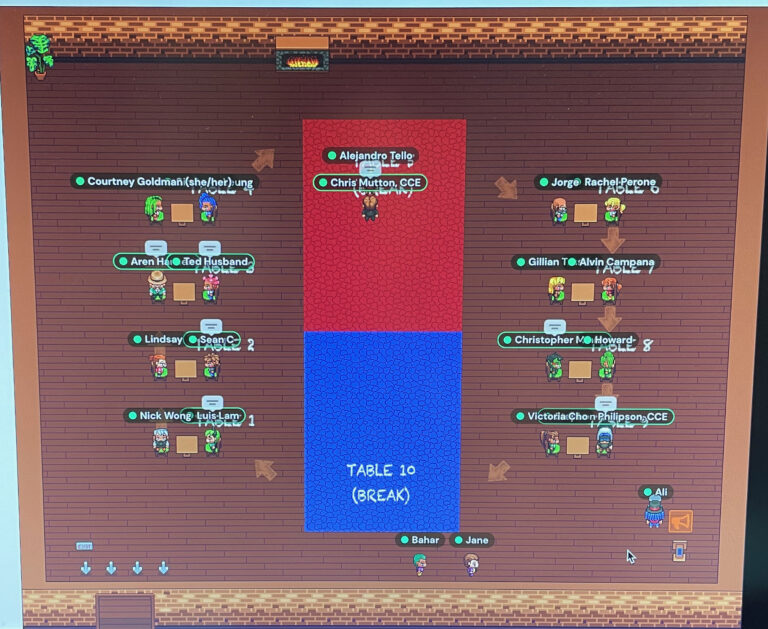
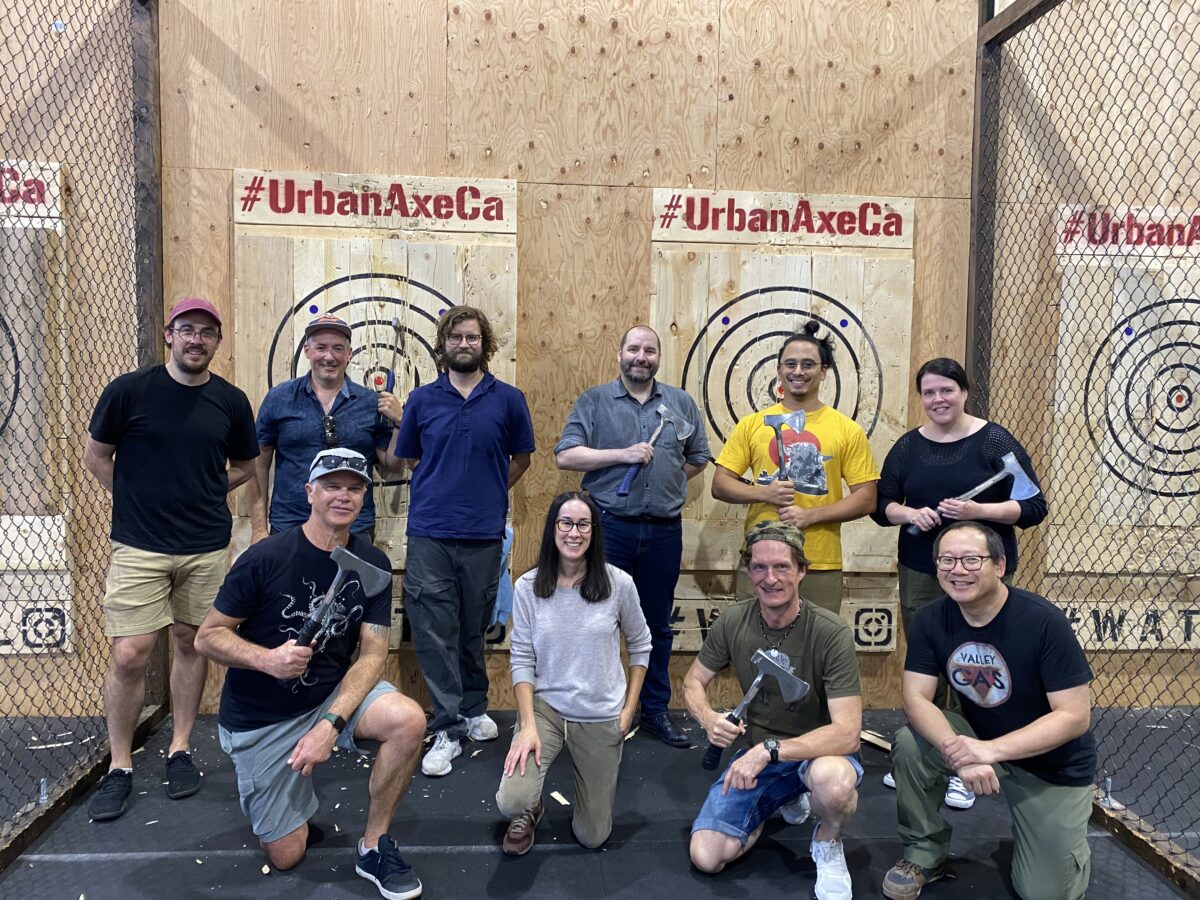
Join us in Montréal on September 18th for our Offline Activity. Grab your plaid shirt and challenge your gang to channel their inner lumberjacks with axes, knives, spears and more!

Montreal Offline 2022 Event - Weapons Throwing
Offline - September 2022 Montreal
Offline Sponsors Banner

About the Event

September 18, 2022

11am EDT

Sports de Combat

Categories
Past Events

Offline Events Across Canada: Toronto

Offline Events Across Canada: Toronto
September 17, 2022

This event took place on September 17, 2022.

Join us in Toronto on September 17th for our Offline Activity. We will be bowling!

Toronto Offline Event September 2022
Offline Sponsors Banner

About the Event

September 17, 2022

7pm EDT

Shamrock Bowl

Categories
The Editors Cut

The Editors Cut – Episode 065 – Creatives Empowered Presents: Why Anti-Racism Still Matters

Episode 065 - Creatives Empowered Presents: Why Anti-Racism Still Matters

In today’s episode we talk with the Executive Director of Creatives Empowered, Shivani Saini. We talk about how Creatives Empowered came to be and share a panel that Creatives Empowered produced called Why Anti-Racism Still Matters. The panel includes Reneltta Arluk (Director of Indigenous Arts, BANFF Centre for Arts and Creativity), Patti Pon (President and CEO, Calgary Arts Development), and Kizzie Sutton (Executive Director, Calgary Society for Independent Filmmakers).

CREATIVES EMPOWERED (CE) is a non-profit collective of artists + creatives. We are Black, Indigenous and People of Colour, empowering each other as an allied community. We are film + tv, media and arts professionals – from emerging to established – based in western Canada. We are the first and only organization of its kind in Alberta. CE is inspired by and embodies what is truly possible when racialized talent are empowered to thrive. To learn more, please visit creativesempowered.ca

Shivani is an award-winning producer, consultant, strategist and skillful communicator with over 25 years of professional film, television, media and arts experience. She is a dedicated advocate for equity within mainstream media and the cultural sector. A Ryerson Radio & Television Arts graduate, her career spans all genres of production, from the creative to the business side. Her portfolio includes critically acclaimed film and television, groundbreaking museum content, cutting edge theatre, international visual arts affairs, social media initiatives and festivals that cultivate new works. Select producing credits include the award-winning dramatic tv series Blackstone. Her company Atelier Culturati, empowers arts + culture through consulting, producing and communications, and is uniquely positioned to create strategies, content, and engagement that fosters true equity, diversity and inclusion. Atelier Culturati’s vision is to create and support works that positively transform the human condition.


The resources mentioned in this episode can be found here.

Listen Here

The Editor’s Cut – Episode 065 – “Creatives Empowered Presents: Why Anti-Racism Still Matters”

Patti Pon:
As people of colour or marginalized communities, every day we walk through life, and every day we catch arrows, right? I’m the only person of colour. I’m the only woman. People say stupid things to me. They mistake me for the catering staff instead of the attendee at the conference, right? They’re surprised when I don’t have an accent. So every day, I get those arrows. And every day I have to come home and pull the arrows out all by myself, or with the support of my loved ones. You want to be an accomplice: how about, make it so that those arrows don’t come at me in the first place?
Sarah Taylor:
Hello, and welcome to The Editor’s Cut. I’m your host, Sarah Taylor. We would like to point out that the lands on which we have created this podcast, and that many of you may be listening to us from, are part of ancestral territory. It is important for all of us to deeply acknowledge that we are on ancestral territory that has long served as a place where Indigenous peoples have lived, met and interacted. We honour, respect and recognize these nations that have never relinquished their rights or sovereign authority over the lands and waters on which we stand today. We encourage you to reflect on the history of the land, the rich culture, the many contributions and the concerns that impact Indigenous individuals and communities. Land acknowledgements are the start to a deeper action.
Sarah Taylor:
Today, I’m talking with the executive director of Creatives Empowered, Shivani Saini, and sharing a panel that Creatives Empowered produced called “Why Anti-Racism Still Matters.” Creatives Empowered is inspired by, and embodies, what is truly possible when racialized talent are empowered to thrive. Creatives Empowered is a federally incorporated, virtual non-profit organization founded by Shivani Saini and Atelier Culturati and made its inaugural public launch on November 16th, 2020. Their strong and growing membership demonstrates the need for this organization in Alberta and is already proving that the talent does exist. Their ownership, leadership, and board governance is 100% racialized and all Alberta-based. It’s also important to know that Creators Empowered inherently serves all racialized talent within Alberta.

[show open]
Sarah Taylor:
Shivani, thank you so much for joining us today on The Editor’s Cut.
Shivani Saini:
My pleasure. Thank you for having me.
Sarah Taylor:
To start off, can you tell us a little bit about your background in film and television and how Creatives Empowered came to be?
Shivani Saini:
I’ve worked in professional film, television, media and the arts for over 25 years. I actually started my career when I was quite young, as a teenager, with the National Screen Institute. And I’ve had the opportunity throughout my career to work in virtually every discipline, every type of production, genre of production that exists, everything from the creative side to the business side. And in November of 2020, I launched Creatives Empowered alongside other established racialized professionals here in Alberta.
Sarah Taylor:
And now can you tell us a little bit about what Creatives Empowered is, and what the mission of Creatives Empowered is?
Shivani Saini:
So, Creatives Empowered is actually Alberta’s first and only non-profit collective that’s by and for BIPOC film, television, media and arts professionals who live and work in the colonial boundary known as Alberta. And we exist to be a safe and supportive community for BIPOC artists and creatives. We’re here to advocate for and represent their interests and their needs. We work to increase professional opportunities for them, to provide empowering and educational resources, events, and professional development. And we also network, collaborate and share with like-minded individuals and organizations across Canada and also around the world.
Sarah Taylor:
Why did you feel like you needed to create an organization like this in Alberta?
Shivani Saini:
In 2019, I had a series of professional experiences that I would describe as empowering and disempowering, which I think every human being can relate to, regardless of background. For myself personally, I started to become consciously aware of the correlation, the relationship between the disempowering experiences I was having and systemic racism. And once I started to see this pattern and then really started to reflect back on my entire 25-plus-year career, I couldn’t ignore what I was seeing anymore. And this conscious awareness was something I developed really at the tail end of 2019, so the timing of it was quite interesting. And then of course the pandemic began in 2020, and then the events of the summer of 2020 happened.
And, it was at that point that I realized it would just be really, really important to really consider doing something here. And this was actually an idea I had in 2019, because one of the empowering experiences I had actually involved working with the Reelworld Film Festival and Screen Institute, which was established over 20 years ago to advocate for equity in Canada’s screen sector. And it was founded by Tonya Williams. So it was clear to me that it just would’ve been so incredible to have had access to something like that in my formative years, and I thought it would be great to set something up here in Alberta. Prior to the pandemic, it wasn’t something I had the time and the energy to do, but after the events of the summer of 2020, I started to have a lot of conversations with other established, seasoned, racialized professionals here in Alberta, and also with folks across the country.
And these conversations were so interesting and they were really empowering because despite the fact that each of our respective experiences with systemic racism, of course, are going to be a little bit different because we’re all different people—we’re all different individuals with different journeys and life paths—there was this commonality, this universality in our experiences that just created an inherent understanding of what being subjected to systemic racism is actually like, and that the understanding is almost unspoken. We just know. And it just became so clear to me that it would be tremendously valuable to have something here in Alberta that’s by and for people who live and work here.
And I know that in Canada we’ve got film and television production regions that are bigger—places like Toronto, places like Vancouver—but the reality is there are a lot of really talented artists and creatives living and working in Alberta that want to tell stories. And some of those folks are also BIPOC, IBPOC, racialized, and it was just really clear we needed something that was really by and for us. And so after having a series of conversations, it just became very apparent in November that it was time to put something together. And one day I sat down in front of my computer and wrote out what Creatives Empowered was. I wrote out the vision mission and value statement, and this material really wrote itself. It did not take long to articulate what this was. And then shortly thereafter, the Canada Media Fund had come out with sector development support specifically for initiatives like this one. So the timing was quite serendipitous and obviously meant to be, and we applied and were successful, and that’s what brings us to where we are today.
Sarah Taylor:
Amazing. Well, with that funding and I’m sure other people supporting Creatives Empowered, you’ve been able to put on a bunch of different workshops and events. And we, as the Canadian Cinema Editors, have joined Creatives Empowered as an ally partner. So we’re going to share today on the podcast, an event that Creatives Empowered put on. Can you tell us a little bit about the panel that we’re going to listen to today?
Shivani Saini:
So this event that you’re going to listen to today is such a powerful conversation. It’s called Why Anti-Racism Still Matters. It features Reneltta Arluk. She is the director of Indigenous Arts at the Banff Centre for Arts and Creativity. She is also the founder of AKPIK Theatre. It features Patti Pon, who’s the president and CEO of Calgary Arts Development. And Kizzie Sutton, the executive director of the Calgary Society of Independent Filmmakers. And to be honest, the idea for this event actually was a sticky note. I had just wrote down the words “why anti-racism still matters,” and these three names came to mind. The sticky note was sitting in my notebook since last year, and I had a chance to reach out to the three of them and say, “Hey, I’d like to invite you to be a part of this event. What do you think?” They all said yes. And, the rest is history. These are three incredible women doing incredible work in their respective fields, and just absolute powerhouses. And we had such an incredible and enlightening conversation on why anti-racism still matters.
Sarah Taylor:
Oh, amazing. I can’t wait to share with everybody. Before we jump to the panel, I want to know, how can people participate and/or join, and work with Creators Empowered?
Shivani Saini:
Sure. So we offer free lifetime membership to racialized individuals and any of the organizations they own and operate. And you can easily sign up for that on our website, you just have to go to the “join” page. And if you’re interested in becoming an ally, that’s something that organizations can also do, the information’s available on that page. And we are, actually—because of the fact that we were born out of the pandemic—a virtual nonprofit. And we have designed a website that allows us to deliver our mission online, and we do it through social media. So you can explore our website, you’ll see that we have different events and resources just like the one that we mentioned, that are available for people to check out. We also have an opportunities page, which is basically a free classified section for Alberta’s cultural sector. So if you have opportunities, job opportunities, project opportunities that you want to share with a diverse community, you can easily post them there. And there are other ways to support as well. We are always seeking supporters and partners, sponsors. So folks can absolutely feel free to get in touch with us. You can do that through our website too, and we can start some great conversation to see what might be possible.
Sarah Taylor:
Amazing. Well, I’m glad that we did, and I’m glad that we can share this panel with everyone today. Thank you so much for joining us.
Shivani Saini:
Thank you.
Crew Member 1:
And action.
Crew Member 2:
Action.
Shivani Saini:
Hello everyone. Thank you so much for joining us. Creatives Empowered is pleased to present “Why Anti-Racism Still Matters.” I’d like to start off with a land acknowledgement. Creatives Empowered is a virtual nonprofit that serves all racialized talent within the colonial boundary known as Alberta. We acknowledge that we live, work, and play on the traditional Treaty Territories of 4, 6, 7, 8, and 10, along with the Métis Nation regions of 1, 2, 3, 4, 5, and 6. We also acknowledge that we are on stolen land. These are the traditional territories of many First Nations, Métis and Inuit peoples, specifically in Treaty 6, the Cree, the Dene, the Anishinaabe, the Saulteaux, Nokota Isga, the Nakota Sioux, and the Blackfoot peoples. Specifically in Treaty 7, the people of the Blackfoot Confederacy in Siksiká, Kainai and Piikani, the Tsuu T’ina First Nation and the people of Stoney Nakoda, and Chiniki, Bearspaw, and Wellesley. And specifically in Treayt 8, the Cree, the Dene Tha’, the Dane-zaa, the Denesuline, the Nakota Sioux, the Iroquois, and the Inuit peoples. We express, with the utmost of respect, our deepest gratitude for the manner in which these traditional peoples have honoured these treaties. And in the spirit of reconciliation, we are committed to doing the same in how we live, work, and play on their traditional lands.
Thank you once again, for joining us, I’d like to introduce you to our fantastic guests today. Let’s start with Reneltta Arluk. She is the director of Indigenous Arts at the Banff Centre for Arts and Creativity. She is Inuvialuit, Dene and Cree. She’s a mom from the Northwest Territories. She’s also the founder of AKPIK Theatre, which is a Northern-focused professional Indigenous theatre company. As we were just talking, it’s the first and only professional Indigenous theatre company in the Northwest Territories.
We have Patti Pon, who is the president and the CEO of Calgary Arts Development. She is a veteran community and arts champion, and her extensive track record of leadership and service in Calgary includes staff leadership positions at EPCOR Centre for the Performing Arts, Alberta Performing Arts Stabilization Fund, and the Alberta Theatre Projects, and volunteer positions with Calgary Foundation, Calgary Stampede, and the Asian Heritage Foundation of Southern Alberta.
We also have with us today Kizzie Sutton, and she is the executive director of the Calgary Society for Independent Filmmakers. She’s an engaging arts and community professional, and is happy to be returning to her roots in film as the executive director of CISF. I want to thank you so much, each of you, for joining us today. And I just want to start off by mentioning that this event was inspired by a sticky note that had all three of your names written down. I wrote down the words, “Why anti-racism still matters.” Your three names were the names that came to my mind. That sticky note lived in a notebook for months and then I finally got in touch with all of you to say, “Let’s make this happen.” So, thank you so much for being here today. I’m so excited to explore this really important topic.
And what we’d like to do is maybe just start off by taking a look at a definition of anti-racism. This is a source that comes from an organization called Race Forward, and I had the privilege of discovering this source through resources that Black Lives Matter had put together. “Anti-racism is defined as the work of actively opposing racism by advocating for changes in political, economic, and social life. Anti-racism tends to be an individualized approach, and set up in opposition to individual racist behaviours and impacts.” So, I’d like to start by exploring, I think a really important question to start off with just coming off of the definition that we saw, which is what really is the distinction between racism and anti-racism? And I’d love to hear some thoughts on that. Kizzie, why don’t you go first?
Kizzie Sutton:
I think the critical difference between racism and anti-racism is the direction in which people are putting their effort. At first, I was thinking, “Oh, it’s actively opposing racism.” But at the same time, when we look at systemic racism, when we look at how racism plays out within our daily lives, that is also active and very present and deliberate. So I no longer think that anti-racism is the counter, if you will, to racism as a means of where people are putting their energy, but it’s also the intent behind. Anti-racism is also hoping to reduce harm—again, my perspective—and hopefully also encourage education and learning so that we can start to change people’s perspectives and, most likely, learned patterns of behaviour. So for me, one of the biggest differences between racism and anti-racism is the act of work of trying to dismantle systems of systemic oppression, systemic racism, and impacting daily lives and trying to change the way we, as individuals, interact with each other.
Reneltta Arluk:
Yeah, I find it interesting that anti-racism seems to be an individual effort and that active racism is actually a systemic collaborative group effort. So that’s kind of an interesting awareness when we look at anti-racism from that perspective.
Patti Pon:
Yeah. I think… Just before I go there, I just want to [introduces self in Siksiká]. I have the honour of being gifted a Blackfoot name, and I do that. And so, whenever I have a chance to speak publicly, I always want to acknowledge where I’m speaking from, and that is the Treaty Seven territory of the Niitsitapi, the Blackfoot people. And it was an honour to be gifted that name, which stands for “Two Standing Headdress Woman.” It also compliments my Chinese name, which is [says name in Mandarin], which is “the Goddess on the Moon.” And then of course my English name, Patti Pon.
And I think anti-racism for me is very much what Reneltta talked to, which is, when you hear the term, I think there is an association with more of an individual approach versus when you hear the term “racism” where there’s a tendency to apply it to a system, but not apply it to me. Not, kind of, embrace that I maybe have a role to play in that. Anti-racism in the way it has surfaced or maybe what the zeitgeist is, there appears to be an association that maybe there’s something I need to do as an individual. And with the three ways in which I identify with my name, I think it attributes to—there is that many and then some ways I live and walk in this world, and that anti-racism has an application in every single one of those identities. And it recognizes that entirety of who you are and how you are in this time. So, that’s what it means to me.
Kizzie Sutton:
It’s, I guess, the pluralism of walking in the very many different facets that we as individuals take for granted and take space in. And, just like the other lovely women here shared, it’s again that act of participation in trying to dismantle that individual versus system—us, them. I love the way that anti-racism is trying to deal with the individual. We also now need to add, how does anti-racism also deal with the larger, and the group thinks that we all interact with? So, yeah, I pretty much want to echo what has been said and reiterate the importance behind it.
Shivani Saini:
I’d love to just follow up with another question. What role does accountability play in helping to understand this distinction? How important is it, why is it important, for organizations to be able to take accountability, for example, for individuals to be able to take accountability. Let’s talk a little bit about that and why that’s needed.
Reneltta Arluk:
I mean, what’s challenging and a gift is that… Yeah, I’m witnessing this now because it has become so apparent that, I think we’ve interpreted that anti-racism is neutrality, but it really isn’t. Racism is active and anti-racism has to be equally, if not stronger, in activation. But when we think about silence and complacency, I don’t think we really align that with racism. I think we align that with peace, or neutrality means that I don’t agree with you. But in truth now, I’m really encouraging people to think about, anti-racism as voice. You have to actively state, you are not racist by being present, by speaking up, by witnessing. I think we have to activate our bodies and our minds and our voices to actually be an anti-activist. Whereas before, I think we’re taught that by not engaging means that we’re not agreeing, but actually now, what I’m witnessing and seeing is a need for us to actually say, “I am not a racist. I will not tolerate that. I will not stand here and listen to that. I disagree with what you’re saying.” That we have to activate our voices more when we witness situations that are happening, that are racist.
Shivani Saini:
Thank you, Reneltta. Patti, go ahead.
Patti Pon:
Well, and I think, absolutely. And to add onto that, there’s been that adage around that if you’re not racist, then you must be anti-racist. There’s no in between. Like, that’s it. They’re binary, right? And they are mutually exclusive. And so in the same way that colonial systems, as an example, that racist systems that exist within that—we’ve had centuries to have that imposed and embedded in us, right? Even as people of colour, or visible minorities. or marginalized communities. So, we have to take that active effort to apply it and actively have anti-racist systems in place. So part of the accountability, I think, is recognizing these two things actually are mutually exclusive. You can’t be both. And so, pick a side. And for those who benefit or have had power and privilege because of the existing racist systems in place, you got to come clean.
It is a reckoning. And that doesn’t mean that you have to completely give up everything. But as Reneltta said: call it when you see it, when you know it’s wrong. And we know it’s wrong. And use that power and privilege that you have been given the benefit from this system, to get us to a new system, a different system where everybody can derive. This isn’t like a pie and there’s only so many slices. It is infinite, if we’re talking about an anti-racist system. And I think that’s something that people don’t get. We’re not replacing one, we’re starting a new one that has room for everybody. And you know, why wouldn’t you want that? And why wouldn’t you want to play your part in creating that system? And there’s space for everyone.
Shivani Saini:
Thank you, Patti. Kizzie.
Kizzie Sutton:
I think I just want to highlight that it is a dual system. It’s either on or off. It’s not, “I’m going to be Switzerland and stay neutral,” and “Oh, I don’t want to offend grandpa so I’m just not going to bring my mixed-race boyfriend over to family dinner.” Because you’re actively denying something. And if you’re actively denying something… if you look at it the other way around, you’re actively perpetuating the same system that you’re saying you’re trying to pull down. I think that’s one of the slippery slopes of allyship is that reckoning within, I guess, Caucasian and European-based families and homes, is recognizing that yes, me as an individual, we as a family, and us as a people have benefited from these systems and now it’s been so long that it feels like you’re right to be able to do whatever it is that you’re doing.
However, we recognize that it’s not right. And we recognize that we as people are all people. I say, “we.” My hope is that all of us recognize that there are people out there that obviously do not. To be an ally means to have those tough conversations in places and spaces with loved ones that I wouldn’t have access to, nor would they give me the time of day if some of their thoughts were as deeply embedded as they can be. So a part of the anti-racism state for me is really taking on that leadership role as an individual and trying to make change within the smaller circles or spheres of influence that we have.
Shivani Saini:
Thank you. Let’s jump a little further into anti-racism and allyship. One of the things that I have seen repeatedly, in terms of accountability, I see a lot of folks that come from what used to be described as “the predominant culture.” A lot of individuals, a lot of organizations in the cultural sector, really struggling to be able to take that accountability. And yet, despite the struggle, despite the reluctance or the aversion to taking accountability, simultaneously they are moving forward to demonstrate that they’re trying to be as non-racist as possible. And I think we’ve all seen examples and situations of how this can actually start to become quite problematic and perpetuate further harm against people who are racialized. And I want to talk a little bit about that right now, and talk about what really should our allies be doing?
Reneltta Arluk:
Be uncomfortable. They should just really be uncomfortable and start being okay with being uncomfortable. I just finished listening to Jesse Wente’s “Unreconciled,” which is very powerful, and we listened to it on our drive as an audio book. So he’s actually narrating his own book, which made it even more powerful… crying and laughter. But listening to that and just reflecting that in my own life, my own journey, working at Banff Centre and the work that I do as an artist and arts leader in this country is that I think we’ve just… Indigenous, BIPOC, people of colour, we just have a capacity that we’re born with. And we didn’t choose to have this capacity, we just have it.
To be successful in what we do, we have to not only balance bias, racism, judgement, gender, age—everything—roles, family roles, patriarchy, matriarchy. We have to do all that and then still be successful, and so my capacity is larger than most people that I know, because I wouldn’t be able to do what I do if I didn’t have a large capacity that… And white people don’t have to have capacity. They get to be born without suffering in a way that doesn’t challenge them every moment of the day. And so when I listen to that, I go, “Okay, so how can we raise and elevate conversation changes, undo bias?” Reconciliation is not for us, right? It’s not for our society. It’s for society to… the predominant, as you mentioned, is about growing the capacity to be uncomfortable, in just a little way. I mean, there’s techniques to do it. And I think that that would be a really great way to learn how to become more inclusive. [laughs] I’m sorry.
Kizzie Sutton:
Can I jump in? That just sparked a beautiful idea—a process, as well—is, I love that idea of the dominant culture needs to be uncomfortable because those of us that are not a part of the dominant culture have been uncomfortable for hundreds of years. So the one, two, three generations of discomfort that we hope that the dominant culture will have to deal with pales in comparison! [laughs] Generations of people of colour have been altered mentally, physically, in all areas. And that discomfort was not something that we chose. It was put upon us, but we were able to live through it and I believe we are stronger for that. And trust that, if you’re a part of the dominant culture, that you too can make it through the discomfort. It’s not, “Oh man, this bag is so heavy, I might as well just quit.”
No, you’re developing the muscles. You’re learning how to sit in the silence and hear what others are saying, and then have that change and impact the way you, again, move through your life as an individual and as a leader through and through and through. I mean, if we go back to the family unit, which is a critical unit in most peoples of colours’ backgrounds, all of the nationalities and nations that I have contacted with, the family unit is huge. And if we can really get the parents and the extended generation to connect and talk about these issues that have come to a head during our time, we really can deal with this and move forward with the anti-racism push, which will then hopefully get us to, dare I say, parity. But I think what Patti was saying is, we need to tear down the old system. We don’t need parity. We don’t need equity. What we need is a new system.
Patti Pon:
A hundred percent, Kizzie. And so, related to the… Like Shivani says, yes, the question, my immediate instant response was, “Welcome to my life. Welcome to the last… Welcome to my parents’ life. Welcome to my grandfather’s life when he came to build the railway.” So, this five or 10 or 15 or 20 years of you feeling uncomfortable is going to give you a way to relate to me that maybe you haven’t related to before. And we can do it in small doses. One thing I would say: go to a pow-wow and take in the environment, feel what it is. Be curious when you’re there, because you don’t know the protocol, you don’t know the tradition, you might not know the meaning. But I promise you, when they see you, you will be welcome. And then you will understand what a different system can look like and make you feel like when you are the other.
So there’s those kinds of things we can do that aren’t going to hurt you. At the same time, we then… I talk about a long game to those new systems, right? As a funder, as a granter, especially a public funder, right? All of the funds I invest into the sector, the vast majority of it is public. And so I’m very conscious that for decades, right, the Massey Commission report that created the Canada Council was written in like, the 1950s. And it’s the same system that we run in as funders now. I don’t know, call me crazy: a few things have changed. And what we’ve done as funders is we’ve worked on the margin, right? We’ve tried to change the system from within, and—kind of 18 months, two years ago, it occurred to me: This is no longer about working inside the system on the margins. This is about a new system. And if we don’t come to that new system, we’re never going to get to an anti-racist system of funding in the arts, of public funding.
And so some of the things we’ve done—like, we created an Indigenous arts granting program that was created by Indigenous artists. And it includes the things that the Indigenous communities who live in Treaty 7 territory believe should be supported. And then we support that community and our advisory to then do that. And so that’s what I mean about how we use our power and privilege to support other ways of knowing, of being, of funding in this particular case. And my hope is we learn something from the original… Well, not hope. We have learned things from the original people’s investment program that we are now going to transfer into our standard project grants and operating grants, and whatever other kind of grants exist from the old system. But we have to make our way there, and so for those in the dominant culture, you got to come with us on the ride. And the last thing I’ll say about that—so there’s a wonderful artist here, Adrian Stimson. I think he’s from the Kainai nation, but he’s from Treaty 7.
Reneltta Arluk:
I think he’s from Siksiká.
Patti Pon:
Is he from Siksiká? Oh, sorry Adrian. For years he has said, “I don’t need any more allies. I need accomplices.” And I would even go so far as to say, we actually need co-conspirators. Who’s interested in changing the system, however we got to do it? That’s what we need right now. But I get that you got to start somewhere. And being an ally, trying to place yourself in our shoes, trying to feel that discomfort, that’s the start. And then, come walk with us on that journey to co-conspiracies. I love that.
Shivani Saini:
In terms of allyship, maybe just to wrap up some thoughts on allyship because there are other aspects to the discussion we want to get into as well. I had asked like, what our allies should do. I would love to know what are our allies… From your perspective, what are our allies getting right, and what are they getting wrong?
Patti Pon:
I think what they’re getting right is understanding and recognizing the necessity for the change, right? So that, there’s a whole readiness for change that we talk about in systems change. That’s a good thing. The challenge then becomes… So readiness for change, and then what do you do? What do you do is, recognize that your organizational journey cannot happen unless there’s a personal journey for each and every single person inside that organization to be a part of. So you can’t just report to me and say, “Oh, we have the right representation on our stages,” or… That’s great, I’m glad, and I look forward to the day when you might have over-representation. However, then as you learn more, you do more.
And so don’t just sit in on Calgary Arts Development town halls on commitments to equity, actually go inside your… What’s the training you’re doing, what’s the learning? What are you offering people as resources? And there’s a couple of resources that I sent over that we can put up whenever it’s appropriate. Continue to learn, continue to be curious, and then apply it. Again, individual and organizational journeys have to go hand in hand. And I think that’s sometimes what people get wrong is, they’re just going to go through the motions. As a funder, right, I can do things. I can ask you what your representation is and you’ll check the box, but you gotta mean it. You gotta understand why it’s there and you won’t, unless you take that personal individual approach and that… So back to, right, our very first question.
Reneltta Arluk:
Yeah, no, a hundred percent. And I think it’s really important to just say that organizational and personal have to be aligned because, as an Indigenous woman who sits on juries, I can see through those checked boxes. So, it’s not good lying. You’re not a good liar, really, if you’re looking at representation instead of embodiment and actual curiosity. And I think, saying earlier too how about, like, curiosity–be curious, you know? When I look at allyship… I see it on social media, when we look at the war that’s happening in Ukraine and everyone’s wearing the babushka scarves. That to me is anti-racism activism. When I see you posting pictures of things that aren’t related to that, I start wondering how engaged you are in the global conversation of oppression and colonization.
And so, when we were going through the Indigenous Lives Matter, Black Lives Matter, I looked very closely at my non-BIPOC friends and saw them… If I saw them posting actual engagement with conversation and learning, I really value that as allyship. When I saw my non-BIPOC friends and colleagues just posting pictures of books they’ve read, or shows they’ve watched, and they’re not engaged in what’s happening, I go, “Hmm. I wonder how engaged you are with me as a colleague or as a friend.” And I start wondering, who are my friends and who are my workmates, and how well do I know them? And that’s that relational work. When we think about systems… We’re not in a time of complacency. We’re in a time of activism. We have to make decisions to be healthy, we have to make decisions to be alive. And so I don’t think now’s the time to sit back and scroll. I think we have to really be activists in that way.
So in a social media lens, that’s how I’m seeing it. In a more in-person lens, it’s about… it’s really, you have to actively teach yourself what’s going on and ask those questions. And I think the struggle that I’m starting to see a bit more is, these systems work because they work for how they are. And when we’re introducing new systems—which are not new systems—but when we’re introducing new systems, what’s happening is that, it’s learning how to undo what you know, and that’s very uncomfortable and maybe won’t work in the system that you’re currently very comfortable in. And I think that’s that fear of wrong. And so what I always say is: you’re going to get it wrong, just do it. Just do the wrong so that you can learn the right. So that’s like my big offer for allyship.
Kizzie Sutton:
Again, echoing what was said before, at the same time, I’m going to start with the end of the question of, what are some of our allies doing wrong? I’m going to say not calling out microaggressions. I think we, as people of colour, have become so good at tolerating and dealing with microaggressions on the outside, the full impact of what those microaggressions do to us as individuals, what it does to us in our physical health and our mental health… It gets lost when we talk about allyship. Mainly because we’re like, “Oh, Kizzy, that doesn’t matter.” I mean, one of the comments that I got when I was working in an arts organization that I thought was extremely liberal was, and I quote, “Oh, our coolness factor just went up because we hired you.” Huh! You know what I mean? Like there’s certain statements that you’re just like, “Wow, a lovely compliment, that I’m cool because I’m Black?” Like, what are we saying?
And now, me as a professional, I need to smile and nod, otherwise, I become the angry Black woman. So there’s weight that gets put on our shoulders, that if other people of the dominant culture could call them out so that the person who is being inflicted with these microaggressions don’t have to… I think that would be a great step for allies to help out with lifting the weight on our shoulders.
And what they’re doing right? Curiosity. And keep being curious. Keep sitting in that discomfort.
Patti Pon:
Super true. And I think there’s something else, Kizzie, that actually, you just said that reminded me—and I’ll try to do this short because it’s a bit of a shaggy dog story, Shivani. So, one of the things that a great friend, JD Derbyshire, shared with me and I walk with it every day is that, as people of colour or marginalized communities, every day we walk through life and every day we catch arrows, right? I’m the only person of colour. I’m the only woman. I’ve helped increase a factor. People say stupid things to me. They mistake me for the catering staff instead of the attendee at the conference, right? They’re surprised when I don’t have an accent. So every day, I get those arrows. And every day I have to come home and pull the arrows out all by myself, or with the support of my loved ones.
You want to be an accomplice: how about make it so that those arrows don’t come at me in the first place? How about, be a support to me to pull those arrows out? Every time you ask me, because I’m the only person in the room who can help you with an equity statement, or can help you understand, “Why do people get so mad? I didn’t do it. It wasn’t me who did it.” All those, like—by the way, which is an incredibly racist comment. But, so, that’s where the curiosity part becomes so important. But every day: those arrows. And I’m not saying that people in the dominant culture don’t get arrows, but you sure as heck don’t get the arrows that we get. And lately, they’re big arrows. And when we’re asked to help solve the problem, that actually, as Reneltta said, isn’t actually my problem. Go figure it out! Like I’ve had to do for my whole life. That’s what you need to do, that’s what this discomfort means. And I know it isn’t fun, but you know, try getting the arrows every day, and then tell me it’s not fun. And then maybe we can get into a conversation that’s meaningful and really starts to make those changes we need.
Shivani Saini:
Thank you, Patti. Amazing. I love the analogy of the arrows. I’m so glad microaggressions were brought up, just from my own personal perspective. Legit, if I had a dollar for every time a racial microaggression, which is just basically a racial micro-inequity, was thrown my way, I would be a very, very rich woman today, and I would probably be doing this event with you from my beach house somewhere tropical. No joke, no joke there. I would be rich. My personal experience embodies the onslaught of microaggressions. And I’ve heard this expression before, “it’s like death by a thousand cuts.” I also have had plenty of experiences where I’ve actually tried as a racialized person to call out the behaviour to identify it. And then what ends up happening is, I just get destroyed with more arrows. It can be really dangerous for you as a racialized person to call that behaviour out in particular, depending on who it’s coming from.
One of the things that I’ve seen a lot of organizations—and say, specific individuals within those organizations—get wrong is that, when a racialized person, someone who’s Black, someone who’s Indigenous, someone who’s a person of colour, someone who comes from an underrepresented community, is actually taking on the emotional labour of legitimately raising a concern about something that they’ve experienced. It can be… I see this quite often, it can be really easy for those individuals and those organizations to just immediately get defensive. And instead of taking the time to actually listen and understand, it becomes about reacting and ensuring that they’re not actually going to be labelled as racist.
And I want to bring this back to that point about being uncomfortable, because what people really need to do is they need to move away from fear. They need to move away from fear. We all need to move away from fear. Racism, in its… If you break it down to its most fundamental element, it is ultimately a fear of something that is different. A fear of an individual that is different. And that fear and the way that that fear can become the basis, the driving factor behind racial and unconscious biases and then how that behaviour can manifest is like… Oh my gosh, we could talk about that for days. But, you know, it’s so important for everyone, allies that are listening to this and also folks who are racialized, to really become consciously aware of the fear that is driving a reaction, a response to something that might be driving how you want to respond to something that you’ve just heard.
And, it’s important for cultural sector organizations to really pay particular attention to the fact that if you’ve got individuals that come from these underrepresented communities, and more than one individual is starting to raise the same concern about, whether it’s microaggressions or systemically racist behaviour that’s much more overt, that there is a need to pay very careful attention to what’s going on. And like our incredible guests today have said, to be able to get to a place where you’re willing to be uncomfortable so that you can start creating the right kind of change to ensure it doesn’t keep continuing. Microaggressions, you really got me there with that one Kizzie, thank you.
So, we have a little bit of time left and I think what I’d like to do is see if we can also explore what anti-racism means to each of you personally. And I think it would be great to get some of your personal perspectives. Reneltta, let’s start with you. I’d love to get your perspectives on what anti-racism means to you personally. I know you’ve touched a little bit on it, but… As an Indigenous woman, as an artist, as the director of Indigenous Arts at Banff Centre and the creator of AKPIK Theatre.
Reneltta Arluk:
Yeah I mean, there’s a lot of different ways to look at anti-racism in those areas. I mean, the beautiful thing about working in community, being engaged in community, is that there’s a value system. And that you learn your value system culturally, and then you carry those values forward. And then those values systems naturally adapt themselves into the systems that you surround yourself with. And I’m grateful for the teachings that I received in my life, and I continue to receive in my life, and how they can be adapted and applied to it. And then how systems that are systemic, or are oppressive or colonial, tend to not fit into those systems because of the value system.
So I really look at… So whenever I start having conversations with organizations or people that I don’t know very well, I start looking at, “What is your value system, and do we align?” And if not, then how can we have conversations around changing those systems? I really value hearing, “It’s not pie.” I have said in so many rooms, “It is not pie, it’s cake.” It’s a layered cake with lots of flavours and everybody loves cake. So let’s look at cake and not pie. And I don’t know why, and maybe it’s the education system where we’re taught the pie chart. Maybe that’s the ultimate problem, is that we’re taught to divide though our way of thinking, instead of looking at it from a collaborative, inclusive way of thinking.
And so, when we look at community and going into, say, Banff Centre, and doing the work that we’re doing, it’s affording that place of agency and self-determination. So I say Indigenous-led a lot and I say it purposefully, so that other people can start thinking “Indigenous-led” instead of thinking, “Oh, this is our Indigenous arts area under the Banff Centre guise.” And this is, everyone’s here, I’m like, “Hmm, we’re Indigenous-led, which means we’re running systems differently, so our systems are going to impact recruitment, impact production, impact technical, impact programming.” And slowly, in my four years of being there, I have seen some really great change. And I feel like if you don’t embody it, then you’re just progressing a system that will clash. And so, I mean, keeping it short and tight and trying to encapsulate everything in there: value systems, systems that need to change. It’s not pie, it’s cake.
Kizzie Sutton:
Love the analogy of cake ’cause who doesn’t love cake? As long as it has cream cheese icing. [laughs] So for me, and this is going to be a little obscure, but every time I think of what does anti-racism mean for me personally, I think about the fact that I am of Afro-Caribbean descent, living in Canada, which is clearly founded on, based on, systemic principles that lead to racism. But also the fact that I am benefitting from the fact that I’m living in Canada, which is a system that stole the Indigenous lands. And if we want… ‘Cause sometimes we’re faced with, “Well, I didn’t do that. That’s not my fault.” Well, if I’m benefitting, even though I am one of the members of society that is being discriminated against, I too have to recognize that in my privilege, I too have to go through some discomfort of, “Yeah, I’m living on stolen land.” And being a stolen group of people, like, that hits home for me in a way that I don’t know if it hits home for other people. And I need to consistently think, “Okay, Kizzie, how is what you’re doing either perpetuating or not perpetuating harm in communities and spaces where what you really want to do is build them up and encourage?”
And for me, I really like the idea of partnership. It’s not about going into some community and bringing… Like the Christian period, they came over here to “civilize”… Everyone was civilized. There was nothing wrong with the people that were here. Our thought processes were what was wrong. And me being, again, of Afro-Caribbean descent, whose parents immigrated here for the better life, and I’m able to enjoy that better life while still knowing that I’m living and breathing and participating in a system that is oppressive to other people of colour, that really hits home for me. I don’t know, I don’t think I have an answer yet on how I’ve resolved that dissonance, ’cause I haven’t. It’s something that I’m working on. It’s something that I’m dealing with. And I think about the fact that anti-racism hits us all individually and we have to recognize that my journey isn’t going to be another person’s journey, but we can at least share some of the discomfort. So again, move us to that full new system that will allow us all to be able to participate in our fullest way. So a little bit of a unique situation, but that’s one of the things that’s really hitting me.
Patti Pon:
I think that from a personal perspective, sometimes it’s just about getting through the day. It’s coping, right? And so moments like this, where I can have a shared conversation, where there’s not a lexicon. Like we all get it, and we actually have embodied it. That’s a salve, to me. It’s sort of something I kind of have in immersing myself in. So that it gives me the courage to go into that day knowing I’m going to get the arrows, right? And, and so what I look for now is, if I’m asked to join a committee or sit on a board or be a part of an initiative, I use the power of three. And so there have to be at least two other people who are going to be in that circle who either look like me, or they think like me, or I know them to be accomplices or co-conspirators. I need that now. Because in the same way that we’re asking others who maybe haven’t experienced discomfort in the past like I may have, it’s not like it makes it less uncomfortable for me.
I know the rest of my life. I will continue to be in this place of discomfort. It is not going to change in my lifetime, or my work life that I have remaining. However, I hope that there is a shared experience. And so, knowing that, I look to find ways, look for that salve, look for that bandage, look for that moment where I can be in a shared community or in a shared circle. And that, the one thing that will happen in my lifetime is that circle will get bigger. And then we will all understand what our place is in that circle. I think sometimes for organizations who are finding their way, they’re in the circle and that’s awesome, but what they don’t know is what everybody’s place is around that circle. Why you’re there. And so, I try personally to live my life and get through each day, making it clear what I think my place in the circle is, what I hope it is, and then also connecting the others in it to what their place is, and create that exchange.
Conventional colonial systems don’t actually allow for that, right? Granting systems are competitive. You shouldn’t know the other people. You can’t know who the assessors are. We don’t want to tell you why we didn’t give you the grant. It’s so secretive, right? And maybe, if we were a bit open, instead of being like this, if we were like this. So personally, for me, anti-racism is about trying to be like this. And it’s really hard, by the way, for those of you who maybe don’t have to find yourself looking like us in other circles. And so I guess I ask of any of you who are in the dominant culture who watch this—try to be like this with me, or with others who look like me, or who talk like me, and then we’ll get there. And then we’ll share in this discomfort together, and hopefully to a way where we don’t have to have that anymore.
Shivani Saini:
Amazing. Thank you. Such great thoughts that are being shared. I’m so appreciative, so grateful to hear all of these different perspectives right now. And I also very much feel like the conversation has been a really nice salve as well. I wanted to see if there were any other thoughts about anti-racism in the cultural sector at large. Specifically, what has changed since 2020, and where do we still need to go?
Patti Pon:
I guess for better or for worse, what has changed? Not a lot. And I hesitate, because I see steps. But there’s that adage about two steps forward, three steps back. And maybe it’s because it speaks to the complexity of anti-racism and trying to create these new systems. To be fair, there are way more people who try to understand, who come from dominant cultures. My staff, my team at Calgary Arts Development are superheroes when it comes to really trying to see the world from 360 degrees, and I really appreciate that. So, I shouldn’t be so glib to say, “not a lot.”
It’s the individual journeys that I would say that have really changed since 2020, that more and more people are recognizing, “I have a part to play as a person, let alone whatever organization I might be a part of,” so I think that’s a really good thing. And then in terms of your question, where do we need to go, it is: continue to be curious, continue to be vulnerable, continue to have humility, which as Reneltta said, these are not new things in other systems, in other ways of being. So that’s where that curiosity comes into play. Everybody go read Jesse’s book or go listen to his audiobook. Start somewhere, take the course at U of A. Come recognize the Lunar New Year and what that might mean to the majority of the world, by the way. There are more people who celebrate Lunar New Year than celebrate January 1st, thank you very much!
But anyway, that’s the world we live in. In the same way that you’re putting the blue and yellow on your Facebook profile, there’s lots of other things that, as both Kizzie and Reneltta have said, you can do. And I would just welcome and invite you to continue to be on this journey, and know that it’s a long journey. So pace yourself. And I look forward to welcoming you as part of the circle, being welcomed into your circle, and sharing in that journey.
Kizzie Sutton:
Yes, maintain that curiosity. And I think, organizationally, it’s about checking in on my experience. It’s about checking in on our racialized staff members, just talking about those arrows. There’s been weights that’s been put on our shoulders additional to the regular arrows that we normally live with. And if you notice a staff member who, two years ago was go-lucky and happy and da, da, da, and now they’re no longer showing the characteristics and personality that you know is truly or traditionally them, I would encourage you to ask, “How are you doing?” And be there to truly listen and see if there’s something that you can do as it relates to race, as it relates to being the shield for microaggressions. There are steps that us as racialized people can do, and there’s lots of steps that dominant culture can do to, again, bring us to a space where we’re not all covered in arrows at the end of the day.
And the other thing I’d like to just highlight as Patti shared: just because we live here in the West, our perspective is not the majority. There are more people that celebrate the Lunar New Year than January 1st. If we let that sink in and resonate, and allow that to be a bit of a compass or a way for us to reevaluate what is normal, I think that kind of curiosity would really allow for people to let go of systems that they thought they knew when they realized, “wait a second, if the majority rules, then what does that look like?” So, yeah.
Reneltta Arluk:
No, this has been such a powerful conversation. But I think what I’m walking away with and what I’m really hearing is that it’s just really, institutionally, the systems are there to help you succeed, but they’re helping you succeed in a way that maybe isn’t actually the right way to succeed. And I think we have to look at success from, “What is success for me?” And individualizing that, like… I was offered to direct a workshop of a play, and I read the play and the play clearly was Two-Spirited and I just read it and I loved the play and I loved the people involved. And I finally just went, “I don’t see myself here, because I’m not Two-Spirited in that way that this story could be brought forward in the best way.” And so I echoed that back and I got such a welcomed response.
And so when we look at leadership, how are you a leader? And is it for you to lead because the opportunity has been given to you or you’ve worked somewhere for 10, 15 years and it’s mandated that you get to rise? But is it really your voice that needs to be risen? And that’s a challenging question of leadership. And I kind of go off the rules of acting where it’s like, the first impulse is not the only impulse. And so it’s like, yes, you’re given the opportunity, it’s your one opportunity… Eh, you’re going to get two or three more opportunities somewhere else where you’re better aligned to use your voice and bring that leadership. And so I don’t… I say yes to a lot of things, because I think that I believe in a lot of things, but I also say no to a lot of things where I go, “I’m not the person for this.”
And it’s like looking at your ego, looking at your place. But when you look at it from the greater circle or as a hummingbird or however, you kind of realize, “I’m still involved, I’m still part of this community, I’m just not the voice that needs to be heard.” And I think once you’re okay with that, it’s a better world, and it’s better for you too, actually. But when you see the systems going, “Well, the chartered agreement says…” or, “The collective agreement says…” then it’s like, does it though? Is that the right choice? And so when we do personal, I really value—I’m walking away with this, Patti—with the personal to the systemic, it’s like it has to be personally driven, and a better understanding. And so that’s where, again, that discomfort and that knowing kind of comes in. So I’m just really grateful for today.
Shivani Saini:
Amazing. I’m so grateful for this conversation. I wish that we had more time. Clearly we could keep talking about the subject and unpack, deep dive a lot more. Patti had shared a few resources. What I’d like to do just before we wrap things up is, just bring them up. Patti, do you want to maybe just say a few quick words? We’ll also put these up on our Creatives Empowered website as well.
Patti Pon:
For sure. Again, I think just in terms of feeding your curiosity and equipping you with resources, Stop Race-Based Hate, which I know Shivani already has up on the Creatives Empowered website, is a really great website. How to recognize those microaggressions, and how you might respond to them so that you understand why they’re there. The repository from Belonging at Berkeley is, while it’s predominantly US-based, so much literature and surveying and research is being done in the area of equity, diversity, inclusion, of language, all those things. This is one repository that offers a number of resources on how to address anti-racism. My hope is someday we might have a similar repository for Canada, but this is a good start. There’s great reading there.
And then the last one, coco-net.org. There’s a particular diagram called The “Problem” Woman of Color. And again, to give you some insight, you may empathize or relate to what’s in that diagram. The thing you need to know about women of colour is, it happens every time. It’s not just a one off. And so it just starts to give you some sense and context for the way in which someone else like me might walk in this world, might be in this world. Even as the CEO of an 18-million dollar granting agency in Calgary. And so, it’s there to serve as a resource for anybody. It’s not only for white people. People of colour, Black, Indigenous, also may find some comfort sometimes in knowing that it doesn’t have to fall on you. That all you gotta do is give them the website and say, “Here you go. Go figure it out.” Thanks very much Shivani.
Shivani Saini:
Amazing. Thank you, Patti. So two of those resources, Stop Race-Based Hate and the COCo diagram of The “Problem” Woman of Color. We have those up on the Events & Resources page of our website. That diagram, by the way, was sent to me by an Indigenous theatre maker in the summer of 2020. And when I first looked at it, I was like, “This is a diagram of my life! Wonderful, thank you!”
I just want to express my sincere gratitude to our three incredible guests today, Reneltta Arluk, Kizzie Sutton, and Patti Pon. Thank you so much for being a part of this conversation and for helping to manifest an idea that I wrote down on a sticky. It has been a fantastic discussion and I’m so happy that we’ll be able to keep sharing this out with the world. Thank you so much to Matt Waterworth, our technical wizard behind the scenes, and just a heartfelt thanks to every single person who has tuned in, and to anyone else that might continue to watch this in the future. Thank you so much. And anytime you’re looking for information, you want to learn more, please feel free to visit creativesempowered.ca. Thank you.
Sarah Taylor:
Thank you so much for joining us today. And a big thanks goes to Shivani and the folks at Creatives Empowered. If you would like to learn more about Creatives Empowered, please check out their website at creativesempowered.ca. There you can find resources, information on training courses and, of course, join or support. The CCE is proud to be a Creatives Empowered ally. Special thanks goes to Jane MacRae.
The main title sound design was created by Jane Tattersall. Additional ADR recording by Andrea Rusch. Original music created by Chad Blain and Soundstripe. This episode was mixed and mastered by Tony Bao. The CCE has been supporting Indspire, an organization that provides funding and scholarships for Indigenous postsecondary students. We have a permanent portal on our website at cceditors.ca, or you can donate directly to indspire.ca. The CCE is taking steps to build a more equitable ecosystem within our industry, and we encourage our members to participate in any way they can. If you’ve enjoyed this podcast, please rate and review us on Apple Podcasts and tell your friends to tune in. Till next time, I’m your host, Sarah Taylor.
[Outro]:
The CCE is a non-profit organization with the goal of bettering the art and science of picture editing. If you wish to become a CCE member, please visit our website, www.cceditors.ca. Join our great community of Canadian editors for more related info.

Subscribe Wherever You Get Your Podcasts

What do you want to hear on The Editors Cut?

Please send along any topics you would like us to cover or editors you would love to hear from:

Credits

A special thanks goes to

Jane MacRae

Shivani Saini

Lily Makowski

Hosted and Produced by

Sarah Taylor

Main Title Sound Design by

Jane Tattersall

ADR Recording by

Andrea Rusch

Mixed and Mastered by

Tony Bao

Original Music by

Chad Blain

Soundstripe

Sponsor Narration by

Paul Winestock

Categories
The Editors Cut

Episode 064: EditCon 2021: Breaking the Mold in Series TV

Episode 064 - EditCon 2021: Breaking the Mold in TV series

Episode 064 - EditCon 2021: Breaking the Mold in Series TV

This episode is part 6 of a 6 part series covering EditCon 2021 that took place virtually in February 2021.

We’re currently experiencing a watershed moment for increased representation in storytelling. This year we’ve seen a wealth of stories originating from the BIPOC, LGBTQ2S and female perspectives that not only tackle tough topics surrounding mental health, addiction, sexual assault and racial prejudice, but also present powerful aesthetic and editorial triumphs. The editors behind I May Destroy You, Euphoria, and #BlackAF join us to discuss their groundbreaking work.


Christine Armstrong is a picture editor splitting her time between Los Angeles and Toronto. She has edited a variety of feature films, television series, short films, web series and commercials. Armstrong’s recent work includes editing the series #BlackAF (Netflix), Barbelle (Amazon) and feature films Sugar Daddy, Mary Goes Round and The New Romantic which premiered at SXSW and won the Special Jury Recognition for Best First Feature. She is currently editing the series Rutherford Falls (NBCUniversal/Peacock) starring Ed Helms.

Shannon Baker Davis, ACE is an award-winning television and film editor. She began her career in unscripted television on iconic and Emmy-winning shows such as Top Chef and Project Runway. Her feature film credits include collaborations with directors Stella Meghie (The Weekend, The Photograph), and Ali LeRoi (The Obituary of Tunde Johnson). She has worked with creators Issa Rae (Insecure), Ava DuVernay (Queen Sugar), and Kenya Barris (Grownish, #BlackAF).

Julio C. Perez, IV, ACE lives and works in Los Angeles, editing in both narrative and documentary. His feature film work includes Chad Hartigan’s award-winning This is Martin Bonner, which screened at Sundance, and an ongoing collaboration with director David Robert Mitchell, editing The Myth of the American Sleepover, It Follows, and Under the Silver Lake, which have all screened at Cannes. He has recently worked with director Sam Levinson on the series Euphoria, as well as the upcoming feature Malcolm and Marie.

Christian Sandino-Taylor is a film editor, and occasional screenwriter. His career started in the writers room and as editor on the surreal comedy series Campus. Recent work includes I May Destroy You, Sally4ever, Love Wedding Repeat, and the upcoming From Devil’s Breath, directed by Orlando von Einsiedel (Virunga/The White Helmets). In 2018 he wrote and edited To Wendy Who Kicked Me When I Said I Love You, an offbeat, romantic short film which premiered at the London Film Festival.

Shonna Foster is an award-winning director, storyteller, and producer. She received her BFA honors degree in Theatre from York University, where she studied in the Creative Ensemble Conservatory. She currently works as a freelance director, producer, and story consultant in film, television, and branded content, and is a long standing board member of BIPOC TV and Film.

Listen Here

The Editor’s Cut – Episode 064 – “EditCon 2021: Breaking the Mold in Series TV”

[show open]

 Sarah Taylor:

Hello, and welcome to The Editor’s Cut. I’m your host, Sarah Taylor.

LAND ACKNOWLEDGEMENT

We would like to point out that the lands on which we have created this podcast and that many of you may be listening to us from are part of ancestral territory. It is important for all of us to deeply acknowledge that we are on ancestral territory that has long served as a place where indigenous peoples have lived, met, and interacted.

We honor, respect, and recognize these nations that have never relinquished their rights or sovereign authority over the lands and waters on which we stand today. We encourage you to reflect on the history of the land, the rich culture, the many contributions and the concerns that impact indigenous individuals and communities. Land acknowledgements are the start to a deeper action.

[show open]

Today’s episode is part six of our six-part series covering EditCon 2021 that took place in February of 2021, Breaking the Mold in Series TV.

We’re currently experiencing a watershed moment for increased representation in storytelling. This year, we’ve seen a wealth of stories originating from the BIPOC, LGBTQs plus, and female perspectives that not only tackle tough topics surrounding mental health, addiction, sexual assault, and racial prejudice, but also present powerful aesthetics and editorial triumphs.

The editors behind I May Destroy You, Euphoria, and Black As Fuck join us to discuss their groundbreaking work. This panel was moderated by award-winning director, storyteller, and producer, Shauna Foster.

Intro Voices:

And action. This is The Editors Cut, a CCE podcast exploring, exploring, exploring the art of picture editing.

Shauna Foster:

Let’s start by thanking the CCE and welcoming everybody to EditCon 2021. I just want to take the time to introduce our panelists.

So we have Christine Armstrong and Shannon Baker Davis from Black As Fuck, #blackAF; Christian Sandino-Taylor from I May Destroy You; and Julio C. Perez from Euphoria. So we are super lucky today to have you all here.

Thank you for being with us. I May Destroy You, #blackAF, Euphoria are shows that definitely line with today’s theme for discussion, which is Breaking The Mold in Series Television.

These are three shows that, through their story, through content, through structure, through editing, through the creative teams, definitely align with breaking molds. To break molds, we have to be daring.

We have to be daring. And there’s a lot of discourse out there where the creators behind these shows, they talk about these shows coming from deeply personal places and from personal experiences.

And I just want to quickly read a quote that Sam Levinson, who’s the creator of Euphoria, said. He said, “I just wrote myself as a teenager. I think those feelings and memories are still extremely accessible to me, so it’s not hard to reach.”

And this notion of feelings and memories being extremely accessible is applicable, I think, to all these shows and the way that shows lift off the screen in such an explicit way, and so with the notion in mind of being vulnerable and being daring, let’s start with the question, how do you all as editors manage the process in a way that supports the creator and the personal element of each story? And let’s start with Christine.

Christine Armstrong:

I think it’s just being able to create a creative space. My favorite times in the edit suite, in the edit room, is when the showrunner is just having fun and just in the creative juices.

And I’m able to create that for them, and kind of when they have different ideas and everything, just kind of playing in the sandbox, I think, is the best way to kind of support them because this is all about being creative, and it’s a collaborative process. And even creating that space in the edit suite, I think, is the best way to support.

Shauna Foster:

Thank you. Julio.

Julio C. Perez:

So speaking of vulnerability, that’s how I feel right now, very vulnerable. But I think for me, I mean, there’s a lot of different approaches, I think, to this.

But for me, it’s sort of starting with the foundation of sort of the philosophy of what kind of editor that I’d like to be, and when you’re, one, interested in things that are tonally complicated and intricate, disturbing sometimes, emotional, and then also being very interested in working with directors of vision and conviction… And then for me as an editor, to do everything with my skillset and everything within my powers as an editor to help hone and possibly even enhance that vision, do everything I can to get it out in the world at its optimal state. And I care about what the director and/or showrunner wants to say, and I desperately want to help bring that out into the world, I guess.

Shauna Foster:

Thank you, Julio.

Julio C. Perez:

Thank you.

Shauna Foster:

Christian.

Christian Sandino-Taylor:

Yeah. Yeah. I mean, just sort of, I suppose, echoing what Christine and Julio have already said, I mean, it’s all about the edit suite, such as we all know and I’m sure the audience who are watching.

It’s a sort of priest’s hold, isn’t it? It’s a place of trust.

There’s two of you, and they’re getting to know each other. I mean, I think a big thing is, especially on these three shows where you have these very powerful voices and distinct voices, you want to get to know the people you’re working with, right?

I mean, in order to sort of please them and challenge them at times and surprise them, you have to get to know them. So I think, as Christine was saying about playing, I was saying to a lot of people, like Michaela, for example, is such a great person to talk to.

She’ll come in, and you’ll start talking, and then 10 minutes later, you’re talking about your divorced parents. And you sort of build on these things, and you start to get to know each other.

And I think our job as editors a lot of the time is to get to know our directors or whoever the creative force is behind the projects we’re working on, so not psychoanalyze them but understand them and be sympathetic to them. And then we know we can be the best creative partner we can be for them.

But yeah, play and trust is, I suppose, the big thing. As soon as you have creative trust with each other, then you can go anywhere. And yeah…

Shauna Foster:

And Shannon.

Shannon Baker:

I think everything that’s been said, of course, I agree with. I live those themes all the time.

I think something that hasn’t been said is that I think directors and producer writers expect you to bring yourself to the project so that the part of you that is triggered or the part of you that questions a character’s motivation, all of those things come into the edit and give what you’re doing so many layers, because if you are not bringing the real world and your experiences to it, it becomes kind of blank.

And like Christian said, you get into it when you have these conversations, and your producer or your director is sitting on the couch. And they’re tired, and they’ve been with it for so long, and I think they expect you to bring something to it that they maybe haven’t heard or haven’t thought of, and I always aim to be that sort of editor.

I don’t want to just push buttons or blankly just cut the script together. That’s just not the kind of person that I am.

Shauna Foster:

Since I have you on, Shannon, I’m going to go around again with this question. Do you get to do the first pass?

Shannon Baker:

Yes.

Shauna Foster:

Is the process you get to do the first pass and then they come in, or are they with you?

Shannon Baker:

Normally, for the television shows, you get to do an editor’s cut. That’s part of bringing your ideas to it.

Some of that stuff may get vetoed, and it goes through many, many iterations, but it’s always a feather in your cap when a scene you cut exactly the way you cut it ends up in the final product.

Sometimes, you’re like, “Oh, I keyed in. That particular day, I keyed into something.”

And you’re always looking for that high, but yeah, you get to do a first pass that is yours. And a lot of times, some of the best editors that have mentored me always say, “That’s your pass.

“That’s your pass. Do what you want to do to it. Stay within the tone of the overall series, but it is yours,” because it might not be yours after you release to the director [crosstalk 00:10:06] no longer.

Christine Armstrong:

Yeah.

Shauna Foster:

Is that a similar experience for everybody in terms of doing that first pass?

Christian Sandino-Taylor:

In the UK, I mean, I don’t know if maybe I’m wrong about this in general, but my experience has been… Maybe we have less time than you guys, but two days after they wrap, the director’s in.

So for us, and I May Destroy You is completely different and is a kind of crazy one because we had a mad deadline to hit. So basically, we finished, and bear in mind, Michaela is writing and acting and co-directing.

She comes in two days later, and then basically, there’s six editors going at the same time, and she’s just dancing between us, so I don’t know. It’s interesting.

For me personally, I was not trained as an editor. I wasn’t assisting or anything, so sort of my way has always been, in a way, in reacting to that, has just been to go for it on the assembly.

So exactly, as you were saying, Shannon: All of the stuff I want to try and put out, I’ll just throw into that. But we don’t get the luxury of a kind of necessarily first proper pass.

The director’s in two days later, and you’re going through it, and then it depends on the director, so on this, Michaela’s in and out, off over there. She has to jump between six edits.

So it was specifically quite different, but in general, yeah, we don’t get that time. I mean, so do you guys literally get some time to fine cut a first cut for yourselves?

Shannon Baker:

[crosstalk 00:11:46] four days. It’s not like you get a whole lot of time. [crosstalk 00:11:48].

But it just depends because block shooting changes everything, changes all of that. And I’m assuming you’ve done a block shot, so to have six going on at once, it’s a different thing.

Usually you’re just in the round robin, and it depends. Limited series are different, but the director is for hire, and the directors, they’re in there for four days, and then the producer writers come in and do the final cut.

Christine Armstrong:

Yeah, you’re cutting as they’re shooting, and then so I’m shaping my editors cut in that time. And using that time while they’re shooting is the best part, because it’s just like, you have no holds barred.

You can have any music. You can put everything. It’s so great to have that kind of editors cut, to have-

Christian Sandino-Taylor:

And it comes back to what Shannon was saying. I’ve found, anyway, that the really good directors and creators are always enablers of other people’s creativity, right? They want your opinion on stuff.

They want a fresh opinion. I mean, I think that the myth of the director genius, the auteur, is dangerous in that sense because actually, the truth is usually that there’s a million people coming up with brilliant ideas all the time, and they’re just open to them.

They have good taste. They choose a good one.

Shauna Foster:

Going off that, that’s a perfect segue into where we’re going next, topic of doing things differently. So in my discussions with each of you, in one way or another, you all talked about how to do the job in a way that’s different from what’s been traditionally done and this notion of being a little bit anti-establishment, which I think is awesome.

And so let’s talk about that a little bit. Let’s watch this clip from episode nine of I May Destroy You.


[clip plays]

Shauna Foster:

Hey. [crosstalk 00:15:36].

Christian Sandino-Taylor:

Not my editing though, not my editing. The brilliant Amy Hounsell cut that episode, so props to Amy.

Shauna Foster:

Can we talk about though how the show uses POV and the fracture of time and sound in the cutting? And in episode nine that we just saw, it is definitely very heavy in that episode, but in episode 101, which we saw in the trailer, which just uses everything, all the things, can you talk about how you used that in the cutting?

Christian Sandino-Taylor:

Yeah, and I suppose also the question you asked before about breaking the mold and being anti, all of that stuff, I think what was fun about this show creatively was that Michaela’s, she’s not someone who’s obsessed with television. So I think her obsession is people and their motivations, and she’s curious about the world and systems.

She has a real sort of amazing, kind of omnivorously curious intellect, so what’s interesting is when they shot all this stuff, and we were sort of able to shape it in an interesting way as long as it reflected the script… So yeah, the first episode, when the lead character, she’s drugged and then comes round and then basically has post-traumatic stress and a panic attack, it was just a way of trying to find a way of doing that on screen.

So I don’t know if anyone remembers in the beginning montage, there’s sort of a jump cut sort of drug sequence where time starts to go back and mix, and then there’s the hardest of hard cuts intended to be the most horrible, sort of badly timed cut ever when she comes to later in the morning, which is also biographical from Michaela’s experience. And then basically, time starts to fracture again, which I was reading a bit about post-traumatic stress and how the brain starts to protect itself by rearranging time, so you forget things.

It’s basically protecting you, and so that’s what we start to do when she goes into the toilet and stuff like this, but I suppose we were never trying to be anti-establishment. We were just free to just try and tell the story.

So I suppose that was a nice thing about working with Michaela and Sam is Sam’s very encouraging. Sam’s the co-director.

He’s done lots of television, all sorts of different styles down the years, and Michaela’s just one of these people who just sees the world fresh. So you were kind of encouraged to just do this sequence as you were interested.

And of course, we had support from HBO and the execs and everyone who were just like, “Yeah, do it. If you have an idea, let’s do it.”

And within the confines of, we had 12 episodes of half an hour, we had to hit those marks. But other than that, we were kind of free to just investigate anything we could do, and there was no style guide.

There was nothing. There was no conversation about that. It sort of evolved from episode one, I guess.

We sort of got that down first with music and everything, but it was an ongoing conversation. And the use of point of view… And that is a good example. Point of view is such a delicate thing, isn’t it?

You stay with a character for 20 frames, and you’re with them in that moment, and then you stay with the next character for another 20 frames, and you’re with them, and you change the shot, et cetera. But yeah, it was interesting because I think when someone says to you, “Hey, I want to do something different and fuck things up,” I always think, “Why?” You have to know to just do it is a teenage thing, just stick two fingers up to establishment figures.

I think you just have to have a reason, and I think for us, I don’t think we ever thought we were doing that. It was never discussed.

If it came out in that way, it was because of the source material, because of what Michaela was writing about. She’s writing about characters and institutions and ideas in flux and change.

And anything we did as editors, playfully or consciously whatever, was just a way of trying to deal with very complex subject matter, stuff that is dramatic ironies; characters where one minute you love, one minute you’re questioning their motivations; all sorts of philosophical counterpoints. Basically, it’s a show where everyone has their own truth, and they just keep clashing, so how do you do that?

You don’t follow a single emotional narrative. So yeah, I guess I’m rabbiting on, but yeah, I guess it’s just interesting that we never talked about [crosstalk 00:20:46].

And I think that’s because Michaela isn’t one of these people who knows every episode of Friends or even cares about television enough to have an argument with it. Television happens to be the medium where she told that story.

And it could well have been a play or a poem. She’s done all sorts of things, and that’s really refreshing because it means you’re not part of this industry.

And suddenly, you are not doing the things you normally do because you’re not having conversations about it. There are a lot of examples where you have this amazing footage where you think, “Oh, great, I’ll just lay down a sad track, and I’ll win her a BAFTA for best actress because she’s doing something amazing.

“I’ll just play the emotion of the scene, and we’ll win every award in town.” But she was saying, “No, no, no. We don’t want to use emotion.”

It’s such a seductive thing to manipulate people in a good way, that we all do it. We love it, but she wanted to make a show that was about ideas and was about argument.

And as soon as you privilege one idea by making it emotional, then we all tend to follow that story, whereas if you just hold back and don’t play for the normal things that we are asked to do in shows and dramas and movies, techniques she probably learned in the theater… And she talks about art cinema, and these distancing techniques to ask us to make the decision ourselves, because she’s not someone who has any answers. She’s someone who’s continually questioning the world.

Shauna Foster:

Thank you, Christian. Can we play this clip from episode five? We’re going to watch something from #blackAF.


[clip plays]


Christian Sandino-Taylor:

These are good shows, guys. I’m very proud to be on a panel [crosstalk 00:24:34].

Julio C. Perez:

Amen. Amen. I’m dying, man.

Shauna Foster:

[crosstalk 00:24:38]. Yeah. Shannon, can you talk about the challenges of cutting that scene? Because I believe [crosstalk 00:24:44] everything there was filmed separately. Am I correct?

Shannon Baker:

They all-

Shauna Foster:

It was all filmed separately?

Shannon Baker:

… filmed separately-

Shauna Foster:

So yeah, what were-

Shannon Baker:

… six separate-

Shauna Foster:

… what were some of the challenges that you had?

Shannon Baker:

[crosstalk 00:24:55]. It took me three or four days to do that one scene, and on a television schedule, that’s a lot, but they shot everyone separately. Most of the time, Kenya was not there.

Sometimes he was there on the phone talking to them as they shot in their trailers or wherever they were, because they did it iPhone style. And they’re all very, very funny people that do improv.

And they did a lot of improv, and he just wanted to get all of that in, but one person couldn’t have known the improv line that the other person did because they did it separately. So it was about finding reactions and trying to…

There was a script, but the improv is so good that it was about finding reactions and lining them up and lining up Kenya’s reaction to all of that. And yeah, that was one of the scenes that I was like, “Please don’t let anyone try and pull this apart,” because it’s like Jenga.

You pull that one thing, and the whole thing would come tumbling down, and it pretty much stayed the same. There were a couple of jokes that we had to take out because they were, I guess, insulting or whatever.

[crosstalk 00:26:22] too much? Should we say this?

Should we pull back? But for the most part, they went for it.

Kenya went for it, and it’s a tough thing because the whole episode is about critics, and it’s a tough thing when you decide to talk about critics in your medium that is critiqued by critics. So that was an interesting rollercoaster to ride, but yeah, that scene was one of my favorites.

Shauna Foster:

Thank you, Shannon.

Julio C. Perez:

So good.

Shauna Foster:

I love your [crosstalk 00:27:02]-

Julio C. Perez:

So good.

Christine Armstrong:

[crosstalk 00:27:02] Shannon. That’s so funny.

Shauna Foster:

So good. We’re going to continue on-

Christine Armstrong:

[crosstalk 00:27:06] funny as hell.

Shauna Foster:

I feel like if you all have questions, you could pipe in too. I don’t got to ask all the questions because everyone’s [crosstalk 00:27:15], so I feel like-

Shannon Baker:

I love I May Destroy You. I love Euphoria, so I’m just sitting here-

Christine Armstrong:

Yeah, I love them too, big fan.

Shauna Foster:

So tell me-

Julio C. Perez:

Oh yeah. No, I feel like I’m standing right now for everything. It’s amazing to be a part of this as far as excited about the work I do.

But then I mean, watching… Is #blackAF the official way to say it during this panel? But I was just absolutely just laughing out loud with the headphones on late at night where Anna, my spouse, is going to bed.

But I’m laughing in the living room, and I’m like, “Did I wake her?” Because I mean, I was rolling.

And with I May Destroy You, the incredible texture between the lighter comedic moments that could be acerbic and then instantly shifting to something very deep and personal and dealing with some real trauma and hurt, those turn on a dime. I mean, both shows are great, so I’m stoked to be here.

Shauna Foster:

We’re going to continue with #blackAF. We’re going to play a clip from episode number two.


[clip plays]


Julio C. Perez:

Nice.

Christine Armstrong:

I had so [crosstalk 00:29:50].

Julio C. Perez:

[crosstalk 00:29:50] Butterfly Festival, that’s right.

Shauna Foster:

Christine, Shannon already a little bit touched on this, but I’m curious to know, because the show incorporates a lot of improv, what were some of the challenges in cutting that episode, if there’s any sort of devices that you may have used? Perhaps because when there’s so much improv, you might not have the most seamless footage to work with because of all the improv, and so can you talk to us a little bit about cutting that episode?

Christine Armstrong:

Yeah, for sure. What’s kind of great about this episode or this show is it’s very mockumentary documentary style, and there was a lot of camera movements and everything. So especially in this whole scene at the festival, I used a lot of wipes to cut, if that makes sense, to hide the cut, and adding more jokes and stuff like that.

And that’s kind of what I kind of about comedy too is the challenge of improv and all that kind of stuff, because you kind of can rewrite the jokes in a sense. And I just loved all of that stuff that he was saying about the headdress with her friend, so I was like, “I have to include this, and this has to be in the cut.”

And so it’s so much fun to be able to rewrite the show in that way and put in all the funny jokes, and you have so many options and so many different ways you can cut the scene and so many jokes. And so maybe that’s the challenge is just trying to pick and kind of rewrite the whole scene to make it as funny as possible.

And it’s kind of great because in that scene, they had the iPhone, and then they had the different cameras and all that kind of stuff. And it was just lucky, and I was just happy of how it all kind of came together, and it was really fun.

Shauna Foster:

It looks fun. I wish I was there.

Christine Armstrong:

It was so cool because they created a whole festival for that episode, so it was a fake music festival, of course, after Coachella and all that kind of stuff. And they just did it in a hanger in a lot in California and just made that whole place look like a whole festival, and I thought that was really well done.

Shannon Baker:

[inaudible 00:32:08] big scenes like that [crosstalk 00:32:11].

Christine Armstrong:

I know.

Shannon Baker:

Crowd replacement and stuff now is the [crosstalk 00:32:16].

Christine Armstrong:

The effect [crosstalk 00:32:17] is going to have a lot of work to do in the future.

Christian Sandino-Taylor:

Can I ask you three a question? Just watching those clips, and Julio, from what I know about Euphoria and Sam, both of your bosses… this is true of Michaela as well… they’re sort of really flailing themselves, aren’t they, on screen? They’re using very super personal stuff or their personas.

I don’t [inaudible 00:32:45] Michaela, but sometimes you’re sitting there thinking, “Wow, you are brave to do this and put this out into the world.” Did you find you had to encourage them?

I mean, what was that like? Because they’re seriously personal things, both the creators, all three of them, are putting out there. How was that [crosstalk 00:33:06]?

Christine Armstrong:

Especially them acting in it as well.

Shannon Baker:

[crosstalk 00:33:08] acting-

Christian Sandino-Taylor:

Yeah, exactly.

Shannon Baker:

… first time acting in it, yeah. Ours was heavily leaning on race and race in the industry that he’s still trying to make product in.

And granted, he’s he’s a super producer, and he can do what he wants most places, but he still talked about certain things and still has to go into meetings with people that may have committed some of these race aggressions. So there was a lot of, he would ask me, “Should we talk about this?”

And for the most part, I was like, “Yes, because people are talking about it.” So it’s the same with kind of I May Destroy You.

It happens. It happens to people, so it resonates.

And they it’s definitely had to be brave or brazen. I don’t know what the word for it is.

It’s weird to call it bravery because they’re just being who they are, and there’s no magical thing to it, and it shouldn’t be that way. It shouldn’t be like, “Oh, you’re so brave to talk about issues that everybody’s dealing with on a daily basis,” that kind of thing.

Christine Armstrong:

I feel like all our creators or all our showrunners are being very vulnerable to their audience, which is kind of nice because you kind of feel connected in that sense. It’s like, “Oh, I’m not the only one who feels this way or anything.” And especially them putting themselves in the forefront too and putting themselves in it, I think, is also vulnerable and brave, as you say, for them.

Shauna Foster:

Being your authentic self in the world.

Julio C. Perez:

You hear it in ways that become a little bit cliche about an artist needing courage to the point where you don’t really know what courage is. You don’t know what that means because, oh, this show becomes popular or this or that.

What do you mean? How courageous is it?

But when you blend this autobiographical material, and you blend it with this incredible, fantastical realms, and it’s really hard to tell where imagination and reality begin and end; they sort of blend into each other; I think there’s a courage in the writing stage and then a courage to present it and an obsessiveness linked with that courage to actually have it fully realized through the editorial process. And I find it a really rare quality in directors and showrunners.

But I’m amazed by Levinson and courage, just tons of courage, to the point of sometimes recklessness, because he just believes in what the show needs to be and what he wants to say. And he has to do it.

It’s a compulsion, and it’s amazing to be a part of it. I’m inspired by it daily, and actually, in a bit of a contrast, actually, sometimes as editor, I’m like, “Whoa, should we be saying this? Is this okay?”

Or I actually will bring up some caveats and concerns, and we’ll talk it out and figure it out and see and decide whether it stays or goes. And then that discussion extends to the producers when their concerns come up in notes, and then the HBO execs and drama, HBO, they’ll air their concerns as well.

And then Sam and I will have those long discussions, like, “Okay, do we agree with this? How does this enhance the narrative that we’re telling? How does it shift characterization?”

You get in these long discussions. I feel really blessed to be working with someone with as much courage and audacity as Sam Levinson. It’s pretty awesome.

Shauna Foster:

Nice. Thank you.

Shannon Baker:

I feel like it’s your job as an editor to come at it from all angles, and if somebody says something on Twitter when it comes out, and you didn’t think of that, you’re like, “Why didn’t I think of that?” [crosstalk 00:37:47] may think about it, and I just want to present all those ifs.

Julio C. Perez:

Yeah, that’s why I’m not on Twitter.

Shannon Baker:

Hashtag get off. [crosstalk 00:38:02].

Christine Armstrong:

Yeah, it’s interesting because as the editor, we’re the first audience, because we’re the only people who weren’t on set, even though sometimes you visit, but weren’t on set. And we’re the first test audience in a weird way because we’re kind of cutting it for other people, but I’ve been cutting it for myself too and being like, “This is how see it,” so it’s a gift that we get to do that.

Christian Sandino-Taylor:

If I can also add, when we were cutting it, I had no idea that I May Destroy You would be what it… I mean, I know that when a show gets big or popular or has a cultural impact, you can never predict these things.

I was more worried, I was like, “God, are people going to stay with it on episode three?” I had these stupid, pretty minor worries.

I had no idea, and then I remember I had to help out getting some clips for a thing and seeing episode two, and bear in mind, we’ve been seeing each other’s episodes. Normally on a show, you’re bored.

You’ve seen it a million times, right? And you’ve pretty numb to it, but it’s one of the first times I’ve ever been on a show where I was like, “Wow, that is something.”

I didn’t think it would be popular, and I definitely didn’t think it would blow up in the way it’s done and that it’d end up me talking to you guys. But what Shannon said, I think, is really true, that these three creators are just being themselves and that we’ve come on that train ride, and they don’t think twice.

And so yeah, like you guys in the edit, I personally just didn’t think twice about any of the things we put in it and let the execs or the networks worry, if they were going to worry. Most of the times, we had amazing support from HBO and BBC. They didn’t really get in the way.

Shauna Foster:

Let’s watch a clip from Euphoria-

Christian Sandino-Taylor:

We’ve been in lockdown for a year. I need to speak.

Julio C. Perez:

Get it out. Get it out.

Christine Armstrong:

[crosstalk 00:40:02] Christian.


[clip plays]

Christine Armstrong:

I must say, that’s one of my favorite Euphoria episodes. It’s so great.

Shauna Foster:

Yes, yes. It’s so fun.

Julio C. Perez:

Thank you so much.

Shauna Foster:

It’s so fun. I mean, Julio, so-

Christian Sandino-Taylor:

[crosstalk 00:40:35] I’m telling you.

Shauna Foster:

In our discussion, you talked about knowing tradition in order to subvert it, and how did that play into cutting the carnival scene? Which I believe you cut on site.

Julio C. Perez:

I did. Yeah.

Shauna Foster:

Actually, let’s go with that, and then I’ll ask the other question after. Let’s start with that.

Julio C. Perez:

All right, great. So yes, much like the Lunar Butterfly Festival in #blackAF, or should I say Black As Fuck or #blackAF?

Shauna Foster:

Whatever you want.

Julio C. Perez:

All right, great. I’ll keep it family friendly since it’s a panel.

Shauna Foster:

No judgment either way.

Julio C. Perez:

#blackAF, much like that Coachella-esque festival atmosphere, they actually put a real carnival down right there somewhere in Pomona, and yeah, they brought Sam. And Marcell Rév, the cinematographer, spent a lot of time planning it out and also storyboarding very, very intricately.

And Sam wanted to make sure, especially with the stitches at the top, wanted to make sure that they got it right, so that was the primary motivator. But then it ended up being just go ahead and cut alongside camera as much as I can right there where they’d pop into the room and get excited or be very, very distraught.

No, I think they usually ended up being okay with it. But so, yeah, that was an adventure, and then as far as with tradition and subverting it, I think part of me that’s locked inside me is still a teenage boy.

And so the way I can channel that into this show, I think, is very joyous, and I feel very fulfilled by that. But I think as a teenager, I had a bit of the iconoclast in me, always wanting to find a different answer than what the generalized establishment had for us or what society at large might say.

And I’d be like, “But what about this?” As I’ve gotten older and moved along in my career and watched more and more film more deeply as well as some series, I feel like you see the traditions that you played in, even if you didn’t know it, early in your career.

And for the carnival in particular, I think you can look at, for instance, these interlocking narratives with a plural protagonist, so to speak, where you have these different characters, and they’re intertwining, and their ideas and lives, little snatches of it you catch here and there.

I feel like it’s hard to not think about Robert Altman as a filmmaker and his influence in telling those kind of tales. He took it to certain heights with 3 Women and Nashville and Short Cuts, things like that, and then so he might cast a long shadow from the new American cinema of the late sixties and into the seventies.

And then you have how that might have been interpreted by American filmmakers in the nineties, American independent filmmakers like Paul Thomas Anderson and the way he employed very similar storytelling techniques in Magnolia. So you start to look at, let’s say, the traditions that are very deeply entrenched in American filmmaking from classical Hollywood, and you adapt some of those techniques or techniques of using establishing shots.

And how do you subvert that? How do you do something a little different yet get the information across?

Sometimes you want to pay homage to something that you consider exceptional, but then never wanting to lean on convention for its own sake, that when you start to sniff something out as being overly conventional, you start wanting to find angles around it, over it, under it, away from it, whatever you need. And then once in a while, you might use the on-the-nose conventional technique or device in order to have clarity for the audience.

So then you can kind of go on a wild ride of unconventional storytelling, and you still have them because you gave the audience a grounding. So then you can go on these flights of fancy.

I acknowledge and admire those that went before us as filmmakers, and we have to forge our own path with today’s ideas, what’s going on in our society right now, in this moment. And to me, there’s always going to be resistance to something that isn’t conventional.

Even if it becomes popular, you’re going to have factions that want to, let’s say, knock it down a little bit, take you down a peg or whatever. That’s fine.

That’s part of the game, but I’d say it’s just the way that I’m built, and the collaborators and the brilliant directors and writer directors and showrunners that I’ve ended up with, we have a kindred spirit. It’s like, here’s what we call normal or conventional.

Well, how do we mess it up? How do we forge a new path?

How do we innovate? And it’s an exciting thing to just dream on it.

And then to actually get a chance to execute it on certain types of shows or films, it feels indulgent and just so, so beautifully decadent. I get a chance to engage in that kind of cultural dialogue. I feel it’s just the best, just exciting and beautiful.

Christine Armstrong:

That’s so great. [crosstalk 00:46:46].

Speaker 7:

That is good.

Julio C. Perez:

Well, thank you. [crosstalk 00:46:51].

Christian Sandino-Taylor:

You can see the joy and the love of cinema, especially. Even just that clip, I’m going, “Yeah, Magnolia, Boogie Nights, 400 Blows. Oh my God.”

You can see [crosstalk 00:47:05] love. You can see it.

It’s in that lineage, and it’s so lovely that also, cinema is in such a state that it’s so lovely that you guys are doing that with the camera, with style. Yeah, I’m of that. I love the people you’re talking about, and to me-

Julio C. Perez:

Amen.

Christian Sandino-Taylor:

… I’m not going to dump on Marvel or anything, but I want independent filmmakers to be given $70 million to make a film as well as Marvel.

Julio C. Perez:

Absolutely. We need those mid to large budgets back. We need to fight for it because, well, what it is, and it’s wonderful, what’s occurred with series work, is that television series and streaming has sort of, let’s say, substituted and sort of drawn some energy for better and… I don’t know if worse is the word for it, but I think there are effects that do maybe harm the state of cinema, but then we do have a bit of a fluorescence of somewhat or very cinematic series I’d say at a fairly high level compared to what it was in the past.

But I am deep in my heart a spiritual warrior for filmmaking and for cinema. That-

Christine Armstrong:

That was perfectly timed.

Julio C. Perez:

I feel it so deeply, so I’m with you. I feel like if we can get enough people that feel similarly, and let’s continue to not only fly the flag of cinema but also celebrate in series work where the cinematic and the bold…

And what we’re talking about here, there’s that mold; I want to break it. Let’s break the hell out of that mold.

Christine Armstrong:

That’s what I like about the streaming services, because working for Netflix and Amazon, I feel like they’re giving the creators this freedom because there’s no time limit to where you can make that space, and I feel the difference in that kind of energy.

Shauna Foster:

I feel it too, Christine. [crosstalk 00:49:27].

Christian Sandino-Taylor:

I mean, I don’t know about American networks, but in England, shows like I May Destroy You, you can’t imagine them happening before all of the streaming services and HBO all upped the ante and upped the quality of work. And we’ve all had dumb exec notes, but they were great on this, I think because they recognized that shows like Black as Fuck and Euphoria are out there.

So you can’t pull your punches, not that Michaela’s ever going to do that. But I think for the general level of dramatic and comedic quality, it’s great, because you can go, “Hey, look at these great shows.

“They’re huge. They’re successful on these huge platforms, and look at what they do.”

Because I know we’ve talked about how our creators are just being themselves, but for execs and commissioners, they look on those as massive risks. They look on, “You want to do it in one shot? No. Sorry, mate.”

“You want to say that? You want to get Ava DuVernay to say that?”

I think it’s so exciting, like you say, that these shows are coming out and being watched by millions, and I think you’re right, Julio. In the nineties when I was younger, both of these shows might have been independent movies developed at Sundance and taken to can and stuff.

But we are lucky that they’re out there somewhere, and not just somewhere; they’re huge. They’re all over billboards and on these massive streaming services.

So yeah, we’re lucky, and yeah, amazing [crosstalk 00:51:13]. Yeah, exactly.

Shannon Baker:

Well, there’s also more opportunity for ideas. Because there are so many shows, I feel like the shows that are trying to push the needle, they have so many more episodes to do that.

When you had just independent features was the only outlet, how often did one of those come along where, on a series, you have four or five different directors; you have four editors; everyone is getting involved, and there’s more ideas in the pot, and that makes everything better?

Christine Armstrong:

So true, Shannon.

Christian Sandino-Taylor:

Yeah. I mean, look at these three shows. They’re amazingly different shows that all pursue the truth in their different ways.

And there’s so many different pleasures just in these three shows. What an amazing watch viewers have if they watch these three shows.

Completely different views of the world, completely different styles, genres. In terms of TV, we’re very lucky to be working now, aren’t we?

Shauna Foster:

All right, we are winding down a little bit, so I want to get to this last bit of stuff we have. Can we show episode one, a clip from Euphoria?


[clip plays]


Shauna Foster:

Wow. This is from episode “The Pilot.” This is the pilot.

And before I ask this next question, I want to share this with you. So in a discussion with Julio, he said, “The moment you define art, you miss it.

“The most important thing about art and its function is building empathy to change the idea of being an addict with a capital A to being a human being who just needs the world means something. The moment someone feels less alone because of something I did, I’ve done my job.”

I’m getting emotional. [crosstalk 00:55:26]. The question is, is there a specific moment, episode, scene, a time when you’re in a cutting room where this became especially clear for each of you, where you felt like, “I did my job”? Let’s start with Christine on this one.

Christine Armstrong:

Man, there’s just so many moments that are magic that happens in the edit suite. Sometimes I think for me, when I’m working with a showrunner or a creator on a film or a TV show, and they’re watching it, and they’ve created it; they’ve wrote it; they’ve watched it; they’ve watched all the footage; and they’re still evoking emotion, I feel that’s a great thing for me, because I think in the sense, sometimes when you watch the medium over and over again, you kind of get lost in it.

And to be able to bring back that person who knows it’s coming, who knows that the laughter’s going to be there or there’s a sad moment, and they are still emotionally involved and invested, I feel I’ve done a good job in terms of that, I think, because if they, who’ve seen it many times, and people who are going to see it many times are going to still have that feeling. So that’s kind of my mark, I guess, what comes off my head.

Shauna Foster:

Thank you, Christine.

Julio C. Perez:

Awesome.

Shauna Foster:

Shannon.

Shannon Baker:

I don’t know. I think I’m the opposite. I think I never know. You never feel like you know. I suffer from imposter complex, so-

Shauna Foster:

Me too.

Shannon Baker:

You too. You too. You feel like you do a good cut, but then they always have to take it away from me, always have to take it away from me, because there could be one more frame that could do something, or you just try so many different things.

And I always have to try to remember how I felt about it when I first watched the dailies, and I take very extensive notes. Did this one make me cry?

Because we watch people’s faces so intently, and the good actors are doing something different every single time. It’s very, very subtle.

So you just have to try and remember how you felt about it the first time you watched it and trust that that is still there, but I just never know. I never know.

Christine Armstrong:

That trusting in this whole thing, that’s all you have.

Shannon Baker:

[crosstalk 00:57:54] trusting that it didn’t get lost in all of the notes and all of the iterations that the cut goes through. You kind of have to trust and be like, “Okay, I know I felt this way. Hopefully it’s still there.”

Christine Armstrong:

And sometimes it’s trusting your past self too who was watching it. [crosstalk 00:58:14].

Shannon Baker:

[crosstalk 00:58:15] reading your notes, like, “Why did I say this was good?”

Julio C. Perez:

Yeah. Exactly. That’s so hard to do, to maintain that objectivity.

That’s the single greatest challenge, I think, is to be just as engaged with the ideas and the form and the technique and the emotional sort of oscillations. To stay engaged with that as you’re approaching the final mix, that’s the biggest challenge for me ever as an editor is to keep that the sensitivity open and not sort of shut down and become sclerotic, I guess you could say.

Christine Armstrong:

Christian, what about you?

Christian Sandino-Taylor:

Yeah, I mean, kind of echoing everyone else’s thoughts, I suppose you just have to believe the thing you’ve made. You don’t know, do you?

You and your director, you try and get it right. You can tell if someone is working with people in the room who aren’t you because you can feel if they’re in.

You can feel if they’re locked in because you’re so sensitive to body language of other people when they come and watch it. You can feel when they’re locked in.

You know when they’re when the shift of a bum means, “Oh, God. Yeah. Okay, yeah, yeah, yeah. I’ll cut that scene. Yeah, yeah. I get it. I get it.”

But equally, when it goes out into the world, you just don’t know, do you? I mean, my partner was kind of like, “Right, we’re going to watch episodes one and two when they go out.”

And I was like, “Really? Okay.” And I watch again, and then after episode one cut to black, she was so proud.

It kind of made me go, “Oh, right. Oh, okay,” because I really respect her, but like everyone, you try to do your best. You don’t know.

You just hope. We sort of try and be surgeons of emotion and ideas, but ultimately, just then we’ve all been lucky that other people have felt the same things that we felt on viewing 808 rather than viewing 7,000 or whatever it is when we just can’t see the width of the trees. But yeah, same thing, I suppose.

Shauna Foster:

Thank you. Julio, do you want to add to that?

Julio C. Perez:

I completely understand where Shannon’s coming from too because I think when you get absorbed in this sort of wash of deadlines and pressures and everything that you have to do, and to just remain sensitive and open to the sort of magnetic presentation of certain performances, to sort of make sure that you’re receiving the performances accurately and the little nuances of micro expressions and joy and pain and whatever flashes across a human face, while people are like, “Hey, we got to do this, and by the way, do that. And don’t forget, oh, this is a new rule, and everything’s going on.”

So you can have a low-grade chaos outside your edit bay door, and to maintain that focus is a primary task. That’s a foundational task and can be very tricky.

But as far as any one moment, I’m not necessarily a big person for epiphanies. I feel like if I have revelation, it’s over time and over experience and from hard knocks and from dealing with this and sort of picking yourself back up and keeping on going, less than that one vision on the mount or anything like that.

But so for me, I’d say specific to season one with Rue and saying like, “I’ve done my job,” I’d say it’s after the blur of getting it done, and I barely remember. It was a blur.

I just can’t believe we actually got through it and that it was intelligible, and I’m so excited about it. I knew it was a good script, so it’s even more pressure, like, “Oh, man, I can’t fuck this up.”

And you see that people are loving Rue and that are invested in her journey, accepting of her frailties and foibles and wanting to keep going, and then you’re desperate and afraid that she’s going to relapse. And you want her to do what’s right, but you also want her to be herself. When you see someone else talk about her as if she were a real person and a character that seems fully realized those little moments, I think you can be like, “I didn’t fuck it up.”

Shauna Foster:

Thank you, Julio.

Shannon Baker:

Yeah, just going off of that, tons of people thought that #blackAF was a documentary [crosstalk 01:03:18] they thought that those were his real kids.

When I was cutting it at first, I thought the baby was his real baby. I was like, “Oh, is that your baby?”

He was like, “No, that’s an actor too.” So something [crosstalk 01:03:32]-

Christine Armstrong:

So cute.

Shannon Baker:

… were like, “Oh my God, I hate him so much. He’s such an asshole.” And it’s like, that’s not a real personality.

Christine Armstrong:

Rashida Jones is not his wife.

Shannon Baker:

Yeah. It’s not his real wife. [crosstalk 01:03:50] Twitter [crosstalk 01:03:53], people, but they do. They think that that was a real documentary of his life.

Shauna Foster:

Wow.

Christine Armstrong:

Well, it’s just funny how I was just thinking that the other day, Shannon.

Shannon Baker:

They were very upset. They were very upset.

And especially in the clip that you showed where the daughter calls him a dick, people are like, “Oh my God, how could he let his daughter call him that?” It’s like, it’s a television show. They wrote it.

Shauna Foster:

It taps into where we started because I believe I read that Kenya gets his own kids to read the scripts, and there’s an article where he talks about getting his older kids to read, and they have to kind of be on board with it. And again, all that whole notion of, this is personal.

And we see it. We love it. It’s so there that we think what we’re watching is his real family.

Christine Armstrong:

Yeah. Write what you know.

Shauna Foster:

Write what you know. Exactly.

Julio C. Perez:

That’s right.

Shauna Foster:

Let’s play this clip from episode 10.


[clip plays]

Shauna Foster:

I’m going to read a quote, and let’s start there. So Michaela gave an interview to GQ last year, and I’m going to read.

I wish Michaela was reading this quote, and this is what Michaela said. “I need to big up my editors. They’re brilliant, particularly Christian Sandino-Taylor, who did episode 10.

“He’s the controller of that episode. He got my script, chopped it up, threw parts of it in the bin, dragged some stuff, fucked the whole thing, and created something far better than I could have ever made.” Christian, how? How?

And [crosstalk 01:07:44] dig into this next question, but we’ll start with you, Christian. How did you find points where the audience can just absorb the content, and can you talk to a little bit about leading the audience versus just giving us the answers here?

Christian Sandino-Taylor:

I suppose in general, on that show, that actually is probably not a great example of this because that, we do use. We do play on the emotions very strongly.

But I suppose in general on the show, it was about trying to balance truths. So it’s difficult to explain what I did on that episode because I basically was given it and recut it, changed the shape of it, and, as Michaela said, fucked it up.

But I suppose that ending, that last scene, which was earlier on in the episode before, what I try to do is initially, it was an episode just about Arabella and her journey, and the lessons she learned at home, she applied to her life. And then it wasn’t really working, so I realized you could make it about the family.

And what happens in that episode is the brother knows that the dad’s a philanderer, and the mother’s kept it secret, and Arabella is in awe of her father and ultimately finds out that that’s not true.

So basically, I was able to build it so you shifted perspectives. And then at the end, I suppose, yeah, what you’re saying, Shauna, is you allow that scene to play out largely in silence.

You’re basically watching these people have a meal, but by now, you should know the full context of that scene is that Arabella has learned the truth of her father and can forgive him. The brother knows everything about the mother and how long she’s suffered with her dad’s philandering over the years.

So he’s watching the mother, and then the mother is trying to keep the whole thing together and has just been told that her daughter was raped. So placed earlier on, that scene, it had the context but not the power, whereas by placing that scene there and playing it in that way, you allow all the emotions to reach this crescendo and all the ideas, which are conflicting, to become this sort of coherent whole.

But again, across the series, what you’re trying to do is you’re not just trying to build the story of Arabella and make you empathize with her. Michaela wants you to also question her and then also understand the effects her actions have on other people.

So I guess I can’t remember the original question, but I suppose that’s what you do. You just build in those conflicting ideas, and then you let the audience deal with it.

You make the decisions. Here’s all the information you need.

She’s feeling this. She’s feeling this.

And it’s not necessarily going to be a comfortable ending for you. There’s lots of different questions going on here, and there’s no closure often.

So here you go. I suppose in that way, we use emotion to give you an emotional closure, but it still should be complex and should incite a kind of level of debate about-

Shannon Baker:

I remember watching so many of the episodes and being like, “Oh, this could be the end,” because you set up that we were not going to get the answers from the very top, from the very beginning. And I remember being so afraid that we would not find out, Michaela would not find out, who had done what he had done to her.

And I just remember because you just kept setting that up. There are no answers.

You’re not going to get the answers in the show, and I just was so afraid, like, “Is this the last episode? Oh, okay. Okay. We have one more. Maybe I’ll get… “

But it was very satisfying. It was satisfying in that the journey, you were just watching her go through this process.

And it was very real and very guttural, what was happening. So I was okay with that somehow.

Christian Sandino-Taylor:

Yeah, I mean, lots of people weren’t. Lots of people weren’t.

Julio, God forbid you ever do go on Twitter, but if you do, you’ll see lots of people loved it. But lots of people were like-

Shannon Baker:

But it was so set up. It was so set up. You set up the kind of show we were going to get from the beginning, from the very beginning.

Christine Armstrong:

And sometimes in life, we don’t get those answers. That’s [crosstalk 01:12:23], right? So that’s why I kind of like it. Yeah.

Christian Sandino-Taylor:

Yeah. Yeah, [crosstalk 01:12:24] Michaela and Sam, all of our creators have done amazing work, haven’t they? We’ve been lucky to work with them.

Julio C. Perez:

Absolutely.

Christian Sandino-Taylor:

Snuck it in.

Julio C. Perez:

Absolutely.

Christian Sandino-Taylor:

[crosstalk 01:12:38].

Julio C. Perez:

Yes. [crosstalk 01:12:38].

Shauna Foster:

Unfortunately, we have run out of time, but we want to wrap with one last question for each of you to answer in one short sentence, and we’ll end with this, okay? Why do you do this work as an editor? Let’s start with Julio.

Julio C. Perez:

Damn, you had to start with me with that question.

Shauna Foster:

[inaudible 01:13:09].

Julio C. Perez:

To discover and explore. I’ll keep it simple.

Shauna Foster:

Christine.

Christine Armstrong:

I think to be a storyteller and help others tell stories and to get their voices heard.

Julio C. Perez:

Yeah, that’s great.

Shauna Foster:

Shannon.

Christine Armstrong:

Because people are complex, and I like pulling out those intricacies.

Julio C. Perez:

Yeah.

Shannon Baker:

Nice.

Shauna Foster:

Thank you. Christian.

Christian Sandino-Taylor:

A combination of all three. Honestly, I can’t add anything.

And because it’s really fun to do. Not always, but ultimately, it’s quite fun [crosstalk 01:13:48].

Christine Armstrong:

There are un-fun parts, yes.

Julio C. Perez:

Oh, yeah.

Christian Sandino-Taylor:

Yeah.

Julio C. Perez:

Oh, yeah.

Shauna Foster:

That’s another panel, the un-fun parts. Thank you all.

Thank you all. This has been an honor.

Christine Armstrong:

Thank you.

Shauna Foster:

Thank you to the CCE. I hope our audience enjoyed the conversation today.

Sending love and light. Everybody keep safe, and enjoy the rest of your day. Bye, everyone.

Christine Armstrong:

Great work, everybody.

Christian Sandino-Taylor:

You take care.

Julio C. Perez:

Honor and a privilege. [crosstalk 01:14:13].

Christine Armstrong:

Thank you.

Sarah Taylor:

Thanks so much for listening today, and a special thanks goes out to Jane MacRae and Alison Dowler. This episode was edited by Jana Spinola.

The main title sound design was created by Jane Tattersall. Additional ADR recording by Andrea Rush.

Original music created by Chad Blain and Soundstripe. This episode was mixed and mastered by Tony Bao.

The CCE has been supporting Indspire, an organization that provides funding and scholarships for indigenous post-secondary students. We have a permanent portal on our website at cceditors.ca, or you can donate directly to Indspire.ca, I-N-D-S-P-I-R-E dot C-A.

The CCE is taking steps to build a more equitable ecosystem within our industry, and we encourage our members to participate in any way they can. If you’ve enjoyed this podcast, please rate and review us on Apple Podcasts, and tell your friends to tune in. Until next time, I’m your host, Sarah Taylor.

[Outro]

Speaker 32:

The CCE is a nonprofit organization with the goal of bettering the art and science of picture editing. If you wish to become a CCE member, please visit our website, www.cceditors.ca. Join our great community of Canadian editors for more related info.

Subscribe Wherever You Get Your Podcasts

What do you want to hear on The Editors Cut?

Please send along any topics you would like us to cover or editors you would love to hear from:

Credits

A special thanks goes to

Jane MacRae

Mandy Germain

Hosted and Produced by

Sarah Taylor

Edited by

Jana Spinola

Main Title Sound Design by

Jane Tattersall

ADR Recording by

Andrea Rusch

Mixed and Mastered by

Tony Bao

Original Music by

Chad Blain

Soundstripe

Sponsor Narration by

Paul Winestock

Categories
L'art du montage

Episode 010: Meet Mathieu Bouchard-Malo

Episode010_Meet_MBOUCHARD-MALO

Episode 010: Meet Mathieu Bouchard-Malo

Mathieu Bouchard Malo Photo

With the beautiful days coming, we are back with our podcast. Our first episode of the year is dedicated to Mathieu Bouchard-Malo. For over 20 years, Mathieu has navigated gracefully and elegantly between fiction and documentary. Myriam Poirier, CCE guides us through his journey, and his unique way of working in the editing room.

This episode is sponsored by MELS STUDIOS

Listen Here

Subscribe Wherever You Get Your Podcasts

What do you want to hear on The Editors Cut?

Please send along any topics you would like us to cover or editors you would love to hear from:

Credits

A special thanks goes to

Mathieu Bouchard-Malo

Myriam Poirier, CCE

MELS STUDIO

Sarah Taylor

Maud Le Chevallier

Hosted by

Myriam Poirier, CCE

Main Title Sound Design by

Jane Tattersall, adapted in french by Pauline Decroix

Sound Recordist

Mathieu Maillé

Mixed and Mastered by

Tony Bao

Original Music by

Bam Library

Sponsored by

MELS STUDIOS

Categories
Articles Members

Volunteer Recognition Award 2022

Volunteer Recognition Award 2022

And the Volunteer Recognition Award 2022 Goes To...

Majda Drinnan

The CCE wouldn’t be able to operate without the dedication of our many volunteers. From our committee members to our podcast content teams, to our awards juries, and even those who have taken the time to provide your input at town hall meetings, we couldn’t keep the organization going without you.

From time to time, the CCE likes to recognize volunteers who have made outsized contributions to the organization, and this year we presented the Volunteer Recognition Award to someone who definitely deserves it.

Majda Drinnan has been a stalwart member of the CCE Awards committee for 11 years, as well as a jury head for the last 8 years (and a jury member before that). She manages all the trophies and certificates that are handed out at each ceremony.

In addition, she uses her glassmaking skills to create the CCE special awards each year. The trophies that we give out for the Lifetime and Career achievement awards are hand-made by Majda in her glass studio – they are each one-of-a-kind original works of art.

Thanks Majda for your continued dedication to the CCE!

In the photo series below, Majda demonstrates how the Special Awards are handmade in her glass studio.

2022 Volunteer Recognition Award Majda

How They're Made:

Every award starts with a sheet of clear glass that’s cut into two circles. The two layers are then fused together to create a solid circle with rounded edges.

2022 Volunteer Recognition Award Majda

When the disc comes out of the kiln, it’s cleaned and placed on top of the CCE logo. The red paint is a mix of very fine red glass powder, water and aloe gel. After the paint is applied, it’s re-fired in the kiln.

2022 Volunteer Recognition Award Majda

After the glass paint has been applied to the glass, it’s put on a light table to check for holes. Then it goes back in the kiln to be fired. This process is repeated two to three times – paint, fire, paint, fire – until a nice solid colour is achieved with no holes.

The middle picture below shows the result after a second coat has been fired. You can see I’ve re-applied the glass paint over top of the two Cs, and the lighter coloured E still needs the second coat.

2022 Volunteer Recognition Award Majda

The finished award is then taken to get a wooden base put on it and engraved.

Out of the kiln and ready to drop off to the wood artist to engrave and create the bases.

2022 Volunteer Recognition Award Majda
Categories
The Editors Cut

Episode 063: EditCon 2021: Thrills & Chills

The Editors Cut - Episode 063 - EditCon 2021: Thrills & Chills

Episode 063 - EditCon 2021: Thrills & Chills

This episode is part 5 of a 6 part series covering EditCon 2021 that took place virtually in February 2021.

EDITCON 2021 Thrills & Chills

The past year has brought our lives no shortage of fear-inducing moments, and yet films that offer us frights continue to be one of our greatest escapes. Join editors Michele Conroy (In the Tall Grass, The Silence, Mama), Jeff Barnaby (Blood Quantum, Rhymes For Young Ghouls), Dev Singh (Incident in a Ghostland, Backcountry) and moderator Erin Deck (Rabid) as they share their insights into crafting successful films that both entertain us and play upon our fears and anxieties.

Jeff Barnaby

Jeff Barnaby was born and raised on the rural Mi’gMaq reserve of Listuguj, Quebec. A multi-disciplined artist, he has won several awards for his artwork, poetry, short stories, music and films. His work provides a bare-knuckled view of post-colonial Mi’gMaq life, defying stereotypical treatments of First Nations’ narratives by using horror/sci-fi tropes to explore themes of violence, gender, race and Indigenous futurism.

Michelle Conroy

Michele Conroy is a veteran film and television editor. Her work has earned multiple DGC awards including: Mama, Pompeii and Splice, which was produced by Guillermo del Toro and directed by longtime collaborator Vincenzo Natali. Other collaborations with Natali include the ensemble romance Paris, je t’aime, Nothing, Getting Gilliam, and most recently In the Tall Grass. Other theatrical releases include Little Italy, The Grizzlies, and Ginger Snaps: Unleashed. Her TV credits include Vikings, Penny Dreadful, Flashpoint, and This Is Wonderland.

Dev Singh

I edit movies and television. I hold a BSc in Biochemistry from Queen’s, attended Ryerson’s Film Studies program, and was a resident at the Canadian Film Centre. I’ve been fortunate to work with many wonderful artists and it is a joy to count them amongst my friends and collaborators. My credits include the acclaimed Backcountry, People of Earth, and Picture Day. In theatres and festivals soon: Cinema of Sleep and Spiral. I’m currently working on the Resident Evil reboot.

Erin Deck, CCE

Erin Deck is an editor in both film and television. Her work has earned her multiple nominations and awards through the DGC, CSA and CCE. Some of her TV credits include Altered Carbon, Into The Badlands, Ginny & Georgia and Killjoy

Listen Here

The Editor’s Cut – Episode 063 – EditCon 2021: Thrills & Chills

Michele Conroy:

I love cutting horror, especially ghost stories and thrillers. It is magical in the edit suite when you can cut it. There’s so many ways to cut it.

Jeff Barnaby:

As an indigenous storyteller, it’s a space that it seems to be we relate to the most. That’s why I gravitate towards it because I can integrate my stories in there in a way that codifies them for a non-native audience.

Dev Singh:

There’s so many sub-genres in horror, too.

Michele Conroy:

Yeah.

Dev Singh:

As you were saying, ghost stories. And as Jeff is saying, there’s so many variations that you start to play in and mix together when you’re cutting them. They’re so much fun.

Sarah Taylor:

Hello, and welcome to The Editor’s Cut. I’m your host, Sarah Taylor. We would like to point out that the lands on which we have created this podcast, and that many of you may be listening to us from, are part of ancestral territory. It is important for all of us to deeply acknowledge that we are on ancestral territory that has long served as a place where indigenous peoples have lived, met and interacted. We honor, respect and recognize these nations that have never relinquished their rights or sovereign authority over the lands and waters on which we stand today.

We encourage you to reflect on the history of the land, the rich culture, the many contributions and the concerns that impact indigenous individuals and communities. Land acknowledgements are the start to a deeper action. Today’s episode is part five of a six-part series covering EditCon 2021 that took place virtually in February 2021, editing dark genre and feature film. This past year has brought our lives no shortage of fear-inducing moments, and yet, films that offer us frights continue to be one of the greatest escapes.

In today’s episode, join editors Michele Conroy from In the Tall Grass, The Silence and Mama. Jeff Barnaby from Blood Quantum and Rhymes for Young Ghouls. Dev Singh from Incident in a Ghostland and Backcountry, and moderator Erin Deck, from Rabid, as they share their sights into crafting successful films that both entertain us and play upon our fears and anxieties.

Speaker 5:

And action.

Speaker 6:

This is The Editor’s Cut.

Speaker 7:

A CCE podcast.

Speaker 8:

Exploring, exploring, exploring the art.

Speaker 7:

Of picture editing.

Erin Deck:

Hello, I’m Erin Deck. I’m joining you this morning from Toronto, and acknowledge that we are on traditional territory of many nations, including the Mississaugas of the Credit, the Anishnabeg, the Chippewa, the Haudenosaunee and the Wendat peoples, and is now home to many diverse First Nations, Inuit and Métis peoples. Hi, everyone. Just briefly, Jeff Barnaby, Michele Conroy, and Dev Singh, our editors, welcome. Thank you for being here. I’m going to be just a little formal for a second, and I’m going to introduce our panelists properly.

Dev is an accomplished film and television editor. He holds a BSc in biochemistry from Queen’s, attended Ryerson Film Studies program and was a resident at the Canadian Film Center. He is one of only three editors ever named in the yearly Playback magazine 10 to Watch. His credits include the acclaimed Backcountry, People of Earth and Picture Day. In theaters and festivals soon is Cinema of Sleep, Spiral, and currently, he’s working on the Resident Evil reboot. Hi, Dev. Welcome.

Dev Singh:

Hi.

Erin Deck:

Hi. Michele is an extraordinary film and television editor. Her work has earned multiple awards, including for Mama, Pompeii and Splice, which was produced by Guillermo del Toro and directed by longtime collaborator, Vincenzo Natali. Other collaborations with Natali include an ensemble romance, Paris, je t’aime, Nothing, Getting Gilliam, and most recently In the Tall Grass. Other theatrical releases include Little Italy, The Grizzlies, and Ginger Snaps 2: Unleashed. Her TV credits include Vikings, Penny Dreadful, Flashpoint, and This is Wonderland.

I would also like to point out that when Mama was released in theaters in North America, it was the number one film, so that’s awesome. Hi, Michele. Welcome.

Jeff was born and raised on the rural Mi’kmaq Reserve of Listuguj, Quebec. A multi-disciplined artist, he has won several awards for his artwork, poetry, short stories, music and films. His work provides a bare knuckle view of the post-colonial Mi’kmaq life, defining stereotypical treatments of First Nations narratives by using horror and sci-fi tropes to explore themes of violence, gender, race, and indigenous futurism.

His 2010 short film, File Under Miscellaneous, was nominated for a Genie Award for Best Live Action. In 2019, Jeff premiered his sophomore feature, Blood Quantum, at the Toronto International Film Festival, as the opener for Midnight Madness.So hi, Jeff.

Jeff Barnaby:

Hi.

Erin Deck:

Yay. I’m super happy that we’re all here. I think just to get us in the mood, I’m going to read just three quick horror quotes. Okay. This one’s by Wes Craven. “Horror films don’t create fear. They release it.” This one’s by Stephen King. “I recognize horror as the finest emotion, and so I will try to terrorize the reader. But if I find that I cannot terrify, I will try to horrify. And if I find that I cannot horrify, I’ll go for the gross out. I’m not proud.”

Then this last one’s by Guillermo del Toro. “When I’m watching a horror movie with other people, and there is a jump scare or tension, you all react at the same time. It’s beautiful, it’s very connecting. It’s very empathic. There is a joy in being scared. I love that there is a community experience in watching a horror movie.” I love those quotes. Okay. So my first question is just going to be an easy one to warm us up. I’m just curious how all three of you got into editing horror movies?

Jeff, I know that you write and direct also your films. But so when you started, did horror films, was that just the jobs that came or did you actively seek them? How did you get into cutting horror films? Dev, I’ll start with you.

Dev Singh:

Yeah. I did a short film while I was at the CFC and it got the attention of Adam MacDonald, who was the director of Backcountry. I went for an interview for Backcountry and he just sat down and said, “Hey, this isn’t an interview. You’re my guy if you want to do this movie.”

I had done all the research and everything, and I was all ready for it. That never really happens, so I was like, “Yeah. All right, this is great. Yeah, love to do it.” And so then we got into it. That started it really.

Erin Deck:

That’s amazing. That was the same way it happened for me with Darren Bousman. I hadn’t cut a feature before and we just went for an interview, and he just wanted somebody who liked to talk about horror and liked horror movies as much as he did. I had some editing experience, but it was just kind of like do our personalities work together?

Dev Singh:

Totally.

Erin Deck:

Yeah. Michele, what about you? Did you seek out horror movies or did they seek you out?

Michele Conroy:

They sought me out. I was doing a lot of TV and then this one producer, who’s working with Copper Heart said, “Vincenzo Natali’s looking for an editor.” And she arranged an interview and took off from there. He and I just hit it off as soon as we met each other. And then Steve Hoban from Copper Heart offered me Ginger Snaps 2. I realized I really enjoy cutting horror.

I love, love cutting horror, more so than drama, more so than comedy. I love horror, it’s fun. It’s fun when you’re in the edit suite and you can just create something you don’t even know in a scene that doesn’t even have a jump, but just suddenly you can create something like that.

Erin Deck:

There’s fun. You have a good time with horror. Even if you’re dealing with sometimes some more serious moments, there’s a bit of a joy in cutting. Hearing someone scream, you almost block that out and just like, “Oh, that’s a good scream. Oh, that scream’s better. Or that stab actually works a lot better than that stab.”

So Jeff, how did you start? Because I know that you write, direct, and edit. Was it something that you always just moved towards?

Jeff Barnaby:

It was always due to financial necessity. I cut my first film in school and it just progressed from there, where I was doing music and all the stuff you mentioned already. I had a pretty good honed artistic sensibility and it was easily transferable to the editing process. I already had a really keen sense of timing because I’d been doing music forever. I had a really keen sense of organizing my thoughts. So it just seemed like a natural progression to do all this artwork and transfer all that skill into cinema. Then it just made sense to take all that other sensibility and apply it to editing.

There’s an interesting byproduct of being Mi’kmaq is that there’s no editors out there that knows Mi’kmaq, so nobody’s going to be able to edit that material anyway. I ended up having to do that regardless. So it became I’d say, “Well, why don’t I just do it?” And then as I was doing it, I began to realize that there’s a language, there is a definitive, native cinematic language to editing that other people don’t really get. It’s a lot about embedded storytelling and disjointed narratives. This goes way back, thousands of years to oral storytelling traditions.

When you think about telling a story orally, you’re telling a story and you never stick to that linear point. You’d be talking and you’d go, “Oh, you remember Larry, Larry from way back when? He used to pump gas over at John’s place.” It’s all over the place. That’s what attracted me to editing was taking that sensibility of indigenous storytelling and applying it to something that hasn’t been around as long as that tradition has. It becomes a new form. So as a native storyteller, of course, that was super exciting to me and being a native filmmaker. Then it just became about the energy to do all of that shit.

Erin Deck:

Yeah. I guess that going into film because of your music, and poetry, and short stories, it’s just another venue to explore. I guess it keeps progressing.

Jeff Barnaby:

The space between music, and imagery, and sound is pretty negligible, so you’re editing all that stuff. Everybody thinks of us as just image editors, yet 90% of our timelines are going to be sound. It’s like you get three bars of editing images and you get 50 sound tracks. I don’t think anybody really, particularly with horror editing because so much of our jumps or our tension is built from sound. You look at something like Ginger Snaps, the first one, where they have that scene where they all get trapped in the dark.

There’s no image there. It’s just sound. You’re editing sound in that closet where you’re hearing that werewolf footage. It’s horrifying, but you don’t actually see anything. Then your talent, you become a musician. Sure, you don’t know how to play any instruments, but you know the rhythm of sound, you know the rhythm of music in order to apply the images.

Erin Deck:

You’re absolutely right. I feel that horror editing really does rely a lot on being a sound designer and a music mixer because it all plays together in one.

Jeff Barnaby:

The only other genre that could probably contend with it is musicals, where you need to be on point with every image you edit.

Erin Deck:

Absolutely. No, absolutely. And going off of the tension, it’s interesting because I was thinking about this. I was thinking a lot of the great movies have different emotions, but horror films really rely on tension and use a high level of tension. There’s this director, he once described tension as an elastic band.

I guess my next question is I’m curious, how do you guys know how far to pull that elastic band? And when to stop and be like, “Okay, I’ve hit it. That’s the perfect amount of tension.” Michele, do you want to start with that one?

Michele Conroy:

It’s hard to say. Usually, you need an audience to know or just test screening personally.

Erin Deck:

Yeah.

Michele Conroy:

Actually in the project I’m working on now, I cut it very loose. Then the process, you keep on pacing it up, pacing it up. The last pass you watch it, and it just was the same rhythm through the entire film. There was no air. I just realized I took all the tension out of this one scene and we have to add four seconds here, three seconds there.

Erin Deck:

I love that you use the emotional response from an audience how to craft that tension, because you have amazing experience in cutting tension. You’re right. A lot of horror, like the Guillermo del Toro quote, you have to see it with somebody.

Even if it’s your assistant or somebody comes in, you’re like, “Can you watch this?” Sometimes they don’t even need to say a word and you can see how they’re reacting.

Michele Conroy:

That’s exactly it. You know the feeling. You’re watching it. Even when the director watches the cut with you for the first time, you’re like, “No, that’s off. I need to open that up. Or you know what? I know it’s off here. I have to add frames here or trim it there.”

Erin Deck:

Tension is a hard thing to fully know if you’ve gotten it right. Dev, do you feel like when you’re cutting footage that when you’re alone in your room, do you just put it together, and I think I got this? Or do you wait until maybe you can screen it with somebody?

Dev Singh:

No. Part of it’s intuitive. You just feel a rhythm. You’re trying to do it a little bit different. Part of it is you’re thinking about what you had done before, and so how that plays into the particular scene or section that you’re doing, I think. And then just overarching things. It’s like tension is the precursor to conflict. So if you think of it dramatically, you’re like, “Oh, how can I stretch that out?” I remember hearing Joe Walker say a similar thing that you were saying, which is a bow and arrow thing, and how you release it, and when you release it.

I think a lot of it is fun with surprise. They give you set ups, something where a person walks into the back of the frame, when you’re in a long shot or a moving master or whatever. Then the next time, you hold that same shot with the audience’s expectation that it comes from there. Then you bait and switch them with the other side. You’re playing on intention, the things that you’ve done before, a little bit of surprise. Then it’s like everyone expects it, so you get used to that expectation and then you change that on them. That’s the fun part if you play into that expectation and turn it.

Michele Conroy:

Yeah. It’s cutting and it’s not cutting when you expect to cut.

Erin Deck:

Yeah.

Dev Singh:

Exactly. It’s fun to do this where like Jeff was talking about, which is that you’re just changing timing and you’re using your own inner timing.

Erin Deck:

Yeah. Jeff, you were going to add to that?

Jeff Barnaby:

I was thinking about a movie like The Conjuring and The Conjuring is a fucking masterclass intention, the whole thing from start to finish. And for me, it was what Dev was talking about is that you need to know the destination in your head. There’s nothing to feel tense about if you don’t know that something is awry.

So they set up this opening of the doll. From that point on, you’re just horrified about what’s going to come around the corner. The great thing about it is the only thing that dies in that whole movie is the dog. 

Erin Deck:

Oh, my God, you’re right.

Jeff Barnaby:

So the idea of violence or the idea of any real threat is almost all psychosomatic in that there’s something going on in the house, but he’s just being an asshole. He’s not really doing anything real sinister outside of terrorizing the family. And everything happens there off screen. Everything is just, it’s such a brilliant setup of how to do tension. It really is about the destination. Once you set the tension, what they did with the opening in The Conjuring, then you could just mess with it. And that’s what they do the entire time.

It has nothing to do with that doll, but they already put it inside you and you just maintain it. So you just sit there in that creepy house, making all those weird noises and shadows in the background, and the occasional wipe of a person going back in the background. This is all classic stuff. You can go all the way back to Caligari to see some of this stuff happening. And there’s a lot of classic stuff in horror, the frame just abhors negative space, so the classic thing, right? The classic scene is seen in every horror movie.

Somebody opening a refrigerator door and blocking out that fucking hallway, and what’s going to happen when you close it. So it’s really just an extension of that idea of setting up there’s something amiss going on, and just riding it out through the whole film. Really horror is about great openings. It sets the tone.

Erin Deck:

Yeah, I agree. I feel like those first few minutes of a horror film, they really set up. And when Michele was deciding which clip to use, I was pushing for the opening of Mama but she didn’t go with that one, but that’s okay. The opening to Mama is from the first frame. Then it’s five minutes of just, you don’t blink, and it’s tension all the way through. Then that sets it up because I’m not going to talk too much about Mama, like I know it like Michele does, but it sets it up for the rest of the movie. You’ve got that in you now. Like you were saying, you’ve got that fear, you’ve got that tension. Jeff Barnaby:

One more thought about that. I’m sorry, I keep thinking about 28 Weeks Later and the way they set it up there. It’s a microcosm of what I’m talking about, because how do they introduce that tension in the first place? You’re in a zombie apocalypse, but everything seems cool, they’re cooking and everything’s chill. Then you hear a bang at the door, and that kid shows up.

And from that point on, that scene is what’s coming after next? Then it’s just a rapid fire assault on your senses. It’s the best zombie opening in the history of cinema and I don’t think it’ll ever be topped. It’s exactly that. It introduces the idea and follows up with technique of master filmmakers.

Erin Deck:

This is our hour of Sunday morning horror talk and I love this. I was working on a TV show and it was a drama, but they had a Halloween episode. And this Halloween episode, they gave it to me because they know I love horror. I had cut it in a way that I emotionally responded to. As a horror fan, I liked the way I cut it. But then a person came in and they were like, “Well, no, no, you didn’t follow the rules to horror.” And I was like, “There’s rules? What rules am I supposed to be following?”

And they were like, “Well, you have them seeing that thing before we see them see it. And you’re supposed to have them stay on their face to get the reaction and then show it.” I was like, “Yeah, but I don’t like the reaction of their face.” They were like, “Doesn’t matter, you got to stick to the rules of horror.” I was like, “Aw, I don’t like that.” But it’s interesting how some people believe that you have to cut horror a specific way, but I don’t feel that way. I feel that it is your gut, your emotion, and then also how an audience respond.

When you guys are about to start a horror film, cutting it. Let’s say it’s either going to be a slasher, or a zombie, or paranormal, do you research that genre? Do you take in as much of that genre? Do you watch a lot of the horror movies so that when you go into it, you feel more prepared? Or do you just trust in your knowledge, and editing ability, and experience? Jeff, do you want to start that one?

Jeff Barnaby:

I delve in and watch everything for two reasons. One, they might do something that works that I can steal. Two, they might do something that I’m doing that it looks I’m copying. There’s a fine line between those two things, but I’ve learned to walk it. I try to figure out all the things that people are… I don’t do this as an editor, I do it as a director. I’m like, “Well, if it works for them, we could do it for us but with Indians.” That’s the way I approach my films. But when it comes to doing that, composing stuff, I start as a director and make my way to being an editor.

I try to make my job as an editor as easy as possible. I think I do that by just being well-informed. I think it doesn’t hurt to walk in with all the tools and accoutrements you have to fight your fight. I watch everything and that’s exactly what I did for Blood Quantum. Not that I hadn’t seen every zombie thing that came along already, but I reiterated everything. There were some things that we did, I don’t know if you guys saw the film, but there was a movie called Irreversible. There was a scene in there where this dude gets his head caved in with a thing.

I edited a whole reel together of scenes like that from films that I had been watching to show the crew as inspiration. I put together a hit reel for my crew, along with I put a watch list together for crews that include stuff like that. So not only do I expect it out of myself, I expect it out of the people I work with too.

Erin Deck:

That’s cool. I love that idea that you immerse the whole crew in it, so that when they are shooting or when they’re doing something, they are also part of even just that energy that’s on set. Michele, what about you?

Michele Conroy:

I do the opposite. No, I won’t watch a horror film or a film that’s related to it, but if a director wants me to then I will. I will watch all the directors’ work just to see their style and their rhythm. Also, In the Tall Grass, Vincenzo, the hallucination sequence he wanted., He referenced an episode from the reboot of Twin Peaks. I watched that over and over to get the rhythm. I will reread the script over and over. As you know, it’s more about getting to know my dailies inside out.

Jeff Barnaby:

You work off the script while you’re working?

Michele Conroy:

Yeah.

Jeff Barnaby:

You do? That’s interesting because once we shoot, I never look at the script again, ever. I’ll never look at it again.

Michele Conroy:

But you’re the director too. I get it. No. And then as you know, with any filmmaking and any genres, the script is written three times, everyone knows that. Written when it’s directed, it’s a new story. And when it’s edited, when we cut it, it’s another story.

Yeah. No, I try and be true to the script, but it always changes by the time you’re three months into the cut, the story changes completely most of the time.

Erin Deck:

A lot of times, directors really want to see a cut that reflects the script so that they have a base to work off of. But Jeff, I totally get why you don’t need to because you’ve written it, you’ve shot it. It’s so in your head that you don’t need to see a script.

Jeff Barnaby:

It’s almost, you’re so familiar with it, that you resent it. Then you really want to like, “How can I change all of this stuff? How can I make this more interesting than what I had on a page, which is 30% there?” So it’s how do you extract what I started with versus what I have? When you talk about doing horror films, one of the things you’re leaving out is typically they’re pretty cheap. So you’re having to compensate by hiding stuff and you do that through edits, and you do that to a large extent, through post.

And for us, we really underestimated the amount of money we needed. We were a million dollars short and we were daily cutting stuff, huge plot points that were just getting tossed out the window. I don’t think a non-director editor could have done that because I was literally cutting stuff before I even made it to the editing suite. Trying to figure out in real time on set, how can I make up for what I just did to my script?

Erin Deck:

Right.

Jeff Barnaby:

So by the time we got to the end and there was so much of the script that wasn’t there, all the solutions became editorial and post solutions. That’s how some of the animation got in. There was things that we needed to do that couldn’t include going out and shooting more stuff, and making up for the stuff that we lost because of budget.

That’s where your job as an editor really, really starts to become integral and it’s not just I’m cutting the script together anymore. It’s likeI’m trying to unfuck all the things that they screwed up on set. I’m saying this as a director, that was my experience with dealing with the on set stuff.

Erin Deck:

Yeah. I totally get that. So Dev, before we go to your clip, I’m just going to ask do you watch anything? Do you immerse yourself before you begin a horror film? Did you watch all the Resident Evils before?

Dev Singh:

Yeah. Actually, I’d seen a couple and I even worked on one of them, but Resident Evil is different because it’s reinventing it. It was more about getting into its world. I watch the directors’ stuff just like Michele. Then I kinda just watch my own things. I think I read the script in the town for at least Resident Evil had this First Blood feel.

So I was like, “Oh, you know what? I’ll watch First Blood.” And so I’ll start to do things that are completely different than anyone in that same world expects. Hopefully, that gives it a little bit of a different flavor. That’s kinda where I go a little bit.

Jeff Barnaby:

Here’s a question for all of you as horror editors. Do you ever get tired of looking at that imagery over and over again?

Michele Conroy:

Always.

Jeff Barnaby:

Does it desensitize you? If you see a head getting cut off 50 times, does it matter anymore?

Dev Singh:

Yeah. The gore doesn’t get to me anymore.

Michele Conroy:

I laugh.

Erin Deck:

You watch it over and over again, and you start looking for the technical. You’re like, “Did that blade really slice through that bone perfectly? Oh, the blade kind of wobbled.” You don’t see it. I’m going to shift us into our clips section of this, and so we’re going to start the first clip of Dev’s.


[clip plays]


Erin Deck:

This film, it’s pure horror. Every moment is dark and creepy, and there’s so many really fun jump scares in this film. Especially at the beginning of that clip, you think she’s in a dream because she wakes up, and there’s a wolf and it barks, but she doesn’t react to it.

So you’re kinda all lulled into like, “Okay, we’re going into a dream sequence.” And then right away, there’s a jump scare. I noticed that throughout this film, there’s quite a few jump scares. Was it a lot to take on or just to keep these jump scares feeling fresh, because they do; they land really well. Or was every jump scare planned and executed right, so that it was an easier job for you?

Dev Singh:

No, this was a really hard job, actually. The first one, because the director, Pascal Laugier, who’s French new extremity OG guy. It’s the first person that I’ve ever worked with that has their history in front of them. So he did Martyrs, so everybody in this particular world knows Martyrs.

Jeff Barnaby:

Shit, man. This is exactly what I was going to say is this reminds me so much of Martyrs and I couldn’t figure out why. Now that you say that, wow. Okay.

Dev Singh:

Yeah. That was you’re going in and it was cool because when we interviewed, he had somehow seen Backcountry. He interviewed me in on Skype because he was already back in France, and he was like, “So do you want to do this movie?” I was like, “Okay, sounds good.” He goes, “We’ll put you up in Paris.” And I was like, “Okay, this sounds amazing. I’ll get to work with you.” And then I was like, “Yeah, I don’t know that I’m actually quite ready for this job.” I haven’t done anything this kinda extreme before. It’s a really dark story, but I was up for it.

I was supposed to show after six weeks the rough cut of the film. When I went in, I was like there’d been a previous editor on it that had done the assembly. I watched about 10 minutes of it and I was like, “I know this guy, he knows Martyrs’ feel and stuff, so it didn’t have that tone.” I didn’t want to color the approach that I was going to take because you can’t help yourself. I think I’m like everybody else, probably a little lazy, is that I’ll look at that and I’ll go, “You know what? That is actually pretty good. I’m going to take that and start from there.”

I asked him if I could start it all on my own. And so he said yeah, sure. I would watch the dailies then cut a scene. Then he had waited like a month before we’d even gotten into this, so he was really chomping at it. And to your point about earlier, like working the beginning, we had worked the beginning for six weeks. We only got to 24 minutes after six weeks. I thought I was going to get fired, for sure. I was like, “That was wonderful. I was in Paris for six weeks. I’m going home.” Then the producers came in and they were livid, right?

He was great because he just backed me up. We showed them the first 24 minutes and they went nuts. They were like, “Oh my God, this is terrifying.” Because we fine cut it. We spent six weeks fine cutting for the first 24 minutes, losing stuff, getting it together. And by then that’s kinda an opportunity you get to get into the person’s head space. Then I just watched the dailies for a couple of hours. He shot 40 days in one location too basically, so you can imagine the amount of footage that you have to go through to try and figure that stuff out.

I put the scene together in an hour and then spent six hours doing sound. He would look at it and go, “Hey, that looks pretty good. Let’s do sound.” So then I’d be like, “All right, here we go.” You’re reversing stuff, slowing it down. We would go find YouTube’s of, we create the voice for the character. Obviously, once the real sound guys get into it, it embarrasses all the work that you’ve done. But like Jeff was saying earlier in the show, you just end there.

Erin Deck:

But you have to do that work.

Dev Singh:

Absolutely and that’s how you get the scares. You start to build them. And then each of them, when you do a follow, how do you focus on a certain thing? This point is actually the climax of the second act. It’s actually a 14 minute scene and it really has that like a Martyrs’ feel to it.

It’s weird because I realized once I was watching it again that oh yeah, this is just this tiny little section of a massive thing that you’ve been building for 35 minutes.

Erin Deck:

It’s so true. Yeah. When I had watched the whole film, because we were talking about what scene, and we had talked about a few scenes, but I had watched the whole film. Then when this scene lands, it’s so effective. It’s so effective because it feels like the film just keeps doing this.

It’s interesting when you remove it from that trajectory that it still stands out amazingly, but the impact, it’s not lost but it does lessen a bit. When you watch it on its own, you’re like, “Oh, they don’t get it.” They don’t get how people who are just watching the scene on its own. They’re like, “No, no.” By this point, your mind is like, boom, because there’s also a twist.

Dev Singh:

Yeah. All the shots are echoes of shots that either come up or were before. As you’re building it, you’re like, “Oh yeah, I remember why we went there.” But at first, I would sometimes look and go, “Oh, why did we do that? Oh yeah, right.”

Erin Deck:

When I was watching that scene, I noticed that there’s a lot of angles and I’m like, “Wow, this looks like a lot of footage.” That made me laugh when you had earlier said that he had shot so much and even just this one location.

It looks like a lot of footage to put together and so I’m curious, was there a lot of creating it in the editing room? Did you just have a bucket of just footage to work from, or was it thought through by the director and the script?

Dev Singh:

Yeah, it’s thought through. He knows what he’s doing. He is talented at this world.

Erin Deck:

Yeah.

Dev Singh:

That was a real privilege to be in the hands of somebody. But that having been said, we created everything. It was just we cut out stuff, there was never a plan. There was never like, “Oh, this is how it’s got to be.” It was always looking at everything, trying and finding a new way of saying it. Trying to tweak characters and getting them to feel a particular way about each other and building all that stuff. And then it’s funny, how I approach it all, is just I approach it like drama. I don’t think of it in any other way than that. Then it’s the timing that’s horror. You just bend the content a bit.

Erin Deck:

Oh, that’s interesting. Yeah, content. But that’s a really interesting approach. It is, it’s a nonstop film and it was really fun to watch. So our next clip that we’re going to watch is Jeff’s from Blood Quantum.


[clip plays]

Erin Deck:

Jeff, this film is so beautiful and it looks amazing, and there’s such a realistic feel to it. I loved it. The animation is such a wonderful addition to it. I’m curious, I love this style, so I have a couple questions about the animation.

First off, was the style always what you were going to do or did that just develop as you were in the editing room?

Also, I wanted more animation just because it was so good and it was so entertaining. I’m curious, was there a thought process on where to put the animation in the film, and did you remove some, did you add some? I guess let’s just talk about the animation, because it’s such a strong element as well of the film.

Jeff Barnaby:

The animation was always supposed to be there, but it was supposed to be specific to an embedded story within the overall arc of the film, where the old man tells a bedtime story to a young boy in the compound about how he gets his sword. It’s a flashback of him getting his sword, the samurai sword in World War II, because the film is set in the ’80s and he’s a World War II veteran. He’s been selling these antique swords as a way to make his grocery bill. So when we got the budget, saw that there’s no way you can afford the animation. It was, how are we still going to integrate it?

It became act bumpers and spatial placements that added to the scene. Or in this case, the old man, I didn’t want him to die at the end and the way we shot it, when I looked at the footage, it was like, “Well, it looks he’s dead.” So it was, we needed to figure out a way to both stay vague about the idea that whether or not he’s alive, while at the same time presenting it as if he survived. It was such an innocuous area to operate in, that it just made sense to do the animation. We’re working with Daniel Gies from ED Films and that guy’s a genius.

He’s one of these mad genius animators and we hit it off right away because when I walked into his office, it looked my office. He had his drawing pad there, he had his music stuff everywhere. It was like he was a multidisciplined artist, so we spent half the time talking about music. So that’s how that came about. I wanted to show that scene because, that scene on that particular day was a shit show. The whole thing was brutal. We were supposed to shoot on the dock, but it was too windy so that got tossed out.

That means every storyboard that we did, gone. Then the stunt that was supposed to happen up on top of that monolith, it was the same thing. It was like we can’t do it because it would just blow the stuntman off. And then it became a matter of a 10-year flood. You can’t really see it in the clip, but the whole area flooded. So that set that we were using, where the zombies were able to run up to the monolith, if you actually cut forward a little bit more, you’ll see that entire area is surrounded by water. 

So it was a matter of cutting around the snow that was there in the morning. It was a matter of cutting around the flood. It was a matter of cutting around the fact that the zombies we shot, we shot two days before. It was all this stuff that we had to cut around that wasn’t there prior, just a couple hours before, so that’s what that was.

Erin Deck:

You wouldn’t know, you wouldn’t know. It fits together so wonderfully. You did a great job.

Jeff Barnaby:

That’s it. That’s the magic of editing. That’s really only… So I was looking at it, I was having traumatic flashbacks, because I had the exact opposite of Dev in that we probably had about three shots to use, plus the B-roll. So we had three shots to cut with, plus the B-roll, to make that scene, and that was the entire film. I’ve been in the same position as Dev too, where I cut this 24-hour doc and they show up with 70 hours of footage. It was a 24-minute doc with 70 hours of footage, so I know what he feels like.

In a way, it’s worse, because when you have just a handful of shots, there’s only so many ways it can go together. When you have a ton of footage, the sky’s the limit. I think that’s what I was looking at there, was just trying to get all those shots to jive in a way that made something. It wasn’t easy. Plus the music, I did the music there too. It was like it’s a fun scene because it works. It works as an editor because you’re using everything. You’re using music, you’re using all the footage you can get your hands on.

And we really did, we used everything. When I was talking about it yesterday, or I forget when we were doing our pre-interview. When I talked about Michel, the DOP just randomly shooting shit on the shore. That’s exactly what I ended up using for that entire final scene. It was just like… you talk about it being a survival movie, it really was, in the sense that we barely survived it. We had to stop filming because we ran out of money. I had to cut the movie that we had, fly to Cannes, sell that, nd come back, reshoot that whole scene six months later, and recut it with the rest of the material that was already there, that we had shot the year before.

Erin Deck:

That’s crazy.

Jeff Barnaby:

It is crazy. They don’t really tell you that as an editor, but when you are director-editor, there’s nobody there with any kind of common sense to speak any, you know, “Maybe there’s an easier way to do this!” 

Erin Deck:

It was interesting because a lot what you said, was a lot of my thought process about it because being the writer-director-editor, you take on a lot on your own and you don’t have that. A lot of times the editor, director, are such great sounding boards off of each other. It’s like, “How can we make this work and how does that…?”

And you’re not in it alone, but you kind of were. And so it’s really interesting to see how you developed that over, now I know, over a span of time because it looks really great. Also, I was really happy that you didn’t kill the grandpa, because when I saw the zombies going on him, I was like, “No.” I was like, “I accept it because it’s a horror movie,” but I was sad. I was sad.

Jeff Barnaby:

You have to be there for the sequel.

Erin Deck:

Amazing. Can you just tell me about how you did the transitions from live action to the animation? Because they’re pretty seamless in the film. And was that again, while you were shooting, was that thought out, so that once you got into the editing room, you knew that they could just fit together, or was it something that developed in the editing room? You’re like, “Okay, this is where I want the animation to start.”

Jeff Barnaby:

It’s such a long, really…that alone could be two hours of just talking. Because really what I’m doing in the space of being an indigenous filmmaker in a predominantly non-native space, is I’m trying to figure out via vis-a-vis being an editor-director, what the indigenous narrative looks like on screen.

Erin Deck:

Yeah.

Jeff Barnaby:

A lot of what I’m doing is trying to figure out how I can shoot transitions to help me integrate either stories from the past, or animation, or anything else. Because if you’ve seen my prior films, this isn’t the first time I’ve integrated animation. And we did it there, we did it, we drew it right into the book. I shot the book. We used that as a transition. The same thing with the opening of Blood Quantum, we shot the ground, knowing that I was going to have that pregnancy was all going to just dissolve from animation to real time.

So really, it’s overwhelming sometimes being an editor-director, but I can count at least 10 times where I’ve been on set where I’ve pre-cut a movie in my brain. One of the famous scenes from Rhymes was another issue of we didn’t have enough money, and I wanted to do a “Let’s introduce everybody in the party” like Goodfellas. Let’s do that and we’ll have an introduction. We couldn’t do that because we didn’t have the money. It’s like we fucking literally don’t even have enough lights to light that, so figure it out.

I’m sitting there, it’s like, “Well, how do we do this?” So what I did was I told the DOP, and we did it in probably two seconds. I said, “Let’s hook up the mask to the camera and let’s take two shots. Let’s get everybody coming towards the camera, talk to Devery’s character sitting at the desk.” And when you’re looking at it, DOP is like, “What the fuck are we doing? We’re just panning, this makes no sense.” But when I got to the edit, I took both versions of the shot, I combined them. It made it look like the mask didn’t move, while everybody else came flooding towards the camera.

I figured that out six to seven, eight months before we actually sat it down and cut it. So it was like things like that really help. Then for that particular scene, it was they were supposed to come out with a bunch of survivors. We had them there, but it was like we ran out of time, we can’t shoot it. So we again had to figure out how to shoot all that stuff. We lost our deck, we lost our survivors. It was like we were making it up as we go along. And I was cutting it as I went along, knowing I needed this, I needed that. We can cover it with a lot of handheld integrating shots.

Erin Deck:

It is amazing.

Jeff Barnaby:

It’s a handbook on how to be a director, writer, composer with no money. That’s was that was.

Erin Deck:

It’s a beautiful film. I really love it. I’m going to now jump onto Michele’s. We’re going to do a clip from Mama.


[clip plays]

Erin Deck:

The first time I watched it, you know as editors and filmmakers, you watch a film and you’re like, “Oh, I want to cut there,” or “Oh, they did that.” I didn’t do that with this film. The editing was so seamless and the tension just stays at such a level. It’s a wonderfully put together, cut film. I was just like, it was really good. Michele, you did such a beautiful job on it.

I was curious, it’s funny in that, I’ve seen Mama a couple times. But when I got the clip, and we were talking about it and I watched the clip, my headphones were dying on me so I watched it without sound.

The pacing, it’s so strong that I was like, “It works, the scene without even dialogue, sound effects music.” It works so well because the cuts are just right at the right spot. I’m curious, because I know that you enjoy working with sound effects and music. I was Michele’s assistant editor for three years so I know her work process. And I also know that you really enjoy playing some things really quiet. When it came to this scene, did you first start it off very quiet, or was music and sound effects a part of the scene right from the beginning?

Michele Conroy:

It’s funny that you mention that. Actually, watching this clip after all these years not watching, seeing the film, I felt we shouldn’t have had music at the end. I felt it should have been dry, just with sound design. That’s what I tend to do too. Even the project I’m working on now, I put in too much music, wall-to-wall music.

And when you strip it down because there’s a lot of sound design. You have creaks, you have the light bulbs flashing. It’s just even the atmos, and the kids playing. I think that would’ve been much stronger without music.

Erin Deck:

Yeah.

Michele Conroy:

I use this clip because there’s another scene where Jessica, walking down the hallway, she hears something. So this was cut differently. When I assembled the cut, I realized they were almost identical scenes, the way they were cut. So this one, I couldn’t cut to her walking down the hallway, but I just thought we’d stay on her back and follow with her. And also, because I overcut the scene and then as the process goes, I pull more and more shots out. When we go around the horn, when the kids are looking at the closet when she’s about to open the door, I overcut that sequence, that bit.

So when I watched it I thought, “What if we just stay on Jessica down to the door and then back up to her?” Because people are probably expecting me to cut to her, the kids again, expecting that cut and it’s when not to cut. To me, that’s what’s difficult, because especially if you’ve seen these scenes over and over, you just want to cut, and cut, and cut, and take the air out. That’s just why I selected this clip because nothing really happens. It’s just what is about to happen, we’re not sure. And you do see mom in the closet after in another scene.

Yeah, but actually it’s the sound design, which I thought was as in any horror film, it’s really it’s half of the film. Yeah. I don’t think we should have music at the end watching it. I just think we should’ve stripped it.

Erin Deck:

Isn’t it interesting when you watch something, when you’re so far removed from it, how you’re just like, “Oh, that could have been better.” But I think that’s so great also, just as editors, you’re constantly evolving and learning. And so I know that with Vincenzo Natali, he loves to do storyboards, and he’s very strong at storyboards.

I know that for Splice, every scene was storyboarded out. I’m curious, do you actually enjoy that? Do you enjoy that a director comes so prepared with storyboards, especially into the editing room? And like, “Okay, I have to follow the storyboards.” Or is it irksome being like, “Let me just feel the footage with the storyboards?”

Michele Conroy:

It depends on the director. Some directors have storyboards and you’re like, “No. No, we can’t cut it this way.” Vincenzo, he has a vision. He knows his script. I trust his storyboards because they do cut together. Even Andy with Mama, he’s an artist just like Vincenzo. Vincenzo was a storyboard artist before he started directing. They have a good vision. They come well-prepared.

I have other directors that’ll have storyboards, and they don’t shoot the storyboards, which is fine for me. I think with an action sequence though, you do need it storyboarded. And you cut according to the storyboard and then it changes, it evolves once you’re in the edit suite, and you string it together, and you’re sitting with the director. But Vincenzo though, his storyboards we do go by it a lot. Yeah, we follow his storyboards. That’s the rule.

Erin Deck:

They could be artwork. He did storyboards for In the Tall Grass also, I assume, right?

Michele Conroy:

Yeah. He had very detailed. But the first opening In the Tall Grass, we changed completely because it just took too long for them to get into the grass. We lost this whole brother and sister argument that just went on and on. We just like, “Get them into the grass right away.”

Erin Deck:

That’s amazing. You wouldn’t know with that movie that you guys cut anything out, because In the Tall Grass, the brother-sister relationship, it’s there. I like that you guys did get them into the grass sooner, but it’s so funny. That’s the joy of editing is when there’s all of this footage or scenes that you remove, then you just have to make it seamless.

Michele Conroy:

Well, as you were saying, the opening of a film. It was like, “This can’t be the opening of our film. It’s just not strong enough.” It’s happening on the film I’m working on now. You got to work it, as Dev said. I’m working on this opening scene. I’ve spent so many hours on it, and it’s only two minutes long.

Erin Deck:

Right.

Michele Conroy:

I hope it stays.

Jeff Barnaby:

There’s six scenes in a movie that you work on the whole time.

Michele Conroy:

And you know I’m going to be working on this scene until the very end, until the day before lock.

Erin Deck:

Yeah. And then sometimes like you said, when you’re removed from it and then you watch it back, you’re just like, “Oh, I could’ve done that just a wee bit better.” When I watch the opening of Rabid, I’m just like, “Oh, I wish I would’ve cut it just slightly different.” I’m like, “Okay, that’s fine.”

Jeff Barnaby:

Well, you never really finish anything as an artist. You just put it down.

Erin Deck:

No, it’s so true.

Dev Singh:

That’s right, that’s right.

Erin Deck:

I can’t think of something that I’ve cut that I’ve watched later and went, “Yeah, that’s solid.”

Jeff Barnaby:

I’ve had scenes like that in my movies, but not a whole movie. No.

Erin Deck:

Yeah.

Michele Conroy:

I usually can’t watch my stuff. I can’t watch it again.

Dev Singh:

No, me neither.


Erin Deck:

Oh really?

Michele Conroy:

Yeah. I cringe.

Erin Deck:

Yeah. You know what? I think about it and that’s true. I don’t know if I’ve ever seen any of my films after the fact, which is so interesting.

We’re starting to wrap up I see, but I’m curious, do you love cutting horror? Is it what you would prefer to cut, and direct and write for Jeff? So Dev, do you love cutting horror? Is it your main thing?

Dev Singh:

I mean I love editing, so it doesn’t really matter what it is. But, the great thing about horror is, particularly kinda given this time, it’s one of the last bastions of real cinema, so you get really great shots.

Jeff Barnaby:

Amen.

Dev Singh:

And images that you can really play with. Sometimes when you’re in a drama or something you’re like, “Oh yeah, I get this.”


Jeff Barnaby:

Two people talking!


Dev Singh:

But in horror, you’re like we get it, totally. And it’s like, this is cinema you know? And that feels great to cut. That’s why I like genre so much. Genre is just a blast to edit.

Erin Deck:

I completely agree. I love it. Jeff, you agree, I assume?

Jeff Barnaby:

As an indigenous storyteller, it’s a space that it seems to be we relate to the most, so that’s why I gravitate towards it, because I can integrate my stories in there in a way that codifies them for a non-native audience.

Erin Deck:

Yeah. Michele, what about you?

Michele Conroy:

I love cutting horror. I do. I do, especially ghost stories and thrillers. Really, it is magical in the edit suite when you can cut it. There’s so many ways to cut it.

Dev Singh:

There’s so many sub-genres in horror, too. There’s just, as you were saying, like ghost stories. And as Jeff is saying, there’s so many variations that you start to play in and mix together when you’re cutting them. It’s so much fun.


Jeff Barnaby:

It’s the bastion of the existential crisis that we’re going on to right now. There’s no better genre besides science fiction and horror to articulate the insubstantial-ness of the things we fear right now. Horror and what else?

Erin Deck:

No, you’re absolutely, you’re absolutely. And on that note, that is all we have. Honestly, I have 10 more questions that I had for everyone that I wanted to ask, but we’re at the end. That was super awesome. 

Thank you to Dev, Michele and Jeff for joining us. Thank you EditCon for having us. And honestly, if you guys ever want to do this again, we could just Zoom and talk horror, any Sunday morning. All right. Thank you, everyone.

Michele Conroy:

Thank you.

Erin Deck:

Have a great Sunday, everyone.

Jeff Barnaby:

Thanks. Thanks for having us.

Erin Deck:

Bye.

Michele Conroy:

Thanks. Bye.

Dev Singh:

Bye.

Sarah Taylor:

Thanks so much for listening today, and a special thanks goes out to Jane MacRae and Alison Dowler. This episode was edited by Alex Schead and Karen Alec. The main title sound design was created by Jane Tattersall. Additional ADR recording by Andrea Rusch. Virtual music created by Chad Blain and Soundstripe. This episode was mixed and mastered by Tony Bao.

The CCE has been supporting Indspire – an organization that provides funding and scholarships

to Indigenous post secondary students. We have a permanent portal on our website at

cceditors.ca or you can donate directly at indspire.ca. The CCE is taking steps to build a more

equitable ecosystem within our industry and we encourage our members to participate in any

way they can.

If you’ve enjoyed this podcast, please rate and review us on Apple Podcasts and tell your friends

to tune in. ‘Til next time I’m your host Sarah Taylor.

The CCE is a non-profit organization with the goal of bettering the art and science of picture

editing. If you wish to become a CCE member please visit our website www.cceditors.ca. Join

our great community of Canadian editors for more related info.

Subscribe Wherever You Get Your Podcasts

What do you want to hear on The Editors Cut?

Please send along any topics you would like us to cover or editors you would love to hear from:

Credits

A special thanks goes to

Jane MacRae

Alison Dowler

Chen Sing Yap

Hosted and Produced by

Sarah Taylor

Edited by

Alex Schead

Karin Elyakim

Mixed and Mastered by

Tony Bao

Main Title Sound Design by

Jane Tattersall

ADR Recording by

Andrea Rusch

Original Music by

Chad Blain

Soundstripe

Sponsor Narration by

Paul Winestock

Categories
Articles

Congratulations to our 2022 CSA winners!

Congratulations: Canadian Screen Award Winners 2022

Canadian Screen Awards Logo 2023 Nominations

Congratulations to our CCE Members who are Canadian Screen Award Winners!

Baun Mah

CANADA'S DRAG RACE: THE SNATCH GAME

Annie Ilkow, CCE

TRANSPLANT: CONTACT

Kyle Martin, CCE

LETTERKENNY: SLEEPOVER

Michelle Szemberg, CCE & Orlee Buium

ALL MY PUNY SORROWS

Categories
Articles Press Release

The Canadian Cinema Editors announces the recipients of the Lifetime Achievement Award and Career Achievement Award

Lifetime Achievement and Career Achievement Award - 2022 Press Release

The Canadian Cinema Editors (CCE) is pleased to announce that Ron Sanders, CCE, ACE and Jean-Marc Vallée (1963-2021) are recipients of the 2022 Lifetime Achievement Award and Career Achievement Award (respectively). The CCE will present these awards at the 12th Annual CCE Awards on May 26th, 2022 at the Delta Hotel in Toronto, our first in-person event since 2019.

Lifetime Achievement Award

Ron Sanders, CCE, ACE

Ron Sanders, CCE, ACE began his career as a feature film editor in Toronto in the mid-1970s. Since then he has worked with directors including Rex Bromfield, Mark Lester, Yves Simoneau, Robert Longo, Daniel Petrie Jr., Sturla Gunnarson, Norman Jewison, Stephen Silver, Henry Sellick, Nathan Morlando, Miranda de Pencier and Viggo Mortensen.

He collaborated with director David Cronenberg on a total of nineteen films, for which he received nine nominations for Genie Awards for Excellence in Film Editing and four awards for DEAD RINGERS (1989), CRASH (1996), EXISTENZ (2000) and EASTERN PROMISES (2007).

Ron also received seven Best Editor nominations from the Directors Guild of Canada and received five awards for A HISTORY OF VIOLENCE (2006), EASTERN PROMISES (2008), A DANGEROUS METHOD (2012), MEAN DREAMS (2016) and FALLING (2020), In 2010 he was nominated for an American Cinema Editors Award for his work on CORALINE.

Throughout his career Ron has actively supported emerging talent in the editing room and welcomed students and others interested in learning more about this aspect of the business.

Career Achievement Award

Jean-Marc Vallée

Jean-Marc Vallée (1963-2021) was a Canadian filmmaker, film editor, and screenwriter. After studying film at the Université de Montréal, Vallée went on to make a number of critically acclaimed short films, including STÉRÉOTYPES, LES FLEURS MAGIQUES, and LES MOTS MAGIQUES.

His debut feature, BLACK LIST, was nominated for nine Genie Awards, including nods for Vallée’s direction and editing. His fourth feature film, C.R.A.Z.Y., received further critical acclaim. Vallée’s follow-up, THE YOUNG VICTORIA, garnered strong reviews and received three Academy Award nominations.

His sixth film, CAFÉ DE FLORE, was the most nominated film at the 32nd Genie Awards. Vallée’s next films, the American dramas DALLAS BUYERS CLUB and WILD continued this acclaim and the former earned him a nomination for the Academy Award for Best Film Editing and Best Picture.

Vallée ventured into television by executive producing and directing two projects BIG LITTLE LIES and SHARP OBJECTS. For the former, he won an Emmy for Outstanding Directing for a Limited Series, Movie, or Dramatic Special.

Vallée was a keen collaborator in the edit suite, with editing credits on many of his own projects, often under pseudonyms that played on his initials.

He fought for two main things on his projects. Firstly, he stipulated that he did not wish to work before 9am or after 6pm. Secondly, he always wanted a good music budget, as he believed that music was at the centre of good storytelling.

Our full list of CCE Award nominees will be announced on April 18! 

About the Lifetime Achievement Award
This recognition is presented to an editor who has elevated the craft of picture editing, has contributed to the editing community and demonstrated a passion for editing. 

About the Career Achievement Award
This recognition is presented to a member of the broader film community who has shown great support for Canadian editors and the editorial profession over the course of their career.

With thanks to our sponsors:

2022 Awards Sponsor
Categories
Articles Members

Congratulations: 2022 Canadian Screen Awards nominations

2022 Canadian Screen Award Nominations

Canadian Screen Awards Logo 2023 Nominations

Congratulations to our CCE members who were nominated for a 2022 Canadian Screen Award!

Best Picture Editing, Drama
  • Teresa de Luca, CCE – CORONER: CHRISTMAS DAY

  • Kimberlee McTaggart, CCE – MOONSHINE: SO LONG, FAREWELL, YOU’RE STAYING

  • Simone Smith – SURREALESTATE: FOR SALE BY OWNER

  • Annie Ilkow, CCE – TRANSPLANT: CONTACT

  • Michael Doherty, CCE – WYNONNA EARP: OLD SOULS

Best Picture Editing, Factual
  • Natalie Glubb – YUKON HARVEST: SPIRITUAL PLACE, PART 1

Best Picture Editing, Documentary
  • Steve Westlake, CCE – GANGSTER’S GOLD

  • Cathy Gulkin, CCE – INSIDE THE GREAT VACCINE RACE

Best Picture Editing, Reality/Competition
  • Wes Paster, Jonathan Dowler, CCE, Antonio Burgio, Al Manson, CCE & Andrew Gurney (+ 12 editors) – BIG BROTHER CANADA: FINALE

  • Lindsay Ragone – CANADA’S DRAG RACE: SCREECH

  • Baun Mah – CANADA’S DRAG RACE: THE SNATCH GAME

  • Peter Topalovic – CANADA’S DRAG RACE: UNDER THE BIG TOP

  • Wesley Finucan – FIRE MASTERS: NICE TO MEAT YOU

Best Picture Editing, Comedy
  • Aren Hansen – KIM’S CONVENIENCE: APPA & LINUS

  • Kyle Martin, CCE – LETTERKENNY: SLEEPOVER

  • Lisa Grootenboer, CCE – PRETTY HARD CASES: JELLYBEANS

  • Sam Thomson & Craig Webster, CCE – SORT OF: SORT OF BACK AGAIN

Achievement in Editing 
  • Michelle Szemberg,CCE & Orlee Buium – ALL MY PUNY SORROWS

  • Dev Singh – CINEMA OF SLEEP

  • Arthur Tarnowski, ACE – DRUNKEN BIRDS | LES OISEAUX IVRES

  • Yvann Thibaudeau – GOODBYE HAPPINESS | AU REVOIR LE BONHEUR

Best Editing in a Feature Length Documentary
  • Ben Lawrence – MY TREE

en_CAEN

stay connected

Subscribe to our mailing list to
receive updates, news and offers

Skip to content