The Editor’s Cut – Episode 073 – EditCon 2022: This Year in Canadian Film
Sarah Taylor:
This episode was generously sponsored by Black Magic Design.
Michelle Szemberg, CCE:
My process that works the best is that I emotionally react to performances, you know. I watch everything. I emotionally react, and I try to cut faster with my intuition than with my thoughts because if I start thinking too much, I get stuck.
Orlee Buium:
I like to watch all of the footage usually behind me on my chair with a wireless keyboard, and I’ll just kind of draw markers whenever I see a performance that I emote to.
Arthur Tarnowski, CCE, ACE:
I like to look at the first time I see the dailies not in the cutting room. So it could be home or on my laptop or just to get sort of first impression of the material. And then once I get into the room, then I’ll start marking stuff and making select and things like that.
Sarah Taylor:
Hello and welcome to the Editor’s Cut. I’m your host Sarah Taylor. We would like to point out that the lands on which we have created this podcast and that many of you may be listening to us from are part of ancestral territory. It is important for all of us to deeply acknowledge that we are on ancestral territory that has long served as a place where indigenous peoples have lived, met, and interacted. We honor, respect and recognize these nations that have never relinquished their rights for sovereign authority over the lands and waters on which we stand today. We encourage you to reflect on the history of the land, the rich culture, the many contributions and the concerns that impact indigenous individuals and communities. Land acknowledgements are the start to a deeper action.
Today’s episode is part one of the four part series covering EDICON 2022 Brave New World. Today’s panel is This Year in Canadian Film. 2021 saw the film industry bounce back with a fervor hardly seen before. With it has come a wealth of powerful and diverse homegrown stories such as the poignant sibling drama, All My Puny Sorrows, the brilliant and raw Scarborough, 2022’s Canadian Oscar entry, Drunken Birds, and the gripping sci-fi thriller Night Raiders. Join the editors behind the best that Canada has to offer as they talk storytelling in an intimate conversation.
And action. This is the Editor’s Cut.
[show Open]
A CCE podcast.
Exploring, exploring, exploring the art.
Of picture editing.
Simone Smith, CCE:
Hi everyone and welcome to the, This Year in Canadian Film panel at EDICON 2022. I’m Simone Smith. I’m an editor based in Toronto working in film and television, and super happy to be here. We’re super fortunate to have five very talented editors here representing four films, which were all part of Canada’s top 10 as well. So congratulations, everyone. So I have everyone’s bios just to give a little intro to everyone. So to begin with Orlee Buium is an editor with a passion for films with socially conscious content. She has 15 years of experience in the editorial department, including assisting on Kick-Ass two, The Expanse and The Broken Hearts Gallery. Her feature credits as an editor include Queen of the Morning Calm, which was also nominated for a DGC editing award, The Retreat, and Run Woman Run. Most recently Orlee locked picture on Michael McGowan’s latest feature, All My Puny Sorrows, which premiered at TIFF 2021 as a special presentation. Thanks for joining us, Orlee.
Next we have Jorge Weisz, CCE. Jorge was born and raised in Mexico City and is currently based in Toronto. He has worked on award-winning films such as Peter Stebbings Empire of Dirt, which premiered at TIFF 2013, Michel Franco’s, Las Hijas de Abril, sorry if I butchered that, which won the Un Certain Regards Jury Prize at the 2017 Cannes Film Festival. And recently on Danis Goulet’s Night Raiders, which premiered at the 2021 Berlin Alley. Currently, he’s teaming up again with Christian Sparkes for the film, Sweetland. Thanks for joining us.
Next up, we have Michelle Szemberg, CCE. After graduating from the film program at York University, Michelle worked for many years as an assistant editor. This allowed her to be mentored and collaborate with some of the leading forces in Canadian cinema. Her selected film and TV credits include Natasha, Below Her Mouth, Between, Un traductor, which prepared at the 2018 Sundance Film Festival, and Northern Rescue. Her latest film is the DGC award-winning All My Puny Sorrows, which has premiered at TIFF 2021.
Next we have Arthur Tarnowski, ACE. Arthur is a prolific editor whose work ranges from auteur cinema to popular comedies with a pension for action films. His feature credits span many genres and include Drunken birds, Bestsellers, The Decline, The Hummingbird Project, the Follow the American Empire, the Trotsky, Brick Mansions, Deadfall, Whitewash, and Compulsive Liar. His television work includes 19-2, Bad Blood, Being Human, Mohawk Girls, The Moodys and Mirage. He has also created over 150 film trailers, including some of the biggest box office hits in his native Quebec. Welcome, Arthur.
And last we have Rich Williamson. Rich Williamson is an Oscar shortlisted filmmaker based in Toronto. His work blends the best of fiction and documentary technique together with a focus on social issue subjects. Scarborough is his first dramatic feature with partner and co-director Shasha Nakhai. It made its world premier at the 2021 Toronto International Film Festival where it won the Shawn Mendes Foundation Changemaker Award, was first runner up for People’s Choice, and received an honorable mention for Best Canadian feature. Welcome, Rich.
All right, thanks everyone. Yeah, I mean, based on those bios, you could tell we have some real heavy hitters with us here, which is very exciting. But mostly we’re here to talk about these four films that came out this year. And yeah, just going to start with how did each of you get involved with your project? So starting with you Arthur, how did you come aboard Drunken Birds?
Arthur Tarnowski, CCE, ACE:
Well, Ivan Grbovic, the director, was going to edit the film himself. The producers told him maybe he should get an editor. So that’s how that came about. I’d worked with the producers, Kim and Luc, on a movie called The Whitewash a few years ago, and they asked me to look at the film. The film was a really good first cut, but basically there was some issues. And so they wanted feedback of maybe a more experienced editor, and it’s kind of a first. It’s his second feature, he does mostly commercials, so it’s a format that’s a little tougher to manage. So basically, we had a few conversations. I looked at his cut and we talked about it, and we sort of clicked. We’re sort of two Anglo Montrealers, so we were very simpatico and that’s how we came about. And I was in the midst of editing another film, so I had to wait. I had to make them wait a little bit.
But then the pandemic happened, and all of a sudden everyone had free time. So that’s when I started working on the film in March of 2020 and went on for a few months from then. And that’s how that came to be. And I’m very grateful that actually the pandemic happened so I had time to squeeze in the two films at the same time. And I’m very glad because it’s probably one of the films I’m most proud of.
Simone Smith, CCE:
That’s great. Yeah, I also want to mention that it is Canada’s selection for the Oscars, so.
Arthur Tarnowski, CCE, ACE:
That’s right.
Simone Smith, CCE:
Congratulations.
Arthur Tarnowski, CCE, ACE:
Thank you.
Simone Smith, CCE:
That’s a wonderful achievement.
Arthur Tarnowski, CCE, ACE:
Yeah, it’s very exciting.
Rich Williamson:
We’ve known Catherine, the writer for I think probably about 12 years. We first came across her at the Fringe Festival in Toronto, and she was performing a play called The Shotgun Wedding. And I remember Shasha and I both looking at each other and being like, “Wow, this person’s going to be famous. She’s so, so good.” Never thinking we were going to work with her, but for some reason we were just sort of, there was a gravitational pull. And as we got along in our careers, we crossed paths again. She would be in certain things that we were doing. She was in Shasha’s thesis project in university. Later on, the Real Asian Film Festival commissioned a project called Paruparo, which was a pairing between a filmmaker and a dancer. And it was about a Filipino nanny, and Katherine was the dancer in it. And it was only a two-day project, but she really, really got a great vibe from it.
She really enjoyed the way we work. She liked how we- We’re documentary filmmakers, so we have- our mind is on how to approach a community, how to be not too invasive with our filmmaking style. She really liked that. And we had such a good experience working on it that it’s one of those things sometimes you go, “Oh, well, we’ll work again in the future.” And years went by and we didn’t really talk to each other, we just went our separate ways. And Shasha and I were working on a project in Nigeria, and we came back for the Christmas holidays. And we had mail kind of piled up. And one of the things in the mail was the book Scarborough. And when we opened the first page, there was a little inscription that said, “I’ve had two other people want to make this into a film, but I love the way you guys work, and if you want to do it, I would love you guys to do it.”
So we were a bit reluctant. It was something that we weren’t really accustomed to. I’ve done a bit of fiction, but nothing on this scale and certainly nothing with this many actors and this many locations. And so it was a courting process where we kind of had lunches with her and just went, “Are you sure about this? Because I don’t think we’re really cut out for this.” And she was like, “No, no, I want you guys to do it.” So eventually we said yes, and yeah, just went from there and we just sort of took one step forward.
Simone Smith, CCE:
And then for All My Puny Sorrows, we had both Michelle and Orlee. So how did that come to be?
Michelle Szemberg, CCE:
Yes, I’ll take this one because I was the first person contacted about it. Michael McGowan and I worked together for about 20 years. So he reached out in the fall. I had made a plan because I had a baby, and I’m teaching at work as well. And I sort of had this plan where I was like, “I’m going to wait, not work.” I took a little contract at York, I do that. And he is like, “How about I throw a wrench in your plans?” And he asked me what I was doing and he said, “We’re going to camera pretty much next month. Would you be interested in doing it?” And because I had already taken on certain commitments, I said, “Well, how would you feel if I bought Orlee on to co-edit? Because I was sort of coming out of maternity leave, and Orlee and I have had this relationship since 2012.
She was my assistant for many years. And then we co-edited The Morning Calm together. And it was such a great experience, I thought this would be a great opportunity to do it again. And I gave Orlee a call and asked if she was interested in doing it with me. And the rest is history. It’s kind of like they got green lit really fast. I mean, it was also COVID, so that was also a reason why I wasn’t sort of taking the work because I had no idea if daycares were going to shut down, if things were going to. And so I didn’t want to commit to something that I couldn’t do. And so having Orlee on was so that I wouldn’t let anyone down if something happened in the middle of this pandemic. And it was an amazing experience.
Simone Smith, CCE:
That’s great. Yeah. That’s nice having someone you’re that close with, and you have that trust that it’s in good hands.
Michelle Szemberg, CCE:
Yeah, I don’t think it’s something that you can do with everybody, but Orlee and I have sort of a shorthand that has been built up every year. So I don’t know if you want to add to it.
Orlee Buium:
I was just going to say that I also had a little bit of a relationship with Mike from being a first assistant on two seasons of his TV show Between. So overall we all already had a dynamic going into it, which definitely made it an easier process with three of us in that respect.
Simone Smith, CCE:
Great. And Jorge, how did you come aboard Night Raiders?
Jorge Weisz:
First, I was contacted by Tara Woodbury, the producer who I’ve known for many, many years, going back to the Canadian Film Center. And she sent me the script, and she said that she really wanted to work with me. And I read it, and I really loved it. And then the next step was to have a conversation with Danis Goulet, the director and writer. And it was then when I fell in love with the project, it was just hearing her vision and her intentions, her honesty and her passion towards the material, just sold it. And also I realized we had a very similar approach to where we wanted to go with the material. So it felt very natural. And yeah, that’s basically it.
Simone Smith, CCE:
Cool. So going in order of the process, beginning with dailies, what is everyone’s approach to dailies and was it any different for this project? Why don’t you kick us off Michelle and Orlee?
Michelle Szemberg, CCE:
Oh, okay. Well, we probably had a very different approach co-editing. So we were working remotely. Orlee was at her house. I was at my house, our assistant was at her house. And we kind of did gorilla style shared storage over Dropbox. We each had our own drives, but we shared our projects. And every day we would get the dailies. And Orlee and I would look at what was shot, and we would randomly pick scenes sometimes in the beginning and split it off. And she would assemble at her house, I would assemble, and then we would usually jump on Zoom and look at each other’s scenes and give each other some feedback. Do you want to continue Orlee?
Orlee Buium:
I feel like that’s the gist of the process.
Simone Smith, CCE:
Yeah.
Michelle Szemberg, CCE:
But I mean then once we were sort of stringing together the stuff, she would come over. And we’d watch together, and we worked. It’s kind of sync. There was some synchronicity of watching each other’s stuff, giving feedback. It was nice because there was a lot of fresh eyes. So it was always like I could see things in her cuts that she couldn’t see in her own. When you’re assembling, you kind of get stuck in your own world. So it was nice to have someone to feed off. But I guess, I mean, I don’t know if your question is how we approach our own assemblies or how we did it for this film.
Simone Smith, CCE:
Yeah, I mean, what’s your usual? I mean, everyone’s different. Some people will watch everything. And then start to noodle or take notes or markers, or.
Michelle Szemberg, CCE:
For me, I find that if I think too much while I’m assembling, I get stuck. So I really try to… I mean, I know some people do their first assembly and make it as tight as possible, but I feel like my process that works the best is that I emotionally react to performances. I watch everything. I emotionally react. And I try to cut faster with my intuition than with my thoughts because if I start thinking too much, I get stuck. And then I will tighten up. I usually do a second pass of my assembly, but I find if I stick to my sort of intuitive first impression of things, I’m actually quite surprised how it falls into place. When I overthink is when I get frustrated and stuck. So that’s like I used to try to get it perfect when I started out on my first pass. And now I find that I really try to lay it down in a way that’s sort of more emotional and without as much thought. And then I think afterwards sometimes.
Orlee Buium:
I definitely have a bit of a different approach. I like to watch all of the footage usually behind me in my chair with a wireless keyboard. And I’ll just kind of drop markers whenever I see a performance that I emote to. And I usually find that watching all the footage consistently makes it so that when I get to the point where I’m ready to start cutting the scene, I really have a solid understanding of what the shape of the scene is. And Michelle didn’t mention that we also use Script Sync for this project. So I am very loyal to Script Sync. I’ll really just go from the beginning and choose performances per line and really just throw a messy assembly down, and then I’ll do a second pass, where I kind of make it more into a scene using those performances.
And then on my third pass of it, is when I’ll really go and make sure I’m feeling. I’m really just in dropping markers on the timeline even when I’m doing that watch, I’ll just be sitting there, “Oh, I had a thought about something, I want to adjust there.” And then I’ll go and I’ll look through the markers and be like, “Oh, what was that thought I had?” But I always find that, that first time that I watch it through, once it’s kind of within the shape that I want it to be is when I can feel what’s going on the most. So I am never soft about when I choose to do that. I’ll never do it too early, I think because I really value that moment.
Simone Smith, CCE:
You only get one first impression, right?
Orlee Buium:
Totally.
Simone Smith, CCE:
Yeah. And yeah, not enough praise for Script Sync, oh my God, what a game changer. For those that are not familiar or cutting it in different software, it lets you see the entire script, like a line script. And you can double click the line and see every take, every read of that line. It’s changed totally how I work. So yeah, not enough can be said for Script’s Sync. Lifesaver. Rich, what was your approach to the footage? I mean, being more doc style, I’m sure quite different.
Rich Williamson:
Yeah, it is a little bit different. And I think the hope was that we would have an editor. That I wasn’t going to have to edit it. In fact, we were hoping to have Simone edit it, Simone Smith.
But because of our budget, telephone, the whole thing, we got halfway through the film and it was like, “Oh my gosh, okay, everyone who can do double duty is going to have to do double duty. I’m unfortunately going to have to direct and shoot, also edit.” And it just became a necessity. So all of the things that we were hoping, like dailies, just didn’t happen. We were shooting the film and at the end of the day, you’re so exhausted that I’d like to be able to watch things at the end of the day and see what we got. But it was just this constant process of having to go back and shoot the next day. And we just didn’t have time. And so it just piled up. And I just hoped for the best, just hoped that things were turning out okay and just tried not to look back.
And I think around 15th or 16th day, we ended up shooting 38 days. The 15th or 16th day Shasha, my partner and I started watching. We just throw it on in the background. So we were totally exhausted. And we just hook up the camera to the TV, and we’d be doing whatever we needed to do to get ready for the next day. And it would just sort of be in the background. And we watched what’s happening. And so it was a comforting sort of thing of, oh, okay, things are going okay. It’s not too bad.
But it was a very unconventional process. And we shot in blocks with the hope that… Because it takes place over seasons, the hope was that in the off time, we’d be able to edit or look at the rushes. But because we were always planning and we’d have to cast more people for each new block and find locations, it was all the time was devoted to just casting locations and whatever else came up. And so really, I didn’t get around to editing it until COVID time when we shut down. And that was the time that was allotted. So it was good. It was kind of good. I mean, obviously it’s been terrible, but there was a silver lining to COVID.
Simone Smith, CCE:
Yeah, it’s net negative, but there was some silver lining. Right?
Rich Williamson:
Right, exactly. Yeah.
Simone Smith, CCE:
And Arthur, how do you approach your material?
Arthur Tarnowski, CCE, ACE:
For this project, it was particular because the director had cut a version of the film, which by the way was quite good. If you’ve seen the film, there’s a lot of long takes. And so obviously those things I wasn’t going to mess with. But once I did take over the project, I did just go back to all the dailies. The film was shot on film, so there was a lot of material, but it was not like the crazy amounts we’re used to now, which helped. And they shot it a lot like Terrence Malick. They would rehearse all day and then at magic hour for two hours, they would shoot their whole day in those two hours. So it was very precise and very specific what they shot. But generally, what I like to do like most everybody else is look at the daily.
I like to look at the first time I see the dailies not in the cutting room. So it could be home or on my laptop or just to get a first impression of the material. And then once I get into the room, then I’ll start marking stuff and making selects and things like that. But I often find that it’s a good way to just get a sense of the film. You’ve read the script, you’ve got a sense of where things will be going. The other thing I kind of go back to a lot is what I call a dailies roll. And it’s like every day is one long sequence of all the material shot in that day. And I’ll just occasionally go back and scroll through that. Kind of the golden age of editing on actual film, you’d look for a shot that you’d have to roll through.
And I find doing that once in a while with your material, something will pop up that for one scene was not meant to be, but all of a sudden makes sense to use there. So I find it’s a way to keep the material alive in your head, even though you’ve gone through a scene and you’ve finished it, but there might be a little nugget leftover somewhere that you hadn’t thought about. So that’s something I tend to do on all the projects. And obviously on a film that I took over, I went back and looked at all the dailies and all that. But Ivan is also a very specific person. Those master shots that last several minutes, those were really thought out. And I mean, other than a few exceptions, those were pretty much the ones he had laid out in the beginning. So I didn’t have to worry about those too much. More the specific, more edited scenes, I guess.
Simone Smith, CCE:
Right.
Arthur Tarnowski, CCE, ACE:
And the structure for it. And by the way, I forgot to mention, but I really enjoyed all of your films, just really. And Rich, I feel so inadequate because I never shot a film I edited. I never co-directed. I’m like, wow. And you say that it was a chore, but it looks like a film that was edited by someone who’s edited many, many films before. So congratulations.
Rich Williamson:
Thank you very much.
Arthur Tarnowski, CCE, ACE:
Yeah.
Rich Williamson:
You could do it by the way. You could shoot. You could definitely.
Arthur Tarnowski, CCE, ACE:
Yeah, yeah. No, no.
Rich Williamson:
For sure, yeah.
Simone Smith, CCE:
Yeah, that’s really interesting about keeping those daily reels. Because I know sometimes there’ll be bins you just haven’t opened for months because you just haven’t opened that scene. And you’re looking for a different line and you’re like, “Oh, I completely forgot this shot was there.” Yeah, that’s really interesting.
Arthur Tarnowski, CCE, ACE:
Exactly.
Simone Smith, CCE:
Yeah. Jorge, how do you approach your footage, your material?
Jorge Weisz:
I have a bit of a different approach. Basically it’s been because of the projects that I’ve been doing, there have been more a lower budget. So out of necessity, we don’t have that many shooting days. So I need to very, very quickly assess what I have from the day and put it together as quickly as possible to make sure I don’t have to contact the set to tell them that I’m missing something. So I will basically get the first scene and put it together, even though I’ll be obviously going back and reediting and so on, but at least I can do a markup and just make sure the scene works. And then review if there are other performance that might be better. But at least I know that we are covered. And once we know we’re covered, I’ll move to the next one. And I’ll do everything like that for the whole day. And once I know we’re safe, then I can go back and revisit more takes and start polishing and looking for specific moments and shaping and so on, and reviewing more carefully the material.
But my first pass, the fast and dirty, will be just to make sure they don’t have to do any reshooting the next day. If we have the same location for which, I mean, even if we do, sometimes you do the call, and they don’t have the time or there’s no window opportunity to even do that, but…
Arthur Tarnowski, CCE, ACE:
They never have the time.
Jorge Weisz:
No. But at least I have to take the chance and say like, “Hey, I told you. You were informed.” So at least it’s not, “why you didn’t say, we were there with the actors.” So at least I do that, and it has worked very well. And in a sense I make these little markups of the scene. And then I can really take my time later without the pressure of set to really go through each take, and review the material carefully. But having already had my little scene already semi-assemble is also very helpful for it because I now understand what the scene is about, where we need to go, where we need to get, sorry. Yeah, and that’s just how I started working in shorts. So that’s the only way I know how to do it, and it’s working well for me.
Michelle Szemberg, CCE:
Can I add something that was interesting about our assembly? Because we had worked with Mike for so long, I find when you work with new directors or people that you don’t sort of have a relationship with, you kind of stick to the script for your assembly in general. Whereas Mike said to us, “If you stick to the script, I’ll be really upset.”
So it was kind of like a great experience because he really actually kind of put pressure on us to do something different and be creative in the assembly and take chances even if he didn’t like it or whatever, there was a relationship there that we didn’t feel insecure to try things that were different, whether it be structure or intercutting or things that weren’t script based. So that was kind of a cool experience to be able to do that in our first pass and then present it to him so he could be surprised because he wanted to see what we would come up, whether he kept it or not, it didn’t really matter. But you know, you don’t really always get that experience working with directors that you don’t have that kind of relationship with. So that was kind of cool.
Simone Smith, CCE:
Yeah, that must be very liberating.
Michelle Szemberg, CCE:
Yeah.
Simone Smith, CCE:
Yeah.
Orlee Buium:
We should clarify though, that it was our second pass. We kind of assembled it based in script order, watched it, and then we’re like, “Okay, here’s a bunch of things that we already know we want to work on before.” And that’s kind of when we started shuffling a little bit and experiment a little bit more, intercutting. So by the time Mike came into the room with us, sorry, we were already a good two weeks into playing around, I’d say.
Simone Smith, CCE:
But you were doing this all, I’m sorry, go ahead.
Michelle Szemberg, CCE:
He gave us a little longer with our assembly just so that we could sort of try things and be creative and our first pass was two hours and 20 something minutes and we cut a lot at that assembly.
Simone Smith, CCE:
Yeah. So I’m assuming most if not all of these films were cut during COVID. I’m not sure about Night Raiders if you guys locked before or…
Jorge Weisz:
Yeah, we locked when we were about to go into lockdown. So basically the whole film was done before that, but we had a lot of visual effects and obviously its sound and so on. So picture locked early on into the pandemic, which was great for going to the next stage. But it’s terrible for me because nobody was producing anything. So I was without work for a long time. But it was pretty neat because we were a co-production with New Zealand and by the time we were ready to start sound design and visual effects, New Zealand was kind of coming out of their lockdown. So all the post houses were kind of open and ready to receive our material. So the timing in that regard was perfect.
Simone Smith, CCE:
That’s good. Were you tuning into virtual sessions at weird hours with the time difference or…
Jorge Weisz:
Yeah. Yeah. We had a few. It was just- even before that, even while we were editing that we were just sending notes. So I will send an email and I knew that will receive a response the next day.
Simone Smith, CCE:
Right.
Jorge Weisz:
And it was just like, yeah, very strange.
Simone Smith, CCE:
And then in terms of the edit, was it standard you and Dannis in a room or was it more she’d leave you with notes that you would apply and come back to or?
Jorge Weisz:
No. No. She likes to stay in the room every day. Sometimes it will be, we will just discuss a lot and I’ll make some notes and she’ll leave early. But for the most of the time, yeah, she was in the room with me and sometimes she’ll go into the corner and into her laptop and let me do my thing and reconvene once the scene was fixed. But I kind of like to do that. I like to have the director next to me so we can ping pong and just have that collaboration very alive and conversation constantly. And it’s like a laboratory, right. So I like that. Yeah.
Simone Smith, CCE:
And Arthur for Drunken Birds, were you doing virtual sessions? Were you in the room?
Arthur Tarnowski, CCE, ACE:
Yeah, we were basically, because I did sort of, while this was pre COVID, I did sort of a one week pass of restructuring just to give them an idea of my thoughts on what we should do and that included putting slugs of scenes I think should be in the film that haven’t been shot. And that was in January while I was finishing the other film. So then they thought about that. Then when March came around, I was finishing the other film, the pandemic hit then was like they were actually supposed to go to China to shoot a sequence, which ended up being shot the first thing shot in Montreal in COVID time, which was surreal. I don’t know if you remember the scene in the Chinese sort of the painting. So that’s five extras and about six cuts in that shot.
So it’s quite a coup of mise en scene because they basically, with COVID restrictions and all that, they can only have five actors on set and they want to create this huge thing. Anyway, so we definitely had stuff that came in after, but most of it was edited from March until July and we unlocked about five times. I have a very intense director who likes to tweak till the umpteenth hour.
We actually were supposed to be at TIF 2020, but everyone was like, “We’re going to rush crazy people for festival that’s going to be half there.” So everyone decided let’s just take a break and we’ll submit it next year and let’s just make the best film possible. So we ended up working, I would say almost till October, November on and off of course. But basically, yeah, so it was, and actually again, pandemic net crap but overall good because I’ve been meaning to get an avid at my house, but I just hadn’t gone into the whole process of getting one. And then the director had an avid, so he just gave me his avid. I worked from home, we were working on FaceTime, if you can believe it. I had my phone out and he had all the dailies at home, so he knew the film inside out. So quality of picture and sound was not a big issue for him. So we basically worked day in, day out with the FaceTime on. Then we realized we could have done it on Zoom the whole time, but that’s a whole other story.
So that’s pretty much how we worked. We didn’t actually sit in the same room until we did tweaks, I guess in the third wave in October or something like that, where actually the avid went back to his place and by then I got my own avid. And so we were working at his place over a couple of weekends. So the first time we’re actually in the same room together. And as much as Zoom is great and everything, there’s something about physically being in the room where you can gauge a reaction and you could really sort of feel what everyone’s really feeling and not sort of through a screen or whatever. But yeah, so that’s how we worked it out.
Simone Smith, CCE:
Yeah, it’s just not the same as being able to pop off for a hour long lunch together.
Arthur Tarnowski, CCE, ACE:
Exactly.
Simone Smith, CCE:
And all those things that come with working in person.
Arthur Tarnowski, CCE, ACE:
Absolutely. Absolutely.
Simone Smith, CCE:
And for All My Puny Sorrows. So you were working over Dropbox yourselves, but once it came to director sessions, how did you manage that?
Orlee Buium:
We did a bit of a hybrid edit. So Mike doesn’t live in Toronto, so he was pretty happy to not have to come in all the time and have the option of doing a little bit of time over Zoom. So we were doing three days a week in person at Michelle’s house with masks on and air circulation, windows open everything. And then on, well Thursdays, Michelle was teaching at York, so it was kind of just me hanging out in the edit room with whatever miscellaneous things they’d kind of left on the to-do list for the week. And then I’d send out Dropbox links to Mike and Michelle to kind of get their feedback on it. And then Friday we were working over Zoom as well, but none of those days were very long because I don’t know if any of us had worked up a tolerance for long zoom days at that point, but it was kind of cool ’cause we would, Michelle and I would just kind of pop on and off screen sharing each of our computers, which definitely helped with some of the Zoom fatigue.
Michelle Szemberg, CCE:
And in person it was kind of similar because we would be working through the film and the director’s cut and it sort of happened that Orlee cut most of the first half of the film and I cut most the second half of the film. I mean not everything. So she’d be in the driver’s seat, I’d be on the couch behind with Mike, and then when one of my scenes would come up, we’d sort of switch our settings and take over. So we were both driving the avid and both sitting behind. So it was kind of interesting as an editor to sit in the director’s chair as well and watching the cutting process from behind. You see it in a really different way and you’re able to give notes in a different way than when you’re actually sort of driving the avid and actually doing the work. So that was a really interesting experience, I think.
Orlee Buium:
I think it was especially interesting when we’d get a little bit stuck in what to do with the scene and we’d switch off on the chair and then as soon as the other person was on, we were like, “Oh my God, it’s so clear from back here.” You really get caught up in the minutiae sometimes when you’re driving.
Michelle Szemberg, CCE:
And I think Mike at first wasn’t sure how it would work with two editors, but I think after we found our group he was really into the process because there was, when there was a disagreement on something and be like, “Okay, what do you think?” And there was a third person to, or there was someone to bounce other ideas off of, or if we weren’t sure about something, it’s like, “Well, what do you think?” And so there was an interesting dynamic having three people in the room. Again, I don’t know if it would work for everybody, but for us it worked really well.
Jorge Weisz:
Did you end up switching, you go to the beginning and Orlee going to the end, or it was just stuck to your half?
Michelle Szemberg, CCE:
No, we did, I think there were certain points where Orlee would come and cut some of my scenes and I would at a certain point Orlee would be like, “Why don’t you try…?” There were certain scenes that there were some scenes that we had to work on a lot more than others. And then there was the time when my son broke his wrist and I had to go to the hospital and Orlee and Mike, they cut some of my stuff and I came back and with a nice reaction to what they had done. But it was, it was great because then we found the place after where I had left the room and they were able to chop something apart that I might have fought for and it sort of took us in a new direction. So that was a fun experience as well.
Simone Smith, CCE:
That’s great as well.
Arthur Tarnowski, CCE, ACE:
I’m currently working with two co-directors and we’re three in the room and my power level has increased tremendously because I end up splitting the difference. Anyway, sorry, go on.
Michelle Szemberg, CCE:
Yeah, I’ve done, I’ve done co-directors before too, so I know that that dynamic,
Simone Smith, CCE:
Yeah, majority rules, right? Two against one. And Rich for yourself. I mean, you’re cutting at home, your co-director is also your life partner, so not that different in COVID guessing it’s more or less the same process it would’ve been otherwise.
Rich Williamson:
It’s pretty much the same as it would usually be generally with editing by myself. And I think what Sasha usually prefers is that I get kind of a rough cut and then show it to her, and then we talk about what needs to be done. And so she just lets me go for however long and is usually like, “How long is this thing going to take?” But she’s patient and that once we get to that point where it’s kind of in a rough cut space, then we sort of talk about where we want to go from it- from there. And then ultimately trying to get friends and colleagues to get involved and provide their input too. And you and our other three editing friends from the COCC who were part of that as well.
Simone Smith, CCE:
Yeah. So before we get into clips, I find with most projects there’s usually kind of the one major thing you overcome where whether it’s characters not coming across the way you want, it’s hard to get the run time down. So what was your one major hill to climb on each of your projects, starting with you, Jorge?
Jorge Weisz:
Well, there were a few but one, there were the visual effects. The visual effects in the Raiders are interesting because they’re subtle. We didn’t want to make a movie that it was packed with them. And so it was just something that it was in the background, but they still have an important role in the film and some of them are, the characters interact with them. So it was very important to just create something that will help the edit and it will form how to pace it with invisible things. So Craig Scorgie, my assistant, was a lifesaver in that regard. He basically saved the day, big time. He’s very strong with the VFX, and he really created this kind of shapes and elements that will just be a placeholder but will be alive. So we were able to sense how the scene will really, really feel. And it’s incredible.
Once I saw the effects later, the real thing, it has almost the same movement as the little shapes that Craig created. And for the long time there was a title card, drones doing these things and things flying, and it was just like the pacing was off and it was just confusing. And we didn’t know if it should be shorter, it should be longer. And it was very tricky just to understand how to find that sweet spot. And it wasn’t until Craig created this thing that it was just, “Okay, now we know what to do and how to do it.” So I was like, “Ah, yes.” that was our biggest one for sure.
Michelle Szemberg, CCE:
Yeah. And were you able to go back in and tweak once the VFX was in and sort of adjust?
Jorge Weisz:
Yeah, but it was just very little. It was just like we created a every shot with handles. So there were always if needed to be a little bit longer or shorter, but not much. And I think it was because of the work we did before that, it was extremely helpful just to really get it very, very close to the final product.
Simone Smith, CCE:
Michelle and Orlee, what was a major challenge in All My Puny Sorrows?
Michelle Szemberg, CCE:
We each want to answer this or you want me to go first, Orlee?
Orlee Buium:
Of course. Yeah. What are you going to say?
Michelle Szemberg, CCE:
I’m trying to think. I think we had some challenges with starting a lot of the restructuring. And we did some re-shoots of the flashbacks of the little girls. So I think the flashbacks were a little bit of a challenge and how to pace them out and where to put them in the film. And also we restructured a lot of the scenes to build the emotional, I hate using the word arc, but the arc of the characters. And there’s a lot of, we played a lot with push and pull of emotions in the film. So I think pacing and tension and structure were something we were constantly working on and also cutting down time. As I said, our assembly was quite long.
Orlee Buium:
Well, I think especially because it’s such a dialogue heavy film, really finding that ebb and flow of tension was important because we wanted to make sure that people were continuously engaging with the dialogue. And I think definitely after the amount of times that we saw it, and we only saw it I think one time with an audience. So really not having that intuitive feeling outside of the edit room I think was a challenge. And it was kind of incredible seeing edits hit because seeing it with a full theater and the amount of that people laughed in the theater that looking back on the edit suite, I was like, “Oh, I didn’t know that was going to be a funny thing.” And I think sometimes when you have test screenings earlier on, you maybe have a little few more hints and can build around that.
Michelle Szemberg, CCE:
It’s true, making sure we really were, because the dialogue is so long, we played with the pacing of it to make sure it was moving, and we did a lot of intercutting and flashbacks and all of that stuff. But it’s true that the levity and the humor, I think we knew some things were working, but when we did see it in an audience, there was so much laughter. And for such a sort of sad film, the levity was, it really helped balance the emotion of the- in the film.
Simone Smith, CCE:
Yeah, for sure. And yeah, it would be hard to judge that without an audience and finding that balance, which you’ve done a wonderful job where it’s just, it’s never too down or bringing you down too much, even though it is such a heavy subject matter. So kudos.
Michelle Szemberg, CCE:
I think it’s interesting and with COVID not having a test screening is a new experience. I think we didn’t screen it for more than five people or six people in a room at a time. And then that was only a few times. And usually you’ll have a bigger sort of test screening for the edit.
Orlee Buium:
And I think some of the kudos definitely goes to the script, right? We didn’t necessarily always know what we were cutting in terms of the levity, but it was on the page. I’m like, “Yeah, it’s Mike.”
Michelle Szemberg, CCE:
And I think it was in the book as well. So I think Mike really tried to capture the essence of the book.
Simone Smith, CCE:
Arthur, what was a major challenge?
Arthur Tarnowski, CCE, ACE:
Well, there was a couple of things. Like I said, the film is such a visual feast that when we leave those visual moments and we’re more in the intimacy of a dialogue scene, that’s where it can be a challenge because it sort of feels like it’s a different movie almost. So actually I won’t talk about it too much now because it’s the clip I chose for that exact reason. But one of the characters, for example, the matriarch of the family on the farm was seen as someone who was aloof and running to find the next Mexican conquest. And there was not a lot of empathy for that character. So it was a question of finding the right structure, putting the scenes in the right order so that your perception of that character was not this sort of, she’s just hitting on these poorer migrant Mexican workers to get away from her husband that she’s not in love with anymore.
And that was really not what the director and the co-writer cinematographer wanted. So it was to find the balance that instead of the first time we see her, she’s lying in a forest trying to learn Spanish. The first time we see her, she’s working. Just the way you introduce a character makes your perception of who they are, so much different. So that was a bit of a challenge. And the middle part of the film had a weight to it that the front and the end of it was sort of working on all cylinders. So we had to find a way to pick the moments that were going to stay and those that weren’t. And also, so it’s a multiple character story, so having all that work with each other instead of against each other. So that was, I would say the biggest challenge was to keep all of the twirling plates going at the same time in the right order.
Simone Smith, CCE:
Great. And Rich, what was a major challenge in the edit?
Rich Williamson:
Well, to Arthur’s point, I think the balancing so many characters, Catherine’s book is such a mosaic of different characters, and that’s the whole kind of point. It’s just this sort of interweaving, not a traditional plot. People just sort of bouncing off each other. And so during the edit it was definitely a challenge trying to figure out how to give everybody the space that was needed. So setting them up, making sure that they’re a fleshed out character, that you know what’s up with them, what they’re going on in their head and what their goals are, and then getting the audience attached to that enough that they want to go along with it. And also to shift into another character and still be okay with that. So that was always a challenge, and particularly when you talk about things like run time, it becomes difficult because then you start to realize you can’t really put it in a box.
You can’t say, “Okay. I’d love the film to be, I love films that are an hour and a half. I love some films that are two hours, some are 2:30, some are three hours,” everything belongs in a different box. With this film, it just felt like with that many characters happening, it’s impossible to put it in a small package. You kind of have to give everybody their time. And we really wanted to just focus on moments and just allow people to give looks and for expressions and just faces to say things as opposed to just informing the cut all the time. So I think that was the biggest difficulty, just the balance. And Catherine was great because she wrote the book and she wrote the screenplay, and so she actually did a lot of the work ahead of time, so she was able to cut out characters that she felt were unnecessary.
And sometimes it was actually quite surprising. There were some characters where I was like, “Wow, that I didn’t expect that to go.” But then you look at it and you’re like, “Actually that works a lot better.” And if you compare the book with the film much, the film is much more focused on the three kids. And it felt like with the film you have to keep it moving, you have to, there’s still a pace that people are expecting and there’s certain sort of, yeah, there’s just certain expectations with a film that you don’t have with a book, a book, some more kind of, you can just sit with it, be in someone’s mind for a bit. So yeah, they were just different and sort of recognizing that. Yeah.
Simone Smith, CCE:
Right. All right. It’s time to watch some clips. So we’re going to start with All My Puny Sorrows. Did you want to set up the clip for us?
Michelle Szemberg, CCE:
[inaudible 00:51:40] … orlee
Orlee Buium:
Okay. So in this scene, I guess there’s only one piece of information that we would love the audience to know, which is that the two characters in the car just had really awkward sex.
Simone Smith, CCE:
Great. Let’s play the clip
[clip plays]
Simone Smith, CCE:
All right, thank you so much. Do you want to talk about how the scene came together?
Michelle Szemberg, CCE:
Yeah, I can take this. Since this was a mammoth scene that was intercut, I think the assembly of the whole scene was started in the car. The car is longer. It was about 17 or 18 minutes to the end of that hospital scene. The clip only covers part of it. But it was a really interesting experience, cutting such a long scene. It was exhausting to assemble it. It was never ending. It was so performance based, that you really just had to watch the footage. But the way they shot it was really interesting, because they shot the same slates, but with slightly different angles. There was a lot of movement. They covered the whole scene. They didn’t break it down that much. But this is an example of inter cutting, as well as this push and pull tension that we were working on. These sort of like- building up, building up, and then releases. There was a lot of that in this film with either humor, or anger, sadness, all these emotions and this build, this build. And then, this release at the end of this clip when they had the fight. And then, what happened afterwards, the silence.
Yeah, and every time we watched this scene, this scene is the one where, you feel like you’re clenching almost when you’re watching it as it builds. And then, you have this, you take a breath factor with them when they take a breath. And that never changed, the more we watched it and the more we crafted it. And this gets better. I think we’ll use this as an example.
Orlee Buium:
I think the fight was so challenging, because if you think the actors said to the director, we’re going to overlap each other. So there’s a lot of stuff that was, we were just stuck with. But I think aside from a few tweaks in the build of the fight, it’s Michelle’s assembly. She just did such an incredible job with it. And I think every time I watched, I was like, “Oh, this scene.”
Michelle Szemberg, CCE:
Oh, we did play a lot with the car. The car was really-
Orlee Buium:
The first part.
Michelle Szemberg, CCE:
… Yeah. And how we intercut it, and all of that.
Orlee Buium:
I think also not having that audience feedback, we really felt like we wanted the car stuff to be tight. We spent a lot of time being like, “Okay, what else can we take out of this sequence?” And I feel like what’s left is really the meat of what should be there. But one of my favorite moments that came along really late into the edit, was after your structure is amazing, it cuts back to Alf. And she laughs, and then we go back into the scene in the truck. And that wasn’t there for a really long time. And then, as soon as we put it in, it gave this extra amount of levity, that I think we were part of, do we need this, do we not need this? But I think we also laughed every time. So we were like, all right, we’re keeping it.
Simone Smith, CCE:
Yeah, this scene’s a great example of that. You have this incredibly heavy situation going on, but then the bit about the crappy metaphor and all that, it’s so refreshing to have those things interspersed with such drama, but also it doesn’t ever feel forced or it doesn’t belong there. It just, that’s life. It’s the sorrow and the comedy all wrapped into one.
Michelle Szemberg, CCE:
And we got a good laugh when she said, I have a cleaning lady. Those were the moments. At tiff that got a laugh in the middle of this really heavy fight, that you can have that, was amazing. It just made the film what it was.
Orlee Buium:
And also, a tribute to the two actresses, because I don’t know what, I think it would’ve been, it could have been so hard, but I think they really nailed the performances. So it was exciting to work with that footage.
Michelle Szemberg, CCE:
Yeah. It’s so nice when you have choice, and you’re not putting around or solving performance issues, but you have choice. Okay, which direction do I want to go? How do I want to, when you have lots of great performance choices and you get to sculpt it, rather than trying to cut around or cover up performance issues, when you’re just blessed with getting great performances, and getting to build it from there.
Simone Smith, CCE:
And how much would you say performance was guiding the edit versus using different takes and shaping the performance in the edit?
Michelle Szemberg, CCE:
Again, this is where I don’t overthink things. I think performance guided. What Orlee said, I remember now. It’s all coming back to me, about the overlapping. So there was a bit of out taking, and having to do a lot of… Luckily, I have a lot of experience with sound, so a lot of creative dialogue editing to make sure that I could keep the performances I wanted. I think Orlee and I both have a lot of sound experience, so we did that throughout the film, which is something that I always try to do to save what I want to use. Overlapping is all editors.
Simone Smith, CCE:
Yeah.
Michelle Szemberg, CCE:
Yeah. But you can’t, in those emotional scenes, you can’t control that. They take it where it’s going to go, and then you have to craft around it. So I definitely think performance led the edit, especially in the fight. I think we led the edit with cutting, and stuff like that. But yeah.
Orlee Buium:
Well, and definitely some of the less emotional in that way scenes. We had so many options with, between performance and issues. Like the other hospital scene, where it’s really just two statics of the two girls. Earlier in the movie, we could entirely craft the performance there and the pacing of the scene, a very different way than this scene.
Simone Smith, CCE:
Overall, the film just has a real precision to it. Everything feels razor sharp to the correct frame length. How was that process, and how did you get there?
Orlee Buium:
It just happened.
Simone Smith, CCE:
Yeah.
Orlee Buium:
I think one of the things that I think Michelle brought up a lot, was transitions. And I think there’s a lot of harsh transitions, where you’re cutting into the middle of scenes. And it’s like, it’s not what we’re used to. So I think there was a little bit of a bump with intuition, but I think as we got deeper into the edit, at least Michelle, I think I always was like, “I don’t think it’s as big a deal as you knew.” But I think when we were deeper into the edit, it became really clear that that was just the language of the film. And it was so consistent throughout, where you’re just thrown in and out of situations. And I don’t know, the film made itself work.
Michelle Szemberg, CCE:
It took me a while, because I was trying to pace out, in the beginning. I wanted slower transitions. I wanted moments to process what happened in the scene before. And Mike and I would talk about it. And Mike had a vision on wanting a certain pace for it. And after a while when I was watching the film as a whole, and I saw how consistent it was to do this throughout, and then how it built through the film. I really jumped on board with it. It was definitely different than a traditional pacing, that maybe we’re more used to. But it became the film.
Orlee Buium:
Something else I will say on that though, is that we found it really hard to judge edits when just watching the scene in isolation. So often, we were like, “We can’t know if this is working until we watched the cut from the beginning,” or we have to go five scenes earlier and reinvest the emotion. And actually, during EditCon last year, I remember the editor from Normal People said he had a experience like that. And that was reinforcing for me, for letting it be okay that that was our experience. But I think all three of us, we just would watch the scene and be like, “Let’s, next, next, pass. We’ll see if this works.”
Michelle Szemberg, CCE:
Yeah. It’s interesting, because I don’t think any of us had felt that way before, but it was really hard to evaluate. Because like I said, some scenes were so interconnected and they built from previous stuff, so you really had to watch long chunks of the film to really know if something was working.
Simone Smith, CCE:
Great. Yeah. All right. So we’re going to move on to our next clip from Night Readers. Jorge, do you want to set up the clip?
Jorge Weisz:
Yes. I love this clip. It comes early in the movie, but it’s a very important moment where, basically, it’s a turning point in the film, where the character is going to be cornered yet again into making a very, very difficult decision. So this is a set up.
Simone Smith, CCE:
Great. Let’s take a look.
[clip plays]
Simone Smith, CCE:
Okay. Jorge, do you want to tell us about how this scene came together?
Jorge Weisz:
Yeah. Well, I really love this scene, because it has Amanda Plummer, and she’s just an incredible actress, and very, very rich material she gave us to work with, and at the same time, very different. So there was a lot of possibilities, very many directions where this thing could have gone. And it’s interesting just by revisiting the footage, how we end up using really a little bit of everything. But what I love about this scene is just like, it’s very, very tense, but very, very intimate. And that’s basically why I chose it to show it to you, because it was an important point in the story. But just to show that even in the moments that these characters are living is really important, just to maintain this intimacy and this closeness and the importance of connection and the pressure in a very, I don’t know, very, very intimate way.
Simone Smith, CCE:
Yeah, yeah, absolutely. And yeah, just going back to Amanda Plummer’s performance, she makes some really odd choices that work, that I would’ve never thought, just a very unique performer, which is really interesting to see.
Jorge Weisz:
The scene, okay, it can go in so many different ways, but I think understanding what the scene is about and just really creating this kind of Frankenstein of the performance. Just say we were shaping it into something that became, in my taste, very, very powerful as a character. Just say what she faces here
Simone Smith, CCE:
And really at its core of the film is the struggle of a mother who’s trying to do best for her daughter and the cost involved with that. But then you also have this sci-fi element. So how was it balancing those two tones throughout?
Jorge Weisz:
For me, something that really, the reason why I really was attracted to this film was not because of the sci-fi element. The sci-fi element, for me, is just part of the background. And it’s a tool to tell this story, and tell things that we already lived. So it was just a great tool to use to tell this story. But basically, what I love about it is it’s really, it’s the other part, the intimacy part, the community, the love, the importance of family. So it was tricky, because at the end of the day, it is also a sci-fi film. It has all these drones and visual effects. So you don’t want just to throw it out a window, but at the same time, it’s not a Marvel film.
So it was a very, very tricky, it was tricky to navigate. And it was tricky sometimes, even when we were showing the film, test screening. Say that some people wanted to be, they were expecting to see an action film. And it’s not, right? So you balance those things out and keep it true to what Danis wanted to say, what she wanted to, how she wanted to portray this characters and the language I, yeah, I don’t know. Why I was attracted was because of the other reasons, not because of the sci-fi part.
Simone Smith, CCE:
Right. Yeah. And given that it is sci-fi in the a dystopian, not too distant future, there’s a lot of world building involved, but it’s done in a very efficient way. And how did you find that process of telling people just enough to understand this world and the context?
Jorge Weisz:
I mean, I loved it because even if we were having meetings with the BFX team, they were just throwing ideas of how to do this thing and just make it so big. And we were always, especially Danis, was always, okay, no, no, let’s just keep it more, let’s keep it sophisticated. And was she was peeling and make it really to the essential. So that’s just part of the background, and it’s not distracting. Those things are not dictating where the story’s going. And that really helped me, because then I could really focus on the character’s arcs and the performance, and just the journeys of these two women.
Simone Smith, CCE:
So in your test strings, was there a balance of some people being like, “Oh, I’m a little bit confused as to what’s happening here?” Or was it always pretty clear for people?
Jorge Weisz:
Well, a little bit, but it was very interesting because there’s something, the way the movie begins and ends, that came out in the edit, it was not part of the script. And that really helped set the tone. I think just by having a voiceover, that from an elder, so that the movie begins inquiry with a voiceover, narrating a story. I think the whole tone just changes. And then, you understand what the rhythm and maybe what the importance of the story is about. It was challenging, because I remember in test screenings, people wanted to see more of the action, and see more of these fights, and the visual effects. And that was never the movie that we intended to do. So I’m very happy that Dannis was really clear what she wanted to do, how she wanted to do it, how much of that technology she wanted to show. And she was just very clear in where to focus. So yeah, I’m very happy that I had that director. So.
Simone Smith, CCE:
Yeah, it’s definitely something at the wrong hands that could just be so over the top. And it’s just also tastefully done. It’s, yeah, really an achievement.
Jorge Weisz:
Yeah. Thanks. It was, that’s so great, because sometimes you have so many opinions and it’s very easy. I’ve been in so many rooms where when you get this feedback, and that feedback, you are so close to the material, so you start doubting yourself, and maybe start making the wrong decisions, and you want to make something good that people like. So then, all of a sudden, you start shifting to please more, and then you’re taking a different direction. And that can really hurt the whole project. So I was very happy that in here, we were really solid and focused on where we wanted to go. And yeah, some people might have not liked this, because of that, and we were just a bit stubborn. But I’m really, really proud of the direction we took. Yeah.
Simone Smith, CCE:
Great. All right, so next, we’re going to take a look at a clip from Drunken Birds. Arthur, do you want to set it up for us?
Arthur Tarnowski, CCE, ACE:
Sure. Well, it goes back to, there was so many different clips I could have picked. There’s this scene in the rain, which lasts 10 minutes, which was a lot of fun to cut. But I would say, because I’m assuming a lot of editors are watching this, and maybe people want to learn about editing. So for me, the clip I chose, it was really, for me, it shows you the power of editing, because, not because of my editing, but just what you can do with the material you’re given. The fact that we had a scene, which is the introductory scene of the farming family, and it was really a scene which had a lot of exposition dialogue, explaining a lot of things, showing us that the child, that the parents are in conflict. And so, the whole idea of the way the scene turned out now, I think we went through about 50 iterations of this scene.
And with the director, we were joking that if we ever gave an editing class, we would just show the 50 versions of this scene, and it would be a big lesson in editing. But basically, for me, the scene shows the power of removing dialogue sometimes, and simplifying things. And the other aspect was having to do with the characters. The Julie character, which is the mother of the family, we had in the original edit of the film, we didn’t really see her working on the farm as much. And so, what I did, is when I put the scene together, the newer version of the scene, I actually went on some stock footage library, and I had someone typing on a calculator, working, to show that this person is not just sitting around there. She’s working all the time, if it’s either on the farm, or in the office, or whatever. So to give more rounding out that character as a fully normal person, who works and who’s tired.
And so, that’s a scene that was, when we did the China shoot, which was supposed to happen in China, which was shot in Montreal. We also did a few scenes that we reshot, and that was one of the- scene in the office. And the other thing I suggested to the directors, would be nice to know the history of that family on that farm, because we mention it, but we never see it.
PART 3 OF 4 ENDS [01:21:04]
Arthur Tarnowski, CCE, ACE:
So they created a whole sequence where we see the photos of the ancestors on the wall, and then we come into a picture of the couple when things were better. So we see the past of this relationship. So all these things show don’t tell, and I find it’s an interesting way of doing it. Obviously, we can’t always re-shoot scenes or shoot new scenes, but that was something that happened from my first screening where I felt I wanted to get to know that family in a different way and maybe in a more deeper way. So I knew it.
Simone Smith, CCE:
All right, let’s take a look.
[clip plays]
Simone Smith, CCE:
All right. So yeah, definitely that photo really struck me as well, because the contrast in how they appear in that photo versus their relationship now, it really does help set them up as a couple.
Arthur Tarnowski, CCE, ACE:
Exactly. And the idea was to, I mean, it hits, it ticked so many boxes. That little, I don’t know, 50 second scene of the pictures of the ancestors, the office, it shows that she’s working, all these things, and you can tell she’s not happy. But it was all a question of giving a bit of more screen time to that character. And then the actual scene in the kitchen when they’re eating was much longer. It was maybe three pages of dialogue, which are no longer there. The other thing, the neighbor that came by was one of his neighbors. I said, “wouldn’t it be more interesting if it was the Mexican workers?” And when he comes back, we added a new line, where he says, “wow, there’s a lot this year.” And the whole tension of the family is regarding the fact that she had an affair with the worker the previous year.
Everyone knows it, no one’s talking about it. And so at that point in the film, you don’t exactly know that, but you have some inkling. And so the whole idea was that the tension is so intense that they won’t even talk to each other. And so it made the scene much more organic, I think, and it made the scene have a tension to it, whereas if it was filled with dialogue, it didn’t quite do that. So yeah, that’s why I chose that clip, and hopefully it works… Oh and the other thing was the bus at the end was actually from a scene way further in the movie, but I thought right after that scene, we go into this magic realism scene where she remembers her former lover, which we’re not sure at the point it happens that it’s actually not happening. We discover later. That was kind of in her head, but I thought having a moment, a trigger of the bus going by helped that and also made for a nicer cut from the kitchen to her smoking her cigarette. It was a bit of a weird cut. So we were trying to figure that out for the longest time. And then just putting that shot of the bus there sort of helped all that work much better.
Simone Smith, CCE:
Great. Yeah, and you were kind of talking earlier about these long takes and yeah, the film definitely feels more observational. You’re not forcing us to look at things like you really leave the audience up to themselves to what they want to take in from each scene. How much of that was planned beforehand, and how much of that was decided in the edit?
Arthur Tarnowski, CCE, ACE:
Well, obviously you have to shoot those if you’re going to have them in your movie, so definitely it was thought out. But I think overall in the film, as the film progresses, we have less of that and then it picks up again when we’re with the young girl in the city, that’s a really long one. But I think, yeah, definitely Ivan is a big fan of the oner, if you could make a oner movie, I think you’d be pleased. But what’s interesting in this film also is that there are a lot of scenes that seem like oners, but they’re not. Just as an example, quickly is the scene where we first meet the couple in the sort of flashback in Mexico when they’re sitting in a car and she’s reading a letter, that scene has about 12 cuts in it. But because they were in dark and sort of shady, we could change takes. We did all kinds of crazy things. But yeah, so it doesn’t look edited, but there’s a lot of it.
Simone Smith, CCE:
And overall, the one line that stuck out was when the one worker says that he has two lives, he has his life when he is on the farm, and then his life back home in Mexico, the daughter has her life at home and then in the city with her friends, the wife with her lover, and then her husband. So there’s all these dualities going on. How did that inform the edit?
Arthur Tarnowski, CCE, ACE:
Well, did it actually inform… I never even thought of that aspect that everyone has this, the one thing that did stick out is that everyone is exploited by someone. That was the sort of common thread. I wouldn’t say that that duality was necessarily in the thought process of the editing, but definitely in the structuring of film. And when, for me, editing a scene is obviously super hard and super important to do well. But to me, when you watch a film, the strength of the editing is how you go from one scene to the next. And I think on any film, it’s always the same thing. It’s like, do we go after he walks in, walks out, all these things? It’s always the biggest decisions involved. And I think Michelle mentioned it earlier about transitions going out hard cut or staying in this. So I think that’s more than anything is what on this film dictated as well the “Where are we going?” We had a lot of non sequiturs in this film where all of a sudden we’re in China, we have no idea why we’re here. By the end of the scene, you’ll kind of know why we’re there, but for most of it, you’re just, “what?” So, but that was intentional and the director really was going for a non-traditional narrative.
Simone Smith, CCE:
I guess also, when you’re not cutting as much, or at least not obviously cutting within scenes, the ins and outs of those sections matter that much more, right?
Arthur Tarnowski, CCE, ACE:
Hugely. Yes. Yeah, yeah, yeah, yeah. If you’re going to do a cut and there’s only one every five minutes, it better be the right one.
Simone Smith, CCE:
And then one scene that comes to mind, just thinking of sound and how you work with sound. When it’s the scene in the car, in the rain and that windshield wiper is going, and that sort of repetitive sound just really ratchets up the tension. That-
Arthur Tarnowski, CCE, ACE:
Huge to do that. Because it was matching performance and wipers. It’s like, the performance of the actor was obviously the most important, but I was also trying to get it with the wiper coming in at the right time, so it’s like a heartbeat. And you know, couldn’t have the wiper wipe when it’s not supposed to and all that stuff. But typical, that’s our job. We have to make it work. But no, that scene was a lot of fun. And when do you reveal the character? When do you show the rain on the windshield? All that stuff, that was a lot of fun to do. It’s a great scene. Yeah.
Simone Smith, CCE:
Yeah, it’s really effective.
Arthur Tarnowski, CCE, ACE:
And everybody was sick. They shot for three days in the rain. They actually shot the first day with real rain, but then they realized they had to shoot it for three days, so then they had the rain machines and everyone got sick.
Simone Smith, CCE:
Oh, no.
Arthur Tarnowski, CCE, ACE:
This is why we love editing in a comfortable room.
Simone Smith, CCE:
For sure.
Arthur Tarnowski, CCE, ACE:
Yeah.
Simone Smith, CCE:
All right. And lastly, we’re going to take it over to Scarborough. Rich, do you want to tell us about your clip?
Rich Williamson:
Yeah. So the film revolves around three kids growing up in Scarborough who visit this drop in literacy center. And this specific clip is about Laura, who is the youngest. She comes from a very bad sort of situation. Her families… She’s been basically left by her mother at this bowling alley. Her father takes her in, who is not very capable of looking after her either. So at this literacy center, she kind of finds community and she finds someone in Ms. Heena who runs the center, who’s willing to look after her and see to teaching her certain things that maybe she hasn’t learned, so specifically she can’t read. So she’s teaching her how to read.
[clip plays]
Simone Smith, CCE:
All right. So Rich, do you want to talk a bit about how this scene came together?
Rich Williamson:
Yeah. Well, we were asked to show clips, and this was sort of a clip that we wanted- It’s hard to choose clips for this film because there’s so many characters. And so I just sort of put this one in there. There are three instances in the film where Ms. Heena and Laura have interactions, and you sort of watched this relationship sort of grow in that specific time, but you also see the tension of the father watching and him sort of disapproving, but not really saying anything, and it all comes to a head at this point. So it’s thinking about how to build that tension over those specific points, but also how much set up and pay off. How do you build her character, Laura, so that where she comes from and you know the situation and how dire it is, so that you can contrast that with the love and support that she finds in this space. So just trying to flesh out that contrast, but also looking at the performances, just trying to, less hinge on dialogue and more in looks like trying to just stay with moments, allow looks and gestures to express the feeling being expressed in the scene.
Simone Smith, CCE:
Right. Yeah. And I think, you know, have these moments of warmth like her and Ms. Heena. And just in general, this community that survival is, they work together and everyone’s helping each other really nicely…That camaraderie and that really leads to the, leads to their survival, and it’s that nugget of optimism in a pretty difficult film. So as co-director, DP and editor, how do you stay objective throughout this whole process?
Rich Williamson:
Oh.
Simone Smith, CCE:
Or do you?
Rich Williamson:
No, I don’t think I just have a really short term memory, so I kind of forget things and I’m like, oh, I see. When I shot it, I’m like, oh, that will work. I don’t know. I don’t know. I think it just comes from documentary… You’re used to just going out and shooting something and you come back and you just sort of piece it together. And I just sort of go with my gut. I tend not to get too bored of things, which is good. I know sometimes if I’m editing a film for somebody, I know if they’ve seen it a lot, sometimes they get bored of it, and so they want to change things. And I try to just remember how I felt the first time I watched it and just stick with that feeling. Not that you can’t go in and try to fuss with things and try to make it just that much tighter, but don’t go and rehaul something that on the first cut you were like, “oh, that’s just amazing. That’s just great,” because chances are that’s how everybody’s going to feel when they watch it. So that’s kind of…I don’t how I stay objective, but I just sort of trust that initial instinct.
Simone Smith, CCE:
Right. And with the sort of documentary style approach to filming, did you feel like you had enough of what you need? There was too much to choose from or varied scene to scene?
Rich Williamson:
I shoot a lot, almost to the point where I probably am pretty annoying. It’s usually like I’m shooting out the area and someone’s grabbing me saying, we need to get onto the next space, we need to go to the next shoot. And so I tend to shoot a lot just, and especially because this was our first film, I wanted to make sure that we had everything sometimes to the point where it was like, okay, we got it, we got it. So there were a lot of people there saying, we got it Rich. It’s good. I’ve been watching. And that’s why Shasha is so amazing, it’s like I have somebody there who is just sort of watching with me and she can just say to me, “we got it. I’ve been watching the objective that we were going for is there, so we don’t need to push it.”
But the difficulty is it’s just so much fun to play around with performance, and actors are so great when they’re flexible and they want to just try to add something new or just shake it up a bit. And that was the thing with our film, is that we really wanted to be very sort of loose and improvisational, and that can get to a place where you just get excited and you just want to try more and more and more. So yeah, I was never without footage for sure. I had lots to work with at the end of the day. Sometimes it was ridiculous. So I’d just be looking at your clips and be like, I should have just cut.
Jorge Weisz:
Those kids were amazing.
Rich Williamson:
Oh, thank you.
Jorge Weisz:
Amazing. Oh yeah, incredible.
Rich Williamson:
Thanks so much.
Simone Smith, CCE:
You touched upon a little bit earlier balancing all of these different plot lines, but how did you work through that? How much did the structure of the film change while you worked on it and who to focus on here or there?
Rich Williamson:
Right, yeah. I think we had a very open dialogue at the beginning between Josh and myself and Catherine that because it was documentary, we were focused on just keeping things loose. And that meant revision throughout the whole thing. Not just sticking true… Sticking true to the text, of course, but trying to just find the truth in the moment. And for actors, that’s great too, because sometimes it’s hard to say, sometimes when you write it down on the page, it’s not easy to say. And so having that sort of flexibility of going, “okay, this is what we’re going for.” I just say it in sort of your own, the way you would say it. So having that support from the beginning was really great. And I guess kind of unusual, right?. Not all writers are open to that sort of flexibility, so it was nice.
Simone Smith, CCE:
That’s great. Yeah. Well, we’re running low on time, but I have a bit of a corny question for you all, which is, what is it that gets you out of bed every day and right in front of that edit suite? Orlee, would you like to start?
Orlee:
Well, my joke answer is the dailies download button is a very exciting thing to press and see what’s coming. Maybe you can circle back to me after and I’ll give a serious answer.
Simone Smith, CCE:
Sure. Jorge?
Jorge Weisz:
I just love storytelling and I love, just love… going through the journey with these characters and solving problems and just making the story work. I just love to see… I just get very passionate with the projects that I choose to work and get involved with. So I want to go in with these characters into their journey. So it’s just gets me very excited. And it’s tough because after a while you’ve seen this so much, and the challenge is how can you keep yourself fresh and still get that buzz going? So that’s a challenge, but I don’t know. Still I go the next day and it still works. There’s some better days than others, but I don’t know, just, yeah, I think so.
Simone Smith, CCE:
Orlee. Are you ready?
Orlee:
I love making something from nothing. I think I love those moments when you’re like, “oh, we just really don’t have this piece with them.” Kind of the invigoration that you get when you find something that’s maybe totally out of the box. I think there’s so many points like that during the edit, and I feel like it’s what gets me going, for sure.
Simone Smith, CCE:
Arthur?
Arthur Tarnowski, CCE, ACE:
Echo, all of that. And I would say the storyteller thing I really like. And when my kids were little and I’d read them bedtime stories and say “what’s your work dad?” And I’d say “it’s the same as what we’re doing now,” making up stories or except, you know, you get paid for it and hopefully by the end of it they don’t fall asleep. But to be serious, getting up in the morning, I really don’t see it as a job job. It’s really like, I think for most of us, editing is a passion, and the whole idea of getting new dailies, it’s back in the day when you used to get your pictures printed at the photo lab and looking at the pictures of your vacation. It’s as exciting as looking at those photos and discovering a whole world you’re going to be in for the next few months.
And working with performances, and like you said before, making something that wasn’t maybe not quite there. And just by juxtaposing a few things together, all of a sudden it takes shape-life. And just sitting in a movie theater and with a packed crowd and watching a film at Tiff like Drunken Birds this past September, and discovering the film with the audience, because it’s almost like watching it for the first time when you see it with an audience and just it’s… I mean, I still feel like a kid when I see a movie I’ve cut on a big screen. It’s the privilege and the feeling that it’s like a movie movie. I made a movie movie, like a real movie. So yeah, I still pinch myself to do things like that. Yeah, it’s a lot of fun.
Simone Smith, CCE:
Rich?
Rich Williamson:
I like just putting two images together and it sort of moves along into creating a story. And every time we shoot something, I always come back going, “is this going to edit together?” I still do it. I still get freaked out about it, but when it finally does, I get this tingle. It’s like, “oh yes, it’s working.” And I think too, what’s awesome about it is when you go in with an objective of, this is what I’m expecting from, this is what I want the scene to be about, but the possibilities inherent in editing where you go like, oh, we could actually take it this way. And if you’re kind of loose enough with the shooting of it, then you have that possibility, or like some of you were saying, when you have footage from totally out of context from a different scene and you can kind of incorporate it into the scene that you’re working on, that that’s sort of just, the endless possibilities is so much fun.
Simone Smith, CCE:
For sure. And Michelle?
Michelle Szemberg, CCE:
I think for me it’s the connection. And I think editing has so many different ways you can connect. So connecting two shots together, two scenes together, performances, even just how a look connects with another look, and also the connection between an editor and a director, the editor and the assistant, the editor, and the co editor if you happen to do that. So I’ve always been, more recently especially, more selective of the projects I work on, and a lot of it has to do with the energy and the cutting room. So working with people that you really connect with creatively, personally, it makes a whole experience. I mean, when you ask the question of what gets you up in the morning and want to go to work, when you’re going to work with people that you like and you feel this sort of creative energy with, it’s such an exciting experience.
For me, assembling by myself is my least favorite part of the process because I think most editors will say that it can be frustrating, it can be isolating, it can be insecure, it can have a lot of doubt, especially when you’re working with new people because you don’t know what they expect of you. But then when you get into the room with the director and things start taking shape and coming to life, it’s just such a wonderful process. And then the last bit of connection is connecting the film to the audience. So I think when you can do that, connect your characters and connect those characters to the audience. It’s a really magical experience and we’re really lucky to do it.
Simone Smith, CCE:
Thanks. It’s so beautiful. All your answers, really. Well, thank you so much for taking the time to speak with us about these films. Everyone, please go out and rent the film. See them in theaters, support Canadian Cinema and happy Edit Con 2022.
Speaker 9:
Thanks so much for joining us today. And a big thanks goes out to our panelists and moderator. A special thanks goes to the 2022 EditCon planning committee, Alison Dowler and Kim McTaggart, CCE. The main title Sound Design was created by Jane Tattersall, additional ADR recording by Andrea Rush. Original music created by Chad Blaine and Soundstr. This episode was mixed and mastered by Tony Bao. The CCE is proud to support Hire BIPOC. Hire BIPOC is the definitive and ubiquitous industry-wide roster of Canadian BIPOC creatives and crew working in screen-based industries. Check out hirebipoc.ca to hire your next group or create a profile and get hired.
Speaker 10:
The CCE is a non-profit organization with the goal of bettering the art and science of picture editing. If you wish to become a CCE member, please visit our website, www.cceeditors.ca. Join our great community of Canadian editors for more related info.
PART 4 OF 4 ENDS [01:45:51]




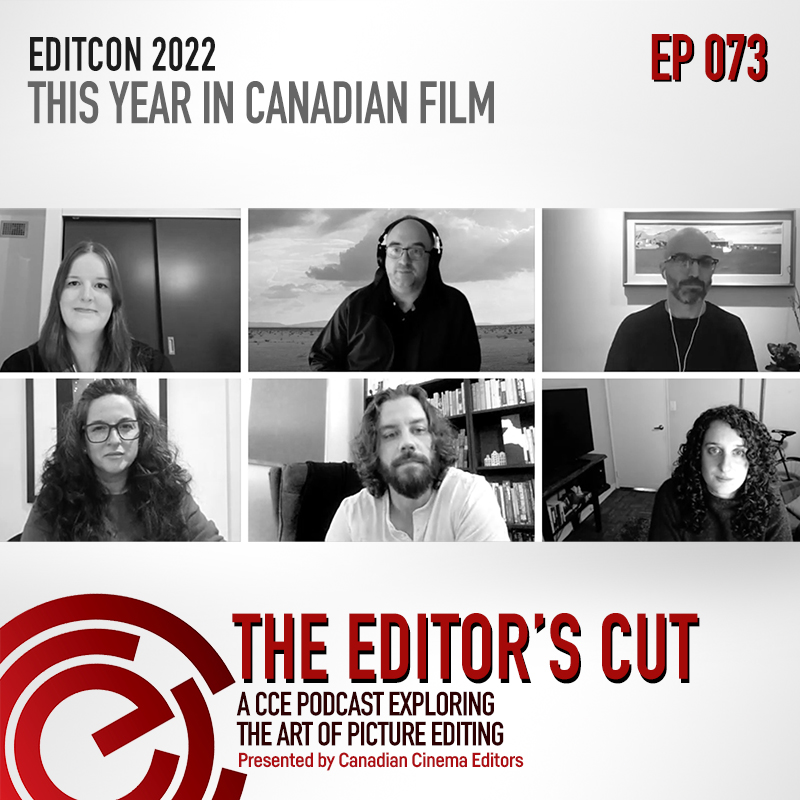











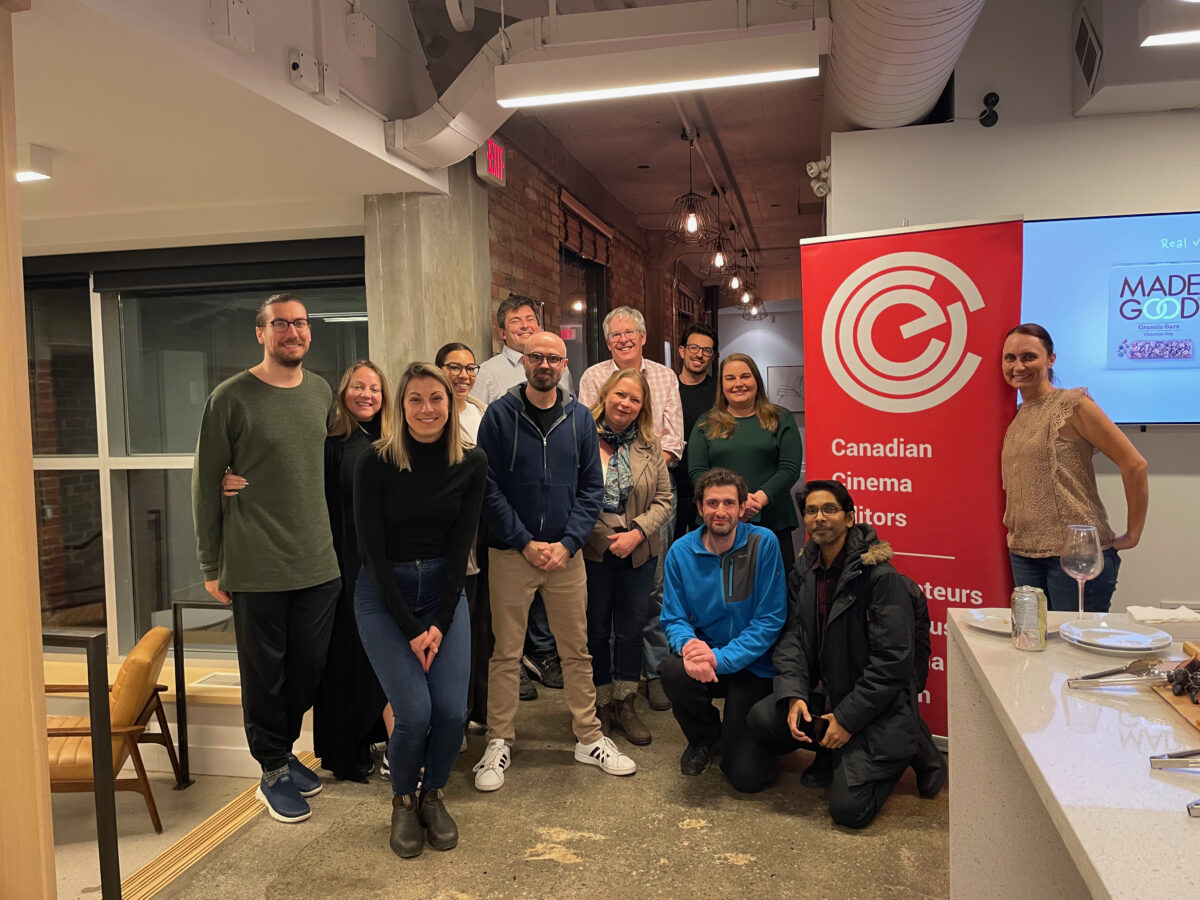
 Eric Whipp
 EN
EN  FR
FR