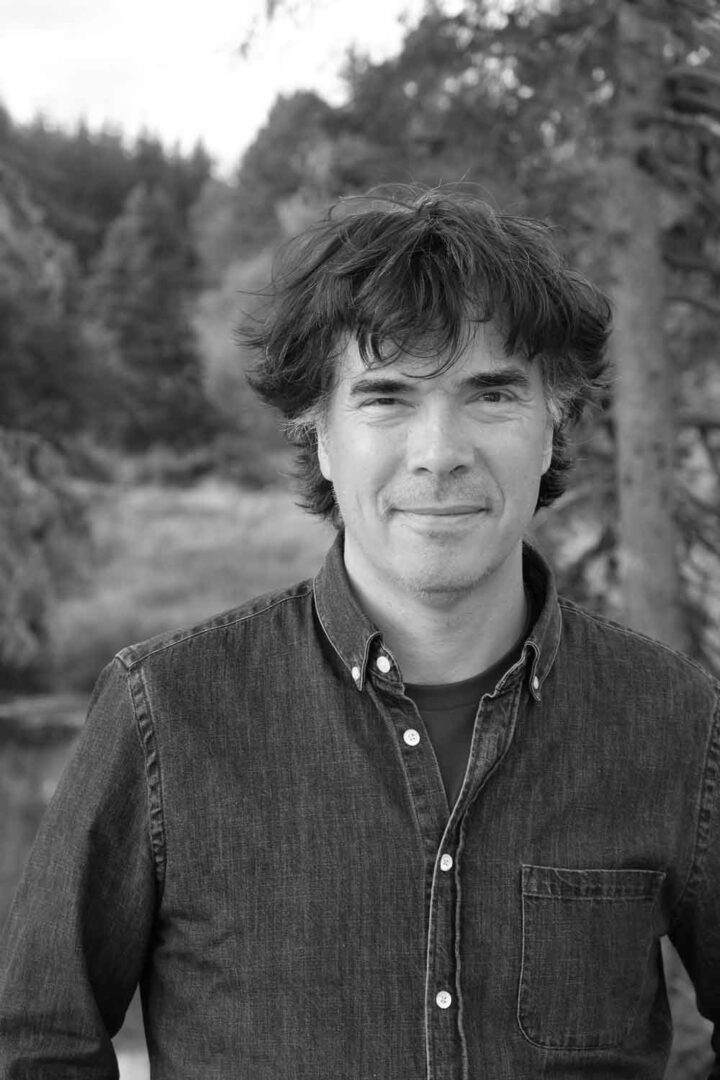

With the beautiful days coming, we are back with our podcast. Our first episode of the year is dedicated to Mathieu Bouchard-Malo. For over 20 years, Mathieu has navigated gracefully and elegantly between fiction and documentary. Myriam Poirier, CCE guides us through his journey, and his unique way of working in the editing room.
This episode is sponsored by MELS STUDIOS
Please send along any topics you would like us to cover or editors you would love to hear from:
A special thanks goes to
Hosted by
Main Title Sound Design by
Sound Recordist
Mixed and Mastered by
Original Music by
Sponsored by
Danny Palmer – MATT & BIRD BREAK LOOSE: Ep. 101 – HUMANS TOGETHER
Ed Fuller – PAW PATROL: THE MOVIE
Orion McCaw & Mat Garneau – CARMEN SANDIEGO: Ep. 408 – THE DARK CAPER
Max Szentveri, Greg Canning, Ryan Jobling & Leland Miller – THE SNOOPY SHOW: Ep 01 – HAPPINESS IS A DANCING DOG
Sponsored by/Commandité par: Picture Shop
Anouk Deschênes – WINTOPIA
Ben Lawrence – MY TREE
Omar Majeed – THIS STAINED DAWN
Robert Swartz, CCE – DISPATCHES FROM A FIELD HOSPITAL
Sponsored by/Commandité par: JAM Post
Anouk Deschênes – LE SPECTRE DES ONDES
Chase Ashbaugh – BROWN ENOUGH
James Blokland – BORN BAD
Rick Bartram – IF SO, DO SO
Sponsored by/Commandité par: Boris FX
Ben Kaplan – HISTORY OF THE SITCOM: Ep. 02 SEX & THE SITCOM
James Hebbard – IN THEIR OWN WORDS: Ep. 201 – POPE FRANCIS
Ian Daly & Bill Towgood – WHILE THE REST OF US DIE: Ep. 201 – THE GAME IS RIGGED
Peter Denes – DARK SIDE OF THE 90’S: Ep. 102 – THE VIPER ROOM: HOLLYWOOD’S SANCTUARY
Sponsored by/Commandité par: Rolling Picture Company
Arthur Tarnowski, ACE – DRUNKEN BIRDS (LES OISEAUX IVRES)
Christopher A. Smith – DRINKWATER
Shaun Rykiss – WILDHOOD
Sophie Leblond – SIN LA HABANA
Sponsored by/Commandité par: Blackmagic Design
Michael Tersigni, CCE – HOME TOWN TAKEOVER: FIRST HAMMER SWING
Peter Hordylan – CELEBRITY IOU: JOYRIDE, OCTAVIA SPENCER – THIS ONE IS FOR YOU, KEANU!
Swapna Mella – THE GREAT CANADIAN BAKING SHOW: CAKE WEEK
Wesley Finucan & Pat Fairbairn – GREAT CHOCOLATE SHOWDOWN: DO YOU HAVE WHAT IT BAKES?
Sponsored by/Commandité par: Annex Pro
Chris Mutton, CCE – HOLLY HOBBIE: Ep. 303 – THE POSING PERFORMER
Courtney Goldman – GHOSTWRITER: Ep. 13 – THE GHOSTWRITER PART 3
Jamie Alain, CCE – THE BARBARIAN AND THE TROLL: Ep. 111 – I WILL SURVIVE
Patrick Carroll – RISE AND SHINE, BENEDICT STONE
Sponsored by/Commandité par: IATSE Local 891
Dominique Champagne – BÊTE NOIRE: Ep 01 – ÉTAT DE CHOC
Louis-Philippe Rathé – WAY OVER ME (SORTEZ-MOI DE MOI): EP. 01 – I AM THE SOLUTION
Matthew Hannam, CCE – THE NORTH WATER: Ep. 02 – WE MEN ARE WRETCHED THINGS
Myriam Coulombe – WAY OVER ME (SORTEZ-MOI DE MOI): Ep 05 – LA VÉRITÉ
Sponsored by/Commandité par: Take 5 Productions
Alexander Maxim Seltzer – 10-33
Anna Catley – LITTLE BIRD
Guillaume Marin & Anouk Deschênes – AU PLAISIR LES ORDURES ! (SEE YOU GARBAGE!)
Rick Bartram – WISH
Yvann Thibaudeau – LES MONSTRES
Sponsored by/Commandité par: Formosa
Isabelle Malenfant, CCE – LES BEAUX MALAISES 2.0: Ep. 09 – FLORENCE A 18 ANS
Justin Lachance, CCE – M’ENTENDS-TU?: Ep. 30 – DRAME DISCO
Sam Thomson – SORT OF: Ep.101 – SORT OF GONE
Yvann Thibaudeau – LES MECS 2: Ep. 09
Sponsored by/Commandité par: Company 3
Ana Yavari – THE HANDMAID’S TALE: Ep. 407 – HOME
Christopher Donaldson, CCE – THE HANDMAID’S TALE: Ep. 409 – PROGRESS
Jamie Alain, CCE – SNOWPIERCER: Ep. 206 – MANY MILES FROM SNOWPIERCER
Myriam Coulombe – PORTRAIT ROBOT: Ep.10
Sponsored by/Commandité par: Vanguarde Artist Management
Mahi Rahgozar & Chris Mutton, CCE – THE COMMUNIST’S DAUGHTER: Ep 01 – OPIUM FOR THE MASSES
Richard Schwadel – THE NOW: Ep 102 – DON’T SHUSH YOUR MOTHER
Shelley Therrien – SOMETHING UNDONE: Ep. 101 – TWO MINUTES AND FORTY NINE SECONDS
Steven Patoine & Juan Mendoza – CHASING WINTER: Ep. 103 – I WANNA GO THERE AND DO WELL
Sponsored by/Commandité par: Canadian Cinema Editors / Les Monteurs et Monteuses de cinéma canadien
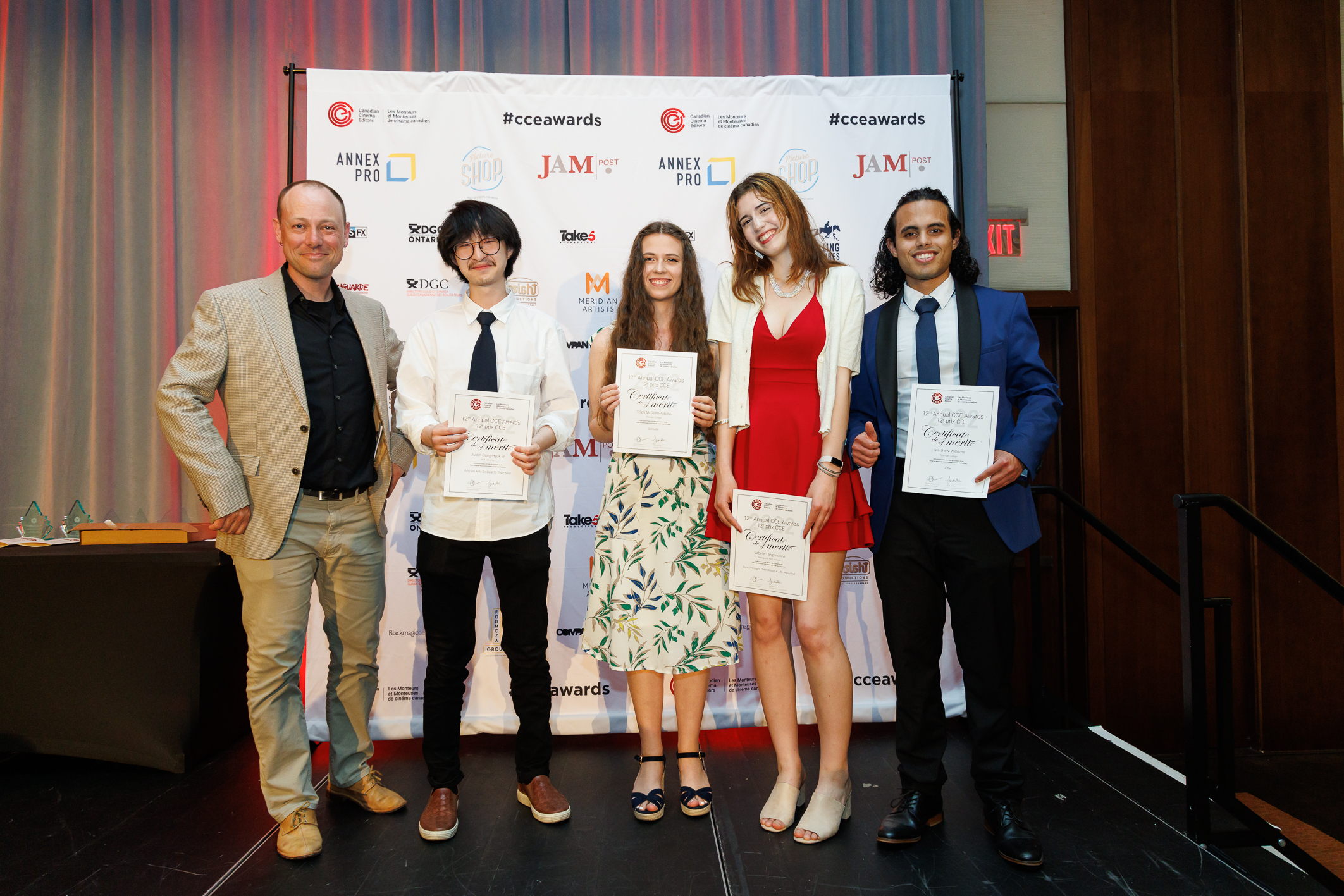
Winner(s)/Lauréat.e.s:
Izabelle Langendoen – RUNS THROUGH THEIR BLOOD: A LIFE IMPACTED (Weengushk Film Institute)
Jéremie Mazan – AUX TRAVERS (Université du Québec à Montréal)
Justin Dong-Hyuk Im – WHY DO ANTS GO BACK TO THEIR NEST (York University)
Matthew Williams – ALFIE (Sheridan College)
Teleri McGuire-Astolfo – SOLITUDE (Sheridan College)
Sponsored by/Commandité par: Insight Productions
Ron Sanders, CCE, ACE began his career as a feature film editor in Toronto in the mid-1970s. Since then he has worked with directors including Rex Bromfield, Mark Lester, Yves Simoneau, Robert Longo, Daniel Petrie Jr., Sturla Gunnarson, Norman Jewison, Stephen Silver, Henry Sellick, Nathan Morlando, Miranda de Pencier and Viggo Mortensen.
He collaborated with director David Cronenberg on a total of nineteen films, for which he received nine nominations for Genie Awards for Excellence in Film Editing and four awards for DEAD RINGERS (1989), CRASH (1996), EXISTENZ (2000) and EASTERN PROMISES (2007).
Ron also received seven Best Editor nominations from the Directors Guild of Canada and received five awards for A HISTORY OF VIOLENCE (2006), EASTERN PROMISES (2008), A DANGEROUS METHOD (2012), MEAN DREAMS (2016) and FALLING (2020), In 2010 he was nominated for an American Cinema Editors Award for his work on CORALINE.
Throughout his career Ron has actively supported emerging talent in the editing room and welcomed students and others interested in learning more about this aspect of the business.
Jean-Marc Vallée (1963-2021) was a Canadian filmmaker, film editor, and screenwriter. After studying film at the Université de Montréal, Vallée went on to make a number of critically acclaimed short films, including STÉRÉOTYPES, LES FLEURS MAGIQUES, and LES MOTS MAGIQUES.
His debut feature, BLACK LIST, was nominated for nine Genie Awards, including nods for Vallée’s direction and editing. His fourth feature film, C.R.A.Z.Y., received further critical acclaim. Vallée’s follow-up, THE YOUNG VICTORIA, garnered strong reviews and received three Academy Award nominations.
His sixth film, CAFÉ DE FLORE, was the most nominated film at the 32nd Genie Awards. Vallée’s next films, the American dramas DALLAS BUYERS CLUB and WILD continued this acclaim and the former earned him a nomination for the Academy Award for Best Film Editing and Best Picture.
Vallée ventured into television by executive producing and directing two projects BIG LITTLE LIES and SHARP OBJECTS. For the former, he won an Emmy for Outstanding Directing for a Limited Series, Movie, or Dramatic Special.
Vallée was a keen collaborator in the edit suite, with editing credits on many of his own projects, often under pseudonyms that played on his initials.
He fought for two main things on his projects. Firstly, he stipulated that he did not wish to work before 9am or after 6pm. Secondly, he always wanted a good music budget, as he believed that music was at the centre of good storytelling.




 Richard Crouse is the regular film critic for the 24 hour news sources CTV’s News Channel and CP24 and is a frequent guest on many national Canadian radio and television shows. His nationally syndicated Saturday afternoon radio show, THE RICHARD CROUSE SHOW, originates on News Talk 1010 in Toronto. He is also the author of ten books on pop culture history including Who Wrote the Book of Love, the best-selling “The 100 Best Movies You’ve Never Seen”, its sequel “The Son of the 100 Best Movies You’ve Never Seen”, the best selling “Raising Hell: Ken Russell and the Unmasking of The Devils” and “Elvis is King: Costello’s My Aim is True”. He also writes about pop culture and cars for The Toronto Star.
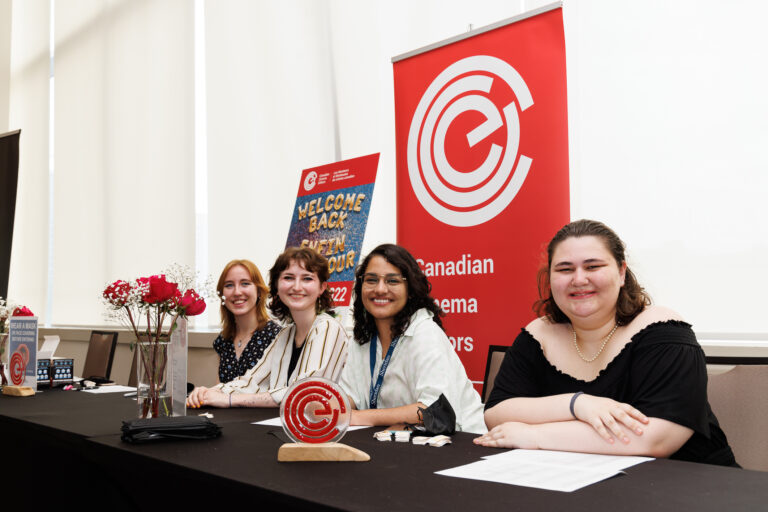











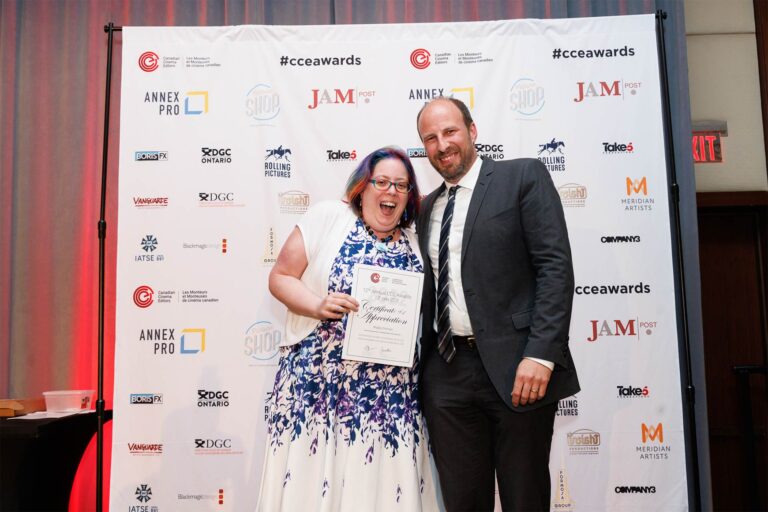
Awards Committee:
CCE Communications Committee:
CCE Operations Manager:
CCE Communications Coordinators:
CCE Website Design and Implementation:

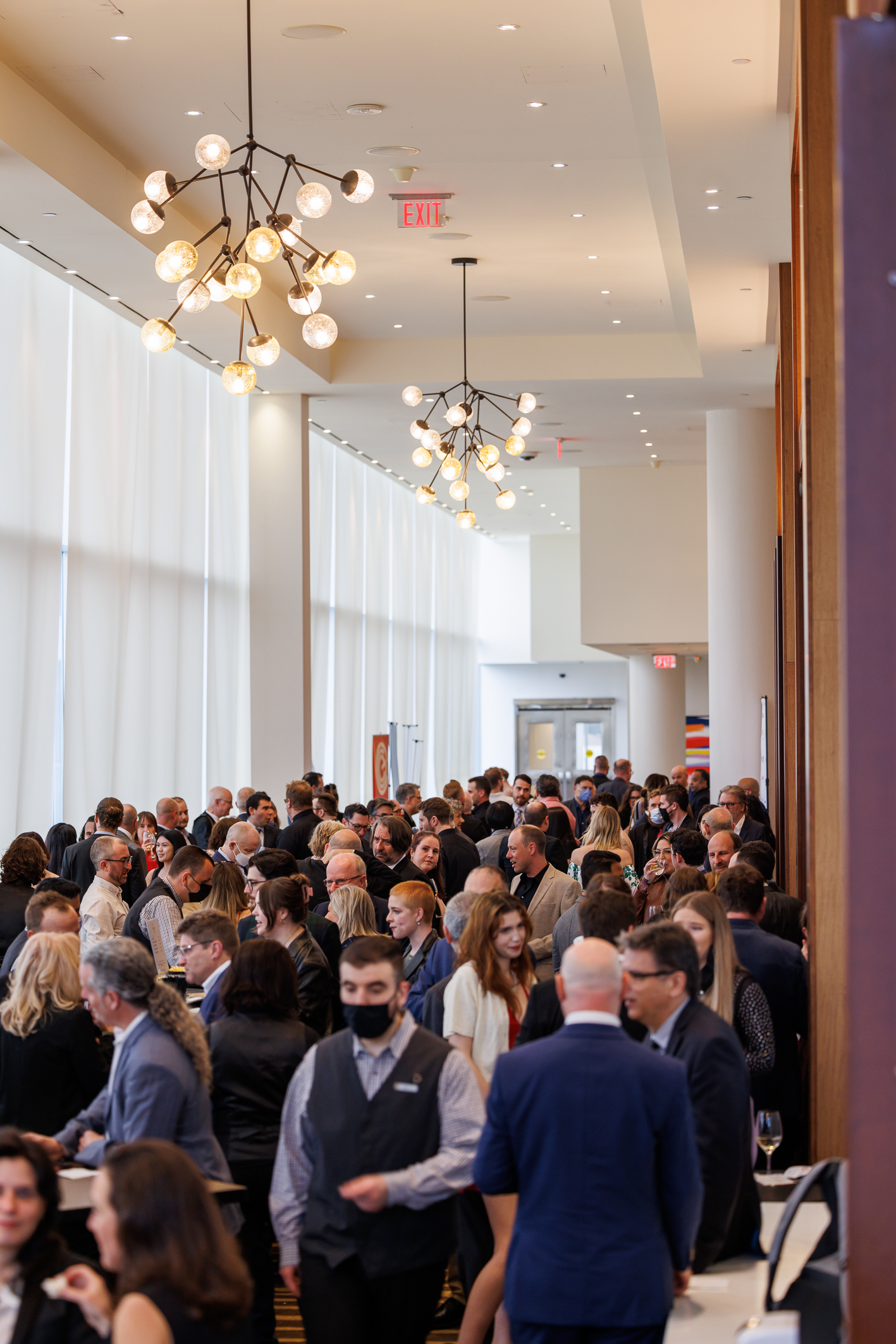
On May 14 and 15, members and non members gathered at locations all across Canada as we took a break from our screens and got outside!
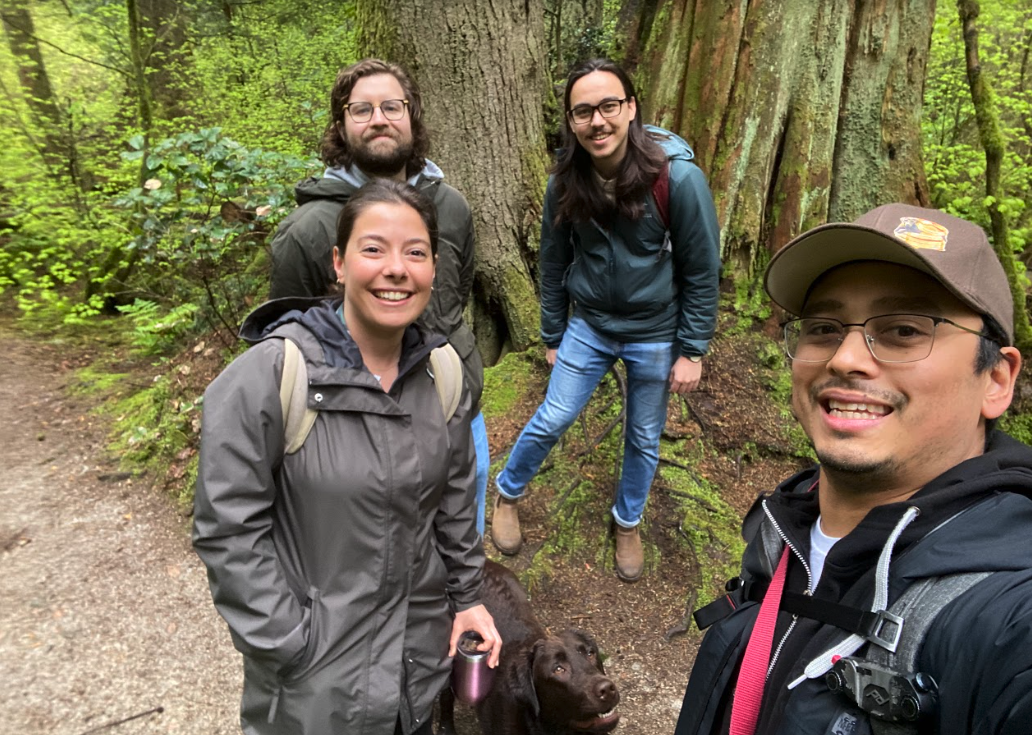
Vancouver participants met at Pacific Spirit Regional Park.

Edmonton participants met at Hawrelak Park.

Halifax participants met at Shubie Park.

Montreal participants met at Lachine Canal.
Toronto participants met at Brickworks.


Presented in English / Présenté en anglais
Whether you’re just starting out or have been working for years there are always questions when planning your career path. Join the CCE for a special mentorship-driven online event focused on early and mid-career development and planning. Mentee participants will cycle between four virtual breakout rooms hosted by some of the CCE’s best. Editor mentors will lead discussions and answer questions on a variety of career development topics. After the sessions are complete, join us for some virtual socializing.
Getting on top of your career aspirations is all about assessing potential opportunities. For many, taking assistant editing jobs is an integral stage in development; for others, diving straight into editing is the way to go. You might want to work with an agent, or go it on your own. Either way, you’ll need to network and interview successfully to advance your career. It’s a lot to navigate and we’re here to help. Learn about strategies for short and long-term planning and tips for selling yourself and your skillset to others.
Negotiating for yourself can be tough, especially when you’re eager to jump into a new project. Standard contracts rarely provide all the details and protections you need, and even with the help of an agent, it can be hard to know what to ask for. Union projects can provide certain benefits, but many types of work are not covered by this umbrella. We’ll talk rates, kit fees, schedules, edit suite setups, use of home offices, credits and more in this all- encompassing discussion.
We all know how difficult working remotely can be. Managing communication is often difficult, notes can be delayed, streaming cuts can be a pain, constant messages can be distracting and “real time” editing is hardly a replacement for having multiple minds in a room. And where do you turn when you’re stuck or need advice?
Rest assured everything is overcomable. We’ll discuss some of the tools and strategies to keep the collaborative spirit going while working remotely and hear about how to engage peers and mentors to help you along your journey.
There’s a lot more to being “in the chair” than just operating the software. The cutting room can be rife with emotion, internal politics, high stakes, and lots of stress. Despite tight deadlines and high expectations, the editor is often expected to sit calmly at the center of it all. Learn some tips and techniques for navigating collaboration and conflict in the edit suite.



Presented in English / Conférence en anglais
Join us on April 11th for an in-depth conversation with editor Shaun Rykiss and director Bretten Hannam as they discuss their approach to bringing one of this year’s most acclaimed films, WILDHOOD, to the big screen. This event will be moderated by Kimberlee McTaggart, CCE.
The following bios are only written in the presenting language.

Shaun Rykiss is an award-winning film and television editor based in Toronto, Canada. He is a graduate of Vancouver Film School and an alumnus of Norman Jewison’s Canadian Film Centre Editor’s Lab. Rykiss served as supervising editor for five television docuseries including YUKON HARVEST, which is nominated for the 2022 Canadian Screen Awards for Best Factual Series and Best Editing, Factual. He has since transitioned into scripted film and series. Rykiss’s work on the digital series, I AM SYD STONE, garnered him the 2021 Canadian Cinema Editors award for Best Editing in Web Based Series. His first two feature films, WILDHOOD (dir. Bretten Hannam) and LEARN TO SWIM (dir. Thyrone Tommy), both had their world premieres at the 2021 Toronto International Film Festival, and are collectively nominated for eight 2022 Canadian Screen Awards.

Bretten Hannam is a Two-Spirit L’nu filmmaker living in Kespukwitk, L’nuekati (Nova Scotia) where they were raised. Their films deal with themes of community, culture, and language with a focus on Two-Spirit and LGBTQ+ identity. They wrote and directed NORTH MOUNTAIN, a Two-Spirit thriller that won Best Original Score at the Atlantic Film Festival and the Screen Nova Scotia Award for Best Feature. They also wrote/directed the short film WILDFIRE which premiered at BFI Flare and went on to play at Frameline LGBT Film Festival, Vancouver International Film Festival, ImagineNative, and Inside Out LGBT Film Festival. Recently, they wrote and directed WILDHOOD, the feature version of the short WILDFIRE, which premiered at TIFF 2021.
Bretten is a Fellow of the Praxis Centre for Screenwriters, Outfest Screenwriting Lab, Whistler’s Indigenous Filmmaker Fellowship, and the CFC Screenwriter’s Lab.


The Canadian Cinema Editors (CCE) is pleased to announce that Ron Sanders, CCE, ACE and Jean-Marc Vallée (1963-2021) are recipients of the 2022 Lifetime Achievement Award and Career Achievement Award (respectively). The CCE will present these awards at the 12th Annual CCE Awards on May 26th, 2022 at the Delta Hotel in Toronto, our first in-person event since 2019.
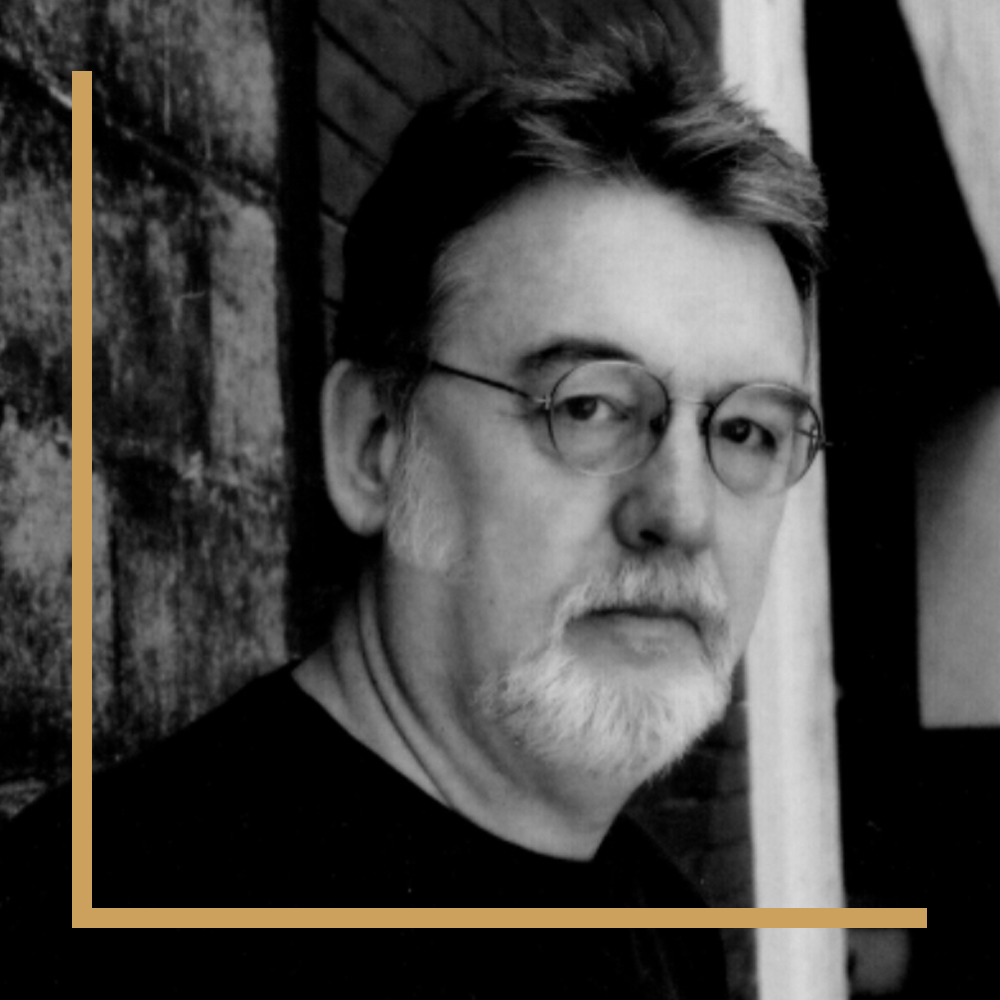
Ron Sanders, CCE, ACE began his career as a feature film editor in Toronto in the mid-1970s. Since then he has worked with directors including Rex Bromfield, Mark Lester, Yves Simoneau, Robert Longo, Daniel Petrie Jr., Sturla Gunnarson, Norman Jewison, Stephen Silver, Henry Sellick, Nathan Morlando, Miranda de Pencier and Viggo Mortensen.
He collaborated with director David Cronenberg on a total of nineteen films, for which he received nine nominations for Genie Awards for Excellence in Film Editing and four awards for DEAD RINGERS (1989), CRASH (1996), EXISTENZ (2000) and EASTERN PROMISES (2007).
Ron also received seven Best Editor nominations from the Directors Guild of Canada and received five awards for A HISTORY OF VIOLENCE (2006), EASTERN PROMISES (2008), A DANGEROUS METHOD (2012), MEAN DREAMS (2016) and FALLING (2020), In 2010 he was nominated for an American Cinema Editors Award for his work on CORALINE.
Throughout his career Ron has actively supported emerging talent in the editing room and welcomed students and others interested in learning more about this aspect of the business.

Jean-Marc Vallée (1963-2021) was a Canadian filmmaker, film editor, and screenwriter. After studying film at the Université de Montréal, Vallée went on to make a number of critically acclaimed short films, including STÉRÉOTYPES, LES FLEURS MAGIQUES, and LES MOTS MAGIQUES.
His debut feature, BLACK LIST, was nominated for nine Genie Awards, including nods for Vallée’s direction and editing. His fourth feature film, C.R.A.Z.Y., received further critical acclaim. Vallée’s follow-up, THE YOUNG VICTORIA, garnered strong reviews and received three Academy Award nominations.
His sixth film, CAFÉ DE FLORE, was the most nominated film at the 32nd Genie Awards. Vallée’s next films, the American dramas DALLAS BUYERS CLUB and WILD continued this acclaim and the former earned him a nomination for the Academy Award for Best Film Editing and Best Picture.
Vallée ventured into television by executive producing and directing two projects BIG LITTLE LIES and SHARP OBJECTS. For the former, he won an Emmy for Outstanding Directing for a Limited Series, Movie, or Dramatic Special.
Vallée was a keen collaborator in the edit suite, with editing credits on many of his own projects, often under pseudonyms that played on his initials.
He fought for two main things on his projects. Firstly, he stipulated that he did not wish to work before 9am or after 6pm. Secondly, he always wanted a good music budget, as he believed that music was at the centre of good storytelling.
Our full list of CCE Award nominees will be announced on April 18!
About the Lifetime Achievement Award
This recognition is presented to an editor who has elevated the craft of picture editing, has contributed to the editing community and demonstrated a passion for editing.
About the Career Achievement Award
This recognition is presented to a member of the broader film community who has shown great support for Canadian editors and the editorial profession over the course of their career.
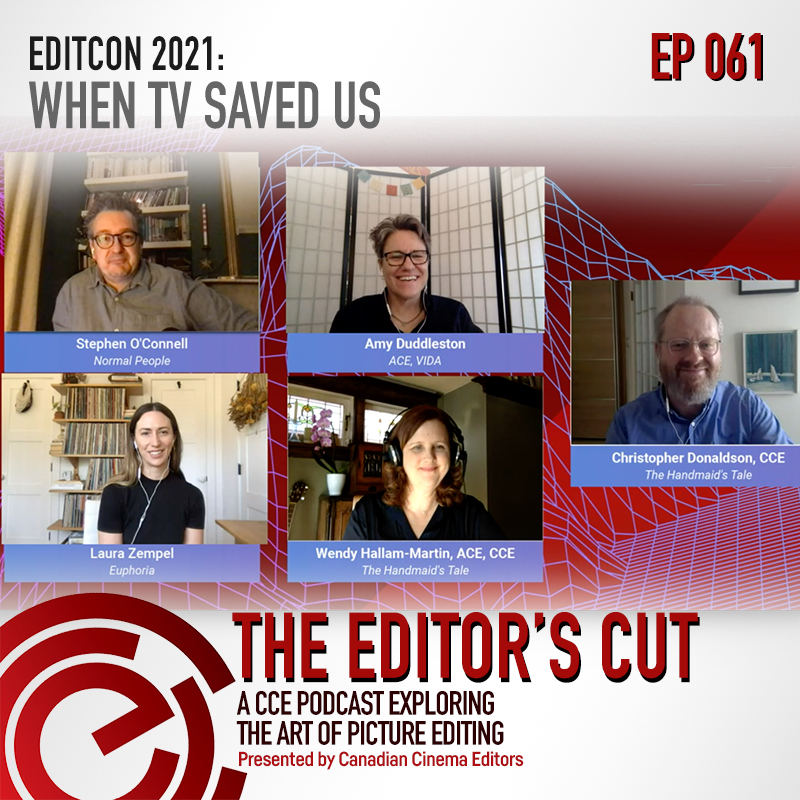
As the world settled into lockdown, TV entertainment went from distraction to lifeline. With audiences trying to make sense of world events, stories and characters matter more than ever. As the entertainment landscape shifts to meet an unprecedented need for engaging content delivered on-demand to an audience stuck at home, how will this change the stories we tell, and the way we tell them? The editors of some of the most binge-worthy shows reflect on how their work landed in this time and place, what the stories meant to audiences, and how that affected their process during a pandemic.
In today’s episode we hear from Amy E Duddleston, ACE, Wandy Hallam Martin ACE, CCE, Laura Zempel and Stephen O’Connell.
This panel was moderated by the wonderful Christopher Donaldson, CCE.
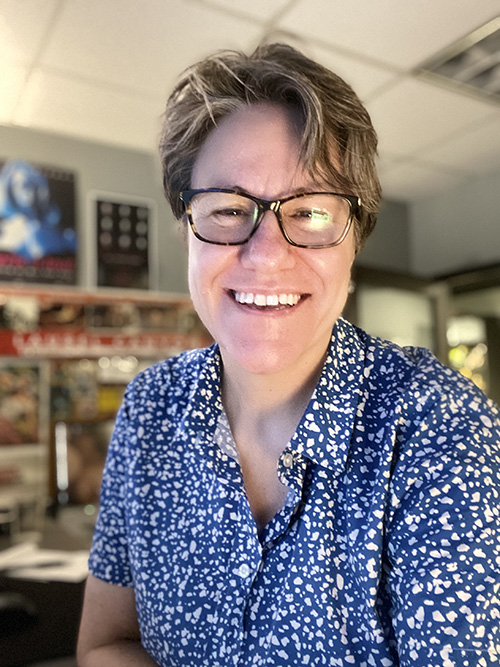
Amy E. Duddleston, ACE has over 30 years of experience in feature and television picture editing. Starting out as an Apprentice Editor, she made her way up to Assistant Editor, working on films like MY OWN PRIVATE IDAHO, CORRINA, CORRINA and TO DIE FOR. As an editor, she cut 20 features, including HIGH ART, LAUREL CANYON, ELEGY and Gus Van Sant’s remake of PSYCHO, as well as over 70 hours of television on series such as DEXTER, THE KILLING, VIDA and most recently, HUNTERS. She is currently editing the limited series MARE OF EASTTOWN, starring Kate Winslet, for HBO.
She has been a member of the Motion Picture Editors Guild since 1991, and currently serves on the Board of Directors. She is also a member of American Cinema Editors, AMPAS and the Television Academy.
Amy is a graduate of the University of Arizona with a BFA in Fine Arts Studies. She lives in Los Angeles with her wife Hilary and daughter Lucy.

Multiple award winner editor Wendy Hallam Martin, is best known for her work on the Emmy and Golden Globe winning series, THE HANDMAID’S TALE. Wendy has received two Emmy nominations and won her first Emmy for the second season premier entitled “June”. She also won an ACE/Eddie award for the pilot, “Offred”. Her other work includes the critically acclaimed cable series AMERICAN GODS, MGM’s spy thriller CONDOR which she edited and co-produced, Showtime’s THE TUDORS, THE BORGIAS and QUEER AS FOLK to name a few. Wendy resides in Toronto, Canada with her husband and two children.
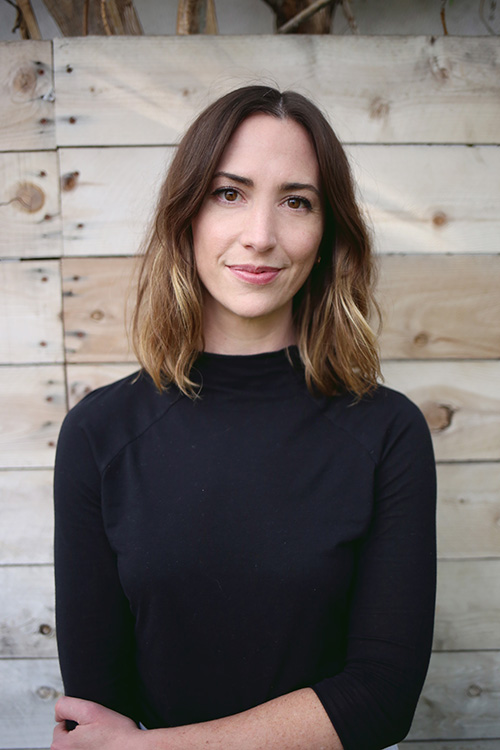
Laura Zempel grew up in Sacramento, CA and received a BFA in Film Production from Chapman University. She began her career in Film and TV as an assistant editor on DEXTER and has gone on to edit HBO’s ROOM 104 Room, EUPHORIA and most recently AMC’s DISPATCHES FROM ELSEWHERE.

Born in Dublin, Ireland, Stephen has been editing drama & documentary across Europe for 25 years. His work spans time with U2 on music promos and documentaries in the 1990’s to television dramas for BBC, RAI, Amazon, Netflix, Starz, CBC, HULU, SKY amongst others. Projects include THE NAME OF THE ROSE, HOWARD’S END and NORMAL PEOPLE, to feature films VIVA, THE MAN WHO INVENTED CHRISTMAS and MAUDIE for which he won the CSA award for best editing in 2018.
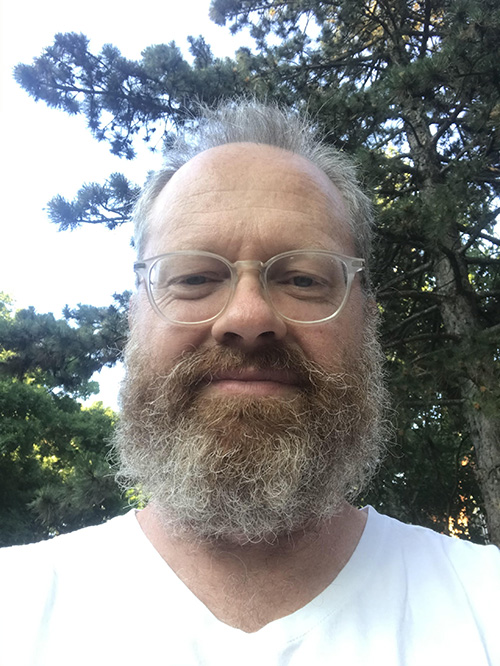
Christopher Donaldson’s work as an editor spans an extensive variety of dramatic and documentary features and television. His credits include THE HANDMAID’s TALE for Hulu, AMERICAN GODS for Starz, PENNY DREADFUL for Showtime/SkyAtlantic, Atom Egoyan’s REMEMBER, Sarah Polley’s TAKE THIS WALTZ, THE KIDS IN THE HALL: DEATH COMES TO TOWN for CBC, and SLINGS & ARROWS for TMN/Showcase/Sundance Channel.
This episode was generously sponsored by Adobe
The Editor’s Cut – Episode 061 – “EditCon 2021: When TV Saved Us”
Sarah Taylor:
This episode was generously sponsored by Adobe
Stephen O’Connell:
We’re creative beings. And we tend to be very conservative and timid about our place in the world, but we have needs, and I think our basic needs, and the reason we choose these jobs, I think is that we have this need to output. To feed the endorphins and to feed yourself, your soul. And that’s just how we’re built. It’s our DNA. And I think when somebody pulls the plug, we really feel it.
Sarah Taylor:
Hello and welcome to the Editors Cut. I’m your host, Sarah Taylor. We would like to point out that the lands on which we have created this podcast and that many of you may be listening to us from are part of ancestral territory. It is important for all of us to deeply acknowledge that we are on ancestral territory. That is long served as a place where indigenous peoples have lived, met and interacted. We honor, respect, and recognize these nations that have never relinquished their rights or sovereign authority over the lands and waters on which we stand today.
We encourage you to reflect on the history of the land, the rich culture, the many contributions and the concerns that impact indigenous individuals and communities. Land acknowledgements are the start to a deeper action.
Today’s episode is part three of a six part series covering EditCon 2021 that took place virtually in February 2021.
When TV saved us. The shift to home viewing as the world settled into lockdown, TV entertainment went from distraction to lifeline. With audiences trying to make sense of world events, stories, and characters mattered more than ever. As the entertainment landscape shifts to meet an unprecedented need for engaging content delivered on demand to audience stuck at home. How will this change the stories we tell and the way we tell them?
The editors of some of the most binge-worthy shows reflect on how their work landed in this time and place. And what the stories meant to audiences and how that affected their process during a pandemic.
In today’s episode, we hear from Amy E. Duddleston, ACE. Editor of Mare of Easttown, The Killing and Vita. Wendy Hallam Martin, ACE, CCE. Editor of the Handmaid’s Tale, American Gods and Queer as Folk. Laura Zempel, editor of Room 104, Euphoria and Dispatches from Elsewhere. And Stephen O’Connell, editor of The Name of the Rose, Howards End and Normal People. This panel was moderated by the wonderful Christopher Donaldson, CCE. Known for his work on the Handmaid’s Tale, American Gods and Penny Dreadful.
Speaker 3:
And action.
Sarah Taylor:
This is the Editors Cut.
Speaker 4:
A CCE podcast.
Sarah Taylor:
Exploring, exploring, explore the art-
Speaker 4:
Of picture editing.
Christopher Donaldson:
Great to have you all here. Thank you so much for joining us today and all the other editing types here at EditCon. This is an interesting topic for me in so far as, I kind of feel over the past year, I’ve not only have I gained a great insight into what I want to watch, but also how I want to work and how I’d like to work. I guess my first question for everybody is how would you say that TV saved you over the course of the pandemic? And how about we go and reverse alphabetical order here, Laura?
Laura Zempel:
Well, for me, I think TV gave me something to look forward to when I didn’t have much to look forward to when I was stuck at home and the days all bled together. Having TV and entertainment gave me something… like brought inspiration into my life when I haven’t had much. It saved me I think in that way where it was something to look forward to and then since I wasn’t working much, I kind of used it as an opportunity to observe and probably think more critically and like, “Oh, I’d like to work on that.” Or like, “Wow, that’s amazing how they did that.” And so I used it as a tool to keep my muscles fresh. So when I went back to work, I didn’t feel like I lost too much time.
Christopher Donaldson:
I agree. I think the perspective was one of the main things for me. You know, Certainly, I have three kids and I felt as long as the wifi holds, I think we’re going to be able to survive this. But then, it became something much more on some level, rich. Now going in reverse again, alphabetical order, Steven, how did TV save you during this pandemic?
Stephen O’Connell:
Well, I think it made me watch more things that kids watch. I was forced to witness what was keeping them going. I don’t want to say that it saved me or it did anything bigger than it normally does. I think from an industry point of view, it maybe made me value what was being made more. So, it made me focus on the lengths that we go to, to actually produce material and to be a little bit more discerning because I think we all binged and we didn’t feel very good after it. So, I think it maybe helped me hone my taste a little bit down to what was important at that particular time.
Christopher Donaldson:
You know, certainly, in my house, we watched, finally all five seasons of Breaking Bad, excuse me, Better Call Saul. We finished The Wire. It was that moment where you’re like, “It’s impossible.” We’ll never catch up to all this TV. All of a sudden we had that. And I had the opportunity to finally see the shows I’ve been waiting to see but for lack of time. Amy, how about you? How did TV save you?
Amy E. Duddleston:
TV kept me employed 50 weeks out of 2020. Let’s just say it saved me that way. I was lucky to be on a show. When we had to shut down, we moved to working from home and through this weird circumstance, it’s a limited series on HBO and I became the editor of all of the episodes. So they made me… they let one of the editors go and made me recut the entire series of what we had.
So, I was employed the entire time during their hiatus, which was March, April, May, June, July, August. And then they started shooting again in September. We’re getting ready to air the series soon so that way, it saved me, like literally. But also binging shows like you said, it was like, “Oh, I can finally… there’s finally time to watch seven seasons of Buffy, The Vampire Slayer with my daughter.” It was time to do that. So, that’s what happened. That was the show that we watched together a hundred and some episodes of… that was a great experience.
Christopher Donaldson:
Beyond now just wanting to watch shows that take place in diners and really pedestrian things. I don’t need to go to outer space. Literally, watching people eat breakfast in a diner just is incredible. And I think that reconnection to what we’ll call ordinary life, I think has probably been for me anyway, the treasure of this. Like Stephen, I spent a lot of time watching with my kids and Amy too. And we’re able to connect in a way and take a breath from work, which was extraordinary. With all this, how did it affect what you thought of your work? That’s what I’d be curious to think of. How did it change the way you thought about your work?
Laura Zempel:
I think, for me, it’s really funny. I tend to get really consumed by my work and I get really stressed and anxious about it and it feels like very big and heavy. And I think, for me, in the pandemic, when everything outside of my work is so big and heavy, it made me actually think of my work as more fun, like, “Oh my gosh, I get to make entertainment that makes people feel good. How lucky am I?” And I just could not wait to go back to work.
Unlike Amy, our show was supposed to come back. It was supposed to be first day of production when LA shut down so we didn’t even get season two. And then, because of the delayed pandemic, it was like, “Oh, six to eight weeks. Okay, September. Okay, January and now, it’s just been pushing.”
So, thinking about work actually made me really happy and I’m hoping I can keep this perspective as I go forward because it’s been a really nice shift to actually enjoy all of it and think of it as fun rather than something that is causing me stress.
Christopher Donaldson:
Wendy, would you concur with that idea?
Wendy Hallam Martin:
Yeah, I think during the pandemic, I have not really watched a ton of television since, especially since we’ve been back at work. And when I did, I started off binging on the drama, but I then switched over into the news and documentary world a little bit. So, that kept me away from doing too much binging.
Christopher Donaldson:
Did the break from work, give you a different perspective on our work in general? Like our career and how we do our work and so on and so forth?
Wendy Hallam Martin:
Yeah. I missed it so much. I thought at first, it’d be like, “Oh, super cool. We’ll get a bit of a break and get some family time and that was all fantastic.” But I really missed the creative outlet. I mean, I started painting again and listening to a lot of music and that kind of thing but, yeah. No, we’re very lucky to be able to do what we do. I’m so happy to get back.
Christopher Donaldson:
Amy, what’s your thoughts on that?
Amy E. Duddleston:
On what we do? Just going on Twitter and seeing all the people that are watching television shows, I felt like really good about what I do for a living. Like, “Oh my God. Everybody’s watched all 10 episodes of Hunters and I’m getting emails.” And that was really fun. And just people discovering shows that I worked on a million years ago, that was really cool because, “Wow, everybody’s watching television and now I work in this industry.” That like, “Wow. I’m so…” That made me feel great. What I do actually contributes to somebody’s sanity. I’m happy to do that even if it made me insane at one point.
Providing that entertainment, because I was working during the worst part when we were all shut down, I was so grateful to have a job. I will never not be grateful for the fact that I was working. That will stay with me for a bajillion- like my life. It just will. I’m so lucky to do what I do. And I was so lucky that I was working nonstop.
I worked from home. We had internet issues at our house because my daughter was homeschooling so I had to go into the office where I was the only person there. To use the internet, to talk to the director. It was crazy but we started keeping these really nice hours where I was literally like, “You’re working from nine to five or ten to five.” And you’re like, “This is great. Why can’t it be like this all the time?”
And even when we moved permanently to our house, it was still like the director wants to stop at five. Even if we’re working on [inaudible 00:11:36] together or six o’clock, it’s still like a nice day. Because it’s really intense working on the computer, but I’m just grateful.
Christopher Donaldson:
I completely concur. I mean, I think we can all relate to being tied to the production heart attack schedule. The idea of we’re shooting, we need to know, we need to do this right away and that is addictive. And yet, also, as Laura said, I think consuming. Just having the space to breathe and Wendy and I were very fortunate to live in Canada, where there was a social safety net and, you know, various things kicked in and we didn’t necessarily have to worry about not being able to feed our family. And so that gave me a breath that enabled me to, in a sense, find its place within my life. The person that is the editor, that is the artist. Stephen, how did this pause give you a different sense of perspective?
Stephen O’Connell:
Yeah. It’s interesting that we all have very different experiences of it. And I think it’s really great, really valuable to talk about it because I don’t quite know my take is that we’re in the middle of this tornado and we won’t really get perspective until we’re out of it. But I think, we finished mixing Normal People in March. The last two episodes were done in isolation. And there was a build up to that in going out in- at the end of April.
So the timing was interesting but it wasn’t financially very prudent for me because the nothing was happening. Nothing was going on, obviously. So unlike Amy, I was cut loose and nothing to do. I did a few commercials over the summer that just about put bread on the table.
When it came to doing the next job, which is what gave me a bit of perspective. I started on a job for Amazon over here in Dublin. I think in the beginning of November. And the day before… Well, I guess, the morning I went in for the first day of dailies and making coffee and bringing up a jug and putting it in on the table and sitting down and watching synced rushes has to be one of the best moments of my life. I just felt so giddy and grateful. There was relief. There was love. There was just gratitude for being part of the 1% on the planet and a huge amount of perspective.
We’re creative beings and we tend to be very conservative and timid about our place in the world, but we have needs. And I think our basic need, and the reason we choose these jobs, I think, from reading other stories about what we do and the greats have gone before us, and is that we have this need to output whether you’re a painter or a sculptor, or you’re making film, you’re a cinematographer or anything in the arts.
If you work in theater, you need to be producing to feed the endorphins and to feed yourself, your soul. And that’s just how we’re built. It’s our DNA. And I think when somebody pulls the plug, we really feel it. Me, personally? I get really down. I mean, I get anxious unless there’s something for definite coming up. It’s really interesting for all of us, I think. And not just in our little business, but perspective is really, really interesting, but it’s given me personally, anyway.
Christopher Donaldson:
Yeah. And as you say something that will just continue to grow over time as we actually digest what is still happening to us and how it changes us and what we do. Where are people working from? It sounds like most people are working in studio. Is that if we start with Wendy? Well, Wendy, I know you’re working in an editing room right now.
Wendy Hallam Martin:
Yes. I’m going in.
Christopher Donaldson:
And how about you, Amy? And-
Amy E. Duddleston:
I’m working from home. I’ve been working from home since October. They’ve closed our office, finally. So, it’s been interesting.
Christopher Donaldson:
And Laura?
Laura Zempel:
I’m working in an office right now. It’s a small office and it’s just me, and my assistant, and our director comes in and we’re in together. We wear masks the whole day. So…
Christopher Donaldson:
And Stephen, are you in studio?
Stephen O’Connell:
Well, I’m at home now, but I’m in a post facility in the middle of Dublin. The entire company has gone remote. They do a lot of VFX work and it’s a very old Georgian building. Not very space efficient in terms of what we do, but I’ve got one floor to myself and my assistant is upstairs and as the exit was happening, we just snuck in and we happened to have that.
We have the building to ourself. I’m working with Amazon at the moment. We get the director coming in, occasionally, so we’re tested twice a week. So there’s a bit of security there. So, yeah, we’re going against the flow. I can work and I did do a couple of weeks on this job on the 14th or 15th week at this now.
I craved the commute on my bike and I craved meeting any stranger will do, you know, just somebody. The routine of a coffee shop and masks and all. And with the assistant, I mean, I was really keen to give her a positive experience as well. As much as we could within being safe and all that. So, yeah. If it gets any worse, we’ll certainly button down the hatches and we have all the tech in the world now to make it easy.
Christopher Donaldson:
Wendy and I are both working on the Handmaid’s Tale right now and they gave us the option to where I’m working at home with a system that is streaming my Avid over the internet. So I don’t have the media, I’m just streaming. I have a computer set in my basement and it actually, I was like, “That is never going to work.” It actually works.
Amy E. Duddleston:
It works pretty great.
Christopher Donaldson:
And yeah. And the amazing thing is- and this is the perspective that came from me is that I get to have dinner with my family. I have three kids. The oldest is… they’re still fairly young and that’s just not something I was able to even consider for most of their lives.
Amy E. Duddleston:
I get hugs at lunch time.
Christopher Donaldson:
Yeah. Oh, my God. My son makes hot dogs. I’ve eaten more hot dogs in the last month. You actually can get sick eating hot dogs. I didn’t think it was possible. But that thing, of also, part of working and collaborating with Wendy is seeing her and hanging out with her and showing scenes to one another and not having that is strange. I mean, Wendy, right now, what’s it like? There’s not a lot of people around is there? Around the editing room?
Wendy Hallam Martin:
No, there’s me and Max, our assistant. The two other assistants work from home and our PA, poor Jesse who sits in the main room by himself. And we have our own offices that close. And like you, Stephen we’re being tested and we’re completely separate from everybody. And we wear double masks when we’re out in public spaces. So it’s really safe. I don’t feel in any danger at all. However, like you, Stephen, I need that social interaction. So, I enjoy getting in my car and doing the commute and seeing people.
Christopher Donaldson:
Yeah. And just going for walks and it’s hard when you’re working at home. I don’t know Amy, if you’re doing this. It’s hard to shut off. It’s like, “Just go. I’ll finish that later. I’ll go.” And that sort of thing.
Amy E. Duddleston:
It’s like the music editor texted me and like, “Oh, well. Let’s just have a spotting session.” It’s like, “Oh, I have 45 minutes.” It’s seven o’clock… seven something. And it’s like, oh my God, I should have said no but it’s right there.
Stephen O’Connell:
We have two editors in New York and three assistants over there working on the same project and a post producer and a supervisor and various assistants. So they’re obviously five hours behind us. So our day already is quite a long day because we were available. We talk up until midnight. So for me, it’s very important to have the end of some of that day. So, at 7:00 PM, I leave the building in town and I come home and it becomes a different part of the day becomes that other bit, the American end where it’s mostly emailing and some FaceTimes and whatever. So if it was an entire… if it was a 16, 18 hour day in one location that wouldn’t be- it would draining.
Christopher Donaldson:
Laura, quickly, I’ll ask you this. Just this idea that’s Stephen brought up of there’s editors in New York and there’s editors in Dublin, do you think that this sort of flexibility in terms of production is something that producers now because of the pandemic have realized, “Oh, maybe actually we all don’t need to be in one place. Maybe actually, we can hire an editor in Dublin or Los Angeles and have them work on the same project at the same time.” I mean, have you heard of any other examples like that or what are your thoughts on that?
Laura Zempel:
I think it’s very exciting that we could be able to do that because I think that just opens up the world for all of us and we can now work with whoever we want to work with or whoever wants to work with us. And I remember when the pandemic first started, I thought there’s no way they’re going to let us work from home. Well, security issues, all of those things and to see it working as well as it’s working, it’s really exciting. I’m curious more so to see if studios are open to work from home or if this will continue to be an option once it’s safe to go back to work or if we’ll still be expected to be in the office. Because I think people with families, it’s nice to have that flexibility. And so, I’m actually really excited to see if my hope, which is maybe a little optimistic, is that a more productive work-life balance could be a positive results of all of this.
Amy E. Duddleston:
That’s my hope too.
Christopher Donaldson:
I’ve never seen it quite so possible as I do now. Wow.
Amy E. Duddleston:
Well my assistant is in Chicago. We’re just all on video cast all day long.
Stephen O’Connell:
We’re talking about whether it’s going to go back which way it’s going to go. And maybe it will be a bit of both. There was a really interesting discussion at EditCon earlier on about all this as well. But, I think, maybe it’s up to us. Maybe there’s a chance now rather than sit back and go, “Oh, it went back.” Do you remember it went back to the way it was? Or this maybe we have an opportunity to get into that gap and go, “No, we’re calling the shots now.” I know traditionally, our craft has been a long day, long weeks, relentless self-sacrifice.
And now, maybe we have the chance to go, “Well, there is another way.” That is just as productive. Can we bring… can we move forward with the developments in science, and medicine, and self care, and creativity and understand that no, we can actually deliver episodes and movies and do that in a civilized timeframe.
We seem to have gone on for the last… certainly, as long as I’ve been working, it’s a given that you’re going to throw away… You’re going to be working 20 hour days or 18 hour days. And if you’re not, you’re not going to cut it.
Christopher Donaldson:
I think that’s a great hope for the future. And certainly, the one that I have that this is going to reframe how it is we do and the importance of how we do it. Now, this has been great, but I also wonder if maybe people are hungering for a little shop talk and so on and so forth.
So, we’re coming to the clip section of our panel. We’re going to start with a clip from Euphoria, episode 103, you know Euphoria is really special. Stephen was talking about all this binging and people binging. It is not a show I can binge, it’s a show I need to watch it and then be like, “See you next week.” So if wouldn’t mind, if you could set up the clip we’re going to watch.
Laura Zempel:
Sure. So this is the end of episode 103. Rue is a drug addict and she’s having a hard time staying sober. She’s having feelings for her best friend, Jules, and the scene before this, she’s just kissed Jules and Jules gave her shocked reaction and she rushed out of the room and she’s going over to her drug dealer’s door. And this is Fesco, who’s kind of like a big brother to her even though he’s her drug dealer. But anyway, so that’s where this scene comes in the episode.
Christopher Donaldson:
What I’m so excited to talk about is that I think for somebody who says isn’t necessarily familiar with what we do or is… that’s a scene, that beautiful and simple is can be so incredibly challenging in a ways that people look at action films and go, “Well, that’s editing.” Whereas aren’t like, “No, that’s editing.” And you spoke a bit about the collaborative nature of how you work on Euphoria. So, first of all, I’d love to know why you wanted to talk about this clip. Why this scene was important to you?
Laura Zempel:
I think this scene is, well, for me, it was the hardest, hardest scene that I cut, which is interesting. And it’s for that same reason, people watch Euphoria, the camera’s always spinning and there’s push-ins and wet pans. And it’s like, “Well, that’s all done in camera. And that’s the easy stuff to cut.” The ruse emotional journey is the hardest thing to cut. And the show really… addiction is a big part of the show. And this scene specifically, it’s a pretty big moment for her in the arc of her character in the show. And everyone knew that this scene was- we had to get it right. And this scene was the only scene that they shot that day, which it’s two and a half minutes of the episode, but they spent a full day shooting it.
And so, it does seem deceptively simple, but actually it was one of the hardest and most important scenes in that episode and maybe in the series. I also know that this is the episode they submitted for Zendaya’s Emmy episode and she won. And I really think it’s because we all worked so hard on this episode and that scene maybe, specifically.
And the thing that I like about this scene so much is I have to give credit to the structure of how editorial worked. So, on Euphoria, we have Julio Perez, who’s our supervising editor. And so, the way it works or with this scene, specifically, 103 was my episode. And I got all the dailies. I had over two and a half hours of dailies. I had 10 takes that were over, what I wrote it down. I had nine takes that were over 10 minutes. I had had one take that was 23 minutes.
So, I went through all the footage, pulled selects, pulled selects, pulled super selects, put super selects on different levels with different locators and then started to build the scene. Showed my first cut to Julio and this is how it would work. So I would, especially big scenes, if he’s like, “Hey, how’s that door scene? How’s that coming?” I would do my first pass. And then when I felt like I was ready to show it to him, I’d have him come in and watch it.
And I made him cry with my first cut. So I was like, “All right, we’re onto something.” And then from there, we would work on it together. And he was like a sit-in director because Sam Levinson, our showrunner, directed a lot of the episodes, wrote all of the episodes so getting him in the room is really hard. So Julio is almost like a Sam proxy.
And so, Julio and I worked on it for a while. We got it to a place where we showed it to Sam. Sam watched it, gave notes. It’s a hard scene because there’s so much footage and they’re so good that getting it down to time was actually really challenging. So Julio, I think at a certain point, then I was onto my next episode and Julio had some free time. So he worked on it, he cut it down a little bit more, but he was very precious and in love with it as I was. And then, once it got closer to lock, and we had to get down to time, Harry Yoon, our third editor, he came in my room and he was like, “Hey Sam wants to see if I can cut down the door scene, do you mind?” And I was like, “No, be my guest. I’d love to see what you do with it.”
So all three of us touched this scene and I think, it’s part of the reason I feel like we all contributed to it and it’s a perfect example of all of us bringing ourselves to it. And I know some people are not thrilled about the idea of the supervising editor or maybe it’s a deterrent for people to take those jobs. But I mean, for me, I really enjoyed it. I love working in a collaborative editorial environment where we were all able to set our egos aside and work on making the best scenes and episodes that we could. And I think that’s why this scene is so special to me. And I think hopefully, why it’s so good. Well, in my opinion, it’s so good.
Christopher Donaldson:
No, it’s great. And even watching it, you can tell, “Oh, I betcha. There’s tons of footage here.” I bet you, they just ran the camera and let the actors emote. And what I find when I’m managing that thing and that I find difficult is how very quickly it feels like less than as I make selects, selects, selects, selects, it starts to feel less and less and less and less. To the point that when I put it together, I look at it and I go, “Well, this wasn’t… I’ve somehow lost some magic here.” How did you navigate that sense of, “Okay. You remember the full, the select selects real?” How does it still feel organic and real to you as you… Did you have any tricks in terms of how you managed that process?
Laura Zempel:
Saving old versions and it’s funny because I sometimes… one thing I learned from Julio is I tend to get like, “Oh, it’s too long. I’ve got to cut it short.” And he’s like, “No. Make it good.” And then worry about making it short, get all the best bits in. And so, keeping- saving like older versions as I go along is really helpful because then I can go back or see if I’m missing anything. Having my selects sequence saved. And I go back to that a lot just to see if there’s anything else.
But I think with that, anytime in there, anytime we could hold on a performance, we did to hopefully make it feel more real and organic. And I mean, I know you edit… Euphoria is a very crazy show, but it’s the editing is actually fairly restrained most of the time and we do that on purpose to help the emotional scenes like that land, where you don’t feel like you’re being manipulated. Where it actually feels real and you have to sit in it.
And we found moments. It’s funny. Fez had a lot more lines. He had written dialogue and he’s terrific. He’s a great actor but watching him listen to Rue, actually, felt more painful to just have him sit there and experience it. So sometimes it’s about losing dialogue and just living in these moments or watching someone experience something. And so finding moments that we could hold on Fez and moments that we could hold on Rue to just make it feel more authentic and less manipulated.
Christopher Donaldson:
And I just love that idea of the egoless collaborative environment. I think, in the beginning of my career, I did more features and then eventually was considered employable in television. And one of the things I loved about working in television is that collaboration is that… with Wendy is an incredible collaborator and I’m constantly going like, “Okay, is this as bad as I think it is?” And she says, “No, it’s not that bad, especially if you do this or that and so on and so forth.”
So I think, in the Big Little Lies team, talk a lot about that. Jean-Marc Vallée editors, passing versions of the scene back and forth to one another, trying different things. I think it’s great that we’re moving towards the idea that we don’t necessarily have to be the one- because that we are creating something together. That is the true spirit of collaboration.
Thank you for that, Laura. Now, I’m going to go on to our, our second clip, who is, Stephen it’s you. I didn’t do alphabetical order. I maybe I did it by shows. No, I didn’t, but somehow the technical people are ready for you. So, we’re going to get just about ready for your next clip, which is from Normal People. And could you give us a little preamble or set up for the scene we’re going to see?
Stephen O’Connell:
Okay. This scene is when Connell, our lead character, when his best friend takes his own life. And it’s a moment of reflection for him while we’ve used the scene in flashback. I’m not quite sure, I didn’t appear in the script and as a flashback so we integrated that into the counseling session that he partakes in.
Why I chose it was that it’s an investigation into when the absence of a character you’re feeling. And very often, in the scenes in Normal People, when there’s a single character, it’s always about the absence of the other character, which is quite interesting as a concept. It’s a funeral scene so it’s pretty grim. Sorry, Laura, I’m going to bring a tone, even lower down. But it’s about loss, but it’s also about exploration. And I think what was interesting, what Lenny, the exec and showrunner setup was this idea that we’re seeing a lot of reversals of what you expect to see. So the absence of people, the moments where you’re not used to seeing characters, the bits in between that are lost, like normally, the action is around these scenes, not these scenes. These are the bits that are in between that never make it even into the script.
And a lot of the show is about revealing those and letting them, giving them air where there’s not necessarily anything dramatic happening, but there is inside somebody’s head. So it’s like another going… it’s like 3D drama in terms of you’re going into somebody’s psyche almost and their turmoil while there’s nothing happening externally. And that’s a really interesting thing to play with. I think the absence of a B story in the whole series was a very- well parallels, the book, obviously. But it means that you have to stay with these characters. They are in every single solitary scene in the entire show.
So it’s a high wire act. They are on a tightrope as characters. A really interesting thing happens with Paul Meskel as an actor where he just… Well, both actors, will they go with that? And we have just entirely trusted them because they were in… they were wired into the DNA of the story more than anybody else. There are moments like this where you get an actor or actors who are digging deeper than way deeper and successfully, mining a character. So I guess this is a little bit of that where we’re just happy to be with them.
Christopher Donaldson:
I love that scene. I love that book. I love the show. And one of the things I find that is in this scene that is in your or series that was in the book is the subjectivity is the way that as desperate as we are for Maryanne and Connell to be together. They can’t be. They can’t seem to be in the frame. They can’t seem to be together. They can’t seem to be entirely honest together, and we’re frequently seeing it from their perspective. So I’m curious as this scene as an example of which is to me, you’re the absence of the friend, but really, I just want Maryanne to be in every shot with him and I want them to be together. So, I’m curious how you tracked that subjectivity, that keeping the two characters as you say, that you want to be together, but absent and separate for one another through the editing.
Stephen O’Connell:
With that episode, scenes moved around quite a bit. And to be honest with you, it is- it’s entirely organic. I think it’s a sequence of scenes. That episode is a sequence of scenes that on their own, you really can’t tell one or two or three scenes what they do to you, emotionally. And what they say about the characters. And it’s almost like we were trying different sequences within that episode to see which one revealed the essence of where those characters were. So, it wasn’t as anything as strategic as tracking them. It was more about feeling where they should be.
And in the scripted running order, there was something that maybe wasn’t… I was going to say it wasn’t dynamic enough. That’s not the word but it certainly wasn’t. There was something not clicking, but it just took a few small little maneuverings of scenes. I think the content of the scenes are the same that make it land. And I think that’s what’s really enjoyable about what we do is where you go, you juxtapose scenes, and no matter how delicate, and these are all really, really delicate, very fragile scenes about Connell, about his breakdown.
And you find that just a slightly different ordering of scenes will open that door. And all of a sudden it’s like the floodgates opening. It makes sense. And then within that at a more macro level, it’s about spending a little bit more time with the characters and letting shots linger. And I think what I learned not to love in the show was although it doesn’t necessarily reflect in that scene exactly, but the absence of cutting is sometimes really pleasurable now of just letting the actors do their thing and not get in the way. I think looking at that scene now, geez, God, it’s far busier than I remembered, and I wish I’d maybe cut back a bit, but it was a really good example of letting them do their thing and trust them and almost be guided by them.
And I think the director was there facilitating them, and I’m just there facilitating them by proxy as well and not getting in the way that was really… because I think if you try it with something like this, try and impose your own objectivity, it’s not necessarily going to end well. I think you’re going to tie yourself up in nuts. Occasionally, I don’t know what the others think, it’d be interesting to know, but I’ve only had one other experience on a film actually, where you get actors. And again, it was two actors who transcended the material to a point where they knew more, if not, they went through the novel out the other side to somewhere that possibly the novelist or a screenwriter wouldn’t have gone, but loved it if you know what I mean.
And I think that was the case with this as well, where they saw more and you’re almost led by them, which is really interesting. And then when you start trusting them, you begin to know them and know when they’re going off a little bit, because they have their bad days and they’re not always on because these were young actors and well, any actor will, they won’t be on it all the time.
So it was very emotional cutting to a degree that’s… it can be very upsetting at times because you end up doing a day’s work and on a show like this and you’re absolutely shattered and you’ve only done… only cut two scenes, but you’re fit for bed for a week. The weekends of this job were knockout. It’s like go to bed on Saturday or Friday night or wake up on Monday morning. I don’t know yoga in between or anything like that.
Christopher Donaldson:
I can totally see that. And I think now, that’s actually the perfect segway. If you’re worried about being too dark, don’t worry. We’ve got a clip coming from the Handmaid’s Tale coming up. So we’re just heading the downward trajectory. Speaking of super intense-
Amy E. Duddleston:
I feel so bad that I didn’t bring a clip of my comedy, my half-hour comedy. Damn.
Wendy Hallam Martin:
That would’ve been good, Amy.
Amy E. Duddleston:
I ruined everything!
Christopher Donaldson:
So Wendy, if you could give us just a quick setup for what we’re going to see here.
Wendy Hallam Martin:
Yes. This is the season premier of season two and season one ended with June, in the van being taken away and she doesn’t know where she’s going to, and she thinks she’s in big trouble, even though she’s been told by Nick that everything will be fine. So, this is an interesting scene where I was, I mean, I’ll get into it a little bit after, but June isn’t going to die, but continually, through the whole thing, you think she’s going to die. So, it’s got a nice juxtaposition of reality and what’s in her head and what the audience expects and what ends up happening.
Christopher Donaldson:
I know you got pounded with footage and I know in many times in production they said, “Do we have it? Can we see it? When can we see it? Mike Barker, the director, wants to see it.” And you were able to throw that together in a way that while I’m sure different, not appreciably different than what is in the final cut very quickly. And I’d love to know what your process is and how you manage that because I would be a puddle if I had to get that scene out very quickly and you have the ability to do that. But also I’d love to hear whatever else you want to say about it, too.
Wendy Hallam Martin:
Putting that scene together was an out of body experience. It’s not really typical of the Handmaid’s Tale to have an action-y scene like that. And we live in June’s head a lot of the time and therefore, we’re on her face a lot of the time. And so, this was a scene where it was a completely different thing than we’d ever done before. That clip had to be cut the top end, the tail off of it. It’s a actually a 10 minute scene and I had bins and bins and bins of dailies. Four cameras running plus drone for pretty much every setup. And Mike Barker, our illustrious director, who I adore, was on a plane the next day after I got the second day of dailies, they shot it over two days.
So, I had to take an approach where I had to go with my gut instinct and put it together as fast and efficiently as I could, but also maintain the narrative of our series, which is June’s perspective. So I found myself just really going with my gut. I couldn’t breathe a lot of the time editing the scene because it was so intense. And it’s funny because there was- the scene really told you how it needed to be cut and how long to be with certain things.
There was the hallway sequence and I tried to jam in more girls and it didn’t feel right. You couldn’t overstay your welcome in any situation, except for the ending where I extend that moment forever. It was just one of those scenes that just magically, I swear, something takes over you and you just cut it and then you look at it and you go, “Oh, that’s okay. That’s, that’s working. Or no, I need to dive back into the bins and find this.” And Mike Barker came in and sat on my couch and cried and left and said, “Great.” So he really didn’t have any notes on it, which was unheard of. So it was just a lucky scene.
Christopher Donaldson:
Well, I mean-
Stephen O’Connell:
It’s fantastic.
Christopher Donaldson:
… not luck in its execution in any way, shape or form. I mean, it’s masterfully done.
Wendy Hallam Martin:
It felt like it.
Christopher Donaldson:
And when you’re managing, like what Laura talking about earlier, with reams of footage, for me, the hard part is getting out of my own way and not seeing the diminishment of it. Not going, “Oh, that was that.” Or worse, the worry about the shot I missed in the bin. “Oh, I betcha. There’s a better thing for that.” And I was really amazed that we were able to, as you say, go to a different place and channel, whatever it was into bringing that to life very quickly. It was really astonishing to me. When you’re working on a big… there’s no doubt when you’re looking at that, when you know this is the scene. This is going to be the thing they talk about in the entire season. I’d love to know what everybody else feels like when they know… Okay, I’m working on that scene. Laura, you said it about Euphoria, too. This is going to be the scene that sells it.
Laura Zempel:
I feel terrified. I am terrified, but I think it’s actually, I think there’s been a lot of, on this panel, we’ve been talking about staying out of the way and trusting the actors and finding the footage. And I think, in those scenes, that’s really… that’s the main thing that I keep trying to do is like, “Okay, what’s good? When am I as a viewer moved?” Because I’m the first viewer of the footage. And so I’ll have a color for markers when I feel something. I put a cyan marker just in the daily. So when I go back into dailies, I know. Okay, I felt something around here or something really stood out to me around here. But yeah, I feel terrified.
Amy E. Duddleston:
It’s scary. Yes. Having the big scene, but I love it too, because it’s just going along with it. I’m working on the show right now that Kate Winslet is the lead actress, she’s the lead. And I mean, there’s nothing she can’t do. So, I just get out of the way. You just get out of the way of Kate Winslet. I don’t edit around her, I just don’t. So there are a lot of scenes in the show that she’s just talking about her past and you just stay on her because it’s… you just get out of the way.
Stephen O’Connell:
I think it’s really interesting what Wendy was saying there about going into an altered state. I think that altered state is probably- it’s in your system. You’re pre wired for that, I think. It’s a form of surrendering, maybe? I wonder. Is it just becoming a viewer, becoming the audience because you can’t actually connect with some material sometimes like that? And on a scene in… there’s a scene shot in Italy for Normal People, there was a dinner scene that goes pretty badly. There was 10 hours of material and it was a really intense scene. And it was the one people were dreading in terms of… it was a big deal.
10 hours of material for a seven minute scene and in a less dramatic way than that scene that Wendy’s talking about. You just have to surrender, just go in with your hands up. First of all, that’s your opening gambit. Swim around and go, “Okay, what would happen here? What’s the sequence?” And I think we have an internal rhythm that maybe takes over then that you just fall back on. And it’s going into a driverless car. You just let it go.
Christopher Donaldson:
Amy, we don’t, unfortunately, have a clip of Vita, but I’d love to ask you a question about Vita.
Amy E. Duddleston:
Sure.
Christopher Donaldson:
Vita is this really remarkable show that takes place in a neighborhood, a gentrifying neighborhood in East Los Angeles that is incredibly rich. And one of my… what I really loved about it in my pandemic was I got to go there. I got to leave my house. And I felt like I got to go to that neighborhood in Los Angeles. And one of the things that I thought was really remarkable was it felt extremely specific to a place and yet, universally, I could recognize it.
So my question was, how did you come up- Was there a process in the editing by which when we’re cutting, we’re usually incredibly efficient, be efficient in your storytelling. But I think that you had to have this dual thing of… it had to be instantly recognizable and uncommon upon for somebody who lives there and yet, recognizable to a general audience. So, I’m curious how you found that balance in the storytelling.
Amy E. Duddleston:
Well, it is ye oldie storytelling. You might be in East Los Angeles, but it’s like maybe you have a bad relationship with your sister. Maybe you have a boyfriend that you just can’t let go of. Or maybe… there’s something, all of these characters have something that you can identify with, even though you don’t even have any experience like they have, but you do. And so that’s what really… it’s about family. It’s about creating family. It about all these things that it would touch you even if you didn’t live off of in Boyle Heights. You had something that you could reach. There’s something that you could identify with it and all of these characters. There just was.
Christopher Donaldson:
And would you ever say have the experience of when you’re… say looking at the dailies or something where something that would go past you, but somebody who’s more familiar with the neighborhood or would say, “Oh, they start laughing or something.” And you go, “Oh, that’s something I gotta….”
Amy E. Duddleston:
Oh for sure! All the time, all the time. I mean, that was a great thing about our editing room was I can speak Spanish, but it’s I don’t know lot of slang. And so, my assistant would teach me some of the slang or the showrunner, it was just like a nonstop process of learning stuff. Just stuff that goes way over your head. That the post producer would be rolling in the aisles. And I’m like, “Well, what is it?” And she’s like, “Oh, no. It’s the grandma. That’s my grandma!” It was that kind of stuff. It was a very fun show to work on and I’m sorry, I didn’t bring a clip to uplift everyone’s spirits.
Wendy Hallam Martin:
Sorry.
Amy E. Duddleston:
I’m so sorry.
Stephen O’Connell:
Sorry.
Christopher Donaldson:
Our joyful spirits and speakings were enough to lift the moods of all the people who are here and amazingly, I can’t believe it. It’s actually 3:15, and I believe, we are out of time. So, I’d like to thank Laura Zempel and Stephen O’Connell, Wendy Hallam Martin, and Amy Duddleston. Thank you so much. This was far easier than I feared for myself and it was actually really great. So, thank you so much-
Amy E. Duddleston:
Thank you for having me.
Wendy Hallam Martin:
Thank you, Chris.
Christopher Donaldson:
Our pleasure.
Laura Zempel:
Yes. Thank you. Thank you so much, Chris.
Sarah Taylor:
Thank you so much for joining us and a big thank you goes to Jane MacRae and Alison Dowler. This episode was edited by Jason Kenosa. The main title sound design was created by Jane Tattersall. Additional ADR recording by Andrea Rush. Original music created by Chad Blaine, and SoundStream. This episode was mixed and mastered by Tony Bao. The CCE has been supporting, Inspire, an organization that provides funding and scholarships for indigenous post-secondary students. We have a permanent portal on our website at cceditors.ca, or you can donate directly to indspire.ca, indspire.ca. The CCE is taking steps to build a more equitable ecosystem within our industry and we encourage our members to participate in any way they can. If you’ve enjoyed this podcast, please rate and review us on Apple podcasts, and tell your friends to tune in. Till next time. I’m your host. Sarah Taylor.
Speaker 4:
The CCE is a non-profit organization with the goal of bettering the art and science of picture editing. If you wish to become a CCE member, please visit our website, www.cceditors.ca. Join our great community of Canadian editors for more related info.
Please send along any topics you would like us to cover or editors you would love to hear from:
A special thanks goes to
Hosted by
Edited by
Mixed and Mastered by
Original Music by
Presented in English / Atelier en anglais
Presented by Sunny Widerman of Personal Tax Advisors, this session is an entertaining and information-packed presentation about the financial and tax aspects of running your own business. Yes, we said entertaining! Hundreds of participants in dozens of workshops over the years can attest that you won’t be intimidated, and you definitely won’t be bored!
In this workshop, you’ll learn about deductible expenses, how to use RRSPs to protect your income, how CERB effects for your taxes and why doing what you love is great business. Take the opportunity to ask all your lingering tax questions during the Q&A from an expert who has been working in taxes since 2002. No judgement, just great advice and information with a sense of humour on the side.

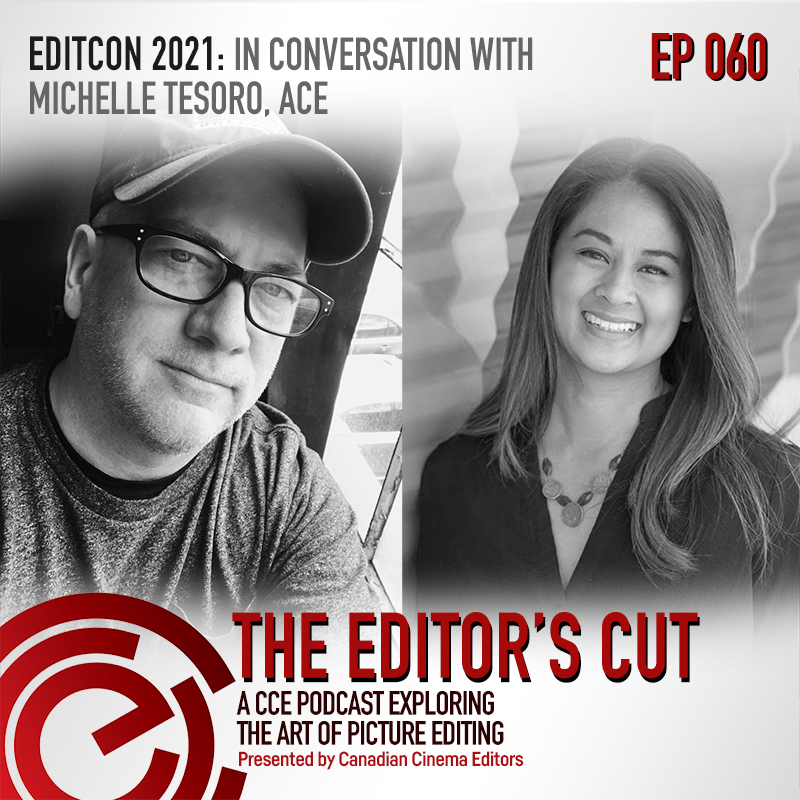
Michelle Tesoro, ACE, is a master of drama, intrigue and suspense. From FRINGE to THE NEWSROOM, Michelle’s work shows a range of storytelling techniques.
Paul Day, CCE, and Michelle Tesoro, ACE, discuss Michelle’s work, including her most recent feat of editing an entire mini-series, THE QUEEN’S GAMBIT.

Cutting-edge picture editor Michelle Tesoro, ACE, is an industry rising star. Tesoro cut Netflix’s top-rated series The Queen’s Gambit, Emmy-nominated series When They See Us, Godless, House of Cards, and HBO’s series Newsroom. She also cut features like Focus Features’ Supreme Court Justice Ruth Bader Ginsburg biography On the Basis of Sex, Participant Media’s Shot Caller, and SXSW’s Grand Jury Prize-winning film Natural Selection, which earned Tesoro the 2011 SXSW Award for Best Editing.
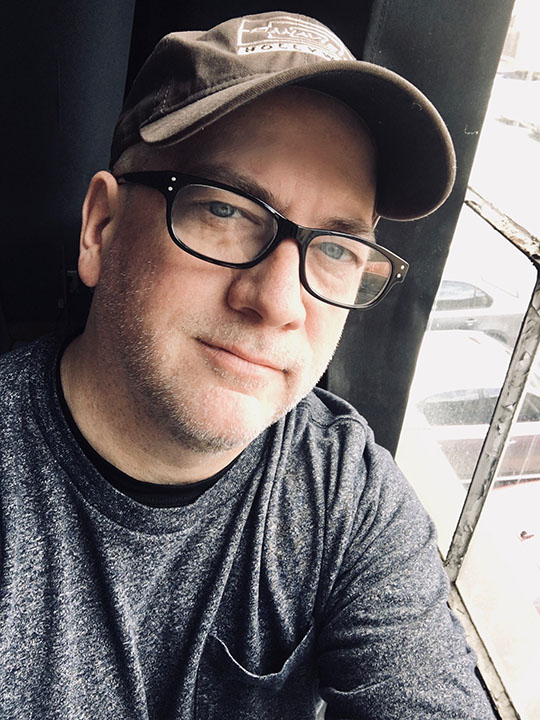
Paul has been a picture editor for 25 years and has worked with such companies as Netflix, MGM, AMC, Showtime and many more. Some of his recent editing credits include Another Life, Ransom, Into the Badlands, Dark Matter and Lost Girl. He is one of the Canadian Cinema Editors’ co-founders and currently sits on the National Board for the Directors Guild of Canada.
This episode generously sponsored by Jam Post!
The Editor’s Cut – Episode 060 – “EditCon 2021: In Conversation with Michelle Tesoro, ACE”
Michelle Tesoro, ACE:
Relationships are more important, sometimes than what the job is, because you just never know what weird TV show is going to lead you to another prestigious TV show. Because those players, whoever you’re working with, do a variety of things and things are always changing. Try to keep in mind what relationships you’re creating and what that may mean later on.
Sarah Taylor:
Hello and welcome to The Editor’s Cut. I’m your host, Sarah Taylor. We would like to point out that the lands on which we have created this podcast and that many of you may be listening to us from are part of ancestral territory. It is important for all of us to deeply acknowledge that we are on ancestral territory that has long served as a place where indigenous peoples have lived, met, and interacted.
We honor, respect, and recognize these nations that have never relinquished their rights or sovereign authority over the lands and waters on which we stand today. We encourage you to reflect on the history of the land, the rich culture, the many contributions and the concerns that impact indigenous individuals and communities. Land acknowledgements are the start to a deeper action.
Today’s episode is part two of a six part series covering EditCon 2021 that took place virtually in February, 2021. In conversation with Michelle Tesoro, ACE. Michelle is a master of drama, intrigue, and suspense. From fringe to the newsroom, Michelle’s work shows a range of storytelling techniques. Paul Day, CCE and Michelle Tesoro, ACE discuss Michelle’s work, including her most recent feat of editing an entire mini-series, The Queen’s Gambit.
Speaker 3:
And action!
Speaker 4:
This is The Editor’s Cut.
Speaker 5:
A CCE podcast.
Speaker 4:
Exploring, exploring, exploring the art.
Speaker 5:
Of picture editing.
Paul Day, CCE:
First of all, I want to welcome Michelle Tesoro for joining me live from Los Angeles. You got up early to join us. She has cut such wonderful shows as Godless, Luck, of course, The Queen’s Gambit, House of Cards, When They See Us, Newsroom. Again, thank you for joining us so early from Los Angeles.
Michelle Tesoro, ACE:
Thanks Paul. Thanks for having me.
Paul Day, CCE:
I want to jump right in by saying, or at least asking you to just give us the journey of Michelle to where you are today. I know you started in Chicago. You now reside in Los Angeles. And of course along the way, I’m sure you’ve had your trials and tribulations of getting to where you are today in such an outstanding career. So can you just give us a quick little sort of Reader’s Digest version of how Michelle went from Chicago to Los Angeles?
Michelle Tesoro, ACE:
Well, I’m from Chicago, and I spent my first two years of college at the University of Illinois Urbana-Champaign. And I always wanted to get into film, I just didn’t get into any of the film schools for my freshman year. I wasn’t that great of a student. I was an average student. But for my junior year of college, I got into NYU and I decided to pursue a career in film that way. So I went to Tisch and finished my degree there. And it was there that I got bit by the editing bug. I just decided to move forward there.
At the time when I graduated, there wasn’t a whole lot of work, but I was able to get a job at a music publishing company, which is Echo Music and Records. I was their in-house video editor, librarian person. And I did that for about three years, cutting special things and little promos for all their music CDs and things that were going out.
Probably after about three years, I decided to move to Los Angeles. So I came out here through ACE. I had applied for the internship program. I didn’t get it, but I did attend their three-day workshop that they had. And I met a lot of people there at the workshop. This was probably 2005. And I just started through some connections. I had started post-coordinating and assistant editing in network television, and it sort of starts there. I joined the union and everything. And I think it was maybe three years of just assistant editing until I was able to be lucky enough to get a bump up on Swingtown and In Treatment.
Paul Day, CCE:
When you first started out, you started meeting people like this. That whole networking process, being parachuted into Los Angeles, is that when you start meeting the people who inspire you, the people who support you along the way. Are there a few people that you can name that helped guide you, mentors, people that you even maybe even call upon today for advice?
Michelle Tesoro, ACE:
Oh, there’s so many people. But I would say… like… the people who gave me the crucial advice that I needed in the beginning, to.. before I moved out here, would probably be Marty Nicholson, ACE, as well as Paul Barnes, who’s also an ACE member. I met Paul in an editing class at NYU back when I was in school, and he connected me to Marty Nicholson. They told me just the practicalities of having to move out to Los Angeles, which was joining the Guild, getting your hours, and being an assistant editor, how important that is. And so initially that information was really important.
And also another editor I met in New York is Peter Frank. He’s also an ACE member. I did my first couple of assistant editing jobs with him, and he was so supportive and really understanding. For…Now when I think about it, I was really green. I remember I didn’t even know how to organize a lined script, like with the facing pages and all that. So he’s super patient. And I think-
Paul Day, CCE:
You got to learn somewhere, right?
Michelle Tesoro, ACE:
I guess so. And just be with people who are nice enough to not be annoyed by you. But I think the first few people I worked with, and that would be Michael Ruscio and Lisa Bromwell and Ron Rosen, I got in with the right group that were doing, at the time in television, really great work. And they were willing to.. kinda bring me up and really help me become an editor and also let people know that I edit and without any preconceived notions or protectiveness over their own. So they’re very willing to share. And I still talk to these same people to this day. We’re all close.
And I would say, even along the way, one mentor, he doesn’t like me calling him a mentor, but he’s sort of an accidental mentor, I’ll call it, is Sidney Wolinsky. He’s been just instrumental. He’s such a good friend. We met on Swingtown, which is the first show I got bumped up on when Ron Rosen left to do a pilot. I took over his rotation. But Sidney was one of the other editors and we became fast friends and talked a lot about… And ever since then we call each other about, “What would you do in this situation? Do you think you should take this job? What would you say about this?” And that’s just been so good for me, just how to understand how to conduct myself as a professional. And he has so much experience too, other than a great editor and I could talk about that kind of stuff with him.
Paul Day, CCE:
Sure. I couldn’t agree more with having that resource of having people to call. I definitely have several people who I can call upon and bounce ideas off and career advice and stuff. This is a two-part question and this sort of goes hand in hand with you getting the opportunity to start cutting. But also now that you’re an extremely established editor, how do you also encourage your assistants in getting bumped up or getting cutting opportunities? So tell us a little bit about your transition from assisting to cutting, whether it was easy or difficult, or who you had supporting along the way. And then also tell us a little bit about how you conduct yourself as an editor with your team.
Michelle Tesoro, ACE:
So.. I think I was always doing a lot of stuff on the side, like whether it was cutting what we used to call little webseries for YouTube with my friends, or somebody, first time filmmaker like Robbie Pickering, we did Natural Selection together. That was completely for nothing. I literally did it for nothing. And I did it while I was cutting In Treatment season three. Amy Duddleston will remember this because she was working with me at the time. But yeah, I practically killed myself doing other stuff while I was trying to just do the practical thing of working.
So I did a lot of that and I think the people I worked with saw that I did that and saw I was putting the hard work. And I was also, if they asked me for help, I would help them. I also think at the time, the assistants were doing a lot of the previously-ons in network television. So you got to showcase your editing work, not just to your editors, but also to the producers. So that enabled me to showcase and have the producers work with me one-on-one other than other things I did for them for the main show. Like for Swingtown. I did a lot of the dissolves. I created the look of those dissolves and transitions. We had special soft iris dissolves that close and different things. So that was something that, it made people see how you would work with a producer. Because that’s the biggest thing, is how do you act in the chair.
Paul Day, CCE:
Sure, sure.
Michelle Tesoro, ACE:
And to segue way to how… Well actually… And then when once you get a bump up, it’s never secured that you’re going to work again as an editor. So…There was a period of time, I think every editor who can remember their transition between assistant editor to editor will know that you’re kind of riding that fence. And I did that. I was an editor. Then I was an assistant editor. It was a period of time where you go back and forth. And you’re just waiting for those first three credits to say, “Okay, look, I have enough editing credits, can I just do this?”
And I think now with my assistants, I try to give them, if they don’t have enough time of it, enough time in the chair. Because I think that is the biggest thing, if people question whether they can handle something or not. Because oftentimes it’s fine when you’re… A, yes, they should be cutting on their own and honing their own craft and getting fast. And I, of course, encourage that and I try to get assistants who want to cut, cutting, get them involved. But the biggest thing is also to be able to know that they can take a note, know that they can take a note in the room with you within a certain speed of time.
And that’s sort of how I try to help them, other than if I get any calls like, “Oh, I’m doing this short,” or, “I’m doing this,” or whatever, I try to recommend, if I feel like somebody is ready. I’m always recommending.
Paul Day, CCE:
It’s interesting, [Gillian 00:11:00] and [Steven 00:11:01] were talking earlier about doing all this remote stuff and not really catching the vibe that’s going on in the room. It’s one of those things where I was always trying to pass along to assistants to sorts of read body language and mood. And you just don’t know what other things have happened to a producer or director before they get into the room. And I always looked at it, it’s sort of like you want a calm, warm, comforting environment for who’s ever coming in so you can at least get the true creative self coming out of them once you get into it.
All right. So once you’ve transitioned into becoming a very established editor, you meet Scott Frank. Can you tell us the story of your relationship with Scott Frank? That you worked on Godless and of course The Queen’s Gambit. But I think you did one other project with him as well. I think this is your third project with Scott? But just tell us about that building of a relationship, because you cut all episodes of Godless and you’ve cut all episodes of Queen’s Gambit. I want to talk about that maybe a little bit later, but just tell us about meeting Scott Frank, and that evolution of a creative relationship.
Michelle Tesoro, ACE:
Well, it’s interesting because yeah, I met him, I wanna to say kind of in the middle of my… Well, it was now 10 years ago, 2014. Oh, actually not that long ago, I guess… I met him in 2013, 2014. I was doing a movie, Revenge of the Green Dragons, but it was after I did The Newsroom. Yeah, so I had a pretty good run of it. And we met on a pilot called Hoke for FX, which did not get picked up. And the producer on that was David Manson, who I had assisted one of my very first jobs when I worked with Peter Frank. And I think I had done one other recut for him on a Movie of the Week just prior to interviewing with Scott.
So I think he was the one who actually recommended to Scott that he meet with me. And I see at the time Scott was looking for a new editor, and now that I know him, he’s super open. And we met, and I don’t remember this, of course, but Scott does. He said, because somebody else asked him about this in an interview… That what he.. What he liked about me is that we talk a lot about story. We focus a lot about story and how things are playing out. And that’s just sort of… You know, how it happens with us. And I did the pilot. It didn’t get picked up. He really liked me. And then I think two years later he… Or that year he moved to New York and was developing Godless, I think. And then he asked me to do that. So that was 2016.
Paul Day, CCE:
Okay. Because we don’t have a huge amount of time, I want to jump in to our first clip of The Queen’s Gambit. So I think we’re going to show the audience two different chess matches. We’re going to start with the one that takes place in Ohio. Why don’t we roll that, and then we’ll talk a bit about the style of that particular clip. And then we’ll show the other clip.
[start of the clip1]
Benny:
Why, hello Beth.
Beth:
Why, hello Benny.
Benny:
I read about your game with Borgov. That must have felt terrible.
Beth:
I felt like a fool.
Benny:
I know that feeling. Helpless. It all goes and you just… push wood.
Who have you got up first?
Beth:
Manfredi.
Benny:
That shouldn’t take too long. Highest rated players in the whole fucking country, and yet here we are in some second-rate university playing on cheap plastic boards, with cheap plastic pieces. If this were a golf or a tennis tournament, we’d be surrounded by reporters as opposed to… whoever these people are. You should see the places they play in the Soviet Union.
Beth:
Oh, I’m planning on it.
Benny:
You have to get past me first.
Beth:
I’m planning on that, too.
[end of the clip1]
Paul Day, CCE:
So that was clip one. And there was a lot of split screens, a lot of exciting DV movements and stuff like that. How much of that was written? How much of that is designed? How much of that was you? And how long did it take to put that particular sequence together?
Michelle Tesoro, ACE:
Well, that’s a crazy one because I think the idea of the split screens was definitely was written in the script. That wasn’t anything that he could write in like, “Oh, it’s going to be placed this way.” But I do seem to remember that in the script he described, they don’t look at each other until the end. They never face each other until the end. And when they went to shoot the sequence, actually, they were running out of time. Something was happening with the schedule where they didn’t have as much time in the location as they originally planned. So he completely had to throw all of his plans out in terms of how much of that was done in camera. He was going to do this whole choreographed scenario where they were going to face each other and do all this stuff ..and that never happened.
So they just did the best they can, which… They did the best they could, with covering it in a way that sort of made sense. And he called me saying, “So… the day didn’t go that great, but.. there you go! figure it out!”
Paul Day, CCE:
Did they do any pickups or anything for that?
Michelle Tesoro, ACE:
We did. I think the surest thing though, I do have to say because it was important to him, is that he knew that he wanted classic or gas and he had that music cleared prior to shooting it. And he told everybody to listen to it so that they knew what kind of rhythm they were going to… Or the vibe of the whole thing. So I knew that I at least had some sort of rhythmic spine to work with.
So basically, what they shot was her playing with the other players and all that. And I kind of mapped it out with… okay, here’s day one, two, and three. And it’s also not being… What you don’t see here is the scene where she comes out and Benny is talking to the reporter. That was supposed to be in the middle somewhere. So there was a lot of other scenes that were getting in the cut with day one, day two, day three. So it was never supposed to be in one section, but it was very clear to me that we had to even just restructure the reel in its entirety. So-
Paul Day, CCE:
You say the reel, do you mean the episode or do you mean that particular segment?
Michelle Tesoro, ACE:
I mean the 20 minutes. No, I mean literally the reel that that segment was in, which is like the 20 minutes around that scene.
Paul Day, CCE:
Okay. Right.
Michelle Tesoro, ACE:
And there’s all these other complications of, well, what shirt is she wearing? And I was like, well, hopefully if it’s working dramatically, no one’s worried about what shirt she’s wearing, but if you really keep track of it, it doesn’t make any sense. But I was like, well… And I don’t think anybody has a problem with it, obviously. But yeah, so I kind of mapped it out. I think the overhead part where you see the chess board and the faces come out of it, I had used a shot from one of the Shaibel matches in episode one. I used that and I used their little faces. And then I think, when they’re circling the names, I had used footage from episode two, I think, in there. And I made a shot list of what second unit needed to shoot for that particular sequence so that we could have more to play with. Plus I just asked, “So just get some shots, close up shots of the board,” because that wasn’t shot at the time either.
So..Basically with my two other assistants, Charlie Greene and Phillip Kimsey, we created… Like I think I did day one and then I created the kind of structure of it. And I had them try their hand. I think Philip did day three and Charlie did day two. And, you know, we created, we tried to make it look different. Because I was like, “This Brady bunch thing, is it going to last for the other segments?”
Paul Day, CCE:
Does Scott Frank shoot a lot of material? Does he shoot a lot of footage?
Michelle Tesoro, ACE:
Comparatively, no. No. When I compare to some other directors who might shoot three cameras and you end up with four hours of footage every day, it’s half that. They really try… That’s when he and Steven Meizler is DP, they really try to shoot what the elements that they want and not just shoot a bunch of coverage. You know… So I think, yeah, it wasn’t really a lot. But luckily, when you do these split screens, you have higher resolution when you make the image smaller. So for example, at the beginning of day one, you see the closeup on the chalkboard, Benny Watts and Harmon, you know, that was from some other wide shot that I really zoomed in on and had to make sure that [inaudible 00:19:51]. That wouldn’t be a problematic. So…
Paul Day, CCE:
Oh, okay. He made footage. That’s good. During some of these chess matches, there must have been a lot of footage of chess. Did you know chess going into this show? Or did you learn chess? Or did you have anybody to guide you along in the rules of a chess board?
Michelle Tesoro, ACE:
I knew the basic rules of chess, of how pieces move and how pieces get captured. But to know chess, no, I did not know chess. I thought… I think I tried and I realized, oh, this is like learn how to be a first-rate tennis player in a month, that’s just not going to happen.
Paul Day, CCE:
I was the chess president at high school. I was the president of the chess club for two years. So… I played a lot of chess. So watching the show, I definitely had a reminiscent of going back to sort of the early stages of learning all the moves and learning all the names of the people. And I think you had a couple of consultants who are world champions. So it pays to have those people.
Hey, look, I want to roll the other clip by comparison. This is a chess match that takes place now in Paris.
[start of the clip2]
[end of the clip2]
That’s just amazing. The emotional context within that. And it’s one line, which is, “I resign,” to go five minutes of screen time with just music and faces sweating, drinking water. You know… You suck the audience directly into exactly how she’s thinking. Tell us about the process of getting to that point. I mean, was there more dialogue? I felt like, did we want to hear more conversations? And there’s one thing I just love, which is when she makes the move with the rook, there’s a gasp in the room, but it’s so subtle and it’s designed that you just know she’s made a mistake, and there’s something that’s about to go wrong for her. Tell us about creating that sequence. And it’s such a contrast to the other chess match. How did you come up with both those scenarios?
Michelle Tesoro, ACE:
I mean… I think this sequence, you know.. they were very deliberate about the kind of footage that was available to me. I specifically remember in the script, there was no dialogue. So there wasn’t other dialogue that was cut out. It was all supposed to be just performance-based in terms of Anya, in terms of her memories, of thinking back on studying with Benny, the faces in the room, trying to maximize as much pressure from exterior sources onto her. And the way they shot her, you know, very tight, very intense, the pieces that they got for me to play with already put me in a mode of just trying to tell the story with faces.
I think though, and I was noticing this time around watching it, how informative the sound design and the music really help tell you where those moments are when you’ve gotten to a different mode, like when she moves the rook. You know, or actually, when she decides that she’s not sure if she wants to move the rook (laughs) There’s a little tick, tick, tick, tick, that adds on top of the ticking.
The other thing that I employed after the fact is the use of the clocks. At that point, you’re familiar with how the chess clocks are utilized in these tournaments, but in here I wanted to use it as like a more subjective running out of time. I’m running out of time, and literally the ticking clock that is actually the rhythm for the entire sequence, like all the moves I wanted to keep to make sure I was keeping in time with the rhythm of the clock. And I think also music and sound… kinda of took that and ran with it. ‘Cos literally when I cut that initially, I just had the ticking clock and I had things moving to it. And when I first showed Scott, he just saw it and he was like, “Oh great. We just need a tick there.” I was like, “Uh, wait a minute.” Let’s just see what music and sound can add to this. Because I still want to be informed about when it’s over for her, because there is nothing, unless you really know chess, you don’t know when it’s over. You don’t know when it’s reached the point where she knows she’s going to lose. And I think that the music and the sound effects do take you there.
Paul Day, CCE:
And also those oners, those straight-on shots of people looking down the camera, the uncomfortableness, the tension, like being stared at and being scrutinized over. Another aspect of that is also just, you could play that silently and completely understand what’s going on. So to add the elements of the sound design and the music is brilliant.
Now I’m going to touch upon really quickly. You cutting all seven episodes. I mean, to what benefit did you have because of that choice of style from episode one to episode seven?
Michelle Tesoro, ACE:
I think there’s probably a consistent feel when you go from episode to episode. It’s consistent, yet different. We were trying to bring a different element to every episode, certainly to every chess match. You know I was recalling a lot of things from the opening, the Paris opening in episode one there, that I wanted to just remind people of what they initially saw. So I just think having that knowledge of where all the episodes are, where she is personally in the storyline was useful. Other than that, it’s a lot of work. (laughs)
Paul Day, CCE:
Of course, it’s a lot of work! In keeping with our schedule, I just want to have a conversation that about When They See Us, which is another series that you were involved in. This one is a very emotionally charged mini-series based on true events that happened in New York City, where five… I think, five teens got wrongfully charged for rape and murder. A tour de force of a mini-series, I have to admit. And I’m just surprised it didn’t get as much attention as it did. But I know it was nominated for I think, 15 or 16 Emmys. I just think that the contrast again, of your career with the many different facets that you’ve worked on from Godless to Luck, Queen’s Gambit, this series is a tour de force. And I can’t express how amazing it was to watch it. It was so wonderfully put together. Tell us the story leading into working with Ava and working on this project. And how were you able to get through some of these such emotionally charged scenes?
Michelle Tesoro, ACE:
I mean, I think we all had, and when I mean all, all the other editors, Terilyn Shropshire, and Spencer Averick. And with Ava, you know, we felt obligated to.. tell the story on behalf of the men. You know, do it justice. Having people understand what their experience was. And… what was interesting about this, about the show, is that every episode gives you a different perspective on the story, on what happened to them. If you’ve watched the first episode, which is just this horrifying experience for the boys, and then you see this episode, which is how they each come out of prisons and how fragmented their lives are, as a result, the context of it really, really puts you in their shoes, which I think was the point. And ultimately is the point of why we tell these kinds of stories, is so that people can relate on a human level to what they’re going to.
I mean, I was really interested in becoming a part of this project. For a long time is just going to be Teri and Spencer, each cutting two episodes. Ava had directed all of the episodes very much like how Scott directed all of the episodes. And I think at some point, because Teri was cutting episode one and that’s such a beast of an episode, like from top to bottom it’s… I mean, not only are you trying to establish the look and the feel of the show, but.. you know, you’re also trying to tell that part of the story. It was just always a very difficult episode to work on. And I think by the time you get to episode three or… when it came time to her to start putting that together, she kind of knew, she thought down the line that she wasn’t going to be able to handle another episode. Because all these episodes were running like, I don’t know, 80 minutes. They’re like little movies. So.. they brought me on at that point. So.. I was, I came on in the middle of them shooting. And it was such a different process. You know… Very, very collaborative. And it was fun to kinda bounce ideas off of the other editors and see what they were doing and.. try to not necessarily match styles, but… have some continuity, what we were doing editorially, so that it felt consistent. But you know, each story is different. My story, my challenge was to try to tie the young versions of the characters to the older versions of the characters. And.. you know, the sample that we watch is just an example of how different they could be. And what occurred to me is that Antron’s… They kind of coincide with their relationships with their fathers. Like Antron’s relationship with his father is very fragmented. The style of the editing there, even though… those two scenes were never put together, none of those were ever put together in the script, but it was something that Ava and I felt like we needed to do, we needed to go from young boy to older boy, so we tried to make direct transitions. But in a lot of ways it represents their fragmented relationship. Whereas Raymond and Ray Sr., you know, they were always together and in contact. And.. sort of the fluid way that you see you know, his growth in prison and how the father was always talking to him. And then obviously at the end, it’s so different than Antron and his father’s reunion.
Paul Day, CCE:
How much did Ava give you that leeway to play with that back and forth between the storylines? Was it per the script, or did you massage that into that evolution with the other editors?
Michelle Tesoro, ACE:
So, for my episode is completely different than the other episodes.I mean, this one Ava and I had to do a lot of restructuring of the episode itself. Yeah, she gave me carte blanche, you know? I think the first cut I gave her was basically the script and she was like, “No, no, no. Go back and make it what it’s supposed to be. And here’s my problems with basically how the script was, so can you fix these in editorial?” So… it was really great to just do what I needed to do to get the episode together. Yeah, this is a good example of… Like, so the Raymond transition part, that was all storyboarded, they had previs, they really prepared for that.
Paul Day, CCE:
Oh, interesting. Okay.
Michelle Tesoro, ACE:
And Antron’s… Whereas the Antron transition, that was all created in the editing room, really.
Paul Day, CCE:
That’s great. And so let’s touch upon just briefly about your experience working as a solo editor, cutting a full mini-series, and working with other editors. I think there’s some audience members who definitely always constantly have those questions about what’s it like on a series maintaining continuity, but also just working relationships with people, that kind of aspect. You know, how do you guys organize yourself as far as making comments on shows and stuff like that?
Michelle Tesoro, ACE:
I think When They See Us, you know, as opposed to how Godless and The Queen’s Gambit were done where I was the only one, on When They See Us, it was really important, for even during dailies, how we all commented on dailies. Ava wanted a breakdown from all of us of what we thought of the footage, if we needed any, if we needed her to get anything, based on what we thought. And so we all knew, what we had that collaboration from the get-go, and because she was shooting it all at once, it’s not like somebody was finished before the others. I suppose like episode one was finished sooner than say episode four, for example, but just the way it worked in terms actor schedules. But I think… What was great is we just made it a point to sit down and look at everything and comment on everything. And when episodes were coming together, Ava was very much like, “Okay, come in and you see it, you give your feedback, and you give your feedback.” And we did that. And towards the end, when the episodes were two studio cuts in, we actually sat and we did a whole binge of the four, which is just really emotionally draining. And we were able to give like the feedback by sitting all together, watching it and having an opportunity to go over it one more time. You know, so that was interesting on that show. Now, if you’re on a show that’s more episodic, where you have different directors, it’s a completely different thing. I think what makes a difference is how many directors you have on a show.
Paul Day, CCE:
Having that one guiding force, moving you through it.
Michelle Tesoro, ACE:
Exactly.
Paul Day, CCE:
Let’s talk briefly about your method, your isolated… How you approach dailies and how you sort of break down looking at footage. Just give us a day-to-day habit that you go through.
Michelle Tesoro, ACE:
The day in the life in the cutting room of Michelle Tesoro. It depends on the show, but I’ll just say what it was on The Queen’s Gambit just because it’s the most recent thought of me being in dailies. The footage comes in and I have the assistants organize it and in sequences that I call pulls, which are basically the segments of the scenes in script order. All the setups, all the cameras, everything in one sequence. And, so, they do that for the day, and on Queen’s, those were usually ready by right before lunch or just after lunch. So we’d have a leisurely lunch, and then after lunch we’d sit and we’d watch all these things together, all the sequences, meaning everything that was shot for the day. And I would make my notes, we would make our comments on it. We’d talk about what we saw, basically me and the assistants on The Queen’s Gambit. I had two. And… by the end of it, I would say, okay, if there were scenes that I think I could give to them, I would give to them. So every time they would have something to cut, I would say, “Okay, you do 3:24 to 3:30,” or whatever. And then I usually would give myself the hardest chunk, which actually sometimes it sucked because sometimes you look for those oners or those easy scenes to give you a mental break. And so on The Queen’s Gambit and I was always doing the hard stuff. I was like, “Goddamn it.”
Paul Day, CCE:
Got to hand over one of the hard [inaudible 00:34:45].
Michelle Tesoro, ACE:
Yeah. Which I did, but I didn’t want to overload them because I knew they already had a lot of work that they were doing. So… But it was fun because whatever they did do, how it rolled is once they started cutting, they would show me, like they would show us, we would screen their versions of cuts and we would make comments. We would all make comments on each other’s cuts. And I could give feedback if they had time to do that. But, you know, you have a certain amount of time, so we worked well with what we had. And I think that was basically the daily routine for many weeks. And at some point at the end of every week, we would get everything together so, to pick sequences and send it to Scott for his feedback.
Paul Day, CCE:
Now you were talking about pulls, I think you referred to them as. Is that like a selects reel? Would you just have everything in the selects reel or would you just have circle takes or would it be based on director’s choices or your choices?
Michelle Tesoro, ACE:
So we typically get everything even B neg footage. And within the… when we’re naming the clips, if there was a director select, that would have an asterisk next to it. So I could see in the timeline, what were circles, other than looking at the facing page, but I could see in the timeline what they were. So if we were really pressed for time, we wouldn’t watch all the B neg stuff, we would just watch the director selects. But in the pull sequence itself, which is, as you described, like basically I would say, “Okay, line one to line eight would be this section.” And then you’d see all the setups for that and all the takes for that, or all the cameras for that. You would have everything there.
So it’s mostly set up. So while you’re cutting, if you need to reference other takes, you had kinda an easy way. It’s just, I can’t just [crosstalk 00:36:35] sync.
Paul Day, CCE:
Yeah.
Michelle Tesoro, ACE:
[inaudible 00:36:35] sync is hard for me because it’s just words. I need pictures.
Paul Day, CCE:
Right. You’re a picture editor. That’s why. You need the visuals.
Michelle Tesoro, ACE:
Yes.
Paul Day, CCE:
Nothing wrong with that at all. Don’t have to say you’re sorry. One of the things I wanted to talk to you about was the series Godless. I think I told you when we met for pre-interview, it’s like one of those shows that I think I’ve binged twice now because it’s so deliciously done.
Michelle Tesoro, ACE:
[inaudible 00:37:02]. Oh my God, thank you!
Paul Day, CCE:
It’s so well done. It’s amazing. I can’t gush enough over this series. Watching it is just so much fun. And Canadian Kim Coates just chews up the scenery in just about every scene that he’s in, because he’s just so good. But I have two questions actually. And one of them is just, I just noticed that Godless and Queen’s Gambit are seven episodes. Why seven? Why not eight? Why not six? Why not 10?
Michelle Tesoro, ACE:
Seven episodes means we’ve gone over and had to create a seventh, for both.
Paul Day, CCE:
Oh. So it always started off at six?
Michelle Tesoro, ACE:
It always started off at six. Yeah, it’s funny. I think the run times for both of them both ended up about seven and a half hours.
Paul Day, CCE:
When you sit down to cut a whole mini-series like that, do you know where the changeovers are as far as the episodes are concerned? Or do you cut it like one big seven, nine-hour movie?
Michelle Tesoro, ACE:
You cut it like one, what starts as almost nine and a half, 10-hour movie. And then you wind it down. Obviously when he writes the scripts, they are episodes. They’re written in episodes. He has already decided, “Okay, this ends here, this starts here.” But I think Godless is a little clearer where things started, we shifted things around. I can’t remember if we… Oh, no, we did break up. We broke up episode five into two for Godless. For Queen’s Gambit, we broke up episode two into episodes two A and two B, which is episodes two and three. It’s funny because you look at it, it’s like, well, we do want to keep all this story, but we’re always struggling with length somehow. He hasn’t quite hit that… Been able to write a good 45 minute episode. (laughs)
Paul Day, CCE:
But I think that’s a testament to the fact that all the characterizations and the dialogue and just everything that’s put together. That sequence, the second question I have for that particular was sequence is, was it written that way or were there a lot of embellishments that you added to connect it all together and make it so cool?
Michelle Tesoro, ACE:
Yeah. What’s fun about that… Well, it was a little bit of both, you know, I think it was definitely written in a certain way. If you’re counting, we definitely are stick tight to how many clips, how many bullets, because it’s very important that, ‘oh, there was a seventh one!’ but where is it in terms of scoop, putting everything together. And they did storyboard that. They had to, there was so many stunts involved, especially with the horses. But I think that… And I remember I put it together exactly as storyboarded in the assembly and he was looking at it, going, “There’s something wrong with it. Just do another pass where you’re making it cool.” And I’m like, okay. And that’s when we see the intercutting of Roy and McNue on top of each other when he’s, “Shoot, shoot, shoot,” is when I started getting a little bit more into it there.
Paul Day, CCE:
Right. So well done. So well done. What advice would you give for up-and-coming editors, assistant editors, people wanting to get into post. What is your top secret go-to advice?
Michelle Tesoro, ACE:
Oh my gosh, I guess it would be, you know, keep cutting, keep challenging yourself, and let people know if you’re trying to move on up. I think in my earlier story, I sort of I made that clear as everybody knew that I was doing it and it was just a matter of time. That’s what I would say.
Paul Day, CCE:
Another question is, if you’re put into a situation that you may not necessarily think it’s an advantage to you, do you look at it as at least a stepping stone? Like if you’re involved with a show that might not be something you want to do or being put into a situation that, you know, what it’s going to take to advance you to the next level.
Michelle Tesoro, ACE:
Yeah. I mean, I think… Troy Takaki gave me this advice recently. It is, in so many ways, about your relationships. Relationships are more important sometimes than what the job is, because you just never know what weird TV show is going to lead you to another prestigious TV show. Because those players, whoever you’re working with, do a variety of things and things are always changing. So… I mean this sort of attaches on to the first question, like what would be the good advice, is try to keep in mind what relationships you’re creating and what that may mean later on.
Paul Day, CCE:
Well, tell us about the things that really get you jived up, like the shows when you’re on shows. What is it that you wake up in the morning and can’t wait to get into the cutting room?
Michelle Tesoro, ACE:
Usually when there is a puzzle to solve that we haven’t quite cracked and I’ve been mulling it over in my mind, whatever it might be. And I think I have that, “Ah! Ah! I know what I want to do.” I need to get in the cutting room and makes, see if it works or not, or if it’s just a fantasy that lives in my head.
Paul Day, CCE:
Well, I think we’ve come to the end of our road. The one thing I just wanted to say is thank you for taking the time to join us and be part of this. Again, your career, your.. all the shows that you’ve worked on have just been amazing and you should be quite proud of yourself. And I want to thank you on behalf of the Canadian Cinema Editors and EditCon that you had joined us. Thank you so much.
Michelle Tesoro, ACE:
Thanks so much. Thank you. It’s been a pleasure. Take care.
[Sarah Taylor:
Thank you so much for joining us, and a big thank you goes to Jane MacRae and Alison Dowler. This episode was edited by Alex Schead. The main title sound design was created by Jane Tattersall. Additional ADR recording by Andrea Rusch. Original music created by Chad Blain and Soundstripe. This episode was mixed and mastered by Tony Bao.
The CCE has been supporting Indspire, an organization that provides funding and scholarships for indigenous postsecondary students. We have a permanent portal on our website at cceditors.ca or you can donate directly to indspire.ca. I-N-D-S-P-I-R-E dot C-A.
The CCE is taking to build a more equitable ecosystem within our industry and we encourage our members to participate in any way they can. If you’ve enjoyed this podcast, please rate and review us on Apple Podcasts and tell your friends to tune in.
Till next time, I’m your host, Sarah Taylor.
Speaker 5:
The CCE is a nonprofit organization with the goal of bettering the art and science of picture editing. If you wish to become a CCE member, please visit our website www.cceditors.ca. Join our great community of Canadian editors for more related info.
Please send along any topics you would like us to cover or editors you would love to hear from:
A special thanks goes to
Hosted and Produced by
Edited by
Main Title Sound Design by
ADR Recording by
Mixed and Mastered by
Original Music by
Sponsor Narration by
Sponsored by
 EN
EN  FR
FR